Exhibition | Ages of Wonder: Scotland’s Art 1540 to Now

Thomas Hamilton (1784–1858) RSA, Design for National Gallery and Royal Scottish Academy.
◊ ◊ ◊ ◊ ◊
Press release from the National Galleries of Scotland:
Ages of Wonder: Scotland’s Art 1540 to Now
Royal Scottish Academy, Edinburgh, 4 November 2017 — 7 January 2018
The National Galleries of Scotland (NGS) and the Royal Scottish Academy (RSA) have collaborated to organise a major new exhibition, which opens in Edinburgh this autumn. Ages of Wonder: Scotland’s Art 1540 to Now will be the largest exhibition of the RSA’s hugely significant collection ever mounted and the first to occupy the entire RSA building.
The RSA is an independently funded institution founded in 1826, and is led by artists and architects to promote and support the creation, understanding and enjoyment of contemporary art. It was instrumental in the establishment of a Scottish national art collection in 1859, with the opening of the Scottish National Gallery (SNG). In 1910, the RSA transferred significant works to the SNG’s collection in exchange for exhibiting rights within what is now known as the RSA Building, which is part of the SNG complex in the heart of Edinburgh.
Ages of Wonder will, for the first time in over 100 years, reunite these paintings and sculptures with the RSA collection, bringing together a selection of over 450 works by more than 270 artists and architects that will highlight the significant part played by RSA in Scottish cultural over the past two centuries. Around 60 outstanding works from NGS will feature in the exhibition.
The artworks on show will cover a period of nearly five centuries, from 1540 until the present day—from the The Adoration of the Kings by Jacopo Bassano (c.1510–1592) right through to Callum Innes’s Exposed Painting Lamp Black, submitted as the artist’s Diploma Work in 2015 after his election as an Academician, and a number of new commissions. Among the exhibition’s highlights will be a spectacular recreation of a Victorian gallery hang, which in RSA Gallery 3 will see over 90 works hung as they would have in the 19th century, from dado rail to ceiling.
Ages of Wonder will also feature a range of special events, including a series of life drawing classes led by prominent contemporary artists such as John Byrne (b.1940), and live etching classes which will utilise a beautifully preserved 19th-century printing press which belonged to the distinguished etcher E. S. Lumsden (1883–1948).
One room will focus on Sir James Guthrie (1859–1930) and the 1910 transfer, featuring major works from both the RSA and NGS, by Guthrie and other artists such as William Dyce (1806–1864) and Joseph Noel Paton (1821–1901), and a specially commissioned sculpture of Guthrie by Kenny Hunter (b.1962). There will also be a room of outstanding portraits of RSA Presidents and artists, showcasing key works by David Allan (1744–1796), Elizabeth Blackadder (b.1934) and Alberto Morrocco (1917–1998).
John Leighton, Director-General of the National Galleries of Scotland, said: “The NGS and the RSA have a shared history and together we occupy a central place in the past, present and future of the arts in Scotland. We now work very closely together and we are delighted to have partnered with the Royal Scottish Academy (RSA) to help deliver what is set to be a historic show. Visitors to the exhibition can soon enjoy some exceptional works by artists both past and present, with items from the national collection complementing the rich and important holdings of the RSA.”
The exhibition will be accompanied by a fully illustrated publication edited by Tom Normand and a catalogue. The publication includes essays around the Academy from Duncan Macmillan HRSA, Joanna Soden HRSA, James Holloway, Helen Smailes, Arthur Watson PRSA, Alexander Moffat RSA, William Brotherston RSA, Iain Gale, Lyon and Turnbull, John Morrison, University of Aberdeen, John Lowrey, University of Edinburgh and Sandy Wood, RSA Collections Curator.
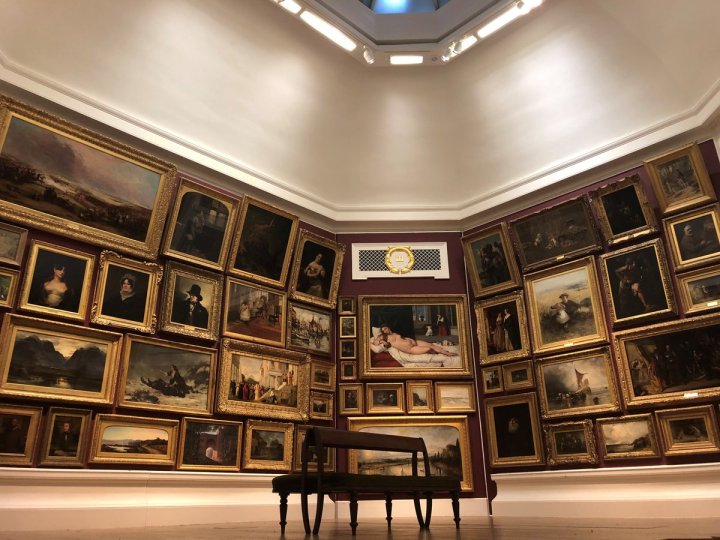
Salon hang with William Etty’s Venus of Urbino.
Exhibition | Painted in Mexico, 1700–1790: Pinxit Mexici
Press relese (5 July 2017) from LACMA:
Painted in Mexico / Pintado en México, 1700–1790: Pinxit Mexici
Fomento Cultural Banamex, Mexico City, 29 June — 15 October 2017
Los Angeles County Museum of Art, 19 November 2017 — 18 March 2018
The Metropolitan Museum of Art, New York, 24 April — 22 July 2018
Curated by Ilona Katzew with Jaime Cuadriello, Paula Mues Orts, and Luisa Elena Alcalá
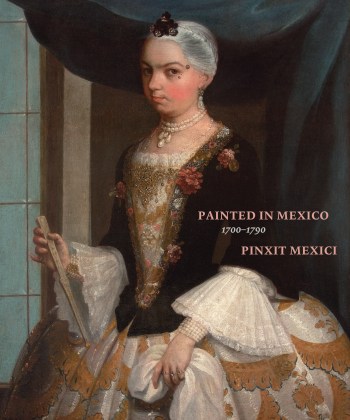
The Los Angeles County Museum of Art presents Painted in Mexico, 1700–1790: Pinxit Mexici, the first major exhibition to reposition the history of 18th-century Mexican painting, a vibrant period marked by major stylistic changes and the invention of compelling new iconographies. Co-organized by LACMA and Fomento Cultural Banamex, A.C. in Mexico City, this exhibition foregrounds the connections between Mexican painting and transatlantic artistic trends while emphasizing Mexican painting’s internal developments and remarkable pictorial output. More than 100 paintings are presented in the exhibition, many on view for the first time and restored for this exhibition.
Painted in Mexico, 1700–1790: Pinxit Mexici is curated by Ilona Katzew, curator and department head of Latin American art at LACMA, with guest co-curators Jaime Cuadriello, Universidad Nacional Autónoma de México, and Paula Mues Orts, Escuela Nacional de Conservación, Restauración y Museografía, both of Mexico City, and Luisa Elena Alcalá, Universidad Autónoma de Madrid of Spain. The exhibition is presented as part of the Getty’s Pacific Standard Time: LA/LA initiative and is one of a handful of historical exhibitions focusing on the legacy of Latin American art before the 20th century.
“This is truly a once-in-a-lifetime undertaking of an engrossing chapter in art history,” said Michael Govan, LACMA CEO and Wallis Annenberg Director. “Over the last six years, the co-curators have traveled all over Mexico to uncover new materials; many restored specially for the exhibition and photographed for the first time. This is a groundbreaking reassessment of the field, and we are proud to be at the forefront of this important undertaking and advancing new scholarship.”
Ilona Katzew, project director and a noted expert in the field, stated, “The 18th century is a particularly rich period in the history of Mexican art, which has not yet received its due attention. In organizing this exhibition, we hope to open up a vista on a sophisticated and innovative body of work, one that is contextually rich and highly rewarding to look at and study, and share our collective enthusiasm for this fascinating chapter of global art history.”
In the 16th century, European artists immigrated to Mexico to decorate newly established churches and complete artistic commissions. Some of these artists and their families formed workshops in Mexico that endured for several generations. By the 17th century, a new generation of artists born in the Americas began to develop their own pictorial styles that reflected the changing cultural climate as well as the desires of their patrons, both religious and secular. The 18th century ushered in a period of artistic splendor as local schools of painting were consolidated, new iconographies were invented, and artists began to group themselves into academies.
During the 18th century, painters were increasingly asked to create mural-size paintings to cover the walls of sacristies, choirs, and university halls, among other spaces. The same artists produced portraits, casta paintings (depictions of racially mixed families), painted folding screens, and finely rendered devotional imagery, attesting to their extraordinary versatility. The volume of work produced by the four generations of Mexican artists that spanned the 18th century is virtually unmatched elsewhere in the vast Hispanic world.
Painters also became more aware of their own contributions, largely owing to the sizable number of pictures that were exported to Europe, throughout Spanish America, and within the viceroyalty itself. This awareness led many educated painters not only to sign their works and emphasize their authorship but also to make explicit references to Mexico as their place of origin through the Latin phrase Pinxit Mexici (Painted in Mexico). This expression eloquently encapsulates the painters’ pride in their own tradition and their connection to larger, transatlantic trends.
The exhibition combines a chronological and thematic approach, and includes seven major sections:
Great Masters introduces the works of some of the leading painters of the day around which others congregated; the notion of a local tradition and intergenerational ties is emphasized. Since the 16th century, educated painters in Mexico City had organized themselves in guilds. By the 18th century, their most distinguished members (some of whom descended from long lines of illustrious painters) also established informal academies. The academy organized by the brothers Juan and Nicolás Rodríguez Juárez around 1722, for example, evidences the artists’ growing interest in revitalizing their art.
Master Story Tellers and the Art of Expression illustrates how works were designed to convey complex stories. Conceived as series, these works decorated the interiors of churches, convents, colleges, and other public spaces, where they became activated through their particular arrangement, including as part of altarpiece-ensembles. During the 18th century narrative painting underwent a resurgence, which is evident in its more organic and idealized (and at times idyllic) sensibility. The artist’s increasing interest in emphasizing domestic interiors and details of everyday life helped to establish a more intimate connection with the viewer.
Noble Pursuits and the Academy explores the efforts of artists throughout the 18th century to form art academies. The introduction of academic principles in Mexico is generally connected with the arrival of Jerónimo Antonio Gil from Spain and the establishment of Mexico’s Royal Academy of San Carlos in 1783. This perspective has overlooked the earlier trajectory of local artists, who long sought to have painting recognized as a noble, as opposed to a mechanical art. In the 18th century painters organized several independent academies (c. 1722, 1754, and 1768), where they actively engaged in discussions about the theory and practice of their art. They also attempted to elevate the status of painting by writing and referencing art treatises, by equating their task with that of the supreme creator, and refashioning their image through their self-portraits.
Paintings of the Land brings together a compelling group of works representing local subjects. The expression “paintings of the land” (pinturas de la tierra) recurs often in contemporary panegyric literature and artistic inventories to describe works unique to Mexico—either made there or representing aspects of life in Mexico. Many of the works included in this section, such as vedute (large-scale paintings of a cityscape or vista), casta paintings (depictions of racially mixed families), folding screens with fête gallant scenes (amorous figures in pastoral settings), and depictions of Indian weddings, are peppered with colorful local elements. The works brilliantly exemplify how Mexican painting could simultaneously fulfill artistic, political, and documentary purposes.
The Power of Portraiture illustrates the various modalities of the portrait genre. In the 18th century, Mexico saw an upsurge in portraiture associated with the economic growth of the viceroyalty, and different social groups, particularly within urban contexts, commissioned artists to paint their likenesses. In a hierarchical society such as New Spain, which placed a premium on nobility of birth, piety, wealth, titles, and merits, portraiture had the power to convey both corporate and personal messages. Through portraiture people could fashion and refashion their identities and project them onto society. Portraiture also fulfilled a genealogical role, designed to preserve the memory of families and institutions—religious and secular. Dress and other attributes became an essential part of the genre.
The Allegorical World looks at a highly inventive group of works that became prevalent in the 18th century. Often commissioned by ecclesiastical orders to instruct in issues of faith, allegorical images are fascinating manifestations of a culture that relied increasingly on its own visual metaphors. These images became particularly popular, in part, because of the versatility of allegorical language that could express many things simultaneously. Allegorical paintings can be broadly divided into four categories: guides to inner spirituality for nuns and monks within cloistered life, teaching or mnemonic tools to aid in the practice of piety, symbols that promoted local devotions, and commentaries to extol (or even criticize) figures of power. Some allegories were conceived as large- scale paintings that covered the walls of different institutions and religious spaces, while many smaller ones were designed to awaken piety within the context of cells and oratories.
Imagining the Sacred features a stunning selection of paintings that copied holy effigies, many considered miraculous. Copying holy images became part of a long tradition that engaged the best painters of the day. Although most subjects were universal, sacred painting saw significant developments in 18th-century Mexico. Painters updated age-old formulas: the resulting richness of themes, pictorial approaches, and devotional complexity is noteworthy. The most visible public images were large paintings representing specific sculptures that were known for performing miracles. Intimate devotional experience was more commonly channeled through smaller paintings, many on copper, in which painters demonstrated great precision and skill. These works reflect the extent to which art, belief, and society were inextricably connected.
Painters in the Exhibition
Juan Francisco de Aguilera (Spain [?], active Mexico, first quarter of the 18th century) Manuel de Arellano (Mexico, 1662–1722)
Ignacio María Barreda (Mexico, c. 1754–1800)
Ignacio Berben (Guadalajara, 1733–c. 1814)
Miguel Cabrera (Mexico, c. 1715–1768)
Francisco Clapera (Spain, 1746–1810, active Peru and Mexico)
Nicolás Correa (Mexico, 1657–c. 1708)
Nicolás Enríquez (Mexico, 1704–c.1790)
Rafael Joaquín Gutiérrez (Mexico, c. 1750–1792)
Fray Miguel de Herrera (San Cristóbal de la Laguna, Canary Islands, 1696–c. 1789, active Mexico)
José de Ibarra (Mexico, 1685–1756)
Andrés López (Mexico, 1727–1807)
Francisco Martínez (Mexico, 1687–1758)
Manuel Montes y Balcázar (Guadalajara, active, c. 1727–1760)
Juan Patricio Morlete Ruiz (Mexico, 1713–1772)
José de Páez (Mexico, 1721–c. 1790)
Rafael Ximeno y Planes (Spain, 1759–1825, active Mexico)
Pascual Pérez (Puebla, d. 1721)
Juan Rodríguez Juárez (Mexico, 1675–1728)
Nicolás Rodríguez Juárez (Mexico, 1677–1734)
Antonio de Torres (Mexico, 1667–1731)
Francisco Antonio Vallejo (Mexico, 1722–1785)
Miguel Jerónimo Zendejas (Puebla, 1720–1815)
José Joaquín de la Vega (Mexico, active second half of the 18th century)
International Scholar’s Day
February 2018
An international scholar’s day will be co-organized with the University of California, Los Angeles (UCLA), enabling established and junior scholars to present new research. Given the extensive restoration undertaken for the exhibition, part of the event will be dedicated to presentations by leading conservators from Mexico, the United States, and Europe, who will discuss the techniques, materials, and pictorial processes employed by Mexican painters, and their wider art historical implications.
Ilona Katzew, ed., with contributions from Ilona Katzew, Luisa Elena Alcalá, Jaime Cuadriello, Ronda Kasl, and Paula Mues Orts, Painted in Mexico, 1700–1790: Pinxit Mexici (New York: Prestel, 2017), 512 pages, ISBN: 978 379135 6778, $85.
Painted in Mexico, 1700–1790: Pinxit Mexici is accompanied by a groundbreaking catalogue that offers the first in-depth assessment of 18th-century Mexican painting, making accessible an extraordinary body of images, alongside compelling new scholarship. The volume is edited by Ilona Katzew with contributions by the exhibition co-curators Luisa Elena Alcalá, Jaime Cuadriello, Ilona Katzew, and Paula Mues Orts. Exquisitely illustrated with newly commissioned photography of never-before-published artworks, the book includes fascinating essays on a number of themes, such as the tradition and innovation of Mexican painting, the mobility of pictures within and outside the viceroyalty, the political role of images, and the emphasis on ornamentation. Rounding out this volume are over 130 catalogue entries that offer new and authoritative interpretations. The book is published by LACMA and Fomento Cultural Banamex, A.C., and DelMonico Books, Prestel. A Spanish edition is also available.
Catalogue cover image: Juan Patricio Morlete Ruiz, Mexico, 1713–1772, Portrait of Doña Tomasa Durán López de Cárdenas (Retrato de Doña Tomasa Durán López de Cárdenas), ca. 1762, Galería Coloniart. Collection of Felipe Siegel, Anna and Andrés Siegel, Mexico City.
New Book | Art, Commerce, and Colonialism, 1600–1800
From Manchester UP:
Emma Barker, ed., Art, Commerce, and Colonialism, 1600–1800 (Manchester: Manchester University Press, 2017), 200 pages, ISBN: 978 15261 22926, £18 / $35.
 The book examines how increasing engagement with the rest of the world transformed European art, architecture and design. It considers how commercial activity and colonial ventures gave rise to new and diverse forms of visual and material culture across the globe. Drawing on a wide range of recent scholarship, it offers a new perspective that challenges Eurocentric approaches.
Emma Barker is Senior Lecturer in Art History at The Open University.
C O N T E N T S
Introduction, Emma Barker
1 From Iberia to the Americas: Hispanic Art of the Colonial Era, Piers Baker-Bates
2 The Golden Age Revisited: Dutch Art in Global Perspective, Emma Barker
3 Creative Interactions: Chinoiserie in Eighteenth-Century Britain, Clare Taylor
4 Transatlantic Architecture: Classicism, Colonialism, and Race, Elizabeth McKellar
Conclusion, Emma Barker
Index
New Book | The Sun King’s Atlantic
From Brill:
Jutta Wimmler, The Sun King’s Atlantic: Drugs, Demons, and Dyestuffs in the Atlantic World, 1640–1730 (Leiden: Brill, 2017), 230 pages, ISBN: 9789004336070, 80€ / $93.
 In The Sun King’s Atlantic, Jutta Wimmler reveals the many surprising ways in which the Atlantic world channeled cultural developments during the age of the Sun King. Although hardly visible for contemporaries at the time, Africa and America were omnipresent throughout early modern France: in the textile industry, pharmaceutics, medicine, scientific methods, religious discourse, and court theatre. The book moves beyond typical plantation crops and the slave trade to illustrate how a focus on Europe challenges us to rethink the place of Africa in the early modern world.
Jutta Wimmler, Ph.D. (2011), University of Graz (Austria), is a researcher and lecturer at the European University Viadrina, Germany. She has published several articles about Africa’s impact on Europe, most recently in the Journal of Religion in Africa.
C O N T E N T S
1 Introduction
2 Sugar and Slaves? French Atlantic Trade before 1730
3 The Fashionable Atlantic: Innovation and Consumption
4 Body Matters: Remedies, Foodstuffs and Cosmetics
5 The Iatrochemical Advantage: Methods for an Expanding World
6 Perfect French Subjects: Staging the Atlantic World
7 Devils and Martyrs: Religious Concepts Travel the Globe
8 Epilogue
New Book | The Image of the Black in African and Asian Art
From Harvard UP:
David Bindman, Suzanne Preston Blier, Henry Louis Gates, Jr., eds., The Image of the Black in African and Asian Art (Cambridge, MA: Belknap Press, 2017), 456 pages, ISBN: 9780674504394, $95 / £70 / €85.
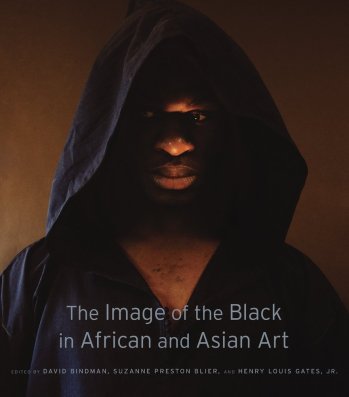 The Image of the Black in African and Asian Art asks how the black figure was depicted by artists from the non-Western world. Beginning with ancient Egypt—positioned properly as part of African history—this volume focuses on the figure of the black as rendered by artists from Africa, East Asia, and the Indian subcontinent. The aesthetic traditions illustrated here are as diverse as the political and social histories of these regions. From Igbo Mbari sculptures to modern photography from Mali, from Indian miniatures to Japanese prints, African and Asian artists portrayed the black body in ways distinct from the European tradition, even as they engaged with Western art through the colonial encounter and the forces of globalization.
This volume complements the vision of art patrons Dominique and Jean de Menil who, during the 1960s, founded an image archive to collect the ways that people of African descent have been represented in Western art from the ancient world to modern times. A half‐century later, Harvard University Press and the Hutchins Center for African and African American Research completed the historic publication of The Image of the Black in Western Art—ten books in total—beginning with Egyptian antiquities and concluding with images that span the twentieth century. The Image of the Black in African and Asian Art reinvigorates the de Menil family’s original mission and reorients the study of the black body with a new focus on Africa and Asia.
David Bindman is Emeritus Professor of the History of Art at University College London.
Suzanne Preston Blier is Allen Whitehill Clowes Professor of Fine Arts and Professor of African and African American Studies at Harvard University.
Henry Louis Gates, Jr., is Alphonse Fletcher University Professor and the Director of the W. E. B. Du Bois Research Institute at the Hutchins Center for African and African American Research at Harvard University.
C O N T E N T S
Preface, David Bindman, Suzanne Preston Blier, and Henry Louis Gates, Jr.
Acknowledgments
Introduction, David Bindman
I. Africa
1 Images of Africans by and of Themselves: Historical and Comparative Factors, Suzanne Preston Blier
2 The Body in African Art, Kristina Van Dyke
3 Masquerade in Sub-Saharan Africa, John Picton
4 The Image of the Black in Early African Photography, Christraud M. Geary
5 The Image of the Black in Modern and Contemporary African Art, Steven Nelson
II. Asia
6 The Image of the Black in Islamic Art: The Case of Painting, Robert Hillenbrand
7 The Image of the Black in India, John McLeod and Kenneth X. Robbins
8 The Image of the Black in Chinese Art, Don J. Wyatt
9 The Image of the Black in Japanese Art: From the Beginnings to 1850, Timon Screech
10 The Image of the Black in Japanese Art: Nineteenth Century to the Present Day, Alicia Volk
Notes
Illustrations
Index
Exhibition | Gods in Color: Polychromy in the Ancient World
From the Fine Arts Museums of San Francisco:
Gods in Color: Polychromy in the Ancient World
Bunte Götter: Die Farbigkeit antiker Skulptur
Glyptothek, Munich, 2003
Liebieghaus Sculpture Collection, Frankfurt am Main, 2008
Legion of Honor Museum, San Francisco, 28 October 2017 — 7 January 2018

Reconstruction (A1) of the so-called Chios kore from the Akropolis in Athens, 2012. Copy of the original: Athens, ca.500 BCE. Crystalline acrylic glass, with applied pigments in tempera. Liebieghaus Skulpturensammlung, Polychromy Research Project, Frankfurt am Main, acquired in 2016 as gift from U. Koch-Brinkmann and V. Brinkmann (Fine Arts Museums of San Francisco).
Gods in Color: Polychromy in the Ancient World will offer an astonishing look at Classical sculpture swathed in their original vibrant colors questioning the perception of an all-white ‘classical’ ideal. Ancient sculpture and architecture from Greece and Rome will be revealed as intended—garishly colorful, richly ornamented, and full of life—along with original sculpture from the Near East, Egypt, Greece, and Rome against the backdrop of the Legion of Honor’s neoclassical building.
To find out more about the exhibition, explore this digital offering from the Liebieghaus in Frankfurt:
In the eighteenth century there was already considerable debate about the extent to which ancient architecture and sculptures were painted. Two centuries later technical investigations with ultraviolet light and glancing light are providing new evidence about ancient polychromy. Investigations carried out in Munich’s Glyptothek in the 1960s resulted in important findings. In the 1980s a group of researchers associated with the archaeologist Volkmar von Graeve studied the polychromy of ancient works of art with the help of modern technological aids. At the time, Vinzenz Brinkmann was a member of von Graeve’s team. Later, as head of the Liebieghaus’s Department of Antiquities, he brought the research subject to Frankfurt.
By now the original painting of hundreds of Greek and Roman artworks around the world has been studied. Thanks to the development of new investigative methods, scholars have meanwhile been able to provide an increasingly precise sense of the kind and extent of the painting. Over the course of centuries of damage owing to wars or weathering it was lost. Even though only scant traces of pigment and scoring have survived, they can provide valuable information. Our newly won understanding of the original polychromy leads in many cases to surprising discoveries!
From FAMSF Publications:
Vinzenz Brinkmann, Renée Dreyfus, and Ulrike Koch-Brinkmann, eds., Gods in Color: Polychromy in the Ancient World (New York: Prestel, 2017), 192 pages, ISBN: 978 379135 7072, $40.
 Although not widely known, antiquities were colored to dazzling and powerful effect. Polychromy—the painting of objects in a variety of hues—was a regular feature of the sculpture and architecture of most ancient cultures, especially in Egypt, Mesopotamia, the Aegean, Greece, and Rome. When such works began to be rediscovered in the eighteenth century after prolonged exposure to the elements, their colored surfaces were often so faded that later sculptors evoked classicism by leaving white marble and bronze surfaces unadorned.
Published on the occasion of an exhibition at the Legion of Honor in San Francisco, Gods in Color: Polychromy in the Ancient World reintroduces the unexpected effect of these bright pigments. Through reconstructions of well-known sculptural works dating from Bronze Age Greece to Imperial Rome, readers can see firsthand how these objects would have appeared when they were first created. Complementing these reconstructions are many fine examples of original antiquities, many with surviving polychromy, from ancient Greece and Rome and beyond to Egypt and the Near East. Rounding out these offerings are breathtaking watercolors of Greece’s landscapes and monuments painted in 1805 and 1806 by English antiquarian Edward Dodwell and Italian artist Simone Pomardi.
This handsome volume features six essays alongside catalogue entries that describe the cultural contexts of the ancient works and the modern technological methods to uncover their original coloration. Vinzenz Brinkmann and Ulrike Koch-Brinkmann offer a history of the research and scholarship of polychromy since the eighteenth century; with Heinrich Piening, they also describe the pigments and techniques used. Renée Dreyfus discusses polychrome examples from Egypt and the Near East to demonstrate the strong influences these cultures left on the classical world. Oliver Primavesi recounts the dilemma of eighteenth-century German archaeologist Johann Joachim Winckelmann, who at once celebrated the “pure” form of classical Greek and Roman sculpture but became increasingly aware that such works were originally colored and ornamented. John Camp describes the Greek tour of Dodwell and Pomardi as they depicted classical monuments, some of which still retained their original color.
An enduring scholarly record, Gods in Color reveals how ancient sculpture is incomplete without color. White or monochrome sculpture, an inherited notion of the classical ideal, would have been as strange to the ancients as these color reconstructions might seem to us today.
• Vinzenz Brinkmann is head of the department of antiquities at the Liebieghaus Sculpture Collection, Frankfurt and professor of classical archaeology at Goethe University, Frankfurt.
• Renée Dreyfus is curator in charge of ancient art and interpretation at the Fine Arts Museums of San Francisco.
• Ulrike Koch-Brinkmann is an archaeologist of classical antiquity based in Frankfurt. She is also assistant lecturer of classical archaeology at Georg August University in Göttingen.
• John Camp is the Stavros Niarchos Foundation Professor of Classics at Randolph-Macon College in Ashland, Virginia and the director of the Agora excavations in Athens.
• Martin Chapman is curator in charge of European decorative arts and sculpture at the Fine Arts Museums of San Francisco.
• Louise Chu is associate curator of ancient art and interpretation at the Fine Arts Museums of San Francisco.
• Jens Daehner is associate curator of antiquities at the J. Paul Getty Museum in Los Angeles.
• Jonathan Elias is an Egyptologist and the director of the Akhmim Mummy Studies Consortium.
• Kenneth Lapatin is curator of antiquities at the J. Paul Getty Museum in Los Angeles.
• Rebecca Levitan is a PhD student in the history of art department at the University of California, Berkeley.
• Heinrich Piening heads the department of restoration and conservation, furniture and art objects of wood, at the Bavarian Department of State-Owned Palaces, Gardens, and Lakes in Germany.
• Oliver Primavesi is professor of Greek philology and philosophy at the Ludwig-Maximilian University in Munich. In 2007 he was a recipient of the Gottfried Wilhelm Leibniz Prize, an important research award given by the German Research Foundation.
• Andrew Stewart is Nicholas C. Petris Professor of Greek Studies and professor of ancient Mediterranean art and archaeology at the University of California at Berkeley and curator of Mediterranean archaeology at UCB’s Phoebe A. Hearst Museum of Anthropology.
Exhibition | Napoleon: Images of the Legend
From the Châteaux de Versailles:
Napoleon: Images of the Legend
Arras Musée des Beaux-Arts, 7 October 2017 — 4 November 2018
Curated by Frédéric Lacaille and Marie-Lys Marguerite
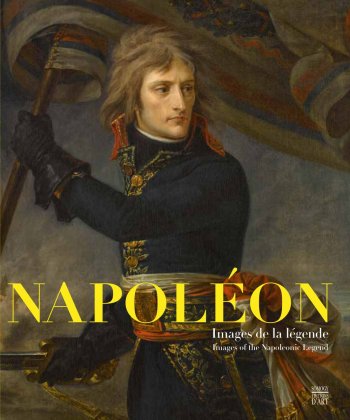 The exhibition will present a large selection of the Napoleonic collection from the palaces of Versailles and Trianon, which is the world’s largest on the subject. Visitors will be able to discover the history of Napoleon in chronological order, from General Bonaparte to the fallen Emperor.
The exhibition will also throw the spotlight on the Emperor’s close circle (family, important officers, imperial Court) and the Parisian and international societies of the time (artists, scholars, foreign sovereigns etc.) It will show how, from very early on, Napoleon wanted to write his own legend for posterity by commissioning multiple paintings commemorating key moments of his life. Paintings, sculptures, and furniture will reveal the wealth and quality of artistic production at the time and will lead visitors in the footsteps of Napoleon Bonaparte, whose unique destiny forever.
The exhibition is part of a partnership project between three major institutions: the region Hauts-de-France, the town of Arras, and the Palace of Versailles. This large-scale partnership was established in 2011, allowing collections from Versailles to be displayed in Arras. Major event-exhibitions are held alongside educational and cultural work in order to allow as many people as possible to discover the history and heritage of the Palace of Versailles.
The exhibition is curated by Frédéric Lacaille, Curator in charge of 19th-century paintings at the Musée National des Châteaux de Versailles et de Trianon, and Marie-Lys Marguerite, Director of Arras Musée des Beaux-Arts.
Frédéric Lacaille, ed., Napoléon: Images de la Légende (Paris: éditions Somogy, 2017), 280 pages, ISBN: 978 27572 12929, 28€.
The Burlington Magazine, October 2017
The eighteenth century in The Burlington:
The Burlington Magazine 159 (October 2017)
 A R T I C L E S
• Gauvin Alexander Bailey, “Rococo in Eighteenth-Century Beijing: Ornament Prints and the Design of the European Palaces at Yuanming Yuan,” pp. 778–88.
• J. P. Losty, “Eighteenth-Century Mughal Paintings from the Swinton Collection,” pp. 789–99.
R E V I E W S
• Rose Kerr, Review of John Ayers, Chinese and Japanese Works of Art in the Collection of Her Majesty The Queen (Royal Collection Trust, 2016), pp. 822–23.
• Marjorie Trusted, Review of Alan Chong, ed., Christianity in Asia: Sacred Art and Visual Splendour (Asian Civilizations Museum, 2016), pp. 823–24.
• Milo Beach, Review of Terence McInerney, Divine Pleasures: Painting from India’s Rajput Courts: The Kronos Collections (The Metropolitan Museum of Art, 2016), pp. 824–25.
• Aida Yuen Wong, Review of Petra ten-Doesschate Chu and Ning Ding, eds., Qing Encounters: Artistic Exchanges Between China and the West (Getty Publications, 2015), p. 826.
• David Bindman, Review of Elizabeth Einberg, William Hogarth: A Complete Catalogue of the Paintings (The Paul Mellon Centre for Studies in British Art, 2016), pp. 827–29.
• Robert O’Byrne, Review of Mark Clark, The Dublin Civic Portrait Collection: Patronage, Politics, and Patriotism, 1603–2013 (Four Courts Press, 2016), p. 832.
• Charles Beddington, Review of the exhibition Eyewitness Views: Making History in Eighteenth-Century Europe (The Getty Center, Los Angeles, 2017; Minneapolis Institute of Art, 2017; and The Cleveland Museum of Art, 2018), pp. 856–58.
New Book | Livre de Croquis de Gabriel de Saint-Aubin
From Musée du Louvre Éditions:
Xavier Salmon, Livre de Croquis de Gabriel de Saint-Aubin Peintre, 1760–1778 (Milan: Officina Libraria, 2017), 2 vols., 196 pages, ISBN: 978 889976 5385, £40 / €45.
 En 1783, soit trois années après la mort de Gabriel de Saint-Aubin, Pahin de la Blancherie indiquait que l’on n’avait jamais rencontré l’artiste « qu’un crayon à la main, dessinant tout ce qui se présentait à ses yeux ». Cependant, malgré cette passion du dessin, le chroniqueur de la vie parisienne fut bien vite oublié et il fallut attendre les Goncourt à la fin du XIXème siècle pour le redécouvrir. Chacun, dès lors, goûta l’art de Saint-Aubin et rechercha ses œuvres. Grand collectionneur du XVIIIe siècle français, Camille Groult entra en possession d’un exceptionnel carnet réunissant plus d’une centaine de pages sur lesquelles le maître avait griffonné son quotidien. Longtemps ce rarissime témoignage de l’art de Saint-Aubin demeura jalousement gardé. Edmond de Goncourt ne put en donner qu’un dépouillement incomplet. Quelques années après, Emile Dacier, grand spécialiste de l’artiste, ajouta quelques éléments nouveaux mais sans avoir obtenu de pouvoir examiner en détail le carnet. Le 20 novembre 1941, le Louvre en faisait l’acquisition. L’œuvre livrait enfin tous ses secrets. Dacier en reprit l’étude et publia en 1943 un opuscule de quarante planches.
Aujourd’hui, c’est l’ensemble du carnet qui est pour la première fois reproduit à l’échelle réelle et étudié de manière exhaustive. De petites dimensions (18 x 12,5 cm), et réunissant 108 pages dont 103 illustrées et annotées entre 1759 et 1778, l’ouvrage est un document inestimable. L’artiste nous invite à parcourir les rues de Paris, à découvrir certains de ses monuments, à partager avec lui quelques événements marquants ou bien encore à vivre le quotidien de son petit monde peuplé de si nombreuses jeunes femmes toutes occupées à la lecture, à la musique ou aux travaux d’aiguille. De sa fine écriture souvent si difficile à lire, il a couvert de jour comme de nuit les pages de nombreuses annotations, noms de collectionneurs, prix de denrées, maximes ou bien encore localisations. Pour qui aime le Paris du XVIIIe siècle, pour qui cherche à mieux connaître l’art de Saint-Aubin, le carnet du Louvre invite indéniablement à la plus passionnante des découvertes.
Distributed by ACC Publishing:
Gabriel de Saint-Aubin (Paris, 1724–1780) was “never seen without a pencil in his hand, intent in sketching all that appeared in front of his eyes.” His Livre de Croquis (sketchbook) is a veritable chronicle of Parisian life in the 18th century. Compiled between 1760 and 1778, it contains views of the streets and monuments of the ville lumière, scenes at the theatre or of a grand ball, portraits of young workers writing, sewing or playing an instrument. Saint-Aubin’s minute annotations are deciphered and explained in the commentary volume. The sketchbook, acquired from the heirs of Saint-Aubin, was guarded jealously in a private collection—and was, therefore, almost unknown—until 1941 when it was acquired by the Louvre. It has never before been reproduced in its entirety. Text in French.
Xavier Salmon is the director of the Prints and Drawings Department at the Musée du Louvre. He has curated many exhibitions and edited their catalogues. His book Fontainebleau: Le temps des Italiens was awarded the ‘grand prix de l’Académie Française’ in 2014.
Volume 1: Reproduction
Same size as the Louvre’s album containing the drawings
Volume 2: Commentary
• Introduction: Across Paris Accompanied by Gabriel de Saint-Aubin
• Description of the Sketchbook
• Bibliography
New Book | Highland Retreats
From Rizzoli:
Mary Miers, Highland Retreats: The Architecture and Interiors of Scotland’s Romantic North (New York: Rizzoli, 2017), 288 pages, ISBN: 978 08478 44760, $65.
 Featuring breathtaking photographs of some of Scotland’s most remarkable and little-known houses, this book tells the story of how incomers adopted the North of Scotland as a recreational paradise and left an astonishing legacy of architecture and decoration inspired by the romanticized image of the Highlands. Known as shooting lodges because they were designed principally to accommodate the parties of guests that flocked north for the annual sporting season, these houses range from Picturesque cottages ornées and Scotch Baronial castles to Arts and Crafts mansions and modern eco-lodges. While their designs respond to some of Britain’s wildest and most stirring landscapes, inside many were equipped with the latest domestic technology and boasted opulent decoration and furnishings from the smartest London and Parisian firms. A good number survive little altered in their original state, and some are still owned by descendants of the families that built them.
Images from the famous Country Life Picture Library and specially commissioned photographs evoke the dramatic settings and arresting detail of these houses, making the book as appealing to decorators and architectural historians as it is to travelers and sportsmen.
Mary Miers commutes between her home in the Scottish Highlands and the London offices of Country Life magazine, where she works as fine arts and books editor. Her books include American Houses: The Architecture of Fairfax & Sammons and The English Country House.
Paul Barker was one of England’s premier interior and architectural photographers, whose books included English Country House Interiors, The Drawing Room, and English Ruins.










 Enfilade
leave a comment