New Book | Penser le « petit » de l’Antiquité au premier XXe siècle
Addressing textual approaches and practices of artistic miniaturization from antiquity to the nineteenth century, this volume presents essays that grew out of a colloquium on the subject in October 2015. Available from Les libraires ensemble:
Sophie Duhem, Estelle Galbois et Anne Perrin Khelissa, eds., Penser le « petit » de l’Antiquité au premier XXe siècle: Approches textuelles et pratiques de la miniaturisation artistique (Lyon: Fage, 2017), 224 pages, ISBN: 978 284975 4306, 25€.
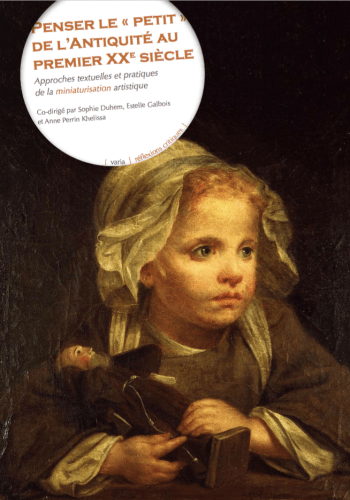 From Tanagra statuettes to the automata of the industrial age, there are many material manifestations of the ancient fascination with shapes, images, and tiny objects. Examples abound: carved micro-architectures of Gothic buildings, small engravings by Stefano della Bella or Sébastien Leclerc, eighteenth-century objects of vertu, and the Lilliputian creatures of children’s literature. Rare, however, are the historical sources that allow us to understand their cultural foundations. While the written sources usually consider the ‘small’ only in relationship to the ‘big’, the analysis of the consumption of these objects reveals a set of practical, symbolic, and artistic skills such as manoeuvrability, mobility, economy, poverty, preciousness, thoroughness, prettiness, and strangeness. Too often, the dominant sources focus on the size of the objects, diminishing other considerations. At times, miniaturization reduces the scale of a given object, while at other times it may be an independent creation governed by specific criteria. Whatever the case, miniaturization is based on a set of justifications, usages, and judgments that this conference aims to clarify.
C O N T E N T S
Essais introductifs
Sophie Duhem, Estelle Galbois, Anne Perrin Khelissa, Le « petit » : un concept opératoire pour penser l’art et son récit
Jean-Marie Guillouët, Une perspective préalable depuis le Moyen Âge : la question des échelles de l’œuvre
Partie 1 : Technique, esthétiques et fonctions du changement d’échelle
• Jan Blanc, Valeurs et enjeux théoriques du ‘petit’ à l’époque moderne
• Véronique Sarrazin, Le « format Collombat », ou comment le petit format d’un modeste livret est devenu une référence de goût et de commodité au xviiie siècle
• Tamara Préaud, Petits bibelots ou vraies sculptures ? L’exemple de Vincennes-Sèvres au xviiie siècle
• Cyril Lécosse, Stratégie de distinction chez les « pygmées de l’art » : peindre la miniature en grand autour de 1800
• Élodie Voillot, Un musée dans chaque foyer. Les réductions de sculptures, du grand art au petit bibelot, 1839–1900
Partie 2 : Luxe, préciosités et réceptions de l’objet minuscule
• Alice Delage, La microarchitecture dans l’orfèvrerie florentine : la Renaissance du « petit »
• Françoise Gilbert, Le sonnet 465 du « Parnasso espanol » : un petit bijou de la main de Quevedo
• Anne Perrin Khelissa, Menace sur le « grand » art. Le peuple des magots et des statuettes en porcelaine au Siècle des Lumières
• Michel Sandras, « La miette de Cellini / Vaut le bloc de Michel-Ange ». Petites formes et artisanat du style, 1830–1890
Partie 3 : Souvenir, circulations et pouvoirs mémoriels de l’objet miniature
• Rori Bloom, « Voilà mon portrait que je vous donne » : la boîte à portrait dans la littérature précieuse
• Manuel Charpy, Réductions, miniatures et fragments. La religion du souvenir et du passé dans les espaces intimes au xixe siècle
• Manuel Royo, « Voir le grand dans le petit », enjeux mémoriels de la maquette d’architecture : le cas de Rome à la fin du xixe siècle et au début du xx e siècle
• Claire Barbillon, Le paradoxe de la monumentalité en format réduit : la statuaire monumentale publique et la carte postale
Partie 4 : Poésie, images et représentations du « petit » monde
• François Ripoll, « Si parua licet componere magnis » (Georg., IV, 176) : la dialectique du « grand » et du « petit » dans les chants III et IV des Géorgiques de Virgile
• Vincent Robert-Nicoud, Grand débat sur le « petit » monde : l’homme microcosme de Rabelais à Scève
• Sarah Grandin, « Cironalité universelle » : taille, échelle et perspective dans L’Autre monde de Cyrano
• Nathalie Rizzoni, « Les Petits toure lourirette / Valent bien les grands » : les enfants sur les scènes de théâtre en France au premier xviiie siècle
Présentation des auteurs
2017 AAMC Awards Announced
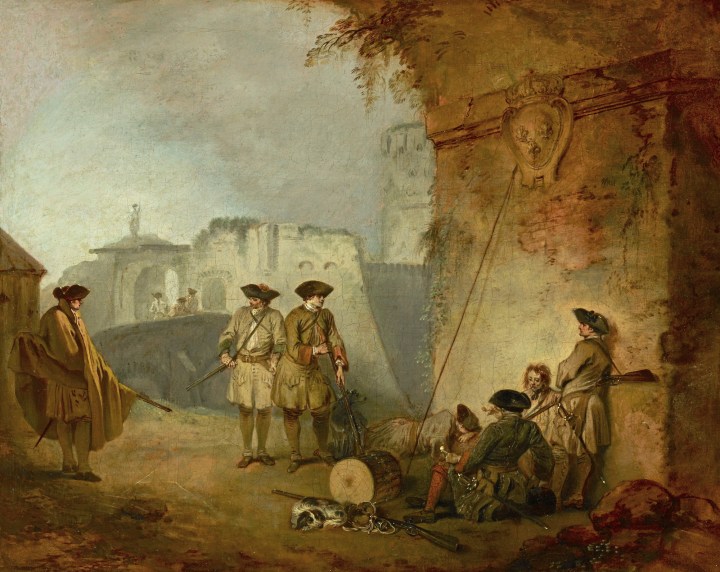
Jean-Antoine Watteau, The Portal of Valenciennes, ca. 1710–11, oil on canvas, 32.5 × 40.5 cm (New York: The Frick Collection, purchased with funds from the bequest of Arthemise Redpath, 91.1.173 / photo: Michael Bodycomb).
◊ ◊ ◊ ◊ ◊
Congratulations to Aaron Wile! His essay “Watteau and the Inner Life of War”—from the catalogue Watteau’s Soldiers: Scenes of Military Life in Eighteenth-Century France , published in conjunction with the exhibition that Wile also curated for The Frick Collection—was awarded the 2017 Prize for ‘Best Article, Essay, or Extended Catalogue Entry’ from the Association of Art Museum Curators (AAMC).
A full list of awards is available here»
New Book | Miniatur-Geschichten: Indian Painting at Dresden
Published by Sandstein Verlag and distributed in the U.S. by ISD:
Monica Juneja and Petra Kuhlmann-Hodick, eds., Miniatur-Geschichten: Die Sammlung indischer Malerei im Dresdner Kupferstich-Kabinett (Dresden: Sandstein Verlag, 2017), 256 pages, ISBN: 978 39549 82714, $28.
 Two collections, hitherto all but unknown, of Indian painting from the late 17th and early 18th centuries, which are part of the Dresden Copper Plate Cabinet, are the focus of these miniature stories. An inventory of the art collections of the Saxon Elector August the Strong, drawn up in 1738, lists a number of albums with portraits of Indian rulers and princes. In 1848, this collection was enlarged by a donation of 78 works, more diverse in terms of subject matter, from the estate of the German linguist and Indologist August Wilhelm Schlegel.
The catalog offers a representative selection of the Dresden inventory which was enriched by the recent donation of a Shahnama manuscript from Kashmir. The exhibition presents this inventory in the context of loans from Mumbai, London, Paris, Vienna, Amsterdam, and Berlin. Eleven essays in German and English discuss the background of, and provide insights into, the fascinating world of Indian painting.
C O N T E N T S
Dank
Förderer
Grußwort
Vorwort
E S S A Y S
with English summaries / mit deutschen Zusammenfassungen
• Petra Kuhlmann-Hodick, Berührungspunkte: Werke indischer Malerei im Dresdner Kupferstich-Kabinett
• Monica Juneja, Sehen, Begehren, Sammeln: Ästhetische Wahrnehmungen in den frühmodernen Bildkulturen Südasiens
• Vandana Prapanna, The Collections of the Chhatrapati Shivaji Maharaj Vastu Sangrahalaya, Mumbai
• Dipanwita Donde, Portraiture in Mughal Manuscripts: Re-Mapping the Portrait of Akbar between 1600 and 1700
• Ursula Weekes, Medallion Portraits in India and Europe
• Pauline Lunsingh Scheurleer, Indian Miniatures for Europe: The Dutch Market in the 17th and 18th Centuries
• Dirk Syndram, Der »Thron des Großmoguls«: Ein königlicher Traum vom Fernen Osten
• Roger Paulin, August Wilhelm Schlegel und Indien
• Jürgen Hanneder, August Wilhelm Schlegel als Indienforscher
• Olaf Simon, »… wie du hier sehen kannst«: Kunsttechnologische Untersuchungen und Restaurierung der indischen Bestände des Dresdner Kupferstich-Kabinetts
• Neha Berlia, From Timur to the Marathas: Dynasties of India as Represented in Late 17th- to Early 18th-Century Portrait Albums in European Collections
K A T A L O G
Sammlungsgeschichten. Heucher 1738 – Schlegel 1848
Blicke in die Welt indischer Malerei
Darbar und darshan. Porträtkunst und höfische Repräsentation
Prinzessinnen, Asketen, Helden. Genreszenen und Illustrationen
Zur Praxis der Miniaturmalerei
Die Gegenstandswelt der indischen Malerei
Aus den Rüstkammern indischer Fürstenhöfe
Aus dīwān, mardāna und zenāna
Götterbilder und Gebetsketten
Zahlungsmittel im Mogulreich
Kultureller Austausch
Motiv-Wanderungen zwischen Indien und Europa
Berichte und Reisebeschreibungen der Barockzeit
August Wilhelm Schlegel. Indologe und Sammler
Literatur
Personenregister
Bildnachweis
Abkürzungen
Impressum
New Book | Heaven, Hell, and Everything in Between
From University of Texas Press:
Ananda Cohen Suarez, Heaven, Hell, and Everything in Between: Murals of the Colonial Andes (Austin: University of Texas Press, 2016), 304 pages, ISBN: 978 14773 09544 (hardcover), $90 / ISBN: 978 14773 09551 (softcover), $30.
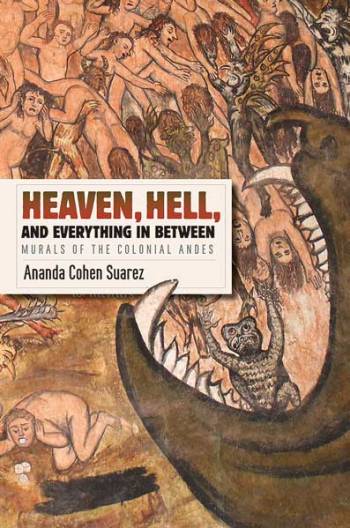 This first comprehensive English-language study of the church-wall paintings created in Peru’s Cuzco region from the sixteenth through the early nineteenth centuries unveils the complex intersections of religious artists, indigenous congregants, and colonizers.
Examining the vivid, often apocalyptic church murals of Peru from the early colonial period through the nineteenth century, Heaven, Hell, and Everything in Between explores the sociopolitical situation represented by the artists who generated these murals for rural parishes. Arguing that the murals were embedded in complex networks of trade, commerce, and the exchange of ideas between the Andes and Europe, Ananda Cohen Suarez also considers the ways in which artists and viewers worked through difficult questions of envisioning sacredness.
This study brings to light the fact that, unlike the murals of New Spain, the murals of the Andes possess few direct visual connections to a pre-Columbian painting tradition; the Incas’ preference for abstracted motifs created a problem for visually translating Catholic doctrine to indigenous congregations, as the Spaniards were unable to read Inca visual culture. Nevertheless, as Cohen Suarez demonstrates, colonial murals of the Andes can be seen as a reformulation of a long-standing artistic practice of adorning architectural spaces with images that command power and contemplation. Drawing on extensive secondary and archival sources, including account books from the churches, as well as on colonial Spanish texts, Cohen Suarez urges us to see the murals not merely as decoration or as tools of missionaries but as visual archives of the complex negotiations among empire, communities, and individuals.
C O N T E N T S
Acknowledgements
Introduction
1 The Painted Walls of the Andes: Chronology, Techniques, and Meanings
2 The Road to Hell is Paved with Flowers: Journeys to the Afterlife at the Church of Andahuaylillas
3 Clothing the Architectonic Body: Textile Murals of the Seventeenth and Eighteenth Centuries
4 Turning the Jordan River into a Pacarina: Murals of the Baptism of Christ at the Churches of Urcos and Pitumarca
5 Earthly Violence/Divine Justice: Tadeo Escalante’s Murals at the Church of Huaro
Conclusion
Notes
Bibliography
Index
New Book | Magical Manuscripts in Early Modern Europe
From Palgrave Macmillan:
Daniel Bellingradt and Bernd-Christian Otto, Magical Manuscripts in Early Modern Europe: The Clandestine Trade In Illegal Book Collections (London: Palgrave Macmillan, 2017), ISBN 978 3319 595245, $60.
This book presents the story of a unique collection of 140 manuscripts of ‘learned magic’ that was sold for a fantastic sum within the clandestine channels of the German book trade in the early eighteenth century. The book will interpret this collection from two angles—as an artefact of the early modern book market as well as the longue-durée tradition of Western learned magic—thus taking a new stance towards scribal texts that are often regarded as eccentric, peripheral, or marginal. The study is structured by the apparent exceptionality, scarcity, and illegality of the collection and provides chapters on clandestine activities in European book markets, questions of censorship regimes and efficiency, the use of manuscripts in an age of print, and the history of learned magic in early modern Europe. As the collection has survived till this day in Leipzig University Library, the book provides a critical edition of the 1710 selling catalogue, which includes a brief content analysis of all extant manuscripts. The study will be of interest to scholars and students from a variety of fields, such as early modern book history, the history of magic, cultural history, the sociology of religion, or the study of Western esotericism.
Daniel Bellingradt is Professor of Book Studies at Erlangen-Nuremberg University, Germany, co-editor of the German Yearbook for the History of Communications and co-editor of Books in Motion in Early Modern Europe: Beyond Production, Circulation, and Consumption (2017).
Bernd-Christian Otto is postdoctoral researcher at the Max Weber Center for Advanced Cultural and Social Studies at the University of Erfurt, Germany. His book publications include Magie: Rezeptions- und diskursgeschichtliche Analysen von der Antike bis zur Neuzeit (2011) and, as co-editor, Defining Magic: A Reader (2013) and History and Religion: Narrating a Religious Past (2015).
Exhibition | Lives Bound Together: Slavery at Mount Vernon
◊ ◊ ◊ ◊ ◊
Now on view at Mount Vernon:
Lives Bound Together: Slavery at George Washington’s Mount Vernon
The Donald W. Reynolds Museum, Mount Vernon, 1 October 2016 –30 September 2017
Mount Vernon was George Washington’s home. It was also home to hundreds of enslaved people who lived and worked under Washington’s control: in 1799, there were 317 men, women, and children enslaved at Mount Vernon’s five farms, which covered 8,000 acres. They made up more than 90% of the population of the estate.
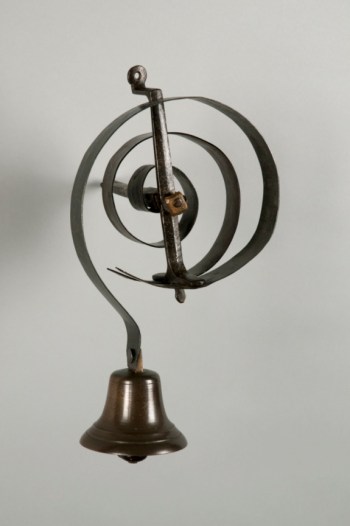
House Bell, ca. 1784–88; Copper alloy, iron (Mount Vernon).
Through household furnishings, art works, archaeological discoveries, documents, and interactive displays, the exhibition, which spans 4,400 square feet throughout all seven galleries of the Donald W. Reynolds Museum, demonstrates how closely intertwined the lives of the Washingtons were with those of the enslaved. Nineteen enslaved individuals are featured throughout the exhibit, represented with life-size silhouettes and interactive touchscreens providing biographical details.
More than 350 items are on view—seeds and animal bones, ceramic fragments, and metal buttons unearthed from archaeological excavations around the estate, as well as fine tablewares and furniture from the Washington household, providing insights into the enslaved community’s daily lives and work. Guests gain a better understanding of Washington’s changing views towards slavery, culminating in his landmark decision to include in his will a provision freeing the slaves that he owned. Visitors will have an opportunity to view original manuscript pages from George Washington’s will, written in July 1799, showing his decision to free the slaves he owned. The exhibition profiles 19 individuals enslaved at Mount Vernon, using George Washington’s extensive records to piece together what is known of their lives in interactive displays.
Susan P. Schoelwer, ed., with an introduction by Annette Gordon-Reed, Lives Bound Together: Slavery at George Washington’s Mount Vernon (2016), 172 pages, ISBN: 978 970931 9170, $20.
Lives Bound Together provides fresh research on this important topic, with brief biographies of 19 enslaved individuals, 10 essays, and 130 illustrations, including paintings, prints, and household furnishings from the Mansion, artifacts excavated by archaeologists from the slave quarters, documents, maps, and conjectural silhouettes that suggest the presence of the enslaved.
Exhibition | Peter the Great: A Tsar in France, 1717
Press release for the exhibition at Versailles, with thanks to Elizabeth Jane Timms for noting it:
Peter the Great: A Tsar in France, 1717
Grand Trianon, Château de Versailles, 30 May — 24 September 2017
Cuarated by Gwenola Firmin, Thierry Sarmant, and George Vilinbakhov
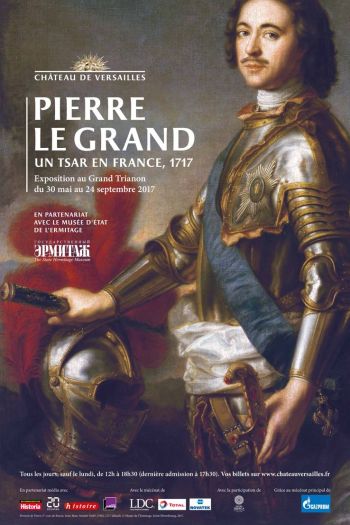 The exhibition Peter the Great: A Tsar in France, 1717 will be on display in the Grand Trianon from 30 May to 24 September 2017. It is dedicated to Tsar Peter the Great’s trip in and around Paris in May and June 1717 and will commemorate the 300th anniversary of this diplomatic visit. The fruit of exceptional collaboration between the Palace of Versailles and the Hermitage Museum, the exhibition will present over 150 works including paintings, sculptures, decorative artworks, and tapestries, as well as plans, medallions, scientific instruments, books and manuscripts, two thirds of which belong to the collections of the prestigious museum in Saint Petersburg.
A member of the house of Romanov and son of Tsar Alexis Mikhailovich (1645–1676) and Nataliya Naryshkina (1651–1694), Peter I (1672–1725) embarked on a second journey to the West twenty years after the Grand Embassy, which took him to Europe for the first time in 1697–98. He arrived in France on 21 April 1717 and remained until 21 June. He stayed at Versailles twice and was accommodated in the Grand Trianon, from 24 to 26 May and from 3 to 11 June. The exhibition will lead visitors step by step through the trip, which, although official, nonetheless allowed a certain amount of freedom since Peter I, being little accustomed to French etiquette and with his imposing figure and unpredictability, departed from protocol on multiple occasions. His encounter with Louis XV particularly shocked onlookers when, flouting the ceremonial custom of the court, he spontaneously took the young king, aged 7, in his arms. A number of memorialists, including Saint-Simon, the Marquis de Dangeau and Jean Buvat, left precious testimonies allowing us to retrace the journey.
Although there were political and economic aims to the stay—a project for an alliance with France against Sweden and the signature of a trade agreement—the reforming Tsar and founder of modern Russia most particularly wanted to see the finest of France in order to adapt certain models for his own empire. During the two months that Peter the Great spent in Regency Paris, his visits and discussions with French people provided him with food for thought and had an influence on the works he started in 1703 in Saint Petersburg and the surrounding area.
Pierre le Grand: Un Tsar en France, 1717 (Paris: 2017), 240 pages, ISBN: 978 23590 62014, 38€.
Curators
• Gwenola Firmin Curator in charge of paintings from the 18th century at the Palace of Versailles
• Thierry Sarmant Chief curator, head of the Archives historic Center, historic department of the Defence
• George Vilinbakhov Vice-director of the State Hermitage Museum in Saint Petersburg
New Book | Collecting the World: Hans Sloane
From the Royal College of Physicians:
James Delbourgo, The Life and Curiosity of Hans Sloane
Royal College of Physicians, London, 7 June 2017
This lecture by Professor James Delbourgo explores the astonishing story of Sir Hans Sloane, a young Irish doctor who became one of the greatest physicians, collectors, and figures of the eighteenth century. Wednesday, 7 June 2017, 18:00–20:00. Please note that places for this free event are extremely limited and advance booking is essential. For additional details, please see the Royal College of Physicians website.
◊ ◊ ◊ ◊ ◊
From Harvard UP:
James Delbourgo, Collecting the World: Hans Sloane and the Origins of the British Museum (Cambridge: Belknap Press, 2017), 544 pages, ISBN 978 06747 37334, $35 / £28 / €32.
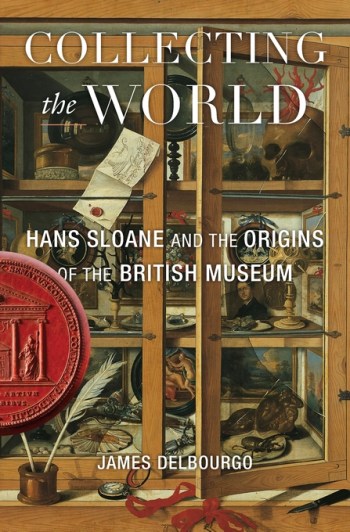 In 1759 the British Museum opened its doors to the general public—the first free national museum in the world. James Delbourgo’s biography of Hans Sloane recounts the story behind its creation, told through the life of a figure with an insatiable ambition to pit universal knowledge against superstition and the means to realize his dream.
Born in northern Ireland in 1660, Sloane amassed a fortune as a London society physician, becoming a member of the Whig establishment and president of the Royal Society and Royal College of Physicians. His wealth and contacts enabled him to assemble an encyclopedic collection of specimens and objects—the most famous cabinet of curiosities of its time. For Sloane, however, collecting a world of objects meant collecting a world of people, including slaves. His marriage to the heir of sugar plantations in Jamaica gave Sloane access to the experiences of planters and the folkways of their human property. With few curbs on his passion for collecting, he established a network of agents to supply artifacts from China, India, North America, the Caribbean, and beyond. Wampum beads, rare manuscripts, a shoe made from human skin—nothing was off limits to Sloane’s imagination. This splendidly illustrated volume offers a new perspective on the entanglements of global scientific discovery with imperialism in the eighteenth century. The first biography of Sloane based on the full range of his writings and collections, Collecting the World tells the rich and complex story of one of the Enlightenment’s most controversial luminaries.
James Delbourgo is Associate Professor of History at Rutgers University.
◊ ◊ ◊ ◊ ◊
C O N T E N T S
List of Illustrations
List of Maps
Introduction: The Original Sloane Ranger
I. Empire of Curiosities
1 Transplantation
2 Island of Curiosities
3 Keeping the Species from Being Lost
II. Assembling The World
4 Becoming Hans Sloane
5 The World Comes to Bloomsbury
6 Putting the World in Order
7 Creating the Public’s Museum
Conclusion: The Man Who Collected the World
Acknowledgements
Notes
Bibliography
Index
Exhibition | The Lure of Italy: Artists’ Views
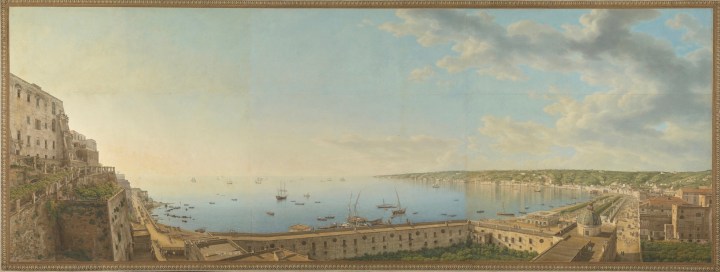
Giovanni Battista Lusieri, A View of the Bay of Naples, Looking Southwest from the Pizzofalcone towards Capo di Posilippo, 1791; watercolor, gouache, graphite, and pen and ink on six sheets of paper; unframed: 102 × 272 cm (Los Angeles: The J. Paul Getty Museum, 85.GC.281).
◊ ◊ ◊ ◊ ◊
Press release (20 April 2017) for the exhibition now on view at The Getty:
The Lure of Italy: Artists’ Views
The Getty Center, Los Angeles, 9 May — 30 July 2017
Curated by Julian Brooks with Annie Correll
For centuries, Italy has fascinated travelers and artists alike. From the crumbling ruins of ancient Rome to the crystal-clear light of Venice, artists have found inspiration not only in the cities but also in the countryside and in Italy’s rich history and culture. The Lure of Italy: Artists’ Views explores the numerous ways Italy’s topography, history, and culture have motivated artists to create works of extraordinary beauty and resonance. The exhibition, selected from the Getty Museum’s permanent collection of drawings and watercolors, includes several important recent acquisitions, including works by Francesco Guardi and Richard Parkes Bonington.
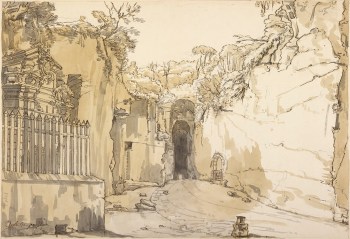
Claude-Joseph Vernet, The Entrance to the Grotto at Posillipo, ca. 1750; pen and brown ink with brown and gray wash over black chalk, 34 × 49 cm (Los Angeles: The J. Paul Getty Museum, 97.GG.53).
“For many, Italy represented—and still represents today—a stunningly lush treasure of scenic wonder, with picturesque ancient sculptures, historic buildings, and dramatic landscapes,” says Timothy Potts, director of the J. Paul Getty Museum. “This exhibition bears witness to the long-standing love affair that artists have had with the country of Italy.”
Italy—a collection of city-states until unification in the 1800s—has captured the imagination of artists for centuries, yet interest in the country peaked in the 1700s, when the region became a prime destination for wealthy travelers embarking on the Grand Tour from England, France, the Netherlands, Germany, and beyond. Artists journeying with them or working for them used pencil, ink, and watercolor to capture celebrated views and preserve vivid memories, creating works that encapsulate the essence and spirit of Italy.
Italian natives such as Guardi, Canaletto, and Giovanni Battista Lusieri responded to the tourist demand for souvenirs by crafting their own masterpieces. Guardi’s A Regatta on the Grand Canal (about 1778), a recent acquisition for the Getty, conveys with freshness and spontaneity the lively atmosphere of the annual gondola race (regatta) in Venice. The finish line is at left and spectators crowd the balconies of the nearby Palazzo Balbi, while the water bustles with decorated gondolas.
Further south, the Bay of Naples was another favorite destination of Grand Tourists. Lusieri’s huge, nearly nine-foot wide panorama, A View of the Bay of Naples (about 1791) is meticulously executed in tiny detail with watercolor. It was painted over a period of two years from the residence of Sir William Hamilton, the British envoy to the court of Naples, who commissioned it for his London home. The view looks towards the Capo di Posillipo and the so-called grotto there, a feat of ancient-Roman engineering.
Other highlights include sketches of enchanting sites with plunging perspectives through the rich Italian countryside, capriccio scenes caught between fantasy and reality, studies of ancient ruins, Roman landmarks and lauded works of art, and views of the most picturesque and awe-inspiring sights that Italy has to offer.
During his only visit to Venice, two years prior to his death at age 25 from tuberculosis, Richard Parkes Bonington made numerous pencil sketches and a handful of oil and watercolor studies of the city. The jewel-like Riva degli Schiavoni, from near San Biagio, Venice (1826) emphasizes his renowned ability to capture the effects of calm water and dramatic cloud formations in watercolor. This match of subject and media helped to make the magical atmosphere of the city the real subject of his work. “The extraordinary character of Italian cityscapes and landscapes pushed artists to the limits of their potential,” says Julian Brooks, senior curator of drawings at the J. Paul Getty Museum. “To render them effectively, the choices of media and technique became crucial.”
The Lure of Italy: Artists’ Views is curated by Brooks, with the assistance of Annie Correll, graduate intern in the Department of Drawings. The exhibition is presented in conjunction with Eyewitness Views: Making History in Eighteenth-Century Europe (9 May — 30 July 2017) on view in the Special Exhibitions Pavilion at the J. Paul Getty Museum.
The exhibition checklist is available as a PDF file here»
S E L E L E C T E D P R O G R A M M I N G
Peter Björn Kerber, Venice vs. Rome: A Capital Contest
Saturday, May 13, 3:00pm
Pitting gilded gondolas against sumptuous coaches, Venice and Rome sought to surpass each other in staging the eighteenth century’s most spectacular festivals and celebrations. Peter Bjorn Kerber, curator of the exhibition Eyewitness Views: Making History in Eighteenth-Century Europe, explores the pictures Canaletto, Panini, and other leading painters produced to record these dazzling occasions.
Julian Brooks, The Bumpy Road to Beautiful Italy
Sunday, June 4, 3:00pm
With one eye on the practicalities and perils of travel in Italy in past centuries, Julian Brooks, senior curator of drawings at the Getty, discusses some of the works of art made by visitors to the country, and how they responded to—and fueled—the lure of Italy.
From The Getty Shop:
Julian Brooks, The Lure of Italy: Artists’ Views (Los Angeles: Getty Publications, 2017), 96 pages, ISBN: 978 160606 5198, $20.
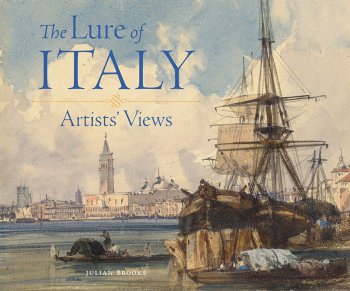 For centuries Italy has fascinated travelers and artists. From the crumbling ruins of ancient Rome to the crystal-clear light of Venice, artists have found inspiration not only in the cities but also in the countryside and in the deep history and culture. From as early as the 1500s, artists visiting from France, England, the Netherlands, and Germany drew sketches to preserve vivid memories, often creating work of extraordinary atmosphere and beauty in the process. A growing number of tourists in the subsequent centuries fueled a further demand for souvenir views, spurring local artists to craft their own masterpieces.
This lovely book is a narrated assemblage of some of these beautiful views, which transport the reader effortlessly to Italy, rekindling memories, setting intentions, or provoking curiosity. The text provides new insights into the topographical renditions of Italian scenes over the centuries, while compelling illustrations of works from the Getty collection by artists such as Richard Parkes Bonington, J. M. W. Turner, Claude Lorrain, Giovanni Battista Lusieri, Canaletto, and many more capture the essence and spirit of Italy.
Julian Brooks is senior curator and head of the Department of Drawings at the J. Paul Getty Museum, where he has organized and co-organized numerous exhibitions. Among his many publications are Andrea del Sarto: The Renaissance Workshop in Action (Getty Publications, 2015) and Master Drawings Close-Up (Getty Publications, 2010).
Exhibition | Eyewitness Views: Making History
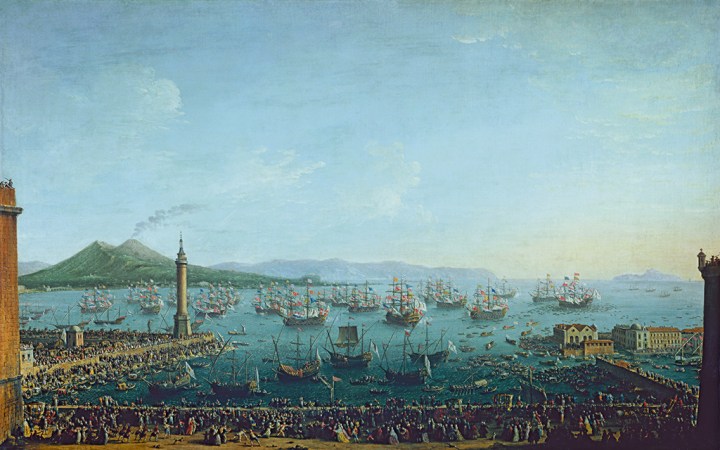
Antonio Joli, Departure of Charles III from Naples to Become King of Spain, 1759, oil on canvas
(Madrid: Museo Nacional del Prado)
◊ ◊ ◊ ◊ ◊
Opening tomorrow at The Getty:
Eyewitness Views: Making History in Eighteenth-Century Europe
The Getty Center, Los Angeles, 9 May — 30 July 2017
Minneapolis Institute of Art, 10 September — 31 December 2017
The Cleveland Museum of Art, 25 February — 20 May 2018
Curated by Peter Björn Kerber
From Paris to Venice to Rome, Europe’s most iconic cities have played host to magnificent ceremonies and dramatic events—and artists have been there to record them. During the eighteenth century, princes, popes, and ambassadors commissioned master painters such as Canaletto and Panini to record memorable moments, from the Venetian carnival to eruptions of Vesuvius, inspiring what became the golden age of view paintings.
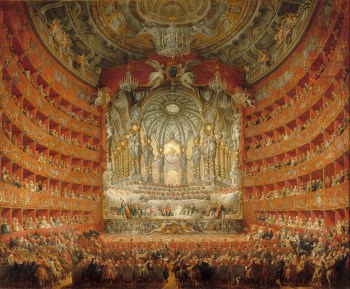
Giovanni Paolo Panini, The Musical Performance in the Teatro Argentina in Honor of the Marriage of the Dauphin, 1747, oil on canvas (Paris: Musée du Louvre)
This is the first exhibition to focus on view paintings as depictions of contemporary events. These reportorial works visually record occasions ranging from royal celebrations to state visits, religious ceremonies, sporting contests, and natural disasters. Their dates correspond to the golden age of European view painting from the beginning of the eighteenth century to the eve of the French Revolution. Through immersive compositions and a wealth of acutely observed detail, artists skillfully created the illusion that the viewer is present on the scene as history is made.
Memory & Manipulation
Members of the highest echelons of European society, from kings and popes to doges and ambassadors, commissioned view painters to commemorate the spectacular events staged at their command or for their benefit. In many cases, these noble patrons are themselves portrayed in the resulting canvases. While artists cultivated the impression that they were faithful chroniclers capturing an event on canvas just as they had witnessed it, they were in fact not above manipulating or ‘improving’ upon reality in order to meet the expectations of their status-conscious clientele.
Civic & Religious Ritual
In Europe’s major cities, the populace gathered throughout the year to commemorate local historic events, celebrate religious feast days, or participate in public rituals. Whether sacred or secular in character, these occasions were always imbued with civic pride. They were also among the few times when the different social classes interacted with each other and shared a common experience. Religious processions typically involved a revered object—such as the Blessed Sacrament, a relic, or a statue—that was carried through the streets with pomp and fanfare. A city’s deliverance from devastating epidemics of bubonic plague was commemorated with recurring festivals of thanksgiving and supplication, since the threat of a resurgence remained very real in the eighteenth century.
Festival & Spectacle
In eighteenth-century Europe, Venice was the undisputed capital of pageantry and entertainment. Undaunted by its political and economic decline, the Serene Republic and its aristocracy invested vast sums in maintaining its traditional ceremonies and dazzling its visitors—for example, by commissioning a new version of the Bucintoro, the lavishly gilded state barge used only on Ascension Day. Financial considerations were also brushed aside to provide extravagant entertainments for kings or princes staying in the city. The grandest of these special events was a ceremonial regatta. In Rome, a comparable level of opulence was seen in the French embassy’s celebrations of royal births and marriages.
Disaster & Destruction
Images of tragic events satisfied a desire for paintings that stimulated the imagination. Whether they showed devastation caused by warfare, fire, natural disaster, or political turmoil, these works offered viewers the thrill of witnessing a catastrophe. They stand apart from most other reportorial paintings in that they downplay the presence of rulers and nobility in favor of depicting the lower classes. Such figures were rarely intended to be recognizable likenesses of actual people. Instead, they serve as proxies through which viewers are able to funnel their own reactions to unfolding calamity.
From The Getty Store:
Peter Björn Kerber, Eyewitness Views: Making History in Eighteenth-Century Europe (Los Angeles: Getty Publications, 2017), 252 pages, ISBN: 978-160606 5259, $45.
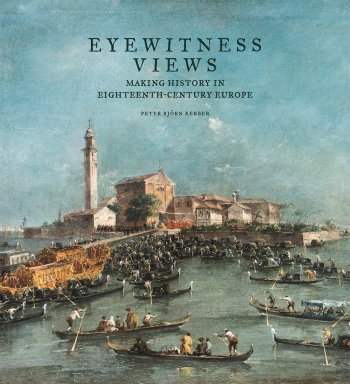 Canaletto, Bernardo Bellotto, Luca Carlevarijs, Giovanni Paolo Panini, Francesco Guardi, Hubert Robert—these renowned view painters are perhaps most famous for their expansive canvases depicting the ruins of Rome or the canals of Venice. Many of their most splendid paintings, however, feature important contemporary events. These occasions motivated some of the greatest artists of the era to produce their most exceptional work. Little explored by scholars, these paintings stand out by virtue of their extraordinary artistic quality, vibrant atmosphere, and historical interest. They are imbued with a sense of occasion, even drama, and were often commissioned by or for rulers, princes, and ambassadors as records of significant events in which they participated.
Lavishly illustrated and meticulously researched, this volume provides the first-ever comprehensive study—in any language—of this type of view painting. In examining these paintings alongside the historical events depicted in them, Peter Bjorn Kerber carefully reconstructs the meaning and context these paintings possessed for the artists who produced them and the patrons who commissioned them, as well as for their contemporary viewers.
Peter Björn Kerber is assistant curator of paintings at the J. Paul Getty Museum.










 Enfilade
leave a comment