New Book | Plans of the Earl of Mar
From Four Courts Press:
Margaret Stewart, The Architectural, Landscape and Constitutional Plans of the Earl of Mar, 1700–32 (Dublin: Four Courts Press, 2016), 448 pages, ISBN: 978 18468 25750, £55.
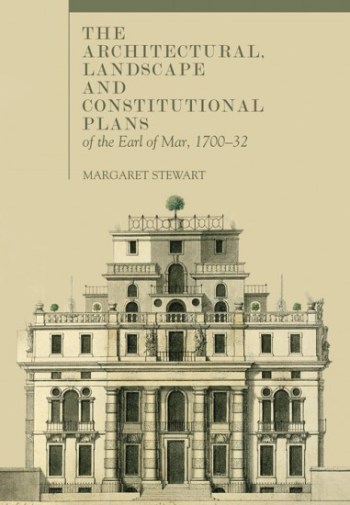 Politics, architecture, landscapes, city designs, and infrastructure planning were the substance of the creative thinking of John Erskine, Earl of Mar (1675–1732) before and after the Anglo-Scottish Union of 1707. Condemned as a traitor after he led and lost the Jacobite Rising of 1715, Mar devoted his time in exile to creating a new constitution for the UK in which England, Ireland, and Scotland would become equal partners in a federation with France for the enduring peace of Europe. Richly illustrated with Mar’s magnificent designs for cities, palaces, and houses, this is the first book about this controversial figure.
Margaret Stewart was born and educated in Edinburgh. She is an art historian and curator and is currently a lecturer in architectural history at University of Edinburgh.
New Book | Building the British Atlantic World
From The UNC Press:
Daniel Maudlin and Bernard Herman, eds., Building the British Atlantic World: Spaces, Places, and Material Culture, 1600–1850 (Chapel Hill: The University of North Carolina Press, 2016), 352 pages, ISBN: 978 14696 26826, $40.
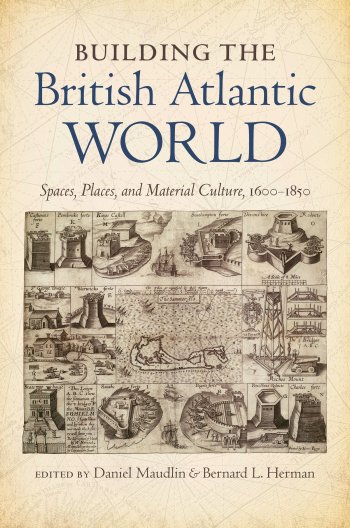 Spanning the North Atlantic rim from Canada to Scotland, and from the Caribbean to the coast of West Africa, the British Atlantic world is deeply interconnected across its regions. In this groundbreaking study, thirteen leading scholars explore the idea of transatlanticism—or a shared ‘Atlantic world’ experience—through the lens of architecture, built spaces, and landscapes in the British Atlantic from the seventeenth century through the mid-nineteenth century. Examining town planning, churches, forts, merchants’ stores, state houses, and farm houses, this collection shows how the powerful visual language of architecture and design allowed the people of this era to maintain common cultural experiences across different landscapes while still forming their individuality.
By studying the interplay between physical construction and social themes that include identity, gender, taste, domesticity, politics, and race, the authors interpret material culture in a way that particularly emphasizes the people who built, occupied, and used the spaces and reflects the complex cultural exchanges between Britain and the New World.
Daniel Maudlin is Professor of Early Modern History at the University of Plymouth. Bernard L. Herman is George B. Tindall Distinguished Professor of Southern Studies and Folklore at the University of North Carolina at Chapel Hill.
C O N T E N T S
Daniel Maudlin and Bernard Herman, Introduction
Part I: Empire and Government
1 Emily Mann, To Build and Fortify: Defensive Architecture in the Early Atlantic Colonies
2 Carl Lounsbury, Seats of Government: The Public Buildings of British America
3 Anna O. Marley, Landscapes of the New Republic at Thomas Jefferson’s Monticello
Part II: Religion and the Churches
4 Peter Guillery, English Artisans’ Churches and North America: Traditions of Vernacular Classicism in the Eighteenth Century
5 Peter Benes, The New England Meetinghouse: An Atlantic Perspective
6 Alison Stanley, The Praying Indian Towns: Encounter and Conversion through Imposed Urban Space
Part III: Commerce, Traffic, and Trade
7 Christopher DeCorse, Tools of Empire: Trade, Slaves, and the British Forts of West Africa
8 Louis P. Nelson, The Falmouth House and Store: The Social Landscapes of Caribbean Commerce in the Eighteenth Century
9 Kenneth Morgan, Building British Atlantic Port Cities: Bristol and Liverpool in the Eighteenth Century
Part IV: Houses and the Home
10 Stephen Hague, Building Status in the British Atlantic World: The Gentleman’s House in the English West Country and Pennsylvania
11 Bernard Herman, Parlor and Kitchen in the Borderlands of the Urban British American Atlantic World, 1670–1720
12 Lee Morrissey, Palladianism and the Villa Ideal in South Carolina: The Transatlantic Perils of Classical Purity
13 Daniel Maudlin, Politics and Place-Making on the Edge of Empire: Loyalists, Highlanders, and the Early Farmhouses of British Canada
Selected Bibliography
Contributors
Index
Exhibition | The Philosophy Chamber
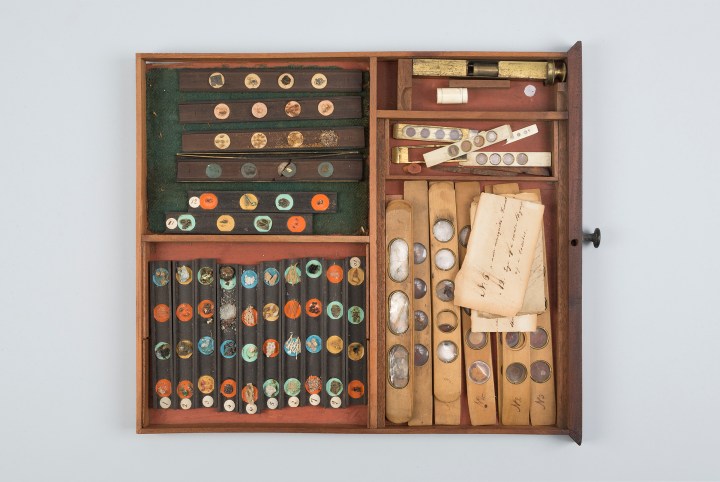
William and Samuel Jones, Jones’s Most Improved and Solar Compound Microscope, ca. 1798; drawer removed from box, displaying slides, mounted specimens, and accessories; brass, glass, and mahogany, with slides of paper and organic materials (Collection of Historical Scientific Instruments, Harvard University, 1184).
◊ ◊ ◊ ◊ ◊
Press release from Harvard Art Museums:
The Philosophy Chamber: Art and Science in Harvard’s Teaching Cabinet, 1766–1820
Harvard Art Museums, Cambridge, 19 May — 31 January 2017
The Hunterian, University of Glasgow, 23 March — 24 June 2018
Curated by Ethan Lasser
This spring, the Harvard Art Museums will present The Philosophy Chamber: Art and Science in Harvard’s Teaching Cabinet, 1766–1820, a special exhibition that brings together many long-forgotten icons of American culture. It will present new findings on this unique space—equal parts laboratory, picture gallery, and lecture hall—that stood at the center of artistic and intellectual life at Harvard and in New England for more than 50 years.
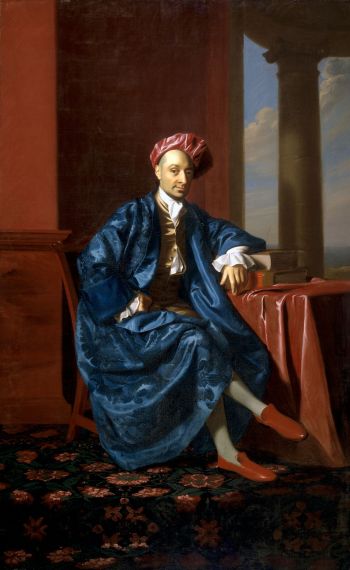
John Singleton Copley, Nicholas Boylston, 1773,oil on canvas (Harvard University Portrait Collection, H20, Harvard Art Museums).
Celebrated at the time as one of the grandest spaces in America, the original Philosophy Chamber and its adjacent rooms housed an extraordinary collection of paintings, portraits, and prints; mineral, plant, and animal specimens; scientific instruments; indigenous American artifacts; and relics from the ancient world—all of which was used regularly for lectures, discussions, and demonstrations. Highlights include: full-length portraits by John Singleton Copley, Native Hawaiian feather work, carving by indigenous artists of the Northwest Coast, Stephen Sewall’s 1768 mural-sized copy of the Native American inscription on the famous Dighton Rock in southeastern Massachusetts, and the elaborately ornamented grand orrery (a model of the solar system) created by Joseph Pope between 1776 and 1787. Many of the objects in the exhibition have not been shown publicly since the collection was dispersed almost 200 years ago.
The reassembled Philosophy Chamber invites visitors to examine the role that images and objects play in building, organizing, and transmitting knowledge; and as a historical study, it deepens our understanding not only of Harvard’s past, but also the history of early American art and culture.
The exhibition presents more than 70 objects from the earliest days of Harvard’s collecting, shown together with a small group of objects with 18th-century American provenances that closely match the description of original pieces in the collection that have been lost or destroyed, or that survive but are too fragile for display. In addition, the show includes period representations of other teaching cabinets to contextualize the material on display. The exhibition’s accompanying catalogue expands on the research into the chamber’s collection, history, and uses, presenting information on the approximately 200 objects that have been tracked thus far—just one-fifth of the original collection once housed in Harvard Hall.
The exhibition and catalogue provide a 360-degree view of early American history through the examination of the artwork displayed in the Philosophy Chamber, the instruments and specimens handled by the students and faculty who met there, and the cultural artifacts dispatched to the college by foreign envoys and the nation’s first merchant explorers. The project considers what the convergence of these objects in a New World college can tell us about the transfer of knowledge, burgeoning trade, the role of collections, and New England’s emerging self-identity in the mid-18th to early 19th century.
“Rooted in deep research and fresh curatorial insight, this exhibition invites audiences—both American and international—to explore a cultural landmark of the 18th-century Atlantic World,” said Martha Tedeschi, the Elizabeth and John Moors Cabot Director of the Harvard Art Museums. “Our efforts to unearth this largely forgotten landmark of early American art and culture led us to map collections, library archives, herbaria, and other museums across campus, in addition to public and private institutions throughout the Northeast and abroad. Thanks to this exceptional cross-institutional collaboration, we can present an immersive interdisciplinary experience that brings an important period of history to life for all visitors.”
“Weaving together art and science, this exhibition considers one of the most vibrant spaces in early America and presents a veritable cross-section of the period’s art and material culture,” said Ethan W. Lasser, curator of the exhibition, and the Theodore E. Stebbins Jr. Curator of American Art and head of the Division of European and American Art at the Harvard Art Museums. “The Philosophy Chamber opens a window into a forgotten piece of American history; the story of this room intersects with some of the most admirable—and the most challenging—aspects of Harvard’s past.”
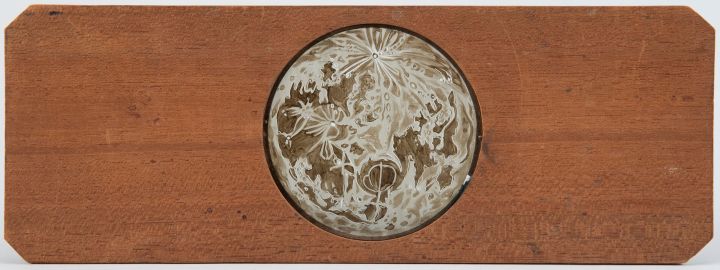
Unknown maker, possibly William and Samuel Jones, Lantern Slide of Painted Moon, late 18th century; painted glass and wood (Collection of Historical Scientific Instruments, Harvard University, 1998-1-1272).
◊ ◊ ◊ ◊ ◊
History of the Philosophy Chamber
Between 1766 and 1820, Harvard College assembled an extraordinary collection of specially commissioned scientific instruments and benefactor portraits, as well as donations from supporters around the globe. These objects were displayed in a set of three rooms adjacent to the college library in Harvard Hall, a large brick building that still stands at the center of campus today. The largest of these spaces, the Philosophy Chamber, was an ornately decorated room named for the discipline of natural philosophy, a field of study that wove together the sciences that sought to explain the natural world.
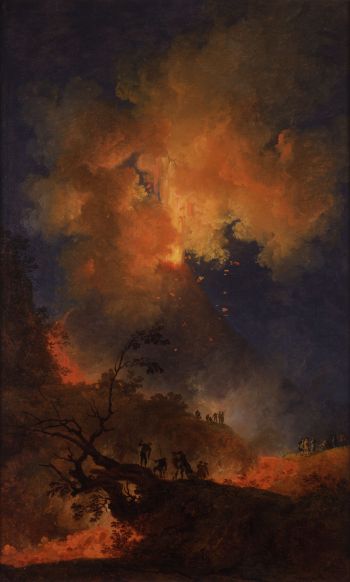
Pierre-Jacques Volaire, Vesuvius Erupting at Night, 1767, oil on canvas (Compton Verney Art Gallery and Park, Warwickshire).
The collection and the chamber, which came into existence when Harvard Hall was rebuilt after the Great Fire of 1764, played a vital role in teaching and research at Harvard, while also serving as the center of artistic and intellectual life in the greater New England region for over 50 years. Artists, scientists, students, and advocates of American Independence—including George Washington—came to the Philosophy Chamber to discover, discuss, and disseminate new knowledge. Students attended lectures and demonstrations there, and visitors from around the globe flocked to the space to see works by some of the Atlantic World’s greatest artists and artisans, including John Singleton Copley and John Trumbull.
The only repository of its kind in New England when it was established, the Philosophy Chamber was deeply connected to the network and ideology of other teaching cabinets established in Europe, the United States, and South America, such as the Ashmolean Museum at Oxford University, the Académie des Sciences in Paris, the American Philosophical Society in Philadelphia, and the University of Córdoba in Argentina. These teaching cabinets were offspring of the 17th-century Wunderkammer, or privately held cabinets of curiosities, and ultimately foreshadowed the beginnings of the modern museum.
While the chamber’s collection survived the Revolutionary War thanks to a temporary relocation (along with all of Harvard College) to Concord, Massachusetts, in 1775, an expansion of the college library in 1820 ultimately led to the dispersal of the collection to various university departments and local museums.
Research
The exhibition has its origins in curator Ethan Lasser’s early days at the Harvard Art Museums. While researching the Fogg Museum’s holdings of early American art, Lasser repeatedly came across references to the Philosophy Chamber. Intrigued, he initiated a campaign to locate the artifacts with a team of researchers at the museums. Lasser then expanded on the research by co-teaching a graduate seminar with Harvard professor Jennifer Roberts in Fall 2014. They enlisted their students to research the history of the chamber, the objects that were accessioned, and the people who visited. To date, the growing team of researchers—including curators, professors, conservators, scientists, and students from across the university—has tracked approximately 200 objects, or roughly one-fifth of the collection once housed in Harvard Hall. The whereabouts of the remaining four-fifths of the collection are unknown. Over the past 200 years, many objects have no doubt been lost, stolen, or destroyed, while some may be stored undetected in various campus and regional collections.
The Installation / Works on View
The Philosophy Chamber features more than 100 works displayed within four thematic sections.
The first section addresses how the collection was used in teaching and research, and includes tools and specimens that were regularly deployed for teaching in the 18th century. Included is the large-scale orrery, a dazzling astronomical model created by Joseph Pope. Labored over by Pope for 12 years, it was only the third orrery made in America, and was among the most celebrated objects to enter the chamber. Also included: one of two portable electrical machines for conducting demonstrations related to electricity (Benjamin Franklin advised on its purchase) and a group of six recently discovered drawings of skulls by Harvard professor and naturalist William Dandridge Peck, dated to around 1810. A projector installed in this gallery will show large-scale digitized images of solar microscope specimens and magic lantern slides.
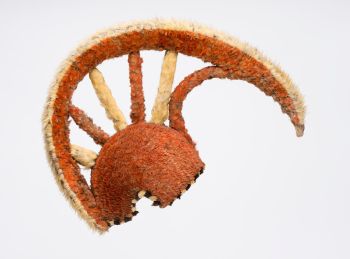
Unknown artist, Native Hawaiian, Mahiole (Crested Feathered Helmet), 18th century; ‘I’iwi (Vestiaria coccinea) and ‘ō’ō (Moho nobilis) feathers; and olonā (Touchardia latifolia) and ‘ie’ie (Freycinetia arborea) fibers (Peabody Museum of Archaeology and Ethnology, Harvard University, Gift of the Heirs of David Kimball, 99-12-70/53559).
A second gallery explores how the non-commissioned objects in the chamber’s collection arrived at Harvard and reflects on the collecting practices of wealthy alumni, entrepreneurial merchants, and scholars who sent objects from abroad. At the time, there was no curator of the collection, and very few objects were specifically solicited, resulting in a rather haphazard and idiosyncratic collection. This gallery features gifts sent to Harvard by five different donors or donor groups. In the late 18th century, as American ships began circumnavigating the globe, new courses were charted, and trade routes were established. An early 19th-century French map in this gallery shows the routes around North and South America that Captain James Cook and other explorers used. Shipmates on these missions brought back the exceptional examples of Native Hawaiian feather work on a colorful cape and a crested helmet seen in this space, as well as examples of carving by indigenous artists of the Northwest Coast. A touchscreen monitor in this gallery presents an animated map with points of origin of some of the objects in the collection, as well as demonstrations of two objects from Harvard’s Collection of Historical Scientific Instruments.
A third section addresses the entangled histories of the objects gathered in the chamber and the origin story of the United States after the Revolutionary War. Works here show how artists and scholars were actively writing American history. Included are engravings after paintings by John Trumbull, who gave a portrait of Cardinal Guido Bentivoglio to the college, which also hangs in this space. The gallery includes another celebrated object in the chamber’s history: Stephen Sewall’s mural-sized copy of the Native Americans’ inscriptions on the landmark known as Dighton Rock, an 11-foot boulder formerly located in the Taunton River, and now housed in a museum. Sewall was a professor at Harvard and his 1768 drawing is the only life-size representation of the monument known to exist. The rock was puzzled over by scholars from Harvard and around the world, and a variety of theories about the origin of the inscriptions were posited. Today, scholars attribute the inscriptions on the rock to the Algonquian-speaking peoples of the Eastern Woodlands, and more specifically to the Wampanoag who lived in the rock’s vicinity. By contrast, in the period when Sewall made his drawing, European interpreters actively disavowed the possibility of Native American authorship.
The final room is a loose reconstruction of the Philosophy Chamber itself, an experiential space complete with a re-created version of the red wallpaper that John Hancock had donated to the original room. Three early full-length portraits of Harvard benefactors by John Singleton Copley are included, as is a series of six mezzotints after Copley paintings that were given to Harvard by the artist’s heirs. Harvard was Copley’s first major patron, and plans to turn the Philosophy Chamber into a space dedicated to the artist’s life were never realized; the gift of mezzotints has never been shown until now. A bust of William Pitt the Elder, Earl of Chatham, given by Benjamin Franklin in 1769, was the first gift of sculpture the college received after the Great Fire consumed Harvard Hall in 1764. This gallery will be complemented by a digital tool, accessible on the museums’ website, that allows visitors to access recordings of present-day Harvard students reading from period sources, offering a sense of the kinds of conversations and debates that took place in the original chamber. The tool will also include deeper information about the objects displayed in the gallery.
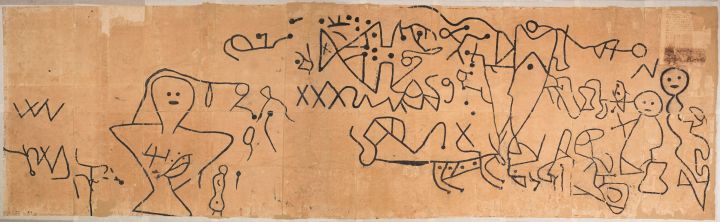
Stephen Sewall, Copy of Inscription on Dighton Rock, 1768, black ink on paper (Peabody Museum of Archaeology and Ethnology, Harvard University, 967-28-10/45474, digital file 99270006).
◊ ◊ ◊ ◊ ◊
Conservation
The research and rediscovery of objects once belonging to the Philosophy Chamber collection has led to exciting research by conservators and conservation scientists in the museums’ Straus Center for Conservation and Technical Studies. Several members of the Straus Center staff contributed essays to the exhibition catalogue on the following topics:
• Conservators were able to examine two of the full-length portraits by John Singleton Copley. Use of X-radiography and infrared digital photography helped them determine earlier iterations of a portrait of Thomas Hancock, painted between 1764 and 1766, showing Copley had reworked the painting twice to arrive at the formal, dignified pose seen in the final portrait. By contrast, a painting of college benefactor Thomas Hollis III was shown to have very few changes.
• Joseph Wilton’s bust of William Pitt the Elder, Earl of Chatham—given to Harvard by Benjamin Franklin—underwent scientific, technical, and art historical research, allowing staff to assess how the ceramic sculpture was made and to document its alteration over the centuries at Harvard. Guided by this research, the conservation treatment included removal of later overpaint layers and cleaning to uncover the original white painted surface.
• A close examination of Stephen Sewall’s drawing of the inscription on Dighton Rock sheds light on his chosen materials and processes. Conservators believe Sewall directly traced the markings rather than using a rubbing or chalking method.
Publication
Ethan Lasser, ed., The Philosophy Chamber: Art and Science in Harvard’s Teaching Cabinet, 1766–1820 (Cambridge: Harvard University Press, 2017), 312 pages, ISBN 978 0300 225921, $55.
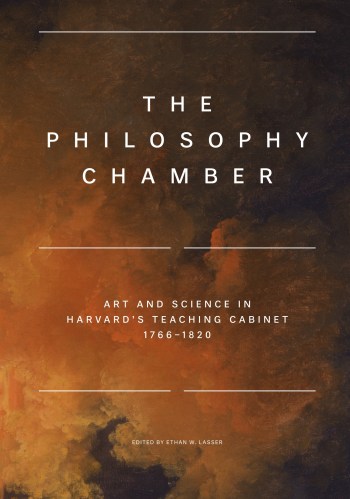 A catalogue, edited by Ethan Lasser, with essays by a mix of curators, professors, conservators, conservation scientists, and doctoral candidates, will be published in conjunction with the exhibition. The publication will advance new understandings of early American art history, and will serve as a rich resource for any reader interested in the art and culture of the Atlantic World. The catalogue is published by the Harvard Art Museums and distributed by Yale University Press. Contributors include Aleksandr Bierig, Anne Driesse, Katherine Eremin, Andrew Gelfand, Claire Grech, Teri Hensick, Jane Kamensky, Ethan W. Lasser, Georgina Rayner, Jennifer L. Roberts, Whitney Barlow Robles, María Dolores Sánchez-Jáuregui, Anthony Sigel, Kate Smith, Lucie Steinberg, and Oliver Wunsch.
Online Resources
Once the exhibition opens, supplementary digital content will be accessible via the exhibition page on the museums’ website. The digital tool complementing the room within the exhibition that loosely reconstructs the Philosophy Chamber will include “Voices of the Philosophy Chamber,” a group of audio recordings by present-day Harvard students reading from period sources. The recordings will give a sense of the conversation and debate that once filled the Philosophy Chamber. The tool will also provide additional information about the works on view.
The website will also include a series of audio recordings of gallery talks planned for the run of the exhibition. The robust series of talks by the students, staff, faculty, and scholars involved with the Philosophy Chamber research will explore the range of objects and themes in the exhibition as well as the history of the chamber. New recordings will be added on a regular basis.
Programming
A wide range of events, including lectures, a symposium, gallery talks, Materials Lab Workshops on Wampum jewelry making, and special member events, will be offered throughout the duration of the exhibition. Harvard professor Jane Kamensky will give a free public lecture, The Hungry Eye: Art and Ambition in Copley’s Boston, on Tuesday, May 23, at 3pm. Kamensky is the author of the recent biography A Revolution in Color: The World of John Singleton Copley, and also contributed to the Philosophy Chamber catalogue. During the fall semester, programming includes major lectures by artist Simon Starling and James Delbourgo (Rutgers University); The Room Where It Happens: On the Agency of Interior Spaces, a two-day public symposium featuring a keynote lecture by Louis Nelson (University of Virginia) and a full day of panel discussions; and a special late-night event for Harvard students. Detailed information about programs is forthcoming here.
Credits
The Philosophy Chamber: Art and Science in Harvard’s Teaching Cabinet, 1766–1820 is organized by the Harvard Art Museums. Curated by Ethan W. Lasser, the Theodore E. Stebbins Jr. Curator of American Art and Head of the Division of European and American Art at the Harvard Art Museums. The exhibition is supported in part by major grants from the Terra Foundation for American Art and the Henry Luce Foundation. The exhibition and catalogue also received support from the following endowed funds: the Bolton Fund for American Art, Gift of the Payne Fund; the Henry Luce Foundation Fund for the American Art Department; the William Amory Fund; and the Andrew W. Mellon Publication Funds, including the Henry P. McIlhenny Fund.
Lenders at Harvard University include: the Collection of Historical Scientific Instruments; the Harvard Map Collection, Pusey Library; the Harvard University Archives; Houghton Library; the Mineralogical and Geological Museum; the Museum of Comparative Zoology; the Peabody Museum of Archaeology & Ethnology; and the Warren Anatomical Museum, Countway Library of Medicine.
Other lenders from private, academic, and public collections in the United States and the United Kingdom include: the American Academy of Arts and Sciences, Cambridge, MA; the Richard Balzer Collection, Brookline, MA; Compton Verney Art Gallery and Park, Warwickshire, U.K.; The Library Company of Philadelphia; the Massachusetts Historical Society, Boston; Metropolitan Museum of Art, New York; Museum of Fine Arts, Boston; Peabody Essex Museum, Salem, MA; and a private collection in Boston.
New Book | The Power of Objects in Eighteenth-Century British America
From UNC Press:
Jennifer Van Horn, The Power of Objects in Eighteenth-Century British America (Chapel Hill: The University of North Carolina Press, 2017), 456 pages, ISBN: 978 14696 29568, $55.
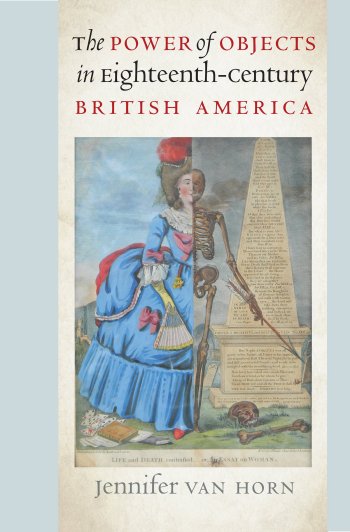 Published for the Omohundro Institute of Early American History and Culture, Williamsburg, Virginia.
Over the course of the eighteenth century, Anglo-Americans purchased an unprecedented number and array of goods. The Power of Objects in Eighteenth-Century British America investigates these diverse artifacts—from portraits and city views to gravestones, dressing furniture, and prosthetic devices—to explore how elite American consumers assembled objects to form a new civil society on the margins of the British Empire. In this interdisciplinary transatlantic study, artifacts emerge as key players in the formation of Anglo-American communities and eventually of American citizenship. Deftly interweaving analysis of images with furniture, architecture, clothing, and literary works, Van Horn reconstructs the networks of goods that bound together consumers in Boston, New York, Philadelphia, and Charleston.
Moving beyond emulation and the desire for social status as the primary motivators for consumption, Van Horn shows that Anglo-Americans’ material choices were intimately bound up with their efforts to distance themselves from Native Americans and African Americans. She also traces women’s contested place in forging provincial culture. As encountered through a woman’s application of makeup at her dressing table or an amputee’s donning of a wooden leg after the Revolutionary War, material artifacts were far from passive markers of rank or political identification. They made Anglo-American society.
Jennifer Van Horn is assistant professor of art history and history at the University of Delaware.
C O N T E N T S
Acknowledgments
List of Illustrations
Introduction
1 Imprinting the Civil
2 The Power of Paint
3 Portraits in Stone
4 Masquerading as Colonists
5 The Art of Concealment
6 Crafting Citizens
Epilogue
Index
New Book | Textile Terms: A Glossary
From Gebr. Mann Verlag (and soon to be available from Amazon) . . .
Anike Reineke, Anne Röhl, Mateusz Kapustka, and Tristan Weddigen, eds., Textile Terms: A Glossary (Berlin: Edition Imorde 2017), 359 pages, ISBN: 978 39428 10364, 360 pages, 40€ / $60.
 The glossary is addressed to scholars and students of art and architectural history and related fields as well as to artists and curators. It offers a new point of reference and departure for future research on the textile medium as such. It presents sixty-five critical terms that define the textile medium as a specific form, material, technique, and metaphor from antiquity to the present through contributions by international specialists in the field. Each entry discusses one illustrated object which epitomizes the main concepts related to one of the volume’s keywords:
Absorption, Abstraction, Affect, Canopy, Canvas, Carpet, Case, Clothing, Cotton, Craft, Curtain, Cushion, Cut, Digitality, Display, Drapery, Dye, Embroidery, Felt, Flag, Flatness, Fold, Formlessness, Gender, Globalism, Glove, Grid, Hair, Hem, Knitting, Knot, Labor, Lace, Marginalization, Mobility, Network, Ornament, Patchwork, Pattern, Rags, Recto/Verso, Revival, Sacredness, Sampler, Screen, Sewing, Silk, Skin, Space, Spider, Stockings, Tactility, Tapestry, Tear, Technology, Tent, Texture, Textus, Thread, Upholstery, Veil, Wallpaper, Weaving, Wrapping, Wool.
Anika Reineke, Anne Röhl, Mateusz Kapustka, and Tristan Weddigen are part of the SNF Research Project Textile: An Iconology of the Textile in Art and Architecture, University of Zurich.
Exhibition | America Collects Eighteenth-Century French Painting
From the NGA:
America Collects Eighteenth-Century French Painting
National Gallery of Art, Washington, D.C., 21 May — 20 August 2017

When Joseph Bonaparte, elder brother of Napoleon, arrived in the United States in 1815, he brought with him his exquisite collection of eighteenth-century French paintings. Put on public view, the works caused a sensation, and a new American taste for French art was born. Over the decades, appreciation of French eighteenth-century art has fluctuated between preference for the alluring decorative canvases of rococo artists such as François Boucher and Jean Honoré Fragonard to admiration for the sober neoclassicism championed by Jacques Louis David and his pupils. This exhibition brings together sixty-eight paintings that represent some of the best and most unusual examples of French art of that era held by American museums and tells their stories on a national stage: Who were the collectors, curators, museum directors and dealers responsible for bringing eighteenth-century French painting to America? Where are the paintings now?
The exhibition highlights smaller museum collections, less well-known paintings, and diverse locations across the United States, from Pittsburgh and Indianapolis to Birmingham and Phoenix. It considers eighteenth-century America’s very real fascination with France—a staunch ally in the American Revolution, an intellectual model for Benjamin Franklin, Thomas Jefferson, and other Americans abroad—and how the cultural ideal of eighteenth-century France has continued to endure in the American imagination to this day.
Image: Joseph Ducreux, Le Discret, ca. 1791, oil on aluminum, transferred from canvas (Lawrence: Spencer Museum of Art, University of Kansas).
◊ ◊ ◊ ◊ ◊
Note (added 28 May 2017) — A checklist for the exhibition is available here. Online, there’s also a useful chronology (condensed from the catalogue), establishing larger contexts and tracing the history of selected works in the exhibition.
Note (added 30 May 2017) — The catalogue is published by Lund Humphries:
Yuriko Jackall, Philippe Bordes, Jack Hinton, Melissa Hyde, Joseph Rishel, and Pierre Rosenberg, with Joseph Baillio, Susan Earle, Christophe Leribault, Robert Schindler, and D. Dodge Thompson, America Collects Eighteenth-Century French Painting (London: Lund Humphries, 2017), 304 pages, ISBN: 978 18482 22342, £50 / $70.
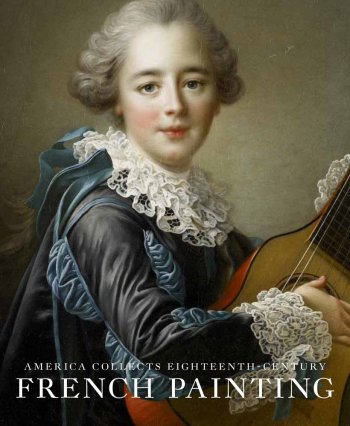 C O N T E N T S
Director’s Foreword
Acknowledgments
Lenders to the Exhibition
Essays
• Pierre Rosenberg, Only in America
• Yuriko Jackall, American Visions of Eighteenth-Century France
• Joseph Bailliom, Wildenstein in America
• Jack Hinton, Fiske Kimball and French Period Rooms in America
• Christophe Leribault, The Tuck Donation to the Petit Palais: A Mirror of American Taste
• Melissa Hyde, Femmes-Artistes and America from the Early Republic to the Gilded Age
• Robert Schindler, Eugenia Woodward Hitt Collects
• Philippe Bordes, Buying against the Grain: American Collections and French Neoclassical Paintings
• Susan Earle, Joseph Ducreux, John Maxon, and the Spencer Museum of Art
• D. Dodge Thompson, When the Eighteenth Century Was New: Joseph Bonaparte in America
• Joseph Rishel, Notes on the American Reception of Eighteenth-Century French Painting
Plates
Yuriko Jackall
• Collector’s Century: From the King’s Mistress to the Shores of San Francisco
• Sensual Century: Pursuit of Love
• Opulent Century: Douceur de Vivre
• Playful Century: Games and Pastimes
• Fanciful Century: Masquerade and the Pleasures of the Imagination
• Inspired Century: Artists and Artistic Practice
• Virtuous Century: Institutional Taste
• Enlightened Century: Science, Nature, and the Passage of Time
Checklist of the Exhibition
Chronology
Bibliography
Index
New Book | Body Narratives: Motion and Emotion
This collection of essays grew out of the 2015 conference; from Brepols:
Susanna Caviglia, ed., Body Narratives: Motion and Emotion in the French Enlightenment (Turnhout: Brepols, 2017), 291 pages, ISBN: 978 2503 574745, 100€ / $125.
 The first art historical interrogation of the body as an object and discursive ensemble that questions the power and limits of visual representation, this book explores, in broad terms, the representations and understandings of the body’s physical and psychological movement’s meanings during the French Enlightenment in its many guises—artistic, esthetic, social, and erotic. It is centered on the fundamental tension between stasis and movement, which is both constitutive of art historical reflection and embedded in the body’s existence. Stasis and movement not only correspond to the potential modalities of the body’s visual representations, but they are also the conditions which govern the relationship between the viewer and the artwork as well as that between the viewers and the spaces in which they encounter the represented body. Based on this dialectic, the present book proposes a dynamic approach of the body considered as a focus of composition, an object of interrogation, and a site of meaning during a time when the body became the focus of an increasing number of artistic, technical, scientific, and philosophical inquiries directly connected to larger historical forces and discourses. During this time, the body’s stasis and movement became the vehicles for recording cultural and social transformations but also the producers of new meanings inherent to the body itself and unveiled by the development of the new scientific and philosophical approaches of it.
C O N T E N T S
Susanna Caviglia (University of Chicago), Introduction
I Body Language: Narrative Stasis
• Dorothy Johnson (University of Iowa), The Body Speaks: Anatomical Narratives in French Enlightenment Sculptures
• Étienne Jollet (Université Paris 1 Panthéon-Sorbonne), Anti-Pygmalion: Jean-Baptiste Restout’s Diogenes and Materiality as Truth
II The Mobile Body: Social Identity and Visual Dynamics
• Mimi Hellman (Skidmore College), Engaging Tapestries at the Hôtel de Soubise: Attention, Mobility, Intercorporeality
• Melissa Hyde (University of Florida), Watching Her Step: Women and the Art of Walking after Marie-Antoinette
III Body Temporality: Aesthetics of Walking
• Mary Sheriff (University of North Carolina at Chapel Hill), Movement and Stasis: Mapping Cythera
• Ewa Lajer-Burcharth (Harvard University), Strolling Time
Exhibition | British Art: Ancient Landscapes
Opening next month at The Salisbury Museum:
British Art: Ancient Landscapes
The Salisbury Museum, 8 April — 3 September 2017
Curated by Sam Smiles
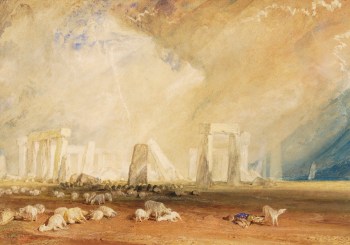
J.M.W. Turner, Stonehenge, ca. 1827–28, watercolour (The Salisbury Museum).
The British landscape has been a continual inspiration to artists across the centuries and particularly the landscapes shaped and marked by our distant ancestors. The megaliths, stone circles, and chalk-cut hill figures that survive from Neolithic and Bronze Age times have stimulated many artists to make a response. In this major new exhibition curated by Professor Sam Smiles, these unique artistic responses have been brought together to create a new discussion. Featuring the work of some of the greatest names in British art from the last 250 years—including John Constable, J.M.W. Turner, Eric Ravilious, John Piper, Barbara Hepworth, Henry Moore, Paul Nash, Richard Long, and Derek Jarman—the exhibition explores how this work records and reflects on some of Britain’s most treasured ancient landscapes.
The catalogue is published by Paul Holberton:
Sam Smiles, British Art: Ancient Landscapes (London: Paul Holberton Publishing, 2017), 120 pages, ISBN: 978 19113 00144, £25.
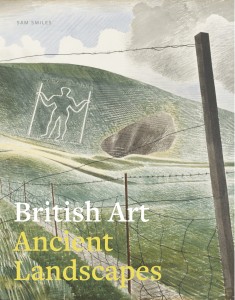 Published to accompany an exhibition at The Salisbury Museum and Art Gallery, this volume explores the most significant works of art engaged with prehistoric moments across Britain from the 18th century to the 21st. While some of the works in the earlier period may be familiar to readers—especially Turner and Constable’s famous watercolours of Stonehenge—the varied responses to British Antiquity since 1900 are much less well known and have never been grouped together.
The author aims to show the significance of antiquity for 20th-century artists, demonstrating how they responded to the observable features of prehistoric Britain and exploited their potential for imaginative re-interpretation. The classic phase of modernist interest in these sites and monuments was the 1930s, but a number of artists working after WWII developed this legacy or were stimulated to explore that landscape in new ways. Indeed, it continues to stimulate responses and the book concludes with an examination of works made within the last few years.
An introductory essay looks at the changing artistic approach to British prehistoric remains over the last 250 years, emphasizing the artistic significance of this body of work and examining the very different contexts that brought it into being. The cultural intersections between the prehistoric landscape, its representation by fine artists and the emergence of its most famous sites as familiar locations in public consciousness will also be examined. For example, engraved topographical illustrations from the 18th and 19th centuries and Shell advertising posters from the 20th century will be considered.
Artists represented include: J.M.W. Turner, John Constable, Thomas Hearne, William Blake, Samuel Prout, William Geller, Richard Tongue, Thomas Guest, John William Inchbold, George Shepherd, William Andrews Nesfield, Copley Fielding, Yoshijiro (Mokuchu) Urushibara, Alan Sorrell, Edward McKnight Kauffer, Frank Dobson, Paul Nash, Eric Ravilious, John Piper, Henry Moore, Barbara Hepworth, Ithell Colquhoun, Gertrude Hermes, Norman Stevens, Norman Ackroyd, Bill Brandt, Derek Jarman, Richard Long, Joe Tilson, David Inshaw and Jeremy Deller.
Sam Smiles is the author of The Image of Antiquity: Ancient Britain and the Romantic Imagination (1994), Flight and the Artistic Imagination (2012), and West Country to World’s End: The South West in the Tudor Age (2013).
New Book | London: Prints and Drawings before 1800
Published by the Bodleian and distributed by The University of Chicago Press:
Bernard Nurse, London: Prints and Drawings before 1800 (Oxford: Bodleian Library, in association with The London Topographical Society, 2017), 232 pages, ISBN: 978 18512 44126, £30 / $50.
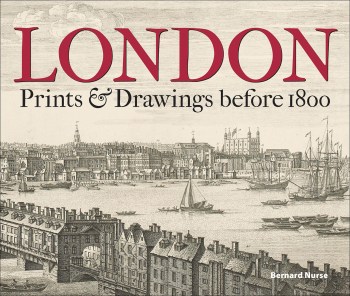 By the end of the eighteenth century London was the second largest city in the world, its relentless growth fuelled by Britain’s expanding empire. Before the age of photography, the most widely used means of creating a visual record of the changing capital was through engravings and drawings, and those that survive today are invaluable in showing us what the capital was like in the century leading up to the Industrial Revolution.
This book contains over one hundred images of the Greater London area before 1800 from maps, drawings, manuscripts, printed books, and engravings, all from the Gough Collection at the Bodleian Library. Examples are drawn from the present Greater London to contrast town and countryside at the time. Panoramas of the river Thames were popular illustrations of the day, and the extraordinarily detailed engravings made by the Buck brothers are reproduced here. The construction, and destruction, of landmark bridges across the river are also shown in contemporary engravings.
Prints made of London before and after the Great Fire show how artists and engravers responded to contemporary events such as executions, riots, fires, and even the effects of a tornado. They also recorded public spectacles, creating beautiful images of firework displays and frost fairs on the river Thames. This book presents rare material from the most extensive collection on British topography assembled in this period by a private collector, providing a fascinating insight into life in Georgian London.
Bernard Nurse is the former Librarian of the Society of Antiquaries of London.
New Book | The Print Before Photography
From Museum Bookstore:
Anthony Griffiths, The Print Before Photography: An Introduction to European Printmaking, 1550–1820 (London: The British Museum, 2016), 560 pages, ISBN: 978 07141 26951, $75.
 A landmark publication—beautifully illustrated with over 300 prints from the British Museum’s renowned collection—The Print Before Photography traces the history of printmaking from its earliest days until the arrival of photography.
Copperplate printmaking, developed alongside Gutenberg’s invention of moveable type, was a huge business employing thousands of people, and dominating image production for nearly four centuries across the whole of Europe. Its techniques and influence remained very stable until the nineteenth century, when this world was displaced by new technologies, of which photography was by far the most important. The Print Before Photography examines the unrivaled importance of printmaking in its golden age, illustrated through the British Museum’s outstanding collection of prints. This unique and significant book is destined to be a leading reference in print scholarship, and will be of interest to anyone with an interest in this era of art history.
Between 1991 and 2010, Antony Griffiths was deputy keeper, then keeper, of Prints and Drawings at The British Museum. In 1984 he co-founded the journal Print Quarterly. He was appointed a fellow of the British Academy in 2000.










 Enfilade
leave a comment