Exhibition | Lives Bound Together: Slavery at Mount Vernon
◊ ◊ ◊ ◊ ◊
Now on view at Mount Vernon:
Lives Bound Together: Slavery at George Washington’s Mount Vernon
The Donald W. Reynolds Museum, Mount Vernon, 1 October 2016 –30 September 2017
Mount Vernon was George Washington’s home. It was also home to hundreds of enslaved people who lived and worked under Washington’s control: in 1799, there were 317 men, women, and children enslaved at Mount Vernon’s five farms, which covered 8,000 acres. They made up more than 90% of the population of the estate.
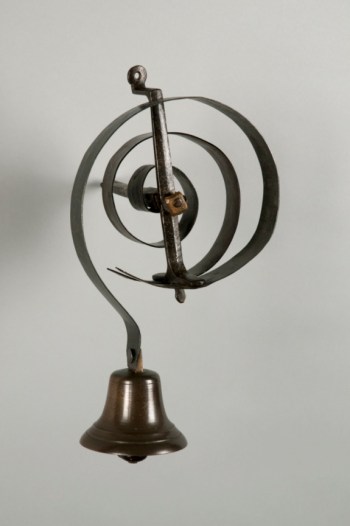
House Bell, ca. 1784–88; Copper alloy, iron (Mount Vernon).
Through household furnishings, art works, archaeological discoveries, documents, and interactive displays, the exhibition, which spans 4,400 square feet throughout all seven galleries of the Donald W. Reynolds Museum, demonstrates how closely intertwined the lives of the Washingtons were with those of the enslaved. Nineteen enslaved individuals are featured throughout the exhibit, represented with life-size silhouettes and interactive touchscreens providing biographical details.
More than 350 items are on view—seeds and animal bones, ceramic fragments, and metal buttons unearthed from archaeological excavations around the estate, as well as fine tablewares and furniture from the Washington household, providing insights into the enslaved community’s daily lives and work. Guests gain a better understanding of Washington’s changing views towards slavery, culminating in his landmark decision to include in his will a provision freeing the slaves that he owned. Visitors will have an opportunity to view original manuscript pages from George Washington’s will, written in July 1799, showing his decision to free the slaves he owned. The exhibition profiles 19 individuals enslaved at Mount Vernon, using George Washington’s extensive records to piece together what is known of their lives in interactive displays.
Susan P. Schoelwer, ed., with an introduction by Annette Gordon-Reed, Lives Bound Together: Slavery at George Washington’s Mount Vernon (2016), 172 pages, ISBN: 978 970931 9170, $20.
Lives Bound Together provides fresh research on this important topic, with brief biographies of 19 enslaved individuals, 10 essays, and 130 illustrations, including paintings, prints, and household furnishings from the Mansion, artifacts excavated by archaeologists from the slave quarters, documents, maps, and conjectural silhouettes that suggest the presence of the enslaved.
Exhibition | Peter the Great: A Tsar in France, 1717
Press release for the exhibition at Versailles, with thanks to Elizabeth Jane Timms for noting it:
Peter the Great: A Tsar in France, 1717
Grand Trianon, Château de Versailles, 30 May — 24 September 2017
Cuarated by Gwenola Firmin, Thierry Sarmant, and George Vilinbakhov
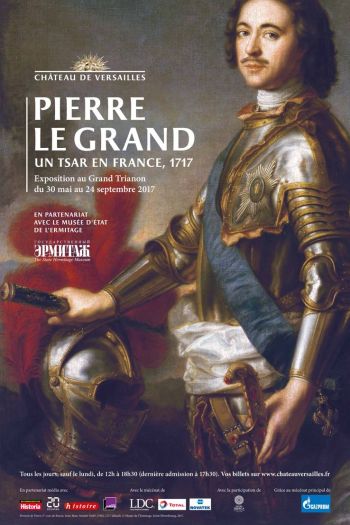 The exhibition Peter the Great: A Tsar in France, 1717 will be on display in the Grand Trianon from 30 May to 24 September 2017. It is dedicated to Tsar Peter the Great’s trip in and around Paris in May and June 1717 and will commemorate the 300th anniversary of this diplomatic visit. The fruit of exceptional collaboration between the Palace of Versailles and the Hermitage Museum, the exhibition will present over 150 works including paintings, sculptures, decorative artworks, and tapestries, as well as plans, medallions, scientific instruments, books and manuscripts, two thirds of which belong to the collections of the prestigious museum in Saint Petersburg.
A member of the house of Romanov and son of Tsar Alexis Mikhailovich (1645–1676) and Nataliya Naryshkina (1651–1694), Peter I (1672–1725) embarked on a second journey to the West twenty years after the Grand Embassy, which took him to Europe for the first time in 1697–98. He arrived in France on 21 April 1717 and remained until 21 June. He stayed at Versailles twice and was accommodated in the Grand Trianon, from 24 to 26 May and from 3 to 11 June. The exhibition will lead visitors step by step through the trip, which, although official, nonetheless allowed a certain amount of freedom since Peter I, being little accustomed to French etiquette and with his imposing figure and unpredictability, departed from protocol on multiple occasions. His encounter with Louis XV particularly shocked onlookers when, flouting the ceremonial custom of the court, he spontaneously took the young king, aged 7, in his arms. A number of memorialists, including Saint-Simon, the Marquis de Dangeau and Jean Buvat, left precious testimonies allowing us to retrace the journey.
Although there were political and economic aims to the stay—a project for an alliance with France against Sweden and the signature of a trade agreement—the reforming Tsar and founder of modern Russia most particularly wanted to see the finest of France in order to adapt certain models for his own empire. During the two months that Peter the Great spent in Regency Paris, his visits and discussions with French people provided him with food for thought and had an influence on the works he started in 1703 in Saint Petersburg and the surrounding area.
Pierre le Grand: Un Tsar en France, 1717 (Paris: 2017), 240 pages, ISBN: 978 23590 62014, 38€.
Curators
• Gwenola Firmin Curator in charge of paintings from the 18th century at the Palace of Versailles
• Thierry Sarmant Chief curator, head of the Archives historic Center, historic department of the Defence
• George Vilinbakhov Vice-director of the State Hermitage Museum in Saint Petersburg
New Book | Collecting the World: Hans Sloane
From the Royal College of Physicians:
James Delbourgo, The Life and Curiosity of Hans Sloane
Royal College of Physicians, London, 7 June 2017
This lecture by Professor James Delbourgo explores the astonishing story of Sir Hans Sloane, a young Irish doctor who became one of the greatest physicians, collectors, and figures of the eighteenth century. Wednesday, 7 June 2017, 18:00–20:00. Please note that places for this free event are extremely limited and advance booking is essential. For additional details, please see the Royal College of Physicians website.
◊ ◊ ◊ ◊ ◊
From Harvard UP:
James Delbourgo, Collecting the World: Hans Sloane and the Origins of the British Museum (Cambridge: Belknap Press, 2017), 544 pages, ISBN 978 06747 37334, $35 / £28 / €32.
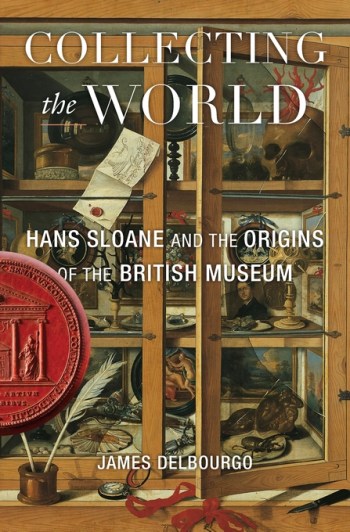 In 1759 the British Museum opened its doors to the general public—the first free national museum in the world. James Delbourgo’s biography of Hans Sloane recounts the story behind its creation, told through the life of a figure with an insatiable ambition to pit universal knowledge against superstition and the means to realize his dream.
Born in northern Ireland in 1660, Sloane amassed a fortune as a London society physician, becoming a member of the Whig establishment and president of the Royal Society and Royal College of Physicians. His wealth and contacts enabled him to assemble an encyclopedic collection of specimens and objects—the most famous cabinet of curiosities of its time. For Sloane, however, collecting a world of objects meant collecting a world of people, including slaves. His marriage to the heir of sugar plantations in Jamaica gave Sloane access to the experiences of planters and the folkways of their human property. With few curbs on his passion for collecting, he established a network of agents to supply artifacts from China, India, North America, the Caribbean, and beyond. Wampum beads, rare manuscripts, a shoe made from human skin—nothing was off limits to Sloane’s imagination. This splendidly illustrated volume offers a new perspective on the entanglements of global scientific discovery with imperialism in the eighteenth century. The first biography of Sloane based on the full range of his writings and collections, Collecting the World tells the rich and complex story of one of the Enlightenment’s most controversial luminaries.
James Delbourgo is Associate Professor of History at Rutgers University.
◊ ◊ ◊ ◊ ◊
C O N T E N T S
List of Illustrations
List of Maps
Introduction: The Original Sloane Ranger
I. Empire of Curiosities
1 Transplantation
2 Island of Curiosities
3 Keeping the Species from Being Lost
II. Assembling The World
4 Becoming Hans Sloane
5 The World Comes to Bloomsbury
6 Putting the World in Order
7 Creating the Public’s Museum
Conclusion: The Man Who Collected the World
Acknowledgements
Notes
Bibliography
Index
Exhibition | The Lure of Italy: Artists’ Views
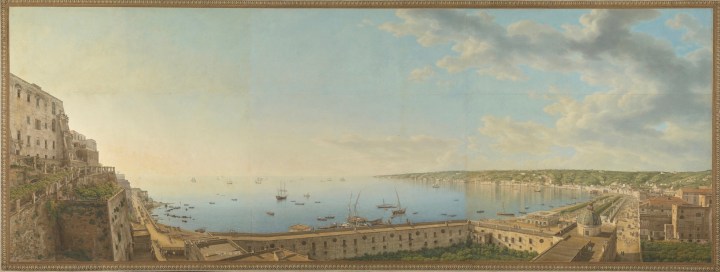
Giovanni Battista Lusieri, A View of the Bay of Naples, Looking Southwest from the Pizzofalcone towards Capo di Posilippo, 1791; watercolor, gouache, graphite, and pen and ink on six sheets of paper; unframed: 102 × 272 cm (Los Angeles: The J. Paul Getty Museum, 85.GC.281).
◊ ◊ ◊ ◊ ◊
Press release (20 April 2017) for the exhibition now on view at The Getty:
The Lure of Italy: Artists’ Views
The Getty Center, Los Angeles, 9 May — 30 July 2017
Curated by Julian Brooks with Annie Correll
For centuries, Italy has fascinated travelers and artists alike. From the crumbling ruins of ancient Rome to the crystal-clear light of Venice, artists have found inspiration not only in the cities but also in the countryside and in Italy’s rich history and culture. The Lure of Italy: Artists’ Views explores the numerous ways Italy’s topography, history, and culture have motivated artists to create works of extraordinary beauty and resonance. The exhibition, selected from the Getty Museum’s permanent collection of drawings and watercolors, includes several important recent acquisitions, including works by Francesco Guardi and Richard Parkes Bonington.
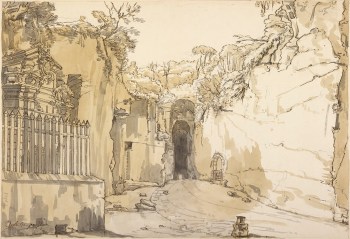
Claude-Joseph Vernet, The Entrance to the Grotto at Posillipo, ca. 1750; pen and brown ink with brown and gray wash over black chalk, 34 × 49 cm (Los Angeles: The J. Paul Getty Museum, 97.GG.53).
“For many, Italy represented—and still represents today—a stunningly lush treasure of scenic wonder, with picturesque ancient sculptures, historic buildings, and dramatic landscapes,” says Timothy Potts, director of the J. Paul Getty Museum. “This exhibition bears witness to the long-standing love affair that artists have had with the country of Italy.”
Italy—a collection of city-states until unification in the 1800s—has captured the imagination of artists for centuries, yet interest in the country peaked in the 1700s, when the region became a prime destination for wealthy travelers embarking on the Grand Tour from England, France, the Netherlands, Germany, and beyond. Artists journeying with them or working for them used pencil, ink, and watercolor to capture celebrated views and preserve vivid memories, creating works that encapsulate the essence and spirit of Italy.
Italian natives such as Guardi, Canaletto, and Giovanni Battista Lusieri responded to the tourist demand for souvenirs by crafting their own masterpieces. Guardi’s A Regatta on the Grand Canal (about 1778), a recent acquisition for the Getty, conveys with freshness and spontaneity the lively atmosphere of the annual gondola race (regatta) in Venice. The finish line is at left and spectators crowd the balconies of the nearby Palazzo Balbi, while the water bustles with decorated gondolas.
Further south, the Bay of Naples was another favorite destination of Grand Tourists. Lusieri’s huge, nearly nine-foot wide panorama, A View of the Bay of Naples (about 1791) is meticulously executed in tiny detail with watercolor. It was painted over a period of two years from the residence of Sir William Hamilton, the British envoy to the court of Naples, who commissioned it for his London home. The view looks towards the Capo di Posillipo and the so-called grotto there, a feat of ancient-Roman engineering.
Other highlights include sketches of enchanting sites with plunging perspectives through the rich Italian countryside, capriccio scenes caught between fantasy and reality, studies of ancient ruins, Roman landmarks and lauded works of art, and views of the most picturesque and awe-inspiring sights that Italy has to offer.
During his only visit to Venice, two years prior to his death at age 25 from tuberculosis, Richard Parkes Bonington made numerous pencil sketches and a handful of oil and watercolor studies of the city. The jewel-like Riva degli Schiavoni, from near San Biagio, Venice (1826) emphasizes his renowned ability to capture the effects of calm water and dramatic cloud formations in watercolor. This match of subject and media helped to make the magical atmosphere of the city the real subject of his work. “The extraordinary character of Italian cityscapes and landscapes pushed artists to the limits of their potential,” says Julian Brooks, senior curator of drawings at the J. Paul Getty Museum. “To render them effectively, the choices of media and technique became crucial.”
The Lure of Italy: Artists’ Views is curated by Brooks, with the assistance of Annie Correll, graduate intern in the Department of Drawings. The exhibition is presented in conjunction with Eyewitness Views: Making History in Eighteenth-Century Europe (9 May — 30 July 2017) on view in the Special Exhibitions Pavilion at the J. Paul Getty Museum.
The exhibition checklist is available as a PDF file here»
S E L E L E C T E D P R O G R A M M I N G
Peter Björn Kerber, Venice vs. Rome: A Capital Contest
Saturday, May 13, 3:00pm
Pitting gilded gondolas against sumptuous coaches, Venice and Rome sought to surpass each other in staging the eighteenth century’s most spectacular festivals and celebrations. Peter Bjorn Kerber, curator of the exhibition Eyewitness Views: Making History in Eighteenth-Century Europe, explores the pictures Canaletto, Panini, and other leading painters produced to record these dazzling occasions.
Julian Brooks, The Bumpy Road to Beautiful Italy
Sunday, June 4, 3:00pm
With one eye on the practicalities and perils of travel in Italy in past centuries, Julian Brooks, senior curator of drawings at the Getty, discusses some of the works of art made by visitors to the country, and how they responded to—and fueled—the lure of Italy.
From The Getty Shop:
Julian Brooks, The Lure of Italy: Artists’ Views (Los Angeles: Getty Publications, 2017), 96 pages, ISBN: 978 160606 5198, $20.
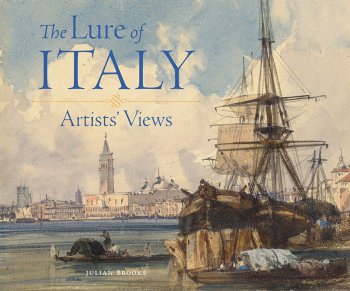 For centuries Italy has fascinated travelers and artists. From the crumbling ruins of ancient Rome to the crystal-clear light of Venice, artists have found inspiration not only in the cities but also in the countryside and in the deep history and culture. From as early as the 1500s, artists visiting from France, England, the Netherlands, and Germany drew sketches to preserve vivid memories, often creating work of extraordinary atmosphere and beauty in the process. A growing number of tourists in the subsequent centuries fueled a further demand for souvenir views, spurring local artists to craft their own masterpieces.
This lovely book is a narrated assemblage of some of these beautiful views, which transport the reader effortlessly to Italy, rekindling memories, setting intentions, or provoking curiosity. The text provides new insights into the topographical renditions of Italian scenes over the centuries, while compelling illustrations of works from the Getty collection by artists such as Richard Parkes Bonington, J. M. W. Turner, Claude Lorrain, Giovanni Battista Lusieri, Canaletto, and many more capture the essence and spirit of Italy.
Julian Brooks is senior curator and head of the Department of Drawings at the J. Paul Getty Museum, where he has organized and co-organized numerous exhibitions. Among his many publications are Andrea del Sarto: The Renaissance Workshop in Action (Getty Publications, 2015) and Master Drawings Close-Up (Getty Publications, 2010).
Exhibition | Eyewitness Views: Making History
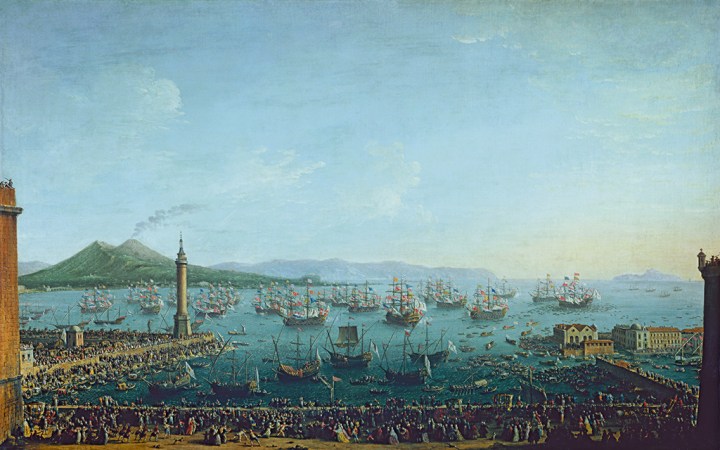
Antonio Joli, Departure of Charles III from Naples to Become King of Spain, 1759, oil on canvas
(Madrid: Museo Nacional del Prado)
◊ ◊ ◊ ◊ ◊
Opening tomorrow at The Getty:
Eyewitness Views: Making History in Eighteenth-Century Europe
The Getty Center, Los Angeles, 9 May — 30 July 2017
Minneapolis Institute of Art, 10 September — 31 December 2017
The Cleveland Museum of Art, 25 February — 20 May 2018
Curated by Peter Björn Kerber
From Paris to Venice to Rome, Europe’s most iconic cities have played host to magnificent ceremonies and dramatic events—and artists have been there to record them. During the eighteenth century, princes, popes, and ambassadors commissioned master painters such as Canaletto and Panini to record memorable moments, from the Venetian carnival to eruptions of Vesuvius, inspiring what became the golden age of view paintings.
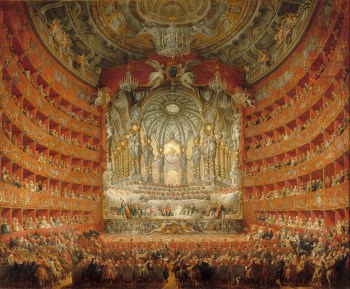
Giovanni Paolo Panini, The Musical Performance in the Teatro Argentina in Honor of the Marriage of the Dauphin, 1747, oil on canvas (Paris: Musée du Louvre)
This is the first exhibition to focus on view paintings as depictions of contemporary events. These reportorial works visually record occasions ranging from royal celebrations to state visits, religious ceremonies, sporting contests, and natural disasters. Their dates correspond to the golden age of European view painting from the beginning of the eighteenth century to the eve of the French Revolution. Through immersive compositions and a wealth of acutely observed detail, artists skillfully created the illusion that the viewer is present on the scene as history is made.
Memory & Manipulation
Members of the highest echelons of European society, from kings and popes to doges and ambassadors, commissioned view painters to commemorate the spectacular events staged at their command or for their benefit. In many cases, these noble patrons are themselves portrayed in the resulting canvases. While artists cultivated the impression that they were faithful chroniclers capturing an event on canvas just as they had witnessed it, they were in fact not above manipulating or ‘improving’ upon reality in order to meet the expectations of their status-conscious clientele.
Civic & Religious Ritual
In Europe’s major cities, the populace gathered throughout the year to commemorate local historic events, celebrate religious feast days, or participate in public rituals. Whether sacred or secular in character, these occasions were always imbued with civic pride. They were also among the few times when the different social classes interacted with each other and shared a common experience. Religious processions typically involved a revered object—such as the Blessed Sacrament, a relic, or a statue—that was carried through the streets with pomp and fanfare. A city’s deliverance from devastating epidemics of bubonic plague was commemorated with recurring festivals of thanksgiving and supplication, since the threat of a resurgence remained very real in the eighteenth century.
Festival & Spectacle
In eighteenth-century Europe, Venice was the undisputed capital of pageantry and entertainment. Undaunted by its political and economic decline, the Serene Republic and its aristocracy invested vast sums in maintaining its traditional ceremonies and dazzling its visitors—for example, by commissioning a new version of the Bucintoro, the lavishly gilded state barge used only on Ascension Day. Financial considerations were also brushed aside to provide extravagant entertainments for kings or princes staying in the city. The grandest of these special events was a ceremonial regatta. In Rome, a comparable level of opulence was seen in the French embassy’s celebrations of royal births and marriages.
Disaster & Destruction
Images of tragic events satisfied a desire for paintings that stimulated the imagination. Whether they showed devastation caused by warfare, fire, natural disaster, or political turmoil, these works offered viewers the thrill of witnessing a catastrophe. They stand apart from most other reportorial paintings in that they downplay the presence of rulers and nobility in favor of depicting the lower classes. Such figures were rarely intended to be recognizable likenesses of actual people. Instead, they serve as proxies through which viewers are able to funnel their own reactions to unfolding calamity.
From The Getty Store:
Peter Björn Kerber, Eyewitness Views: Making History in Eighteenth-Century Europe (Los Angeles: Getty Publications, 2017), 252 pages, ISBN: 978-160606 5259, $45.
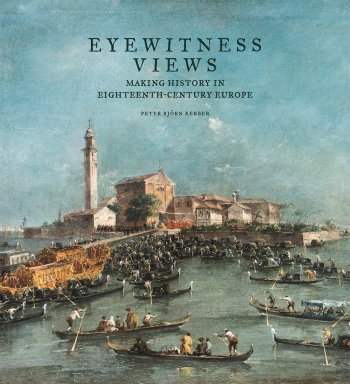 Canaletto, Bernardo Bellotto, Luca Carlevarijs, Giovanni Paolo Panini, Francesco Guardi, Hubert Robert—these renowned view painters are perhaps most famous for their expansive canvases depicting the ruins of Rome or the canals of Venice. Many of their most splendid paintings, however, feature important contemporary events. These occasions motivated some of the greatest artists of the era to produce their most exceptional work. Little explored by scholars, these paintings stand out by virtue of their extraordinary artistic quality, vibrant atmosphere, and historical interest. They are imbued with a sense of occasion, even drama, and were often commissioned by or for rulers, princes, and ambassadors as records of significant events in which they participated.
Lavishly illustrated and meticulously researched, this volume provides the first-ever comprehensive study—in any language—of this type of view painting. In examining these paintings alongside the historical events depicted in them, Peter Bjorn Kerber carefully reconstructs the meaning and context these paintings possessed for the artists who produced them and the patrons who commissioned them, as well as for their contemporary viewers.
Peter Björn Kerber is assistant curator of paintings at the J. Paul Getty Museum.
New Book | ‘Het Pryeel van Zeeland’
From Uitgeverij Verloren:
Martin van den Broeke, ‘Het Pryeel van Zeeland’: Buitenplaatsen op Walcheren 1600–1820 (Hilversum: Uitgeverij Verloren, 2016), 516 pages, ISBN: 978 90870 45920, 49€.
 Buitenplaatsen bepaalden vroeger in sterke mate het landschap van Walcheren. Wat bewoog stedelingen in de zeventiende en achttiende eeuw om een deel van het jaar buiten de stad te gaan wonen? Een belangrijke reden was vermaak, maar welke rol speelde het economische aspect? En hoe toonden eigenaren van buitenplaatsen hun aanzien, macht en smaak? Martin van den Broeke laat zien dat al deze factoren in wisselende mate een rol speelden in het buitenleven en hoe dit door de eeuwen heen veranderde. Van den Broeke onderscheidt drie zones rond de steden waar verschillende typen buitenhuizen voorkomen. Nooit eerder zijn buitenplaatsen zo uitgebreid in hun landschappelijke en sociale omgeving beschreven. Dit boek geeft een rijk geschakeerd beeld van twee eeuwen buitenplaatscultuur in het ‘Het pryeel van Zeeland’, waarvan we de sporen nog zien in het landschap, in de archieven en op talrijke fraaie illustraties.
Met dit boek heeft Martin van den Broeke de Cultuurfondsprijs van de Historische Kring Walcheren gewonnen en de Ithakaprijs 2016 gewonnen. De Ithakaprijs is bedoeld ter stimulering van interdisciplinair (wetenschappelijk) onderzoek over Nederlandse kastelen, historische buitenplaatsen en landgoederen. Ook was zijn boek genomineerd voor de Zeeuwse Boekenprijs 2016.
C O N T E N T S
Woord vooraf
1 Inleiding
Buitenplaatsen als cultuurverschijnsel
Stand van het onderzoek
Begrippenkader
Afbakening van het onderzoek
Probleemstelling en onderzoeksvragen
Methoden en bronnen
2 Ontstaan, 1600–1670
Inleiding
Landschap
Functies
Macht
Aanzien
Architectuur
Conclusie
3 Expansie, 1670–1720
Inleiding
Landschap
Functies
Macht
Aanzien
Architectuur
Conclusie
4 Verfraaiing, 1720–1770
Inleiding
Landschap
Functies
Macht
Aanzien
Architectuur
Conclusie
5 Neergang, 1770–1820
Inleiding
Landschap
Functies
Macht
Aanzien
Architectuur
Conclusie
6 Slotbeschouwing
Het buitenplaatsenlandschap van Walcheren: langetermijn-ontwikkeling
Profijt en vermaak in drie zones
Macht
Aanzien
Vormgeving
Buitenplaatscultuur
Bijlagen
Afkortingen
Gebruikte bronnen en literatuur
Summary
Herkomst afbeeldingen
Register van buitenplaatsen
Register van namen en plaatsen
Curriculum vitae
New Book | Oxford Botanic Garden and Arboretum
Happy National Arbor Day!
Distributed for the Bodleian Library by The University of Chicago Press:
Stephen Harris, Oxford Botanic Garden and Arboretum: A Brief History (Oxford: Bodleian Library, 2017), 144 pages, ISBN: 978 18512 44652, £15 / $25.
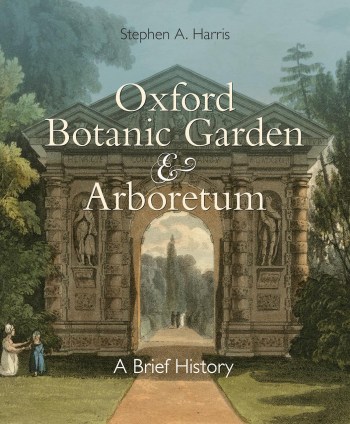 The Oxford Botanic Garden is the oldest surviving botanic garden in Britain, occupying the same location in central Oxford since 1621. Designed as a nursery for growing medicinal plants amid the turmoil of the civil war, and nurtured through the restoration of the monarchy, it has, perhaps unsurprisingly, a curious past.
This book tells the story of the garden through accounts of each of its keepers, tracing their work and priorities, from its founding keeper, Jacob Bobart, through to the early nineteenth-century partnership of gardener William Baxter and academic Charles Daubeny, who together gave the garden its greenhouse and ponds and helped ensure its survival to the present. Richly illustrated, this book offers a wonderful introduction to a celebrated Oxford site.
Stephen A. Harris is the Druce Curator of the Oxford University Herbaria and a University Research Lecturer. He is the author, most recently, of What Have Plants Ever Done for Us?, also published by the Bodleian Library, University of Oxford.
New Book | Late Eighteenth-Century Music and Visual Culture
From Brepols:
Cliff Eisen and Alan Davison, eds., Late Eighteenth-Century Music and Visual Culture (Turnhout: Brepols Publishers, 2017), 225 pages, ISBN: 978 2503 546292, $106.
 The late eighteenth century witnessed a flourishing exchange between music and visual art which was expressed in the creative as well as commercial cultures of the time. Nevertheless, there has been relatively little research to actively consider and thoroughly examine the symbiotic relationship between looking and listening during the period.
In this volume, nine prominent scholars employ a set of interdisciplinary methodological tools in order to come to a comprehensive understanding of the rich tapestry of eighteenth-century musical taste, performance, consumption and aesthetics. While the link between visual material and musicological study lies at the heart of the research presented in this collection of essays, the importance of the textual element, as it denoted the process of thinking about music and the various ways in which that was symbolically and often literally visualized in writing and print culture, is also closely examined.
Through a critical analysis of a number of important contemporary sources as well as current scholarship and research, the authors draw conclusions that extend well beyond the scope of their immediate material and closely-formulated questions. The conversation opened up in the chapters of this volume will hopefully break new ground on which the interrelationship between art and music, and more broadly between visual art and other forms of creative practice, may be studied and debated.
C O N T E N T S
Introduction — Cliff Eisen and Alan Davison
Charles Burney’s Wunderkammer of Ancient Instruments in his General History of Music — Zdravko Blažeković
John Brown’s Dissertation (1763) on Poetry and Music: An Eighteenth-Century View on Music’s Role in the Rise and Fall of Civilization — Alan Davison
Developing an Eye for Harmony: Rubens in Mozart’s Education — Thomas Tolley
Gothic Musical Scenes and the Image of Performance — Annette Richards
The Visual Traces of a Discourse of Ineffability: Late Eighteenth-Century German Published Writings on Music — Keith Chapin
Marketing Ploys, Monuments, and Music Paratexts: Reading the Title Pages of Early Mozart Editions —Nancy November
Musical Allegories in the Printed Edition of the Máscara Real: New Iconographic Models in Catalonian Engravings of the Second Half of the Eighteenth Century — Vanessa Esteve Marull
Authenticity and Likeness in Mozart Portraiture — Cliff Eisen
Imaging Beethoven — Simon Shaw-Miller
New Book | Blake, Myth, and Enlightenment
From Palgrave Macmillan:
David Fallon, Blake, Myth, and Enlightenment: The Politics of Apotheosis (London: Palgrave Macmillan, 2017), 343 pages, ISBN: 978 11373 90349, $100.
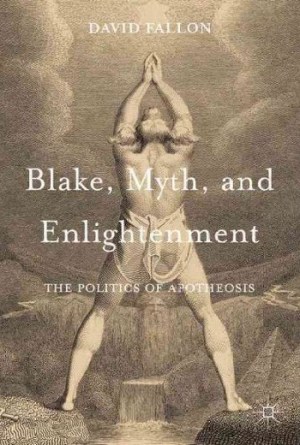 This book provides compelling new readings of William Blake’s poetry and art, including the first sustained account of his visionary paintings of Pitt and Nelson. It focuses on the recurrent motif of apotheosis, both as a figure of political authority to be demystified but also as an image of utopian possibility. It reevaluates Blake’s relationship to Enlightenment thought, myth, religion, and politics, from The French Revolution to Jerusalem and The Laocoön. The book combines careful attention to cultural and historical contexts with close readings of the texts and designs, providing an innovative account of Blake’s creative transformations of Enlightenment, classical, and Christian thought.
David Fallon is Senior Lecturer in English at the University of Sunderland, UK. From 2009 to 2012 he was a British Academy Postdoctoral Fellow at the University of Oxford. He has published on Blake and on eighteenth-century and Romantic-period booksellers and co-edited Romanticism and Revolution: A Reader (2011) with Jon Mee.
C O N T E N T S
1 Introduction: ‘A Saint Amongst the Infidels & a Heretic with the Orthodox’
2 ‘The Deep Indelible Stain’: Apotheosis in the Eighteenth Century
3 ‘Spirits of Fire’: Ambiguous Figures in The French Revolution
4 ‘Breathing! Awakening!’: Contesting and Transforming Apotheosis in America a Prophecy
5 ‘The Night of Holy Shadows’: Europe and Loyalist Reaction
6 ‘Serpentine Dissimulation’: Apotheosis in Urizen, Ahania, and The Song of Los
7 ‘The Name of the Wicked Shall Rot’: Blake’s Oriental Apotheoses of Nelson and Pitt
8 Transforming Apotheosis in The Four Zoas and Milton
9 ‘Ever Expanding in the Bosom of God’: Deification and Apotheosis in Jerusalem
10 Conclusion
Bibliography
Index
List of Figures
New Book | Eighteenth-Century Women Artists
Distributed in the USA and Canada by The University of Chicago Press:
Caroline Chapman, Eighteenth-Century Women Artists: Their Trials, Tribulations, and Triumphs (London: Unicorn Press, 2017), 176 pages, ISBN: 978 191078 7502, £20 / $35.
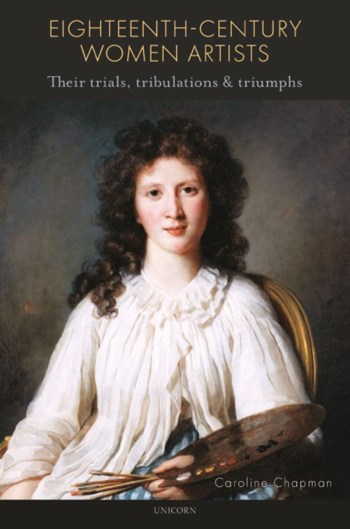 The eighteenth century was an age when not only the aristocracy, but a burgeoning middle class, had the opportunity to pursue their interest in the arts. But these opportunities were generally open only to men; any woman who wished to succeed as an artist still had to overcome numerous obstacles. In a society in which women were expected to marry, become mothers, and conform to rigid social conventions, becoming a professional artist was a controversial choice. Nevertheless, if a woman possessed charm and ambition, and united her talent with hard work, success was possible.
Eighteenth-Century Women Artists celebrates the work of women who had the tenacity and skill (and sometimes the necessary dash of luck) to succeed against the odds. Caroline Chapman examines the careers and working lives of celebrated artists like Angelica Kauffman and Elisabeth Vigée Le Brun as well as the equally interesting work of artists who have now mostly been forgotten. In addition to discussing their varied artworks, Chapman considers artists’ studios, the functioning of the print market, how art was sold, the role of patrons, and the rise of the lady amateur. It is enriched by over fifty color images, which offer a rich selection of art from the time.
Caroline Chapman is a writer, editor, and picture researcher. She has worked for both the Arthur Tooth and Son Art Gallery and the Crane Kalman Gallery as well as working as a freelance picture researcher for 30 years for Times Books, Dorling Kindersley, Phaidon, and Weidenfeld. She is the author of Elizabeth and Georgiana: The Duke of Devonshire and his Two Duchesses for John Murray and John and Joséphine: The Creation of The Bowes Museum for The Bowes Museum and has written an number of travel articles for the Times Education Supplement and Cosmopolitan.










1 comment