New Book | Empire Style: The Hôtel de Beauharnais in Paris
From Rizzoli:
Ulrich Leben and Jörg Ebeling, with photographs by Francis Hammond, Empire Style: The Hôtel de Beauharnais in Paris (Paris: Flammarion, 2016), 348 pages, ISBN: 978-2080202727, $135.
 This monograph dedicated to the most spectacular example of Parisian First Empire interior architecture retraces the history of the building and the lives of its residents. The Hôtel de Beauharnais, constructed in 1713, gained renown during the Consulate period. In 1803, Josephine Bonaparte acquired the property for her son, Eugène de Beauharnais, and had the building renovated and decorated at great expense. At the fall of the Napoleonic Empire, it was sold to the King of Prussia and became an embassy during the nineteenth century. With its unique Consulate and Empire decor, the palace is an invaluable specimen of Parisian interior architecture.The result of more than ten years of research and restoration work, this book recounts three centuries of European political history through the lives of the Hôtel’s successive owners.
Ulrich Leben is the consultant for furniture and interiors restoration at Beauharnais. Jorg Ebeling is director of research at the Centre Allemand d’Histoire de l’Art and renovation consultant at Beauharnais. Francis Hammond’s photographs have appeared in numerous books including Historic Houses of Paris and Private Houses of France.
New Book | Satire, Prints and Theatricality in the French Revolution
From the Voltaire Foundation:
Claire Trévien, Satire, Prints and Theatricality in the French Revolution (Oxford: Oxford University Studies in the Enlightenment, 2016), 280 pages, ISBN: 978-0729411875, £65 / €80 / $92.
 The Revolutionary era was a period of radical change in France that dissolved traditional boundaries of privilege, and a time when creative experimentation flourished. As performance and theatrical language became an integral part of the French Revolution, its metaphors seeped into genres beyond the stage. Claire Trevien traces the ways in which theatrical activity influenced Revolutionary print culture, particularly its satirical prints, and considers how these became an arena for performance in their own right.
Following an account of the historical and social contexts of Revolutionary printmaking, the author analyses over 50 works, incorporating scenes such as street singers and fairground performers, unsanctioned Revolutionary events, and the representation of Revolutionary characters in hell. Through analysing these depictions as an ensemble, focusing on style, vocabulary, and metaphor, Claire Trévien shows how prints were a potent vehicle for capturing and communicating partisan messages across the political spectrum. In spite of the intervening centuries, these prints still retain the power to evoke the Revolution like no other source material.
Claire Trévien is a cultural historian who completed her AHRC-funded CDA doctorate at the University of Warwick in conjunction with Waddesdon Manor. She is the author of two poetry collections: The Shipwrecked House and Astéronymes.
◊ ◊ ◊ ◊ ◊
C O N T E N T S
List of illustrations
List of abbreviations
1 Introduction: The Other Stage of the French Revolution
Revolutionary Prints: A Brief Historiography
Theatricality and Prints
2 Singing the Scene: Chansons and Images in Prints
The Case of Bonvalet (1788–89)
The Aftershocks of 1789
Multiple Voices (1791–92)
Songs and Martyrdom (1793–94)
Epilogue
3 Le Monde à l’envers: The Carnivalesque in Prints
The Commedia dell’Arte in Revolutionary prints
Individual Actors
Epilogue
4 The Spectacle of Science: Illusion in Prints
Charlatanism and Theatricality (1784–95)
Spellbound Ccience (1789–90)
Spectator and Performer (1791–92)
Science as a Propaganda tool (1794)
Epilogue
5 Théâtre de l’ombre: Visions of Afterlife in Prints
Setting the Stage
Executing Theatre
Lighting Shadows
Epilogue
6 Conclusion
Bibliography
Index
Exhibition | Views of the Grand Tour from The Hermitage

From the exhibition website:
Città del Grand Tour dall’Ermitage e Paesaggi Apuani da Collezioni Italiane
Fondazione Giorgio Conti, Palazzo Cucchiari, Carrara, 9 July — 23 October 2016
Curated by Sergej Androsov and Massimo Bertozzi
For centuries, knowing Italy—its extraordinary artistic heritage and millennial civilisation, as well as the nature and human qualities of a beautiful and complicated country—was a significant part of the cultural development of the elite class of all Europe. The Voyage of Italy was an experience to have at least once in a lifetime for the youth of the most important European families, both the noble ones and the rising trade and financial ones, between the very end of the 17th century and the first half of the 19th. The voyage became a true and authentic mania for all the classes that could afford it.
The Grand Tour was more than a simple touristic journey: it was a period of extraordinary development in contact with exceptional history and culture. Every European cultured man from that age dreamt to do at least one trip to Italy, for the signs of the classic past, both Greek’s and Roman’s, for the wonderful bucolic landscapes and to appreciate a kind of happy-go-lucky way of living, in which the daily challenges were tempered by an infinity of festivals and parties and countless occasions for entertainment and show. Rome was the favourite destination, but the voyage pace—both outward and the return—was set by the stops, longer and shorter ones, in the main cities scattered along the route, with mandatory deviations to Venice, Florence, and Naples.

Hubert Robert, View of the Colosseum (St Petersburg: The Hermitage Museum).
An important role, for choosing both the routes and what to see and keep in the memory, was played by scholars, art dealers, and painters who were able to produce images, not only for monuments, but also for the events which characterised the voyage of Italy, for each traveller personally.
For this exhibition, some traditional Grand Tour views have been assembled as a gallery of ‘portraits’ of places, imagination, and memory. Thus, they do not pay attention to the appearance of the Italian landscape only, but also to the nature of the men who have built that landscape. These views can nurture those psychological sensations that the Italy image gives to the Italians’ character, especially abroad and at least in the mind of those people who could see it only once, but who wanted to remember it forever.
So, some other painting are together with the ones of some Grand Tour ‘pioneers’, such as the Flemish Jan Miel and Hendrik Frans van Lint, the Dutch Johannes Lingelbach, the German Philipp Hackert, the French Hubert Robert, true and authentic reference points of the foreign groups visiting Rome or Naples, across the various ages. These painting are by a wide rank of Italian landscape painters, from Giovanni Paolo Panini to Ippolito Caffi, from Giulio Carlini to Angelo Inganni, to arrive at the naturalist turning point by Giovanni Fontanesi.
Included are the most appreciated Italian postcards: from The Arch of Titus by Hendrik Frans van Lint to The Colosseum by Hubert Robert, from View of the Bay of Baiae by Carlo Bonavia to View of Rome, with Castel Sant’Angelo by Ippolito Caffi, from The Grand Canal by Antonio de Pian to the Piazza del Duomo (Milan Cathedral Square) by Angelo Inganni.
Also represented are the peculiarities of the local traditions and the strange Italian way of life: The Charlatan by Jan Miel, the chaotic Market Square by Johannes Lingelbach; and also the celebration, from the lavish one in front of the Palazzo del Quirinale by Antonio Cioci, to the noisy Venice Carnival, in the Concert in the Gondola by Friedrich Paul Nerly, and the private party which they seem to prepare to in The Tolstoy Family in Venice by Giulio Carlini.
But Rome was still the capital of Christianity and here it is the allusive Saint Paul’s Sermon, in the Ruins of Ancient Rome, by Giovanni Paolo Panini; and also the people and visionary devotion of the Prayer to the Virgin Mary by Joseph Severn or the cozy and composed one of In the Church of S. Maria della Pace by Anselmo Gianfanti.
Next to the classic views of the Grand Tour, the exhibition places a section on the ‘discovery’ of the Apuan landscape, with artworks from the Museo Civico of Reggio Emilia, Archivio di Stato di Massa, Provincia di Massa-Carrara and private collections, to represent one of the many pleasant places for which Italy has always been considered as the garden of Europe. A territory whose nature suggested strong emotions to the ancient travellers, from Petrarch to Michel de Montaigne, comes to the attention of modern travellers, thanks to the view of its mountains, shaping the far or close horizon of a large area, from Florence to Lucca and Pisa, in addition to the coast of Liguria or the northern part of the Tyrrhenian Sea, from Lerici with its Poets’ Bay to Livorno. In conclusion, an attractive landscape not only for travellers, but also for the people visiting the art cities nearby or the coast.
The first views of the Apuan territory must be attributed to foreign travellers staying nearby, like the English Admiral William Paget or his fellow countrywoman Elisabeth Fanshawe, or the Swiss painter and writer Julie Goldenberger who settled down here and also spent her last years in Carrara. But there are also ones from professional painters, such as Saverio Salvioni from Massa, who painted for a long time the wide panoramas of the Carrara quarry at the beginning of the 19th century, or Giovanni Fontanesi from Emilia who, showing the interest for the territory images, dedicated a great deal of his output to the Ligurian-Apuan landscapes. The exhibition path ends with the painting Michelangelo Quarries of Carrara Marbles (1860–1865) by Antonio Puccinelli. It represents the perfect summary of the work of an artist loyal to the Purism of his masters (Bezzuoli and Minardi) while telling the ‘history painting’, but who adheres to a new way of looking at the sentimental suggestion of the landscape, in the Apuan area.
Sergej Androsov and Massimo Bertozzi, Citta del Grand Tour dall’Ermitage e Paesaggi Spuani da Collezioni Italiane (Carrara: Fondazione Giorgio Conti, 2016), 131 pages, $59.
New Book | Niebuhr’s Museum
From Forlaget Vandkunsten:
Anne Haslund Hansen, with photographs by Torben Eskerod, Niebuhr’s Museum: Artefacts and Souvenirs from the Royal Danish Expedition to Arabia, 1761–1767 (Copenhagen: Forlaget Vandkunsten, Carsten Niebuhr Biblioteket, 2016), 260 pages, ISBN: 978-8776954406, £40.
 Niebuhr’s Museum: Artefacts and Souvenirs from the Royal Danish Expedition to Arabia, 1761–1767 is the first comprehensive presentation of the largely unknown collection of antiquities and ethnographic objects acquired during this important 18th-century scientific expedition to the Middle East. The expedition, a brainchild of the Göttingen professor Johann David Michaelis, aimed at shedding light on the historical and cultural background to the Old Testament. Its scholarly and scientific results were multifaceted and are best known from the publications of the cartographer Carsten Niebuhr (1733–1815), the only survivor of the expedition, which included among others, the Swedish naturalist and pupil of Linnaeus, Peter Forsskål. The Niebuhr collection, primarily held in the National Museum of Denmark, offers an invaluable resource for the study of 18th-century travellers and expeditions to the Middle East.
In its investigation of the history and context of each of these intriguing objects, Niebuhr’s Museum presents a new narrative of the ill-fated voyage. Analysis of this collection also illuminates the collecting practices of the period, providing insights into the genesis of the core holdings of many of today’s museums.
Anne Haslund Hansen has previously published (with Stig T. Rasmussen) the journal of the expedition’s philologist, Frederik Christian von Haven: Min Sundheds Forliis (2005). She works as a curator at the National Museum of Denmark. She can be contacted at anne.haslund.hansen@natmus.dk.
Book Launch | Georgian Gothic
From Eventbrite:
Talk and Book Launch: Georgian Gothic: Medievalist Architecture, Furniture and Interiors
Strawberry Hill, Twickenham, 17 November 2016
Dr Peter Lindfield, an expert on the Gothic Revival, will be giving an illustrated 30-minute lecture at Strawberry Hill, Twickenham, on the topic of Georgian Gothic design between 1730 and 1840. Strawberry Hill and Horace Walpole, along with Thomas Chippendale, Robert Adam, Gillows of Lancaster and A.W.N. Pugin, will figure heavily in the talk. Architecture, interiors and furniture will be covered as well as key issues of design, fashion and taste in the Georgian period.
Following a Q&A session and a champagne reception, Peter will be signing copies of his new book at this launch party, Georgian Gothic: Medievalist Architecture, Furniture and Interiors, 1730–1840. Copies of the book will be available on the night for purchase at a specially reduced price (£35: RRP £50). You can select a registration option for the talk and reception only, or additionally pre-purchase the book to be signed and collected on the night.
New Book | 18th-Century Fashion in Detail
The first edition appeared in 1998; the second edition is scheduled for release in November from Thames & Hudson.
Avril Hart and Susan North, 18th-Century Fashion in Detail (London: Thames & Hudson, 2016), second edition, 224 pages, ISBN: 978-0500292631, $35.
This beautifully illustrated book reveals the decorative seams, refined stitching, voluptuous drapery, strict corseting, slashing, and stamping that make up some of the garments in the Victoria and Albert Museum’s superlative fashion collection. With an authoritative text, exquisite color photography of garment details, and line drawings showing the complete construction of each piece, the reader has the unique opportunity to examine up close historical clothing that is often too fragile to be on display. It is an inspirational resource for students, collectors, designers, and anyone who is fascinated by fashion and clothing. This new edition features an updated design, improved navigation, a comprehensive index, and an introduction that sets the examples in full historical context.
Avril Hart is an expert in historical dress. Her publications include English Men’s Fashionable Dress: 1600–1799, Ties, and Fans. Susan North is the Curator of Fashion 1550–1800 at the V&A.
New Book | The Silhouette
From Bloomsbury:
Georges Vigarello, The Silhouette: From the 18th Century to the Present Day, translated by Augusta Dorr (London: Bloomsbury Visual Arts, 2016), 192 pages, ISBN: 978-1474244657, £30 / $45.
 From bone-crushing corsets to modern ‘slimming’ creams, our preoccupation with the silhouette has shaped centuries of fashion and culture. The contours of the body can convey everything from physical health and beauty to social class—and both men and women have long sought to mold and reshape them, often with alarming and even dangerous results.
Tracing the history of the silhouette from its birth in 18th-century portrait sketches, this engrossing book takes the reader on a journey through 250 years of a cultural obsession. From Hogarth’s ‘line of beauty’ to the advent of nude photography, from the crinoline to the Dior suit and the early bathing costume, The Silhouette reveals how the shape of the body has become an eloquent symbol of status, sexuality and the aspirational quest for physical and moral ‘perfection’. Drawing on numerous textual and visual resources, leading scholar Georges Vigarello anatomizes a fixation with the human form which has shaped not just our bodies but our very identities. With over 120 color images, The Silhouette is a remarkable resource for scholars, students, and fashion-lovers alike.
Georges Vigarello is a historian and sociologist. He is Research Director at the École des hautes études en sciences sociales (EHESS) in Paris, France. He has published widely on topics ranging from Concepts of Cleanliness (Cambridge) and The History of Rape: Sexual Violence in France from the Sixteenth to the Twentieth Century (Polity) to The Metamorphoses of Fat: A History of Obesity (Columbia).
◊ ◊ ◊ ◊ ◊
C O N T E N T S
Introduction
I | A New Word, a New Line
The Invention of the Word ‘Silhouette’ (18th century)
The Art of ‘Silhouetting
From Shaded Faces to Shaded Figures
II | From the Mezzotint to the Romantic Aesthetic
The Enlightenment and the Emergence of Morphology
Before the ‘Silhouette’: Early Incarnations
The Quest for Detail: The Triumph of the ‘Full-Length’ Profile Portrait
The Complex and Curious Realm of the Shadow
The Romantic Perspective
III | Innovations in Graphic Art
A Process Expands: Press and Image
A Word Expands: Physical and Moral Significance
The Silhouette: A Social ‘Museum’ in the 19th Century
The ‘Invention’ of Morphology
The Silhouette: an Academic Approach
The Silhouette and Fashion in the Romantic Era
A Wealth of Creativity in Graphic Art
From the Press to the Poster
IV | The Art of Expression
Photography and Figures in Motion
The Female Contour: from Slender to Erotic
The Nude Becomes ‘Commonplace’
The Honing of the Female Form
A Growing Personal Imperative
The Honing of the Male Form
The Theme of Decline
The Quest to Classify
The Tragic Danger of ‘Race’
The Realms of Expression and Information
Between Curves and Muscles
The Emergence of Psychology: The Dawn of a Cult?
V | The Contemporary Silhouette
Radical Changes in the Figure
The Challenge of Identity
The Silhouette: The Mastery and Weakness of the Body
Conclusion
Notes
Index
Photographic credits
New Book | Urban Space as Heritage in Late Colonial Cuba
From the University of Texas Press:
Paul Niell, Urban Space as Heritage in Late Colonial Cuba: Classicism and Dissonance on the Plaza de Armas of Havana, 1754–1828 (Austin: University of Texas Press, 2015), 344 pages, hardcover ISBN: 978-0292766594, $55 / paperback (print on demand) ISBN: 978-1477311301, $35.
 According to national legend, Havana, Cuba, was founded under the shade of a ceiba tree whose branches sheltered the island’s first Catholic mass and meeting of the town council (cabildo) in 1519. The founding site was first memorialized in 1754 by the erection of a baroque monument in Havana’s central Plaza de Armas, which was reconfigured in 1828 by the addition of a neoclassical work, El Templete. Viewing the transformation of the Plaza de Armas from the new perspective of heritage studies, this book investigates how late colonial Cuban society narrated Havana’s founding to valorize Spanish imperial power and used the monuments to underpin a local sense of place and cultural authenticity, civic achievement, and social order.
Paul Niell analyzes how Cubans produced heritage at the site of the symbolic ceiba tree by endowing the collective urban space of the plaza with a cultural authority that used the past to validate various place identities in the present. Niell’s close examination of the extant forms of the 1754 and 1828 civic monuments, which include academic history paintings, neoclassical architecture, and idealized sculpture in tandem with period documents and printed texts, reveals a ‘dissonance of heritage’—in other words, a lack of agreement as to the works’ significance and use. He considers the implications of this dissonance with respect to a wide array of interests in late colonial Havana, showing how heritage as a dominant cultural discourse was used to manage and even disinherit certain sectors of the colonial population.
Paul Niell is Assistant Professor of Art History at Florida State University. He is the coeditor, with Stacie Widdifield, of Buen Gusto and Classicism in the Visual Cultures of Latin America, 1780–1910.
◊ ◊ ◊ ◊ ◊
C O N T E N T S
List of Illustrations
Acknowledgments
Introduction
1 The Plaza de Armas and Spatial Reform
2 Classicism and Reformed Subjectivity
3 Fashioning Heritage on the Colonial Plaza de Armas
4 The Dissonance of Colonial Heritage
5 Sugar, Slavery, and Disinheritance
Epilogue
Notes
Bibliography
Index
New Book | Oriental Interiors
From Bloomsbury:
John Potvin, ed., Oriental Interiors: Design, Identity, Space (London: Bloomsbury Academic, 2015), 296 pages, hardback ISBN: 978-1472596642, $115 / paperback ISBN: 978-1472596635, $30.
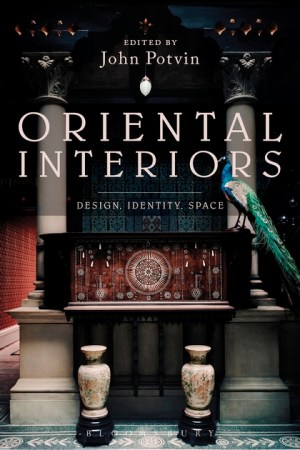 Since the publication of Edward Said’s groundbreaking work Orientalism 35 years ago, numerous studies have explored the West’s fraught and enduring fascination with the so-called Orient. Focusing their critical attention on the literary and pictorial arts, these studies have, to date, largely neglected the world of interior design. Oriental Interiors is the first book to fully explore the formation and perception of eastern-inspired interiors from an orientalist perspective.
Orientalist spaces in the West have taken numerous forms since the 18th century to the present day, and the fifteen chapters in this collection reflect that diversity, dealing with subjects as varied and engaging as harems, Turkish baths on RMS Titanic, Parisian bachelor quarters, potted palms, and contemporary yoga studios. It explores how furnishings, surface treatments, ornament and music, for example, are deployed to enhance the exoticism and pleasures of oriental spaces, looking across a range of international locations. Organized into three parts, each introduced by the editor, the essays are grouped by theme to highlight critical paths into the intersections between orientalist studies, spatial theory, design studies, visual culture and gender studies, making this essential reading for students and researchers alike.
John Potvin is Associate Professor in the Department of Art History at Concordia University, Montreal, where he teaches on the intersections of art, interior design and fashion. He is the author of Bachelors of a Different Sort: Queer Aesthetics, Material Culture and the Modern Interior in Britain (Manchester University Press, 2014), Giorgio Armani: Empire of the Senses (Ashgate, 2013), and Material and Visual Cultures Beyond Male Bonding (Ashgate, 2008). He is also editor of The Places and Spaces of Fashion (Routledge, 2009) and co-editor of Material Cultures, 1740–1920: The Meanings and Pleasures of Collecting (Ashgate, 2010) and Fashion, Interior Design and the Contours of Modern Identity (Ashgate, 2010).
◊ ◊ ◊ ◊ ◊
C O N T E N T S
Introduction: Inside Orientalism: Hybrid Spaces and Modern Interior Design, John Potvin
Section I: Modes of Display and Representation
Introduction to Section I
1 The Emptiness of Western Aesthetics Versus the Aesthetics of Eastern Intimacy: A Reading of Interior Spaces and (Colonial) Literary Impressionism in E. M. Forster’s A Passage to India, Victor Vargas (Cogswell Polytechnic)
2 The Exhibitionary Re-production of ‘Islamic’ Architecture, Solmaz Mohammadzadeh Kive (University of Colorado)
3 Promoting the Colonial Empire through French Interior Design, Laura Sextro (University of Dayton)
4 Orientalism and David Hockney’s Male-positive Imaginative Geographies, Dennis S. Gouws (Springfield College and the Australian Institute of Male Health and Studies)
5 The Excessive Trompe l’Oeil: The Saturated Interior in Tears of the Black Tiger, Mark Taylor (University of Newcastle) and Michael J. Ostwald (University of Newcastle)
Section II: Gendered and Sexual Identities
Introduction to Section II
6 On Oriental Interiors in Eighteenth-Century British Women Writers’ Novels, Marianna D’Ezio (Luspio University for International Studies of Rome)
7 Bachelor Quarters: The Spaces of Japonisme in Nineteenth-Century Paris, Christopher Reed (Pennsylvania State University)
8 Coming Out of the China Closet?: Performance, Identity and Sexuality in the House Beautiful, Anne Anderson (Exeter University and Kingston University)
9 Orientalism, Collecting and Shame: Inside Rolf de Maré’s Hildesborg Estate, John Potvin (Concordia University)
Section III: Spaces and Markets of Consumption
Introduction to Section III
10 Paradise in the Parlour: Potted Palms in Western Interiors, 1850–1914, Penny Sparke (Kingston University)
11 Traveling in Time and Space: The Cinematic Landscape of the Empress Theatre, Camille Bédard (McGill University)
12 Oriental Spaces at Sea: From the Titanic to the Empress of Britain, Anne Massey (Middlesex University)
13 Posturing for Authenticity: Embodying Otherness in Contemporary Interiors of Modern Yoga, Lauren Bird (Queen’s University)
Index
Conference | European Portrait Miniatures
From the conference flyer:
European Portrait Miniatures: Artists, Functions, and Collections
The Tansey Miniatures Foundation, Bomann-Museum, Celle, 11–13 November 2016
 The conference is being held on the occasion of the opening of the sixth exhibition of the Tansey Miniatures Foundation and the publication of the accompanying catalogue Miniatures from the Baroque Period in the Tansey Collection.
Both conference venues are within walking distance (20 minutes) from the railway station. Trains from Hannover take approximately 25 to 45 minutes (Deutsche Bahn, Metronom, and S-Bahn).
For registration, please contact Juliane Schmieglitz-Otten, Head of the Residence Museum at Celle Castle, juliane.schmieglitz-otten@tansey-miniatures.com. For more information, please contact Bernd Pappe, Art Historian and Restorer, bernd.pappe@tansey-miniatures.com. Conception IT Coordination by Birgitt Schmedding, Photo Designer, birgitt.schmedding@tansey-miniatures.com.
◊ ◊ ◊ ◊ ◊
F R I D A Y , 1 1 N O V E M B E R 2 0 1 6
15:00 Registration
16:30 Welcome and opening of the exhibition Miniatures from the Baroque Period in the Tansey Collection
S A T U R D A Y , 1 2 N O V E M B E R 2 0 1 6
9:00 Objects, Agencies, and Social Practices
• Ulrike Kern (Frankfurt), The Limner’s Language: Words and Concepts Related to Miniature Painting in England
• Miranda L. Elston (Chapel Hill, North Carolina), Hilliard’s Miniatures: Enacted Desire within the Elizabethan Court
• Eloise Owens (New York), The Hand behind the Likeness: Women’s Practice as Portrait Miniaturists in Eighteenth-Century England
• Christoph Großpietsch (Salzburg), Portrait Miniatures of Mozart: Problems of Authenticity
• Violaine Joëssel (Geneva), A Quest for Legitimacy: The Practice of Miniature Painting in Colonial America
• Dimitri Gorchko (Moscow), ‘… et que tout ait un nom nouveau’: Portrait Miniatures of Napoleon’s Marshals, Generals, and Colonels: Analysis and Identification
13:00 Lunch
14:15 Politics and Representation
• Delia Schffer (Kassel), Power through Relations: Duke Louis of Württemberg‘s Family Ties in a Series of Miniature Portraits
• Sarah Grandin (Paris), Density in the ‘Boîte à Portrait’ under Louis XIV
• Stefanie Linsboth (Vienna), From Large-Scale Paintings to Precious Miniatures: Maria Theresa’s Portrait Miniatures
• Karin Schrader (Bad Nauheim), ‘Taking the Veil’: Miniatures of Royal Widows from the Sixteenth to the Nineteenth Centuries
16:30 Coffee
17:00 Special Techniques and Materials
• Tatjana Wischniowski (Dresden), Oil-Based Paint under a Layer of Water: Arnaud Vincent de Montpetit’s ‘Eludoric Painting’, a Rare Miniature Painting Technique
• Emma Rutherford, Alan Derbyshire, and Victoria Button (London), The Drawings of John Smart (1742–1811): Function, Purpose, and Line
S U N D A Y , 1 3 N O V E M B E R 2 0 1 6
9:00 Miniature Collections
• Lucy Davis (London), Famous Women in the Miniatures at The Wallace Collection
• Catherine Hess (San Marino, California), Up Close and Personal: Portrait Miniatures at The Huntington Art Collections
• Isabel M. Rodríguez-Marco (Madrid), The Collection of Portrait Miniatures and Small Portraits in the Museo Nacional de Artes Decorativas, Madrid
• Paul Caffrey (Dublin), European Enamels from the National Gallery of Ireland Collection
• Wladyslaw Maximowicz (Bergamo), The Portrait Miniature in Russian Provincial Collections
• Reetta Kuojärvi-Närhi (Helsinki), Small Treasures in Finland: Paul Sinebrycho as a Miniature Collector
13:00 Lunch
14:15 Miniature Painters
• Halgard Kuhn (Hannover), Peter Boy (c. 1650–1727): Medallions and Miniatures by the Frankfurt Baroque Goldsmith and Enamel Painter as Integrating Parts in Golden Jewellery
• Karen Hearn (London), The ‘Small Oil Colour Pictures’ of Cornelius Johnson (1593–1661)
• Marco Pupillo (Rome), Francesco Antonio Teriggi, a Miniaturist in the Service of Joseph Bonaparte
• Roger and Carmela Arturi Phillips (Ringwood), The True and Flawed Genius of John Engleheart
• Stephen Lloyd (Liverpool), Copying Portraits in Miniature in Regency England: The Work of William Derby (1786–1847) for the 13th Earl of Derby at Knowsley Hall
◊ ◊ ◊ ◊ ◊
The exhibition catalogue is distributed in North America and Japan by The University of Chicago Press (with information on the other five volumes published thus far from The Tansey Foundation). . .
Bernd Pappe and Juliane Schmieglitz-Otten, eds., Miniatures from the Baroque Period in the Tansey Collection / Miniaturen des Barock aus der Sammlung Tansey (Munich: Hirmer Publishers, 2016), 400 pages, ISBN: 978-3777426389, $64.
The Tansey miniatures, now held by the Bomann Museum in Celle, represent one of the most significant collections of European miniature paintings. This volume is the sixth in a series exploring the collection in key periods. Each volume presents new photographic reproductions of the miniatures at actual size and with close-up photographs that show important details. This volume covers portrait miniatures created throughout the Baroque period of the seventeenth-century, with more than one hundred representative works. Essays by specialists in the field offer insights into the artworks, their patrons, and the period. The resulting book is as informative as it is beautiful, a stunning testament to a bygone age and a once-popular form.










leave a comment