Exhibition | Porcelain, No Simple Matter

Left: Royal Meissen manufactory, a pair of four-sided bottles with stoppers, ca. 1724, Collection of Henry H. Arnhold; photo by Michael Bodycomb. Right: Arlene Shechet, Three Hundred Years, 2012, © Arlene Shechet, courtesy of Sikkema Jenkins & Co., New York; photo by Alan Wiener.
◊ ◊ ◊ ◊ ◊
Now on view at The Frick:
Porcelain, No Simple Matter: Arlene Shechet and the Arnhold Collection
The Frick Collection, New York, 24 May 2016 — 2 April 2017
Curated by Charlotte Vignon
The Frick will present a year-long exhibition exploring the complex history of making, collecting, and displaying porcelain. Included are 130 pieces produced by the renowned Royal Meissen manufactory, which led the ceramic industry in Europe, both scientifically and artistically, during the early to mid-eighteenth century. Most of the works date from 1720 to 1745 and were selected by New York−based sculptor Arlene Shechet from the promised gift of Henry H. Arnhold. Twelve works in the exhibition are Shechet’s own sculptures—exuberant porcelain she made during a series of residencies at the Meissen manufactory in 2012 and 2013. Designed by Shechet, the exhibition avoids the typical chronological or thematic order of most porcelain installations in favor of a personal and imaginative approach that creates an intriguing dialogue between the historical and the contemporary, from then to now. With nature as the dominant theme, the exhibition will be presented in the Frick’s Portico Gallery, which overlooks the museum’s historic Fifth Avenue Garden.
Porcelain, No Simple Matter: Arlene Shechet and the Arnhold Collection is organized by Charlotte Vignon, Curator of Decorative Arts, The Frick Collection. Major support for the exhibition is generously provided by Chuck and Deborah Royce, Melinda and Paul Sullivan, Margot and Jerry Bogert, and Monika McLennan. A fully illustrated booklet featuring installation views and a conversation with Arnhold, Shechet, and Vignon will be available in July.
Additional information and images are available from Meghan Dailey’s piece: “Contemporary Ceramics, Up Against 18th-Century Pieces — Literally,” T: The New York Times Style Magazine (24 May 2016).
Exhibition | Celebration!
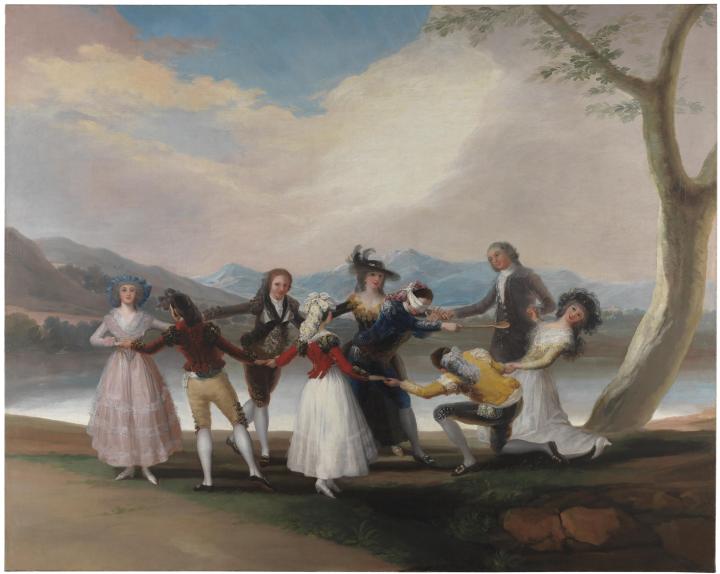
Francisco de Goya, Blind Man’s Bluff (La Gallina Ciega), 1788, canvas, 269 x 350 cm
(Madrid: Museo Nacional del Prado)
◊ ◊ ◊ ◊ ◊
Press release for the exhibition now on view in Vienna:
Celebration! 125 Years, Anniversary Exhibition / Feste Feiern: 125 Jahre – Jubiläumsausstellung
Kunsthistorisches Museum, Wien, 8 March — 11 September 2016
Curated by Gudrun Swoboda
In 2016 the Kunsthistorisches Museum is celebrating a jubilee: 125 years ago, on October 17, 1891, Emperor Franz Joseph formally opened the new main museum on Vienna’s Ringstrasse. To celebrate this anniversary in style we are showing an important exhibition on ‘the art of celebration’ showcasing precious artworks from all the collections of the Kunsthistorisches Museum. International loans like Francisco de Goya’s La gallina ciega from the Prado in Madrid or the magnificent Yashmak designed by Shaun Leane for one of Alexander McQueen’s fashion shows from the V&A in London will enrich this magnificent show, which presents 125 groups of objects in three galleries.
The show focuses on celebrations and their history, and looks at different aspects of European festivities from the Renaissance to the French Revolution—at court (especially that of the Habsburgs) in towns and cities, and in the country. Court banquets and their opulent dishes, dancing and music form the centre of the show (Gallery VIII). The adjacent galleries look at sumptuous outdoor parties organized to celebrate coronations, weddings or birthdays but also during Carnival, popular festivals or on market days (Gallery IX), and at courtly tournaments (Gallery I).
Festivities always represent a state of exception during which every-day laws are temporarily suspended—through role-playing games and disguises that flout historical, cultural and gender differences. But what can we display of these ephemeral, long gone festivities? By turning the question on its head we arrive at a preliminary answer: we can display what remains of the day: show-pieces, props and pictorial records of these events.
For millennia something was presented or displayed during many of these celebrations, be they ecclesiastical or secular. Court festivities offered the host the opportunity to display precious show-pieces removed for this purpose from his treasury or Kunstkammer. The large two-handled rock crystal vase is such a show-piece; in 1764 it was removed from the Imperial Treasury in Vienna and transported to Frankfurt for the coronation of Joseph II. After the event these prestigious artefacts were returned to their respective depositories, only to reappear again at the next important festivity. Not a show-piece sensu stricto but nonetheless an important prop is the seventeen-metres-long tablecloth presented here to the public for the first time; Emperor Charles V commissioned it in 1527 for the banquets of the Order of the Golden Fleece. Another extraordinary prop for princely drinking parties is the 16th-century ‘trick chair’ that shackled guests until they had downed the content of a ‘welcome-glass’.
Fantastic parade armour worn at Renaissance tournaments documents exceptional creativity and imagination, and these artefacts are among the most fascinating props used as elegant disguises by the elite. Courtly festivities demanded both opulence and splendour but also extravagance—including technical extravagance. A particularly sophisticated construction that documents the innovative potential and the creative energies employed to plan and produce surprising show-effects is the mechanical breast-piece comprising springs and levers that Emperor Maximilian I commissioned for courtly tournaments. A direct hit on the shield of one’s opponent activated the mechanism, catapulting the pieces of the disintegrating shield high into the air. Hosts worked hard to surprise and enchant their guests, and the creative achievements of the court artists especially employed to plan and organize these festivities reflected back on their patrons.
Fragile sculptures made of molten sugar functioned as ephemeral table décor at banquets, and they, too, illustrate the sophistication of such costly festive creations. Contemporary Tuscan artisans have produced a number of sugar statuettes especially for this exhibition, an attempt to recreate the splendour of these centrepieces known as trionfi di tavola. But festive infrastructure also required invisible props like the 17th-century rocket-pole that bears witness to the magnificence of ephemeral baroque fireworks displays. In addition to opulent treasures and curious extravagances the exhibition includes depictions of real and imaginary festivities: from coronations to Bruegel’s boisterous peasant celebrations to the fanciful fêtes galantes of Watteau and his followers—dreamy scenes set in Arcadian parklands in which fashionable ladies and gentlemen give themselves up to dance, games and gallant conversation.
Public festivals offered a counter-draft to the strictly regulated hierarchical court festivities—especially during Carnival, a looking-glass world when the existing social order was temporarily turned upside down through exuberant partying, the donning of disguises and role reversal—one way of defusing the tensions that accumulate in every hierarchic society. A number of musical examples document that various elements of public festivals have enriched and inspired court celebrations. A perfect example of this rich interdependency is the painting of Blind Man’s Bluff by the Spanish court painter Francisco de Goya, who recorded public festivals and their entertainments in many of his compositions. Occasionally elements of a public festival are even turned into a court ceremony, and are thus constrained and controlled. One example is the Cuccagna Napoletana, which evolved out of carnival processions in Naples. The rising number of increasingly serious accidents during celebrations originally organized by the craftsmen’s guild led the ruler to assume control. Royal troops guarded a land-of- Cockayne-like structure set up in front of the royal palace until the king standing on a balcony gave the sign that gave it up for plunder, and it was stormed by the populace.
The artefacts assembled for this exhibition bear witness to the exceptional splendour and opulence of some of these festivities but they also hint at their rigid as well as fragile order. They also show that the history of celebrations includes some that never actually happened. The exhibition offers insights into the history of celebrations—mainly, but not exclusively, during the early Modern Era. Our aim is to show that throughout history festivities were always also displays, and although the installation is ‘festive’ it aims also to remind visitors of what separates us from earlier festivities: it is, of course, obvious that modern museum visitors differ greatly from the protagonists and spectators of historical feasts—but how does a modern audience see itself? The exhibition poses this question in the form of a magnificent baroque mirror: it is, in a way, a precursor of our modern selfies, and functioned in much the same way. But perhaps it can also turn into an instrument of (humorous) self reflection, for which there is more than enough cause 125 years after the formal opening of the magnificent museum building on the Ringstrasse.
The exhibition was curated by Gudrun Swoboda, curator for Baroque Painting in the Picture Gallery of the Kunsthistorisches Museum. Most of the artefacts on show come from the rich holdings of the Kunsthistorisches Museum, and some of them have never, or only very rarely, been on display. In addition, the show includes loans from a number of national and international museums such as the Victoria & Albert Museum in London, the Museo del Prado in Madrid, the Museum Boijmans Van Beuningen in Rotterdam, the Germanisches Nationalmuseum in Nuremberg, the Historisches Museum Frankfurt, the MAK—Austrian Museum for Applied Arts / Contemporary Art, the Albertina, the Österreichische Nationalbibliothek, the Hofmobiliendepot and the Musikverein in Vienna, and the Tiroler Landesmuseum. The exhibition is organized in collaboration with the Academy of Fine Arts in Vienna, who have also lent a number of important works.
◊ ◊ ◊ ◊ ◊
The full-length German catalogue is available from the Kunsthistorisches Museum, along with an abridged English version. A 27-page booklet with a checklist of the 126 items included in the exhibition and a brief description for each object is available to download as a PDF file here.
Sabine Haag and Gudrun Swoboda, eds., Feste Feiern (Vienna: Kunsthistorisches Museum, 2016), 320 pages, 35€.
Exhibition | City of the Soul: Rome and the Romantics
Opening in June at The Morgan Library:
City of the Soul: Rome and the Romantics
The Morgan Library & Museum, New York, 17 June — 11 September 2016
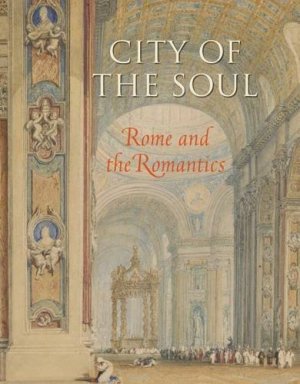 Rome exists not only as an intensely physical place, but also as a romantic idea onto which artists, poets, and writers project their own imaginations and longings. City of the Soul examines the evolving image of Rome in art and literature with a display of books, manuscripts, prints, photographs, and drawings.
This groundbreaking exhibition considers the ever-evolving identities of Rome during a pivotal period in the city’s history, 1770–1870, when it was transformed from a papal state to the capital of a unified, modern nation. Venerable monuments were demolished to make way for government ministries and arteries of commerce. Building projects and improvements in archaeological techniques revealed long forgotten remnants of the ancient metropolis. A tourist’s itinerary could include magnificent ruins, ecclesiastical edifices, scenic vistas, picturesque locales, fountains, gardens, and side trips to the surrounding countryside.
The exhibition juxtaposes a century of artistic impressions of Rome through a superb selection of prints and drawings by recognized masters such as Giovanni Battista Piranesi (1720–1778), J. M. W. Turner (1775–1851), and Edward Lear (1812–1888) along with lesser known artists whose work deserves greater attention.
The invention of photography also influenced the image of the city. Photographers consciously played on the compositions of Piranesi and earlier masters of the veduta tradition, while at the same time exploiting the expressive potential of this new medium. As the meditative, measured pace of the Grand Tour gave way to the demands of organized tourism, they supplied their new clientele with nostalgia as well as novelty in their views of the Eternal City.
John Pinto, City of the Soul: Rome and the Romantics (Lebanon, New Hampshire: University Press of New England, 2016), 224 pages, ISBN: 978-0875981710, $50.
Rome, described by Byron as the ‘City of the Soul’, has always inspired fervid imaginings and visionary renderings of itself and its past. It has existed not only as an intensely physical place but also as a romantic idea onto which artists and writers projected their own imaginations and longings. City of the Soul illuminates how the spirit of Romanticism (the term itself invokes Rome)—its passion, imagination, individuality, transcendence, nonconformity—thrived in the artistic community of Rome in the century between 1770 and 1870.
The expansive artistic response to Rome during that period reflected the timeless yet changing city, when visitors experienced the transition from the Grand Tour to the onset of mass tourism and history witnessed Rome’s dramatic transformation from papal enclave to the capital of a newly unified Italy. Rome in the Romantic era attracted extraordinary writers and visual artists, and, as it had for centuries, facilitated vibrant artistic exchange among them. The records of these encounters—in the form of letters and diary entries, poems, novels, prints, drawings, watercolors, oil sketches, and the exciting new medium of photography—collectively constitute the portrait of a very particular place, a city that touched the very soul.
John A. Pinto taught for twenty-five years at Princeton University in the Department of Art and Archaeology. His research interests focus on the architecture of eighteenth-century Rome and on the relationship between the architecture of classical antiquity and that of the Renaissance. He currently resides in New York City.
Exhibition | Unbounded: The Eighteenth Century Mirrored by the Present
Now on view in Sweden at the Gothenburg Museum of Art:
Unbounded: The Eighteenth Century Mirrored by the Present / Gränslöst: 1700-tal speglat i nuet
Göteborgs Konstmuseum, Gothenburg, 4 May — 13 November 2016
 The major exhibition of the spring is based on unexpected encounters. Here, art from the eighteenth century is shown alongside crafts, fashion, design, and popular culture, in order to let visual expressions from different periods of time clash against each other, creating friction and new perspectives. The exhibition highlights the boundless and boundary transcending, with a focus on conceptions of gender, man’s relation to nature and the West’s image of China. These themes all touch on areas where norms and values are in a process of renegotiation. The exhibition is a collaboration between the Gothenburg Museum of Art, the Röhsska Museum, and the University of Gothenburg.
Kristoffer Arvidsson, ed., Gränslöst. 1700-tal speglat i nuet / Unbounded: The Eighteenth Century Mirrored by the Present (Gothenburg: Göteborgs Konstmuseums Skriftserie, 2016), 376 pages, ISBN: 978-9187968969.
New Book | Court, Country, City: British Art and Architecture, 1660–1735
Distributed by Yale UP:
Mark Hallett, Nigel Llewellyn, and Martin Myrone, eds., Court, Country, City: British Art and Architecture, 1660–1735 (New Haven: Yale Center for British Art, 2016), 544 pages, ISBN: 978-0300214802, £55 / $85.
 The late 17th and early 18th centuries saw profound changes in Britain and in its visual arts. This volume provides fresh perspectives on the art of the late Stuart and early Georgian periods, focusing on the concepts, spaces, and audiences of court, country, and city as reflected in an array of objects, materials, and places.
The essays discuss the revolutionary political and economic circumstances of the period, which not only forged a new nation-state but also provided a structural setting for artistic production and reception. Contributions from nineteen authors and the three editors cover such diverse topics as tapestry in the age of Charles II and painting in the court of Queen Anne; male friendship portraits; mezzotint and the exchange between painting and print; the interpretation of genres such as still life and marine painting; the concept of remembered places; courtly fashion and furnishing; the codification of rules for painting; and the development of aesthetic theory.
Mark Hallett is director of studies at the Paul Mellon Centre for Studies in British Art. Nigel Llewellyn is former head of research, and Martin Myrone is lead curator, pre-1800 British art, at Tate Britain.
◊ ◊ ◊ ◊ ◊
C O N T E N T S
Acknowledgments
Introduction
• Mark Hallett, Through Vertue’s Eyes: Looking Again at British Art and Architecture, 1660–1735
Spaces, Stages, Arenas
• Richard Stephens, The Palace of Westminster and the London Market for Pictures
• Christine Stevenson, Making Empire Visible at the Second Royal Exchange, London
• Anya Matthews, Honour, Ornament, and Frugality: The Reconstruction of London’s Livery Halls after the Great Fire
• Sebastian Edwards, Fashioning and Furnishing for Performance: The Rise and Fall of the State Bedchamber in the English Royal Palace
• Anthony Geraghty, Castle Howard and the Interpretation of English Baroque Architecture
Kings, Queens, Commanders
• Richard Johns, Antonio Verrio and the Triumph of Painting at the Restoration Court
• Matthew Hargraves, The Public Image of John Churchill, First Duke of Marlborough, 1702–1708
• Lydia Hamlett, Rupture through Realism: Sarah Churchill and Louis Laguerre’s Murals at Marlborough House
• Tabitha Barber, ‘All the World is ambitious of seeing the Picture of so Great a Queen’: Kneller’s State Portraits of Queen Anne and the Pictorial Currency of Friendship
• Claudine van Hensbergen, Public Sculpture of Queen Anne: The Minehead Commission (1715)
• David Solkin, The English Revolution and the Revolution of History Painting: The Bowles Brothers’ Life of
Charles I
Networks, Shared Practices, Communities
• Diana Dethloff, Lely, Drawing, and the Training of Artists
• Helen Pierce, ‘This Ingenious young Gent and excellent artist’: William Lodge (1649–1689) and the York Virtuosi
• Tim Batchelor, ‘Deceives in an acceptable, amusing, and praiseworthy fashion’: Still Life, Illusion, and Deception
• Jacqueline Riding, ‘As Session of Painters’: Legacy, Succession, and the Prospects for British Portraiture after Kneller
Prospects, Print, Empire
• John Bonehill, The View from the Gentleman’s Seat
• Emily Mann, Thirty Different Drafts of Guinea: A Printed Prospectus of Trade and Territory in West Africa
• Peter Moore, Dialogues in Paint and Print: Mezzotint Portraiture and Intermedial Exchange
Theory, Artwords, Periodization
• Caroline Good, A Royal Subject: William Sanderson’s Guide to Painting on the Eve of the Restoration
• Martin Myrone, Engraving’s Third Dimension
• Nigel Llewellyn, A Taxonomy for the Invisible: Categories for English Funeral Monuments
Notes on Contributors
Credits
Index
New Book | Life in the Country House in Georgian Ireland
From Yale UP:
Patricia McCarthy, Life in the Country House in Georgian Ireland (London: The Paul Mellon Centre for Studies in British Art, 2016), 272 pages, ISBN: 978-0300218862, £45 / $75.
 For aristocrats and gentry in 18th-century Ireland, the townhouses and country estates they resided in were carefully constructed to accommodate their cultivated lifestyles. Based on new research from Irish national collections and correspondence culled from papers in private keeping, this publication provides a vivid and engaging look at the various ways in which families tailored their homes to their personal needs and preferences. Halls were designed in order to simultaneously support a variety of activities, including dining, music, and games, while closed porches allowed visitors to arrive fully protected from the country’s harsh weather. These grand houses were arranged in accordance with their residents’ daily procedures, demonstrating a distinction between public and private spaces, and even keeping in mind the roles and arrangements of the servants in their purposeful layouts. With careful consideration given to both the practicality of everyday routine and the occasional special event, this book illustrates how the lives and residential structures of these aristocrats were inextricably woven together.
Patricia McCarthy is an independent architectural historian based in Dublin.
◊ ◊ ◊ ◊ ◊
C O N T E N T S
Introduction
1 Approaching and Arriving
2 Crossing the Threshold
3 Dining
4 Public Rooms
5 Family Spaces
6 Servants and Privacy
Notes
List of Inventories
Glossary
Index
Acknowledgments
New Book | Agents of Space
This collection of essays grew out of HECAA-sponsored panels at conferences of the Universities Art Association of Canada. From Cambridge Scholars Publishing:
Christina Smylitopoulos, ed., Agents of Space: Eighteenth-Century Art, Architecture, and Visual Culture (Newcastle upon Tyne: Cambridge Scholars Publishing, 2016), 238 pages, ISBN: 978-1443888837, £48.
 In the last twenty-five years, the concept of space has emerged as a productive lens through which historians of the long eighteenth century can examine the varied and mutable issues at play in the creation and reception of objects, images, spectacles, and the built environment. This collection of essays investigates the potentialities afforded by space in eighteenth-century art and visual culture. Rather than being defined by a particular school of art or the type of space invoked, it invites global difference and reflects scholarly engagement in the eighteenth-century artistic phenomena of Italy, Mexico, and India, as well as Britain and France in immediate, imperial, and transnational contexts. The contributions here share an emphasis on agency, which in this context means the way in which objects, artists, architects, and patrons (in their many guises) have attempted to negotiate various artistic, political, philosophical, and socio-economic values through creating, reflecting, appropriating, denying, or reimagining space.
Divided into two sections, the chapters in the first part, “Memory,” examine specific episodes of eighteenth-century art and visual culture that are acts of remembering, or a result of such action, or objects used to persuade through reminding. In these essays, space’s agency—whether understood as real, theoretical, or imagined—is harnessed by recalling past cultures so as to assert and reassert identities that are also bound by limiting factors, including class, religion, artistic methodology, and materiality. The chapters in the second section, “Reform,” demonstrate memory’s perseverance in eighteenth-century attempts to strike off in new directions, and consider more concrete and purposeful cases of reaching toward the future. In this section, the capacity of space to inform the development, growth, and even transformation of this period is emphasized, revealing an interest in the incremental or radical reform of politics, psychological states, artistic eminence, and colonial/imperial identities.
This book invites a broader geographical scope to studies of space and underscores the ways in which agency can be productive to multifarious lines of artistic, cultural, and historical inquiry.
Christina Smylitopoulos is Assistant Professor of Art History in the School of Fine Art and Music at the University of Guelph. Prior to her position at Guelph, Smylitopoulos was a Postdoctoral Research Associate at the Yale Center for British Art, a Social Science and Humanities Research Council of Canada Doctoral Fellow and a Paul Mellon Centre for Studies in British Art Junior Fellow.
◊ ◊ ◊ ◊ ◊
C O N T E N T S
List of Illustrations
Acknowledgements
Michael Yonan, Preface
Christina Smylitopoulos, Introduction—Discursivity: Space, Agency, and Eighteenth-Century Art, Architecture, and Visual Culture
Part I: Memory
1 Joan Coutu, On Being There: The Significance of Place and the Grand Tour for Britons in the Eighteenth Century
2 Elizabeth Nogan Ranieri, Sacred Space and Imagery: The Basilica of San Domenico Maggiore’s Eighteenth-Century Sacristy
3 Barbara Tetti, The Space Between the Banks of the Tevere River: Carlo Marchionni’s Drawings of Three Roman Bridges
4 Kristin Campbell, “The Proprietor exerts his utmost Care…”: The Commercial and Commemorative Fates and Fortunes of John Boydell’s Houghton Gallery Project
Part II: Reform
5 Paul Holmquist, Tying the Seductive Powers of Art to the Innate Rights of Man: The Architect as Legislator in the Ideal City of Chaux
6 Ji Eun You, Draping the Republic: Fabric Furnishings in Interior Spaces during the French Revolution
7 Diana Cheng, Lord Chesterfield’s Boudoir: A Room Without the Sulks
8 Alena Robin, Voices from the Archives: Phelipe Chacón, José de Ibarra, Nicolás Enríquez, and The Painter’s Profession in Mexico City in 1735
9 Sutapa Dutta, Agents of an Epistemological Space: Education and the Civilizing Mission in Early Colonial Bengal
Contributors
Index
Exhibition | Spreading Canvas

Charles Brooking, Shipping in the English Channel, ca. 1755, oil on canvas (New Haven: Yale Center for British Art, Paul Mellon Collection)
◊ ◊ ◊ ◊ ◊
From the YCBA:
Spreading Canvas: Eighteenth-Century British Marine Painting
Yale Center for British Art, New Haven, 15 September — 4 December 2016
Curated by Eleanor Hughes
This is the first major exhibition to survey the tradition of marine painting that was inextricably linked to Britain’s rise to prominence as a maritime and imperial power, and to position the genre at the heart of the burgeoning British art world of the eighteenth century. The demand for marine paintings—and the prints made after them—in the eighteenth century, from ship launches to shipwrecks, naval battles to serene coastal views, reflects Britain’s absolute dependence on the sea. In an age when Britain claimed to rule the waves, marine paintings found a new importance and helped the island nation tell its stories of triumph and disaster. This exhibition will reconstruct the full array of representational modes—pictorial, planimetric, narrative, and plastic—that were deployed throughout the century to represent the maritime exploits of the nation. Drawn primarily from the collections of the Yale Center for British Art and augmented by spectacular loans, Spreading Canvas will demonstrate that marine painting was both ubiquitous and fundamental to eighteenth-century British culture.
Spreading Canvas: Eighteenth-Century British Marine Painting has been organized by the Center and will be curated by Eleanor Hughes, Deputy Director for Art & Program at the Walters Art Museum. The organizing curator at the Center is Matthew Hargraves, Chief Curator of Art Collections and Head of Collections Information and Access.
◊ ◊ ◊ ◊ ◊
From Yale UP:
Eleanor Hughes, ed., with essays by Eleanor Hughes, Richard Johns, Geoff Quilley, Christine Riding, and Catherine Roach and contributions by Sophie Lynford, John McAleer, and Pieter van der Merwe, Spreading Canvas: Eighteenth-Century British Marine Painting (New Haven: Yale Center for British Art, 2016), 312 pages, ISBN 978-0300221572, $75.
 Spreading Canvas takes a close look at the tradition of marine painting that flourished in 18th-century Britain. Drawing primarily on the extensive collections of the Yale Center for British Art and the National Maritime Museum in Greenwich, London, this publication shows how the genre corresponded with Britain’s growing imperial power and celebrated its increasing military presence on the seas, representing the subject matter in a way that was both documentary and sublime. Works by leading purveyors of the style, including Peter Monamy, Samuel Scott, Dominic Serres, and Nicholas Pocock, are featured alongside sketches, letters, and other ephemera that help frame the political and geographic significance of these inspiring views, while also establishing the painters’ relationships to concurrent metropolitan art cultures. This survey, featuring a wealth of beautifully reproduced images, demonstrates marine painting’s overarching relevance to British culture of the era.
Exhibition | A Third Gender: Beautiful Youths in Japanese Prints
Press release (via Art Daily) for the exhibition now on view at ROM:
A Third Gender: Beautiful Youths in Japanese Prints
Royal Ontario Museum, Toronto, 7 May — 27 November 2016
Japan Society, New York, 10 March — 11 June 2017
Curated by Asato Ikeda

Suzuki Harunobu, Mitate-e of a Poem by Saigyō Hōshi. 1767/68 (Ontario: ROM, Sir Edmund Walker Collection 926.18.113)
The ground-breaking A Third Gender: Beautiful Youths in Japanese Prints opened at the Royal Ontario Museum on Saturday, May 7, 2016. Featuring stunning woodblock prints, samurai armor, a kimono, screen paintings, lacquerwork, and illustrated books, the exhibition explores issues of gender and tells a pivotal story of sexuality in Japan’s Edo period (1603–1868).
A Third Gender is the first North American display on wakashu. Four hundred years ago in Japan, a complex social structure existed in which gender involved more than a person’s biological sex. Age, position in the sexual hierarchy, and appearance were also considered. Fundamental to this structure were youths termed wakashu. Neither ‘adult man’ nor ‘woman’—each a separate gender—wakashu were objects of desire for both, playing distinct social and sexual roles. Constituting a third gender, they are visually represented in these Edo period woodblock prints.
The exhibition features approximately 60 woodblock prints (ukiyo-e), visually representing wakashu. Many never before displayed, they are from the ROM’s Japanese art collection—the largest in Canada. Produced since the 8th century in Japan, woodblock prints, created collaboratively by a designer, engraver, printer, and publisher, became popular in the 17th century. The exhibition’s prints were created in early 18th to mid-19th centuries by major ukiyo-e masters including Okumura Masanobu, Suzuki Harunobu, and Kitagawa Utamaro.
A Third Gender is curated by Dr. Asato Ikeda, Assistant Professor of Art History at Fordham University, New York and the ROM’s 2014–16 Bishop White Postdoctoral Fellow of Japanese Art and Culture. In Ikeda’s words, “A Third Gender invites ROM visitors to think differently about gender and sexuality and we anticipate the exhibition will be of interest to a diverse audience.”
◊ ◊ ◊ ◊ ◊
From Brill:
Joshua Mostow, Asato Ikeda, and Ryoko Matsuba, A Third Gender: Beautiful Youth in Japanese Edo-period Prints, 1600–1868 (Leiden: Hotei, 2016), 215 pages, ISBN 978-0888545145, $50.
 For the first time outside Japan, A Third Gender examines the fascination with wakashu in Edo-period culture and their visual representation in art, demonstrating how they destabilize the conventionally held model of gender binarism. The volume will reproduce, in color, over a hundred works, mostly woodblock prints and illustrated books from the eighteenth and nineteenth centuries produced by a number of designers ranging from such well-known artists as Okumura Masanobu, Suzuki Harunobu, Kitagawa Utamaro, and Utagawa Kunisada, to lesser known artists such as Shigemasa, Eishi, and Eiri. A Third Gender is based on the collection of the Royal Ontario Museum, which houses the largest collection of Japanese art in Canada, including more than 2500 woodblock prints.
Joshua S. Mostow is Professor of Asian Studies at the University of British Columbia, Vancouver. Asato Ikeda is Assistant Professor of Art History at Fordham University, New York and the ROM’s 2014–16 Bishop White Postdoctoral Fellow of Japanese Art and Culture.
◊ ◊ ◊ ◊ ◊
P R O G R A M S E R I E S
Elements of Sake
3 May 2016
Join Michael Tremblay for an introduction and guided tasting of sake, designed to demystify and engage. This special evening will explore the basics of sake, its production and history, and the culture that created it.
Japanese Visual Culture: Gender and Sexual Diversity
12 May 2016
Asato Ikeda, the curator of A Third Gender, will examine the role of male youths in Edo-period Japan and how this gender and sexuality system can be understood from a contemporary North American perspective.
It’s Complicated: Gender Ambiguity in Early-Mondern Japan
7 June 2016
Explore the roles of gender, sexuality, and erotic art in Japanese culture with internationally renowned scholar Joshua Mostow. Please note this lecture will contain explicit images and discussions of a sexual nature, and is not recommended for those under the age of 18.
Lost in Translation? Gender and Sexuality Across Time and Cultures
21 June 2016
How do we understand representations of sexuality, including same sex sexuality, across different historical and cultural moments without imposing contemporary norms? Join our panel as they explore concepts surrounding our exhibition A Third Gender.
The Art of Japan
16 October 2016
Experience the fundamentals of Japanese art in this in-depth workshop lead by ROM Educator George Hewson. This full day workshop includes a guided visit of the exhibition A Third Gender and lunch.
◊ ◊ ◊ ◊ ◊
Note (added 14 March 2017) — The original posting did not include the Japan Society as a venue.
New Book | Marie-Antoinette
From The Getty:
Hélène Delalex, Alexandre Maral, and Nicolas Milovanovic, Marie-Antoinette (Los Angeles: J. Paul Getty Museum, 2016), 216 pages, ISBN 978-1606064832, $50.
 Marie-Antoinette (1755–1793) continues to fascinate historians, writers, and filmmakers more than two centuries after her death. She became a symbol of the excesses of France’s aristocracy in the eighteenth century that helped pave the way to dissolution of the country’s monarchy. The great material privileges she enjoyed and her glamorous role as an arbiter of fashion and a patron of the arts in the French court, set against her tragic death on the scaffold, still spark the popular imagination.
In this gorgeously illustrated volume, the authors find a fresh and nuanced approach to Marie-Antoinette’s much-told story through the objects and locations that made up the fabric of her world. They trace the major events of her life, from her upbringing in Vienna as the archduchess of Austria, to her ascension to the French throne, to her execution at the hands of the revolutionary tribunal. The exquisite objects that populated Marie-Antoinette’s rarefied surroundings—beautiful gowns, gilt-mounted furniture, chinoiserie porcelains, and opulent tableware—are depicted. But so too are possessions representing her personal pursuits and private world, including her sewing kit, her harp, her children’s toys, and even the simple cotton chemise she wore as a condemned prisoner. The narrative is sprinkled with excerpts from her correspondence, which offer a glimpse into her personality and daily life.
Hélène Delalex is curator attaché at the Palace of Versailles, where Alexandre Maral is curator. Nicolas Milovanovic is curator at the Louvre Museum.










 Enfilade
leave a comment