Exhibition | Martin van Meytens the Younger

Martin van Meytens, Joseph de France with his Family, 1748
(Stockholm, National Museum)
◊ ◊ ◊ ◊ ◊
Press release (via ArtDaily) for the exhibition:
Martin van Meytens the Younger
Winter Palace, Belvedere, Vienna, 18 October 2014 — 8 February 2015
In Martin van Meytens the Younger (1695–1770) the Belvedere is presenting a preeminent European master of the Baroque age. As the preferred portraitist at Maria Theresa’s imperial court, Meytens impressively captured influential personalities of his period’s intellectual, artistic, and political spheres. The Belvedere is the first museum to highlight this important figure of the Austrian art scene in a monographic exhibition, which is on view from 18 October 2014 to 8 February 2015 in the Baroque ambience of the Winter Palace. Of Dutch origins and born in Sweden, Martin van Meytens the Younger developed his specific style, for which he borrowed from diverse European models and which he later successfully passed on to numerous students, during several lengthy sojourns in France, England, and Italy. Originally trained as a painter of miniatures, Meytens perfected monumental painting over the years while always remaining true to portraiture, apart from a few forays into other figural genres. The focus of this exhibition is on his fascinating portraits and the art of his most important pupils, including that of Joseph Hickel.

Martin van Meytens, Portrait of a Man Wearing a Traditional Hungarian Costume, ca. 1740/1750 (Vienna: Belvedere)
“It is a great joy for me personally that the first monographic show on Martin van Meytens is taking place in Vienna—the city where the artist, following extensive stays in a number of other countries, spent more than half of his life and where he left behind impressive traces,” says the Belvedere’s director Agnes Husslein-Arco. Like no other artist, Martin van Meytens the Younger succeeded in documenting the protagonists of the legendary age of Maria Theresa in his portraits. “The precisely painted facial features, the detailed rendering of elaborate garments, and the unmistakable clues to the sitters’ social standing and profession still convey a lively impression of this period, which was probably not as glamorous as it appears in the paintings,” Agnes Husslein-Arco adds. Unlike the other genres, portraiture necessitated the artist’s direct confrontation with the ‘original’, i.e., the person of the sitter or patron. “Those who had their portraits painted by Meytens had to abandon themselves to his art and artifice,” curator Georg Lechner explains.
Martin van Meytens the Younger was born in Stockholm in 1695 the son of Martin Mijtens the Elder (1648–1736), who was also active as a portraitist. His parents, who originally came from Southern Holland, had emigrated to Sweden. Having first been trained by his father, the younger Meytens embarked on a study tour of several years as early as 1714, which led him to his parents’ native country, as well as to England, France, Italy, and, finally, to Vienna. “Emperor Charles VI enabled this very likeable and widely travelled artist to study in Italy for an extensive period of time when he was still very young, so that from 1731 on the Habsburg dynasty and, above all, the empire’s aristocracy had an accomplished and versatile portraitist at their disposal,” Georg Lechner points out.
Martin van Meytens cannot be assigned to any particular painting tradition, such as the Swedish, French, or Roman school. His personal style, which is characterised by precise drawing and partly intense colours, is much too distinctive for categorisation. Having been highly interested in alchemy and physics, he immersed himself in the development of his own materials, namely paints, besides his activities as an artist, receiving a patent from the imperial government for the production of mineral paints in 1743. Moreover, Martin Meytens the Younger is said to have had a written and spoken command of several languages, so that he can probably be most fittingly described as a European citizen who was proud of his Swedish origins.
The beginnings of Meytens, who today is known primarily for his life-sized portraits, lie in miniature painting, which was greatly appreciated at the time. Meytens, a student of his compatriot Charles Boit (1662–1727), soon acquired considerable fame in this genre and achieved a special brilliance in the enamel technique. Even the Russian tsar and the Swedish king tried to lure him to their courts, but Meytens decided for Vienna. He entered the service of the Habsburg family and became a successful portraitist of the court and the aristocracy. In 1732 he was officially appointed ‘imperial chamber painter’. The names of those whose likenesses, physiques, and social ranks he depicted in his paintings almost resemble a Who’s Who of the age of Maria Theresa. They include such statesmen as Johann Christoph von Bartenstein or Wenzel Anton von Kaunitz-Rietberg, as well as members of the Batthyány, Liechtenstein, Pálffy, and Schwarzenberg families. However, they only represent one aspect of his oeuvre. Besides more than a dozen of self-portraits, he also painted such artist colleagues as Johann Gottfried Auerbach, the costume designer and Maria Theresa’s drawing teacher Antonio Bertoli, and the librettist Pietro Metastasio. Held in high esteem particularly by Maria Theresa, Meytens was finally appointed director of the Vienna Academy and filled this position until his death in 1770.
The precision in the rendering of laces, fabrics, and other details is characteristic of the works by Martin van Meytens the Younger and his collaborators. Such paintings as Maria Theresa in a pink lace dress have thereby even gained documentary importance. This special focus on textiles and accessories sometimes also stands out in portraits that were produced outside the artist’s workshop or by his followers. Frequently, the actual portrait even appears to be a neglected element. The meticulous representation of motifs recalls Lucas Cranach the Elder, whose flourishing workshop was also known for its extraordinary precision and sharpness with regard to details, which occasionally even gives the impression of a certain degree of steeliness. Whereas Meytens was so successful during his lifetime just because of the great precision of his works, this very characteristic of his style would later meet with disapproval among critics.
 It can hardly be estimated how many paintings left Meytens’s studio over the decades. In any case, the demand for his paintings was so high that the artist was soon no longer able to cope with the workload by himself and therefore employed numerous pupils and collaborators. Among the most talented of them were Sophonias de Derichs (1712–1773), who also came from Sweden, and Joseph Hickel (1736–1807). They worked entirely in the master’s manner so that their share in the individual works has remained hidden for both patrons and art lovers of the past and present. Moreover, Meytens hardly ever signed his works. Scholars therefore also depend on archival materials and contemporary engravings after Meytens’s works for their attributions, as these documents and reproductions usually mention the names of both painter and sitter. The following generation of artists represents the transition from the type of official Baroque portraiture they had been taught by
Meytens to a distinctly drier style that was in keeping with the
age of Josephinism and the Enlightenment.
Georg Lechner, Rolf H. Johannsen, Anne-Sophie Banakas, Birgit A. Schmidt, Agnes Husslein-Arco, Martin van Meytens der Jüngere (Vienna: Belvedere, 2014), 160 pages, ISBN: 978-3902805546, €29.
Exhibition | American Encounters: The Simple Pleasures of Still Life
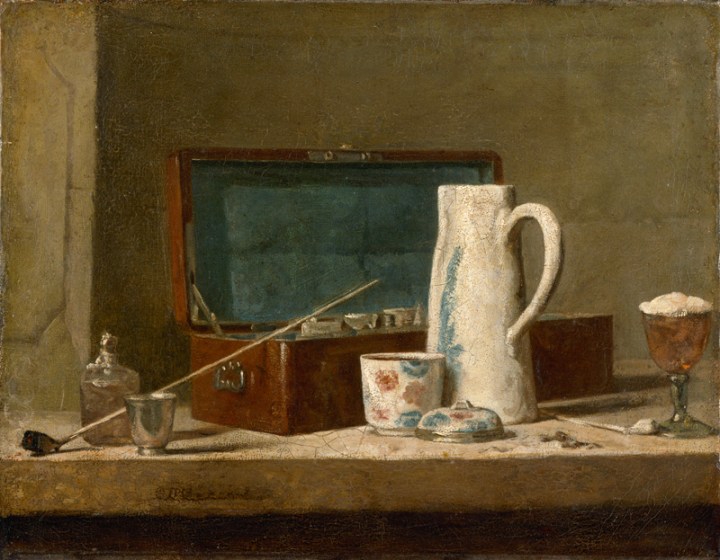
Jean-Siméon Chardin, Pipes and Drinking Pitcher, 1737
(Paris: Musée du Louvre)
◊ ◊ ◊ ◊ ◊
Press release (10 December 2014) from the High Museum:
American Encounters: The Simple Pleasures of Still Life
Musée du Louvre, Paris, 5 February — 27 April 2015
Crystal Bridges Museum of American Art, Bentonville, Arkansas, 16 May — 14 September 2015
High Museum of Art in Atlanta, 26 September 2015 — 31 January 2016
The Musée du Louvre, the High Museum of Art, Crystal Bridges Museum of American Art, and the Terra Foundation for American Art have announced the final installation in their four-year collaboration focusing on the history of American art. Opening at the Louvre, American Encounters: The Simple Pleasures of Still Life explores how late 18th- and early 19th-century American artists adapted European still-life tradition to American taste, character and experience. The culminating presentation of the American Encounters series—which has aimed to broaden appreciation for and dialogue about American art both within the U.S. and abroad—The Simple Pleasures of Still Life follows previous installations examining important genres in American art, including portraiture, landscape and genre paintings.
Though a centuries-old tradition in Europe, still-life painting was slow to take hold in the U.S., increasing in popularity over the course of the 19th century, an era of remarkable political, economic and social transformation. The subjects depicted in American still lifes evolved throughout these decades, drawing on and expanding the traditions of Dutch-style tabletops laden with fruits and vegetables and ornate French bouquet arrangements in the selection, arrangement and depiction of objects imbued with New World symbolism. As the country became more cosmopolitan, a result of its growing industrial and economic power, art patronage in the Gilded Age increasingly focused on the representation of wealth in pictures of exotic objects popular among the upper classes. The subjects of still-life painting during this period served as evocative emblems—whether of regional identity, moral values or eclectic collecting—and reflect the story of an evolving nation.
“This focused presentation could not be a more fitting conclusion to the American Encounters series,” said Stephanie Mayer Heydt, Margaret and Terry Stent Curator of American Art at the High Museum of Art. “Each individual painting, intimately scaled and packed with lush imagery rife with symbolic and historical meaning, invites close observation and tells the story of a young nation finding its voice. We’re thrilled to share this distinctly American experience and educate audiences about the history of American art both at home and abroad.”
Added Guillaume Faroult, curator, Department of Paintings, Musée du Louvre: “Our partnership over the past four years has allowed for unprecedented opportunities for scholarship, engagement and creative exchange. Collectively, we have been able to provide a much richer, holistic narrative of the development of American art than any of the institutions could have presented alone. This collaboration has had a significant impact on the understanding and appreciation for American art in Paris and beyond, and we look forward to continuing the dialogue fostered by this installation series.”
The ten masterpieces in the The Simple Pleasures of Still Life speak to the diversity of the still-life genre in the U.S. and range from works by artists De Scott Evans, Martin Johnson Heade, Joseph Biays Ord, William Sydney Mount and Raphaelle Peale to trompe l’oeil masterworks by John Haberle, William Michael Harnett and George Cope. Two paintings by John-Baptiste-Siméon Chardin and Abraham Mignon demonstrate the European examples frequently emulated by American artists first experimenting with still life in the early 1800s. The presentation at the High will be supplemented with four additional paintings drawn from the museum’s extensive holdings in American art, including works by William Mason Brown, Joseph Decker and John Frederick Peto.
Highlights
• Pipes and Drinking Pitcher (1737) by Chardin, the most popular French still-life painter of the 18th century, depicts an unusual subject for the artist that subtly conjures sensory pleasures. (Musée du Louvre)
• Corn and Cantaloupe (c. 1813) by Peale demonstrates how American artists adopted the European “tabletop composition” to feature distinctly American horticulture: the ear of corn and a Maryland-specific variety of cantaloupe grown on the plantation of the painting’s original owner. (Crystal Bridges Museum of American Art)
• Civil War-era Apples on a Tin Cup (1864) by Mount juxtaposes opposing symbols of the apple—the iconic American fruit and a common gift from children to Union soldiers during the Civil War—atop an empty, battled-worn army-issued cup to create a poignant contrast between sustenance and absence in a nation weary from war. (Terra Foundation for American Art)
• Still Life with Bust of Dante (1883) by Harnett is a trompe l’oeil painting illustrating the late 19th-century trend towards collecting eclectic and exotic objects made available through rapidly expanding international commerce. (High Museum of Art)
The partners have collaborated to produce a small catalogue for each installation in the series. The illustrated book for American Encounters: The Simple Pleasures of Still Life will feature an essay by Heydt that charts the rise of the still-life tradition in the 19th century and infusion of American symbolism into a traditionally European genre. The book will be published by the High Museum of Art, produced by Marquand Books, and distributed by the University of Washington Press. A lecture on the exhibition by Stephanie Heydt will be held at the Louvre auditorium on Wednesday, February 4 at 12:30pm. (more…)
Exhibition | Joshua Reynolds: Experiments in Paint
From the press release for the exhibition:
Joshua Reynolds: Experiments in Paint
The Wallace Collection, London, 12 March — 7 June 2015
Curated by Lucy Davis, Mark Hallett, and Alexandra Gent
A room hung with pictures is a room hung with thoughts. –Joshua Reynolds (1784)
The Wallace Collection’s spring exhibition will offer a fresh perspective on the work of a towering figure of British painting, Joshua Reynolds. Although widely regarded as one of the most important and influential painters of the period, Reynolds’s reputation as an ‘establishment’ artist masks his unquenchable thirst for innovation and his experimental approach to the practice and materials of painting. The exhibition explores Reynolds’s painting techniques, pictorial compositions and narratives through the display of 20 paintings, archival sources and x-ray images.

Joshua Reynolds, Mrs. Abington as Miss Prue in ‘Love for Love’ by William Congreve, 1771 (New Haven Yale Center for British Art)
Joshua Reynolds: Experiments in Paint will draw upon the significant works within the Wallace Collection and major loans from the UK, other European countries and the USA, all chosen to reveal Reynolds’s compositional and narrative experimentation and his unorthodox choice of materials, admixtures of paint and complex layering techniques. The exhibition reveals discoveries made during a four-year research project into the outstanding collection of twelve Reynolds paintings at the Wallace Collection.
With support from the Paul Mellon Centre for Studies in British Art, TEFAF, the Hertford House Trust, various private donors, and Trusts and drawing on the research expertise of the National Gallery in London and the Yale Center for British Art in New Haven, the exhibition spans most of Reynolds’s career and includes portraits, ‘fancy’ pictures and history painting.
On display will be celebrated portraits such as Nelly O’Brien (c.1762–64), Mrs Abington as Miss Prue (1771) and Reynolds’s own Self Portrait Shading the Eyes (1747–49) together with experimental studies and a canvas showing how Reynolds observed the effects of different combinations of colour and media. Collectively, alongside the hidden stories behind the paintings, archive resources and x-ray-images, the exhibition demonstrates the diversity of Reynolds’s artistic production, his highly original approach to image-making, composition and narrative, and prompts us to review opinions and perceptions of this truly experimental artist.
Joshua Reynolds: Experiments in Paint has been curated by Dr Lucy Davis, Curator of Old Master Pictures at the Wallace Collection, Professor Mark Hallett, Director of Studies in British Art at the Paul Mellon Centre and Alexandra Gent, also responsible for paintings conservation for the Reynolds Research Project. Director of the Wallace Collection, Dr Christoph Martin Vogtherr initiated the Reynolds Research Project. The Wallace Collection is a leading centre for the study of Joshua Reynolds and owns twelve important paintings by the artist dating from 1759 until the end of his career, covering several important aspects of his oeuvre: bust-length, half-length and full-length portraits of male and female sitters, ‘fancy’ pictures and a rare history painting.
◊ ◊ ◊ ◊ ◊
From Paul Holberton:
Lucy Davis and Mark Hallet, eds., Joshua Reynolds: Experiments in Paint (London: Paul Holberton Publishing, 2015), 192 pages, ISBN: 978-0900785757, £30 / $50.
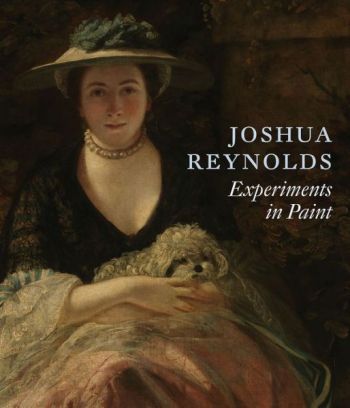 One of Britain’s most important and influential painters, Sir Joshua Reynolds (1723–1792) is justly celebrated for his dynamic portraiture, his poignant ‘fancy pictures’, his ambitious history paintings and his role as the first President of Britain’s Royal Academy.
This catalogue, published to accompany a major exhibition at the Wallace Collection, provides a fresh perspective on the artist, focusing on his innovative, often highly experimental approaches to the practice and materials of painting. Building on the many discoveries made during a four-year research project into the outstanding collection of the artist’s works at the Wallace Collection, Joshua Reynolds: Experiments in Paint investigates his radical manipulation of pigments, oils, glazes and varnishes. It traces his experiments with colour, tone and handling, reveals his continual temptation to rework and revise his pictures, and illuminates his highly creative responses to the new exhibition culture of his day. It also suggests the extent to which the artist’s work was founded upon a radical agenda of pictorial assemblage, in which he mixed anew the motifs, narratives and visual effects he drew from in the great art of the past. Finally, it demonstrates how Reynolds’s innovations as a painter were often the product of collaboration—in part, with his assistants and his students, but, more importantly, with his patrons and subjects, with whom he continually explored the possibilities of gesture, expression, performance and role-play.
The catalogue features an introduction, seven essays by leading scholars, curators and conservators, a chronology of the artist’s life and career, and detailed entries on a range of Reynolds’s pictures, at the centre of which are the Wallace Collection’s own collection of works by the artist.
Exhibition | The King of Groningen: Jan Albert Sichterman (1692–1764)

Johann Dietrich Findorff, after Jean-Baptiste Oudry, Clara the Rhinoceros, ca. 1752
(Schwerin: Staatliches Museum)
◊ ◊ ◊ ◊ ◊
Along with the exhibition highlighting treasures from the Dresden Picture Gallery acquired in the eighteenth century, the Groninger Museum is currently presenting an exhibition addressing the collection of the Dutch merchant Jan Albert Sichterman:
De Koning van Groningen: Jan Albert Sichterman (1692–1764)
Groninger Museum, Groningen, 20 September 2014 — 1 March 2015
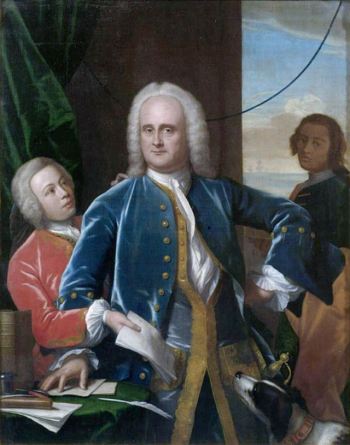
Philip van Dijk, Portrait of Jan Albert Sichterman (Groninger Museum)
The art collection of the Groningen merchant Jan Albert Sichterman—one of the most striking figures of the eighteenth century—included Asian ceramics, beautiful porcelain, splendid portraits painted by Philip van Dijk, Cornelis Troost and others, inconceivably fine pappercutting by Koster, furniture, silver, chintz, and memories of Clara the rhinoceros. After Sichterman’s death in 1764, his art collection was auctioned off and the collection largely dispersed. Fortunately, many collection pieces remained within the family and, in the course of time, the Groninger Museum has also been able to acquire several items. With this exhibition, the Groninger Museum has seized the exceptional opportunity to gather together what has been diffused since 1764. For this occasion, the Museum’s own Sichterman collection has been supplemented by hitherto unshown objects from private collections, as well as a number of works on loan. Never before has so much Chine de Commande porcelain owned a single family been exhibited in our country.
Christiaan J.A. Jörg, Egge Knol, and Denise A. Campbell, Jan Albert Sichterman (1692–1764): Een imponerende Groninger liefhebber van kunst (Groningen: Groninger Museum, 2014), 184 pages, ISBN: 978-9071691737, €39.
New Book | The Portrait Collection of Francesco Maria Niccolò Gabburri
From Artbooks.com:
Andrea Donati, Conoscere Collezionando: I ritratti della collezione Gabburri (Foligno: Etgraphiae editrice, 2014), 120 pages, ISBN: 978-8890868481, $69.
 Nella storia del collezionismo europeo e della cultura illuministica Francesco Maria Niccolò Gabburri (Firenze, 1676–1742) rappresenta un caso di straordinario interesse per l’autentica passione e lungimiranza che lo contraddistinsero a Firenze come accademico, mecenate, collezionista, conoscitore. L’interesse per i ritratti maturò in lui fin dalla giovinezza, sulla scorta delle memorie fiorentine e delle raccolte dei Granduchi di Toscana, ma divenne parte vitale di un progetto originale, quando egli capì di dover combinare la sua vocazione collezionistica con lo studio della storia dell’arte. Conoscere collezionando, questo è il senso della sua vita e della sua opera. Questo è il senso del libro che gli ho dedicato.
New Book | The Buildings of Peter Harrison
From McFarland:
John Fitzhugh Millar, The Buildings of Peter Harrison: Cataloguing the Work of the First Global Architect, 1716–1775 (Jefferson, NC: McFarland, 2014), 244 pages, ISBN: 978-0786479627, $75.
 Perhaps the most important architect ever to have worked in America, Peter Harrison’s renown suffers from the destruction of most of his papers when he died in 1775. He was born in Yorkshire, England in 1716 and trained to be an architect as a teenager. He also became a ship captain, and soon sailed to ports in America, where he began designing some of the most iconic buildings of the continent.
In a clandestine operation, he procured the plans for the French Canadian fortress of Louisbourg, enabling Massachusetts Governor William Shirley to capture it in 1745. This setback forced the French to halt their operation to capture all of British America and to give up British territory they had captured in India. As a result, he was rewarded with commissions to design important buildings in Britain and in nearly all British colonies around the world, and he became the first person ever to have designed buildings on six continents.
He designed mostly in a neo–Palladian style, and invented a way of building wooden structures so as to look like carved stone—“wooden rustication.” He also designed some of America’s most valuable furniture, including inventing the coveted “block-front,” and introducing the bombe motif. In America, he lived in Newport, Rhode Island, and in New Haven, Connecticut, where he died at the beginning of the War of Independence.
Material-culture historian John Fitzhugh Millar has several books to his credit on architectural history, colonial ships, and historic dance; he also runs the historic Bed & Breakfast Newport House in Williamsburg, Virginia.
C O N T E N T S
Preface
1. Carl Bridenbaugh’s Account of Harrison
2. A New Narrative of the Life of Peter Harrison
3. The British Isles and Europe
4. Canada
5. New England
6. The Mid-Atlantic
7. The American South and Atlantic Islands
8. The Caribbean
9. Other Continents–South America, Africa, Asia and Australasia
10. Furniture
Appendices
A. Buildings Attributed to Harrison
B. Student to Teacher
C. Architectural Pattern Books in Harrison’s Library
Illustrated Glossary of Architectural Terms
Bibliography
Index
New Book | The First Frame: Theatre Space in Enlightenment France
From Cambridge UP:
Pannill Camp, The First Frame: Theatre Space in Enlightenment France (New York: Cambridge University Press, 2015), 299 pages, ISBN: 978-1107079168, $99.
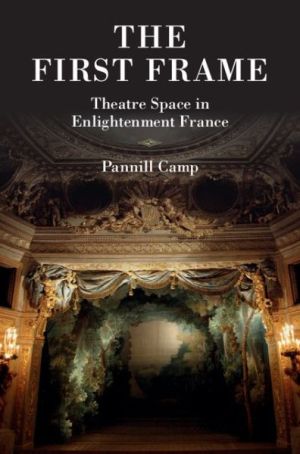 In the late eighteenth century, a movement to transform France’s theatre architecture united the nation. Playwrights, philosophers, and powerful agents including King Louis XV rejected the modified structures that had housed the plays of Racine and Molière, and debated which playhouse form should support the future of French stagecraft. In The First Frame, Pannill Camp argues that these reforms helped to lay down the theoretical and practical foundations of modern theatre space. Examining dramatic theory, architecture, and philosophy, Camp explores how architects, dramatists, and spectators began to see theatre and scientific experimentation as parallel enterprises. During this period of modernisation, physicists began to cite dramatic theory and adopt theatrical staging techniques, while playwrights sought to reveal observable truths of human nature. Camp goes on to show that these reforms had consequences for the way we understand both modern theatrical aesthetics and the production of scientific knowledge in the present day.
Pannill Camp is Assistant Professor of Drama at Washington University, St Louis. His research examines points of intersection between theatre history and the history of philosophy, especially in eighteenth-century France. Before joining the faculty of Washington University, he was a postdoctoral fellow at the Humanities Center at Harvard University and taught in Harvard’s Department of the History of Art and Architecture. At Brown University, he won the Joukowski Family Foundation’s Award for Outstanding Dissertation in the Humanities, and The Weston Award for theatre directing. His work has been published in journals including Theatre Journal, Performance Research, the Journal for Eighteenth-Century Studies, and the Journal of Dramatic Theory and Criticism.
◊ ◊ ◊ ◊ ◊
C O N T E N T S
Introduction: The ‘first frame’ of Enlightenment theatre space
1. The divided scene of theatre space in the Neo-classical era
2. The theatrical frame in French Neo-classical dramatic theory
3. Enlightenment spectators and the theatre of experiment
4. Theatre architecture reform and the spectator as sense function
5. Optics and stage space in Enlightenment theatre design
Epilogue: Modern spectatorial consciousness
Appendix: Dedicated public theatres built in France, 1752–90.
New Book | Fashion Victims
From Yale UP:
Kimberly Chrisman-Campbell, Fashion Victims: Dress at the Court of Louis XVI and Marie-Antoinette (New Haven: Yale University Press, 2015), 352 pages, ISBN: 978-0300154382, $60.
 This engrossing book chronicles one of the most exciting, controversial, and extravagant periods in the history of fashion: the reign of Louis XVI and Marie-Antoinette in 18th-century France. Kimberly Chrisman-Campbell offers a carefully researched glimpse into the turbulent era’s sophisticated and largely female-dominated fashion industry, which produced courtly finery as well as promoted a thriving secondhand clothing market outside the royal circle. She discusses in depth the exceptionally imaginative and uninhibited styles of the period immediately before the French Revolution, and also explores fashion’s surprising influence on the course of the Revolution itself. The absorbing narrative demonstrates fashion’s crucial role as a visible and versatile medium for social commentary, and shows the glittering surface of 18th-century high society as well as its seedy underbelly.
Fashion Victims presents a compelling anthology of trends, manners, and personalities from the era, accompanied by gorgeous fashion plates, portraits, and photographs of rare surviving garments. Drawing upon documentary evidence, previously unpublished archival sources, and new information about aristocrats, politicians, and celebrities, this book is an unmatched study of French fashion in the late 18th century, providing astonishing insight, a gripping story, and stylish inspiration.
Exhibition | A Look at 1700: Prints from the Viladegut Collection
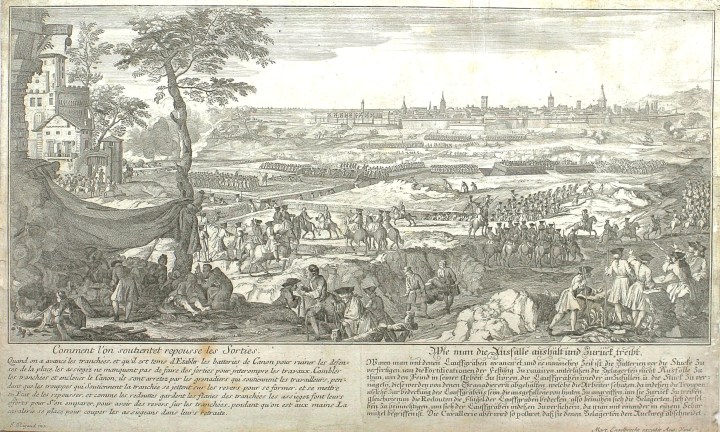
Jacques Rigaud and Martin Engelbrecht, Siege of Barcelona of 1714 (Comment l’on soutient et repousse les sorties), etching, Augsurg, ca.1750.
◊ ◊ ◊ ◊ ◊
From the Museu Frederic Marès:
Una Mirada al 1700: A partir dels gravats de la col·lecció Gelonch Viladegut
Una Mirada al 1700: A partir de los grabados de la colección Gelonch Viladegut
A Look at 1700: The Engravings of the Gelonch Viladegut Collection
Museu Frederic Marès, Barcelona, 16 June — 2 November 2014, extended until 11 January 2015
A partir del diàleg entre els gravats de la col·lecció Gelonch-Viladegut i les col·leccions del Museu Frederic Marès es vol oferir una galeria d’imatges sobre la Catalunya de començament del segle XVIII, concretament a la fi de la Guerra de Successió. L’exposició mostra com des del col·leccionisme també es pot aportar una visió del context sociocultural del país al voltant del 1714.
The press release (in Catalan) is available here»
◊ ◊ ◊ ◊ ◊
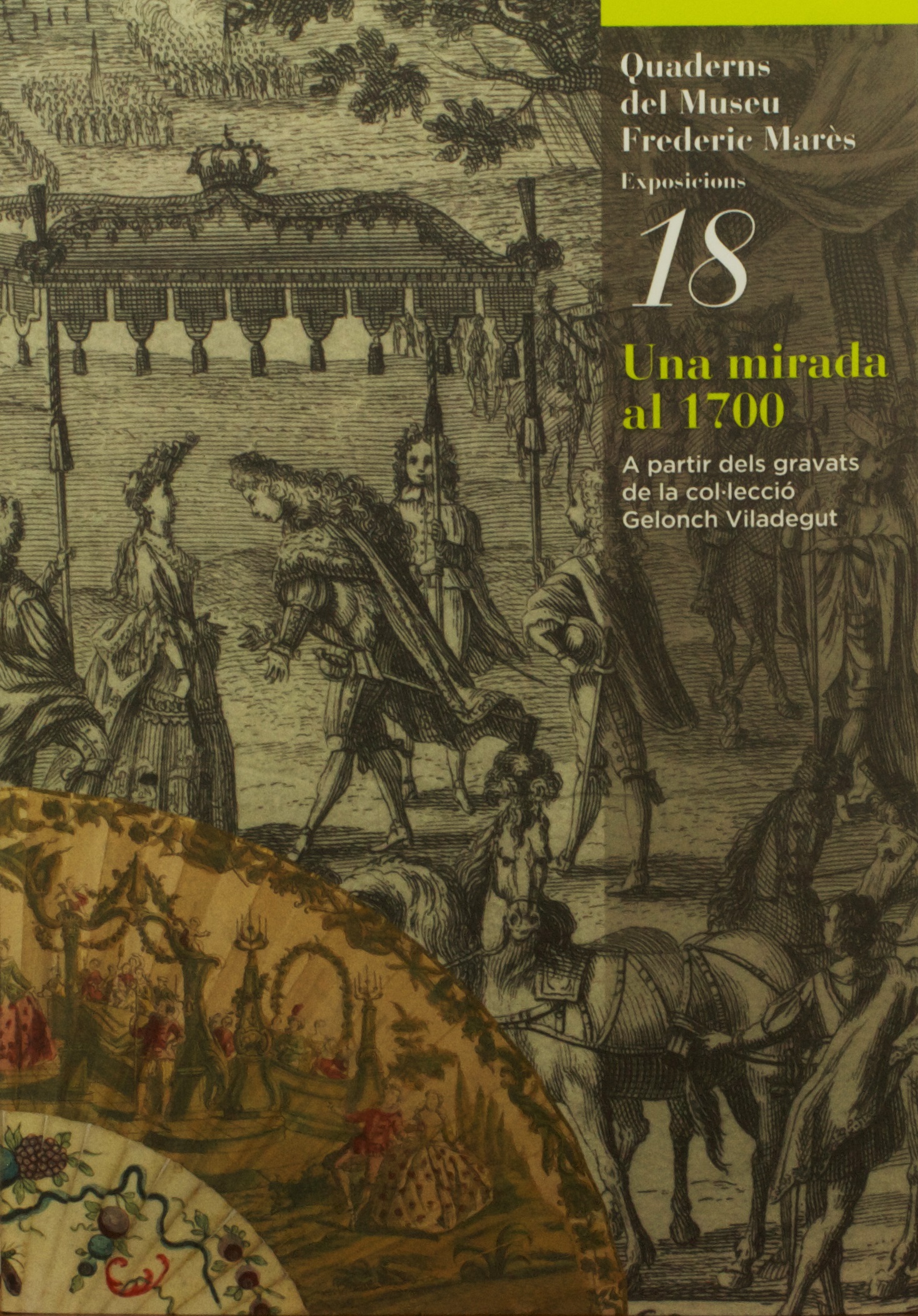 The catalogue is available from Artbooks.com:
Xevi Camprubi et al, Una mirada al 1700: A partir dels gravats de la col·lecció Gelonch Viladegut (Barcelona: Ajuntament de Barcelona, Institut de Cultura de Barcelona, 2014), 154 pages, ISBN: 978-8498505597, $38.
Organised into five areas, the exhibition offers a view of Catalonia in the context of the War of the Spanish Succession based on the testimonies from collectors: first, the engravings from that period from the collection of Antoni Gelonch Viladegut, and secondly the collections of the Frederic Marès Museum, from which some works from its sculpture and 18th-century object collection in its extensive Collector’s Cabinet have been chosen. The five areas show images of power, territory, war, everyday life, and devoutness.
New Book | The Spiritual Rococo: Decor and Divinity
From Ashgate:
Gauvin Alexander Bailey, The Spiritual Rococo: Decor and Divinity from the Salons of Paris to the Missions of Patagonia (Aldershot: Ashgate, 2014), 454 pages, ISBN: 978-1409400639, $130.
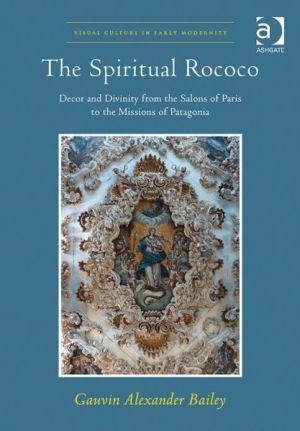 A groundbreaking approach to Rococo religious décor and spirituality in Europe and South America, The Spiritual Rococo addresses three basic conundrums that impede our understanding of eighteenth-century aesthetics and culture. Why did the Rococo, ostensibly the least spiritual style in the pre-Modern canon, transform into one of the world’s most important modes for adorning sacred spaces? And why is Rococo still treated as a decadent nemesis of the Enlightenment when the two had fundamental characteristics in common? This book seeks to answer these questions by treating Rococo as a global phenomenon for the first time and by exploring its moral and spiritual dimensions through the lens of populist French religious literature of the day-a body of work the author calls the ‘Spiritual Rococo’ and which has never been applied directly to the arts. The book traces Rococo’s development from France through Central Europe, Portugal, Brazil, and South America by following a chain of interlocking case studies, whether artistic, literary, or ideological, and it also considers the parallel diffusion of the literature of the Spiritual Rococo in these same regions, placing particular emphasis on unpublished primary sources such as inventories. One of the ultimate goals of this study is to move beyond the cliché of Rococo’s frivolity and acknowledge its essential modernity.
Thoroughly interdisciplinary, The Spiritual Rococo not only integrates different art historical fields in novel ways but also interacts with church and social history, literary and post-colonial studies, and anthropology, opening up new horizons in these fields.
Gauvin Alexander Bailey is Professor and Alfred and Isabel Bader Chair in Southern Baroque Art at Queen’s University, Kingston, Canada.
◊ ◊ ◊ ◊ ◊
C O N T E N T S
Introduction
1. ‘The Dream of Happiness’: The Literature of the Spiritual Rococo and the Christianity of Reason
2. ‘As Bizarre a Style as Ever Occurred’: Rococo in France
3. ‘Bright Shining as the Stars’: Spiritual Rococo in Central Europe
4. ‘Irregular Ornament in the Finest French Taste’: Spiritual Rococo in Portugal and Brazil
5. ‘O Happy Vision!’: Spiritual Rococo in Spain and Spanish South America
Epilogue: ‘Superfluous Stucco and Laughable Decoration’: Rococo, Religion, and the Global Enlightenment
Appendix A: French Spiritual Literature in Central European Collections
Appendix B: French Spiritual Literature in Luso-Brazilian Collections
Appendix C: French Spiritual Literature in the Spanish Southern Cone
Bibliography
Index










 Enfilade
leave a comment