New Book | The Soho Manufactory, Mint, and Foundry
From Historic England and Liverpool UP:
George Demidowicz, The Soho Manufactory, Mint, and Foundry, West Midlands: Where Boulton, Watt, and Murdoch Made History (Liverpool: Liverpool University Press, 2022), 296 pages, ISBN: 978-1800349285 £40.
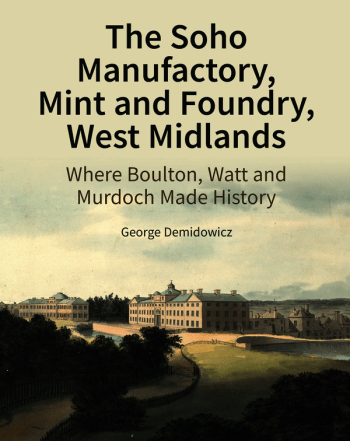 This volume provides a comprehensive analysis of the ground-breaking historic industrial complex created to the west of Birmingham in the eighteenth century and associated with Matthew Boulton, James Watt, and William Murdoch. The Soho Manufactory (1761–1863) and Soho Mint (1788–1850s) were both situated in the historic parish of Handsworth, now in the city of Birmingham, and the Soho Foundry (1795–1895) lay in the historic township of Smethwick, now within Sandwell Metropolitan Borough. Together they played a key role in the Industrial Revolution, achieving many world ‘firsts’: the first working Watt steam engine, the first steam-engine powered mint, and the first purpose-built steam engine manufactory (the Soho Foundry), to name but a few. Existing literature focuses largely on the biography of the people, primarily Boulton and Watt, or the products they manufactured. The place—the Soho complex—has attracted very little attention. This volume is the first to concentrate on the buildings themselves, analysing not only their physical origins, development, and eventual decline but also the water and steam power systems adopted. An interdisciplinary approach has been employed combining archival research in the magnificent Soho collection at the Library of Birmingham with the results of archaeological excavations. The volume is profusely illustrated with archival material, most published for the first time, and contains a large number of reconstruction plans and drawings by the author.
George Demidowicz, FSA, is an Honorary Research Fellow in the Department of History, University of Birmingham.
C O N T E N T S
List of Illustrations
List of Abbreviations
1 Introduction
2 A Short History of the Soho Manufactory and Mint
3 The Soho Mill
4 The Manufactory Engine Works
5 The Soho Mint
6 The Soho Manufactory and Mint Site After
7 The Soho Foundry
9 The Significance of the Three Sohos
Appendix 1 The Archaeological Excavations, 1994–1996
Appendix 2 The Soho Businesses
Appendix 3 Biographies
Acknowledgements
Bibliography
Index
New Book | The Museum
Happy International Museum Day (18 May)! From the Quarto Group:
Owen Hopkins, The Museum: From its Origins to the 21st Century (London: Frances Lincoln, 2021), 320 pages, ISBN: 978-0711254565, $60.
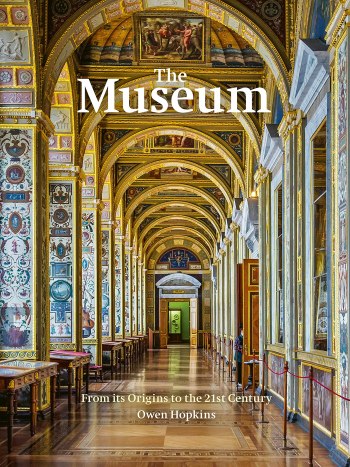 Using examples of the greatest cultural institutions to shape the narrative, this book outlines the history of the museum movement, tracking the evolution from princely collections in Europe and the Enlightenment’s classically inspired temples of curiosities, via the public museums of the late nineteenth century, on to today’s global era of iconic buildings designed by the world’s leading architects.
Owen Hopkins is an architectural historian and Director of the Farrell Centre at Newcastle University. He was previously Senior Curator of Exhibitions and Education at Sir John Soane’s Museum and before that Architecture Programme Curator at the Royal Academy of Arts, both in London. He has written six books, including Reading Architecture: A Visual Lexicon and Lost Futures, an examination of the disappearing architecture of post-war Britain. He is also a regular commentator on architecture in newspapers, magazines, radio, and television.
C O N T E N T S
Preface
Introduction: The Age of Museums
1 Origins
2 The Enlightenment Museum
3 The Public Museum
4 The Modern Museum
5 The Global Museum
6 The Museum Now
Notes
Index
Further Reading
Picture Credits
Acknowledgments
New Book | Trading Freedom
From The University of Chicago Press:
Dael Norwood, Trading Freedom: How Trade with China Defined Early America (Chicago: The University of Chicago Press, 2022), 312 pages, ISBN: 978-0226815589, $45.
 Trading Freedom explores the surprisingly rich early history of US-China trade and its unexpected impact on the developing republic.
The economic and geographic development of the early United States is usually thought of in trans-Atlantic terms, defined by entanglements with Europe and Africa. In Trading Freedom, Dael A. Norwood recasts these common conceptions by looking to Asia, making clear that from its earliest days, the United States has been closely intertwined with China—monetarily, politically, and psychologically. Norwood details US trade with China from the late eighteenth through the late nineteenth centuries—a critical period in America’s self-definition as a capitalist nation—and shows how global commerce was central to the articulation of that national identity. Trading Freedom illuminates how debates over political economy and trade policy, the building of the transcontinental railroad, and the looming sectional struggle over slavery were all influenced by Sino-American relations. Deftly weaving together interdisciplinary threads from the worlds of commerce, foreign policy, and immigration, Trading Freedom thoroughly dismantles the idea that American engagement with China is anything new. Publication supported by the Bevington Fund.
Dael A. Norwood is assistant professor of history at the University of Delaware.
C O N T E N T S
Introduction: America’s Business with China
1 Founding a Free, Trading Republic
2 The Paradox of a Pacific Policy
3 Troubled Waters
4 Sovereign Rights, or America’s First Opium Problem
5 The Empire’s New Roads
6 This Slave Trade of the Nineteenth Century
7 A Propped-Open Door
8 Death of a Trade, Birth of a Market
Acknowledgments
Appendix: Accounting for the China Trade
Notes
Index
New Book | Taking Travel Home
From Manchester UP:
Emma Gleadhill, Taking Travel Home: The Souvenir Culture of British Women Tourists, 1750–1830 (Manchester: Manchester University Press, 2022), 312 pages, ISBN: 978-1526155276, £80 / $120.
 Taking Travel Home provides a cultural history of the travel souvenir. It situates the souvenir at the crossroads of competing ideas of what travel stood for which were fought out amongst a rapidly growing constituency of British tourists between 1750 and 1830. Drawing from the theory of the souvenir as a nostalgic narrative instrument, the book uncovers how elite women tourists developed a souvenir culture around the texts and objects they brought home to realise their ambitions in the arenas of connoisseurship, science, and friendship. Ultimately, it argues that souvenirs are representative of female agency during this period. For elite women, revelling in the independence and identity formation of travel, but hampered by polite models of femininity and reliant on their menfolk, the creation of souvenirs provided a way to prove their claims to the authority of the travelling subject.
Emma Gleadhill is a Sydney-based historian and artist.
C O N T E N T S
Introduction: Remembering Travel
Part I: Gendering Connoisseurship
1 The Grand Tour: A Masculine Legacy of Taste
2 Shopping for Souvenirs
3 Creating Their Own Cultural Capital: Lady Anna Miller and Hester Lynch Piozzi
Part II: Gendering Science
4 Every Fair Columbus
5 Dorothy Richardson’s Extensive Knowledge
6 Lady Elizabeth Holland, the Social Orchestrator of Science
Part III: Gendering Friendship
7 From Diplomatic Gift to Trifle from Tunbridge Wells
8 A Snuff-box and Other Napoleonic Keepsakes
9 Princess Ekaterina Dashkova’s Gifts to Martha Wilmot
Conclusion: Remembering the Souvenir
Index
New Book | In the Shadow of the Empress
Maria Theresa was born on this day (13 May) in 1717; from Little, Brown and Company:
Nancy Goldstone, In the Shadow of the Empress: The Defiant Lives of Maria Theresa, Mother of Marie Antoinette, and Her Daughters (Little, Brown and Company, 2021), 640 pages, ISBN: 978-0316449335, $32.
 The vibrant, sprawling saga of Empress Maria Theresa—one of the most renowned women rulers in history—and three of her extraordinary daughters, including Marie Antoinette, the doomed queen of France.
Out of the thrilling and tempestuous eighteenth century comes the sweeping family saga of beautiful Maria Theresa, a sovereign of uncommon strength and vision, the only woman ever to inherit and rule the vast Habsburg Empire in her own name, and three of her remarkable daughters: lovely, talented Maria Christina, governor-general of the Austrian Netherlands; spirited Maria Carolina, the resolute queen of Naples; and the youngest, Marie Antoinette, the glamorous, tragic queen of France, and perhaps the most famous princess in history.
Unfolding against an irresistible backdrop of brilliant courts from Vienna to Versailles, embracing the exotic lure of Naples and Sicily, this epic history of Maria Theresa and her daughters is a tour de force of desire, adventure, ambition, treachery, sorrow, and glory.
Each of these women’s lives was packed with passion and heart-stopping suspense. Maria Theresa inherited her father’s thrones at the age of twenty-three and was immediately attacked on all sides by foreign powers confident that a woman would to be too weak to defend herself. Maria Christina, a gifted artist who alone among her sisters succeeded in marrying for love, would face the same dangers that destroyed the monarchy in France. Resourceful Maria Carolina would usher in the golden age of Naples only to face the deadly whirlwind of Napoleon. And, finally, Marie Antoinette, the doomed queen whose stylish excesses and captivating notoriety have masked the truth about her husband and herself for two hundred and fifty years.
Vividly written and deeply researched, In the Shadow of the Empress is the riveting story of four exceptional women who changed the course of history.
Nancy Goldstone is the author of six previous books including Daughters of the Winter Queen: Four Remarkable Sisters, the Crown of Bohemia, and the Enduring Legacy of Mary, Queen of Scots; The Rival Queens: Catherine de’ Medici, Her Daughter Marguerite de Valois, and the Betrayal that Ignited a Kingdom; The Maid and the Queen: The Secret History of Joan of Arc; Four Queens: The Provençal Sisters Who Ruled Europe; and The Lady Queen: The Notorious Reign of Joanna I, Queen of Naples, Jerusalem, and Sicily. She has also coauthored six books with her husband, Lawrence Goldstone. She lives in Del Mar, California.
New Book | Grafted Arts
Distributed by Yale UP:
Holly Shaffer, Grafted Arts: Art Making and Taking in the Struggle for Western India, 1760–1910 (London: Paul Mellon Centre, 2022), 320 pages, ISBN: 978-1913107284, £45 / $55.
 Grafted Arts focuses on Maratha military rulers and British East India Company officials who used the arts to engage in diplomacy, wage war, compete for prestige, and generate devotion as they allied with (or fought against) each other to control western India in the eighteenth century. This book conceptualises the artistic combinations that resulted as ones of ‘graft’—a term that acknowledges the violent and creative processes of suturing arts, and losing and gaining goods, as well as the shifting dynamics among agents who assembled such materials. By tracing grafted arts from multiple perspectives—Maratha and British, artist and patron, soldier and collector—this book charts the methods of empire-building that recast artistic production and collection in western India and from there across India and in Britain. This mercenary method of artistry propagated mixed, fractured and plundered arts. Indeed, these ‘grafted arts’—disseminated across India and Britain over the nineteenth century to aid in consolidating empire or revolting against it entirely—remain instigators of nationalist agitation today.
Holly Shaffer is assistant professor of History of Art and Architecture at Brown University with a focus on eighteenth- and nineteenth-century British and South Asian arts and their intersections.
◊ ◊ ◊ ◊ ◊
Note (added 17 January 2024) — As announced in January 2024, Grafted Arts was awarded an HBA Book Prize, for a single-authored book with a subject between 1800 and 1960 (alongside Mark Crinson’s Shock City: Image and Architecture in Industrial Manchester).
New Book | Lives of Gainsborough
From The Getty:
Philip Thicknesse, William Jackson, and Sir Joshua Reynolds, with an introduction by Anthony Mould, Lives of Gainsborough (Los Angeles: Getty Publications, 2020), 144 pages, ISBN: 978-1606066645, $13.
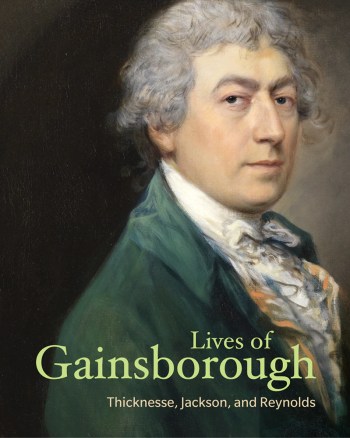 A collection of contemporary texts about Thomas Gainsborough, a leading British portraitist and landscape painter in the eighteenth century.
Thomas Gainsborough (1727–1788) was a leading English landscape and portrait painter, draftsman, and printmaker who is now considered one of the most important British artists of the eighteenth century. This volume illuminates his life, career, personality, and passions through three diverse character sketches by Philip Thicknesse, an eccentric British adventurer, businessman, and writer; William Jackson, an artist and close friend to Gainsborough; and Sir Joshua Reynolds, an English portrait painter and the first president of the Royal Academy of Arts. An obituary published shortly after Gainsborough’s death lends insight into the artist’s impact. An introduction by Anthony Mould, a British art dealer and independent scholar, offers an overview of Gainsborough’s life and career.
Exhibition | La Chine
Closing this weekend in Dresden at the Kupferstich-Kabinett:
La Chine: The 18th-Century China Collection in the Dresden Kupferstich-Kabinett
Residenzschloss, Staatliche Kunstsammlungen Dresden, 19 November 2021 — 8 May 2022
 In the early eighteenth century, when the legendary art collection of August the Strong (1670–1733), came into being, Asia was viewed with excited fascination in Europe.
In addition to today‘s world-famous porcelain wares, more than 1100 Chinese drawings and watercolour paintings on paper and silk, as well as woodcuts and coloured prints, were brought to Dresden. This important collection, along with 850 chinoiserie prints, is preserve in the Kupferstich-Kabinett of the Staatliche Kunstsammlungen Dresden. In the first inventory of the Kupferstich-Kabinett, drawn up in 1738, the objects were listed under the categories ‘La Chine’ and ‘La Chine européenne’.
An outstanding feature is the large collection of Chinese popular prints. In China itself, such New Year pictures, congratulatory leaflets, and theatre scenes were considered mere commodities, so that hardly any have been preserved. The prints were cheap to buy. With their wideranging symbolism, usually promising good fortune and prosperity, these sheets were hung up in homes for the New Year or passed on as a blessing, for example, and usually were not preserved. In Europe, Chinese folk art was seen as documenting the costumes and customs of distant lands. In the courtly sphere, the sheets were used as wall decorations, for example. They also served as models for chinoiserie prints. These provided motifs for decorations on buildings and furniture, as well as for porcelain painting.
Ines Beyer, Transformation
The first copperplate prints created in China were made by Matteo Ripa in collaboration with artists from the court painting workshops, on commission to the Kangxi Emperor, after woodcuts illustrating the Emperor’s own poems. The work by Ines Beyer entitled Transformation, based on the eighth view in the series, creates a link to the present day.
Cordula Bischoff and Petra Kuhlmann-Hodick, La Chine: Die China-Sammlung Des 18. Jahrhunderts Im Dresdner Kupferstich-Kabinett (Dresden: Sandstein Verlag, 2021), 256 pages, ISBN: 978-3954986286, €38.
New Book | British Dandies
Distributed by The University of Chicago Press:
Dominic Janes, British Dandies: Engendering Scandal and Fashioning a Nation (Oxford: Bodleian Library Publishing, 2022), 248 pages, ISBN: 978-1851245598, £30 / $45.
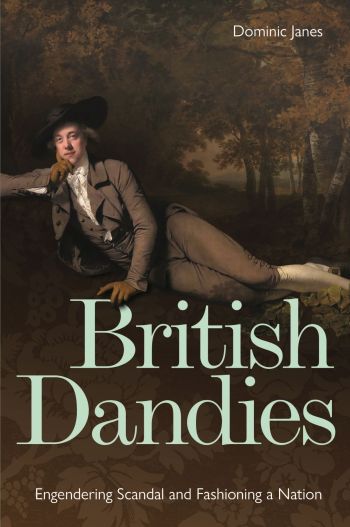 Reveals how the scandalous history of fashionable men and their clothes is a reflection of changing attitudes to style, gender, and sexuality.
Well-dressed men have played a distinctive part in the cultural and political life of Britain over several centuries. But unlike the twenty-first-century hipster, the British dandies provoked intense degrees of fascination and horror in their homeland and played an important role in British society from the seventeenth to the twentieth century. This book explores that social and cultural history through a focus on three figures: the macaroni, the dandy, and the aesthete. The first was noted for his flamboyance, the second for his austere perfectionism, and the third for his perversity. All were highly controversial in their time, pioneering new ways of displaying and performing gender, as demonstrated by the impact of key figures such as Lord Hervey, George ‘Beau’ Brummell, and Oscar Wilde. Illustrated with contemporary prints, portraits, and caricatures, this groundbreaking study tells the fascinating—and scandalous—story of fashionable men and their clothes.
Dominic Janes is professor of modern history at Keele University.
C O N T E N T S
List of Illustrations
1 British Dandies
2 Dressing the Sexes in the Seventeenth and Eighteenth Centuries
3 A Georgian Taste for Macaroni
4 Fine and Dandy in the Regency
5 Victorians and the Aesthetic Pose
6 Fashion and Scandal in the Twentieth Century
Notes
Bibliography
Picture Credits
Index
New Book | Jean-Baptiste Greuze et ses têtes d’expression
Published by the Comité des travaux historiques et scientifiques and the Institut national d’histoire de l’art:
Yuriko Jackall, Jean-Baptiste Greuze et ses têtes d’expression: La fortune d’un genre (Paris: CTHS / INHA, 2022), 320 pages, ISBN: 978-2735509393, €38.
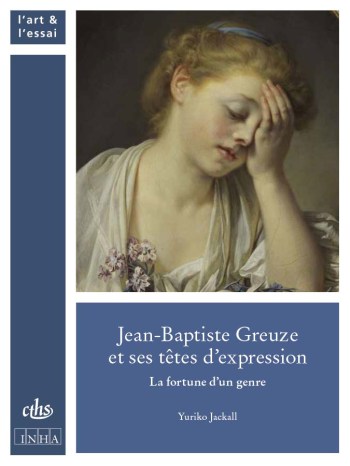 La représentation de têtes dites d’expression a été initiée par Charles Le Brun au xviie siècle et s’inscrit dans la tradition académique. Les figures de Jean-Baptiste Greuze, principalement féminines, sont
d’abord le vecteur narratif des œuvres au sein desquelles elles ont vocation à s’intégrer. Toutefois, les émotions vont peu à peu constituer l’unique élément fictionnel des productions de l’artiste. L’autrice montre comment les têtes «greuziennes » — parfois jugées décadentes en raison de leur lascivité et leur volupté affichées — acquièrent finalement un statut autonome et deviennent un genre artistique à part entière entretenu par les collectionneurs et perpétué par une nouvelle génération d’artistes.
Spécialiste de la peinture française du xviiie siècle, Yuriko Jackall est conservatrice en chef de la Wallace Collection (London). Auparavant conservatrice à la National Gallery of Art (Washington, DC), elle a participé à l’exposition Hubert Robert (1733–1808) (musée du Louvre / National Gallery of Art, 2016), puis a été commissaire des expositions America Collects Eighteenth-Century French Painting et Fragonard: The Fantasy Figures (National Gallery of Art, 2017).
Table des matières
Liste des abréviations
Remerciements
Préface
Avertissement
Introduction
• Greuze peintre
• Deux approches de Greuze peintre
• Un nouveau regard sur les têtes de Greuze
• Greuze éclipsé ?
• Greuze et Diderot
• Le sens du dessin de Denon
I. Un lexique pour la tête isolée
• Une tête d’après nature
• Tête et tête d’après nature
• Tête de fantaisie
• Tête de caractère
• Tête d’expression
• Tête d’étude
• Transformations de la tête isolée
II. Les identités académiques de Greuze
• Greuze et l’Académie
• Greuze selon Gougenot
• Peintre d’expression
• Peintre de nature
• Nature et expression
• Greuze entre nature et expression
III. La tête autonome : découper, isoler, extraire, remplacer
• Corrège, Coypel et le recadrage
• Mettre le tableau en morceaux
• Couper les têtes
• L’image du sentiment
• Le visage métonymique
• Greuze et le comte de Caylus
• Caylus et Watteau : dess(e)ins et jeux de fonds
• Caylus et Vien : sculpter la tête
IV. Morceler Greuze
• La question de matérialité
• Greuze, dessinateur
• Surfaces
• Greuze, peintre
• Du dessin à la peinture
• D’un tableau à l’autre
• Faire de la tête un condensé de l’oeuvre
V. Exprimer le désir et l’admiration
• De l’allégorie
• La Tête d’une jeune fille, exprimant l’admiration et le désir
• Abondance
• Interchangeabilité
• Expressions symboliques
• La part du spectateur : une lecture libertine
• La part du spectateur : un choix féminin
Conclusion: De l’expression au caractère
• La place de Greuze
• Évolutions lexicales
Bibliographie
Index
Crédits photographiques










 Enfilade
leave a comment