Call for Papers | Architectural Ideas between Malta and Europe
From ArtHist.net:
People, Books and Models: The Order of St John and the Circulation of Architectural Ideas between Malta and Europe, 16th–18th Centuries
Online and in-person, Valletta, 17–19 April 2024
Proposals due by 30 September 2023
This conference aims at encouraging a multidisciplinary discussion, set in a broad European and Mediterranean context, of the spread of ideas, models for architecture, and construction techniques in Malta during the early modern age, via the networks of the Order of St John. In particular, it intends to investigate this dissemination of architectural theoretical and technical knowledge through the circulation of sources such as books, treatises, manuals of mathematics and geometry, catalogues, and collections of architectural images and drawings, as well as people, from architects to patrons, from engineers to intellectuals. The conference also aims to address a thorny methodological issue: the origin, dispersion, and fragmentation of the Hospitaller conventual library and, at the same time, the genesis of the library collections in Malta that include architectural sources, especially (but not only) at the National Library, for a better understanding of their provenance and context.
Taking Valletta and its civil architecture and historical construction sites as the main starting point of this investigation, the key role played by the city-convent was twofold. On one hand, the city was the core of the Hospitaller network, mirroring in its palaces, construction sites, and library collections the European dimension of the Order’s political, social, and cultural relationships. For this reason, the intense exchange between Malta and the Hospitaller offices in Europe will also be considered as well as the reciprocal influences between the Order and various political powers. On the other hand, there were also in Malta other important political stakeholders—from the Diocese to the Inquisition, from the many religious orders (like the Jesuits) to private individuals and travellers—that diversified the cultural scenario in Malta. These all need to be further investigated.
Finally, interpreting the Order as a powerful engine for the European circulation of drawings, books, and architectural models, the conference aims at serving as a forum where new research and methodologies can be discussed and fostered, not only to explore Malta and the other European nodes of the Hospitaller network, but also to better understand the broader European context from an original perspective.
Contributions delving into the following key topics are very welcome: migration of architectural languages, construction techniques, and circulation of drawings for architectural projects between the Maltese environment and Europe; analysis of architectural models from printed sources in the context of Hospitaller patronage; and the genesis of the Maltese and Hospitaller libraries and book circulation and production (with a focus on architectural sources).
The conference will be held as a hybrid event, with a Zoom link provided closer to the date of the conference. After the conference, participants will be invited to contribute to an edited volume to be proposed for inclusion in a peer-reviewed publication. Participants who wish to contribute are invited to send their text in English, along with related illustrations (including permission for publication) by 1 June 2024.
Abstract submissions will be open from 21 August 2023 to 30 September 2023. The submitted abstracts will be evaluated by the scientific committee and acceptance will be communicated by 23 October 2023. Selected speakers are invited to prepare 20-minute contributions. To apply, please send the following items to peoplebooksmodels2024@um.edu.mt
• 400-word abstract in English
• Contact information and affiliation
• Short CV (max 150 words) in English
The conference is the first step in an international project entitled Malta & Europe, Europe & Malta: Dissemination of Knowledge, Sources, and Architectural Models through the Network of the Order of St John run jointly by the University of Palermo (Dr Armando Antista), Politecnico di Torino (Dr Valentina Burgassi), and the University of Malta (Dr Valeria Vanesio).
Conference Directors
• Armando Antista (University of Palermo)
• Valentina Burgassi (Politecnico di Torino)
• Heléna Perez Gallardo (Complutense University of Madrid)
• Valeria Vanesio (University of Malta)
Scientific Committee Chairs
• Fernando Bouza Álvarez
• Sabine Frommel
• Marco Rosario Nobile
• William Zammit
Call for Papers | HNA Conference 2024, Britain and the Low Countries

From HNA:
HNA Conference | Britain and the Low Countries: Cultural Exchange Past, Present, and Future
London and Cambridge, 10–13 July 2024
Proposals due by 29 September 2023
2024 marks the first time in the forty-year history of the Historians of Netherlandish Art that the biennial conference will be held in the UK. Cultural, political, and economic exchange has been pivotal to the histories of the UK and the Low Countries, and these relationships have taken on new significance and have new potential as the UK renegotiates its relationship with Europe after Brexit. Britain and the Low Countries: Cultural Exchange Past, Present & Future considers the extraordinary depth and breadth of the relationships between the constituent nations of the UK, Belgium, and The Netherlands.
The conference is comprised of workshops in London and Cambridge on 10 and 13 July and 40 paper sessions to be delivered at West Road Concert Hall in Cambridge on 11 and 12 July. Thirteen of the sessions relate to the subject of Britain and the Low Countries. These fall under three broad themes: technology and the natural sciences, key themes in scholarship on British-Netherlandish culture, and medium-based scholarship in the British-Netherlandish context. There are 25 further sessions on a broad range of themes and 2 career-development sessions.
The call for papers is now open for all sessions. Each session is 90-minutes long and, unless otherwise specified, will comprise three 20-minute papers and 30 minutes for discussion. Applicants must be HNA members and are allowed to submit multiple proposals but may not participate in more than one session. We ask that applicants inform the session chairs about the other sessions they are applying to. Unless specified otherwise, please send proposals of about 500 words, clearly stating the goals of the paper, along with a CV (no longer than one page) to the email address(es) ascribed to the session descriptions below.
The deadline for proposals is Friday, 29 September 2023. Applicants will be notified by the programme committee no later than four weeks after the submission deadline.
Please consider contributing to HNA IDEA’s appeal for contributions to an equitable conference.
s e s s i o n s a t a g l a n c e
• Copies and Reproductions in Netherlandish Art, 1400–1800
• Existential In(ter)ventions: Modernity as Makeability in the Dutch Republic
• Infinite Concordances: Elaborating on Visual Typology in Early Modern Netherlandish Art
• The ‘Inventions’ of Early Netherlandish Painting: Thirty Years since Hans Belting and Christiane Kruse’s Die Erfindung des Gemäldes: Das erste Jahrhundert der niederländischen Malerei (1994)
• Embracing the Digital Age: New Prospects for Researching Northern European Art with Computational Methods
• The ‘More-Than-Human World’ in 17th-Century Dutch Visual and Material Culture
• The Multidimensionality of Netherlandish Grotesques
• What is Anglo-Dutchness?
• Netherlandish-isms: Making Nationhood and Art History
• Reading Pendants and Multiples in Dutch and Flemish Art
• Gender and the Home across Cultures
• Remarkable Women Artists, 1500–1700
• Multiple Masculinities in Netherlandish Art
• Sound and Silence: Soundscapes, Noise, Music, and Quiet Pauses in Dutch and Flemish Art
• New Views on Vermeer: Reflections, Opinions, Reconsiderations
• Moving Dutch Knowledge: Collections as Knowledge Repositories and Sites of Transformation and Transfiguration (ANKK sponsored session)
• Museums in Conflict: Lessons Learned, 1930–1950
• Technical Art History: Material Stories – Object Itineraries
• Do We Belong Together? Case Studies into Portrait Pendants
• The Interconnected Nature between Britain and the Low Countries in the Production and Decorating of Glass
• Art and Nature in the Dutch Colonial World
• Worldly Images and Images of the World in Netherlandish Art
• Half the World Away: Cultural Circulations between Isfahan and the Early Modern Low Countries
• Mutual Appreciation and Exchanges between Artists of Northern and Southern Europe, 1590–1725
• Culture and Climate Change
• The Landscapes of Artists from the Netherlands Who Worked in Britain during the Long 17th Century
• ‘Soft Power’: The Material Legacy of William and Mary
• Netherlandish Migrant Artists and the emergence of Creativity in Late 17th-Century London
• Collecting and Exchange between North Sea Neighbours
• Netherlandish Art in Renaissance Florence: Architectural Exchanges from North to South?
• Print Culture between the UK and the Low Countries
• Print Exhibitions in the Making and Related Research
• New Research on Dutch and Flemish Drawings in the UK
• Immigrants and Excellence: Sculptors from the Low Countries at the English and Scottish Courts in the 17th and 18th Centuries
• Connecting Threads: Tapestries and Cultural Exchange in the Low Countries and England
• Material Depiction and (Cut-out) Trompe l’oeils: The Enchantment of Material Depiction by Netherlandish Painters and the Development of British Traditions
• Visual Sovereignty in Dutch and Indigenous Histories
• Visual Cultures of Cartography in the Low Countries, 1500–1800
• Professional Insights and Practical Advice for Early Career Researchers
• Pecha Kucha Workshop for Graduate Students and Early Career Researchers
Session descriptions are available here»
Call for Papers | A Different Perspective for the Atlantic Routes
The Call for Papers for three related workshops, from ArtHist.net:
Traveling Objects: The Material Culture of the Atlantic Routes
Institut national d’histoire de l’art, Paris, 21 February 2024
New Towns and Old Settlements in Latin America: City Planning, Architecture, and Building Decorations in the Shadow of European Influence
Institut national d’histoire de l’art, Paris, 17 April 2024
Leaving a Trail: Memories, Reports, and Maps beyond the Fascination and Fear of the New World
Palacio de Maldonado – Centro de Estudios Brasileños, Universidad de Salamanca, 15 May 2024
Organized by Maddalena Bellavitis and José Manuel Santos Pérez
After more than two years of careful and laborious preparation (slowed down and hindered several times by the difficulties that have arisen due to the global pandemic), this project finally gets underway. A Different Perspective for the Atlantic Routes intends to go back once more to questioning issues that already count important in-depth studies, like the transoceanic relations between the sixteenth and nineteenth centuries, but also has the ambition of wanting to integrate the results already obtained with new reflections and achievements, and above all with a different point of view.
The idea, in fact, is not to propose an approach which is purely targeted to how European society had received and used the travel reports and products arrived from American lands, but to also to evaluate on the one hand the influences and consequences—cultural, technical, artistic, and social—that the exchanges had had overseas on local populations, and on the other how items and symbols closely linked to the cultures of the American territories after being brought to Europe had been reinterpreted and deprived of their original meaning in the new environment in which they had been introduced to, thus also involving the sphere of memory and the Intangible Cultural Heritage. If the common thread proposed is that of the activity of the Dutch West India Company, the project also aims to consider the whole vast cultural, diplomatic, artistic, scientific, anthropological, and gastronomic panorama that the approach to such a topic necessarily brings with itself, and will therefore also evaluate the tangencies and interactions with travels and exchanges also made by other European states and kingdoms in the period considered.
The first opportunity for comparison will be dedicated to the material aspects—that is the objects that have been used and obtained in exchanges, explorations or raids—and to the engineering aspects of the ships used to transport them. The second meeting will focus on the urban installations and the architectural and social aspects of the new settlements, while the third session will concern travelers, travel impressions, and cartography. Workshops will be held in Paris and Salamanca, hosted by the Institut national d’histoire de l’art and the Centro de Estudios Brasileños of the Universidad de Salamanca.
In addition to those who have already been involved in the discussions and in the preparation of the preliminary phases of this project, scholars interested in any discipline that can offer points of contact with the proposed theme—from collecting to memory, from travel literature to material culture, from engineering to anthropology—are encouraged to send a proposal for a contribution.
Please submit an abstract for an unpublished contribution and a short bio by 30 September 2023 to maddalena.bellavitis@gmail.com, specifying the title of the workshop you are applying for. Presentations will be in English, French, Spanish, or Portuguese and will last a maximum of 20 minutes. The organizers, Maddalena Bellavitis and José Manuel Santos Pérez, director of the Centro de Estudios Brasileños of the Universidad de Salamanca, will notify the selected proposals by the second week of October 2023.
Call for Articles | Fall 2024 Issue of J18: Craft
From the Call for Papers:
Journal18, Issue #18 (Fall 2024) — Craft
Issue edited by Jennifer Chuong and Sarah Grandin
Proposals due by 15 September 2023; finished articles will be due by 31 March 2024
When, where, and why does craft matter? Craft, by definition, is any activity involving manual skill. But in the modern western world, the term typically implies specific kinds of activities that produce specific kinds of objects: things like baskets, lace, and lacquerware. In a culture that has historically privileged rationality and innovation, craft’s commitment to tradition, reliance on haptic knowledge, and association with marginalized subjects have rendered it the minor counterpart to more ‘serious’ forms of material production. As a subsidiary to art and industry, craft has often occupied a circumscribed role in accounts of modern art and modernity’s origins in the eighteenth century. Recently, however, craft—as a more capacious category of material production—has become a crucial term in efforts to expand and diversify the study of eighteenth-century art.

Spouted bowl, stoneware with orange markings, Japan, Bizen kilns, 1700–1850, 20cm diameter (London: V&A, 199-1877). Possibly intended as a fresh water jar, of stoneware with streaks of glaze resulting from wrapping in saltwater-soaked straw.
This special issue builds on recent investigations while considering how craft’s ancillary role within the Anglo-European tradition has limited its capacity to transform the field. Drawing inspiration from the absence of an art/craft divide in many cultures, we are interested in exploring craft’s potential to radically reframe, reconceptualize, and globalize the history of art. By investigating craft, we also aim to shed new light on related questions of value, skill, and creativity in the making of different kinds of objects. We are inspired by recent scholarship that has asked, for example, how the repetitive nature of American schoolgirl samplers challenges celebrations of the individual maker, or how the meaningfully protracted time of wampum-making diverges from industry’s strict calculations of time and labor. Looking at the issue from a different angle, what would be the implications of discussing academic painting and sculpture as forms of craft?
By bringing together a range of studies that critically engage with handwork, we aim to highlight both the distinctive and shared concerns of craft in different making traditions. We welcome proposals for full-length articles as well as shorter pieces that explore new methods of studying craft. Taking advantage of Journal18’s online platform, the latter could take the form of photo essays, videos, interviews, or other formats that grapple with the complexities of documenting, understanding, and communicating craft-based knowledge.
To submit a proposal, send an abstract (250 words) and brief biography to editor@journal18.org and journal18craft@gmail.com by 15 September 2023. Articles should not exceed 6000 words (including footnotes) and will be due by 31 March 2024. For further details on submission and Journal18 house style, see Information for Authors.
Issue Editors
Jennifer Y. Chuong, Harvard University
Sarah Grandin, Clark Art Institute
Call for Papers | The Professional Worlds of Architectural Ornament
From INHA (where one can also find the French version):
The ‘Professional Worlds’ of Architectural Ornament: Actors and Practices from the 18th Century to the Present Day
Les mondes professionnels de l’ornement d’architecture: Acteurs et pratiques du XVIIIe siècle à nos jours
Institut national d’histoire de l’art, Paris, 13–14 March 2024
Proposals due by 30 September 2023

Levin Corbin Handy, N.C. 1st Story, Marble Carving Shop, July 19, 1894. In the album Photographs of the Construction of the Library of Congress Thomas Jefferson Building, volume 3, after leaf 64.
At the crossroads of art history and architecture, the study of ornament nowadays constitutes a specific field of research. Although studies had already been devoted to this question from the 1980s onwards (Hamburger, Thiebault, 1983; Durant, 1986), ornament was the subject of renewed interest during the 1990s and at the turn of the 21st century, thanks to collective publications often stemming from large-scale scientific events (Grabar, 1992; Collomb, Raulet, 1992; Ceccarini et al., 2000). More recently, France saw a remarkable revival in this field of research. Without claiming to draw up an exhaustive historiographical assessment of the question, one could for instance think of the numerous journal issues devoted to the question of ornament in the early 2010s–Perspective in 2010, Images Re-Vues in 2012, or Livraisons d’Histoires de l’architecture in 2015. Several events were also organized during that period, such as the symposium Questionner l’ornement (Questioning Ornament), which took place at the Musée des Arts Décoratifs (Paris) in 2011, or the series of public lectures organized at the École de Chaillot in 2014. In recent years, essential studies on ornament have been published (Picon, 2016; Necipoglu, Payne, 2016), sometimes tackling more definite topics: theoretical considerations (Varela Braga, 2017; Thibault, 2020); the use of certain materials (Dobraszczyk, 2014); or the roles and functions of ornaments on specific surfaces or in specific building types, such as farms (Ripatti, 2019) or tenements (Violette, 2019). Far from being limited to the contemporary period, the interest in ornament is also evident in publications and events relating to the Renaissance, such as the colloquia organized in Azay-le-Rideau (2014) or Lausanne (2017, 2022).
Concomitantly, a significant amount of research has been devoted to the organization of professions and the relationships between professional groups in the field of architecture and construction. In this field, several historical studies also draw on sociological perspectives that can be borrowed from both functionalism and interactionism, in a context in which the sociology of professions has itself undergone noteworthy renewal (Vézinat, 2010).
Recent publications have thus questioned the evolution of architects’ status and practices, particularly in the context of their public missions (Bruant, Callais, Lambert, 2022). The concrete organization of their work has also been the subject of several studies, focusing on construction sites (Nègre, 2018), or more recently on the architectural firm (Cahiers de la recherche architecturale, urbaine et paysagère, 2020; Livraisons d’histoire de l’architecture, 2021). Such questions also raise issues related to the relationships between professions and to professional strategies (Prina, 2020). These studies echo broader research undertakings, focusing on sectors of activity such as expertise (ANR research programme ‘Experts’) or on the issue of architectural education (Lucan, 2009; Diener, 2022; ANR research programme ‘EnsArchi’).
Despite their common dynamism, these two fields of study—the history of ornament and the history of professions related to architecture—have so far rarely been connected to one another. The ambition of this colloquium is therefore to foster such a dialogue, to move towards a better understanding of the ‘professional worlds’ of ornament.
The interdependence with architecture being a crucial question here, papers should thus focus on ornaments directly linked to architectural surfaces. However, resolutely positioned on the side of the actors and professional practices, this colloquium does not have the vocation to give a strict definition of what ornament is. It will thus look at a wide range of productions, from ornamental sculpture to mosaic, mural painting, and up to parquetry, marble features, or stained glass: in short, any finishes helping to develop sensibility to architecture. Issues related to the forms, functions and uses of ornaments, especially in a world increasingly marked by the imperatives of sobriety and sustainability (Körner, 2020), could be addressed in a subsidiary way but should not constitute the heart of the presentations.
Papers are invited that consider themes including (but not limited to):
The spectrum of ornament professionals: training, status, regulations
• Who are the professionals creating architectural ornaments (sculptors, industrial designers, architects…)?
• What contributions have women made in this field? What opportunities were open to them in comparison with architectural practice?
• How have the names and regulations of these professions changed over time?
• Do they benefit from the same status and social recognition? Is there a hierarchy between them?
• What is the training of these professionals, and in which institutions does it take place (drawing schools, schools of fine arts, schools of decorative arts, artisans’ workshops…)?
The relationship between professions in the fields of ornament, architecture and construction
• How are tasks divided between professions?
• What are the discrepancies or similarities in the material exercise of these crafts (remuneration, place of work…)?
• How do the collaborations—between individuals or with construction companies —work?
• What degree of freedom is allowed to ornament professionals in the exercise of their art (choice of subjects represented, materials, techniques…)?
• What agency do the clients have?
• How are technical questions (such as patent registration) dealt with?
The production lines
• How are ornaments concretely made (in the workshop or in situ)? What roles do drawing and molding play?
• What sources (especially photographic) do we have to document the concrete organization of the building sites?
• How and why do actors, materials, and even entire decorative elements circulate (locally, nationally, or transnationally)?
• What were the changes brought about by the development and diffusion of catalogs and pattern books (which are publications that can play a key role in the construction process, but also have a life of their own)?
• Can discrepancies be highlighted between the conditions of production of elite decorations and those of more ordinary buildings?
• What were the working methods and conditions of the men and women in the workshops and on the building sites?
Papers may cover a wide contemporary period, encompassing the 18th century and extending to the present day. The choice of this chronology stems from a will to study diachronically the evolution of the professional dynamics of the field during a long period marked by three crucial phenomena: significant changes in the professional worlds of architecture and construction (Picon, 1988; Woods, 1999; Decommer, 2017); the development of mass-produced ornaments (Nègre, 2006); and finally, frequent debates around ornamentation (Payne, 2012), in the 19th century, at the turn of the 20th century, or during the postmodern period.
Any cultural and geographical area is likely to be studied. Indeed, questions related to transportation and circulations invite reflection on spatial interactions, for instance, between European nations and colonized territories. These questions also echo the phenomenon of internationalization of the Beaux-Arts architectural culture, particularly in the Americas. Proposals for papers with a transnational dimension are therefore particularly encouraged.
Papers may be presented in English or French and will last 25 minutes. Proposals, along with a brief CV should be sent to Justine Gain (justine.gain@gmail.com), Elsa Jamet (elsa.jamet@hotmail.fr), and Lucie Prohin (lucie.prohin@inha.fr) before 30 September 2023. Financial support is available for speakers whose home institution would be unable to cover travel expenses.
The symposium is supported by the Institut national d’histoire de l’art, the Centre André Chastel, the HiCSA research laboratory (Université Paris 1 Panthéon-Sorbonne) and the Histara research laboratory (École pratique des hautes études, PSL).
Organizing Committee
• Justine Gain, EPHE (Histara), École du Louvre, Institut national d’histoire de l’art
• Elsa Jamet, Centre André-Chastel
• Lucie Prohin, université Paris 1-Panthéon Sorbonne (HiCSA), Institut national d’histoire de l’art
Scientific Committee
• Basile Baudez, Princeton University
• Jean-François Bédard, Syracuse University
• Ariane Varela Braga, Villa Médicis
• Jérémie Cerman, université d’Artois (CREHS)
• Sophie Derrot, Institut national d’histoire de l’art
• Jean-Philippe Garric, université Paris 1-Panthéon Sorbonne (HiCSA)
• Valérie Nègre, université Paris 1 Panthéon-Sorbonne (IHMC)
• Estelle Thibault, ENSA Paris-Belleville (IPRAUS / AUSser)
Selected Bibliography
• BÉDARD, Jean-François, Decorative Games: Ornament, Rhetoric, and Noble Culture in the Work of Gilles-Marie Oppenord (1672–1742), Newark, University of Delaware Press and Rowman and Littlefield, 2011.
• BRUANT, Catherine, CALLAIS, Chantal, LAMBERT, Guy (dir.), Les architectes et la fonction publique. XIXe–XXIe siècles, Rennes, Presses universitaires de Rennes, 2022.
• CECCARINI, Patrice, CHARVET, Jean-Loup, COUSINIÉ, Frédéric, LERIBAULT, Christophe (dir.), Histoires d’ornement, Paris/Rome, Klincksieck/Villa Médicis, 2000.
• COLLOMB, Michel, RAULET, Gérard (dir.), Critique de l’ornement de Vienne à la Postmodernité, Paris, Klincksieck, 1992.
• DECOMMER, Maxime, Les Architectes au travail. L’institutionnalisation d’une profession, 1795–1940, Rennes, Presses universitaires de Rennes, 2017.
• DE FINANCE, Laurence, LIÉVAUX, Pascal, Ornement : vocabulaire typologique et technique, Paris, Éditions du Patrimoine/Centre des monuments nationaux, 2014.
• DIENER, Amandine, Enseigner l’architecture aux Beaux-Arts (1863–1968). Entre réformes et traditions, Rennes, Presses universitaires de Rennes, 2022.
• DOBRASZCZYK, Paul, Iron, Ornament and Architecture in Victorian Britain: Myth and Modernity, Excess and Enchantment, Farnham, Ashgate, 2014.
• DURANT, Stuart, Ornament. From the Industrial Revolution to Today, New York, The Overlook Press, 1986.
• EDGAR, Brenda Lynn, Le motif éphémère : ornement photographique et architecture au XXe siècle, Rennes, Presses universitaires de Rennes, 2021.
• GAYLE, Margot, GAYLE, Carol, Cast-Iron Architecture in America: The Significance of James Bogardus, New York, Norton, 1998.
• GRABAR, Oleg, The Mediation of Ornament, Princeton, Princeton University Press, 1992.
• HAMBURGER, Bernard, THIEBAULT, Alain, Ornement, architecture et industrie, Bruxelles, Mardaga, 1983
• KÖRNER, Andreas, « Durabilité ornée. Crise climatique, articulations du temps et autres manifestations de la nature », Faces, n° 77, printemps 2020, p. 28–35.
• LENDING, Mari, Plaster Monuments: Architecture and the Power of Reproduction, Princeton, Princeton University Press, 2017.
• LUCAN, Jacques, Composition, non-composition. Architecture et théories, XIXe–XXe siècles, Presses polytechniques et universitaires romandes, Lausanne, 2009.
• NECIPOGLU, Gülru, PAYNE, Alina (dir.), Histories of Ornament: From Global to Local, Princeton, Princeton University Press, 2016.
• NÈGRE, Valérie, L’ornement en série. Architecture, terre-cuite et carton-pierre, Bruxelles, Mardaga, 2006.
• NÈGRE, Valérie (dir.), L’Art du chantier : construire et démolir du XVIe au XXIe siècle, Paris/Gand, Cité de l’Architecture/Snoeck, 2018.
• PAYNE, Alina, From Ornament to Object: Genealogies of Architectural Modernism, New Haven, Yale University Press, 2012.
• PICON, Antoine, Architectes et ingénieurs au Siècle des Lumières, Marseille, Éditions Parenthèses, 1988.
• PICON, Antoine, L’ornement architectural. Entre subjectivité et politique, Lausanne, PPUR, 2016.
• PRINA, Daniela (dir.), L’architecture et l’urbanisme du long XIXe siècle en Belgique. Lieux, protagonistes, rôles, enjeux et stratégies professionnelles, Liège, Presses universitaires de Liège, 2020.
• RIPATTI, Anna, « Modernizing Architecture and Ornament on Mid-Nineteenth-Century Scandinavian Farms », Journal of the Society of Architectural Historians, 2019, vol. 78 , n° 1, p. 68–89.
• THIBAULT, Estelle, « Jules Bourgoin’s Theory of Ornament. Intuitive Geometry, Order and Permutations », Figurationen. Gender – Literatur – Kultur, 2020, n° 2, p. 90–106.
• UPTON, Dell, « Pattern Books and Professionalism: Aspects of the Transformation of Domestic Architecture in America, 1800–1860 », Winterthur Portfolio, 1984, vol. 19, n° 2/3, p. 107–150.
• VARELA BRAGA, Ariane, Une théorie universelle au milieu du XIXe siècle: “La Grammar of Ornament” d’Owen Jones, Rome, Campisano Editore, 2017.
• VÉZINAT, Nadège, « Une nouvelle étape dans la sociologie des professions en France », Sociologie [en ligne], 2010, vol. 1, n° 3. http://journals.openedition.org/sociologie/517 [consulté le 17 mars 2023]
• VIOLETTE, Zachary, The Decorated Tenement, Minneapolis, University of Minnesota Press, 2019.
• WOODS, Mary, From Craft to Profession: The Practice of Architecture in Nineteenth-Century America, Berkeley, University of California Press, 1999.
Call for Papers | ASECS 2024, Toronto
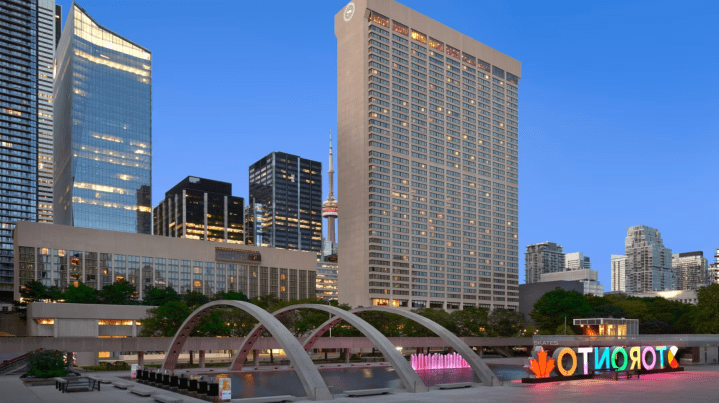
Many of the following sessions at next year’s ASECS conference will be of interest to readers, though I’m the first to admit the selection is subjective; so please have a look at the full list available here. Pay special attention to HECAA’s New Scholar Session, chaired in 2024 by Gauvin Alexander Bailey. Also, please note that while I’ve not listed any of the roundtables or project sessions, there are interesting offerings there as well—with the former addressing subjects ranging from “Butt Stuff,” to pedagogy, to museums and their colonials pasts, and the latter focusing on topics including creativity and Julie Park’s new book My Dark Room. There are, in other words, lots of things to look forward to in Toronto. –CH
2024 American Society for Eighteenth-Century Studies Conference
Sheraton Centre, Toronto, 4–6 April 2024
Proposals due by 15 September 2023
The American Society for Eighteenth-Century Studies (ASECS) is pleased to announce our Call for Papers for our 54th Annual Meeting, to be held 4–6 April 2024 at the Sheraton Centre in Toronto. The Society, established in 1969, is the foremost learned society in the United States for the study of all aspects of the period from the later seventeenth through the early nineteenth century. Round 3 is now open for submissions to panels, roundtables, and special sessions.
We are committed to fostering an inclusive and welcoming conference environment in which all members participate fully in the exchange of knowledge and ideas. We welcome scholars pursuing all aspects of eighteenth-century studies and in all careers and career stages: in graduate studies; in tenured, tenure track, or non-tenure track academic positions; in part-time or temporary positions in the academy; and colleagues in contexts beyond the academy including libraries, museums, publishing, and teaching, as well as independent scholars. Please join us whether you are a long-time member, or new to ASECS!
◊ ◊ ◊ ◊ ◊
Africans and Africa in Italy (Italian Caucus)
Chair: Irene Zanini-Cordi (Florida State University), izaninicordi@fsu.edu
This session is dedicated to the realities and representations of African peoples and their homelands in the various Italian States, be they economic, political, religious, artistic, social, educational, etc. Papers may examine the lived experiences of Africans in rural and city environments, among nobility and other classes, and in relation to a variety of public entities. Portrayals of Africa and Africans may come from literary, theatrical, figurative, ceremonial, academic, etc. sources. Examples include but are not limited to: Africans featured in portrait and other figurative arts genres, treatment of/reference to Africans in historical, scientific, medical, ethnographic, encyclopedic and travel narratives; Africa as protagonist and/or setting in fictional, scientific, poetic, or dramatic literature. Papers may also interpret ‘Africans in Italy’ in an indirect sense, i.e., to include the heated debates taking place in Italy (in person and in print) on the experiences of Africans outside of Italy. Chief among those discussion topics would be Africans’ subjection to the transatlantic slave trade and subsequent enslavement in the Americas.
◊ ◊ ◊ ◊ ◊
American Empires: Art, Vision, Race, and Power
Chairs: Kristi Peterson (Skidmore College), kpeters4@skidmore.edu and Emily Thames (Independent Scholar), ekthames@gmail.com
When discussing the Western hemisphere and its imperial relationships, a handful of national identities typically dominate the conversation and thereby reduce the continents’ complexities. In truth, the imposition of empires and their legacies is a complex tapestry of hybridity, synthesis, and negotiations that rarely remain stable in their semiotics. European colonizations of the hemisphere also do not represent the earliest American empires, and the conversation often ignores Indigenous responses and negotiations of changing power structures informed by their own histories and placemaking narratives. As both markers and makers of emic social systems, visual and material culture both reflect and sustain, fulfill and negotiate, imperial impositions and systems. This session is specifically interested in exploring and complicating this concept via the artistic production of the American hemisphere and its relationship to, and intersection with, the construction, maintenance, and transformations of vision and imperial structures in the eighteenth century. This session seeks papers that examine the questions of the intersection of art making and empires in the Americas across time and national boundaries that impact our understanding of the eighteenth century in the hemisphere and its legacies. We welcome submissions that examine issues related to vision, race, and power structures broadly defined. This includes, but is not limited to: indigenous responses and negotiations of empires, the mechanisms by which empires are built and maintained, how both local and imperial identities are negotiated through artmaking, and how visual culture is used to aid, negotiate, and even undermine/subvert imperial imposition.
◊ ◊ ◊ ◊ ◊
Anne Schroder New Scholars Session (Historians of Eighteenth-Century Art and Architecture)
Chair: Gauvin Alexander Bailey (Queen’s University), gauvin.bailey@queensu.ca
The Anne Schroder New Scholars Panel, sponsored by HECAA, seeks to promote scholarship that represents the future of eighteenth-century studies. We invite proposals from dissertating graduate students and early-career scholars working in the academy or museum. We welcome submissions that explore topics across the cultures, spaces, and materials that are related to art and architectural history over the long eighteenth century and around the globe. We especially encourage projects that reflect new approaches to both long-standing and under-studied issues and methods in eighteenth-century studies broadly, including but not limited to: critical race art history; Disability studies; ecocriticism and environmental studies; empire, colonization, and decolonial theory; gender and queer theory; global diasporic histories; Indigeneity; and material culture studies. Papers can be based on dissertations, book or article manuscripts in progress, Digital Humanities collaborations, or curatorial projects. We particularly encourage BIPOC scholars, contingent or independent scholars, and those working outside of North America to apply.
◊ ◊ ◊ ◊ ◊
Annotation across Media
Chairs: Jeanne Britton (University of South Carolina), jbritton@mailbox.sc.edu and Julie Park (Pennsylvania State University), julie8park@gmail.com
Eighteenth-century book use, reading practices, and multi-media objects suggest a long history of active engagement with aesthetic and material production that crosses lines between media, genres, and experiences, between print and script, image and text, and reading and looking. This panel is meant to take advantage of the interdisciplinary membership of ASECS by seeking papers from any and all disciplines and languages. It aims to contribute to the Annual Meeting a broad discussion about media and genre by looking at a range of annotated, multi-media, and reader-enhanced works from any linguistic, national, or generic tradition. Papers are invited that consider texts and images that bear the marks of annotation or use, whether by an artist, author, publisher, or reader: architectural or scientific illustrations with captions, philosophy with footnotes, poetry with marginalia, indexed commonplace books, and grangerized volumes. What is the relationship between word and image in an annotated illustration or illustrated text? What modes of reading and looking are at play in the production of marginalia in different media, from pencil scribblings and inked doodles to paint stains? Presentations on digital projects that make use of annotation are also invited.
◊ ◊ ◊ ◊ ◊
Between Pornography and Erotica: Materiality and Liminality in 18th-Century Visual Culture
Chairs: Alicia Caticha (Northwestern University), alicia.caticha@northwestern.edu and Agnieszka Ficek (Meadows Museum, SMU), aficek@gradcenter.cuny.edu
Sexually explicit images, objects, and texts were integral to the culture of libertinage that flourished in the eighteenth century. The visual cultures of sex, pornography, and erotica were not contained simply to the bedroom or boudoir, but seeped into political caricature, fine arts, and popular divertissement. Often associated with Enlightenment philosophy, science, and critiques on religious and political authority, scholarship on libertinage has largely focused on the literary contributions of figures such as Denis Diderot, Crebillon fils, and the Marquis de Sade. However, explicit materials inhabited multiple liminal spaces, suspended between public circulation and private enjoyment. Artists, writers, readers, and viewers actively navigated the contentious line between permissible and obscene. Taking up the liminal space between the erotic and the pornographic, this panel proposes to rethink and expand the definition of erotic visual culture of the eighteenth-century. How was sexually explicit imagery part of a more mainstream visual culture? How were such objects circulated, viewed, and stored? How did the gendered nature of political caricature respond to the culture of libertinage? How did artists employ materials to communicate erotic and explicit messages? How did evolving ideas of synesthesia and the senses shift how objects were viewed and henceforth eroticized? What was the relationship between libertinage and queer aesthetics? This session invites papers that take up visual culture across mediums, including but not limited to pastels, textiles, print, marble, bronze, porcelain, and painting, with a particular focus on materiality and the liminal space between the erotic and the pornographic.
◊ ◊ ◊ ◊ ◊
Between Space and Culture: The Urban Pillars of Enlightenment Europe
Chair: Chloe Edmondson (Stanford University), cmhse14@stanford.edu
This panel invites papers that examine the cultural, political, and literary histories of urban spaces in cities throughout Enlightenment Europe. What urban sites proved most central to the culture of a city and why? If one takes the example of Paris alone, the city is full of streets, monuments, buildings, neighborhoods, and institutions which defined the cultural and political history of France, from the Café Procope and the Comédie Française to the Bastille and the Place de La Concorde. How did physical sites organize the intellectual, mercantile, political, and/or social culture of entire eras for specific cities in Enlightenment Europe? Why did certain spaces become centers for artists and intellectuals, others for diplomats or the burgeoning merchant class, and still others for sex workers? How did urban sites permeate artistic productions, whether in literature or the visual arts throughout the long eighteenth century? Preference will be given to papers that focus on specific monuments, buildings, or neighborhoods from interdisciplinary perspectives, and the panel will aim to highlight different national traditions as well as transnational approaches.
◊ ◊ ◊ ◊ ◊
Caribbean Indigeneity and the Visual Archive (Early Caribbean Society)
Chair: Désha Osborne (University of Edinburgh), Desha.Osborne@hotmail.com
“Caribbean denotes an Indigeneity that is often ignored; it performs its own set of erasures and elisions,” writes Tao Leigh Goffe (The Other Windrush, 2021). Since the early days of colonization and settlement, Europeans have used paintings and engravings to identify and categorize the original inhabitants of the Caribbean islands. Likewise, narratives of indigenous replacement and erasure began as early as the introduction of enslaved Africans to the Caribbean not long after European arrival, and again with the introduction of South Asian indentured laborers in the nineteenth century. Different frameworks for indigeneity in the Caribbean reflect the ongoing call from island communities, artists and scholars like Sylvia Wynter’s invitation to reimagine the human and define a new indigeneity in the Caribbean. This panel specifically seeks to ask how Caribbean indigeneity can be defined and understood through the perspective of early visual cultures in the Americas. Part of the agendas of eighteenth-century artists like Agostino Brunias was to set unambiguous lines around who were considered Indigenous and who were African in the service of settler colonial myths of origin and European definitions of identity. For those who study the Caribbean visual archive, the argument that Blackness works somehow to erase Indigeneity and its relation to the colonial gaze is linked. How can we recover both erasure and resistance of hybrid Caribbean Indigeneity in the visual archive?
◊ ◊ ◊ ◊ ◊
‘Deprived of Force, but Pressed with Courage Still’: Interrogating Impotency
Chair: Jessica Floyd (University of Maryland, Baltimore County), jfloyd1@umbc.edu
Judith Mueller (1999) notes that “The label, impotent relentlessly signifies beyond the underperforming organ to the entire man—his mind, his character, his will, his very manhood.” Her work captures the Phallic energy inherent in eighteenth-century discourse and points to the undercurrent of anxiety that haunts the margins. The specific anxiety is tied to a recognition of the precarity of masculine performance and the lurking fear of being labeled a failed male. Male potency functioned both literally and symbolically, serving as the nexus of male power, agency, and virility. Indeed, a man’s ability to perform sexually, socially, and politically was bound up within this Phallic economy and spoke to his abilities and also his identity. Impotency, then, is diametrically opposed to expected Phallic energy and became, in the long eighteenth century, the subject of wide private and public dialogue. This panel seeks to engage scholars from multiple disciplines who critically investigate impotency in the long eighteenth century for how it functioned either literally or symbolically. Papers may investigate literature, medicine, history, art, print culture, court documents, or other avenues that serve as data-points to understand the broad range of contemporary discussions and representations of impotency. Impotency makes its way into a number of seemingly disparate places such as Pope’s poetry, court documents suing for sex, and even medical literature seeking to rectify the affliction and this panel encourages submissions that look at impotency from various disciplines and backgrounds in order to generate a distinctly interdisciplinary conversation.
◊ ◊ ◊ ◊ ◊
The Eccentric 18th Century (Queer and Trans Caucus)
Chairs: Smith Yarberry (Northwestern University), syarberry@u.northwestern.edu and Shelby Johnson (Oklahoma State University), shelby.l.johnson@okstate.edu
Who are the eccentric writers, artists, publishers, and thinkers of the queer and trans eighteenth century? Or what are the eccentric texts, the anonymous prints, the parenthetical materials (magazines, notebooks, letters, etc.) that mediated queer and trans voices? For this panel, we are looking for work that engages with these eccentric writers, artists, and materials of the eighteenth century that have either still received little critical attention or, perhaps, received little acclaim in their lifetimes but should be reconsidered now.
◊ ◊ ◊ ◊ ◊
The 18th Century Is Going Places! (Graduate Student and Early Career Scholars Caucus)
Chair: Allison Gibeily (Northwestern University), allisongibeily2025@u.northwestern.edu
Taking a cue from scholarship in Indigenous studies, this roundtable asks how place-based methods inform our research and teaching in the increasingly globalized field of eighteenth-century studies. Rather than imagining places figuratively or reading about them in the numerous travelogues churned out during the period, we are curious how ‘going places’ can stand as a unit of thinking and knowing in itself, and how physical presence in a place informs the projects we pursue. How does the immediate, participatory experience of being somewhere—or being from, returning to a place—affect our work? How can we honor embodied epistemologies within the confines of the western academy, with all of its colonial legacies? This roundtable welcomes submissions from across disciplines and, in the spirit of the topic and format at hand, especially encourages those attending to the practical. What activities have you developed that encourage students to learn about and participate in the communities in which they’re studying? What strategies have you used to secure funding for such projects, which can require increasingly expensive travel, language training, and other material resources? How have you taken this place-based knowledge and forged innovative career paths within and beyond the academy? What regional archives have you visited, and how have local people and epistemologies affected your understanding of and interaction with those archives? What are the ethics of making such archives and places increasingly legible? In short—what can we learn about eighteenth-century studies by going places, be they near or far?
◊ ◊ ◊ ◊ ◊
Enlightenment Exile: Spaniards Living and Working Abroad
Chairs: Karissa Bushman (Quinnipiac University), Karissa.bushman@quinnipiac.edu and Rebecca Haidt (The Ohio State University), r.haidt@gmail.com
During the long eighteenth century, numerous influential Spanish figures in the arts and literature left Spain for either a forced or self-imposed exile. Two famous examples were the artist Francisco de Goya and the author Leandro Fernández de Moratín. Recently more attention has been given to the topic of how exile effected Spanish writers, artists, and other cultural figures. From May to August 2022, the Prado Museum held an exhibition on the artwork of Luis Paret which focused heavily on his exile in Puerto Rico, and from July through September 2023 the Biblioteca Nacional de España is showcasing its exhibition El Exilio Intellectual Español en Puerto Rico. This panel would like to further explore the effects of exile in the arts, literature, and culture of Spain during the long eighteenth century. We welcome paper proposals from any discipline that examines this topic. We also encourage graduate students and those early within their careers to submit proposals for this panel.
◊ ◊ ◊ ◊ ◊
Furnishing the Sexual Imagination: Sexuality, Domesticity, and Luxury in 18th-Century Erotica
Chair: Joelle del Rose (College for Creative Studies), joelledelrose@gmail.com
During the long eighteenth century, the physical layout and social composition of the middle-class household in Britain and the Atlantic World underwent significant change, transforming domesticity and reordering the social sphere. The concurrent increase in the availability of erotic reading materials began to reflect these changes, utilizing newly created architectural spaces, furniture, and luxury goods within the context of erotic narratives and visual prints to telegraph messages about social class, privacy, and sexual skill. These books and prints, replete with highly specific details of the material world, created a liminal social space within the minds of readers that was first personal but over time became shorthand to signal a host of meanings. This panel seeks to explore the connections to objects associated with luxury and sexuality over the course of the long eighteenth century. We are particularly interested in the relationship between refined social settings and the setting of an erotic mood, in person and in print. Why did particular objects of the ‘polite’ world make their way into ‘vulgar’ texts? How did the inclusion of objects d’art and luxury goods within erotic contexts influence their perception in the physical world? The concept of the imagination itself was new in the eighteenth century, and the objects readers were prompted to envision and associate with private sexual reverie represent the first link in a cultural paradigm associating domestic privacy with illicit sexuality. We invite papers or presentations exploring one or several of these links; the social elements and material use is significant to our discussion, and the goods themselves can be extant or represented in print culture or texts. We hope for creative, diverse approaches to understanding, amongst other things, the context of women’s power and positive and pejorative associations with sexuality and luxury within particular social and spatial arenas.
◊ ◊ ◊ ◊ ◊
Gases (and Vapors, Aromas, and Volatilities, Too): A Little Bit More than Natural, A Little Bit Less than Supernatural (South Central Society for Eighteenth-Century Studies)
Chair: Kevin Cope, encope@lsu.edu
Enlightenment chemistry, meteorology, geology, literature, and art converged in the confusing but stimulating study of the third phase of matter: of the gases and other volant substances that invade every aspect of life, indeed that envelope our planet. Whether in the straightforward discovery of oxygen or in poet Edmund Waller’s suggestion that an artist “paint an east wind” or in the evaluation of toxic fumes from volcanoes or in the painting of storm scenes, the motion of unseen gases continuously attracted interdisciplinary attention. The invisibility and crypto-spirituality of air-like items upped the ante in the quest for ‘prodigies’ and ‘wonders’ along with the laws of nature. The sometimes fragrant characteristics of these otherwise unseen materials added interest while substracting sense. This panel is open to papers addressing an aspect of gases, vapors, aromas, or the like, whether in literature, art, science, philosophy, or even perfumery.
◊ ◊ ◊ ◊ ◊
Gesture and the Legibility of the 18th-Century Body
Chair: Denise Baxter (University of North Texas), denise.baxter@unt.edu
This session seeks contributions from a broad range of fields (including, but not limited to literature, performance, visual and material culture studies, etc.) that explore the embodiment or representation (textual, material, visual) of gesture across the long (and broad) eighteenth-century. Recognizing that the legibility of gestures is temporally and geographically situated and may be specific to cultural or social groups, this session seeks papers that variously investigate gestural expressions. Considerations of period gesture, relationships between gesture, dress, and etiquette, or reflections on the relationship between displayed bodily comportment and subjectivity are equally welcome. How, what, and to whom does the tilt of a head, the manipulation of an object or aspect of dress, or the extension of a leg communicate?
◊ ◊ ◊ ◊ ◊
Histories, Spaces, and the Classroom
Chair: Tristan Schweiger (University of Chicago), tschweiger@uchicago.edu
It’s the perennial question we face in this field—why teach the eighteenth century at all? In conceiving the historical present, Harry Harootunian challenges us to “begin the difficult labor of creating a discourse on modernity that speaks to the world, one centered principally in understanding the history of our present as the unity of uneven temporalizations … rather than merely affirming or cheering on a globalizing project that sees the world only as the true space of commodity relation.” We often explain the relevance of eighteenth-century studies to our students in echoing terms. Reading these texts that may initially feel so alien gives a vital window onto our present in all its diversity. The long eighteenth century allows us to better understand the rise of capital, empire, modern discourses of race, gender, sexuality, and class—but also the counter-discourses and resistances to hegemonies that are very much part of our present, too. Yet what does this historicist understanding actually mean for teaching this period, particularly as humanistic inquiry is deemphasized and defunded? This session welcomes presentations on any aspects of teaching and course design (readings, descriptions, assignments, and/or classroom strategies) that approach the eighteenth century not simply as the long prehistory of a unitary present but as lively and widely varied sites that help to better know our widely varied present(s). Presentations on teaching the eighteenth century as part of transhistorical syllabi/curricula and/or syllabi/curricula exploring multiple cultural contexts are especially welcome.
◊ ◊ ◊ ◊ ◊
Imperial Networks: Relations between European and Ottoman Realms
Chair: Daniel O’Quinn (University of Guelph), doquinn@uoguelph.ca
This panel seeks to bring together scholars from a range of disciplines who are actively attempting to untangle the complex weave of relations between Ottoman and European culture in the eighteenth century. The emphasis is on networks of communication and exchange, but this can be broadly interpreted. The movement of people, material goods, images, knowledges, and narratives has left extraordinary traces in both the archives and repertoires of European and Ottoman cultures. Papers that pay attention to the formal, material, and generic contours of these intercultural relations are especially welcome.
◊ ◊ ◊ ◊ ◊
Material Culture and Space
Chair: Chloe Wigston Smith (University of York), chloe.wigstonsmith@york.ac.uk
This panel invites papers that address the intersections between material culture and space, welcoming a range of disciplinary approaches. Space might be understood either as geographic or physical. What global materials from diverse regions and climates contributed to the production and trade in material objects, and their geographic circulation? How do material objects cross geographic boundaries? How did the spaces of empire shape material culture? How do specific objects imagine specific geographies or geographic thinking (or experiment with geographic space)? Or how does the physical space of material objects (their scale, dimensionality) alter our understanding of things in the eighteenth century? Which spaces (real and / or imagined) does material culture absorb or fill in? The panel invites contributions that address some or any of these questions, ideally in multidisciplinary ways, and welcomes submissions from emerging and contingent scholars, and scholars from under-represented groups at ASECS.
◊ ◊ ◊ ◊ ◊
The Material Culture of Walking
Chairs: Kate Frank (University of Toronto), kate.frank@mail.utoronto.ca and Alicia Kerfoot (SUNY Brockport), akerfoot@brockport.edu
From Gay’s Trivia (1716) to Austen’s Pride and Prejudice (1813), walking has been of concern to eighteenth-century authors and artists. In this session, we will focus on the intersection between materiality and representations of walking or other forms of physical movement. We welcome papers on the material culture of walking in the eighteenth-century from a variety of disciplinary approaches—literature, history, fashion history, art history, disability studies, etc. Proposals might address: walking accessories and costumes (footwear, clothing, umbrellas, walking sticks, braces, sun protection); representations of walking in visual art, craft, or drama; print and manuscript cultures (maps, guides, diaries, sketchbooks); the built or created environments of walking (paths, mazes, urban and rural garden design); or intersections between walking and the materiality of other types of physical movement like riding, races, and forms of travel.
◊ ◊ ◊ ◊ ◊
Material / Immaterial (Western Society for Eighteenth-Century Studies)
Chair: Kate Ozment (Cal Poly-Pomona), keozment@cpp.edu
This panel invites considerations of the material and immaterial, and their interrelations, in the long eighteenth century. How were these terms conceptualized in the period, and how do our methods highlight or complicate eighteenth-century ideas? Potential topics could include the new materialism, vitalism, objects and material culture, wonder and imagination, form and formalism, affect and emotion, race and racism, environments, architecture, political economy, empire and the global, bodies, matter, medicine, disability, sexuality, spirit and religion, among others.
◊ ◊ ◊ ◊ ◊
Motion Pictures before Cinema: Enlightenment Stagecraft (Theatre and Performance Caucus)
Chair: Joseph Roach (Yale University), joseph.roach@yale.edu
For Lessing, theatre was the dynamic meeting place for the otherwise incommensurable arts-in-time (music, poetry) and arts-in-space (painting, sculpture). For ASECS, it might also prove to be the meeting place for historians of visual culture, material culture, and performance, including dance and opera as well as drama. From 1660 to 1830, the development of Enlightenment stagecraft challenged rival producers and playwrights alike to compete in the creation of the whole stage picture. That included innovations in moveable scenery, machinery, lighting, special effects, pictorial compositions, expressive stage movements and gestures, and bespoke costuming. Until recently, this hybrid art form has been under-theorized and under-researched as the source of an ensemble of effects in service of dramatic action. That has remained so despite its overlap with well-established interests of ASECS and TAPS members. For instance, as stage designers turned their gaze on distant peoples and places, a number of their most ambitious efforts represented spectacles of empire and empire-to-be. And speaking of visual ideologies, the tragic actress—accessorized from high tête to bejeweled footwear, enveloped by paniers and brocaded mantua, and followed by train-and-parasol-bearing pages—made her show-stopping entrances like a gendered, classed, and oft-racialized float, leading her own intersectional parade. 2024 seems like it might be an auspicious moment to call together scholars working independently on different aspects of the whole stage picture to explore anew the storyboarded dramaturgy of Enlightenment stagecraft.
◊ ◊ ◊ ◊ ◊
Moving Mountains: Representations of the Alps
Chair: Philippe Sarrasin Robichaud (Université du Québec à Trois-Rivières), philippe.sarrasin.robichaud@gmail.com
Before the eighteenth century, alpine narratives depicted hostile lands inhabited by supernatural creatures, bandits, and heretics. Upon arriving in his lands in Ferney, Voltaire wrote an epistle in which the Alps were described as “mont affreux.” However, this attitude was destined to change in the span of a few decades: Rousseau’s Lettres de la montagne, for example, associated a radically different meaning with the idea of mountains. Thus, for romantic sensibilities, snow-capped peaks instead became “monts sublimes,” as previously noted by Claire-Éliane Engel. This newfound delight in the spectacle of nature was not solely passive; it also called for active exploration and the first expeditions dedicated to the scientific study of alpine geography, geology, and botany. Numa Broc’s work suggests that such scientific endeavors are intimately linked to the changes in cultural and artistic representations of mountains. The “Montagne” also became a marker of political and social significance during the Revolution, which was unthinkable in the previous century. As a direct heir to a change initiated during the Age of Enlightenment, the “l’esprit de l’alpinisme” (Moraldo 2021) continues to make the conquest of summits one of the “noblest passions” even today. This panel aims to study the complex transformations of the physical and metaphorical concept of mountains during the eighteenth century in France. We welcome approaches in French or English from literature, art history, philosophy, musicology, history of science, and other relevant fields.
◊ ◊ ◊ ◊ ◊
New Directions in 18th-Century Visual Culture
Chair: Michael Feinberg (Hamilton College), mfeinber@hamilton.edu
During a roundtable discussion (now published in Jounral18), scholars pointed out that visual culture emerged as a distinct methodology. Visual culture aims to problematize the Eurocentric, colonialist, racist, heteronormative, and patriarchal assumptions that enforced and continue to enforce the art historical discipline. This panel continues and expands these crucial conversations by exploring the relationship between art history and visual culture during the long eighteenth-century. In refusing to understand ‘Visual Culture’ as a mere synonym for ‘Art History’, this panel also resists the urge to take the ‘global eighteenth-century’ as an easy solution for addressing methodological complicities in perpetuating dominating cultural practices, universalizing assumptions, and imaginary imperial centers. How might visual culture afford new vantage points for thinking and writing about eighteenth-century art by drawing on intersectional feminism, ecocriticism, anti-racist tactics, contemporary artistic practices, or the digital humanities? What can visual culture do for thinkers who want to dismantle disciplinary boundaries, hierarchical mediums, and understandings of artworks as inherently static objects? This panel is particularly invested in contributions from interdisciplinary scholars outside of art history who want to interrogate the long standing art historical assumptions that developed during the eighteenth century.
◊ ◊ ◊ ◊ ◊
On Presence
Chair: Wolfram Schmidgen (Washington University in St. Louis), wschmidg@wustl.edu
Presence used to be bad. It couldn’t be trusted. Most likely, it relied for its shiny immediacy on malign hidden forces. That’s certainly what many practitioners of old-fashioned critique thought, for whom absence was the thing. For adherents of deconstruction, presence was even worse. It was the cardinal sin of western metaphysics, which constructed the world’s objects as being simply ‘there’—accessible and available for human appropriation. But in the age of postcritique, presence is once again a good thing. Postcritical scholars invite us to trust the texts we study, to focus on what is there, visible on the surface. Unsurprisingly, this return to presence has also reached eighteenth-century studies. There is, for example, the 2020 forum on the postcritical eighteenth century in Studies in Eighteenth-Century Culture. There is Ros Ballaster’s recent book Fictions of Presence (2020), which tracks the competition between theater and novels for what she calls presence effects. But there is also the fascinating work of such scholars as Sean Silver, Thomas Anderson, and Sarah Weston, whose knowledge projects rely on the painstaking reenactment of practices from the past—on the making sensually present again the feel and texture of forgotten procedures. At the same time, the pandemic has dramatized for all of us the profound pleasures and risks of presence. It’s an interesting time to think about presence, and this panel invites any and all contributions to the topic of presence, from the theoretical to the practical, research to teaching, content to form.
◊ ◊ ◊ ◊ ◊
Reuse in Art and Architecture
Chairs: Luis Gordo Peláez (California State University, Fresno), luisgordopelaez@csufresno.edu and Cody Barteet (University of Western Ontario), cbarteet@uwo.ca
Inspired by environmental and social concerns, in recent years there has been a marked increase in the reuse of materials, objects, and architectural spaces. However, such practices have occurred for centuries as canvases, sculptural materials, and buildings themselves have been reused. At different historical moments, these reuses have, at times, radically redefined the purpose and associated cultural meaning ascribed to objects and physical locations. These transformations are particularly relevant during the eighteenth and nineteenth centuries during the shifting cultural, economic, and political transformations affecting the colonial dominions of North America and much of the Southern Hemisphere. In this panel we document, explore, and consider the ramifications of these changes to locations and objects. We consider topics of the reuse of architectural forms and structures, the ephemeral nature of textiles, products, and other materials.
◊ ◊ ◊ ◊ ◊
The Rise of Banking and Its Role in the Globalization of Culture
Chair: Reva Wolf (State University of New York at New Paltz), wolfr@newpaltz.edu
The rise of modern banks and banking practices, beginning with the founding of the Bank of England in 1694, was intertwined in sometimes fascinating and other times disturbing ways with a range of social, artistic, scientific, and political activities. Portraits of bankers were commissioned to grace the walls of buildings. Artists were enlisted to design stock certificates and banknotes. Bank shares were exchanged across national borders. Architects were hired to design bank offices. Banks speculated on new scientific developments, such as the construction of canals using the latest engineering breakthroughs. At the same time, banks played roles in supporting their countries’ colonial activities. Banking practices were satirized in literature and printed images. This panel explores these and other aspects of the emerging modern bank in Europe and beyond, building on the notable number of recent studies that explore eighteenth-century banking practices, among them: 2328 reales de vellón: Goya y los orígenes de la Colección Banco de España (2021); Thea Goldring’s “The Greater Fool” (ECS 2020) and Nina Dubin, Meredith Martin, and Madeleine Viljoen’s Meltdown! (2020), both focused on imagery of the South Sea Bubble; Niccolò Valmori’s Banking and Politics in the Age of Democratic Revolution (2023); and Anne Murphy’s Virtuous Bankers: A Day in the Life of the Eighteenth-Century Bank of England (2023). Keeping in mind the question of why bank histories are proliferating now, this panel also seeks to highlight the less-considered aspect of international exchange in the cultural aspects of the history of eighteenth-century banking.
◊ ◊ ◊ ◊ ◊
Sectarianism in Art and Music Criticism
Chair: Edmund Goehring (The University of Western Ontario), egoehrin@uwo.ca
This panel welcomes papers, from across disciplines, on sectarianism in criticism of music and the arts, especially as it appears in ostensibly secular repertories. Possible areas of inquiry include, but need not be confined to, institutions (not just churches, but periodicals, universities, societies); schools of thought; or the place of sectarianism in intellectual history or in the history of aesthetics. Papers might also discuss particular works. Such language abounds in Mozart criticism, for example. One critic calls Don Giovanni “Jesuitical” for its fire-and-brimstone ending; another condemns a German translation of the Requiem as “barbaric,” which he uses as a cognate for “enlightened” and “Protestant.” Charles Rosen sees in the figure of the Queen of the Night an image of Baroque piety. Nicholas Till finds in Figaro “a truly Catholic sense of the everyday immanence of the spiritual in the material world.” Is such terminology there only as coloring, or does it bear deeper values about the perceived character and function of art? Papers are also welcome on the wider resonances of sectarianism. For example, earlier in the century, Rousseau began his anti-theatrical treatise with a discussion of Socinianism. Some objectors to Rousseau attracted theological controversy for suggesting that most humans were “ganz gut,” thereby undermining the doctrine of hereditary sin. On the other side of the century, Young Hegelians carried on polemics against Romanticism with sobriquets like “Catholic,” “obscurantist,” and “frivolous,” and they rained down these epithets not just on certain kinds of philosophers but also on artists who thought of themselves as geniuses.
◊ ◊ ◊ ◊ ◊
Sex: Where, When, How?
Chair: Kathleen Lubey (St. John’s University), kathleen.lubey@gmail.com
Where, when, and how did eighteenth-century culture account for sex, and to what end? Our field seems to acknowledge that sex was everywhere in our period—in the major works of Pope and Richardson, in the taverns and on the bridges of London, in the “china” brandished on stage—but we are as yet in the early stages of reconciling our own language and concepts for sex with those of the eighteenth century. Recent ASECS panels such as those on the history of transgender and on reproductive rights have brought to the fore our period’s precise ways of accounting for its sexual culture, and this panel seeks to participate in that work. We will explore the forms and techniques of sexual description and account richly, I hope, for the ways the eighteenth century self-consciously discussed or dramatized sex in a broad a range of media. “Sex,” of course, can mean many things, and papers are invited that approach it diversely—as acts, bodies, desires, genital attributes, and/or scientific categories in contexts of gender, race, class, commerce, and/or colonialism.
◊ ◊ ◊ ◊ ◊
The Sex Lives of Plants
Chair: Sarah Benharrech (University of Maryland), sbenharr@umd.edu
Thirty years after Londa Schiebinger’s Nature’s Body: Gender in the Making of Modern Science, this panel aims to reassess the gendering of nature by focusing on the sexuality of plants and the cultural and social relationships that botanists, practitioners, and amateurs alike attributed to plants. Sébastien Vaillant’s sexual metaphors, Linnaeus’ sexual system, and Erasmus Darwin’s poetic musings on plant love—to name but a few—all made plants’ sexual reproduction widely known. However, while gender norms were projected onto flowers and other vegetal life, plants could also embody relationship diversity and gender fluidity. Taking the sexuality of plants as a general point of reference, this panel will welcome papers exploring the gendering of botany and botanical practitioners, the erotic potential of botanical descriptions and calls for sexual freedom, and the numerous attempts to moralize nature. Topics may include, but are not limited to, women botanists working on sexual and/or asexual plants, subversive eroticism, queer botany, hermaphroditism, hyper-sexualization of exotic vegetal specimens, etc. This panel hopes to bring together researchers working in various disciplines and geographical areas. Please include a short bio with the abstract proposal in French or English.
◊ ◊ ◊ ◊ ◊
Sir Thomas Lawrence: New Scholarship
Chair: Andrew Graciano (University of South Carolina), graciano@mailbox.sc.edu
Thomas Lawrence’s life and career have been divisive among contemporaries and art historians alike. His work has often been artistically underappreciated, deemed puzzlingly inconsistent in quality, and, therefore, ignored by many scholars. When he has been considered, he has often been marginalized as a ‘society’ painter, one whose insistent painterliness risked formal failure. This panel seeks new scholarship on the artist, with a view towards re-evaluating his artistic contributions and historical significance, as well as influence on others, at the latter limits of the long eighteenth century. Of particular interest, for example, is Lawrence’s role in the Waterloo Chamber portraits at Windsor. NB: The chair’s interest stems from the relevant parts of Thomas Crow’s 2018 book Restoration (Princeton University Press).
◊ ◊ ◊ ◊ ◊
Spaces and Practices of Storage
Chair: Matthew Gin (University of North Carolina at Charlotte), mgin@charlotte.edu
The eighteenth century abounded with stuff. The Republic of Letters generated a profusion of printed texts and images while global networks afforded European consumers access to a bewildering array of goods from furs and exotic botanicals to porcelain, silver, and art objects of all kinds. In response to this profusion of things, new kinds of spaces and devices emerged to facilitate their storage—take, for instance, the bookshelves at Horace Walpole’s Strawberry Hill, the closets of aristocratic homes, and the warehouses that facilitated the circulation of both commodities as well as human beings reduced to commodities by the practice of chattel slavery. These spaces call attention both to questions of process but also, more generally, the material realities of life in the eighteenth century. This panel invites papers that address storage either directly or obliquely. Among the questions to be considered are: How did people reckon with the possibilities and material limitations of storage? How was storage as a technology deployed to guard against breakage, spoilage, or exposure? What overlooked histories of circulation and display might storage tell? How did artists and writers embrace storage as part of their creative practice? How did storage play into emerging notions of privacy? What does storage reveal about histories of empire, diplomacy, or commerce? Papers that take an interdisciplinary or global approach to these and other pertinent questions are especially welcome.
◊ ◊ ◊ ◊ ◊
Textiles as Texts: Histories in the Making
Chair: Anna Battigelli (SUNY Plattsburgh), battigaf@plattsburgh.edu
The image of a woman bent over her needlework became a conventional signifier of restrictive femininity. For Mary Wollstonecraft and others, needlework and related domestic accomplishments rightly signaled the diminished public range of women’s intellectual inquiry. Recent studies, however, provide more sympathetic explorations of the cultural, emotional, and political roles of needlework within women’s lives. Women’s needlework decorated homes and churches and helped build family and community feeling. It provided bedding, clothes, comfort, and gifts. It tempered the tedium of everyday life through creative self-expression. It taught young girls needed skills while fostering a commitment to virtue. Turning to needlework provided a psychological outlet for women during taxing social engagements and solace during life’s trials. At times, needlework could also be a subversive source of visual messaging. And it could both speak to the future and recall the past, as is evident in the stitched information on tokens left with abandoned children at the Foundling Museum, the many samplers that ask that viewer “remember” the stitcher, and quilts that commemorate the dead. This interdisciplinary panel invites proposals for papers that read needlework as an index to women’s experience during the long eighteenth century. Papers should focus on needlework as a lived activity within the home or community, or as an activity represented within texts.
◊ ◊ ◊ ◊ ◊
Triangulation: Collaborations and Conflicts among African, Indigenous, and European Knowledge in the Americas (Ibero-American Society for Eighteenth-Century Studies)
Chairs: Karen Stolley (Emory University), kstolle@emory.edu and Mariselle Meléndez (University of Illinois-Urbana Champaign), melendez@illinois.edu
This roundtable seeks to explore eighteenth-century knowledge production in the Spanish- and Portuguese-speaking Americas. Preconquest societies of the Americas celebrated sages such as the Nahua tlamatinime, and in the postconquest world, indigenous intellectuals were important actors in the creation of knowledge and the formation of epistemological networks, as Gabriela Ramos and Yanna Yannakakis have shown. With their arrival to the Americas in the 16th century and as they became part of diverse communities (diasporas) that fought to gain visibility, humanity, dignity and power in a society where they were perceived as inferior human beings, the experiences of African enslaved persons culturally shaped knowledge production. By the eighteenth century, knowledge production in the Americas reflected a complex process of collaboration and conflict among African, Indigenous, and European actors, both individual and collective. We understand this process as a kind of triangulation—that is, the deployment of multiple perspectives, multiple ways of knowing, and multiple instruments in order to move from the unknown to the known. Triangulation is an epistemological negotiation that challenges a binary opposition between empirical and conjectural knowledge and pushes back against the “zero-point hubris” explored by Santiago Castro-Gómez in his 2005 book (recently published in English translation). The roundtable aims to discuss examples of how this process of triangulation destabilized, contested or reinforced the colonial order. The organizers invite proposals from all disciplines (including but not limited to literature, law, history, art history, philosophy, religion) and interdisciplines.
◊ ◊ ◊ ◊ ◊
Women Writers and Painters on Posterity
Chairs: Andrew H. Clark (Fordham University), anclark@fordham.edu and Joanna Stalnaker, (Columbia University), jrs2052@columbia.edu
In his Heavenly City of the Eighteenth-Century Philosophers, Carl Becker argued that eighteenth-century philosophers replaced “the hope of immortality in another world [with that] of living in the memory of future generations.” In 1932, Becker’s main characters were all men: Voltaire, Hume, Diderot and Locke, among others. But what about the women of the eighteenth century? To cite just one example, the salonnière and, according to Voltaire, philosophe, Deffand, had no desire to be remembered by posterity. When asked to contribute the letters Voltaire addressed to her to an edition of his correspondence, she wrote to Walpole: “Je ne veux point donner celles que j’ai de lui, je ne veux donner aucune occasion de parler de moi” [I don’t want to give those I have from him, I don’t want to give any occasion at all to be talked about]. Yet Deffand did end up bequeathing her writings, including letters, portraits, occasional poems and a late-life journal, along with her dog, Tonton, to Walpole. And it is thanks to his careful preservation of her writings that we can read them today. This panel asks how our picture of eighteenth-century attitudes towards posterity might be different if we looked at women writers and painters. While as co-chairs our expertise is in French studies, we encourage those working in other languages and disciplines to send proposals.
Call for Papers | Visualizing Antiquity: Find and Display
From the Call for Papers and ArtHist.net (which includes the Call for Papers in German). . .
Visualizing Antiquity: On the Episteme of Early Modern Drawings and Prints — Part II: Find and Display / Fragment and Whole
Bildwerdung der Antike: Zur Episteme von Zeichnungen und Druckgrafiken der Frühen Neuzeit — II. Fund und Aufstellung / Fragment und Ganzes
Zentralinstitut für Kunstgeschichte Munich, 31 January 2024
Organized by Ulrich Pfisterer, Cristina Ruggero, and Timo Strauch
Proposals due by 1 September 2023

Francesco Moratti, Egyptian Queen or Princess, watercolor and gouache (Paris: BnF, Dép. des Estampes et de Photogrqphie, FB-19-PET FOL, Fol. 1; gallica.bnf.fr).
The academy project Antiquitatum Thesaurus: Antiquities in European Visual Sources from the Seventeenth and Eighteenth Centuries, hosted at the Berlin-Brandenburg Academy of Sciences and Humanities (thesaurus.bbaw.de) and the Zentralinstitut für Kunstgeschichte Munich (zikg.eu), are organizing a series of colloquia in 2023–2024 on the topic Visualizing Antiquity: On the Episteme of Drawings and Prints in the Early Modern Period.
The significance of drawings and prints for ideas, research, and the circulation of knowledge about ancient artifacts, architecture, and images in Europe and neighboring areas from the late Middle Ages to the advent of photography in the mid-19th century will be examined. The second colloquium will explore how the various states and contexts of ancient objects, in the broadest sense, between their discovery and their ‘final’ display, were captured and documented in images. This concerns representations of diggings as well as of archaeological sites and the beginnings of excavation documentation as well as efforts to record fragmented find states and reconstructions. For ancient architecture (and certain sculptures), some of which have always been visible, the problem arises of how to deal with additions, alterations, missing parts, and how to evoke the original state. Which image media and image modes were chosen to face these challenges? Which aspects should be documented? And how do these antiquarian representations relate to other subject areas and visualization intentions? Later study days will focus on “Fake News? Fantasy Antiquities” and “Collectors, Artists, Scholars: Knowledge and Will in Collection Catalogs.”
Solicited for the second colloquium are papers in English, French, German, or Italian, 20 minutes in length, ideally combining case study and larger perspective. Publication in extended form is planned. Travel and hotel expenses (economy-class flight or train; 2 nights’ accommodation) will be reimbursed according to the Federal Law on Travel Expenses (BRKG). Proposals (max. 400 words) can be submitted until 1 September 2023, together with a short CV (max. 150 words) to thesaurus@bbaw.de keyword “Episteme II.”
Call for Papers | CAA 2024, Chicago
I’ve highlighted here a selection of panels potentially related to the eighteenth century; but please consult CAA’s website for additional possibilities, as well as directions for submitting proposals (also bear in mind that the linked listing does not include Complete Sessions or Composed Sessions (Individual submissions). –CH
112th Annual Conference of the College Art Association
Hilton Chicago, 14–17 February 2024
Proposal due by 31 August 2023
CAA’s 112th annual conference will be held 14–17 February 2024 at the Chicago Hilton. Most sessions will be held in person, and some will be convened virtually. The full conference schedule will be posted in early October 2023.
All sessions listed below are in-person, unless otherwise noted.
◊ ◊ ◊ ◊ ◊
‘La main outillée attaque. Elle a le geste hostile’: The Notion of Violence in Printmaking, Association of Print Scholars
Chairs: Anastasia Belyaeva (University of Geneva) and Roman Grigoryev (Hebrew University at Jerusalem)
This panel seeks to investigate the brutality of the printmaking process. Techniques such as engraving, drypoint, or woodcut, imply a battle with the matter by altering the matrix with sharp tools. Chemical processes in etching entail the danger of explosions and burns. Making changes on a metal plate requires burnishing out and leveling with a hammer. Pressure is required to drag a squeegee when making a screenprint. Force is required to manipulate a press. The very terminology of printmaking is aggressive: plates cut, scratched, impressions pulled, matrices cancelled and destroyed. This physical intensity on the edge of violence affects the working process and the work. Rembrandt’s The Three Crosses, for example, embodies both the aggressive treatment of the plate and the atmosphere of the Golgotha events. Or, Gaston Blachard’s analysis of Albert Flocon’s engravings led to his theory of printmaking as “combat anthropocosmique.” Taller de Gráfica Popular’s trademark of hands cutting a matrix with knifes refers both to their preference for linocut and woodcut techniques and the group’s self-representation as armed fighters. The panel invites papers that examine the impact that the brutality of printmaking methods have on the artists, the aesthetics, and the poetics, and on their perception by the public and scholars. We welcome papers studying the connection between violence and printmaking across all cultures and periods, and across a variety of approaches, including, but not limited to, material, conceptual, and methodological, both through a theoretical lens and through the lens of the creative practice.
◊ ◊ ◊ ◊ ◊
‘Women Artists?’ The Future of Art History and Gender, Historians of Eighteenth-Century Art and Architecture
Chair: Sarah Elisabeth Lund (Harvard University)
In 2022, Dobbs v. Jackson overturned the right to abortion, undermining bodily autonomy and privacy. Reproductive care has come continually under attack, as has the rights of free speech and healthcare of homosexual and transgender people. As black feminist and queer scholarship has shown, studies of gender must always be intersectional. How do discourses of intersectionality, sexuality, eroticism, and bodily autonomy shape our understanding of the nexus of art and gender? The long eighteenth century has been a key arena in the historiography of feminist art history, studies of gender, and research on women artists. This panel aims to ask a following question: “Why study ‘women artists’?” What are the productivities and shortcomings of a term like ‘women artists’ in 2024, and what is the future of art history and gender? This panel invites papers that explore the stakes, methodologies, limitations, and promises of research on gender and art history. Papers could focus on new approaches to study of (an) individual artist(s), analysis of images that complicate gender binaries, the gendering of materials, investigations of masculinity or femininity, concepts of the queer and queering, or a take a historiographical approach, amongst others. This panel welcomes papers that nuance gender as an identity, theoretical category, and methodological approach. The format of the panel will consist of three or four 15-minute presentations followed by Q&A that I hope will provoke a robust discussion. Kindly email sarahlund@g.harvard.edu with any questions.
◊ ◊ ◊ ◊ ◊
A Critical Globality: Transculturation and Potential Histories of Art (virtual session)
Chairs: Karin J. Zitzewitz (University of Maryland) and Birgit Hopfener
In Can Art History be Made Global? Meditations from the Periphery (2023), Monica Juneja argues that an understanding of “global art” as universally constituted through unbounded global exchanges and circulation processes “threatens to foreclose more nuanced explorations of the cultural field.” She advocates instead for “a critical globality” that can “empower a rethinking of the global in the domain of art, and its theorization as a new ‘cosmopolitics of resistance’, as a resource for countering the logic of neo-liberal capital and neo-nationalist cultural politics.” For Juneja, the keystone concept of transculturation grounds an art history not reliant on fixed frameworks, which instead examines histories of transcultural encounters and negotiations and accounts for complex structures of knowledge and power. Juneja intervenes equally decisively in art historiographical debates in Germany and those engaged with the Global South, by drawing on literatures from the early modern period to the present, particularly in her field of South Asian art. She ultimately seeks a “potential” art history, which she describes “as a way of bringing unasked questions about the past, suppressed or elided possibilities to the forefront of art-historical narratives.” This panel solicits papers that engage Juneja’s thought and/or explore the potentialities of transculturation as concept and method. Of particular interest are challenges to naturalized disciplinary assumptions and practices, to the discipline’s reliance upon national histories, to understandings of the global as an effect of global capitalism, to models of center and periphery, and to cultural or ethnic essentialisms.
◊ ◊ ◊ ◊ ◊
A Gestural Turn
Chair: Denise A. Baxter (University of North Texas)
In 2019 the Anti-Defamation League’s added to its Hate on DisplayTM Hate Symbols Database a hand gesture “in which the thumb and index finger touch while the other fingers of the hand are held outstretched.”[1] Having historically broadly communicated assent or ‘okay’, the gesture had recently been appropriated by white supremacists to communicate ‘white power’. What had previously been a clearly communicated embodied symbol had become contextually disrupted. Recognizing that the readability of gestures is temporally and geographically situated and may be specific to cultural or social groups, this session seeks papers that variously investigate represented gestural expressions. Considerations of period gesture, relationships between gesture, dress, and etiquette, or reflections on the relationship between displayed bodily comportment and subjectivity are equally welcome. How, what, and to whom does the tilt of a head, the manipulation of an object or aspect of dress, or the extension of a leg communicate? This session equally welcomes papers that explore these questions from the perspectives of archaeology, anthropology, art history, or performance art. [1] “Okay Hand Gesture,” ADL’s Hate on DisplayTM Hate Symbols Database, accessed April 24, 2023, https://www.adl.org/resources/hate-symbol/okay-hand-gesture.
◊ ◊ ◊ ◊ ◊
Activating Academic Art Museum and Gallery Relationships: Art Objects and Experiences in Institutional Collaborations, Museum Committee
Chairs: Monica Andrews (Harvard University Graduate School of Education) and Rex A. Koontz (University of Houston)
This session seeks to explore examples of deep collaborations between academic art museums & galleries and the audiences which they serve and engage. We seek case studies focusing on museum collaboration with one of three groups (universities, local communities, or creatives) that demonstrate the breadth of opportunities for academic art museums and galleries to further engage with campus and public audiences or stakeholders. Our goal is to cultivate a larger community discourse around the ways museums work together with other entities to broaden access to art historical studies and museology and serve as sites for interdisciplinary collaboration and exchange. To highlight multiple models and deepen the conversation, this session will use the round-table format where contributors offer brief 5-to-10-minute case study presentations, followed by a discussion and Q&A session with the other members of the round table and the audience. Case studies that explore collaboration as an opportunity for learning and training for the next generation of scholars/museum professionals, for use of collections and exhibitions in university pedagogy, or for rural/urban partnerships are particularly of interest to the Museum Committee.
Please note that this session will be accompanied by a workshop with the session chairs and presenters to further discuss and explore best practices and logistical considerations involved in collaborative planning processes.
◊ ◊ ◊ ◊ ◊
Art Collections of Academies of Sciences
Chair: Viktor Oliver Lorincz (Art Collection of the Hungarian Academy of Sciences)
While collections of academies of arts are rather well studied, less consciously, academies of sciences established art collections as well comprising portraits of the founders and members, emblems, allegories, collections bequeathed by former members, and also buildings with interior and exterior decoration. Some scientific collections may have artistic value as well. Sometimes belonging to the library of the academy, or to another organizational unit, these collections are less institutionalized and less studied. The Hungarian Academy of Sciences will celebrate its bicentenary in 2025 but the Art Collection of the Academy was founded only 30 years ago. Even if the Budapest headquarter inaugurated in 1865 already came with a huge exhibition area by Friedrich August Stüler, who gained experience on museum buildings (Alte Nationalgalerie and Neues Museum in Berlin, and Nationalmuseum in Stockholm). Shortly after the foundation of the Academy, Friedrich von Amerling painted the portrait of the founder, and Johann Nepomuk Ender finished the emblem or allegory of the Academy itself. On the occasion of the anniversaries, this panel seeks contributions on similar art collections of academies of sciences, including portrait galleries, emblems and other symbols, representations of the academies, internal and external decoration of the buildings including e.g. the allegories of sciences. Recently, scientific objects, instruments and collections with aesthetic or historical value also have been added to our collection, and we also welcome submissions dealing with similar special cases.
◊ ◊ ◊ ◊ ◊
Atlantic Slavery and the Arts
Chairs: Ana Lucia Araujo (Howard University) and Inês Barreiros (Universidade Nova de Lisboa)
Art historians, curators, and artists have demonstrated an increasing interest in the history of slavery and the Atlantic slave trade. This recent attention is motivated by the growing field of slavery studies and the protests challenging the ways these two human atrocities are memorialized in societies where slavery existed. This trend also responds to the recent developments in the discipline of art history in which European painting and sculpture have been overrepresented in scholarship. Considered the greatest forms of art, paintings and sculpture rarely represented enslaved peoples and when they did, bondspeople were frequently portrayed in submissive positions. More often, enslaved peoples were depicted in mediums considered minor arts such engravings and cartes-de-visite that neither deserved to be studied by art historians nor should occupy a visible place in art museums. But this landscape has changed. Artists such as Romuald Hazoumé, Grada Kilomba, Kara Walker, Rosana Paulino, Nona Faustine, Charles Fréger, and Jota Mombaça have been addressing slavery in their works. Curators have also embraced this vibrant production in exhibitions such as Afro-Atlantic Histories (Museu de Arte de São Paulo, 2018) that traveled to Washington DC, Houston and Los Angeles, and Slavery (Rijksmuseum, 2021). Likewise, museums such as the National Gallery in London started to gradually expose their own ties to transatlantic slavery. Drawing on this new dynamic scholarship, artworks, and exhibitions, this panel invites submissions focusing on visual representations and artworks engaging histories of slavery, as well as curatorial projects and museographies addressing slavery and the slave trade.
◊ ◊ ◊ ◊ ◊
Building a Legacy: Catherine Asher’s Boundary-Crossing Scholarship Remembered, American Council for Southern Asian Art
Chairs: Rebecca M. Brown (Johns Hopkins University) and Deborah S. Hutton (The College of New Jersey)
To honor the legacy of Professor Catherine E.B. Asher (1946–2023), we invite short engagements with a single object, building, or text that unfold questions of central concern in Asher’s own work. Asher published transformative interventions into the way we think about histories of inter- and cross-sectarian architectural collaboration and patronage, particularly focused on the Mughal era, but extending into the present. Her intellectual probity allowed us all to re-think spaces of Hindu and Jain temples, mosques, Sufi shrines, tombs, and chattris, mining their spatial forms, their decorative and inscriptional programs, and their patronage histories to find evidence of dynamic conversations across artificially constructed disciplinary boundaries. She sought out sites and works at the margins of the canon, sponsored by sub-imperial patrons, hidden behind nondescript façades, or sited in remote rural areas, and enabled us to see those patrons, works, and sites as also central to the retelling of South Asia’s art and architectural history. She also committed herself to gathering archival material for use by Indian researchers, and her lifelong engagement with questions of heritage and preservation has become particularly poignant in the face of the erasure of Mughal history in India’s own educational system. We welcome proposals for 6-minute presentations on an individual work, inclusive of all media, monuments, texts, and archives. Presenters may focus on South Asia or the wider Islamic world; we welcome proposals from artists as well as scholars. Collaborative and creative submissions also welcome. Please submit a title and 50–100 word abstract.
◊ ◊ ◊ ◊ ◊
Center and Periphery?: Mapping a Future for Research in Netherlandish Art, Historians of Netherlandish Art
Chairs: Stephanie Dickey (Queen’s University) and Suzanne van de Meerendonk (Queen’s University)
In recent years, academic scholarship on Netherlandish art has increasingly embraced decolonial and intersectional approaches to the study of visual culture. Meanwhile, museums continue to mount exhibitions and sponsor technical research focused around well-known artists such as Pieter Bruegel, Rubens, Rembrandt, and Vermeer. Easel painting remains the crowd-pleasing focal point of most large-scale art exhibitions even as new research illuminates alternative media ranging from glass engraving to textiles. Efforts to reinscribe those previously excluded from the ‘canon’, such as women artists, offer promise but must reckon with the problematics of canonicity itself. This session seeks papers that model a productive synthesis or dialogue between these trends, mapping pathways for future inquiry that reconcile divergent goals and prepare today’s emerging scholars for careers both within and beyond academe. Papers might situate works by familiar artists in unfamiliar terrain, for instance by examining them in relation to global trade, material culture, or through an intersectional lens. Others may offer critiques of the ‘center and periphery’ dichotomy by foregrounding historically marginalized topics and makers against the background of canonical art production. Analyses of innovative museum projects (recent and future) are also welcome, as is a frank assessment of the continuing value of connoisseurship as practice and methodology. Proposals from early-stage scholars are especially welcome.
◊ ◊ ◊ ◊ ◊
Contested Art Histories and the Archive in Britain and the British Empire, Historians of British Art
Chairs: Yuthika Sharma (Northwestern University) and Holly Shaffer (Brown University)
Art histories are shaped by the archives on which they are based; this panel asks us to question the history of British Art as a field as well as how the stories within it are told through or against archives. It asks for new methodologies and approaches that engage with and destabilize British archival histories to recover the agency of non-dominant artistic forms and ideas in shaping notions of British art. Are there subjugated art historical knowledges that emerged in relation to or in contestation with dominant archival narratives of individuals and institutions in Britain and the British colonial world, such as in relation to enslavement, class, ethnicity, gender, religion, materials, environments? How might they reveal the importance of ritualistic, performative, multilingual, multi-sensorial, and non-textual ways of archival thinking that informed perceptions of British art? At the same time as the panel seeks papers that reveal varied types of archival histories from diverse regions, the panel also calls for problematizing the archive’s canonical art histories that privileged a particular view of art over subaltern ways of knowing and creating art. We encourage participants to engage with new ways of thinking and conceptualizing the art historical archive as both material and imagined history that can question and reconfigure notions of British art during the age of empire.
◊ ◊ ◊ ◊ ◊
Decentering the North Atlantic in Global Discussions of Race: From Alejandro Malaspina to Lorgia García Peña and the Iberian/Ibero-American Experience, Society for Iberian Global Art
Chair: Ray Hernández-Durán (University of New Mexico)
Historian Jorge Cañizares-Esguerra recently stated, “neoclassical German theories of race did not gain any purchase in Spain…We need to go back to Malaspina’s own epistemological warning, expressed in his political axioms about America: We should quit applying northern-European models to the interpretation of stubbornly unyielding realities.” The realities he speaks of partly concern how difference was perceived, understood, and represented in the Iberian and Ibero-American world(s), where ideas about race developed along different lines than those upon which the theoretical frameworks dominating scholarly conversations today are based, most of which privilege a north Atlantic, primarily anglophone, perspective. This panel will feature new research that examines the visual and material record with an eye to an exploration of how questions of race, ethnicity, etc. unfolded in the Iberian global context, which included, Spain/Portugal, their imperial territories from the West/Southwest U.S. down through South America, including the Caribbean, the Philippines, and regions of Africa. Given the geographic location and history of the Iberian Peninsula, processes of ethnic and racial identification took on a different form than elsewhere in Europe. What were those differences and how did they shape peninsular racial formations? How did/do such ideas play out in the Americas? How were these racial dynamics registered in social practice and in visual or material culture? Papers could examine themes of historical peninsular migrations, feudal social structure, church and religion, royal and/or viceregal policy, imperial geographies, missionary activities, African and Indigenous American slavery, global commerce, medical/scientific developments, miscegenation, or modern national racial frameworks.
◊ ◊ ◊ ◊ ◊
Disaster! Trouble in Eighteenth-Century Art, American Society for Eighteenth-Century Studies
Chair: Monica Anke Hahn
In 1748 François-Vincent Toussaint advised the readers of his Les Mœrs… “Affect not an air of content before an afflicted person, who is lamenting over his disasters or losses. You may grieve in private for your own misfortunes: but do not go to fatigue, with your sad lamentations.” The long eighteenth century was rife with lamentable events, both big and small. The global population reckoned with violent rebellions, inter- and intra-national armed conflicts, natural disasters, shipwrecks, epidemics, fires. Problems on a more personal or minor scale could cause big trouble as well: epistolary miscommunication, marital infidelity, business conflict, illness, or household tension, to name a few. This panel seeks papers that examine the ways in which artists depicted or reflected calamities large and small in the global eighteenth century, and contributors who think capaciously about the concept of disaster, considering a broad range of media: painting, sculpture, architecture, decorative arts, printmaking, fiber arts. Especially encouraged are projects with interdisciplinary approaches, and those that consider wide geographical, social, and racial contexts. Proposals from scholars in and outside of academia, and at any stage in their program or career, and artists and curators who have a perspective on the relationship between art and disaster are welcome.
◊ ◊ ◊ ◊ ◊
Embedded Materiality: Decorative Inlay in Asian Lacquer
Chair: Helen Glaister
Lacquer has long been valued for its decorative sheen and glossy surface which elevated the status of objects, their functionality and aesthetic appeal across Asia and beyond, to the markets of Europe and the colonial world. While historical studies have focussed on the surface properties of lacquer, this panel seeks papers which explore the role of inlay—in shell, silver and gold wirework, coral, and other natural materials—in transmitting design innovations throughout Asia, reflecting patterns of intraregional trade, the movement of natural resources and the role of lacquer as a vehicle for design transfer. The materiality of inlaid lacquer, frequently incorporating precious and at times exotic materials, spoke of access to a diverse array of natural resources on land and sea, procured through a complex web of trade and diplomacy. As distinctive regional styles and specialisms emerged, so too did sophisticated methods of manufacture which drew upon long established and ancient traditions. Decorative themes and design compositions responded to and reflected contemporary trends in the pictorial arts, printing and book culture as well as ornamental patterns and motifs found in textiles, decorative carvings and metalwork, highlighting the intermediality of such objects. Luxury items were produced not only for elite use but can be found in Buddhist contexts, connecting religious communities and practise throughout the region. This panel welcomes papers which interrogate the role of inlaid lacquer from a range of interdisciplinary approaches. Proposals which emphasise inter-Asian connections are particularly welcome.
◊ ◊ ◊ ◊ ◊
Fashion: Tissue, Textile, Toile
Chairs: Leah Durner (Leah Durner Studio) and Jorella Andrews
“Where are we to put the limit between the body and the world since the world is flesh?” Maurice Merleau-Ponty in The Visible and the Invisible
Tissue is a word used for both the flesh of the human body and for cloth—the stuff in closest daily contact with us, touching, protecting, and adorning our bodies. The conceptual, linguistic, and material intertwining of the human body with fashion and textiles in all their layers will be the subject of this panel. Textiles are made by the action of human beings and then fabricated further into fashion—from ‘high’ to ‘low’—into a substrate for paintings onto which the image is applied and into tapestries in which the image and the weave are totally integrated. Toile (from the Latin ‘tela’ web and also ‘toil’) is the final stage before a garment goes into production—serving, in effect, as the garment’s sculptural cartoon—and also refers to painting on canvas huile sure toile. Human action—fashioning, making, and artifice—is a mark of the highest level of value and artistry in the highly skilled hand-sewing of haute couture, the hand-madeness of painting, the weaving of tapestries, and more. We invite panel participants to address fashion: tissue, textile toile and the wide-ranging, multi-layered relationship between the materiality and action of the human body, the linguistic overlapping of words referring to both body and fabric, and the materiality and making of fashion and art.
◊ ◊ ◊ ◊ ◊
Generalist Pedagogies: Strategies for Teaching beyond Specialization
Chairs: Kristen Carter (Florida Southern College) and Marisa C. Sanchez (Lycoming College)
With fewer tenure lines, dwindling funding, and shrinking departments, more educators are being asked to cover many bases and teach classes beyond their immediate specializations. This panel seeks to inspire discussion—and new perspectives and strategies—on generalist teaching. How might classes, assignments, and advising incorporate different approaches and skills that cross disciplinary, geographic, material, or temporal lines while still maintaining socio-political, historical, and theoretical specificity? How can educators foster more global, inclusive, and responsible content and methodologies despite relative—or initial—unfamiliarity with a certain topic, medium, or field? What are the values and potential pitfalls of generalist teaching, especially in view of disciplinary shifts away from nation-based, chronological, and/or canonical models of study? What should a generalist curriculum mean and look like, what should it offer, and how can we better equip students and educators for this new reality? This panel welcomes proposals from graduate students, artists, and educators across various fields, including art history, design, studio, and museum studies. It also welcomes perspectives, experiences, and insights from both junior and senior faculty across all types of institutions (SLAC, community, public, and otherwise).
◊ ◊ ◊ ◊ ◊
Hand and Glove: Art Market Studies and the History of Collecting, Society for the History of Collecting / The International Art Market Studies Association
Chairs: Blair Asbury Brooks and Natasha Degen
The Society of the History of Collecting launched in 2015; The International Art Market Studies Association followed a year later. The founding of both organizations, and their rapid growth since, evidences new scholarly interest in collecting, the art market, institutional histories, and the circulation and exchange of art more generally. Yet, despite their many points of intersection, the two subfields remain distinct. Hand and Glove explores the self-understanding of each subfield, their differences in subject matter and approach, as well as areas of overlap between the two. Relevant papers include those on Art Market Studies that have been influenced by the History of Collecting (and vice versa); those that illuminate the methodological differences between the two subfields (from quantitative or data-driven approaches to connoisseurship and art historical contextualization); those that examine gray areas (such as dealers-as-collectors or collectors’ art market influence); and those that discuss the variety of forms that research on collecting and the art market has taken, including recent exhibitions.
◊ ◊ ◊ ◊ ◊
Miniature Designs and Worldly Simulations: Questions of Scale in Early Modern Arts
Chairs: Wenjie Su (Princeton University) and Yizhou Wang
Amongst the growing scholarship on the global circulation and appropriation of early modern arts, the creative manipulation of sizes and scales is one absorbing visual dimension that has received little attention. This session proposes to chart a connected visual sensation centering around miniaturization. From netsuke to folding fans, snuff bottles to pocket watches, a diverse range of small-sized objects were transformed into elaborately crafted luxuries and desirable collectibles across the Eurasian sphere. The global export lives of these miniature arts often departed from the usages and implications in their original cultural contexts. In late Ming China, for example, folding fans functioned as a delicate site where courtesans transformed their self-portraits and sensuality into objects of intimacy ready for public gazes. Such strong connection between miniature portraiture and female subjects’ self-fashioning also resonated with cases in early modern Europe and beyond. Meanwhile, monumental structures from around the globe—ranging from the Church of the Holy Sepulcher, Chinese pagodas, to Greco-Roman ruins—were similarly reimagined on a miniature scale and collected as not only representations but also simulations of cultural ideas. These are a few examples showcasing how miniature designs might illuminate global networks of novel technologies and contested commodities, the transforming practices of privacy and intimacy, and transcultural visual simulations. By inviting papers that bring to light more objects and scenarios exemplifying thoughtful reinventions of scales, this session explores how miniature designs encompassed new meanings and mentalities that emerged in the rapidly transforming global dynamics of the early modern period.
◊ ◊ ◊ ◊ ◊
Open Session for Emerging Scholars: Latin American and Latinx Arts, Visual Cultures, and Material Cultures, Association for Latin American Art
Chairs: Gabriela Germana and Savannah Esquivel (University of California Riverside)
The aim of the ALAA-sponsored open session is to provide a platform at the annual conference to highlight work produced by advanced graduate students and recent PhDs who concentrate on the histories of Latin American and Latinx arts and/or visual and material cultures. Papers may focus on any region, period, or theme related to the Latin American and Latinx experience, including pre-Hispanic/Ancient American art, colonial/viceregal art, the art of the long nineteenth century, modern art, and contemporary art, in any of its forms and expressive manifestations from what is today Latin America, the Caribbean, and the U.S. In reviewing submissions and selecting the papers for the session, the co-chairs will be looking for strong proposals that cover a range of subjects across each of the noted areas. Co-chairs encourage papers that address issues related to underrepresented genders, ethnic groups, and social classes.
◊ ◊ ◊ ◊ ◊
Remedy and Remediation in Chinese Art
Chairs: Quincy Ngan (Yale University) and Aurelia Campbell
Jadeite carved in the shape of a bronze vessel, an ink rubbing of a stele preserving remarkable calligraphy, and a handscroll depicting craggy scholar’s rocks in lifelike detail. What these three instances have in common is remediation, or using one medium to represent a medially different art. Considering the linguistic root of the word, “remediation” is also a “remedy” for counteracting or eliminating the limitation of a medium. While a robe dyed with safflower will quickly lose its color due to sun exposure, a painter can use cinnabar, thanks to its lightfastness, to remediate and capture the allure of the scarlet textile. When writing out a poem, calligraphers employ the visual form and the semantic meaning of words to better express themselves, demonstrating the power of “imagetext.” To remedy the emperor-patron’s desire to convey limitless wealth and opulence, interior furnishings of tropical hardwoods, lacquer, mother-of-pearl, and marble are represented in an illusionistic manner on the imperial palace walls. In this case, pictorial illusion circumvents a material shortcoming in that the actual furniture is much more costly than painted representations of it. The aesthetics of these remedial practices are as much transmedial as political. They evince the visual and material intrigues of simulacra and call up the dictum “medium is the message.” We welcome papers that seek new understanding of the historical contexts, theoretical complexity, and material dimension of remediation in any period of Chinese art.
◊ ◊ ◊ ◊ ◊
Slavery and the Architecture of the United States
Chair: Rachel E. Stephens
Michele Obama’s declaration at the 2016 Democratic National Convention that, “I wake up every morning in a house that was built by slaves,” was a watershed moment in American history. From a national platform, her statement forced widespread consideration about the origins of the US built environment. For many African Americans however, this was not new information. Speaking of the central role of African Americans in the building of the country, AME Bishop Richard Allen declared in 1829 that, “we have enriched [America] with our blood and tears.” Drawing on Allen’s declaration, this session seeks to address the following simple question: In what ways did enslaved people help build the United States? Further, how have enslaved people been omitted from consideration of the US built environment, and how can architectural histories provide due credit? What does the archival record bear out regarding this history? This session invites papers that consider the role of enslaved people in the architecture of the United States (broadly conceived). In an effort to expand inclusive scholarship, this session seeks papers that have researched and identified the role of enslaved people in building projects. Studies that shed light on the origins of particular buildings, geographies, or city infrastructures are welcomed.
◊ ◊ ◊ ◊ ◊
The Art of Magic in the Afro-Iberian Atlantic World, 1400–Present
Chairs: Sophia Kitlinski (Yale University) and Nathalie Miraval
This panel explores the expressive cultures of magical practices in the Afro-Iberian Atlantic. Across time and space, institutions claiming moral authority—from the Inquisition to Central African colonial missions to contemporary police bureaus—have targeted magic for suppression. While often dismissed as superstitious, fraudulent, and fetishistic, magical practices remained central to the spiritual lives of millions from La Paz to Luanda. Its performances harnessed the heritage of diverse aesthetic traditions toward dynamic new ends; its materials served as spaces of correlation for trans-Atlantic systems of belief. And its practitioners continue to attract individuals from different racial, ethnic, and social backgrounds—a testament to magic’s enduring efficacy.
By interrogating the expressive dimensions of magic, this panel seeks to emphasize the fluid ontological nature of images, materials, rituals, and forms. Under the stewardship of African diasporic spiritual practitioners, images became relics, as occurred with a watercolor of Saint Martha in New Spain. Drawn seals, transcribed in trial records, summoned ancestors in Cuba. Meanwhile, in Central Africa, figures and vessels called minkisi authorized pacts between humans and spiritual forces. The panel uses these and other magical practices as a means to reframe art historical inquiries into the nature of Afro-Atlantic images and objects. What role do aesthetics play in magical practices? How do we contend with the plasticity of images and objects, and their resulting social and cultural meanings? How are images, objects, and materials invested with spiritual power? In taking magic seriously, this panel centers African diasporic epistemologies and experiences in the Iberian Atlantic.
◊ ◊ ◊ ◊ ◊
The Material Cultures of Landscape
Chairs: Manon Gaudet and Vanessa Nicholas (Concordia University)
In the past thirty years, numerous art historians have demonstrated that the North American landscape painting tradition projects Euro-American economic, epistemological, and cultural ideals onto Indigenous land, justifying territorial expansion and fostering national identities. Resource extraction has also become a topic of study as scholars trace the lifecycles of objects like silver soup tureens, taking an interest in the labor and raw materials developed into finished products. This panel seeks to bring together these parallel tracks, inviting papers that consider representations of North American land and landscapes beyond the picture plane and within the broader realm of material culture studies. We hope to receive papers that examine how settler colonial land relations are constituted, contested, and/or complicated by this object category. In thinking through the settler colonial and ecological dimensions of design and material culture, some key questions may include: How do settler colonial land relations figure on a printed textile, ceramic plate, chair, or quilt? How does the dramatic vista manifest in the small, the daily, and the portable? How does the notion of landscape shift or sediment in objects made for intimate use within the home? While the historical landscape painting tradition is largely the purview of white men, we hope that considering landscape more broadly as a cultural resource will invite new objects, narratives, and questions pertaining to race and gender. By bringing two revisionist art histories into dialogue with one another, this panel will consider the intersectionality of land, power, home, labor, and looking.
◊ ◊ ◊ ◊ ◊
The Objects of Art History: Material Challenges to Canonical Histories, National Committee for History of Art
Chairs: Anne Collins Goodyear (Bowdoin College Museum of Art) and Richard Meyer (Stanford University)
Rooted in the study of objects, the history of art has long grappled with the resistance of objects to the imposition of taxonomies and hermeneutics. This session, developed by the National Committee for the History of Art (NCHA) in conversation with the upcoming theme of the 36th Comité International d’Histoire de l’Art (CIHA) World Congress, Matter/Materiality, invites proposals that explore how grappling with objects—through their physical attributes, assertive presence, or propensity to decay and disintegrate, absence, theft or appropriation—can exert pressure on the canonical histories that have controlled or excluded them and the power structures embedded in these narratives. How might decolonial, feminist, or queer methodologies provide new tools for restoring lost meanings that may inhere within material objects? Conceived in a moment when trends in consumption such as ‘fast fashion’, social media, and born-digital texts and images encourage disposability and dematerialization, this session invites panelists to consider the future of historical inquiry and the fragility of the objects, records, archives, and the very notions of “history” we are constructing and deconstructing today. Proposals are invited from artists, art historians, archivists, curators, and other visual arts professionals.
◊ ◊ ◊ ◊ ◊
The Transcultural Circulation of Illustrated Books, 1500–1950, Bibliographical Society of America
Chairs: Fletcher Coleman (University of Texas, Arlington) and Gillian Zhang (Museum of Fine Arts, Boston)
This panel will address illustrated books that originated in Eurasia during the early modern and modern periods. It will focus on those that have been translated, visually as well as textually, for a reading public in a different language community than that for which it was originally produced, whether elsewhere in Eurasia or overseas. We are especially interested in the illustrated book because of the essential role that images play in cross-cultural contact. This panel aims to pose a range of questions, such as how paratext and its interpretation changed when illustrated books were retrofitted for their new audiences. How were illustrations also transformed and adapted as texts were translated and reprinted? To answer these questions, this panel broadly explores the movement of books as well as the ways knowledge and technology travel during production, circulation, and consumption in a cross-cultural context. This panel takes illustrated books as its central subject, with the goal of rethinking the translation of language, images, and, most importantly, the translation of culture. Proposals from a range of book formats, literary genres, and geographic regions are welcome.
◊ ◊ ◊ ◊ ◊
Transnational Collecting: Objects Crossing Borders, Objects Transformed (virtual session)
Chair: Julie Codell (Arizona State University)
What happens to objects when they cross borders and enter collections located beyond the cultures or nations in which they were produced? Objects don’t have fixed meanings, and collectors are a vital source of redefinitions and revaluations of objects they collect. Collectors translate and appropriate objects to their cultures, personal tastes, social milieux and ideologies. Objects crossing borders challenge notions that works have autonomy or transcend time and place, eliciting important questions about collectors’ roles in valuation and signification. Walter Benjamin described collecting as “the most profound relation that one can have to things.” In his view, collectors hide behind objects, glorify them, fetishize them and confer on objects “only a fancier’s value, rather than use-value,” turning objects into art (Charles Baudelaire, 168). Such comments raise important questions that panelists may consider:
• Why do collectors seek artworks or objects from other cultures, nations or time periods?
• What do collectors know or imagine about objects’ original meanings or cultural worth?
• How do collectors appropriate objects, translating, de-contextualizing and re-contextualizing them in new personal, national, cultural and even historical contexts?
• What affect, or memories, or imaginings, or valuations, or narratives or de/re-contextualizations are part of collectors’ glorification or fetishization of objects?
• What might it mean for collectors to hide behind objects in their collections?
• How do collectors transform transnational objects from commodities into art for objects that cross spatial or temporal borders and thus undergo displacement, re-signification and new aesthetic and economic values in cross-cultural exchanges across time, space and cultures?
◊ ◊ ◊ ◊ ◊
Unsettling Methodologies of Indigenous Art History
Chair: Yvonne N. Tiger (University of Lethbridge) and Noah Mapes (Cornell University)
In the 2023 publication White Sight: Visual Politics and Practices of Whiteness, Nicholas Mirzoeff alludes to the field of art history as the study of representations of whiteness, a conglomeration of ideologies undergirded by colonial, imperial, and racial violences. Contrary to the dominating practices of such an art history, this panel aims to further conversations regarding the advancement of Indigenous art historical methodologies. Specifically inspired by the work of Scott Lauria Morgensen, “Unsettling Methodologies of Indigenous Art History” rests on the foundation that Indigenous methodologies galvanize the knowledges of sovereign, decolonized peoples while simultaneously unsettling the ontology of enduring coloniality. This panel will bring together art historians, curators, and artists focused on Indigeneity to critically engage the visual and material cultures of global Indigenous Peoples through communities’ respective cultures, values, knowledges, languages, stories, modes of governance, ceremonies, and beyond. The intent of this panel is to take a reflexive look at the hegemonic, colonial modes of art historical scholarship and to demonstrate ways of terminating coloniality through the process of Indigenization and the enactment of decolonial and anti-colonial practices of researching, writing about, and publishing on Indigenous art.
◊ ◊ ◊ ◊ ◊
What Did Women See? Gender and Viewing Experience in Early Modern Italy
Chair: Sabrina De Turk (University of Maine)
In their homes, churches, and neighborhoods women in early modern Italy were surrounded with a rich and diverse visual and material culture. Yet, apart from studies of women as collectors and patrons of the visual arts, until recently relatively little scholarly attention has been paid to their experience as viewers. How did women encounter, interpret, and engage with the objects around them, whether altarpieces, portraits, public sculpture, devotional objects, or decorative household goods? How were those viewing experiences shaped by gender roles and expectations for female behavior? How were they influenced by viewing circumstances, including socio-economic status, age, geography, or religious identity? How have our interpretations of early modern Italian art been limited by an assumption of a primarily male audience, particularly for works displayed in the public sphere? This session welcomes contributions that consider how our understanding of the visual and material culture of early modern Italy can be expanded by foregrounding women’s viewing experiences. These may include analysis of specific works and their known audiences as well as more speculative explorations of the gendered viewing experience in the context of early modern Italy. Contributors are encouraged to consider both publicly and privately displayed works of art, architecture, prints, and printed books, and objects of material culture, including textiles, ceramics, and furniture. Papers that consider marginalized perspectives including those of older, working, low-income, or foreign-born women are especially encouraged.
◊ ◊ ◊ ◊ ◊
Women and Diplomatic Art
Chair: Silvia Tita (Michigan State University)
This panel intends to explore the multifaceted ways in which women have engaged with diplomatic art in various geographical and temporal contexts. As politics has been for long a domain dominated by men, women appeared publicly rather exceptionally as leaders or influencers. Although relegated to the margins in terms of visibility, women played crucial roles on the political arena in diverse capacities via diplomatic art. This panel seeks papers that employ methodologies at the intersection of feminist, gender, and women studies, on the one hand, and diplomatic art and gift studies, on the other hand, in order to bring to light women as creators, agents, and recipients of diplomatic art. Such particular cases should illuminate on how women internalized and negotiated politics as well as societal rules regardless of prescriptive limitations that coordinated patriarchal societies. Considering traditional definitions of diplomatic art, questions about the necessity to amend them to address women’s nuanced contribution will be posed. This panel is open to all geographical areas and time periods.
◊ ◊ ◊ ◊ ◊
Wood: Medium Specificity in the Global Early Modern Period
Chairs: Geraldine Johnson (University of Oxford) and Tatiana String (University of North Carolina, Chapel Hill)
Wood is one of the most readily available of materials, deployed in objects of everyday use and sacred veneration, for public purposes and private aesthetic pleasure. The present session takes wood—as a ground for panel paintings, sculptures, and woodblocks; a matrix for household objects and architectural structures; a subject of collecting, conservation, and eco-criticism; and a symbolic referent and global commodity—as its central focus. More than half a century ago, Michael Baxandall’s The Limewood Sculptors of Renaissance Germany became a landmark publication on medium specificity. We welcome papers that expand the consideration of wood beyond Baxandall’s temporal, geographic, and genre boundaries. We invite contributions that explore a much wider range of objects, functions, makers, and beholders and works produced not only in European contexts, but globally, from the fourteenth to the seventeenth centuries in order to reconsider wood’s significance as a medium. We encourage submissions that investigate wooden objects in artistic theory and practice, their original reception and uses, as well as their later collection, conservation, and long-term sustainability. Whether a life-sized statue or diminutive figurine, a mask for public performances or furniture for private spaces, a base from which a broadsheet was printed or on which an image was painted, a carved utensil or supporting beam, an object that highlights the grain or renders the underlying material invisible—we are interested in the role played by wood’s physical and metaphysical qualities in the making and meanings of objects in the global early modern period.
Call for Papers | 2024 Wallace Seminars in the History of Collecting
From the Call for Papers:
Seminars in the History of Collecting, 2024
The Wallace Collection, London, last Monday of the Month
Proposals due by 1 September 2023
The seminar series was established as part of the Wallace Collection’s commitment to the research and study of the history of collections and collecting, especially in the 18th and 19th centuries in Paris and London. We are keen to encourage contributions covering all aspects of the history of collecting, including:
• Formation and dispersal of collections
• Dealers, auctioneers, and the art market
• Collectors
• Museums
• Inventory work
• Research resources
The seminars, which are normally held on the last Monday of every month during the calendar year, excluding August and December, act as a forum for the presentation and discussion of new research into the history of collecting. Seminars are open to curators, academics, historians, archivists, and all those with an interest in the subject. Papers should generally be 45–60 minutes long. Seminars take place between 5.30 and 7.00pm. The seminars will take place jointly at the Wallace Collection and Bonhams, and online.
If interested, please send a short text (500 words), a brief CV, and indicate any months when you would not be available to speak, by Friday 1 September 2023. Please note: if your paper is accepted, you will need to send us your paper’s title (maximum 90 characters with spaces), a 200-word abstract, a 50-word bio, and one image with its caption for promotional purposes. For more information and to submit a proposal, please contact: History.OfCollecting@wallacecollection.org
Please note that we are able to contribute up to the following sums towards speakers’ travelling expenses on submission of receipts:
• Speakers within the UK – £100
• Speakers from Continental Europe – £180
• Speakers from outside Europe – £300
The series is supported by Bonhams.
Call for Essays | The Material History of the Visually Altered Book

Extra-illustrated copy of Johann Amos Comenius, Orbis Sensualium Pictus, translated by Charles Hoole, 12th edition, (London, 1777) in Bodleian Library, Vet.A6.e.2518.
◊ ◊ ◊ ◊ ◊
Extra Extra: The Material History of the Visually Altered Book
A collection of essays edited by Julie Park and Adam Smyth
Proposals due by 31 August 2023
Julie Park and Adam Smyth invite proposals for essays to be included in an edited collection on the long history of the extra-illustrated book. Extra-illustration had a vital flowering in late-eighteenth and nineteenth-century culture, but what are the earlier roots of this practice in medieval and early modern cultures and what are the legacies today? The editors welcome proposals by contributors from different backgrounds, career stages, disciplines, and fields (art historians, book historians, book artists, book sellers, curators and librarians, media studies scholars, and more) to consider the methods, materials, forms, and consequences of extra-illustration as a transhistorical medium and activity. Long before and well after Richard Bull’s pivotal act of reconstructing James Granger’s Biographical History of England (1769) by affixing engraved prints to illustrate its textual body, book readers and makers have added images to pre-existing works of writing, fundamentally altering their physical design and composition, and destabilizing categories of book, art and object in doing so. How might we consider, for instance, medieval books, continually modified by their owners with added images and text, or the contemporary artist’s book, frequently an alteration of a previously printed book object through added visual elements, as forms of extra-illustration?
How might we think of extra-illustration in terms of a series of tensions: between amplification (the book extrapolated) and destruction (the book blown up); between the classificatory logic of James Granger and chaos; between order and flux; between the iconophilic and the iconoclastic. Is extra-illustration an erotic, libidinal process? Is it a respectable activity for a quiet drawing room, or is it, in Holbrook Jackson’s words, “a singularly perverted idea”? What is the extra-illustrated volume’s relationship to the codex: tribute, or parody? What is the politics of extra-illustration? Is extra-illustration connected to retreat and consolation, or is it driven by a grasping, colonial ambition? Is it a radical upending of ideas of order and convention, or is it an assertion of hierarchy? How do we read—or how did readers read—these combinatory texts? And are there extra-illustrators who occupy a particularly important place in this tradition—figures like Charlotte and Alexander Sutherland, perhaps, or Richard Bull, or John Kitto?
Please submit proposals of 175–250 words, with a brief (one-page) CV, to Julie Park (jvp6261@psu.edu) and Adam Smyth (adam.smyth@ell.ox.ac.uk) by 31 August 2023.










leave a comment