Exhibition: Kolbe’s Fantastic Flora
From the Kunsthaus Zürich website:
Giant Herbs and Monster Trees: Drawings and Prints by Carl Wilhelm Kolbe
Anhaltische Gemäldegalerie, Dessau, 28 November 2009 — 31 January 2010
Städtische Galerie in der Reithalle Schloß Neuhaus, Paderborn, 24 April — 13 June 2010
Kunsthaus Zürich, 10 September — 28 November 2010
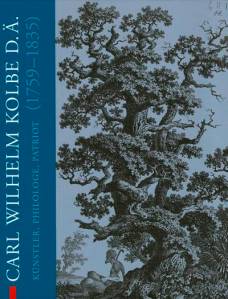
ISBN: 978-3865685179, $89.50
C.W. Kolbe (1759–1835) is one of the most intriguing figures in German art at the turn of the 19th century. With his fantastical, almost surreal landscapes featuring woods and marshes, Kolbe exerted a considerable (albeit long underestimated) influence on the graphic arts between Sturm und Drang and Romanticism. Kolbe, who did research in linguistics in addition to his artistic career, was born in Berlin and spent much of his life in Dessau. From 1805 to 1808 he lived in Zurich, where he produced engravings based on aquarelle gouaches by the late Salomon Gessner, celebrated at the time as a painter and poet.
As a souvenir of his time by the banks of the Limmat, where he had learned of the collapse of the ‘Holy Roman Empire of the German Nation’, he presented the Künstlergesellschaft with the drawing of the trunk of a dead willow tree. Kolbe’s renderings of trees are a wholesale product of his
imagination, and the fear of radical change lurks in his Arcadian fantasies.
Current Issue of ‘Eighteenth-Century Studies’
Selections from Eighteenth-Century Studies 44 (Fall 2010):
- Lisa L. Moore, “Exhibition Review: Mary Delany and Her Circle, in the Museum and on the Page,” pp. 99-104.
- Yuriko Jackall, “Exhibition Review: Jean Raoux, 1677-1734,” pp. 104-111.
- Katherine Arpen, “Review of Thomas Kavanagh’s Enlightened Pleasures: Eighteenth-Century France and the New Epicureanism (Yale UP, 2010),” pp. 136-38.
Exhibition: Artists’ Travels to Italy, 1770-1880
Press release from the museum’s website (the catalogue is available through artbooks.com) . . .
Viaggio in Italia: Künstler auf Reisen 1770–1880
Staatliche Kunsthalle Karlsruhe, 11 September — 28 November 2010
 Künstlerreisen nach Italien sind in der Sammlung der Staatlichen Kunsthalle Karlsruhe durch eine immense Fülle von Werken belegt, von denen nun erstmals eine Auswahl vorgestellt wird. „Viaggio in Italia. Künstler auf Reisen 1770 – 1880“ zeigt mehr als 150 Skizzen und Zeichnungen, Aquarelle und Ölstudien, aber auch großformatige Kartons, Gemälde und Druckgraphik. Vor allem Rom als internationales Kunstzentrum zog Künstler aus ganz Europa an und bildete ein Forum für einen regen Austausch unter Malern, Architekten und Bild-hauern. So vereint die Ausstellung unter anderem Werke von Jean-Honoré Fragonard, Joseph Anton Koch, Bertel Thorvaldsen, Julius Schnorr von Carolsfeld, Carl Blechen, Camille Corot, Johann Wilhelm Schirmer, Arnold Böcklin und Anselm Feuerbach.
Den Schwerpunkt der Ausstellung bilden Landschaftsmotive. Sie beginnt mit einigen Arbeiten französischer Künstler wie Claude Lorrain, Hubert Robert und Jean-Honoré Fragonard. Die jungen Stipendiaten der französischen Akademie in Rom durchstreiften die Campagna in der Nachfolge Lorrains, um zu zeichnen. Künstler wie Fragonard suchten nicht die unberührte, sondern die kultivierte Natur in Form von Parklandschaften, die sich als Kulisse für amouröse und gesellige Szenen eignete. Den französischen Werken werden Arbeiten von deutschen Künstlern wie Jakob Philipp Hackert, Wilhelm Friedrich Gmelin und Joseph Anton Koch gegenübergestellt, für die Italien vor allem aufgrund seiner historischen Dimension und seiner geschichtsträchtigen Stätten zum einzigartigen Anziehungspunkt wurde. Ihnen fehlte das Sammelbecken einer Akademie, doch knüpften sie vereinzelt Kontakte zu ihren Kollegen aus Frankreich und gründeten eigene Zirkel, in denen sie Ideen austauschten. (more…)
Reviewed: ‘Compass and Rule’
Recently added to caa.reviews:
Anthony Gerbino and Stephen Johnston, Compass and Rule: Architecture as Mathematical Practice in England, 1500–1700, exhibition catalogue (Oxford and New Haven: Museum of the History of Science, Yale University Press, and Yale Center for British Art, 2009), 192 pages; ISBN: 9780300150933, $65.
Reviewed by Carolyn Y. Yerkes, Ph.D. candidate, Columbia University; posted 13 October 2010.
‘Compass and Rule: Architecture as Mathematical Practice in England, 1500–1750’ tells a story of social class played out in math class. In the exhibition and catalogue, Anthony Gerbino and Stephen Johnston chart the rise of the professional architect in the early modern era by presenting the tools of the trade. Subtitle notwithstanding, ‘Compass and Rule‘ does not focus on architecture itself but rather on architectural drawing, describing the development of drafting techniques and instruments which led to a division between the design and construction phases of building. Although Gerbino and Johnston are not the first scholars to make this argument about the relationship between drawing and professional organization—it was, for example, a focus of Henry Millon and Vittorio Lampugnani’s 1994 exhibition, ‘The Renaissance from Brunelleschi to Michelangelo’—their show added a new twist with its emphasis on the mathematical principles that British architects applied to their work. This differentiates their project from most of the scholarship on architectural drawings, where the main current rarely flows farther north than medieval France or Germany and tends to pool in the Italian Renaissance.
The scope of ‘Compass and Rule’ might strike some as narrow, since a quarter-century of architectural production cannot be viewed through a single lens without a few distortions. Yet the benefits of this approach are clear, as the authors’ willingness to test their thesis with objects brings several obscure issues into sharper focus. . . .
For the full review, click here» (CAA membership required)
Exhibition: Lisiewsky, Court Painter in Anhalt and Mecklenburg
From the Palace of Mosigkau website:
Teure Köpfe: Lisiewsky, Hofmaler in Anhalt und Mecklenburg
Schloss Mosigkau, Dessau Wörlitz, Germany, 29 August — 31 October 2010

Christoph Friedrich Reinhold Lisiewsky, "Portrait of Leopold III. Friedrich Franz von Anhalt-Dessau," 1762
Christoph Friedrich Reinhold Lisiewsky (1725-1794) zählt zu den bedeutendsten Porträtmalern des 18. Jahrhunderts in Deutschland. Als „das Resultat unermesslichen Fleißes und den Triumph der Prosa in der Malerei” bezeichnete sein berühmter Zeitgenosse, der Bildhauer J. G. Schadow, das Werk Lisiewskys. Ob Schadow mit seinem wohl ironisch gemeinten Urteil die künstlerische Leistung richtig einzuschätzen wusste, sei dahin gestellt. In der gemeinsamen Ausstellung der Kulturstiftung DessauWörlitz und dem Staatlichem Museum Schwerin werden erstmals die herausragenden Malqualitäten des Künstlers gewürdigt.
Lisiewsky überzeugt aus heutiger Sicht mit seiner neuartigen, ganz eigenständigen Darstellungsweise auch im Vergleich mit anderen großen Bildnismalern des 18. Jahrhunderts – wie Antoine Pesne zuvor und Anton Graff nach ihm. Seine Porträtauffassung löste sich allmählich von den barocken Stereotypen der Inszenierung und Idealisierung. Durch seinen realistischen, teils naturalistischen Vortrag praktizierte Lisiewsky frühzeitig den Übergang zum Klassizismus. Seine von Porträtierten beschriebene, sorgfältige und aufwendige Arbeitsweise, die brillant ausgearbeitete Stofflichkeit und die genaue Wiedergabe der charakteristischen Physiognomie, Körpervolumina und -haltung, führen zu einer nahezu greifbaren Präsenz des Dargestellten.

Palace of Mosigkau (Wikimedia Commons)
Lisiewsky entstammte einer polnischen Malerfamilie, die mehrere angesehene Mitglieder hervorgebracht hat. Von 1752 bis 1772 war der Künstler als Hofmaler in Dessau tätig. In dieser Zeit führte er auch Bildnisaufträge für einen bürgerlichen Kundenkreis wie Kaufleute, Universitätsprofessoren und Theologen in Berlin und Leipzig aus. 1778 wurde der Porträtmaler an das mecklenburgische Fürstenhaus nach Ludwigslust berufen, wo er 18 Jahre bis zu seinem Tod wirkte.
Information on exhibition programming is available here»
◊ ◊ ◊ ◊ ◊
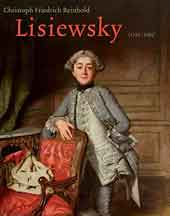 Gert Bartoschek, et al., Christoph Friedrich Reinhold Lisiewsky (1725-1794), exhibition catalogue (Munich: Deutscher Kunstverlag, 2010), 280 pages, ISBN: 9783422070363, $65.
The eighteenth-century painter Christoph Reinhold Friedrich Lisiewsky attained the realistic effect of physical presence in his portraits through a painting method that required many sessions. This richly illustrated catalogue is the first monograph on the painter.
The catalogue is available through artbooks.com.
Messerschmidt Exhibition Now in New York, Then Paris
The Messerschmidt exhibition noted in yesterday’s posting is currently in New York. From the Neue Galerie:
Franz Xaver Messerschmidt, 1736-1783: From Neoclassicism to Expressionism
Neue Galerie, New York, 16 September 2010 — 10 January 2011
Musée du Louvre, Paris, 26 January — 25 April 2011
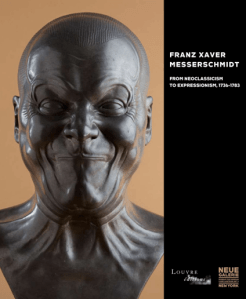
catalogue, ISBN: 9788889854549, $55
Franz Xaver Messerschmidt is the first exhibition in the United States devoted exclusively to this major late 18th-century Bavarian-born Austrian sculptor. It focuses on the artist’s so-called “character heads,” among the most important works of sculpture from their era. The exhibition is organized by Guilhem Scherf, chief curator of sculpture at the Musée du Louvre.
The show will be on view at the Neue Galerie New York from September 16, 2010, to January 10, 2011, then travel to the Louvre, where it will be on view from January 26 to April 25, 2011. This is the first collaboration between the Neue Galerie and the Louvre. It is accompanied by a full-scale catalogue, with essays by Guilhem Scherf, Maria Pötzl-Malikova, Antonia Boström, and Marie-Claude Lambotte.
Messerschmidt made his mark at first in Vienna, where he enjoyed a successful career, including several royal commissions. Working in a neoclassical vein, Messerschmidt produced some of the most important sculptures of the eighteenth century. He presented the individual features of his models in a way “true to nature,” in keeping with their age and without idealizing them. No other sculptor in Vienna at the time was similarly uncompromising when producing portraits.
Around 1770, there was a rupture in Messerschmidt’s life. The artist was thought to have psychological problems, lost his position at the university, and decided to return to Wiesensteig, his native Bavarian town. From that period on, Messerschmidt devoted himself to the creation of his “character heads,” the body of work for which he would become best known. To produce these works, the artist would look into the mirror, pinching his body and contorting his face. He then rendered, with great precision, his distorted expressions. Messerschmidt is known to have produced more than 60 of these astonishing works before he died in 1783 at the age of 47.
Messerschmidt can be seen in relation to artists such as William Blake and Francisco Goya for his explorations of the dark side of the human soul. His “character heads,” in particular, are masterly works of sculpture, whose expressive intensity anticipates several later developments in art. This exhibition will extend the mission of the Neue Galerie, showing the roots of Expressionism and provide for a more complete understanding of the works in the museum collection.
◊ ◊ ◊ ◊ ◊
Willibald Sauerländer writes about “Messerschmidt’s Mad Faces” for The New York Review Blog. His article on the artist will appear in the October 28 issue of The New York Review of Books . . .
Franz Xaver Messerschmidt (1736–1783) is one of those elusive eighteenth-century figures who confront us with the nocturnal side of the enlightenment. In the eyes of his contemporaries, he was not only a madman but also a mad artist. At the same time that he began to withdraw from society, he started to work on the project that would isolate him artistically as well, the Kopfstücke, or “character heads,” in which he concentrated his efforts to depict the passions and emotions of humanity. The trivial titles assigned to them by an anonymous writer ten years after Messerschmidt’s death—Afflicted by Constipation, A Hypocrite and Slanderer, The Incapable Bassoonist—are nothing but an attempt to resist their social illegibility.
The Neue Galerie’s exhibition of no fewer than twenty-one character heads displays the full spectrum of Messerschmidt’s studies of expression. Facial muscles contract, eyes squint, eyebrows rise, mouths contort. These distorted faces are disturbing because we cannot place them in any familiar social setting or assign them to any known psychic condition. . . .
The full essay is available here»
‘Fashioning Fashion’ Exhibition in Los Angeles
From the LACMA website:
Fashioning Fashion: European Dress in Detail, 1700-1915
Los Angeles County Museum of Art, 2 October 2010 — 6 March 2011
Curated by Sharon Takeda and Kaye Spilker

Vest, France, 1789-94, Photo © 2010 LACMA

Man’s Suit, France, ca. 1760, Photo © 2010 LACMA
Fashioning Fashion: European Dress in Detail, 1700-1915 celebrates the museum’s groundbreaking acquisition of a major collection of European men’s, women’s, and children’s garments and accessories.The exhibition tells the story of fashion’s aesthetic and technical development from the Age of Enlightenment to World War I. It examines sweeping changes in fashionable dress spanning a period of over two hundred years, and evolutions in luxurious textiles, exacting tailoring techniques, and lush trimmings.
Highlights include an eighteenth-century man’s vest intricately embroidered with powerful symbolic messages relevant to the French Revolution; an evening mantle with silk embroidery, glass beads, and ostrich feathers designed by French couturier Émile
Pingat (active 1860-96); and spectacular three-piece
suits and gowns worn at the royal courts of Europe.
◊ ◊ ◊ ◊ ◊
Fashioning Fashion: European Dress in Detail, 1700-1915, by Sharon Takeda, Kaye Spilker and Kimberly Chrisman-Campbell, preface by John Galliano (Prestel, 2010), ISBN: 978-3791350622 $55.
 Luxurious textiles, exacting tailoring, and lush trimmings abound in this glorious volume that celebrates the Fashioning Fashion: European Dress in Detail, 1700-1915 exhibition at LACMA. Fashion is in the details. Textiles, tailoring, and trimmings all work together in the creation of the finest pieces. Drawing on the Los Angeles County Museum of Art’s internationally known fashion collection, this gorgeous book tells the story–in words and beautiful pictures–of fashion’s aesthetic and technical development from the Age of Enlightenment to World War I, a period when fashionable dress underwent sweeping changes. Many remarkable examples of men’s, women’s, and children’s garments are featured here for the first time, including an extraordinarily rare 1790s man’s vest designed to promote sympathy with the French Revolution; a stunning 1845 black satin gown from the royal court of Portugal heavily embroidered with gold; and an 1891 evening mantle with silk embroidery, glass beads, and ostrich feathers designed by French couturier Aemile Pingat. An invaluable resource for anyone interested in the evolution of fashion, this generously illustrated book provides a rich visual history of the changes that occurred in fashionable dress spanning a period of more than two hundred years.
Sharon Sadako Takeda is the Senior Curator and Head, Costume and Textiles Department, Los Angeles County Museum of Art. Kaye Durland Spilker is Curator, Costume and Textiles Department, Los Angeles County Museum of Art. John Galliano, one of the most influential fashion designers of our time, is the chief designer of the haute couture house Christian Dior. Kimberly Chrisman-Campbell is a fashion-research scholar who writes and reviews books and exhibitions for Dress, Costume, and Woman’s Art Journal.
‘Eye for the Sensual’ in Los Angeles
Press release from LACMA:
Eye for the Sensual: Selections from the Resnick Collection
Los Angeles County Museum of Art, 2 October 2010 — 2 January 2011
Curated by J. Patrice Marandel and Bernard Jazzar
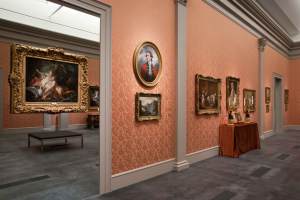
Photo © 2010 Museum Associates/LACMA
The Los Angeles County Museum of Art (LACMA) presents Eye for the Sensual: Selections from the Resnick Collection, which features more than 100 paintings, sculptures, and decorative arts from the collection of Lynda and Stewart Resnick, long-time patrons of the museum. Since the early 1980s, the Resnicks have collected in many areas ranging from European to American and modern art. This exhibition reflects their interest in European painting, sculpture, and decorative arts from the sixteenth to the early twentieth century. Eye for the Sensual is one of three inaugural exhibitions to open the new Lynda and Stewart Resnick Exhibition Pavilion, named in honor of the Resnicks’ generous donation to LACMA’s ongoing Transformation campaign. The exhibition — designed by Pier Luigi Pizzi– beautifully illuminates the Resnicks’ broad taste and great love for collecting.

Installation of "Eye for the Sensual" at LACMA, Photo © 2010 Museum Associates/LACMA
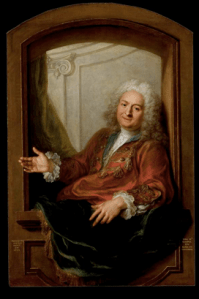
Charles-Antoine Coypel, "Portrait of Monsieur Dupillé," 1733 Photo © 2010 Museum Associates/LACMA
The Resnick collection is rich in eighteenth-century French paintings including portraits, landscapes, still lifes, and mythological scenes. François Boucher and his pupil, Jean-Honoré Fragonard, are particularly well represented with three paintings each. Two of the paintings by Boucher—both sensuous representations of Venus—were originally commissioned by the artist’s greatest patron, Madame de Pompadour, for one of her many residences. The third work, Leda and the Swan (1742), was known only through a second version at the Nationalmuseum in Stockholm before the Resnicks acquired the original. Fragonard’s paintings display the artist’s versatile talent and reveal, in turn, a world of playful eroticism, deep passion, and domestic intimacy.
The feminine aspect of the Resnick collection has often been noted: on one hand, many of the paintings’ subjects, whether allegorical or mythological, glorify the female form. On the other, numerous female artists are represented in the collection: Anne Vallayer-Coster with a still life of flowers; Elisabeth Louise Vigée Lebrun whose imposing Portrait of Marie Antoinette, Queen of France (1783), commissioned by the sitter, evokes the doomed splendor of the last days of the French monarchy; and Marguerite Gérard, who, under the guidance of her brother-in-law Fragonard, achieved fame in late eighteenth century for her portraits and genre scenes. Two of the Gérard works on view are small, intimate portraits of sitters who belonged to the artist’s enlightened circle of friends. A larger genre scene shows a female artist in her studio, a personification of Gérard’s own success and social status in the changing art world of early nineteenth-century France.
The Resnick collection also includes important Italian, Flemish, Dutch, and French paintings from the seventeenth and eighteenth centuries. Francesco Guardi’s Ridotto at Palazzo Dandolo (1750s), a recent addition to the collection, is a vivid image of gambling and masquerade in eighteenth-century Venice that evokes the risqué world of Casanova. Among the Northern paintings, the vigorous Revel of Bacchus and Silenus (c. 1615) executed by Jacob Jordaens while still in his twenties exudes verve and passion, and a rare pair of decorative tondos by the little–known Dirk van der Aa reveals an unexpected aspect of late eighteenth-century Dutch painting. Two French masterpieces frame the core group of late eighteenth-century works: Simon Vouet’s dignified representation of the goddess Diana and her companions from around 1640, and Jean Auguste Dominique Ingres’s magisterial The Virgin with the Host (1860). Both paintings, in spite of being worlds apart, lend a note of pure and austere classicism to the collection.
European sculpture has been a long-standing interest of the Resnicks. The couple has assembled a collection that spans more than 400 years and includes Italian and French marble busts, English full-length neoclassical figures, French eighteenth-century terracottas, as well as bronzes dating from the Renaissance to the twentieth century. Some of the best-known sculptors in the collection include Barthélemy Prieur, Giambologna, Claude Michel (Clodion), Jean-Antoine Houdon, and Aristide Maillol.
Eye for the Sensual also includes a selection of Art Deco furniture and decorative arts, a more recent interest of the Resnicks. The couple has favored the elegant creations of such artists as Emile-Jacques Ruhlmann and Jules Leleu, as well as numerous pieces by Italian designer Gio Ponti, whose ceramic plates and vessels include depictions of the female figure in various activities. These modern touches gracefully enhance the setting and set the stage for this engaging and evocative exhibition.
Eye for the Sensual is curated by J. Patrice Marandel, LACMA’s Robert H. Ahmanson Chief Curator of European Art, and Bernard Jazzar, Curator of the Lynda and Stewart Resnick Collection. The installation for the exhibition was designed by the world-famous Studio Pier Luigi Pizzi-Massimo Pizzi Gasparon. Recognized as one of the leading designers of opera productions in the world, Pier Luigi Pizzi’s work has graced all of the great opera stages, including those of the Teatro La Fenice, Venice, and the Teatro alla Scala, Milan. Pizzi has designed many installations, such as those for the 2009 Florence Biennale and Seicento: La Peinture italienne dans les musées de France, a major exhibition of seventeenth-century Italian paintings in French museums held at the Grand Palais in 1992. The presentation for Eye for the Sensual will be the designer’s first project in Los Angeles.
◊ ◊ ◊ ◊ ◊
Eye for the Sensual: Selections from the Resnick Collection, by Pierre Rosenberg, Scott Schaefer, and Bernard Jazzar with contributions by Antonia Boström, Anne-Lise Desmas and Anne Woollett (2010), $39.95.
 Published in conjunction with the exhibition Eye for the Sensual: Selections from the Resnick Collection at LACMA, this catalog presents a selection of eighty-three European paintings and sculptures from the renowned collection of Lynda and Stewart Resnick. Comprised of Old Master paintings and sculpture from the sixteenth century to the late nineteenth, each work is discussed in a scholarly entry. The emphasis of the collection is on French eighteenth-century paintings, including works by François Boucher, Jean-Honoré Fragonard, Nicolas Lancret, Élisabeth-Louise Vigée-Lebrun, and Marguerite Gérard. Other works by Flemish and Italian masters are also included: Jacob Jordaens, Hendrick de Clerck, Francesco Albani, and Francesco Guardi. Among the sculptures represented in the Resnick collection are Renaissance works by Giambologna and Barthélemy Prieur, eighteenth-century French figures by Jean-Antoine Houdon and Clodion and Neoclassical sculpture by John Gibson and Joseph Gott. Also included are photographs illustrating the works as they are displayed in the Resnick’s magnificent home in Beverly Hills.
Newly Installed Galleries at Nuremberg
The newly installed galleries of the Germanischen Nationalmuseums in Nuremberg opened this past spring. A catalogue with 39 essays is now available from artbooks.com. From the museum’s website:
Renaissance, Barock, Aufklärung: Kunst und Kultur vom 16. bis zum 18. Jahrhundert
Germanischen Nationalmuseums, Nuremberg — The new galleries opened in March 2010

ISBN: 9783936688474 ($95)
Die neue Schausammlung lädt zu einem kulturhistorischen Gang durch drei Jahrhunderte ein. Er führt von der Entdeckung der neuen Welt um 1500 bis zur Entwicklung eines neuen Menschenbildes im 18. Jahrhundert. Rund tausend Objekte in 33 thematisch ausgerichteten Räumen erschließen zentrale Aspekte der Kunst- und Kulturgeschichte des 16. bis 18. Jahrhunderts im deutschen Sprachraum. Zu sehen sind neben Gemälden und Skulpturen auch Glasgemälde, Textilien, Kunsthandwerk, Schmuck, Medaillen, Möbel und Musikinstrumente sowie zwei historische Zimmer aus Nürnberger Bürgerhäusern der Renaissance. Meisterwerke von Albrecht Dürer, Peter Vischer, Rembrandt oder Franz Xaver Messerschmidt erscheinen in ihrem kulturgeschichtlichen Kontext. Im Dialog der Künste werden Themen wie Sammeln und Repräsentieren, Antikenrezeption und Naturstudium lebendig, wie auch die Wechselwirkung von Kunst und Glauben
sowie das sich wandelnde Bild vom Menschen.
Canaletto Exhibition To Open Soon in London
Press release from the National Gallery in London:
Venice: Canaletto and His Rivals
National Gallery, London, 13 October 2010 — 16 January 2011
National Gallery, Washington D.C., 20 February — 30 May 2011
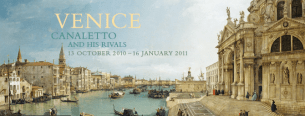 This exhibition presents the finest assembly of Venetian views, by Canaletto and all the major practitioners of the genre, to be held since the much-celebrated display in Venice in 1967. Remarkably, considering the dominant role of British patronage in this art form, Venice: Canaletto and His Rivals is also the first exhibition of its kind to be organised in the UK.
Additional information can be found here»










leave a comment