Exhibition | China: Through the Looking Glass
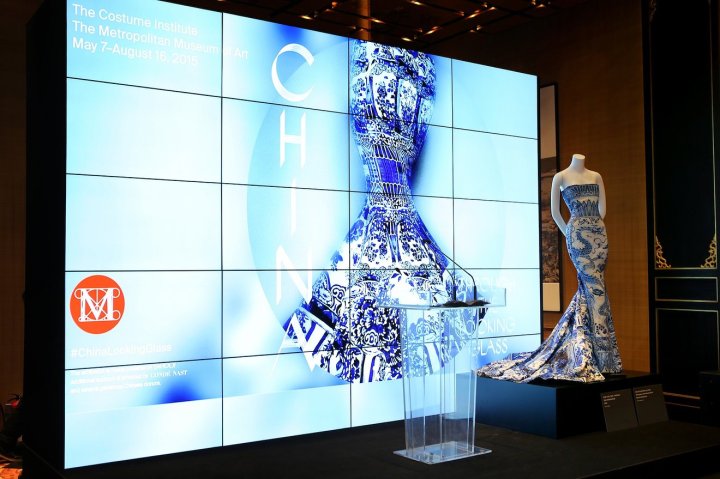
Evening dress by Roberto Cavalli, 2005
Photo: The Metropolitan Museum of Art
◊ ◊ ◊ ◊ ◊
Press release (23 December 2014) from The Met:
China: Through the Looking Glass
The Metropolitan Museum of Art, New York City, 7 May — 16 August 2015
Curated by Andrew Bolton with Harold Koda, Maxwell Hearn, Denise Patry Leidy, and Zhixin Jason Sun
The Costume Institute’s spring 2015 exhibition, China: Through the Looking Glass, will be on view at The Metropolitan Museum of Art from May 7 through August 16, 2015 (preceded on May 4 by The Costume Institute Benefit). Presented in the Museum’s Chinese Galleries and Anna Wintour Costume Center, the exhibition will explore how China has fueled the fashionable imagination for centuries, resulting in highly creative distortions of cultural realities and mythologies. In this collaboration between The Costume Institute and the Department of Asian Art, high fashion will be juxtaposed with Chinese costumes, paintings, porcelains, and other art, as well as films, to reveal enchanting reflections of Chinese imagery.
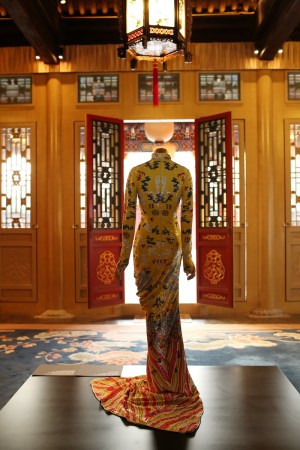
Yves Saint Laurent by Tom Ford, 2004
Photo: Courtesy of The Metropolitan Museum of A
“I am excited about this partnership between these two forward-thinking departments which will undoubtedly reveal provocative new insights into the West’s fascination with China,” said Thomas P. Campbell, Director and CEO of the Met. “The artistic direction of acclaimed filmmaker Wong Kar Wai will take visitors on a cinematic journey through our galleries, where high fashion will be shown alongside masterworks of Chinese art.”
In celebration of the exhibition opening, the Museum’s Costume Institute Benefit will take place on Monday, May 4, 2015. Silas Chou will serve as Honorary Chair. The evening’s co-chairs will be Jennifer Lawrence, Gong Li, Marissa Mayer, Wendi Murdoch, and Anna Wintour. This event is The Costume Institute’s main source of annual funding for exhibitions, publications, acquisitions, and capital improvements.
“From the earliest period of European contact with China in the 16th century, the West has been enchanted with enigmatic objects and imagery from the East, providing inspiration for fashion designers from Paul Poiret to Yves Saint Laurent, whose fashions are infused at every turn with romance, nostalgia, and make-believe,” said Andrew Bolton, Curator in The Costume Institute. “Through the looking glass of fashion, designers conjoin disparate stylistic references into a fantastic pastiche of Chinese aesthetic and cultural traditions.”
Exhibition Overview

Chanel by Karl Lagerfeld, 1984
Photo: The Metropolitan Museum of Art
This is The Costume Institute’s first collaboration with another curatorial department since AngloMania: Tradition and Transgression in British Fashion in 2006, a partnership with the Department of European Sculpture and Decorative Arts. China: Through the Looking Glass will feature more than 130 examples of haute couture and avant-garde ready-to-wear alongside masterpieces of Chinese art. Filmic representations of China will be incorporated to reveal how our visions of China are shaped by narratives that draw upon popular culture, and to recognize the importance of cinema as a medium through which we understand Chinese history.
The Anna Wintour Costume Center’s Lizzie and Jonathan Tisch Gallery will present a series of ‘mirrored reflections’ through time and space, focusing on Imperial China; the Republic of China, especially Shanghai in the 1920s, 1930s and 1940s; and the People’s Republic of China. These reflections, as well as others in the exhibition, will be illustrated with scenes from films by such groundbreaking Chinese directors as Zhang Yimou, Chen Kaige, Ang Lee, and Wong Kar Wai. Distinct vignettes will be devoted to ‘women of style’, including Oei Huilan (the former Madame Wellington Koo), Soong May-Ling (Madame Chiang Kai-shek), and Empress Dowager Cixi.
Directly above the Anna Wintour Costume Center, the Chinese Galleries on the second floor will showcase fashion from the 1700s to the present, juxtaposed with decorative arts from Imperial China, including jade, lacquer, cloisonné, and blue-and-white porcelain, mostly drawn from the Met’s collection. The Astor Court will feature a thematic vignette dedicated to Chinese opera, focusing on the celebrated performer Mei Lanfang, who inspired John Galliano’s spring 2003 Christian Dior Haute Couture Collection, ensembles from which will be showcased alongside Mr. Mei’s original opera costumes.
Designers in the exhibition will include Giorgio Armani, Vitaldi Babani, Cristobal Balenciaga, Sarah Burton for Alexander McQueen, Callot Soeurs, Roberto Cavalli, Coco Chanel, Christian Dior, Domenico Dolce and Stefano Gabbana, Peter Dundas for Emilio Pucci, Tom Ford for Yves Saint Laurent, John Galliano for Christian Dior, Jean Paul Gaultier, Valentino Garavani, Nicolas Ghesquière for Balenciaga, Maria Grazia Chiuri and Pierpaolo Picciolo for Valentino, Craig Green, Madame Grès, Ground-Zero, Guo Pei, Adrian Hailwood, Marc Jacobs for Louis Vuitton, Charles James, Charles Jourdan, Mary Katrantzou, Karl Lagerfeld for Chanel, Jeanne Lanvin, Ralph Lauren, Judith Leiber, Ma Ke, Mainbocher, Martin Margiela, Alexander McQueen, Alexander McQueen for Givenchy, Missoni, Edward Molyneux, Kate and Laura Mulleavy, Dries van Noten, Jean Patou, Paul Poiret, Oscar de la Renta for Balmain, Ralph Rucci, Yves Saint Laurent, Paul Smith, Anna Sui, Vivienne Tam, Isabel Toledo, Giambattista Valli, Vivienne Westwood, Jason Wu, Laurence Xu, and others.
The exhibition, a collaboration between The Costume Institute and the Department of Asian Art, coincides with the Museum’s year-long centennial celebration of the Asian Art Department, which was created as a separate curatorial department in 1915. China: Through the Looking Glass is organized by Andrew Bolton, Curator, with the support of Harold Koda, Curator in Charge, both of The Costume Institute. Additional support is provided by Maxwell Hearn, Douglas Dillon Chairman; Denise Patry Leidy, Curator; and Zhixin Jason Sun, Curator, all of the Department of Asian Art.
Internationally renowned filmmaker Wong Kar Wai will be the exhibition’s artistic director working with his longtime collaborator William Chang, who will supervise styling. Nathan Crowley will serve as production designer for the exhibition-he has worked on three previous Costume Institute exhibitions including Superheroes: Fashion and Fantasy (2008), American Woman: Fashioning a National Identity (2010), and Schiaparelli and Prada: Impossible Conversations (2012). The design for the 2015 Costume Institute Gala Benefit will be created by Wong Kar Wai and William Chang with 59 Productions, and Raul Avila, who has produced the Benefit décor since 2007.
“William Chang and I are pleased to be working in collaboration with The Costume Institute and the Asian Art Department of The Metropolitan Museum of Art on this exciting cross-cultural show,” said Wong. “Historically, there have been many cases of being ‘lost in translation’–with good and revealing results. As Chinese filmmakers we hope to create a show that is an Empire of Signs–filled with meaning for both East and West to discover and decipher.”
The exhibition is made possible by Yahoo. Additional support is provided by Condé Nast and several generous Chinese donors.
◊ ◊ ◊ ◊ ◊
The accompanying publication will be distributed by Yale UP:
Andrew Bolton, with Adam Geczy, Maxwell K. Hearn, Homay King, Harold Koda, Mei Mei Rado, Wong Kar Wai, and John Galliano, with photography by Platon, China: Through the Looking Glass (New York: The Metropolitan Museum of Art, 2015), 256 pages, ISBN: 978-0300211122, $45.
For centuries, China’s export arts—jade, silks, porcelains, and, more recently, cinema—have fueled Western fantasies of an exotic East and served as enduring sources of inspiration for fashion. This stunning publication explores the influence of Chinese aesthetics on designers, including Giorgio Armani, Christian Dior, Jean Paul Gaultier, Karl Lagerfeld, Ralph Lauren, Alexander McQueen, and Yves Saint Laurent. Drawing upon Chinese decorative arts, cinema, and costume—notably imperial court robes, the close-fitting cheongsam, and the unisex Mao suit—their designs are fantastical pastiches of anachronistic motifs. As in the game of “telephone,” the process of cultural translation transforms the source material into ingeniously original fashions that are products solely of the designers’ imaginations.
In a similar way, contemporary Chinese film directors render fanciful, highly stylized evocations of various epochs in China’s history—demonstrating that China’s imagery is equally seductive to artists in the East and further inspiring today’s designers. Juxtaposing modern fashions and film stills with their forebears in fine and decorative arts and historical dress, this book reveals the rich and ongoing creative dialogue between East and West, past and present.
Andrew Bolton is curator in the Costume Institute, The Metropolitan Museum of Art.
Exhibition | Goya: The Portraits
Looking ahead to the fall at The National Gallery in London:
Goya: The Portraits
The National Gallery, London, 7 October 2015 — 10 January 2016
Curated by Xavier Bray

Francisco de Goya, Self Portrait in His Studio, 1793–95 (Madrid: Museo de la Real Academia de Bellas Artes de San Fernando)
Francisco de Goya (1746–1828) is one of Spain’s most celebrated artists. He was considered a supremely gifted portrait painter and an excellent social commentator who took the genre of portraiture to new heights through his ability to reveal the psychology of his sitter. This landmark exhibition—the first ever focusing solely on his portraits—will re-appraise Goya’s genius as a portraitist and provide a penetrating insight into both public and private aspects of his life. It will explore Goya’s ambitions and development as a painter, and his innovative and unconventional approach to portraiture which often broke traditional boundaries.
The exhibition will trace Goya’s career from his early beginnings at the court of Charles III in Madrid to his appointment as First Court Painter to Charles IV, through the difficult period under Joseph Bonaparte and then Ferdinand VII, which nevertheless saw some of his finest work, and then his final years in France. By bringing together more than 50 of his most outstanding portraits from around the world, including drawings and miniatures, and organising them in a chronological and thematic sequence, the show will enable viewers to engage for the first time with the full range of Goya’s technical, stylistic and psychological development as a portraitist.
◊ ◊ ◊ ◊ ◊
Note (added 4 August 2015) — The full press release is available here.
The catalogue is distributed by Yale UP:
Xavier Bray, with Manuela Mena Marqués and Thomas Gayford, Goya: The Portraits (London: The National Gallery, 2015), 272 pages, ISBN: 978-1857095739, $60.
 Francisco de Goya y Lucientes (1746–1828) was one of the greatest portraitists of his time. The first large-scale book devoted to the topic, this handsome volume features portraits that shed light on Goya and his subjects, as well as on the politically turbulent and culturally dynamic era in which they lived. Whether portraying royalty, philosophers, military men, or friends, these works are memorable both for the insight they provide into the relationship between artist and sitter, and for their penetrating psychological depth.
Xavier Bray traces Goya’s career from his beginnings at the Madrid court of Charles III to his final years in Bordeaux, played out against the backdrop of war with France and the social, political, and cultural shift of the Enlightenment. More than 60 remarkable portraits, including drawings and miniatures, reveal the full range of Goya’s technical and stylistic achievements, while also depicting sitters with a previously unparalleled humanity. His break with traditional, late-18th-century conventions allowed him to achieve a new modernity in portraiture that paved the way for artists such as Matisse and Picasso.
Xavier Bray is chief curator at Dulwich Picture Gallery. Manuela Mena Marqués is chief curator of 18th-century paintings at the Museo del Prado, Madrid. Thomas Gayford is a former research assistant at Dulwich Picture Gallery.
Exhibition | Wellington: Triumphs, Politics and Passions
Press release (29 October 2014) from the NPG:
Wellington: Triumphs, Politics and Passions
National Portrait Gallery, London, 12 March — 7 June 2015
Curated by Paul Cox with Lucy Peltz

Sir Thomas Lawrence, Portrait of Arthur Wellesley, 1st Duke of Wellington, 1815–16. (London: Wellington Collection, Apsley House, English Heritage).
The first gallery exhibition devoted to the Duke of Wellington will open at the National Portrait Gallery, to mark the 200th anniversary year of the Battle of Waterloo in 2015. Wellington: Triumphs, Politics and Passions will explore not only the political and military career of the victor of this great battle—but also his personal life through portraits of his family and friends.
Highlights include Goya’s portrait of Wellington started in 1812 after his entry into Madrid and later modified twice to recognise further battle honours and awards; and from Wellington’s London home, Apsley House, Thomas Lawrence’s famous 1815 portrait painted in the same year as the Battle of Waterloo. This iconic military image of Wellington was used as the basis of the design of the British five pound note from 1971 to 1991.
Drawn from museums and private collections including that of the present Duke of Wellington, the exhibition of 59 portraits and other art works has the support of the Marquess of Douro, and includes rarely-seen loans from the family including a portrait by John Hoppner of the Duke as a youthful soldier and a daguerreotype portrait by Antoine Claudet, in the new medium of photography, taken on Wellington’s 75th birthday in 1844. The family has also loaned Thomas Lawrence’s beautiful drawing of Wellington’s wife, Kitty (née Pakenham).
The real experience of soldiers fighting in Wellington’s armies will be explored through eyewitness accounts, including prints based on sketches by serving soldiers and the illustrated diary of a young officer, Edmund Wheatley written, in a lively style, with the intention of it being read by his sweetheart.

Francisco de Goya, Portrait of Arthur Wellesley, 1st Duke of Wellington, 1812–14 (London: The National Gallery).
Wellington: Triumphs, Politics and Passions considers the attempts of the art world to celebrate the Duke of Wellington’s military successes. Commemorative objects on display will range from royal commissions by Europe’s foremost artists and manufacturers to more modest souvenirs aimed at the domestic market. Wellington’s eventful and often difficult political career will be illustrated by examples of the many satirical prints published in the 1820s and 1830s and the exhibition will also examine the reappraisal of Wellington’s life that took place at his death and on the occasion of his lavish state funeral.
The Duke of Wellington’s long life (1769–1852) spanned the eighteenth and nineteenth centuries. Most famous for his victory over Napoleon at the battle of Waterloo, he later entered politics, serving twice as Prime Minister. Wellington: Triumphs, Politics and Passions will explore the role of visual culture in creating the hero, the legacy of heroism and the role of the portrait in Wellington’s own public and personal self-representation.
Curated by Paul Cox, Associate Curator, National Portrait Gallery, with close support from Dr Lucy Peltz, Curator of Eighteenth-Century Portraits, National Portrait Gallery, this biographical exhibition will use portraits and objects to explore Wellington’s military career and his sometimes controversial political and personal life.
Paul Cox, Associate Curator, National Portrait Gallery, London, says: “The Duke of Wellington’s victory over Napoleon at Waterloo is well known. This exhibition provides the opportunity to examine less familiar aspects of his life, including the long political career during which he saw through important forward-looking legislation, but suffered a dramatic loss of popularity. I hope that visitors to the exhibition will gain a fuller picture of Wellington as a man, rather than simply as a hero.”
The exhibition is part of the Battle of Waterloo 200th Anniversary Commemorations, the national partnership of commemorative events.
◊ ◊ ◊ ◊ ◊
Paul Cox, with a foreword by William Hague, Wellington: Triumphs, Politics and Passions (London: National Portrait Gallery, 2015), 128 pages, ISBN: 978-1855144996, £15.
This new book about the 1st Duke of Wellington provides a novel take on the traditional biography in that it explores the life of this complex man through portraits of Wellington himself, his friends, family and associates, as well as his political and military allies and opponents. There are examples of painted portraits by Goya and Thomas Lawrence, several caricatures that illustrate Wellingtons political career, and a watercolour by George Chinnery that shows the future duke as a young Major-General at the Chepauk Palace, Madras being received by Azim al-Daula, Nawab of the Carnatic, in February 1805. Also reproduced is a rare photograph, a Daguerreotype, made by Antoine Claudet on the occasion of Wellingtons seventy-fifth birthday in 1844, and sections of a sixty-six-foot roll from the Collection of the National Portrait Gallery depicting his entire funeral procession. Paul Cox explores Wellingtons military career and the battle of Waterloo, which remain central to his story, but also examines his personal relationships, his legacy and his enduring place in the popular imagination. Finally, a narrative chronology presents a useful overview of Wellingtons life and times.
Exhibition | Eighteenth-Century Fans from the Lázaro Collection
◊ ◊ ◊ ◊ ◊
Thanks to Pierre-Henri Biger for noting this exhibition now on view at the Fundación Lázaro Galdiano:
Abanicos del Siglo XVIII en la Colección Lázaro
Museo Lázaro Galdiano, Madrid, 10 October 2014 — 26 January 2015
Curated by Carmen Espinosa
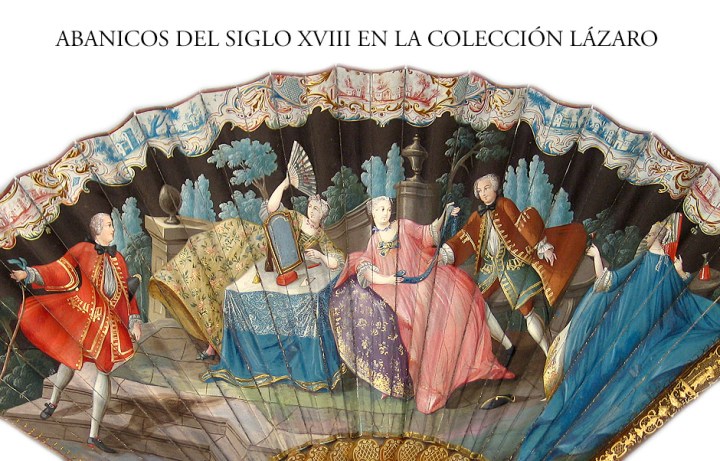
La exposición Abanicos del siglo XVIII en la Colección Lázaro, comisariada por Carmen Espinosa, conservadora jefe del Museo Lázaro Galdiano, se compone de una cuidada selección de 24 piezas correspondientes a la edad de oro del abanico, elemento fundamental del adorno personal femenino, signo de distinción y de lujo. La gran variedad de abanicos que atesoró José Lázaro es muestra de su incansable búsqueda como coleccionista, de meses e incluso años, para encontrar piezas con las que obsequiar a su esposa, Paula Florido, desde que la conoció en 1901.
Los ejemplares expuestos en Abanicos del siglo XVIII en la Colección Lázaro constituyen un excelente repertorio que permite al visitante apreciar la evolución de este complemento femenino. Se muestran obras tempranas, del primer tercio del siglo XVIII, donde las referencias al barroco clasicista son evidentes; piezas en las que vemos cómo se va fraguando el gusto rococó que dio lugar al abanico galante, fiel reflejo de la vida refinada y placentera de los nobles y burgueses europeos del segundo tercio de la centuria; y otras de estructura sencilla, pero de calidad, que nos adentran en el estilo neoclásico y la moda Imperio.
Las pinturas de los países están realizadas sobre papel o vitela -piel de vaca o ternera, adobada y pulida-, materiales que permiten el plegado, y están inspiradas en asuntos mitológicos, históricos, galantes y pastorales. Los poemas homéricos de la Iliada y la Odisea, unidos a la Eneida de Virgilio y Las Metamorfosis de Ovidio, fueron una fuente inagotable para los pintores de abanicos junto a las gestas de Alejandro Magno cuya figura encarnó los ideales de valor, poder y nobleza. La pintura de los abanicos de estilo Luis XV, identificados con el rococó, refleja la creciente hegemonía de la mujer en la vida social, protagonista indiscutible reflejada en la diosa Venus, personificación del amor, la belleza y la fertilidad; en Juno, diosa del matrimonio y protectora de la mujer; o en Onfalia que hizo que Hércules olvidará su valentía abandonándose a los placeres del amor. De la historia religiosa, habitual en abanicos del primer tercio del siglo, se escogieron relatos del Antiguo Testamento, aquellos donde la mujer desempeñó un papel fundamental como Sansón y Dalila, Salomé, Betsabé o la reina de Saba. A partir de 1750, a la literatura se unen, como fuente de inspiración para los pintores, el teatro, la ópera y el ballet.
Las pinturas de Antoine Coypel, Charles Le Brun y sobre todo las de Jean Antoine Watteau y François Boucher, creadores de la fiesta galante y de la pintura pastoral, son otro gran referente para la decoración de los abanicos dieciochescos. Esta riqueza iconográfica se muestra en los abanicos de la Colección Lázaro y queda patente en esta exposición.
Variedad y calidad están presentes en los abanicos de esta muestra, citemos como ejemplo uno francés con la representación de la Alegoría de las Artes o el italiano con una escena de toilette, que figuran entre las más ostentosas de la colección. También podemos deleitarnos con los elegantes varillajes realizados en marfil o carey con trabajo de piqué -técnica italiana adoptada en Francia e Inglaterra que consiste en la incrustación de pequeños fragmentos de oro y plata-, tallados y calados en forma de rejilla o puntos -grillé / pointillé-, a los que se añaden pequeñas láminas de madreperla, plata dorada o corlada, nácar y, en ocasiones, piedras preciosas en el adorno de las palas y en el clavillo -pasador que sujeta las varillas, las fuentes y palas, del abanico-.
La colección de abanicos, compuesta por noventa piezas, es un caso especial entre todas las que conforman la Colección Lázaro. Sus obras, nos explica Carmen Espinosa, son algo más que objetos de colección, fueron testigos mudos de una relación personal, la de los coleccionistas José Lázaro y Paula Florido: desde que se conocieron, en 1901, y hasta la muerte de Paula en 1932, Lázaro regaló a su esposa abanicos en dos fechas muy señaladas: el 15 de enero, día de su cumpleaños, y el 29 de junio, en que celebraba su onomástica. Estos abanicos responden al gusto de Lázaro que se esforzó por encontrar las piezas con las que agasajar a su esposa aunque, evidentemente, existió cierta complicidad pues conocía su preferencia por la época de Luis XV y Luis XVI. Los abanicos del XVIII estaban considerados, a comienzos del siglo XX y aún hoy, como verdaderas joyas, muy buscadas y de gran valor.
◊ ◊ ◊ ◊ ◊
From La Tienda de Los Museos Online:
Este catálogo recoge la colección completa de abanicos (casi un centenar) en la que están incluidas las 24 piezas de la exposición.
Arte, Lujo y Sociabilidad: La Colección de Abanicos de Paula Florido (Año Edición, 2009), 134 pages, ISBN: 978-8496411906, 12€.
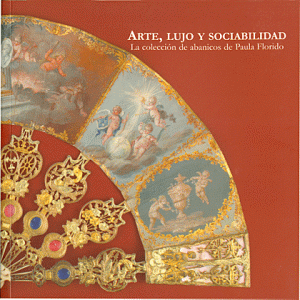 Se trata de una muestra de abanicos de elite, con materiales en su mayoría nobles de textiles, metales, brillantes, países y varillaje bien hecho y torneado, en madera de peral o de carey, con ejemplares muy selectos que abarcan los siglos XVIII y XIX.
Entre los abanicos expuestos también se encontraban cocardas (tipo paipai redondeado y recogido) o pericones, de mayor tamaño, así como abanicos de baraja. En su mayoría abanicos franceses, italianos e ingleses, con escenas bíblicas, mitológicas, heroicas, galantes, de la Comedia del arte y muy pocos con motivos políticos como el del matrimonio de doña Isabel II. En el abanico elegante se buscaban brillos y destellos de luz para impactar en sociedad.
Un bello cuadro de Luis Paret y Alcazar La Tienda (1772), perteneciente al mismo museo, ilustra sobre el modo en que un caballero y una dama adquieren ejemplares de abanico o miniaturas en aquel colmado ilustrado.
Se añaden algunos grabados de Goya que también dan cuenta del uso del abanico en Los Caprichos, objeto de indumentaria de lujo en principio, que paulatinamente se fue popularizando. El abanico era una pieza utilizada por el hombre o la mujer indistintamente, aunque era la mujer la que ofrecía con él todo un código de señales de sociabilidad.
Exhibition | Goya: The Witches and Old Women Album
In the spirit of marking the 250th anniversary of Horace Walpole’s ’s The Castle of Otranto (published on Christmas Eve, 1764), I draw your attention to this upcoming exhibition, with best wishes for keeping the ghosts of Christmas at bay. –CH
Goya: The Witches and Old Women Album
The Courtauld Institute of Art, London, 26 February 2015 — 25 May 2014
Curated by Juliet Wilson-Bareau and Stephanie Buck
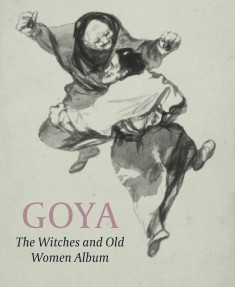 The Courtauld Gallery presents a groundbreaking exhibition which reunites for the first time all of the surviving drawings from one of Goya’s celebrated private albums. The albums were never intended to be seen beyond a small circle of friends, giving Goya the freedom to create images which range from the humorous, to the macabre and the bitingly satirical. With its themes of witchcraft, dreams and nightmares.
The ‘Witches and Old Women Album’ offers an important perspective on the development of Goya’s interest in old age, the fantastic and the diabolical. Above all, the drawings reveal his penetrating observation of human nature.
Additional information is available at The Guardian (10 December 2014).
◊ ◊ ◊ ◊ ◊
From Paul Holberton:
Juliet Wilson-Bareau with Stephanie Buck, Reva Wolf and Ed Payne, Goya: The Witches and Old Women Album (London: Paul Holberton Publishing, 2015), 200 pages, ISBN: 978-1907372766, £30.
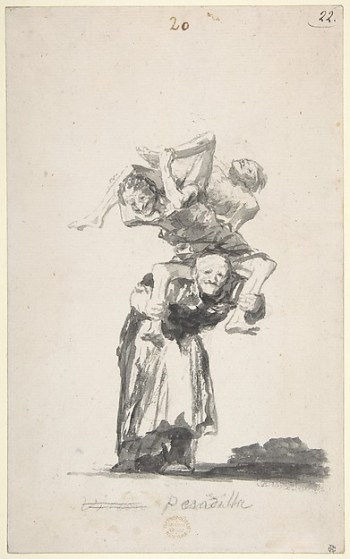
Goya, Nightmare, ‘Witches and Old Women’ Album (D), page 20, ca. 1819–23. Brush, black ink, and wash on Netherlandish laid paper (New York: Metropolitan Museum of Art, Rogers Fund, 1919)
One of the masterpieces of The Courtauld Gallery’s collection of Spanish drawings is a sheet known as Cantar y bailar (Singing and dancing), page 3 from Goya’s Album D, also known as the ‘Witches and Old Women’ album. Bringing together all the extant album pages, currently numbered up to 23, this catalogue proposes a reconstruction of the album that would include the sheets from which Goya’s page numbers have been erased or trimmed away.
Goya began to create ‘journal albums’ of drawings relatively late in life, after the shattering illness that left him stone deaf before the age of fifty. It was a practice he would sustain until his death, creating eight albums (named with letters A to H) that originally included a total of some 550 drawings. Visually, technically and intellectually coherent, these albums are unified in their discrete techniques and types of support, and paginated (after the first). In these album pages Goya committed to paper his views, with or without written comments, on human nature and the world around him. Each album has its own distinctive subject matter, style and technique.
The later history of the eight albums, already expertly chronicled, remains under investigation. The disbound album sheets were remounted in large volumes by Goya’s son, then sold en bloc by his grandson. Following their final dispersal by Federico de Madrazo and Valentín Carderera in the 1860s and 1870s, many gaps remain in all the albums.
This exhibition and the research underpinning it on Album D are the pilot for an international project for the reconstruction of Goya’s graphic oeuvre. The publication will test the extent of Album D and explore the possible sequence and thematic coherence of the sheets. The individual Album D drawings will be reproduced as a proposed reconstructed sequence, each with detailed catalogue entry and technical information. In addition, the publication will define the context of the album by including a number of closely related works by Goya.
Exhibition | Martin van Meytens the Younger

Martin van Meytens, Joseph de France with his Family, 1748
(Stockholm, National Museum)
◊ ◊ ◊ ◊ ◊
Press release (via ArtDaily) for the exhibition:
Martin van Meytens the Younger
Winter Palace, Belvedere, Vienna, 18 October 2014 — 8 February 2015
In Martin van Meytens the Younger (1695–1770) the Belvedere is presenting a preeminent European master of the Baroque age. As the preferred portraitist at Maria Theresa’s imperial court, Meytens impressively captured influential personalities of his period’s intellectual, artistic, and political spheres. The Belvedere is the first museum to highlight this important figure of the Austrian art scene in a monographic exhibition, which is on view from 18 October 2014 to 8 February 2015 in the Baroque ambience of the Winter Palace. Of Dutch origins and born in Sweden, Martin van Meytens the Younger developed his specific style, for which he borrowed from diverse European models and which he later successfully passed on to numerous students, during several lengthy sojourns in France, England, and Italy. Originally trained as a painter of miniatures, Meytens perfected monumental painting over the years while always remaining true to portraiture, apart from a few forays into other figural genres. The focus of this exhibition is on his fascinating portraits and the art of his most important pupils, including that of Joseph Hickel.

Martin van Meytens, Portrait of a Man Wearing a Traditional Hungarian Costume, ca. 1740/1750 (Vienna: Belvedere)
“It is a great joy for me personally that the first monographic show on Martin van Meytens is taking place in Vienna—the city where the artist, following extensive stays in a number of other countries, spent more than half of his life and where he left behind impressive traces,” says the Belvedere’s director Agnes Husslein-Arco. Like no other artist, Martin van Meytens the Younger succeeded in documenting the protagonists of the legendary age of Maria Theresa in his portraits. “The precisely painted facial features, the detailed rendering of elaborate garments, and the unmistakable clues to the sitters’ social standing and profession still convey a lively impression of this period, which was probably not as glamorous as it appears in the paintings,” Agnes Husslein-Arco adds. Unlike the other genres, portraiture necessitated the artist’s direct confrontation with the ‘original’, i.e., the person of the sitter or patron. “Those who had their portraits painted by Meytens had to abandon themselves to his art and artifice,” curator Georg Lechner explains.
Martin van Meytens the Younger was born in Stockholm in 1695 the son of Martin Mijtens the Elder (1648–1736), who was also active as a portraitist. His parents, who originally came from Southern Holland, had emigrated to Sweden. Having first been trained by his father, the younger Meytens embarked on a study tour of several years as early as 1714, which led him to his parents’ native country, as well as to England, France, Italy, and, finally, to Vienna. “Emperor Charles VI enabled this very likeable and widely travelled artist to study in Italy for an extensive period of time when he was still very young, so that from 1731 on the Habsburg dynasty and, above all, the empire’s aristocracy had an accomplished and versatile portraitist at their disposal,” Georg Lechner points out.
Martin van Meytens cannot be assigned to any particular painting tradition, such as the Swedish, French, or Roman school. His personal style, which is characterised by precise drawing and partly intense colours, is much too distinctive for categorisation. Having been highly interested in alchemy and physics, he immersed himself in the development of his own materials, namely paints, besides his activities as an artist, receiving a patent from the imperial government for the production of mineral paints in 1743. Moreover, Martin Meytens the Younger is said to have had a written and spoken command of several languages, so that he can probably be most fittingly described as a European citizen who was proud of his Swedish origins.
The beginnings of Meytens, who today is known primarily for his life-sized portraits, lie in miniature painting, which was greatly appreciated at the time. Meytens, a student of his compatriot Charles Boit (1662–1727), soon acquired considerable fame in this genre and achieved a special brilliance in the enamel technique. Even the Russian tsar and the Swedish king tried to lure him to their courts, but Meytens decided for Vienna. He entered the service of the Habsburg family and became a successful portraitist of the court and the aristocracy. In 1732 he was officially appointed ‘imperial chamber painter’. The names of those whose likenesses, physiques, and social ranks he depicted in his paintings almost resemble a Who’s Who of the age of Maria Theresa. They include such statesmen as Johann Christoph von Bartenstein or Wenzel Anton von Kaunitz-Rietberg, as well as members of the Batthyány, Liechtenstein, Pálffy, and Schwarzenberg families. However, they only represent one aspect of his oeuvre. Besides more than a dozen of self-portraits, he also painted such artist colleagues as Johann Gottfried Auerbach, the costume designer and Maria Theresa’s drawing teacher Antonio Bertoli, and the librettist Pietro Metastasio. Held in high esteem particularly by Maria Theresa, Meytens was finally appointed director of the Vienna Academy and filled this position until his death in 1770.
The precision in the rendering of laces, fabrics, and other details is characteristic of the works by Martin van Meytens the Younger and his collaborators. Such paintings as Maria Theresa in a pink lace dress have thereby even gained documentary importance. This special focus on textiles and accessories sometimes also stands out in portraits that were produced outside the artist’s workshop or by his followers. Frequently, the actual portrait even appears to be a neglected element. The meticulous representation of motifs recalls Lucas Cranach the Elder, whose flourishing workshop was also known for its extraordinary precision and sharpness with regard to details, which occasionally even gives the impression of a certain degree of steeliness. Whereas Meytens was so successful during his lifetime just because of the great precision of his works, this very characteristic of his style would later meet with disapproval among critics.
 It can hardly be estimated how many paintings left Meytens’s studio over the decades. In any case, the demand for his paintings was so high that the artist was soon no longer able to cope with the workload by himself and therefore employed numerous pupils and collaborators. Among the most talented of them were Sophonias de Derichs (1712–1773), who also came from Sweden, and Joseph Hickel (1736–1807). They worked entirely in the master’s manner so that their share in the individual works has remained hidden for both patrons and art lovers of the past and present. Moreover, Meytens hardly ever signed his works. Scholars therefore also depend on archival materials and contemporary engravings after Meytens’s works for their attributions, as these documents and reproductions usually mention the names of both painter and sitter. The following generation of artists represents the transition from the type of official Baroque portraiture they had been taught by
Meytens to a distinctly drier style that was in keeping with the
age of Josephinism and the Enlightenment.
Georg Lechner, Rolf H. Johannsen, Anne-Sophie Banakas, Birgit A. Schmidt, Agnes Husslein-Arco, Martin van Meytens der Jüngere (Vienna: Belvedere, 2014), 160 pages, ISBN: 978-3902805546, €29.
Exhibition | American Encounters: The Simple Pleasures of Still Life
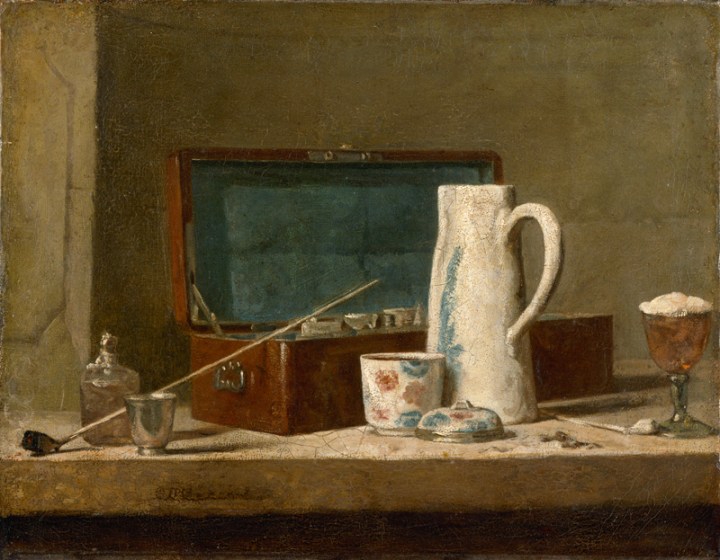
Jean-Siméon Chardin, Pipes and Drinking Pitcher, 1737
(Paris: Musée du Louvre)
◊ ◊ ◊ ◊ ◊
Press release (10 December 2014) from the High Museum:
American Encounters: The Simple Pleasures of Still Life
Musée du Louvre, Paris, 5 February — 27 April 2015
Crystal Bridges Museum of American Art, Bentonville, Arkansas, 16 May — 14 September 2015
High Museum of Art in Atlanta, 26 September 2015 — 31 January 2016
The Musée du Louvre, the High Museum of Art, Crystal Bridges Museum of American Art, and the Terra Foundation for American Art have announced the final installation in their four-year collaboration focusing on the history of American art. Opening at the Louvre, American Encounters: The Simple Pleasures of Still Life explores how late 18th- and early 19th-century American artists adapted European still-life tradition to American taste, character and experience. The culminating presentation of the American Encounters series—which has aimed to broaden appreciation for and dialogue about American art both within the U.S. and abroad—The Simple Pleasures of Still Life follows previous installations examining important genres in American art, including portraiture, landscape and genre paintings.
Though a centuries-old tradition in Europe, still-life painting was slow to take hold in the U.S., increasing in popularity over the course of the 19th century, an era of remarkable political, economic and social transformation. The subjects depicted in American still lifes evolved throughout these decades, drawing on and expanding the traditions of Dutch-style tabletops laden with fruits and vegetables and ornate French bouquet arrangements in the selection, arrangement and depiction of objects imbued with New World symbolism. As the country became more cosmopolitan, a result of its growing industrial and economic power, art patronage in the Gilded Age increasingly focused on the representation of wealth in pictures of exotic objects popular among the upper classes. The subjects of still-life painting during this period served as evocative emblems—whether of regional identity, moral values or eclectic collecting—and reflect the story of an evolving nation.
“This focused presentation could not be a more fitting conclusion to the American Encounters series,” said Stephanie Mayer Heydt, Margaret and Terry Stent Curator of American Art at the High Museum of Art. “Each individual painting, intimately scaled and packed with lush imagery rife with symbolic and historical meaning, invites close observation and tells the story of a young nation finding its voice. We’re thrilled to share this distinctly American experience and educate audiences about the history of American art both at home and abroad.”
Added Guillaume Faroult, curator, Department of Paintings, Musée du Louvre: “Our partnership over the past four years has allowed for unprecedented opportunities for scholarship, engagement and creative exchange. Collectively, we have been able to provide a much richer, holistic narrative of the development of American art than any of the institutions could have presented alone. This collaboration has had a significant impact on the understanding and appreciation for American art in Paris and beyond, and we look forward to continuing the dialogue fostered by this installation series.”
The ten masterpieces in the The Simple Pleasures of Still Life speak to the diversity of the still-life genre in the U.S. and range from works by artists De Scott Evans, Martin Johnson Heade, Joseph Biays Ord, William Sydney Mount and Raphaelle Peale to trompe l’oeil masterworks by John Haberle, William Michael Harnett and George Cope. Two paintings by John-Baptiste-Siméon Chardin and Abraham Mignon demonstrate the European examples frequently emulated by American artists first experimenting with still life in the early 1800s. The presentation at the High will be supplemented with four additional paintings drawn from the museum’s extensive holdings in American art, including works by William Mason Brown, Joseph Decker and John Frederick Peto.
Highlights
• Pipes and Drinking Pitcher (1737) by Chardin, the most popular French still-life painter of the 18th century, depicts an unusual subject for the artist that subtly conjures sensory pleasures. (Musée du Louvre)
• Corn and Cantaloupe (c. 1813) by Peale demonstrates how American artists adopted the European “tabletop composition” to feature distinctly American horticulture: the ear of corn and a Maryland-specific variety of cantaloupe grown on the plantation of the painting’s original owner. (Crystal Bridges Museum of American Art)
• Civil War-era Apples on a Tin Cup (1864) by Mount juxtaposes opposing symbols of the apple—the iconic American fruit and a common gift from children to Union soldiers during the Civil War—atop an empty, battled-worn army-issued cup to create a poignant contrast between sustenance and absence in a nation weary from war. (Terra Foundation for American Art)
• Still Life with Bust of Dante (1883) by Harnett is a trompe l’oeil painting illustrating the late 19th-century trend towards collecting eclectic and exotic objects made available through rapidly expanding international commerce. (High Museum of Art)
The partners have collaborated to produce a small catalogue for each installation in the series. The illustrated book for American Encounters: The Simple Pleasures of Still Life will feature an essay by Heydt that charts the rise of the still-life tradition in the 19th century and infusion of American symbolism into a traditionally European genre. The book will be published by the High Museum of Art, produced by Marquand Books, and distributed by the University of Washington Press. A lecture on the exhibition by Stephanie Heydt will be held at the Louvre auditorium on Wednesday, February 4 at 12:30pm. (more…)
Exhibition | Joshua Reynolds: Experiments in Paint
From the press release for the exhibition:
Joshua Reynolds: Experiments in Paint
The Wallace Collection, London, 12 March — 7 June 2015
Curated by Lucy Davis, Mark Hallett, and Alexandra Gent
A room hung with pictures is a room hung with thoughts. –Joshua Reynolds (1784)
The Wallace Collection’s spring exhibition will offer a fresh perspective on the work of a towering figure of British painting, Joshua Reynolds. Although widely regarded as one of the most important and influential painters of the period, Reynolds’s reputation as an ‘establishment’ artist masks his unquenchable thirst for innovation and his experimental approach to the practice and materials of painting. The exhibition explores Reynolds’s painting techniques, pictorial compositions and narratives through the display of 20 paintings, archival sources and x-ray images.

Joshua Reynolds, Mrs. Abington as Miss Prue in ‘Love for Love’ by William Congreve, 1771 (New Haven Yale Center for British Art)
Joshua Reynolds: Experiments in Paint will draw upon the significant works within the Wallace Collection and major loans from the UK, other European countries and the USA, all chosen to reveal Reynolds’s compositional and narrative experimentation and his unorthodox choice of materials, admixtures of paint and complex layering techniques. The exhibition reveals discoveries made during a four-year research project into the outstanding collection of twelve Reynolds paintings at the Wallace Collection.
With support from the Paul Mellon Centre for Studies in British Art, TEFAF, the Hertford House Trust, various private donors, and Trusts and drawing on the research expertise of the National Gallery in London and the Yale Center for British Art in New Haven, the exhibition spans most of Reynolds’s career and includes portraits, ‘fancy’ pictures and history painting.
On display will be celebrated portraits such as Nelly O’Brien (c.1762–64), Mrs Abington as Miss Prue (1771) and Reynolds’s own Self Portrait Shading the Eyes (1747–49) together with experimental studies and a canvas showing how Reynolds observed the effects of different combinations of colour and media. Collectively, alongside the hidden stories behind the paintings, archive resources and x-ray-images, the exhibition demonstrates the diversity of Reynolds’s artistic production, his highly original approach to image-making, composition and narrative, and prompts us to review opinions and perceptions of this truly experimental artist.
Joshua Reynolds: Experiments in Paint has been curated by Dr Lucy Davis, Curator of Old Master Pictures at the Wallace Collection, Professor Mark Hallett, Director of Studies in British Art at the Paul Mellon Centre and Alexandra Gent, also responsible for paintings conservation for the Reynolds Research Project. Director of the Wallace Collection, Dr Christoph Martin Vogtherr initiated the Reynolds Research Project. The Wallace Collection is a leading centre for the study of Joshua Reynolds and owns twelve important paintings by the artist dating from 1759 until the end of his career, covering several important aspects of his oeuvre: bust-length, half-length and full-length portraits of male and female sitters, ‘fancy’ pictures and a rare history painting.
◊ ◊ ◊ ◊ ◊
From Paul Holberton:
Lucy Davis and Mark Hallet, eds., Joshua Reynolds: Experiments in Paint (London: Paul Holberton Publishing, 2015), 192 pages, ISBN: 978-0900785757, £30 / $50.
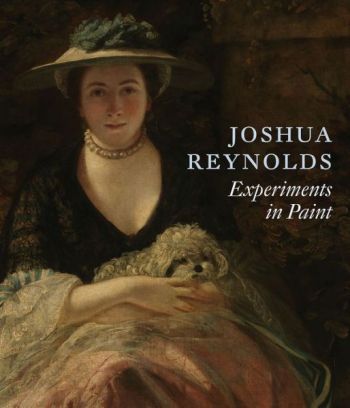 One of Britain’s most important and influential painters, Sir Joshua Reynolds (1723–1792) is justly celebrated for his dynamic portraiture, his poignant ‘fancy pictures’, his ambitious history paintings and his role as the first President of Britain’s Royal Academy.
This catalogue, published to accompany a major exhibition at the Wallace Collection, provides a fresh perspective on the artist, focusing on his innovative, often highly experimental approaches to the practice and materials of painting. Building on the many discoveries made during a four-year research project into the outstanding collection of the artist’s works at the Wallace Collection, Joshua Reynolds: Experiments in Paint investigates his radical manipulation of pigments, oils, glazes and varnishes. It traces his experiments with colour, tone and handling, reveals his continual temptation to rework and revise his pictures, and illuminates his highly creative responses to the new exhibition culture of his day. It also suggests the extent to which the artist’s work was founded upon a radical agenda of pictorial assemblage, in which he mixed anew the motifs, narratives and visual effects he drew from in the great art of the past. Finally, it demonstrates how Reynolds’s innovations as a painter were often the product of collaboration—in part, with his assistants and his students, but, more importantly, with his patrons and subjects, with whom he continually explored the possibilities of gesture, expression, performance and role-play.
The catalogue features an introduction, seven essays by leading scholars, curators and conservators, a chronology of the artist’s life and career, and detailed entries on a range of Reynolds’s pictures, at the centre of which are the Wallace Collection’s own collection of works by the artist.
Exhibition | The King of Groningen: Jan Albert Sichterman (1692–1764)

Johann Dietrich Findorff, after Jean-Baptiste Oudry, Clara the Rhinoceros, ca. 1752
(Schwerin: Staatliches Museum)
◊ ◊ ◊ ◊ ◊
Along with the exhibition highlighting treasures from the Dresden Picture Gallery acquired in the eighteenth century, the Groninger Museum is currently presenting an exhibition addressing the collection of the Dutch merchant Jan Albert Sichterman:
De Koning van Groningen: Jan Albert Sichterman (1692–1764)
Groninger Museum, Groningen, 20 September 2014 — 1 March 2015
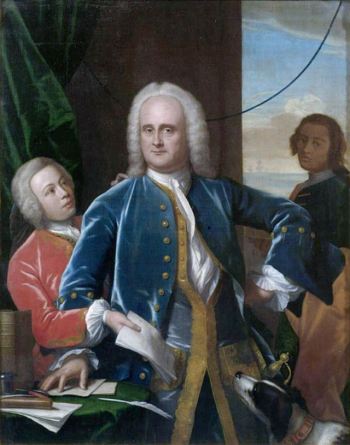
Philip van Dijk, Portrait of Jan Albert Sichterman (Groninger Museum)
The art collection of the Groningen merchant Jan Albert Sichterman—one of the most striking figures of the eighteenth century—included Asian ceramics, beautiful porcelain, splendid portraits painted by Philip van Dijk, Cornelis Troost and others, inconceivably fine pappercutting by Koster, furniture, silver, chintz, and memories of Clara the rhinoceros. After Sichterman’s death in 1764, his art collection was auctioned off and the collection largely dispersed. Fortunately, many collection pieces remained within the family and, in the course of time, the Groninger Museum has also been able to acquire several items. With this exhibition, the Groninger Museum has seized the exceptional opportunity to gather together what has been diffused since 1764. For this occasion, the Museum’s own Sichterman collection has been supplemented by hitherto unshown objects from private collections, as well as a number of works on loan. Never before has so much Chine de Commande porcelain owned a single family been exhibited in our country.
Christiaan J.A. Jörg, Egge Knol, and Denise A. Campbell, Jan Albert Sichterman (1692–1764): Een imponerende Groninger liefhebber van kunst (Groningen: Groninger Museum, 2014), 184 pages, ISBN: 978-9071691737, €39.
Exhibition | A Look at 1700: Prints from the Viladegut Collection
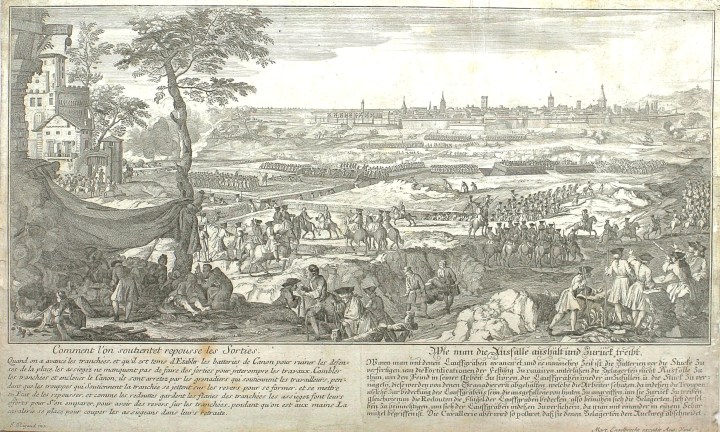
Jacques Rigaud and Martin Engelbrecht, Siege of Barcelona of 1714 (Comment l’on soutient et repousse les sorties), etching, Augsurg, ca.1750.
◊ ◊ ◊ ◊ ◊
From the Museu Frederic Marès:
Una Mirada al 1700: A partir dels gravats de la col·lecció Gelonch Viladegut
Una Mirada al 1700: A partir de los grabados de la colección Gelonch Viladegut
A Look at 1700: The Engravings of the Gelonch Viladegut Collection
Museu Frederic Marès, Barcelona, 16 June — 2 November 2014, extended until 11 January 2015
A partir del diàleg entre els gravats de la col·lecció Gelonch-Viladegut i les col·leccions del Museu Frederic Marès es vol oferir una galeria d’imatges sobre la Catalunya de començament del segle XVIII, concretament a la fi de la Guerra de Successió. L’exposició mostra com des del col·leccionisme també es pot aportar una visió del context sociocultural del país al voltant del 1714.
The press release (in Catalan) is available here»
◊ ◊ ◊ ◊ ◊
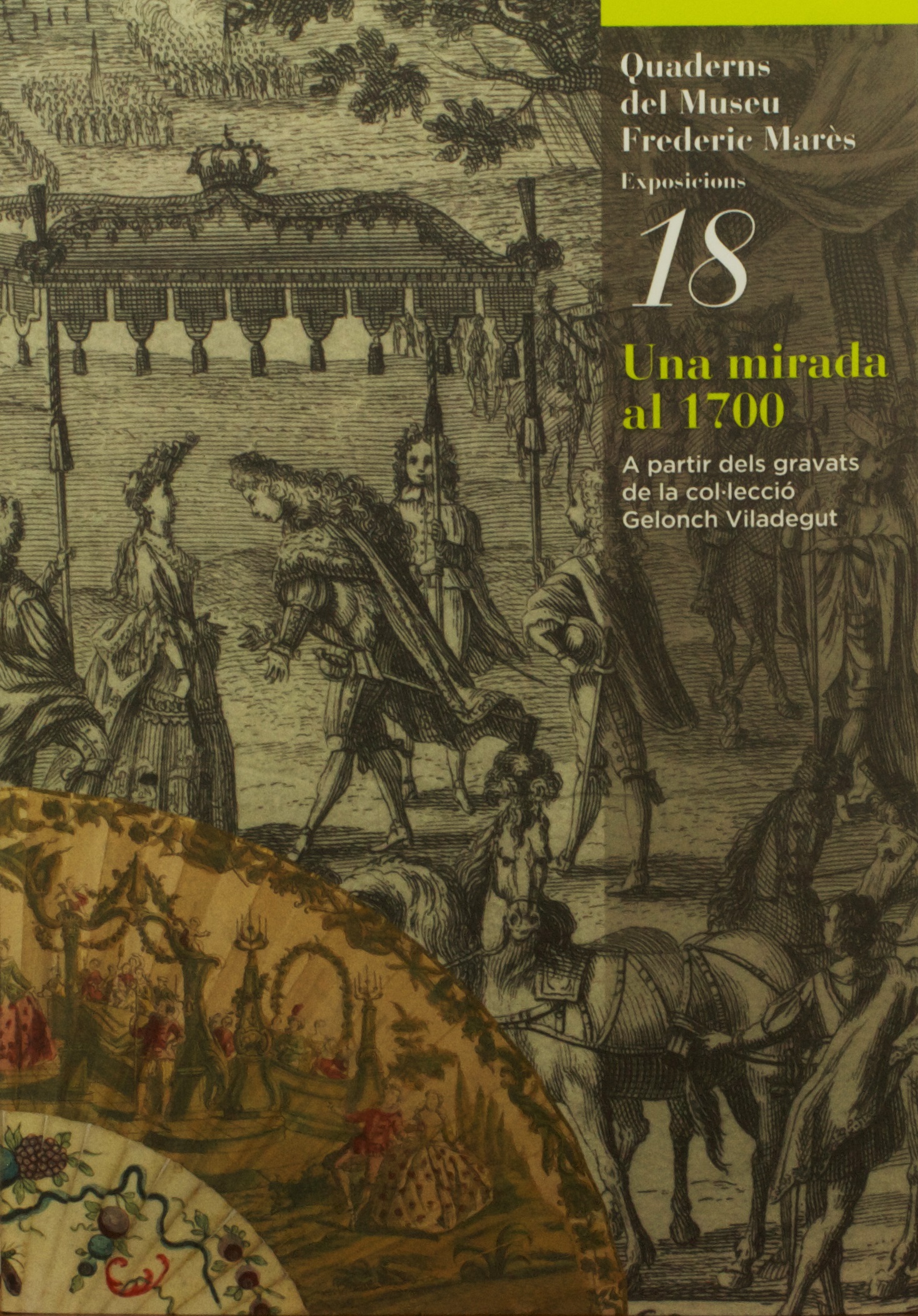 The catalogue is available from Artbooks.com:
Xevi Camprubi et al, Una mirada al 1700: A partir dels gravats de la col·lecció Gelonch Viladegut (Barcelona: Ajuntament de Barcelona, Institut de Cultura de Barcelona, 2014), 154 pages, ISBN: 978-8498505597, $38.
Organised into five areas, the exhibition offers a view of Catalonia in the context of the War of the Spanish Succession based on the testimonies from collectors: first, the engravings from that period from the collection of Antoni Gelonch Viladegut, and secondly the collections of the Frederic Marès Museum, from which some works from its sculpture and 18th-century object collection in its extensive Collector’s Cabinet have been chosen. The five areas show images of power, territory, war, everyday life, and devoutness.










leave a comment