Exhibition | Napoleon and Europe
As noted at Art Daily:
Napoléon et l’Europe
Musée de l’Armée, Hôtel National des Invalides, Paris, 27 March — 14 July 2013
Curated by Émilie Robbe
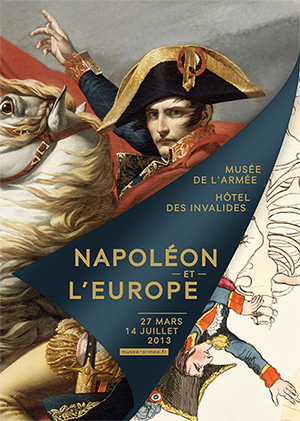 Napoleon Bonaparte (1769-1821) had a deep and lasting effect on the history of Europe, despite remaining in power for a mere fifteen years. The exhibition Napoléon et l’Europe [Napoleon and Europe], at the Musée de l’Armée from 27 March to the 14 July 2013, bears witness to Napoleon Bonaparte’s European ambitions between 1793 and 1815. The visit reveals his ambitious policies for expansion in Europe and the subsequent reactions by the various European countries, whether in support of, or against, such policies. The exhibition also highlights the consequences and the deep scars that such a conquest left on Europe.
Far removed from stereotype and biased opinion, this exhibition aims to present an influential episode in French and European history in a different manner; by combining the diverse, often-times opposing viewpoints of Napoleon’s contemporaries, on themes such as war, politics, diplomacy, the government, currency, propaganda and the arts… In order to recount or retrace this chapter of history, 250 artworks, objects and documents have been gathered together, on loan from fifty or so European museums and institutions, with more than half of these coming from outside France. Since the retrospective exhibition Napoléon held in 1969 at the Grand Palais, Paris, no other exhibition of this scope and ambition has been organized in France.
Conquest and Resistance
The entire exhibition is punctuated by or structured around two viewpoints that both question and mirror the other: the progressive and concrete creation of Napoleon’s Empire on the one hand, and the reactions of certain peoples and the main European powers to this direct quest for domination, on the other hand. From alliances to battles, from treaties to reform, this incredibly rapid succession of events is recounted in chronological fashion and explained in context. (more…)
Exhibition | Marquis de Marigny
I’m afraid this is another exhibition that slipped past me, but I include it here nonetheless. The catalogue is, at least, still available from Artbooks.com. -CH
◊ ◊ ◊ ◊ ◊
From the press release:
Le Naturel Exalté: Marigny, Ministre des Arts au Château de Menars
Expo 41, Loir-et-Cher, Blois, 30 June — 16 September 2012
 Ambitieux, fier, ombrageux : les qualificatifs ne manquent pas pour définir Abel-François Poisson de Vandières, marquis de Marigny et seigneur de Menars (1727-1781). Son destin, tracé à la plume de l’exception, en fait foi. Il eut la chance d’être le frère cadet de la maîtresse de Louis XV, titrée marquise de Pompadour, qui l’introduisit dès son adolescence à la cour du roi. À vingt-quatre ans, il est nommé directeur général des Bâtiments du roi, arts et manufactures. Un voyage en Italie en compagnie d’artistes et d’architectes engagés dans les débats esthétiques contemporains fut le déclic vers l’émancipation : Marigny commença alors à se constituer une collection d’exception. Sa galerie de statues était la 1ère de France après celle de Louis XV. Il dirigea surtout la politique des arts du royaume pendant 30 ans, laissant à l’humanité des chefs-d’oeuvre tels que la place de la Concorde, l’École Militaire, les jardins des ChampsÉlysées ou le Panthéon de Paris.
L’exposition Le naturel exalté. Marigny, ministre des arts au château de Menars, qui sera présentée à Expo 41, du 30 juin au 16 septembre 2012, est la 1ère rétrospective mondiale consacrée au frère de la Pompadour et ministre de Louis XV. Le visiteur découvrira le fonds exceptionnel des archives départementales de Loir-et-Cher, encore jamais dévoilé au public, constitué de centaines de dessins représentant l’aménagement des jardins du château de Menars en Loir-et-Cher, plusieurs tableaux majeurs en provenance du musée du Louvre ou du château de Versailles, ainsi que des oeuvres issues de la collection personnelle de Marigny. . .
◊ ◊ ◊ ◊ ◊
Christophe Morin, ed., Le Naturel Exalté: Marigny, Ministre des Arts au Château de Menars (Milan: Silvana, 2012), 192 pages, ISBN: 978-8836622658, €28 / $55.
 Abel-François Poisson (1727-1784), marquis de Vandières puis de Marigny est plus que le frère de la marquise de Pompadour. Directeur général des Bâtiments du roi à compter de 1751, il a rang de ministre et participe à la vie de cour autour de Louis XV. Courtisan zélé, il conserve ses fonctions au-delà même de la disparition de sa soeur, jusqu’en 1773. Il a toute la reconnaissance du roi qui lui offre un somptueux ” meuble ” pour décorer son hôtel de la rue Saint-Thomas-du-Louvre, ainsi que de nombreuses sculptures qui viendront embellir son château de Menars.
Le présent ouvrage rappelle, grâce aux contributions des meilleurs spécialistes de la question, la brillante carrière d’un grand commis de l’Etat au service de Louis XV. Pour la première fois, une exposition monographique sur le marquis de Marigny rassemble des oeuvres qui évoquent la carrière de l’homme public dont le rôle fut éminent dans la transformation radicale du goût au milieu du XVIIIe siècle.
L’autre versant de cette entreprise, tout aussi inédit, regarde le seigneur de Menars, ses collections et sa vie en Val de Loire. Ce ne sont pas moins de 90 dessins d’architecture qui sont présentés ici. Des oeuvres parfois majeures, parfois émouvantes, commandées par Marigny aux plus grands artistes du temps pour décorer le parc de sa maison de campagne. Grand seigneur sur ses terres, il aménage en effet le château de Menars, à sa mesure, réglant les moindres détails de son nouveau jardin anglo-chinois.
New Title | Houghton Revisited: The Walpole Masterpieces
The catalogue for the Houghton Revisited exhibition should be available soon. From Artbooks.com:
Thierry Morel, Larissa Dukelskaya, John Harris, and Andrew Moore, Houghton Revisited: The Walpole Masterpieces from Catherine the Great’s Hermitage (London: Royal Academy of Arts, 2013), 256 pages, ISBN: 978-1907533501, £40 / $85.
 In 1779 the family of Sir Robert Walpole, Britain’s first prime minister, sold his remarkable art collection to Catherine the Great, Empress of Russia. More than two centuries later, these masterpieces, rarely seen outside Russia since that time, are returning to Houghton Hall, the great house built by Walpole. This handsome book illustrates these superlative works hanging once again in William Kents magnificent interiors. Thierry Morel uncovers the wonders of Walpole’s collection, which includes paintings by Van Dyck, Poussin, Rubens and Rembrandt, and traces its journey to the State Hermitage Museum in St Petersburg, to which most of the works now belong. Other essays explore Walpole’s artistic tastes and collecting habits, and his beautiful house, one of the finest Palladian buildings in England.
Exhibition | French Paintings from the Wadsworth Atheneum
It’s interesting to see how this exhibition has been retitled in various venues: from Old Masters to Impressionists, to Old Masters to Monet, to Court to Café. The exhibition appeared in a fuller version at the Wadsworth Atheneum itself as Medieval to Monet: French Paintings, where it was accompanied by a full catalogue. -CH
◊ ◊ ◊ ◊ ◊
Press release (4 December 2012) from the Mississippi Museum of Art:
Old Masters to to Monet: Three Centuries of French Painting from the Wadsworth Atheneum
The Michele and Donald D’Amour Museum of Fine Arts, Springfield, MA, 13 December 2011 — 29 April 2012
Taft Museum of Art, Cincinnati, 18 May — 16 September 20122
Wadsworth Atheneum, Hartford, CT, 19 October 2012 — 27 January 2013 [expanded version of the exhibition]
Mississippi Museum of Art, Jackson, 23 March — 8 September 2013
Denver Art Museum, 27 October 2013 — 9 February 2014
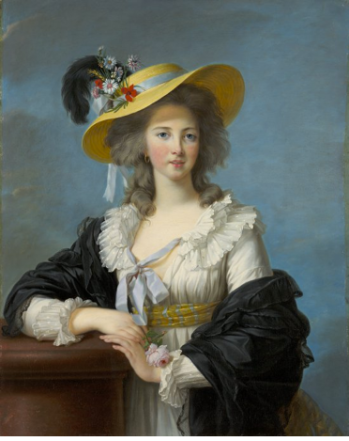
Elisabeth-Louise Vigée Le Brun, The Duchesse de Polignac Wearing a Straw Hat, 1782 (Hartford, CT: Wadsworth Atheneum Museum of Art)
The Mississippi Museum of Art is pleased to present Old Masters to Monet: Three Centuries of French Painting from the Wadsworth Atheneum, on view from March 23 through September 8, 2013. It is the thirteenth presentation in The Annie Laurie Swaim Hearin Memorial Exhibition Series. Established in 1989 to honor the memory of Annie Laurie Swaim Hearin, one of the Museum’s most dedicated patrons and volunteers, the Hearin series showcases exhibitions of world-class art, attracting visitors to Jackson from across Mississippi, the Southeast, and beyond.
Old Masters to Monet features fifty masterpieces from the collection of the Wadsworth Atheneum in Hartford, Connecticut. The outstanding artworks provide a history of French painting, ranging from the seventeenth through the nineteenth centuries and into the beginning of the twentieth century and include religious and mythological subjects, portraits, landscapes, still lifes, and genre scenes.
The Wadsworth Atheneum is America’s oldest public art museum, founded in 1843, and has never presented a full-scale survey of its distinguished collection of French paintings. To honor the recent publication of its
collection catalogue, the Atheneum has launched a tour of fifty of these outstanding masterpieces. “The Mississippi Museum of Art is honored to be one of the select venues to host this important exhibition,” said Betsy Bradley, director of the Mississippi Museum of Art. “In keeping with our mission of engaging Mississippians in the visual arts, this exhibition provides a rare opportunity for our visitors to come face to face with some of the most historically valued French paintings held in any museum collection.”
The exhibition begins with the great seventeenth-century masters, Nicolas Poussin, Claude Lorrain, Simon Vouet, and Jacques Stella, all of whom spent time in Rome and whose work embodies Italianate ideas of beauty, classical sculpture, and ideal landscape. Poussin’s enormous Crucifixion, painted in 1646 for President Jacques-Auguste de Thou, and Lorrain’s Landscape with St. George and the Dragon, commissioned by Cardinal Fausto Poli in 1641, are among the most important French paintings residing in the United States.
The eighteenth-century works present a remarkably rich tapestry of life in France during the rococo age. There are several scenes and portraits of aristocrats, including the Portrait of the Duchesse de Polignac by the era’s leading painter of women, Madame Vigée-Lebrun. Genre scenes rendered during this period exhibit a decidedly risqué bent as well as humorous aspects of life, both of which are evident in paintings on view by Jean Baptiste Greuze, François Boucher, and Louis Leopold Boilly. A more serious approach is evidenced in Still Life by Jean Baptiste Simeon Chardin and in the charming family pictures by Nicolas-Bernard Lépicié and Nöel Hallé. The change in style brought about by the French Revolution is evident in the impressive composition designed by Jacques Louis David, and the creation of a new aristocracy is presented by the two brilliant paintings by Jean Auguste Dominique Ingres. (more…)
New Book | Masters of French Painting at the Wadsworth Atheneum
From Giles:
Eric M. Zafran, Masters of French Painting, 1290–1920: At the Wadsworth Atheneum (London: D. Giles, 2012), 288 pages, ISBN: 978-1904832935, £45 / $65.
 Masters of French Painting, 1290–1920: At the Wadsworth Atheneum presents over 130 of the most significant works of art from this internationally recognized collection of French paintings and pastels.
As the first public art museum in the U.S., the Wadsworth Atheneum paved the way for encyclopaedic museums across the country. Founded by Daniel Wadsworth, the Atheneum opened in 1844 with 79 paintings and three sculptures, and today holds more than 50,000 works of art. These include great 17th-century religious masterpieces by Poussin and Claude, charming 18th-century genre paintings and portraits by Boucher, Robert, Vigée Lebrun, and Trinquesse, and varied and rich examples from the 19th century, with outstanding works by Géricault, Delacroix, Monet, Renoir, Gauguin, and Toulouse-Lautrec.
Masters of French Painting, 1290–1920 fills a major gap in the museum’s series of titles devoted to its collections. It provides scholars and researchers with an entirely new catalogue, with up-to-date references, provenance, exhibition histories and technical/conservation reports, in addition to insightful art historical commentaries on the paintings. The book also includes an introductory essay on the creation of this remarkable collection by curator Eric M. Zafran.
An exhibition of about 100 highlights of the collection, Medieval to Monet, will be on view at the Wadsworth Atheneum, October 19, 2012 – January 27, 2013
Eric M. Zafran is the Susan Morse Hilles Curator of European Art at the Wadsworth Atheneum, where he has worked since 1997. As curator of European Paintings at the Museum of Fine Arts, Boston he wrote volume I of the museum’s Catalogue of French Paintings. He is the author of publications on Rembrandt, Monet, Gauguin, Doré, and Calder.
Exhibition | Edges of Books
I regret that notice of this exhibition at RIT’s Cary Graphic Arts Collection slipped by me, but the catalogue is still available. -CH
◊ ◊ ◊ ◊ ◊
Edges of Books
Rochester Institute of Technology, Rochester, New York, 1 October — 14 December 2012
 Edges of Books examines a familiar form from an unfamiliar perspective. When books are on display it is usually their spines, covers, text, or illustrations that are featured. These are the familiar parts of the books—the parts that modern readers have come to interact with the most. Edges of Books takes a different approach, uncovering a tradition that extends back centuries in which the edges of books were important sites for information and decoration. A selection of artifacts from 1518 to the present will inspire visitors to view books in new and exciting ways.
Steven K. Galbraith, Edges of Books: Specimens of Edge Decoration from RIT Cary Graphic Arts Collection (Rochester: RIT Press, 2012), 74 pages, ISBN: 978-1933360690, $17.
Steven K. Galbraith is Curator of the Melbert B. Cary, Jr. Graphic Arts Collection. He has a Ph.D. in English Literature from Ohio State University and an M.L.S. from the University at Buffalo. Prior to coming to RIT, he was the Andrew W. Mellon Curator of Books at the Folger Shakespeare Library in Washington, D.C. and the Curator of Early Modern Books and Manuscripts at the Ohio State University. He is the author of works on early English printing, English Renaissance literature, rare book librarianship, and book conservation and digitization.
Exhibition | British Drawings from the Cleveland Museum of Art
Some of the offerings for those of you who will be in Cleveland next month for ASECS. From the museum’s website:
British Drawings from the Cleveland Museum of Art
Cleveland Museum of Art, 8 February — 26 May 2013
The British drawings at the Cleveland Museum of Art have received less attention than the renowned Italian and French drawings but are eminently worthy of such. The collection includes works by some of the best-known artists in the history of English art, such as Thomas Gainsborough, William Blake, J. M. W. Turner, and Edward Burne-Jones. Important recent acquisitions include a highly finished wash drawing exemplary of John Flaxman’s neoclassical style, an 18th-century double-portrait in pastel by Daniel Gardner, and a watercolor in pristine condition describing the Surrey countryside at sunset by Samuel Palmer. The exhibition features approximately 50 works from the collection along with a small group of loans from private collections, ranging from the 18th century through the Edwardian period, and will be accompanied by a collection catalogue. This is the inaugural exhibition of a new series exploring highlights from the Cleveland Museum of Art’s collection of drawings.
◊ ◊ ◊ ◊ ◊
From the publisher:
Heather Lemonedes, British Drawings: The Cleveland Museum of Art (London: D. Giles, 2013), 152 pages, 978-1907804229, $45.
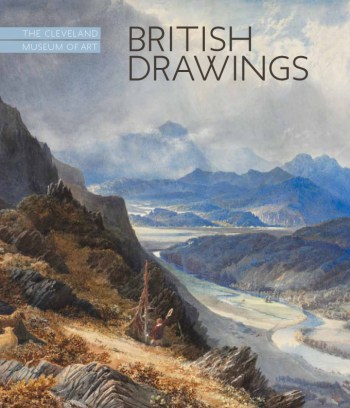 This volume, the first in a new series, presents outstanding drawings from the permanent collection of works on paper at the Cleveland Museum of Art. It features 50 highlights, along with a small group of loans from private collections, ranging from the 18th century through to the Edwardian period. Fragile and light sensitive, opportunities to see such treasures are rare and for that reason are all the more to be celebrated. Many are published here for the first time, such as Francis Cotes’s breathtaking portrait of Lady Mary Radcliffe and an exquisite female nude drawn in coloured chalk by William Mulready.
Heather Lemonedes is curator of Drawings at the Cleveland Museum of Art. Prior to her arrival at the museum in 2002, she worked as a specialist in the Print Department at Christie’s, New York and supervised the Print Study Room at the Metropolitan Museum of Art, New York. She was awarded a Samuel H. Kress
Foundation Travel Fellowship in the History of Art for
research on her dissertation, “Paul Gauguin’s Volpini
Suite,” in 2004.
Exhibition | Stradivarius at the Ashmolean
From the Ashmolean Museum:
Stradivarius
Ashmolean Museum, Oxford, 13 June — 11 August 2013

Ashmolean Museum, Oxford. Photo by Merlin Cooper, 2005, Wikimedia Commons
Antonio Stradivari (c.1644–1737) – or Stradivarius as he is usually known – is the only maker of musical instruments whose name ranks alongside those of the great composers. For the first time will twenty of his instruments, from guitar to cello to violin, be on display together in the UK. While the details of his life are not as familiar as those of Vivaldi or Mozart, his name succeeds in evoking a creative genius in the popular imagination. The Ashmolean’s summer 2013 exhibition will feature twenty of the world’s most important musical instruments, some of which have never been shown in public, on loan from international collections: from the early Silvestre violin of 1666, to the Fountaine violino piccolo, the Boissier-Sarasate of 1713, to his later violins of the 1730s. It will also show a recreation of Stradivarius’s workshop where visitors will be able to follow the creation of a violin from a log of spruce through to the finished instrument.
◊ ◊ ◊ ◊ ◊
From ACC Distribution:
Charles Beare, Peter Beare and Jon Whiteley, Stradivarius (Oxford: Ashmolean Museum, 2013), 200 pages, ISBN:
9781854442758, $40.
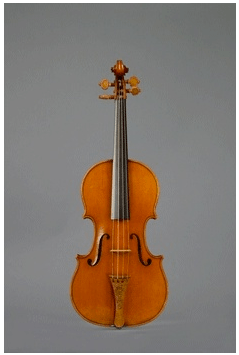 Antonio Stradivari is, perhaps, the only maker of violins who ranks alongside Van Gogh and Turner as an artist. A household name to many, he is associated with secret formulae and mystical processes ensuring his instruments are sought after by the world’s greatest soloists. He excites controversy, although none of his violins have raised so much heated debate as the Ashmolean’s Messiah, making headline news some ten years ago when doubt was cast on its age. Stradivari’s birthplace is unknown, he may have been born in 1644, and even his apprenticeship to Nicola Amati is uncertain. He died rich and famous in Cremona in 1737. Since then his instruments have increased in fame and are now regarded as supreme examples of the violin-maker’s craft. Despite the great fame of Stradivari’s violins, there has never been a monographic exhibition of his work in the UK. It will include 30 instruments, representative of Stradivari’s range and output across the years, alongside exceedingly rare examples of stringed instruments other than those of the violin family.
The prize items to be featured in the exhibition are already in the Ashmolean: The Potter, The Messiah and the guitar of 1688, all works of the greatest rarity. The exhibition and the accompanying catalogue will allow the public to see the work of one of the greatest violin makers of all time. Stradivarius also presents the most recent research on Stradivarius’ instruments.
Contents: Introduction by James Ehnes; essay on Stradivarius by Charles Beare; essay on Stradivarius’ work including dendrachronology of the instruments; “The luthier’s perspective: How Stradivari violins are built and what makes them so good?” by Peter Beare; catalogue entries; technical information.
Charles and Peter Beare are directors at the successful violin dealers Beares. Peter is a qualified luthier. Jon Whiteley is the Senior Assistant Keeper in the Department of Western Art, specializing in paintings drawings and musical instruments.
◊ ◊ ◊ ◊ ◊
From Music at Oxford:
The Dawn of the Stradivarius with James Ehnes and La Serenissima
Sheldonian Theatre, Oxford, 14 June 2013
 In association with The Ashmolean Museum’s extraordinary forthcoming exhibition of the world’s finest Stradivarius instruments, Music at Oxford is proud to present this collaborative concert. Canadian virtuoso and Stradivarius player James Ehnes will perform unaccompanied music by Bach and Paganini on a number of Stradivarius violins and discuss what’s unique about them and the sound they produce. This will be the first time one player has ever had the opportunity to do so in a concert setting. Award-winning period ensemble La Serenissima will follow this by performing a programme of music from the age of Stradivarius by Vivaldi, Valentini and their contemporaries.
This event will open the exhibition, a fascinating exploration of the master maker’s work featuring the largest collection of Stradivarius instruments ever assembled as well as audiovisual footage featuring James Ehnes. Don’t miss this exciting event, our 2012-13 season closer. Tickets are bound to be in great demand so please do book early.
Exhibition | Piranesi, Rome, and the Arts of Design
From the San Diego Museum of Art:
Piranesi, Rome, and the Arts of Design
Giorgio Cini Foundation, Venice, 28 August 2010 — 9 January 2011
Caixa Forum, Madrid, 24 April — 9 September 2012
Caixa Forum, Barcelona, 9 October 2012 — 20 January 2013
San Diego Museum of Art, 30 March — 7 July 2013
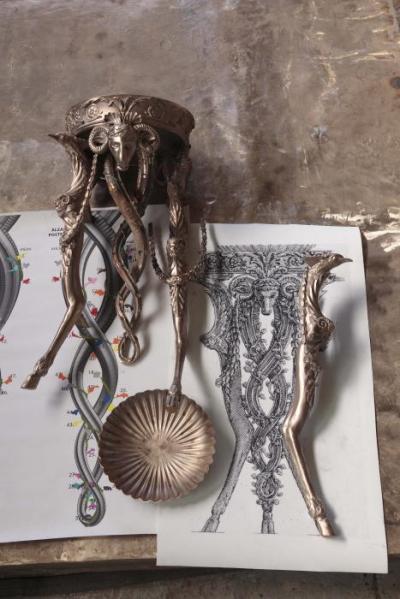 Giovanni Battista Piranesi (1720-1778) was a printmaker, architect, antiquarian, art dealer, theorist, and designer—one of the foremost artistic personalities of the 18th century, whose views of Rome remain the city’s defining image. Fresh, thought-provoking, and innovative, Piranesi, Rome, and the Arts of Design sets out to show the range of the artist’s genius in a 21st-century approach to his creative endeavors. More than 300 original prints have been selected from the world renowned collection of the Fondazione Giorgio Cini in Venice, Italy. These prints are combined with modern-day interpretations in new technologies such as video, photography, and digital modeling. Utilizing the most advanced technologies, the exhibition enables Piranesi’s two-dimensional renderings of a monumental vase, a candelabrum, tripods, a teapot, an altar, and a fireplace to assume their rightful three-dimensional forms. These never-before-seen and never-before-crafted objects take center stage in the exhibition and attest to the creative intellect of Piranesi’s designs. In addition, the exhibition brings to life Piranesi’s most famous works, the Carceri (Prisons), in the form of a virtual reality 3-D installation. The legendary Caffè degli Inglesi is represented as a full scale evocation, and visitors may browse through Piranesi’s sketchbooks using a touchscreen monitor. Strikingly designed by world renowned architect Michele De Lucchi, the exhibition embodies the progressive spirit of Piranesi’s own eclectic visions and his modernity, emphasizing the popular appeal of his work and its continuing relevance to designers and architects. Having previously appeared at the Fondazione Cini in Venice and at the Caixa Forum in Madrid and Barcelona, the show makes its only U.S. stop at The San Diego Museum of Art.
Exhibition conceived by Michele De Lucchi, produced by Fondazione Giorgio Cini, Itatly, together with Factum Arte, Spain, in collaboration with Exhibits Development Groups, USA.
Photos from the installation at the Giorgio Cini Foundation (Le Arti di Piranesi: architetto, incisore, antiquario, vedutista, designer) are available here»
◊ ◊ ◊ ◊ ◊
From Factum Arte:
Michele de Lucchi, Guiseppe Pavanello, John Wilton-Ely, Norman Rosenthal, and Adam Lowe, The Arts of Piranesi: Architect, Etcher, Antiquarian, Vedutista, Designer (Madrid: Caixaforum, 2012), 304 pages, ISBN 978-8461576371, 35€.
 The Arts of Piranesi: Architect, Etcher, Antiquarian, Vedutista, Designer is a catalogue for the homonymous exhibition on the work of Giambattista Piranesi, curated by Michele de Lucchi, Adam Lowe and Giuseppe Pavanello, taking place in CaixaForum Madrid from 25 April to 9 September 2012 and CaixaForum Barcelona from October 2012 to January 2013.
A collaboration between Factum Arte and the Fondazione Giorgio Cini, the exhibition opened in Madrid after receiving great reviews when it was in Venice for the Biennale of Architecture in 2010. In addition to objects realised using traditional and digital modelling from the original designs by Piranesi, the exhibition also contains Gabriele Basilico’s sensitive black and white photographs of the famous Vedute and over 250 etchings by Piranesi.
◊ ◊ ◊ ◊ ◊
From the San Diego Museum of Art:
Symposium: Piranesi, Rome, and the Arts of Design
San Diego Museum of Art, 30 March 2013
Scholars from around the country will offer their insights to contextualize the culture, time period, and artistic concerns of Giovanni Battista Piranesi. Speakers include Christopher M.S. Johns, Norman L. and Roselea J. Golberg, Professor and Chair of the Department of History of Art, Vanderbilt University; John Pinto, Howard Crosby Butler Memorial Professor of Art and Archeology, Princeton University; and Jeffrey L. Collins, Professor and Chair of Academic Programs, Bard Graduate Center; and will be moderated by Dr. John Marciari, Curator of European Art.
◊ ◊ ◊ ◊ ◊
Film | Yo-Yo Ma Inspired by Bach: The Sound of The Carceri
San Diego Museum of Art, 5 April 2013
The Sound of The Carceri explores the deep relationship between music and architecture through a high-tech ‘virtual confrontation’ between Bach and his contemporary, the architect Giovanni Battista Piranesi. Using a striking visual style, director François Girard (The Red Violin and Thirty-Two Short Films about Glenn Gould) places Yo-Yo Ma within a series of computer-generated, three-dimensional recreations of Piranesi’s well-known prison etchings. Through Yo-Yo Ma’s and music producer Steven Epstein’s struggle to recreate and interact with the imaginary space that Ma performs in, the film examines the complexity of illusion, of representation and reality.
◊ ◊ ◊ ◊ ◊
Lecture | Purchasing Piranesi: Buying Art on the Grand Tour
San Diego Museum of Art, 19 April 2013
Buying art was a key element of the British Grand Tour to Italy in the 18th century, and a visit to Piranesi’s workshop was never to be missed. The studio was like a superstore of antiquities where those on the Grand Tour could buy antiquities and prints that recorded them, as well as casts, copies, and forgeries. Making use of unpublished archival research, Dr. John Marciari, Curator, European Art and Head of Provenance Research, will discuss the ways in which travelers set about buying works by Piranesi, Batoni, and others in 18th-century Italy.
◊ ◊ ◊ ◊ ◊
From Factum Arte:
One of the key elements of the exhibition Le Arti di Piranesi: architetto, incisore, antiquario, vedutista, designer (The Art of Piranesi: architect, engraver, antiquarian, vedutista, designer), a 12-minute animation of Piranesi’s Carceri series made by Gregoire Dupond at Factum Arte specifically for the exhibition. This series of 16 visionary images, originally etched by Piranesi when in his late 20s, shows the workings of his imagination, merging his architectural ambitions with his obsessive interest in antiquity. Watching Gregoire Dupond’s animation is literally like entering Piranesi’s mind. A CD containing both high resolution reproductions of the prints and the complete video will be released soon.
Exhibition | Journeys to New Worlds: Spanish and Portuguese Art
Now on at the Philadelphia Museum of Art:
Journeys to New Worlds: Spanish and Portuguese
Colonial Art from the Roberta and Richard Huber Collection
Philadelphia Museum of Art, 16 February — 19 May 2013
Curated by Mark A. Castro and Joseph J. Rishel
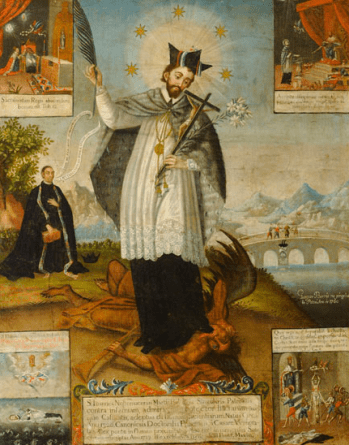
Gaspar Miguel de Berrío, Saint John of Nepomuk, 1760, oil on canvas, 40 x 32 inches (103 x 82 cm)
With a rare group of paintings, decorative arts, and sculptures from the collection of Roberta and Richard Huber, Journeys to New Worlds explores the artistic exchanges between Spain and Portugal and their colonies in the Americas and Asia during the seventeenth and eighteenth centuries. This unique combination of rich visual traditions offers viewers a glimpse into the fascinating history and global influence of Iberian colonial art.
The exhibition includes paintings by Melchor Pérez Holguín (c. 1665–after 1724) and Gaspar Miguel de Berrío (1706–after 1764), two prolific artists from the city of Potosí, Bolivia. Berrío’s Our Lady of Mount Carmel with Bishop Saints of 1764 displays the artist’s ability to present European imagery in a new regional style, emphasizing sumptuous textiles and lush colors. Other paintings on view feature objects of popular devotion, among them the anonymously painted Our Lady of Pomata, which depicts a dressed sculpture of the Virgin Mary housed in a sanctuary on the shores of Lake Titicaca, Peru.

Coquera (Coca Box), Bolivia, first half of the eighteenth century; silver, repoussé, chased and burnished, 9 x 11 x 10 inches (23 x 29 x 26 cm) Roberta and Richard Huber Collection
Potosí sits at the foot of the Cerro Rico (Rich Hill), known for its abundant silver mines, which funded the Spanish empire for many years. The mines also fueled a great metalworking tradition that produced decorative objects for church, public, and domestic use. Among the silver works included in this show are an eighteenth-century coquera (a box used for storing coca leaves) and an elaborately decorated altar plaque.
Sophisticated ivory sculptures created in the Iberian colonies in Asia (the Portuguese colonies of Goa, on the western shores of India, and Ceylon, the modern nation of Sri Lanka; as well as the Spanish-controlled Philippines) are another integral part of the Huber collection. These carved works depict Catholic themes, yet the refined, Asiatic features of the figures show the direct influence of native artistic traditions.
Roberta and Richard Huber began collecting in the 1970s, when the study of Iberian colonial art was in its infancy in the United States. They have purchased works over the years based on their own changing interests, enjoying the thrill of discovering new objects as much as the works themselves. Embodying the passionate interests of two individuals, their collection is one of a handful focused on this material in the country. Journeys to New Worlds celebrates their enthusiasm and reflects the Philadelphia Museum of Art’s continuing commitment to promoting the arts of Latin America.
The exhibition is generously supported by The Annenberg Foundation Fund for Exhibitions, the Arlin and Neysa Adams Endowment, Paul K. Kania, and Mr. and Mrs. Reinaldo Herrera. The catalogue is made possible by The Andrew W. Mellon Fund for Scholarly Publications at the Philadelphia Museum of Art and by Furthermore: a program of the J.M. Kaplan Fund.
Curated by Mark A. Castro, Exhibition Coordinator, and Joseph J. Rishel, The Gisela and Dennis Alter Senior Curator of European Painting before 1900, and Senior Curator of the John G. Johnson Collection and the Rodin Museum.
◊ ◊ ◊ ◊ ◊
From Yale UP:
Edited by Suzanne L. Stratton-Pruitt, with Mark A. Castro, Journeys to New Worlds: Spanish and Portuguese Colonial Art in the Roberta and Richard Huber Collection (New Haven: Yale University Press, 2013), 204 pages, ISBN: 978-0300191769, $60.
Contributions by Luisa Elena Alcalá, David L. Barquist, Mark A. Castro, Margarita M. Estella Marcos, Enrique Quispe Cueva, Joseph J. Rishel, Jorge F. Rivas P., and Suzanne L. Stratton-Pruitt
 This beautifully illustrated catalogue showcases 120 Spanish and Portuguese artworks from the seventeenth and eighteenth centuries, all highlights from the dazzling collection of Roberta and Richard Huber. Featuring works in a variety of mediums and from far-flung places, including paintings, silver, and furniture from South America and sculptures in ivory from the Spanish Philippines and from Portuguese territories in India. Distinguished experts shed light on these significant objects, many of which have not been previously published and which illustrate the unparalleled artistic exchanges between and within these colonial empires. The Andean painters Melchor Pérez Holguín and Gaspar Miguel de Berrío inventively interpreted European iconographies, while similar adaptations took place in Asia, where native craftsmen, carved Christian images in ivory. These works traveled along the trade routes connecting Europe to Asia and the Americas, thus influencing the development of a new visual culture.
Suzanne L. Stratton-Pruitt is an independent scholar specializing in Spanish and Spanish colonial art. Mark A. Castro is an Exhibition Coordinator at the Philadelphia Museum of Art.










leave a comment