Seminar | Stone Face
From H-ArtHist:
Stone Face: The Psychology of the Face, the Phenomenology of the Bust
University of Copenhagen, 1–2 October 2018
Registration due by 20 September 2018
 This seminar explores the portrait from a phenomenological and psychological approach, looking at how it affects the viewer and what kinds of reactions it prompts. We will be discussing the significance of the bust format, primary sources describing encounters with portraits and busts as well as the significance of the face and the psychology of face perception. The seminar is a preparatory work for understanding the Neoclassical artist Bertel Thorvaldsen (1770–1844) as a portrait sculptor within a broader context of sculpture theory and art history.
The seminar is the second in a series of seminars under the cross-disciplinary project research and dissemination Powerful Presences: The Sculptural Portrait between Absence and Presence, Group and Individual. The seminar is free and open to everyone. Additional programme and registration details are available here. For more information, please contact Lejla Mrgan, lejla@hum.ku.dk.
M O N D A Y , 1 O C T O B E R 2 0 1 8
8.45 Arrival and coffee
9.00 Welcome (Jane Fejfer)
9.15 Session 1 | Imagination and Attachment
• Melissa Percival, The Painted and Sculptural Imagination: Short Cuts
• Lejla Mrgan, Perception and imagination: Busts as Objects of Attachment
• Tomas Macsotay, Women and Sculptural Resignification: The Cases of Catherine the Great and the Countess of Albany
• Andreas Grüner, Strike! Diderot and the Reproduction of Immediacy in Ancient Portraits
12.45 Lunch
13.45 Session 2 | Bust and Body
• Jeanette Kohl, The Silence of Busts: Phenomenology, Ontology, Presence?
• Joris van Gastel, The Coat of Arms and the Portrait Bust: Sculpted Presence in Late Renaissance Florence
• Helen Ackers, Networks of interaction: The Roman portrait bust in its familial context
• Josefine Baark, ‘The Originals’: Commemorative Clay Likenesses and Portrait Sculpture in Qing China
17.15 Drinks
19.00 Dinner (speakers only)
T U E S D A Y , 2 O C T O B E R 2 0 1 8
9.30 Session 3 | Portraits and Faces
• Malcolm Baker, Busts and Faces: Aesthetic Theory and Perceptual Difference
• Alexander Todorov, The Inherent Ambiguity of Facial Expressions
• Anna Schram Vejlby, The Inner Gaze
• Rubina Raja, The Palmyrene More-Than-Bust Funerary Portraits
• Michael Yonan, Messerschmidt, Thorvaldsen, and the Specious Surfaces of the Self
13:30 Lunch
14:00 Summary and perspectives, Whitney Davis and Rolf Schneider
16:00 Portrait talk between artist Trine Søndergaard (Copenhagen) and professor of Art History Jeanette Kohl (University of California Riverside). This special event at Thorvaldsens Museum requires a ticket.
17:00 Closing Reception at Thorvaldsens Museum
Conference | British Art and the Global
Next week at UC Berkeley:
British Art and the Global
University of California, Berkeley, 17–18 September 2018
Organized by Imogen Hart and David Peters Corbett
What is the role of art history in the Brexit era? In the wake of the UK’s decision to leave the European Union, the history of Britain’s relationships with the rest of the world takes on renewed significance. This conference explores how art history today can shed light on the history of Britain’s interaction with other countries and cultures. Papers illuminate global contexts for the history of British art by considering works of art as sites and tools of international cooperation, conflict, and exchange.
Keynote speakers: Tim Barringer (Yale University), Dorothy Price (University of Bristol), and Mary Roberts (University of Sydney).
The event is co-sponsored by the Center for British Studies, the History of Art Department, and the Townsend Center for the Humanities at the University of California, Berkeley, and the Centre for American Art at the Courtauld Institute of Art. Space in the conference venue is limited. Advance registration is recommended. View abstracts of the conference papers here.
Note: On Sunday, September 16, the day before the conference, the Legion of Honor Museum will host a panel conversation on British Art in a Global Context in connection with their current exhibition Truth and Beauty: The Pre-Raphaelites and the Old Masters.
M O N D A Y , 1 7 S E P T E M B E R 2 0 1 8
9:30 Opening remarks
9:40 Panel 1
• Jocelyn Anderson (University of Toronto), Timely and Expressive: Global Turmoil and Eighteenth-Century British Magazine Frontispieces
• Julie Codell (Arizona State University), Multiple Versions, Multiple Markets, Multiple Meanings: The Global Trade in British Autograph Replicas
10:40 Coffee break
11:00 Panel 2
• Eleonora Pistis (Columbia University), How the Temple of Bacchus at Baalbek Travelled to Britain
• Douglas Fordham (University of Virginia), Methodological Approaches to the Illustrated Travel Book
12:00 Lunch break
1:00 Keynote 1
• Mary Roberts (University of Sydney), Traversing the Frontiers of Empire
2:30 Break
2:45 Panel 3
• Nika Elder (American University), A Taste for Flesh: John Singleton Copley and the Racial Politics of Colonial Portraiture
• Catherine Roach (Virginia Commonwealth University), Hybrid Exhibits: Race, Empire, and Genre at the British Institution in 1806
3:45 Tea break
4:15 Keynote 2
• Tim Barringer (Yale University), Global Landscape in the Age of Empire
T U E S D A Y , 1 8 S E P T E M B E R 2 0 1 8
9:30 Panel 4
• Sam Rose (University of St Andrews), Post-Impressionism: British, Universal, Global
• Jiyi Ryu (University of York), Imperial Object Lessons: Playing Games and Touring the British Imperial World
10:30 Coffee break
11:00 Panel 5
• Alexander Bigman (Institute of Fine Arts at New York University), Reconfiguring the Microcosmic View: Gilbert and George in Postcolonial London
Jackson Davidow (MIT), A Diasporic Virus: AIDS and the British Black Arts Movement
12:00 Lunch break
1:00 Keynote 3
• Dorothy Price (University of Bristol), Dreaming Has a Share in History: Thinking around Black British Art
2:30 Break
2:45 Panel 6
• Margaret Schmitz (Milwaukee Institute of Art and Design), Wyndham Lewis and Charles Sheeler: Cities in the ‘Vortex’ and the ‘Vacuum’
• Richard Johns (University of York), Riley in Cairo
3:45 Tea break
4:15 Panel 7
• Sayantan Mukhopadhyay (University of California, Los Angeles), Fighting while Dreaming: Rasheed Araeen’s Radical Utopianism
• Catherine Spencer (University of St Andrews), The Violence of Representation: Northern Ireland, Abstraction, and the Documentary Trace
5:15 Closing discussion
Conference | Re-framing Chinese Objects
From H-ArtHist:
Reframing Chinese Objects: Collecting and Displaying in Europe and the Islamic World, 1400–1800
Heidelberg University, 7–8 December 2018
To attend the symposium, pre-registration is required. Please send your registration by to Mr. Yusen Yu: yusen.yu@asia-europe.uni-heidelberg.de.
Organizers: Sarah E. Fraser (Project P.I.), Lianming Wang, Yusen Yu, Institute of East Asian Art History, Heidelberg University
Supported by the Field of Focus 3: Cultural Dynamics in Globalized Worlds, Excellence Initiative II, Heidelberg University
F R I D A Y , 7 D E C E M B E R 2 0 1 8
2:00 Welcome by Sarah Fraser
2:15 Session I
• Feng He, From Theatrical to Monumental: Social Spaces and Porcelain Display in Eighteenth-Century Dresden
• Muyu Zhou, The Origin of ‘Golden’: Analysis of Guangcai Porcelain through the Meissen Kiln
• Xue Yu, From Fantasy to ‘Authenticity’: The Changing Taste of the Chinese Collection in the Eighteenth-Century French Court and Its Entourage
3:30 Coffee break
3:45 Session II
• Dingwei Yin, Reframing the Antique: Gustav Klimt’s Asian Collection and His Figure Paintings in the 1910s
• Wenzhuo Qiu, Cabinet of Curiosities: Wandering and Wondering in Modern Cities as the Flâneurs
• Hua Wang, Interiority and the Female Figure: North African, French and Chinese Textiles in the Painting of Henry Matisse (1869–1954) and Chang Shuhong (1869–1954)
5:15 Roundtable discussion
5:45 Reception
S A T U R D A Y , 8 D E C E M B E R 2 0 1 8
9:15 Keynote Address
• Stacey Pierson (History of Art and Archaeology Department, SOAS London), Framing ‘China’: Architecture, Collecting, and the Spatial Aesthetics of Chinese Porcelain in Global Display Contexts
10:00 Panel I: Perceiving Chinese Art in the Islamic World
Chair: Susanne Enderwitz (Department of Languages and Cultures of the Near East, Heidelberg University) and Ebba Koch (Institute of Art History, University of Vienna)
• Javad Abbasi (Department of History, Ferdowsi University, Mashhad), Perception of Chinese Art in Iranian Historiography, 15th–18th Centuries
• Sarah Kiyanrad (Department of Languages and Cultures of the Near East, Heidelberg University), Travelling China: Perceptions of Chīn va Māchīn in Early Modern Iran
• Yusen Yu (Institute of East Asian Art History / Cluster of Excellence ‘Asia and Europe in a Global Context’, Heidelberg University), Chinese Painting in Persianate Workshop: Practices of Remounting in the Fifteenth Century
Discussant: Susanne Enderwitz (Department of Languages and Cultures of the Near East, Heidelberg University)
11:30 Coffee break
11:45 Panel II: Objects as Site of Knowledge Production
Chair: Sarah Kiyanrad (Department of Languages and Cultures of the Near East, Heidelberg University)
• Nathalie Monnet (Département des manuscrits orientaux, Bibliothèque nationale de France, Paris), The Lion-Bull Symplegma across Time and Space
• Lianming Wang (Institute of East Asian Art History, Heidelberg University), Enframing Chinese Plants: Jesuit Botany and the Eighteenth-Century Physiocraticism
• Annette Bügener (Institute of East Asian Art History, Heidelberg University), Mirroring the Imperial Face in Western Art: The Case of the Qianlong Emperor (r. 1736–1795)
Discussant: Nathalie Monnet (Département des manuscrits orientaux, Bibliothèque nationale de France, Paris)
1:15 Lunch break
2:15 Panel III: Porcelain in Islamic Displaying Context
Chair: Julia Weber (Porzellansammlung, Staatliche Kunstsammlungen Dresden)
• Akbar Khakimov (Academy of Sciences of the Republic of Uzbekistan, Tashkent), The Traditions of Chinese Porcelain in Central Asia
• Elena Paskaleva (Institute of Area Studies, Leiden University, Leiden), The Chini-khana of Ulugh Beg in Samarqand: Tracing Archaeological Artefacts and Fabricated Fables
• Ebba Koch (Institute of Art History, University of Vienna), The Chini Khana in India: Collecting, Using, and Displaying Porcelain at the Mughal Court
Discussant: Tülay Artan (Faculty of Arts and Social Sciences, Sabanci University, Istanbul)
3:45 Panel IV: Porcelain in European Courtly Context
Chair: Sarah Fraser (Institute of East Asian Art History, Heidelberg University)
• Ruth Sonja Simonis (Porzellansammlung, Staatliche Kunstsammlungen Dresden), The Amsterdam-Dresden Porcelain Trade: Count Lagnasco’s Purchases for Augustus the Strong, 1716–17
• Cora Würmell (Porzellansammlung, Staatliche Kunstsammlungen Dresden), A Venue for Porcelain: The Japanese Palace from 1717 until 1727
• Julia Weber (Porzellansammlung, Staatliche Kunstsammlungen Dresden), ‘This Gallery is destin’d for the Porcelain of Meissen only’: Staging the Contest with the East Asian Imports in the Japanese Palace
Discussant: Stacy Pierson (History of Art and Archaeology Department, SOAS London)
5:15 Final remarks by Monica Juneja (HCTS Professor ‘Global Art History’, Cluster of Excellence Asia and Europe in a Global Context, Heidelberg University)
Workshop | Heritage Revisited: Objects from Islamic Lands in Europe
As many of you will already know, H-ArtHist has returned from summer break:
Heritage Revisited: Rediscovering Objects from Islamic Lands in Enlightenment Europe
Kunsthistorisches Institut, University of Vienna, 20–21 September 2018
Registration due by 15 September 2018
Organized by Isabelle Dolezalek and Mattia Guidett
For centuries, objects from Islamic lands were unquestioned parts of the material and visual culture of pre-modern Latinate Europe. A textile from Fatimid Egypt, for instance, the so-called ‘Veil of Sainte Anne’, was kept in the cathedral treasury of Apt and venerated as a Christian relic.
The workshop Heritage Revisited: Rediscovering Objects from Islamic Lands in Enlightenment Europe is dedicated to the long eighteenth century, a period in which, so we believe, an important shift in the perception of such objects took place. Islamic provenances were rediscovered, objects were studied, drawn and discussed. Finally, they were subjected to the classificatory scheme of European modernity, which leaves little space for conceptions of a historically entangled heritage.
Object case-studies shed light on the networks of scholars and institutions involved in the rediscoveries and will be framed in the discussions within broader discourses on (European) cultural heritage. Ultimately, we wish to offer new perspectives on the history of scholarship, notably Islamic art history, but also on perceptions of cultural belonging, of ‘Europeanness’ and ‘Otherness’, which deeply resonate with current societal concerns.
Attendance is free. Please register by 15 September 2018, mattia.guidetti@univie.ac.uk. The workshop is kindly supported by the Fritz-Thyssen Foundation, the Chair of Islamic Art History and the Historisch-Kulturwissenschaftliche Fakultät of the University of Vienna.
T H U R S D A Y , 2 0 S E P T E M B E R 2 0 1 8
10:00 Visit to the Dom Museum Wien with Gregor Pirgie (Universität Wien), Pia Razenberger (Tabadul Project), and Markus Ritter (Universität Wien). Places for the visit are limited; please register by 15 September 2018, mattia.guidetti@univie.ac.uk.
13:30 Welcome and Introduction — Isabelle Dolezalek (Technische Universität Berlin/SFB ‘Episteme in Bewegung’ Freie Universität Berlin) and Mattia Guidetti (Universität Wien)
14:00 Collections
Chair: Ebba Koch (Universität Wien)
• Elisabeth Rodini (Johns Hopkins University Baltimore), The Redaldi Inventory: A Prologue to Enlightenment Collecting
• Federica Gigante (Ashmolean Museum Oxford), Objects of a ‘Certain Antiquity’ and the Quest for Their Cultural Context
15:20 Coffee
15.50 Rediscovering Objects from Islamic Lands
Chair: Barbara Karl (Textilmuseum St. Gallen)
• Claire Dillon (Columbia University New York), The Many Dimensions of a Work of Art: The Mantle of Roger II as a Case Study in Imperial Representation, Origin Stories, and the Formation of Specific Others
• Michelina di Cesare (Sapienza Università di Roma), Four Eleventh and Twelfth-Century Islamic Tombstones Discovered in Pozzuoli in the Seventeenth Century
• Carine Juvin (Musée du Louvre Paris), The ‘Baptistère de Saint-Louis’ through the Seventeenth and Eighteenth Centuries: The Making of a ‘Historical Monument’
• Anna Contadini (School of African and Oriental Studies London), Changing Perceptions of the Pisa Griffin and Other Objects
19:00 Dinner
F R I D A Y , 2 1 S E P T E M B E R 2 0 1 8
9:30 Protagonists of the Rediscoveries
Chair: Johannes Wieninger (MAK Österreichisches Museum für angewandte Kunst Wien)
• Mattia Guidetti (Universität Wien), Reading Ottoman Flags in the Marches Region, 1684–1838
• Markus Ritter (Universität Wien), A Documentary Encounter with Medieval (Islamic) Art in Eighteenth-Century Vienna
• Tobias Mörike (Museum für Kunst und Gewerbe Hamburg), Knowledge-Brokers and Object-Interpreters: Maronite Christians and the Redefinition of ‘Islamicate Objects’ by the 1800s
11:30 Coffee
12:00 Discussion Tables
Table 1 with Isabelle Dolezalek (TU/FU, Berlin), On the Concept of Cultural Heritage: What Is European and What Is Not?
Table 2 with Tobias Mörike (Museum für Kunst und Gewerbe Hamburg), Art Market Networks and Their Role in Constituting ‘Islamic Art’ Objects
Table 3 with Barbara Karl (Textilmuseum St. Gallen), Object Biographies and Dynamics of Collecting
12:45 Plenum Discussion
13:30 Lunch
14:30 Classifiying, Framing, Exhibiting
Chair: Markus Ritter (Universität Wien)
• Sabine Du Crest (Université de Bordeaux), Islamic Border Objects in Seventeenth-Century Europe
• Gül Kale (McGill University Montreal), Image as Text: Fischer von Erlach’s Take on Guillaume Grelot’s Drawings of Islamic Monuments in the Eighteenth Century
• Ebba Koch (Universität Wien), Mughal Miniatures at Habsburg Vienna
16:30 Final Discussion
Conference | Portraiture and Biography
From the Paul Mellon Centre:
Portraiture and Biography Conference
National Portrait Gallery, London, 29–30 November 2018

Thomas Gainsborough, Self-Portrait, ca. 1758–59 (London: National Portrait Gallery).
An international conference collaborative organised by the Paul Mellon Centre for Studies in British Art and the National Portrait Gallery
Biography has always haunted the study of portraiture. Although in recent decades art-historians may have developed a healthy scepticism for the intuitive practice of interpreting portraits with straightforward reference to what is known about the lives of their subjects, the temptation to do so remains strong. These tendencies often appear in their most untrammelled form in analyses of artists’ likenesses of themselves, or of their most intimate acquaintances. Taking the current major exhibition Gainsborough’s Family Album at the National Portrait Gallery as a starting point, leading academics will explore the how the biographical archive might play in this field of study going forward.
Tickets: £30 General Admission and £25 Concessions and Gallery Supporters. The first day ends with an out-of-hours view of the exhibition and drinks reception. Unlimited entry to the exhibition on the second day of the conference is also included in the ticket price. Tea and coffee are provided on both days. Book online, or visit the National Portrait Gallery in person.
T H U R S D A Y , 2 9 N O V E M B E R 2 0 1 8
13.30 Registration
14.00 Introduction and welcome by Lucy Peltz (National Portrait Gallery) and Sarah Turner (Paul Mellon Centre)
14.15 Session One: Heads and Tales
Chaired by Lucy Peltz
• Meredith Gamer (Columbia University), Of Sitters and Subjects: William Hunter and the Anatomical Portrait
• Lejla Mrgan (University of Copenhagen), The Bewildering Silence of Bertel Thorvaldsen’s Portrait Busts
15.30 Tea Break
16.00 Session Two: Parallel Lives
Chaired by Martin Postle (Paul Mellon Centre)
• Rosemary Keep (University of Birmingham), ‘… masculine in all save her body and her sexe’: Lady Jane Burdett, Portrait and Biography
• Kerstin Maria Pahl (Humboldt University and King’s College London), Back-Ups: Portraiture, Life-Writing, and the Art of Information in Long-Eighteenth-Century England
17.15 Break
17.30 Session Three
• David Solkin (Courtauld Institute of Art) and Mark Hallett (Paul Mellon Centre) in conversation: Gainsborough’s Family Album
18.30 Exhibition view and drinks
F R I D A Y , 3 0 N O V E M B E R 2 0 1 8
10.30 Session Four
Chaired by by Mark Hallett
• Ludmilla Jordanova (Durham University), Portraiture, Biography, and Occupational Identities
11.15 Coffee Break
11.45 Session Five: Love and Likeness
• Marlen Schneider (Université Grenoble Alpes), Portraiture as Cultural Practice: Displaying Social Identity in French ‘Portraits Historiés’
• Katherine Fein (Columbia University), Indexical Portraiture and Embodied Biography in Harriet Hosmer’s ‘Clasped Hands of Robert and Elizabeth Barrett Browning’
13.00 Lunch Break
14.00 Session Six: Circulating Lives
Chaired by David Solkin
• Georgia Haseldine (Queen Mary University of London and National Portrait Gallery), Competing Likenesses: Portraits and Biographies of Radical Reformers
• Claudine van Hensbergen (Northumbria University), Portraits, Mezzotint, and Public Lives: The Image of the Royal Mistress, 1660–1700
15.15 Tea Break
15.45 Session Seven: Space and Status
Chaired by Sarah Turner
• Niharika Dinkar (Boise State University), Portrait of the Artist as a ‘Gifted Highborn’: Ravi Varma and Artistic Personhood in India
• Hannah Williams (Queen Mary University of London), Lived Space: Portraits, Studios, and the Life of the Artist
• Olivia Tait (University College London), ‘Neutralising’ Biography? Georg Baselitz’s Bedroom Portraits
Symposium | Resurrecting the Dead
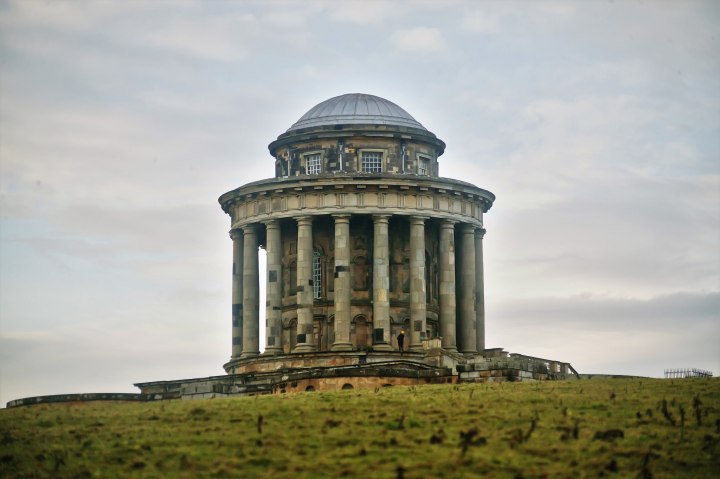
Nicholas Hawksmoor, Howard Mausoleum at Castle Howard, North Yorkshire, 1729.
◊ ◊ ◊ ◊ ◊
From The Mausolea and Monuments Trust:
Resurrecting the Dead: The Mausolea and Monuments Trust 2018 Symposium
The Gallery, London, 13 October 2018
The theme of the symposium is the maintenance and restoration of funerary architecture and sculpture. We will explore the field through a range of approaches, with papers from some of the country’s leading curatorial and architectural professionals, showcasing a variety of significant subjects from their differing perspectives. The registration fee is £25. Thanks to generous support from the Society of Architectural Historians of Great Britain, we are able to offer eight free places to current university students (at any point in their education); to apply please send a short explanation of your current studies to fsands@soane.org.uk.
P R O G R A M M E
10.30 Coffee
11.00 Session One
• Bernadette Gillow (National Trust, Ightham Mote Portfolio), Darnley Mausoleum, Cobham: A Phoenix from the Ashes
• Paul Harrison (Harrison Design Development Ltd), Restoration at West Norwood Cemetery
• Amy Frost (Museum of Bath Architecture and Beckford’s Tower, Bath Preservation Trust), Landscape as Monument: The Suffragettes Wood in Bath
13.15 Lunch
14.15 Session Two
• Charles Wagner (Built Heritage Consultancy), Tom Drysdale (Historic Royal Palaces), and Gabriel Byng (Cambridge University), Just How Important Is That Pile of Stones? Or How Do You Convince Charitable Funders That It Is Worth Spending £¼Million on the Ruins of a Building of Absolutely No Practical Use?
• Christopher Ridgway (Castle Howard), The Castle Howard Mausoleum: Form, Function and Future
15.45 Tea
Symposium | Court Ceiling Painting around 1700
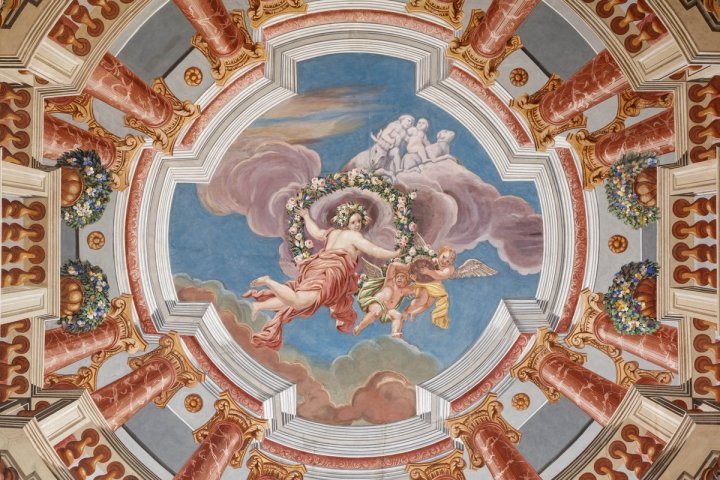
Galeriegebäude Hannover-Herrenhausen, Decke im Frühlingszimmer
© Bildarchiv Foto Marburg/CbDD/C. Stein/ T. Scheidt
◊ ◊ ◊ ◊ ◊
rom H-ArtHist (with a conference flyer available as a PDF file here). . .
Connecting across Europe? Ceiling Painting and Interior Design at the Courts of Europe, ca. 1700
Eine gemeinsame europäische Sprache? Deckenmalerei und Raumkünste an den europäischen Höfen um 1700
Gallery Building, Herrenhausen Gardens (Galerie Herrenhausen), Hanover, 13–15 September 2018
Registration due by 10 August 2018
International Symposium organized by the Corpus of Baroque Ceiling Painting in Germany (CbDD) based at the Ludwig-Maximilians-Universität in Munich (LMU); the German Documentation Centre for Art History – Bildarchiv Foto Marburg (DDK); and the Bavarian Academy of Sciences and Humanities (BAdW)—in cooperation with the City of Hanover, Herrenhausen Gardens; the Institute of History for Art and Musicology – IKM of the Austrian Academy of Sciences (ÖAW); and the Research Group for Baroque Ceiling Painting in Central Europe (BCPCE).
Project directed by Stephan Hoppe (LMU, Munich), Heiko Laß (LMU, Munich), Herbert Karner (ÖAW, Vienna)
 The Corpus of Baroque Ceiling Painting in Germany (Corpus der barocken Deckenmalerei in Deutschland) regards painting on walls and ceilings as a medium of pictorial representation. In a courtly context, mural painting would serve the sovereign to define his status within the court society, just as he did otherwise in the fields of architecture or interior design.
Around 1700, a formal and thematic change can be observed in the choice of these media of social distinction, especially at the courts north of the Alps. In the field of mural painting, it is striking in which way the ceiling was no longer divided into multiple fields, but preferably dominated by one single monumental painting. In this way, mural painting was able to define the room. Monumentality resided in scale, and a new form of illusionism became important. The inganno degli occhi, a highly sophisticated form of illusionism prevailed. Mural painting on ceilings gained autonomy, and as a medium, it followed its own logic. Furthermore, walls and ceiling could be integrated into one overarching decorative scheme. This change was not just a matter of form, but also a matter of content: glorifications and personifications were no longer represented in the old-established way and subject to dynastic formulas, but became more and more individualized and tailored for a specific patron.
Moreover, within the larger European context, mural painting should not be misunderstood as exclusively made in fresco or secco technique, or studied in isolation. The decision for oil painting on canvas or on walls or ceilings was for a longer period of time not only a question of quality or of the possibility to hire a specialist, but also a question of aesthetics. A large part of mural painting in Western, Central, and Northern Europe was painted on canvas and was adjusted onto ceilings and walls. Stucco did also play an important role and seems to have been applied especially in rooms of ‘higher rank’.
The symposium will link the described change to political, social, and cultural shifts in Europe around 1700. This artistic change occurred in parallel to a new position of power established by the monarchs, princes, and their states. The sovereigns were striving for an acknowledgment of their newly achieved status. Numerous territories and new princes within the Holy Roman Empire wanted to position their new rights of sovereignty, just as the kingdoms of England and Sweden or the court of the House of Orange in the Netherlands and, later, in England. Religious denomination played a marginal role in painting as opposed to politics. Despite their basically anti-Catholic orientation, motifs once established to mark protestant ideals, vanish, and patterns, before decidedly perceived as catholic, could be taken over generally. In this way, new forms of a supranational and trans-confessional culture of the courts and higher nobility developed in large parts of Europe.
Apparently, the rise of new dynasties and powers was responsible for the developments described above. The rise of the house of Bourbon and the house of Savoy and the descent of the Spanish Habsburgs in parallel are the most striking examples. An independent trend was the decline of artistic influence from the Netherlands in Northern Europe, giving way to a new influx of aesthetic ideas from France and Italy. This change turned out to be a cultural adjustment process that became apparent in almost all over Europe. Italy and France set the standard, and the Habsburgs did not succeed in gaining artistic dominance.
In addition to general overviews, the symposium will discuss examples from Austria, the Czech Republic, Denmark, England, France, Germany, Italy, the Netherlands, Poland, Spain, and Sweden. In this way, an attempt will be made to highlight connections and comparisons across Europe for the first time. The focus is exclusively on sovereigns and their courts. Sovereigns are understood as the monarchs and princes of Europe and the rulers over imperially immediate territories of the Holy Roman Empire. The States General of the Netherlands and the Republic of Venice were also sovereigns.
Numerous artists were active around 1700 and will be considered during the symposium. These include Jacques Foucquet, Luca Giordano, Daniel Marot, Sebastiano Ricci, Giuseppe Roli, Jerzy Eleuter Szymonowicz-Siemiginowski, Carpoforo Tencalla, Matthäus Terwesten, and Antonio Verrio. The aspect of cultural transfer and the import of artists initiated by clerical and secular clients will also be of interest. Mural painting is intended to be embedded into the development of the spatial arts in general.
The symposium will take place at the so-called Galeriegebäude in Hannover-Herrenhausen. This festive building of the Electors of Hannover is an outstanding example for the change in court culture around 1700. It was erected 1694/98 in the course of a rise in status of the patron and decorated with mural paintings by Tommaso Giusti.
The CbDD has reserved a room contingent for the conference participants until 31 July 2018, because two fairs and an additional conference are going to take place during our symposium. You can use this website for your booking.
The conference languages are German and English. Please keep in mind that it is not common practice in Germany to pay by credit card; take cash with you. The symposium fee is 20€ and will be paid in cash at the venue before the beginning of the symposium. Coffee/Tea and the visit to the Great Garden are included.
Please register until 10/08/2018 at
Corpus der barocken Deckenmalerei in Deutschland
Dr. Heiko Laß
Institut für Kunstgeschichte
Ludwig-Maximilians-Universität München
Zentnerstr. 31
D-80798 München
heiko.lass@kunstgeschichte.uni-muenchen.de
Symposium participants have the opportunity to purchase up to two tickets of the reduced price of 10€ each for the International Fireworks Competition, which will take place in the Great Garten at the night of 15 September, the final day of the symposium. The tickets must be reserved with the registration and paid in cash together with the conference fee.
T H U R S D A Y , 1 3 S E P T E M B E R 2 0 1 8
14:00 Opening of the Galeriegebäude
15:00 Introduction and Welcome
15:30 Session 1
• Steffi Roettgen (Munich), Götterhimmel und Theatrum sacrum – zur Erfolgsgeschichte der Deckenmalerei im barocken Italien
• Thomas Wilke (Stuttgart), Französisch – die gemeinsame europäische Sprache!? – Innendekoration und Deckenmalerei am französischen Hof um 1700
16:45 Coffee/Tea
17:15 Session 2
• Ulrike Seeger (Stuttgart), „weil es dauerhaffter ist und lufftiger aussiehet“. Die gänzlich freskierte Zimmerdecke um 1700 – Modus oder Medium?
• Heiko Laß (Munich), Das Galeriegebäude in Herrenhausen, die Stellung des Hannoverschen Hofs um 1700 und seine Wand- und Deckenmalerei
19:30 Dinner
F R I D A Y , 1 4 S E P T E M B E R 2 0 1 8
8:00 Opening of the Galeriegebäude
9:00 Session 3
• Sara Fuentes (Madrid), The Works of Luca Giordano to the Service of Charles II around 1700
• Herbert Karner (Vienna), Austria vor Jupiter: Deckenbildnerei in Schloss Schönbrunn um 1700
10:15 Coffee/Tea
10:45 Session 4
• Werner Telesko (Vienna), Thematische Multiperspektivität. Die Grazer Katharinenkirche und das Haus Habsburg um 1700
• Martin Mádl (Prague), The Palace of Prince Bishop Carl II of Lichtenstein-Castelcorn in Olomouc and its Decoration
• Andrzej Kozieł (Wrocław), A Jesuit Academy as a Symbol of Habsburgian Power: The Building of the University of Wrocław and its Fresco Decoration
12:40 Lunch
14:00 Session 5
• Ute Engel (Munich), Deckenmalerei und ‘Schönbornscher Reichsstil’? Lothar Franz von Schönborn als Auftraggeber in Bamberg, Mainz und Pommersfelden
• Konrad Pyzel (Warsaw-Wilanów), King Jan III Sobieski’s Wilanów Residence: Universal Patterns, Universal Stories — Unique Iconographical Message?
15:15 Coffee/Tea
15:45 Session 6
• Doris Gerstl (Erlangen/Regensburg), Aristokratie versus Monarchie? Zu Klöcker von Ehrenstrahls Deckenbild im Stockholmer Riddarhuset
• Martin Olin (Stockholm), War and Peace: Jacques Foucquet’s Paintings in the State Apartment of the Royal Palace in Stockholm
17:00 Coffee/Tea
17:20 Session 7
• Thomas Lyngby (Hillerød), The Audience Chamber of Frederiksborg Palace
S A T U R D A Y , 1 5 S E P T E M B E R 2 0 1 8
8:30 Opening of the Galeriegebäude
9:00 Session 8
• Margriet van Eikema Hommes (Delft), The Oranjezaal in Huis ten Bosch
• Alexander Dencher (Leiden), Daniel Marot as a Designer of Wall and Ceiling-Painting in the Age of William and Mary
10:15 Coffee/Tea
10:45 Session 9
• Lydia Hamlett (Cambridge), Mural Cycles of the Later Stuart Courts: Continental Influences and British Reception
• Christina Strunck (Erlangen), Flammende Liebe, höfische Intrigen und internationale Politik. Antonio Verrios Ausmalung des Queen’s Audience Chamber in Windsor Castle
13:00 Lunch
14:00 Session 10
• Elisabeth Wünsche-Werdehausen (Munich), Genealogie versus Mythologie: Die Galleria di Daniele im Palazzo Reale und die Tradition savoyischer Raumausstattung in Turin
• Martina Frank (Venice), Neue Decken für neue Räume. Der Wandel im venezianischen Palast- und Villenbau
15:15 Heiko Laß (Munich), Summary and final comments
18:00 Opportunity to visit the International Fireworks Competition in the Great Garden
Symposium | China in Austria
From H-ArtHist:
China in Austria: Reception and Adaptation of East Asian Art in Central Europe
Department of Art History, University of Vienna, 29 June 2018
The workshop China in Austria aims to discuss the reception of and engagement with East Asian art in Central Europe. The workshop is part of a long-term project conducted by staff and students of Asian Art History at the Department of Art History at the University of Vienna. The project aims to evaluate the role of East Asian art in the material culture and society of Austria and its environs. This event is organised through the support of the Faculty of Historical and Cultural Studies of the University of Vienna. Free admission with registration (required). Please contact alexandra.wedekind@univie.ac.at.
P R O G R A M M E
9:00 Registration
9:15 Morning Session
• Lukas Nickel (Institut für Kunstgeschichte, Universität Wien), China in Austria
• Stacey Pierson (School of Oriental and African Studies, London), Chinoiserie or Imitation? Du Paquier, Porcelain, and Responses to China through Design in Early 18th-Century Vienna
• Johannes Wieninger (Museum für Angewandte Kunst Wien), Use, Decoration, and Inspiration: East-Asian Porcelain and the Vienna Porcelain Manufactory
• Elfriede Iby (Schloss Schönbrunn, Wien), The East Asian Cabinets of Schönbrunn Palace and the Problem of Missing Records and Sources
12:45 Lunch break
14:30 Afternoon Session
• Lucie Olivová (Masarykova Univerzita, Brno), Chinese Cabinets with Czech-Made Murals
• Greg M. Thomas (Hong Kong University), The Queen’s Décor: Chinoiserie Lacquer from Vienna to Fontainebleau
• Bernhard Fuehrer (School of Oriental and African Studies, London), Glimpses into Chinese Literature and Language Studies in Austria: August Pfizmaier (1808–1887) and Leopold Woitsch (1868–1939) in Light of the Holdings of the National Library
• Alexandra Wedekind (Institut für Kunstgeschichte, Universität Wien), The Gotha-Vienna-Connection of 1869: Albums Presented by the Tenno to European Rulers
18:00 Discussion led by Lothar Ledderose (Universität Heidelberg)
Symposium | L’art de l’Ancien Régime: Sortir du rang
From the conference programme:
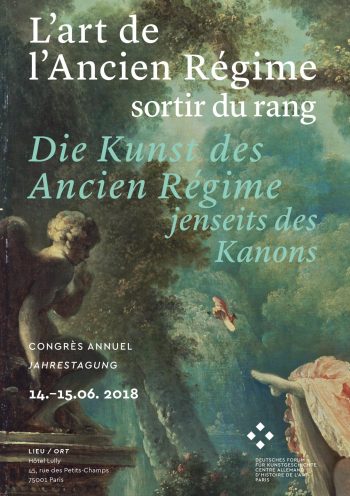
L’art de l’Ancien Régime: Sortir du rang / Die Kunst des Ancien Régime: Jenseits des Kanons
Deutsches Forum für Kunstgeschichte Paris / Centre allemand d’histoire de l‘art, Paris, 14–15 June 2018
 L’histoire des productions artistiques de l’Ancien Régime s’est principalement focalisée sur les grands acteurs, les « beaux-arts », les institutions les mieux documentées, Paris, d’autres capitales et les cours, pour lesquels nous disposons désormais de solides connaissances. En revanche, les artistes, œuvres, techniques et foyers qui échappent aux grands courants historiographiques restent peu étudiés, ou ont été traités sous forme d’études de cas isolées. À cette histoire de l’art « par le haut » commence à se substituer une histoire plus attentive aux acteurs secondaires, aux médiateurs, aux effets et aux modes de circulation des personnes, des objets et des savoirs. Celle-ci nous place face à d’importants défis méthodologiques, nous invitant à appréhender de nouveaux thèmes, à renouveler les approches.
Ce colloque vise à décentrer le regard sur les phénomènes artistiques de l’Ancien Régime afin de mieux saisir la complexité de la culture visuelle et matérielle de l’époque. L’attention sera portée sur les circulations artistiques et la mobilité des objets et des acteurs selon une perspective européenne et globale. À l’échelle de la France, il s’agira d’interroger la diversité des pratiques artistiques sur l’ensemble du territoire et les interactions entre « centre » et « périphérie ». La construction des savoirs artistiques sera abordée selon la dynamique des transferts entre savoirs pratiques, techniques et scientifiques. Il s’agira également d’étudier la participation du fait artistique au fait social, et de réviser les hiérarchies établies par l’historiographie concernant les acteurs des mondes de l’art. Revisiter l’histoire de l’art de l’Ancien Régime nécessite enfin une approche critique des objets : les arts « décoratifs » et les genres « mineurs » seront à examiner en rapport avec les discours théoriques, l’évolution du marché ainsi que les pratiques de collection et d’aménagement domestique comme urbain, afin de privilégier une lecture qui souligne l’importance de l’expérience vécue et des propriétés matérielles des œuvres dans les différents contextes de production et de réception.
Conception
Matthieu Creson, Pascale Cugy, Sarah Grandin, Ulrike Keuper, Thomas Kirchner, Déborah Laks, Camilla Pietrabissa, Sophie Raux, Marlen Schneider, Caroline Soppelsa, Maël Tauziède-Espariat, Sarah Ubassy-Catala, Hadrien Volle
J E U D I , 1 4 J U I N 2 0 1 8
9.00 Accueil des intervenants
9.30 Introduction, Thomas Kirchner (DFK Paris) et Sophie Raux (Université Lumière Lyon 2 – LARHRA)
10.00 1. Relocaliser l’ « Ancien Régime »
• Sarah Catala et Matthieu Creson, Introduction et modération
• Anne Lafont (EHESS, Paris), Quelle histoire de l’art africain sous l’Ancien Régime? Sources, méthodes, perspectives
• Hendrik Ziegler (Philipps-Universität Marburg), Exposer les armes de l’autre: quelques réflexions sur la présentation d’objets turcs dans les collections européennes à l’époque moderne
• Anne Perrin Khelissa et Émilie Roffidal (Laboratoire FRAMESPA UMR 5136, Université Toulouse – Jean Jaurès), Réseaux des académies d’art provinciales et dynamiques des circulations au XVIIIe siècle
12.45 Pause déjeuner
14.00 2. Dépasser les hiérarchies
• Caroline Soppelsa, Hadrien Volle, Introduction et modération
• Valérie Nègre (Université Paris 1 Panthéon-Sorbonne), Architectes et entrepreneurs: se défaire des catégories ?
• Charlotte Guichard (CNRS / ENS, Paris), L’art et la marchandise: Signer le tableau dans le Paris des Lumières
• Carl Magnusson (The Getty Research Institute / Université de Lausanne), Entre centre et périphérie: les discours sur la décoration dans la France du XVIIIe siècle
17.30 Visite dans le quartier Richelieu, Isabella di Lenardo (École Polytechnique Fédérale de Lausanne)
V E N D R E D I , 1 5 J U I N 2 0 1 8
9.30 3. (Dé)construire l’ordre social
• Ulrike Keuper, Camilla Pietrabissa, Maël Tauziède-Espariat, Introduction et modération
• Fanny Cosandey (EHESS, Paris), Reproduire et déplacer: La répétition cérémonielle, entre fixation des places et dynamiques sociales
• Melissa Hyde (University of Florida), In Recovery: Some Forgotten Women of the Académie and Beyond
• Mechthild Fend (University College London), Marguerite Le Comte’s Smile: Portrait of an Amatrice
12.15 Pause déjeuner
13.30 4. Appréhender l’objet
• Pascale Cugy et Sarah Grandin, Introduction et modération
• Peter Fuhring (Fondation Custodia, Paris), L’aiguière en jaspe sanguin du XIVe siècle et sa monture en or du XVIIIe siècle de la collection du musée Gulbenkian: l’appréciation des matériaux, du travail de l’orfèvre et du « dessein »
• David Pullins (The Frick Collection, New York), A Boucher Room: Time, Authorship, and Medium
• Katie Scott (The Courtauld Institute, London), Objects of Learning: Oppenord’s Ripa and Saint Aubin’s Pernety
16.45 Sophie Raux et boursiers du sujet annuel, Conclusion du colloque
Cocktail de clôture
Symposium | Water in Historic Gardens
From H-ArtHist:
Water in Historic Gardens as an Aesthetic Category and Natural Resource
Berlin-Brandenburg Academy of Sciences and Humanities, 19 June 2018
Registration due by 13 June 2018
In historic gardens and parks, water is both an essential aesthetic category and an indispensable natural resource. Water appears in a wide range of forms: outstretched lakes, bubbling fountains, or gentle ponds. Exploring a garden from its waterways optimally complements a stroll through the grounds—something visitors still love to do up to the present day.
Historic gardens—traditionally created as a Gesamtkunstwerk, embracing architecture, architectural staffages, and monuments within a natural setting—are highly dependent on the supply of water for very different types of vegetation. Consequently, the increasing number of drought events in the growing season and extreme summer heat as well as rapidly sinking groundwater tables may seriously affect the vitality of plants and trees. Likewise, raising groundwater can also be a major threat by impeding trees to grow roots into the deeper soil, hence, losing anchorage and thus becoming more susceptible to windthrow during storms.
This international symposium provides an opportunity to discuss such impacts and possible solutions to safeguard our historic parks and gardens with experts from Eastern Europe, with special focus on their relevance and applicability to the region of Berlin-Brandenburg.
Registration is available here»
P R O G R A M M E
2.00 Christoph Markschies (Vice-President of the Academy, HU Berlin), Introduction
2.15 Session 1
• Alexandra Veselova (Russian Academy of Sciences, St. Petersburg), The Water System of the 18th-Century Garden in Bogoroditsk (Tula region)
• Andrej Reyman (St. Petersburg), Water Fantasy in the Neva Delta: A Variety of Water Devices in the Gardens of St. Petersburg, 18th–20th Centuries
4.00 Coffee break
4.25 Session 2
• M. Norton Wise (University of California, Los Angeles), On the Social Aesthetics of Water and Steam in the Landscape Gardens of 19th-Century Berlin
• Vela Portugalskaya (The State Russian Museum, St. Petersburg), Hydrosystem of the Gardens of the Russian Museum in St. Petersburg: Its Transformation and Impact
• Boris Sokolov (Russian State University for the Humanities, Moscow), Aesthetics and Sustainability in the Russian Water Parks, from the Baroque to 21st Century
7:00 Closing Discussion
Chair: Christoph Markschies (Vice-President of the Academy, HU Berlin)










leave a comment