Conference | Lost Mansions and Country Estates
From the conference programme:
Lost Mansions and Country Estates
Wivenhoe House, University of Essex, Colchester, 13 July 2013

Marks Hall, Coggeshall, Essex, engraving by John Carr Armytage, 1833. The house was destroyed in 1950; the site is now an archeological excavation.
The conference will offer a broad historical context for the destruction of great houses in modern Britain, asking questions about the causes of their loss, the representation of lost mansions and estates at the time of their disappearance, and contemporary resurgent interest in the ‘great estate’. At issue will be the nature of ‘heritage’, the relevance of conservation, and our understanding of proprietorship and estate management in times of social, political and economic transformation. What was the place of the great house in local society, politics and economy, and how does this relate to the popular romanticisation of the great house from Brideshead to Downton?
◊ ◊ ◊ ◊ ◊
P A R T 1 — Wivenhoe House, University of Essex, Colchester
10:30 Registration and welcome over coffee (James Raven)
10:45 Session 1: Irish Mansions
• Terry Dooley (National University of Ireland, Maynooth): ‘The Disappearance of Irish Country Mansions, 1879-2013.’
• Ian d’Alton (Co. Kildare, Ireland): ‘An Aesthetic of Living: Bowen’s Court, Co Cork, and Its Significance in the Imagining of the Irish Gentry’
11:45 Session 2: Rescue and Ruin
• Christopher Ridgway (Castle Howard Estate, Yorkshire): ‘Castle Howard: Lost and Saved’
• Michael Davis (West of Scotland): ‘Better Off As Ruins? The Scottish Castle Restoration Debate’
12:45 Lunch
13:15 Session 3: The Country Estate and General Loss
• Jon Stobart (University of Northampton): ‘Lost Aspects of the Country Estate’
• Barbara Wood (National Trust, South West Region): ‘The Loss of Country Houses and Estates through the Destruction and Obscuring of Identity’
• John Harris (1975 exhibition organiser, London): ‘Empty Country Houses and the Destruction Exhibition in 1975’
W.M. Roberts will sign copies of his book Lost Country Houses of Suffolk during the registration and lunch periods.
P A R T 2 — Marks Hall, Coggeshall
14:45 Coaches to Marks Hall (assemble outside the main entrance to Wivenhoe House)
15:15 Tea at Marks Hall Visitor Centre
15:30 James Raven (University of Essex): ‘The Lost Mansion of Marks Hall’
16:00 Tour of the Marks Hall mansion site and estate
17:00 Discussion at Marks Hall Visitor Centre
18:00 Coaches back to University
Registration: Karen Shields, ‘International History Conference: Lost Mansions and Country Estates’, Departmental Administrator, Department of History, Room 5NW.7.20, University of Essex, Wivenhoe Park, Colchester, Essex, CO4 3SQ. Cheques payable to ‘The University of Essex’. £25; £15 for student concessions.
Symposium | Sculptural Mobilities
From the conference website:
Sculptural Mobilities
University College London, 3 July 2013
 Tracing the flows of sculptural artworks between the Nordic Countries and Europe from the early modern period to the present day
A one-day symposium organised collaboratively by University College London’s Department of Scandinavian Studies, and Kingston University’s Visual and Material Culture Research Centre. This symposium is funded by the Henry Moore Foundation.
This interdisciplinary symposium investigates the cultural mobility of sculptural artworks. Positioning the Nordic Countries as a contact zone of sculptural exchange, the project traces the flows of artworks to and from the Nordic Countries and Europe and examines the impacts these flows generate on both local/regional contexts of display and the nature of the sculptural artwork itself. Histories of sculpture within the Nordic region are arguably under-studied and the region’s influence upon and translation of influences from the wider Europe remain insufficiently traced. Our symposium emphasises the Nordic Countries’ important role as an interstice between the East, West and the North, and to bring to light individual histories of sculptural mobility from the early modern period onwards.
Stephen Greenblatt has defined cultural mobility as ‘the restless process through which texts, images, artefacts, and ideas are moved, disguised, translated, transformed, adapted, and reimagined in the ceaseless, resourceful work of culture.’ The sculptural artwork by contrast is often imagined as static and fixed, stable and immutable. To what extent is the sculptural artwork changed by transcultural recontextualisation? What is the potential for movement to compel a performative response within the moving object itself – what are the ways in which it is materially made to move via this process of transcultural exchange? Conversely, how do sculptures impact their new contexts of display? To what extent do moving sculptures confirm or critique the complexity, interdependence and instability of ‘localised’ cultures?
◊ ◊ ◊ ◊ ◊
T U E S D A Y , 2 J U L Y 2 0 1 3
7.30pm Thorvaldsen (1949) by Carl Theodor Dreyer (Wilkins Gustav Tuck Lecture Theatre, UCL) — Screening and lecture by Claire Thomson (Lecturer in Scandinavian Film and Head of UCL Scandinavian Studies) followed by an informal reception in the Wilkins North Cloisters, UCL.
W E D N E S D A Y , 3 J U L Y 2 0 1 3
9.00 Sara Ayres and Elettra Carbone / Claire Thomson and Fran Lloyd — Introduction and welcome
9.30 Panel 1: Courtly Patronage and Sculptural Mobilities
• Francesco Freddolini (Assistant Professor of Art History at Luther College, University of Regina, Canada), Denmark and the International Mobility of Italian Sculpture, ca. 1709-1725
• Cynthia Osiecki (PhD Fellow, Interdisciplinary Research Training Group ‘Baltic Borderlands’ at the Ernst-Moritz-Arndt-Universität, Greifswald), The Import of Flemish Sculpture into Sweden’s Courts in the Second Half
of the Sixteenth Century
• Kristoffer Neville (Alexander von Humboldt Fellow at the Technical University in Berlin), A Gothic Neptune: Georg Labenwolff’s Sculpture for the Danish Court, 1575-1583
11.00 Coffee break
11.30 Panel 2: Danish Myth, Italian Maestro: The Unveiling of Bertel Thorvaldsen
• Stig Miss (Director of The Thorvaldsen Museum), The Making of Sculptural Awareness in Copenhagen: The Contribution of the Works of Thorvaldsen
• Elettra Carbone (Teaching Fellow in Norwegian, University College London), Reading Sculpture: The Remediation of Thorvaldsen’s Sculpture in Printed Culture
• David Bindman (Emeritus Durning-Lawrence Professor of the History of Art, University College London), The Original Drawings for Thiele’s Biography of Thorvaldsen in the UCL Library
1.00 Lunch break — There will be time to view the one-day exhibition Rediscovered: Unique Thorvaldsen Portfolios held by UCL Special Collections alongside Karin Lowenadler’s Standing Male Nude (1936)
2.00 Panel 3: Post-War Sculptural Exchange between Britain and the Nordic Region
• Frances Lloyd (Associate Dean Research & Enterprise, Faculty of Art, Design & Architecture, Kingston University), ‘Back in from the Cold’: Karin Jonzen’s Commissions for the World Health Organisation
• Christina Brandberg (PhD Candidate, University of Hull), Henry Moore in the Nordic Countries: The First Two One-Man Shows in 1952
• Sara Ayres (Postdoctoral Researcher, Faculty of Art Design and Architecture, Kingston University), Transfiguring Memorials in Norway and Britain
3.30 Coffee break
4.00 Panel 4: Curatorial Mobilities
• Linda Hinners (Curator of Paintings and Sculpture, National Museum, Stockholm), Establishing a Platform for National Sculpture Production: The Recruitment of French Sculptors to Sweden during the Seventeenth and
Eighteenth Centuries
• Liisa Lindgren (Senior Curator, Parliament of Finland, Helsinki), Sculpture Hand in Glove with Architecture: The Sculpture Collection at the Finnish Parliament
• Marjorie Trusted (Senior Curator of Sculpture, V&A), Medieval Scandinavia and Victorian South Kensington
5.30 Concluding remarks and final discussion, chaired by Marjorie Trusted
6.00 Drinks
7.00 Conference dinner for speakers and guests
Conference | Collecting Nature
From the program for the Collecting Nature conference:
Collecting Nature
Kloster Irsee, Swabia, Germany, 24-27 May 2013
Organized by Sylvia Heudecker and Andrea Gáldy
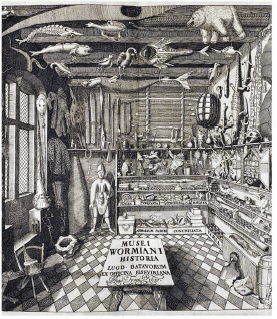 Research in the history of collecting has often focused on collections of works of art and artefacts, even though the mediaeval and early modern kunst- and wunderkammern harboured both artificialia and naturalia from their very inception. In fact, some of the keenest collectors of art and antiquities, such as Cosimo I de’ Medici or the Saxon electors, were particularly renowned for their interest in the natural sciences, including geography, botany, and zoology. What started as a mass of curiosities – e.g. prepared animals, skeletons, minerals, and metal ore – soon was transformed into an insatiable quest for knowledge that was furthermore fanned by the age of exploration and the exploitation of far-away countries. Papers in this conference will focus on the intersection between the history of collecting and the history of science, while not forgetting the monastic or courtly context of provenance and display.
Irsee is a particularly interesting venue for in the eighteenth century Pater Eugen Dobler had set up a much admired bird cabinet. Although no trace of this cabinet remains, the room itself still exists and will be used for the conference’s academic sessions. International scholars will be presenting, the conference language is English.
◊ ◊ ◊ ◊ ◊
F R I D A Y , 2 4 M A Y 2 0 1 3
6.00 Evening reception plus short introduction to the conference
Susanne Formanek (Institut für Kultur- und Geistesgeschichte Asiens, Vienna), Collecting and Displaying Nature in Early Modern Japan
7.30 Dinner
S A T U R D A Y 2 5 M A Y 2 0 1 3
9.00 Andrea Gáldy and Sylvia Heudecker, Welcome
‘Naturalia’ and ‘Sculpture’ after Nature
9.15
• Rachel King (Pinakothek und Nationalmuseum, Munich), Collecting Nature within Nature: Animal Inclusions in Amber in Early Modern Collections
• Lisa Skogh (Stockholms Universitet), Bergwerke and Handsteine in the Royal Swedish Collections, 1654–1720
• Discussion
10.30 Coffee / Tea
11.00
• Angelica Groom (The Open University, Milton Keynes), Animal Collecting at the Medici Court in Florence: Real, Stuffed and Painted Beasts as Evidence of Shifting Values in the Display and Conceptualisation of the Zoological ‘Other’
• Virginie Spenlé (Kunstkammer Georg Laue, Munich), Casting from Nature: Wenzel Jamnitzer’s Metal Works for
Kunst- and Wunderkammern
• Discussion
12.30 Lunch
Nature and Naturalia Indoors
2.00
• Marcell Sebők (Central European University, Budapest), Wonders on the Walls: Visual Presentations and Displaying Nature and Knowledge in Early Modern Private Collections
• Giada Damen (Princeton University), Collecting and Cataloguing Art and Nature in a Venetian Palazzo
• Discussion
3.30 Coffee / Tea
4.00
• Ivo Raband (Universität Bern), An Archducal Collection in Brussels: Archduke Ernest of Austria and His Collecting Ambitions
• Shep Krech III (Brown University, Providence), Catesby’s Birds
• Discussion
7.00 Dinner
S U N D A Y , 2 6 M A Y 2 0 1 3
9.00 Optional tour of Kloster Irsee
10.15 Optional Roman Catholic Mass
The Display of Naturalia: Libraries and Wunderkammern
11.15
• Barbara Tramelli (Max-Planck-Institut für Wissenschaftsgeschichte), Nature and Grotesques: Pirro Visconti Borromeo and the Collection in His Villa of Lainate
• Inga Elmqvist Söderlund (Museum of the History of Science, Oxford University), Scientific Instruments in the Ideal Early Modern Library
• Discussion
12.30 Lunch
2.00
• Miriam H. Kirch (University of North Alabama, Florence), A Princely Plant Collector in Renaissance Germany
• Joy Kearney (Radboud Universiteit Nijmegen), Ornithology in the Dutch Golden Age: Captured Specimens and the Collecting of Exotica
• Discussion
3.30 Break
4.00
• Iordan Avramov (Bulgarian Academy of Sciences, Sofia), The Correspondence of Henry Oldenburg and Circulation of Objects at the Early Royal Society of London, 1660–1677
• Anne Harbers (University of Sydney), Carl Linnaeus and the Natural History Collections of Lovisa Ulrika of Sweden at Drottningholm Palace
• Discussion
5.00 Coffee / Tea
5.30 Keynote Speech — Dornith Doherty (University of North Texas, Denton), Archiving Eden
7.00 Dinner
M O N D A Y , 2 7 M A Y 2 0 1 3
Visit to the Südsee Museum, Obergünzburg and Kloster St Ottilien (Missions Museum) with lunch at the St Ottilien Biergarten
T U E S D A Y , 2 8 M A Y 2 0 1 3
Tour of the Museum of the Abbey Ottobeuren in the morning
Conference | Itineraries of Artistic Mobility in Europe and Asia
From the Freie Universität Berlin:
The Itineraries of Art Topographies of Artistic Mobility in Europe and Asia, 1500-1900
Museen Dahlem and Freie Universität, Berlin 23-25 May 2013
Annual conference of the DFG Research Unit 1703 Transcultural Negotiations in the Ambits of Art: Comparative Perspectives on Historical Contexts and Contemporary Constellations. Organized by Project Area B Transgressive Itineraries and Transcultural Aesthetics of Artistic Exchange in cooperation with the DFG Research Project Landscape, Canon and Intermediality in Chinese Painting of the 1930s and 1940s.
The conference discusses the interaction between routes as channels of communication and as modes of artistic experience in Europe and Asia. While recent scholarship has devoted attention to the economic and political historiographies of road-systems, this conference will focus on routes as stimuli of cultural transfer and artistic production. Addressing interactive overland and maritime networks as itineraries of contact and catalysts of artistic exchange will underscore the cultural agency of routes and interconnections. Framed in the historiography of longue durée, routes may be addressed as trajectories that cut across culturally determined geographies and periodizations. The conference concentrates on the sixteenth through nineteenth centuries and thereby foregrounds a period characterized by the unprecedented expansion and transformation of pre-existent route-networks. In the wake of the first global circumnavigation in 1522, the connection of overland-roads and maritime routes triggered new dynamics of transcontinental entanglements.
The conference aims at parallel perspectives on both Western Europe and East Asia, geographical regions that imagined each other as ›natural‹ terminus points of the ancient Eurasian trade networks. Consequently, new combinations of transcontinental telluric and nautical routes profoundly affected such predominant cultural topographies and symbolic paradigms. The rise of Asian and European port cities as nodes of maritime systems and prosperous cultural contact zones, often at the expense of inland metropoles, bespeaks this fundamental shift. By the end of the nineteenth century this process entered its end-stages; it is hardly coincidental that in this period, marked by colonialism and nationalism, some of the most enduring narratives of pre-modern routes evolved. To relate the proliferation of routes in the Early Modern era to art and artistic practices is also to engage with not only the actual translocation of persons, animals and objects, but with protocols and mechanisms of control and constraint. Furthermore, it is crucial to pose the question of how the visual arts in diverse historical and cultural contexts contributed to the fabrication of collective imaginations about routes past and present, as well as long-distance journeys. Parallel enquiries of practices and tropes of artistic mobility in Western Europe and East Asia enable the reconsideration of previously separate research in the agency of routes pursued at the intersection of the histories of art, cross-cultural transfer and entanglement.
◊ ◊ ◊ ◊ ◊
T H U R S D A Y , 2 3 M A Y 2 0 1 3
18:00 Gregor Stemmrich (Berlin), Opening
18:15 Karin Gludovatz (Berlin), Joachim Rees (Berlin), Introduction
18:30 Christian Kravagna (Vienna), When Routes Entered Culture: Histories and Politics of Transcultural Thinking
F R I D A Y , 2 4 M A Y 2 0 1 3
9:30 Klaas Ruitenbeek (Museum für Asiatische Kunst, SMB), Welcome Remarks
Art/Histories of Routes – A Transcultural Paradigm?
9:45 Joachim Rees (Berlin), Introduction
10:00 Monica Juneja (Heidelberg), Tracking the Routes of Vision in Early Modern Eurasia
11:00 Michael North (Greifswald), Tracking European and Chinese Objects of Art in the Indian Ocean, 17th
and 18th Centuries
12:00 Lunch Break
13:30 Eugene Wang (Cambridge, MA), Why was there no Chinese Painting of Marco Polo? The Limits of
Itinerancy-Themed Art Historical Inquiry
14:30 Melanie Trede (Heidelberg), Sea Routes to the Mainland: Identity Politics and the Formation of a Cultural Memory in Japanese Pictorial Narratives
15:30 Coffee Break
Symbolic Itineraries and Topographies – Framing Roads and Routes
16:00 Juliane Noth (Berlin), Introduction
16:15 Evelyn Reitz (Berlin), Transcultural Ballast. Netherlandish Tiles as Vehicles of Exchange
17:15 Sophie Annette Kranen (Berlin), The Historicity of the Route in the Atlas of James Cook’s Third Voyage
S A T U R D A Y , 2 5 M A Y 2 0 1 3
10:00 Elizabeth J. Kindall (St. Paul), Geo-Narrative in Seventeenth-Century China
11:00 Julia Orell (Zürich), The River as Personal Itinerary and Painting Lineage: Ten Thousand Miles along the Yangzi in Late Ming and Early Qing China
12:00 Lunch Break
Crossroads, Hubs and Centers – Art Forms of Interaction
13:30 Evelyn Reitz (Berlin), Introduction
13:45 Jessica Stewart (Munich), Accommodating Exotica, Incorporating Strangers: Displacement, Domestication and the Antwerp Market
14:45 Joachim Rees (Berlin), Nora Usanov-Geißler (Berlin), Harboring Expectations: The Littoral as Contact Zone in the Visual Arts of Japan and the Netherlands, ca. 1570-1630
15:45 Coffee Break
16:15 Yu-Chih Lai (Taipei), Court and Cultural Exchanges: A Study of the Album of Birds Produced at the Qing Qianlong Court
17:15 Ulrike Boskamp (Berlin), Art, Topography and Identity in a Military Hub: Representing the Portsmouth Area in the Revolutionary and Napoleonic Wars
Symposium | Textile Translations
From the conference website:
Textile Translations: Intermedia Processes of Textile Transfer in the Arts
University of Zurich, 6-7 June 2013
Organised by Anika Reineke and Anne Röhl (ERC-Project “Textile – An Iconology of the Textile in Art and Architecture,” University of Zurich)
Processes of transfer and translation are crucial to the production and fashioning of textile materials: In the production of textiles, images taken from other media are submitted to the structure of warp and weft or translated into loops, stitches and knots. Thus, every textile technique requires translations and alterations of the original draft, even if the relation of the transferred subject or pattern to the media varies according to the technique: In the case of a woven image or a textile print, image and support are inseparable, though an embroidered motif, however, can be clearly distinguished from its backdrop. Translations into the textile and vice versa inevitably entail variation, mutation and adaptation. In this way translation processes leave traces inscribed in the particular object.
Because of the variety of manufacturing processes and their flexibility and malleability as material, technique, medium and metaphor, textiles provide a number of starting points for future research on processes of transfer. The symposium Textile Translations seeks to investigate these. In doing so, it is not the intent to focus on the alleged hierarchy of the original and the copy – or a comparison of before and after – but rather on the process of translation and its effects and implications. In this regard, textiles can be positioned at the beginning and end of such processes, or even due to their flexibility and adaptability, embody transitory conversion. Focusing on the process as the ‘inbetween’, the interactions of textiles and other media are the main concern of the symposium.
◊ ◊ ◊ ◊ ◊
T H U R S D A Y , 6 J U N E
14:00 Anika Reineke and Anne Röhl (University of Zurich), Welcome and Introduction
I. Appropriation of Textile Crafts
Chair: Merel van Tilburg (University of Geneva)
14:15 Leena Crasemann (Freie Universität Berlin), Sewing. Unravelling. Cutting. Of Sewn Everyday Things and Textile Art Objects
14:45 Sara Martinetti (EHESS/INHA, Paris), The Fabricated Image. Pictorial and Textile Situations in the Work of
Robert Gober
15:15 Discussion
15:30 Caroline Schopp (University of Chicago) “…draw him from behind”. The Roth-Wiener Tapestry Collaboration,
1974–1998
16:00 Discussion
16:15 Coffee
II. Textile Transfer
Chair: Anne Röhl (University of Zurich)
16:45 Kathrin Fehringer (University of Erfurt), Textile Handarbeit als Raumkonstitutiv: Das Bild des ‚hortus conclusus’ in Flauberts Madame Bovary
17:15 Johanna Függer (University of Vienna), Hanna(h) Höchs Stickerei der Avantgarde
17:45 Discussion
F R I D A Y , 7 J U N E
9:30 Coffee and Welcome
III. Translations of Motifs, Patterns, and Objects
Chair: Anika Reineke, Tristan Weddigen (University of Zurich)
9:45 Vera-Simone Schulz (KHI, Florenz), Text(ile)s Translated. Woven Words in 14th-Century Italian Painting
10:15 Ariane Koller (University of Berne), Gewirkte Wissenschaft – Kartographierte Geschichte. Intermediale
Transferprozesse zwischen Tapisserien und Karten
10:45 Discussion
11:00 Coffee
11:15 Liza Oliver (Northwestern University, Chicago), Don Quixote in 18th-Century India. Translation and Migration of Indian ‘Kalamkari’ Textile Designs for France
11:45 Karin Westphal-Erikson (University of Copenhagen), Porous ‘Paintings’ – Asger Jorn’s Textile Art in between Painting and Architecture
12:15 Discussion
13:00 Closing remarks
Study Day | Le sens du métier: identité et organisation
From Entre art et industrie:
Le sens du métier : identité et organisation dans les métiers
d’art et d’industrie en France (XVIIe-XXe siècles)
Université Paris, 31 May 2013
 L’historiographie a longtemps fait de l’organisation corporative le pilier institutionnel du monde des métiers sous l’Ancien Régime, s’enfermant ainsi dans un débat opposant « corporatisme » et « libéralisme », et faisant des lois de 1791 l’aboutissement d’un long combat des libéraux contre le supposé archaïsme des communautés d’arts et métiers. Depuis une vingtaine d’années, cette vision ancienne a été complètement révisée : il importe de distinguer entre l’exercice d’une profession et l’appartenance à une corporation ; toutes les professions ne sont pas uniformément « instituées » en métiers corporés ; les réalités professionnelles sont bien plus diverses ; enfin, la dissolution des corporations en 1791 n’a pas supprimé tous les besoins organisationnels ou réglementaires, pas plus que les représentations identitaires des différentes professions artisanales. Ainsi, d’une part, la conscience d’une appartenance professionnelle a existé sous l’Ancien Régime en dehors de la forme corporative, et d’autre part, les identités de métier ont continué d’exister après l’abolition des corporations.
Cette journée d’études est consacrée au cas des professions d’art, qui oscillent entre « art » et « industrie » dans les représentations communes, et se situent précisément bien souvent en dehors du système corporatif : comment penser alors l’identité de métier, quand le savoir-faire ne s’incarne pas dans une forme instituée susceptible de cristalliser et manifester à la fois une appartenance collective, de découper un « eux » et un « nous » ? Quel sens, en somme, peut avoir le métier sans corporation ?
◊ ◊ ◊ ◊ ◊
9.45 Accueil, café/thé
10.00 Introduction : Philippe Minard, Audrey Millet (IDHE-Paris 8)
10:15
• Lesley Miller (Victoria and Albert Museum, Londres), Un pied dans la Grande Fabrique. Les dessinateurs de la soierie lyonnaise au XVIIIe siècle
• Audrey Millet (Université Paris 8, IDHE), Dessiner des indiennes de Pondichéry à New-York : une organisation en réseaux (XVIIe-XIXe siècles)
11.15 Discussion : Corine Maitte (Université Paris-Est-Marne-la-Vallée)
12.00 Repas sur place
13.45
• Elodie Voillot (Université Paris Ouest – INHA), Unir, promouvoir et protéger : la Réunion des fabricants de bronzes (1818-1870)
• Eugénie Briot (Université Paris-Est-Marne-la-Vallée), Inspiration vs oxydoréductions : le métier de parfumeur au XIXe siècle, entre chimie et alchimie
• Jérémie Cerman (Université Paris-Sorbonne), L’atelier de dessin industriel de Robert Ruepp, une entreprise prédominante de la Belle Époque
15.15 Discussion : Patrick Verley (Université de Genève)
Conference | A Window on Antiquity: The Topham Collection
From the conference progamme:
A Window on Antiquity: The Topham Collection at Eton College Library
The Paul Mellon Centre for Studies in British Art, London, 17 May 2013
In collaboration with the University of Buckingham and Eton College, to accompany the exhibition Paper Palaces: the Topham Drawings as a Source for British Neo-Classicism (Eton College Library, Verey Gallery, 3 May–1 November 2013)
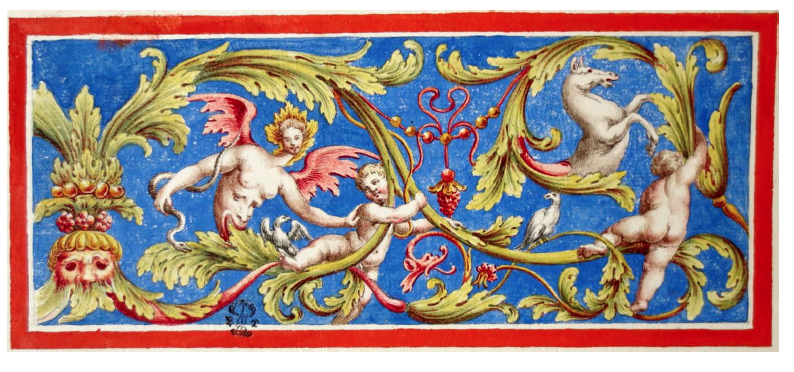
The Topham Collection
Consisting of 37 volumes and more than 3,000 items, the collection amassed by Richard Topham (1671-1730) is one of the most significant resources for the history of antiquarianism and for the culture and industry of the Grand Tour in Europe. This collection of drawings, watercolours and prints after antique sculptures and paintings in Rome and Italy is the largest of its kind assembled in England, surpassing in both scale and breadth those collected by other celebrated antiquarians such as John Talman, Dr Richard Mead or Thomas Coke, 1st Earl of Leicester.
Since its arrival at Eton in 1736 the Topham Collection has fascinated and served archaeologists, researchers investigating collections of antiquities and scholars of the history and reception of the classical tradition. The drawings have also attracted the attention of art historians, as Topham managed to assemble an extraordinary range of works by some of the best Italian draughtsmen of the first half of the eighteenth century, such as Pompeo Batoni, Giovanni Domenico Campiglia and Francesco Bartoli, or by artists who later excelled in other fields, including the architect William Kent. More recently it has also emerged that Francesco Bartoli‟s drawings of ancient ceilings and wall elevations in the collection were extensively copied and re-adapted by neo-classical architects such as Robert Adam, James Wyatt and Charles Cameron, becoming one of the most important sources for a decorative language that would spread over Europe.
However, despite the growing body of scholarship on the Topham Collection produced in recent decades, notably the work of the late Louisa M. Connor Bulman, a comprehensive study of the whole collection and of its role in eighteenth-century antiquarian and artistic culture is still wanting. This conference wishes to indicate new avenues of research and is intended as the first step towards an online catalogue of the whole collection.
◊ ◊ ◊ ◊ ◊
P R O G R A M M E
Abstracts are available here»
9:00 Registration
9:30 Lucy Gwynn (Eton College Library), Opening address and welcome
Session 1: The Topham Collection and Its Context: Antiquarianism and the Grand Tour Market
Chair: Ian Jenkins (British Museum) and Lucy Gwynn (Eton College Library)
9:50 Cinzia Maria Sicca (Università di Pisa), The Mind behind the collection: John Talman, antiquary and advisor to Richard Topham and Henry Hare, 3rd Baron Coleraine
10:20 Eloisa Dodero (Royal Collection Trust, Windsor Castle), Did Topham know of the ‘Museo Cartaceo’? The Paper Museum of Cassiano dal Pozzo and the Topham Collection of drawings
10:50 Novella Barbolani (Università di Roma La Sapienza) and Valentina Rubechini (Università di Firenze), Francesco Maria Niccolò Gabburri, John Talman and Richard Topham: artistic exchanges between Florence and Britain
11:20 Tea and Coffee
11:40 Bruno Gialluca (Independent Scholar), William Kent’s drawings after the Antique in the Topham and Holkham Collections
12:10 Lucia Faedo (Università di Pisa), The Topham Collection and the Roman palaces: British visitors to the Palazzo Barberini
12:35 Discussion
13:00 Lunch
Session 2: The Topham Collection and Its Archaeological Value
Chair: Helen Whitehouse (University of Oxford)
14:15 Mirco Modolo (Università degli Studi di Roma Tre), From philology to the market: the archaeological value of Francesco Bartoli’s drawings in the Topham Collection
14:45 Delphine Burlot (Institut National d’Histoire de l’Art-INHA, Paris), Forgeries of ancient paintings in the Topham Collection
Session 3: Richard Topham: His Library, Legacy and Influence
Chair: Richard Hewlings (English Heritage)
15:15 Paul Quarrie (Maggs Bros Ltd; Eton College Librarian 1977-1994), Richard Topham and his library
15:45 David Noy (University of Wales Trinity St David), Richard Topham’s will: a collector plans for the future
16:15 Adriano Aymonino (University of Buckingham), The Topham Collection as a source for British eighteenth-century classicism
16:40 Discussion
17:00 Drinks Reception
Conference | Die Entdeckung der Nacht
From ArtHist:
Die Entdeckung der Nacht: Wirklichkeitsaneignungen im Prozess der europäischen Aufklärung
Friedrich-Schiller-Universität, Jena, 6-7 June 2013
Tagungsleitung: Helmut Hühn und Reinhard Wegner
Fachtagung der Forschungsstelle Europäische Romantik, Friedrich-Schiller-Universität, Senatssaal, 06.-07. Juni 2013, zu Ehren von Prof. Dr. Reinhard Wegner, der 60 Jahre alt wird.
„Dennoch wüßten wir nichts“, schreibt der Philosoph Friedrich Wilhelm Joseph Schelling in seiner Freiheitsschrift von 1809, „das den Menschen mehr antreiben könnte, aus allen Kräften nach dem Lichte zu streben, als das Bewußtseyn der tiefen Nacht, aus der er ans Daseyn gehoben worden. […] Alle Geburt ist Geburt aus Dunkel ans Licht; das Samenkorn muß in die Erde versenkt werden und in der Finsterniß sterben, damit die schönere Lichtgestalt sich erhebe und am Sonnenstrahl sich entfalte. Der Mensch wird im Mutterleibe gebildet; und aus dem Dunkeln des Verstandlosen (aus Gefühl, Sehnsucht, der herrlichen Mutter der Erkenntniß) erwachsen erst die lichten Gedanken.“
Die Fachtagung untersucht die kulturelle Dialektiken, die sich von den “Night-Thoughts” eines Edward Young (1742-45) und ihrer sechzigjährigen europäischen Rezeption über die semantischen Umbesetzungen im Verhältnis von Tag und Nacht bei den großen Nachtdenkern und -künstlern um 1800 bis in die Gegenwart hinein vollziehen.
Die einzelnen Beiträge des Workshops arbeiten werkbezogen. Sie weisen an Werken der Musik, der Kunst, der Literatur, der Philosophie und der Wissenschaftsgeschichte Spannungen und Umbrüche auf und vergegenwärtigen diese vor dem Hintergrund der Selbstverständigungsprozesse der europäischen Aufklärung und Romantik. Im Zentrum des Erkenntnisinteresses steht die Korrelation von künstlerischer Entdeckung der Nacht und epistemischer Erkundung der Wirklichkeit.
◊ ◊ ◊ ◊ ◊
D O N N E R S T A G , 6 J U N I 2 0 1 3
14.15 Helmut Hühn (Jena): Ausgeburten der Nacht. Begrüßung und Einführung
14.30 Dieter Blume (Jena): Nachtbetrachtungen vor der Romantik
15.00 Johannes Grave (Bielefeld): Grund und Abgrund. Die ‚Nachtseiten‘ des Bildes um 1800
15.30 Pause
16.00 Britta Hochkirchen (Weimar): Verführen und erkennen. Aufklärung als Sündenfallgeschichte in Jean-Baptiste Greuzes „La cruche cassée“ (1771)
16.30 Alexander Rosenbaum (Weimar/Jena): „Ein glückliches Bild“: Johann Heinrich Meyers Entwurf „Triumph der Aurora“ (1786/91)
17.00 Pause
17.30 Temilo van Zantwijk (Jena): “Die Stätte der Einzelheit ist die ewige Nacht”. Schelling und der dunkele Grund des Daseins
18.15 Sabine Schneider (Zürich): Dunkler Sinn. Klassisch-romantische Mythopoetik der Nacht. Abendvortrag
F R E I T A G , 7 J U N I 2 0 1 3
9.00 Einführung und Moderation: Elisabeth Fritz (Jena)
9.15 Thomas Lange (Hildesheim): Nachtsicht. Lektionen der Dunkelheit
9.45 Franziska Bomski (Weimar): Der Untergang der Sonne im Klingsohr-Märchen. Astronomie und Metaphysik bei Novalis
10.15 Pause
10.45 Markus Bertsch (Koblenz): Vom Tag in die Nacht. Beobachtungen zu Philipp Otto Runges Graphikzyklus der „Zeiten“
11.15 Christian Scholl (Göttingen): Aufziehender Morgen: Tageszeiteninszenierungen in Zimmerausstattungen Karl Friedrich Schinkels
11.45 Harald Tausch (Gießen): Die Nacht in finsteren Zeiten. Ein Rückblick auf die Frühe Neuzeit aus der Perspektive des Jahres 1942
12.15 Mittagspause
14.00 Verena Krieger (Jena): Die im Dunkeln sieht man doch. Markus Döhnes “Green Screens“
14.30 Reinhard Wegner (Jena): Verbindungslinien. Abschließende Betrachtungen
Ansprechpartner: Dr. Helmut Hühn, romantikforschung@uni-jena.de
Community Libraries: Connecting Readers in the Atlantic World
From the University of Liverpool:
Dr Mark Towsey has been awarded £36,225 by the Arts and Humanities Research Council (AHRC) to develop a two-year international research network on Community Libraries: Connecting Readers in the Atlantic World, 1650-1850. Together with his partners at Loyola University Chicago, the Newberry Library (Chicago), and the Dr Williams’s Library (London), Mark will host three workshops on the cultural history of libraries in the long eighteenth century, seeking to establish a dynamic, longer-lasting, multi- and interdisciplinary research forum to investigate the role of libraries in shaping communities in the past.
The first event, to be held at the Liverpool Athenaeum Library in August 2013 or January 2014 will explore the role of libraries in the Atlantic World; the second, to be held in Chicago in June 2014, will workshop the use of digital technologies in deepening our understanding of historic reading communities and the social impact of the printed word; the third, to be held in London in January 2015, will assess the role of libraries in community formation, asking whether historical models of library provision and administration can be adapted to meet the challenges faced by community libraries in the digital age, and in an age of financial austerity.
Further information on the network, its aims and objectives, and its planned activities, will soon be found on the History department’s research projects webpage. If you would like to find out more about the network, or would like to take part, please contact the project leader on Towsey@liv.ac.uk.
Conference | London and the Emergence of a European Art Market
From The National Gallery:
London and the Emergence of a European Art Market, c.1780–1820
The National Gallery, London, 21-22 June 2013
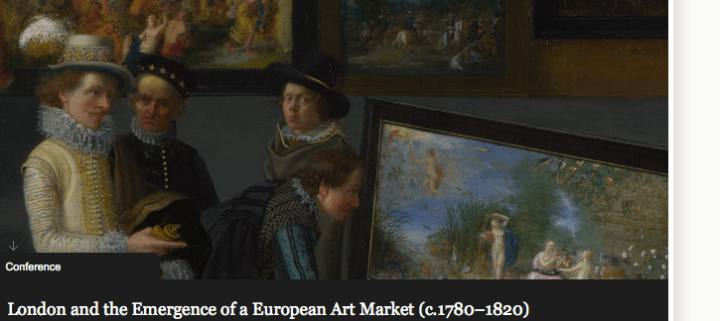 ◊ ◊ ◊ ◊ ◊
The French Revolution and the ensuing Napoleonic Wars instigated a sweeping redistribution of art throughout Europe. Large volumes of valuable objects – often entire collections, from monasteries, churches, and palaces – were widely dispersed via auction and private treaty sales. Networks of agents provided the infrastructure for the circulation of art works and sales information across borders, which promoted a flourishing international art market.
This two-day conference seeks to examine the role of London in this developing market by shedding new light on the mechanisms of the art trade that connected major European centres around 1800. Scholars from a range of disciplines and countries will discuss broad research questions such as:
• Did the long-term effects of the political turmoil in France alter the existing networks of dealers and connoisseurs?
• What would have been the motivations to ship art works to distant cities?
• How sophisticated was the auction catalogue as economic tool and literary genre in various countries?
• Is it really possible to talk about a European art market or were there still relatively independent local markets?
◊ ◊ ◊ ◊ ◊
F R I D A Y , 2 1 J U N E 2 0 1 3
10.00 Registration
10.30 Nicholas Penny (The National Gallery), Welcome and introduction
10.35 Christian Huemer (Getty Research Institute, Los Angeles) and Maximilian Schich (University of Texas, Dallas), What’s in the data? Visualising the Getty Provenance Index®
Session 1: Collections
Moderator: Adriana Turpin (Institut d’Etudes Supérieures des Arts / University of Warwick)
11.00 Camilla Murgia (Université de Neuchâtel), Collecting patterns for London: From private museums to commercial art galleries
11.25 Break with refreshments
11.45 Wendy Wassyng Roworth (University of Rhode Island), Angelica Kauffman: The acquisition and dispersal of an artist’s collection, 1782–1825
12.10 Elodie Goëssant (Université Paris-Sorbonne IV), A surprising art auction: The George Watson-Taylor sale in 1823
12.35 Discussion
1.00 Lunch break
Session 2: Agents
Moderator: Gail Feigenbaum (Getty Research Institute, Los Angeles)
2.00 Julia Armstrong-Totten (Independent Scholar, Los Angeles), From jack-of-all-trades to professional: The development of the early modern picture dealer in 18th-century London
2.25 Sarah Bakkali (Université Paris X Nanterre), The Trumbull sale of 1797: Players in the Paris-London art market during the French Revolution
2.50 Carole Blumenfeld (Palais Fesch-Musée des Beaux-arts d’Ajaccio), Pierre-Joseph Lafontaine (1758-1835) and the formation of European private collections
3.15 Break with refreshments
3.45 Maria Celeste Cola (Sapienza Università di Roma), Thomas Hope and Gioacchino Marini: Roman agent ‘de’ signori inglesi’
4.10 Ana Maria García Fernández (Universidad de Oviedo), Spanish art dealers in the United Kingdom
4.35 Discussion
◊ ◊ ◊ ◊ ◊
S A T U R D A Y , 2 2 J U N E 2 0 1 3
10.00 Registration
10.30 Thomas W. Gaehtgens (Getty Research Institute), Welcome and introduction
Session 3: Information
Moderator: Hans Van Miegroet (Duke University)
10.35 David Ekserdjian (University of Leicester), William Buchanan’s Memoirs of Painting (1824) and his observations on the art trade during the Napoleonic period
11.00 Bénédicte Miyamoto (Université Paris Sorbonne-Nouvelle), British buying patterns at auction sales, 1780–1800: Did the influx of European art have an impact on the British public’s preferences?
11.25 Break with refreshments
11.45 Steven Adams (University of Hertfordshire), ‘Noising things abroad’: Sales catalogues and the construction of value in the early 19th-century art market
12.10 Rebecca Lyons (Christie’s Education, London / University of Glasgow), Marketing and selling the collection of Welbore Ellis Agar in 1806
12.35 Discussion
1.00 Lunch break
Session 4: Artworks
Moderator: Susanna Avery-Quash (The National Gallery)
2.00 Hans Van Miegroet (Duke University) and Dries Lyna (Radboud University Nijmegen), International art dealer networks and triangular arbitrage between Paris, Amsterdam and London
2.25 Guido Guerzoni (Università Luigi Bocconi, Milan), Italian exports of works of art to the United Kingdom
2.50 Peter Carpreau (M – Museum Leuven), The Getty Provenance Index® under examination: The taste for 17th-century Dutch and Flemish painting in London (1780–1820)
3.15 Break with refreshments
3.45 Olivier Bonfait (Université de Bourgogne, Dijon), London around 1800: An international art trade or a globalised art market?
4.10 Discussion
4.30 Roundtable
Moderator: Nicholas Penny (The National Gallery)
Thomas W. Gaehtgens (Getty Research Institute)
Guido Guerzoni (Università Luigi Bocconi, Milan)
Patrick Michel (Université Lille 3)
Michael North (Universität Greifswald)










leave a comment