Conference | Peter the Great
From the Fondation Singer-Polignac:
Pierre le Grand et l’Europe Intellectuelle: Contexte, Réseaux, Circulation, Réalisations
Fondation Singer-Polignac, Paris, 28-29 March 2013
 Le règne de Pierre le Grand se scande en deux parties. À son avènement, il comprit les difficultés dues à un certain retard technologique de la Russie. Le transfert (par toutes les filières possibles) et l’acculturation des connaissances venues d’Europe devinrent le leitmotiv de sa politique. De son vivant, le tsar fut comparé à Prométhée. Presque tout était à créer. Le corpus des savoirs nécessaires était insuffisant. Les structures étatiques archaïques, que ce soit dans le domaine diplomatique, militaire ou administratif, ne lui permettaient pas d’affronter les problèmes d’actualité. L’état obsolète de la technique – artillerie, armement, fortifications, mines et métallurgie – freinait les ambitions géopolitiques du monarque. D’autres infrastructures, la marine de guerre par exemple, n’existaient pas. Il manquait également un système d’enseignement et des structures de production scientifiques. Deux décennies durant, Pierre Ier s’efforça à esquiver ou à parer les coups en les anticipant dans la mesure du possible. Il travailla ainsi dans l’improvisation, au gré des nécessités militaires, politiques et sociales. Vers la fin des années 1710, la guerre du Nord touchant à sa fin, il prit conscience d’avoir accumulé suffisamment d’expérience en matière d’appropriation des connaissances européennes ; ses réformes devinrent de plus en plus réfléchies et systématiques. Dans ce nouveau paradigme, les savoirs artistiques, scientifiques et administratifs changèrent de signification et rejoignirent, à titre d’égalité, le transfert des connaissances techniques. Le pragmatisme de Pierre Ier répondait au principe de l’utilité, à une forme d’utilitarisme moral et économique destiné à réaliser un projet sociétal. C’est l’axe majeur de cette rencontre internationale. Les études qui se proposent d’examiner globalement le phénomène de transfert et son impact sur la Russie et l’Europe occidentale restent rares. Dans le cadre de ce colloque, nous nous proposons d’affronter un défi, en réunissant autour de ces grands axes de réflexion des chercheurs ayant mené, depuis une vingtaine d’années, des enquêtes originales et souvent inédites sur les divers aspects des relations entre la Russie et l’Occident à l’époque pétrovienne.
Consulter le programme sur le site de la Fondation Singer-Polignac.
Conference | Architecture and the Street
From the conference website:
Cambridge Conference Talks VII: Architecture and the Street
Harvard University, Cambridge, 29 March 2013
Organized by Morgan Ng and Jason Nguyen
 The PhD program at the Harvard University Graduate School of Design is pleased to invite you to the seventh annual Cambridge Talks conference, entitled Architecture and the Street, which will take place on Friday, March 29, 2013, 9:00-4:30, in Piper Auditorium, Gund Hall.
No building is an island – and in the context of the city, architecture takes shape in relation to the street. Arcades and façade treatments, lighting fixtures and shop windows, setback and building height restrictions: each of these mediate how buildings interact with streets as spaces of visual display and public sociability. More recently, the construction of flyovers and underground transport systems has transformed streets into ever-more complex, multi-layered spatial armatures for architectural intervention. Streets serve as the liminal zones by which architectural form and symbolism meet with the contingencies of urban life.
Cambridge Talks VII seeks to bring fresh historical themes and tools to bear on the problem of Architecture and the Street. New research promises to enrich and challenge perspectives pioneered by Spiro Kostof, Jane Jacobs, and William H. Whyte. How does the infrastructural function of streets as circulation (of people, goods, water, and waste) press against the static character of architecture? How do streets serve as the spatial framework for social control, ceremony, procession, and protest? How might we theorize and historicize modern streets as sites of cultural memory and nostalgia? And above all, what are the effects of such social, political, and technological forces on architectural form?
Cambridge Talks is generously supported by the Harvard University Graduate School of Design, the Weatherhead Center for International Affairs & the GSAS Graduate Student Council. The event is free and open to the public.
P R O G R A M
9:00 Breakfast
9:30 Introduction
9:45 Session I: The Street between Infrastructure and Architectural Form
• Katherine Rinne (California College of the Arts), Walking on Water in Rome: Streets and Water in the Baroque City
• Richard Wittman (UC Santa Barbara), Architecture, Authority and the Street in Eighteenth-Century Paris
• Eric Mumford (WashU), CIAM, Sert and the Street
Discussion, moderated by Sonja Duempelmann (Harvard)
11:15 Break
11:30 Session II: The Street as Territorial Network
• Gabrielle Esperdy (NJIT), The Street, the Strip, and the Freeway: On the Legibility of Place in the Territories of the Car
• Ateya Khorakiwala (Harvard), Street Paint: A Story of India’s National Development
• Keller Easterling (Yale), No Road
Discussion, moderated by Brian Goldstein (Harvard)
1:00 Lunch Break
2:30 Session III: The Street as Space of Social Protest and Control
• Cesare Birignani (Harvard), The Trouble with the Street
• Christopher Heuer (Princeton) and Matthew Jesse Jackson (UChicago), 7 March 1965: Selma and the Architecture of the Event
• Mariana Mogilevich (NYU), Street Psychology and the Politics of Pedestrianization
Discussion, moderated by Neil Brenner (Harvard)
4:30 Closing Remarks
Conference | On the Way to the Museum, Ancient Art in Germany
From Art-Hist:
Interdisziplinäre Tagung: Auf dem Weg zum Museum
Sammlung und Präsentation antiker Kunst an deutschen Fürstenhöfen des 18. Jahrhunderts
Kassel, 19-20 April 2013
Die Erforschung der Geschichte von Museen, ihrer Sammlungen und ihrer Ausstellungspraxis hat in den letzten beiden Jahrzehnten signifikant zugenommen und ist inzwischen zu einem eigenständigen fachübergreifenden Forschungsbereich der historischen Kulturwissenschaften geworden. Die interdisziplinär ausgerichtete Tagung „Auf dem Weg ins Museum“ lenkt den Fokus erstmalig gezielt auf den Umgang mit antiker Skulptur und Kleinkunst in fürstlichen Sammlungen des deutschen Sprachraumes im „langen“ 18. Jahrhundert (1700 – 1815). Welche Ordnungsprinzipien und Vermittlungsabsichten kennzeichneten diese Zusammenstellungen von antiken Artefakten vor der Herausbildung einer Systematik der Kunstmuseen im fortgeschritteneren 19. Jahrhundert? Auf welche internationalen Vorbilder reagierten die Verantwortlichen? Welche Modelle stellten die Ergebnisse ihrer Bemühungen für andere europäische Fürstenhöfe und die späteren öffentlichen Museen bereit? Das
Erkenntnisinteresse der Tagung richtet sich somit nicht nur auf die historische Rekonstruktion einer vergangenen Sammlungspraxis, sondern auch auf die grundlegenden Entstehungsbedingungen der Institution Museum, wie sie in wesentlichen Zügen bis in die Gegenwart fortbesteht.
◊ ◊ ◊ ◊ ◊
F R E I T A G , 1 9 . 0 4 . 2 0 1 3
I. Höfische Antikensammlungen im deutschen Sprachraum im 18. und frühen 19. Jahrhundert
Moderation: Rüdiger Splitter
9.15 Begrüßung/Einführung
9.30 Gisela Bungarten, Museumslandschaft Hessen Kassel: Die Antikensammlung am Braunschweiger Hof im 18. Jahrhundert
10.15 Kordelia Knoll, Staatliche Kunstsammlungen Dresden: „mit königlicher Pracht aufgestellt“ – Die Dresdener Antikensammlung im 18. Jahrhundert
11:00 Reinhard Stupperich, Institut für klass. Archäologie, Universität Heidelberg: Das Antiquarium der Mannheimer Akademie
11.45 Pause
12.15 Hildegard Wiegel, Archäologisches Institut, Universität Göttingen: Die Vasensammlung Anna Amalias in Weimar – Aufstellung und Kontext
13:00 Caterina Maderna, Institut für klass. Archäologie, Universität Heidelberg: Die Antikensammlung Franz I. von Erbach zu Erbach
13.45 Mittagspause
II. Das Beispiel der Kasseler Sammlungen
Moderation: Charlotte Schreiter
15:00 Antje Scherner, Museumslandschaft Hessen Kassel: Kunstkammer, Kunsthaus, Kabinett. Zur Wechselwirkung von Kunstwerk und Sammlungsort im frühen 18. Jahrhundert
15:45 Justus Lange, Museumslandschaft Hessen Kassel: Das Kasseler Galeriegebäude Landgraf Wilhelm VIII.
16:30 Maximiliane Mohl, Universität Heidelberg: Die Architektur des Museum Fridericianum in Kassel
17:15 Andrea Linnebach, Geschichte der Frühen Neuzeit, Universität Kassel: Das Publikum der Antike. Kunsthaus und Museum Fridericianum als ein Ziel von Bildungs- und Forschungsreisen der europäischen Aufklärung
18:00 Pause
19:00 Abendvortrag: Gerrit Walther, Neuere Geschichte, Universität Wuppertal: Antikensammlungen als Element eines adligen Kulturhabitus in der Frühen Neuzeit
S A M S T A G , 2 0 . 0 4 . 2 0 1 3
III. Antikensammlungen in der literarischen Wahrnehmung um 1800
Moderation: Alexis Joachimides
9:30 Adelheid Müller, Berlin: Strategie und Leidenschaft. Weibliche Wege zur Antikensammlung
10:15 Katharina Krügel, Klassikstiftung Weimar: Sammlungen antiker Abgüsse in Weimar. Orte und Präsentationskonzepte
11:00 Pause
11:30 Christoph Frank, Istituto di Storia e teoria dell’arte e dell´architettura, USI, Mendrisio: Im Schatten Winckelmanns: Friedrich Wilhelm von Erdmannsdorff und Friedrich Rehberg und die Dessau-Wörlitzer Antiken
12:15 Martin Dönike, SFB Transformationen der Antike, HU Berlin: Komplementäre Antiken. Zur kunstgeschichtlichen und-theoretischen Rahmung von Antikensammlungen im goethezeitlichen Weimar
13:00 Mittagspause
IV. Residenz und Museum – Von der höfischen zur musealen Repräsentation
Moderation: Gisela Bungarten
14.15 Bénédicte Savoy, Institut für Kunstgeschichte, TU Berlin: Was kostet die Antike? Preisschätzungen im Inventaire des Musée Napoléon (Louvre) um 1800
15:00 Charlotte Schreiter, LVR-Archäologischer Park Xanten/LVR-RömerMuseum: Repräsentation und Kontext – Antike Plastik und Gipsabgüsse in Sammlungen des 18. Jahrhunderts
15:45 Rüdiger Splitter, Museumslandschaft Hessen Kassel: Neue Forschungen zur Kasseler „Société des Antiquités“
16:30 Pause
17:00 Helen Dorey, Deputy Director, Soane’s Museum, London: Sir John Soane’s Collections of Antiquities
17:45 Stephan Schröder, Museo del Prado, Madrid: Sammlung und Ausstellung von Antiken in Spanien bis zur Einrichtung des Prado
◊ ◊ ◊ ◊ ◊
Veranstalter: Universität Kassel in Kooperation mit der Museumslandschaft Hessen Kassel
Ort: Hörsaal der Kunsthochschule Kassel, Menzelstraße 13, 34121 Kassel
Organisation:
Prof. Dr. Alexis Joachimides (Universität Kassel)
Prof. Dr. Rüdiger Splitter (Museumslandschaft Hessen Kassel)
PD Dr. Charlotte Schreiter (LVR-Archäologischer Park Xanten/LVR-RömerMuseum)
Conference | Berlin in 1800
As noted at Early Modern Architecture:
Die Klassizität des Urbanen. Resümee, Kritik und Fortgang des
Akademienvorhabens “Berliner Klassik”. Eine Großstadtkultur um 1800
Zentrum Preußen-Berlin der Berlin-Brandenburgischen Akademie der Wissenschaften, 14-16 März 2013
Veranstalter: Cord Friedrich Berghahn, Conrad Wiedemann
Mit freundlicher Unterstützung der Stiftung Preußische Seehandlung
Das Akademienvorhaben “Berliner Klassik. Eine Großstadtkultur um 1800” befasste sich zwölf Jahre lang mit der Rekonstruktion einer urbanen Kulturblüte, die von der Forschung beharrlich ausgeblendet wurde, obwohl sie nach Bedeutung und aktueller Wirkung eigentlich nur mit dem Ereignis Weimar-Jena vergleichbar ist. Hauptgegenstand der Forschungsarbeit waren dabei nicht die bekannten großen Einzelfiguren und Einzelleistungen, sondern die soziokulturellen Rahmenbedingungen (Institutionen, Milieus, Kontroversen), aus denen heraus sich deren Besonderheit versteht. Mit der Tagung wollen wir die Vielfalt der geleisteten Quellen- und Konzeptarbeit festhalten und der öffentlichen Diskussion zuführen. Der Eintritt ist frei. Eine Anmeldung ist erwünscht, bitte schreiben Sie an Christopher Drum (bk-stud@bbaw.de).
◊ ◊ ◊ ◊ ◊
D O N N E R S T A G , 1 4 M ä r z 2 0 1 3
14.00 Günter Stock, Präsident der BBAW, Begrüßung
14.10 Cord Berghahn (Braunschweig), Einleitung
14.25 Conrad Wiedemann (Berlin), “Berliner Klassik” als kulturgeographisches Problem. Zu Absicht und Gang eines abgebrochenen Forschungsprojekts
15.30 Pause
15.45 Klaus Gerlach (Berlin), Das Berliner Nationaltheater – Bühne des klassischen Berlin
16.30 Uta Motschmann (Berlin), Die Berliner Vereine als Laboratorien einer großstädtischen Gesellschaft
17.15 Claudia Sedlarz (Berlin), Berliner Klassizismus und die Berliner Akademie der Künste Ende ca. 18.00 Uhr
20.00 Abendvortrag: Werner Busch (Berlin), Die klassizistische Karikatur. Zu Gottfried Schadows Zeichnungen
F R E I T A G , 1 5 M ä r z 2 0 1 3
09.00 Walther Gose (Trier), “… dass die gesunde Vernunft immer mehr und mehr auf den Thron aller menschlichen Angelegenheiten erhoben werde”. Die ‘Gesellschaft von Freunden der Aufklärung’ (Geheime Berliner Mittwochsgesellschaft) 1783-1798
09.45 Iwan Michelangelo D’Aprile (Potsdam), “Wissenschaft von heute” Gegenwartsreflexion und Zeitgeschichtsschreibung in Berlin um 1800
10.30 Pause
10.45 Günter Oesterle (Gießen), Popularität – Urbanität – Freiheit: Kunst der Prosa in Berlin um 1800
11.30 Anne Baillot (Berlin), “Der Hauptzweck einer Akademie der Wissenschaften muss dieser sein, Unternehmungen zu machen und Arbeiten zu liefern, welche kein Einzelner leisten kann” – August Boeckh als Projekt
12.15 Mittagspause
14.00 Cord Berghahn (Berlin), Karl Philipp Moritz’ zirkumpolare Wirkung in Berlin
14.45 Hans-Georg von Arburg (Lausanne), Zur Architekturästhetik von Karl Philipp Moritz und ihren Folgen für
einen klassisch gewordenen Epochenbegriff
15.30 Pause
15.45 Christoph Wingertszahn (Düsseldorf), Die Stadt als Schwall. Karl Philipp Moritz als Zeitungsschreiber
16:30 Matthias Hahn (Berlin), Ein Neuerer der Innendekoration: Louis Catel, Architekt, Berlin, Weimar
17.15 Harald Tausch (Gießen), Gießen oder Berlin. Ortsnamen aus der Sicht eines Berliner Spätromantikers
S A M S T A G , 1 6 M ä r z 2 0 1 3
09.00 Ute Tintemann (Berlin), Isaac Azulay alias Joseph Leonini (1769 – 1840): Ein italienischer Sprachmeister in Berlin
09.45 Jürgen Trabant (Berlin), Der fremde Mund. Über Individualität und Alterität bei Wilhelm von Humboldt
10.30 Pause
10.45 Felix Saure (Hamburg), Wilhelm von Humboldt und Friedrich Ludwig Jahn
11.30 Laurenz Lütteken (Zürich), Konstruktionen der Klassik. Schwierigkeiten im Umgang mit einem musikhistorischen Problem
12.15 Abschlusspanel, Moderation Günter Oesterle
Works in Progress from The Met’s Fellow Program
A series of colloquia take place from 26 February to 30 April 2013. On Tuesday, 9 April, Donato Esposito is scheduled to speak on Reynolds’s collection in the nineteenth-century. The full schedule is available (as a PDF) here»
◊ ◊ ◊ ◊ ◊
The Metropolitan Museum’s Fellowship Colloquium
The Metropolitan Museum of Art, New York, 9 April 2013
The Fellowship Program at The Metropolitan Museum of Art cordially invites you to attend colloquia on works in progress by art history, conservation, and scientific research fellows. The following talks will be held in Bonnie J. Sacerdote Lecture Hall, Ruth and Harold D. Uris Center for Education. These colloquia are made possible in part by Mrs. Henry S. Blackwood.
Moderator: Xavier F. Salomon, Curator, European Paintings
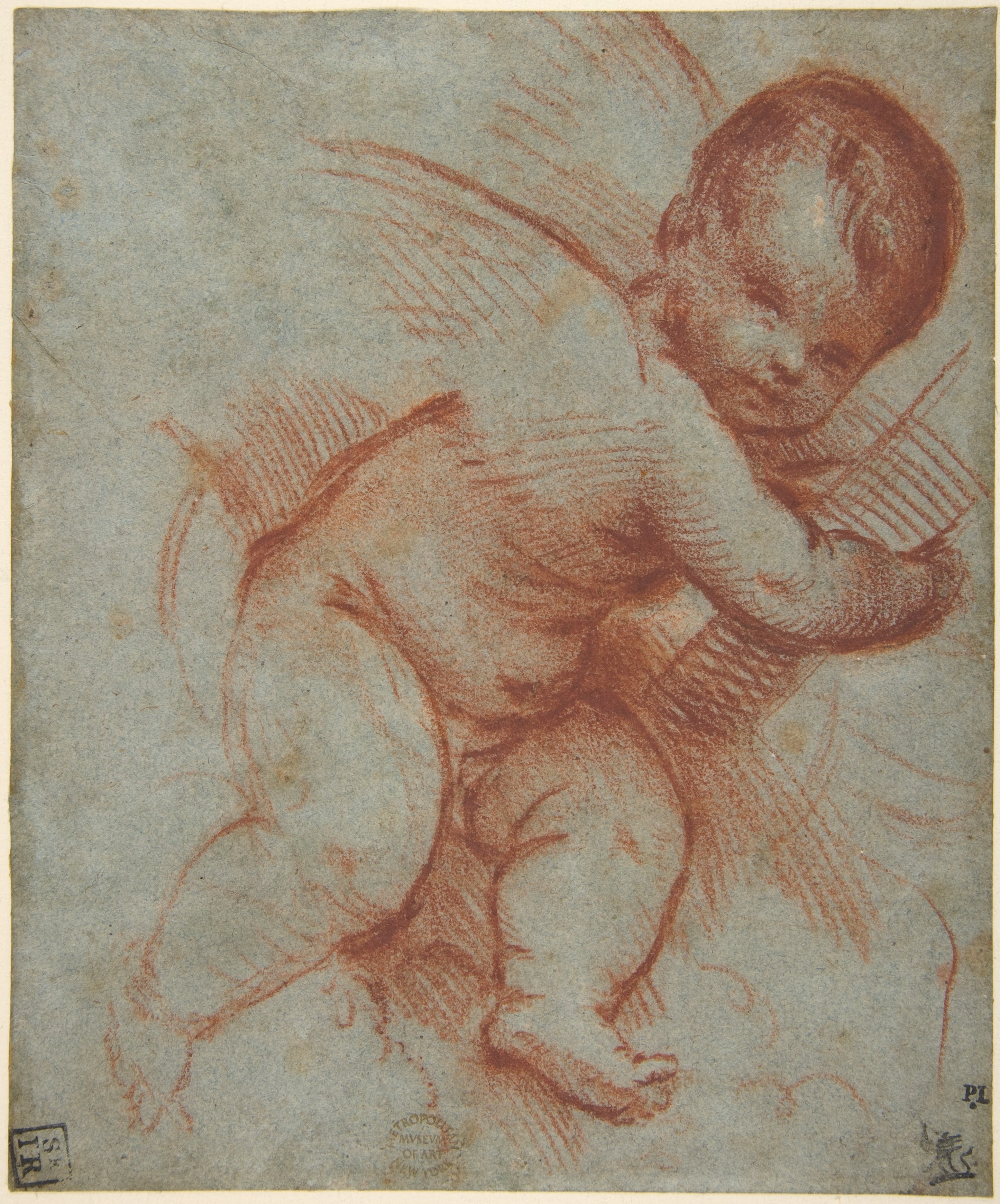
Circle of Titian, Putto Holding the Base of a Cross (New York: Metropolitan Museum of Art, Rogers Fund, 1911). Part of the collection of Joshua Reynolds in the eighteenth century.
10:00 Ronda Kasl (Chester Dale Fellow, European Paintings), “Miquel Alcanyís and Gherardo Starnina: Two Altarpieces from the Valencian Church of San Juan del Hospital”
10:30 Linda Borean (Andrew W. Mellon Fellow, European Paintings), “Self-Portraits and Portraits of Artists in Seicento Venice”
11:00 Valeria De Lucca (Jane and Morgan Whitney Fellow, Musical Instruments), “Roman Heroes / Roman Patrons: Constructing Aristocratic Identity in Seventeenth-Century Rome”
Intermission
11:45 Furio Rinaldi (Andrew W. Mellon Fellow, Drawings and Prints), “Timoteo Viti (1469/70–1523): An Artist and Collector in the Footsteps of Raphael”
12:15 Donato Esposito (Andrew W. Mellon Fellow, Drawings and Prints), “‘Many Curious and Valuable Things’: Sir Joshua Reynolds’s Collection in Nineteenth-Century New York”
12:45 Allen Doyle (Jane and Morgan Whitney Fellow, Robert Lehman Collection), “Michelangelo as Bad Object: Horace
Vernet’s Renaissance”
Symposium | Architect as Furniture Designer
From RIBA:
Symposium of the Furniture History Society: The Architect as Furniture Designer
The Wallace Collection, London, 9 March 2013
 The 37th Annual Symposium of the Furniture History Society in association with the Royal Institute of British Architects
The subject of architects designing furniture, for their own buildings or for commercial sale, was first investigated by Charles Handley-Read in the 1960s in his researches into 19th-century architects and interiors. However, there have been few attempts to take a broad look at the subject since the exhibition and associated catalogue by Jill Lever in the RIBA Heinz Gallery in 1982.
This symposium brings together a number of distinguished scholars and curators to speak on architects from the 18th century to the 21st century and their moveable contributions to the interiors of their buildings. The sessions will be chaired by Charles Hind, Chief Curator, RIBA Library and Julius Bryant, Keeper of the Word and Image Department, Victoria and Albert Museum.
S P E A K E R S
• Susan Weber (Director, Bard Graduate Center, New York), The Furniture of William Kent
• John Harris (Curator Emeritus, Drawings Collection, RIBA Library), Sir William Chambers and the French Connection
• James Yorke (Furniture Historian), H.W. Inwood (1794-1843), the Erectheion and the Grecian Furniture of St Pancras Church
• Max Donnelly (Curator of 19th-Century Furniture, Victoria and Albert Museum), John Pollard Seddon and the Medieval Court of 1862
• Matthew Williams (Curator, Cardiff Castle), William Burges and the Marquess of Bute: The Furniture at Cardiff Castle and Castell Coch
• Irena Murray (Sir Banister Fletcher Director and Research Director, British Architectural Library), Modern Movement Furniture in Central Europe between the Two World Wars
• Alan Powers (School of Architecture, Design and Construction, University of Greenwich), The Furniture of Raymond Erith (1904-73)
• Abraham Thomas (Curator of Designs, Victoria and Albert Museum), Contemporary Architects and Limited Edition Furniture
Tickets must be purchased in advance and early booking is recommended. Fee: £40 for FHS and RIBA members (£35 for FHS / RIBA student members and FHS / RIBA OAP’s) All non-members £45.Ticket price includes morning coffee and afternoon tea. A light lunch will be available for FHS members in the Meeting Room at the Wallace Collection at a cost of £20 to include a glass of wine. Tickets for lunch must be purchased at least 7 days in advance from the Events Secretary. The Wallace Collection Restaurant will be open for bookings (Tel: 0207 563 9505) and there are plenty of local cafes/restaurants. All ticket bookings must be made via the Events Secretary, e-mail events@furniturehistorysociety.org, www. furniturehistorysociety.org.
Conference | Objects in Motion in the Early Modern World
Objects in Motion in the Early Modern World
The Getty Center, Los Angeles, 10-11 May 2013
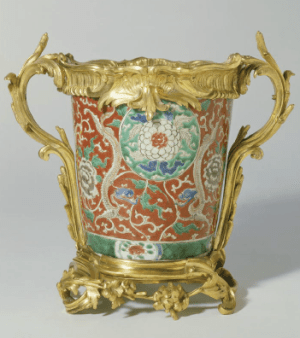
Mounted Vase, Chinese porcelain ca. 1662–1722, French mounts, ca. 1745–49. J. Paul Getty Museum (79.DI.121.1)
The Getty Research Institute and the USC-Huntington Early Modern Studies Institute are co-sponsoring a two-day conference, “Objects in Motion in the Early Modern World,” on Friday, May 10 and Saturday, May 11, 2013, at the Getty Center in Los Angeles, California.
An international group of scholars will examine the circulation of objects across regions and cultures in the early modern period (1500-1800), addressing the ways in which mobility led to new meanings, uses, and interpretations. Break-out sessions will invite the audience to consider these questions as we examine objects from the Getty’s collections. A closing roundtable will provide an opportunity to discuss the methodological and theoretical potential of this line of inquiry for the study and teaching of art history. The symposium is organized by Daniela Bleichmar (University of Southern California), Meredith Martin (Wellesley College), and Joanne Pillsbury (Getty Research Institute).

Vallard Atlas (detail), 1547. Courtesy of the Huntington Library (HM29.f12)
Admission to this event is free. Reservations are required and can be made online when the website goes live in early March. Graduate students writing dissertations on related subjects can apply for a limited number of travel grants to defray the cost of travel to the conference. To request an application, email emsi@usc.edu. Applications will be due March 1, 2013.
The flyer (as a PDF) is available here»
Note (added 6 March) — Confirmed speakers include:
Gauvin Alexander Bailey, Queen’s University, Ontario
Daniela Bleichmar, University of Southern California
Zirwat Chowdhury, University of California, Los Angeles
Chanchal Dadlani, Wake Forest University
Jessica Keating, University of Southern California
Dana Leibsohn, Smith College
Meredith Martin, Wellesley College
Sandy Prita Meier, University of Illinois at Urbana-Champaign
Avinoam Shalem, Institut für Kunstgeschichte, Munich
Mary Sheriff, University of North Carolina, Chapel Hill
Claudia Swan, Northwestern University
Nancy Um, Binghamton University
Gerhard Wolf, Kunsthistorisches Institut, Florence
Conference | Loyal Subversion: Anglo-Hanoverian Caricature
The third Herrenhausen Symposium addresses caricature within the context of Anglo-Hanoverian relations (with plenty more such observances on the way next year) . . .
Loyal Subversion: Caricatures from the Personal Union between England and Hanover, 1714-1837
Herrenhausen Palace, Hanover, 21-23 February 2013
The political constellation of the personal union between England and Hanover with the figure of a foreign king as a mediator between separate states became a determining factor and was in itself a historical condition for the emergence and the development of caricatures in England after the Glorious Revolution. As a political weapon of the opposition and as a manifestation of public opinion, the caricatures affected the establishment: one the one hand, their visual potential was a threat to the sovereign, on the other hand they helped to stabilize his leadership. What contents do they show? Does the artistic become political? Is there something like an institutionalized form of political perception? Or is this visual criticism nothing else but a loyal subversion of their subjects?
The Herrenhäuser Symposium Loyal Subversion: Caricatures from the Personal Union between England and Hanover 1714-1837 is organized by the Volkswagen Foundation and the Wilhelm Busch – Deutsches Museum für
Karikatur und Zeichenkunst. Please register online at caricature@volkswagenstiftung.de.
◊ ◊ ◊ ◊ ◊
T H U R S D A Y , 2 1 F E B R U A R Y , 2 0 1 3
Wilhelm Busch — Deutsches Museum für Karikatur und Zeichenkunst
7:00 Gisela Vetter-Liebenow (Director, Wilhelm Busch – Deutsches Museum für Karikatur und Zeichenkunst) and Wilhelm Krull (Secretary General, Volkswagen Foundation), Opening Addresses
7:20 Werner Busch (Department of Art History, Free University of Berlin), Keynote Lecture
9:00 Reception
F R I D A Y , 2 2 F E B R U A R Y 2 0 1 3
Herrenhausen Palace
9:30 Images and Caricatures of Kingship
• Ian Haywood (University of Roehampton, London), Milton’s Monsters: Monarchy and Iconoclasm
• Sheila O’Connell (Assistant Keeper, British Prints before 1880, British Museum), Attacks on the Guelph Dynasty: From the Jacobite Caricatures to the London Radicals and Cruikshank
11:00 Coffee
11:30 Images and Caricatures of Kingship, continued
• Christina Oberstebrink (Berlin), James Gillray
• Brian Maidment (John Moores University, Liverpool), The Satirical Image, Politics, and Periodicals, 1830–37
1:00 Lunch
2:30 Royal Representation, Court Culture, and Bourgeois Public
• Sune Schlitte (University of Göttingen), Politics Beyond Caricature: Practices of the Artistic Field in the Long Eighteenth Century
• James Baker (The Paul Mellon Centre for Studies in British Art), The Royal Brat: Making Fun of George Augustus Frederick
4:00 Coffee
4:30 Counterparts
• Karl Janke (Curator, Hamburg), The Republic and the Sovereignty of the People as Antithesis, Anathema, Frightful Vision
• Temi Odumosu (Marie Curie Postdoctoral Fellow, The Natural History Museum, University of Copenhagen), The Image of the Other: The ‘Non-English’ as Identification Marks in the Personal Union
7:00 Conference Dinner
S A T U R D A Y , 2 3 F E B R U A R Y 2 0 1 3
Herrenhausen Palace
9:30 The Reception on the Continent
• Timothy Clayton (Worcester College Oxford), Transfer of Caricatures: The London Printing Trade and the Export of English Graphic Prints
10:30 Coffee Break
11:00 The Reception on the Continent, continued
• Thomas Schwark (Historical Museum Hanover), Johann Heinrich Ramberg (1763-1840): Painter, Borderliner, and
Contemporary with the Nascent Hanover Kingdom
• Christian Deuling (MA, University of Nottingham), The Reception of English and French Caricatures in the German Magazine London und Paris (1798-1815)
12:30 Wilhelm Krull (Secretary General, VolkswagenStiftung), Closing Remarks
12:40 Lunch
Conference | Inter-Culture 1400–1850: Art, Artists, and Migration
From Liverpool Hope University:
Inter-Culture 1400–1850: Art, Artists, and Migration
Liverpool Hope University, 5-6 April 2013
While major exhibitions, such as Migrations – Journeys into British Art (January – August 2012) at Tate Britain, address the impact of migration on the cultural heritage and artistic production in a particular country, the conference seeks to investigate further this exciting topic by discussing thematically the latest research of international scholars. Instead of focusing on the 20th and 21st centuries and the strong consequences migration caused in modern and postmodern societies, we intend to look back and explore the effects of migration on art and artists in Europe and beyond before, during and shortly after the Industrial Revolution.
Why have artists left their comfort zone, travelled to faraway places and adapted to new living conditions when only very few had a noteworthy impact on local artistic production, such as Hans Holbein the Younger at Henry VIII’s court or El Greco, who is the prime example for intercultural artistic exchange in early modern times? How important was national identity for the artists and also for the reception of their work? What are the differences and parallels between pre- and post-Industrial Revolution migration of artists?
If you would like to register for the conference, please find a registration form on the website www.hope.ac.uk/inter-culture/
◊ ◊ ◊ ◊ ◊
F R I D A Y , 5 A P R I L 2 0 1 3
8.00 Registration/Refreshments
9.00 Welcome, Professor Kenneth Newport, Pro Vice-Chancellor (Liverpool Hope University)
9.30 Keynote Lecture, Professor Eberhard König (Free University Berlin)
10.15 Guest talk, Tim Batchelor (Tate Britain London, Co-curator of Migrations – Journeys into British Art)
11.00 Coffee Break
11.30 Section 1: Old versus New Society – Artists’ Perceptions
• Anette Schaffer (The Warburg Institute, London), El Greco: Reviewing the Question of Early Modern Artistic Eccentricity
• Stephanie Porras (Tulane University, New Orleans), The Real, Rejected and Virtual Travels of Marten de Vos
• Gitta Ho (Centre Allemand d’Histoire de l’Art, Paris), German Art Pupils in Paris, 1793-1843
1.00 Lunch
2.00 Section 2: New Environments and Influences on Artistic Practices
• Silvia Ferreira (University of Lisbon), From Stone to Wood: Claude Laprade and His Journey from Provence to Portugal
• Clemence Matthieu (Clare Hall, Cambridge), Cultures of Exchange: The Architecture of the Low Countries and Southern England in the 16th century
• Matej Klemencic (University of Ljubljana), Venetian Sculptors of the 18th Century in Habsburg Lands: Francesco Robba, Antonio Corradini and Giovanni Marchiori
3.30 Coffee
4.00 Section 3: Cultural Confrontations
• Natasha Eaton (University City of London), Subaltern Colour? Between the Global and the Local in Britain and India
• Jessica David (Yale Center for British Art, New Haven), Johan Zoffany’s Painting Practice in Kolkata and Lucknow: The Technical Exploration of an ad hoc Studio
• Katelyn Crawford (Smithsonian American Art Museum, Washington), John Greenwood, Portraiture, and Mobility in the British Atlantic, 1752-72
6.30 Conference Dinner
S A T U R D A Y , 6 A P R I L 2 0 1 3
9.00 Keynote Lecture, Professor Fintan Cullen (University of Nottingham), Migrating Objects: Ireland and Empire
10.00 Section 4: Forced Migration and Its Resistance
• Julia Crispin (University of Münster), French Manuscript Illumination between Propaganda and Pragmatism: The Talbot Workshop in Rouen and Its Patrons during the Last Stages of the Hundred Years’ War
• Frederica Van Dam (Ghent University), Tableau Poetique: A Recently Discovered Manuscript by the Flemish Migrant Painter-Poet Lucas de Heere (1534-84)
• Gerrit Walczak (Technical University Berlin), Mutual Irritations: Migrant Artists in London during the French Revolution
12.00 Visit the Walker Art Gallery
1.00 Lunch
2.30 Section 5: The Returned Artist
• Kathrin Wagner (Liverpool Hope University), Malversation, Escape, Return: The Sculptor Hans Hesse from Luebeck and His Temporary Migration to Dalarna, Sweden, 1457-58
• Fiona V. Salvesen Murrell (University of Aberdeen), The Returned Artist: American Lessons Learned: Shaping the New Scottish Academy from 1826
• Laura MacCulloch (Royal Holloway, University of London), Revaluating the Outsider: Ford Madox Brown and Cultural Dialogues in mid-19th-century Europe
3.30 Coffee
4.00 Final Remarks
ASECS 2013, Cleveland
2013 American Society for Eighteenth-Century Studies Conference
Cleveland, 3-6 April 2013
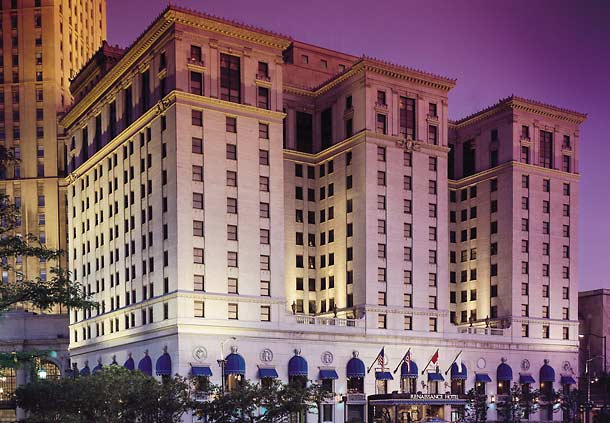 The 2013 ASECS conference takes place in Cleveland, April 3-6, at the Marriott’s Renaissance Cleveland Hotel. This year’s annual HECAA luncheon and business meeting will be held on Friday at The Greenhouse Tavern. In terms of sessions, HECAA will be represented by two panels, just before lunch, chaired by Christopher Johns and Heather McPherson. In addition to these, a selection of sessions are also included below (of the 201 panels scheduled, many others will, of course, interest HECAA members). For the full program, see the ASECS website.
◊ ◊ ◊ ◊ ◊
H E C A A S E S S I O N S
Anne Schroder New Scholar’s Session
Friday, 5 April 2013, 9:45-11:15, Van Aken
Chair: Christopher M. S. JOHNS, Vanderbilt University
1. Katherine MCHALE, Independent Scholar, “The Madonnas of Settecento Venice: A Tradition Renewed”
2. Ji YOU, University of North Carolina, Chapel Hill, “Sèvres Porcelain during the French Revolution”
3. Lindsay DUNN, University of North Carolina, Chapel Hill, “Constructing an Imperial Identity: Marie-Louise, House of Habsburg-Lorraine and Dynastic Capital”
4. Karissa BUSHMAN, Augustana College, “Memorializing Fear and Abuse: Goya’s Depiction of the Inquisition in Los Caprichos”
◊ ◊ ◊ ◊ ◊
Interiors as Space and Image
Friday, 5 April 2013, 11:30-1:00, Halle
Chair: Heather MCPHERSON, University of Alabama, Birmingham
1. Elizabeth F. JUDGE, University of Ottawa, “Eighteenth-Century Court Interiors and the Architecture of Credibility”
2. Edward HOULE, McGill University, “Discriminating Dining: Louis XV’s Salles à manger at Versailles”
3. Sally GRANT, University of Sydney, “Questioning Interiority/Exteriority in the Decorative Design of Giandomenico Tiepolo’s ‘Room of the Carnival Scenes’ at the Villa Valmarana ‘ai Nani’”
4. Esther GABEL, University of Cambridge, “The Portego: Spaces of Presentation and Performance in Eighteenth-Century Venice”
◊ ◊ ◊ ◊ ◊
O T H E R S E S S I O N S R E L A T E D T O T H E V I S U A L A R T S (more…)










leave a comment