CAA 2013, New York
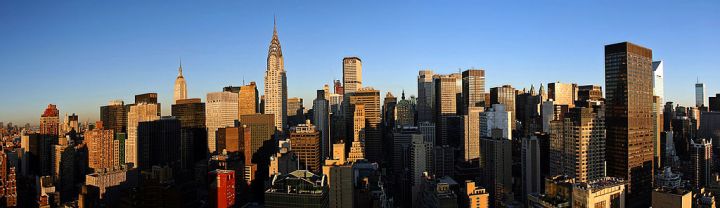
NYC from the Millennium UN Plaza Hotel, 2 September 2007
(Photo by AngMoKio, Wikimedia Commons)
◊ ◊ ◊ ◊ ◊
The 2013 College Art Association conference takes place in New York, February 13-16. HECAA will be represented by two panels on Friday, chaired by Hector Reyes and Amelia Rauser. Other sessions that may be of interest for dixhuitièmistes are also listed. A full schedule of panels is available here»
H E C A A S E S S I O N S
Art in the Age of Philosophy?
Friday, February 15, 9:30-12:00, Nassau Suite
Chair: Hector Reyes (University of California, Los Angeles)
- Anne Betty Weinshenker (Montclair State University), The Allegorical Tomb of Locke, Boyle, and Sydenham: A Celebration of Empiricism
- Stephanie O’Rourke (Columbia University), Faithful Impressions: Fuseli, Lavater, and the Physiognomic Pursuit of Knowledge
- Ryan Whyte (Ontario College of Art and Design University), Happy Fathers and Other New Ideas in French Art: Genre, Masculinity, and Philosophy in the Final Decades of the Old Regime
- Lauren Cannady (Institute of Fine Arts, New York University), Aesthetic Discourse in Science: The Rococo and the Natural World
- Johanna Fassl (Franklin College Switzerland), Radical Thought: Connecting Guardi, Newton, Vico, and Damasio
◊ ◊ ◊ ◊ ◊
New Scholars Session: International Artists Working in Eighteenth-Century Great Britain
Friday, February 15, 12:30-2:00, Rendezvous Trianon
Chair: Amelia Rauser (Franklin and Marshall College)
- Francesca Whitlum-Cooper (Courtauld Institute of Art), Quacks, Peddlers, and Pastellists: Jean-Etienne Liotard (1702–89) and Jean-Baptiste Perronneau (1715–83) in London
- Katherine McHale (Hunter College, City University of New York), The Bel Composto: The Role of Inset Paintings in Robert Adam’s Interiors
- Abram Fox (University of Maryland), Family, Students, and Legacy: Benjamin West’s Workshop and the Shaping of an American School of Art
◊ ◊ ◊ ◊ ◊
O T H E R S E S S I O N S R E L A T E D T O T H E 1 8 T H C E N T U R Y (more…)
Conference | European Portrait Miniatures
European Portrait Miniatures: Artists, Functions and Collections
Celle Castle, Celle, Germany, 25-27 January 2013
 The conference is being held on the occasion of the opening of the fifth exhibition of the Tansey Collection and the publication of the accompanying catalogue Miniatures from the Time of Marie-Antoinette in the Tansey Collection on 25 January 2013.
Admission is free. Celle Castle as well as the Bomann-Museum nearby are within walking distance (20 minutes) from Celle railway station. Trains from Hannover take approximately 25 to 45 minutes (Deutsche Bahn, Metronom or S-Bahn). For more information and for registration, please contact bernd.pappe@miniaturen-tansey.de.
◊ ◊ ◊ ◊ ◊
F R I D A Y , 2 5 J A N U A R Y 2 0 1 3
16:30 Opening of the exhibition Miniatures from the Time of Marie-Antoinette in the Tansey Collection
18:00 Visit of the exhibition and reception at the Bomann-Museum Celle
19:30 Dinner
S A T U R D A Y , 2 6 J A N U A R Y 2 0 1 3
Objects, Agencies, and Social Practices
9:00 Marcia POINTON (Manchester), Intimacy, Exclusion and Revelation: The Portrait Miniature as Image and Object, ca. 1640-1800
9:30 Bert WATTEEUW (Antwerp), Miniature Dramas: The Portrait Miniature as a Literary Motif in Early Modern European Drama
10:00 Discussion
10:15 Coffee
Politics and Representation
10:45 Vanessa REMINGTON (London), ‘Philistines or Connoisseurs?’: The Collecting of Miniatures by the Early Hanoverians at the English Court, 1714-1760
11:15 Karin SCHRADER (Bad Nauheim), Between Representation and Intimacy: The Portrait Miniatures of the Georgian Queens
11:45 Friederike DRINKUTH (Schwerin), Intimacy and Ancestry: A Dynastic Souvenir for Queen Charlotte
12:15 Discussion
12:30 Lunch
13:45 Laurent HUGUES (Nîmes), The Commissions of Miniatures of the Royal Family from France According to the Archival Sources, 1725-1792
14:15 Sarah GRANT (London), Miniatures of the Princesse de Lamballe (1749-1792): The Portraiture, Patronage and Politics of a Royal Favourite
14:45 Sigrid RUBY (Gießen/Saarbrücken), Love Affairs with the Founding Father: Portrait Miniatures of George Washington – Modes of Creation and Display
15:15 Discussion
15:30 Coffee
European Miniature Collections (part I)
16:00 Stephen LLOYD (Edinburgh), A Group of Miniatures by Jacob van Doordt (fl. 1606 – d. 1629) in the Buccleuch Collection
16:30 Thierry JAEGY (Paris), Masterpieces of Miniature Painting in French Private Collections
17:00 Markus MILLER (Eichenzell), The Collection of Portrait Miniatures of the Landgraves and Grand Dukes of Hesse-Darmstadt
Andreas DOBLER (Eichenzell), The Miniature Collection of Empress Friedrich in Castle Fasanerie
17:45 Discussion
19:30 Dinner
S U N D A Y , 2 7 J A N U A R Y 2 0 1 3
European Miniature Collections (part II)
9:00 Elizaveta ABRAMOVA (Saint Petersburg), The Collection of Miniatures from the State Hermitage, Saint Petersburg
9:30 Izabela WIERCZINSKA (Warsaw), The Enchantment of History: Selected Masterpieces from the Miniatures Collection of the Great Dukes of Hesse and by Rhine
10:00 Discussion
10:15 Coffee
10:45 Astrid SCHERP (Munich), The Collection of Portrait Miniatures of Elector Palatine Johann Wilhelm von der Pfalz (1658-1716)
11:15 Lucyna LENCZNAROWICZ and Danuta GODYN (Cracow), The Highlights of the Miniatures Collection at the National Museum in Cracow
11:45 Discussion
12:00 Lunch
Techniques and Materials
13:15 Emma RUTHERFORD (London), The Plumbago Portrait in Britain
13:45 Julia SEDDA (Berlin), Silhouettes: The Fashionable Paper Portrait Miniature around 1800
14:15 Discussion
Miniature Painters
14:30 Nathalie LEMOINE-BOUCHARD (Paris), Charles-Paul-Jérôme de Bréa (1739-1820) and his Work in Miniature
15:00 Coffee
15:30 Catherine DE LEUSSE (Paris), Mme. Herbelin, a Miniaturist of the July Monarchy and of the Second Empire
16:00 Roger and Carmela ARTURI PHILLIPS (Ferndown, Dorset), Miniature Painting in the 20th Century
16:30 Discussion
16:45 Closing Remarks
◊ ◊ ◊ ◊ ◊
From Artbooks.com:
Catalogue: Juliane Schmieglitz-Otten and Bernd Pappe, Miniaturen der Zeit Marie Antoinettes aus der Sammlung Tansey / Miniatures from the Time of Marie Antoinette in the Tansey Collection (Munich: Hirmer, 2013), 500 pages, ISBN: 978-3777490212, $105.
The Tansey miniatures, now housed in the Bomann Museum in Celle, form one of the most significant collections of European miniature paintings. Miniatures from the Time of Marie Antoinette in the Tansey Collection is the fifth book in a series exploring this collection by key periods; 168 works, mostly by French artists, are examined in actual size using the outstanding photographs of Birgitt Schmedding. The final 50 years of the 18th century constituted one of the most magnificent periods in the art of miniature painting, with regard to both style and technique. The artists, who produced these portraits for private gifts, not only excelled in applying watercolours to ivory, but also expressed great ingenuity in their representations of affection and love. The authors Bernd Pappe and Juliane Schmieglitz-Otten, both renowned connoisseurs in this field, detail and analyse each work. Introductory essays by leading specialists provide further insights into this fascinating time for miniature painting. The Tansey Collection, started about thirty years ago by the German-American couple Lieselotte and Ernest Tansey, was donated in part to the Bomann Museum in Celle 1997.
Conference | Entangled Landscapes: China and Europe
Recently on a number of list-servers, the following conference was categorized under ‘call for papers’. In fact, the organizers are not soliciting proposals. It does, however, look really interesting. For more information, see the conference website.
◊ ◊ ◊ ◊ ◊
Entangled Landscapes: Re-thinking the Landscape Exchange between China and Europe
Institute of Art History, University of Zurich, Switzerland, 10-12 May 2013
The exchange of landscape culture between China and Europe in the 16th-18th centuries has received considerable attention in terms of its cultural qualities and significance. The expression of this cultural exchange includes art (e.g. drawings, prints, architecture, landscape architecture, and sculptures), literature (e.g. letters, travelogues, and novels) and material culture (e.g. porcelain and furniture). Traditional scholarship examines these objects as static and fixed in their narrow disciplinary specialty rather than considering them within a multidisciplinary contextual matrix. Some emerging conceptions and understandings of culture and landscape shed new light on the exchange of landscape culture. ‘Entangled histories’, for example, does not consider cultures as separated entities with fixed boundaries, but rather cultures as being constituted by intertwined processes of interaction, translation and hybridization within interconnected societies. Meanwhile, landscape is increasingly being understood as not a mere pictorial representation, but ‘an instrument of cultural power,’ a cultural practice ‘by which social and subjective identities are formed.’ In both Chinese and European traditions, landscape has complex relations with notions such as nature and land – territory, nation, and state. Both landscape traditions have been investigated within multidisciplinary (social, cultural, economic and political) perspectives.
Against this background, the symposium proposes to re-think the landscape exchange between China and Europe during the 16th-18th centuries within an ‘entangled landscapes’ approach. By using this term, we do not understand the cross-cultural Chinese-European landscape representations as a mere artistic exchange between two isolated ‘islands’. Rather, we consider these landscape representations being used to manifest and perform interactions among different cultures, religions, and powers within their cultural, social and political contexts. The ‘entanglement’ of these cross-cultural landscapes is traceable in aspects such as the appropriation of representational methods, the hybridization of landscape styles, and the negotiation of aesthetic concepts. The main goal of the symposium is to achieve a deeper understanding of Chinese-European landscape exchange through examination of these three often complex aspects.
Landscape exchange has taken place between China and Europe on occasions provided by trade, Christian missions and diplomacy (ceremonials), which are inseparable from their backgrounds such as economic expansion, the circulation of knowledge, the transfer of technologies (e.g. scientific technologies and technologies of governance), and the negotiation of ideologies and power structures. We are interested in analyzing these landscape entanglements (appropriation of representational methods, transplantation of styles, and negotiation of concepts) in relation to the above backgrounds, as well as face-toface interaction and dynamics between the discourse of arts and social, economic and political practices. As examples, ‘linear perspective’ as a landscape representational method was adopted by early Qing court artists to promote the Manchu emperor’s statecraft (in terms of morality, science and epistemology); ‘the Chinese style of gardening’ was advocated by the English/British elite in the late seventeenth and eighteenth century to promote the physiocrats’ economy and enlightened polity; and concepts like ‘the grotesque’ were indicative of the nature, as well as the results, of crises, conflicts and cultural clashes.
By addressing such topics, our objectives are to understand: 1. how different perceptions of landscape, nature, and land by the people of China and Europe constructed the representations of cross-cultural landscapes; and conversely, how the representation of cross-cultural landscapes influenced Chinese and European perceptions of landscape, nature and land. 2. how different national, social and individual identities were formed through the appropriation, transplantation and negotiation of landscape representations; and conversely, how transcultural landscapes were influenced by these different identities.
Through this symposium, we hope to explore and discuss different theoretical, empirical and methodological perspectives of landscape representation between Europe and China across disciplines and national boundaries. In summary, we seek not only a more thorough understanding of the exchange of landscape culture, but also a deeper understanding of the formation of cultural identities in China and Europe, and the relation between China and Europe during the 16th-18th centuries.
Half-Day Workshops | Ornament, Models, and Objects
Conference program (PDF) from the Centre Chastel:
Ornements et décor : du modèle à l’objet
Institut national d’histoire de l’art, Paris, 15 January — 30 April 2013
 Demi-journées d’études organisées par Jérémie Cerman (Université Paris-Sorbonne, Centre Chastel) et Julie Ramos (INHA), avec la collaboration de Dominique Morelon et Lucie Fléjou (Bibliothèque de l’INHA), Michael Decrossas, Elli Doulkaridou et Céline Ventura-Teixeira (INHA).
Contacts : julie.ramos@inha.fr ou jeremie.cerman@paris-sorbonne.fr
Le catalogage et la numérisation du fonds de recueils d’ornements de la bibliothèque de l’INHA-collections Jacques Doucet, riche d’environ 650 volumes pour une période allant du XVIe siècle au début du XIXe siècle, constitue l’axe central du programme Histoire de l’ornement. Dans ce cadre, l’Institut national d’histoire de l’art a choisi de faire porter sa réflexion sur les relations entre les modèles et les objets. De janvier à avril 2013, quatre demi-journées d’études thématiques, organisées en partenariat avec le Centre Chastel, proposeront ainsi des échanges que l’intérêt actuellement suscité par l’ornement et les arts décoratifs rend propice. Dans une perspective chronologique et disciplinaire étendue, elles s’attacheront à considérer les modèles d’ornements sur le plan de leur circulation et de leurs usages pratiques ; elles envisageront les recueils en tant qu’objets de collection mais aussi comme sources d’inspiration pour les artistes, les artisans et les industriels. Sans se limiter au domaine des arts décoratifs, l’ornement sera également envisagé dans ses relations aux autres champs de la création, de l’architecture à la sculpture en passant par la photographie. Enfin, sa propension à stimuler l’imaginaire, tant chez le créateur que chez le spectateur ou l’usager, sera interrogée.
◊ ◊ ◊ ◊ ◊
15 janvier 2013, 14h-18h | Modèles d’ornements et collectionnisme
Modérateur : Rossella Froissart (Université de Provence)
• Lucie Fléjou (Bibliothèque de l’INHA) : Edmond Foulc (1828 -1916), collectionneur d’estampes d’ornements
• Jean-François Bédard (Syracuse University, New York) : Entre collection et décoration : ornement et construction de soi à l’âge des Lumières
• Sylvain Cordier (Université Paris-Sorbonne) : Percier, Jacob, Bellangé: autour de quelques recueils de dessins d’ornements et d’ameublement de l’époque Empire conservés aux États-Unis
• Wilfried Zeisler (Université Paris-Sorbonne) : Des collections de recueils et de modèles dans les ateliers de création et de leur usage
◊ ◊ ◊ ◊ ◊
12 février 2013, 14h-18h | De l’ornement à l’objet : imitation, inspiration, réinterprétation
Modérateur : Agnès Callu (Musée des arts décoratifs, Paris)
• Céline Ventura-Teixeira (Université Paris-Sorbonne / INHA) : De la parure au motif : la pointe de diamant. Entre diffusion et adaptation d’un modèle ornemental au XVIIe siècle
• Anne Perrin-Khelissa (Université catholique de l’Ouest, Angers) : «D’excellens modèles » pour des objets d’arts « dans tous les genres ». Les Collections de culs de lampes et fleurons de Jean-Jacques Bachelier, extraites des Fables de La Fontaine illustrées par Jean-Baptise Oudry
• Odile Nouvel (Musée des arts décoratifs, Paris) : De l’élaboration à la réutilisation des modèles : quelques réflexions autour des fonds Odiot et Biennais du Musée des Arts décoratifs
• Audrey Millet (Universités Paris 8 et Neuchâtel) : La fabrique de l’ornement. De l’imitation à l’invention, l’art de dessiner des indiennes dans les grands centres européens (XVIIIe-XIXe siècles)
• Valérie Nègre (École nationale supérieure d’architecture Paris-La Villette) : Du dessin à l’objet. Quelques remarques sur les usages des recueils d’ornements commerciaux au XIXe siècle
◊ ◊ ◊ ◊ ◊
26 mars 2013, 14h-18h | L’ornement et les arts
Modérateur : Jean-Paul Midant (École nationale supérieure d’architecture Paris-Belleville)
• Michaël Decrossas (INHA) : Jean Lemoine de Paris (1638 – 1709), peintre et ornemaniste
• Sébastien Quéquet (INHA) : L’artiste peintre et la manufacture : la régénération de la céramique par les beaux-arts
• Sébastien Bontemps (Université de Provence) : Polarité du programme architectural et de son serviteur, l’ornement : les travaux des sanctuaires parisiens de Saint-Germain-l’Auxerrois et de Saint-Merry au milieu du XVIIIe siècle
• Hélène Bocard (INHA) : « Des modèles pour les artisans » : la collection d’arts décoratifs du baron Alexander von Minutoli (1806-1887) et sa diffusion par la photographie
• Frédéric Dassas (Musée du Louvre) : L’histoire du meuble à l’épreuve des arts graphiques : le cas d’André-Charles Boulle (1642-1732)
◊ ◊ ◊ ◊ ◊
30 avril 2013, 14h-18h | L’objet imaginaire
Modérateur : Rémi Labrusse (Université Paris Ouest Nanterre La Défense)
• Elli Doulkaridou (Université Paris 1 Panthéon-Sorbonne / INHA) : Les jeux de l’ornement : réflexions autour de quelques manuscrits enluminés romains du XVIe siècle
• Nicolas Cordon (Université Paris 1 Panthéon-Sorbonne) : L’ornement de stuc comme lieu du simulacre
• Jean-Louis Gaillemin (Université Paris-Sorbonne) : Ornement et surréalisme
Conference | Iconoclasm and Revolutions
From Le Blog de l’ApAhAu:
Iconoclasme et révolutions, XVIIIe-XXIe siècle
Petit Palais (Auditorium), Paris, 13-14 December 2012
 Statues déboulonnées, portraits déchirés ou brûlés, emblèmes grattés ou barbouillés : ces gestes iconoclastes semblent indissociables des processus révolutionnaires, des révolutions atlantiques du XVIIIe siècle aux révolutions arabes contemporaines. Que se joue-t-il derrière ces gestes apparemment dérisoires, souvent ravalés à du « vandalisme » ? Comment penser, à partir de l’iconoclasme, une histoire des relations entre des sujets et des signes de pouvoir (politique, religieux, social) ? Tel sera l’objet de ce colloque international et pluridisciplinaire, qui réunira au Petit Palais historiens, historiens de l’art, anthropologues, spécialistes d’aires culturelles et de périodes différentes, de la France à l’Afghanistan, de la Chine à l’Amérique latine, de la Russie à l’Espagne… La réflexion portera notamment sur les « pouvoirs de l’image » et du signe, sur le rapport au visible et au sensible en situation révolutionnaire et sur la puissance de transformation du social attribuée aux gestes iconoclastes. Les formes prises par cette violence symbolique, ses cibles privilégiées, ses acteurs individuels et collectifs, sa liesse ou ses silences, ses liens avec la violence physique, ses seuils de tolérance et ses compromis (entre conservation et destruction) seront interrogés. Le colloque permettra d’éclairer les intentions des iconoclastes en révolution, explicitées ou non par eux : effacer une mémoire devenue intolérable, expurger une croyance, exprimer une opinion à la face de tous, s’approprier une souveraineté devenue disponible – sans que ces interprétations soient exclusives l’une de l’autre. Ces intentions seront rapportées à la réception et aux effets – tels qu’on peut les mesurer – des gestes de destruction. Toutes ces questions seront envisagées en situation, dans des contextes et des espaces singuliers, où les cultures visuelles, les formes d’expression politique, le rapport au sacré varient profondément.
The program is available here»
Conference | Face to Face: The Transcendence of the Arts in China
Face to Face: The Transcendence of the Arts in China and Beyond
University of Lisbon, Portugal 3-5 April 2013
The Artistic Studies Research Centre of the Faculty of Fine Arts, University of Lisbon is proud to announce the organization of the international conference Face to Face: The Transcendence of the Arts in China and Beyond. The conference takes place 3-5 April 2013 at the auditorium of the Faculty of Fine Arts.
This academic event is an opportunity to promote the discussion between scholars affiliated to Research Units, Universities or Museums from Portugal, Spain, France, England, Scotland, Germany, Czech Republic, Slovenia, EUA, China, Macau, Hong Kong and Taiwan. In this conference scholars will present recent research that have been developed in the field of Chinese art and its cultural and artistic exchange with other civilizations across historical perspectives and contemporary approaches in artistic creativity.
The conference programme, paper abstracts and speakers academic background, as well as other useful informations are available at the conference website.
Invited Speaker: Shih-hua Chiu (National Palace Museum, Taipei)
Keynote Speaker: Cheng-hua Cheng (Institute of Modern History, Academia Sinica)
Working language: English (no translation will be provided)
Conference | Interiors and Interiority
Expanding on a previous conference and workshop on the theme of interiority at the Radcliffe Institute for Advaced Study in 2009 and 2011, Beate Söntgen and Ewa Lajer-Burcharth have organized a three-day conference in Berlin on the subject.
◊ ◊ ◊ ◊ ◊
As posted at the H-ArtHist List:
Interiors and Interiority
Denkerei, Oranienplatz 2, Berlin, 6-8 December 2012
Organized by Beate Söntgen and Ewa Lajer-Burcharth
T H U R S D A Y , D E C E M B E R 6
Introduction
14.00 Beate Söntgen (Leuphana Universität Lüneburg) / Ewa Lajer-Burcharth (Harvard University)
Conceptualizing Interiority
14.30 Brigid Doherty (Princeton University), “‘Armlos wie Inneres’: Interior, Surface, and Metaphor in Rilke’s Rodin Lecture”
15.15 Bettine Menke (Universität Erfurt), “Interiors: The Exteriority of Inwardness”
Visualizing Interiority
16.30 Catherine Girard (Harvard University), “Violence and Interiority: Stags at Louis XV’s Versailles”
17.15 Anne Hemkendreis (Leuphana Universität Lüneburg), “The Alienation of Inwardness: Female Figures at a Threshold in the Paintings of Vilhelm Hammershøi”
18.15 Susan Sidlauskas (Rutgers), “House Inside Out—Cézanne’s Perforated Wall”
F R I D A Y , D E C E M B E R 7
Interiority and Consumer Culture
10.00 Holger Kuhn (Leuphana Universität Lüneburg), “From the Household of the Soul to the Economy of Money (around 1500)”
10.45 Charlotte Klonk (Humboldt-Universität zu Berlin), “Africa Interiorised: Displaying Non-European Artefacts in the Late 1920s and Early 1930s”
12.00 Katrin Grögel (Leuphana Universität Lüneburg), “Andrea Zittel’s ‘Small Liberties’: Situating Interiors in Contemporary Media Culture”
Building Interiors / Interiority Furnished
14.30 Katie Scott (The Courtauld Institute of Art), “Rococo Interiors: An Inside Story”
15.15 Mimi Hellman (Skidmore College), “Staging Retreat: Designs for Bathing in the Eighteenth Century”
16.30 Etienne Jollet (Université Paris 1 Panthéon-Sorbonne), “Interiors in the Exterior: Eighteenth-Century Grottoes and the Intimacy of Nature”
17.15 Johannes Grave (Universität Bielefeld), “Living with Pictures: Goethe’s Interiors”
Panel Discussion
18.15 Wilfried Kuehn (Architekturbüro Kuehn Malvezzi, Berlin/Mailand) / Andreas Beyer (Deutsches Forum für Kunstgeschichte, Paris), “Contemplation or Communication? The Museum’s Interior”
S A T U R D A Y , D E C E M B E R 8
Interiority on the Move
9.30 Annette Urban (Ruhr-Universität Bochum), “Wild Walls, Revolving Sets, Built Cuts: Staged Interiors in Contemporary Photography and Film Installation”
10.15 Peter Schneemann (Universität Bern), “Anagrammatic Spaces: Moving Interiors in Contemporary Art”
11.30 Stefanie Diekmann (Universität Hildesheim), “Scenes from the Backstage: Theatrical Interiors and Interiority”
12.15 Gertrud Koch (Freie Universität Berlin), “Inside/Outside: The Two Sides of the Wall and the Filmic View”
Contact: Eva Frey, Fon 04131.677-1990, frey@leuphana.de
Conference | 3D Scanning and Documentation
My hunch is that art historians whose work often overlaps with archaeology are more inclined to envision the future of the field as making important use of three-dimensional scanning technologies (with Representing Re-Formation, a three-year project producing digital reconstructions of some of the best Tudor monuments, serving as a fine example). Perhaps, however, we all should. Jack Hinton of the Philadelphia Museum of Art will be speaking at the upcoming Cambridge conference on Houdon’s Portraits of Benjamin Franklin. An abstract is available at the conference website. -CH
◊ ◊ ◊ ◊ ◊
3D Scanning and Documentation: Three Dimensional Artefacts from the Past, for the Future
St Catharine’s College, Cambridge, 10-11 December 2012
Registration due by 4 December 2012
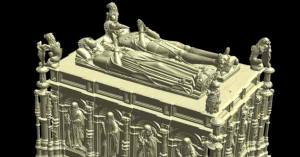 This timely symposium at St Catharine’s College, Cambridge, draws together scientists, art historians, conservators, historians and archaeologists, to discuss current and future developments in 3D scanning across many different fields, advances in scanning techniques and equipment, approaches to interdisciplinary research and the provision of 3D images and models on the web. A round table on day 2 will discuss key priorities for the future.
The conference has been convened by the art-historian Phillip Lindley, who directs one of the innovative Science and Heritage Programme projects, co-funded by the AHRC and EPSRC (heritagescience.ac.uk). Speakers will include David Arnold, Mike Howe, Anna Thirion, Laura Bartolome Riviras, Annemarie La Pensee, Marcos Rodrigues, Andrew Wilson, Stephen Gray, George Fraser, and others.
Five fully subsidised places are available for students, covering all accommodation and meals etc. Applications must be made to the Conference Organiser, Dr Phillip Lindley pgl1@le.ac.uk by Friday, 30 November. Funded students will be asked to write blogs on the conference.
◊ ◊ ◊ ◊ ◊
M O N D A Y , 1 0 D E C E M B E R
3D scanning and its uses in Art History and Archaeology
10.00 Registration and Coffee
11.00 Welcome
11.30 Phillip Lindley (University of Leicester), ‘Representing Re-Formation: The Search for Objectivity’
12.30 Lunch
1.30 Anna Thirion (Université Montpellier 3), ‘Proposal for a Digital Reconstruction of the Romanesque “Tribune” of Saint-Michel-de-Cuxa (France): Methodological Considerations’
2.15 Laura Bartolomé Roviras (Universitat Politècnica de Catalunya), ‘The Romanesque Portals of Santa Maria de Ripoll, Santiago de Compostela and Sant Pere de Rodes: From Modelling to Reconstruction’
3.00 Annemarie La Pensée (National Museums Liverpool), ‘The Non-Contact 3D Laser Scanning of Cultural Artefacts and Its Applications at Conservation Technologies, National Museums Liverpool’
3.45 Tea
4.00 Marcos A. Rodrigues (Sheffield Hallam University), ‘3D Scanning of Highly Reflective Surfaces: Issues on Scanning the Museums Sheffield Metalwork Collection’
4.45 George Fraser (University of Leicester), ‘Scanning in Space and Time’
5.30 Jack Hinton (Philadelphia Museum of Art), ‘Measuring Genius: 3D Scanning and Jean-Antoine Houdon’s Portraits of Benjamin Franklin’
7.00 Dinner
T U E S D A Y , 1 1 D E C E M B E R
Wider 3D scanning and digitisation projects
9.00 Mike Howe (British Geological Survey), ‘Laser Scanning 563 Million Years of Evolution: The JISC GB/3D Type Fossils Online Project’
9.45 Andrew S. Wilson (University of Bradford), ‘3D Bones: Digital Documentation of Skeletal Remains’
10.30 Paul Bryan (English Heritage), ‘Scanning the Stones’
11.00 Coffee
11.45 David Arnold (University of Brighton), ‘3D Documentation: Current Practice and Future Potential’
12.30 Lunch
1.45 Doug Pritchard (CyArk Europe Director), ‘The Scottish Ten Project: Laser Survey, 3D Visualisation and International Diplomacy’
2.30 Stephen Gray (University of Bristol), ‘The Challenges of Using Digital 3D Tools and Methodologies across Different Research Disciplines’
3.15 Tea and Round Table Discussion
Abstracts for the papers are available at the conference website.
Conference | Yorkshire Tourism in the Eighteenth Century
From York’s Centre for Eighteenth Century Studies:
Yorkshire Tourism in the Eighteenth Century
University of York, King’s Manor, 8 December 2012

J.M.W. Turner, Bolton Abbey, Yorkshire, on the Wharfe
ca. 1798, watercolour on paper
◊ ◊ ◊ ◊ ◊
Travel for pleasure or health in Britain and Ireland first became widely available to the affluent middling classes in the eighteenth century. For much of the period 1700-1830, Britain was at war with at least one of its continental neighbours; possibilities for European travel were severely restricted, and tourism within Britain and Ireland flourished. What did this newly accessible and eagerly grasped freedom to roam mean to the domestic tourist; how did the pictorial and/ or textual representation of journeys or sites shape their sense of themselves or of the country in the crucial period of its transition to becoming a modern and united kingdom?
The workshop is a follow-up to last year’s successful event, The Grand Tour in Britain and Ireland. Each speaker will consider an image or series of images, a short text or extracts from a longer piece, and offer a brief exploration of the possibilities of this material before opening the floor to discussion.
P R O G R A M M E
• Ann-Marie Akehurst (York), ‘Broken Stones, Decayed Buildings, and Old Rubbish’: Genealogy of Place, Imagination, and Identity in Early Modern York(shire)’
• John Bonehill (Glasgow), ‘Fairfaxiana: J.M.W Turner at Farnley’
• Oliver Cox (Oxford), ‘Back in the Summer of (17)69: Domestic Tourism and the Yorkshire Petition’
• Mary Fairclough (York), ‘Infidel Missionaries: Robert Taylor and Richard Carlile in Leeds’
• Harriet Guest (York), ‘A Trip to Scarborough’
• David Higgins (Leeds), ‘The Wordworths Visit Yorkshire’
• Emma Major (York), ‘Sibyl, Yorkshire, and the Two Nations’
The registration fee for the day is £12 (£5 for students and unwaged). To register, please email cmb14@york.ac.uk.
Early Registration for CAA 2013 Now Open
The best rates — via Early Registration — for CAA in New York are available until December 14. Posted at CAA News (23 October 2012) . . .
◊ ◊ ◊ ◊ ◊
 This week CAA will begin mailing Conference Information and Registration, which provides important details, instructions, and deadlines for attending and participating in the 101st Annual Conference, to all individual and institutional CAA members. Nonmembers and those wanting a digital file now can download a PDF of the booklet. The conference will take place February 13–16, 2013, in New York.
Following sections on registration and CAA membership, Conference Information and Registration describes travel, lodging, and transportation options and explains the basic processes for candidates seeking jobs and employers placing classifieds and renting booths and tables in the Interview Hall. In addition, the publication lists topics for eleven Professional-Development Workshops. If you want to connect with former and current professors and students, consult the Reunions and Receptions page. The booklet includes paper forms for CAA membership, conference registration, workshops, special events, and mentoring enrollment.
The contents of Conference Information and Registration also appear on the conference website, which is being updated regularly between now and the February meeting. You may also choose to join CAA and register online.










leave a comment