Exhibition and Symposium: Early American Maps and Prints
From The Colonial Williamsburg Foundation:
More than Meets the Eye: Maps and Prints of Early America
DeWitt Wallace Decorative Arts Museum, Williamsburg, VA, 26 March 2011 — April 2012
 The exhibition features 35 maps, portraits, and other graphic images that invite the viewer to look more deeply into the subtle messages delivered by artisans depicting America. Maps, in particular, were regarded as scientific and authoritative documents, imparting a perception of power and control over the environment. As such, they also became important tools for swaying public opinion. The factors that motivated the production of individual maps often become apparent through close scrutiny of their decorative features and the information their creators chose to include–or omit.
In addition to objects from the Colonial Williamsburg collections, the exhibition includes an outstanding documentary source for the 1920s restoration of the historic town—the “Frenchman’s” map, loaned by the College of William and Mary. The Connecticut Historical Society has also kindly agreed to loan their copy of Abel Buell’s A NEW and correct Map of the
UNITED STATES of AMERICA, the first map of the thirteen states to be
published after the Congress of the Confederation ratified the treaty on
January 14, 1784.
◊ ◊ ◊ ◊ ◊
Symposium: More than Meets the Eye: Maps and Prints of Early America
DeWitt Wallace Decorative Arts Museum, Williamsburg, VA, 16-18 October 2011
In conjunction with the exhibition, Colonial Williamsburg will sponsor a symposium from October 16-18, 2011 that will feature lectures focusing on the men who created these objects, how they assembled and disseminated their information, and the factors that motivated them to create powerful and influential images. Speakers will include Philip Burden, Paul Cohen, Louis De Vorsey, Matthew Edney, William Gartner, and Henry Taliaferro. The conference begins with an opening reception Sunday evening followed by two days of lectures, Monday and Tuesday. A complete conference agenda will be posted as soon as it is available.
Conference: Theories and Things, New Directions for the Decorative Arts
With Julie Ramos, I am organizing a study day at the Institut national d’histoire de l’art (INHA) featuring the research of upcoming junior scholars on new directions in the decorative arts. The event will cover several centuries and artistic mediums that intersect with material culture, ornament, objects, and materiality. For Enfilade readers, there will be some excellent presentations on eighteenth-century art, notably by Delphine Burlot, Elisa Foster, Anne Perrin Khelissa, and Boris Gibhardt. If you will be in Paris in early June, I hope to see you there. – JF.
◊ ◊ ◊ ◊ ◊
Des Théories et des choses: nouvelles orientations dans l’étude des arts décoratifs
Institut national d’histoire de l’art, Paris, 6 June 2011
La « culture matérielle », notion globalisante bien que problématique, permet de rapprocher de nombreuses disciplines savantes, des études américaines aux Visual Studies, en passant par l’anthropologie, la philosophie, l’architecture, l’histoire de l’art, l’histoire et la littérature. Elle se manifeste notamment de manière implicite dans nombre de projets menés actuellement, par exemple dans le thème de la prochaine conférence du CIHA (Comité International d’Histoire d’Art) en 2012, The Challenge of the Object, ainsi que dans la future exposition Paris: Life and Luxury au Getty Institute de Los Angeles, qui prévoit l’exposition des objets dans un intérieur parisien reconstitué. Cette actualité est l’occasion d’interroger la manière dont les objets sont traités, comparés et évalués. La tendance à une normalisation et à une naturalisation des termes par le discours de l’histoire de l’art invitent à de nouvelles analyses et clarifications. Cette journée d’études se propose d’examiner pourquoi et comment les théories de la “culture matérielle” sont presque devenues synonymes d’étude des arts décoratifs, en cela toutes périodes et techniques de fabrication confondues. Elle a pour objectif de présenter les travaux de jeunes chercheurs (doctorants et post-doctorants) de différentes spécialités portant sur des objets de la culture matérielle. Il s’agira d’ouvrir ainsi des perspectives nuancées et critiques pour l’étude de ce champ, engageant des questions d’historiographie, d’histoire de l’art, de philosophie et d’esthétique. En remettant en jeu l’identité de l’objet autant que la conception de sa matérialité, cette journée entend redonner une dimension critique aux théories de la culture matérielle et explorer leurs apports à l’histoire de l’art. Contact: jennifer.ferng@inha.fr
◊ ◊ ◊ ◊ ◊
1: La culture matérielle
Modération: Julie Ramos (INHA)
9h30 – 9h50: Anne PERRIN KHELISSA (Centre allemand d’histoire de l’art)
Le statut juridique des objets du décor à Gênes au XVIIIe siècle. Une question posée à l’histoire de la culture matérielle nobiliaire
9h50 – 10h10: Jennifer FERNG (MIT / INHA)
Les états révolutionnaires d’échange: L’économie matérielle ou la transformation de l’ornement et de la monnaie
10h10 – 10h30: Damien DELILLE (Université François Rabelais de Tours / INHA)
“Les arts de la personnalité”: costume symboliste et critique du dandy fin de siècle
10h30 – 11h00: Discussion
11h00 – 11h15: Pause (more…)
Study Days on Theatricality in French Painting
From Le blog de APAHAU:
Le Tableau et la Scène. Peinture et mise en scène du répertoire héroïque dans la première moitié du XVIIIe siècle autour des figures des Coypel
Musée des Beaux-Arts de Nantes, 16-17 May 2011
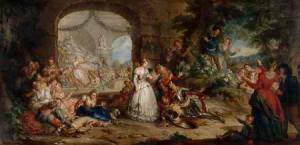 Que la Cléopâtre avalant le poison de Charles- Antoine Coypel, ou le Portrait de Mademoiselle Clairon en Médée de Carle Vanloo, soient empreints dʼun imaginaire lié au théâtre, semble une évidence. Mais la formulation positive de leur « théâtralité » pose question. Trop souvent réduite à une qualité seulement sensible, désignant toute recherche ostentatoire de lʼeffet (la grandiloquence des mouvements, lʼexacerbation des sentiments ou encore la pompe des décors), la « théâtralité » se déplace au contraire dans le paysage historique en fonction dʼidées et dʼexpériences concrètes relatives aux arts dramatiques. Elle peut dès lors être repérée, et même définie par lʼexamen du théâtre lui-même, dans son authentique perspective du XVIIIe siècle – à travers lʼétude de sa dramaturgie, de ses décors et de son espace scénique, du jeu ou du costume de ses acteurs… (more…)
Conference in Paris: Art and Sociability in the Eighteenth Century
If you will be in Paris for the summer, do not miss Art et Sociabilité au 18e siècle. The full conference program is now available online. –JF
Art et Sociabilité au 18e siècle
Institut national d’histoire de l’art, Paris, 23-25 June 2011
 Over the past two decades, sociabilité has become a useful and hotly debated concept for discussing the social, political and cultural changes during the eighteenth century. The works of Daniel Roche, Dena Goodman, Daniel Gordon, Antoine Lilti, and others have demonstrated that sociabilité can be fruitfully approached from the perspectives of sociology, philosophy and anthropology. In the eighteenth century, the Encyclopédie defined the term as “This inclination we have to do to others all the good that we can, to reconcile our happiness with that of others, and always to subordinate our personal advantage to the overall and communal advantage” (Louis de Jaucourt, 1751-1765) – that is, it was an abstract concept that explained the desire humankind had to participate in society. At the time, it was intricately linked to the social practice of commerce, broadly defined as any reciprocal communication or exchange. The emerging public sphere of the period, constituted by spaces such as academies, literary salons, and Masonic lodges,
was the stage on which such exchanges were enacted.
Since the publication of Thomas Crow’s Painters and Public Life in Eighteenth-Century Paris, art historians have taken an interest in the role of artists in the public sphere. These studies tend to take a monographic approach that is more interested in reconstructing the history of an individual artist, salonnière, or collector rather than the role that artworks played in larger systems of practice and exchange. This symposium will examine sociabilité in the eighteenth-century art world through the theme of social practice. By investigating the social practices of artists, amateurs, critics, salonniers and others we seek to uncover the larger networks of social exchange created by the commerce of material objects through collection practices, the art market and the display of art, and by the commerce of ideas through writing and conversation. To what extent did social practices in the public sphere influence artistic production and the material, economic, and verbal exchanges that took place around that production?
Study Tour of Scotland / Conference on Edinburgh Cast Collection
This study tour sounds appealing enough on its own, but I was especially struck by the timing: it’s organized in conjunction with the EAHN/Docomomo conference. So often it seems that academic conferences could do a better job exploring the host area’s resources, and yet schedules tend to hold little room for excursions. This seems like an interesting solution. Also, as noted on the itinerary, there is at the same time a conference on the Edinburgh Cast Collection. -CH
EAHN Architectural Study Tour of Scotland
8-11 September 2011
Registration due by 1 June 2011

Princes Street Gardens, Edinburgh (Photo by James Denham, Wikimedia Commons)
Join the European Architectural History Network for an architectural study tour of Scotland from 8-11 September 2011. Tour highlights include Edinburgh, Glasgow, and five centuries of Scottish architecture, ranging from a selection of castles through postwar mass housing. The tour will be led by local scholars and will be accompanied by a coordinator from the EAHN. The tour fee of 96 euros includes guides and tour bus transportation; it does not include hotels, meals, or international transportation. For complete information and registration details, please consult the schedule.
◊ ◊ ◊ ◊ ◊
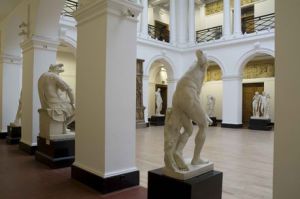
Cast Collection, Edinburgh College of Art
Also in September, the Edinburgh College of Art and the University of Edinburgh will host a conference on the Edinburgh Cast Collection. Founded in 1798, this is the second oldest educational collection in the UK, with donations by Lord Elgin, Canova, Thorvaldsen. The conference will be a major academic event with a section on Architecture and Cityscape. Details will be available in June.
Women’s Studies Group Annual Workshop in London
From the Women’s Studies Group website:
Annual Workshop of the Women’s Studies Group 1558-1837
University College London, 25 June 2011
 We are delighted to announce that Dr Ann B. (Rusty) Shteir will be the guest speaker at our annual workshop on Saturday 25 June. The topic is ‘Myths of Flora: Representing, Repudiating, Recuperating the Goddess of Flowers’. Dr Shteir is Professor of Women’s Studies and Humanities, York University, Toronto. Her book Cultivating Women, Cultivating Science: Flora’s Daughters and Botany in England, 1760 to 1860 was awarded the Joan Kelly Memorial Prize for Women’s History, American Historical Association, 1996. She will introduce eighteenth-century Flora mythologies as depicted in mythology textbooks and other visual and textual forms and discuss the different interpretive methods for analysing the Flora Story.
Delegates are invited to bring presentations in the following subjects:
Women and Science
Women and Botany
Mythologies
Women’s Writing in the Long Eighteenth Century
Full details are now available on our website. All are welcome – please forward this message to your friends and colleagues. We recommend early registration as places will be limited.
Study Day near Paris: Vauban’s Influence on Military Architecture
From Le Blog de APAHAU:
L’Influence de Vauban dans le Monde
Citadelle d’Arras, 7 July 2011
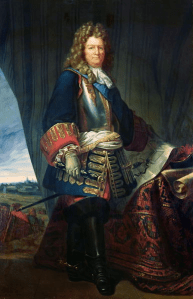 Vauban n’a jamais publié un traité de la fortification, considérant que, d’une part, « l’art de fortifier ne consistait pas dans des règles et des systèmes mais uniquement dans le bon sens et l’expérience », et d’autre part que, tombée entre les mains des puissances étrangères, une telle publication pourrait être utilisée contre la France. Il accepte cependant, à la demande de Louis XIV, de rédiger deux manuscrits sur l’attaque et la défense des places pour l’instruction du duc de Bourgogne, petit-fils du roi Soleil. Ces deux écrits, achevés en 1704 et 1706, seront imprimés aux Pays-Bas dès 1737. A partir de 1680, la réputation de Vauban en France est telle que ses contemporains commencent à mentionner les apports de Vauban dans les traités de la fortification, soit en les actualisant pour y inclure les innovations apportées par lui, soit en éditant des traités en prétendant livrer les méthodes de Vauban. Dans le monde entier on retrouve des fortifications bastionnées supposées être influencées par la méthode de Vauban, de par leur forme, ou parce que des ingénieurs de l’Europe occidentale ont contribué à leur construction. Cependant, lorsqu’on étudie ces sites de plus près, il s’avère que la filiation n’est pas toujours évidente à établir.
La journée d’étude aura pour objectifs :
1. de déterminer plus précisément par quelles voies l’influence a pu se faire,
2. d’identifier les sites ou secteurs géographiques où l’influence de Vauban est réelle,
3. de préciser quels sont exactement les aspects attribuables à Vauban.
Une première analyse de l’influence de Vauban dans le monde sur l’art de fortifier concernera la façon dont ces traités ont été utilisés à l’étranger. La seconde approche est celle de l’analyse architecturale et technique: quelles formes et quelles méthodes de construction, utilisées au-delà des frontières françaises jusqu’au milieu du XIXe siècle, peuvent être attribuées au grand ingénieur ?
Conference: Britain’s Soldiers, 1750-1815
From the conference website:

Britain’s Soldiers, 1750-1815
University of Leeds, 7-8 July 2011
Registration is now open for the two-day international conference on Britain’s relationship with its soldiers in the eighteenth century. It brings together an exciting range of over 20 papers into a series of panels, and covers social, cultural, and military history. The presentations cover all aspects of the men from the United Kingdom who served in the military and British attitudes towards them. From the identities and experience to the relationship between soldiers, culture and society. Sessions include:
- Soldiers and society
- Discipline and disorder
- Soldiers in art
- Identity and the experience of others
- Sources for studying soldiers
There will also be key note lectures from Professor Stephen Conway and Dr Stephen Brumwell.
Paris Conference: Ugliness in the Eye of the Beholder?
This study day in Paris (Nanterre) addresses the theme of the aesthetics of ugliness from the Renaissance to the present. The first session is the one that’s relevant to the eighteenth century — and interesting to see ornament as the point of entry into the subject. From the INHA:
L’Esthétique du laid: Essai de définition d’une histoire du goût
Université Paris Ouest Nanterre La Défense, 19 May 2011
Objectif à atteindre ou bête à abattre, la question de l’esthétisme demeure encore aujourd’hui un point sensible de la production et de la critique artistique. La multiplicité des axes d’étude et la subjectivité « implicite » du sujet contraignent aujourd’hui les chercheurs et les enseignants à d’autant plus de nuances et de neutralité dans l’enseignement des arts. Organisée par les étudiants en Master 2 de l’Université Paris Ouest Nanterre – La Défense et sous l’égide de Claire Barbillon et Marianne Cojannot-Le Blanc, maîtres de conférences, cette journée d’étude est par conséquent l’occasion de réfléchir sur cette notion de la « laideur » et sur ses implications.
◊ ◊ ◊ ◊ ◊
Première Partie
Romain Godart and Sabrina Valin
« La gravure dans tous ses états : recueils d’ornements et décor architectural »
Malgré les critiques formulées à l’encontre des différents types d’ornements depuis l’Antiquité, leur diffusion massive depuis le chantier des Loges du Vatican jusqu’aux édifices français du XVIIIe siècle montre de quelles manières le « microbe » antique, tel que le décrit Louis Courajod, contamine les différents arts. Des recueils d’ornements fournissant aux artistes différents modèles, jusqu’à leur adaptation peinte, sculptée ou modelée, l’étude de ce sujet montre que l’ornement devient porteur d’un message qui transcende les simples préoccupations esthétiques et révèle une dimension cognitive ayant bien souvent trait à son commanditaire.
The full program is available as PDF here»
Conference on Connections between India and Europe
New Global Connections: India and Europe in the Long Eighteenth Century
Centre for Eighteenth-Century Studies, Queen’s University Belfast, 5-6 May 2011
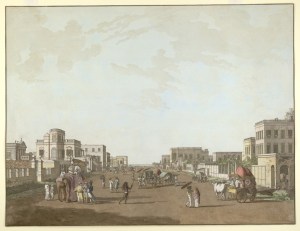
"Old Court House and Street, Calcutta," 1786
The Centre for Eighteenth-Century Studies, Queen’s University Belfast, is holding an international symposium entitled New Global Connections: India and Europe in the Long Eighteenth Century on 5 and 6 May 2011. The opening lecture of the symposium (part of the long-running India Lecture Series at QUB) will be by Professor Seema Alavi of Delhi University on “Mughal Decline and the Emergence of New Global Connections.” The programme comprises eleven papers that seek to evoke the pan-European dimensions of the eighteenth-century encounter with India through interdisciplinary engagement. For details of the programme please contact: Dr. Gabriel Sánchez Espinosa, g.sanchez@qub.ac.uk










leave a comment