Exhibition | Useful Hours: Needlework and Painted Textiles
Press release (20 February 2013) for the exhibition now on at The Huntington:
Useful Hours: Needlework and Painted Textiles from Southern California Collections
The Huntington Library, Art Collections, and Botanical Gardens, San Marino, 1 June — 2 September 2013
Curated by Harold B. Nelson

Taking its title from a verse stitched in a 1796 sampler by 10-year-old Anne ‘Nancy’ Moulton, Useful Hours: Needlework and Painted Textiles from Southern California Collections explores the development of needlework and painted textiles in the United States in the late 18th and early 19th centuries. With a selection of 29 rare and finely wrought examples, the exhibition offers extraordinary insight into the early training, daily lives, and social and cultural values of American women during this rich period in American history.
Useful Hours includes several exceedingly rare pieces of 18th-century American needlework, drawn in large part from the collection of Victor Gail and Thomas H. Oxford, a promised gift to The Huntington, as well as from the collections of Los Angeles County Museum of Art and private lenders. The 25 surprisingly beautiful, touching, and painstakingly executed examples of American works are juxtaposed with four examples of British needlework, a related painting, American furniture, and other decorative arts objects, along with books and manuscripts from The Huntington’s collections.
“I hope visitors feel the sense of amazement that I feel when I explore these young women’s accomplishments,” said Hal Nelson, The Huntington’s curator of American decorative arts. “Their technical skill and creativity within needlework traditions of the time are truly marvelous. I also think people will be surprised when they realize these remarkable pieces are all from Southern California collections,” he added. “A common misconception is that the best American art collections are only on the East Coast, but when you see these pieces you instantly realize that is far from the case.”
Useful Hours is organized thematically, focusing on a variety of subjects, themes, and formats, including coats of arms, pictorial samplers, mourning pictures and memorials, family trees, pockets and pocket books, marking samplers (showing the basic stitches for practical domestic needs), and the relationship between needlework teachers and students. Each section of the exhibition illuminates the lives and accomplishments of the young needleworkers based on new curatorial research. (more…)
Exhibition | In the Name of the Rose: The Jacobite Rebellions
From Fairfax House:
In the Name of the Rose: The Jacobite Rebellions — Symbolism and Allegiance
Fairfax House, York, 9 August — 31 December 2013
 The Jacobite rebellions of 1715 and 1745 had a dramatic impact upon Georgian society. Shedding light on the secretive world of Jacobite allegiance during this troubled period, In the Name of the Rose uncovers the use of symbolism to convey covert messages of loyalty to the cause of the exiled Stuarts. At the heart of this exhibition lies the rose, the most potent and evocative of Jacobite symbols, inspiring faith, courage, and hope.
In association with the exhibition, Fairfax House will be hosting a one-day colloquium exploring the symbolic cultures of Jacobitism on Friday November 15, 2013.
◊ ◊ ◊ ◊ ◊
A fine Georgian townhouse, Fairfax House was originally built in 1762 as a winter home for Viscount Fairfax. Its richly decorated interiors were designed by York’s most distinguished 18th-century architect, John Carr. Converted to a cinema and dance hall during the early twentieth century, it was rescued from dereliction in the 1980s by York Civic Trust. The restored interiors are (now) beautifully complemented by Noel Terry collection of furniture, clocks, paintings and decorative arts, one of the finest private collections of its kind.
Exhibition | Picturing America
In addition to the exhibition, the Dixon has devised a truly-inspired plan to lure visitors to the museums on Fridays: food trucks in the parking lot!
Picturing America: Signature Works from the Westmoreland Museum of American Art
Dixon Gallery and Gardens, Memphis, 4 August — 6 October 2013
Vero Beach Museum of Art, Vero Beach, Florida, 15 February — 25 May 2014
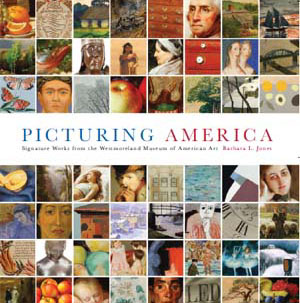 Over the past fifty years, the Westmoreland Museum of American Art, in Greensburg, Pennsylvania, has assembled a collection of works by significant American artists, concentrating on the mid-18th through the mid-20th centuries. Featuring works by John Singleton Copley, Charles Wilson Peale, and Mary Cassatt, Picturing America showcases the signature works from the museum’s collections, from preeminent American artists of the Hudson River School to modernists such as Milton Avery and Doris Lee.
Barbara Jones, Picturing America: Signature Works from the Westmoreland Museum of American Art (Greensburg, PA: Westmoreland Museum of American Art, 2010), 256 pages, ISBN: 978-0931241376, $45.
Exhibition | The Taste of Diderot
This upcoming exhibition at the Musée Fabre de Montpellier marks the 300th anniversary of Diderot’s birth (5 October 1713); today, incidentally, is the anniversary of his death (31 July 1784). From the museum’s programme brochure:
Le Goût de Diderot
Musée Fabre de Montpellier, 5 October 2013 — 12 January 2014
Fondation de l’Hermitage, Lausanne, 7 February — 1 June 2014
Le goût est sourd à la prière. Ce que Malherbe a dit de la mort,
je le dirais presque de la critique; tout est soumis à sa loi.
Diderot, Préface du Salon de 1765
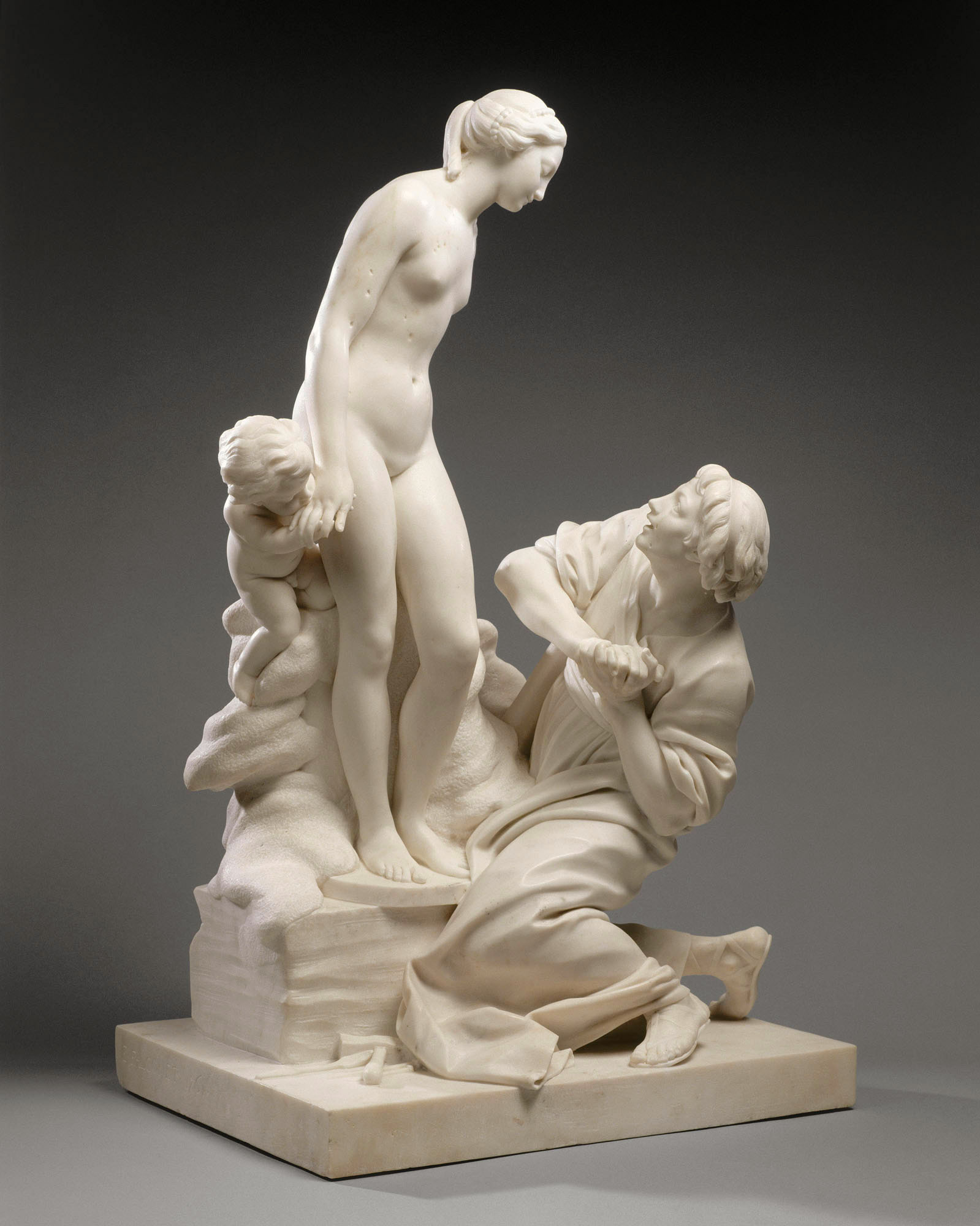
Etienne-Maurice Falconet, Pygmalion et Galatée, 1761, marbre ©RMN-Grand Palais (musée du Louvre) / Hervé Lewandowski
Le musée Fabre de Montpellier Agglomération et la Fondation de l’Hermitage de Lausanne s’associent pour célébrer le tricentenaire de la naissance de Denis Diderot (1713–1784), une figure majeure des Lumières françaises.
Philosophe, romancier, dramaturge, encyclopédiste, Diderot a également joué un rôle pionnier dans le domaine des arts, en rédigeant à partir de 1759, pour la Correspondance littéraire, les comptes rendus des expositions publiques de peinture et de sculpture que l’Académie royale organisait tous les deux ans dans le Salon carré du Louvre. Ces textes serviront et servent encore de modèle et de référence à la critique d’art.
A travers une sélection de peintures (Boucher, Chardin, Vien, Greuze, Vernet, David…), de sculptures (Pigalle, Falconet, Houdon…), de dessins et de gravures, l’exposition propose un aperçu de ce qu’était l’art au temps des Lumières auquel Diderot fut confronté, et de la manière dont il développa et exerça son goût propre. Sa culture visuelle, plastique, architecturale se développe progressivement, ses Salons deviennent au cours des années 1760 la rubrique fétiche de la Correspondance littéraire. Dans les années 1770, il est sollicité comme courtier par Catherine II lors des grandes ventes des collections privées françaises. Goethe lit ses Essais sur la peinture en Allemagne, ses idées esthétiques et sa dramaturgie influencent de façon décisive le courant Sturm und Drang.
Mais ce qu’on retiendra surtout, ce sont les mises en relation audacieuses qu’il propose, où genres, modes, médiums se rencontrent : Greuze avec Boucher, le vrai faux moral et le faux vrai libertin ; Deshays et Doyen avec Homère, Vien et Falconet avec Anacréon, pour que le peintre soit aussi un poète ; Vernet le paysagiste avec les verres et les fruits de Chardin, pour la magie de l’art. L’exposition proposera au spectateur de faire l’expérience de ces rencontres, guidé par la verve inimitable de Diderot.
Note (added 31 March 2014) — The original posting failed to note the mounting of the exhibition in Lausanne.
Exhibition | Mark Catesby: Watercolours from the Royal Collection
From the Royal Collection:
Mark Catesby: Watercolours from the Royal Collection
Gainsborough’s House, Sudbury, Suffolk, 6 July — 12 October 2013

Mark Catesby, The Bald Eagle, watercolour and bodycolour heightened with gum arabic over pen and ink, ca.1722-26
(Royal Collection 924814)
Watercolours of birds, fish and exotic flora painted by British naturalist Mark Catesby (1682–1749) go on display at Gainsborough’s House in Sudbury, Suffolk, from 6 July. The 27 works lent by Her Majesty The Queen from the Royal Collection were acquired by George III in 1768, when the King purchased Catesby’s original illustrations for Natural History of Florida, Carolina and the Bahama Islands.
Catesby, who was raised and educated in Sudbury, showed a passion for natural history from a young age. After his father died, leaving him a sufficient income, Catesby made extended trips to the east coast of North America from 1712, travelling to Virginia, Carolina, Florida and also to the West Indies.
At the time, there was a burgeoning garden culture in Britain, fuelled by the introduction of plant species from the Near East. This ignited Catesby’s desire to produce a comprehensive study of the flora and fauna native to the eastern seaboard of North America. He collected seeds, animals and botanical specimens during his travels and made detailed drawings along the way. Catesby returned to England in 1726 and began work preparing the plates and text for his Natural History of Florida, Carolina and the Bahama Islands, the first major publication on the subject. The Natural History was issued in parts between 1729 and 1747.
In 1768, George III purchased Catesby’s original watercolours for the Natural History and had them bound into a three-volume set of the publication (rather than the usual two), in the place of the printed illustrations. In more recent times, the watercolours were removed from the volumes for conservation reasons and individually mounted.
Among the studies on display at Gainsborough’s House is The Bald Eagle, which Catesby placed at the beginning of the first volume of Natural History. It was rare for the artist to introduce drama into his compositions, but in this work the eagle is shown swooping to catch a fish which has been dropped by an osprey above.
Exhibition | Threads of Feeling in Williamsburg
This exhibition, organized by The Foundling Museum, was on view in London from October 2010 to March 2011. Through next May, it can be seen in Williamsburg (perfect timing for next year’s ASECS meeting). From the press release (17 May 2013) . . .
Threads of Feeling: The London Foundling Hospital’s Textile Tokens, 1740–1770
DeWitt Wallace Decorative Arts Museum, Colonial Williamsburg, 25 May 2013 — 26 May 2014
Curated by John Styles
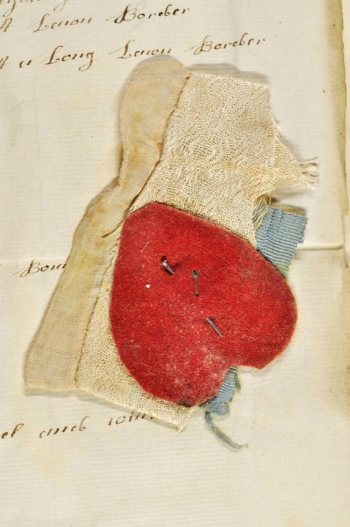 Each piece of fabric or token tells a poignant, emotional story from more than 200 years ago. Many of those stories are on view at the Art Museums of Colonial Williamsburg in a traveling exhibition organized by the Foundling Museum of London. Threads of Feeling consists of 59 books of textile tokens on loan from the Thomas Coram Foundation, a British children’s charity.
“These stories pack powerful, emotional punches, sure to resonate with parents,” said Ronald Hurst, Colonial Williamsburg’s chief curator and vice president for collections, conservation and museums. “We are pleased to have the only mounting of the exhibition in the United States since it closed in London two years ago.”
In the cases of more than 4,000 babies left at London’s Foundling Hospital between 1741 and 1760, a small object or token, usually a piece of fabric, was kept as an identifying record. The fabric was either provided by the mother or cut from the child’s clothing by the Foundling Hospital’s nurses. Attached to registration forms and bound up into ledgers, these pieces of fabric form the largest collection of everyday textiles surviving in Britain from the 18th century. A selection of the textiles and the stories they tell us about individual babies, their mothers and their lives form the focus of the Threads of Feeling exhibition. The exhibition also examines artist William Hogarth’s depictions of the clothes, ribbons, embroidery, and fabrics worn in the 18th century as represented by the textile tokens.
“The process of giving over a baby to the Foundling Hospital was anonymous,” said exhibition curator John Styles, research professor in history at the University of Hertfordshire. “It was a form of adoption. The Foundling Hospital became the infant’s parent and its previous identity was erased.”
The mother’s name was not recorded, but many left personal notes or letters exhorting the hospital to care for their child. Occasionally children were reclaimed, and the pieces of fabric in the ledgers were kept with the expectation that they could be used to identify the child if it was returned to its mother. The textiles are beautiful and poignant, embedded in a rich social history. Each swatch reflects the life of a single infant child. The textiles also indicate the types of clothing their mothers wore. Many clothes for babies were usually made up from worn-out adult clothing and the fabrics reveal how working women struggled to be fashionable in the 18th century.
Museum guests also are invited to participate in several programs related to the exhibition:
• Textiles and accessories can be much more than just material objects. Guests create their own memory token during Tokens of Affection. Like those in the Threads of Feeling exhibition, their creations tell their own unique stories. Presented 11 am – noon, Tuesdays and Fridays, June 18 – August 30.
• Open Drawers: Treasured Textiles from Colonial Williamsburg. Guests drop in to get a closer look at the new exhibition, Threads of Feeling and then peer into the textile study drawers and examine related clothing and needlework from Colonial Williamsburg’s collections. Presented 2–3 pm, Mondays, June 3 – August 26.
• Lives Lost and Found. Guests go behind the scenes of Threads of Feeling on a guided tour, examine the textiles on view and discuss the historical and emotional stories behind these textile tokens from the Foundling Hospital in London and the Colonial Williamsburg collection. Space is limited and a $10 ticket is required in addition to museum admission. Presented 9 – 10:30 am, Tuesdays and Fridays, June 18 – August 30.
The conference symposium, Threads of Feeling Unraveled, takes place 20–22 October 2013.
Exhibition | Charakterköpfe: Portrait Busts in the Enlightenment
From the museum’s 2013-14 exhibition schedule:
Charakterköpfe: Die Bildnisbüste in der Epoche der Aufklärung
Germanisches Nationalmuseum, Nuremberg, 6 June — 6 October 2013
Curated by Frank Matthias Kammel and Anna Pawlik
 The portrait bust is one of the most fascinating genres of sculpture. It was particularly adaptable to the varieties of concurrent artistic styles prevalent at the end of the 18th century. Portraits of rulers, burghers, artists and intellectuals were oriented towards idealized images, towards the antique, or presented the subject in unidealized, haunting realism. Often they show consideration of the interconnectedness between physiognomy and personality. Through the presentation of sculptural masterpieces, this exhibition illuminates a major facet of a politically and spiritually fascinating era, and not least will convey a lively image of the Enlightenment’s novel interest in the individual.
◊ ◊ ◊ ◊ ◊
From the Germanisches Nationalmuseumm:
Die Porträtbüste ist eine der faszinierendsten Gattungen der Bildhauerkunst. Ende des 18. Jahrhunderts war sie von der Gleichzeitigkeit gegensätzlicher Stile bestimmt wie in kaum einer anderen Epoche zuvor. Bildnisse von Regenten, Bürgern, Künstlern und Gelehrten orientieren sich an Idealbildern, an der Antike oder stellen den Porträtierten ungeschönt, in einem packendem Realismus dar. Nicht selten spiegeln sie Überlegungen zur Abhängigkeit von Gesichtzügen und Charakter wider. Die Ausstellung präsentiert dieses breite Spektrum anhand plastischer Meisterwerke zahlreicher bedeutender Künstler wie Johann Heinrich Dannecker, Franz Xaver Messerschmidt, Johann Valentin Sonnenschein oder Johann Gottfried Schadow. Namhafte Geistesgrößen der Zeit, wie Goethe, Herder, Pestalozzi oder Winckelmann, erscheinen in Glanzleistungen früher realistischer und klassizistischer Strömungen der Bildhauerei. Flankiert von zeitgenössischer Graphik und Malerei vermittelt die Ausstellung eine lebhafte Vorstellung von einem damals neuartigen Interesse am Bild des Menschen.
Frank Matthias Kammel, Charakterköpfe: Die Bildnisbüste in der Epoche der Aufklärung (Nürnberg: Germanisches Nationalmuseum, 2013), 244 pages, ISBN: 978-3936688757, €33.
Exhibition | Prized and Played: The Jon Crumiller Chess Collection
From the World Chess Hall of Fame:
Prized and Played: Highlights from the Jon Crumiller Collection
World Chess Hall of Fame, St Louis, 3 May 2013 — 15 September 2013
Prized and Played showcases over 80 beautiful, antique chess sets from across the centuries and around the world, as well as many interesting artifacts related to the history of chess.

East India ‘John’ Company Chess Set, ca. 1800–1850,
Berhampore, India, ivory. King is 5 1/2 inches high.
(Jon Crumiller Collection). Photo © Bruce M. White, 2013
◊ ◊ ◊ ◊ ◊
Prized
Intended to be shown as objets d’art rather than used in play, ornamental chess sets are testaments to the artistic skill of their creators, as well as the refinement of the wealthy patrons who commissioned them. Freed from the confines of practicality, artists created chess sets of great beauty and originality. Master carvers flaunted their expertise in manipulating luxury materials such as ivory, gold, silver, pearls and precious stones in these ornamental chess sets. Many feature elaborate gilded decoration, delicate carving, and tall forms that made them less than ideal for playing, but perfect as demonstrations of wealth, or as a generous gift for a friend.

Dieppe Europeans vs. Africans Ivory Chess Set, ca. 1800, Dieppe, France, Ivory. King is 3 1/4 inches (Jon Crumiller Collection)
Photo © Bruce M. White, 2013
Ornamental sets were also symbols of the erudition and sophistication of their owners. Several of the ornamental sets in this show have themes drawn from history, mythology, or religion. The Good Versus Evil set contains bishops holding copies of Dante Alighieri’s The Inferno, while another set pits Venus and Bacchus, two figures from Roman mythology, against each other. Other artists turned to contemporary military conflicts for inspiration. The army of the British East India Company combats Indian military forces in John Company sets, while other sets celebrated the exploits of Emperor Napoleon. Ornamental sets could also show that a person was well-traveled. A set from Dieppe, France, where master carvers produced lovely ivory products could indicate the owners had traveled to the popular resort town. Swiss Charlemagne sets, produced in Brieze, Switzerland, were also marketed to tourists in catalogues. These sets were so prized by their owners that, despite their delicate nature and rich materials, they have survived centuries later as examples of the excellent craftsmanship of their makers. They continue to be valued, not only for their aesthetic qualities, but also for the fascinating stories they tell.
Played

François-André Danican Philidor, L’Analyze des échecs (London: 1749)
Photo © Bruce M. White, 2013
In Prized and Played, superb examples of antique playing sets from across Europe and Asia illuminate the fascinating history of stylistic evolution of chess pieces. Though some of the sets in this half of the exhibition feature elaborate decoration, they were all intended for use in play. Their widely varied appearances testify to the imagination and stylistic preferences of the artisans who created them, as well as the artistic tastes of the players who used them over the centuries. They were made of durable materials like wood, ivory, bone, and metal so that players could regularly use them for play over many years. While the style of the simple, brightly colored, and dome-topped Islamic sets in the show stands in contrast to that of the European sets, diverse styles of playing sets were often manufactured within the same country. Some examples include the Directoire, Régence, and Lyon style sets produced in France, or the Barleycorn and Northern Upright style sets manufactured in England.
The nineteenth century brought the rise of modern organized chess tournaments and clubs, which highlighted the need for standardized chess pieces. The regional styles that had proliferated in previous centuries led to confusion and contention when the great players of numerous nations gathered to compete. Prominent chess manufacturers in early-to-mid-nineteenth century England began to stabilize the designs of playing sets into recognizable precursors of the sets we use today. John Calvert set up shop in 1791 at 189 Fleet Street, London, and mass-produced several designs that grew in popularity. These designs, as well as fancier playing sets imported and sold by James Leuchars and other retailers in the initial years of the nineteenth century, influenced subsequent well-known London chess manufacturers such as George Merrifield, Thomas Lund and his son William, and Charles Hastilow.
Finally, the iconic Staunton chess set, designed by architect Nathaniel Cooke and endorsed by the famous English player Howard Staunton, emerged during this period. The sets were first manufactured and sold in 1849 by John Jaques and Son, Ltd, of London, and later became the standard for tournament play. (more…)
Exhibition | Paintings by Hubert Robert from the Musée de Valence
Now on view at the Petit Palais:
Tableaux d’Hubert Robert du Musée de Valence
Le Petit Palais, Paris, May — October 2013
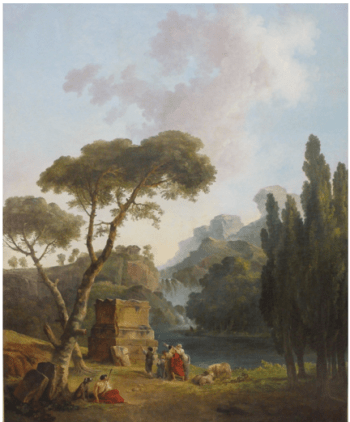
Hubert Robert, Paysage de cascade avec les bergers d’Arcadie
© Musée de Valence, photo Eric Caillet
En avant-première de la réouverture en décembre prochain du musée de Valence (Drôme), quatre des plus beaux tableaux d’Hubert Robert (1733–1808) sont présentés au Petit Palais, aux côtés des dix tableaux de l’artiste des collections permanentes.
Peintre par excellence des ruines de la Rome antique, Hubert Robert séjourna onze ans dans la ville des papes, à partir de 1754. Il en cultiva le souvenir jusqu’à la fin de sa carrière bien qu’il ait été également un chroniqueur inlassable du Paris du XVIIIe siècle. Hubert Robert a enchanté ses contemporains par sa verve, sa poésie et son inventivité – qualités qui ne pouvaient qu’enthousiasmer un critique comme Diderot. Le succès de ses paysages lui valut même la commande de plusieurs jardins qu’il peupla de « fabriques » et de grottes à la manière des tableaux qui avaient fait sa célébrité.
Connu pour sa collection incomparable de dessins d’Hubert Robert offerte par l’amateur Julien-Victor Veyrenc en 1836, le musée de Valence s’est attaché depuis plus d’une vingtaine d’années à étoffer ce fonds par l’acquisition de toiles significatives de l’artiste. L’ensemble formera un des centres de gravité du musée de Valence dont la rénovation, confiée à l’atelier d’architecture Jean-Paul Philippon, est en voie d’achèvement. Le prêt exceptionnel de quelques-uns de ses fleurons à Paris est l’occasion de les faire dialoguer avec les toiles conservées au Petit Palais. Ainsi la vue de la basilique Saint-Pierre du musée de Valence, cadrée de façon audacieuse à travers une baie, rejoint la toile vivement esquissée du Petit Palais montrant un Sculpteur sur un échafaudage dans la nef de Saint-Pierre. Le vaste Paysage de cascade avec les Bergers d’Arcadie, de Valence, est présenté dans la rotonde avec deux grandes toiles tirées des réserves du Petit Palais provenant du décor de l’hôtel Beaumarchais exécutés l’année suivante. A cette occasion, l’ensemble des salles du XVIIIe siècle du musée ont d’ailleurs été réaccrochées et des oeuvres d’autres artistes remises en valeur.
En attendant de parcourir les nouveaux espaces de l’ancien évêché de Valence, ce prêt de quelques mois est aussi une invitation à redécouvrir les galeries du XVIIIe siècle du Petit Palais – musée des Beaux-Arts de la Ville de Paris qui, rappelons-le, sont ouvertes gratuitement au public.
Le Petit Palais est heureux de soutenir la rénovation et l’extension du Musée de Valence. Pour plus d’information, téléchargez le communiqué de presse.
Exhibition | Quilts 1700–1945
From the QAG press release (14 June 2013) . . .
Quilts 1700–1945
Queensland Art Gallery, Brisbane, 15 June — 22 September 2013
Curated by Sue Prichard

Coverlet with sundial, cotton, 1797
(London: Victoria and Albert Museum)
An exhibition of historic British quilts from London’s Victoria and Albert Museum (V&A) is now on view at the Queensland Art Gallery, presenting enthralling social histories and personal stories of more than 200 years of quiltmaking and patchwork. The exhibition includes more than 35 hand-crafted textiles created to provide comfort and commemorate historical events and family occasions between 1690 and 1945, plus a host of associated material such as pin cushions, needlework tools and sewing baskets.
The works come primarily from the esteemed collection of the V&A, the world’s leading decorative arts and design museum. Select pieces have travelled from British regional museums and private collections, and there is the special addition of the much-admired Rajah quilt of 1841, sewn by convict women during transportation to Van Diemen’s Land, on loan from the National Gallery of Australia.
Divided into four thematic sections, the exhibition explores the domestic landscape of the wealthy bedrooms of 18th-century Britain; the private thoughts and political debates that emerged as patchwork spread to aspirational middle class homes in the early 19th century; the movement of quilts to the public sphere for exhibition and display in Victorian England; and the survival of quiltmaking in economically deprived areas in the face of the emergence of mass production in the early 20th century.
“The exhibition has been curated for QAG by Sue Prichard, Curator of Contemporary Textiles at the V&A, based on the popular exhibition Quilts 1700–2010: Hidden Histories, Untold Stories, presented in 2010 at the V&A,” explained Director Chris Saines.
The exhibition is accompanied by the 196-page publication Quilts 1700–1945, a co-edition from QAGOMA and the V&A.










 Enfilade
leave a comment