Display | Citizens of the World: David Hume and Allan Ramsay
On this day, August 10th, of 1784 Allan Ramsay died at the age of 70; October 2013 marks the tercentennial of his birth. From the Scottish National Portrait Gallery:
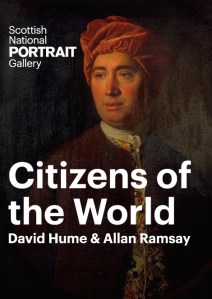 Citizens of the World: David Hume and Allan Ramsay
Scottish National Portrait Gallery, Edinburgh, 1 December 2011 — 31 December 2015
Scotland made a remarkable contribution to the European Enlightenment of the eighteenth century with many of her citizens contributing to the ferment of ideas and shifts in attitude which transformed the world. Two Scots, David Hume, the great philosopher, and Allan Ramsay, the outstanding painter, were at the centre of this cultural and intellectual revolution. This display explores their world, their friends, their families and their patrons.
Exhibition | Stories in Sterling: Four Centuries of Silver in New York
From the New-York Historical Society:
Stories in Sterling: Four Centuries of Silver in New York
New-York Historical Society Museum & Library, 4 May — 2 September 2012

Brandywine bowl (brandewijnkom), silver, ca. 1700 (New-York Historical Society) — Brandywine bowls are traditionally associated with the Dutch New York ritual of the kindermaal, a celebratory feast held in honor of a mother and her newborn child within ten days of the birth. The guests, predominantly female, feasted on sweet cakes and communally sipped a potent brew of brandy and raisins from a bowl such as this.
Stories in Sterling: Four Centuries of Silver in New York, highlights the histories of 150 notable examples of silver from the New-York Historical Society’s collection. Made across the span of four centuries, the objects in the exhibition tell a diversity of stories: many speak to individual accomplishment and family pride, while a few have unsettling ties or backgrounds. The silver, ranging from simple spoons to extravagant trophies, culled from a trove of over 3,000 objects, includes powerful eyewitness artifacts linked to significant moments in the history of New York and the United States.
Stories in Sterling interprets these compelling objects within a cultural context, focusing on the men and women that made, used, and treasured these objects. The exhibition is organized thematically and addresses issues of silver patronage, usage of objects, rituals of presentation and the meanings of silver as they evolved over time. The exhibition will be enriched by a judicious selection of paintings, prints, photographs, manuscripts, furniture and other documents that illuminate the silver, help bring to life the individuals who acquired it and illustrate the physical context in which it was used.
Objects in the exhibition span the sixteenth through the twentieth centuries, with a concentration on silver of the eighteenth and nineteenth centuries. While the majority of objects were made in New York, some were crafted as far afield as England, the Netherlands, France, as well as China, Jamaica, and Argentina. All of the silver is firmly connected through its ownership to New York, highlighting the cosmopolitan nature of the city as early as the seventeenth century. For instance, the examples of Dutch silver brought to New York by early settlers, as well as the many imports from England, help chart cultural shifts, taste, and stylistic influence in colonial America and the early years of the nation.
◊ ◊ ◊ ◊ ◊
From the publisher:
Margaret K. Hofer with Debra Schmidt Bach, Stories in Sterling Four Centuries of Silver in New York (London: Giles, 2012), 352 pages, ISBN: 9781904832652, $70.
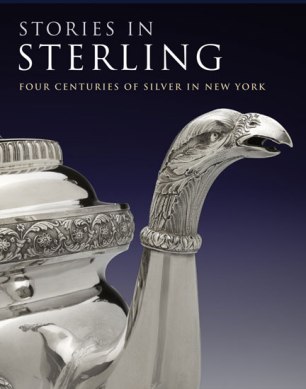 Stories in Sterling is the first comprehensive survey of the New-York Historical Society’s superb collection of early American silver, one of the finest in the United States. It features the full range of silver works, from masterpieces like the 1772 salver by New York City silversmith Lewis Fueter, to the simpler, but no less significant teapot made for the Schuyler family by the Albany silversmith Kiliaen Van Rensselaer in 1695 – one of the earliest teapots made in New York.
Seven chapters consider silver from a range of perspectives: its reflection of the multiethnic character of colonial New York; the impact of industrialization on its manufacture and consumption; its role in honouring public achievement or marking rites of passage; and, finally, its ability to express its owners’ social standing. With a wealth of related objects and original documents, Stories in Sterling is a vital reference tool for for scholars, collectors and enthusiasts of American silver and culture. It features extensive and superbly illustrated entries
with full dimensions, makers’ marks and weights in troy ounces,
and an appendix and checklist.
Margaret K. Hofer is curator of Decorative Arts at the New-York Historical Society, where she has organized numerous exhibitions, including A New Light on Tiffany (2007), which she co-authored. Debra Schmidt Bach, associate curator at the New-York Historical Society organized the exhibition The Grateful Dead: Now Playing at the New-York Historical Society,(2010). Kenneth Ames is professor of American Decorative Arts and Material Culture of the 18th and 19th-centuries at the Bard Graduate Center, New York. His publications include Beyond Necessity: Art in the Folk Tradition; Death in the Dining Room and Other Tales of Victorian Culture (1995). David Barquist is curator of American Decorative Arts at Philadelphia Museum of Art, and a scholar on colonial New York silver. He is the author of Myer Myers Jewish Silversmith in Colonial New York (2001).
Exhibition | Migrations: Journeys into British Art
From Tate Britain:
Migrations: Journeys into British Art
Tate Britain, London, 31 January — 12 August 2012

Benjamin West, Pylades and Orestes Brought as Victims before Iphigenia, 1766 (London: Tate), N00126
This exhibition explores British art through the theme of migration from 1500 to the present day, reflecting the remit of Tate Britain Collection displays. From the sixteenth- and seventeenth-century Flemish and Dutch landscape and still-life painters who came to Britain in search of new patrons, through moments of political and religious unrest, to Britain’s current position within the global landscape, the exhibition reveals how British art has been fundamentally shaped by successive waves of migration. Cutting a swathe through 500 years of history, and tracing not only the movement of artists but also the circulation of visual languages and ideas, this exhibition includes works by artists from Lely, Kneller, Kauffman to Sargent, Epstein, Mondrian, Bomberg, Bowling andthe Black Audio Film Collective as well as recent work by
contemporary artists.
◊ ◊ ◊ ◊ ◊
From the Tate Shop:
Lizzie Carey-Thomas, Migrations: Journeys into British Art (London: Tate, 2012), 128 pages, ISBN: 9781849760072, £15.
 With contributions by John Akomfrah, Tim Batchelor, Sonia Boyce, Emma Chambers, T.J. Demos, Kodwo Eshun, Leyla Fakhr, Paul Goodwin, Nigel Goose, Karen Hearn, David Medalla, Lena Mohamed, Panikos Panayi and Wolfgang Tillmans.
This book offers a unique perspective on the history of British art, charting how it has been shaped by successive waves of migration. It cuts a swathe through five hundred years of history and traces not only the movement of artists themselves, but also the circulation of art and ideas, from the hugely influential arrival of Northern European artists such as Anthony van Dyke in the sixteenth and seventeenth centuries to the influence of Italy and the development of neoclassicism on eighteenth-century artists such as Benjamin West, and on to the broad cultural interchange of the Victorian era. James McNeill Whistler and John Singer Sargent were two of many artists who moved between Britain, France and the United States in the nineteenth century. In the early twentieth century, David Bomberg and Mark Gertler were among the group of second-generation Jewish artists who played a considerable role in the establishment of British modernism. The rise of fascism in the 1930s, causing artists such as Oskar Kokoschka and Kurt Schwitters to flee to Britain, foreshadowed the explosion of a multicultural diaspora. Several generations of artists have since explored what it means to be both ‘black’ and ‘British’, and contemporary artists continue to investigate the meaning of identity today.
Generously illustrated, and including artist interviews and texts by leading curators and art critics, this illuminating book tells a previously hidden but vital story in the shaping of British art and culture.
Exhibition | Watercolours at Gainsborough’s House
From Gainsborough’s House:
Drawings and Watercolours from a Private Collection 1700-1840
Gainsborough’s House, Sudbury, Suffolk, 30 June – 29 September 2012
Curated by Huon Mallalieu
 The main exhibition at Gainsborough’s House for 2012 is a selection of British watercolours from a distinguished private collection in East Anglia. Formed during the 1950s and 1960s the extensive collection from which this selection of some 70 examples has been made by guest curator Huon Mallalieu, is one of the last remaining in private hands from the golden age of connoisseurship in British watercolours.
The exhibition concentrates on Thomas Gainsborough’s contemporaries and includes works by famous artists (J.M.W. Turner, Paul Sandby, J.R. Cozens, Thomas Rowlandson, Francis Towne), as well as items by important forerunners, lesser known practitioners, and amateurs of varying skill. The selection is thematic with an emphasis on topography beginning in East Anglia and moving outwards to London across the English Channel to mainland Europe, and then over the oceans to America, India and China.
Exhibition | Prints at the Frick in Pittsburgh
From the Frick Art & Historical Center:
In the English Manner: Mezzotint Portraits
Frick Art & Historical Center, Pittsburgh, 16 June — 2 September 2012
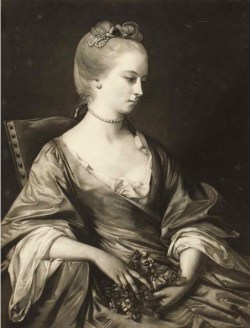
Edward Fisher, after Sir Joshua Reynolds, Miss Jacob alias Miss Roberts alias Mrs. Glynn, 1762. Published 1762 by Johnathan Spilsbury. Mezzotint (Pittsburgh: Frick Art & Historical Center)
The temporary exhibition galleries at the Frick is home to three simultaneous exhibitions of prints this summer. Thirty-five etchings by 17th-century master Jacques Callot and his followers form the cornerstone of our summer look at printmaking. Together, the three exhibitions span more than 200 years and provide a look at three different centuries as observed by artists working with different techniques and for different purposes, yet all illustrating the importance of the printmaker in recording, publishing and disseminating a distinct view of the world. . . .
While Callot’s work gives us a look at a slice of 17th-century life and subject matter, a selection of fine 18th-century English mezzotints purchased by Henry Clay Frick in the early twentieth century provides a fascinating look at who-was-who in eighteenth-century England. The majority of these mezzotints are of fashionable society figures whose appeal has endured for collectors. English portraiture in particular was extremely popular with American collectors in the early 20th century. A collection of portraits evoked an appreciation of history and continuity, while conjuring images of a gracious lifestyle to which America’s newly rich aspired. Frick’s mezzotints, purchased from one of his regular dealers, Knoedler & Co, were hung at both his New York residence and his summer home in Massachusetts.
Mezzotint is a printmaking process that dates to the seventeenth century. It quickly gained prominence as the preferred method for creating reproductions of famous paintings. Used with particular success to make reproductive prints of portraits by Thomas Gainsborough (1727–1788), Sir Joshua Reynolds (1723–1792), John Hoppner (1758–1810), and Sir Thomas Lawrence (1769–1830), the process became so popular in 18th-century England that the technique is sometimes referred to as “the English manner.” Mezzotint as a form was prized for its ability to imitate the tonal properties of painting.
The technique begins with a copper plate that is “rocked” over its entire surface. This rocking, done with a sharp, toothed instrument, creates a surface covered with tiny metallic burs which hold the ink—a completely rocked plate prints a rich velvety black. The image is created by flattening the burs, and creating smooth areas in the copper; the smoother or more polished the plate, the lighter the area prints. Even without the use of colors, a mezzotint has incredible depth and richness of tone, which in the hands of a skilled printmaker, creates a painterly feel.
The 13 prints included in this exhibition are almost all of fashionable ladies, some from a series by Valentine Green (1739-1813) published in 1780, Beauties of the Present Age, which featured Green’s mezzotints made after Reynolds’ portraits. An etcher, mezzotint, and aquatint artist, Green was one of the most celebrated and prolific British printmakers of the late eighteenth century. He produced nearly 400 plates in his distinguished career, which included an appointment as Royal Engraver to King George III.
Henry Clay Frick owned a number of significant oil on canvas examples of eighteenth-century portraiture; Yet, Frick and his peers also prized the works of the masters of the mezzotint—artists like Valentine Green and John Raphael Smith (1752–1812) who could take on a Gainsborough or a Reynolds and translate its power into print.
Exhibition | Drawings from the Christian and Isabelle Adrien Collection
Didier Rykner reviewed the exhibition for The Art Tribune in May (with an English version available). From the museum’s website:
Une Collection Particulière: Les Dessins de la Collection Christian et Isabelle Adrien
Le Musée des Beaux-Arts de Rennes, 21 March — 26 August 2012
 Le musée des Beaux-Arts de Rennes présentera, à partir du 21 mars, les plus belles feuilles de la collection de dessins de Christian et Isabelle Adrien. Au hasard des rencontres, à la lumière de quelques intuitions fulgurantes, M. Adrien a inlassablement cherché et étudié, tout au long de sa vie, les feuilles dessinées par les grands maîtres du passé. C’est à Rennes que ce collectionneur d’origine bretonne invite aujourd’hui le public à venir partager sa passion pour le dessin ancien. La découverte de près de quatre-vingt dessins français (La Hyre, Poussin, Boucher), italiens (Bandinelli, Salviati, Carraci) et nordiques (Bloemaert, Rubens), dont beaucoup sont encore inédits, marquera l’un des temps fort de la Semaine du dessin 2012 et de la programmation culturelle rennaise du printemps et de l’été prochain. Le catalogue de l’exposition, qui rassemble les notices des plus grands spécialistes de
chaque artiste, est dirigé par Monsieur Rosenberg, de l’Académie française.
◊ ◊ ◊ ◊ ◊
Catalogue: Francis Ribemont and Pierre Rosenberg, Dessins de la collection Christian et Isabelle Adrien (Paris: Editions Chaudun, Musée des beaux-arts de Rennes, 2012), 207 pages, ISBN: 9782350391281, $77.50. [Available from ArtBooks.com]
Exhibition | Messerschmidt and Modernity
Press release (16 April 2012) from The Getty:
◊ ◊ ◊ ◊ ◊
Messerschmidt and Modernity
The J. Paul Getty Museum, Getty Center, Los Angeles, 24 July — 14 October 2012

The Getty Celebrates the Modern and Contemporary Legacy of Franz Xaver Messerschmidt’s Distinctive Character Heads
◊ ◊ ◊ ◊ ◊

Ken Gonzales-Day, Untitled (Franz Xaver Messerschmidt, The Vexed Man, The J. Paul Getty Museum, Los Angeles, CA), 2008. Light jet print. Courtesy of Ken Gonzales-Day and Fred Torres Collaborations, N.Y.C. © Ken Gonzales-Day
The intriguing series of heads that are collectively known as Character Heads, created by the German Baroque artist Franz Xaver Messerschmidt (1736–1783) during the last 13 years of his life, have become increasingly popular with the general public through a series of recent exhibitions and books devoted to these expressive works. Furthermore, the sculptures, depicting various states of emotion and expression, have also captured the imaginations of generations of artists—especially during the 20th and 21st centuries.
Messerschmidt and Modernity, on view at the J. Paul Getty Museum from July 24 through October 14, 2012, is the first exhibition to explore the contemporary legacy of these surprisingly modern-looking sculptures, which were carved in alabaster, or cast in a lead or tin alloy. Along with Messerschmidt’s works, the exhibition will feature a selection of modern and contemporary works of art that testify to the lasting impact of these astonishing heads. Eight Character Heads will be exhibited—among them the Getty’s own Vexed Man— along with a newly discovered reduced variation of a now-lost Character Head known as A Cheeky Nitpicky Mocker, which has never before been exhibited publicly. Contemporary artists featured in the exhibition include Tony Bevan, Tony Cragg, Ken Gonzales-Day, Bruce Nauman, Pierre Picot, Arnulf Rainer, Cindy Sherman, and Emily Young.
“Messerschmidt’s Character Heads have appealed to audiences since they were first produced. They were especially popular in turn-of-the-century Vienna and subsequently inspired modern artists of the 20th century,” explains Antonia Boström, senior curator of sculpture and decorative arts at the J. Paul Getty Museum. “Now, this unparalleled series of sculptures is enjoying a renewed popularity—not only fascinating to museum audiences and scholars, but compelling for contemporary artists.”
The exhibition demonstrates how Messerschmidt’s heads are linked to the 18th and 19th centuries’ fascination with expression and the “passions,” as well as with the pseudosciences of physiognomy and pathognomy. It also traces how this series has influenced the work of artists in fin-de-siècle Vienna and contemporary artists in Austria, Great Britain, and the United States.
Messerschmidt
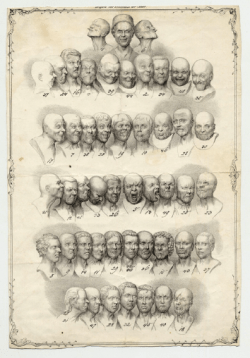
Matthias Rudolph Toma, Messerschmidt’s ‘Character Heads’, 1839. Lithograph. Courtesy of the Museum of Fine Arts, Budapest.
The German-born Messerschmidt led a successful career in Vienna in the mid-18th century, receiving many important commissions from the Habsburg empress Maria Theresa and her consort, Francis Stephen of Lorraine. Messerschmidt’s circumstances changed dramatically around 1770 when he began to show signs of mental instability, leading to the loss of prestigious commissions and conflicts with colleagues and friends. He eventually left Vienna and, in 1777, he settled in Pressburg (now Bratislava), and remained there until his death in 1783, focusing obsessively on the production of the heads as well as more conventional portraits. Messerschmidt called the dozens of heads he created between 1770 and 1783 Kopfstücke (head pieces) and intended them to represent the full range of human expressions, which he believed there are sixty-four. In 1793, ten years after his death, the heads were exhibited at the Citizen’s Hospital in Vienna, when, despite their misrepresentation, they also received the often incongruous titles by which they are still referred to today. They were only referred to as “Character Heads” after Messerschmidt’s death.
Just Rescued from Drowning belongs to a group of alabaster Character Heads probably depicting the same man, but differentiated by the arrangement of the hair. The title suggests that he has just been submerged in water, and his lank hair (or a wig) hangs down over his forehead, but the hairstyle may actually reflect those featured on Gothic sculptures of southern Germany, which would have been familiar to Messerschmidt from his youth.
Another head on view, The Ill-Humored Man, belongs to a group of middle-aged bald men within the series of Character Heads. The man’s tightly squeezed eyes and the flat strip covering his mouth contribute to a strong sense of alienation and interiority and we sense his extreme discomfort. The object covering the mouth may relate to the magnets that the German physician Franz Anton Mesmer (1734–1815) applied to patients during his therapeutic sessions. They formed part of his “animal magnetism” theory that a universal magnetic fluid coursing through the human body could be manipulated by magnets for curative purposes. Mesmer and Messerschmidt were known to be friends and these experimental procedures were of great interest to the artist.
The French artist Joseph Ducreux (1735–1802) was a contemporary of Messerschmidt, and as a painter at the court in Vienna he was probably familiar with his sculpture. Like Messerschmidt, Ducreux was interested in the pseudoscience of physiognomy, and his Self-Portrait, Yawning (by 1783, Getty Museum’s permanent collection) is an example of his experiments with the expressive possibilities of portraiture.
Some forty-nine of the sixty-nine heads Messerschmidt created are accounted for today. A lithograph on view in the exhibition has been a key element in reconstructing the series of Messerschmidt’s heads. Created by Matthias Rudolph Toma after a drawing by Josef Hasslwander, this print (from Budapest) depicts forty-nine of the heads and was made four years after the heads were publicly exhibited in 1835 by their then-owner, Josef Jüttner.
The psychological theme of Messerschmidt’s sculptures and their uncompromising aesthetic colored their public reception in Vienna. After his death and throughout the early 19th century the Character Heads were viewed as oddities and exhibited in Vienna for popular entertainment. Over time, this perception changed and by the end of the 19th century the heads were seen as useful examples of expression and emotion for art students to copy, and for students of anatomy and psychology to study. Some of the heads found their way into art-school storerooms in Vienna, while others were collected both by preeminent medical professionals and by art collectors. By the turn of the century the Character Heads found favor with Vienna’s Jewish cultural elite, which supported avantgarde art movements such as the Viennese Secession and the Wiener Werkstätte, and also had links to Sigmund Freud. Their interests in unconventional contemporary art and the science of psychiatry combined to create a new culture of support for Messerschmidt’s heads in Vienna.
Modernity and Beyond
The works created since 1900 on view in the exhibition represent a wide range of responses to the Character Heads. Modern and contemporary artists have been drawn to Messerschmidt’s heads for their perceived departure from the confines of academic convention. But it is also the combination of a reductive style, refined modeling and carving,
and exaggerated expression that make these sculptures resonate with modern audiences. By the early 20th century, Messerschmidt’s heads were well known in Vienna, and prized by collectors and artists as distinctive and affecting works of art. Anton Josef Trčka’s renowned 1914 portrait photograph of Egon Schiele (1890–1918) reflects the visual and psychological impact of Messerschmidt’s grimacing heads. The camera focuses closely on the artist’s head and hands; his anxious expression and interlocked fingers hint at his angst-ridden mood.
Contemporary artists such as Arnulf Rainer (b. 1929) and Tony Bevan (b. 1951) directly quote Messerschmidt’s sculptures, while others, including Bruce Nauman (b. 1941) and Cindy Sherman (b. 1954), incorporate their body, human expression, and self-portraiture into their work in a way that prompts comparison with Messerschmidt. The sculptures of Tony Cragg (b. 1949) and Emily Young (b. 1951) are more indirectly related, though the sculptors’ grounding in a figurative tradition and their exploration of the material’s expressive potential can be paralleled in Messerschmidt’s works. The juxtaposition of works from different time periods in this section of the exhibition illustrates the psychological power that Messerschmidt’s Character Heads continue to have for the contemporary viewer.
Expression Lab
The final gallery of the exhibition is designed to encourage visitors to consider and respond to Messerschmidt’s sculptures and the contemporary works focused on expression. The gallery is installed with mirrors, art reproductions, and an interactive “photo booth” for those who wish to actively explore and record their own facial expressions. For example, Rainer practiced “pulling faces” in the mirror, performing and documenting a series of contorted expressions as a means of investigating his own image. Using mirrors, visitors will be able to try these exercises themselves. In the photo booth, participants will be invited to replicate the intense facial expression of the Vexed Man or other character heads, or to invent an expression of their own choosing. Visitors may then share their photo on video screens in the gallery. A related video will be shown and reference books will be on hand for those who wish to learn more about Messerschmidt and expression, and about the other artists represented in the exhibition.
An audio tour, narrated by Boström and guest contributor Professor Eric Kandel, a Nobel-prize winning neuroscientist and author of The Age of Insight: The Quest to Understand the Unconscious in Art, Mind, and Brain, from Vienna 1900 to the Present, will accompany the exhibition. Messerschmidt and Modernity will also be accompanied by a richly illustrated book of the same name, written by Antonia Boström and published by Getty Publications.
◊ ◊ ◊ ◊ ◊
From the Getty Store:
Antonia Boström, Messerschmidt and Modernity (Los Angeles: Getty Publications, 2012), 80 pages, ISBN: 9780892369744, $20.
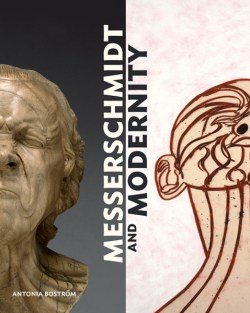 An astonishing group of sixty-nine “Character Heads” by German sculptor Franz Xaver Messerschmidt (1736–1783) has fascinated viewers, artists, and collectors for more than two centuries. The heads, carved in alabaster or cast in lead or tin alloy, were conceived outside the norm of conventional portrait sculpture and explore the furthest limits of human expression. Since their first exposure to the public in 1793, artists, including Egon Schiele (1890–1918), Francis Bacon (1909–1992), Arnulf Rainer (born 1929), and, more recently, Tony Cragg (born 1949) and Tony Bevan (born 1951), have responded to their over- whelming visual power.
Lavishly illustrated, Messerschmidt and Modernity presents remarkable works created by and inspired by Messerschmidt, an artist both of and ahead of his time. The Character Heads situate the artist’s work squarely within the eighteenth-century European Enlightenment, with its focus on expression and emotion. Yet their uncompromising style stands in sharp contrast to the florid Baroque style of Messerschmidt’s earlier sculptures for the court of Empress Maria Theresa of Austria. With their strict frontality and narrow silhouettes, the Character Heads appear to contemporary eyes as having been conceived in a “modern” aesthetic. Their position at the apparent limits of rational art have made them compelling to successive generations of artists working in a variety of media. An exhibition of the same name will be on view at the Getty Center from July 24 through October 14, 2012.
Antonia Boström is senior curator of sculpture and decorative arts at the J. Paul Getty Museum and the editor of The Fran and Ray Stark Collection of 20th-Century Sculpture in the J. Paul Getty Museum (Getty, 2008).
Exhibition | Canaletto and Guardi
From the Musée Jacquemart-André:
Canaletto – Guardi: The Two Masters of Venice
Musée Jacquemart-André, Paris, 14 September 2012 — 14 January 2013
Curated by Bożena Anna Kowalczyk

Canaletto, San Geremia and the Entrance to Cannaregio, ca. 1726-27
London, The Royal Collection, © HM Queen Elizabeth II 2012
◊ ◊ ◊ ◊ ◊
In the 18th century, Venice and its timeless charm became the subject of choice for painters known as the Vedutisti. Their views of Venice quickly spread across Europe, making the Veduta the most collected and one of the most loved genres among the public to this day. Thanks to some generous loans, the Jacquemart-André Museum is now devoting an exhibition to the Veduta for the first time in France, a genre of painting epitomised by Canaletto and Guardi. It is a very under-represented artistic genre in French public and private collections, which makes this exhibition at the Jacquemart-André Museum, Canaletto – Guardi: The Two Masters of Venice, a must-see event, from 14 September 2012 to 14 January 2013. Curated by Bożena Anna Kowalczyk, the focus is on spreading an artistic movement born at the dawn of the 18th century, which was mainly collected by wealthy Italian, British and German collectors.
The exhibition gives pride of place to Canaletto, the cornerstone of the genre, showcasing more than twenty-five of the master’s essential works from the most prestigious museums and collections, while identifying the artist’s place at the heart of the great Veduta artistic movement. His works resonate with those of Gaspar van Wittel, Luca Carlevarijs, Michele Marieschi, Bernardo Bellotto and Francesco Guardi, who was the last master to succeed in immortalising the charm and elegance of the Venetian 18th century. That is why the Jacquemart-André Museum will display about twenty of his works. The exhibition also lays the stress on capricci: striking scenes of an imaginary Venice, painted by Canaletto, Guardi and Bellotto. Some of these canvases have never been displayed in a temporary exhibition before.
Caneletto
The undisputed master of the Veduta, Giovanni Antonio Canal, known as Canaletto (Venice 1697-1768) made his mark on his century by immortalising the various faces of the Venice of his time in his canvases, including streets and piazzas, canals and views over the lagoon, daily life and festival days. Canaletto was a theatre painter in his youth, and succeeded in bringing together an expert sense of composition, a perfectly mastered technique of perspective, and attractive lighting effects.
Guardi
The exhibition takes place on the three-hundredth birthday of Francesco Guardi (1712-1793), and unites more than twenty of his works, rarely exhibited in France. It highlights his links with his older master Canaletto, both considered the most accomplished Vedutisti. For the first time, the Canaletto drawings that the young Guardi admired in Venice are now displayed opposite the Guardi canvases that they inspired. Their works exude a different awareness of perspective and atmospheric effects. While Canaletto’s approach is more rational, Guardi’s paintings also highlight his imagination and awareness, as well as the unique character that he carefully crafted for each scene. Guardi’s works are typified by warm colours and vibrant light, exalting the beauty of Serenissima and unveiling the charm of a fragile and declining Venice.
The Vedutisti
Whether they preceded or followed Canaletto, each of the great Vedutisti displayed at the exhibition brings an individual richness in vision and technique. Gaspar van Wittel (1652/3 – 1736) set the trend for views of Venice by carefully depicting spectacular settings on each canvas, where the buildings contrast with the transparency, movement and reflections of the water. In his wake, Luca Carlevarijs (1663-1730) portrayed a festive Venice, to the rhythm of foreign ambassadors’ grandiose welcomes as they arrived at the Doge’s Palace. Michele Marieschi (1710-1743), from almost the same generation as Canaletto, was his skilled rival. His preference for unexpected viewing angles sets him apart. Following Canaletto’s considerable success, his nephew, Bernardo Bellotto (1722-1780), trained at the master’s school, casting Venetian landscapes in a colder and silvery light, and often utilising innovative compositions. Belletto led to the spread of the Venitian veduta in Europe and became a major protagonist of this genre during the second half of the 18th century.
The Capricci
Although the Vedutisti sought to depict 18th-century Venice in every detail, it is little-known that they also devoted a considerable portion of their works to inventing an imaginary, fantasy Venice, through the capriccio genre. Concern with reality is abandoned in favour of dreaming up reimagined, rustic or unsettling scenes. These spectacular views, created by Canaletto, Guardi or Bellotto, will be examined in detail in the exhibition.
Exceptional Loans
In order to reunite more than fifty key works, more than twenty of which have never been displayed outside their museums of origin, the Jacquemart-André Museum has received support from the largest European and American museums, who helped to make the exhibition a reality through their exceptional loans. These include the London National Gallery, the British Royal Collection, the Thyssen-Bornemisza Museum in Madrid, the Louvre Museum in Paris, the New York Frick Collection, the Parma National Gallery, the Budapest Museum of Fine Arts, and more.
The Royal Collection
The British Crown possesses the largest collection of Canaletto paintings and drawings. Almost all of them were commissioned to Canaletto by Joseph Smith, the British consul at Venice from 1744, who then sold his collection to George III, King of England. Dr. Bozena Anna Kowalczyk, general curator of the exhibition at the Jacquemart-André Museum, studied this prestigious Canaletto collection in great detail and was granted a loan of eight of Canaletto’s exceptional works, which will be displayed for the first time in Paris. Some of these have never been shown in public outside Windsor Castle or the Queen’s Gallery in Buckingham Palace.
Exhibition Curators
Dr. Bożena Anna Kowalczyk is a renowned authority in paintings of views, and she has been at the centre of studies conducted over the last few years. She decided to focus on Canaletto and Bellotto at the University Ca’ Foscari of Venice, while writing her doctoral thesis on “Il Bellotto italiano” (1993-1996). Her work has fundamentally altered critical analysis of the two artists’ works, and she was the source of many discoveries regarding Canaletto’s works, making her an acclaimed specialist among researchers of the period. She knows also very well Michele Marieschi’s and Francesco Guardi’s work and is the main Bernardo Bellotto specialist (1722-1780), whose general catalogue she is preparing.
Exhibitions previously curated or co-curated by Dr. Bożena Anna Kowalczyk:
– Bernardo Bellotto 1722-1780, Venice, Museo Correr, 2001
– Canaletto prima maniera, Venice, Fondazione Giorgio Cini, 2001
– Canaletto: il trionfo della veduta, Rome, Palazzo Giustiniani, 2005
– Canaletto e Bellotto: l’arte della veduta, Turin, Palazzo Bricherasio, 2008
Associate curator of the exhibition: Mr. Nicolas Sainte Fare Garnot, Jacquemart-André Museum curator
◊ ◊ ◊ ◊ ◊
Note (added 29 August 2012) — See Robert O’Byrne’s piece (24 August 2012) on the exhibition for Apollo Magazine.
Exhibition | Jean-Jacques Rousseau et les Arts
Thanks to Pierre-Henri Biger for noting this exhibition now on at the Panthéon:
Jean-Jacques Rousseau et les Arts
Panthéon, Paris, 29 June — 30 September 2012
 À l’occasion du tricentenaire de la naissance de Jean-Jacques Rousseau (1712-1778), plus de 150 oeuvres et objets consacrés au philosophe et à son image sont réunis au Panthéon, monument où il repose parmi les Grands Hommes. À découvrir une exposition en deux parties, présentant Rousseau et son oeuvre, (l’Antique, le livre, la musique, la nature) et Rousseau et son image (portraits, allégories, monuments, panthéonisation), et concluant avec une évocation du couple Rousseau-Voltaire.
Cette manifestation bénéficie de prêts prestigieux consentis par la Bibliothèque nationale de France, la Bibliothèque publique universitaire de Neuchâtel, la British Library de Londres, les musées du Louvre et Carnavalet, de nombreuses autres institutions publiques en France et à l’étranger et de collections privées.
Commissaire : Guilhem Scherf, conservateur en chef au département des Sculptures du Musée du Louvre
Scénographe : Jérôme Habersetzer
Exhibition | Catherine the Great: An Enlightened Empress
Following a £46 million redevelopment, completed last summer, the National Museum of Scotland presents over 600 objects from the Court of Catherine the Great.
◊ ◊ ◊ ◊ ◊
From the museum:
Catherine the Great: An Enlightened Empress
National Museum of Scotland, Edinburgh, 13 July — 21 October 2012

Vigilius Eriksen, Portrait of Catherine II on Her Horse Brilliant, after 1762
Learn the story of the woman behind the legends and discover the greatest collection of treasures from Russia ever seen in the UK
Sharp, funny, generous, iron-willed and passionate, Catherine the Great was one of Russia’s most successful rulers and one of the greatest art collectors of all time. Presented in partnership with the State Hermitage Museum in St Petersburg, this unique exhibition is showing only in Edinburgh. Explore Catherine’s reign through her collections, which vividly reflect her own interests and provide a fascinating glimpse of the wealth and magnificence of the Imperial Russian court. Learn of a woman who won wars and built palaces, wrote plays and books, built a rollercoaster for her own entertainment and who put Russia firmly on the cultural map of Europe.
The exhibition features more than 600 priceless works collected by the Empress. See spectacular paintings, outstanding costumes and uniforms, dazzling cameos, snuffboxes and jewellery, hunting weapons and exquisite works of art seldom seen outside Russia.
◊ ◊ ◊ ◊ ◊
Writing for the The Sunday Times Magazine (1 July 2012), pp. 52-56, Amy Turner reports that the exhibition will place “special emphasis on the Russian-Scottish connection.” Along with many of the empress’s Scottish soldiers and sailor officers, there was the architect, Charles Cameron, and other Scottish characters including art dealers and physicians. As for the equestrian portrait by Eriksen, Turner writes,
The painting was recently discovered in the bowels of the Hermitage, wrapped and filthy, where it was hurriedly stashed for safekeeping at the outbreak of the Russian Revolution in 1917. It has been specially cleaned and restored in preparation for its trip to Scotland. Several copies of the painting exist around the world (one was on display at the Royal Academy’s Citizens and Kings exhibition in London in 2007), but this is the only version attributed solely to Eriksen (55).
◊ ◊ ◊ ◊ ◊
Note (added 12 July 2012) — The catalogue, edited by Godfrey Evans, is available through ACC Distribution.










leave a comment