Exhibition | Chic Emprise: Art and Culture of Tobacco
Now on view at the Museum of the New World in La Rochelle, from the press release:
Chic emprise: Culture, usages et sociabilités du tabac du XVIe au XVIIIe siècle
Musée du Nouveau Monde, La Rochelle, 22 June — 23 September 2019
Curated by Maxime Georges Métraux and Annick Notter
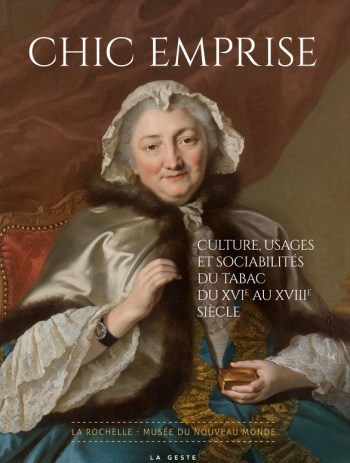 De l’Amérique du Nord en passant par les Caraïbes jusqu’au royaume du Kongo, le tabac est une plante incontournable de l’époque moderne (XVIe–XVIIIe siècle). À la fois produit de consommation, plaisir addictif et marqueur social, il s’est enraciné durablement dans l’ensemble des strates de la société en imprégnant aussi bien les mœurs aristocratiques et bourgeoises que populaires. Originaire d’Amérique, le tabac est rapidement importé avec succès en Europe où il a immédiatement entraîné de vifs débats entre ses défenseurs et ses opposants. Aujourd’hui discréditée et blâmée pour ses effets sur la santé, cette plante bénéficiait alors d’un statut différent, ses prétendues vertus curatives ont parfois été louées au point d’être l’objet de véritables discours de médicalisation. Le tabac véhicule un puissant imaginaire artistique et visuel comme en témoigne la vaste sélection d’œuvres présentées. Par ses multiples usages et son rôle éminemment social, la célèbre « herbe à Nicot » constitue un sujet idéal pour comprendre que l’époque moderne, et plus particulièrement le XVIIIe siècle, est l’un des moments de bascule d’une « civilisation de la rareté et de l’économie stationnaire à celle du développement et de l’abondance[1] ». Outre sa production et sa circulation, cette substance a engendré la fabrication de nombreux objets dédiés à ses diverses utilisations allant des pipes en pierre de Nouvelle-France jusqu’aux précieuses tabatières parisiennes. À l’instar du sucre et des boissons exotiques que sont le thé, le café et le chocolat, cette plante permet de saisir pleinement les processus coloniaux et leurs fonctionnements. L’essor de son commerce s’accompagne de la mise en place d’une imagerie promotionnelle massive dont les enseignes des marchands de tabacs constituent un précieux témoignage. À la croisée de l’histoire naturelle, de l’art et de la culture visuelle, cette exposition se propose d’étudier le tabac selon différentes approches afin d’en souligner son exceptionnelle richesse.
Cette exposition est l’occasion de présenter une grande sélection d’objets grâce à l’aide de plusieurs prêteurs publics (musée du Louvre, BnF, musée du Tabac de Bergerac, MAD Paris, Petit Palais, cité de la céramique de Sèvres, etc.) mais également du soutien de collectionneurs privés.
[1] Daniel Roche, Histoire des choses banales : naissance de la consommation dans les sociétés traditionnelles, XVIIe–XIXe siècle (Paris: Fayard, 1997), p. 14.
◊ ◊ ◊ ◊ ◊
Un catalogue a également été publié par les éditions La Geste:
Chic emprise: Culture, usages et sociabilités du tabac du XVIe au XVIIIe siècle (La Crèche: La Geste Editions, 2019), 256 pages, ISBN: 979-1035304669, €29.
L’ouvrage est richement illustré et composé d’une douzaine d’essais dont voici le sommaire :
1 La production de tabac en Amérique du Nord
• Elodie Peyrol-Kleiber, Les hommes aux pouces verts : cultiver le tabac dans la baie de Chesapeake
• Philippe Hrodej, Le cycle du tabac dans la partie française de Saint Domingue au XVIIe siècle
2 Les pratiques tabagiques
• Samir Boumediene, Du bon usage des choses. Les métamorphoses du tabac entre rites, savoir médicaux et pratiques de consommation
• Catherine Ferland, Usages du tabac au Canada, XVIe–XVIIIe siècle : la rencontre interculturelle
• Anton Serdeczny, De la fumée pour le mort : le tabac entre pratiques médicales et imaginaires culturels
3 Production et circulation des objets du fumeur
• Bernard Clist, Premières mondialisations de l’économie : témoignages par les pipes à fumer du royaume du Kongo de la fin du XVe siècle à la fin du XVIIIe siècle
• Marie-Hélène Daviau, Travailler la pierre pour faire naître la fumée : la pipe de pierre en Nouvelle-France
• Michèle Bimbenet-Privat, Les tabatières parisiennes : un luxe à la pointe de la mode
4 Le tabac et ses représentations
• Agnès Lugo-Ortiz, Des routes du démoniaque : tabac, commerce et culture visuelle aux Caraïbes et leurs axes transatlantiques
• Marianne Volle, La Nicotinia fait un tabac : du récit de voyage au livre botanique, XVIIe–XVIIIe siècles
• Pascale Cugy, ‘Agréable Tabac, charmant amuzement…’ Fumeurs, priseurs et râpeurs dans la gravure de mode sous Louis XIV
• Maxime Georges Métraux, Les enseignes des marchands de tabac au XVIIIe siècle : iconographie coloniale et culture visuelle de la consommation
At Sotheby’s | Treasures from Chatsworth: The Exhibition

Thomas Smith, View of Chatsworth from the Southwest, 1740–44, oil on canvas
(Chatwsorth)
◊ ◊ ◊ ◊ ◊
From Chatsworth:
Treasures from Chatsworth: The Exhibition
Sotheby’s New York, 28 June — 18 September 2019
Highlights from the Devonshire Collection have made their way to New York as part of Sotheby’s Treasures from Chatsworth: The Exhibition, open from 28 June to 18 September 2019 at Sotheby’s New York. Forty-three masterworks were selected to represent the remarkable breadth of the Devonshire Collection—fine art from Rembrandt van Rijn to Lucian Freud, furniture and decorative objects from the 16th century to 21st-century design, and exceptional jewels, garments, and archival materials commemorating historic occasions will all be on view.
Coinciding with Sotheby’s 275th anniversary, as well as the opening of the expanded and reimagined New York galleries, Treasures from Chatsworth is designed by the award-winning creative director David Korins, whose work includes the set designs for the Broadway musical phenomena Hamilton and Dear Evan Hansen, as well as past Sotheby’s exhibitions.
Presenting Treasures from Chatsworth in America is a step towards realising our ambition to share the Devonshire Collection with the world and a wonderful opportunity to engage new audiences with the stories of Chatsworth and the work of the Chatsworth House Trust. To help meet this ambition, Chatsworth in America, Inc—a US non-profit corporation—has been set up by and for Americans with an interest in the historic significance of Chatsworth. You can support Chatsworth in America as a US taxpayer with a tax deductible donation.
From Sotheby’s:
Inspired by Chatsworth: A Selling Exhibition
Sotheby’s New York, 28 June — 18 September 2019
Inspired by Chatsworth: A Selling Exhibition will present a carefully curated group of artworks and objects of exceptional quality that draw inspiration from the country-house aesthetic, as exemplified by the magnificent collection assembled by the Dukes of Devonshire over centuries at Chatsworth. On view alongside Treasures from Chatsworth: The Exhibition, the private selling exhibition will be on display in the newly expanded and reimagined galleries at Sotheby’s New York. The exhibitions will be open simultaneously and their visual parallel will provide the opportunity to celebrate collecting and collectors, of which Chatsworth and the Cavendish family are amongst the greatest examples in history. Inspired by Chatsworth: A Selling Exhibition will also provide today’s collectors with the opportunity to begin or enrich their collections with works of outstanding quality in the Chatsworth taste.
Exhibition | Curieux Antiquaires: Les débuts de l’archéologie à Bavay
From the Forum Antique de Bavay:
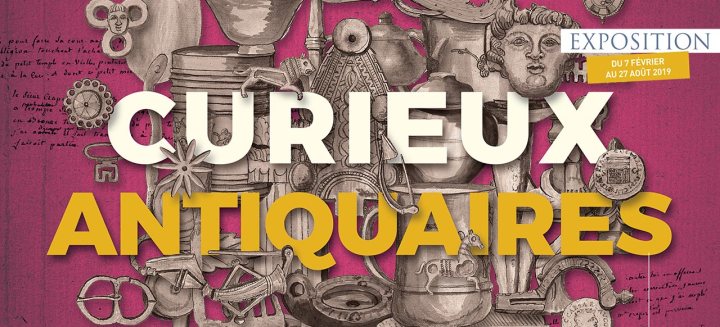
Curieux Antiquaires: The Origins of Archaeology in Bavay in the 18th and 19th Centuries
Forum Antique, Bavay (Nord), 7 February — 27 August 2019
L’antiquaire est par définition un grand collectionneur… Mais, celui que nous connaissons aujourd’hui et celui des XVIIIe et XIXe siècles sont bien différents. Un antiquaire dans les années 1700 et 1800 est en réalité un précurseur de l’archéologie, il se passionne pour la collection d’objets antiques et s’intéresse à leur passé pour raconter notre Histoire. Avec l’exposition Curieux antiquaires, les débuts de l’archéologie à Bavay aux XVIIle et XIXe siècles, pénétrez au coeur du passé antique de Bavay avec les yeux de ces amateurs éclairés. Découvrez des érudits hauts en couleurs à travers leurs méthodes de travail, réseaux, collections et dessins.
Cette exposition grand public a pour but de faire part aux visiteurs des avancées dans la connaissance de l’histoire de l’archéologie à Bavay en mettant d’une part en avant des portraits des acteurs de cette histoire (l’abbé Carlier, J.B. Lambiez, Antoine Niveleau, Parent) et d’autre part leurs publications (Recueil de dessins de Carlier, Histoire monumentaire du Nord des Gaules de Lambiez, Bavay ancien et nouveau de Niveleau …). Il est aussi question de faire prendre conscience au public du fait que la manière de construire l’image de l’Antiquité est conditionnée par l’époque.
Curieux Antiquaires: Les débuts de l’archéologie à Bavay aux XVIIIe et XIXe siècles (Paris: Snoeck, 2019), 200 pages, ISBN: 978-9461614711, 22€.
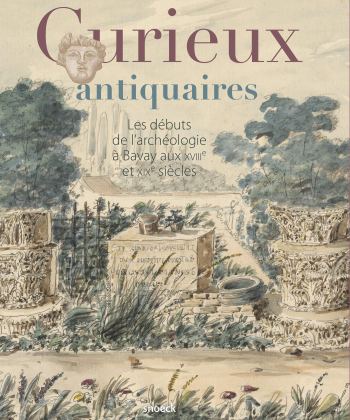 Si l’histoire de l’antique Bagacum est bien connue, la manière dont celle-ci s’est construite l’est moins. Curieux antiquaires, les débuts de l’archéologie à Bavay aux XVIIIe et XIXe siècles permet d’appréhender le patrimoine bavaisien sous un nouvel angle. Offrant une mise en perspective tant géographique que chronologique, ce catalogue apporte une vision nouvelle sur les premiers antiquaires bavaisiens. A travers les contributions d’Odile Parsis-Bazubé et d’Alain Schnapp, c’est la construction de l’antiquariate et de l’archéologie en France aux XVIIIe et XIXe siècles qui est mise en lumière. Plus loin, Véronique Beirnaert-Mary, Delphine Morana-Burlot et Véronique Krings détaillent l’exemple de Bavay. La première dresse le paysage bavaisien en présentant les acteurs locaux et leurs actions. Delphine Morana-Burlot propose ensuite une réflexion autour de la question du faux, Enfin, Véronique Krings ouvre une fenêtre sur la période du début du XXe siècle en s’attachant à relater la correspondance entre Franz Cumont et Raoul Warocqué autour des objets bavaisiens. Richement illustré, cet ouvrage rassemble toutes les pièces présentées à l’occasion de l’exposition. Des documents inédits sont ici publiés pour la première fois. La juxtaposition des objets archéologiques et de leur représentation dessinée est elle aussi inédite.
Exhibition | Thai Buddhist Tales

Extracts from the Pāli Canon (Tipiṭaka) and Qualities of the Buddha (Mahabuddhaguna), 18th century, Thailand
(Dublin: Chester Beatty Library, CBL Thi 1341)
◊ ◊ ◊ ◊ ◊
Press release (via Art Daily) for the exhibition, which includes an especially impressive virtual gallery:
Thai Buddhist Tales: Stories along the Path to Enlightenment
Chester Beatty Library, Dublin Castle, Dublin, 14 June 2019 — 26 January 2020
Curated by Laura Muldowney
The Chester Beatty has opened an exhibition of Thai Buddhist manuscripts dating to the 18th and 19th centuries. The world-renowned collection of beautifully illustrated books provides a rare opportunity to explore the Buddhist tales depicted within. Presented as colourful illustrations alongside sacred texts, some of the most popular Buddhist stories within the books are the birth tales of the Buddha and the legend of the monk Phra Malai.

Extracts from the Pāli Canon (Tipiṭaka) and Qualities of the Buddha (Mahabuddhaguna), 18th century, Thailand (Dublin: Chester Beatty Library, CBL Thi 1344).
Handsomely decorated folding books were used by monks as teaching aids and for chanting during religious ceremonies. Many were commissioned following the death of a relative and then donated to a temple. This earned religious merit for the donor as well as the deceased.
The Buddha had many past lives, but stories of his last ten are particularly important in Thai culture. Known as jatakas, or ‘birth tales’, these stories tell of the Buddha’s moral evolution over countless incarnations as he attained the ten perfections required for Buddhahood. Well-known scenes from these stories are featured in Thai folding books of the 18th and 19th centuries. They are presented as paired paintings, flanking the passages of sacred text. The life of the historical Buddha was much less frequently depicted in Thai folding books, but the museum has several examples that show scenes from his life before and after he became the Buddha.
The legend of a monk named Phra Malai was one of the most popular subjects of 19th-century Thai illustrated folding books. The pious monk Phra Malai visited heaven and hell using powers he earned through meditation and acts of merit. On his return to earth he reported what he had seen. The tale was often recited at wakes. Its detailed descriptions of hell and heaven served as powerful reminders that actions in this life determine one’s next life.
Illustrated folding books continued to be made in Thailand into the early twentieth century. However by the 1920s, the availability of inexpensive printing meant their production had almost completely come to an end. Introducing cherished stories and preserving the devotion of their makers and the communities who used them, these beautiful books offer a unique window onto Thai Buddhist heritage.
The exhibition is curated by Laura Muldowney, researcher of the museum’s East Asian collection.
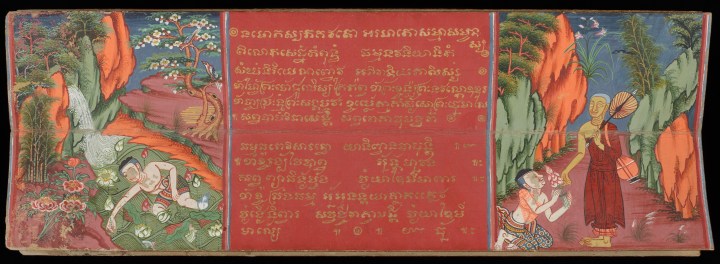
Extracts from the Pali Canon (Tipitaka) and Story of Phra Malai, late 18th century, Thailand
(Dublin: Chester Beatty Library, CBL Thi 1328)
Display | Pietre Dure

Depiction of the Tomb of Cecilia Metella, Grand Ducal workshop, Florence, 1795; marble, painted alabaster, pietre dure, gilt bronze
(Rosalinde and Arthur Gilbert Collection)
◊ ◊ ◊ ◊ ◊
Now on view at the V&A:
Pietre Dure: Highlights from the Rosalinde and Arthur Gilbert Collection
Victoria and Albert Museum, London, 22 March 2019 — 20 March 2020
In celebration of the highly skilled techniques of hardstone marquetry, this display showcases the wide range of pietre dure objects in the Gilbert Collection. With examples from the early seventeenth to the twentieth centuries, the display draws together objects produced on diverse scales and for a variety of functions, offering an insight into the history of pietre dure techniques, designs, and workshops.
Exhibition | Romantic Germany
Now on view at the Petit Palais:
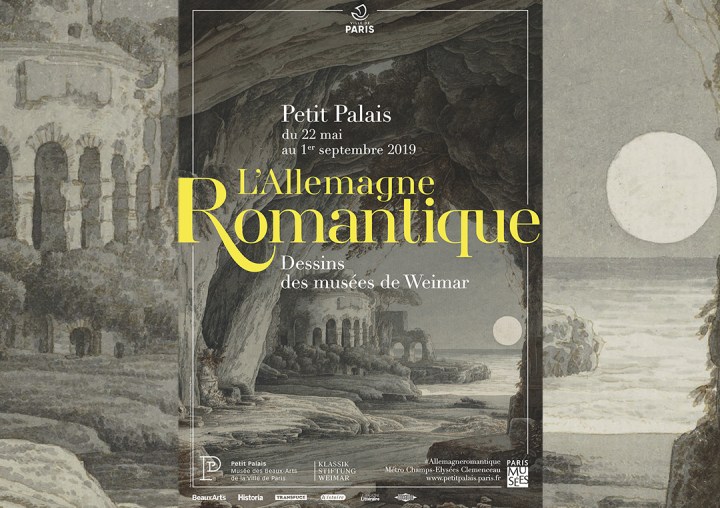
Romantic Germany: Drawings from the Museums of Weimar
Petit Palais, Paris, 22 May — 1 September 2019
Curated by Hermann Mildenberger, Gaëlle Rio, and Christophe Leribault
For the first time in France the Petit Palais is presenting a selection of 140 drawings from the lavish collections of Weimar’s museums. These remarkable images—initially chosen by Goethe (1749–1832) for the Grand Duke of Saxe-Weimar-Eisenach and his own collection—offer a spectacular overview of the golden age of German drawing (ca. 1780–1850).
In the late 18th century the city of Weimar, seat of the Dukes of Saxe-Weimar, was Germany’s intellectual hub. A key figure at this enlightened court, Goethe accumulated numerous posts of cultural responsibility, in addition to writing most of his works there. Himself a knowledgeable collector and draftsman, he built up for the Grand Duke a handsome collection representing every facet of German drawing.
At this time, literature, the visual arts, and music were undergoing profound upheavals in terms of their rules and practice. While the Romantic movement never had a leader as such, its artists unanimously stood for expression of the passions and subjectivity of vision; and in many cases this period saw a blossoming of drawing that made it the most innovative of the creative disciplines of the time.
Divided into seven sections, the exhibition combines the chronological and the aesthetic. As well as such emblematic figures as Caspar Friedrich, Philipp Runge, and Johann Füssli, visitors will discover some 35 artists who played vital parts in the history of drawing, among them Tischbein, Carstens, Fohr, Horny, von Schadow, Schinkel, von Schwind, Richter, and the Nazarenes Overbeck and Schnorr von Carolsfeld, driven by Christian spirituality and national feeling. Portraits and genre scenes, castles in ruins, compositions of biblical and medieval inspiration—but above all landscapes mingling idealism and naturalism in every imaginable media—offer viewers a sublime frisson in their illustration of the private, inner and sometimes flamboyant lives of the Romantic artists.
Curators
Hermann Mildenberger, professor and curator at Klassik Stiftung Weimar
Gaëlle Rio, director, Musée de la Vie romantique
Christophe Leribault, director, Petit Palais
L’Allemagne romantique: Les dessins du musée de Weimar (Paris: Éditions Paris Musées, 2019), 232 pages, ISBN: 978-2759604258, 40€.
Exhibition | Generation Revolution: French Drawings
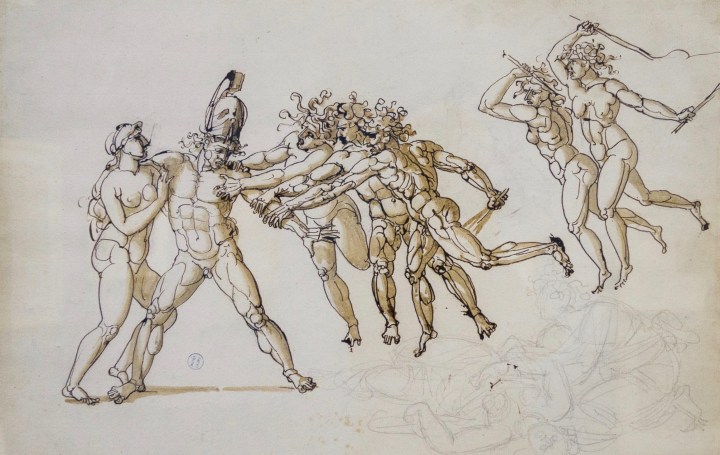
Philippe-Auguste Hennequin, Les Remords d’Oreste, ca. 1800
(Montpellier: Musée Fabre)
◊ ◊ ◊ ◊ ◊
Press release for the exhibition now on view at the Cognacq-Jay:
Generation Revolution: French Drawings from the Musée Fabre in Montpellier, 1770–1815
Musée Cognacq-Jay, Paris, 16 March — 14 July 2019
From 16 March through 14 July 2019, the Musée Cognacq-Jay explores the choices made by a generation of artists who were in their thirties during the French Revolution. The art world they had known was completely overthrown. How did they adapt? Where did they stand, and what coping strategies did they find? Artists were obliged to profoundly re-examine their practices and their opportunities, reconsidering even their subjects and their stylistic orientation, between Neoclassicism and Pre-Romanticism.
 The medium of intimacy par excellence, drawing reflects the richness and diversity of this transitional period. The exhibition brings together a selection of 80 exceptional drawings from the collection of the Musée Fabre in Montpellier. This unique group of drawings, never before shown in Paris, attests the acceleration of history and a prelude to modernity
The decades bridging the 18th and 19th centuries were a period of major political, economic, and social upheaval. The art world was by no means spared: royal commissions disappeared, the Académies were suppressed, and large projects cancelled. This exhibition, organised in collaboration with the Musée Fabre in Montpellier, speaks to the renewal of artistic techniques, styles, subjects, and sensibilities that emerged from these upheavals. While the birth of a republican patriotic ideal inspired artists to draw from the history of Antiquity, private and picturesque subjects also experienced an unprecedented success.
Focused on drawing, the exhibition presents a corpus of almost a hundred remarkable sheets, assembled by one of David’s favourite students, the painter François-Xavier Fabre, who was also a collector, art expert and art dealer. The collection he bequeathed to his native city was the basis for the Cabinet des arts graphiques at the Musée Fabre. The most famous artists of the time: David, Girodet, Vien, Fragonard and Prud’hon clustered around the personality of Fabre.
The exhibition plan is based on around four thematic sections presenting the different genres practiced by artists of the time, the development of artistic trends, and the emergence of individual personalities along with the diversity of graphic techniques employed.
Drawing to Learn
Until the end of the Ancien Regime, training at the Royal Academy was a requirement for any artist who hoped to obtain official commissions. Drawing instruction occupied a preeminent place in the curriculum and required a mastery of geometry, perspective, and anatomy. Figure drawing was considered the most noble exercise (and the most revelatory of youthful potential), so much so that the male nude was known as an ‘academy figure’. With the coming of the Revolution, the practice of drawing took off in an extraordinary way.
In Praise of the Individual
Although historical subjects continued to dominate the hierarchy of genres in painting, representations of daily life and its pleasures attracted an ever more substantial clientele. The portrait and the genre scene—less subject to political shifts and embraced by a growing bourgeoisie—expanded in an unprecedented way. Fragonard, for example, made a specialty of these types of painting.
The Virtues of History
The hegemony of history painting was exacerbated by the Revolution and took on a moralising role: the nascent Republic seized upon ancient Rome for its examples of virtue and heroism. Interest in subjects taken from the Bible and ancient history strengthened the dominance of Neoclassicism. Meanwhile, however, artists were fascinated by other imaginaries: the national past, especially the medieval past, and the Middle-East, revealed by scientific investigations and military campaigns, two points of reference which are at the source of later Neo-Gothic and Orientalism.
Travel and Nature

Antoine-Laurent Castellan, Etude de nuages, 1815 (Montpellier: Musée Fabre).
For the artists who chose exile, Italy remained a favoured destination. Attractive above all for its masterpieces of ancient and Renaissance art, Italy’s vast panoramas and striking light effects were also a draw. The French artists sojourning on the peninsula—in particular François-Xavier Fabre and his friends—went off into the countryside looking to immortalise grandiose sites where nature dominates the human figure.
Lead Curators
Michel Hilaire, Director, Musée Fabre
Annick Lemoine, Director, Musée Cognacq-Jay
Rose-Marie Herda-Mousseaux, chief curator for the modern era at the Louvre Abu Dhabi
Scientific Curators
Benjamin Couilleaux, Curator for cultural heritage, Director Musée Bonnat-Helleu
Florence Hudowicz, Curator for cultural heritage, Curator of drawings and decorative arts, Musée Fabre, Montpellier
Benjamin Couilleaux, Michel Hilaire, and Florence Hudowicz, Génération en Révolution: Dessins français du musée Fabre, 1770–1815 (Paris Musées, 2019), 174 pages, ISBN: 978-2759604197, 35€.
Catalogue cover Image: François-Xavier Fabre, Personnage nu saisissant un cube de pierre, 1789–92 (Montpellier: Musée Fabre).
Exhibition | Indian Painting for the East India Company
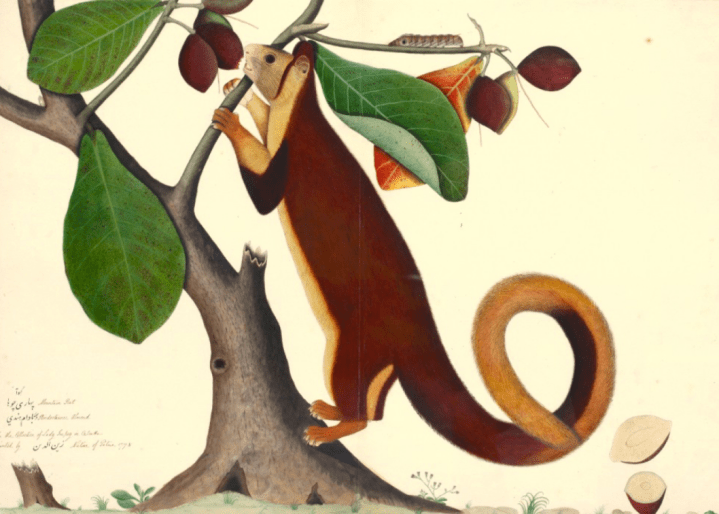
Shaikh Zain al–Din, Malabar Giant Squirrel, Eastern India, Calcutta, 1778
(Private Collection; photo by Margaret Nimkin)
◊ ◊ ◊ ◊ ◊
From the press release related to the exhibition:
Forgotten Masters: Indian Painting for the East India Company
The Wallace Collection, London, 4 December 2019 — 19 April 2020
Curated by William Dalrymple
In September 2019, the Wallace Collection presents Forgotten Masterpieces of Indian Painting for the East India Company. Curated by renowned writer and historian William Dalrymple, this is the first UK exhibition of Indian paintings commissioned by East India Company officials in the late eighteenth and nineteenth centuries. Reflecting both the beauty of the natural world and the social reality of the time, these dazzling and often surprising artworks offer a rare glimpse of the cultural fusion between British and Indian artistic styles during this period.
Comprising works from a wide variety of Indian traditions, the exhibition belatedly honours historically overlooked Mughal artists including Shaikh Zain al–Din, Bhawani Das, Shaikh Mohammad Amir of Karriah, Sita Ram, and Ghulam Ali Khan. It will shed light on a forgotten moment in Anglo-Indian history, recognising the vivid and highly original paintings it produced as among the greatest masterpieces of Indian painting.
William Dalrymple, ed., Forgotten Masters: Indian Painting for the East India Company (London: Philip Wilson Publishers, 2019), 192 pages, ISBN: 978-1781300978, $40.
Note (added 25 September 2019) — The original posting listed the exhibition as being open from September until December.
Note (added 22 October 2021) — The original posting listed the title as ‘Forgotten Masterpieces’, rather than ‘Forgotten Masters’.
Exhibition | Un brin de panache, éventails de Chine

Opening this week at the Museum of the French East India Company:
Un brin de panache, éventails de Chine
Musée de la Compagnie des Indes, Port-Louis (Brittany), 15 June — 25 November 2019
Les aristocrates européens se piquent d’exotisme extrême-oriental au 17e siècle. Cette passion entraîne l’apparition, en Asie, d’une production d’objets à destination de l’exportation européenne. L’éventail devient l’objet indispensable des cours royales européennes dès le début du 17e siècle.
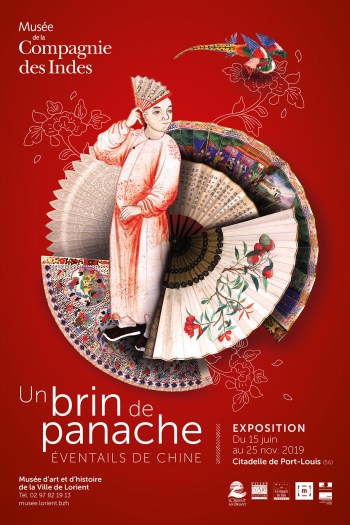 Les premiers éventails chinois destinés au marché occidental sont faits de brins d’ivoire repercés dont les motifs évoquent la finesse de la production de la porcelaine. Les scènes représentent des figures animales et de riches décors floraux. L’usage de l’éventail se démocratise au 18e siècle et ce sont plus de 45,000 éventails qui sont importés par la Compagnie française de 1722 à 1741. Ils sont majoritairement en bambou mais les plus beaux sont en ivoire, en écailles de torture ou en laque. L’iconographie des feuilles évolue et la variété des scènes représentées se multiplie. L’engouement pour les éventails chinois perdure au 19e siècle. Ainsi, le navire Le Fils de France, armé par l’armateur nantais Thomas Dobrée, rapporte dans ses cales 2,200 éventails qui sont vendus à Nantes en 1819.
Bien que le thé, les porcelaines et la soie soient les marchandises principales importées de Chine par les compagnies des Indes, cette exposition présente une sélection d’éventails, ces objets d’art qui ont participé au goût particulier de certains amateurs de l’exotisme asiatique.
About the Museum
Since 1984, the musée de la Compagnie des Indes de Lorient (the Museum of the French East India Company) has been housed in one of the buildings of the Port-Louis Citadel, a marvel of seventeenth-century military architecture initiated by the Spanish and completed by the architect Jacques Corbineau. The musée de la Compagnie des Indes is the only museum in France dedicated to the story of the great trading companies of the seventeenth and eighteenth centuries. Ship models, engravings, maps, Indo-European furniture, China porcelains, and Indian cottons shed light on this maritime epic.
Book Launch | Art and Race
This evening at The Courtauld:
An Evening about Art and Race, Launching L’Art et la Race: L’Africain (tout) contre l’oeil des Lumières
The Courtauld Institute of Art, King’s Cross, London, 11 June 2019
Organized by Katie Scott and Esther Chadwick
 The Courtauld Institute invites you to a round-table discussion to celebrate the publication of Anne Lafont’s major new book L’Art et la Race: L’Africain (tout) contre l’oeil des Lumières (2019) and to mark the exhibition Le Modèle noir at the Musée d’Orsay, Paris. The book will be launched by Dr Mechthild Fend (UCL) and Dr Esther Chadwick (Courtauld), followed by conversation between Professor Lafont (EHESS), Professor David Bindman (UCL), and Sam McGuire (Tate) about the staging of the exhibition. Drinks reception to follow.
Tuesday, 11 June 2019, 5:00–6:30pm; Research Forum Seminar Room, The Courtauld Institute of Art, Vernon Square Campus, Penton Rise, London. Free and open to all. Registration details are available here.










 Enfilade
leave a comment