Exhibition | Tiepolo in Milan
Press release from The Frick:
Tiepolo in Milan: The Lost Frescoes of Palazzo Archinto
The Frick Collection, New York, 16 April — 14 July 2019
Curated by Xavier Salomon, with Andrea Tomezzoli and Denis Ton
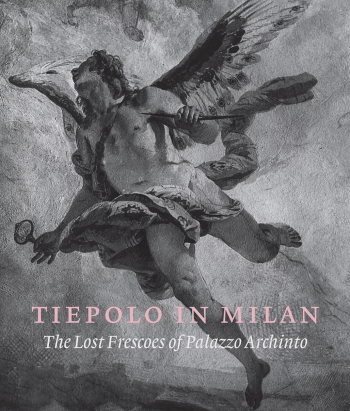 This spring and summer, The Frick Collection presents paintings, drawings, prints, and photographs related to Giambattista Tiepolo’s (1696–1770) first significant project outside of Venice, a series of ceiling frescoes painted in 1730–31 for Palazzo Archinto in Milan. Commissioned by Count Carlo Archinto, one of the city’s most influential patrons and intellectuals, the frescoes were tragically destroyed when the palazzo was bombed by the Allies during World War II. Tiepolo in Milan: The Lost Frescoes of Palazzo Archinto brings together more than fifty works from collections in the United States and Europe to tell the story of this important commission. Five preparatory paintings and drawings are featured, among them the oil sketch Perseus and Andromeda, acquired by Henry Clay Frick in 1916. As the Frick does not loan objects purchased by the institution’s founder, the New York museum is the only place where these works can be displayed together. Several complementary drawings and books illustrated by Tiepolo are included, alongside documentary photographs, taken between 1897 and the early 1940s, which are the only surviving records of the finished frescoes. The exhibition is organized by The Frick Collection in collaboration with the Azienda di Servizi alla Persona Golgi-Redaelli, Milan, and curated by Xavier F. Salomon, the Frick’s Peter Jay Sharp Chief Curator, with Andrea Tomezzoli, Professor at the University of Padua, and Denis Ton, Curator of the Musei Civici in Belluno.
Comments Salomon, “At a moment in history when wars are destroying art and culture in many parts of the world, it is worth pausing to consider, through an exhibition like this, the tragic, irreparable effects caused by violence throughout the centuries on great works of human creativity.”
Tiepolo and the Archinto Family
Palazzo Archinto belonged to one of Milan’s most prominent aristocratic families, documented in the city since at least the twelfth century. In the eighteenth century, the Archinto were described as one of those Milanese families who had always owned “highly admired treasures.” In addition to Tiepolo’s frescoes, the palazzo contained extensive collections of artworks and a renowned library. Carlo Archinto (1670–1732), Tiepolo’s patron, was at the center of Milan’s intellectual circles and was especially recognized for his interest in philosophy, mathematics, and science. During the mid-eighteenth century, he lived in the family palazzo, located on Via Olmetto, near Porta Ticinese, in one of the oldest parts of the city.
The palazzo’s library, overseen by librarian Filippo Argelati, filled five rooms and was open to scholars. Together with Carlo Archinto and other patrons, Argelati founded the Società Palatina, a publishing enterprise. Between 1723 and 1751, the Società published Ludovico Antonio Muratori’s Rerum Italicarum Scriptores. Archinto financed the project and contributed notes to one of the volumes. Tiepolo provided a number of designs for books published by the Società Palatina (five are included in the exhibition) and thus became acquainted with the aristocratic family. About 1730, when Archinto decided to redecorate his palazzo, he commissioned eight frescoed ceilings: five from Tiepolo and three from the Bolognese painter Vittorio Maria Bigari (1692–1776).
The Commission
The substantial commission was Tiepolo’s first outside the Veneto, and it marked the beginning of his international career. According to the Tiepolo scholar, Michael Levey, the frescoes at Palazzo Archinto “must have been sumptuously rich and impressive. Tiepolo never received a commission for a private palace of comparable extent and rarely of such splendour.” The ceilings, in part to celebrate the wedding of Carlo’s son Filippo to Giulia Borromeo, were meant to underscore the status of the Archinto family and were Carlo’s spiritual and visual testament, blending allegorical and mythological scenes.
Of the preparatory works that survive from the commission, three painted sketches on canvas provide the most important visual record of the lost frescoes: Triumph of Arts and Sciences (Museu Nacional de Arte Antiga, Lisbon), Perseus and Andromeda (The Frick Collection), and Apollo and Phaëton (Los Angeles County Museum of Art).
The largest and most elaborate fresco at Palazzo Archinto was the Triumph of the Arts and Sciences, which decorated one of the main rooms on the palace’s principal floor, or piano nobile. In it, Tiepolo depicted a resplendent sky with an assembly of allegorical figures, including Architecture, Painting, Sculpture, Music, and Mathematics, under the aegis of Apollo and Minerva. The ceiling’s decoration surely related to Carlo’s intellectual pursuits and to his library. When Tiepolo created the sketch (modello) for the ceiling, the fictive architectural scheme (quadratura) that was to frame the fresco had not yet be finalized; he therefore depicted his figures hovering in a cloudy sky, surrounded only by an area of brown ocher. In preparation for his fresco cycles, Tiepolo executed numerous drawings. Two surviving drawings related to Triumph of the Arts and Sciences are included in the exhibition, together with the related Lisbon modello and black-and-white photographs of the finished fresco in situ.

Giambattista Tiepolo, Perseus and Andromeda, ca. 1730–31, oil on canvas (New York: The Frick Collection).
The fresco of Perseus and Andromeda was likely envisioned as a celebration of the wedding of Filippo Archinto and Giulia Borromeo. Book IV of Ovid’s Metamorphoses recounts the tale of the young and beautiful Andromeda, daughter of the Aethiopian king Cepheus and Cassiopeia. Boasting that Andromeda is more beautiful than the Nereids, Cassiopeia angers Neptune, who, in revenge, sends a monster to ravage the cost of Aethiopia. Told that the only way to save their country is to sacrifice their daughter to the monster, Andromeda’s parents chain her to a rock by the sea. The hero Perseus, son of Jupiter and Danaë, sees Andromeda while flying over Aethiopia and falls in love with her. He asks her parents for permission to marry her if he is able to save her; he subsequently kills the sea monster and rescues Andromeda. Tiepolo took liberties with Ovid’s Metamorphoses in showing Perseus riding the winged horse Pegasus instead of flying by way of a pair of winged sandals. As evidenced in the archival photographs, the overall configuration of the Perseus and Andromeda fresco in Palazzo Archinto was almost identical to the one visible in the oil sketch (page one), which was likely presented to Carlo Archinto for approval.
Tiepolo faithfully followed another passage from Ovid’s Metamorphoses in the fresco depicting Phaëton, the son of Apollo and Clymene. Uncertain about his divine origins, the youth questions Clymene about the identity of his father, and Clymene encourages him to visit Apollo in his heavenly palace. To prove his paternity, Apollo grants Phaëton a single wish, which is to drive the sun god’s chariot for a day. Apollo provides the exact course he should take across the sky and warns his son about the dangers of such a trip, particularly from specific constellations such as Scorpio. Once guiding the chariot, however, Phaëton is terrified by Scorpio and quickly loses control. Despite Apollo’s instructions and warnings, Phaëton flies too close to earth and scorches it. Incensed, Jupiter hits him with a thunderbolt, hurling him out of the chariot and to his death in the river Po. In the modello for the fresco, the artist set the scene in the dwelling of the Sun, described by Ovid as decorated with columns and bathed in golden light. Carlo’s choice of this father-son myth as the fresco’s subject may have been meant to serve as a warning to his children—Filippo especially—about life’s dangers. The exhibition provides a unique opportunity to compare the Los Angeles modello and related archival photographs of the original fresco with three other works previously associated with Palazzo Archinto: two paintings by Tiepolo (now at the Akademie in Vienna and the Bowes Museum) and a drawing from the British Museum, all of which depict Apollo and Phaëton.
Tiepolo’s other two ceilings in the palazzo represented Juno, Venus, and Fortune, probably painted for Giulia Borromeo’s private apartments, and an allegory of Nobility, which most likely decorated the ceiling of a relatively small room. Unfortunately, no related preparatory drawings or modelli have been identified. The two frescoes are represented in the exhibition by archival photographs.
The Fate of Palazzo Archinto
The palazzo belonged to the Archinto family for more than a century, until 1825, when the family sold it. In 1853, it was purchased by the current owner, Luoghi Pii Elemosinieri, a charitable institution (now called the Azienda di Servizi alla Persona Golgi-Redaelli). On the night of August 13, 1943, Allied bombs hit Palazzo Archinto, destroying its interior, including Tiepolo’s frescoes. (The interior was rebuilt between 1955 and 1967, following the general structure of its previous architectural form.) During World War II, sixty-five percent of Milan’s historic monuments were damaged or destroyed. Tiepolo’s frescoes at Palazzo Archinto were among the most tragic losses.
Fortunately, a number of black-and-white photographs were taken in Palazzo Archinto at different points before 1943. In 1897, Attilio Centelli and Gerardo Molfese published a large volume dedicated to Tiepolo’s frescoes in Lombardy. The book includes a series of fifty photographs of frescoes by—or attributed at the time to—Tiepolo. These photographs are the oldest surviving images of the Palazzo Archinto frescoes and remain vital documents of their original appearance. Only three copies of the book survive (one in Milan, one in Rome, and one in Venice). The Milan copy is preserved, unbound, in the archive of the Azienda di Servizi alla Persona Golgi-Redaelli. The exhibition includes ten plates from this copy, as well as twenty photographs documenting the palace before the war, Tiepolo’s finished frescoes, and the ruins of the palace after 1943.
Major support for the exhibition is provided by an anonymous gift in memory of Melvin R. Seiden and by Margot and Jerry Bogert. Additional funding is generously provided by the David L. Klein, Jr. Foundation, Julie and David Tobey, an anonymous gift in memory of Charles Ryskamp, Dr. Tai-Heng Cheng and Cole Harrell, Mr. and Mrs. Hubert L. Goldschmidt, and The Krugman Family Foundation.
Xavier Salomon, Andrea Tomezzoli, and Denis Ton with Alessandra Kluzer, Tiepolo in Milan: The Lost Frescoes of Palazzo Archinto (London: Paul Holberton, 2019), 224 pages, ISBN: 978-1911300526, £45 / $50.
The Frick Collection, in association with Paul Holberton Publishing, has produced a fully illustrated catalogue to accompany the exhibition. Included are essays about Tiepolo’s work in Palazzo Archinto (Xavier F. Salomon), the architectural history of the palace (Alessandra Kluzer), the role of the Archinto frescoes in Tiepolo’s career (Andrea Tomezzoli), and the intellectual world of the Archinto family (Denis Ton).
Exhibition | The Tale of Genji

Press release (26 February 2019) from The Met:
The Tale of Genji: A Japanese Classic Illuminated
The Metropolitan Museum of Art, New York, 5 March — 16 June 2019
Curated by John Carpenter and Melissa McCormick with Monika Bincsik and Kyoko Kinoshita
A major international loan exhibition focusing on the artistic tradition inspired by Japan’s most celebrated work of literature will go on view at The Metropolitan Museum of Art beginning March 5, 2019. Bringing together more than 120 works of art from 32 public and private collections in Japan and the United States—including National Treasures and Important Cultural Properties, most of which have never left Japan—The Tale of Genji: A Japanese Classic Illuminated explores the tale’s continuing influence on Japanese art since it was written around the year 1000 by the noblewoman Murasaki Shikibu (ca. 978–ca. 1014). Often referred to as the world’s first novel, The Tale of Genji has captivated readers for centuries through its sophisticated narrative style, humor and wit, and unforgettable characters, beginning with the ‘radiant prince’ Genji, whose life and loves are the focus of the story.

Tosa Mitsunari (Japanese, 1646–1710), ‘Murasaki Shikibu’, late 17th–early 18th century, one of a triptych of hanging scrolls, ink and color on silk (Ishiyamadera Temple).
“The Tale of Genji has inspired generations of artists over centuries, and ours is the first exhibition to explore this phenomenon in such a comprehensive way,” said Max Hollein, Director of The Met. “The magnificent works of art in the show will also offer a view into the development of Japanese art, a testament to the prevalence and impact of the renowned story.”
The exhibition is organized by The Metropolitan Museum of Art and The Japan Foundation, with the cooperation of the Tokyo National Museum and Ishiyamadera Temple. It is made possible by the Mary Livingston Griggs and Mary Griggs Burke Foundation Fund, 2015; the Estate of Brooke Astor; the E. Rhodes and Leona B. Carpenter Foundation; and Ann M. Spruill and Daniel H. Cantwell.
The exhibition presents the most extensive introduction to the visual world of Genji ever shown outside Japan. It features nearly one thousand years of Genji-related art—an astonishing range of works including paintings, calligraphy, silk robes, lacquerware, a palanquin for a shogun’s bride, and popular art such as ukiyo-e prints and contemporary manga—and provide viewers with a window into the alluring world of the Heian imperial court (794–1185) that was created by the legendary authoress.
Comprising 54 chapters, The Tale of Genji describes the life of the prince, from the amorous escapades of his youth to his death, as well as the lives of his descendants, introducing along the way some of the most iconic female characters in the history of Japanese literature. Organized thematically in eight sections, the exhibition pays special attention to the Buddhist reception of the tale, while also giving prominence to Genji’s female readership and important works by female artists.
Among the works on view, highlights include two of Japan’s National Treasures. The first, on loan from Seikado Bunko Art Museum, is a pair of screens by the Rinpa master Tawaraya Sotatsu (ca. 1570-ca. 1640)—Channel Markers and The Barrier Gate—depicting two chance encounters between Genji and a former lover. The second is the breathtaking Heian-period Lotus Sutra with Each Character on a Lotus, from the Museum Yamato Bunkakan. These works will be on view for six weeks and then rotated with other masterpieces over the course of the exhibition. A number of works recognized as Important Cultural Properties will be on view throughout the exhibition, including beautifully preserved album leaves by Tosa Mitsuyoshi (1539–1613), from the Kuboso Memorial Museum of Arts, Izumi, which will be shown together with rare Tosa School album paintings from the Harvard Art Museums and The Met’s own collection.
The exhibition also includes a section featuring important works of art from Ishiyamadera Temple whose hall contains a ‘Genji Room’ that commemorates the legend that Murasaki started writing the novel within the temple precincts. And the final section of the exhibition features a series of original manga drawings by Yamato Waki that were inspired by The Tale of Genji. She translated Genji into the comic book idiom, making Murasaki’s tale accessible to a whole new generation of readers.
A site-specific opera entitled Murasaki’s Moon—commissioned by MetLiveArts, On Site Opera, and American Lyric Theater in conjunction with the exhibition—will be presented in The Met’s Astor Court on May 17, 18, and 19.
This exhibition will be the opening highlight of Japan 2019, a series of events organized by The Japan Foundation to introduce Japanese arts and culture in the United States throughout 2019.
The Tale of Genji: A Japanese Classic Illuminated will be accompanied by a fully illustrated catalogue, made possible by The Andrew W. Mellon Foundation; the Florence and Herbert Irving Fund for Asian Art Publications; the Charles A. Greenfield Fund; The Miriam and Ira D. Wallach Foundation; the Mary Livingston Griggs and Mary Griggs Burke Foundation Fund, 2015; the Parnassus Foundation; and Richard and Geneva Hofheimer Memorial Fund.
The exhibition is curated by John T. Carpenter, Mary Griggs Burke Curator of Japanese Art in the Department of Asian Art at The Met; and guest curator Melissa McCormick, Professor of Japanese Art and Culture at Harvard University; with Monika Bincsik, Diane and Arthur Abbey Assistant Curator for Japanese Decorative Arts at The Met; and Kyoko Kinoshita, Professor of Japanese Art History at Tama Art University.
John Carpenter and Melissa McCormick, The Tale of Genji: A Japanese Classic Illuminated (New York: The Metropolitan Museum of Art, 2019), 368 pages, ISBN: 978-1588396655, $65.
Exhibition | Yinka Shonibare CBE: The American Library

Yinka Shonibare CBE, The American Library, 2018; hardback books, Dutch wax printed cotton textile, gold foiled names, headphones, interactive application; installation view at The Cleveland Public Library, 2018; commissioned by FRONT International: Cleveland Triennial for Contemporary Art. © Yinka Shonibare CBE. Courtesy James Cohan Gallery, New York and FRONT International: Cleveland Triennial for Contemporary Art with funds from VIA Art Fund, Cleveland Public Library and The City of Cleveland’s Cable Television Minority Arts and Education Fund. Photography by Field Studio.
◊ ◊ ◊ ◊ ◊
Press release (via Art Daily) for the exhibition:
Yinka Shonibare CBE: The American Library
The Cleveland Public Library, 14 July — 30 September 2018
Van Every/Smith Galleries, Davidson College, 25 October — 14 December 2018
Speed Art Museum, Louisville, 29 March — 15 September 2019
Opening on March 29, 2019, 21c Museum Hotel and the Speed Art Museum in Louisville, Kentucky will present a co-curated exhibition of British-Nigerian artist Yinka Shonibare CBE’s The American Library, a large-scale installation of thousands of books covered in the artist’s signature textiles with the names of people who have contributed to our collective understanding of diversity and immigration in the United States embossed in gold on the spines. The immersive installation will be on view in the Speed Art Museum’s original galleries from 1927, which formerly housed an art library, activating the historic space. Additional works by Shonibare from the 21c Museum Hotel and Speed collections will provide further context. Commissioned by Front International: Cleveland Triennial for Contemporary Art, the work was recently on view at the Van Every/Smith Galleries, Davidson College, North Carolina ahead of its forthcoming presentation at the Speed Art Museum this spring. This exhibition marks the first time the Speed Art Museum and 21c Museum Hotel have co-organized a major exhibition.
The American Library is inspired by ongoing debates about immigration and diversity in the United States. The installation comprises bookshelves holding over 6,000 volumes covered in Shonibare’s signature Dutch wax printed cotton, a material whose mixed origins reflect the history of colonization, and are printed with gilded names of figures who have made significant contributions to American culture and/or have influenced public discourse on immigration. The selected names, which include W. E. B. Du Bois, Maria Goeppert Mayer, Steve Jobs, Bruce Lee, Ana Mendieta, Joni Mitchell, Toni Morrison, Barack Obama, Steven Spielberg, Carl Stokes, Donald Trump, and Tiger Woods, fall into the following categories: people who immigrated or whose parents immigrated to the U.S., African Americans who relocated or whose parents relocated out of the American south during the Great Migration, or people who have spoken out against immigration, equality, or diversity in the United States. In the gallery, visitors can access a website that provides additional information on each individual represented on the shelves.
“We at 21c are thrilled to collaborate with the Speed to present The American Library,” says 21c Chief Curator and Museum Director Alice Gray Stites. “In the face of the growing refugee crisis and resistance to immigration across the globe, we feel an urgency to share this work that celebrates the spectrum of voices that have created our nation’s culture and history, while simultaneously acknowledging that there are others who have spoken out against diversity. We hope this exhibition will provide opportunities to better understand the complexity of these political and cultural debates.”
“It feels both timely and meaningful to be collaborating with 21c on an exhibition that acknowledges the many facets of the debate surrounding immigration and the innumerable ways that the United States has benefited from the contributions of migrants and immigrants,” says Miranda Lash, Curator of Contemporary Art at the Speed Art Museum. “Empathy is often enhanced by education, and Shonibare’s masterful installation of books, and his online database of names, illuminates that this country was built by individuals coming from many different backgrounds and places.”
Yinka Shonibare CBE’s work examines race, class, and cultural identity and explores the history of colonialism and post-colonialism within the contemporary context of globalization. Working across media, including painting, sculpture, photography, film, and installation, Shonibare’s work provides insightful political commentary on the tangled interrelationship between Africa and Europe and their respective economic and political histories. In addition to The American Library, the 21c and Speed exhibition will feature other works by Shonibare, including:

Yinka Shonibare CBE, ‘The Age of Enlightenment — Gabrielle Émile Le Tonnelier de Breteuil, Marquise du Châtelet’, 2008; life-size fiberglass mannequin, Dutch wax printed cotton, mixed media (Collection of Laura Lee Brown and Steve Wilson, 21c Museum Hotels, and Collection of Jim Gray, © Yinka Shonibare CBE).
• The Three Graces (2001), depicting three headless mannequins dressed in Shonibare’s signature Dutch wax fabric, was inspired by a photograph of three women in Edwardian dress that the artist found in the archives of the Hendrik Christian Andersen Museum in Rome, Italy. As a trio, the sculptures allude to the archetype of ‘The Three Graces’ found in classical ancient Greek sculpture, while their Edwardian dresses speak to the history of Great Britain’s colonization of the African continent.
• The Age of Enlightenment — Gabrielle Émilie Le Tonnelier de Breteuil, Marquise du Châtelet (2008), a sculpture from Shonibare’s series inspired by key historic figures and thinkers from the 18th century, presented as headless mannequins, dressed in his signature Dutch wax fabrics, questions and interrogates the ideas embraced during the Age of Reason that supported and justified colonial expansion. This sculpture depicts female mathematician, physicist, and author Gabrielle Émilie Le Tonnelier de Breteuil, Marquise du Châtelet and comments upon her status and treatment as an intellectual woman in this period.
• Food Faerie (2010) is a sculptural representation of a winged child carrying mangoes in a leather pouch, with one arm held aloft as if holding a spear. Dressed in the style of Victorian England and Dutch wax fabric designed by the artist, this sculpture examines how identity is shaped by both mythology and by capital markets, alluding to England’s colonial control of regions and resources in West Africa.
• The Sleep of Reason Produces Monsters (2008) combines references to Goya’s 18th-century critiques of the Spanish Church and State with allusions to Shakespeare’s The Tempest. Shonibare questions the ongoing impact of the theories of the Enlightenment period on world history and on contemporary geo-politics.
Exhibition | Making Time: The Art of the Kentucky Tall Case Clock
Now on view at the Speed Art Museum:
Making Time: The Art of the Kentucky Tall Case Clock, 1790–1850
Speed Art Museum, Louisville, 2 February — 16 June 2019
Curated by Scott Erbes

Case attributed to Daniel Spencer (American, about 1741–1796), Lexington, Fayette County, Kentucky, Tall Case Clock, 1793–96; cherry, poplar, chestnut, walnut; eight-day brass and steel movement, 98 inches high (Cox Collection).
Making Time: The Art of the Kentucky Tall Case Clock, 1790–1850 is a first-of-its-kind exhibition devoted to early Kentucky tall case, ‘grandfather’ clocks. The exhibition showcases twenty-seven clocks made across a wide swath of Kentucky from the 1790s through the 1840s. The majority of the clocks come from family and private collections and have rarely, if ever, been shared with the public. The exhibition is accompanied by a fully illustrated scholarly catalog that presents significant new research on early Kentucky cabinetmaking and the state’s watch and clock trade.
When shown side-by-side, the clocks reveal the expert hands of many Kentucky artisans; illustrate the hidden world of gears, bells, weights, and pendulums that kept the clocks running and chiming; and record the complex webs of craft, taste, trade, and technology needed to make these practical works of art. Throughout the exhibition, the clock cases illustrate the talents of early Kentucky cabinetmakers, both native-born and those who came to the state in search of success. These artisans transformed local woods like cherry and walnut into towering cases that frequently incorporate flourishes like inlaid decoration, carved ornament, and richly figured veneers. The results range from urbane, Federal-style creations to more idiosyncratic, often boldly inlaid forms. Numerous Kentucky silversmiths are associated with the intricate movements housed within the various clocks.
Just in Time: Exploring Kentucky Tall Case Clocks
Speed Art Museum, Louisville, 18 May, 9:00–3:00
Come join us for a study day exploring the backstories behind early Kentucky tall case clocks with the experts who created the exhibition Making Time: The Art of the Kentucky Tall Case Clock, 1790–1850. Enjoy a morning of presentations focused on the art, history, and technology of these Kentucky treasures; an opportunity to purchase signed copies of the exhibition’s accompanying catalog; and an afternoon tour of the exhibition with its creators. $75.
Scott Erbes (Curator of Decorative Arts and Design, Speed Art Museum), From the Beginning: An Introduction to Kentucky Tall Case Clocks
Early Kentucky tall case clocks tell many stories: of the talented artisans who created them, of local and regional practices, of fashionable taste, of international trade, of the nature of time and timekeeping in Federal America, and of family memory. This overview will touch on these themes and others, setting the stage for the day’s conversations.
Mack Cox (independent researcher and collector), Making the Case for the Art in Kentucky Tall Case Clocks
Kentucky tall case clocks consist of locally made cases mated with clock movements, dials, and other components often made elsewhere. While the latter are often well documented, the Kentucky-made portions and artistic expressions of early Kentucky craftsmen are nearly unknown. Based on over a decade of serious study of Kentucky furniture, this lecture will shed light on the art and Kentucky parts of the Kentucky tall case clock.
Bob Burton (independent researcher and collector), What Makes It Tick: Inside Kentucky Tall Case Clocks
The movements and related parts in Kentucky tall case clocks vary widely in type, materials, and origins. This discussion will reveal these secrets, exploring the time-keeping mechanisms, painted dials, and other components that marked the time in early Kentucky clocks.
Greg Black (independent researcher and collector), Will the Real Elijah Warner Please Stand Up?
Over the past decades, much has been written about Elijah Warner of Lexington, Kentucky, especially that he was a cabinetmaker and clockmaker. The recent discovery of nineteenth-century documents and advertisements cast new light on Warner’s training and occupation and the goods he produced and sold. This presentation will review this information to bring the real Elijah Warner into better focus.
Salon du Dessin 2019
From the press kit:
Salon du Dessin 2019
Palais Brongniart, Paris, 27 March — 1 April 2019
The eagerly anticipated Salon du Dessin will take place again this spring under the vaulted roof of Paris’s Palais Brongniart and will once again feature a selection of outstanding works on paper. among the 39 exhibitors from around the world will be four handpicked new galleries and two that are returning after an absence of a few years. Among the treasures on display will be rare drawings by egon schiele and Gustav Klimt, presented by the Austrian gallery Wienerroither & Kohlbacher, and a solo show of the work of contemporary artist Jean-Baptiste Sécheret on the stand of Galerie Jacques Elbaz. The German dealer Martin Moeller will celebrate 100 years of drawings from his country, while the Galerie de la Présidence features drawings by sculptors.

Juan Antonio Conchillos y Falcó, Academic Study, 1703; offered by Artur Ramon Art ($36,000).
The 28th edition of the art fair will also host two museum-level exhibitions. Festivities in Paris will feature drawings from the collection of the Musée Carnavalet-Histoire de Paris (currently closed for renovation until late 2019), while the Maison Chaumet will exhibit drawings of its jewelry in an exhibition on the theme of nature, curated by botanist Marc Jeanson, who worked on the magnificent exhibition Jardins at the Grand Palais in 2017.
Other highlights of the Salon du Dessin will be the presentation of the 12th Daniel and Florence Guerlain Drawing Prize and the return of a program of international symposia, which will focus on the performing arts this year. Drawing Week, a highly popular off-site event organized in partnership with over 20 museums and institutions, will offer access to graphic arts collections that are usually off-limits to the public.
W E D N E S D A Y , 2 7 M A R C H 2 0 1 9
Occupying the Stage: Sets and Costumes
Chair: Jean-Claude Yon (Professor at the University of Saint-Quentin-en-Yvelines)
• Emmanuelle Brugerolles (Curator General at the École Nationale Supérieure des Beaux-Arts, Paris), Georges Focus and the Theater: Sets and Staging
• Rudi Risatti (Curator at the Theatermuseum in Vienna), The Magic Space: Technical and Aesthetic Solutions in Baroque Scenography as Seen in Drawings from the Theatermuseum in Vienna
• Marc-Henri Jordan (independent art historian, doctoral student, University of Lausanne), The Royal Academy of Music in Search of Draftsmen and Painters: Identification of Decorative Drawings and Clothing, ca. 1780
• Catherine Join-Diéterle (Curator General, former director of the Musée Galliera, Paris), Theater Sets in the Romantic Era: A New Approach to the Stage Area
• Marine Kisiel (Painting Curator at the Musée d’Orsay), ‘A Unique System of Lines’: The Body in Space in the Work of Edgar Degas
• Mathias Auclair (Director of the Music Department at the Bibliothèque Nationale de France, Paris), The Stage Seen as a Painting: The Birth of Scenography at the Paris Opera, 1914–1972
T H U R S D A Y , 2 8 M A R C H 2 0 1 9
Occupying the City: Festivities and Ceremonies
Chair: Michel Delon (Professor at the University of Paris-IV Sorbonne)
• Franca Varallo (Professor at the university of Turin), Onorato Tiranti’s Il Laberinto de Groppi and Drawings for Festivities by Tommaso Borgonio
• Jérôme de La Gorce (Emeritus Research Director, CNRS- Centre André Chastel), Collections of Drawings Held in Paris and Madrid Illustrating Important Celebrations of the Marriage of Madame to the Infant of Spain, 1739
• Maria Ida Biggi (Director of the Centro Studi per la Ricerca Documentale sul Teatro Europeo Fondazione Cini, Venice), Le feste sull’acqua: Apparati per Napoleone
• Gaëlle Lafage (Postdoctoral Researcher, Université de Paris Sorbonne), Drawing as a Source of Study of Fireworks
• José de Los Llanos (Chief Curator, Head of the Musée Carnavalet’s Graphic art Department) and David Simonneau (Conservation Assistant, Musée Carnavalet Graphic art department), Festivals and Spectacles in the Collection of the Musée Carnavalet-Histoire de Paris, 17th–19th Centuries
Exhibition | French Memories of the War for America
Press release (18 March 2019) for the exhibition:
Revolutionary Reflections: French Memories of the War for America
American Revolution Institute of the Society of the Cincinnati in Washington, D.C., 5 April — 27 October 2019
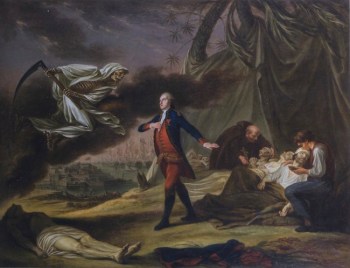
Nicolas-René Jollain, Allegorical Portrait of Thomas François Lenormand de Victot, 1783, oil on canvas, 90 × 117 cm (Washington: The Society of Cincinnati).
King Louis XVI sent thousands of French soldiers and sailors across the Atlantic to support the American War of Independence. It was an adventure none of them would forget. The special exhibition, Revolutionary Reflections: French Memories of the War for America, on view at the American Revolution Institute of the Society of the Cincinnati in Washington, D.C., from April 5 through October 27, 2019, explores how the king’s officers understood the American Revolution and their role in the achievement of American independence, and how they remembered the war in the years that followed—years of revolutionary upheaval in France that included the execution of the king and many of their brothers-in-arms.
Drawn from the Institute’s collections, along with loans from private collections, Revolutionary Reflections pairs the written recollections of French officers with life portraits of the writers, including masterpieces by the French artist Jean-Baptiste Greuze and the great Spanish portrait painter Vicente López y Portaña. Among the treasures on view will be the original manuscript memoir of General Rochambeau, who commanded the largest French army sent to America, along with his family’s annotated copy of the published work.
Another highlight of the exhibition is the long-lost portrait of the marquis de Saint-Simon, who commanded 4,000 French troops at Yorktown, together with Saint-Simon’s manuscript journal of the Yorktown campaign. The portrait was long owned by the marquis’ descendants, but was hidden during the Spanish Civil War and then long forgotten. The American Revolution Institute acquired it and brought it to Washington in 2018. The portrait has never been displayed in a formal exhibition in the United States. The journal—yet to be published in English—has never been displayed anywhere.
The most striking piece on view is a posthumous allegorical portrait of Thomas François Lenormand de Victot by Nicolas-René Jollain, painted in 1783. A French naval officer who died during the war, Lenormand is depicted opposing Death, portrayed as a skeleton in flight bearing a sickle. The Institute acquired this extraordinary painting in 2010.
The eight officers whose memories are featured in the exhibition were well-educated French nobles. They made sense of their wartime experiences through careful observation and documentation. Some were battle-tested veterans. Others, including the marquis de Lafayette, were young men when they arrived in America. The war for American independence was a defining event for all of them. Together their reflections remind us that historical memory is fragile, always shifting, and often very personal.
Exhibition | Paper Revolutions: French Drawings
Opening next month at NOMA:
Paper Revolutions: French Drawings from the New Orleans Museum of Art
New Orleans Museum of Art, 10 April — 14 July 2019

Nicolas Lejeune, ‘Rejoicing at the Announcement of the Abolition of Slavery, 30 Pluviôse, Year II / 18 February 1794’, 1794, India ink and gouache on paper, 14 × 11 inches (New Orleans Museum of Art).
Paper Revolutions: French Drawings from the New Orleans Museum of Art traces the politics of draftsmanship in the eighteenth and nineteenth centuries. This selection features works on paper by celebrated painters Jacques-Louis David, Jean-Auguste-Dominique Ingres, and Eugène Delacroix, as well as lesser-known artists, such as Nicolas Lejeune.
The Age of Revolutions in France (1789–1870) was defined by political instability. In less than a century, wars and violent uprisings provoked radical changes in regime, from monarchy to republic to empire. This period also witnessed the emergence of new, hybrid styles of art: Neoclassicism, inspired by ancient Greece or Rome, mingled with Romanticism, distinguished by more fluid, expressive responses to nature. While navigating political shifts and experimenting with different forms, artists continued to draw obsessively—producing rough sketches, detailed studies, and independent works on paper.
Exhibition | From the Tagus to the Tiber
Now on view at the National Library of Portugal:
From Tagus to Tiber: Portuguese Musicians and Artists in Rome in the 18th Century
Do Tejo ao Tibre: músicos e artistas portugueses em Roma no século XVIII
Biblioteca Nacional de Portugal, Lisbon, 28 February — 31 May 2019
Curated by Cristina Fernandes and Pilar Diez del Corral

Alegoria à Academia Real da História, de Vieira Lusitano (1699–1783) / F. V. Lusitanus invenit et f. ; acabado ao buril por P. de Rochefort, 1735 (Lisbon: Biblioteca Nacional de Portugal, E. 4847 P.).
O fascinante processo de assimilação e adaptação de modelos artísticos e musicais italianos pela corte de Lisboa ao longo do século XVIII é um dos fenómenos mais relevantes a nível cultural do Portugal setecentista, com repercussões que se estendem à maior parte do território. Através das obras conservadas na BNP, esta exposição, comissariada por Cristina Fernandes (INET-md, NOVA FCSH) e Pilar Diez del Corral (UNED – Universidad Nacional de Educación a Distancia, Madrid), pretende dar a conhecer ao grande público como se produziu essa frutífera associação criativa entre o país mais ocidental da Europa e a península itálica, coração do Mediterrâneo, colocando em evidência olhares transversais sobre a música e as artes visuais, dois campos frequentemente abordados de forma separada mas que percorreram caminhos comuns.
A partir do século XVI, Roma começou a atrair artistas de todos os campos, desejosos de aprender a partir do legado das suas ruínas e dos mestres modernos que a converteram no centro artístico da Europa. Ao mesmo tempo, viajantes procedentes num primeiro momento dos países do Norte também chegavam a Roma com o mesmo afã de aprendizagem, tanto no plano mundano como cultural, dando origem ao fenómeno do Gran Tour, que teria a sua eclosão nos séculos XVIII e XIX.
Portugal teve no século XVIII uma idade de ouro graças às fabulosas encomendas artísticas e musicais de D. João V, o Rei Magnânimo. Ainda que o terramoto de 1755 tenha eclipsado uma grande parte do legado arquitetónico e artístico da primeira metade do século, para além da catástrofe humana que causou, a magnificência e o cosmopolitismo de Lisboa deixaram marcas que prevaleceram como sinais identitários nas décadas seguintes. O conjunto das peças expostas pretende mostrar desde a perspetiva da viagem e do intercâmbio artístico e musical como as relações entre Portugal e Itália, centradas num fluxo contínuo de pessoas, livros, partituras e obras de arte criaram uma riquíssima via de comunicação entre Roma e Lisboa.
Estão igualmente programadas várias visitas guiadas, seguidas de momentos musicais. Na inauguração (28 de fevereiro, às 18h00), o agrupamento Cappella dei Signori, dirigido por Ricardo Bernardes, interpreta obras de Giovanni Giorgi e João Rodrigues Esteves. A 19 de março, realiza-se uma visita guiada às 18h00, seguida de um recital de cravo, por Fernando Miguel Jalôto, assinalando os 300 anos da chegada a Lisboa de Domenico Scarlatti. Em data a anunciar brevemente, apresenta-se uma nova visita e um programa centrado na música de Francisco António de Almeida, com interpretação dos Músicos do Tejo, dirigidos por Marcos Magalhães e Marta Araújo.
Estão igualmente programadas várias visitas guiadas, seguidas de momentos musicais. Na inauguração (28 de fevereiro, às 18h00), o agrupamento Cappella dei Signori, dirigido por Ricardo Bernardes, interpreta obras de Giovanni Giorgi e João Rodrigues Esteves. A 19 de março, realiza-se uma visita guiada às 18h00, seguida de um recital de cravo, por Fernando Miguel Jalôto, assinalando os 300 anos da chegada a Lisboa de Domenico Scarlatti. Em data a anunciar brevemente, apresenta-se uma nova visita e um programa centrado na música de Francisco António de Almeida, com interpretação dos Músicos do Tejo, dirigidos por Marcos Magalhães e Marta Araújo.
Decorre também na BNP, a 28 e 29 de março de 2019, o congresso internacional Roma e Lisboa no século XVIII: música, artes visuais e transferências culturais, organizado pelo grupo «Estudos Históricos e Culturais em Música» do INET-md (NOVA FCSH) e pelo departamento de História de Arte da UNED (Madrid).
Exhibition | Engraving for the King
Now on view at the Louvre:
Engraving for the King: The Historical Collections of the Louvre Chalcographie
Graver pour le roi: Collection de la Chalcographie du Louvre
Musée du Louvre, Paris, 21 February — 20 May 2019
Curated by Jean-Gérald Castex
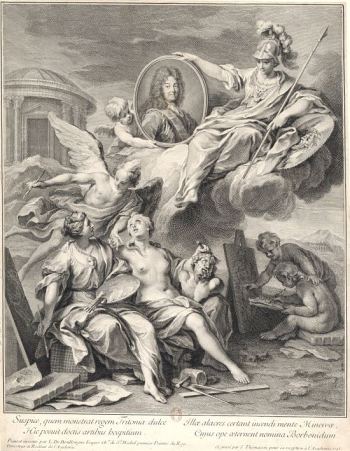
Henri-Simon Thomassin after Louis de Boulogne, ‘Louis XIV Protecting the Arts’, 1728 (Paris: Musée du Louvre).
Founded in 1797 under the Directory, the Louvre Chalcographie holds over 14,000 engraved copperplates, used to make prints, and has the mission of disseminating the image of the museum’s masterpieces through the art of engraving. This institution, which is part of the Musée du Louvre, arose from the merging of three collections of engraved plates, established from the second half of the 18th century: the Cabinet du Roi, including nearly 1,000 plates commissioned by Colbert to illustrate the greatness of Louis XIV’s reign; the Menus-Plaisirs collections, which spread the image of great court ceremonies and public festivities of the 18th century; and the Royal Academy of Painting and Sculpture’s collection, comprising pieces submitted by engravers upon their admission, and engraved plates acquired by the institution in the second half of the 18th century to develop its editorial collection.
This exhibition presents preparatory drawings, engraved copperplates, and prints made from them. It aims to trace the history of the three royal collections that each contributed in their own way to the dissemination of the king’s image. It also showcases the copperplates which, regarded until recently as mere tools for printing, are at the core of an engraver’s profession.
Exhibition | Showpiece from the Palmwood Wreck
I’m posting this seventeenth-century exhibition, showcasing what may be a late sixteenth-century cup, to draw attention to the Museum Kaap Skil more generally; Texel, located some 50 miles north of Amsterdam, was a crucial anchorage, particularly for large VOC vessels. Visiting the Vasa Museum in Stockholm a few years ago (many of you have been there) helped me grasp just how much ‘material culture’ was taken up by ships in the early modern period. Inventory lists—indeed, even seascapes crowded with ships—now come to life for me in a way that they didn’t previously. On the grounds of the Kaap Skil museum, there’s also a working windmill used to process grain: the Traanroeier, which dates to 1727 (originally located on the Weer, at the intersection with the Traanroeyer ditch, it was moved to Texel in 1902). –CH
Now on view at Museum Kaap Skil, from the press release:
Diving in Details: Showpiece from the Palmwood Wreck
Museum Kaap Skil, Texel, Netherlands, 9 March — 9 September 2019

Gilt silver cup, likely made in Neurenberg around the end of the 16th century; it was recovered in 2016 from the Palmwood wreck.
An exceptional object from the Palmwood wreck [palmhout, or boxwood] can be seen for the next six months at Museum Kaap Skil—in Oudeschild on the island of Texel. A gilt silver cup, expertly restored after almost four centuries on the sea bottom, is being displayed in the exhibit Diving in Details. Expert Jan Beekhuizen, known from the television program Kunst & Kitsch (Art & Fake), notes that it is “exceptional, if not unique, that such a find surfaces from a ship wreck.”
A specially designed showcase allows the viewer to observe the gilt cup from all sides. Details can be seen and enlarged on a touchscreen. The cup is decorated with driven flower patterns and mascarons, ornaments representing faces. The cup was unveiled at the Rijksmuseum on March 7 by deputy Jack van der Hoek and museum manager Corina Hordijk, together with the presentation of a report on the Palmwood wreck collection.
The discovery of the Palmwood wreck by divers from Texel and the unusually rich finds surfaced from this wreck created a worldwide sensation in 2016. The lovely silk dress and other luxury garments and personal belongings from the wreck made it clear that the cargo being transported by the ship belonged to very wealthy, perhaps even royal people. Even the gilt silver cup fits this picture. Only the richest could afford such an object.
 The wreck of the ship and almost four centuries lying in the sea bottom have taken their toll: the cup surfaced partially flattened and broken into three parts. In addition, there were dark corrosive bumps on the surface. Experts from the restoration workshop Restaura have carefully removed the deposits, reattached the loose parts, and restored the cup to its original shape. The war god Mars, standing on the lid of the cup, has lost his shield, but otherwise the cup is more or less whole.
The exhibition Diving in Details also features a 17th-century painting depicting such a cup, showing how such objects were used to display wealth. The Palmwood wreck was once a heavily armed fluyt (‘straatvaarder’), destined for trade in the Mediterranean. The ship sank in the 17th century on the Roads of Texel. It is still unknown who the owner of the ship and the cargo was.
Documentation of the recovered objects has just been published; from the Museum Kaap Skil:
Arent D. Vos et al., edited by Birgit van den Hoven and Iris Toussaint, Wereldvondsten uit een Hollands schip: Basisrapportage BZN17/Palmhoutwrak (Haarlem: Provincie Noord-Holland, 2019), 443 pages, ISBN: 978-9492428134, €20.
◊ ◊ ◊ ◊ ◊
More information about the discovery of the ship—including its mistaken association in 2016 with a ship that was in 1642 part of a royal British fleet—comes from Jessamyn Hatcher, “Treasure Island: The Extraordinary Finds of an Amateur Diving Club in Holland,” The New Yorker (19 September 2017). Hatcher quotes “Arent Vos, a marine archeologist who specializes in the Texel Roads, [who] estimates that up to a thousand ships wrecked off the island’s coast between 1500 and 1800.”
Also see, Tracy Robey, “Global Cargo,” Archaeology (May/June 2018), where the Palmwood Wreck (Burgzand Noord 17) is described as “the richest cargo of seventeenth-century luxury goods ever found underwater,” owing to its “stunning collection of silk garments and velvet textiles, leather book covers, and pottery.”










leave a comment