V&A Opens New Courtyard and Entrance

The V&A’s Aston Webb screen from 1909, modified with five new openings on either side of the central arch, now connects the courtyard to Exhibition Road. Photograph: Hufton+Crow.
◊ ◊ ◊ ◊ ◊
Press release from the Victoria & Albert Museum:
The V&A Exhibition Road Quarter opened to the public on the evening of Friday 30 June 2017, creating a beautiful and unique new civic space for London and a world-class gallery space for the V&A’s internationally acclaimed exhibition programme. The project is designed by Stirling Prize-winning architect Amanda Levete and her practice, AL_A. The launch of the V&A Exhibition Road Quarter marks the beginning of a new era for the Museum as it prepares to expand its UK and international presence. The project is the Museum’s largest architectural intervention in over 100 years and offers a 21st-century interpretation of the V&A’s founding principles: to make works of art and design available to all, to educate, and to inspire designers and manufacturers today and in the future.
 The V&A Exhibition Road Quarter took six years to realise and transforms the V&A’s former boilerhouse yard on London’s great cultural artery, Exhibition Road. This new entrance connects the Museum with its neighbours, reinforcing the Albertopolis vision of intellectual ambition and innovation and creates a sequence of major new spaces:
• The Sainsbury Gallery: a flexible, 1,100sq m column-free exhibition gallery that provides the V&A with a purpose-built space for its world-leading programme of temporary exhibitions
• The Sackler Courtyard: the world’s first porcelain public courtyard, paved in 11,000 handmade tiles that were inspired by the rich tradition of ceramics at the V&A
• The Blavatnik Hall: a new entrance into the V&A from Exhibition Road, which transforms how visitors experience and discover the Museum and its collections
• The Aston Webb Screen: visitors will now enter the V&A from the street through the 11 openings of newly created colonnade formed from the 1909 Aston Webb Screen.
REVEAL, a free, week-long public festival (30 June–7 July) celebrates the opening of the V&A Exhibition Road Quarter and offers a unique opportunity for the public to explore the Museum’s newly designed spaces before exhibition programming begins in the autumn. Art, performance, fashion, and family activities will bring the architecture and collections to life, reflecting on the V&A’s unique combination of heritage, modernity, and technology.
Tristram Hunt, Director of the V&A said: “This is a landmark moment in our history. The V&A Exhibition Road Quarter is both the Museum’s largest architectural intervention in over one hundred years and the start of a new chapter of expansion, returning to our original mission at the same time as opening up the V&A for the future. With its mix of ingenuity and imagination, the V&A has always been a meeting point for historicism and modernity. The V&A Exhibition Road Quarter bridges the two by offering fresh insights into our historic building with pioneering new architecture, creating London’s leading exhibition space.”
The Sackler Courtyard is the world’s first all-porcelain public courtyard and comprises over 11,000 handmade porcelain tiles, inspired by the rich tradition of ceramics at the V&A. This new public space for London also houses a café with furniture designed for the space by AL_A and manufactured by Moroso. The Sackler Courtyard reveals architecturally significant façades and details that have never previously been seen by the public. These include sgraffito decoration on the side of the Henry Cole Wing—a decorative Renaissance technique using multiple layers of coloured plaster created by the first art students at the Museum in the late 19th century. The stonework of the Aston Webb Screen retains the damage that World War II inflicted on the Museum, which is reflected in 11 sets of new metal gates, designed by AL_A. The gates have been manufactured with a pattern of perforations tracing the imprint of the shrapnel damage on the stonework as well as the Royal Crest in the central gate.
The Blavatnik Hall is a new space that will transform how visitors experience and discover the Museum and collections. Connecting the newly displayed Robert H. N. Ho Family Foundation Galleries of Buddhist Art and the Dorothy and Michael Hintze Sculpture Galleries, The Blavatnik Hall gives views through to The John Madejski Garden, leads to a new shop, and connects to the historic Ceramic Staircase as well as the Sackler Centre for arts education, which reopens featuring the new John Lyon’s Charity Community Gallery.
The versatile, 1,100m sq column-free Sainsbury Gallery is one of the largest temporary exhibition galleries in the UK. This flexible exhibition space sits above a floor dedicated to art handling, conservation and preparation space. The new spaces reach as far as 18 metres below ground, directly beneath the Western Range of the V&A’s Grade I listed buildings: a daring engineering and construction challenge that is made visible to the public by steel columns and a beam painted in vivid international orange that are literally holding the weight of history and the Museum’s priceless collections above.
Amanda Levete said: “The V&A Exhibition Road Quarter is a reflection of the pioneering identity of the V&A and continues its mission of innovation into the twenty-first century. The Quarter reimagines the museum as an urban project, creating an exceptional place for London that will redefine the V&A’s relationship with the street and the public.”
Celebrating its 165th anniversary this summer, the V&A is the world’s leading museum of art, design and performance. The completion of this major project marks an exciting moment of evolution for the V&A, a year after winning the Art Fund Museum of the Year 2016, and looking ahead to the opening of the V&A Gallery, Shekou as part of Design Society, in China this autumn and the V&A Museum of Design, Dundee next year.
The V&A Exhibition Road Quarter is the largest construction project undertaken by the V&A since its main buildings in South Kensington were completed in 1909. 22,500 cubic metres of earth were removed from the site and clay from the deepest excavations was carbon-dated to 50 million years old. At the height of construction, up to 60 truckloads of earth were removed from site per day, 99% of which was recycled. The new spaces have created more than 6,000sq m out of 2,200sq m of underused space. AL_A was commissioned to design the V&A Exhibition Road Quarter in 2011 following an international competition. Wates are the lead contractors delivering the project and Arup are the Structural and Building Services engineers.
Over £48 million has been raised for the V&A Exhibition Road Quarter thanks to the generosity of The Monument Trust, The Dr Mortimer and Theresa Sackler Foundation, The Headley Trust, The Blavatnik Family Foundation, the Garfield Weston Foundation, the Heritage Lottery Fund and other donors including Peter Williams and Heather Acton and the Friends of the V&A.
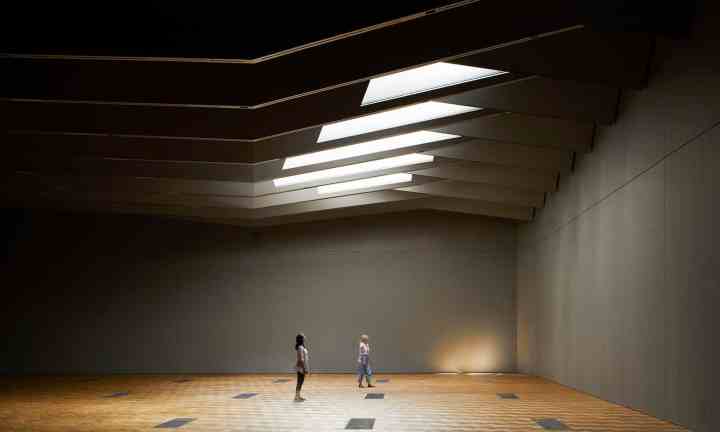
The V&A’s new Sainsbury Gallery, a flexible, 1100sq m column-free gallery for temporary exhibitions. The inaugural exhibition Opera: Passion, Power and Politics opens September 30. Photograph: Hufton+Crow.
◊ ◊ ◊ ◊ ◊
Writing in The Guardian, Oliver Wainwright provides a review of the new space along with context for the expansion, including description of the 1997 proposal by Daniel Liebeskind to build a tower (Spiral) on the site—an idea which, failing to secure funding, was abandoned in 2004. In Wainwright’s words, “Having been drawn, Icarus-like, to the shining promise of starchitecture, and had its wings thoroughly scorched, the V&A decided to opt for the more modest option of going underground.”
New Book | The Collector’s Cabinet and Miniature Pharmacy
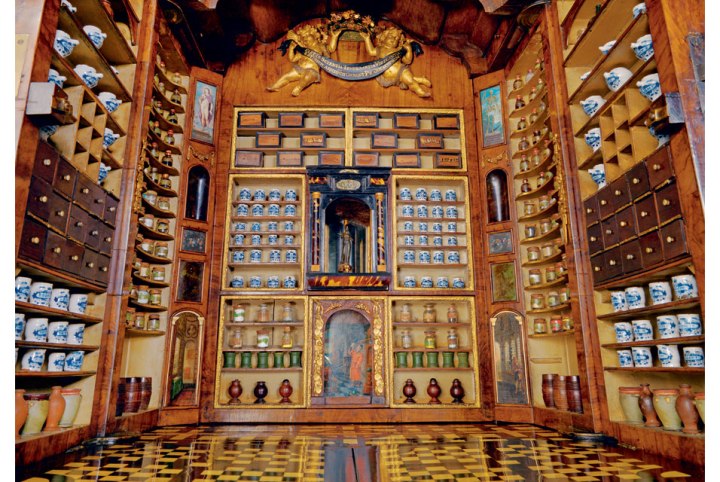
Collector’s Cabinet with Miniature Apothecary’s Shop, 1730
(Amsterdam: Rijksmuseum)
◊ ◊ ◊ ◊ ◊
Press release (23 June 2017) from the Rijksmuseum. The English edition of the book should be be available from Distributed Art Publishers (DAP) in August.
Paul van Duin, ed., The Collector’s Cabinet and Miniature Pharmacy / Verzamelaarskast met miniatuurapotheek (Amsterdam: Rijksmuseum, 2017), 184 pages, ISBN: 978 949171 4610 (Dutch edition) / ISBN: 978 949171 4726 (English edition), 40€ / $60. Essays by Reinier Baarsen, Annette Bierman, Judith van der Brugge-Mulder, Gerhard Cadée, Roelof van Gelder, and Dave van Gompel.
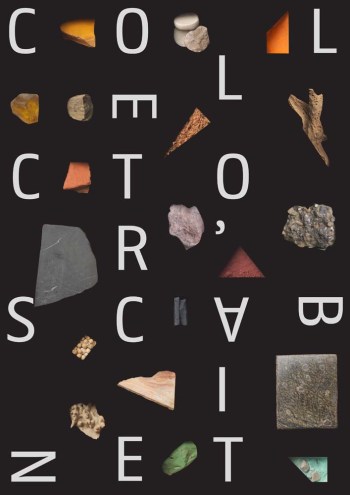 In the last few years no fewer than 50 experts have been involved in conducting research on the only eighteenth-century miniature apothecary’s shop in the Netherlands. The Rijksmuseum is now presenting the results of this research and conservation project in an extensive publication, designed by Irma Boom and showing the miniature pharmacy and 56 secret drawers for the first time, at almost actual size.
This rare collector’s cabinet houses an abundance of curiosities including a fully fitted miniature apothecary’s shop containing more than three hundred Delftware pots, glass bottles, tiny wooden drawers, paintings, and gilded ornaments. Concealed beside and behind the miniature pharmacy are no fewer than 56 secret drawers, all but five of which contain the collection of nearly 2000 varieties of naturalia, including seeds, flowers, roots, animal parts, rocks, minerals, and fossils.
The research has now been completed, providing a far deeper understanding of the cabinet’s origins, its purpose, the exceptional naturalia it contains, and the collectors’ world it inhabited. We can now be fairly certain that the cabinet was made in Amsterdam in 1730 for a wealthy doctor or apothecary, as a curiosity for the entertainment of a select group of friends and fellow collectors. The study also revealed that most of the naturalia items form the original contents of the cabinet. The naturalia even include uraninite and two other minerals containing uranium—for safety reasons, these materials are now safely stored in lead caskets in the Rijksmuseum’s depot, in accordance with the regulations and permit issued under the Dutch Nuclear Energy Act.
The conservation and restoration work have for a large part returned the cabinet and miniature apothecary’s shop to their former glory, and this object is now one of the highlights of the eighteenth-century galleries in the Rijksmuseum.
With thanks to the Cultural Heritage Agency of the Netherlands, Naturalis Biodiversity Center, Leiden University, and the Royal Netherlands Institute of Sea Research. The research, conservation, and publication were made possible by the Bank of America Merrill Lynch Art Conservation Project.
New NGA Online Edition: French Paintings of the Eighteenth Century
◊ ◊ ◊ ◊ ◊
This new online component from the NGA in Washington, D.C. includes convenient access to lots of interesting material, including videos (under ‘related content’). It might be particularly useful for teachers looking to enrich course materials with digital offerings (and plenty of other things). –CH
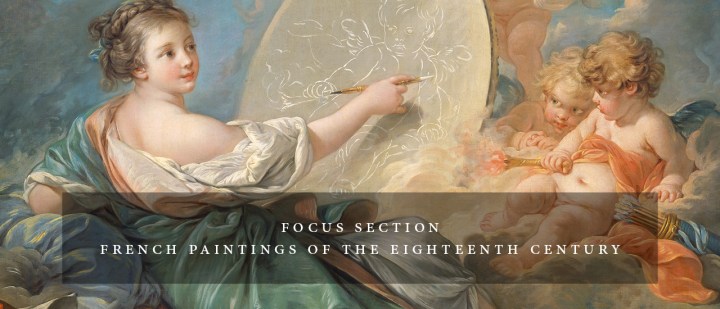
In conjunction with the recently opened exhibition, America Collects Eighteenth-Century French Painting, the National Gallery has released a new offering in its NGA Online Editions series, Focus Section—French Paintings of the Eighteenth Century.
The web-based Online Editions series is part of an ongoing effort to digitize and provide open access to the Gallery’s permanent collection catalogs and will eventually document more than 5,000 works of painting, sculpture, and decorative arts. Focus Section—French Paintings of the Eighteenth Century includes essays devoted to 20 paintings and their four related artists’ biographies. Like other Online Editions, this iteration provides free and open access to illustrated scholarly entries, biographies of the artists, and technical summaries.
Other highlights of the features available to researchers include
• A customized reading environment: An adjustable split-screen ‘reader mode’ allows users to view scholarly text alongside images, notes, and comparative figures or to view them in line with the text.
• Compare and explore images: An image-comparison tool enables users to view primary and comparative images side by side or to explore technical images via overlay and cross-fading techniques.
• Ease of research: The Online Editions toolbar provides preformatted citations for an object or biography, easy export, and quick access to archived pages.
• Archived versions and permanent URLs: Immediate access to PDFs of earlier versions and the assurance of permanent web addresses are a convenience to students and scholars alike.
• Enhanced search capabilities: An interactive search index is driven by an evolving list of terms particular to each area of the collection.
The NGA Online Editions series presents the same authoritative, peer-reviewed scholarship found within the Gallery’s bound volumes but enriched with customized tools for a more dynamic research experience.
Frick Pittsburgh Unveils New Strategic Plan and Acquisitions Program
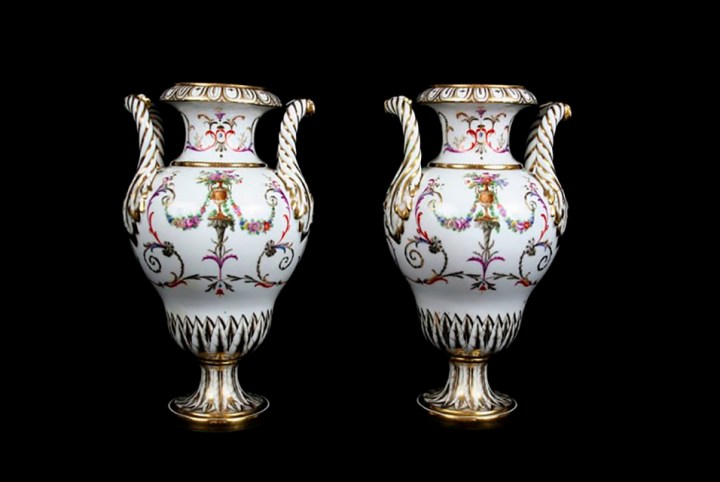
Manufacture de Monsieur le duc d’Angoulême, Paris, Pair of Vases, ca. 1785, porcelain with enamel and gilded decoration; each 9 × 5.5 × 5.25 inches (The Frick Pittsburgh Collection).
◊ ◊ ◊ ◊ ◊
Press release from The Frick Pittsburgh (via Art Daily) . . .
The Board of Trustees of The Frick Pittsburgh announces the adoption of a new five-year strategic plan, 2017–22 and Beyond, and the activation of a new acquisition program, resulting in the recent acquisition of new collection objects.
Strategic Plan
On Tuesday, June 20, Frick Board of Trustees Chair Charles R. (‘Chip’) Burke, Jr. and Executive Director Robin Nicholson presented the museum’s recently adopted strategic plan to more than 20 representatives from regional foundations assembled at The Duquesne Club in Downtown Pittsburgh. 2017–22 and Beyond is the result of a two-year planning process which began shortly after the late 2014 appointment of Mr. Nicholson as the institution’s third executive director. The process was led by the Board’s Strategic Planning Task Force, under the leadership of Chair, Trustee Louis L. Testoni. The new strategic plan features a revised ideology for the organization, encompassing new vision, values, and mission statements. These new guiding principles provide the foundation for three overarching institutional goals: audience growth, organizational efficiency, and long-term planning.
Mr. Burke, Chair of the Board of Trustees says, “We are excited about the clearly defined vision and direction articulated in the new strategic plan. In addition to laying the groundwork for the next 25 years, the plan reflects the commitment of The Frick’s board and staff to leverage and enhance the museum’s assets for the benefit of all visitors and program participants.”
The plan identifies three equal and interwoven components to the unique experience offered by The Frick: art, history, and nature—all of which, in turn, underpin the museum’s core ideology, or three ‘powers’: the power of art to inspire and educate, the power of the past to inform the future, and the power of beauty and place. Five strategies build on these principles with specific calls to action: to define and refine the many experiences that The Frick offers, invest in marketing to build audience and revenue, increase efficiency, acquire better information and data, and to think realistically about the future. The museum’s new mission statement aligns with the newly defined institutional ideology: “Continuing the legacy of Helen Clay Frick, we will offer one of the best experiences of art, history, and nature, in a welcoming environment that inspires and delights.”
Executive Director Nicholson comments, “Planning for the future provides an extraordinary opportunity for innovative and aspirational thinking about the role of museums and culture for future generations. The Frick’s new strategic plan thoughtfully addresses both the short- and long-term challenges faced by all cultural organizations in the United States. At the same time, it recognizes that nothing we do has any value unless it helps to ‘inspire and delight.'”
The complete strategic plan is available on The Frick’s website.
New Acquisition Program
Museum benefactress Helen Clay Frick envisioned The Frick to be a vital, growing museum that continues to acquire items that build on the strength of its collection. Building on the strategic goal of “defining and refining the Frick experience,” the museum recently activated a new acquisition program by holding its inaugural Collectors Dinner on April 25, 2017. Fifty members of The Frick Societies, a recognition group for individuals who support The Frick by contributing $1,000 or more annually, attended a black-tie event at The Frick Art Museum, during which three works of art were presented for potential acquisition. Guests were invited to vote for the objects of their choice. Receiving the most votes were a pair of late-18th-century Angoulême porcelain vases and Cream (2015), a color photographic print by Dutch artist Hendrik Kerstens. At its June 14, 2017 meeting, The Frick’s Board of Trustees approved these two objects for purchase.
Produced around 1785 by Manufacture de Monsieur le duc d’Angoulême, Paris, which operated from 1781 to 1793, the pair of exquisite porcelain vases feature enamel and gilded decoration. The vases are an extraordinary example of Parisian porcelain produced at the end of the ancien régime in France. The Manufacture le duc d’Angoulême was one of the few factories at the end of the 18th century to rival Sèvres in the quality of its porcelain and the technical excellence of its decoration. The vases enhance the museum’s collection of 18th-century French decorative art, complementing the fabulous examples of French furniture and paintings collected by Helen Clay Frick. The Frick owns two examples of furniture by Martin Carlin, which incorporate Sèvres porcelain plaques. Angoulême works are in the collections of other major museums: a vase related to the pair acquired by The Frick is in the collection of The British Museum. Tableware by Angoulême is also part of the collections of museums such as The Metropolitan Museum of Art, the Victoria & Albert Museum, and Winterthur. Mount Vernon owns a service by Angoulême purchased by George Washington in 1790.
Contemporary Dutch artist Hendrik Kerstens creates a dialogue between past and present through an almost hyper-conscious homage to the history of Dutch art combined with a slightly playful subversity. The artist began studying photography at age 40 and quickly became known for his interest in creating large-scale painterly photographs with an emphasis on light effects and the use of poses and props that echo the conventions found in Old Master painting, particularly of the 17th century. He began working with his daughter Paula as his subject in 1994. His 2007 photograph, Bag, in which she is posed with a plastic grocery bag on her head caused a sensation, winning the prestigious Taylor Wessing Photographic Portrait Prize awarded by the National Portrait Gallery, London. Bag also attracted the attention of fashion designer Alexander McQueen, who based his 2009 collection on the image. In Cream, Paula is posed against a dark background and beautifully lit, allowing for a painterly, Baroque sense of chiaroscuro and an emphasis on luminous skin tones. Kerstens typically injects his work with humor and disrupts his emulation of Old Masters through the interjection of unexpected materials or props—in this case, a coiffure of shaving cream. Cream is a compelling photograph that serves as a catalyst for conversation about painting and photography, past and present. Acquisition of this work enables The Frick to further explore ideas of portraiture and representation by providing a contemporary counterpoint to works in the collection, such as the Rubens Portrait of the Princess of Condé, as well as other examples of portraiture in the collection by Nattier, de Troy, Hogarth, Gainsborough, and Reynolds. Since gaining public attention through his Paula pictures, Kerstens has been commissioned to create commercial portraits for Vanity Fair and The New York Times Magazine. His work is widely represented in public and private collections in the Netherlands as well as the Santa Barbara Museum of Art, the Museum of Photographic Art in San Diego, the Pilara Family Foundation Collection in San Francisco, the Elton John Collection, the Alexander McQueen Collection, and others.
Musée d’art Hyacinthe Rigaud to Reopen This Week
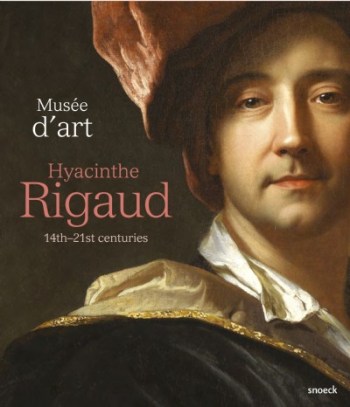 The newly renovated and expanded Hyacinthe Rigaud Art Museum in Perpignan is scheduled to open on June 24th. From Snoeck Publishers:
Musée d’art Hyacinthe Rigaud, 14th–21st Centuries (Gent: Snoeck Publishers, 2017), 214 pages, ISBN: 978 946161 3998, 25.
In 2017 the Musée d’Art Hyacinthe Rigaud is reopening. After three years of work, a renovated building now houses an enriched and restored collection, to be discovered through a completely redesigned itinerary. To accompany the rediscovery, this guide presents a selection of works chosen to reflect the diversity and excellence of this heritage. Richly illustrated, it is both a souvenir of your visit and an invitation to open the museum’s doors.
Major Donations from the Colección Cisneros
Press release from the Cisneros Collection:
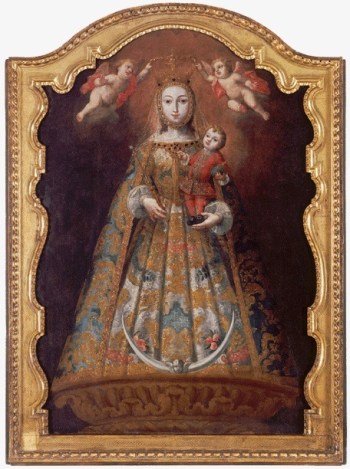
Juan Pedro López (1724–1787), Venezuela, Our Lady of Guidance, ca. 1762; oil on wood, 100.3 × 69.2 cm (Museum of Fine Arts, Boston; promised gift of Patricia Phelps de Cisneros in honor of Jorge Rivas).
The Colección Patricia Phelps de Cisneros announced the donation of 119 pieces from its collection of colonial art, one of the five collections that comprise the CPPC, to five leading institutions committed to the conservation and study of the legacies of art from the colonial and early republican periods in Latin America: the Blanton Museum of Art, Austin, Texas; Denver Art Museum, Colorado; Hispanic Society Museum & Library, New York; the Museum of Fine Arts Boston, Massachusetts; and the Museo de Arte de Lima (MALI), Peru.
The colonial art collection of the CPPC was formed with the intention to create a broad representation of Venezuelan art from the middle of the seventeenth century to the mid-nineteenth century. This core is complemented by select works from the viceroyalties of New Spain (Mexico) and Peru, as well as pieces from elsewhere in the Spanish Caribbean.
This 119-piece donation from the Coleccion Patricia Phelps de Cisneros to these five museums will expand their geographic and temporal horizons, with the primary objective of encouraging a broader, more diverse and inclusive view of Latin American artistic production from the 17th to mid-19th centuries.
In choosing these five institutions, the CPPC has carefully considered their individual profile and research focus. For the Blanton Museum of Art of the University of Texas, Austin, the donation will contribute to the founding nucleus of a collection of colonial and republican art, and will be an important complement to the museum’s remarkable and growing collection of modern and contemporary art that has made the Blanton a reference for scholarship in the field.
For the Denver Art Museum, the custodian of the largest and most extensive collection of colonial art in the United States, the donation will add depth to its holdings from Venezuela and the Caribbean, until now among the least represented regions in its collection. This donation also celebrates nearly half a century of the Denver Art Museum’s commitment to the study and dissemination of and education about Latin American colonial art.
In the case of the Museum of Fine Arts, Boston, the gift represents the fruitful culmination of an institutional relationship that began in 2010. With this gift, the CPPC will formally transfer to the MFA a group of furniture, silver and paintings that had been on long-term loan and which originally served to complete the museum’s colonial art collections on the occasion of the opening of the widely-admired Art of the Americas wing. The gift includes some additional works that enrich the initial group and extol the museum’s continued effort and commitment to research and education about Latin American colonial art, and place this production in active dialogue with North American colonial art.
The Hispanic Society Museum & Library in New York, one of the institutions to pioneer the collection and study of Latin American colonial art, will receive a very important piece of furniture: the golden armchair for the brotherhood of San Pedro of the Cathedral of Caracas. Made around 1755 by the cabinetmaker Antonio Mateo de los Reyes, this imposing armchair, the first Venezuelan colonial masterpiece to enter this important collection, was used to seat the life-size sculpture of the patron saint of the brotherhood.
A special donation is being made to the Museo de Arte de Lima (MALI), a museum considered a model among Latin American cultural institutions. With the donation of an important portrait by the republican painter Jose Gil de Castro, the CPPC wishes not only to add this work to the collection, but to also recognize the pioneering work being carried out by its patrons and staff.
National Portrait Gallery Awarded Funding from UK’s National Lottery
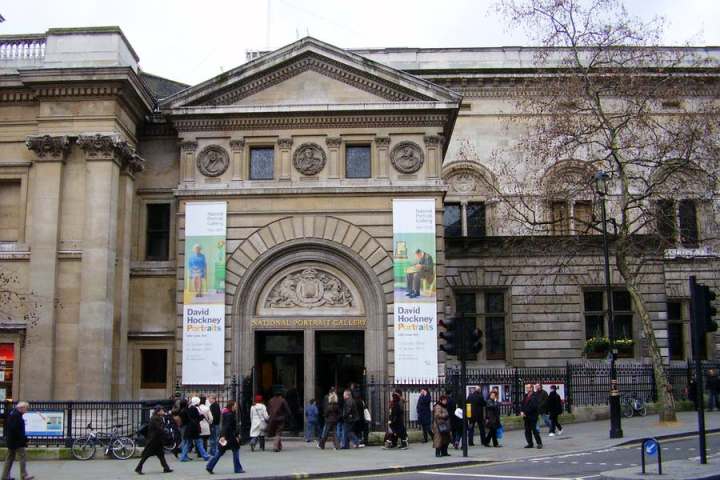
Press release (15 June 2017) from the NPG in London:
The National Portrait Gallery has been awarded funding of £9.4 million from The National Lottery towards a £35.5m transformation programme, which will be the Gallery’s biggest ever development and its most significant project since the opening of its Ondaatje Wing in 2000, it was announced today, Thursday 15 June 2017.
The National Lottery support will go towards the project Inspiring People: Transforming our National Portrait Gallery. For the first time in the Gallery’s history there will be a comprehensive re-display of the Collection across all the galleries combined with a significant refurbishment, creating twenty per cent more public and gallery spaces. The transformation will also see the Gallery’s most extensive programme of activities nationwide with plans to engage audiences onsite, locally, regionally, and online.
As part of the project, the National Portrait Gallery will restore its East Wing—last used for galleries in the 1980s—to public use; will improve its main entrance and will create a new state-of-the-art Learning Centre with a number of studio spaces. As well as extending activities for schools, families, young people, and students, a volunteering programme will be introduced.
A nationwide schools programme for teaching history, citizenship, literacy, and art through portraiture will be underpinned by a large-scale training programme for teachers and through targeted university partnerships with PGCE tutors. With this development programme, the Gallery hopes to reach over 200,000 school children across the UK and over 300,000 young people including those not in education, employment, or training.
New partnerships with museums and organisations throughout the country, will build on the Gallery’s national presence. In Creative Connections the Gallery will work with museums in Coventry, Manchester, Southampton, and Sheffield on a co-curated exhibition programme for young people, which will result in a new artist commission and the display of up to 20 portraits from the Gallery’s Photographic Collection at each partner venue.
In The Photographic Portrait Now the Gallery will work with course leaders at universities and colleges in Plymouth, Farnham, South Wales, Westminster, and Bournemouth to connect students to high profile photographers through master-classes.
Citizen UK will explore immigration from the West Indies, China, and South Asia through films, sound archives, oral histories, walking tours, and photo-galleries. The project will be partnered by archives, libraries, and community centres in Lambeth, Kensington, Tower Hamlets, Soho, Southall, and Ealing.
A National Skills Sharing Partnership involving staff at museums in Belfast, Nottingham, Plymouth, and Sudbury, followed by a further eight locations, will create a learning network involving exchanges, mentoring, seminars, and internships at each location with a focus on identity and representation around the theme of ‘What is a Portrait?’
The process of appointing an architect for the Gallery’s building development will begin in the autumn. The Gallery has already embarked on its fundraising with over £7m pledged towards the project. With the HLF’s support, which includes an initial development grant of £900,000, building work is scheduled to start on Inspiring People: Transforming our National Portrait Gallery in 2020. The Gallery aims to reach its target of £35.5m by March 2019 in order to complete the project by 2022.
Dr Nicholas Cullinan, Director of the National Portrait Gallery, London, says: “The National Portrait Gallery is the nation’s family album, from Katherine Parr to Martin Parr. Understanding our national identity is more relevant now than ever, so we have an urgent job to do. We are very grateful for the vital support of the Heritage Lottery Fund, which crucially represents, as we do, people nationwide. This major grant enables the biggest transformation the Gallery has ever undertaken. We are going to make ourselves an essential place for everyone to feel part of the culture they have been born into, chosen, or are seeking to understand, to become a truly national gallery for all.”
Sir Peter Luff, Chair of the Heritage Lottery Fund, says: “The National Portrait Gallery is loved and admired not just for its wonderful collection but also as a centre for serious debate about how best we engage with our national identity. Thanks to this investment of £9.4m from The National Lottery, the National Portrait Gallery can begin an extensive modernisation programme. We are particularly pleased that this funding will also be used to increase the Gallery’s reach across the UK by working closely with a number of cultural institutions, from South Wales to Sheffield, and with a focus on young people, families and those with special needs.”
Karen Bradley, Secretary of State for Culture, Media and Sport, says: “The National Portrait Gallery is one of our finest and most loved art institutions, attracting huge numbers of visitors every year. Thanks to £9.4m of funding from National Lottery players, the gallery will undergo an incredible transformation. By reaching out to thousands of young people across the UK and partnering with museums outside of the capital it will share its unique, world-class collection even wider.”
Kim Mawhinney, Head of Art, National Museums NI, says: “Central to the National Portrait Gallery’s development has been its commitment to working closely with organisations throughout Britain and Northern Ireland. To be so closely involved in a development project from the outset has been really important in helping us forge a long term relationship based on sharing skills and collections knowledge both within organisations and in building our audiences and public programmes.”
The Getty and YCBA Make 100,000 Images Available via IIIF
Press release (1 June 2017) from The Getty:
The Getty today made available more than 30,000 images of objects in the J. Paul Getty Museum collection using the International Image Interoperability Framework (IIIF) [pronounced ‘triple eye eff’], which allows researchers to bring together images from different institutional websites for comparison, manipulation and annotation. By clicking on the IIIF logo next to an image, users can pull together images from different collections, dragging and dropping millions of images and associated metadata from institutions across the world for side-by-side analysis. As a result, for the first time, users can digitally examine works of art held in separate collections worldwide and easily share their findings.
“With IIIF, scholars can move images beyond the confines of separate institutional websites and bring them together for study. It allows for deeper digital engagement with our collections than ever before,” said James Cuno, president of the J. Paul Getty Trust.
The Getty is a member of the International Image Interoperability Framework Consortium, a group of museums, libraries, archives and other research and educational institutions working together to advance the adoption of IIIF to facilitate scholarship and research. Another Consortium member, The Yale Center for British Art, also announced today the availability of nearly 70,000 images in its collection. The Yale Center and Getty join a growing number of institutions that are using IIIF or moving toward its implementation.
“The release of these images is just the first step for the Getty as we move toward universal adoption of IIIF for images from both the Getty Museum and the Getty Research Institute collections,” said Rich Fagen, the Getty’s Vice President and Chief Digital Officer. “We are excited to help digital arts scholarship reach this next frontier.”
The Getty and Yale Center for British Art release of IIIF images comes as both organizations are joining other members of the IIIF community at an international conference on IIIF development and implementation at the Vatican beginning June 5.
Learn more about IIIF at the Getty Iris.
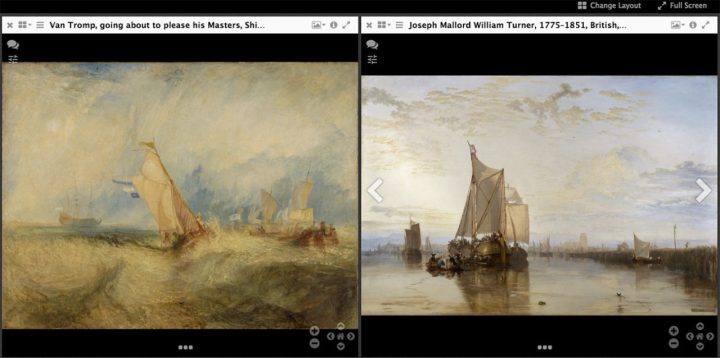
Left: Joseph Mallord William Turner, Van Tromp, going about to please his Masters, Ships a Sea, getting a Good Wetting, 1844, oil on canvas (Los Angeles: J. Paul Getty Museum). Right: Joseph Mallord William Turner, Dort or Dordrecht: The Dort Packet-boat from Rotterdam Becalmed, 1818, oil on canvas (New Haven: Yale Center for British Art, Paul Mellon Collection).
Montreal Acquires Rigaud’s Modello for Portrait of Louis XIV
Press release via Art Daily (31 May 2017). . .
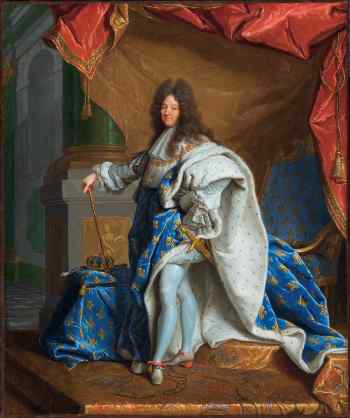
Hyacinthe Rigaud, Modello for the Portrait of Louis XIV in Royal Ceremonial Robes, 1701, oil on canvas, 55 × 45 cm (Musée des beaux-arts de Montréal).
The Montreal Museum of Fine Arts has just acquired a remarkable work: the modello, or painted sketch, for the famous Portrait of Louis XIV in Royal Ceremonial Robes by Hyacinthe Rigaud (Musée du Louvre, Paris).
“We are pleased that we were able to acquire this iconic painting on the art market. It is the modello for one of the most famous portraits in the history of Western art,” said Nathalie Bondil, the MMFA’s Director General and Chief Curator. “Often copied and even imitated, the painting is the origin of a rich iconographic lineage in the history of state portraiture. It is an important addition to our collection of historical international art, since Louis XIV enabled New France to evolve from a trading outpost to a populated settlement.”
Hilliard T. Goldfarb, Senior Curator of Old Masters, had this to say about the work: “The canvas is in very good condition and has not been refixed. The exquisite execution succeeds in concentrating formidable power into a small format. The attention paid to the textures is admirable and is to some extent more impressive than the large final version: look attentively at the rendering of the ermine and the velvet and also the way in which the fleurs de lys, following the curves of the folds in the cloak bend and twist, catching the light, something that is not evident in the final version.”
“By representing the contact of the king’s skin with the regalia, the painter is accentuating his special status among men,” added Sylvain Cordier, Curator of Early Decorative Arts. “Louis XIV is the only one who can touch with his bare hands the sacred instruments that confirm his royalty: anyone looking at the painting was aware of this. In our world, awash in political images, it is exciting to look at the composition of an official portrait as emblematic as this one, which uses specific codes and a profusion of detail to depict his royal majesty and legitimacy as a ruler in the seventeenth century. We are the inheritors of this past, which also raised profound questions that led to the rise of democracy and citizenship. Today, as we view this ‘icon,’ it feels both familiar and distant.”
◊ ◊ ◊ ◊ ◊
The Musée des Beaux-Arts de Montréal acquired the painting from Paris-based Galerie Éric Coatalem, which, as reported by Didier Rykner for La Tribune de l’Art (16 May 2017), displayed the painting at this year’s TEFAF in Maastricht.
Much more information is available from Ariane James-Sarazin’s essay “Le modello du portrait de Louis XIV en grand costume royal” for the online catalogue raisonné Hyacinthe Rigaud (1659–1743). L’homme et son art (Editions Faton, added 2 March 2017 and updated 17 May 2017).
Cincinnati Receives $11.75million for Bimel Asian Art Endowment
Press release (16 May 2017) from the Cincinnati Art Museum:
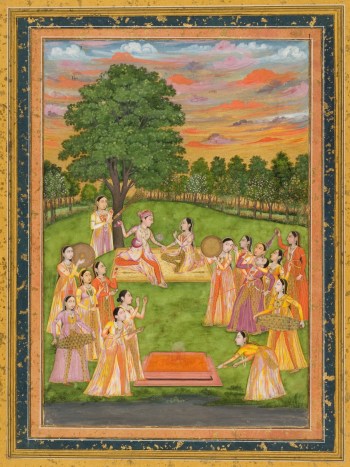
A Royal Couple and Women of the Court Playing Holi, ca. 1760, Mughal period, Mughal/India; opaque watercolor, gold, and silver on paper (Cincinnati Museum of Art, 1986.1174).
A landmark $11.75 million gift to the Cincinnati Art Museum to establish the Alice Bimel Endowment for Asian Art was announced at the museum’s 137th Annual Meeting of the Shareholders of the Cincinnati Museum Association on May 15. The largest single monetary gift in the museum’s history, the endowment will enhance collections in the arts of South Asia, Greater Iran, and Afghanistan.
During their lifetimes, the Bimels developed a fascination with South Asian art of all periods and extended their interests to include the regions of Greater Iran and Afghanistan. Their gifts to the Cincinnati Art Museum followed closely their own art collecting, study, and travel interests. In sum, Alice and Carl Bimel generously donated more than $14 million in addition to significant collection objects to the museum.
“It would be impossible to express in full our gratitude for what Carl and Alice Bimel have given to the public through their museum. The Bimels’ act of immense generosity will advance a key area of study that is immeasurably important and highly relevant in contemporary society. The Bimels gave countless volunteer hours, support and collections while they were with us. Now they add their vision to the future,” said Cameron Kitchin, the Louis and Louise Dieterle Nippert Director of the museum.
Newly appointed Curator of South Asian Art, Islamic Art and Antiquities, Dr. Ainsley Cameron, adds, “The opportunity to build an ambitious collection in a public museum today is rare. Alice and Carl Bimel have made that possible for Cincinnati. With this endowment, we can create an exceptional collection, one that represents the vibrancy and vitality prevalent in the arts of the region, from both the historic period and the contemporary.”
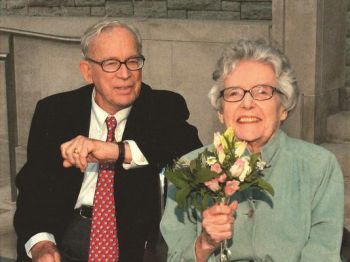 Alice and her husband, Carl, were longtime supporters of the museum who, with their passing, left a legacy of philanthropy. Alice died in 2008 and Carl in 2013. Alice was a Cincinnati Art Museum volunteer for more than 40 years, and was a member of the first docent class in 1960. In 1972, she was the first woman named to the museum’s board of trustees. She was one of the principal volunteers assisting with the museum’s fundraising efforts before the Development department was established in the fall of 1981. Alice was passionate about art and fiercely committed to the excellence of the Cincinnati Art Museum. She has been described as “thoughtful, energetic, patrician and deeply caring.” Former director Millard Rogers said in 1990: “Alice Bimel represents all the good qualities of volunteerism. She has provided many firsts through her insight and creativity; she is a worker as well as a leader, and has continued to be active long after others with less dedication and perseverance have quit.”
The Bimels traveled extensively throughout Asia. They collected miniature paintings and other South Asian works of art which are now in the Cincinnati Art Museum’s permanent collection, and also provided support for the purchase of acquisitions in other regions represented in the Art Museum’s Asian collections.
In 2004, the Cincinnati Art Museum dedicated its courtyard in honor of Alice in recognition of a major gift. Other gifts included endowing several galleries in honor of Alice and their daughters Carlyn and Natalie. The Bimel family has previously provided more than $2 million in other endowments and gifts to the Cincinnati Art Museum since 1977. In 1998, Carl and Alice Bimel gifted the museum a 9th-century carved stone pillar from the Pala dynasty depicting a Serpent King and Queen. In 2008 the Art Museum celebrated a gift of Indian paintings from the Bimels that included exquisite works of art created in the 17th and 18th centuries at the royal Hindu courts of Rajasthan and the Punjab Hills. This gift enhanced the collection of courtly and sacred Indian paintings, most of which were given by the Bimels over many years. In 2006, Alice was awarded the Cincinnati Art Museum’s George Rieveschl Medal for Distinguished Service.










leave a comment