Renovation and Conservation at the YCBA and the Beinecke
For those of you thinking ahead in terms of fellowships at Yale, bear in mind these planned closures for 2014 and 2015. 2016, however, seems like a fine time to be in New Haven!
◊ ◊ ◊ ◊ ◊
From the Beinecke:
The Beinecke Rare Book & Manuscript Library will undergo a major renovation beginning at the end of May 2015. The renovation will replace the library’s mechanical systems and expand its research, teaching, storage, and exhibition capabilities. The library will reopen in September 2016.
A temporary reading room in the Sterling Memorial Library will provide researchers access to the library’s collections while work is under way. Beginning in April 2014, access to various collections will be limited as we prepare the library for closure. Please consult our closed collections schedule for information about when specific collections will be unavailable.
We invite you to learn more about the project, and follow our progress as we prepare the library for another 50 years as a world-class center of research and scholarship.
◊ ◊ ◊ ◊ ◊
From the YCBA:
. . . Planning is well underway for the second phase of the project, which will take place in 2015. The focus of this next phase will be the renewal of the public galleries on the second, third, and fourth floors, as well as the refurbishment of the Lecture Hall. The project will also address improvements related to life safety and accessibility, and extensive building-wide mechanical and electrical upgrades will be made. Visitors will have limited access to the building and no special exhibitions will be mounted or visiting fellowships awarded. When the Center reopens in January 2016, its collections will be completely reinstalled in the elegant, sky-lit galleries of the fourth floor, and three focused exhibitions, featuring specific aspects of the Center’s collection, will be on view in the second- and third-floor galleries.
◊ ◊ ◊ ◊ ◊
From Yale UP
Peter Inskip and Stephen Gee in association with Constance Clement, Louis I. Kahn and the Yale Center for British Art: A Conservation Plan (New Haven: Yale University Press, 2012), 200 pages, ISBN 978-0300171648, $50.
 The standing of the Yale Center for British Art as one of the world’s great museums and study centers finds expression in its remarkable building, designed by Louis I. Kahn (1901–1974). In this important and innovative volume, two architects offer a plan to ensure the proper stewardship of the building in order to preserve its essence as a great architectural structure. Peter Inskip and Stephen Gee describe the design, construction, and subsequent renovation of the building; assess its cultural significance; analyze the materials that comprise it (steel, concrete, glass, white oak, and travertine); and shed light on its evolution over the four decades since it was built. Drawing on their extensive experience developing conservation plans for both historic sites and modern buildings, they propse a series of policies for the Center’s conservation into the future.
Peter Inskip and Stephen Gee are with the London-based firm Peter Inskip + Peter Jenkins Architects. Constance Clement is Deputy Director of the Yale Center for British Art.
Joshua Lane Appointed Curator of Furniture at Winterthur
As reported at ArtFix Daily (24 February 2014). . .
 Dr. David P. Roselle, Director of Winterthur Musem, Garden & Library, announced the appointment of Joshua W. Lane as the Lois F. and Henry S. McNeil Curator of Furniture at Winterthur Museum.
“Josh Lane is one of the leading scholars in the field of early American furniture,” said Roselle, “and we look forward to welcoming him to Winterthur.” He will start his new position on April 14, 2014.
Lane received his B.A. in American Studies from Amherst College and his M.Phil. from Yale. He worked at the Connecticut Historical Society and the Stamford Historical Society before moving to Historic Deerfield, where he has curated the furniture collection since 2000. In addition, Lane served as the Director of the Summer Fellowship Program at Historic Deerfield between 2005 and 2012.
His most recent exhibitions include Into the Woods: Crafting Early American Furniture, an innovative examination of the materials, tools, and evidence of workmanship in furniture: and Furniture Masterworks: Tradition and Innovation in Western Massachusetts, part of Four Centuries of Massachusetts Furniture, a collaborative project involving eleven institutions including Winterthur Museum.
“Josh is highly regarded for his exhibitions, teaching, research, and scholarship,” said Linda S. Eaton, John L. and Marjorie P. McGraw Director of Collections, “and we are all delighted that he is coming to Winterthur.”
Installation | Molly Hatch’s ‘Physic Garden’ at the High Museum
Warm thanks to Courtney Barnes of Style Court for noting this one. More information and photos are available at her website. -CH
Press release (5 February 2014) from Atlanta’s High Museum of Art:
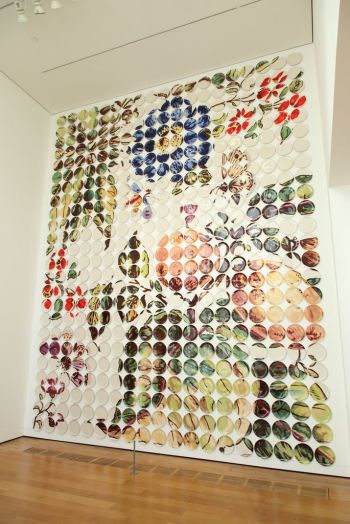
Two-story tall installation of 450 hand-painted plates were inspired by works in the High Museum’s Frances and Emory Cocke Collection of English Ceramics
◊ ◊ ◊ ◊ ◊
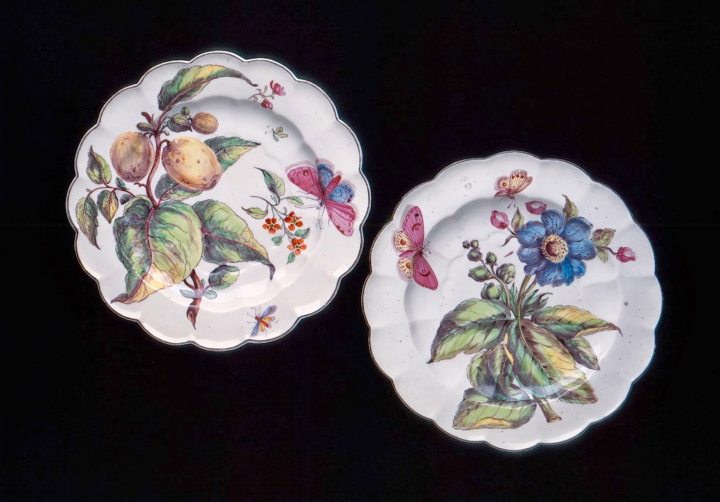
The High Museum of Art has commissioned contemporary ceramicist Molly Hatch to present Physic Garden, a two-story tall, hand-painted ‘plate painting’, which reinterprets works from its renowned decorative arts and design collection. On view starting March 12, the ‘plate painting’ will be installed in the High’s Margaretta Taylor Lobby and will be comprised of 456 plates featuring an original design inspired by two ca. 1755 Chelsea Factory plates from the Museum’s Frances and Emory Cocke Collection of English Ceramics, which totals more than 300 works.
 The historic source plates depict realistic flora and fauna in the Chelsea ‘Hans Sloane’ style of the early 1750s. The influential Chelsea Physic Garden, a botanical garden founded by the Society of Apothecaries in London in 1673, was leased by collector Hans Sloane and likely inspired neighboring factory porcelain decorators.
The High’s installation will be the largest ever produced by Hatch. She has created other works based on source material from the Metropolitan Museum of Art and Museum of Fine Arts, Boston. Hatch also designs her own line of products for national retailers such as Anthropologie.
“I am thrilled to work with such a talented contemporary artist as Molly and to have the outcome be such a dynamic and monumental acquisition for the High. One of the most exciting aspects of ‘Physic Garden’ is seeing the historic decorative arts and design collection through the lens of a creative young artist. We can’t wait for our visitors to experience this new work as well as revisit our important and beloved collection of English ceramics,” says Sarah Schleuning, curator of decorative arts and design at the High.
Hatch often sources historic works to make a contemporary counterpart, however this project marks the first time she is sourcing historic decorative arts from a museum collection to create a site-specific ‘plate painting’. To create the ‘plate painting’, Hatch digitally altered high-resolution images of the surface decoration of the source material to draft a new composition. She altered the original color, scale and composition of the Chelsea designs and then projected the new images onto 456 dinner plates (each 9.5 inches in diameter). She then hand-painted each plate using the projected image as a guide.
The complete installation will measure approximately 20 feet high by 17 feet wide. The Chelsea source plates are also on view in the High’s permanent collection Gallery 200, which patrons may visit to view the historic material. The High is acquiring the piece, which can re-installed by the Museum at future dates in smaller incarnations or in other locations.
“I encourage the viewer to see ceramics as a part of the fine art continuum—viewing plates as one would view a painting,” said Hatch. “For this installation, I’ve re-worked the surface imagery to create a new composition that reflects the historic. The artwork becomes an exploration of the relationship between the historic and the contemporary – crossing over categories of decorative art, design and fine art.”
Molly Hatch
Born in 1978, the daughter of a painter and a dairy farmer, Molly Hatch divided her childhood between physical labor, play, and creating art. She studied drawing, painting, printmaking, and ceramics and receiving her bachelor’s degree of fine arts from the Museum School in Boston in 2000. After several ceramic residencies and apprenticeships in the U.S. and abroad, she received her master’s degree of fine arts degree in ceramics at the University of Colorado in Boulder in 2008. In 2009, she was awarded the Arts/Industry Residency in Pottery at the John Michael Kohler Arts Center in Wisconsin, which laid the foundation for her career as an artist designer. Hatch works from her home studio in Northampton, Mass., on everything from designing and illustration to one-of-a-kind pieces. Her work has been widely collected and commissioned and is exhibited nationally and internationally at art fairs and museums. Hatch’s work has also been widely licensed in partnership with Anthropologie, Galison, Chronicle, and other companies for homeware and stationery products. Her work has been featured in numerous publications from House Beautiful magazine to online publications such as Design*Sponge and Apartment Therapy. For the last two years, Hatch has been teaching a tableware course at Rhode Island School of Design. She also teaches ceramic and illustration workshops across the country as well as online courses through Creativebug. Her first book will be released in 2015.
MFA Director Malcolm Rogers Announces Retirement Plans
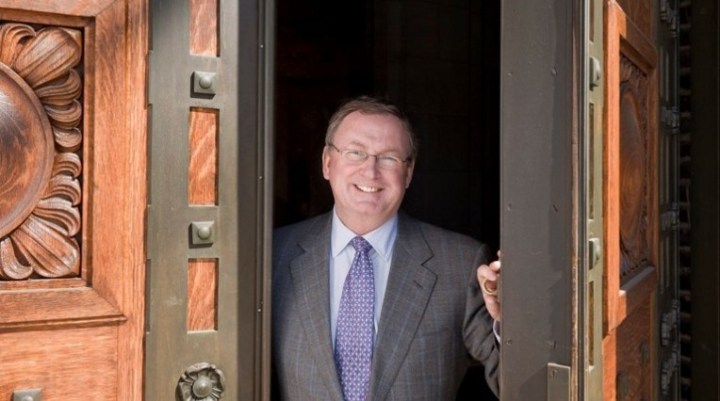
Press release (27 February 2014) from Boston’s MFA:
Today, Malcolm Rogers, Ann and Graham Gund Director of the Museum of Fine Arts, Boston (MFA), announced to the MFA’s Board of Trustees his future plans to retire. Throughout his nearly 20 years at the Museum, Rogers—who in May becomes the longest-serving Director in the MFA’s 144-year history—established a legacy of “opening doors” to communities from Boston and around the world. The Board will establish a committee to oversee a global search for the Museum’s next director, with Rogers remaining at the helm until a successor is identified and appointed…
Keep reading here»
MFA Appoints Frederick Ilchman as Chair, Art of Europe
Press release (27 February 2014) from Boston’s MFA:
Frederick Ilchman has been appointed Chair, Art of Europe at the Museum of Fine Arts, Boston (MFA). Ilchman will continue to serve as the Mrs. Russell W. Baker Curator of Paintings, a position he has held since 2009. Ilchman joined the MFA in 2001 as Assistant Curator of Paintings. A specialist in the art of the Italian Renaissance, he has curated numerous exhibitions, organized international conferences, contributed to scholarly publications and lectured and taught in the United States and abroad. Ilchman’s acclaimed exhibition, Titian, Tintoretto, Veronese: Rivals in Renaissance Venice (2009), organized with the Musée du Louvre, was the first major exhibition dedicated to the competition among these three renowned artists and the emergence of their signature styles. The exhibition won several awards including “Outstanding Exhibition (Eastern Time Zone)” from the Association of Art Museum Curators and was selected as one of the year’s top 10 exhibitions by the Wall Street Journal. In October 2014, an exhibition he is co-curating, Goya: Order and Disorder, will open in the MFA’s Ann and Graham Gund Gallery. In 2003, he served as the Boston curator for the traveling exhibition Thomas Gainsborough, 1727—1788, a major retrospective organized by Tate Britain, and was part of the curatorial team for the exhibition Tintoretto (2007) at the Museo Nacional del Prado in Madrid. Recently, Ilchman curated Visiting Masterpiece: Piero della Francesca’s Senigallia Madonna: An Italian Treasure, Stolen and Recovered (2013), and co-curated the exhibition Paolo Veronese: A Master and his Workshop in Renaissance Venice (2012) at the Ringling Museum in Sarasota.
Ilchman holds a Bachelor of Arts in Art and Archaeology from Princeton University, where he graduated summa cum laude (1990), and a Master of Arts (1992) and Master of Philosophy (1996) in Art History from Columbia University. He will receive his Ph.D. in Art History from Columbia University in May 2014. He has been awarded numerous fellowships, including the Gladys Krieble Delmas Foundation Grant (2006), Save Venice Inc. Art History Fellowship (1999–2001), the Theodore Rousseau Fellowship, Metropolitan Museum of Art (1996–1997, 1998–1999) and a Fulbright Fellowship (IIE), Italy (1997–1998). In 2010, he was a Fellow at the Center for Curatorial Leadership in New York City. Ilchman has been on the board of directors of Save Venice Inc., the largest private organization devoted to preserving the art and architecture of Venice, since 2005, and now is co-Project Director. He also has served as Chair of the Boston Chapter of Save Venice since 2011.
MFA Appoints Benjamin Weiss as Chair, Prints, Drawings, & Photographs
Press release (27 February 2014) from Boston’s MFA:
Benjamin Weiss has been named Chair, Prints, Drawings and Photographs at the Museum of Fine Arts, Boston (MFA). Weiss will continue to serve in his current position, Leonard A. Lauder Curator of Visual Culture, which he has held since 2011. In that role, he co-curated The Postcard Age: Selections from the Leonard A. Lauder Collection (2012) and most recently organized Audubon’s Birds, Audubon’s Words (2013); he is currently preparing further exhibitions and publications drawn from the Leonard A. Lauder Postcard Archive, including an exhibition devoted to “real photo” postcards of the early 20th century. In addition to the Lauder Archive, Weiss has had responsibility for the MFA’s other collections of posters, postcards, illustrated books, graphic design and ephemera of all sorts.
Prior to taking his current position in Prints, Drawings and Photographs, Weiss spent seven years in the MFA’s Education Department as Head of Interpretation (2009–2012) and Manager of Adult Learning Resources (2005–2009). He was integral to the opening of the Art of the Americas Wing in 2010, when he was responsible for interpretation for 5,000 objects on view. He also oversaw the written and educational materials for all special exhibitions and installations of the collection, including brochures, multimedia tours and in-gallery wall texts and labels.
Weiss holds a Master of Arts in History from Princeton University (1991) and a Bachelor of Arts from Harvard College (1989). Before coming to the MFA, he worked at the Burndy Library, of the Dibner Institute for the History of Science and Technology at MIT for seven years, where he was Curator of Rare Books and Head of Exhibitions and Publications. While at Burndy, he curated more than a dozen exhibitions, on subjects as varied as color theory, 19th-century American bridge engineering and the history of obelisks. That last exhibition resulted in the collaborative monograph Obelisk: A History, co-written with Anthony Grafton, Pamela O. Long and Brian Curran, and published by MIT Press. A Renaissance historian by training, with a specialty in the history of cartography, Weiss maintains an interest in the history of maps, and specifically in the history of ancient geographical texts in the 15th and 16th centuries.
Exhibition | Anglo-American Portraiture in an Era of Revolution
From the Louvre:
Anglo-American Portraiture in an Age of Revolution
Musée du Louvre, Paris, 1 February — 28 April 2014
Crystal Bridges Museum of American Art, Bentonville, Arkansas, 17 May — 15 September 2014
High Museum of Art, Atlanta, 28 September 2014 — 18 January 2015
Curated by Guillaume Faroult
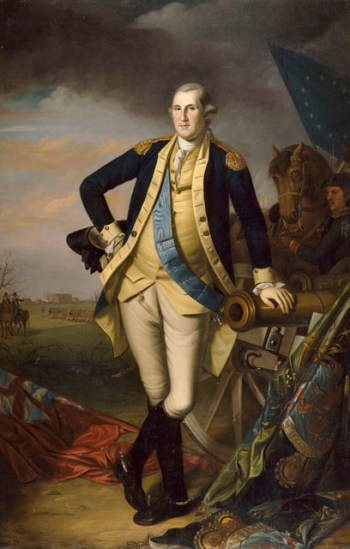
Attributed to Charles Wilson Peale, George Washington after the Battle of Princeton, 3 January 1777, ca. 1779 (National Museum of the Palace of Versailles and the Trianons)
The Louvre continues its exploration of the history of painting in America with a third special exhibition that compares and contrasts five Anglo-American portraits from 1780 to 1800 and slightly later, produced in the midst of a revolution that would lead to the independence and creation of the United States of America. The selected artworks revolve around the guardian and emblematic figure of General George Washington (1732–1799), elected first president of the United States in 1789.
The exhibition features three portraits of the Father of the Country, including one attributed to Charles Wilson Peale (1741–1827) depicting him as Commander in Chief of the Continental Army, on special loan from the Musée du Château de Versailles. Portraits of the opposing belligerents, notably a stunning, newly restored portrait of Captain Robert Hay of Spot by Scottish painter Sir Henry Raeburn (1756–1823), are presented in response to the magnificent portrait of Washington as president of the young nation painted in 1797 by Gilbert Stuart (1755–1828)—one of the most talented American portrait artists—on loan from the Crystal Bridges Museum.
This special exhibition is part of a long-term partnership with the Crystal Bridges Museum of American Art, the High Museum of Art, Atlanta, and the Terra Foundation for American Art, and was made possible through their generous support.
Digital Plans at the Reynolda House Museum of American Art
Press release (12 February 2014) from the Reynolda House Museum of American Art in Winston-Salem, North Carolina:

Joseph Blackburn, Portrait of Elizabeth Browne Rogers, 1761, oil on canvas (Reynolda House Museum of American Art)
As metropolitan museums across the country begin to focus personnel resources on digital content and new media strategies, Reynolda House Museum of American Art has created a new position to develop the extension of the museum’s desired impact and mission to an online audience. Trish Oxford has been named Assistant Director of Marketing & Communications, a position that will focus on the evolving need for digital communications. In this role she will create synergy between on-site experiences and virtual experiences through management of the Museum’s new website, email, social media, and other digital platforms. Oxford will also work closely with the curatorial staff to explore ways to enhance the visitor experience. She first joined the museum part-time in 2012 as Audience Engagement and Communications Specialist.
Oxford’s new position is part of a larger Reynolda House initiative called the Digital Engagement Project launched in 2010 with the digitizing of the museum’s collections. The federally funded project included cataloging each object in the museum’s collections, redesigning the museum’s website to facilitate access to collections, and creating new opportunities for people to interact with the museum online. Allison Perkins, Reynolda House executive director, said in her new position Oxford will invite museum visitors, online and in-person, to contribute their own interpretations and ideas, making all interactions with Reynolda House more impactful. (more…)
MoMA Appoints First Director of Digital Content and Strategy
Arriving at MoMA from the Royal Museums Greenwich, Fiona Romeo steps into a position that will, I imagine, become increasingly common if not essential for museums in the years ahead. Given her role, it’s especially interesting to see what her own web presence looks like. -CH
From the press release (7 February 2014). . .
 The Museum of Modern Art has appointed Fiona Romeo as Director of Digital Content and Strategy, a newly created position in which Ms. Romeo will provide vision and leadership across the organization to enable the Museum to build on its existing digital initiatives and refine its strategic direction and goals. Under the direction of Peter Reed, Senior Deputy Director for Curatorial Affairs, she will actively work with senior leadership to develop and grow digital engagement with MoMA’s diverse audiences, both on site and online. She will lead the Digital Media Department, overseeing a team of digital producers, developers, and designers. Ms. Romeo will join the Museum in April.
In her new role, Ms. Romeo will create a clear and achievable strategy that will connect all areas of the Museum and build upon the success of existing programs. Her purview will include MoMA’s website, MoMA.org, including the online collection and exhibition subsites; and digital tools and resources, such as mobile applications, digital in-gallery displays, and live-streamed events.
“Fiona’s appointment builds upon the Museum’s pioneering work in the digital realm, and is a reflection of the dynamic and vital role that digital content plays in the way people can participate in the life of the Museum,” said Glenn D. Lowry, Director of The Museum of Modern Art. “Her extensive museum experience and her background in social and interactive digital platforms makes her particularly well suited to lead MoMA’s innovative and multifaceted initiatives, which engage individuals with the richness of our collection and programs.” (more…)
DIA to Raise $100 Million for Its Independence
For the most recent developments leading up to this announcement, Lee Rosenbaum provides useful coverage at CutureGrrl). Also, see Julia Halperin’s article at The Art Newspaper. From the DIA press release (29 January 2014)…
Detroit Institute of Arts to raise $100 Million toward Detroit’s Revitalization
As an anchor and investor in Detroit’s Midtown neighborhood, an educational resource for students and residents of Detroit, the tri-county area and all of Michigan and a provider of creative programs for numerous social service and community organizations in the City of Detroit and beyond, the Detroit Institute of Arts (DIA) is pleased to confirm its participation in the plan being facilitated by Judge Gerald Rosen, Chief Judge of the U.S. District Court for the Eastern District of Michigan, to help bring an end to the City’s bankruptcy, expand support for Detroit’s pensioners and protect the museum’s collection for the public in perpetuity. (more…)










leave a comment