Exhibition | Dressed to Impress
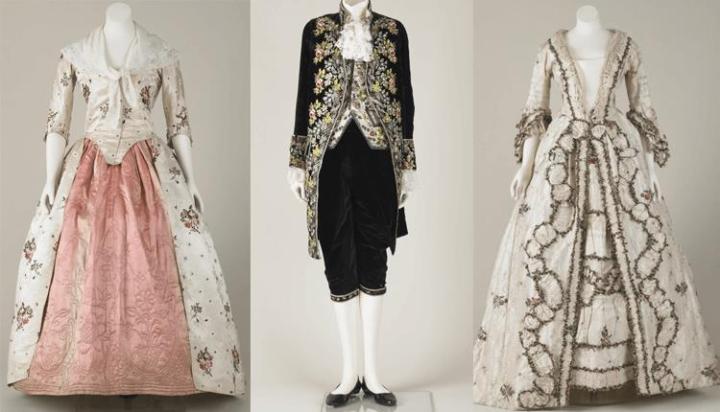
Press release (via Art Daily) for the exhibition now on view at the Walker Art Gallery:
Dressed to Impress: Fashion in the Eighteenth Century
Walker Art Gallery, Liverpool, 4 August 2018 — Spring 2020
A stunning collection of eighteenth-century fashion items is on display at the Walker Art Gallery, Liverpool, from 4 August 2018 to spring 2020. Showcasing 13 male and female costumes as well as accessories, Dressed to Impress: Fashion in the Eighteenth Century highlights changing attitudes towards body shapes as well as documenting the social climate of the time.
Pauline Rushton, Senior Curator at National Museums Liverpool, said: “We’re incredibly fortunate to be presenting these exquisite items from our collections together for the first time in this display. Visitors to the Walker Art Gallery will enjoy not only the variety and detail seen in eighteenth-century ways of dressing, but also learn about some of the social issues at play throughout the century. These beautiful pieces demonstrate how fashion can be an important vehicle for exploring everyday life in past centuries.”
The clothes in the display are typical of the main fashionable styles worn by the middle classes, known at that time as ‘the middling sort’. These people were neither rich nor poor, and often wanted to improve their social standing. Examples of their clothes to be seen in the display include a pair of ‘stays’ (a laced corset), formal female dresses, and elaborately embroidered men’s waistcoats with hand cut sequins known as ‘spangles’.
The display also includes a number of important accessories, such as a pair of women’s shoes with overshoes for outdoor wear to protect the feet against the unsanitary conditions in the streets. The accessories on display include two men’s wallets, one of which belonged to John Bridge, a Liverpool merchant heavily involved in the transatlantic slave trade. Money acquired from his activities would have been kept in this wallet, which is embossed with Bridge’s name in gold lettering.
As well as containing reminders of Liverpool’s past involvement in the transatlantic slave trade, the display provides some fascinating insights into how clothing helped to foster idealised body shaping, both for women and men. The display includes a rare pair of men’s stockings—one of just a few surviving pairs remaining in the UK—with padding designed to accentuate the calf area, from an era when it was deemed important for men to have shapely calves. This is the first time that the stockings, made from knitted silk and lambs wool, are displayed at the Walker Art Gallery, although they have previously been shown in museums in New York and Los Angeles.
There are two videos on show in the gallery, depicting how 18th-century men and women were dressed by their servants.
Conference | British Art and the Global
Next week at UC Berkeley:
British Art and the Global
University of California, Berkeley, 17–18 September 2018
Organized by Imogen Hart and David Peters Corbett
What is the role of art history in the Brexit era? In the wake of the UK’s decision to leave the European Union, the history of Britain’s relationships with the rest of the world takes on renewed significance. This conference explores how art history today can shed light on the history of Britain’s interaction with other countries and cultures. Papers illuminate global contexts for the history of British art by considering works of art as sites and tools of international cooperation, conflict, and exchange.
Keynote speakers: Tim Barringer (Yale University), Dorothy Price (University of Bristol), and Mary Roberts (University of Sydney).
The event is co-sponsored by the Center for British Studies, the History of Art Department, and the Townsend Center for the Humanities at the University of California, Berkeley, and the Centre for American Art at the Courtauld Institute of Art. Space in the conference venue is limited. Advance registration is recommended. View abstracts of the conference papers here.
Note: On Sunday, September 16, the day before the conference, the Legion of Honor Museum will host a panel conversation on British Art in a Global Context in connection with their current exhibition Truth and Beauty: The Pre-Raphaelites and the Old Masters.
M O N D A Y , 1 7 S E P T E M B E R 2 0 1 8
9:30 Opening remarks
9:40 Panel 1
• Jocelyn Anderson (University of Toronto), Timely and Expressive: Global Turmoil and Eighteenth-Century British Magazine Frontispieces
• Julie Codell (Arizona State University), Multiple Versions, Multiple Markets, Multiple Meanings: The Global Trade in British Autograph Replicas
10:40 Coffee break
11:00 Panel 2
• Eleonora Pistis (Columbia University), How the Temple of Bacchus at Baalbek Travelled to Britain
• Douglas Fordham (University of Virginia), Methodological Approaches to the Illustrated Travel Book
12:00 Lunch break
1:00 Keynote 1
• Mary Roberts (University of Sydney), Traversing the Frontiers of Empire
2:30 Break
2:45 Panel 3
• Nika Elder (American University), A Taste for Flesh: John Singleton Copley and the Racial Politics of Colonial Portraiture
• Catherine Roach (Virginia Commonwealth University), Hybrid Exhibits: Race, Empire, and Genre at the British Institution in 1806
3:45 Tea break
4:15 Keynote 2
• Tim Barringer (Yale University), Global Landscape in the Age of Empire
T U E S D A Y , 1 8 S E P T E M B E R 2 0 1 8
9:30 Panel 4
• Sam Rose (University of St Andrews), Post-Impressionism: British, Universal, Global
• Jiyi Ryu (University of York), Imperial Object Lessons: Playing Games and Touring the British Imperial World
10:30 Coffee break
11:00 Panel 5
• Alexander Bigman (Institute of Fine Arts at New York University), Reconfiguring the Microcosmic View: Gilbert and George in Postcolonial London
Jackson Davidow (MIT), A Diasporic Virus: AIDS and the British Black Arts Movement
12:00 Lunch break
1:00 Keynote 3
• Dorothy Price (University of Bristol), Dreaming Has a Share in History: Thinking around Black British Art
2:30 Break
2:45 Panel 6
• Margaret Schmitz (Milwaukee Institute of Art and Design), Wyndham Lewis and Charles Sheeler: Cities in the ‘Vortex’ and the ‘Vacuum’
• Richard Johns (University of York), Riley in Cairo
3:45 Tea break
4:15 Panel 7
• Sayantan Mukhopadhyay (University of California, Los Angeles), Fighting while Dreaming: Rasheed Araeen’s Radical Utopianism
• Catherine Spencer (University of St Andrews), The Violence of Representation: Northern Ireland, Abstraction, and the Documentary Trace
5:15 Closing discussion
Print Quarterly, September 2018
The eighteenth century in the current issue of Print Quarterly:
Print Quarterly 35.3 (September 2018) . . .
N O T E S A N D R E V I E W S
• Jean Michel Massing, Review of the collection of essays, Suzanne Karr Schmidt and Edward Wouk, eds., Prints in Translation, 1450–1750: Image, Materiality, Space (Routledge, 2016), pp. 305–08. “The eleven most interesting articles in Prints in Translation . . . developed from a two-day conference panel at the 2014 meeting of the College Art Association on ‘Objectifying Prints: Hybrid Media 1450–1800’ (305).” [Of particular interest to Enfilade readers will be the article by David Pullins, “The State of the Fashion Plate, circa 1727: Historicizing Fashion Between ‘Dressed Prints’ and Dezallier’s Recueils,” discussed briefly by Massing on pp. 307–08.]
• John Roger Paas, Review of the exhibition catalogue Tiphaine Gaumy, ed., Images & Révoltes dans le livre et l’estampe, XIVe–milieu du XVIIIe siècle (Bibliothèque Mazarine & Editions des Cendres, 2016), pp. 308–10. “This catalogue with its thirteen scholarly essays and numerous images—many not widely known—focuses on political events, but more importantly it underscores the seminal importance of all visual material for our general understanding of the past. It is clear that these images are not of secondary historical importance” (310).
• Julia McHugh, Review of Pedro German Leal and Rubem Amaral, eds., Emblems in Colonial Ibero-America: To the New World on the Ship of Theseus (Glasgow University Press, 2017), pp. 311–13. “The three sections of the book correspond to the three main colonies of the New World [New Spain, Peru, and Portuguese America]. In each section, two case studies follow a general survey of emblematic and symbolic culture, which foregrounds the distinct historical and geographical conditions of each administrative territory. These three preliminary essays by Víctor Mínguez, José Júlio García Arranz, and Rubem Amaral Jr. are extremely systematic and comprehensive and would be excellent additions to syllabi for colonial Latin American courses” (311).
 • Thomas Döring, Review of Jef Schaeps, Edward Grasman, Elmer Kolfin, and Nelke Bartelings, eds., For Study and Delight: Drawings and Prints from Leiden University (Leiden University, 2017), pp. 313–15. “The book was published to mark the 200th anniversary of the 1814 bequest of Jan Theodore Royer’s print collection to the University of Leiden. This gift became the basis of the university’s Print Room founded in 1825. . . The publication aims to offer a representative cross-section of the collection. Carefully conceived and handsomely produced, it fully lives up to this claim and to its well-considered title” (313).
• Stephanie Dickey, Review of the exhibition catalogue, Victoria Sancho Lobis, with an essay by Maureen Warren, Van Dyck, Rembrandt, and the Portrait Print (Art Institute of Chicago, 2016), pp. 315–17. “This compact, handsomely produced publication documents an exhibition that featured 116 prints, two albums, and twenty portraits in other media, dating from 1522 to 1993, most from the Art Institute of Chicago’s own collection” (315).
• Rena Hoisington, Review of the exhibition catalogue, Anne-Lise Desmas, Edouard Kopp, Guilhem Scherf, and Juliette Trey, Bouchardon: Royal Artist of the Enlightenment (Getty Publications, 2017), pp. 318–21. “Prefaced by essays written by each of the four contributing curators, this beautifully produced and lavishly illustrated catalogue includes images of hundreds of sculptures, drawings, prints and illustrated books (and a few paintings) discussed according to theme or project, including Bouchardon’s work on two celebrated landmarks in eighteenth-century Paris: the elegant Grenelle Fountain that still graces the street from which it takes its name, completed in 1745; and the equestrian statue of King Louis XV that once presided over the Place Louis XV, begun in 1748, completed after Bouchardon’s death by the sculptor Jean-Baptiste Pigalle and destroyed in 1792” (318).
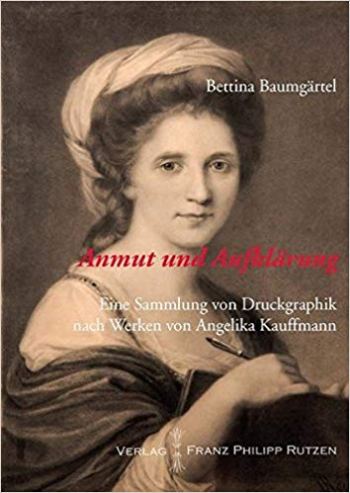
• Wendy Wassyng Roworth, Review of the exhibition catalogue, Bettina Baumgärtel, Anmut und Aufklärung: Eine Sammlung von Druckgraphik nach Werken von Angelika Kauffman (Harrassowitz, 2016), pp. 321–23. “An exhibition at the Winckelmann Museum in Stendhal, Germany . . . presented a selection of prints after Kauffman’s work . . . The exhibition catalogue includes examples of engraved reproductions by British and other printmakers . . . There is a detailed chronology of Kauffman’s life and work; an essay on prints after Kauffman and eighteenth-century printmaking; another essay on the Winckelmann portrait and its influence; a numbered catalogue of works exhibited; and a bibliography of cited sources. The catalogue of works exhibited is divided into sections according to subjects and themes Kauffman portrayed: self-portraits, portraits, mythology, scenes from Shakespeare and other poetry, Roman and early English history, allegory and genre” (322).
• Monika Hinkel, Review of the exhibition catalogue, Timothy Clark, ed., Hokusai: Beyond the Great Wave (Thames & Hudson, 2017), pp. 323–25. “The superb selection, incorporating paintings, woodblock prints, drawings, manuals and illustrated books selected from collections around the world illustrate well the versatility of Hokusai’s striking work. They not only portray the ingenious way in which he amalgamated Japanese-, Chinese- and European-inspired techniques, but also reveal his profound knowledge of mythology, history, the natural world and religion and his strong interest in draughtsmanship” (324–25).
• Stephen Clarke, Review of the book Lucy Peltz, Facing the Text: Extra-illustration, Print Culture, and Society in Britain, 1769–1840 (Huntington Library Press, 2017), pp. 353–55. “Peltz’s book is the product of some fifteen or more years of research, during which period she has published a number of related articles, most notably the correspondence of Granger and Bull in the Walpole Society volume for 2004. The result of her labours is by far the best and most detailed study of a phenomenon that has received surprisingly little scholarly attention. She divides the subject into three broadly chronological sections, using exemplars to tease out meanings and connections rather than aspiring to an impossible vision of encyclopaedic completeness” (354–55).
◊ ◊ ◊ ◊ ◊
Note (added 11 September 2018) — The original posting did not include quotations from the reviews.
Conference | Re-framing Chinese Objects
From H-ArtHist:
Reframing Chinese Objects: Collecting and Displaying in Europe and the Islamic World, 1400–1800
Heidelberg University, 7–8 December 2018
To attend the symposium, pre-registration is required. Please send your registration by to Mr. Yusen Yu: yusen.yu@asia-europe.uni-heidelberg.de.
Organizers: Sarah E. Fraser (Project P.I.), Lianming Wang, Yusen Yu, Institute of East Asian Art History, Heidelberg University
Supported by the Field of Focus 3: Cultural Dynamics in Globalized Worlds, Excellence Initiative II, Heidelberg University
F R I D A Y , 7 D E C E M B E R 2 0 1 8
2:00 Welcome by Sarah Fraser
2:15 Session I
• Feng He, From Theatrical to Monumental: Social Spaces and Porcelain Display in Eighteenth-Century Dresden
• Muyu Zhou, The Origin of ‘Golden’: Analysis of Guangcai Porcelain through the Meissen Kiln
• Xue Yu, From Fantasy to ‘Authenticity’: The Changing Taste of the Chinese Collection in the Eighteenth-Century French Court and Its Entourage
3:30 Coffee break
3:45 Session II
• Dingwei Yin, Reframing the Antique: Gustav Klimt’s Asian Collection and His Figure Paintings in the 1910s
• Wenzhuo Qiu, Cabinet of Curiosities: Wandering and Wondering in Modern Cities as the Flâneurs
• Hua Wang, Interiority and the Female Figure: North African, French and Chinese Textiles in the Painting of Henry Matisse (1869–1954) and Chang Shuhong (1869–1954)
5:15 Roundtable discussion
5:45 Reception
S A T U R D A Y , 8 D E C E M B E R 2 0 1 8
9:15 Keynote Address
• Stacey Pierson (History of Art and Archaeology Department, SOAS London), Framing ‘China’: Architecture, Collecting, and the Spatial Aesthetics of Chinese Porcelain in Global Display Contexts
10:00 Panel I: Perceiving Chinese Art in the Islamic World
Chair: Susanne Enderwitz (Department of Languages and Cultures of the Near East, Heidelberg University) and Ebba Koch (Institute of Art History, University of Vienna)
• Javad Abbasi (Department of History, Ferdowsi University, Mashhad), Perception of Chinese Art in Iranian Historiography, 15th–18th Centuries
• Sarah Kiyanrad (Department of Languages and Cultures of the Near East, Heidelberg University), Travelling China: Perceptions of Chīn va Māchīn in Early Modern Iran
• Yusen Yu (Institute of East Asian Art History / Cluster of Excellence ‘Asia and Europe in a Global Context’, Heidelberg University), Chinese Painting in Persianate Workshop: Practices of Remounting in the Fifteenth Century
Discussant: Susanne Enderwitz (Department of Languages and Cultures of the Near East, Heidelberg University)
11:30 Coffee break
11:45 Panel II: Objects as Site of Knowledge Production
Chair: Sarah Kiyanrad (Department of Languages and Cultures of the Near East, Heidelberg University)
• Nathalie Monnet (Département des manuscrits orientaux, Bibliothèque nationale de France, Paris), The Lion-Bull Symplegma across Time and Space
• Lianming Wang (Institute of East Asian Art History, Heidelberg University), Enframing Chinese Plants: Jesuit Botany and the Eighteenth-Century Physiocraticism
• Annette Bügener (Institute of East Asian Art History, Heidelberg University), Mirroring the Imperial Face in Western Art: The Case of the Qianlong Emperor (r. 1736–1795)
Discussant: Nathalie Monnet (Département des manuscrits orientaux, Bibliothèque nationale de France, Paris)
1:15 Lunch break
2:15 Panel III: Porcelain in Islamic Displaying Context
Chair: Julia Weber (Porzellansammlung, Staatliche Kunstsammlungen Dresden)
• Akbar Khakimov (Academy of Sciences of the Republic of Uzbekistan, Tashkent), The Traditions of Chinese Porcelain in Central Asia
• Elena Paskaleva (Institute of Area Studies, Leiden University, Leiden), The Chini-khana of Ulugh Beg in Samarqand: Tracing Archaeological Artefacts and Fabricated Fables
• Ebba Koch (Institute of Art History, University of Vienna), The Chini Khana in India: Collecting, Using, and Displaying Porcelain at the Mughal Court
Discussant: Tülay Artan (Faculty of Arts and Social Sciences, Sabanci University, Istanbul)
3:45 Panel IV: Porcelain in European Courtly Context
Chair: Sarah Fraser (Institute of East Asian Art History, Heidelberg University)
• Ruth Sonja Simonis (Porzellansammlung, Staatliche Kunstsammlungen Dresden), The Amsterdam-Dresden Porcelain Trade: Count Lagnasco’s Purchases for Augustus the Strong, 1716–17
• Cora Würmell (Porzellansammlung, Staatliche Kunstsammlungen Dresden), A Venue for Porcelain: The Japanese Palace from 1717 until 1727
• Julia Weber (Porzellansammlung, Staatliche Kunstsammlungen Dresden), ‘This Gallery is destin’d for the Porcelain of Meissen only’: Staging the Contest with the East Asian Imports in the Japanese Palace
Discussant: Stacy Pierson (History of Art and Archaeology Department, SOAS London)
5:15 Final remarks by Monica Juneja (HCTS Professor ‘Global Art History’, Cluster of Excellence Asia and Europe in a Global Context, Heidelberg University)
New Book | Picturing the Pacific
From Bloomsbury:
James Taylor, Picturing the Pacific: Joseph Banks and the Shipboard Artists of Cook and Flinders (London: Adlard Coles Nautical, 2018), 256 pages, ISBN: 978-1472955432, £25 / $35.
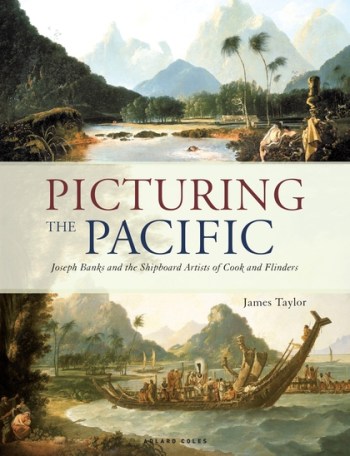 For over 50 years between the 1760s and the early 19th century, the pioneers who sailed from Europe to explore the Pacific brought back glimpses of this new world in the form of oil paintings, watercolours and drawings—a sensational view of a part of the world few would ever see. Today these works represent a fascinating and inspiring perspective from the frontier of discovery. It was Sir Joseph Banks, President of the Royal Society, who popularised the placement of professional artists on British ships of exploration. They captured striking and memorable images of everything they encountered: exotic landscapes, beautiful flora and fauna, as well as remarkable portraits of indigenous peoples. These earliest views of the Pacific, particularly Australia, were designed to promote the new world as enticing, to make it seem familiar, to encourage further exploration and, ultimately, British settlement. Drawing on both private and public collections from around the world, this lavish book collects together oil paintings, watercolours, drawings, prints, and other documents from those voyages and presents a unique glimpse into an age where science and art became irrevocably entwined.
Dr James Taylor, FRSA studied at the Universities of St Andrews, Manchester, and Sussex. He is an accredited lecturer for the National Association of Fine and Decorative Arts; a former curator of paintings, drawings and prints, organiser of exhibitions and galleries and corporate membership manager at the National Maritime Museum, Greenwich; and Victorian paintings specialist with Phillips Fine Art Auctioneers. He is an avid collector of artist-drawn picture postcards.
Call for Papers | Perceiving Processions, 1500–1800
From The Courtauld:
Eighth Early Modern Symposium: Perceiving Processions
The Courtauld Institute of Art, London, 24 November 2018
Proposals due by 24 September 2018
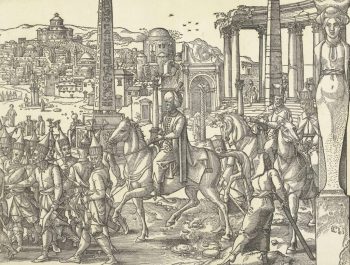
Procession of Süleyman I, from ‘Customs and Fashions of the Turks’, Pieter Coecke van Aelst, woodcut print, 30 × 39 cm, 1553 (Amsterdam: Rijksmuseum, RP-P-OB-2304L).
In recent years, a renewed interest in early modern rituals, festivals, and performances has prompted a reconsideration of ceremonious processions with a particular focus on their impact on social, cultural, artistic, and political structures and practices. Simultaneously, scholars have increasingly acknowledged the mobility of early modern artists across geographical, religious, and cultural borders. Although processions were witnessed by natives and visitors alike and were therefore prime instances of cross-cultural encounters, their depictions by artists both local and foreign remain a lesser-studied body of visual material. This symposium proposes to explore the visual representations of processions that took place within cross-cultural encounters both within and outside of Europe.
A procession was an act of movement that was particularly charged with meaning; an ambulatory mode of celebration, it had a global resonance in the early modern period. Processionals impressed foreign dignitaries, established modes of rule, communicated traditions, and negotiated power balances and were highly sensory occasions—as such they lent themselves readily to visual representation and were enthusiastically recorded in literature. Pageantries, military processions, and Joyous Entries (Blijde Inkomsten) were recorded in a variety of media, as exemplified by the festival books celebrating the ephemeral constructions orchestrated for Cardinal-Infante Ferdinand’s arrival in Antwerp (1635) or the eighteenth-century paintings depicting Venice’s dazzling boat parades in honour of foreign dignitaries. Furthermore, ceremonial processions conceived for births, weddings, circumcision feasts, and funerals occasioned visual representations such as the colourful Mughal miniature Wedding Procession of Dara Shikoh in Presence of Shah Jahan (1740). In addition, the notion of procession can be expanded to encompass various expressions of mobility that could be understood and were often depicted as a procession. Both Jan van Scorel’s frieze-like painting of the knightly brotherhood commemorating their Holy Land pilgrimage (c. 1530) and the depiction of ambassadors travelling with their retinue to foreign courts and cities can be perceived as a form of procession. Thus, the structure of a procession was increasingly adopted in the Early Modern period to depict moments of exchange and motion propelled by the quest for knowledge, as much as diplomatic concerns and religious piety. Well-known examples include The Voyage to Calicut tapestry series (1504) as well as the highly detailed printed frieze of a merchant endeavour by Hans Burgkmair (The King of Cochin, 1508).
We welcome proposals for papers that engage with processions in the early modern period (c. 1500–1800) in the context of cross-cultural encounters, with the locations of cross-cultural interaction defined here as both inter or extra-European and beyond the ‘East meets West’ dynamic. Participants are invited to explore artistic exchanges across geopolitical, cultural and disciplinary divides, and to examine drawings, prints, alba amicorum, painting, sculpture, decorative arts, architecture, and the intersections between them. Contributions from other disciplines, such as the history of science and conservation, are welcome.
We invite 20-minute papers that explore, but are not limited to, the following questions:
• How is the format of the procession used to structure visual representations of early modern ceremonial occasions and cultural difference?
• How were processions perceived visually both by local and foreign artists?
• Moreover, what audiences were interested in these visual representations and what scope did such a broad and diverse range of visual material serve? It is widely acknowledged, for instance, that Festival Books were not only designed for the audience of the spectacle, but also for armchair readers who could thus experience the procession as if they had been present.
• In what way does the visual representation of a procession signify a means of negotiating between one’s own identity, heritage and outlook whilst in dialogue with another culture?
• How did diplomatic encounters encourage the production of procession scenes both during and after the diplomatic mission, such as the depiction of gift-giving ceremonies? We strongly encourage speakers to also consider less conventional modes of processions. Could, for instance, the sequential depiction of costumes in costume albums also be interpreted as a procession of some sorts?
• Through which visual strategies and spatial arrangements did the ephemeral decorations and arches erected on the occasion of glorious entries orchestrate a procession through the urban space, or thematise the idea of cross-cultural encounter?
• What are the effects (both ephemeral and lasting) of these processions that sometimes involve the construction of specific architectural constructions and temporary settings (e.g. the Field of the Cloth of Gold, 1520)?
The Early Modern Symposium offers an opportunity for research students from universities both in the UK and abroad to present, discuss and promote their research. We invite proposals from graduate students, early career researchers, conservators, and curators. Talks that draw upon technical analysis and other theoretical approaches are equally welcome. Please send proposals of no more than 300 words along with a short biography by 24th September 2018 to talitha.schepers@courtauld.ac.uk and alice.zamboni@courtauld.ac.uk.
The aim of this postgraduate symposium is to provide a platform for early career researchers and postgraduate students to their share research with peers. We may be able to provide a subsidy for travel and accommodation costs, but please be aware that this may not cover all of your expenses. We prioritise candidates from the UK and Europe. We will notify successful candidates by Monday, 1st October 2018.
Exhibition | The Orléans Collection
This fall at NOMA:
The Orléans Collection
New Orleans Museum of Art, 26 October 2018 — 27 January 2019
Curated by Vanessa Schmid

Guido Reni, The Meeting of David and Abigail, 1615–20, oil on canvas, 61 × 65 inches (Norfolk, VA: Chrysler Museum of Art).
At its founding in 1718, New Orleans was named for the French Regent, Philippe II, Duke of Orléans (1674–1723). A formidable personality, Philippe II’s legacy is his patronage of the arts: architecture, painting, furniture, music, dance, and theatre. In celebration of the tricentennial of the city that bears his regal title, NOMA will present an exhibition of selections from the Duke’s magnificent personal collection. This international loan exhibition will bring together masterpieces by Veronese, Valentin, Poussin, Rubens, and Rembrandt that formerly graced the walls of the Palais Royal in Paris.
The quality of the Orléans Collection was universally praised during Philippe II’s lifetime and its stature is attested by the astounding 772 paintings inventoried at his death. Although originally bequeathed to the duke’s heirs, in the 1790s the family hastily sold the collection to raise money during the French Revolution. The subsequent sales became a watershed event in the history of collecting and museology. The exhibition and its accompanying scholarly catalogue will explore exceptional aspects of the collection through four guiding themes: the Palais Royal and its grand redecoration as a center for the arts and exchange in Paris; the diplomatic and personal display of the collection in public and private spaces; the Duke of Orléans’ personal taste and psychology as a collector; and the fame and impact the collection had for contemporary visitors, artists, and collectors in Paris.
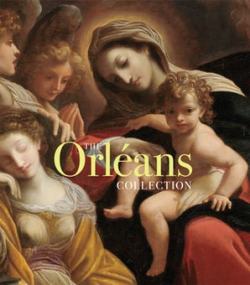 No exhibition of this fascinating subject has been undertaken and this project offers an exceptional opportunity for new scholarship, with a catalogue structured to maximize scholarly research and publish new research about Philippe II’s collection. The Orléans Collection will bring together, for the first time since its 1790s dispersal, a representative group of forty works that tell the story of its formation and character.
Vanessa Schmid with Julia Armstrong-Totten and essays by Jean-François Bédard, Kelsey Brosnan, Alexandre Dupilet, Nicole Garnier-Pelle, Françoise Mardrus, Rachel McGarry, and Xavier Salomon, The Orléans Collection (London: D. Giles Limited, 2018), 288 pages, ISBN: 978-1911282280, $55.
As described in John Kemp’s article for New Orleans Magazine (May 2018):
In addition to luxurious and historic artwork, the show also will explore the duke’s artistic tastes and psychology as a collector, the Palais-Royal as a center for the arts in Paris, how the duke displayed his collection in private and public spaces in the palace, the history of the collection, court life, the collection’s reputation based on earlier writings and Parisian guidebooks from the early 1700s, and, finally, the collection’s influences on 18th-century artists in Europe…
The full article is available here»
Call for Papers | The Orléans Collection
From the CFP:
The Orléans Collection: Tastemaking, Networks, and Legacy
New Orleans Museum of Art, 11–13 January 2019
Proposals due by 30 September 2018

Attributed to Guy Noël Aubry, Portrait of Philippe II, Duke of Orléans, 1715–23, oil on canvas, 248 × 160 cm (Orléans: Musée des Beaux Arts d’Orléans, François Lauginie).
The New Orleans Museum of Art and the Frick Center for the History of Collecting will host a
symposium in conjunction with The Orléans Collection exhibition dedicated to the collecting and collection of Philippe II duc d’Orléans (1674–1723) on view at the New Orleans Museum of Art 26 October 2018 through 27 January 2019.
Collecting over just over two decades, Philippe II d’Orléans amassed one of the most important collections of European paintings in the history of art, which he displayed in his Palais-Royal in Paris. This celebrated collection assembled over 500 masterpieces of European Art and this landmark exhibition reunites a representative group of forty works to tell the complex story of the collection’s formation and character and the impact of the sales of the collection in London during the French revolution, a watershed event in the history of collecting.
The Orléans Collection exhibition catalogue essays offer an overview of the collection, Philippe’s relationship with his court painter Antoine Coypel, the refurbishment of the Palais-Royal during the regency, his collecting of Venetian, Dutch and Flemish and Bolognese Art, contemporary artists studying the collection, and a review of the circumstances of the collection’s dispersal. The catalogue’s extensive Appendix transcribes the earliest 1727 publication of the collection tracing picture to their current locations.
The symposium seeks to expand beyond the scope of the catalogue and consider a wider range of relationships concerning Philippe d’Orléans’s taste and the impact the collection had for generations of collectors and artists, and an increasingly wider public throughout the eighteenth century. Subjects of interest might include: Philippe II’s patronage network; fellow collectors and trends in collecting in Paris; dealers and the art market in eighteenth-century Paris; connections with contemporary collections in the German principalities; the ‘Orléans Effect’ in Great Britain and later entrance in public collections.
Travel can be provided to a limited number of applicants. To propose a paper, please submit a message of interest and 300-word abstract by 30 September 2018 to: nomasymposium@noma.org.
Workshop | Heritage Revisited: Objects from Islamic Lands in Europe
As many of you will already know, H-ArtHist has returned from summer break:
Heritage Revisited: Rediscovering Objects from Islamic Lands in Enlightenment Europe
Kunsthistorisches Institut, University of Vienna, 20–21 September 2018
Registration due by 15 September 2018
Organized by Isabelle Dolezalek and Mattia Guidett
For centuries, objects from Islamic lands were unquestioned parts of the material and visual culture of pre-modern Latinate Europe. A textile from Fatimid Egypt, for instance, the so-called ‘Veil of Sainte Anne’, was kept in the cathedral treasury of Apt and venerated as a Christian relic.
The workshop Heritage Revisited: Rediscovering Objects from Islamic Lands in Enlightenment Europe is dedicated to the long eighteenth century, a period in which, so we believe, an important shift in the perception of such objects took place. Islamic provenances were rediscovered, objects were studied, drawn and discussed. Finally, they were subjected to the classificatory scheme of European modernity, which leaves little space for conceptions of a historically entangled heritage.
Object case-studies shed light on the networks of scholars and institutions involved in the rediscoveries and will be framed in the discussions within broader discourses on (European) cultural heritage. Ultimately, we wish to offer new perspectives on the history of scholarship, notably Islamic art history, but also on perceptions of cultural belonging, of ‘Europeanness’ and ‘Otherness’, which deeply resonate with current societal concerns.
Attendance is free. Please register by 15 September 2018, mattia.guidetti@univie.ac.uk. The workshop is kindly supported by the Fritz-Thyssen Foundation, the Chair of Islamic Art History and the Historisch-Kulturwissenschaftliche Fakultät of the University of Vienna.
T H U R S D A Y , 2 0 S E P T E M B E R 2 0 1 8
10:00 Visit to the Dom Museum Wien with Gregor Pirgie (Universität Wien), Pia Razenberger (Tabadul Project), and Markus Ritter (Universität Wien). Places for the visit are limited; please register by 15 September 2018, mattia.guidetti@univie.ac.uk.
13:30 Welcome and Introduction — Isabelle Dolezalek (Technische Universität Berlin/SFB ‘Episteme in Bewegung’ Freie Universität Berlin) and Mattia Guidetti (Universität Wien)
14:00 Collections
Chair: Ebba Koch (Universität Wien)
• Elisabeth Rodini (Johns Hopkins University Baltimore), The Redaldi Inventory: A Prologue to Enlightenment Collecting
• Federica Gigante (Ashmolean Museum Oxford), Objects of a ‘Certain Antiquity’ and the Quest for Their Cultural Context
15:20 Coffee
15.50 Rediscovering Objects from Islamic Lands
Chair: Barbara Karl (Textilmuseum St. Gallen)
• Claire Dillon (Columbia University New York), The Many Dimensions of a Work of Art: The Mantle of Roger II as a Case Study in Imperial Representation, Origin Stories, and the Formation of Specific Others
• Michelina di Cesare (Sapienza Università di Roma), Four Eleventh and Twelfth-Century Islamic Tombstones Discovered in Pozzuoli in the Seventeenth Century
• Carine Juvin (Musée du Louvre Paris), The ‘Baptistère de Saint-Louis’ through the Seventeenth and Eighteenth Centuries: The Making of a ‘Historical Monument’
• Anna Contadini (School of African and Oriental Studies London), Changing Perceptions of the Pisa Griffin and Other Objects
19:00 Dinner
F R I D A Y , 2 1 S E P T E M B E R 2 0 1 8
9:30 Protagonists of the Rediscoveries
Chair: Johannes Wieninger (MAK Österreichisches Museum für angewandte Kunst Wien)
• Mattia Guidetti (Universität Wien), Reading Ottoman Flags in the Marches Region, 1684–1838
• Markus Ritter (Universität Wien), A Documentary Encounter with Medieval (Islamic) Art in Eighteenth-Century Vienna
• Tobias Mörike (Museum für Kunst und Gewerbe Hamburg), Knowledge-Brokers and Object-Interpreters: Maronite Christians and the Redefinition of ‘Islamicate Objects’ by the 1800s
11:30 Coffee
12:00 Discussion Tables
Table 1 with Isabelle Dolezalek (TU/FU, Berlin), On the Concept of Cultural Heritage: What Is European and What Is Not?
Table 2 with Tobias Mörike (Museum für Kunst und Gewerbe Hamburg), Art Market Networks and Their Role in Constituting ‘Islamic Art’ Objects
Table 3 with Barbara Karl (Textilmuseum St. Gallen), Object Biographies and Dynamics of Collecting
12:45 Plenum Discussion
13:30 Lunch
14:30 Classifiying, Framing, Exhibiting
Chair: Markus Ritter (Universität Wien)
• Sabine Du Crest (Université de Bordeaux), Islamic Border Objects in Seventeenth-Century Europe
• Gül Kale (McGill University Montreal), Image as Text: Fischer von Erlach’s Take on Guillaume Grelot’s Drawings of Islamic Monuments in the Eighteenth Century
• Ebba Koch (Universität Wien), Mughal Miniatures at Habsburg Vienna
16:30 Final Discussion
New Book | Romantic Art in Practice
From Cambridge UP:
Thora Brylowe, Romantic Art in Practice: Cultural Work and the Sister Arts, 1760–1820 (New York: Cambridge University Press, 2018), 280 pages, ISBN: 978-1108426404, $105.
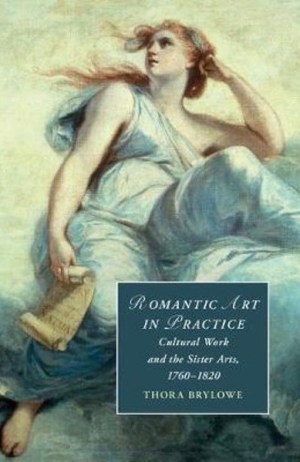 Exploring the relationship between visual art and literature in the Romantic period, this book makes a claim for a sister-arts ‘moment’ when the relationship between painting, sculpture, pottery, and poetry held special potential for visual artists, engravers, and artisans. Elaborating these cultural tensions and associations through a number of case studies, Thora Brylowe sheds light on often untold narratives of English labouring craftsmen and artists as they translated the literary into the visual. Brylowe investigates examples from across the visual spectrum including artefacts, such as Wedgwood’s Portland Vase, antiquarianism through the work of William Blake, the career of engraver John Landseer, and the growing influence of libraries and galleries in the period, particularly Boydell’s Shakespeare Gallery. Brylowe artfully traces the shifting cultural connections between the imaginative word and the image in a period that saw new print technologies deluge Britain with its first mass media. Part of the Cambridge Studies in Romanticism series.
Thora Brylowe is Assistant Professor of English at the University of Colorado, Boulder.
C O N T E N T S
List of Figures
Acknowledgments
Introduction: The Sister-Arts Moment
1 Original Copies: Wedgwood’s Portland Vase in Paint and Poem
2 William Blake, Antiquarians, and the Status of Copy
3 Literary Galleries and the Media Ecology: Painting for Print in the Age of Anthologies
4 Poetry against the Wall: The (Sister) Arts in Crisis
5 Crossing the Line: Engraving, John Landseer, and the Aftermath of the Shakespeare Gallery
6 Ravaged brides: Grecian Urns on Romantic Paper
Notes
Bibliography
Index










 Enfilade
leave a comment