Exhibition | Black Out: Silhouettes Then and Now
From the National Portrait Gallery:
Black Out: Silhouettes Then and Now
Smithsonian National Portrait Gallery, Washington, D.C., 11 May 2018 — 10 March 2019
Mississippi Museum of Art, Jackson, 27 April — 25 August 2019
Curated by Asma Naeem
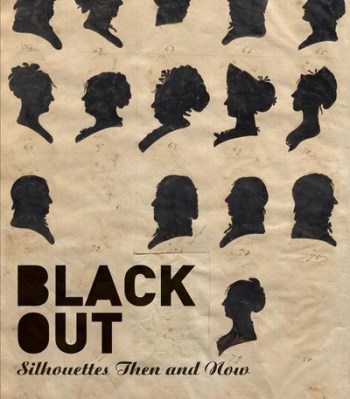 Silhouettes—cut paper profiles—were a hugely popular and democratic form of portraiture in the 19th century, offering virtually instantaneous likenesses of everyone from presidents to those who were enslaved. The exhibition Black Out: Silhouettes Then and Now explores this relatively unstudied art form by examining its rich historical roots and considering its forceful contemporary presence. The show features works from the Portrait Gallery’s extensive collection of silhouettes, such as those by Auguste Edouart, who captured the likenesses of such notable figures as John Quincy Adams and Lydia Maria Child, and at the same time, the exhibition reveals how contemporary artists are reimagining silhouettes in bold and unforgettable ways.
Highlights of the historical objects include a double-silhouette portrait of a same-sex couple and a rarely seen life-size silhouette of a nineteen-year-old enslaved girl, along with the bill of her sale from 1796. The featured contemporary artists are Kara Walker, who makes panoramic silhouettes of plantation life and African American history; Canadian artist Kristi Malakoff, who cuts paper to make life-size sculptures depicting a children’s Maypole dance; MacArthur-prize-winner Camille Utterback, who will present an interactive digital work that reacts to visitors’ shadows and movements; and Kumi Yamashita, who ‘sculpts’ light and shadow with objects to create mixed-media profiles of people who are not there. With both historical and contemporary explorations into the silhouette, Black Out reveals new pathways between our past and present, particularly with regard to how we can reassess notions of race, power, individualism, and even, our digital selves.
This exhibition is curated by Portrait Gallery Curator of Prints, Drawings and Media Arts, Asma Naeem.
Asma Naeem, Black Out: Silhouettes Then and Now (Princeton University Press, 2018), 192 pages, ISBN: 978 0691180588, $45.
◊ ◊ ◊ ◊ ◊
Note (added 27 April 2019) — The posting was updated to include the Mississippi Museum of Art as a second venue.
Artists in Paris: Mapping the 18th-Century Art World

Results for a search for ‘Hubert Robert’; screen shot from Hannah Williams and Chris Sparks, Artists in Paris: Mapping the 18th-Century Art World, www.artistsinparis.org (accessed 2 April 2018). As noted in the FAQs for the site, “there are 10,915 addresses in the database,” with coverage for “a total of 471 artists,” that is, for “every artist admitted to the Academy between 1675 and 1793.” Useful site details are available with the ‘settings’ tab.
◊ ◊ ◊ ◊ ◊
From the ‘About’ page of Artists in Paris:
Artists in Paris: Mapping the 18th-Century Art World
Artists in Paris is an open-access digital art history project funded by The Leverhulme Trust and supported by Queen Mary University of London. The Principal Investigator of the project is Dr Hannah Williams. The website was designed and built by Dr Chris Sparks.
Introduction
Paris is a city renowned for its artistic communities. Neighbourhoods like Montmartre and Montparnasse in the nineteenth and twentieth centuries are familiar spaces of artistic activity and sociability. But when it comes to earlier generations of artists, we know strikingly little about how they inhabited the city.
Where did the artists of eighteenth-century Paris live? Which artists were neighbours? What sub-communities formed within the city? Which neighbourhoods formed the cultural geography of the eighteenth-century art world? And did that geography change over the course of the century?
This website provides answers to these tantalising questions about the geography and demography of the Paris art world in the eighteenth century. Based on original archival research retrieving the addresses of hundreds of artists’ homes and studios, this website uses digital mapping technologies to locate those spaces on georeferenced historical maps, making them available for visitors to explore.
Significance
Artists in Paris is the first project to map comprehensively where artistic communities developed in the eighteenth-century city and offers rich scope for subsequent investigations into how these communities worked and the impact they had on art practice in the period. Yielding crucial new information and harnessing the exciting possibilities of digital humanities for art-historical research, this website is intended as a valuable resource for anyone studying or researching French art, or for anyone with an interest in the history of Paris.
With its two modes—Year and Artist—the website accommodates searches either by date or by person. For instance, visitors can explore where every artist was living at certain moments in time, or they can select individual artists and explore all the addresses lived at across their careers. Designed to be simultaneously inviting and informative, these interactive data-enriched maps answer many questions about the Paris art world. But they are also intended as an empirical base upon which to pose new kinds of inquiries, inspiring continued explorations into networks of artistic sociability, the role of the city in art production, the geography of the art world, and urban experience more generally.
Credits & Acknowledgements
Artists in Paris has been funded through a Leverhulme Trust Early Career Research Fellowship, awarded to Hannah Williams and held at Queen Mary University of London (2015–2018). Additional support for the project has been provided by Queen Mary University of London. Preliminary stages of the research were funded by a grant from the University of Oxford’s John Fell Fund, awarded to Hannah Williams, and undertaken at the University of Oxford (2013–2015).
Thanks are due to the many people who offered advice and suggestions, attended research seminars, workshops, and usability testing sessions, and provided feedback and encouragement throughout the project. Among the many are Laura Auricchio, Robin Carlyle, Craig Clunas, Rebecca Emmett, Noémie Étienne, Keren Hammerschlag, Colin Jones, Meredith Martin, Gay McAuley, Chris Moffatt, David Pullins, Helen Stark, Chloe Ward, Sam Williams, Emma Yates, the community of developers on Stack Overflow, students at Queen Mary University of London and the University of London in Paris, and attendees of presentations at the Institute of Historical Research in London, the Deutsches Forum für Kunstgeschichte in Paris, University of Birmingham, University of St Andrews, and the National Gallery of Art in Canberra.
Special thanks are due to Dr Mia Ridge (British Library) for advice and technical support from the project’s inception and throughout its development.
The website logo and colour-design are by Jason Varone.
This website was built using OpenLayers and Bootstrap. It also makes use of other great libraries including Handelbars. The historical maps were georeferenced using Map Warper. The greyscale contemporary map layer is by Stamen Design, licensed under CC BY 3.0. Map data is by OpenStreetMap under ODbL. The digitized historical maps of Paris have been sourced from Wikimedia Commons.
New Book | Commedia dell’Arte in Context
From Cambridge UP:
Christopher Balme, Piermario Vescovo, and Daniele Vianello, eds., Commedia dell’Arte in Context (New York: Cambridge University Press, 2018), 377 pages, ISBN: 9781139236331, $120.
 The commedia dell’arte, the improvised Italian theatre that dominated the European stage from 1550 to 1750, is arguably the most famous theatre tradition to emerge from Europe in the early modern period. Its celebrated masks have come to symbolize theatre itself and have become part of the European cultural imagination. Over the past twenty years a revolution in commedia dell’arte scholarship has taken place, generated mainly by a number of distinguished Italian scholars. Their work, in which they have radically separated out the myth from the history of the phenomenon remains, however, largely untranslated into English (or any other language). The present volume gathers together these Italian and English-speaking scholars to synthesize for the first time this research for both specialist and non-specialist readers. The book is structured around key topics that span both the early modern period and the twentieth-century reinvention of the commedia dell’arte.
Exhibition | Blondel, Architecte des Lumières
Opening next month in Metz:
Blondel, Architecte des Lumières
Galerie de l’Arsenal, Metz, 12 April — 13 July 2018
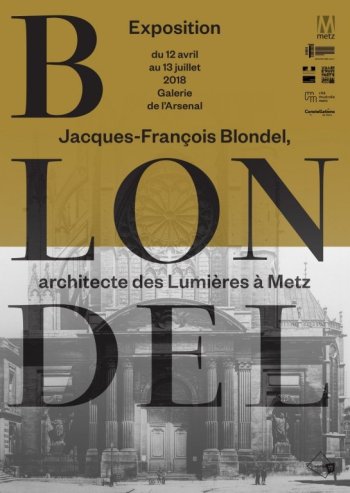 Architecte parisien, académicien, professeur royal, Jacques-François Blondel (1705–1774) vint à Metz en 1761. Il est chargé par le Maréchal d’Estrées d’aménager les places autour de la Cathédrale Saint-Étienne. Son projet, réalisé quelques années plus tard, constitue l’un des meilleurs ensembles urbains du xviiie siècle. En effet, avant tout théoricien, ses constructions sont rares et précieuses. Son chef-d’oeuvre est incontestablement l’aménagement de la Place d’Armes à Metz qui se situe dans la lignée de ses prestigieuses consoeurs parisiennes, que sont Vendôme ou Concorde. Cette exposition inédite, accompagnant la candidature de « Metz royale et impériale » sur la liste du patrimoine mondial, propose de faire découvrir à travers le projet messin les talents multiples de Jacques-François Blondel, collaborateur de l’Encyclopédie de Diderot et d’Alembert, auteur prolifique, créateur de décors éphémères, concepteurs de nombreux projets et surtout professeur qui forma toute une génération d’architectes européens et dont la méthode d’enseignement servira de fondement au système actuel d’apprentissage de l’architecture.
Une production de la Ville de Metz en partenariat avec la Cité de l’Architecture et du Patrimoine de Paris, l’École Nationale Supérieure d’Architecture de Nancy et la Cité musicale-Metz.
◊ ◊ ◊ ◊ ◊
More information about Metz’s UNESCO application is available here:
The National Committee of French World Heritage Properties, meeting on January 9, 2009, issued a favorable opinion about the inclusion of Metz on the French tentative list. This is only a first step, but it is essential. The city is eligible for inclusion on the UNESCO World Heritage List. Metz has accumulated an incredible architectural and urban heritage over time. Under the label “Royal and imperial Metz,” the application aims at recognizing the unusual urban adventure that took place in the Messin city from the second half of the 19th century to the beginning of the 20th century, before, during and after the German annexation [in 1871].
Exhibition | Architecture et Pouvoir
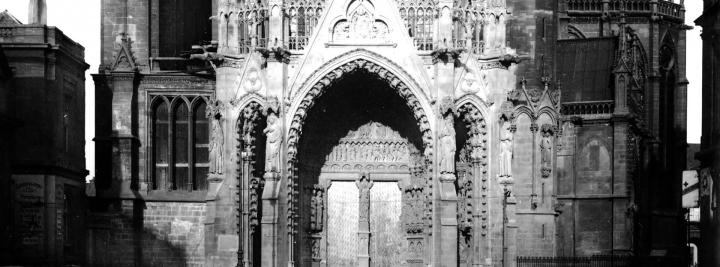
In 1903 Paul Tornow’s neo-Gothic portal for the Cathedral of Metz replaced the classical portal designed by Jacques-François Blondel, which dated to 1764.
◊ ◊ ◊ ◊ ◊
From Cité de l’architecture et du patrimoine:
Architecture et Pouvoir: Un Portail pour la Cathédrale de Metz
Cité de l’architecture et du patrimoine, Paris, 28 March — September 2018
Curated by Aurélien Davrius
En parallèle de l’exposition Blondel, architecte des Lumières présentée à Metz, du 12 avril au 13 juillet 2018, le musée des Monuments français, en partenariat avec la Ville de Metz et l’École nationale supérieure d’architecture de Nancy, propose une exposition-dossier consacrée à la singulière fortune du portail de la cathédrale de Metz.
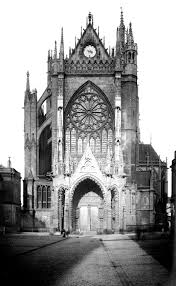 Le portail élevé en 1764 par Jacques-François Blondel est remplacé par le portail néo-gothique que nous connaissons aujourd’hui, inauguré en 1903. Les photographies et documents rassemblés dans l’exposition retracent l’histoire de cette transformation ; ils soulignent aussi la manière dont les deux portails ont chacun servi de support à la manifestation et à l’expression du pouvoir politique. Le roi Louis XV tout d’abord, à qui l’œuvre de Jacques-François Blondel rendait hommage ; Guillaume II ensuite, kaiser du Second Reich immortalisé sous le traits du prophète Daniel sur le portail néo-gothique conçu par son architecte, Paul Tornow (1848–1921).
La massivité et la dissonance du vocabulaire classique du portique élevé par Jacques-François Blondel avec le style gothique de la cathédrale, maintes fois décriées dès le début du XIXe siècle, ont certainement contribué à cette métamorphose. Cependant, dans le contexte de l’annexion de l’Alsace-Moselle par la Prusse, son démantèlement au profit du portail néo-gothique de Paul Tornow invite aussi à interroger la portée politique du geste architectural : entre francisation et germanisation d’un territoire, le nouveau pouvoir n’a-t-il pas tenté de faire disparaître les traces d’un certain passé pour inscrire sa propre histoire ?
Stephanie Wiles Named Director of the Yale Art Gallery
Press release (28 March 2018) from Yale:

Stephanie Wiles (Photo by Jon Reis Photography).
Stephanie Wiles, currently the Richard J. Schwartz Director of the Herbert F. Johnson Museum of Art at Cornell University, will serve as the next Henry J. Heinz II Director of the Yale University Art Gallery, announced President Peter Salovey. Her appointment will begin July 1.
“I am thrilled to announce the appointment of Stephanie Wiles,” Salovey said. “She is an inspiring leader who is excited by the power of art to help us make connections and spark new ideas. I know she will steward the gallery—one of Yale’s finest treasures—while, together with other arts leaders on campus, envisioning new possibilities for the arts at our university.”
Wiles comes to Yale with over 20 years of experience leading college and university art museums. In her prior roles, Wiles has led efforts to connect the visual arts to other areas of university life by developing interdisciplinary courses, reimagining gallery spaces to be more inviting to visitors from campus and beyond, and spearheading exhibitions and publications to showcase research. She served on several committees at Cornell Tech, a science and technology graduate school in New York City, tasked with bringing art to the campus and into the curriculum. Wiles has successfully created educational and research opportunities across disciplines that take advantage of museum collections. She secured funding from the Andrew W. Mellon Foundation to develop eight semester-long courses that bridged the arts, humanities, science, and engineering.
At Cornell, Ms. Wiles oversaw the negotiation and completion of Cosmos, a site-specific light sculpture by Leo Villareal ’90 comprising 12,000 LED lights. The work, named in honor of scientist Carl Sagan and visible across campus and from many parts of Ithaca, is a beacon attracting visitors to the museum.
“Stephanie shares my commitment to connecting the arts to everything we do at Yale,” Salovey said. “The arts can bring us together, inspiring us to see ourselves and the world with new eyes. As we continue to foster an even more unified Yale, we are imagining new ways to connect the gallery’s magnificent resources to education, research, preservation, and practice. I am confident Stephanie will guide these efforts with enormous wisdom, creativity, and vision.”
Wiles began her career in the department of drawings and prints at the Morgan Library & Museum in New York City; she later assumed leadership positions at Wesleyan University, Oberlin College, and, most recently, Cornell. Wiles received her bachelor’s degree from Hobart and William Smith Colleges, a master’s degree in art history from Hunter College of the City University of New York, and a Ph.D. in art history from the Graduate Center of the City University of New York. Her dissertation surveys the careers of British-born artists Thomas Charles Farrer, a Ruskin admirer and leader of the American Pre-Raphaelites, and his brother Henry Farrer.
In making the announcement, Salovey expressed his deep appreciation to members of the search committee: Mary Miller (committee chair), Sterling Professor of History of Art and senior director of the Institute for the Preservation of Cultural Heritage; Emily Bakemeier, deputy provost and dean of faculty affairs of the Faculty of Arts and Sciences; Tim Barringer, the Paul Mellon Professor in the History of Art and chair of the Department of the History of Art; Deborah Berke, dean of the Yale School of Architecture; Susan Gibbons, the Stephen F. Gates ’68 University Librarian and deputy provost for collections and scholarly communication; Daniel Harrison, the Allen Forte Professor of Music Theory; Roger Horchow ’50, a member of the Yale University Art Gallery Advisory Board; Ian McClure, the Susan Morse Hilles Chief Conservator of the Yale University Art Gallery; and John Walsh ’61, a member of the Yale University Art Gallery Advisory Board and director emeritus of the J. Paul Getty Museum.
Salovey praised the tenure of Jock Reynolds, who will step down as director on June 30, noting that he had led the Yale University Art Gallery “with distinction, energy, and originality for 20 years.”
Conference | Fashioning the Early Modern Courtier, 1550–1750

From the conference website:
Fashioning the Early Modern Courtier, 1550–1750
St John’s College Cambridge, 16 May 2018
This one-day conference will explore the ways in which clothing contributed to the gendered (self)fashioning of the courtier in early modern Europe (ca. 1550–1750), examining both its symbolic significance and its action on and interaction with the body.
Recent historical research has emphasised how early modern courts were crucial sites for the elaboration and diffusion of specific corporeal models aspiring to shape the ideal man and woman. Fashion, then as now, provides a very material setting that has the power to promote specific patterns of thought and action.
Our speakers will explore how male and female courtiers skilfully constructed their identity and negotiated their social status through sartorial trends and beautification techniques. Rooted within a broader culture of corporeal interpretation, fashion represented an effective way of asserting political allegiance and even expressing criticism ad hominem. Sovereigns could assert their power by clothing the royal entourage and enforcing vestiary policies. Courtiers in turn could play a role in shaping the image and body of the monarch through gift-giving.
Embracing a corporealist perspective, we endeavour to integrate a semiotic reading of dress with accounts of its fundamentally embodied nature, both in its creation and in its wearing. Symbolic sartorial practices engaged directly with the material body, re-shaping and de-forming the silhouette. Clothes and accessories could provide support and protection, whilst sometimes constituting a hindrance to even the simplest of movements.
We will also investigate the diffusion of new fashions, materials, and techniques. Circulation patterns within the court will be analysed alongside interactions with the city and mutual influences between international centres of power. We will reconstruct the complex network of tailors, craftsmen and merchants which orbited around the court, moving across all social classes and providing a key point of connection between aristocratic courtiers and urban bourgeoisie. We will also consider alternative dissemination mediums such as portraits, early examples of single-leaf broadsheets and bound books displaying fashion plates.
Gathering an international group of speakers including fashion curators, makers, and academics from a variety of fields, the aim of our conference is to challenge traditional top-down models of fashion circulation as well as provide a more nuanced and complete narrative bringing into play all the different actors involved. We also seek to demonstrate how a study of the clothed body provides a privileged gateway into the world of court politics and a unique opportunity to access the courtiers’ embodied experiences.
Registration details are available here»
P R O G R A M M E
9:15 Registration
9:45 Welcome Address
10:00 Panel 1
• Mark De Vitis (University of Sydney), The Fashioned Body as Materialised Critique at the Court of Louis XIV
• Jemma Field (Brunel University London), Between Scotland and England: The Journey of Elite Female Fashion in 1603
• Catherine Stearn (Eastern Kentucky University), She-Wolves in Queen’s Clothing: Exploring the Relationship between Dress, Female Courtiers and Monarchical Authority at the Court of Elizabeth I
11:15 Coffee and tea
11:30 Panel 2A
• Natasha Awais-Dean (King’s College London), Three Houres a Buttoning: Embellishing Male Dress in Early Modern England
• Sarah Crowe (Goethe University & Staedel School, Frankfurt), The Semiology of the Ruff in the Early Dutch Golden Age to 1648
• Jane Partner (University of Cambridge), Reading the Early Modern Body: The Case Study of Textual Jewellery
11:30 Panel 2B
• Lacy Gillette (Florida State University), Cataloguing the Character of Couture: An Examination of Jost Amman’s Sixteenth-Century Printed Costumes
• Abigail Gomulkiewicz (University of Cambridge), From Subject to Monarch: Male Gift-Giving at the Court of Elizabeth I
• Juliet Claxton (King’s College London), ‘His Wife Was the Rich China-Woman That the Courtiers Visited So Often’: The Role of the Merchant at the Stuart Court
12:45 Lunch
13:30 Keynote Address
• Evelyn Welch (King’s College London)
14:45 Panel 3A
• Rebecca Morrison (QMUL and the V&A), The Diplomacy of the Dress Fitting: Exploring Relationships between the Mantua-Maker and Client in the Construction of Eighteenth-Century Court Dress
• Astrid Castres (École nationale des chartes, Paris), Producing Garments for the Court: Innovations and Technical Transfers in Parisian Fashion Workshops during the Sixteenth Century
• Moïra Dato (European University Institute, Florence), The Lyonnais Silks as Objects of Conspicuous Consumption in Eighteenth-Century French Court
14:45 Panel 3B
• Beth Walsh (University of East Anglia), The Late Stuarts and Their Political Cravats
• Isabella Rosner (University of Cambridge), ‘Grave Hogen Mogen, High and Mighty Frogs!’: The Mysteries of Seventeenth-Century Frog Pouch Fashion
• Kimberley Foy (Durham University), Points of Connection: Lace, Internationalism, and Political Authority in England, 1565–1625
16:00 Coffee and tea
16:15 Panel 4
• Marc W. S. Jaffré (University of St Andrews), Adorned with Stones of Inestimable Size and Value’: Tailors, Taste and Fashion at the Court of Louis XIII, 1610–1643
• Lindsay Dupertuis (University of Maryland), Dressed for Battle: Military Costume and Aristocratic Fashion in Sixteenth-Century Italy
17:15 Keynote Address
• Maria Hayward (University of Southampton)
18:00 Closing Remarks
18:15 Wine Reception
Exhibition | House of Portraits at Powis Castle
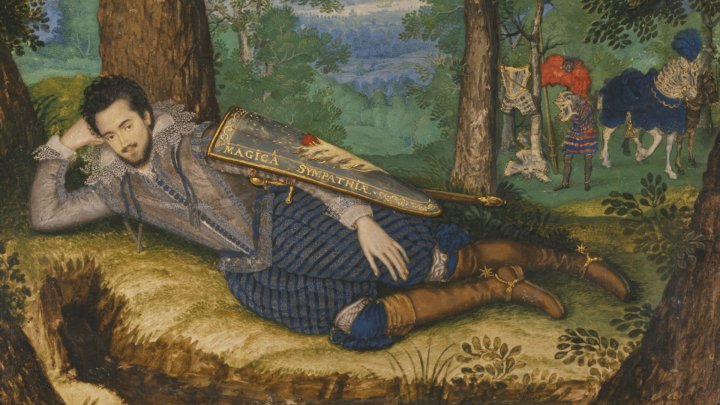
Isaac Oliver, Sir Edward Herbert, later 1st Baron Herbert of Cherbury, ca. 1613–14, 18 × 23 cm
(National Trust, 1183954)
◊ ◊ ◊ ◊ ◊
Press release (21 March 2018) for the exhibition:
House of Portraits
Powis Castle, Welshpool, 20 March 2018 — 27 January 2019
Curated by John Chu
Powis Castle, near Welshpool in Wales, unveils its House of Portraits exhibition and invites visitors to uncover the secrets hidden within its world-class portrait collection. The great halls and quiet chambers of Powis Castle are a time machine full of exceptional portraits that can transport visitors back through the ages.From majestic full-length portraits, to intimate miniatures that can be held in the palm of your hand, they are the work of generations of talented artists and each tells a unique story. Launching on 20 March, House of Portraits delves beneath the surface of these intricate works by prominent artists such as Joshua Reynolds, Thomas Gainsborough, and John Singer Sargent.
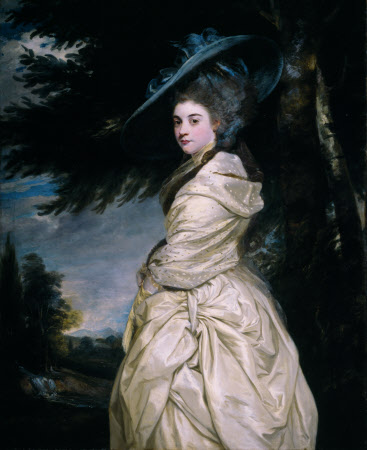
Sir Joshua Reynolds, Portrait of Lady Henrietta Antonia Herbert, Countess of Powis, 1778–78 (National Trust 1181064).
Some of the castle’s works feature kings, emperors and maharajas but the majority of portraits depict men, women and children of the Herbert family who have lived at Powis for over four centuries. House of Portraits examines not only the people behind the faces, but explores how they wanted to be seen by the world, through the clues embedded in costumes, settings, expressions, poses, and gestures. Throughout the castle, the exhibition shows how the people in the portraits were involved in crafting the image they wished to convey, from wealth, social status, and eligibility for marriage to religious allegiance or military prowess.
The centrepiece of the exhibition is an intricate Jacobean miniature portrait painted by Isaac Oliver (1565–1617) which will be on display at Powis for the first time since it was purchased for the nation, with generous support from the National Heritage Memorial Fund and Art Fund. The miniature features Lord Edward Herbert of Cherbury, an unabashedly ambitious soldier, scholar, diplomat, musician, and poet, who epitomised the romance and chivalry of his age. Lord Herbert commissioned numerous portraits of himself from the most fashionable artists of the day, many of which hang in Powis Castle. Foremost amongst these is this miniature by the court artist, Isaac Oliver, who depicted him in a relaxed pose lying in the woods following a joust. Isaac’s attempt to capture the many layers of Lord Herbert’s complex character in a single, exquisite likeness resulted in one of the true masterpieces of British art.
Visitors will be invited to join the exhibition’s curator, Dr John Chu, the National Trust’s Assistant Curator of Pictures and Sculpture and a specialist in the works of Thomas Gainsborough and Joshua Reynolds, as he guides them through the castle’s opulent state rooms by audio tour.
John Chu says: “Powis is quite literally a ‘house of portraits’; its rich collection of portraits mostly depict the Herberts, one of the most influential families in Welsh history. Portraits didn’t just capture the likeness of a person at a particular moment in life; they were also used to convey something about the sitter. At the time the portraits were painted, the symbols and meanings within them would have been easily recognised, but they are not always obvious to us viewing them today. Long before any celebrity posted a ‘selfie’, the Herberts were manipulating and projecting their personal image to make a place for themselves in a competitive and sometimes dangerous world of politics, money and power. It is these many facets of their characters, and what they cared about most that we aim to explore in House of Portraits.”
Visitors to the exhibition will be encouraged to contemplate the careful thought behind portraits of the past. Important moments and achievements in Herbert family history were recorded by famous portrait painters, but the time and cost involved often meant the sitter had only one opportunity to capture their character in an image that would be passed down the generations. Today, portraits commissioned by individuals 400 years ago still hang proudly on the walls inside the castle for all to see.
Emma Thompson, General Manager at Powis Castle and Garden says:“In a matter of seconds and with little thought, important moments in our lives today can be easily recorded and sh ared with family and friends through digital and social media. Yet many of the portraits we have here at Powis Castle are the only representation we have of members of the Herbert family. Who knows, the images we take of ourselves today might be how we are remembered for generations to come. We’ll be inviting visitors to create a portrait in the form of a ‘selfie’ and to consider how they would depict themselves if their family were to display their portrait for hundreds of years as the Herbert family have done.”
Fiona Talbott, Head of NHMF, said: “The National Heritage Memorial Fund was set up to secure the future of heritage treasures just like the exquisite miniature of Lord Herbert of Cherbury. It belongs in its original context of Powis Castle and there’s no doubt it’s the star of the Powis collection, standing out for both its artistry and the colourful story it tells of Elizabethan and Jacobean court culture.”
Stephen Deuchar of Art Fund, said: “We are very pleased to see Isaac Oliver’s superb miniature of Edward Herbert, 1st Baron Herbert of Cherbury, go on public display for the first time at Powis Castle since it was bought for the nation with the support of Art Fund and several other donors. In its natural home, it will be enjoyed by visitors to Wales from across the whole of the UK.”
New Book | Image, Identity, and John Wesley
From Routledge:
Peter Forsaith, Image, Identity, and John Wesley: A Study in Portraiture (London: Routledge, 2018), 210 pages, ISBN: 9781138207899, $140.
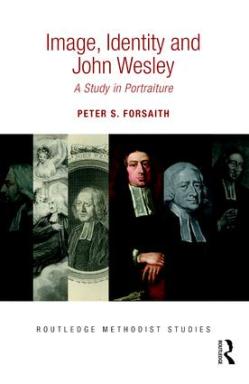 The face of John Wesley (1703–1791), the Methodist leader, became one of the most familiar images in the English-speaking and transatlantic worlds through the late eighteenth and nineteenth centuries. After the dozen or so painted portraits made during his lifetime came numbers of posthumous portraits and moralising ‘scene paintings’, and hundreds of variations of prints. It was calculated that six million copies were produced of one print alone—an 1827 portrait by John Jackson R.A. as frontispiece for a hymn book.
Illustrated by nearly one hundred images, many in colour, with a comprehensive appendix listing known Wesley images, this book offers a much-needed comprehensive and critical survey of one of the most influential religious and public figures of eighteenth-century Britain. Besides chapters on portraits from the life and after, scene paintings and prints, it explores aspects of Wesley’s (and Methodism’s) attitudes to art and the personality cult which gathered around Wesley as Methodism expanded globally.
Peter S. Forsaith is a historian of religion, culture and society in eighteenth-century Britain. He is Research Fellow of the Oxford Centre for Methodism and Church History, Oxford Brookes University, UK, and has written and lectured on many aspects of Methodist history. He gained his Ph.D. in 2003 for a scholarly edition of Rev. John Fletcher’s letters to Rev. Charles Wesley, later expanded and published as Unexampled Labours (2008). He is a Fellow of the Royal Historical Society.
C O N T E N T S
Introduction
1 ‘A Far Greater Genius than Sir Joshua’: Some Issues and Complexities around the Portraiture
2 ‘This Melancholy Employment’: Portraits from the Life to 1780
3 ‘I Yielded to Importunity’: Portraits from the Life, 1781–91
4 Prints and Posthumous Portraits: Spreading and Selling the Image
5 Scene Paintings
6 Pottery and Sculpture: A Note
7 No Striking Likeness? Images and Ambiguities
8 ‘The Pious Preacher’: Satire
9 ‘Of Pictures I Do Not Pretend To Be a Judge’: John Wesley and Art
10 Image, Identity, and Institution: Constructing a Canon
11 Conclusions: Visualising Mr. Wesley
Plates
Appendix A: Iconography of Principal Paintings of John Wesley, with Selected Prints
Appendix B: References in John Wesley’s Journal and Diaries to Portraits and Painters
Exhibition | Zurbarán’s Jacob and His Twelve Sons
I’m late with this posting, having only recently come to understand that the eighteenth-century provenance of the paintings (of which we have no knowledge until they appeared at auction in England in the 1720s) makes the series potentially relevant for issues of collecting and the South Sea Company, Jewish civil rights in the eighteenth century, and, of course, the reception of the Spanish Golden Age. –CH
From The Frick:
Zurbarán’s Jacob and His Twelve Sons: Paintings from Auckland Castle
The Meadows Museum, SMU, Dallas, 17 September 2017 — 7 January 2018
The Frick Collection, New York, 31 January — 22 April 2018
Curated by Susan Grace Galassi, Mark Roglán, Amanda Dotseth, and Edward Payne
 In collaboration with the Meadows Museum, Dallas, Texas, and The Auckland Project, County Durham, England, The Frick Collection has organized an exhibition of Jacob and His Twelve Sons, an ambitious series of thirteen paintings that depict over life-size figures from the Old Testament. On loan from Auckland Castle, the works by the Spanish Golden Age master Francisco de Zurbaran (1598–1664) have never before traveled to the United States. They were first presented at the Meadows Museum in the fall of 2017, and are on view at The Frick Collection from January 31 through April 22, 2018. In preparation for this American tour, these important seventeenth-century Spanish paintings, dating from the 1640s, have undergone a year-long in-depth technical analysis in the conservation department at the Kimbell Art Museum, Fort Worth, the most extensive study of the series to date.
The iconography of Zurbarán’s remarkable series is derived from the ‘Blessings of Jacob’ in Chapter 49 of the Book of Genesis, a poem that has significance for Jews, Christians, and Muslims. On his deathbed, Jacob called together his sons, who would become the founders of the Twelve Tribes of Israel. He bestowed on each a blessing, which foretold their destinies and those of their tribes. Jacob’s prophecies provide the basis for the manner in which the figures are represented in Zurbarán’s series. For his compositions, the artist drew inspiration from northern European prints.
The series was likely intended for export to the New World. In seventeenth-century Spain, it was commonly believed that indigenous peoples of the Americas were descended from the so-called ‘lost tribes of Israel’. The paintings, however, did not come to light until the 1720s in England when they appeared at auction and were purchased by a Jewish merchant. In 1756 they were acquired by Richard Trevor, Bishop of Durham, a supporter of Jewish rights. Trevor hung them in the dining room at Auckland Castle, where they have remained for over 250 years. A two-year restoration of Auckland Castle presents this extraordinary study and exhibition opportunity.
Comments Frick Director Ian Wardropper, “We are thrilled to collaborate with Auckland Castle and the Meadows Museum on the first North American showing of Francisco de Zurbarán’s extraordinary series Jacob and His Twelve Sons. The technical analysis carried out at the Kimbell has greatly enriched our understanding of the master’s methods, while catalogue essays commissioned for the show explore the works in historical, cultural, and religious contexts. The sheer visual power and rich narrative content of this series will draw visitors in and will be beautifully complemented by the Frick’s strong holdings in Spanish art, which include paintings by Velázquez and Murillo—Zurbarán’s Sevillian contemporaries—as well as by El Greco and Goya.”
Zurbarán’s Jacob and His Twelve Sons: Paintings from Auckland Castle has been organized by Susan Grace Galassi, Senior Curator, The Frick Collection; Mark A. Roglan, Director of the Meadows Museum; Amanda Dotseth, Meadows/Mellon/Prado Fellow at the Meadows Museum; and Edward Payne, Senior Curator, Spanish Art, The Auckland Project, County Durham, England.
Susan Grace Galassi, Edward Payne, and Mark Roglán, eds., Zurbarán: Jacob and His Twelve Sons, Paintings from Auckland Castle (Seattle: Lucia Marquand, 2017), 136 pages, ISBN: 978 0998093024, $45.










leave a comment