Winterthur Research Fellowship Program, 2018–19
Winterthur Research Fellowship Program
Wilmington, Delaware, 2018–19
Applications due by 15 January 2018
Winterthur invites scholars, graduate students, artists, and craftspeople to apply to submit applications to the 2018–2019 Research Fellowships! Fellowships include a 4-month postdoctoral fellowship, 1–2 semester dissertation fellowships, and 1–3 month short-term fellowships.
Winterthur is once again offering short-term ‘Maker-Creator’ Fellowships. These short-term fellowships are designed for artists, writers, filmmakers, horticulturalists, craftspeople, and others who wish to examine, study, and immerse themselves in Winterthur’s vast collections in order to inspire creative and artistic works for general audiences.
Fellows have full access to the library collections, including more than 87,000 volumes and one-half million manuscripts and images, searchable online. Resources for the 17th to the early 20th centuries include printed and rare books, manuscripts, period trade catalogues, auction and exhibition catalogues, printed ephemera, and an extensive reference photograph collection of decorative arts. Fellows may conduct object-based research in the museum’s collections, which include 90,000 artifacts and works of art made or used in America to 1860, with a strong emphasis on domestic life. Winterthur also supports a program of scholarly publications including Winterthur Portfolio: A Journal of American Material Culture.
Fellows may reside in a furnished stone farmhouse on the Winterthur grounds and participate in the lively scholarly community at Winterthur.
At Winterthur, Fellows experience:
• Unparalleled Collections: Printed and rare books, manuscripts and ephemera, images, museum and garden collections
• A Broad Range of Scholarly Topics and Academic Disciplines: Topics in social and cultural history, art history, religion, literary studies, American studies, design history and decorative arts, material culture, and conservation studies, and topics related to the colonial Americas and United States from the seventeenth to the twentieth centuries
• A Collegial Atmosphere: Access to the expertise of librarians, curators, conservators, and research fellows, and graduate students with related interests
• A Material Culture Perspective: Gain experience in seeking new knowledge from the study of the material world
Fellowship applications are due January 15, 2018. For more details and to apply, visit the Research Fellowship web page or email researchapplication@winterthur.org.
Funding Opportunities | Terra Foundation for American Art
Terra Foundation for American Art Academic Awards, Fellowships and Grants
Applications due by 15 January 2018 (some extended to 29 January)
R E S E A R C H A N D T E A C H I N G
Research Travel Grants to the United States
These grants enable scholars outside the United States to consult resources and visit collections within the United States. The foundation accepts proposals from doctoral students and postdoctoral and senior scholars working on American art and visual culture prior to 1980. More
International Research Travel Grants for US-based Scholars
These grants offer US-based scholars working on American art and visual culture prior to 1980 the opportunity to conduct research abroad. Grant funding is available for doctoral students, and postdoctoral and senior scholars, whose projects require the study of materials outside the United States. More
Terra Summer Residency
The Terra Summer Residency brings together doctoral scholars of American Art and emerging artists worldwide for a nine-week residential program in the historic village of Giverny, France. The program encourages independent work while providing seminars and mentoring by senior scholars and artists to foster reflection and debate. More
Terra Foundation Visiting Professorships at the John F. Kennedy Institute, Freie Universität Berlin
Three eight-month visiting professorships will aim at fostering the cross-cultural, trans-disciplinary scholarly engagement with North American Art at the John F. Kennedy Institute for North American Studies, Freie Universität Berlin and the art history departments of Freie Universität and Humboldt Universität, respectively. Visiting professors will offer two specialized seminars per semester in American Art History (B.A. and M.A. levels) and participate in the larger academic community of the Kennedy Institute for the duration of their stay. More
Terra Foundation Postdoctoral Teaching Fellowships at Université Paris Nanterre and Université Paris-Diderot, 2018–22
A new postdoctoral teaching fellowship program, hosted jointly by the Université Paris Nanterre and the Université Paris-Diderot, will begin in fall 2018. Fellows will be nominated for a two-year period (2018–20 and 2020–22) and will instruct American art history and visual culture to graduate students in art history and American cultural history in combination with personal research. More
P U B L I C A T I O N S
Digital Publication Initiatives
Terra Foundation for American Art Digital Publication Initiatives are innovative projects that promote the use and application of computational technology and data in the study of the visual arts of the United States and the dissemination of the resulting research. More
The editors of the online journal Nineteenth-Century Art Worldwide are currently accepting proposals for articles addressing art and visual culture of the Americas in the long nineteenth century, from the American Revolution to World War I as part of the series “American Art History Digitally”. More
UK Export Ban Placed on Guardi’s ‘Rialto Bridge’

Francesco Guardi, The Rialto Bridge with the Palazzo dei Camerlenghi, late-1760s, oil on canvas, 120 × 204 cm. Probably commissioned in Venice in 1768 by Chaloner Arcedeckne, in whose family it remained for the next 123 years, when it was acquired by Sir Edward Cecil Guinness, later 1st Earl of Iveagh, then by descent and inheritance.
◊ ◊ ◊ ◊ ◊
Press release (5 January 2018) from Gov.UK’s Department for Culture, Media & Sport:
Arts Minister John Glen has placed a temporary export bar on The Rialto Bridge with the Palazzo dei Camerlenghi by Francesco Guardi to provide an opportunity to keep it in the country. The extraordinary painting is at risk of being exported from the UK unless a buyer can be found to match the asking price of £26,796,000 (including VAT of £591,000).
With its masterful colouring and dynamic composition in which a series of gondolas bisect the Grand Canal, The Rialto Bridge with the Palazzo dei Camerlenghi showcases Guardi’s atmospheric style and the elegant depiction of light that would come to dominate his later works. Arguably Guardi’s masterpiece, the painting is considered to be one of the ultimate expressions of Venetian vedute, or view painting. Alongside Canaletto and his nephew Bellotto, Guardi was one of the great Venetian view painters of the 18th century. He was much admired in the 19th century for his impressionistic depictions of Venice and the Lagoon, which inspired many generations of artists visiting the city, most significantly Turner. The painting is believed to have been commissioned in 1768 by the relatively unknown grand tourist, Chaloner Arcedeckne, making it of great importance to the study of the British relationship with Venice and Grand Tour commissions.
Arts Minister John Glen said: “This magnificent painting is a true masterpiece that encapsulates the vibrant atmosphere and light of 18th-century Venice. I very much hope that it can be kept in the UK, where it can be appreciated and admired by future generations for many years to come.”
The decision to defer the export licence follows a recommendation by the Reviewing Committee on the Export of Works of Art and Objects of Cultural Interest (RCEWA), administered by The Arts Council.
RCEWA member Aidan Weston-Lewis said: “At more than six feet across, this beautifully composed, bustling view of one of the classic stretches of the Grand Canal is one of the most spectacular and attractive Venetian view paintings in this country. Commissioned by a British visitor to Venice in the late 1760s, it has remained in the UK ever since and has frequently been on public display. Its departure from these shores would be a regrettable loss.”
The RCEWA made its recommendation on the grounds of the painting’s outstanding aesthetic importance and outstanding significance for the study of the development of Guardi, Venetian view painting, and the study of Grand Tour patronage and taste. The decision on the export licence application for the painting will be deferred until 4 July 2018. This may be extended until 4 January 2019 if a serious intention to raise funds to purchase it is made at the recommended price of £26,796,000 (including VAT of £591,000). Organisations or individuals interested in purchasing the painting should contact the RCEWA.
New Book | The Enlightenment Rediscovery of Egyptology
From Routledge:
Angela Scattolin Morecroft, The Enlightenment Rediscovery of Egyptology: Vitaliano Donati’s Egyptian Expedition, 1759–62 (New York: Routledge, 2017), 216 pages, ISBN: 978 140944 7771, $150.
 In 1759 the botanist and scientist Vitaliano Donati led an expedition to Egypt under the patronage of King Carlo Emanuele III of Sardinia, to acquire Egyptian antiquities for the Museum in Turin. Charting his tumultuous expedition, this book reveals how, in spite of his untimely death in 1762, Donati managed to send enough items back to Turin to lay the foundations for one of the earliest and largest systematic collections of Egyptology in Europe and help to bring the world of ancient Egypt into the consciousness of Enlightenment scholarship. Whilst the importance of this collection has long been recognised, its exact contents have been remained largely unknown. War, the Napoleonic occupation of Italy and the amalgamation and reorganisation of museum collections resulted in a dispersal of objects and loss of provenance. As a result it had been supposed that the actual contents of Donati’s collection could not be known. However, the discovery by Angela Morecroft in 2004 of Donati’s packing list reveals the exact quantity and type of objects that he acquired, offering the possibility to cross-reference his descriptions with unidentified artifacts at the Museum. By examining Donati’s expedition to Egypt and seeking to identify the objects he sent back to Turin, this book provides a fascinating insight into early collecting practice and the lasting historical impact of these items. As such it will prove a valuable resource for all those with an interest in the history of museums and collecting, as well as enlightenment travels to Egypt.
Angela Scattolin Morecroft holds an MA in Egyptian Archaeology from University College London and an MPhil and PhD in Egyptology from Cambridge University. Her discovery of Donati’s packing list was announced in The Journal of Egyptian Archaeology in 2006.
C O N T E N T S
1 Introduction
2 Vitaliano Donati
3 Donati’s Egyptian Journey
4 Loss of the Collection and the ‘Quinternetto’
5 The Written Evidence from the Turin Egyptian Museum
6 The New Primary Source: Donati’s List
7 The Statues in Donati’s Collection
8 Investigation and Identification of the Oil Lamps
9 Statuettes and Other Small Objects
10 Conclusion
New Book | From Gluttony to Enlightenment: The World of Taste
A revised and translated edition of Viktoria von Hoffmann’s Goûter le monde: une histoire culturelle du goût à l’époque moderne (Brussels: Peter Lang, 2013), published by the University of Illinois Press:
Viktoria von Hoffmann, From Gluttony to Enlightenment: The World of Taste in Early Modern Europe (Champaign: University of Illinois Press, 2017), 282 pages, ISBN: 978 02520 40641 (cloth), $95 / ISBN: 978 02520 82146 (paper), $28.
 Scorned since antiquity as low and animal, the sense of taste is celebrated today as an ally of joy, a source of adventure, and an arena for pursuing sophistication. The French exalted taste as an entrée to ecstasy, and revolutionized their cuisine and language to express this new way of engaging with the world. Viktoria von Hoffmann explores four kinds of early modern texts—culinary, medical, religious, and philosophical—to follow taste’s ascent from the sinful to the beautiful. Combining food studies and sensory history, she takes readers on an odyssey that redefined a fundamental human experience. Scholars and cooks rediscovered a vast array of ways to prepare and present foods. Far-sailing fleets returned to Europe bursting with new vegetables, exotic fruits, and pungent spices. Hosts refined notions of hospitality in the home while philosophers pondered the body and its perceptions. As von Hoffmann shows, these labors produced a sea change in perception and thought, one that moved taste from the base realm of the tongue to the ethereal heights of aesthetics.
Viktoria von Hoffmann is a postdoctoral researcher at the University of Liège.
Fellowships | American Art at the Philadelphia Museum of Art
Three upcoming fellowship opportunities in the Department of American Art at the Philadelphia Museum of Art:
Barra American Art Fellowship
Philadelphia Museum of Art, 2018–19
Applications due by 16 February 2018
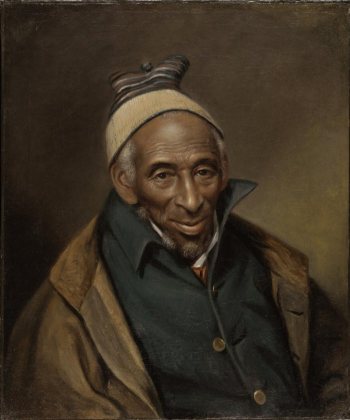
Charles Willson Peale, Portrait of Yarrow Mamout (Muhammad Yaro), 1819, oil on canvas (Philadelphia Museum of Art, 2011-87-1).
The Philadelphia Museum of Art is looking to fill the Barra American Art Fellowship, a one year position to begin at the start of the 2018–2019 Academic Year with a possibility of renewal for the 2019–2020 Academic Year. This position is generously endowed by The Barra Foundation in honor of Robert L. McNeil, Jr., with additional support provided by the Robert L. McNeil Endowments for American Art at the Philadelphia Museum of Art.
The Barra Fellow will work full-time in the Department of American Art, assisting four days a week in ongoing department research and exhibition projects, with one day reserved for personal research, writing, or travel. Candidates should propose a thesis or area of research interest that can take advantage of the resources of the Philadelphia Museum of Art and other area libraries and institutions. Priority will be given to those with projects relating to the Museum’s collection or exhibition program, and to students from the Philadelphia region. Fellows will have library privileges at the PMA and the University of Pennsylvania. At the conclusion of the term, the Barra Fellow will be expected to give a lecture and submit a paper reflecting work done during the residency. The fellowship stipend is $40,000 per twelve month period with additional research and travel funds.
Specifically, you will…
• Assist with departmental research and various exhibition projects
• Conduct research on proposed topic, with an end-of-term lecture and paper to be presented
Your diverse background includes…
• M.A. in art history or a related field
• Prior experience in a museum environment or similar art institution
• Technical proficiency with personal computers and Microsoft Office suite and experience with collection management software
• Prior experience with The Museum System (TMS) is preferred
Application Materials
• A statement of no more than three pages (double spaced) describing your preparation, the general direction of research, and the appropriateness of your studies to resources in Philadelphia
• Resume
• Reference list with the names and contact information of three references
• A writing sample
• A letter of recommendation from one of the listed references mailed to:
Philadelphia Museum of Art
PO Box 7646
Philadelphia, PA 19101-7646
Attn: Center for American Art
Summer Fellowships in American Art
Philadelphia Museum of Art, Summer 2018
Applications due by 16 February 2018
The Philadelphia Museum of Art is looking for graduate students to fill two Summer Fellowships which are supported by the Center for American Art. The summer fellows will be expected to work ten (10) weeks between June 1 and August 31, 2018. The fellowship stipend is $4,000.
Fellowship #1
One summer fellow will be chosen to assist in the Museum’s Department of American Art, contributing to ongoing collection research and exhibition preparation. Graduate students in art history or related fields with an interest in curatorial studies and American painting and sculpture before 1960 are encouraged to apply.
Fellowship #2
One summer fellow will be chosen to assist the Curator of American Decorative Arts in the Museum’s Department of American Art, contributing to ongoing research and writing in preparation for the forthcoming catalogue of the Museum’s American silver collection. Graduate students in art history or related fields with an interest in American decorative arts are encouraged to apply.
Application Materials
• A letter describing your interest and preparation for this position
• Curriculum vitae with education, employment, publications and honors
• Reference list with the names and contact information of three references
Display | Lighting Up the Stage: Stars of the Georgian Theatre
From The Holburne Museum:
Lighting Up the Stage: Stars of the Georgian Theatre
The Holburne Museum, Bath, 2 February — 3 June 2018

Samuel de Wilde, John Palmer as Don John in ‘The Chances’, 1791 (Bath: The Holburne Museum).
William Somerset Maugham (1874–1965), a playwright and novelist, began collecting paintings of actors in the 1910s. He built a sizeable and important collection of theatrical portraits, which he displayed in his villa in the south of France. The collection remained together throughout the Second World War, despite Maugham himself having to leave France and his villa being taken over by the occupying forces. He gifted his collection to the National Theatre in 1951, from which the paintings were transferred to Bath in 2010. The collection contains key works by Zoffany, including portraits of David Garrick in some of his most celebrated tragic and comic roles, and the 18th-century small-scale portraitist Samuel de Wilde. The theatrical portraits immortalise stars of the 18th- and 19th-century stage in character and often in moments of high drama. The collection forms an important historical record as well as being the unique creation of one man’s personal taste.
This temporary display will provide a rare view of some of the less frequently seen portraits in the Maugham collection. These include sitters whose names may be less familiar to audiences today but who were nevertheless considered among the great actors of their day. They include the comic actor Richard Wilson (1744–1796) and John Palmer (1745–1798), who regularly performed at Drury Lane and who Sheridan nicknamed ‘plausible Jack’.
Later in the year, The Holburne Museum will present the exhibition Gainsborough and the Theatre , on view from 5 October 2018 until 20 January 2019.
New Book | Material Witnesses
From The University of Virginia Press:
Camille Wells, Material Witnesses: Domestic Architecture and Plantation Landscapes in Early Virginia (Charlottesville: The University of Virginia Press, 2018), 416 pages, ISBN: 978 08139 40366 (hardcover), $75 / ISBN: 978 08139 40373 (paperback), $40.
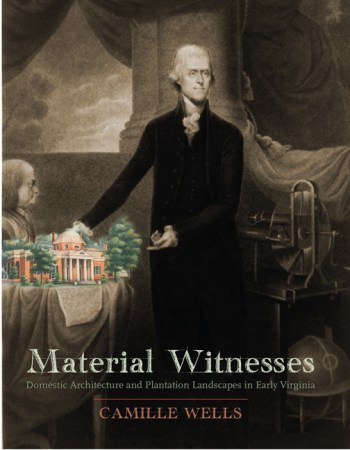 The Chesapeake region of eastern Virginia and Maryland offers a wealth of evidence for readers and researchers who want to discover what life was like in early America. In this eagerly anticipated volume, Camille Wells, one of the foremost experts on eighteenth-century Virginia architecture, gathers the discoveries unearthed during a career spent studying the buildings and plantations across this geographic area. Drawing on the skills and insights of archaeologists and architectural historians to uncover and make sense of layers of construction and reconstruction, as well as material evidence and records ranging from ceramics, furniture, and textiles to estate inventories and newspaper advertisements, Wells poses meaningful questions about the past and proposes new ways to understand the origins of American society.
The research gathered in this cohesive and engaging collection views the wider history of the colonial and early national periods through the lens of lauded as well as previously unrecorded sites in the Tidewater and Piedmont regions. The subjects are equally wide-ranging, from the way domestic architecture articulates problems and possibilities that found forceful expression in the Revolution; to the values and choices made by those who lived in unprepossessing circumstances as well as those who built statement gentry houses intended to dominate the landscape. Other essays address the challenges of discovering historically accurate room functions and furnishings as well as the way Colonial Revival attitudes still dominate much of what is imagined about the early Virginia past. Taken together, these beautifully written and accessible essays will be essential reading for those interested in architecture, material culture, and the ways they reveal the complexities of the nation’s history.
Camille Wells was most recently a fellow at the Virginia Foundation for the Humanities.
Warm Thanks to the Fall 2017 Intern, Julia Bouwkamp
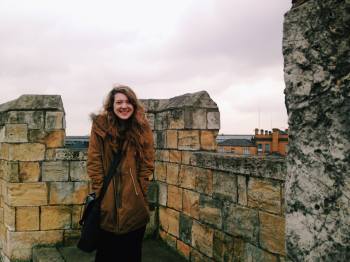 With the new year upon us, it seems like a fine time to introduce and publicly thank Julia Bouwkamp, who has done an amazing job as an intern here at Enfilade for the last few months! Julia is another one of my former students (like Rebecca Woodruff, she was part of the May-term course I taught in Sweden and Denmark in 2016).
Since then, Julia has been busy with lots of things. She was a historic interpreter at Colonial Michilimackinac, a reconstructed 18th-century fort in Michigan where the lower and upper peninsulas touch. She worked as an AmeriCorps VISTA member in Wayland, Michigan marketing the economic development and historic preservation potential of the town’s Main Street program. She’s presently interning with the Greater Grand Rapids Women’s History Council, where she also serves on the board. In particular, Julia is preparing entries for Her Hat Was in the Ring, a national crowd sourcing effort mapping women who ran for elected office before the passage of the Nineteenth Amendment to the United States Constitution in 1920 (in Grand Rapids, over fifty women stood for election in the late 19th and early 20th in various school board and local government positions). In addition, Julia is doing supporting research for an upcoming documentary on the history of kindergarten in the U.S.
Clearly Julia’s interests are diverse, but there are typically a series of reliable, coherent threads: gender, the history of fashion, material culture, the mediation of the past, and history as lived experience with real world consequences (then and now).
Many thanks, Julia!
–Craig Hanson
New Book | American Furniture 1650 to the Present
From Rowman and Littlefield:
Oscar Fitzgerald, American Furniture, 1650 to the Present (Rowman & Littlefield Publishers, 2017), 630 pages, ISBN: 978 144227 0381, $130 / £85.
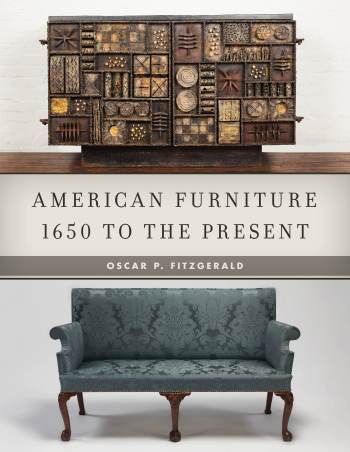 Drawing on the latest scholarship, this comprehensive, lavishly illustrated survey tells the story of the evolution of American furniture from the 17th century to the present. Not viewed in isolation, furniture is placed in its broader cultural, historic, and aesthetic context. The focus is not only on the urban masterpieces of 18th-century William and Mary, Queen Anne, Chippendale, and Federal styles but also on the work of numerous rural cabinetmakers. Special chapters explore Windsor chairs, Shaker, and Pennsylvania German furniture which do not follow the mainstream style progression. Picturesque and anti-classical explain Victorian furniture including Rococo, Renaissance, and Eastlake. Mission and Arts and Crafts furniture introduce the 20th century. Another chapter identifies the eclectic revivals such as Early American that dominated the mass market throughout much of the 20th century. After World War II American designers created many of the Mid-Century Modern icons that are much sought after by collectors today. The rise of studio furniture and furniture as art which include some of the most creative and imaginative furniture produced in the 20th and 21st centuries caps the review of four centuries of American furniture. A final chapter advises on how to evaluate the authenticity of both traditional and modern furniture and how to preserve it for posterity. With over 800 photos including 24 pages of color, this fully illustrated text is the authoritative reference work.
Oscar P. Fitzgerald is a nationally known historian, author, lecturer, and consultant on American furniture from colonial times to the present. He retired as the director of the Navy Museum in Washington, DC and curator of Tingey House, to pursue full time his first love which is the history of furniture from antique to modern. As a member of the faculty of the Smithsonian Institution/George Washington University Master’s program in Decorative Arts & Design History, he teaches all the furniture classes. As a decorative arts consultant, he advises on the furniture collections of a number of historic houses including the Frederick Douglass House, the Clara Barton National Historic Site, and the Custis-Lee Mansion. His publication range from a study of The Green Family of Cabinetmakers: An Alexandria Institution (of the Mercy Street TV series fame) to the catalog of the studio furniture at the Renwick Gallery of the Smithsonian American Art Museum.
C O N T E N T S
1 The Jacobean Period: Joiners and Cabinetmakers in the New World
2 William and Mary: The Years of Transition
3 Queen Anne: The Line of Beauty
4 The Chippendale Style
5 Furniture of the Federal Period
6 American Empire
7 Windsor Chairs
8 Country Furniture: New England
9 Southern Furniture
10 Furniture of Rural Pennsylvania, the Mid-Atlantic, and the Mid-West
11 Shaker Furniture: The Gift to Be Simple
12 Victorian Furniture: Gothic and Rococo Revivals
13 Victorian Furniture: The Renaissance Revival
14 Eastlake, the Aesthetic Movement, and the Colonial Revival
15 American Mission Furniture and the Arts & Crafts Movement: 1900–1915
16 Traditional Revivals for a Conservative Public
17 Modern Furniture, 1920–1941: Is It Here to Stay?
18 America Takes the Lead: Mid-Century Modern, 1950s and 1960s
19 Post-Modern and Avant-Garde Furniture since 1975
20 Studio Furniture and Furniture as Art
21 Connoisseurship of American Furniture










leave a comment