Call for Papers | Art History: The Formation of the Academic Discipline
Art History: The Formation of the Academic Discipline
Rethymnon, Greece, 3–4 October 2014
Proposals due by 30 June 2014
The Association of Greek Art Historians and the Institute for Mediterranean Studies (FORTH) organise an Academic Forum with the title Art History: The Formation of the Academic Discipline in Europe and Related Developments in Greece (18th–19th Centuries). The meeting will take place at the Institute’s premises in Rethymnon, Crete on Friday, 3rd and Saturday, 4th October 2014. The aim of this meeting is to explore the ways in which the academic and research fields of Art History were formed from the late 18th century and continued to develop up to the beginning of the 20th century. Shaped by its interactions with other disciplines, Art History eventually created its own unique discursive field and distinct methodology. With this meeting we also hope to chart the status of historiographical research in Greece, but also worldwide.
We invite papers that focus on, but are not limited to, the following topics: (more…)
Symposium | Enlightened Princesses: Caroline, Augusta, Charlotte
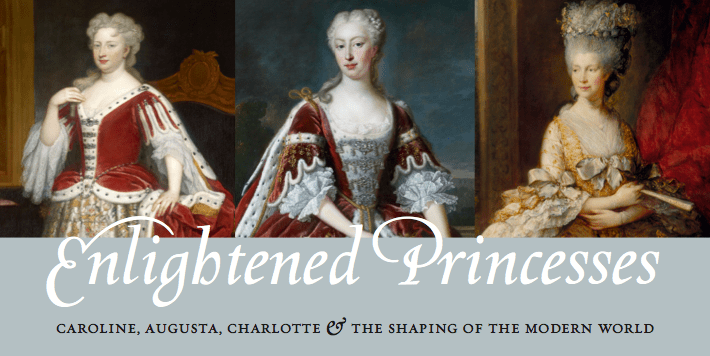
Left: Sir Godfrey Kneller, Queen Caroline of Ansbach, when Princess of Wales (detail), 1716; center: Jean-Baptiste van Loo, Augusta, Princess of Wales (detail), 1742; right: Thomas Gainsborough, Queen Charlotte (detail), ca. 1781; all: Royal Collection/© Her Majesty Queen Elizabeth II 2014.
◊ ◊ ◊ ◊ ◊
From the symposium flyer:
Enlightened Princesses: Caroline, Augusta, Charlotte & the Shaping of the Modern World
Hampton Court Palace, London, 7–9 July 2014
This three-day international symposium, taking place at Hampton Court Palace and associated sites, brings together eminent academicians and museum scholars to examine the roles played by Queen Caroline of Ansbach; Augusta, Princess of Wales; and Queen Charlotte in the promotion of the arts and sciences in eighteenth-century Britain. The themes that will be addressed are pertinent to exhibitions scheduled to open in 2017 at the YCBA and in London. The princesses’ individual and collective interests in art, botany and gardens, natural philosophy and medicine, and the education of their children will be explored in relation to a dramatically changing social, political, and technological milieu, as will their roles in the encouragement of the British Enlightenment. The symposium is timed to take advantage of the period when various London institutions will be commemorating the anniversary of the Hanoverian Succession and aims to contribute in a major way to the general public discourse around that event.
The program includes two full days of lectures, themed panels, and special tours and events, followed by a day devoted to tours of two sites important in the lives of these royal women: Kew Palace and its gardens, and Kensington Palace. The fee for attending the conference is £100. Reductions are available for a limited number of students on application to the conference organizer. To register, visit the HRP website. Questions may be addressed to the conference organizer at ycba.research@yale.edu.
Co-organized by the Yale Center for British Art, Historic Royal Palaces, and the Paul Mellon Centre for Studies in British Art, London
◊ ◊ ◊ ◊ ◊
From the provisional schedule:
M O N D A Y , 7 J U L Y 2 0 1 4
9:00 Arrival and coffee
9:30 Introduction
Amy Meyers, Yale Center for British Art
John Barnes, Historic Royal Palaces
9:45 Joanna Marschner, Historic Royal Palaces, Three German Princesses: Caroline, Augusta, Charlotte, and Cultural Politics at the English Court in the Eighteenth Century
10:30 Break
10:45 Session 1: The Princesses and Their World
Chair: Amanda Vickery, Queen Mary, University of London
• Andrew Thompson, University of Cambridge, The Hanoverians: Crafting a New Dynasty
• Stephen Taylor, Durham University, Court Politics and Religion
• Berta Joncus, Goldsmiths, University of London, The Court, Music and Theatre
• Rosemary Harden, Fashion Museum, Bath, Dressing the Hanoverian Court
13:00 Lunch
14:00 Session 2: The Princesses’ Gardens and Architectural Projects
Chair: Michael Snodin, Strawberry Hill Trust
• Mark Laird, Harvard University, The Princesses’ Collecting and Display of Exotic Flora and Fauna
• Todd Longstaffe-Gowan, landscape historian, Royal Gardens: The Role of the Princesses
• Wolf Burchard, Royal Collection Trust, The Palaces of the Hanoverian Consorts
• Lee Prosser, Historic Royal Palaces, Kew and its Built Heritage
16:00 Tea
16:30 Board buses for London/Queen’s Gallery
18:00 Desmond Shawe-Taylor, Surveyor of the Queen’s Pictures, Tour of the Queen’s Gallery exhibition The First Georgians; Art and Monarchy 1714–1760
T U E S D A Y , 8 J U L Y 2 0 1 4
9:00 Arrival and coffee
9:30 Clarissa Campbell Orr, Anglia Ruskin University, The Hanoverian Court and Europe
10:15 Break
10:30 Session 3: The Princesses’ Art and Other Collections
Chair: Desmond Shawe-Taylor, Surveyor of the Queen’s Pictures
• Cassandra Albinson, Yale Center for British Art, Creating the Royal Image: Royal Princesses and Portraiture
• Cynthia Roman, Lewis Walpole Library, The Princesses in Print: Character and Caricature
Malcolm Baker, University of California, Riverside, Royal Sculpture Commissions
• John Goldfinch, British Library and Emma Jay, The National Archives, The Princesses and their Books
• Jane Roberts, formerly Librarian, Windsor Castle, Royal Collection Trust, The Princesses as Artists
13:00 Lunch
14:00 Session 4: Natural Philosophy and Medicine
Chair: Lucy Worsley, Historic Royal Palaces
• Kim Sloan, British Museum, The Role of the Court in the English Enlightenment
• Patricia Fara, Clare College, Cambridge, Royal Women and Natural Philosophy
• Craig Ashley Hanson, Calvin College, Royal Patronage and Medical Practices
• 4th Speaker TBD
16:00 Tea
17:00 Historic Royal Palaces Curators, Tour of the Queen’s Apartments, Hampton Court Palace
18:00 Drinks, reception, and concert with music from the Hanoverian Court
W E D N E S D A Y , 9 J U L Y 2 0 1 4
9:00 Meet at speakers’ hotel for tours
10:00 Kensington Palace, Historic Royal Palaces Curators, Tour of King’s Apartments
12:00 Kew, Historic Royal Palaces Curators, Tour of Kew Palace and the Royal Kitchens
14:00 Close of symposium
L’Aquila: The Future of the Historical Center
From the Kunsthistorisches Institut in Florenz:
L’Aquila: The Future of the Historical Center, A Challenge for Art History
Summer School of the Kunsthistorisches Institut in Florenz, Max-Planck-Institut
Florence, 8–15 September 2014
Applications due by 25 May 2014
Concept and organization: Carmen Belmonte, Elisabetta Scirocco and Gerhard Wolf
The devastating earthquake that struck L’Aquila on 6 April 2009 created a major rupture in the social and cultural history of the city. After dealing with the immediate aftermath of the natural disaster through the construction of the so-called ‘New Towns’, the necessity of securing the city’s buildings has paralyzed the historical center. Today, ongoing restorations are accompanied by a lively debate, requiring the expertise of specialists from various disciplines. It is crucial that art historians participate in the discussions on the complex issues of reconstruction, restoration, and preservation, that are deciding how to return the city to its citizens and to ensure the survival of its monumental heritage.
The KHI summer school invites young art historians and scholars from neighboring disciplines to discuss the future of historic centers, focusing particularly on the critical as well as the ethical roles of art history. The case of L’Aquila provides an opportunity to reflect broadly upon the effect of natural disasters on civic life and cultural heritage and its management.
Located on site, the summer school will take a diachronic approach to the study of the city of L’Aquila, both inside and outside the walls, beginning with its medieval foundation as a free ‘civitas’ disputed by popes and emperors, through Spanish rule, up to the urban transformations of the Fascist period. Located in a strategic position on the ‘Via degli Abruzzi’, L’Aquila has long been a market town; its main raw materials, wool and saffron, reached the markets of northern Italy and beyond the Alps. The city of L’Aquila serves as a shrine that houses the bodies of Pope Celestine V and Bernardino of Siena. Throughout its history, the city has therefore been a place of exchange, a center of culture and artistic patronage, and an important pilgrimage site beginning with the institution of the plenary indulgence in 1294 at Collemaggio.
The close study of the historical city, its urban structure, its works of art, and its dispersed and decontextualized collections, together with an awareness of the dynamics of destruction and reconstruction of its cultural heritage, will call attention to the future of L’Aquila and to the methodological questions related to the preservation of its past. What techniques and methodologies allow mediation between aesthetic and historical values? Is it possible to find a balance between the protection of heritage and the needs of the citizens of L’Aquila; between the desire for change and the impulse to return to the forms of the past? Issues such as reconstruction, integration, and authenticity versus fake are central topics to be addressed. (more…)
MA in Decorative Arts and Historic Interiors
MA in Decorative Arts and Historic Interiors
Leche Trust Bursary for September 2014
Bursary applications due by 2 June 2014
Applications are invited for a partial studentship on the Buckingham University MA in Decorative Arts and Historic Interiors starting September 2014. Generously funded by the Leche Trust, the bursary, worth £7500, will cover 82% of the course fees for EU students and 55% for international students. Priority will be given to applicants with excellent academic qualifications seeking, or currently pursuing, curatorial careers in museums or the built heritage. The bursary is also open to part-time students currently working in the field, who can take the course as a form of in-service training over two years.
This unique one-year MA in French and British Decorative Arts and Historic Interiors provides sound vocational and academic training, first-hand study of furniture, silver and ceramics in the context of historic interiors, numerous study trips to museums and historic house collections, (including a study week in Paris) and placements in museums and heritage institutions. For further details please visit the website or contact Clare Prendergast: claire.prendergast@buckingham.ac.uk.
At Auction | The Gustave Leonhardt Collection at Sotheby’s
Press release from Sotheby’s:
Sotheby’s: The Gustave Leonhardt Collection: Property from the Bartolotti House, L14307
London, 29 April 2014
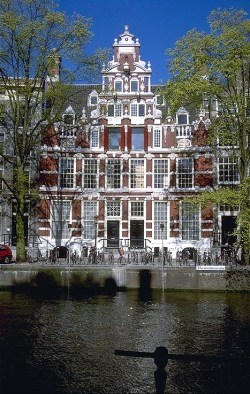
Hedrick de Keyser, Bartolotti House, Amsterdam, 1617. Photo: The Amsterdam Municipal Department for the Preservation and Restoration of Historic Buildings and Sites (bMA), via Wikimedia Commons.
On 29 April 2014, Sotheby’s London will present The Collection of the legendary musician, Gustav Leonhardt (1928–2012) from the Bartolotti House, a magnificent canal residence in Amsterdam situated at 170 Herengracht. There, in the middle of the city, in a sanctuary of tranquillity overlooking a French‐style garden, the world‐renowned organist, harpsichordist, conductor and pedagogue—considered the finest Bach interpreter of his generation—would welcome visitors and students to a vast drawing room with his famous courtesy and natural gravitas. Guests would be equally impressed by the beautiful furnishings and works of art of 170 Herengracht. Every single piece of the Leonhardt Collection seems to have been commissioned for the celebrated 17th-century house, designed by Hendrick de Keyser and later partly embellished with 18th-century paintings, sculpture, stucco and woodwork. The superb ensemble of furniture, silver, ceramics, sculpture, books and Old Masters were all intended to recreate an 18th‐century setting and made a perfect backdrop for Leonhardt’s music, once described as “a simple sound, a clean line and minimal ornamentation.” The inspiration he drew from art was also reflected in his teaching, as he often urged his students to think of a painting or a sculpture to help them interpret a piece of music. The sale will comprise of approximately 300 lots and is estimated to raise around £1.5 million.
 Commenting on the forthcoming sale, Mario Tavella, Deputy Chairman, Sotheby’s Europe and Head of House Sales and Single Owner Collections said: “Few houses evoke more vividly the authentic beauty of the Dutch 17th and 18th centuries. It is not difficult to imagine the strong impression that Leonhardt’s students must have experienced when entering the house and being invited to play music in front of the great master and surrounded by his extraordinary collection. I only wish I had been there myself.”
Albertine Verlinde, Senior Director, Co‐Chairman of Sotheby’s Amsterdam said: “It is a huge honour to have been entrusted with the collection of one of the greatest musicians of the 20th century. This sale continues Sotheby’s long tradition of presenting house sales and private collections with extraordinary provenance.” Johan Bosch van Rosenthal, Art consultant representing Gustav Leonhardt’s family added: “This sale offers a unique opportunity for lovers of Baroque music and of 17th‐ and 18th‐century works of art alike to acquire a piece from this refined collection, formed by a man who managed to reconcile effortlessly the knowledge, taste and elegance of past eras with present‐day life.”
Sculpture
The austerity and search for perfection of the Dutch Baroque is reflected in the classicism that runs through the group of European sculpture. The cabinet objects, on the other hand, are more playful. Made in the Workshop of Artus Quellinus in the mid‐17th century, a relief of Diana the Huntress is one of three terracotta versions of the Quellinus marble in the Amsterdam Town Hall (est. £30,000–50,000). The other two versions are in the Rijksmuseum and in a private collection respectively. A further highlight of this section is a bronze depiction of Amphitrite made by the French sculptor Michel Anguier in the second half of the 17th century. It has recently been revealed by Philippe Malgouyres of the Musée du Louvre, that Anguier’s series of bronze gods was possibly inspired by an important manuscript collection of lute pieces assembled around 1652 by the amateur musician Anne de Chambré, who moved in the same circles as Anguier. The musical meaning may not have been known to Gustav Leonhardt, but must have revealed itself through the statuette’s composition (est. £30,000–50,000).

Lot 481: A German silver glass cooler, probably by Philipp Heggenauer, Augsburg, 1711–15, lion masks and drop ring handles, lion paw feet, 35cm, 13 3/4 in wide (estimate £25,000–35,000)
◊ ◊ ◊ ◊ ◊
Silver
The collection includes spectacular silver pieces, mostly from the Netherlands. Gustav Leonhardt always preferred candlelight to electric lighting, be it at home, or in a concert hall. It is therefore no surprise that this collection is rich in candlesticks, among which two unusual sets of four from The Hague and Amsterdam stand out (est. £25,000–45,000 and 15,000–25,000). A fine example of German silver is to be found in a rare verrière (glass cooler) with superbly expressive lion faces, made in Augsburg in 1711–15 (est. £25,000–35,000).
Ceramics and Glass
Similar to the furniture, many of the ceramic and glass pieces in this collection were primarily made in the Netherlands, England, Germany and France, with the addition of a good element of Chinese Export porcelain, altogether demonstrating Gustav Leonhardt’s excellent eye for style and quality. The core of the ceramic collection however is presented by an extensive and diverse array of 17th‐ and 18th-century Dutch Delft, made by celebrated factories. Painted in a luminous blue, or in a sophisticated polychrome palette, they offer an exciting diversity of forms. The collection also includes a charming group of German porcelain figures, including two Meissen figures of musicians by Kändler, circa 1745 (est. £2,000–3,000).
Old Masters
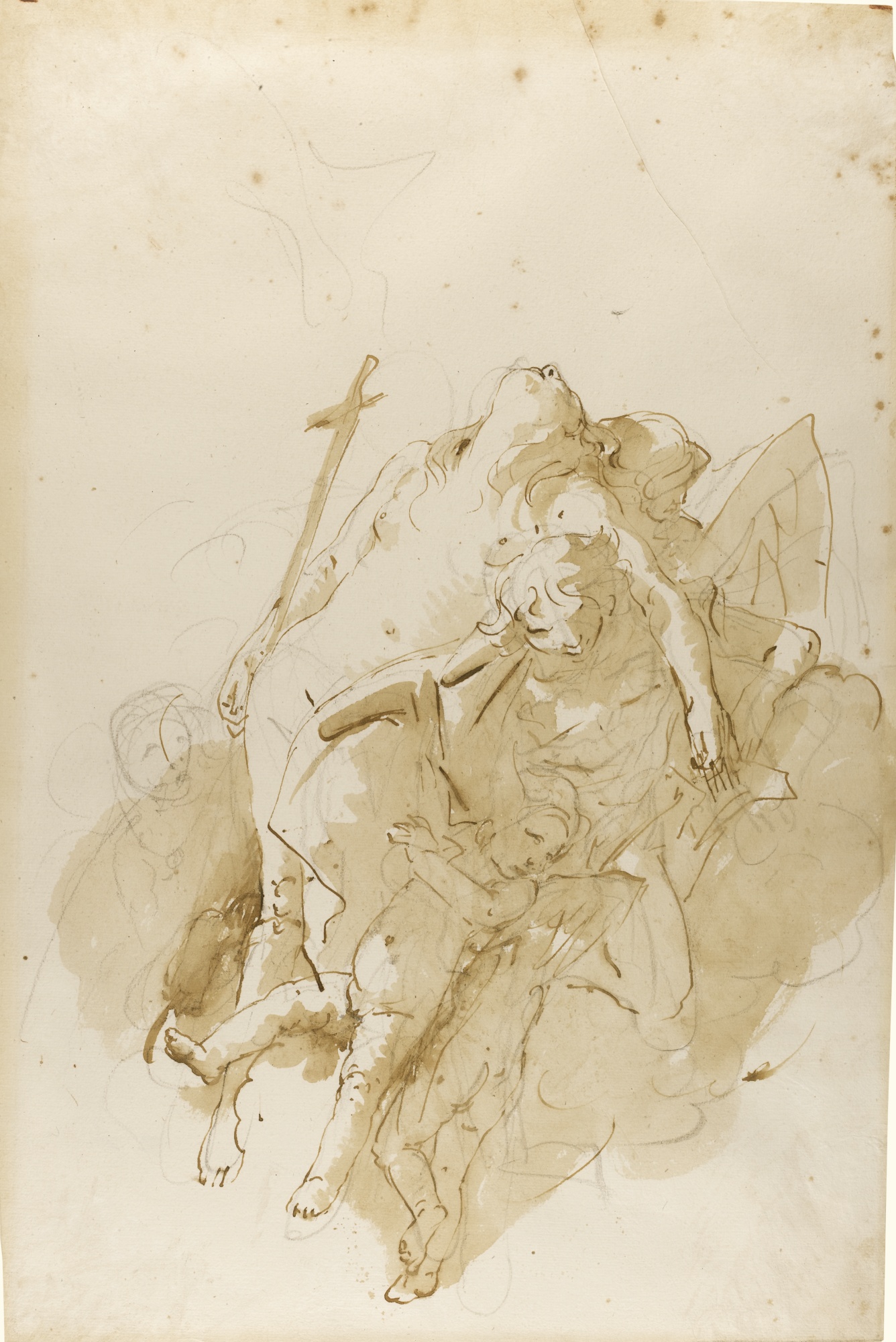
Lot 422: Giovanni Battista Tiepolo, The Assumption of Mary Magdalene, pen and brown ink and wash over black chalk
(estimate: £30,000–40,000).
The collection is further augmented by Old Master paintings, drawings and prints. At the core of this section is the dashing Assumption of Mary Magdalena by Giovanni Battista Tiepolo coming from the famous group of Tiepolo drawings assembled in the late 19th century by Prince Alexei Orloff (est. £30,000–40,000). 17th-century paintings in the collection celebrate the musical theme, including a group of Musicians and a Dog in an Interior by Gerard Pietersz Zijl, a Man with a Glass and Violin after the famous Hendrick Terbrugghen, and A Young Man with Flute from the Utrecht School. Reflecting the connoisseurship of Gustav Leonhardt’s print collection are works by important printmakers such as Canaletto, Goltzius, and Rembrandt—a large proportion of which also follow the theme of music.
Furniture
The Baroque keynote weaves through the furniture collection which spans Anglo Dutch, Flemish, French, and German pieces. Highlights include an attractive Louis XIV ebony, tortoiseshell, and brass Boulle marquetry bureau Mazarin, late 17th century (est. £25,000–40,000) and a fine Anglo‐Dutch William and Mary ivory floral marquetry two-door cabinet on stand, late 17th century (est. £25,000–40,000).
Gustav Maria Leonhardt
(30 May 1928 – 16 January 2012)
Gustav Leonhardt was a pioneer and a leading figure in the world of period instrument performance and Baroque music. A master harpsichordist, organist, scholar, conductor and teacher, he contributed to the rediscovery of the pre‐Mozart repertory. Throughout the second half of the 20th century, he exercised a considerable influence on the international musical scene, performing around the world and making hundreds of recordings. As Le Monde noted, “Gustav Leonhardt was to the harpsichord what Sviatoslav Richter had been to the piano: mysterious, self‐effacing, introspective, uncompromising and prone to flashes of unexpected brilliance within an already brilliant performance.”
Gustav Leonhardt was born in ’s‐Graveland, North Holland on 30 May 1928 and turned to the harpsichord at an early age. In 1947, Leonhardt entered the Schola Cantorum in Basel, Switzerland, where he studied organ and harpsichord with Eduard Müller. After three years, however, his parents, concerned with the few prospects of early music, sent him to Vienna to enrol on a conducting course with Hans Swarowsky. In the early 1950s, he rapidly established his reputation as outstanding harpsichordist and Bach interpreter and became professor of the instrument at the Vienna Academy of Music, and the Amsterdam Conservatoire. He also taught at Harvard in 1969 and 1970.
Considered the finest Bach interpreter of his generation, he methodically recorded Bach’s keyboard music, revisiting works like the Goldberg Variations. In 1971 Gustav Leonhardt and Nikolaus Harnoncourt jointly undertook a project, completed in 1990, to record all J.S. Bach’s sacred cantatas, one of the great projects of recorded classical music and one that has and will continue to inspire early music performers of the future. With the Leonhardt Consort, founded in 1955, Leonhardt and his wife, the violinist Marie Amsler performed a broad selection of the Baroque chamber, orchestral and dramatic repertory, and helped revive works by Rameau, Lully, André Campra and other Baroque composers. He also had a brief screen career in 1968, portraying Bach in Jean‐Marie Straub’s Chronicle of Anna Magdalena Bach. Back in Amsterdam, Mr. Leonhardt was appointed organist of the Waalse Kerk and later the Nieuwe Kerk (New Church), both of which still boast historic instruments.
Gustav Leonhardt continued to perform and teach, with his studio producing several important harpsichordists and early‐music conductors, among them Christopher Hogwood, Ton Koopman, Bob van Asperen, Alan Curtis, Pierre Hantaï and Skip Sempé. Musicians who worked with him described the experience as “life changing.”
He gave his last public performance on 12 December 2011 at the Théâtre des Bouffes du Nord in Paris.
The Bartolotti House, Herengracht 170, Amsterdam
The Herengracht is one of the most prominent canals in Amsterdam. It has been a prestigious address since the 17th century. The Bartolotti House was built circa 1617–21, after a design by Hendrick de Keyser. It was commissioned by Willem van den Heuvel, one of the richest merchants in Amsterdam who inherited an enormous fortune from his uncle Giovanni Battista Bartolotti and thereafter took his name, becoming Guillielmo Bartolotti. Today the house is one of the best surviving examples of early 17th-century Dutch architecture. The cartouches incorporated in the facade reflect merchant’s virtues underpinning commercial success: Ingenio et assiduo labore (‘through ingenuity and unremitting labour’) and Religione et probitate (‘through religion and virtue’). Gustav Leonhardt and his family lived in the Bartolotti House from 1974 to 2012, publishing his extensive research about the house and its residents in 1979.
◊ ◊ ◊ ◊ ◊
Note (added 2 May 2014) — As reported at ArtDaily, “The sale . . . surpassed pre-sale expectations and achieved £1,949,244 (€2,370,674) (est. £1.1–1.6 million / 1.3–1.9 million), with 92% of lots sold.” Results for individual lots are available here»
Paul Mellon Centre Research Lunches, Summer 2014
From The Paul Mellon Centre:
The Paul Mellon Centre, Research Lunches, Summer 2014
The Paul Mellon Centre for Studies in British Art, London, Fridays, 12:30–14:00
The spring programme of research lunches is geared to doctoral students and junior scholars working on the history of British art and architecture. They are informal events in which individual doctoral students and scholars talk for half-an-hour about their projects, and engage in animated discussion with their peers. A sandwich lunch, will be provided by the Centre. Sessions are free, but places are limited so you must book a place in advance by emailing Ella Fleming at events@paul-mellon-centre.ac.uk
9 May: Cora Gilroy-Ware (Tate Britain)
“A song the sweeter for a taste of pain”: the cult of the nymph in early nineteenth-century Britain
23 May: Jamie Mulherron (National Museums Scotland)
Being and Nothingness: Perceptions of Lace 1550–1850
6 June : Sarah Longair (British Museum)
Mskiti ya Bwana Sinclair: Designing a museum in British colonial Zanzibar
20 June: Nick Grindle (University College London)
George Morland: in the Margins
4 July: Catherine Spencer (University of St Andrews)
Prunella Clough’s ‘Structures of Mysterious Purpose’: Abstraction and Post-Industrialization
Paul Mellon Centre Research Seminars, Summer 2014
From The Paul Mellon Centre:
The Paul Mellon Centre, Research Seminars, Summer 2014
The Paul Mellon Centre for Studies in British Art, London, Wednesdays, 18:00–20:00
Our research seminars will feature papers given by distinguished historians of British art and architecture. Seminars typically take the form of hour-long talks, followed by questions and drinks, and are geared to scholars, curators, conservators, art-trade professionals and research students working on the history of British art. All seminars are free, but places are limited so you must book a place in advance by emailing Ella Fleming at events@paul-mellon-centre.ac.uk.
30 April: Jonathan Foyle (World Monuments Fund)
Paradise Regained: The Rediscovered State Bed of Henry VII and Elizabeth of York as Royal Self-Image in 1485
14 May: Kate Retford (Birkbeck College, University of London)
‘Bonds of unity and friendship’: Kinship and the Conversation Piece in Eighteenth-Century England
28 May: Morna O’Neill (Wake Forest University)
The Decorative Art of Display: The Case of Hugh Lane
11 June: Sandy Helsop (University of East Anglia)
Symmetry, Antithesis and Empathy in the St Albans Psalter
25 June: One Object, Three Voices, Mark Catesby’s Natural History: The Art, the Science, the Publication
Charles Jarvis (Natural History Museum)
Leslie K. Overstreet (Smithsonian Institution, Washington)
Henrietta McBurney Ryan (Senior Fellow, PMC)
New Book | Framing the Ocean
From Ashgate:
Tricia Cusack, ed., Framing the Ocean, 1700 to the Present: Envisaging the Sea as Social Space (Aldershot: Ashgate, 2014), 302 pages, ISBN: 978-1409465683, £70 / $120.
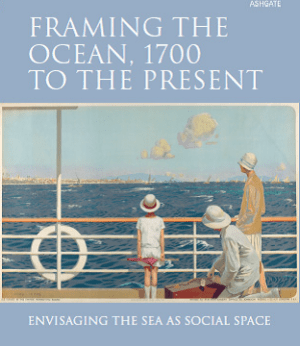 Before the eighteenth century, the ocean was regarded as a repulsive and chaotic deep. Despite reinvention as a zone of wonder and pleasure, it continued to be viewed in the West and elsewhere as ‘uninhabited’, empty space. This collection, spanning the eighteenth century to the present, recasts the ocean as ‘social space’, with particular reference to visual representations. Part I focuses on mappings and crossings, showing how the ocean may function as a liminal space between places and cultures but also connects and imbricates them. Part II considers ships as microcosmic societies, shaped for example by the purpose of the voyage, the mores of shipboard life, and cross-cultural encounters. Part III analyses narratives accreted to wrecks and rafts, what has sunk or floats perilously, and discusses attempts to recuperate plastic flotsam. Part IV plumbs ocean depths to consider how underwater creatures have been depicted in relation to emergent disciplines of natural history and museology, how mermaids have been reimagined as a metaphor of feminist transformation, and how the symbolism of coral is deployed by contemporary artists. This engaging and erudite volume will interest a range of scholars in humanities and social sciences, including art and cultural historians, cultural geographers, and historians of empire, travel, and tourism.
Tricia Cusack’s publications include Art and Identity at the Water’s Edge (ed.) (Ashgate 2012); Riverscapes and National Identities (Syracuse University Press 2010); Art, Nation and Gender: Ethnic Landscapes, Myths and Mother-Figures (co-edited, Ashgate 2003), and numerous articles.
◊ ◊ ◊ ◊ ◊
C O N T E N T S
Introduction: Framing the ocean, 1700 to the present: Envisaging the sea as social space, Tricia Cusack
Part I Exploring the Ocean: Colonial Crossings
1. From Mare Tenebrorum to Atlantic Ocean: A cartographical biography (1470–1900), Carla Lois
2. The Old World anew: The Atlantic as the liminal site of expectations, Emily Burns
3. Second encounters in the South Seas: Revisiting the shores of Cook and Bougainville in the art of Gauguin, La Farge and Barnfield, Elizabeth C. Childs
Part II Ships as Microcosms of Society
4. The artist travels: Augustus Earle at sea, Sarah Thomas
5. Sailors on horseback: The representation of seamen and social space in eighteenth-century British visual culture, Geoff Quilley
6. The ‘other’ ships: Dhows and the colonial imagination in the Indian Ocean, Erik Gilbert
7. Representation, commerce, and consumption: The cruise industry and the ocean, Adam Weaver
Part III Narratives of Shipwrecks, Rafts, and Jetsam
8. Shipwrecks, mutineers and cannibals: Maritime mythology and the political unconscious in eighteenth-century Britain, Carl Thompson
9. The sea as repository: Tacita Dean’s Teignmouth Electron, 1999 and Sean Lynch’s DeLorean Progress Report, 2010, Kirstie North
10. Reconstructing the raft: Semiotics and memory in the art of the shipwreck and the raft, Yvonne Scott
11. Plastic as shadow: The toxicity of objects in the anthropocene, Pam Longobardi
Part IV Natural and Unnatural Histories: Oceanic Imaginings
12. A ‘dreadful apparatus’: John Singleton Copley’s Watson and the Shark and the cultures of natural history, Emily Ballew Neff
13. Mermaids and metaphors: Dorothea Tanning’s surrealist ocean, Victoria Carruthers and Catriona McAra
14. ‘Something rich and strange’: Coral in contemporary art, Marion Endt-Jones
15. ‘No fancy so wild’: Slippery gender models in the coral gallery, Pandora Syperek
Index
Exhibition | Gods and Heroes

Jean-Honoré Fragonard, Jeroboam Sacrificing to the Idols,
48 x 62 inches, 1752 (École des Beaux-Arts, Paris)
From the American Federation of Arts:
Gods and Heroes: Masterpieces from the École des Beaux-Arts, Paris
Oklahoma City Museum of Art, 19 June — 14 September 2014
Albuquerque Museum of Art and History, 12 October 2014 — 4 January 2015
The Baker Museum, Naples, Florida, 19 February — 17 May 2015
Portland Art Museum, 13 June — 13 September 2015
This rich overview of masterpieces from the École des Beaux-Arts—the original school of fine arts in Paris and a repository for work by Europe’s most renowned artists since the seventeenth century—will include approximately 140 paintings, sculptures, and works on paper dating from the seventeenth through nineteenth centuries. The focus will be on epic themes such as courage, sacrifice, and death, as well as the ways that changing political and philosophical systems affected the choice and execution of these subjects. Among the featured works will be paintings by Jacques-Louis David, Jean-Honoré Fragonard, Anne-Louis Girodet, and Jean-Auguste-Dominique Ingres; sculpture by Antoine-Louis Barye, Jean-Baptiste Carpeaux, Jean-Antoine Houdon, and François Rude; drawings by François Boucher, Leonardo da Vinci, Nicolas Poussin, Titian, and Jean-Antoine Watteau; and prints by Albrecht Dürer and Rembrandt van Rijn.
The epic deeds of gods and heroes, enshrined in the Bible and the works of Homer, were the primary narratives from which both aspiring and established academicians drew their inspiration. Their ideology was rooted in the study of the idealized human form as envisioned in classical art. At the École, learning how to construct persuasive and powerful paintings from carefully delineated anatomy, expressive faces, and convincing architectural and landscape settings was understood by aspiring artists to be the route to success and recognition.
Gods and Heroes will offer unique insight into the development of an aesthetic ideology that fostered some of western art’s most magnificent achievements. Among the masterworks included will be Fragonard’s Jeroboam Sacrificing to the Idols; Joseph-Marie Vien’s David Resigns Himself to the Will of the Lord, Who Struck His Kingdom of the Plague (1743); Jacques-Louis David’s Erasistratus Discovers the Cause of Antiochus’s Disease (1774); and Jean-Auguste-Dominque Ingres’s Achilles Receiving the Ambassadors of Agamemnon (1801).

Jean Auguste-Dominique Ingres, The Ambassadors to Agamemnon Visiting Achilles,
45 x 58 inches, 1801 (École des Beaux-Arts, Paris)
◊ ◊ ◊ ◊ ◊
From Giles:
Emmanuel Schwartz, Emmanuelle Brugerolles, and Patricia Mainardi, Gods and Heroes: Masterpieces from the École des Beaux-Arts, Paris (London: D. Giles Limited, 2014), 240 pages, ISBN: 978-1907804120, £40 / $60.
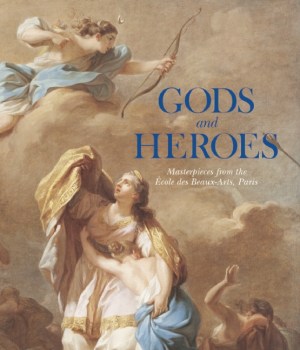 Gods and Heroes: Masterpieces from the École des Beaux-Arts, Paris will be published by D Giles Limited, in association with the American Federation of Arts in June 2014. This fully illustrated volume examines the pivotal role of the École des Beaux-Arts in influencing so much of the history, content and style of late- 17th-, 18th- and 19th-century European art
Not only did the École train generations of artists, but it also served as a repository for work by the most renowned artists in Europe. In three essays, as well as in over 200 catalogue entries and colour plates, the volume tells a fascinating, multi-layered story. On one level it is a study of the role of the epic deeds of classical and biblical gods and heroes in the work of generations of artists in France and beyond. On another level, it explores the impact of the École des Beaux-Arts’ curriculum on Western visual culture, and the persistence of the classical tradition.
From the late 17th through to the mid-19th century, the École was a highly competitive, government school that rigorously trained artists to fulfill the needs of royal, state, and church patrons. In so doing, the École created a particular ‘way of seeing’ that created the established aesthetic and ideological norms in French artistic production right through to the First World War, and provided the backdrop against which the modernist ‘revolution’ from the mid-19th century emerged and developed.
Gods and Heroes features 208 extraordinary art works from the collection of the École, dating from the 17th to the 19th century, including important works by such masters as Antoine- Louis Barye, François Boucher, Jean-Baptiste Carpeaux, Jacques-Louis David, Leonardo da Vinci, Jean-Honoré Fragonard, Jean-Auguste- Dominique Ingres, Charles Le Brun, Charles Natoire, Nicolas Poussin, Carle Van Loo, and Jean-Antoine Watteau
Emmanuel Schwartz is Chief Curator of Heritage at the École des Beaux-Arts, Paris and the author of The Legacy of Homer: Four Centuries of Art from the École Nationale Superieure des Beaux-Arts, Paris (2005). Emmanuelle Brugerolles is Chief Curator of Drawings at the École Nationale Supérieure des Beaux-Arts, Paris. Her most recent publication is The Male Nude: Eighteenth-Century Drawings from the Paris Academy (2013). Patricia Mainardi is Professor Emerita, Doctoral Program in Art History, The Graduate Center of the City University of New York and the author of Husbands, Wives and Lovers: Marriage and Its Discontents in Nineteenth-Century France (2003).
Exhibition | The Gobelins in the Enlightenment
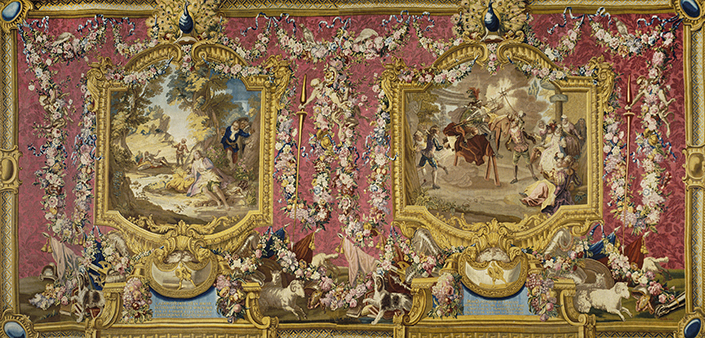
L’Histoire de Don Quichotte de Charles Coypel
Mobilier national / Isabelle Bideau
Now on view at the Galerie des Gobelins in Paris:
Les Gobelins au siècle des Lumières: Un âge d’or de la Manufacture royale
The Gobelins in the Enlightenment: A Golden Age of the Royal Manufactory
Galerie des Gobelins, Paris, 8 April — 27 July 2014
A selection of the best tapestries woven at the Gobelins during the 18th century will be presented along with painted models from the collections of the Mobilier national. The extraordinary impetus to rebuild the second manufactory of the Gobelins in 1662, under the direction of Charles Le Brun, is reflected in the works of 18th century.
Traditional religious subjects (The Old Testament by Antoine Coypel) are woven in parallel with innovative pieces inspired by the undeniable success of Cervantes’ novel. The subject of epic history (History by Marc-Antoine after Charles Natoire) is maintained, while other less edifying series appear, destined for royal apartments (for instance, The Loves of God, after various painters such as François Boucher and Joseph-Marie Vien). Alongside these innovations, replicas after pieces from the 16th century remain sought after. The late years of this century correspond with a return to the national past (History of France tapestry). Upholstered furniture (sofas and armchairs) equally characterizes this era of creative abundance.
Exhibited works: 25 tapestries, 25 original cartoons or models, 25 drawings and prints.










 Enfilade
leave a comment