Exhibition | Romantic Shakespeare
Now on view in Saint-Omer:
Shakespeare Romantique: Füssli, Delacroix, Chassériau
Musée de l’hôtel Sandelin, Saint-Omer, 24 May — 30 August 2017
Curated by Dominique de Font-Réaulx, Marie-Lys Marguerite, and Roman Saffré
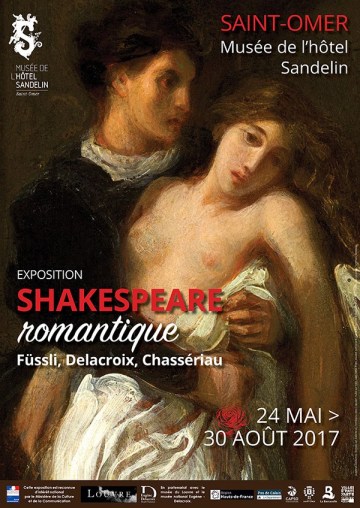 In May 2017, the musée de l’hôtel Sandelin presents a new exhibition organized as part of a prestigious partnership with the musée du Louvre and the musée national Eugène-Delacroix. The exhibition will present some 70 exceptional works. These painters, printmakers, and sculptors built a collective imagination around the parts of an author who was particularly inspirational for them throughout the 19th century, the great English playwright Shakespeare. Fuseli, Delacroix, Chassériau, Moreau, Préault, and Doré were able to recreate in their creations the feelings, the strangeness, and the morality of Shakespearean tragedies. Their works still influence the staging of Shakespeare’s plays.
In 1824, Stendhal wrote: “All the great writers were romantics of their time.” In fact, the 19th century was marked by a renewed interest in the great literary frescoes past Dante, Ariosto, Shakespeare, Racine become essential sources of inspiration for the romantic authors, but also for painters, who then have a special relationship to the art of staging.
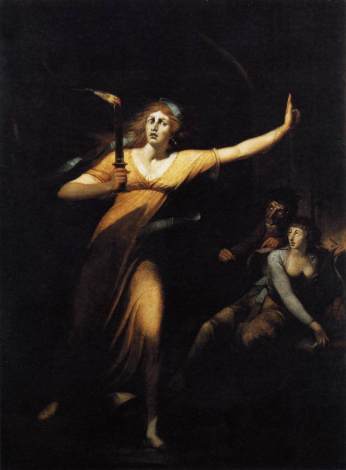
Henry Fuseli, Lady Macbeth, 1784, 221 × 160 cm (Paris: Louvre).
The early 19th century saw the birth of a true rediscovery of Shakespeare in France. The feelings of strangeness and morality in each of Shakespearean tragedies influence painters, printmakers and sculptors to create some art of emotion and narrative. The exhibition aims to show the the creation of a collective imagination that gave rise to the plays of Shakespeare. These designs still influence the staging of the texts of the English playwright. Works presented in the exhibition come mainly from the collections of the Louvre, the Musée national Eugène-Delacroix, the d’Orsay Museum, and the Victoria and Albert Museum in London.
Curators
Dominique de Font-Réaulx, General Curator of Heritage and Director of Eugene Delacroix Museum
Marie-Lys Margaret, Heritage curator and director of the Museum of Fine Arts of Arras
Romain Saffré, Heritage curator and director of museums Saint-Omer
New Book | Baroque Seville: Sacred Art in a Century of Crisis
The focus rests on the 1660s and 70s—with plenty, nonetheless, relevant for the eighteenth century. –CH.
From Penn State UP:
Amanda Wunder, Baroque Seville: Sacred Art in a Century of Crisis (University Park: Penn State University Press, 2017), 232 pages, ISBN: 978 02710 76645, $85.
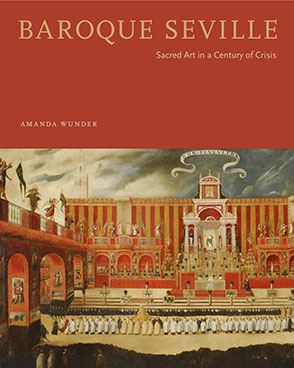 Baroque art flourished in seventeenth-century Seville during a tumultuous period of economic decline, social conflict, and natural disasters. This volume explores the patronage that fueled this frenzy of religious artistic and architectural activity and the lasting effects it had on the city and its citizens.
Amanda Wunder investigates the great public projects of sacred artwork that were originally conceived as medios divinos—divine solutions to the problems that plagued Seville. These commissions included new polychromed wooden sculptures and richly embroidered clothing for venerable old images, gilded altarpieces and monumental paintings for church interiors, elaborate ephemeral decorations and festival books by which to remember them, and the gut renovation or rebuilding of major churches that had stood for hundreds of years. Meant to revive the city spiritually, these works also had a profound real-world impact. Participation in the production of sacred artworks elevated the social standing of the artists who made them and the devout benefactors who commissioned them, and encouraged laypeople to rally around pious causes. Using a diverse range of textual and visual sources, Wunder provides a compelling look at the complex visual world of seventeenth-century Seville and the artistic collaborations that involved all levels of society in the attempt at its revitalization.
Amanda Wunder is Associate Professor of History at Lehman College and of Art History at the Graduate Center of the City University of New York.
◊ ◊ ◊ ◊ ◊
C O N T E N T S
List of Illustrations
Acknowledgments
Currency, Weights, and Measures
Introduction
1 The Art of Disillusionment: The Patronage of Mateo Vázquez de Leca
2 The Piety of Powerful Neighbors: The Renovation of Santa María la Blanca
3 A Temporary Triumph: The Seville Cathedral’s Festival for San Fernando
4 The Nobility of Charity: The Church and Hospital of the Santa Caridad
5 The Phoenix of Seville: Rebuilding the Church of San Salvador
Conclusion
Chronology
Notes
Bibliography
Index
Call for Papers | Landscape Now
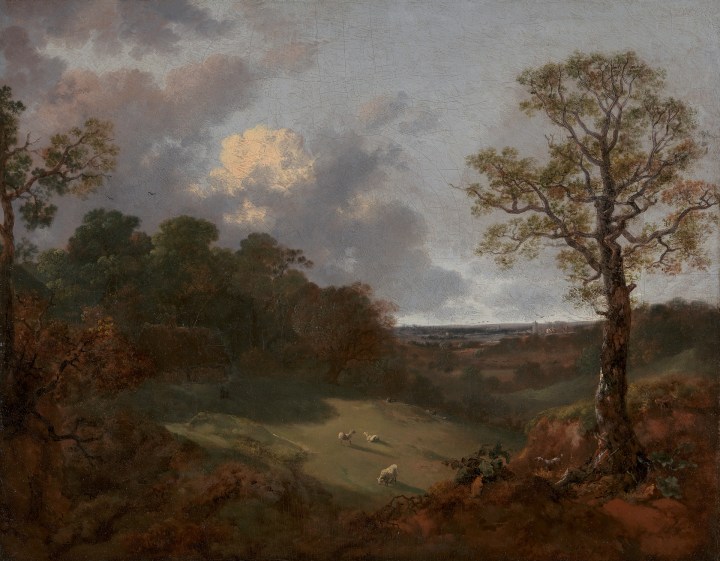
Thomas Gainsborough, Wooded Landscape with a Cottage and Shepherd, 1748–50, oil on canvas, 43.2 × 54.3 cm (New Haven: Yale Center for British Art, Paul Mellon Collection, B1976.2.1).
◊ ◊ ◊ ◊ ◊
From the Paul Mellon Centre:
Landscape Now
Paul Mellon Centre for Studies in British Art, London, 30 November – 1 December 2017
Proposals due by 30 June 2017
The pictorial representation of the landscape has long played an important role in the history of British art. It has been central to writers from Gilpin and Ruskin onwards, and was the subject of sustained scholarly attention in the 1980s and 1990s with the emergence of a social history of art. Writers such as John Barrell, Anne Bermingham, Stephen Daniels, Christiana Payne, Michael Rosenthal and David Solkin not only helped transform interpretations of British landscape painting, but made the study of such imagery seem essential to a proper understanding of British art itself.
Over the past two decades the centre of gravity of British art studies has shifted. An imperial turn has characterized some of the most ambitious scholarship in the field; a raft of powerful new voices have shifted attention to the Victorian and modern periods, and to the imagery of urban life; and there has been a dramatic growth of interest in such topics as print culture, exhibition culture, and the material culture of the work of art. With these developments, existing approaches to the study of landscape pictures lost some of their urgency and relevance.
However, this same period has seen the growth of a broader interest in landscape images in adjacent disciplines, driven in part by political and environmental imperatives. A newly energised category of ‘nature writing’, associated with authors such as Robert Mcfarlane and Helen MacDonald, has gained widespread currency beyond the purely academic arena. Cultural geographers such as David Matless and film-makers such as Patrick Keillor have offered nuanced investigations of the British landscape in their work, asking us to think afresh about its relationship to national identity, memory and post-imperial decline. And while many scholars in the humanities, in an age of globalisation and deepening ecological concern, have felt compelled to think about landscape on a vastly expanded basis, others have been driven to offer a new and suggestive focus on the local.
The moment thus seems ripe for a major art-historical reassessment of the image of the British landscape, taking account these and other emergent concerns. This international conference—the third in an annual series organised collaboratively by the Paul Mellon Centre, the Yale Center for British Art, and the Huntington Library, Art Collections, and Botanical Gardens—is designed to offer an opportunity for such a reassessment.
We seek proposals for 20-minute papers that offer new perspectives on the visual representation of the British landscape of any period. We equally welcome papers that focus on canonical landscape artists and paintings, and those that deal with lesser-known figures and objects, as well as those that investigate the topic in relation to drawing, printmaking, photography, film and television. Themes that might be addressed include:
• Landscape imagery and national identity
• Local/global histories of British landscape art
• The production of landscape images – in the field and in the studio
• Alternative landscapes: urban, suburban, rural, wild, touristic, agricultural
• The landscape image in a wider visual culture
• The pictorial logic of the landscape image
• The landscape image in an age of erosion
Please send proposals of 400 words maximum together with a short biography of no more than 100 words to events@paul-mellon-centre.ac.uk by 30 June 2017.
Montreal Acquires Rigaud’s Modello for Portrait of Louis XIV
Press release via Art Daily (31 May 2017). . .
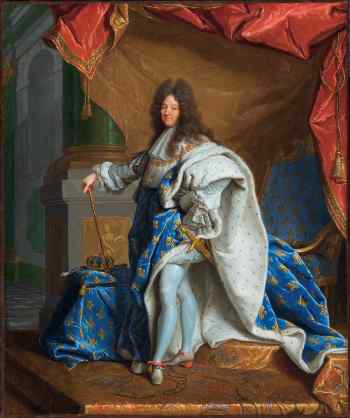
Hyacinthe Rigaud, Modello for the Portrait of Louis XIV in Royal Ceremonial Robes, 1701, oil on canvas, 55 × 45 cm (Musée des beaux-arts de Montréal).
The Montreal Museum of Fine Arts has just acquired a remarkable work: the modello, or painted sketch, for the famous Portrait of Louis XIV in Royal Ceremonial Robes by Hyacinthe Rigaud (Musée du Louvre, Paris).
“We are pleased that we were able to acquire this iconic painting on the art market. It is the modello for one of the most famous portraits in the history of Western art,” said Nathalie Bondil, the MMFA’s Director General and Chief Curator. “Often copied and even imitated, the painting is the origin of a rich iconographic lineage in the history of state portraiture. It is an important addition to our collection of historical international art, since Louis XIV enabled New France to evolve from a trading outpost to a populated settlement.”
Hilliard T. Goldfarb, Senior Curator of Old Masters, had this to say about the work: “The canvas is in very good condition and has not been refixed. The exquisite execution succeeds in concentrating formidable power into a small format. The attention paid to the textures is admirable and is to some extent more impressive than the large final version: look attentively at the rendering of the ermine and the velvet and also the way in which the fleurs de lys, following the curves of the folds in the cloak bend and twist, catching the light, something that is not evident in the final version.”
“By representing the contact of the king’s skin with the regalia, the painter is accentuating his special status among men,” added Sylvain Cordier, Curator of Early Decorative Arts. “Louis XIV is the only one who can touch with his bare hands the sacred instruments that confirm his royalty: anyone looking at the painting was aware of this. In our world, awash in political images, it is exciting to look at the composition of an official portrait as emblematic as this one, which uses specific codes and a profusion of detail to depict his royal majesty and legitimacy as a ruler in the seventeenth century. We are the inheritors of this past, which also raised profound questions that led to the rise of democracy and citizenship. Today, as we view this ‘icon,’ it feels both familiar and distant.”
◊ ◊ ◊ ◊ ◊
The Musée des Beaux-Arts de Montréal acquired the painting from Paris-based Galerie Éric Coatalem, which, as reported by Didier Rykner for La Tribune de l’Art (16 May 2017), displayed the painting at this year’s TEFAF in Maastricht.
Much more information is available from Ariane James-Sarazin’s essay “Le modello du portrait de Louis XIV en grand costume royal” for the online catalogue raisonné Hyacinthe Rigaud (1659–1743). L’homme et son art (Editions Faton, added 2 March 2017 and updated 17 May 2017).
Exhibition | Casanova: The Seduction of Europe
From the Kimbell Art Museum and Distributed Art Publishers (DAP) . . .
Casanova: The Seduction of Europe / Casanova’s Europe: Art, Pleasure, and Power
Kimbell Art Museum, Fort Worth, 27 August — 31 December 2017
The Legion of Honor, San Francisco, 10 February — 28 May 2018
Museum of Fine Arts, Boston, 1 July — 8 October 2018

Jean-Marc Nattier, Portrait of Manon Balletti, 1757, oil on canvas, 54 × 47.5 cm (London: National Gallery). Balletti was the fiancée (1757–60) of Giacomo Casanova and then wife (1760–74) of the architect Jacques-François Blondel.
Casanova: The Seduction of Europe explores the 18th century across Europe through the eyes of one of its most colorful characters, Giacomo Casanova (1725–1798). Renowned in modern times for his amorous pursuits, Casanova lived not only in Italy, but in France and England, and his travels took him to the Ottoman Empire and to meet Catherine the Great in Saint Petersburg. Bringing together paintings, sculpture, works on paper, furnishings, porcelains, silver, and period costume, Casanova will bring this world to life. Following its display in Fort Worth, the exhibition will be on view at the Fine Arts Museum of San Francisco and the Museum of Fine Arts, Boston.
Frederick Ilchman, Thomas Michie, C.D. Dickerson III, and Esther Bell, with texts by Meredith Chilton, Jeffrey Collins, Nina Dubin, Courtney Leigh Harris, James Johnson, Pamela Parmal, Malina Stefanovska, Susan Wager, and Michael Yonan, Casanova: The Seduction of Europe (Boston: MFA Publications, 2017), 344 pages, ISBN: 978 087846 8423, $45.
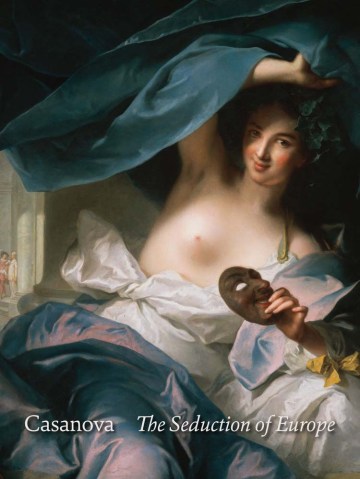 In 18th-century Europe, while the old order reveled in the luxurious excesses of the Rococo style and the Enlightenment sowed the seeds of revolution, the shapeshifting libertine Giacomo Casanova seduced his way across the continent. Although notorious for the scores of amorous conquests he recorded in his remarkably frank memoirs, Casanova was just as practiced at charming his way into the most elite social circles, through an inimitable mix of literary ambition, improvisational genius and outright fraud. In his travels across Europe and through every level of society from the theatrical demimonde to royal courts, he was also seduced by the visual splendors he encountered.
This volume accompanies the first major art exhibition outside Europe to lavishly recreate Casanova’s visual world, from his birthplace of Venice, city of masquerades, to the cultural capitals of Paris and London and the outposts of Eastern Europe. Summoning up the people he met and the cityscapes, highways, salons, theaters, masked balls, boudoirs, gambling halls and dining rooms he frequented, it provides a survey of important works of 18th-century European art by masters such as Canaletto, Fragonard, Boucher, Houdon, and Hogarth, along with exquisite decorative arts objects. Twelve essays by prominent scholars illuminate multiple facets of Casanova’s world as reflected in the arts of his time, providing a fascinating grand tour of Europe conducted by a quintessential figure of the 18th century as well as a splendid visual display of the spirit of the age.
◊ ◊ ◊ ◊ ◊
Note (added 20 August 2018) — This article might be of interest for anyone thinking about the exhibition and its reception within our own political/cultural context: Cynthia Durcanin, “Casanova as Case Study: How Should Art Museums Present Problematic Aspects of the Past?,” ArtNews (13 August 2018). As noted in the essay: “The MFA also changed the show’s title from the Legion of Honor’s, removing the word ‘seduction’ so that it became ‘Casanova’s Europe: Art, Pleasure and Power in the 18th Century’.” According to Katie Getchell, the chief brand officer and deputy director of the MFA Boston, “It’s an important nuance. The show is not about Casanova—it’s about Europe in Casanova’s time.”










 Enfilade
leave a comment