Exhibition | An Enamel Revolution: China and the World
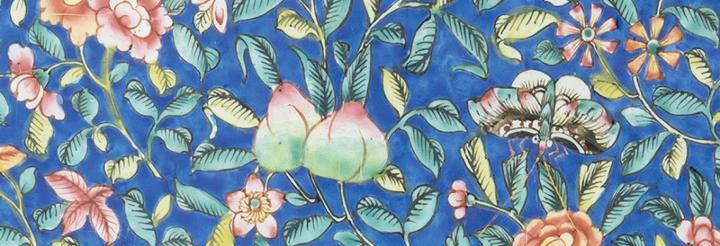
From the press release for the exhibition:
An Enamel Revolution: China and the World
The Fitzwilliam Museum, University of Cambridge, 20 October 2026 – 21 February 2027
Curated by James Lin with Joyce Chou
An Enamel Revolution: China and the World is a unique collaboration between The Fitzwilliam Museum and the Art Museum, The Chinese University of Hong Kong. The display explores the history of painted enamel in China, a field that has, until recently, received relatively little scholarly attention. Beginning with the transfer of painted enamel technology from Europe to China in the late seventeenth century, the display traces the emergence of hybrid artistic traditions that developed through interactions between China and the wider world. In doing so, it offers new perspectives on cross-cultural exchange, artistic innovation, and global trade.
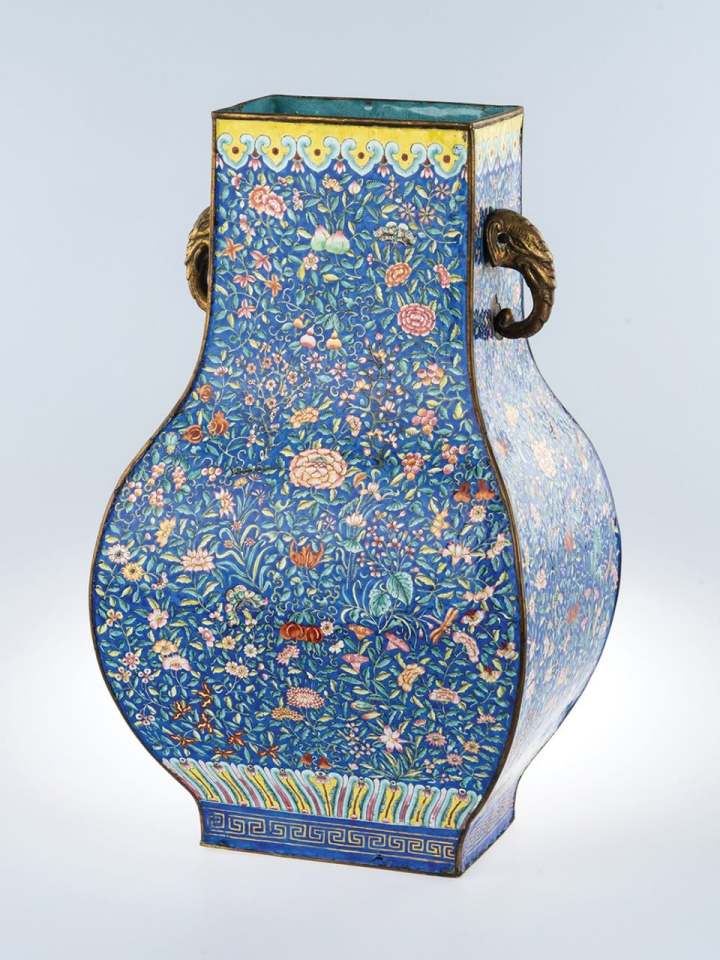
Elephant–Handled Zun Vase with Flowers, Fruits, and Insect, late 18th to early 19th century, copper and painted enamel (Art Museum, The Chinese University of Hong Kong).
The display features an exceptional group of painted enamel objects on loan from the Art Museum, The Chinese University of Hong Kong, many of which are being shown in the United Kingdom for the first time. These works are displayed alongside important examples from The Fitzwilliam Museum’s own collection. Together, they reveal how Chinese craftsmen working in the imperial workshops of Beijing and the commercial workshops of Canton adapted and transformed the painted enamel technique to decorate objects made of porcelain, glass, silver, and copper.
The first section of An Enamel Revolution examines the origins of painted enamel through the lens of international exchange. Painted enamel on copper became fashionable in Europe from the late fifteenth century onwards and was widely used for luxury objects such as watch cases, miniature portraits, snuffboxes, and other personal accessories. These finely crafted items were often regarded as precious jewels. Centres of enamel production flourished in places such as Limoges, in France and Nuremberg, in Germany before the technique eventually reached China.
Following the lifting of the maritime trade ban in 1684, European painted enamel technology entered China through the southern port of Canton brought by alongside missionaries, merchants, and diplomatic envoys. The Kangxi (r. 1662–1722), Yongzheng (r. 1723–1735), and Qianlong (r.1736–1795) emperors were fascinated by this sophisticated European art form and instructed craftsmen in the imperial workshops to master and develop enamel production. Painted enamels were created to decorate the imperial palaces and to serve as prestigious diplomatic gifts. At the same time, works by renowned European enamellers, including Jacques I Laudin (c. 1627–1695), were brought to China as models for local craftsmen to study and emulate. As European enthusiasm for Chinese art and design—often described as ‘Chinoiserie’—grew, Chinese workshops also began producing enamels specifically for overseas markets.
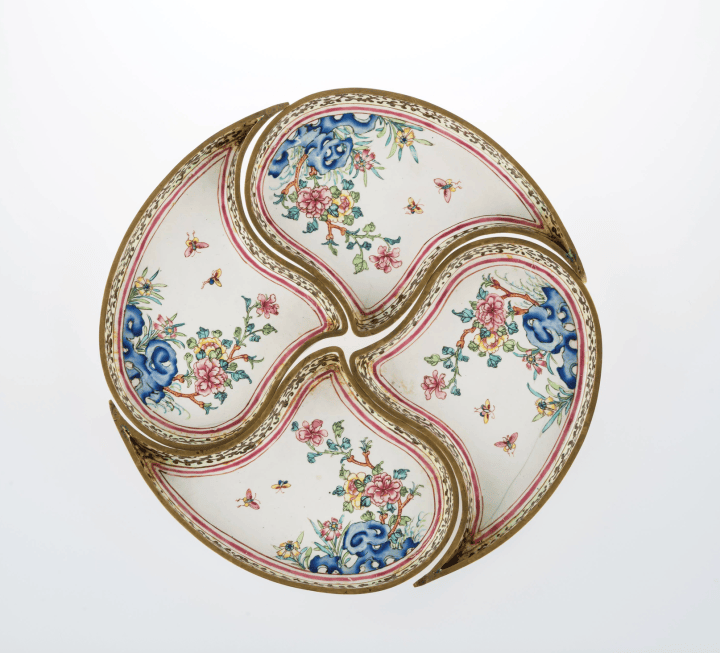
Sweetmeat Set with Flower, Butterfly, and Scholars’ Rock Designs, China, 1750–1800, copper and painted enamel (Art Museum, The Chinese University of Hong Kong, Gift of Mr. Anthony K. W. Cheung in memory of Prof. Xu Xiaodong, 2024.0138).
The second section explores painted enamels within the context of global commerce. To meet the demands of international consumers, Chinese artisans adapted designs inspired by ancient bronzes, jade carvings, and ceramics for domestic patrons, while also producing a wide range of objects tailored to foreign tastes. Large quantities of tableware and household items, including candlesticks, tureens, punch bowls, and breakfast sets, were commissioned for the growing European middle and upper classes. Workshops also created objects in Islamic-inspired forms and produced Benjarong-style wares for markets across Southeast Asia and beyond.
This section further highlights tea and coffee services—including tea caddies, kettles, teapots, cups, and saucers—which reflect the growing popularity of these newly fashionable beverages during the eighteenth century. Armorial enamels bearing coats of arms commissioned by European aristocratic families were specially made to commemorate marriages, alliances, and other significant occasions. Once these luxury goods arrived in Europe, many were redistributed through complex trade networks to regions far beyond their original destinations.
The dazzling painted enamels seen in this display tell stories of the movement of materials, technologies, artistic knowledge, and ideas across continents. They reveal how innovations travelled between East and West, how artistic traditions were adapted and transformed through cultural encounters, and how new products were created, traded, and consumed within an increasingly interconnected world. The development of painted enamel in China was made possible through the contributions of imperial patrons, European missionary intermediaries, and skilled craftsmen working in Jingdezhen, Beijing, and Canton (today’s Guangzhou). Together, they played vital roles in shaping one of the most remarkable examples of artistic exchange and early globalisation in the eighteenth century.
An Enamel Revolution: China and the World is jointly organised by the Art Museum, The Chinese University of Hong Kong, and The Fitzwilliam Museum, with generous support from the Culture, Sports and Tourism Bureau of the Government of the Hong Kong Special Administrative Region. The exhibition is curated by Dr James Lin, Senior Curator of Chinese Art at The Fitzwilliam Museum and supported by Dr Joyce Chou, Research Associate at The Art Museum, CUHK.










leave a comment