New Book | Tiepolo’s Pictorial Imagination
The Second Annual Thaw Lecture presented by William Barcham in May 2016 at The Morgan Library & Museum is now available in print from the museum’s shop:
William Barcham, Tiepolo’s Pictorial Imagination: Drawings for Palazzo Clerici (New York: The Morgan Library & Museum, 2017), 63 pages, ISBN: 9780875981819, $17.
 In 1740 Giambattista Tiepolo completed his grand ceiling fresco for the Gallery of Palazzo Clerici, Milan. Unlike his previous ceilings, this was a long gallery that could not be seen in its entirety from a single viewpoint; instead, the ceiling unrolls overhead in a scroll-like manner as visitors pass down the long Gallery. A large group of preparatory studies survives for the ceiling, and these permit us to consider how Tiepolo responded to this daunting assignment and produced a series of interrelated figure groups to decorate the vault. Nearly all today at the Morgan Library & Museum and the Metropolitan Museum of Art in New York and the Museo Horne in Florence, these drawings have long been recognized as studies for the ceiling, but never before has there been a sustained attempt to trace Tiepolo’s creative process through the dozens of sheets. William Barcham’s study of the Clerici drawings thus offers new perspectives not only on the Clerici ceiling but more broadly on Tiepolo’s pictorial imagination and inventive genius.
New Book | The Académie Royale de Peinture et de Sculpture
From Getty Publications, comes this English translation of the 2012 French edition:
Christian Michel, The Académie Royale de Peinture et de Sculpture: The Birth of the French School, 1648–1793, translated by Chris Miller (Los Angeles: Getty Research Institute, 2018), 424 pages, ISBN: 978 160606 5358, $75.
 The Académie Royale de Peinture et de Sculpture (French Academy of Painting and Sculpture)—perhaps the single most influential art institution in history—governed the arts in France for more than 150 years, from its founding in 1648 until its abolition in 1793. Christian Michel’s sweeping study presents an authoritative, in-depth analysis of the Académie’s history and legacy.
The Académie Royale assembled nearly all of the important French artists working at the time, maintained a virtual monopoly on teaching and exhibitions, enjoyed a priority in obtaining royal commissions, and deeply influenced the artistic landscape in France. Yet the institution remains little understood today: all commentary on it, during its existence and since its abolition, is based on prejudices, both favorable and critical, that have shaped the way the institution has been appraised. This book takes a different approach. Rather than judging the Academie Royale, Michel unravels existing critical discourse to consider the nuances and complexities of the academy’s history, reexamining its goals, the shifting power dynamics both within the institution and in the larger political landscape, and its relationship with other French academies and guilds.
Christian Michel is professor of art history at the Université de Lausanne.
New Book | Touring and Publicizing England’s Country Houses
From Bloomsbury Academic:
Jocelyn Anderson, Touring and Publicizing England’s Country Houses in the Long Eighteenth Century (London: Bloomsbury Academic, 2018) 256 pages, ISBN: 978 15013 34979, £86.
 Over the course of the long 18th century, many of England’s grandest country houses became known for displaying noteworthy architecture and design, large collections of sculptures and paintings, and expansive landscape gardens and parks. Although these houses continued to function as residences and spaces of elite retreat, they had powerful public identities: increasingly accessible to tourists and extensively described by travel writers, they began to be celebrated as sites of great importance to national culture. This book examines how these identities emerged, repositioning the importance of country houses in 18th-century Britain and exploring what it took to turn them into tourist attractions. Drawing on travel books, guidebooks, and dozens of tourists’ diaries and letters, it explores what it meant to tour country houses such as Blenheim Palace, Chatsworth, Wilton, Kedleston and Burghley in the tumultuous 1700s. It also questions the legacies of these early tourists: both as a critical cultural practice in the 18th century and an extraordinary and controversial influence in British culture today, country-house tourism is a phenomenon that demands investigation.
Jocelyn Anderson completed her PhD at the Courtauld Institute of Art in 2013. Subsequently, she held a postdoctoral fellowship at the Paul Mellon Centre for Studies in British Art (2014) and the post of Early Career Lecturer in Early Modern Art at the Courtauld (2015–16). She has recently received grants from the Marc Fitch Fund and the Society of Architectural Historians of Great Britain, and she is now an independent scholar based in Toronto, Canada.
C O N T E N T S
List of Plates
List of Figures
List of Tables
Acknowledgments
Introduction: ‘Come Here for Entertainment and Instruction’: Country Houses Exhibited to the Public
1 ‘For the Numerous Strangers Who Visit’: Tourists’ Itineraries and Practices
2 ‘A Sumptuous Pile of Building’: Remaking the Sights and Spaces of the House
3 ‘Eminent in Public Estimation’: The Transformation of Country Houses’ Paintings and Sculptures
4 ‘A Degree of Taste and Elegance’: Commenting on Country Houses’ Interiors
5 ‘The Beauties of Nature’: Descriptions of Country-House Gardens and Parks
Conclusion: ‘The Visitor of Today’: Legacies of 18th-Century Country-House Tourism
Appendix: Country-house Guidebooks
Bibliography
Index
New Book | Raynham Hall
From ACC Distribution:
Michael Ridgdill, Raynham Hall: An English Country House Revealed (Woodbridge: Antique Collectors Club, 2018), 224 pages, ISBN: 978 18514 98604, £30.
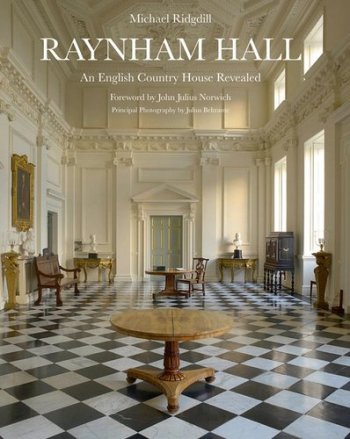 On the eve of its 400th anniversary, Raynham Hall is experiencing a renaissance. The present Marquess and Marchioness Townshend are breathing new life into this ancient family house, which has been passed down through generation after generation, and are sharing its treasures with the public for the first time.
As one of the earliest examples of neo-Palladian architecture in England, and with significant William Kent interiors, Raynham Hall is now the focal point of an entire book devoted to its evolution as a splendid country house and as the seat of one of England’s most important families.
This book serves as the first comprehensive survey of the house, its history, its evolution, and divulges the history of the Townshend family, whose impact on British politics has been felt since before the sixteen hundreds.
Michael Ridgdill founded the American Friends of British Art in 2003, with the mission to help restore and preserve historic art and architecture in Great Britain. Based in Florida, his summers are spent in England, exploring historic sites and meeting with key individuals in the heritage sector. As the charity’s head, Dr. Ridgdill works to promote American appreciation for Britain’s historic treasures, which is achieved by hosting guest lecturers from the UK to give talks in the US and by guiding Americans on country house tours across England. Dr Ridgdill is a native Floridian with a doctorate in Clinical Psychology. His lifelong passion for architecture and history has been the driving force behind the success of the American Friends of British Art, whose supporters are spread across the United States.
New Book | Women and the Country House in Ireland and Britain
From Four Courts Press:
Terence Dooley, Maeve O’Riordan, and Christopher Ridgway, eds., Women and the Country House in Ireland and Britain (Dublin: Four Courts Press, 2018), 320 pages, ISBN: 978 184682 6474, 30€.
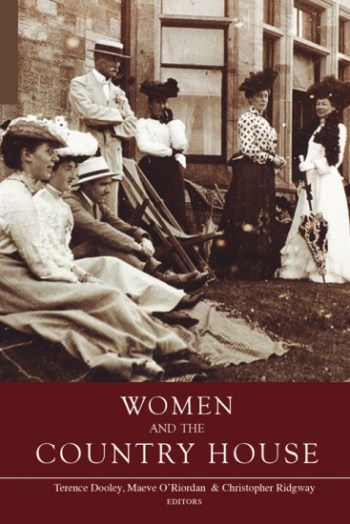 In recent years the role of women in country houses and estates across Ireland and the UK has been the focus of greater attention. Chatelaines, mothers, wives, daughters, widows, sisters, housekeepers and maids were ever-present figures in the microcosm of the country house. New research has begun to reveal the extent of their involvement in managing households and estates, influencing design, adopting public roles, championing good causes, as well as raising families, and committing their thoughts to paper in literary expression. This volume of essays, many of which draw on hitherto unseen family archives, will bring new perspectives to our understanding of the country house as a place where many women often held powerful roles.
Terence Dooley is director of the Centre for Historic Irish Houses and Estates, Maynooth University. Maeve O’Riordan is coordinator of Women’s Studies at University College Cork. Christopher Ridgway is curator at Castle Howard in Yorkshire.
C O N T E N T S
• Amy Boyington, The Architectural Endeavours of the Widowed Jemima Yorke, Marchioness Grey
• Kerry Bristol, Sisters and Sisters-in-law at Nostell Priory, West Yorkshire
• Philip Bull, Five Women of Monksgrange, Co. Wexford
• Anne Casement, The Social, Industrial and Land-owning Worlds of Frances Anne Vane-Tempest
• Jonathan Cherry and Arlene Crampsie, The Women of Ulster’s Country Houses and the Organization of Ulster Day
• Caroline Dakers, Madeline Wyndham of Clouds and Mabel Morrison of Fonthill: Two Victorian Ladies of Wiltshire
• William Fraher, An English Governess in Ireland during World War One
• Judith Hill, Catherine Maria Bury of Charleville Castle, Co. Offaly, 1800–12
• Edmund Joyce, Lady Harriet Kavanagh, 1800–1885: An Influential Chatelaine
• Ruth Larsen, Elite Women, Sorority and the Life Cycle, 1770–1860
• Anna Pilz, Lady Gregory, Forestry and the Domesticated Landscape
• Lowri Ann Rees, Patriarchal Perceptions of Welsh Rural Protest from the Letters of Miss Jane Walters, 1843–44
• Ciarán Reilly, The Country House and the Great Famine: Mildred Darby’s novel, The Hunger
• Regina Sexton, Elite Women and Their Recipe Books: The Case of Dorothy Parsons and her Booke of Choyce Receipts
• Brendan Twomey, Louisa Conolly’s Letters to Her Sister Sarah Bunbury
• Fiona White, Louisa Moore of Moorehall: A Life in Letters
New Book | Interacting with Print
From The University of Chicago Press:
The Multigraph Collective, Interacting with Print: Elements of Reading in the Era of Print Saturation (Chicago: The University of Chicago Press, 2018), 416 pages, ISBN: 978 022646 9140, $45.
 A thorough rethinking of a field deserves to take a shape that is in itself new. Interacting with Print delivers on this premise, reworking the history of print through a unique effort in authorial collaboration. The book itself is not a typical monograph—rather, it is a ‘multigraph’, the collective work of twenty-two scholars who together have assembled an alphabetically arranged tour of key concepts for the study of print culture, from Anthologies and Binding to Publicity and Taste. Each entry builds on its term in order to resituate print and book history within a broader media ecology throughout the eighteenth and nineteenth centuries. The central theme is interactivity, in three senses: people interacting with print; print interacting with the non-print media that it has long been thought, erroneously, to have displaced; and people interacting with each other through print. The resulting book will introduce new energy to the field of print studies and lead to considerable new avenues of investigation.
The Multigraph Collective, emanating from the Montreal-based Interacting with Print research group, comprises: Mark Algee-Hewitt, Angela Borchert, David Brewer, Thora Brylowe, Julia Carlson, Brian Cowan, Susan Dalton, Marie-Claude Felton, Michael Gamer, Paul Keen, Michelle Levy, Michael Macovski, Nicholas Mason, Nikola von Merveldt, Tom Mole, Andrew Piper, Dahlia Porter, Jonathan Sachs, Diana Solomon, Andrew Stauffer, Richard Taws, and Chad Wellmon.
C O N T E N T S
List of Illustrations
Preface; or, What Is a Multigraph?
Introduction
1 Advertising
2 Anthologies
3 Binding
4 Catalogs
5 Conversations
6 Disruptions
7 Engraving
8 Ephemerality
9 Frontispieces
10 Index
11 Letters
12 Manuscript
13 Marking
14 Paper
15 Proliferation
16 Spacing
17 Stages
18 Thickening
Epilogue
Works Cited
About the Multigraph Collective
Index
Zeitschrift für Kunstgeschichte 80.4 (2017), Penser le rococo
The current issue of Zeitschrift für Kunstgeschichte focuses on the theme ‘Reconsidering the Rococo’, the subject of a November 2015 conference at the University of Lausanne. Abstracts (in English) are available as a PDF file here.
Zeitschrift für Kunstgeschichte 80.4 (2017), Penser le rococo
Guest edited by Carl Magnusson and Marie-Pauline Martin
A R T I C L E S
• Carl Magnusson, “Le rococo, une construction historiographique: introduction”
• Marie-Pauline Martin, “‹Rococo›: du jargon à la catégorie de style”
• Catherine Thomas-Ripault, “Evasion temporelle et fantaisie créatrice: usage des peintures du xviiie siècle dans les fictions romantiques”
• Etienne Tornier , “‹This new-born word is rococo›: Généalogie et fortune du rococo aux États-Unis”
• Jean-François Bédard, “La vitalité du décor : Fiske Kimball, du rococo au Colonial Revival”
• Carl Magnusson, “Le rococo est-il décoratif ?”
• David Pullins, “‹Quelques misérables places à remplir›: Locating Shaped Painting in Eighteenth-Century France
• Bérangère Poulain, “Rococo et fugacité du regard: émergence et modifications de la notion de ‹papillotage›”
R E V I E W S
• Paul Williamson, Review of Laurence Terrier Aliferis, L’imitation de l’Antiquité dans l’art médiéval, 1180–1230 (Répertoire iconographique de la littérature du Moyen Âge, Études du RILMA, vol. 7, 2016).
• Christoph Martin Vogtherr, Review of Jérôme Delaplanche, Un tableau n’est pas qu’une image: La reconnaissance de la matière de la peinture en France au XVIIIe siècle (2016).
• Martin Dönike, Review of Johann Joachim Winckelmann, Monumenti antichi inediti spiegati ed illustrati, Roma 1767, edited by Adolf H. Borbein and Max Kunze (2011) | Johann Joachim Winckelmann, Monumenti antichi inediti spiegati ed illustrati, Roma 1767, edited by Adolf H. Borbein, Max Kunze, and Axel Rügler (2015).
• Anna Degler, Review of Guillaume Cassegrain, La coulure: Histoire(s) de la peinture en mouvement, XIe–XXIe siècles (2015).
New Book | Jean–Bernard Restout (1732–1796)
From Arthena:
Nicole Willk-Brocard, Jean–Bernard Restout (1732–1796) (Paris: Arthena, 2018), 240 pages, ISBN: 978-2903239596, 86€.
 Fils de Jean II Restout, grand peintre religieux du xviiie siècle, apparenté à Noël Hallé et à Jean Jouvenet, Jean-Bernard Restout reçoit une solide formation artistique et littéraire. Pensionnaire à l’Académie de France à Rome, il exprime d’emblée un talent novateur, sobre et vigoureux.
Agréé à l’Académie royale comme peintre d’histoire en 1765, il connaît ses premiers succès. Il s’insurge contre le refus du jury d’exposer une de ses oeuvres au Salon de 1769 ; son ressentiment envers l’Académie et les institutions ne fera que croître. Il peint peu, tarde à honorer ses commandes, mais ses oeuvres de la maturité confirment les exceptionnelles qualités de l’artiste, également subtil et intelligent portraitiste. La Révolution à laquelle il adhère avec enthousiasme lui permet, aux côtés de David, d’assouvir sa vengeance contre l’Académie. Il côtoie Robespierre et Fabre d’Églantine mais signe ainsi sa perte : nommé inspecteur général du Garde-Meuble, il est injustement impliqué dans le vol des bijoux de la Couronne et incarcéré avant d’être libéré après le 9 Thermidor. La redécouverte de son oeuvre—largement inédit—fait regretter son choix de la politique au détriment de la peinture.
Docteur ès lettres, membre du conseil d’administration de la Société des Amis du Louvre, ancienne chargée de mission au département des Peintures du musée du Louvre, Nicole Willk-Brocard est spécialiste de la peinture française du XVIIIe siècle. Elle a publié deux monographies de référence : François-Guillaume Ménageot (Arthena, 1978) couronnée par le prix de la Fondation Paul Cailleux, et Une dynastie. Les Hallé (Arthena, 1992) ainsi que de nombreux articles dans des revues scientifiques (Revue des musées de France, Bulletin de la Société de l’Histoire de l’art français, Gazette des Beaux-Arts).
New Book | Joseph-Benoît Suvée (1743–1807)
From Arthena:
Sophie Join-Lambert and Anne Leclair, Joseph-Benoît Suvée (1743–1807) (Paris: Arthena, 2017), 440 pages, ISBN : 978 2903239 602, 129€.
 Formé à Bruges, Suvée se perfectionne à Paris dans l’atelier de Bachelier. En 1771, il est lauréat du Grand Prix de l’Académie, devançant David qui lui en gardera une rancune tenace. À Rome, le pensionnaire de l’Académie de France montre une vive curiosité pour les sites antiques. Il réalise de très nombreux dessins dont certains, admirables, révèlent un des dessinateurs les plus doués de sa génération. En 1779, de retour à Paris, il est reçu à l’Académie royale. Il jouera désormais un rôle de premier plan. Les tableaux qu’il expose régulièrement au Salon de 1779 à 1796 témoignent d’une adhésion sans réserve au néoclassicisme. Certaines oeuvres remportent un vif succès, qu’il s’agisse de tableaux d’histoire nationale, d’histoire antique ou de tableaux religieux. Parallèlement, il peint de nombreux portraits avec un réalisme émouvant, les plus célèbres étant ceux de ses compagnons d’infortune détenus avec lui pendant la Terreur dans la prison Saint-Lazare, en particulier celui du poète André Chénier. En 1801, Suvée prend la direction de l’Académie de France à Rome. C’est sous sa houlette qu’une nouvelle génération d’artistes, parmi lesquels Ingres, complète sa formation. Dessinateur hors pair, peintre délicat et novateur, pédagogue reconnu, Suvée, artiste européen entre Bruges, Paris et Rome, appartient pleinement au monde des Lumières.
Docteur en histoire de l’art, conservateur en chef, directrice du musée des Beaux-Arts de Tours, Sophie Join-Lambert a été commissaire de nombreuses expositions en particulier Les peintres du Roi (2000) et L’Apothéose du geste, l’esquisse peinte au siècle de Boucher et Fragonard (2003–2004). Travaillant plus particulièrement sur le xviiie siècle français, elle a publié le catalogue raisonné des Peintures françaises xviiie siècle, du musée des Beaux-arts de Tours et du château d’Azay-le-Ferron (2008). Elle a réalisé en 2017 la première exposition consacrée à Joseph-Benoît Suvée.
Spécialiste de la peinture française du xviiie siècle, Anne Leclair a publié une monographie sur le peintre Louis-Jacques Durameau (Arthena, 2001), couronnée par la Fondation del Duca. Ses recherches ont notamment porté sur la peinture d’histoire (cycle de la Vie de saint Louis à l’École militaire) et sur les décors peints de la Chancellerie d’Orléans; elle a écrit des articles remarqués sur le marché de l’art et sur les cabinets d’amateurs au siècle des Lumières (Mariette, Choiseul et Voyer d’Argenson).
New Book | The Painter’s Touch
From Princeton UP:
Ewa Lajer-Burcharth, The Painter’s Touch: Boucher, Chardin, Fragonard (Princeton: Princeton University Press, 2018), 336 pages, ISBN 978 06911 70121, $65 / £55.
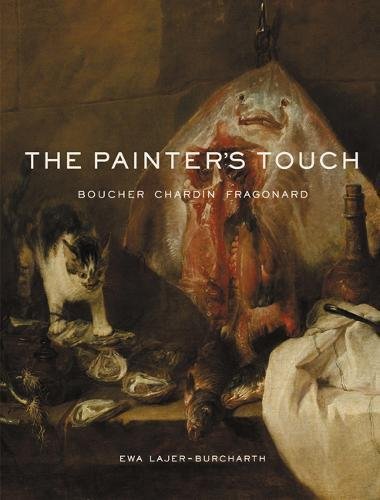 A new interpretation of the development of artistic modernity in eighteenth-century France.
What can be gained from considering a painting not only as an image but also a material object? How does the painter’s own experience of the process of making matter for our understanding of both the painting and its maker? The Painter’s Touch addresses these questions to offer a radical reinterpretation of three paradigmatic French painters of the eighteenth century. In this beautifully illustrated book, Ewa Lajer-Burcharth provides close readings of the works of François Boucher, Jean-Siméon Chardin, and Jean-Honoré Fragonard, entirely recasting our understanding of these painters’ practice. Using the notion of touch, she examines the implications of their strategic investment in materiality and sheds light on the distinct contribution of painting to the culture of the Enlightenment.
Lajer-Burcharth traces how the distinct logic of these painters’ work—the operation of surface in Boucher, the deep materiality of Chardin, and the dynamic morphological structure in Fragonard—contributed to the formation of artistic identity. Through the notion of touch, she repositions these painters in the artistic culture of their time, shifting attention from institutions such as the academy and the Salon to the realms of the market, the medium, and the body. Lajer-Burcharth analyzes Boucher’s commercial tact, Chardin’s interiorized craft, and Fragonard’s materialization of eros. Foregrounding the question of experience—that of the painters and of the people they represent—she shows how painting as a medium contributed to the Enlightenment’s discourse on the self in both its individual and social functions.
By examining what paintings actually ‘say’ in brushstrokes, texture, and paint, The Painter’s Touch transforms our understanding of the role of painting in the emergence of modernity and provides new readings of some of the most important and beloved works of art of the era.
Ewa Lajer-Burcharth is the William Dorr Boardman Professor of Fine Arts at Harvard University. Her books include Chardin Material and Necklines: The Art of Jacques-Louis David after the Terror.
C O N T E N T S
Acknowledgments
Introduction
1 Boucher’s Tact
Materiality and Personality
Touch and Tact
The Commercial Imagination
Personal Mythologies
The Promiscuous Self
The Artist as Consumer
Pompadour’s Painter
2 Chardin’s Craft
Deep Materiality
The Object (Inside/Out)
The Blind Touch
Underneath the Visible
The Subject
The Return to the Object
The Painter
3 Fragonard’s Seduction
Eros and Individuality
The Unseen
Being and Becoming
Pictorial Seduction
The Erotic Mother
The Artist’s Pleasure
The Painter’s Touch
Love and Life
Ars Erotica
Notes
Bibliography
Index
Image Credits










 Enfilade
leave a comment