Exhibition | Jean-Baptiste Huet: The Pleasure of Nature
From the Musée Cognacq-Jay:
Jean-Baptiste Huet, le plaisir de la nature
Musée Cognacq-Jay, Paris, 6 February — 5 June 2016
Curated by Benjamin Couilleaux
 Although he belonged to an important line of 18th-century artists, Jean-Baptiste Huet (1745–1811) has never before been the subject of a monographic exhibition. The Cognacq-Jay Museum will pay tribute to his alluring talent through a selection of paintings and graphic works. Jean-Baptiste Huet, who spent the majority of his career in Paris, was first trained in his family environment. He then received instruction from the animal painter Charles Dagomer and encouragement from Jean-Baptiste Le Prince, a talented student of Boucher. Benefitting from these influences, Huet developed a naturalistic and graceful style. He excelled in works of pastoral scenery depicting tales of the tender romances of shepherds, painted rustic landscapes with poetic notes and depicted the animal world with frankness and sympathy. He was admitted to the Académie in 1769, had regular exhibitions at the Paris Salon and was entrusted with decorative cycles. Huet’s art met with great success in various mediums. In 1783, Oberkampf, founder of the royal manufacture of Jouy-en-Josas, requested his services in creating printed patterns. His early creations were light, still in the Rococo style, then later gave way to straighter and more orderly shapes in the wake of Neoclassicism. Even up to his very last expressions, Huet’s work constitutes a tremendous tribute to the beauty of nature, with aspects of both reverie and fascination.
The dossier de presse de l’exposition is available as a PDF file here»
Benjamin Couilleaux, Jean-Baptiste Huet, le plaisir de la nature (Paris Musées, 2016), 176 pages, ISBN: 978-2759603145, 30€.
New Book | Art, Animals and Politics: Knowsley and the Earls of Derby
Distributed by The University of Chicago Press:
Stephen Lloyd, ed., Art, Animals and Politics: Knowsley and the Earls of Derby (Unicorn Press, 2015), 366 pages, ISBN: 978-1910065822, £60.
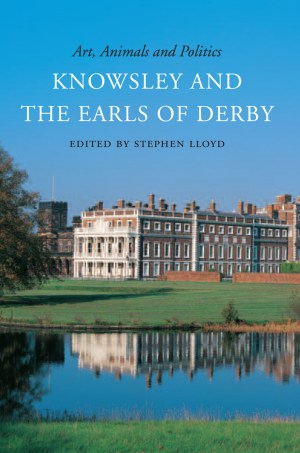 Thomas, Lord Stanley, was created Earl of Derby in 1485 after the Battle of Bosworth Field. Since that time the Stanleys—a great Lancastrian family, whose seat, Knowsley Hall, is near Liverpool—have been significant in the life of the nation as patrons and collectors, sportsmen and politicians. These absorbing essays by a distinguished cast of contributors led by historian David Starkey, writing about the political significance of Lady Margaret Beaufort, the first Countess of Derby, and broadcaster Sir David Attenborough, on Edward Lear’s zoological watercolours (many of which were done at Knowsley), cover key facets of the family’s diverse achievements
Stephen Lloyd is Curator of the Derby Collection at Knowsley Hall, with responsibility for the art collections, the celebrated natural history library and the family archive. In 2013, he organised a major conference at Knowsley, bringing together historians, art historians and natural historians to celebrate the wide-ranging achievements of the Stanley family and to raise the research profile of their legacy.
◊ ◊ ◊ ◊ ◊
Power, Play and Performance, c. 1450–1830
David Starkey, Elspeth Graham, Gill Perry
Patronage and Collecting, c. 1720–1735
Richard Stephens, Jonathan Yarker, Xanthe Brooke
Animals and Edward Lear, c. 1830–1890
David Attenborough, Clemency Fisher, Colin Harrison
Politics and Foreign Affairs, c. 1820–1900
Geoffrey Hicks, Angus Hawkins, Bendor Grosvenor, Jennifer Davey
New Appointment for Erika Gaffney
Erika Gaffney Appointed Senior Acquisitions Editor in Early Modern Studies for MIP and Arc Medieval Press
 Medieval Institute Publications (MIP) and Arc Medieval Press, together with its partner, Amsterdam University Press (AUP), are delighted to announce the appointment of Erika Gaffney as Senior Acquisitions Editor in Early Modern Studies. Gaffney established her reputation as an acquisitions editor at Ashgate, where she worked for more than 20 years.
A sample of books on which she worked includes Melissa Hyde and Jennifer Milam, eds., Women, Art and the Politics of Identity in Eighteenth-Century Europe (2003); Daniel Guernsey, The Artist and the State, 1777–1855: The Politics of Universal History in British and French Painting (2007); Carole Paul, The Borghese Collections and the Display of Art in the Age of the Grand Tour (2008); Dorinda Evans, Gilbert Stuart and the Impact of Manic Depression (2013); and Gauvin Alexander Bailey, The Spiritual Rococo (2014).
In terms of future acquisitions, her interests for the early modern period will continue to include eighteenth-century European history and culture through the lens of art history and visual culture. Scholars wishing to renew their working relationship with Erika or new scholars interested in submitting not-yet-contracted volumes (or new series) should email her at erika.gaffney@arc-humanities.org to ask for a Proposal Form.
The Fitzwilliam Turns 200, with Exhibition and Book to Celebrate
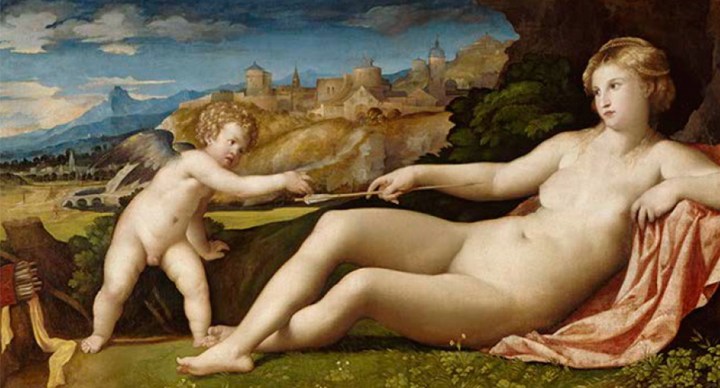
Palma Vecchio, Venus and Cupid, 1523–24 (Cambridge: The Fitzwilliam Museum). The painting was purchased by Lord Fitzwilliam from the London sale of the Duc d’Orléans collection in 1798. He first saw the collection at the Palais Royale during his visits to Paris.
◊ ◊ ◊ ◊ ◊
Press release from The Fitzwilliam:
Today (Thursday, 4 February 2016) one of the great collections of art in the UK celebrates its bicentenary. 200 years to the day of his death, the Fitzwilliam Museum has revealed previously unknown details of the life of its mysterious founder, Richard 7th Viscount Fitzwilliam of Merrion. Research for a new book has shown how his beloved library may have contributed to his death, and how his passion for music led him to the love of his life: a French dancer with whom he had two children, Fitz and Billy.
The Fitzwilliam Museum: A History is written by Lucilla Burn, Assistant Director for Collections at the Fitzwilliam. The book explores the full 200 year story of the Museum and the first chapter focuses on the founder. She comments: “Lord Fitzwilliam’s life has been described as ‘deeply obscure’. Many men of his class and period, who sought neither fame nor notoriety, nor wrote copious letters or diaries, do not leave a conspicuous record. But by going through the archives and letters that relate to him, for the first time we can paint a fuller picture of his history, including aspects of his life that have previously been unknown, even to staff here at the Fitzwilliam.”
Lord Fitzwilliam died on the 4th of February 1816, and founded the Fitzwilliam Museum through the bequest to the University of Cambridge of his splendid collection of art, books and manuscripts, along with £100,000 to build the Museum. This generous gift began the story of one of the finest museums in Britain, which now houses over half a million artworks and antiquities. Other than his close connection to Cambridge and his love of art and books, a motivation for Fitzwilliam’s bequest may have been his lack of legitimate heirs. The new details of his mistress help to explain why he never married.

Joseph Wright, The Hon. Richard Fitzwilliam, 7th Viscount Fitzwilliam of Merrion, 1764 (Cambridge: The Fitzwilliam Museum)
In 1761 Richard Fitzwilliam entered Trinity Hall, Cambridge, and in 1763 his Latin ode, ‘Ad Pacem’, was published in a volume of loyal addresses to George III printed by the University of Cambridge. He made a strong impression on his tutor, the fiercely ambitious Samuel Hallifax, who commissioned Joseph Wright of Derby to paint a fine portrait of Fitzwilliam on his graduation with an MA degree in 1764. Fitzwilliam’s studies continued after Cambridge; he travelled widely on the continent, perfecting his harpsichord technique in Paris with Jacques Duphly, an eminent composer, teacher and performer. A number of Fitzwilliam’s own harpsichord compositions have survived, indicating he was a gifted musician.
But from 1784 he was also drawn to Paris by his passionate attachment to Marie Anne Bernard, a dancer at the Opéra whose stage name was Zacharie. With Zacharie, Fitzwilliam fathered three children, two of whom survived infancy—little boys known to their parents as ‘Fitz’ and ‘Billy’. How the love affair ended is unknown, but its fate was clouded, if not doomed, by the French Revolution. We do not know what happened to Zacharie after her last surviving letter, written to Lord Fitzwilliam late in December 1790. Her health was poor, so it is possible that she died in France. However, the elder son, Fitz (Henry Fitzwilliam Bernard), his wife Frances, and their daughter Catherine were living in Richmond with Lord Fitzwilliam at the time of the latter’s death in 1816. It is not known what happened to Billy.
At the age of seventy, early in August 1815, Lord Fitzwilliam fell from a ladder in his library and broke his knee. This accident may have contributed to his death the following spring, and on 18 August that year Fitzwilliam drew up his last will and testament. Over the course of his life he had travelled extensively in Europe. By the time of his death he had amassed around 144 paintings (including masterpieces by Titian, Veronese, and Palma Vecchio), 300 carefully ordered albums of Old Master prints, and a magnificent library containing illuminated manuscripts, musical autographs by Europe’s greatest composers, and 10,000 fine printed books.
His estates were left to his cousin’s son, George Augustus Herbert, eleventh Earl of Pembroke and eighth Earl of Montgomery. But he also carefully provided for his relatives and dearest friends. The family of Fitzwilliam’s illegitimate son, Henry Fitzwilliam Bernard (‘Fitz’)—including Fitz’s wife and daughter—received annuities for life totalling £2,100 a year. On Fitzwilliam’s motivation for leaving all his works of art to the University, he wrote: “And I do hereby declare that the bequests so by me made to the said Chancellor Masters and Scholars of the said University are so made to them for the purpose of promoting the Increase of Learning and the other great objects of that Noble Foundation.”
Director of the Fitzwilliam Museum, Tim Knox commented: “The gift Viscount Fitzwilliam left to the nation was one of the most important of his age. This was the period when public museums were just beginning to emerge. Being a connoisseur of art, books and music, our founder saw the importance of public collections for the benefit of all. But we are also lucky that his life circumstances enabled him to do so—had there been a legitimate heir, he might not have been able to give with such liberality. From the records we have discovered, he appears to have been as generous as he was learned: he arranged music concerts to raise funds for charity and helped many people escaping the bloodiest moments of the French Revolution. We are delighted to commemorate our founder in our bicentenary year.”
◊ ◊ ◊ ◊ ◊
Celebrating the First 200 Years: The Fitzwilliam Museum, 1816–2016
The Fitzwilliam Museum, Cambridge, 4 February — 30 December 2016
Running throughout 2016, this exhibition will explore the Fitzwilliam’s past, present and future. A timeline of the first 200 years will introduce key themes and characters, while displays of objects will show how the collections have developed over two centuries. The exhibition runs alongside a new book The Fitzwilliam Museum: A History. For the very first time, this will tell the full 200 year story of the Museum. The triumphs and challenges of successive Directors, the changing nature of the Museum’s relationship with its parent University, and its dogged survival through the two World Wars. It will also shed light on the colourful, but previously little-known, personal life of Viscount Fitzwilliam himself.
◊ ◊ ◊ ◊ ◊
Lucilla Burn, The Fitzwilliam Museum: A History (London: Philip Wilson Publishers, 2016), 224 pages, ISBN: 978-1781300343, £25.
 The Fitzwilliam Museum: A History traces the full story from the Museum’s origins in the 1816 bequest of Richard, 7th Viscount Fitzwilliam of Merrion, up to the present day. It sets the Fitzwilliam’s individual story against the larger context of the growth and development of museums and galleries in the UK and further afield. The text and illustrations draw primarily on the rich and largely unpublished archives of the Fitzwilliam Museum, including the Syndicate Minutes, the reports of University debates published in the Cambridge University Reporter from 1870 onwards, compilations of earlier nineteenth-century documents, architectural plans and drawings, newspaper reports, letters, diaries, exhibition catalogues, photographs and other miscellaneous documents. With this material a substantial proportion of the narrative is told through contemporary voices, not least those of the Museum’s thirteen directors to date, each one a strong and influential character.
Starting with the obscure life of the 7th Viscount and concluding with a portrait of the Museum today, the narrative explores not just the Fitzwilliam’s own establishment and development, but also such wider issues as the changing purpose and character of museums and collections over the last 200 years, and in particular the role of the university museum. Many of the illustrations appear in the book for the first time, and include views of the galleries over the centuries as well as portraits of members of staff.
New Book | Young Mr. Turner: The First Forty Years, 1775–1815
From Yale UP:
Eric Shanes, Young Mr. Turner: The First Forty Years, 1775–1815 (New Haven: Yale University Press, 2016), 552 pages, ISBN: 978-0300140651, $150.
 A complex figure, and divisive during his lifetime, Joseph Mallord William Turner (1775–1851) has long been considered Britain’s greatest painter. An artist of phenomenal invention, complexity, and industry, Turner is now one of the world’s most popular painters. This comprehensive new account of his early life draws together recent scholarship, corrects errors in the existing literature, and presents a wealth of new findings. In doing so, it furnishes a more detailed understanding than ever before of the connections between Turner’s life and art.
Taking a strictly chronological approach, Eric Shanes addresses Turner’s intellectual complexity and depth, his technical virtuosity, his personal contradictions, and his intricate social and cultural relations. Shanes draws on decades of familiarity with his subject, as well as newly discovered source material, such as the artist’s principal bank records, which shed significant light on his patronage and sales. The result, written in a warm, engaging style, is a comprehensive and magnificently illustrated volume which will fundamentally shape the future of Turner studies.
Eric Shanes is a professional painter, independent art historian, and lecturer. He is a leading expert on Turner, a vice president of the Turner Society, and the author of many books on the artist, including Turner’s England (1990) and Turner’s Watercolour Explorations (1997).
New Book | China and the Church: Chinoiserie in Global Context
From the University of California Press:
Christopher M. S. Johns, China and the Church: Chinoiserie in Global Context, Franklin D. Murphy Lectures (Los Angeses: University of California Press, 2016), 206 pages, ISBN: 978-0520284654, $50 / £35.
 This groundbreaking study examines decorative Chinese works of art and visual culture, known as chinoiserie, in the context of church and state politics, with a particular focus on the Catholic missions’ impact on Western attitudes toward China and the Chinese. Art-historical examinations of chinoiserie have largely ignored the role of the Church and its conversion efforts in Asia. Johns, however, demonstrates that the emperor’s 1722 prohibition against Catholic evangelization, which occurred after almost a century and a half of tolerance, prompted a remarkable change in European visualizations of China in Roman Catholic countries. China and the Church considers the progress of Christianity in China during the late Ming and early Qing dynasties, examines authentic works of Chinese art available to the European artists who produced chinoiserie, and explains how the East Asian male body in Western art changed from ‘normative’ depictions to whimsical, feminized grotesques after the collapse of the missionary efforts during the 1720s.
Christopher M. S. Johns is Norman and Roselea Goldberg Professor of History of Art at Vanderbilt University. He is author of Papal Art and Cultural Politics: Rome in the Age of Clement XI, Antonio Canova and the Politics of Patronage in Revolutionary and Napoleonic Europe, and The Visual Culture of Catholic Enlightenment.
New Book | Companion to Glitterati: Portraits and Jewelry
The exhibition, which opened in December 2014, is on view through November 2016. The catalogue has just been published by the University of Oklahoma Press:
Donna Pierce and Julie Wilson Frick, Companion to Glitterati: Portraits and Jewelry from Colonial Latin America at the Denver Art Museum (Norman: University of Oklahoma Press, 2016), 96 pages, ISBN: 978-0914738756, $15.
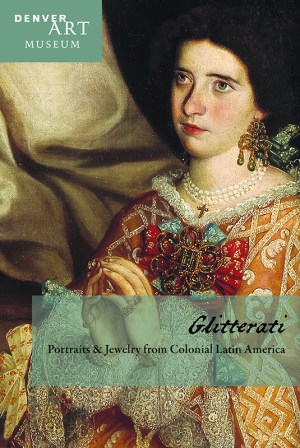 During the Spanish Colonial period in Latin America (1521–1850), precious gold and silver were crafted into elegant jewelry, then embellished with emeralds from Colombia, coral from Mexico, and pearls from Venezuela. To demonstrate their wealth and status, people were painted wearing their finest dress and elaborate jewelry. Selecting from its permanent collection, the Denver Art Museum installed the long-running exhibition Glitterati: Portraits and Jewelry in Colonial Latin America in its Spanish Colonial galleries in December 2014. This lavishly illustrated publication serves as a companion to the Glitterati exhibition and, on a larger scale, to the collection of Spanish Colonial jewelry and portraiture at the museum.
The Spanish Colonial collection at the Denver Art Museum is the most comprehensive of its kind in the United States and one of the best in the world with outstanding examples of painting, sculpture, furniture, decorative arts, silver and goldwork, and jewelry from all over Latin America during the time of the Spanish colonies. The Stapleton Foundation of Latin American Colonial Art, made possible by the Renchard family, gifted art acquired by the intrepid Daniel C. Stapleton between 1895 and 1914, when he worked in Ecuador, Colombia, and Venezuela overseeing plantations and emerald mines. Frederick and Jan Mayer worked closely with museum curators to build a collection of Mexican colonial art rich in many subjects and media, notably portrait paintings. Examples from both of these major collections are augmented by other pieces of jewelry and portraiture from the museum’s permanent collection in the Glitterati exhibition and in this volume.
Donna Pierce is Frederick and Jan Mayer Curator of Spanish Colonial Art at the Denver Art Museum and Head of the New World Department.
Julie Wilson Frick is the Mayer Center Program Coordinator and Junior Scholar in the New World Department at the Denver Art Museum.
New Book | Picture Titles
From Princeton UP:
Ruth Bernard Yeazell, Picture Titles: How and Why Western Paintings Acquired Their Names (Princeton: Princeton University Press, 2015), 352 pages, ISBN: 9780691165271, $35 / £25.
 A picture’s title is often our first guide to understanding the image. Yet paintings didn’t always have titles, and many canvases acquired their names from curators, dealers, and printmakers—not the artists. Taking an original, historical look at how Western paintings were named, Picture Titles shows how the practice developed in response to the conditions of the modern art world and how titles have shaped the reception of artwork from the time of Bruegel and Rembrandt to the present.
Ruth Bernard Yeazell begins the story with the decline of patronage and the rise of the art market in the seventeenth and eighteenth centuries, as the increasing circulation of pictures and the democratization of the viewing public generated the need for a shorthand by which to identify works at a far remove from their creation. The spread of literacy both encouraged the practice of titling pictures and aroused new anxieties about relations between word and image, including fears that reading was taking the place of looking. Yeazell demonstrates that most titles composed before the nineteenth century were the work of middlemen, and even today many artists rely on others to name their pictures. A painter who wants a title to stick, Yeazell argues, must engage in an act of aggressive authorship. She investigates prominent cases, such as David’s Oath of the Horatii and works by Turner, Courbet, Whistler, Magritte, and Jasper Johns. Examining Western painting from the Renaissance to the present day, Picture Titles sheds new light on the ways that we interpret and appreciate visual art.
Ruth Bernard Yeazell is the Chace Family Professor of English and director of The Lewis Walpole Library at Yale University. Her books include Harems of the Mind: Passages of Western Art and Literature and Art of the Everyday: Dutch Painting and the Realist Novel (Princeton).
◊ ◊ ◊ ◊ ◊
C O N T E N T S
List of Illustrations
Prologue (This is not a title)
I Naming and Circulating: Middlemen
1 Before Titles
2 Dealers and Notaries
3 Early Cataloguers
4 Academies
5 Printmakers
6 Curators, Critics, Friends—and More Dealers
II Reading and Interpreting: Viewers
7 Reading by the Title
8 The Power of a Name
9 Many Can Read Print
10 Reading against the Title
III Authoring as well as Painting: Artists
11 The Force of David’s Oath
12 Turner’s Poetic Fallacies
13 Courbet’s Studio as Manifesto
14 Whistler’s Symphonies and Other Instructive Arrangements
15 Magritte and The Use of Words
16 Johns’s No and the Painted Word
Acknowledgments
Notes
Index
HBA Book Award Winners for 2014 Publications
From HBA:
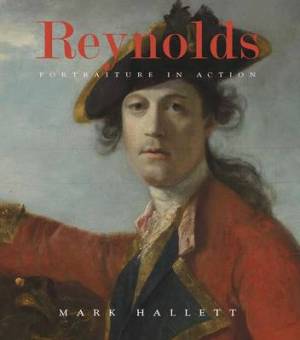 The Historians of British Art is pleased to announce Book Award winners for publications from 2014. The winners were chosen from a nominating list of over eighty books from more than twenty different presses. Awards are granted in three different categories, and this year two books share the award for single-author books dealing with a subject before 1800. Paul Binski’s Gothic Wonders: Art, Artifice, and the Decorated Style, 1290–1350 sets a major and understudied episode in medieval art in conversation with its Continental neighbors, dramatically enlivening both in the process. Mark Hallett’s Reynolds: Portraiture in Action breathes new life into one of Britain’s most thoroughly studied portraitists by tracing his work from studio conception to exhibition and beyond. John Potvin is the winner of the post-1800 single-author category for Bachelors of a Different Sort: Queer Aesthetics, Material Culture and the Modern Interior in Britain, a book that expands the scope of interior design and the insights that it can yield for British modern culture. Finally, British Art in the Nuclear Age, edited by Catherine Jolivette, is the winner of the multi-author category. Drawing on a wide array of artists and materials, this volume offers a subtle and surprising take on Britain’s cultural position during, and in relation to, the Cold War.
More information is available here»
New Book | Transatlantic Romanticism, 1790–1860
From the U of Massachusets Press:
Andrew Hemingway and Alan Wallach, eds., Transatlantic Romanticism: British and American Art and Literature, 1790–1860 (Amherst: University of Massachusetts Press, 2015), 336 pages, ISBN: 978-1625341143, $30.
 That the Romantic movement was an international phenomenon is a commonplace, yet to date, historical study of the movement has tended to focus primarily on its national manifestations. This volume offers a new perspective. In thirteen chapters devoted to artists and writers of the late eighteenth and early nineteenth centuries, leading scholars of the period examine the international exchanges that were crucial for the rise of Romanticism in England and the United States.
In the book’s introduction, Andrew Hemingway—building on the theoretical work of Michael Lowy and Robert Sayre—proposes that we need to remobilize the concept of Weltanschauung, or comprehensive worldview, in order to develop the kind of synthetic history of arts and ideas the phenomenon of Romanticism demands. The essays that follow focus on the London and New York art worlds and such key figures as Benjamin West, Thomas Bewick, John Vanderlyn, Washington Allston, John Martin, J. M. W. Turner, Thomas Cole, James Fenimore Cooper, George Catlin, Edgar Allan Poe, Harriet Beecher Stowe, and Herman Melville. Taken together, these essays plot the rise of a romantic anti-capitalist Weltanschauung as well as the dialectic between Romanticism’s national and international manifestations.
In addition to the volume editors, contributors include Matthew Beaumont, David Bindman, Leo Costello, Nicholas Grindle, Wayne Franklin, Janet Koenig, William Pressly, Robert Sayre, William Truettner, Dell Upton, and William Vaughan.
Andrew Hemingway is professor emeritus of art history, University College London, and author of The Mysticism of Money: Precisionist Painting and Machine Age America.
Alan Wallach is professor emeritus of art and art history, The College of William and Mary, and author of Exhibiting Contradiction: Essays on the Art Museum in the United States (University of Massachusetts Press, 1998).
◊ ◊ ◊ ◊ ◊
C O N T E N T S
Acknowledgments
Introduction: Capitalism, Nationalism, and the Romantic Weltanschauung, Andrew Hemingway
I The City
1 ‘The pit of modern art’: Practice and Ambition in the London Art World, William Vaughan
2 The Urban Ecology of Art in Antebellum New York, Dell Upton
3 Urban Convalescence in Lamb, Poe, and Baudelaire, Matthew Beaumont
II History
4 Sublime and Fall: Benjamin West and the Politics of the Sublime in Early Nineteenth-Century Marylebone, Nicholas Grindle
5 Benjamin West’s Royal Chapel at Windsor: Who’s in Charge, the Patron or the Painter?, William Pressly
6 The Politics of Style; Allston’s and Martin’s Belshazzars Compared, Andrew Hemingway
7 James Fenimore Coooper and American Artists in Europe: Art, Religion, and Politics, Wayne Franklin
III Landscape
8 John Martin, Thomas Cole, and Deep Time, David Bindman
9 ‘Gorgeous, but altogether false”: Turner, Cole, and Transatlantic Ideas of Decline, Leo Costello
10 Thomas Cole and Transatlantic Romanticism, Allan Wallach
IV Race
11 Picturing the Murder of Jane McCrea: A Critical Moment in Transatlantic Romanticism, William H. Truettner
12 The Romantic Indian Commodified: Text and Image in George Catlin’s Letters and Notes (1841), Robert Woods Sayre
13 Romantic Racialism and the Antislavery Novels of Stowe, Hildreth, and Melville, Janet Koenig
Notes on Contributors
Index










 Enfilade
leave a comment