Exhibition | Picturing Mary: Woman, Mother, Idea
From the NMWA:
Picturing Mary: Woman, Mother, Idea
National Museum of Women in the Arts, Washington, D.C., 5 December 2014 — 12 April 2015
Curated by Timothy Verdon
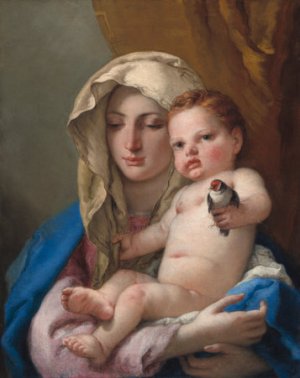
Giovanni Battista Tiepolo, Madonna of the Goldfinch, ca. 1767–70 (National Gallery of Art, Washington, D.C., Samuel H. Kress Collection #1943.4.40)
Appearing throughout the entire world, her image is immediately recognizable. In the history of Western art, she was one of the most popular subjects for centuries. Picturing Mary: Woman, Mother, Idea is a landmark exhibition at the National Museum of Women in the Arts (NMWA), bringing together masterworks from major museums, churches and private collections in Europe and the United States. Iconic and devotional, but also laden with social and political meaning, the image of the Virgin Mary has influenced Western sensibility since the sixth century.
Picturing Mary examines how the image of Mary was portrayed by well-known Renaissance and Baroque artists, including Botticelli, Dürer, Michelangelo, Pontormo, Gentileschi and Sirani. More than 60 paintings, sculptures and textiles are on loan from the Vatican Museums, Musée du Louvre, Galleria degli Uffizi, Palazzo Pitti and other public and private collections—many exhibited for the first time in the United States.
“Among the most important subjects in Western art for more than a millennium was a young woman: Mary, the mother of Jesus. Her name was given to cathedrals, her face imagined by painters and her feelings explored by poets,” said exhibition curator and Marian scholar Monsignor Timothy Verdon, director, Museo dell’Opera del Duomo, Florence, Italy. “This exhibition will explore the concept of womanhood as represented by the Virgin Mary, and the power her image has exerted through time, serving both sacred and social functions during the Renaissance and Baroque periods.”
Picturing Mary is the newest project in an ongoing program of major historical loan exhibitions organized by NMWA, including An Imperial Collection: Women Artists from the State Hermitage Museum (2003) and Royalists to Romantics: Women Artists from the Louvre, Versailles, and other French National Collections (2012). In addition to illustrating the work of women artists, NMWA also presents exhibitions and programs about feminine identity and women’s broader contributions to culture. Picturing Mary extends, in particular, the humanist focus of Divine and Human: Women in Ancient Mexico and Peru, a large-scale exhibition organized by NMWA in 2006.
The full press release (16 July 2014) is available as a PDF file here»
◊ ◊ ◊ ◊ ◊
From ACC Distrbution:
Timothy Verdon, Melissa R. Katz, Amy Remensnyder, Miri Rubin, Kathryn Wat, Picturing Mary Woman, Mother, Idea (New York: Scala Arts Publishers, 2014), 160 pages, ISBN: 978-1857598957, $45 / £30.
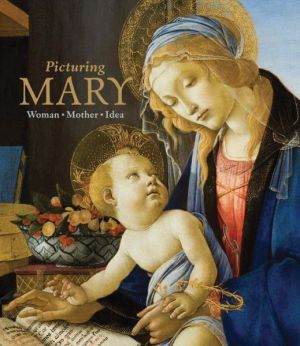 Iconic and devotional, but also fraught with social and political significance, the image of the Virgin Mary has shaped Western art since the sixth century. Depictions of the Virgin Mary in art through the ages are examined from a unique combination of Christian, Jewish, Muslim and contemporary art-historical perspectives. The thought-provoking texts examine Mary’s image as an enthroned queen, a tender young mother and a pious woman, demonstrating how her personification of womanhood has resonated throughout history to the present day.
Timothy Verdon is director of Museo dell Opera di Santa Maria del Fiore. Melissa R. Katz is Luther Gregg Sullivan Fellow in Art History, Wesleyan University. Amy Remensnyder is associate professor, Department of History at Brown University. Miri Rubin is Professor of Medieval and Early Modern History, Queen Mary University of London. Kathryn Wat is Chief Curator,
National Museum of Women in the Arts.
New Book | Italian Master Drawings from the Princeton Art Museum
From Yale UP:
Laura M. Giles, Lia Markey, and Claire Van Cleave, Italian Master Drawings from the Princeton University Art Museum (New Haven: Yale University Press, 2014), 334 pages, ISBN: 978-0300149326, $65.
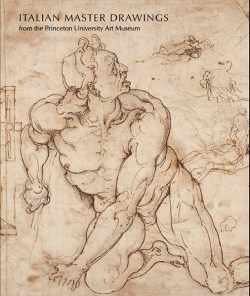 This richly illustrated volume offers a new look at the exceptional collection of Italian drawings at the Princeton University Art Museum. An introductory essay by Laura M. Giles chronicles the history and significance of the collection, and nearly one hundred of the collection’s masterworks are treated with essay-length entries and full-page images. The first scholarly examination of the collection since Felton Gibbons’s comprehensive publication of 1977, the catalogue includes an appendix of more than 150 drawings that have entered the collection since—many previously unpublished, and all fully documented with short entries. Highlights include works by celebrated masters, including Carpaccio and Modigliani, from the early Renaissance through the early Modern periods, with an emphasis on the collection’s renowned holdings of works by Luca Cambiaso, Guercino, and the two Tiepolos.
Laura M. Giles is the Heather and Paul G. Haaga Jr., Class of 1970, Curator of Prints and Drawings at the Princeton University Art Museum. Lia Markey is a lecturer in the department of art and archaeology at Princeton University, specializing in Italian Renaissance art. Claire Van Cleave is the author of Master Drawings of the Italian Renaissance (2007).
New Book | Warm Flesh, Cold Marble
From Yale UP:
David Bindman, Warm Flesh, Cold Marble: Canova, Thorvaldsen, and Their Critics (New Haven: Yale University Press, 2014), 220 pages, ISBN: 978-0300197891, $55.
 This brilliant book focuses on the aesthetic concerns of the two most important sculptors of the early 19th century, the great Italian sculptor Antonio Canova (1757–1822) and his illustrious Danish rival Bertel Thorvaldsen (1770–1844). Rather than comparing their artistic output, the distinguished art historian David Bindman addresses the possible impact of Kantian aesthetics on their work. Both artists had elevated reputations, and their sculptures attracted interest from philosophically minded critics. Despite the sculptors’ own apparent disdain for theory, Bindman argues that they were in dialogue with and greatly influenced by philosophical and critical debates, and made many decisions in creating their sculptures specifically in response to those debates.
Warm Flesh, Cold Marble considers such intriguing topics as the aesthetic autonomy of works of art, the gender of the subject, the efficacy of marble as an imitative medium, the question of color and texture in relation to ideas and practices of antiquity, and the relationship between the whiteness of marble and ideas of race.
David Bindman is Emeritus Durning-Lawrence Professor of the History of Art, University College London, and visiting professor, history of art, Harvard University.
Exhibition | Body and Soul: Munich Rococo from Asam to Günther
◊ ◊ ◊ ◊ ◊
the Kunsthalle Munich:
Body and Soul: Munich Rococo from Asam to Günther
Mit Leib und Seele: Münchner Rokoko von Asam bis Günther
Kunsthalle der Hypo-Kulturstiftung, Munich, 12 December 2014 – 12 April 2015
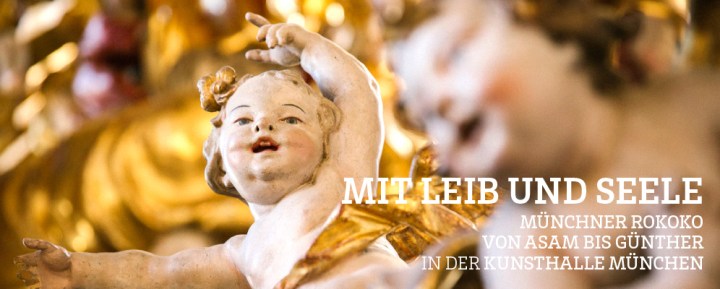
The Kunsthalle Munich and the Diocesan Museum Freising are organising a joint exhibition on Munich rococo—a golden age of Bavarian art, unparalleled even by international standards.
The exhibition presents numerous outstanding artists who lived in Munich between 1720 and 1770, like the Asam brothers, Cosmas Damian (1686–1739) and Egid Quirin (1692–1750), along with Johann Baptist Straub (1704–1784), Anton Bustelli (1723–1763) and Ignaz Günther (1725–1775). On the one hand, their exceptionally aesthetic language is characterised by an almost unprecedented jocular vitality, then again it is pervaded with a refined elegance. Visitors will be treated to a unique exhibition experience as numerous significant works from Bavaria and Germany’s wealth of churches, museums and castles come together in a fascinating journey. Thanks to the cooperation with the diocesan, many of the works have been loaned by churches and monasteries for the very first time and are being presented in the rooms of the Kunsthalle in this unique exhibition. Rarely in the past have visitors been given the opportunity to behold these otherwise almost inaccessible works in such proximity, allowing their artistic and technical qualities to be unveiled.
The Many Faces of Rococo
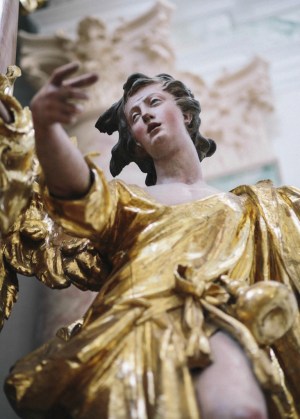
Johann Baptist Straub, Raphael the Archangel from the high altar, 1767, gilt and polyhcrome wood, 200 cm (Munich: Parish Church of St. Michael, © Thomas Dashuber).
The exhibition is showing approximately 160 rococo masterpieces, particularly sculptures in wood and other materials like stucco, clay, porcelain and silver, together with paintings, drawings and graphic prints. The starting point of the exhibition is the baroque artwork combining architecture, painting, stucco and sculpture, which reached its final, particularly impressive culmination in the hands of the Asam brothers. Contextualised by Bozzetti (sculptural designs) and drawings, the sculptures of Johann Baptist Straub and Ignaz Günther are at the very heart of the exhibition. Straub is considered to be the founding father of rococo sculpture, while Günther marks the pinnacle, and yet also the grand finale, of the epoch. Christian Jorhan the Elder (1727–1804) and Franz Xaver Schmädl (1705–1777) represent the generation of students who propagated Munich’s rococo beyond the city walls and out into the surrounding areas. Anton Bustelli introduces a mundane aspect: the effortless sophistication and playfulness of his renowned porcelain figures, which were popular table decorations at court, symbolise the entire era. The final chapter of the exhibition is dedicated to the sculptor Roman Anton Boos (1733–1810). Although his works are clearly rooted in the tradition of his predecessors, at the same
time they presage the emerging art of classicism.
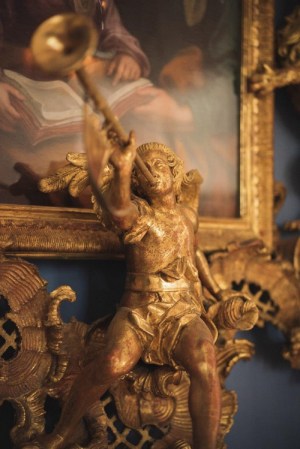
François Cuvilliés, detail of the decorative frame from the St Anne Altar, 1742–44 (Munich: Wallfahrts-kirche St. Anna, © Thomas Dashuber)
Between Play and Earnest
The exhibition aims to offer fresh insight with an unadulterated look at the epoch and, in so doing, not merely showcase the high artistic quality of the works but also to integrate them in the zeitgeist and the spiritual world. In the process, rococo art is taken literally in its specificity and its characteristics—the playful, delicate elements—turn out to be its inherent strengths. Far-reaching issues, relating to the mounting of the sculptures, their architectural integration or workshop practice for example, are also addressed.
The art of Munich rococo interfuses sacrality and profanity, the ecclesiastical and courtly worlds, but also play and earnest. Thus, an aesthetic language emerges that is unique in Europe, yet entirely its own.
A lavishly illustrated catalogue with further essays and detailed information on all the exhibits has been published by Sieveking Verlag to accompany the exhibition.
◊ ◊ ◊ ◊ ◊
From the publisher:
Christoph Kürzeder, Ariane Mensger, Peter Volk, et al. Mit Leib und Seele: Münchner Rokoko von Asam bis Günther (Sieveking Verlag, 2014), 384 pages, ISBN 978-3944874159, 50€.
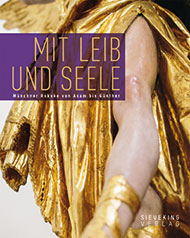 The exhibition Mit Leib und Seele (Body and Soul) aims to shed new light on the astounding stylistic diversity of the Munich Rococo between the years 1720 and 1770. The accompanying publication illustrates how a fresh consideration of the era provides illuminating insights into works by a range of artists, including the Asam brothers, Johann Baptist Straub, Franz Anton Bustelli, and Ignaz Günther. While the focus is on sculpture, the exhibition also features porcelain, silverwork, paintings, and drawings. The high art of the Rococo is presented in the context of its zeitgeist and religious milieu and appears more vibrant and more spectacular than ever: with their elegant, refined physicality and profound spirituality the artworks of this important period enter into a dialogue with viewers—and engage both body and soul.
The Kunsthalle of the Hypo Cultural Foundation in Munich is exhibiting these epochal works in partnership with the Diözesanmuseum Freising. The result of this collaboration is a unique exhibition in which the Munich Rococo will be seen in a presentation unprecedented in its magnitude and quality.
New Book | The Rise of Heritage: Preserving the Past
From Cambridge UP:
Astrid Swenson, The Rise of Heritage: Preserving the Past in France, Germany and England, 1789–1914 (New York: Cambridge University Press, 2013), 432 pages, ISBN: 978-0521117623, $99.
 Where does our fascination for ‘heritage’ originate? This groundbreaking comparative study of preservation in France, Germany and England looks beyond national borders to reveal how the idea of heritage emerged from intense competition and collaboration in a global context. Astrid Swenson follows the ‘heritage-makers’ from the French Revolution to the First World War, revealing the importance of global networks driving developments in each country. Drawing on documentary, literary and visual sources, the book connects high politics and daily life and uncovers how, through travel, correspondence, world fairs and international congresses, the preservationists exchanged ideas, helped each other campaign and dreamed of establishing international institutions for the protection of heritage. Yet, these heritage-makers were also animated by fierce rivalry as international tension grew. This mixture of international collaboration and competition created the European culture of heritage, which defined preservation as integral to modernity, and still shapes current institutions and debates.
Astrid Swenson is Lecturer in European History at Brunel University, London. Her previous publications include From Plunder to Preservation: Britain and the Heritage of Empire, c.1800–1940 (co-edited with Peter Mandler, 2013).
◊ ◊ ◊ ◊ ◊
C O N T E N T S
Introduction
Part I. National Heritage Movements
1. In search of origins
2. The heritage-makers
Part II. International Meeting-Points
3. Exhibition mania
4. ‘Peace and goodwill among nations’
Part III. Transnational Campaigns
5. ‘A Morris dance ’round St Mark’s’
6. ‘A yardstick for a people’s cultural attainment’
Conclusion
Bibliography
New Book | Bluestockings Displayed
From Cambridge UP:
Elizabeth Eger, ed., Bluestockings Displayed: Portraiture, Performance and Patronage, 1730–1830 (New York: Cambridge University Press, 2013), 323 pages, ISBN: 978-0521768801, £60.
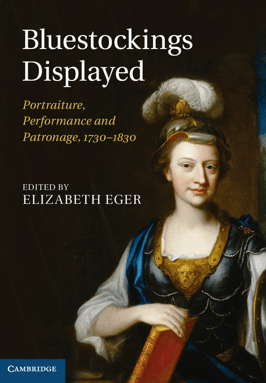 The conversation parties of the bluestockings, held to debate contemporary ideas in eighteenth-century Britain, were vital in encouraging female artistic achievement. The bluestockings promoted links between learning and virtue in the public imagination, inventing a new kind of informal sociability that combined the life of the senses with that of the mind. This collection of essays, by leading scholars in the fields of literature, history and art history, provides an interdisciplinary treatment of bluestocking culture in eighteenth-century Britain. It is the first academic volume to concentrate on the rich visual and material culture that surrounded and supported the bluestocking project, from formal portraits and sculptures to commercially reproduced prints. By the early twentieth century, the term ‘bluestocking’ came to signify a dull and dowdy intellectual woman, but the original bluestockings inhabited a world in which brilliance was valued at every level and women were encouraged to shine and even dazzle.
Elizabeth Eger is Reader in Eighteenth-Century Literature at King’s
College London.
◊ ◊ ◊ ◊ ◊
C O N T E N T S
Introduction, Elizabeth Eger
I. Portraits
1. Romantic bluestockings: From muses to matrons, Anne Mellor
2. ‘To dazzle let the vain design’: Alexander Pope’s portrait gallery, or, the impossibility of brilliant women, Emma Clery
3. Virtue, patriotism and female scholarship in bluestocking portraiture, Clare Barlow
4. Anne Seymour Damer: A sculptor of ‘republican perfection’, Alison Yarrington
5. The blues gone grey: Portraits of bluestocking women in old age, Devoney Looser
II. Performance
6. Sacred love: Eliza Linley’s voice Joseph Roach
7. The learned female soprano Susan Staves
8. Roles and role models: Montagu, Siddons, Lady Macbeth Shearer West
9. Hester Thrale: ‘What trace of the wit?’ Felicity A. Nussbaum
III. Patronage and Networks
10. Reading practices in Elizabeth Montagu’s epistolary network of the 1750s, Markman Ellis
11. The queen of the blues, the bluestocking queen, and bluestocking masculinity, Clarissa Campbell Orr
12. Luck be a lady: Patronage and professionalism for women writers in the 1790s, Harriet Guest
Exhibition | Picture Talking: James Northcote and the Fables
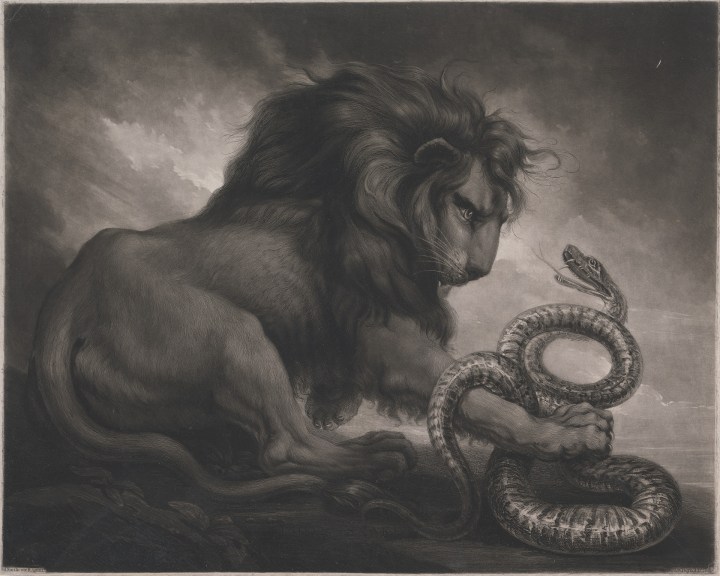
Samuel William Reynolds, after James Northcote, Lion and Snake (detail), 1799, mixed method engraving (New Haven: Yale Center for British Art, Paul Mellon Collection)
◊ ◊ ◊ ◊ ◊
The prints Northcote used in the collages date from the eighteenth century. Press release from the YCBA:
Picture Talking: James Northcote and the Fables
Yale Center for British Art, New Haven, 2 October — 14 December 2014
Curated by Mark Ledbury and A. Cassandra Albinson
The first exhibition solely dedicated to James Northcote’s art and career, Picture Talking: James Northcote and the Fables will present a fascinating look at one of Britain’s most imaginative and eccentric painters.

William Daniell, after George Dance, James Northcote, between 1798 and 1819, graphite and red chalk on medium, slightly textured, cream wove paper mounted on moderately thick, moderately textured, beige laid paper (New Haven: Yale Center for British Art, Paul Mellon Collection)
Northcote (1746–1831) has been remembered primarily as a memoirist, a writer on art and artists, and a conversationalist whose strong opinions on diverse topics were often repeated in print. A pupil of Sir Joshua Reynolds, the first president of the Royal Academy, Northcote enjoyed a popular reputation in his time for painting portraits of historical subjects, scenes from Shakespeare’s plays, and animals. This subsequently was overshadowed by his prominence as a source of information on his contemporaries. This exhibition, drawn exclusively from the rich holdings of the Yale Center for British Art, will redress that imbalance by presenting an array of Northcote’s art: paintings, drawings, prints, and, at its center, a practically unknown manuscript for Northcote’s One Hundred Fables, Original and Selected (1828).
Northcote wrote and illustrated these fables for adults during the last twenty years of his life. They convey moral lessons, often with themes comparing the similarities of humans to animals. Using techniques well ahead of his time, Northcote created collaged illustrations for the Fables by cutting humans, other animals, and background details from his collection of historical engravings, then reassembling them into chimerical scenes. This exhibition will explore the translation of Northcote’s highly original designs from collages to their ultimate form as wood engravings for two series of Fables, the first published in 1828, the second, posthumously, in 1833. The wood engravings provided simplified, but highly popular, interpretations of the original fables for mass production and consumption. Picture Talking will consider the questions of originality versus pastiche and image versus text through careful consideration of Northcote’s art. It will argue that in his earlier work as a history painter and print designer, Northcote worked through the process of borrowing and collage. Thus, the fables represent a culmination of his career.
Picture Talking: James Northcote and the Fables has been organized by the Yale Center for British Art. The co-curators are Mark Ledbury (Power Professor of Art History and Visual Culture and Director of the Power Institute at the University of Sydney) and A. Cassandra Albinson (Curator of Paintings and Sculpture at the Yale Center for British Art).
Opening Lecture
Mark Ledbury | Inspiration and Eccentricity: The Ups and Downs of James Northcote
Yale Center for British Art, New Haven, 1 October 2014, 5:30
◊ ◊ ◊ ◊ ◊
From Yale UP:
Mark Ledbury, James Northcote, History Painting, and the Fables (New Haven: Yale Center for British Art, 2014), 256 pages, ISBN: 978-0300208139, $65.
 The artistic accomplishments of James Northcote (1746–1831) have tended to be overshadowed by his role as a biographer of Joshua Reynolds, first president of the Royal Academy of Arts, with whom Northcote apprenticed. Here, Mark Ledbury constructs a very different image of Northcote: that of a prolific member of the Royal Academy and an active participant in the cultural and political circles of the Romantic era, as well as a portrait and history painter in his own right. This book focuses on Northcote’s One Hundred Fables (1828), a masterpiece of wood engraving, and the unconventional, collaged manuscripts for the volume. The Fables, extensively published here for the first time, were an early experiment in what is now a familiar multimedia practice. Idiosyncratic, personal, and visionary, One Hundred Fables serves as a lens through which to examine Northcote’s long, complex, and fruitful artistic career.
Mark Ledbury is Power Professor of Art History and director of the Power Institute at the University of Sydney.
Reviewed | Judith Bonner on ‘The Coast and the Sea’
Linda S. Ferber, The Coast and the Sea: Marine and Maritime Art in America (New York and London: New-York Historical Society in association with D. Giles Limited, 2014), 104 pages, ISBN 978-1907804311, $30 / £20.
Reviewed for Enfilade by Judith H. Bonner
 The New-York Historical Society, that city’s oldest museum, is celebrating its recent reopening after its lengthy renovation with a traveling exhibition and accompanying catalogue by Linda S. Ferber.1 The exhibition features more than 60 artworks and artifacts, primarily paintings, including portraits, genre scenes, and marine and maritime scenes. Overall, the images document the development of the New York area with its harbor and its close relationship with the Atlantic Ocean, the great maritime highway for trade and immigration.
Works selected for the exhibition have their origins in the eighteenth century, beginning in 1728 and ending in 1904. Maritime-related artifacts include a vintage spyglass, scrimshaw, snuff boxes, and an 1816 silver presentation soup tureen commemorating acts of bravery during the War of 1812. The provenance of each artwork documents the development of the New-York Historical Society, as well as the city’s art collectors, their tastes, and their interests.
The exhibition features work by artists whose names are familiar, as well as those who are unfamiliar. The painters include Thomas Birch, Thomas Buttersworth, Carlton Theodore Chapman, Thomas Cole, Jasper Francis Cropsey, Julian Oliver Davidson, Mauritz Frederick Hendrick De Haas, James Guy Evans, Robert Havell Jr., John Frederick Kensett, Rembrandt Peale, Francis Augustus Silva, and John Vanderlyn.
Several artists had nautical experience that informed their art in subject, rigging, and construction of the vessels. Buttersworth served in the British navy, while De Haas held an artist’s commission in the Dutch navy. James Guy Evans possibly served in the American navy. Chapman ran away to sea as a teenager; and Davidson sailed the globe, making sketches that provided visual sources for many years. Evident in these artists’ works is their understanding of the action of waves and atmospheric effects over the seas at different times of the day or season.
The marine subjects include frigates engaged in famous sea battles, working vessels and bustling port scenes, marine recreation scenes, portraits of heroic sea captains, and pioneering merchants. Marine scenes focus on recreation, shipwrecks, disasters, and military encounters, particularly those in the War of 1812 and Civil War. The exhibition spreads its reach down the East Coast, swinging farther south to the Battle of Mobile Bay in the Gulf of Mexico and the Battle of Port Hudson up the Mississippi River about 100 miles above New Orleans.
Portraitists range from eighteenth-century painter John Wollaston to early nineteenth-century painters John Vanderlyn and Rembrandt Peale, the latter of whom executed a portrait of naval hero Commodore Stephen Decatur in dress uniform and set against a dramatic stormy sky. Wollaston’s circa-1750 portrait of wealthy colonial merchant-shipbuilder Captain John Waddell, who owned a fleet of ships, sets the stage for the succession of ships’ portraits seen throughout the catalogue. Early portraits include personages having distinguished careers or an association with maritime enterprises. The sitter is often shown near an open window through which one views a conventionalized seascape or harbor scene with masted vessels. Other sitters are shown with maps, globes, compass, a spyglass, or other maritime instruments.
The catalogue is well researched and documented with a select bibliography. Explanations of the marine scenes are succinct yet vivid; the prose is fluid and often poetic. Ferber distinguishes between marine scenes—which focus on the pure seascape, its coast and environs—and maritime paintings. The latter, Ferber explains, emphasize human activity and other enterprises on shore or at sea. Her knowledge of nautical terminology and national history is evident throughout. She traces visual conventions from their development in seventeenth-century Holland, their passage into the British school of marine painting, and subsequent introduction into English colonies in the New World.
Ferber consistently places artworks within a broader historical context and, when appropriate, within a cultural narrative. Brief biographical sketches of artists trace their artistic development within the maritime tradition. Ferber discusses allegorical themes in paintings, as well as the effect that nostalgic longing for historically simpler times had upon the proliferation and re-creation of popular scenes celebrating heroic national victories and spirited naval encounters.
The book invites readers to the repeated examination of the images, some of which, like those illustrating the America’s Cup, are iconic. Truly memorable is a painting by Howard Pyle, A Privateersman Ashore (1893), shown in historically correct clothing and accouterments. The privateer stands near the Battery and Castle Clinton at the time of the War of 1812, posed and preening, with smoke from his cigar curling upward from the corner of his mouth as townspeople in the distance look toward him with disdain. The latter is a comment about the disapprobation citizens held for such freebooters, who preyed upon British ships.
Closing this maritime jaunt through history are two paintings. The first, by Andrew Meyer, shows President Grover Cleveland reviewing a naval parade in New York Harbor as the setting for opening ceremonies of Chicago’s Columbian Exposition in 1893, with the Statue of Liberty clearly visible, as though she also stands in review of the parade. Lastly, in 1904 Chapman portrays the Great East River Bridge (now Brooklyn Bridge) over the East River, celebrating New York’s location on the rim of the Atlantic, the gateway to America.
1. Venues for exhibition include: The Society of the Four Arts, Palm Beach, Florida (25 January — 9 March 2014); The Baker Museum of Art, Naples, Florida (19 April — 6 July 2014); Portland Museum of Art, Portland, Maine (January — May 2015); The Mattatuck Museum, Waterbury, Connecticut (6 June — 13 September 2015); and The New York State Museum, Albany, New York (24 October 2015 — 22 February 2016).
◊ ◊ ◊ ◊ ◊
Judith H. Bonner is Senior Curator and Curator of Art at The Historic New Orleans Collection.
New Book | The Self-Portrait: A Cultural History
From Thames & Hudson:
James Hall, The Self-Portrait: A Cultural History (London: Thames & Hudson, 2014), 288 pages, ISBN 978-0500239100, £25.
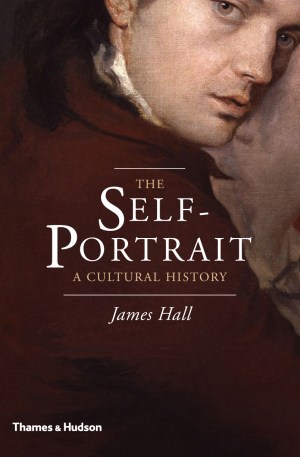 In this broad cultural survey, art historian and critic James Hall brilliantly maps the history of self-portraiture, from the earliest myths of Narcissus to the prolific self-image-making of contemporary artists.
His intelligent and vivid account shows how artists’ depictions of themselves have been part of a continuing tradition that reaches back for centuries. Along the way he reveals the importance of the medieval ‘mirror craze’; the explosion of the genre during the Renaissance; the confessional self-portraits of Titian and Michelangelo; the role of biography for serial self-portraitists such as Courbet and van Gogh; themes of sex and genius in works by Munch, Bonnard and Modersohn-Becker; and the latest developments of the genre in the era of globalization.
The full range of self-portraits is covered here, from comic and caricature self-portraits to ‘invented’ or imaginary ones, as well as key collections of self-portraiture such as that of the Medici in Florence. Throughout, Hall asks why—and when—artists have chosen to make self-portraits, and looks deeply into the worlds and mindsets of the artists who have created them.
Comprehensive and beautifully illustrated, the book features the work of a wide range of artists including Alberti, Caravaggio, Courbet, Dürer, Emin, Gauguin, Giotto, Goya, Kahlo, Koons, Magritte, Mantegna, Picasso, Raphael, Rembrandt and Warhol. Offering a rich and lively history, The Self-Portrait is an essential read for all those interested in this most enduringly popular and humane of art forms.
James Hall is an art critic and historian whose previous books include The World as Sculpture: The Changing Status of Sculpture from the Renaissance to the Present Day; Michelangelo and the Reinvention of the Human Body; Coffee with Michelangelo; and The Sinister Side: How Left-Right Symbolism Shaped Western Art.
Exhibition | William Blake: Apprentice and Master
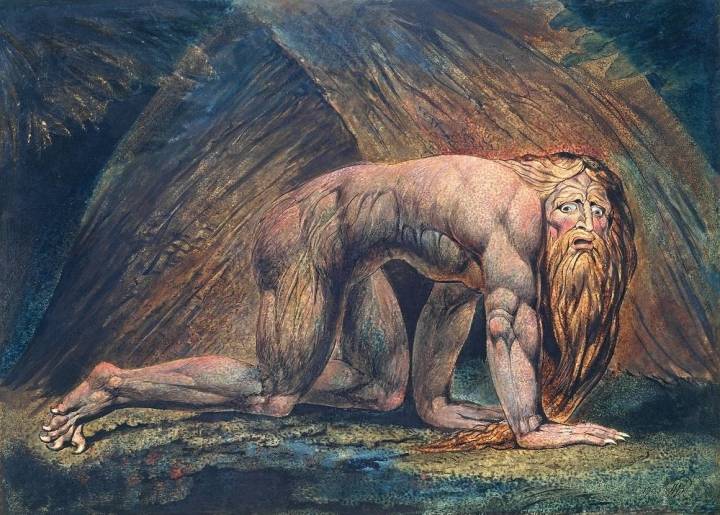
William Blake, Nebuchadnezzar, ca. 1795–1805, colour print,
ink, and watercolour on paper, 54.3 x 72.5 cm (London: Tate)
◊ ◊ ◊ ◊ ◊
From the Ashmolean:
William Blake: Apprentice and Master
Ashmolean, Oxford, 4 December 2014 — 1 March 2015
Curated by Michael Phillips and Colin Harrison
This major exhibition focuses on the extraordinary life and work of William Blake (1757–1827), printmaker, painter and revolutionary poet of the prophetic books. It examines his formation as an artist, apprenticeship as an engraver, and his maturity during the 1790s when he was at the height of his powers as both an artist and revolutionary poet. We also explore his influence on the young artist-printmakers who gathered around him in the last years of his life, including Samuel Palmer, George Richmond and Edward Calvert.
One of the most popular English artists, William Blake is still one of the least understood. His radical politics were reflected in his extraordinary technical innovations, especially in the field of printmaking and the illuminated book. This exhibition brings together more than 90 of Blake’s most celebrated works and offers new insights into his remarkable originality and influence.
At a young age William Blake showed artistic promise and, at the age of 15, was apprenticed to James Basire, the official engraver to the Society of Antiquaries. Under Basire’s tutelage, Blake was sent out to study London’s gothic churches and, most particularly, the monuments and decorations in Westminster Abbey—an experience which was to prove formative for his later style and imagery. The first section of the exhibition looks at Blake’s early work, exemplifying his already unorthodox approach.
After studying at the Antique School of the Royal Academy, Blake opened a print shop with his former apprentice colleague, James Parker, and from this point he began to associate with the leading writers and intellectuals of radical politics such as Mary Wollstonecraft and Thomas Paine, who gathered at the house of publisher, Joseph Johnson. Blake was soon producing prints of startling originality, which anticipate by nearly a century the monotypes made by artists such as Edgar Degas from the 1880s onwards. The exhibition examines Blake’s technical innovations in the creation of his illuminated books, which brought a new sophistication to colour printing. Among the works on display are several of the most extraordinary illuminated books, including The Marriage of Heaven and Hell, and a complete set of the plates from Europe: A Prophecy, together with some of the finest separate plates, among them Nebuchadnezzar and Newton.
Apprentice and Master will also look at Blake’s later career when, encouraged by his friendship with the young artist, John Linnell, he developed an interest in the great artist-printmakers of the Renaissance such as Albrecht Dürer and Lucas van Leyden. It was Linnell who commissioned the last of Blake’s great series of watercolours, the illustrations to the Book of Job and to Dante. It was these works, and above all the small woodcut illustrations to Virgil’s Pastorals, which inspired the young artists Samuel Palmer, George Richmond, and Edward Calvert, known as the Ancients. During the last three years of his life, they visited Blake and his wife in their two-room flat off the Strand. This exhibition juxtaposes many of the works the Ancients would have seen on these visits, with their own early works. Among the most notable are Palmer’s greatest creations, the six sepia drawings of 1825; and Calvert’s exquisite woodcuts of the late 1820s.
William Blake: Apprentice and Master has been curated by Dr Michael Phillips (Centre for Eighteenth Century Studies, University of York) and Mr Colin Harrison (Senior Curator of European Art, Ashmolean Museum).
Michael Phillips is currently writing a biography of William Blake in Lambeth during the anti-Jacobin Terror in Britain, entitled Blake and the Terror. His edition in facsimile of Blake’s The Marriage of Heaven and Hell was published by the Bodleian Library and the University of Chicago Press in 2011. He was guest curator of the William Blake Exhibition that opened in Paris at the Petit Palais from 1 April to 28 June 2009 and editor of the catalogue. He was also guest curator of the major Blake exhibition at Tate Britain and the Metropolitan Museum of Art, New York, 2000–2001, and is currently guest curator of the Blake exhibition opening in December 2014 in the new galleries of the Ashmolean Museum of the University of Oxford, William Blake: Apprentice & Master, where Blake’s printmaking studio at No. 13 Hercules Buildings, Lambeth, will be recreated.
◊ ◊ ◊ ◊ ◊
Michael Phillips, William Blake: Apprentice and Master (Oxford: Ashmolean Museum, 2015), 200 pages, ISBN: 978-1854442888, £21 / $40.










 Enfilade
leave a comment