Exhibition | Lost Treasures of the Jewish Ghetto of Venice
Press release for the exhibition now on at the Winter Palace in Vienna:
Lost Treasures of the Jewish Ghetto / Schätze des Jüdischen Ghettos in Venedig
The Museum of Fine Arts, Houston, 21 February — 28 April 2013
Ca’ d’Oro, Venice, 1 June — 29 September 2013
Winter Palace, Vienna, 28 April — 6 July 2014

Torah Crown, 1796. Parcel-gilt silver
(Collection of the Comunità Ebraica di Venezia)
◊ ◊ ◊ ◊ ◊
In 2016, the Jewish Ghetto of Venice will celebrate its 500th anniversary. Venice was considered a hub of Jewish culture over the centuries, with its ghetto being home to a flourishing international Jewish community. In order to properly mark this anniversary, the international organisation Venetian Heritage, in cooperation with Maison Vhernier, has organised the temporary exhibition Treasures of the Jewish Ghetto of Venice, which is being presented at the Winter Palace from 28 April to 6 July 2014. Although created as a site of segregation, the Venice ghetto developed into a place of encounter for numerous groups of Jews from different countries and into an important source of inspiration for Jewish culture in many other regions around the globe. From 1516 to 1797—almost over three centuries—a community of various ethnical backgrounds (Germans, Italians, Jews from East and West) coexisted in Europe’s most tolerant town. In 1943, a number of precious objects were hidden by the Nazis. These valuables had then fallen into oblivion, until they were unearthed during the restoration of the Scola Spagnola several years ago. The show illustrates the richness and beauty of practiced Jewry until destroyed by National Socialism; it also keeps track of the conservation of the objects before they were stolen and their recent rediscovery.
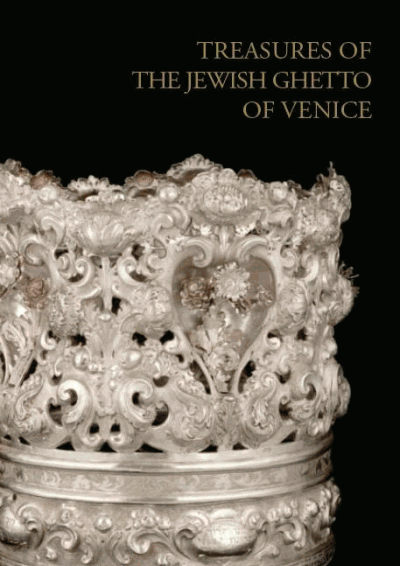 The decorative art objects created by Venetian artisans between the 17th and early 20th centuries belong to a heritage that vividly demonstrates how Venetian culture, with its wide ethnic spectrum and multicultural feel, provided a role model for the rest of Europe. The former Winter Palace of Prince Eugene, who was known for his open-mindedness and far-reaching interests, offers itself as an ideal exhibition venue. The cult objects, which were in a deplorable state when they were found and have now been restored to their former splendour, represent a small part of the collections of the Jewish Museum in Venice and impressively attest to the great significance of the Venetian art of goldsmithing.
Most of the silver and bronze objects on display were used in rituals in Venetian synagogues during mass and on special occasions and holidays. Such liturgical pieces include, for example, the wooden tikim (Torah cases) in which the Torah scrolls are kept when not in use, and the magnificent Thora crowns and pairs of rimmonim adorning the scrolls or the tikim. Hanging above each tik is a lamp called a ner tamid (eternal light) that illuminates the tik or a larger ark in a synagogue. Two spice containers, used in the Havdallah service at the closing of Sabbath to bring worshipers back to reality from the ecstasy of Sabbath, are also on view, along with two yads (pointers helping readers follow a text) used during services. Utensils associated with traditional dietary include, among other things, the jug and bowl for washing one’s hands before meals, and the two Seder plates that were used on the evening of the Seder.
When Italy was occupied by the Nazis in September 1943, these objects were hidden and only surfaced several years ago. Thanks to an initiative by Venetian Heritage and Maison Vhernier, it was possible to restore them and present them to the public. From now on, they will form the heart of the Museo Ebraico di Venezia, which will be reopened on the occasion of the 500th anniversary celebrations of the Venetian ghetto.
Venice in the 18th Century
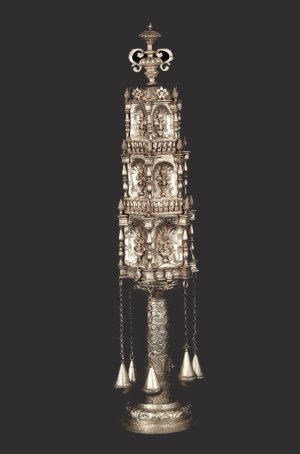
Rimmonim, Italian, silver, 48 x 10 cm, 1747 (Collection of the Comunità Ebraica di Venezia)
In 18th-century Venice, tourism became a booming branch of the economy. The charm of Venice depended not least on the cosmopolitan atmosphere of the town. Vedutists captured its enchanted atmosphere and sights, such as the church of Santa Maria della Salute, the Rialto Bridge, and the Doge’s Palace, their works serving as coveted souvenirs for visitors. The paintings were destined to be prominently installed in drawing rooms as status symbols proving that their owners were among those privileged citizens who could afford to undertake a Grand Tour through Italy.
The Jewish Ghetto of Venice
As Christians were not permitted to lend money to other Christians for interest, Jews played an important role in Venetian society as moneylenders, pawnbrokers, and merchants in second-hand articles. Whereas in earlier days Jews had only been allowed to stay in Venice for a maximum of 15 days a year, they were eventually allowed to settle in the town from 1509 on, if only under strict reservations. They were forbidden to openly practice their religion, purchase land, entertain sexual relationships with Christians, and wear ostentatious yellow or red hats. In 1516, the Senate of Venice declared the premises of a former foundry (geto) as a dwelling zone for Jews, arguing that Jews could impossibly be allowed to live in the city and move around freely. The ghetto was completely secluded: two gates were built that remained blocked for Jews during the dusk-to-dawn curfew. The area was extremely densely populated, with several thousand residents living on 2.4 hectares and five large synagogues accommodating various ethnic groups. In spite of these severe restrictions, Venice was considered one of the best places for Jews to live. In 1797, the Council of Venice handed the town over to Napoleon, and the gates to the Jewish ghetto were demolished to loud calls for freedom. The Jews of Venice were still years away from full equality, but they were no longer locked up in the ghetto.
Venetian Heritage
Venetian Heritage is an international non-profit organisation located in New York and Venice and is part of the UNESCO Private Committees Programme for the Safeguarding of Venice. Venetian Heritage supports cultural initiatives through restoration projects, exhibitions, publications, lectures, studies, and research programmes aimed at raising global awareness of the rich cultural heritage of the Veneto region in Italy and areas once belonging to the Republic of Venice, known as La Serenissima.
Catalogue: Agnes Husslein-Arco and Georg Muzicant, Treasures of the Jewish Ghetto of Venice (Vienna: Belvedere, 2014), 104 pages, ISBN 978-3902805454 (German/English/Italian), €19.
New Book | Confronting the Golden Age
Distributed by The University of Chicago Press:
Junko Aono, Confronting the Golden Age: Imitation and Innovation in Dutch Genre Painting 1680–1750 (Amsterdam University Press, 2014), 272 pages, ISBN: 978-9089645685, $99.
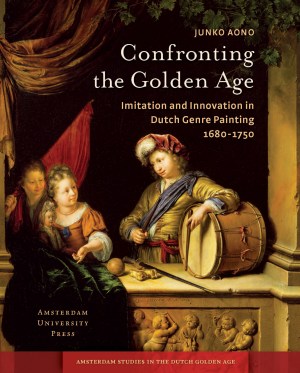 Dutch genre paintings of the period between 1680 and 1750 have historically been cast as uninspired repetitions of art from the mid-seventeenth-century Dutch Golden Age. In Confronting the Golden Age, Junko Aono reconsiders these oft-dismissed paintings, repositioning them as dynamic works that played an instrumental role in the canonization of the art of the Golden Age.
Drawing on archival documents, sales catalogs, and other texts, Aono closely analyzes a range of genre paintings—many of them handsomely reproduced in this volume. In the process, she deepens our understanding of these works and reveals how they illuminate the relationships among painters, collectors, and the dominant artistic currents of the time.
Junko Aono is associate professor of art history at Kyushu University, Fukuoka in Japan.
C O N T E N T S
I. Confronting the Heritage of the Golden Age: The Situation around Dutch Genre Painting 1680–1750
Introduction
1. Painter and collector in transition: the search for a new relationship
2. The collector ’s taste: in praise of seventeenth-century Dutch genre painting
3. Popular subject matter of genre painting in eighteenth-century collections
4. The painter ’s choice: updating seventeenth-century genre painting
II. Reproducing the Golden Age: Copies after Seventeenth-Century Dutch Genre Painting in the First Half of the Eighteenth Century
1. Commercial misuse of copies: discussion between Johan van Gool and Gerard Hoet
2. Copies as substitutes for seventeenth-century painting
3. The painter ’s choice: in search of a favorite painte and subject matter
4. Case study: the candlelight scene as popular subject
5. The function of copying: looking back to the Golden Age
III. Emulating the Golden Age: The Painter’s Choice of Motifs and Subject Matter in Dutch Genre Painting of the First Half of the Eighteenth Century
1. The painter ’s choice of subject matter
2. Competing with the ‘old masters’: pendants by Gerard Dou, Willem van Mieris and Hieronymus van der Mij
3. ‘Pleasurable enjoyment of dissimilar similarity’
IV. Ennobling Daily Life: A Question of Refinement in Early Eighteenth-Century Dutch Genre Painting
1. Gerard de Lairesse’s attempt to ennoble genre painting
2. The painter ’s practice of idealizing figures in genre painting
3. To meet new demands of collectors: seeking ideal versatility
New Book | Travel and Tourism in Britain, 1700–1914
From Pickering & Chatto:
Susan Barton and Allan Brodie, eds., Travel and Tourism in Britain, 1700–1914, 4 volumes (London: Pickering & Chatto, 2014), approximately 1600 pages, ISBN: 978-1848934122, £350 / $625.
The British led the way in holidaymaking. During the eighteenth century travel was only available to the wealthiest people, but from the 1830s the railways brought a transport revolution, opening up the chance for travel to all classes. As tourism grew in popularity, a whole new industry developed. Many new large, lively towns grew up around spas and at the seaside to meet the needs of visitors. Guidebooks were produced, aimed at all sorts of holidaymakers and the first travel agencies emerged.
This four-volume primary resource collection brings together a diverse range of texts on the various forms of transport used by tourists, the destinations they visited, the role of entertainments and accommodation and how these affected the way that tourism evolved over two centuries. Case studies on specific towns—Bath, Cheltenham and Tunbridge Wells—illustrate the rise of spa tourism, then studies of Brighton, Margate, Blackpool and Scarborough are used to demonstrate the later dominance of the seaside resort. The collection will be of interest to social and economic historians as well as those researching print culture and the history of tourism.
• Contains over 200 rare primary resources
• Includes diaries, memoirs, guide books, journal articles, railways guides, handbills, trade directories, local newspaper articles and poems
• Editorial apparatus includes a general introduction, volume introductions, headnotes and endnotes
• A consolidated index appears in the final volume
Volume 1: Travel and Destination
Volume 2: Spa Tourism
Volume 3: Seaside Holidays
Volume 4: Seaside Resorts
Susan Barton is an honorary fellow at the International Centre for Sports History and Culture, De Montfort University. Allan Brodie is an architectural historian for English Heritage.
New Book | Framing the Ocean
From Ashgate:
Tricia Cusack, ed., Framing the Ocean, 1700 to the Present: Envisaging the Sea as Social Space (Aldershot: Ashgate, 2014), 302 pages, ISBN: 978-1409465683, £70 / $120.
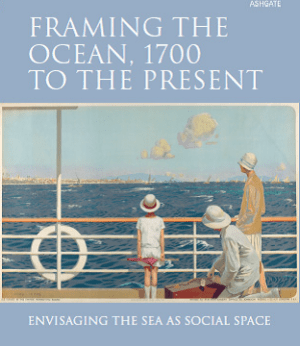 Before the eighteenth century, the ocean was regarded as a repulsive and chaotic deep. Despite reinvention as a zone of wonder and pleasure, it continued to be viewed in the West and elsewhere as ‘uninhabited’, empty space. This collection, spanning the eighteenth century to the present, recasts the ocean as ‘social space’, with particular reference to visual representations. Part I focuses on mappings and crossings, showing how the ocean may function as a liminal space between places and cultures but also connects and imbricates them. Part II considers ships as microcosmic societies, shaped for example by the purpose of the voyage, the mores of shipboard life, and cross-cultural encounters. Part III analyses narratives accreted to wrecks and rafts, what has sunk or floats perilously, and discusses attempts to recuperate plastic flotsam. Part IV plumbs ocean depths to consider how underwater creatures have been depicted in relation to emergent disciplines of natural history and museology, how mermaids have been reimagined as a metaphor of feminist transformation, and how the symbolism of coral is deployed by contemporary artists. This engaging and erudite volume will interest a range of scholars in humanities and social sciences, including art and cultural historians, cultural geographers, and historians of empire, travel, and tourism.
Tricia Cusack’s publications include Art and Identity at the Water’s Edge (ed.) (Ashgate 2012); Riverscapes and National Identities (Syracuse University Press 2010); Art, Nation and Gender: Ethnic Landscapes, Myths and Mother-Figures (co-edited, Ashgate 2003), and numerous articles.
◊ ◊ ◊ ◊ ◊
C O N T E N T S
Introduction: Framing the ocean, 1700 to the present: Envisaging the sea as social space, Tricia Cusack
Part I Exploring the Ocean: Colonial Crossings
1. From Mare Tenebrorum to Atlantic Ocean: A cartographical biography (1470–1900), Carla Lois
2. The Old World anew: The Atlantic as the liminal site of expectations, Emily Burns
3. Second encounters in the South Seas: Revisiting the shores of Cook and Bougainville in the art of Gauguin, La Farge and Barnfield, Elizabeth C. Childs
Part II Ships as Microcosms of Society
4. The artist travels: Augustus Earle at sea, Sarah Thomas
5. Sailors on horseback: The representation of seamen and social space in eighteenth-century British visual culture, Geoff Quilley
6. The ‘other’ ships: Dhows and the colonial imagination in the Indian Ocean, Erik Gilbert
7. Representation, commerce, and consumption: The cruise industry and the ocean, Adam Weaver
Part III Narratives of Shipwrecks, Rafts, and Jetsam
8. Shipwrecks, mutineers and cannibals: Maritime mythology and the political unconscious in eighteenth-century Britain, Carl Thompson
9. The sea as repository: Tacita Dean’s Teignmouth Electron, 1999 and Sean Lynch’s DeLorean Progress Report, 2010, Kirstie North
10. Reconstructing the raft: Semiotics and memory in the art of the shipwreck and the raft, Yvonne Scott
11. Plastic as shadow: The toxicity of objects in the anthropocene, Pam Longobardi
Part IV Natural and Unnatural Histories: Oceanic Imaginings
12. A ‘dreadful apparatus’: John Singleton Copley’s Watson and the Shark and the cultures of natural history, Emily Ballew Neff
13. Mermaids and metaphors: Dorothea Tanning’s surrealist ocean, Victoria Carruthers and Catriona McAra
14. ‘Something rich and strange’: Coral in contemporary art, Marion Endt-Jones
15. ‘No fancy so wild’: Slippery gender models in the coral gallery, Pandora Syperek
Index
Exhibition | Gods and Heroes

Jean-Honoré Fragonard, Jeroboam Sacrificing to the Idols,
48 x 62 inches, 1752 (École des Beaux-Arts, Paris)
From the American Federation of Arts:
Gods and Heroes: Masterpieces from the École des Beaux-Arts, Paris
Oklahoma City Museum of Art, 19 June — 14 September 2014
Albuquerque Museum of Art and History, 12 October 2014 — 4 January 2015
The Baker Museum, Naples, Florida, 19 February — 17 May 2015
Portland Art Museum, 13 June — 13 September 2015
This rich overview of masterpieces from the École des Beaux-Arts—the original school of fine arts in Paris and a repository for work by Europe’s most renowned artists since the seventeenth century—will include approximately 140 paintings, sculptures, and works on paper dating from the seventeenth through nineteenth centuries. The focus will be on epic themes such as courage, sacrifice, and death, as well as the ways that changing political and philosophical systems affected the choice and execution of these subjects. Among the featured works will be paintings by Jacques-Louis David, Jean-Honoré Fragonard, Anne-Louis Girodet, and Jean-Auguste-Dominique Ingres; sculpture by Antoine-Louis Barye, Jean-Baptiste Carpeaux, Jean-Antoine Houdon, and François Rude; drawings by François Boucher, Leonardo da Vinci, Nicolas Poussin, Titian, and Jean-Antoine Watteau; and prints by Albrecht Dürer and Rembrandt van Rijn.
The epic deeds of gods and heroes, enshrined in the Bible and the works of Homer, were the primary narratives from which both aspiring and established academicians drew their inspiration. Their ideology was rooted in the study of the idealized human form as envisioned in classical art. At the École, learning how to construct persuasive and powerful paintings from carefully delineated anatomy, expressive faces, and convincing architectural and landscape settings was understood by aspiring artists to be the route to success and recognition.
Gods and Heroes will offer unique insight into the development of an aesthetic ideology that fostered some of western art’s most magnificent achievements. Among the masterworks included will be Fragonard’s Jeroboam Sacrificing to the Idols; Joseph-Marie Vien’s David Resigns Himself to the Will of the Lord, Who Struck His Kingdom of the Plague (1743); Jacques-Louis David’s Erasistratus Discovers the Cause of Antiochus’s Disease (1774); and Jean-Auguste-Dominque Ingres’s Achilles Receiving the Ambassadors of Agamemnon (1801).

Jean Auguste-Dominique Ingres, The Ambassadors to Agamemnon Visiting Achilles,
45 x 58 inches, 1801 (École des Beaux-Arts, Paris)
◊ ◊ ◊ ◊ ◊
From Giles:
Emmanuel Schwartz, Emmanuelle Brugerolles, and Patricia Mainardi, Gods and Heroes: Masterpieces from the École des Beaux-Arts, Paris (London: D. Giles Limited, 2014), 240 pages, ISBN: 978-1907804120, £40 / $60.
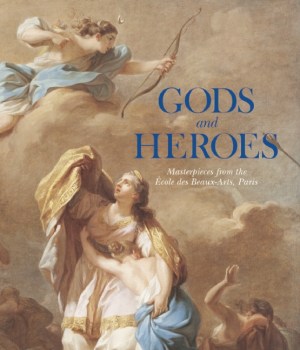 Gods and Heroes: Masterpieces from the École des Beaux-Arts, Paris will be published by D Giles Limited, in association with the American Federation of Arts in June 2014. This fully illustrated volume examines the pivotal role of the École des Beaux-Arts in influencing so much of the history, content and style of late- 17th-, 18th- and 19th-century European art
Not only did the École train generations of artists, but it also served as a repository for work by the most renowned artists in Europe. In three essays, as well as in over 200 catalogue entries and colour plates, the volume tells a fascinating, multi-layered story. On one level it is a study of the role of the epic deeds of classical and biblical gods and heroes in the work of generations of artists in France and beyond. On another level, it explores the impact of the École des Beaux-Arts’ curriculum on Western visual culture, and the persistence of the classical tradition.
From the late 17th through to the mid-19th century, the École was a highly competitive, government school that rigorously trained artists to fulfill the needs of royal, state, and church patrons. In so doing, the École created a particular ‘way of seeing’ that created the established aesthetic and ideological norms in French artistic production right through to the First World War, and provided the backdrop against which the modernist ‘revolution’ from the mid-19th century emerged and developed.
Gods and Heroes features 208 extraordinary art works from the collection of the École, dating from the 17th to the 19th century, including important works by such masters as Antoine- Louis Barye, François Boucher, Jean-Baptiste Carpeaux, Jacques-Louis David, Leonardo da Vinci, Jean-Honoré Fragonard, Jean-Auguste- Dominique Ingres, Charles Le Brun, Charles Natoire, Nicolas Poussin, Carle Van Loo, and Jean-Antoine Watteau
Emmanuel Schwartz is Chief Curator of Heritage at the École des Beaux-Arts, Paris and the author of The Legacy of Homer: Four Centuries of Art from the École Nationale Superieure des Beaux-Arts, Paris (2005). Emmanuelle Brugerolles is Chief Curator of Drawings at the École Nationale Supérieure des Beaux-Arts, Paris. Her most recent publication is The Male Nude: Eighteenth-Century Drawings from the Paris Academy (2013). Patricia Mainardi is Professor Emerita, Doctoral Program in Art History, The Graduate Center of the City University of New York and the author of Husbands, Wives and Lovers: Marriage and Its Discontents in Nineteenth-Century France (2003).
New Book | Studies on Anton von Maron
Published by Campisano and available from ArtBooks.com:
Antonello Cesareo, Studi su Anton von Maron, 2001–2012 (Rome: Campisano Editore, 2014), 200 pages, ISBN: 9788898229239, 30€ / $59.
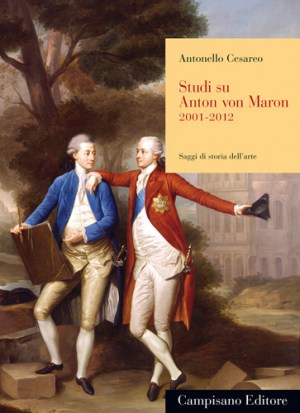 Il volume racchiude gli scritti dedicati per più di un decennio da Antonello Cesareo ad Anton von Maron (1731–1808), sommo ritrattista Neoclassico, di cui l’autore ricostruisce la personalità e il catalogo delle opere. Grazie all’attenta analisi della sua produzione, rivivono le principali figure della storia politica e culturale del Settecento, dall’archeologo tedesco Johan Joachim Winckelmann agli Accademici di San Luca, dalle nobildonne e dai gentiluomini europei attori del Grand-Tour fino alla coppia imperiale austriaca. «La nobile semplicità dei suoi ritratti», come scrive lo stesso autore, è raggiunta «grazie ad una sapiente resa atmosferica che oltrepassa il modello batoniano, seppure dallo stesso Maron più volte ripreso, per giungere a definire un esempio che trascende la resa del personaggio incipriato nel massimo del suo splendore».
È l’Europa del Secolo dei Lumi a sfilare davanti a noi, ancora vivida e pregna di significato attraverso i volti dei suoi protagonisti.
Antonello Cesareo (L’Aquila 1971 – Trento 2013) si è laureato, specializzato e ha conseguito il titolo di dottore di ricerca presso l’Università degli Studi di Roma La Sapienza studiando artisti e collezionisti inglesi in Italia tra Seicento e Settecento, quali Gavin Hamilton e Thomas Howard secondo conte di Arundel. È stato autore di saggi e approfondimenti su artisti quali Thomas Jenkins, Marcello Bacciarelli e committenti come il cardinale Henry Stuart duca di York, il cardinale Ercole Consalvi e Angelo Maria Ricci. Nel 2012 ha dedicato un volume alla ricostruzione del fecondo rapporto di Antonio Canova con l’Accademia di San Luca, grazie al ritrovamento di numerosi documenti inediti, frutto di un triennio di studi trascorso come borsista presso la prestigiosa istituzione. Nel 2013 la commissione per l’Abilitazione Scientifica Nazionale, riconoscendo l’alto valore innovativo dei suoi contributi, gli ha attribuito le funzioni di professore di II fascia.
S O M M A R I O
Hugh Honour, Prefazione
Alvar González-Palacios, Antonello
1. Nobile, fiero e di gentile aspetto: su di un Autoritratto giovanile di Anton von Maron; pubblicato in Neoclassico 20 (2001): 22–33.
2. ‘Valentissimo pittor divenuto…’: un Autoritratto di Anton von Maron; pubblicato in Bollettino del Museo Civico di Bassano 25 (2004): 251–68.
3. Anton von Maron: ‘The first portrait painter at present in Rome’; pubblicato in Antologia di Belle Arti, II (2007): 104–29.
4. ‘I cui nomi sono cogniti per ogni dove…’. A proposito di Caterina Cherubini Preciado e Theresa Mengs Maron; pubblicato in Les Cahiers d’Histoire de l’Art 6 (2008): 78–87.
5. Ancora su Anton von Maron ritrattista (pubblicato in Antologia di Belle Arti, III, 2009, pp. 62-93)
6. ‘Mein Lieber Meister…’. Appunti sulla bottega di Anton von Maron; pubblicato in Ricerche di Storia dell’Arte 101 (2010): 81–88.
7. Anton von Maron e l’Accademia di San Luca; pubblicato in Studi sul Settecento Romano 26 (2010): 201–34.
8. ‘Con maestra mano usa il pennello creando opere sublimi’. Anton von Maron ritrattista al servizio della corte austriaca; conferenza tenuta all’Accademia degli Agiati di Rovereto l’8 marzo 2012.
Bibliografia di Antonello Cesareo
New Book | Jodice: Canova

◊ ◊ ◊ ◊ ◊
Accompanying an exhibition of photographs by Mimmo Jodice of works by Canova (Museo Civico di Bassano del Grappa, 15 September 2013 to 23 March 2014), the catalogue will appear in English this September. As reported at the Robb Rebort, in 2009 Silvio Berlusconi presented members of the G8 with copies of the book Antonio Canova: L’invenzione della bellezza, each handmade with a marble cover weighing 21 pounds and 77 photographs by Jodice; only 39 copies were published by Marilena Ferrari House of Fine Art and Foundation (FMR) of Bologna, with 4 copies being donated to museums and 25 copies offered for sale at a whopping $200,000 each (itself interesting for the reception history of Canova). -CH
From ArtBooks.com:
Giuliana Ericani, Jodice: Canova (Venice: Marsilio, 2014), 116 pages, ISBN: 978-8831717571, $47.
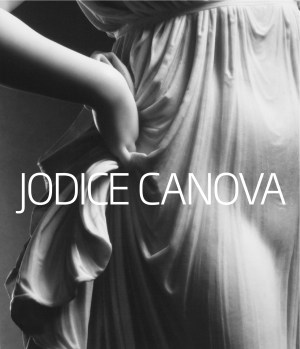 A disquiet expressed with a timeless vision. The decision to pay homage to Antonio Canova could not but start out of the encounter with the man who, back in 1992, had already understood his sculptures and captured their essence in images that have themselves become works of art. This man, this contemporary artist, could only be Mimmo Jodice. He is not only a photographer of art but a person with a keen gaze and vision who has decided to tackle perhaps the most complex sculptor of all time. Jodice chose to approach Canova with love and intellectual nobility and now, through a fascinating series of unprecedented details, is offering us a new, contemporary, conceptually lucid, authoritative, and captivating view of one of the greatest artists in history.
Giuliana Ericani was born in Trieste and graduated in Art History with Rodolfo Pallucchini at the University of Padua. She
is the director of the museums at Bassano del Grappa.
Book Discussion | Basile Baudez on Architecture et tradition académique
From the École Nationale des Chartes:
Basile Baudez on Architecture et tradition académique, with Katie Scott
École Nationale des Chartes, Paris, 29 March 2014
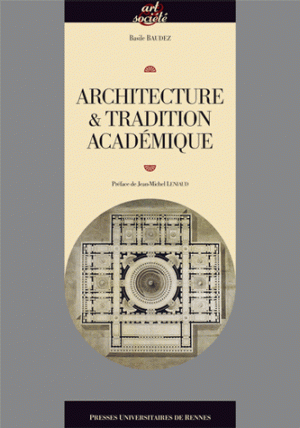 Basile Baudez, Architecture & tradition académique au temps des Lumières (Presses Universitaires de Rennes, 2013), 390 pages, ISBN: 978-2753521223, 24€.
Issu d’une thèse de doctorat soutenue à l’Éphé sous la direction de Jean-Michel Leniaud, cet ouvrage, constitue la première synthèse jamais publiée traitant des rapports entre l’architecture, les architectes et l’institution académique au XVIIIe siècle en Europe.
Adoptant une méthode comparatiste, ce livre permet d’interroger la pertinence d’un modèle élaboré dans l’Italie humaniste et transformé au XVIIe siècle pour servir la politique culturelle de Louis XIV. Le succès considérable de cette forme institutionnelle dans l’Europe des Lumières s’explique en grande partie par sa souplesse, à l’opposé de son évolution au XIXe siècle et sa capacité à organiser de manière efficace les rapports entre certains artistes, le pouvoir et le public.
Étudier l’histoire de l’architecture sous l’angle de la tradition académique, c’est mettre au jour la naissance de la profession architecturale telle qu’on la connait aujourd’hui. L’appartenance à une académie sanctionnée par le pouvoir politique permet en effet de définir les critères au nom desquels l’exercice de la profession était possible, d’une part, et la relation du milieu de l’architecture au pouvoir, d’autre part, la soif de reconnaissance et de protection à la fois.
L’auteur
Archiviste paléographe (prom. 2000), Basile Baudez est agrégé d’histoire, maître de conférences en histoire du patrimoine moderne et contemporain à l’Université Paris-Sorbonne et travaille sur l’histoire de l’architecture européenne au XVIIIe siècle ainsi que sur l’histoire des institutions artistiques.
Le discutant
Katie Scott travaille au Courtauld Institute of Art with et s’est spécialisée dans les représentations du quotidien en particulier à travers les arts éphémères. Sa récente étude est dédiée à ce sujet, plus particulièrement dans le Paris du XVIIIe siècle : Trade and the Ephemeral Everyday in Eighteenth-century Paris.
La conférence se déroulera à 17 h, en grande salle de cours de l’École nationale des chartes, au 19, rue de la Sorbonne (Paris Ve).

New Book | Sweden in the Eighteenth-Century World
From Ashgate:
Göran Rydén, ed., Sweden in the Eighteenth-Century World: Provincial Cosmopolitans (Aldershot: Ashgate, 2013), 386 pages, ISBN: 978-1409465881, £75 / $135.
 Eighteenth-century Sweden was deeply involved in the process of globalisation: ships leaving Sweden’s central ports exported bar iron that would drive the Industrial Revolution, whilst arriving ships would bring not only exotic goods and commodities to Swedish consumers, but also new ideas and cultural practices with them. At the same time, Sweden was an agricultural country to a large extent governed by self-subsistence, and—for most—wealth was created within this structure. This volume brings together a group of scholars from a range of disciplinary backgrounds who seek to present a more nuanced and elaborated picture of the Swedish cosmopolitan eighteenth century. Together they paint a picture of Sweden that is more like the one eighteenth-century intellectuals imagined, and help to situate Sweden in histories of cosmopolitanism of the wider world.
Göran Rydén is Professor of Economic History at the Institute for Housing and Urban Research at Uppsala University, Sweden.
◊ ◊ ◊ ◊ ◊
C O N T E N T S
1. Provincial cosmopolitanism: An introduction, Göran Rydén
2. Where in the world was Sweden? A brief guide for foreigners, Chris Evans
3. The language of cosmos: The cosmopolitan endeavour of universal languages, David Dunér
4. Swedish agriculture in the cosmopolitan eighteenth century, Mats Morell
5. Travelling and the formation of taste: The European journey of Bengt Ferrner and Jean Lefebure, 1758–1763, Lars Berglund
6. Eskiltuna Fristad: The beginnings of an urban experiment, Göran Rydén
7. Prints and attraction in eighteenth-century Stockholm, Sonya Petersson
8. In defence of freedom: Christianity and the pursuit of human happiness in Anders Chydenius’ world, Carola Nordbäck
9. Sweden’s neutrality and the eighteenth-century inter-state system, Leos Müller
10. Runaway colours: Recognisability and categorization in Sweden and early America, 1750–1820, Karin Sennefelt
11. When Sweden harboured idlers: Gender and luxury in public debates, c. 1760–1830, Karin Hassan Jansson
12. A divided space: Subjects and others in the Swedish West Indies during the late eighteenth century, Holger Weiss
13. A world of fiction: Bengt Lidner and global compassion in eighteenth-century Sweden, Anna Cullhed
14. Sveaborg and the end of the Swedish cosmopolitan eighteenth century: An epilogue, Göran Rydén and Holger Weiss
Select bibliography
Index
New Book | Adam von Bartsch (1757–1821): Life and Work
Published by Imhof and available from Artbooks.com:
Rudolf Rieger, Adam von Bartsch (1757–1821): Leben und Werk des Wiener Kunsthistorikers und Kupferstechers unter besonderer Berücksichtigung seiner Graphik nach Handzeichnungen (St Petersburg: Imhof, 2013), 1264 pages, 2 volumes with DVD, ISBN: 978-3865687012, 199€ / $325.
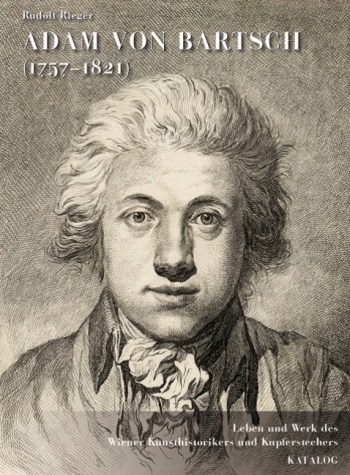 Adam von Bartsch gilt als ‘Ahnvater’ der modernen Graphikforschung, formulierte er doch nicht nur grundlegende Überlegungen zur Systematisierung von Druckgraphik, sondern schuf mit seinem 21-bändigen ‘Le Peintre Graveur’ (1803–1821) ein fundamentales Korpuswerk, das bis heute den Ausgangspunkt für die Beschäftigung mit graphischer Kunst von den Anfangen bis ins 18. Jahrhundert darstellt. Kaum bekannt ist hingegen, dass Bartsch auch künstlerisch tätig war und mit einem OEuvre von fast 600 Blatt zu den innovativsten Graphikern seiner Zeit gehörte, dessen herausragende Stellung in der Graphik um 1800 noch nicht dargestellt wurde. Neben Porträts und Illustrationsgraphik widmete er sich vor allem der Reproduktion von Handzeichnungen alter Meister und schuf auf diesem Gebiet zahlreiche Blatter, die teils einzeln, teils als Folgen verlegt wurden.
Der Werkkatalog unterzieht erstmalig alle Arbeiten Bartschs einer Sichtung und Beurteilung. Begleitet wird er von einer biographischen Studie und einer Analyse des graphischen Schaffens sowie einer nach Ländern gegliederten, in dieser Form noch nicht unternommenen Darstellung zur Reproduktionsgraphik nach Zeichnungen im 18. und 19. Jahrhundert, vor deren Hintergrund Bartschs Stellung erst deutlich konturiert werden kann. Neben der Würdigung Bartschs als herausragendem Vertreter eines durch die Aufklärung geprägten neuen Wissenschaftler- und Künstlertypus liefert die Publikation somit einen grundlegenden Beitrag zur Graphikgeschichte jener Zeit im europäischen Kontext.
◊ ◊ ◊ ◊ ◊
Note (added 1 March 2015) — The book is reviewed by F. Carlo Schmid in The Burlington Magazine 157 (February 2015): 108–09.










 Enfilade
leave a comment