Exhibition | Marquis de Marigny
I’m afraid this is another exhibition that slipped past me, but I include it here nonetheless. The catalogue is, at least, still available from Artbooks.com. -CH
◊ ◊ ◊ ◊ ◊
From the press release:
Le Naturel Exalté: Marigny, Ministre des Arts au Château de Menars
Expo 41, Loir-et-Cher, Blois, 30 June — 16 September 2012
 Ambitieux, fier, ombrageux : les qualificatifs ne manquent pas pour définir Abel-François Poisson de Vandières, marquis de Marigny et seigneur de Menars (1727-1781). Son destin, tracé à la plume de l’exception, en fait foi. Il eut la chance d’être le frère cadet de la maîtresse de Louis XV, titrée marquise de Pompadour, qui l’introduisit dès son adolescence à la cour du roi. À vingt-quatre ans, il est nommé directeur général des Bâtiments du roi, arts et manufactures. Un voyage en Italie en compagnie d’artistes et d’architectes engagés dans les débats esthétiques contemporains fut le déclic vers l’émancipation : Marigny commença alors à se constituer une collection d’exception. Sa galerie de statues était la 1ère de France après celle de Louis XV. Il dirigea surtout la politique des arts du royaume pendant 30 ans, laissant à l’humanité des chefs-d’oeuvre tels que la place de la Concorde, l’École Militaire, les jardins des ChampsÉlysées ou le Panthéon de Paris.
L’exposition Le naturel exalté. Marigny, ministre des arts au château de Menars, qui sera présentée à Expo 41, du 30 juin au 16 septembre 2012, est la 1ère rétrospective mondiale consacrée au frère de la Pompadour et ministre de Louis XV. Le visiteur découvrira le fonds exceptionnel des archives départementales de Loir-et-Cher, encore jamais dévoilé au public, constitué de centaines de dessins représentant l’aménagement des jardins du château de Menars en Loir-et-Cher, plusieurs tableaux majeurs en provenance du musée du Louvre ou du château de Versailles, ainsi que des oeuvres issues de la collection personnelle de Marigny. . .
◊ ◊ ◊ ◊ ◊
Christophe Morin, ed., Le Naturel Exalté: Marigny, Ministre des Arts au Château de Menars (Milan: Silvana, 2012), 192 pages, ISBN: 978-8836622658, €28 / $55.
 Abel-François Poisson (1727-1784), marquis de Vandières puis de Marigny est plus que le frère de la marquise de Pompadour. Directeur général des Bâtiments du roi à compter de 1751, il a rang de ministre et participe à la vie de cour autour de Louis XV. Courtisan zélé, il conserve ses fonctions au-delà même de la disparition de sa soeur, jusqu’en 1773. Il a toute la reconnaissance du roi qui lui offre un somptueux ” meuble ” pour décorer son hôtel de la rue Saint-Thomas-du-Louvre, ainsi que de nombreuses sculptures qui viendront embellir son château de Menars.
Le présent ouvrage rappelle, grâce aux contributions des meilleurs spécialistes de la question, la brillante carrière d’un grand commis de l’Etat au service de Louis XV. Pour la première fois, une exposition monographique sur le marquis de Marigny rassemble des oeuvres qui évoquent la carrière de l’homme public dont le rôle fut éminent dans la transformation radicale du goût au milieu du XVIIIe siècle.
L’autre versant de cette entreprise, tout aussi inédit, regarde le seigneur de Menars, ses collections et sa vie en Val de Loire. Ce ne sont pas moins de 90 dessins d’architecture qui sont présentés ici. Des oeuvres parfois majeures, parfois émouvantes, commandées par Marigny aux plus grands artistes du temps pour décorer le parc de sa maison de campagne. Grand seigneur sur ses terres, il aménage en effet le château de Menars, à sa mesure, réglant les moindres détails de son nouveau jardin anglo-chinois.
The Burlington Magazine, March 2013
The eighteenth century in The Burlington:
The Burlington Magazine 155 (March 2013)
E D I T O R I A L
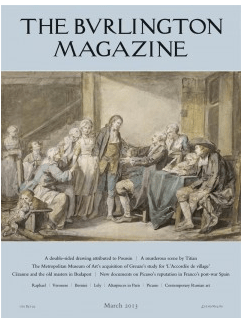 • “Mind Your Language,” p. 151. The incorrect and exaggerated use of language in the art press.
. . . A recent article in the Guardian [Andy Beckett, “A User’s Guide to Artspeak,” The Guardian (27 January 2013)] reported on a private initiative by two Americans, an artist and a critic/sociologist, who have investigated the language of contemporary art description, culled from wall labels and gallery press releases from 1999 onwards [David Levine and Alix Rule, “International Art English,” Triple Canopy 16 (July 2012)]. Their survey is analytic rather than satiric, and they trace the origins of what they call ‘International Art English’ to much French post- structuralist theory. They make excellent, deadpan fun of the commercial gallery press release which now goes well beyond its earlier professional constituency to reach a broad emailed audience. At the Burlington, where we receive thousands of such releases each year from many countries, we can testify to the universality of this artspeak obscurantism. But even in the more comprehensible releases, for exhibitions or books, the clichés mount up: the works are ‘brand new’; the exhibits are ‘iconic’; the paintings are ‘vibrant’ (and also, of course, ‘masterful’); the artist is never less than ‘award winning’; and the new book (invariably a ‘comprehensive overview’) is ‘groundbreaking’, ‘lavishly illustrated’ and ‘thought-provoking’. These all accumulate into a prose of deadly conformity. . . Keep reading here»
A R T I C L E S
• Perrin Stein, “Greuze’s L’Accordée de Village: A Rediscovered Première Pensée,” pp. 162-66. The rediscovery of a watercolour study (c.1761) of Jean-Baptiste Greuze’s L’Accordée de Village.
R E V I E W S
• Antony Griffiths, Review of Ad Stijnman, Engraving and Etching 1400–2000: A History of the Development of Manual Intaglio Printmaking Processes (London: Archetype Books, 2012), p. 177.
This monument book is the result of twenty-five years’ work on the part of the author who has produced a text far ahead of anything yet written on this aspect of printmaking. . . His conclusions have an authority that immediately makes this a standard work, and it can confidently be recommended to any reader. . .
• Claudia Nordhoff, Review of the exhibition Johann Christian Reinhart (1761–1847): Ein deutscher Landschaftsmaler in Rom,” pp. 199-200.
New Title | Houghton Revisited: The Walpole Masterpieces
The catalogue for the Houghton Revisited exhibition should be available soon. From Artbooks.com:
Thierry Morel, Larissa Dukelskaya, John Harris, and Andrew Moore, Houghton Revisited: The Walpole Masterpieces from Catherine the Great’s Hermitage (London: Royal Academy of Arts, 2013), 256 pages, ISBN: 978-1907533501, £40 / $85.
 In 1779 the family of Sir Robert Walpole, Britain’s first prime minister, sold his remarkable art collection to Catherine the Great, Empress of Russia. More than two centuries later, these masterpieces, rarely seen outside Russia since that time, are returning to Houghton Hall, the great house built by Walpole. This handsome book illustrates these superlative works hanging once again in William Kents magnificent interiors. Thierry Morel uncovers the wonders of Walpole’s collection, which includes paintings by Van Dyck, Poussin, Rubens and Rembrandt, and traces its journey to the State Hermitage Museum in St Petersburg, to which most of the works now belong. Other essays explore Walpole’s artistic tastes and collecting habits, and his beautiful house, one of the finest Palladian buildings in England.
Exhibition | French Paintings from the Wadsworth Atheneum
It’s interesting to see how this exhibition has been retitled in various venues: from Old Masters to Impressionists, to Old Masters to Monet, to Court to Café. The exhibition appeared in a fuller version at the Wadsworth Atheneum itself as Medieval to Monet: French Paintings, where it was accompanied by a full catalogue. -CH
◊ ◊ ◊ ◊ ◊
Press release (4 December 2012) from the Mississippi Museum of Art:
Old Masters to to Monet: Three Centuries of French Painting from the Wadsworth Atheneum
The Michele and Donald D’Amour Museum of Fine Arts, Springfield, MA, 13 December 2011 — 29 April 2012
Taft Museum of Art, Cincinnati, 18 May — 16 September 20122
Wadsworth Atheneum, Hartford, CT, 19 October 2012 — 27 January 2013 [expanded version of the exhibition]
Mississippi Museum of Art, Jackson, 23 March — 8 September 2013
Denver Art Museum, 27 October 2013 — 9 February 2014
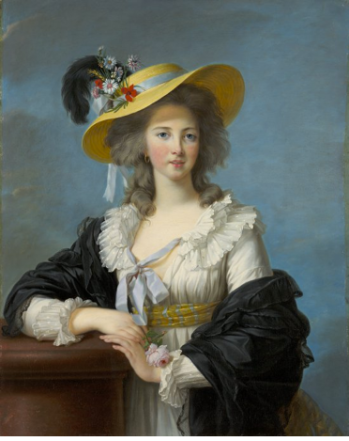
Elisabeth-Louise Vigée Le Brun, The Duchesse de Polignac Wearing a Straw Hat, 1782 (Hartford, CT: Wadsworth Atheneum Museum of Art)
The Mississippi Museum of Art is pleased to present Old Masters to Monet: Three Centuries of French Painting from the Wadsworth Atheneum, on view from March 23 through September 8, 2013. It is the thirteenth presentation in The Annie Laurie Swaim Hearin Memorial Exhibition Series. Established in 1989 to honor the memory of Annie Laurie Swaim Hearin, one of the Museum’s most dedicated patrons and volunteers, the Hearin series showcases exhibitions of world-class art, attracting visitors to Jackson from across Mississippi, the Southeast, and beyond.
Old Masters to Monet features fifty masterpieces from the collection of the Wadsworth Atheneum in Hartford, Connecticut. The outstanding artworks provide a history of French painting, ranging from the seventeenth through the nineteenth centuries and into the beginning of the twentieth century and include religious and mythological subjects, portraits, landscapes, still lifes, and genre scenes.
The Wadsworth Atheneum is America’s oldest public art museum, founded in 1843, and has never presented a full-scale survey of its distinguished collection of French paintings. To honor the recent publication of its
collection catalogue, the Atheneum has launched a tour of fifty of these outstanding masterpieces. “The Mississippi Museum of Art is honored to be one of the select venues to host this important exhibition,” said Betsy Bradley, director of the Mississippi Museum of Art. “In keeping with our mission of engaging Mississippians in the visual arts, this exhibition provides a rare opportunity for our visitors to come face to face with some of the most historically valued French paintings held in any museum collection.”
The exhibition begins with the great seventeenth-century masters, Nicolas Poussin, Claude Lorrain, Simon Vouet, and Jacques Stella, all of whom spent time in Rome and whose work embodies Italianate ideas of beauty, classical sculpture, and ideal landscape. Poussin’s enormous Crucifixion, painted in 1646 for President Jacques-Auguste de Thou, and Lorrain’s Landscape with St. George and the Dragon, commissioned by Cardinal Fausto Poli in 1641, are among the most important French paintings residing in the United States.
The eighteenth-century works present a remarkably rich tapestry of life in France during the rococo age. There are several scenes and portraits of aristocrats, including the Portrait of the Duchesse de Polignac by the era’s leading painter of women, Madame Vigée-Lebrun. Genre scenes rendered during this period exhibit a decidedly risqué bent as well as humorous aspects of life, both of which are evident in paintings on view by Jean Baptiste Greuze, François Boucher, and Louis Leopold Boilly. A more serious approach is evidenced in Still Life by Jean Baptiste Simeon Chardin and in the charming family pictures by Nicolas-Bernard Lépicié and Nöel Hallé. The change in style brought about by the French Revolution is evident in the impressive composition designed by Jacques Louis David, and the creation of a new aristocracy is presented by the two brilliant paintings by Jean Auguste Dominique Ingres. (more…)
New Book | Masters of French Painting at the Wadsworth Atheneum
From Giles:
Eric M. Zafran, Masters of French Painting, 1290–1920: At the Wadsworth Atheneum (London: D. Giles, 2012), 288 pages, ISBN: 978-1904832935, £45 / $65.
 Masters of French Painting, 1290–1920: At the Wadsworth Atheneum presents over 130 of the most significant works of art from this internationally recognized collection of French paintings and pastels.
As the first public art museum in the U.S., the Wadsworth Atheneum paved the way for encyclopaedic museums across the country. Founded by Daniel Wadsworth, the Atheneum opened in 1844 with 79 paintings and three sculptures, and today holds more than 50,000 works of art. These include great 17th-century religious masterpieces by Poussin and Claude, charming 18th-century genre paintings and portraits by Boucher, Robert, Vigée Lebrun, and Trinquesse, and varied and rich examples from the 19th century, with outstanding works by Géricault, Delacroix, Monet, Renoir, Gauguin, and Toulouse-Lautrec.
Masters of French Painting, 1290–1920 fills a major gap in the museum’s series of titles devoted to its collections. It provides scholars and researchers with an entirely new catalogue, with up-to-date references, provenance, exhibition histories and technical/conservation reports, in addition to insightful art historical commentaries on the paintings. The book also includes an introductory essay on the creation of this remarkable collection by curator Eric M. Zafran.
An exhibition of about 100 highlights of the collection, Medieval to Monet, will be on view at the Wadsworth Atheneum, October 19, 2012 – January 27, 2013
Eric M. Zafran is the Susan Morse Hilles Curator of European Art at the Wadsworth Atheneum, where he has worked since 1997. As curator of European Paintings at the Museum of Fine Arts, Boston he wrote volume I of the museum’s Catalogue of French Paintings. He is the author of publications on Rembrandt, Monet, Gauguin, Doré, and Calder.
New Book | Giambattista Crosato: Pittore del Rococò Europeo
From Artbooks.com:
Denis Ton, Giambattista Crosato: Pittore del Rococò Europeo (Verona: Scripta, 2013), 460 pages, ISBN: 9788896162385, $98.
 Giambattista Crosato (1697-1758) è stato pittore, frescante e scenografo operoso tra la Serenissima e il Piemonte sabaudo, attivo in alcuni dei luoghi simbolo della civiltà settecentesca europea: dalla palazzina di caccia di Stupinigi, al salone di Ca’ Rezzonico, alle ville venete. Autore di pannelli per boiseries come di grandi cicli ad affresco, Crosato è stato, fra i grandi veneziani di quel tempo, colui che meglio ha saputo interpretare in chiave personale lo stile del rococò internazionale, dialogando parimenti con la cultura piemontese negli anni di Beaumont e Giaquinto e proponendo una pittura “risoluta e bizzarra” – per riprendere le parole dei suoi contemporanei, fra le poche a proporsi quale alternativa alla grande maniera del genio del secolo, Giambattista Tiepolo.
Exhibition | Edges of Books
I regret that notice of this exhibition at RIT’s Cary Graphic Arts Collection slipped by me, but the catalogue is still available. -CH
◊ ◊ ◊ ◊ ◊
Edges of Books
Rochester Institute of Technology, Rochester, New York, 1 October — 14 December 2012
 Edges of Books examines a familiar form from an unfamiliar perspective. When books are on display it is usually their spines, covers, text, or illustrations that are featured. These are the familiar parts of the books—the parts that modern readers have come to interact with the most. Edges of Books takes a different approach, uncovering a tradition that extends back centuries in which the edges of books were important sites for information and decoration. A selection of artifacts from 1518 to the present will inspire visitors to view books in new and exciting ways.
Steven K. Galbraith, Edges of Books: Specimens of Edge Decoration from RIT Cary Graphic Arts Collection (Rochester: RIT Press, 2012), 74 pages, ISBN: 978-1933360690, $17.
Steven K. Galbraith is Curator of the Melbert B. Cary, Jr. Graphic Arts Collection. He has a Ph.D. in English Literature from Ohio State University and an M.L.S. from the University at Buffalo. Prior to coming to RIT, he was the Andrew W. Mellon Curator of Books at the Folger Shakespeare Library in Washington, D.C. and the Curator of Early Modern Books and Manuscripts at the Ohio State University. He is the author of works on early English printing, English Renaissance literature, rare book librarianship, and book conservation and digitization.
Exhibition | British Drawings from the Cleveland Museum of Art
Some of the offerings for those of you who will be in Cleveland next month for ASECS. From the museum’s website:
British Drawings from the Cleveland Museum of Art
Cleveland Museum of Art, 8 February — 26 May 2013
The British drawings at the Cleveland Museum of Art have received less attention than the renowned Italian and French drawings but are eminently worthy of such. The collection includes works by some of the best-known artists in the history of English art, such as Thomas Gainsborough, William Blake, J. M. W. Turner, and Edward Burne-Jones. Important recent acquisitions include a highly finished wash drawing exemplary of John Flaxman’s neoclassical style, an 18th-century double-portrait in pastel by Daniel Gardner, and a watercolor in pristine condition describing the Surrey countryside at sunset by Samuel Palmer. The exhibition features approximately 50 works from the collection along with a small group of loans from private collections, ranging from the 18th century through the Edwardian period, and will be accompanied by a collection catalogue. This is the inaugural exhibition of a new series exploring highlights from the Cleveland Museum of Art’s collection of drawings.
◊ ◊ ◊ ◊ ◊
From the publisher:
Heather Lemonedes, British Drawings: The Cleveland Museum of Art (London: D. Giles, 2013), 152 pages, 978-1907804229, $45.
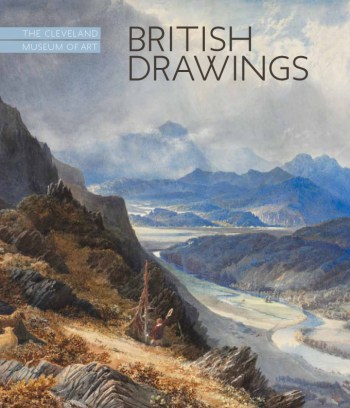 This volume, the first in a new series, presents outstanding drawings from the permanent collection of works on paper at the Cleveland Museum of Art. It features 50 highlights, along with a small group of loans from private collections, ranging from the 18th century through to the Edwardian period. Fragile and light sensitive, opportunities to see such treasures are rare and for that reason are all the more to be celebrated. Many are published here for the first time, such as Francis Cotes’s breathtaking portrait of Lady Mary Radcliffe and an exquisite female nude drawn in coloured chalk by William Mulready.
Heather Lemonedes is curator of Drawings at the Cleveland Museum of Art. Prior to her arrival at the museum in 2002, she worked as a specialist in the Print Department at Christie’s, New York and supervised the Print Study Room at the Metropolitan Museum of Art, New York. She was awarded a Samuel H. Kress
Foundation Travel Fellowship in the History of Art for
research on her dissertation, “Paul Gauguin’s Volpini
Suite,” in 2004.
Exhibition | Stradivarius at the Ashmolean
From the Ashmolean Museum:
Stradivarius
Ashmolean Museum, Oxford, 13 June — 11 August 2013

Ashmolean Museum, Oxford. Photo by Merlin Cooper, 2005, Wikimedia Commons
Antonio Stradivari (c.1644–1737) – or Stradivarius as he is usually known – is the only maker of musical instruments whose name ranks alongside those of the great composers. For the first time will twenty of his instruments, from guitar to cello to violin, be on display together in the UK. While the details of his life are not as familiar as those of Vivaldi or Mozart, his name succeeds in evoking a creative genius in the popular imagination. The Ashmolean’s summer 2013 exhibition will feature twenty of the world’s most important musical instruments, some of which have never been shown in public, on loan from international collections: from the early Silvestre violin of 1666, to the Fountaine violino piccolo, the Boissier-Sarasate of 1713, to his later violins of the 1730s. It will also show a recreation of Stradivarius’s workshop where visitors will be able to follow the creation of a violin from a log of spruce through to the finished instrument.
◊ ◊ ◊ ◊ ◊
From ACC Distribution:
Charles Beare, Peter Beare and Jon Whiteley, Stradivarius (Oxford: Ashmolean Museum, 2013), 200 pages, ISBN:
9781854442758, $40.
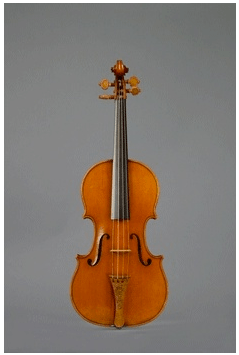 Antonio Stradivari is, perhaps, the only maker of violins who ranks alongside Van Gogh and Turner as an artist. A household name to many, he is associated with secret formulae and mystical processes ensuring his instruments are sought after by the world’s greatest soloists. He excites controversy, although none of his violins have raised so much heated debate as the Ashmolean’s Messiah, making headline news some ten years ago when doubt was cast on its age. Stradivari’s birthplace is unknown, he may have been born in 1644, and even his apprenticeship to Nicola Amati is uncertain. He died rich and famous in Cremona in 1737. Since then his instruments have increased in fame and are now regarded as supreme examples of the violin-maker’s craft. Despite the great fame of Stradivari’s violins, there has never been a monographic exhibition of his work in the UK. It will include 30 instruments, representative of Stradivari’s range and output across the years, alongside exceedingly rare examples of stringed instruments other than those of the violin family.
The prize items to be featured in the exhibition are already in the Ashmolean: The Potter, The Messiah and the guitar of 1688, all works of the greatest rarity. The exhibition and the accompanying catalogue will allow the public to see the work of one of the greatest violin makers of all time. Stradivarius also presents the most recent research on Stradivarius’ instruments.
Contents: Introduction by James Ehnes; essay on Stradivarius by Charles Beare; essay on Stradivarius’ work including dendrachronology of the instruments; “The luthier’s perspective: How Stradivari violins are built and what makes them so good?” by Peter Beare; catalogue entries; technical information.
Charles and Peter Beare are directors at the successful violin dealers Beares. Peter is a qualified luthier. Jon Whiteley is the Senior Assistant Keeper in the Department of Western Art, specializing in paintings drawings and musical instruments.
◊ ◊ ◊ ◊ ◊
From Music at Oxford:
The Dawn of the Stradivarius with James Ehnes and La Serenissima
Sheldonian Theatre, Oxford, 14 June 2013
 In association with The Ashmolean Museum’s extraordinary forthcoming exhibition of the world’s finest Stradivarius instruments, Music at Oxford is proud to present this collaborative concert. Canadian virtuoso and Stradivarius player James Ehnes will perform unaccompanied music by Bach and Paganini on a number of Stradivarius violins and discuss what’s unique about them and the sound they produce. This will be the first time one player has ever had the opportunity to do so in a concert setting. Award-winning period ensemble La Serenissima will follow this by performing a programme of music from the age of Stradivarius by Vivaldi, Valentini and their contemporaries.
This event will open the exhibition, a fascinating exploration of the master maker’s work featuring the largest collection of Stradivarius instruments ever assembled as well as audiovisual footage featuring James Ehnes. Don’t miss this exciting event, our 2012-13 season closer. Tickets are bound to be in great demand so please do book early.
Thoughts on Paper: A Blog and a Book
Those of you taken by the materiality of paper may be interested in Lucy Vivante’s blog posting from 15 January 2013 on Paper and Watermarks, in which she interviews Neil Harris and Peter Bower. And if the distance between those traditions of making and our own dependence upon screens leaving you feeling elegiac, you might have a look at Ian Sansom’s new book. -CH
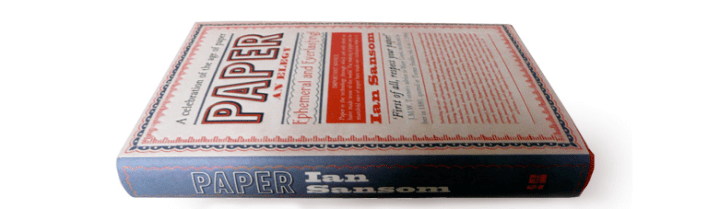
Ian Sansom, Paper: An Elegy (London: Fourth Estate, 2012), 224 pages, ISBN: 978-0007480265, $25.
The history of civilization is bound up with — and bound in — the history of paper. Paper is the technology through which and with which we make sense of the world: knowledge and information is arranged in words, images and numbers on paper; values and ideas are exchanged and transmitted by paper. The making of paper, the trade in it, the use of it, brought about a new era in human civilization.
That era is coming to an end. In 2010, Amazon announced that for the first time it was selling more e-books than paper books. According to Nicholas Negroponte, founder of MIT′s Media Lab, the paper book has five years left to live before becoming extinct. The world we know was made from paper: yet everywhere you look, paper is dying, its influence literally disintegrating.
In Paper: An Elegy Ian Sansom traces the history of paper-making from the 7th-century Chinese workmen who made paper from the inner bark of plants and trees, to the 17th-century vatmen and couchers who dipped and shook and dried paper moulds to make folios and quartos, to today′s billion-dollar paper industry; from papyrus to e-books. Both a cultural overview and a series of warm, personal meditations on the history and meaning of paper in all its forms – as both a means of communication and as an artefact in itself – this book is a lively valediction to the paper it′s printed on.










leave a comment