New Book | The Cast Gallery of the Ashmolean Museum
Though the Ashmolean’s collection of plaster casts was assembled in the late nineteenth century, some pieces date to the eighteenth century. Anyone interested in the subject should also consult Donna Kurtz, The Reception of Classical Art in Britain: An Oxford Story of Plaster Casts from the Antique (British Archaeological Reports, 2000).
◊ ◊ ◊ ◊ ◊
From ACC Distribution:
R.R.R. Smith and Rune Frederiksen, The Cast Gallery of the Ashmolean Museum: Catalogue of Plaster Casts of Greek and Roman Sculpture (Oxford: Ashmolean Museum, 2013), 360 pages, ISBN: 9781854442666, $30.
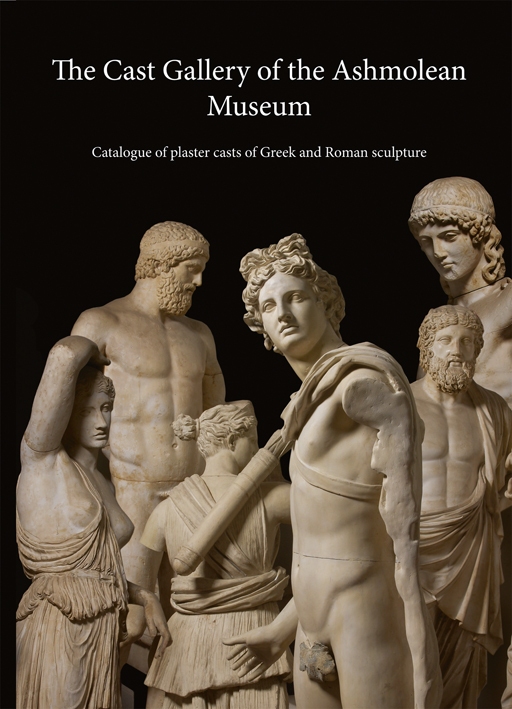 The Cast Gallery of the Ashmolean Museum contains the premier collection of plaster casts of Greek and Roman sculpture in the UK, formed over more than a century, from 1884 to the present. The collection has recently been re-displayed and integrated with the Museum, and this book is its first complete and illustrated catalogue. It presents 1,000 casts of monuments from all over the ancient world, from 600 BC to AD 500, from small bronzes to iconic monuments such as the Laokoon and the Augustus of Prima Porta.
Exhibition | Italian Soup Tureens
Notice of this exhibition at the Hotel Villa Zuccari slipped by me last year, but I see that the catalogue is available from artbooks.com. Eighteenth-century pieces are the minority, but February has me thinking about soup! -CH
◊ ◊ ◊ ◊ ◊
From Good Morning Umbria:
Le Zuppiere dal XVIII al XX Secolo: Collezione Paolo Zuccari
Villa Zuccari, San Luca di Montefalco (Perugia), 22 June — 30 September 2012
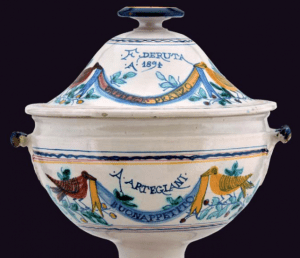 Negli ultimi anni il collezionismo privato ha avuto un notevole sviluppo e gioca un ruolo importante nella nostra cultura e società, in quanto consente di salvaguardare beni di valore artistico, storico e culturale. E’ proprio questo il caso della Collezione di zuppiere di Paolo Zuccari che annovera oltre 500 esemplari alcuni dei quali sono pezzi della fine del ‘700 ed altri –il nucleo principale- dell’800 e del ‘900 di provenienza tutta italiana, dalla Lombardia, all’Emilia Romagna, dalla Toscana all’Umbria alle Marche , agli Abruzzi, dalla Campania al Molise ed alla Puglia. Collezione questa molto originale se si pensa che il collezionista , dopo aver trasformato la sua residenza in un relais a quattro stelle, si è dedicato alla catalogazione di questa sua passione. “Tutti mi chiedono perché, come e quando ho iniziato a collezionare zuppiere.” afferma Paolo Zuccari. “La risposta è semplice, dopo aver vissuto per trenta anni in questa casa, ora Hotel Villa Zuccari, dopo aver sposato Daniela ed avere avuto la prima figlia Federica, ho deciso di andare a vivere a Spoleto dove è nata Lorenza. In occasione di tale trasferimento, per la verità un po’ sofferto, ho portato con me solo poche cose e pochi ricordi della mia casa natale, ma fra queste poche cose c’erano alcune zuppiere. Da queste prime zuppiere, forse per nostalgia, è iniziato il desiderio o la mania di comperarne altre e via via ho iniziato a collezionarle” . Ce ne sono di bellissime e di particolarissime, per esempio la zuppiera realizzata nel 1894 da Angelo Artegiani di Deruta, in cui si legge un cartiglio con l’iscrizione “Buon Appetito” , sicuramente eseguita per qualche ricorrenza speciale. (more…)
Exhibition | Antoine Watteau: The Music Lesson
From the exhibition press materials:
Antoine Watteau (1684–1721): The Music Lesson
BOZAR (Palais des Beaux-Arts), Brussels, 8 February — 12 May 2013
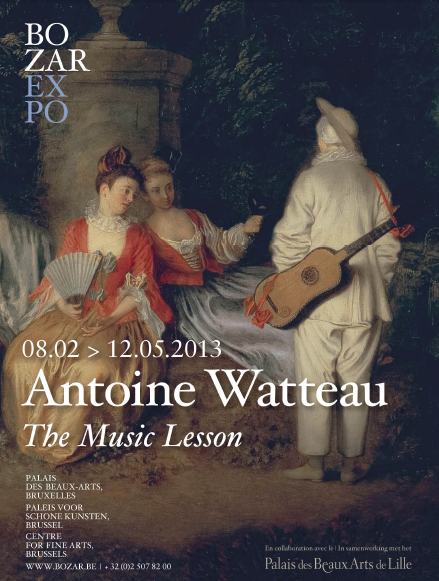 BOZAR EXPO presents, in cooperation with the Palais des Beaux-Arts de Lille, a major interdisciplinary project consisting of an ambitious exhibition, various concerts and debates, devoted to a great French master of the early 18th century, Antoine Watteau, with a particular focus on the musical scenes frequently depicted in the painter’s work. The exhibition’s general curator, the renowned orchestral conductor William Christie, is also at the heart of a cycle of eight concerts that will evoke the sensual atmosphere of Watteau’s canvases.
In the spring of 2013 BOZAR is presenting the first exhibition in Belgium to be devoted to Antoine Watteau (1684–1721). This not only offers an opportunity to see a number of his works; moreover, it sets his pictures to music; it also highlights the correspondence between the arts that was at the heart of his work as an artist. Almost a third of Watteau’s works feature musicians. Born to a humble family, he was a short-lived star of French 18th-century painting, dying at the early age of 37. Despite his short life and limited oeuvre, Watteau’s elegance and
genius left their mark on European art.
Antoine Watteau, father of the fêtes galantes
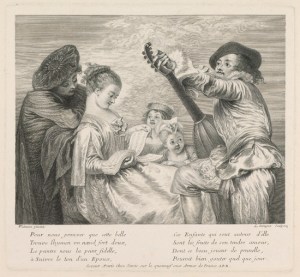
Louis Surugue after Antoine Watteau, The Music Lesson, etching. © Bibliothèque nationale de France
Little is known about his years of training in his native Valenciennes, a town that was open to both Flemish and French influences, as it only became attached to France in 1678. We can, however, be sure of the importance of his master, Claude Gillot (1673–1722). It was through him that Watteau, the “fils du Nord,” discovered Italian painting and the Commedia dell’Arte, which meant so much to him, even though he would never make the journey to Italy.
Watteau passed the bulk of his career in Paris, towards the end of the reign of the Sun King and during the Regency, a period in which the French capital experienced an aesthetic ferment and a renewed commercial enthusiasm for art. It was in that context that, in the 1720s, Watteau became a protégé of Pierre Crozat (1661–1740), one of his great patrons. Crozat helped to bring into being a musical circle in which both Italian and French music were acclaimed. His collection also helped Watteau to find himself as an artist, as he enthusiastically copied drawings it contained by Flemish and Venetian masters (Rubens, Van Dyck, Titian, and Campagnola). Their attention to colour, movement, and sensuality fascinated the young artist, who drew on those qualities to create a new style, less grandiloquent and less formal, imbued with a feigned lightness and an unprecedented elegance.
So there is nothing fortuitous about the presence of other disciplines – theatre, dance, and music, in particular – in Watteau’s paintings. They are very much present in the figures depicted in the fêtes galantes, whose language he invented: scenes of intimacy, conversation, and music set in an enclosed natural setting in which the human condition plays with appearances. Are we looking at aristocrats who have put on the costumes of actors or at theatrical scenes reconstructed in a bucolic setting? Watteau explores, as no one had done before him, a free combination of theatrical characters, whom he places away from the stage, somewhere between life and playing a role. Music is never far away in these fêtes galantes. The titles of works such as La Leçon de musique, Le Concert amoureux, and L’Accord parfait are highly evocative in this context.

Antoine Watteau, L’Enchanteur Huile sur cuivre (Troyes: Musée
des Beaux-Arts) © RMN-Grand Palais – © Jean Schormans
Antoine Watteau (1684–1721): The Music Lesson
The exhibition, which has a particular focus on the musical aspect of Watteau’s painting, brings together a unique selection of fifteen of the artist’s canvases and thirty of his drawings, some of which have not been seen by the European public for more than 50 years. It also presents fifty engravings by his contemporaries, including François Boucher, Benoît Audran II, and Charles-Nicolas Cochin, who produced the finest engravings of the 18th century and spread Watteau’s art throughout Europe. Thanks to them, we have reproductions of paintings of his that have since been lost and it is possible to offer an almost complete overview of his work. This unprecedented combination of original paintings, drawings, and engravings, as well as archival material, scores, and musical instruments of the same period, is a first. The exhibition itinerary is organised chronologically and thematically. The visitor first discovers the silent dimension of Watteau’s art and is thus better placed to appreciate its various musical tones later in the exhibition. The aesthetic experience is heightened as the visitor is immersed in the music of the time thanks to the audioguides and several listening points throughout the exhibition circuit. A special room is set aside for free concerts given by students of various Belgian and French conservatories on Thursday evenings. The intervention by Dirk Braeckman, leading Belgian photographer with an international reputation, establishes connections between Watteau’s work and contemporary art.
For additional information, including lenders, room texts, and programming details, see the 28-page press booklet (PDF).
◊ ◊ ◊ ◊ ◊
Note (added 20 March 2013): The catalogue is available through Artbooks.com:
Florence Raymond, ed., Antoine Watteau (1684-1721): La leçon de musique (Paris: Skira Flammarion, 2013), 272 pages, ISBN: 978-2081295834, $87.50.
New Book | A History of Eighteenth-Century German Porcelain
From ACC Distribution:
Christina Nelson with Letitia Roberts, A History of Eighteenth-Century German Porcelain: The Warda Stevens Stout Collection (Hudson Hills Press, 2013), 568 pages, ISBN: 978-1555953881, $95.
 A History of Eighteenth-Century German Porcelain is a descriptive catalog of the remarkable holdings of the Dixon Gallery and Gardens in Memphis—holdings donated by Warda Stevens Stout and considered to be among the most important in the world. The book is one of the first in English to describe in captivating detail the artisans, aesthetics, social and political intrigue, financial arrangements, and courtly ambitions that resided in porcelain factories at Ansbach, Frankenthal, Fürstenberg, Höchst, Ludwigs-burg, Meissen, Nymphenburg, and Thüringen.
Contents: Foreword – Kevin Sharp; Acknowledgments – Christina Nelson; The Collector Warda Stevens Stout – Letitia Roberts; A History of Eighteenth-Century German Porcelain – Christina Nelson; Introduction; Meissen; Ansbach; Berlin; Frankenthal; Fürstenberg; Fulda; Höchst; Ludwigsburg; Nymphenburg; Thuringia; Overview – Closter Veilsdorf; Gotha; Limbach; Volkstedt; Vienna; Selected List of German Porcelain from The Warda Stevens Stout Collection; Bibliography.
Christina H. Nelson is an independent scholar based in Champaign, Illinois. She has been a curator at Greenfield Village and the Henry Ford Museum in Deerfield, Michigan, the Saint Louis Art Museum, and the Nelson-Atkins Museum of Art in Kansas City. She is the author of numerous catalogues, articles, and reviews.
Letitia Roberts is an independent scholar and consultant based in New York City. She was a department head at Sotheby’s for many years and has been a member, director and former president of the American Ceramics Circle. She has written extensively on American and European ceramics.
Exhibition | Life and Death in Pompeii and Herculaneum
If today has you thinking about ashes . . . The exhibition includes, incidentally, an exceptional bit of programming: the first live cinema event ever produced by a museum, offering an exclusive private view of the major exhibition on the 18 and 19 of June:
The British Museum will stage two unique live broadcasts to cinema audiences across the UK and Ireland with a special offer to school groups. Introduced by British Museum director Neil MacGregor this event will use a line-up of expert presenters to create a one-off experience including contributions from historian Mary Beard, Rachel de Thame revealing life in the garden, Giorgio Locatelli in the kitchen and Bettany Hughes in the bedroom. . .
◊ ◊ ◊ ◊ ◊
Press release from the British Museum:
Life and Death in Pompeii and Herculaneum
British Museum, London, 28 March — 29 September 2013
 In Spring 2013 the British Museum will present a major exhibition on the Roman cities of Pompeii and Herculaneum, sponsored by Goldman Sachs. This exhibition will be the first ever held on these important cities at the British Museum, and the first such major exhibition in London for almost 40 years. It is the result of close collaboration with the Archaeological Superintendency of Naples and Pompeii, will bring together over 250 fascinating objects, both recent discoveries and celebrated finds from earlier excavations. Many of these objects have never before been seen outside Italy. The exhibition will have a unique focus, looking at the Roman home and the people who lived in these ill-fated cities.
Neil MacGregor, director of the British Museum said “This will be a major exhibition for the British Museum in 2013, made possible through collaboration with the Archaeological Superintendency of Naples and Pompeii which has meant extremely generous loans of precious objects from their collections, some that have never travelled before. I am delighted that Goldman Sachs is sponsoring this important exhibition and am extremely grateful to them for their support.”
“It is a privilege to be partnering with the British Museum for this incredibly exciting exhibition, which offers a fascinating insight into daily life at the heart of the Roman Empire”, said Richard Gnodde, Co Chief executive of Goldman Sachs International. “We recognize the importance of supporting cultural platforms such as this and we are delighted to offer our support to help bring this unique experience to London.”
Pompeii and Herculaneum, two cities on the Bay of Naples in southern Italy, were buried by a catastrophic volcanic eruption of Mount Vesuvius in just 24 hours in AD 79. This event ended the life of the cities but at the same time preserved them until rediscovery by archaeologists nearly 1700 years later. The excavation of these cities has given us unparallelled insight into Roman life.
Owing to their different locations Pompeii and Herculaneum were buried in different ways and this has affected the preservation of materials at each site. Herculaneum was a small seaside town whereas Pompeii was the industrial hub of the region. Work continues at both sites and recent excavations at Herculaneum have uncovered beautiful and fascinating artefacts. These include treasures many of which will be displayed to the public for the first time, such as finely sculpted marble reliefs, intricately carved ivory panels and fascinating objects found in one of the main drains of the city.
 The exhibition will give visitors a taste of the daily life of the people of Pompeii and Herculaneum, from the bustling street to the family home. The domestic space is the essential context for people’s lives, and allows us to get closer to the Romans themselves. This exhibition will explore the lives of individuals in Roman society, not the classic figures of films and television, such as emperors, gladiators and legionaries, but businessmen, powerful women, freed slaves and children. One stunning example of this material is a beautiful wall painting from Pompeii showing the baker Terentius Neo and his wife, holding writing materials showing they are literate and cultured. Importantly their pose and presentation suggests they are equal partners, in business and in life.
The emphasis on a domestic context also helps transform museum artefacts into everyday possessions. Six pieces of wooden furniture will be lent from Herculaneum in an unprecedented loan by the Archaeological Superintendency of Napels and Pompeii. These items were carbonized by the high temperatures of the ash that engulfed the city and are extremely rare finds that would not have survived at Pompeii – showing the importance of combining evidence from the two cities. The furniture includes a linen chest, an inlaid stool and even a garden bench. Perhaps the most astonishing and moving piece is a baby’s crib that still rocks on its curved runners.
The exhibition will include casts from in and around Pompeii of some of the victims of the eruption. A family of two adults and their two children are huddled together, just as in their last moments under the stairs of their villa. The most famous of the casts on display is of a dog, fixed forever at the moment of its death as the volcano submerged the cities.
Follow updates on the exhibition via Twitter on #PompeiiExhibition and the Museum’s Twitter account @britishmuseum.
◊ ◊ ◊ ◊ ◊
Paul Roberts, Life and Death in Pompeii and Herculaneum (New York: Oxford University Press, 2013), 320 pages, ISBN: 978-0199987436, £16 / $45.
Happy Mardi Gras
If today has you thinking about food and drink . . .
From the University of Chicago Press:
E. C. Spary, Eating the Enlightenment: Food and the Sciences in Paris, 1670-1760 (Chicago: University of Chicago Press, 2012), 368 pages, ISBN: 978-0226768861, $45.
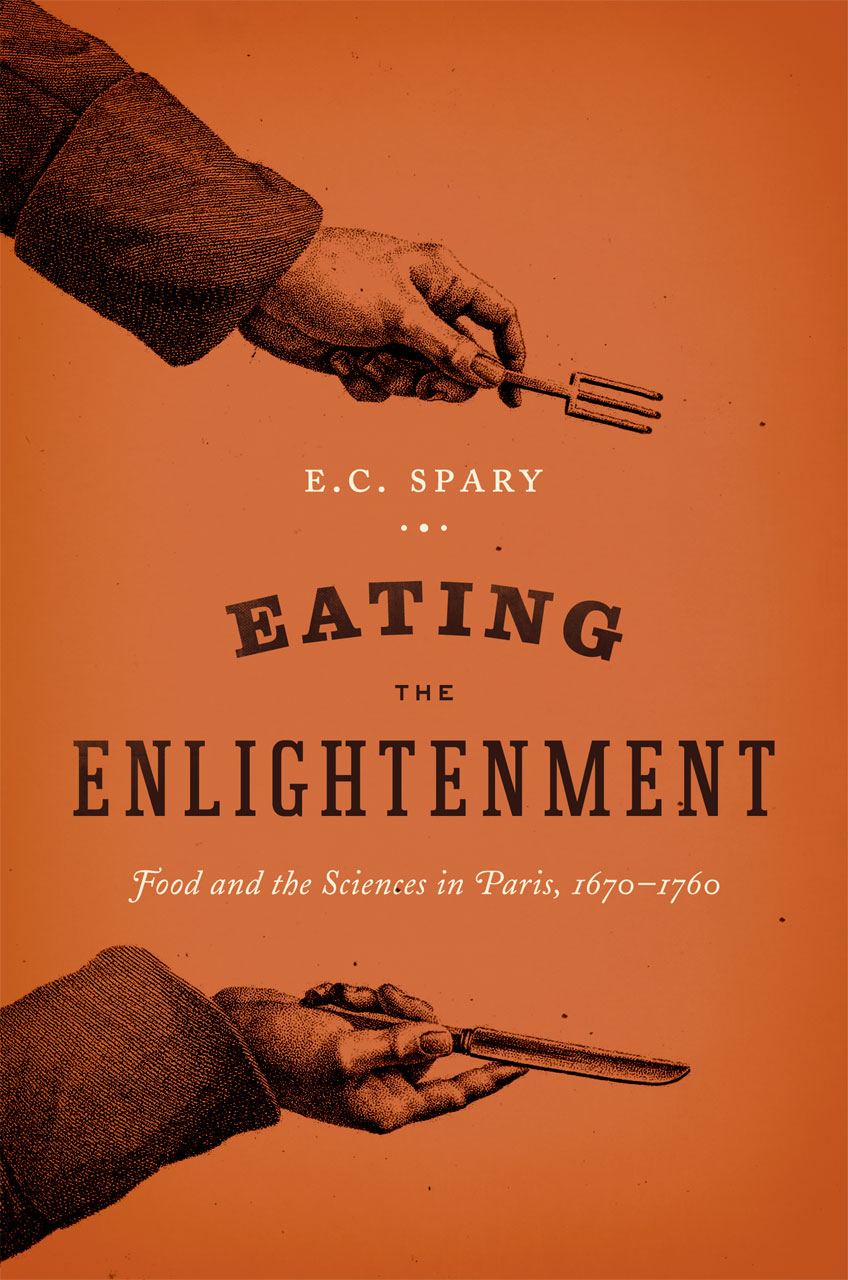 Eating the Enlightenment offers a new perspective on the history of food, looking at writings about cuisine, diet, and food chemistry as a key to larger debates over the state of the nation in Old Regime France. Embracing a wide range of authors and scientific or medical practitioners—from physicians and poets to philosophes and playwrights—E. C. Spary demonstrates how public discussions of eating and drinking were used to articulate concerns about the state of civilization versus that of nature, about the effects of consumption upon the identities of individuals and nations, and about the proper form and practice of scholarship. En route, Spary devotes extensive attention to the manufacture, trade, and eating of foods, focusing upon coffee and liqueurs in particular, and also considers controversies over specific issues such as the chemistry of digestion and the nature of alcohol. Familiar figures such as Fontenelle, Diderot, and Rousseau appear alongside little-known individuals from the margins of the world of letters: the draughts-playing café owner Charles Manoury, the “Turkish envoy” Soliman Aga, and the natural philosopher Jacques Gautier d’Agoty. Equally entertaining and enlightening, Eating the Enlightenment will be an original contribution to discussions of the dissemination of knowledge and the nature of scientific authority.
◊ ◊ ◊ ◊ ◊
From ACC Distribution:
Robin Butler with Noel Riley, Great British Wine Accessories, 1550-1900 (Brown & Brown Books, 2013), 288 pages, ISBN: 978-0956349804, £65 / $125.
 Great British Wine Accessories 1550-1900 covers all domestic wine accessories from corkscrews and bin labels to coasters and decanters – and so much more besides during the period of its title. While there are monographs on decanters, corkscrews and other disciplines within the subject, this book not only gives a good overview of these areas, but also sets the whole subject in context. The easy style of writing belies the in-depth knowledge imparted within this book.
Contents: Bottles; Bin Labels; Corkscrews; Tasters; Coolers and Cisterns; Wine Funnels; Decanters and Carafes; Wine Jugs; Wine Labels; Coasters and Decanter Trolleys; Glasses Goblets & Cups Misc; Fakes & Problems.
Robin Butler has been an antiques dealer and lecturer since 1963. This is his fourth book, following The Arthur Negus Guide to English Furniture (1976), The Book of Wine Antiques (1986), and The Albert Collection (2009). Robin has made antique wine accessories a separate subject within the antiques world, following his exhibition in 1978 as part of the BADA 60 festival of exhibitions. His Internet business, Butler’s Antiques solely deals in antique wine accessories.
New Book | Anton Maria Maragliano (1664-1739)
From Sagep:
Daniele Sanguineti, Anton Maria Maragliano (1664-1739): Insignis Sculptor Genue (Genoa: Sagep, 2012), 480 pages, ISBN: 978-8863731989, €100 / $160.
 Il nome di Anton Maria Maragliano, per un caso di eccezionale fortuna critica, è diventato sinonimo di scultura in legno a Genova e in Liguria. La nuova monografia dedicata a questo protagonista del Barocco genovese, attivo tra la fine del Seicento e il 1739, indaga nel dettaglio l’intero percorso artistico, soffermandosi, grazie a numerosi documenti inediti, sulla fase della formazione, sul contesto culturale di riferimento, sulla diversificata committenza (confraternite, famiglie aristocratiche, ordini religiosi) e sulla prassi gestionale di una bottega assai complessa e fitta di allievi. Il corpus delle opere raccoglie, attraverso schede articolate, l’intera produzione nota, suddivisa in quattro sezioni che danno conto delle numerose aggiunte: le opere scolpite dal maestro, i bozzetti (attraverso un nuovo nucleo recentemente scoperto), le opere della bottega e quelle disperse. Il regesto e la trascrizione dei documenti costituiscono un importante approfondimento, mentre una sezione finale è dedicata, nello specifico, agli aspetti della tecnica scultorea e della stesura della policromia. Bellissime immagini a colori accompagnano la lettura del testo.
Daniele Sanguineti è funzionario Storico dell’Arte presso il Ministero per i Beni e le Attività Culturali, con il ruolo di Conservatore del Museo di Palazzo Reale di Genova.
Available from Artbooks.com»
New Book | Autour des Van Loo
From PURH:
Christine Rolland, ed., Autour des Van Loo: Peinture, commerce des tissus et espionnage en Europe (1250-1830), (Mont-Saint-Aignan: Publications des Universités de Rouen et du Havre, 2012), 402 pages, ISBN: 9782877755016, 49€/ $95.
 Puissante dynastie de peintres qui s’est constituée au cours des XVIIe et XVIIIe siècles, les Van Loo ont été au cœur des grands événements culturels de leur temps. Jacob Van Loo (1614-1670) a fréquenté Vermeer et Rembrandt, avant de s’enfuir vers la France et d’y devenir membre de l’Académie royale de peinture. On retrouve ses descendants dans toutes les cours et les académies de peinture d’Europe. Les Van Loo ne s’en tiennent cependant pas à la peinture. Louis-Michel Van Loo (1707-1771), premier peintre du roi d’Espagne, représentait en même temps l’une des grandes entreprises textiles lyonnaises : il avait pour clients la famille royale, des aristocrates, des ambassadeurs et des agents secrets. À partir de l’exemple de Louis-Michel, sont mis en lumière les liens entre les réseaux des artistes, des marchands, des diplomates et des espions, du Moyen Âge au début du XIXe siècle. Ce volume est surtout la première étude moderne portant sur l’ensemble de la dynastie des Van Loo, de 1617 à 1830, depuis Jacob, le pater familias, jusqu’à Jules-César-Denis, le « peintre des neiges ». Les principales œuvres de chacun des peintres y sont reproduites, souvent pour la première fois. On y trouve aussi un arbre généalogique complet de la famille, des notices biographiques sur chacun de ses membres et des documents issus des archives familiales, sans oublier des tissus et des costumes jamais vus du XVIIIe siècle.
Ont collaboré à ce volume : Cinzia Maria Sicca, Bruna Niccoli, David Mandrella, Christophe Henry, Lesley Ellis Miller, Serge Chassange, Gérard Gayot, Alain Becchia, Simonne Abraham-Thisse, Sjoukje Colenbrander, Corine Maitte, Jean-Paul Leclercq, Ulrich Leben, Fabienne Camus, Michel Van de Laar, Arie Wallert, Cyrille Sciama, Michelle Sapori, Françoise Thelamon.
The full list of contents is provided here»
Exhibition | Eighteenth-Century Book Illustration in the Veneto
The exhibition presents 115 illustrated books and as many loose prints from the likes of Tiepolo, Piazzetta, Novelli, Fontebasso, and Balestra. From Padova Cultura:
Tiepolo, Piazzetta, Novelli: L’Incanto del Libro Illustrato nel Settecento Veneto
Musei Civici agli Eremitani and Palazzo Zuckermann, Padua, 24 November 2012 — 7 April 2013
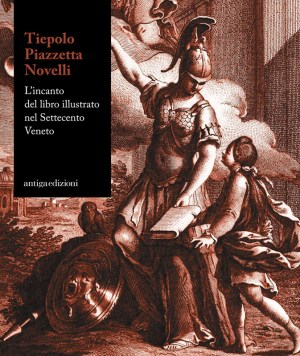 A Padova una meravigliosa galleria cartacea: 115 volumi illustrati del Settecento esposti accanto ad altrettanti fogli sciolti e incisioni, dipinti e disegni di grandi Maestri. Ecco la più completa mostra mai realizzata sul tema.
E’ dal connubio tra intelligenti editori come Giambattista Albrizzi e Antonio Zatta – per citarne solo alcuni – grandi e celeberrimi artisti come Tiepolo, Piazzetta, Novelli, Fontebasso o Balestra, e di abili incisori capaci di tradurre i segni e lo stile di questi in stampe di straordinaria complessità e varietà luministica, che nascono alcuni dei maggiori capolavori dell’editoria illustrata del Settecento. Un fenomeno ben sviluppato anche nel Seicento ma che nel XVIII secolo raggiunge nel Veneto vertici assoluti d’eleganza e raffinatezza, ammirati a livello internazionale.
Un fenomeno che, dal 24 novembre 2012 al 7 aprile 2013 a Padova, nelle sedi del Museo Civico agli Eremitani e di Palazzo Zuckermann, sarà esplorato e reso accessibile al grande pubblico in una mostra assolutamente unica per vastità e completezza di trattazione e certamente tra le più importanti esposizioni del genere mai realizzate in Italia: un viaggio affascinante e sorprendente, alla scoperta di quello che fu un aspetto fondamentale della vita culturale della Serenissima, ma anche di una produzione artistica spesso parallela a quella più appariscente della pittura da cavalletto o ad affresco, ma non meno suggestiva.
Oltre 115 volumi prodotti in Veneto o che hanno visto la collaborazione d’importanti artisti veneziani del Settecento – edizioni rare e preziose, arricchite da antiporte, incisioni, cornici, testatine, vignette o preziosi finalini – saranno dunque esposti accanto a quasi 120 tra stampe sciolte tratte dagli stessi volumi e incisioni autonome, in modo da favorire un’ampia documentazione della ricchezza illustrativa di questi volumi e dell’attività degli artisti ai quali si deve l’invenzione grafica delle opere. Maestri che saranno ricordati in mostra, ciascuno, anche attraverso uno dei loro significativi dipinti, a sottolineare e rimarcare la stretta connessione esistente tra la produzione artistica dei pittori coinvolti e i disegni da questi approntati per l’editoria: “una comune attitudine per il libero dispiegarsi della fantasia, applicata ora alle pagine di un libro invece che ai cieli dei soffitti affrescati o alle tele di grandi quadri di storia, una medesima audacia compositiva, un precoce interesse per forme di ornato rococò.”
Una mostra dunque ricchissima – realizzata grazie alle opere della Biblioteca Civica, dei Musei Civici agli Eremitani e della Biblioteca Universitaria, oltre a quelli di un’importante collezione privata e di alcuni selezionati istituti culturali del Veneto – che si sviluppa in 9 sezioni, adottando punti di vista diversificati e privilegiando, di volta in volta, un approccio cronologico, monografico e tematico.
The press release (a PDF file) is available here»
◊ ◊ ◊ ◊ ◊
The catalogue is available from ArtBooks.com»
Vincenza Cinzia Donvito and Denis Ton, Tiepolo, Piazzetta, Novelli: L’Incanto del Libro Illustrato nel Settecento Veneto (Crocetta del Montello: Antiga Edizioni, 2012), 480 pages, ISBN: 978-8888997940, $67.50.
Exhibition | Salvaging the Past: Georges Hoentschel
From the BGC:
Salvaging the Past: Georges Hoentschel and French Decorative
Arts from The Metropolitan Museum of Art
Bard Graduate Center, New York, 4 April — 11 August 2013
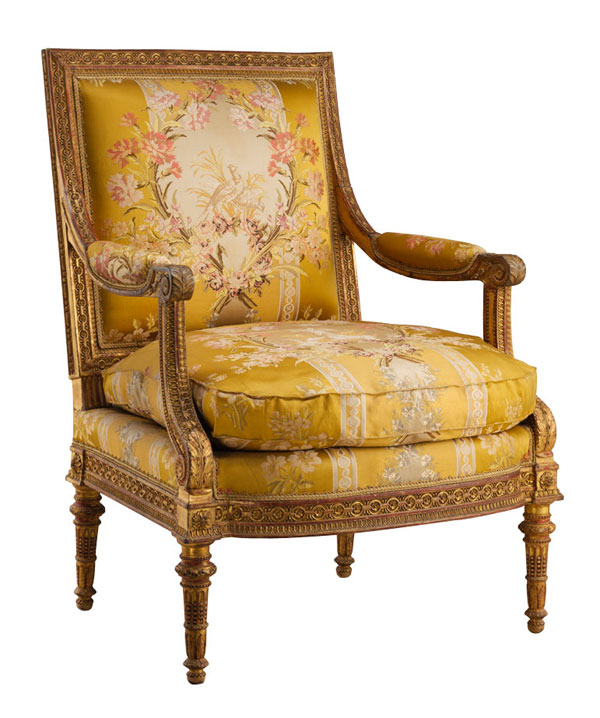
Georges Jacob; gilder: Louis–François Chatard. Armchair from Louis XVI’s Salon des Jeux, Château de Saint-Cloud, 1788. Carved and gilded walnut; gold brocaded silk (New York: The Metropolitan Museum of Art, Gift of J. Pierpont Morgan, 1906 — 07.225.107)
Focusing on a remarkable but little-known collection that entered the Metropolitan Museum as a gift of J. Pierpont Morgan in the early twentieth century, Salvaging the Past: Georges Hoentschel and French Decorative Arts from The Metropolitan Museum of Art features more than 200 objects of primarily medieval art and French eighteenth-century paneling, furniture, metalwork, textiles, paintings, and sculpture, as well as late nineteenth-century art pottery, most of which have rarely been viewed since the 1950s. The fourth in a series of collaborations between The Metropolitan Museum of Art and the BGC, the exhibition provides the first comprehensive examination of Georges Hoentschel—a significant figure in the history of collecting—and illuminates an understudied and critical chapter of the Metropolitan’s history.
Drawn primarily from the Metropolitan Museum’s holdings, with loans from other public and private collections in the United States and France, the exhibition tells the story of this unique collection in four sections. The first introduces Georges Hoentschel, who was an enterprising and successful decorator during the late nineteenth and early twentieth centuries, when France witnessed a great scientific, industrial, and social transformation and the newly moneyed bourgeoisie adopted a lifestyle based on an aristocratic model. As director of the Parisian decorating firm Maison Leys, Hoentschel catered to these affluent clients, creating for them interiors in historic French styles. In this section of the exhibition, ephemera, family papers, photographs, and a film presentation will outline his story within the context of Belle Époque Paris.
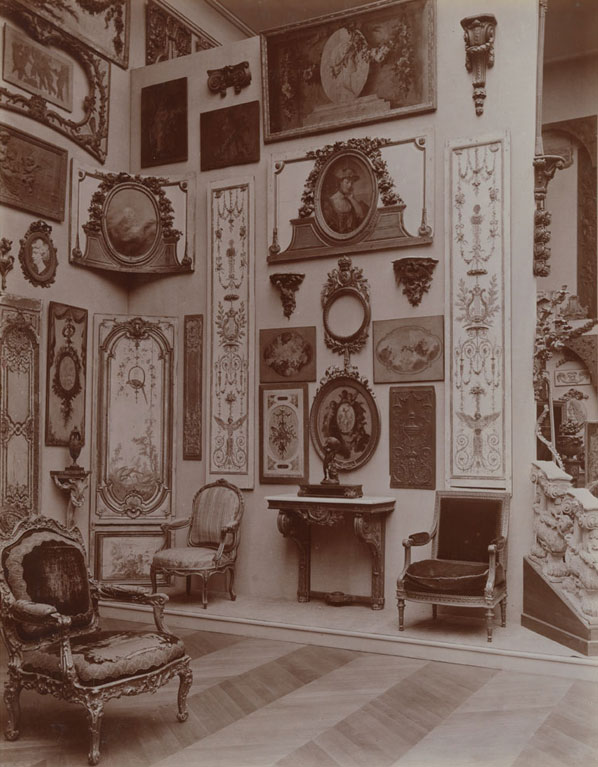
Section of the interior of 58 Boulevard Flandrin, Paris (ca. 1906) to be recreated in the Bard Graduate Center exhibition.
The second and largest section presents selections from the eighteenth-century holdings of the collection in installations inspired by historic photographs of Hoentschel’s densely arranged showroom-museum in Paris, where the objects served as models for his interior decorating business. Delicately carved woodwork, decorative paintings, and exquisitely chased gilt-bronze mounts are featured here. Highlights include a chair made for Louise-Élisabeth of Parma, daughter of Louis XV; an armchair made for Louis XVI; and a panel from shutters originally installed in a room outside the chapel at Versailles.
The third section displays medieval artworks, including sculpture, ivories, and metalwork, and includes one of the finest surviving examples of French Limoges enamelwork—a twelfth-century reliquary container, or chasse. Also shown here is Jean Barbet’s Ange du Lude, on loan from the Frick Collection, a rare bronze angel dated 1475, one of the most remarkable works from Hoentschel’s collection.
The final section presents examples of Hoentschel’s stoneware and those of his friend the sculptor and potter Jean-Joseph Carriès (1855–1894). Some of these ceramics were originally exhibited in the Union Centrale des Arts Décoratifs’ pavilion at the 1900 Exposition Universelle in Paris, for which Hoentschel created interiors in art nouveau style, unique in his oeuvre. A chair from this pavilion, loaned by the Musée des Arts décoratifs, Paris, is displayed, along with a selection of furnishing textiles used by Hoentschel in interior design commissions.
The exhibition is organized by the Bard Graduate Center: Decorative Arts, Design History, Material Culture and The Metropolitan Museum of Art.
◊ ◊ ◊ ◊ ◊
From Yale UP:
Daniëlle Kisluk-Grosheide, Deborah L. Krohn, and Ulrich Leben, eds., Salvaging the Past: Georges Hoentschel and French Decorative Arts from The Metropolitan Museum of Art (New Haven: Yale University Press, 2013), 320 pages, ISBN: 9780300190243, $85.
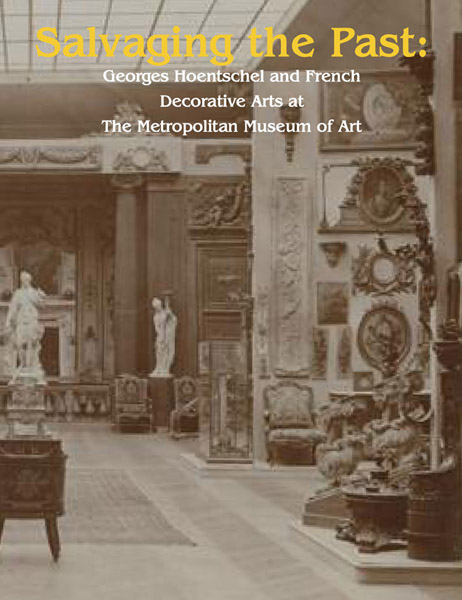 Georges Hoentschel (1855–1915) was a leading French interior designer in historic styles, head of a decorating firm, and ceramicist during the Belle Epoque. He found inspiration for his designs in medieval and 18th-century French art, which he avidly collected, amassing more than 4,000 pieces of furniture, woodwork, metalwork, sculpture, paintings, and textiles. After visiting Hoentschel in Paris, the American financier J. Pierpont Morgan acquired the collection and bequeathed it to the Metropolitan Museum of Art in 1906 and 1916–17. These works greatly enriched the museum’s medieval art department and became the nucleus of its decorative arts department, profoundly influencing American tastes in the early 20th century. Through texts, early documentary photographs, and images of newly conserved works, Salvaging the Past goes behind the scenes to explore the history and influence of this remarkable collection.
Daniëlle Kisluk-Grosheide is curator of European sculpture and decorative arts at The Metropolitan Museum of Art, New York. Deborah L. Krohn is associate professor of Italian Renaissance decorative arts at Bard Graduate Center. Ulrich Leben is a visiting professor and special exhibitions curator at Bard Graduate Center and associate curator for the furniture collection at Waddesdon Manor, Buckinghamshire.










leave a comment