Reviewed: English Silver from the Virginia Museum of Fine Arts
Recently published by Apollo Magazine:
Christopher Hartop, A Noble Pursuit: English Silver from the Rita Gans Collection at the Virginia Museum of Fine Arts (Richmond: Virginia Museum of Fine Arts, 2011), 88 pages, ISBN 9780917046902, $25.
Reviewed by Martin Chaisin; posted 1 May 2011.
In 1988, Jerome (Jerry) and Rita Gans loaned their magnificent collection of English silver of the 17th and 18th centuries to the Virginia Museum of Fine Arts (VMFA). The collection was eventually gifted to the museum in 1997; a decade later, it was permanently housed in a beautifully designed installation, as celebrated in Christopher Hartop’s earlier overview, ‘A Noble Feast: The Jerome and Rita Gans Collection of English Silver’ (2007). Then, following Jerry’s death, Rita assembled a collection – reflecting her taste and engaging personal style – from which she donated an additional 50 pieces to the museum in 2009. Hartop’s present publication is a catalogue of that latter collection, as well as an illuminating discussion of collecting, connoisseurship and the design and uses of silver in 18th-century England. . . .

The full review is available here»
Reviewed: ‘Baroque: Style in the Age of Magnificence’
Recently added to caa.reviews:
Michael Snodin and Nigel Llewellyn, eds., Baroque: Style in the Age of Magnificence 1620–1800, exhibition catalogue (London: V&A Publishing, 2009), 372 pages, ISBN: 9781851775583, $85.
Reviewed by Matthew Knox Averett, Creighton University; posted 29 April 2011.
‘Baroque 09’ was a yearlong series of cultural events in the United Kingdom that celebrated the era’s art, music and culture. The Victoria and Albert Museum participated with the well-received exhibition, ‘Baroque 1620–1800: Style in the Age of Magnificence‘, which ran from April 4 to July 19, 2009. Michael Snodin and Nigel Llewellyn’s volume of the same name serves as the catalogue for the exhibition. The book is more than this, however, as the catalogue itself comprises only twenty-eight pages located toward the back of the book. The preceding three hundred pages attempt to reconstruct the Baroque and present it to a wide audience. Making sense of the Baroque is a difficult challenge, but for the
most part the authors have succeeded. . .
The full review is available here» (CAA membership required)
Reviewed: New Publications on Meissen
Recently added to caa.reviews:
Ulrich Pietsch and Claudia Banz, eds., Triumph of the Blue Swords: Meissen Porcelain for Aristocracy and Bourgeoisie, 1710–1815 (Leipzig: E. A. Seemann, 2010), 400 pages, ISBN: 9783865022486, €49.90.
Ulrich Pietsch and Theresa Witting, eds., Fascination of Fragility: Masterpieces of European Porcelain (Leipzig: E. A. Seemann, 2010), 368 pages, ISBN: 9783865022479, €49.90.
Reviewed by Donna Corbin, Associate Curator, European Decorative Arts, Philadelphia Museum of Art; posted 22 April 2011.
‘Triumph of the Blue Swords, Meissen Porcelain for Aristocracy and Bourgeoisie, 1710–1815’ (the English-language version of ‘Triumph der blauen Schwerter. Meissener Porzellan für Adel und Bürgertum 1710–1815‘) and the accompanying exhibition at the Japanese Palace in Dresden (May 8–August 29, 2010) celebrate the three hundredth anniversary of the founding of the Meissen porcelain manufactory. The exhibition was conceived as one of three complementary exhibitions—the other two being ‘The Fascination of Fragility‘ (Ephraim-Palais, Berlin, May 9–August 29, 2010; catalogue reviewed below) and ‘All Nations are Welcome. Three Hundred Years of the Meissen Manufactory’ (Meissen, January 23–December 31, 2010)—organized for the anniversary year. The exhibitions were intended to commemorate the anniversary, to highlight the indisputably influential role Meissen played in the development of porcelain production across Europe in the eighteenth century, and to bring attention to the Staatliche Porzellan-Manufaktur Meissen that still exists today. . .
The full review is available here» (CAA membership required)
Reviewed: Portrait of the County of Dorset
Notice of the exhibition appeared here back in February. Alex Kidson’s recent review is, however, much more illuminating — and laudatory — than the general description.
Alex Kidson, “Review of Georgian Faces: Portrait of a County,” The Burlington Magazine 153 (April 2011): 274-75.
Anyone expecting . . . the kind of celebratory ‘treasures from local houses’ show that was a staple of regional museums until the later part of the last century is in for a surprise. The sixty-seven portraits that make up this exhibition are for the most part not masterpieces; but they have been selected with immense rigour. . . Gwen Yarker, the curator, for whom the show is a triumph, has lived in Dorset for many years, and her understanding of the history of the county is apparent at every turn. She has explicitly based her selection on the structure of the Revd John Hutchin’s ‘History and Antiquities of the County of Dorset’ of 1774, with its emphasis on social hierarchy, and has given full weight to eighteenth-century modes of patronage. She fearlessly prefers, for example, to include replicas over originals to remind us that our present-day obsession with ‘originality’ is not one that was shared in the eighteenth century. . . .
Yet in Yarker’s text [for the catalogue], as well as with her selection, art-historical revisionism is far from suppressed. . . . In fact, the show is full of art-historical trouvailles. . . . It seems almost an understatement to say that the exhibition is at the forefront of the current study of eighteenth-century British portraiture. More than that, in its concern for local detail, its accuracy, but also its willingness to confront problems and to speculate, it points the way forward for future research. In revealing just how powerfully the old county structure acts as a focus of inquiry, it occupies some of the same research terrain as the catalogues of the Public Catalogue Foundation, or some of the initiatives of the National Portrait Gallery’s Subject Specialist Network project Understanding British Portraits (which supported the exhibition’s study day); yet its impact is far more direct and forceful than theirs. . . What takes this exhibition out of the realms of the remarkable and into those of the miraculous is that it was accomplished on a budget of £1000. . . .
Furniture Exhibition at Winterthur: ‘Paint, Pattern, and People’
Press release from Winterthur:
Paint, Pattern & People: Furniture of Southeastern Pennsylvania, 1725-1850
Winterthur, 2 April 2011 — 8 January 2012
Curated by Wendy Cooper and Lisa Minardi

ISBN: 9780912724690, $55
This landmark exhibition explores the colorful furniture of southeastern Pennsylvania along with the people who made, owned, inherited, and collected it. Featuring nearly 200 objects—including furniture, fraktur, needlework, and paintings—the show focuses on the culture and creativity of the area’s English- and German-speaking inhabitants. Paint, Pattern & People sheds new light on southeastern Pennsylvania’s highly distinctive local expressions of furniture and presents important objects for which the maker or family history is known. This well-documented furniture provides a new context to understand the objects as fully as possible and place them within specific locations. Although the exhibition is about furniture, it is not about dovetails and glue blocks but rather the people of the region who are the threads from which the story is woven. Thus the furniture in Paint, Pattern & People is the vehicle that transports us into the lives of our ancestors and leads to a greater understanding of our rich cultural heritage.
Due to William Penn’s policy of religious tolerance that attracted people of various faiths and ethnic backgrounds, Pennsylvania was the most culturally diverse of the thirteen colonies. Through the study of objects produced by this great mixed multitude, the extraordinary vibrance and variety of the region’s furniture comes into focus. Ethnicity, religious affiliation, personal taste, socioeconomic status, and the skill of the craftsman all influenced local forms, ornamentation, and construction. (more…)
Exhibition: ‘The Art of Courtly Lucknow’
I’m afraid this exhibition slipped past me when it was at LACMA. It opens today, however, at the Musée Guimet in Paris. Thanks to Hélène Bremer for pointing it out. The following description comes from the LACMA press release:
India’s Fabled City: The Art of Courtly Lucknow / Une cour royale en Inde: Lucknow
The Los Angeles County Museum of Art, 12 December 2010 — 27 February 2011
Musée National des Arts asiatiques-Guimet, Paris, 6 April — 11 July 2011
Curated by Stephen Markel and Tushara Bindu Gude
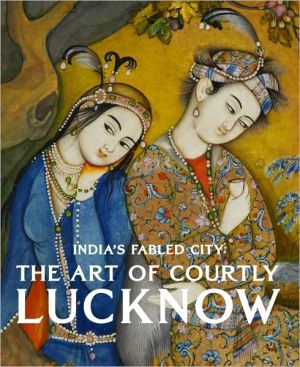
Exhibition catalogue, 272 pages, ISBN: 9783791350752
The Los Angeles County Museum of Art presents India’s Fabled City: The Art of Courtly Lucknow—the first major international exhibition devoted to the cosmopolitan culture of the northern Indian court of Lucknow, and the refined artistic production of the city’s multiethnic residents and artists. On view from December 12, 2010 through February 27, 2011, the exhibition will include almost 200 artworks: European oil paintings, watercolors, and prints; Indian opaque watercolor paintings generally made for albums, vintage photography, textiles, and garments, and a range of decorative art objects including metalwork, glassware, weaponry, and jewelry. Organized by Stephen Markel, LACMA curator of South & Southeast Asian art and department head, and Tushara Bindu Gude, associate curator, The Art of Courtly Lucknow will not only present the unique artistic traditions of Lucknow, but will also provide a framework for understanding the history of this extraordinary region and the nature of India’s colonial history and memory. . . .

After Johann Zoffany, "Colonel Polier Watching a Nautch," gouache on paper, ca. 1786-88 (Zurich: Museum Rietberg)
Lucknow was the capital of Awadh (a province in the Mughal Empire located in the present-day Indian state of Uttar Pradesh), and has become identified with the broader region and culture. From the mid-eighteenth century until the establishment of formal British rule in India in 1858, Lucknow overshadowed Delhi—the capital of the Mughal dynasty—to become the cultural center of northern India. Indian artists, poets, and courtiers flocked to Awadh seeking security and patronage, as Delhi suffered an extended period of unrest beginning in 1739. European artists, travelers and political agents were also soon lured to the region, seduced by tales of the wealth, opulence, and the generosity of Lucknow’s rulers (nawabs) and by the beauty of the city itself. The dynamic interaction between Indians and Europeans, the interplay
between their respective tastes and traditions, and the hybrid
lives led by many of Lucknow’s residents are explored in the
exhibition and accompanying publication. (more…)
Stockholm Show Surveys Sexuality
Press release from the museum:
Lust & Last / Lust & Vice
Nationalmuseum, Stockholm, 24 March — 14 August 2011

Louis Lagrenée, "Amor and Psyche," (Stockholm: Nationalmuseum)
On 24 March 2011, Nationalmuseum opens the doors to Lust & Vice, a major exhibition filling three rooms and five display cases. Over 200 works from the 16th century to the present day, mostly little-known treasures from the museum’s own collection, will illustrate how views of sexuality, virtue and morality have changed over the centuries. The exhibition includes works coloured by the religious teachings of the 16th and 17th century, which held that sexual relationships could only take place inside marriage. However, there was a big difference between the behaviour the church prescribed for ordinary people and the liberties taken by the elite. The exhibition continues by examining the upper-class view of marriage in the 18th century: a social institution that left the parties to seek true passion elsewhere. In other words, an
attitude diametrically opposed to that of the church. The 18th
century was a time of double standards: one for the masses
and another for the enlightened elite.

Adolf Ulrik Wertmüller, "Danaë and the Shower of Gold,"(Stockholm: Nationalmuseum)
From the 19th century onward, the city becomes a central theme. Large-scale urbanization frequently led to anonymous sexual encounters and prostitution. Secret images for private consumption coexisting with moralistic public art were another by-product of urbanization. The exhibition presents examples of how virtue and sin have been depicted in art through the ages. One of the display cases examines how girls were brought up to lead a virtuous life in order to be good marriage material. Exhibits include a real chastity belt on loan from Nordiska museet. One wall in the first room displays paintings of women’s bottoms – an erotic reference that was long considered sinful because sex, besides taking place inside marriage, required eye contact in order to be morally acceptable. Artists managed to paint erotic motifs by portraying
myths or biblical scenes, often with moralistic undertones
alluding to the consequences of a sinful lifestyle. (more…)
Exhibition: Chardin in Madrid
The Chardin exhibition formerly on view in Ferrara recently opened at the Prado:
Chardin: The Painter of Silence
Ferrara, Palazzo dei Diamanti, Ferrara, 17 October 2010 — 30 January 2011
Museo Nacional del Prado, Madrid, 1 March — 29 May 2011
 The Museo del Prado presents the exhibition Chardin, a comprehensive survey of the work of Jean Siméon Chardin (1699-1779). Chardin is one of the leading names in 18th-century French painting but has never been the subject of an exhibition in Spain, which only houses three of his paintings, all in the Museo Thyssen. After being shown at the Palazzo dei Diamante in Ferrara, the exhibition is presented in Madrid thanks to the sponsorship of Fundación AXA. It comprises 57 paintings by this great master of the still life and of genre painting, including some works not shown in the version of the exhibition seen in Italy.
Additional information is available here»
Exhibition: Pastel Portraits at the Met
Press release from the Met:
Pastel Portraits: Images of 18th-Century Europe
Metropolitan Museum of Art, New York, 17 May — 14 August 2011
Curated by Katharine Baetjer and Marjorie Shelley
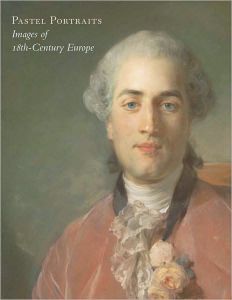 In the 18th century, pastel portraiture was so popular in Europe that by 1750 almost 2,500 artists and amateurs were working in pastel in Paris alone. Across Europe works were commissioned by royalty and courtiers, as well as the wealthy middle classes. Although pastel is a drawing material, 18th-century portraits are often highly finished, relatively large, brightly colored, elaborately framed, and hung in the same fashion as oil paintings. The powdery pastel crayons and slightly roughened paper are particularly suited to capturing the evanescent effects of expression that characterize the most life-like portraits. Pastel Portraits: Images of 18th-Century Europe will feature 40 pastel portraits from the collections of the Metropolitan Museum and other museums, and from private collections in New York, Princeton, and New Haven. At the core of the exhibition will be a group of French works, and the English, German, Italian, and Swiss schools will also represented.
Pastels are susceptible to fading if overexposed to light, and they are vulnerable to damage from excessive vibration, which can loosen the powder. As a practical consequence, they can only be shown three months of the year, rarely travel, and are not often exhibited in museums. Pastel Portraits will give visitors the rare opportunity to view these exquisite works in a museum exhibition, which will include generous loans from the Princeton University Art Museum, Yale Center for British Art, New Haven, Pierpont Morgan Library, New-York Historical Society, and Frick Collection, as well as several private collections.
Pastel Portraits will feature a number of fine works by Maurice Quentin de La Tour and Jean Baptiste Perronneau, two of the best known and outstanding artists who were working with this medium in mid-18th–century Paris. Highlights of the exhibition will include La Tour’s Jacques Dumont le Romain (1701-1781) Playing the Guitar; Perronneau’s Olivier Journu; Adélaïde Labille-Guiard’s portrait of the sister of Louis XVI, Madame Elisabeth de France (1764-1794), recently acquired by the Metropolitan Museum; Jean Étienne Liotard’s Young Woman in Turkish Costume with a Tambourine; John Russell’s John Collins of Devizes; and the beautiful Young Woman with Pearl Earrings by Venetian artist Rosalba Carriera, who became a favorite of Grand Tourists visiting Italy. The popularity and appeal of pastel in the 18th century reached as far as Boston, where John Singleton Copley, who was self-taught and had never seen an important European work in the medium, created exceptional portraits. Two of Copley’s portraits, also recently acquired by the Metropolitan Museum, will be on view in the exhibition.
Katharine Baetjer and Marjorie Shelley, Pastel Portraits: Images of 18th-Century Europe, exhibition catalogue (New Haven: Yale University Press, 2011), 9780300169812, 56 pages, $14.95.
Exhibition: Gardens in Perpetual Bloom
From the Ringling Museum:
Gardens in Perpetual Bloom: Botanical Illustration in Europe and America from 1600-1850
Nagoya/Boston Museum of Fine Arts, Nagoya, Japan, 12 December 2009 — 4 April 2010
John and Marble Ringling Museum of Art, Sarasota, 29 January — 24 April 2011
Museum of Fine Arts, Boston, 1 May 2011 — 1 May 2012
 Until the mid-nineteenth century, gardening was not the popular pastime of the average person that it is today. It was the occupation of the professional employed by royalty and the wealthy, the horticulturist who bred and cultivated new plants, and the botanist whose concern was the scientific classification of plant life. In this exhibition it will be possible to trace the transition of the study and appreciation of flowers and their cultivation from the world of monks and princes to the everyday gardener.
The earliest books depicting flowers were herbals, first illuminated manuscripts, then printed with woodcuts, dedicated to the medicinal, therapeutic properties of plants. In the early seventeenth-century, illustrated books were published to describe the contents of the gardens of the well-to-do. When Carl Linnaeus, the Swedish botanist, published his Systema naturae in 1735, which classified and gave order to our knowledge of the plant kingdom, the botanical book often took on a new purpose. Botanists endeavored to accurately illustrate all the varieties according to the new sexual system, whereby plants were organized and given nomenclature according to their numbers of stamens and pistils.
Explorers to the Americas, Asia, and Africa observed the native vegetation and brought back cuttings, seedlings, and bulbs to be cultivated, named, described and elaborately illustrated. The nursery business thrived. By the nineteenth century, as a result of this efflorescence of botanical publication, horticulture and gardening became a readily accessible hobby for the amateur. Artists and decorators were provided with immense new visual resources. Apart from their botanical interest, flower prints possess great variety and a visual appeal that can be bold and vibrant or delicate and refined. These plates almost always reveal the artist’s eye and hand in the rhythmic and graceful placement of the flower and its parts elegantly spread gracefully across the page. One of the earliest examples represented in this exhibition is the strikingly dramatic and monumental Large Sunflower, taken from Basil Besler’s Hortus Eystettensis…a florilegium (book describing a garden or flower collection), first published in 1613, which illustrated plants and flowers in the garden of the Bishop of Eichstätt in Bavaria. Besler, an apothecary and gardener for the Bishop, drew the flowers over many years and employed engravers to follow his designs and other artists to color them by hand.
Comprised of more than 100 flower prints, Gardens in Perpetual Bloom features the products of a fruitful collaboration of botanists, horticulturists, painters, and printmakers from the 17th to 19th centuries. Requiring technical virtuosity and complex techniques to achieve an amazing range of line and tone, these colorful works reveal the detail, structure, texture, tone, and lifelike appearance of a magnificent iris, an exotic lily, or a single elegant rose executed with an originality of design and composition.
Exhibition Catalogue: Nancy Keeler, Gardens in Perpetual Bloom: Botanical Illustration in Europe and America 1600-1850 (Boston: MFA, 2010), 136 pages, ISBN: 9780878467495, $24.95.










leave a comment