Conference | Maria Sibylla Merian
From the conference website and programme:
Maria Sibylla Merian Conference
Amsterdam, June 7–9 June 2017
Maria Sibylla Merian (1647–1717) is one of the more intriguing figures of scientific, artistic, and commercial culture of the early modern period. Born in Frankfurt and later based in Nuremberg, Wieuwerd, and Amsterdam, her scientific interest in entomology led her eventually to Surinam, where, as in Europe, she studied the metamorphoses of insects in their natural habitat. She translated her minute observations into powerful artistic representations that still attract the attention of many scholars, such as biologists, art historians, and science historians. Modern artists and novelists also find inspiration in her work and life.
The aim of the conference is to bring together new research and projects relating to Maria Sibylla Merian. With her life and work as a focal point this conference will also explore topics that relate to Merian from a broader perspective, such as the religious context of her work, early modern book production, Merian’s social network, Surinam as a colony, and entomological research.
W E D N E S D A Y , 7 J U N E 2 0 1 7
12.00 Registration and coffee
12.50 Introduction
13.00 Welcome from Karen Maex, Rector Magnificus, University of Amsterdam (TBC)
13.10 Redmond O’Hanlon, Maria, the Jungle and Bird-Eating Spiders
13.40 Kay Etheridge (Gettysburg College, Pennsylvannia), A Biologist to the Bone
14.20 Kate Heard (Royal Collection, London), ‘One of the Most Curious Performances … That Ever Was Published’: Merian in the Royal Collection
15.00 Tea break
15.30 Kurt Wettengl (TU, Dortmund), Merian’s Launch Pad
16.15 Henrietta McBurney (Art curator and author, Cambridge), The Influence of Merian’s Work on the Art and Science of Mark Catesby
T H U R S D A Y , 8 J U N E 2 0 1 7
8.30 Registration and coffee
8.50 Introduction
9.00 Welcome from José van Dijk, President of the Royal Netherlands Academy of Arts and Sciences and Distinguished University Professor, Utrecht University
9.10 George McGavin (Research Associate of the Oxford University Museum of Natural History), Endless Forms Most Beautiful and Most Wonderful
9.50 Katarina Schmidt-Loske (Research Center of Historical Biology – Biohistoricum — at the Zoological Research Museum Alexander Koenig, Leibniz-Institute for Animal Biodiversity, Bonn), Pupa, Chrysalis, and Cocoon
10.30 Coffee break
11.00 Alicia Montoya (Radboud University, Nijmegen), Maria Sibylla Merian’s Eighteenth-Century Readers: The Evidence from Library Auction Catalogues, 1700–1800
11.40 Anja Grebe (Danube University, Krems), Changing the Discourse of Science: New Insights on Maria Sibylla Merian’s Impact on Entomology in Nuremberg and Beyond
12.20 Lunch break
13.50 Parallel Sessions | Biology and Art
• Yulia Dunaeva (Russian Academy of Science, St. Petersburg), Using Merian’s Books to Determine Zoological Specimens from the Kunstkamera Collection
• Carin Grabowski (Humboldt University, Berlin), Between Faithfulness and Construction: Re-assessing Merian’s Oeuvre
• Berit Møller (Conservator at the Royal Danish Collections), A Close Study of 50 Merian Paintings
• Jaya Remond (Max Planck Institute, Berlin), Seeing Nature Up Close: Composing Exotic Botanical Imagery in Northern Europe ca. 1600–1700
13.50 Parallel Sessions | Network
• Liesbeth Missel (Curator Wageningen University Library), Merian, Alida Withoos, and Agnes Block: An Oral Network of Scientists, Artists, and the Elite
• Christine Sauer (Stadtbibliothek Nürnberg), Painting Flowers with Needles
• Florence Pieters (Former Curator Artis Library, UvA), Maria Sibylla Merian’s Additions to alba amicorum
• Bert van de Roemer (University of Amsterdam), Merian’s Amsterdam Network
15.10 Tea Break
15.40 Parallel Sessions | History of Books and Collections
• Marieke van Delft (Curator Royal Library, The Hague), Surviving Copies of Merian’s 1705 Edition of Metamorphosis
• Leslie Overstreet (Curator Smithsonian Libraries), The Editions of Merian’s Metamorphosis insectorum Surinamensium
• Peter Kristiansen (Curator at the Royal Danish Collections), The Merian Drawings at Rosenborg Castle in Copenhagen
• Hans Mulder (Curator Artis Library, UvA), Who Printed the Texts of Metamorphosis Insectorum Surinamensium and Der rupsen begin, voedzel en wonderbaare verandering?
15.40 Parallel Sessions | Biography and Context
• Joris Bürmann (École normale supérieure, Paris), Maria Sibylla Merian at l’Église du Seigneur: A New Light on the Wieuwerd Context
• Amanda Pipkin (University of North Carolina), God’s Handiwork: Searching for Herbs and Insects on the Moors of Friesland
• Rose Marie Tillisch (University of Copenhagen), Garden of Eden: Depicted by Hildegard von Bingen (1098–1179) and Maria Sibylla Merian (1647–1717)
• Margot Lölhöffel (Nürnberg), Maria Sibylla Gräffin, née Merianin: Starting a Career in Nuremberg?
17.15 Drinks
19.00 Conference Dinner (Allard Pierson Museum)
F R I D A Y , 9 J U N E 2 0 1 7
9.00 Registration and coffee
9.15 Erik de Jong (Artis-chair University of Amsterdam), Biophilia and Beauty in the Work of Maria Sibylla Merian
9.45 Group division and walk
10.00 Rotating Groups
• Artis Butterfly Garden
• Joos van de Plas, How Merian’s Legacy Influenced my Art Work
• Anita Walsmit Sachs, Science Meets Art, Art Meets Science
11.30 Lunch
12.00 Rotating Groups
• Artis Butterfly Garden
• Joos van de Plas, How Merian’s Legacy Influenced my Art Work
• Anita Walsmit Sachs, Science Meets Art, Art Meets Science
The program will also include a tour through Merian’s Amsterdam with Dirk Tang and a visit to the Merian exhibition at the Cromhouthuis (Amsterdam Museum).
SAH 2017, Glasgow
◊ ◊ ◊ ◊ ◊
A selection of offerings at this year’s SAH conference relevant to the eighteenth century:
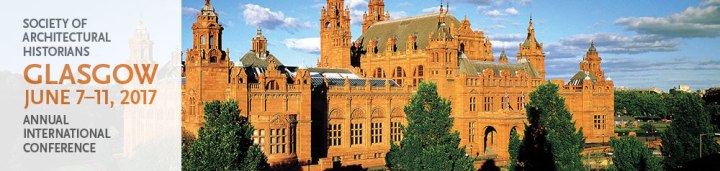
2017 Society of Architectural Historians Conference
Glasgow, 7–11 June 2017
The Society of Architectural Historians will host its 70th Annual International Conference in Glasgow, Scotland, June 7–11, 2017. This is the first time that SAH has met outside North America in over 40 years. Meeting in Scotland’s largest city, world renowned for its outstanding architectural heritage, reflects the increasingly international scope of the Society and its conference. Architectural historians, art historians, architects, museum professionals and preservationists from around the world will convene to share new research on the history of the built environment. The Glasgow conference will include 36 paper sessions, eight roundtables, an introductory address and plenary talk, architecture tours, the SAH Glasgow Seminar, and more.
◊ ◊ ◊ ◊ ◊
Piranesi at 300
Thursday, 8 June, 8:30–10:40am
Chairs: Heather Hyde Minor (University of Notre Dame) and John Pinto (Princeton University)
1. Dirk De Meyer (Ghent University), Lauding the Republic: Piranesi, Sallust, the Romans and the French
2. Eleonora Pistis (Columbia University), Scipione Maffei, Piranesi, and the Construction of Etruscan Magnificence
3. John Stamper (University of Notre Dame), Piranesi’s Roman Bridges: Engineering to Art
4. Elizabeth Petcu (Ludwig-Maximilians-Universität), ‘Nature, the great renewer’: Piranesi Visualizes Architectural Imitation
5. Victor Plahte Tschudi (The Oslo School of Architecture and Design), Rediscovering Piranesi in the Twentieth Century
◊ ◊ ◊ ◊ ◊
Chinese Architecture and Gardens in a Global Context
Thursday, 8 June, 8:30–10:40am
Chair: Tracy Miller (Vanderbilt University)
1. Zhu Xu (The University of Hong Kong), From Monastic Cells to Corridors: Historical Significance of Sixth–Seventh-Century Changes in the Chinese Buddhist Monastery
2. Lizhi Zhang (Tsinghua University), Hindu Features in the Vernacular Architecture of Southeast China
3. Lianming Wang (Heidelberg University), Hybrid Spaces Reconsidered: Knowledge, Identity and Publicity in Eighteenth-Century Jesuit Gardens in Beijing
4. Yiping Dong (Xi’an Jiaotong-Liverpool University), Historical Study on Modern Textile Mills in Yangtze Delta
5. Mark Hinchman (University of Nebraska), Modern Chinese Association Buildings: Exit Nation, Enter Ethnicity
◊ ◊ ◊ ◊ ◊
EAHN Roundtable: Architectural History and Open Access in Europe
Thursday, 8 June, 1:15–2:45
Chair: Maarten Delbeke (ETH Zürich)
After the successful roundtable Architectural History Online at the SAH 2016 annual conference, the EAHN plans to discuss the possibilities and challenges of digital publishing and open access policies in the European context. The requirements of national funding agencies, as well as the financial support they offer, play a different role than in the U.S. The panel, consisting of journal editors and others active in the field, also will address questions of how journals deal with the proliferation of online publications, how they negotiate between the academic world and architecture culture writ large, and how they deal with the handling and sustainability of digital data.
1. Caroline Edwards (Open Library of Humanities, UK)
2. Irina Davidovici (ETH Zürich, bauforschungonline
3. Juliette Hueber (InVisu/National Center for Scientific Research France
4. Françoise Gouzi (Université Toulouse)
5. Eduard Fuehr (Brandenburg Technical University at Cottbus)
◊ ◊ ◊ ◊ ◊
Discovering Georgian Glasgow: Allan Dreghorn’s City
Saturday, 10 June, 1:00–4:30
Tour led by Anthony Lewis (Glasgow Museums)
Allan Dreghorn (1706–1764) made his mark on Georgian Glasgow as an architect, builder, developer, and entrepreneur. This tour will include both a walking tour in central Glasgow to understand his influence on the layout and buildings of the Merchant City, including the extant St Andrews in the Square Church, and the Tontine Heads, the sculptural keystones from Dreghorn’s Tontine Hotel (no longer standing), available for viewing in the garden of the Provand’s Lordship Museum. This tour will also visit Pollok House, Glasgow’s grand Georgian seat of the Maxwell and Jardine families, with its associations with both Dreghorn and the Adam family.
◊ ◊ ◊ ◊ ◊
Edinburgh: The New Town and William Playfair
Sunday, 11 June, 11:00–7:30
Tour led by John Lowrey (University of Edinburgh)
This tour will explore Edinburgh’s 18th- and 19th-century development, with a special focus on the planned New Town (part of the World Heritage Site, begun in the 1770s and celebrating its 250th anniversary in 2017) and the work of William Playfair, Edinburgh’s leading 19th-century architect. The day will begin with an exclusive focused session at Edinburgh University Library, where Playfair’s archive is housed. The group will be given special access to Playfair’s drawings and, guided by the tour leader, the University’s archive team, and expert historian colleagues, will consider Playfair’s career in context. After lunch, the tour will walk to the New Town and will see key sites and buildings, including Calton Hill (the epitome of Edinburgh’s tag as ‘Athens of the North’), St. Andrew’s Square, and Charlotte Square. At the end of the day, participants will join those from the other two Edinburgh tours for a drinks reception in the University of Edinburgh’s historic New College.
Symposium | Sculpture Collecting and Display, 1600–2000
From The Frick:
Sculpture Collecting and Display, 1600–2000
The Frick Collection, New York, 19–20 May 2017
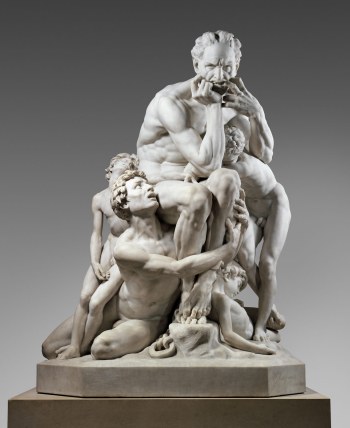
Jean-Baptiste Carpeaux, Ugolino and His Sons, 1865–67 (New York: The Metropolitan Museum of Art).
Presented by the Center for the History of Collecting, Frick Art Reference Library, this two-day symposium will showcase how approaches to collecting and displaying sculpture have varied and changed over the centuries, from the Kunstkammer of late Renaissance princes, to the sculpture galleries of the eighteenth century, to garden sculpture ensembles and, finally to the challenges of displaying sculpture in public museums. Tickets for both days are $50 ($35 for members); single-day tickets are $30 ($25 for members). The symposium is made possible through the support of the Robert H. Smith Family Foundation.
F R I D A Y , 1 9 M A Y 2 0 1 7
3:15 Registration
3:30 Welcome and Opening Remarks by Ian Wardropper (Director, The Frick Collection) and Inge Reist (Director, Center for the History of Collecting, Frick Art Reference Library)
3:45 Keynote Address
• Malcolm Baker (Distinguished Professor, University of California, Riverside), What Do We Mean by a ‘Sculpture Collection’?
4:30 Coffee break
4:55 Wunderkammer and Kunstkammer: Mixing the Media
• Jeremy Warren, Honorary Curator of Sculpture, Ashmolean Museum, Oxford, and Sculpture Research Curator, The National Trust), The Collecting of Small Bronze Sculptures in Renaissance Italy
• Michael Yonan (Associate Professor of Art History, University of Missouri), Porcelain as Sculpture: Medium, Materiality, and the Categories of Eighteenth-Century Collecting
• Thomas DaCosta Kaufmann (Frederick Marquand Professor of Art and Archaeology, Princeton University), Messy History? Sculpture Collecting and the Kunstkammer
6:25 Questions from the Audience
S A T U R D A Y , 2 0 M A Y 2 0 1 7
10:00 Registration
10:15 Welcome by Inge Reist (Director, Center for the History of Collecting, Frick Art Reference Library)
10:25 Garden Sculptures as Collections
• Betsy Rosasco (Research Curator of European Painting and Sculpture, Princeton University Art Museum), Versailles, Marly, Dresden: Magnificence and Its Limits
• Julius Bryant (Keeper of Word & Image, Victoria and Albert Museum), Gentlemen Prefer Bronze: Garden Sculpture and Sculpture Gardens in Eighteenth-Century England
11:25 Coffee break
11:50 Sculpture Galleries
• Jeffrey Collins (Professor, Bard Graduate Center), Staging Statues: The Challenge of the Group
• Anne-Lise Desmas (Curator and Department Head of Sculpture and Decorative Arts, The J. Paul Getty Museum), The ‘Gallerie du S.r Girardon Sculpteur Ordinaire du Roy’
12:50 Lunch break
11:50 Sculpture Galleries, continued
• Alison Yarrington (Professor of Art History and Dean of the School of Arts, English, Drama and Publishing, Loughborough University), Myth, Memory, and Marble: The Country House Sculpture Gallery in the Post-Napoleonic Period
2:45 The Changing Place of Sculpture in the Public Museum
• Andrew McClellan (Professor of Art History, Tufts University), The Problem of Sculpture in the Public Museum
• Alan Darr (Senior Curator of the European Art Department and Walter B. Ford II Family Curator of European Sculpture & Decorative Arts, Detroit Institute of Arts), The Legacy of William Valentiner in Shaping the Display of European Sculpture in American Museums, 1900–Present: Case Studies
• James Fenton and Ian Wardropper in Conversation: Collecting Sculpture for Private and Public Collections during the Late Twentieth and Early Twenty-First Centuries
Conference | The Art of Beefing it Up
From The Museum of English Rural Life:
The Art of Beefing it Up
The Museum of English Rural Life, University of Reading, 19 June 2017
Registration due by 1 June 2017
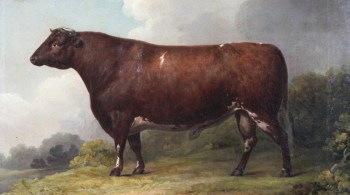 A one-day conference on how paintings and prints of farm livestock functioned during the late-18th and early-19th centuries. Spaces are limited, please book by 1 June 2017. Cost includes buffet lunch and refreshments.
P R O G R A M M E
9.30 Registration and coffee
9.45 Morning Session
• Ollie Douglas, Fat Beasts at the Museum of English Rural Life
• Hilary Matthews, The Woburn Sheepshearing
• Lawrence Weaver, The Iconic Paintings of Thomas Weaver
11.30 Coffee break
11.45 Visit to see relevant paintings, prints, artefacts, and archives in the Museum
13.00 Lunch
14.00 Afternoon Session
• Alison Wright, Paul Potter on the Thames: Landscape and Cattle Painting in Early-19th-Century Britain
• Pat Stanley, The Bakewell Effect
15.30 Panel discussion chaired by Jeremy Burchardt
16.00 Tea and departure
Conference | The Country House Revived?
From the conference programme:
The 15th Annual Historic Houses Conference: The Country House Revived?
Dublin Castle, 19–21 June 2017
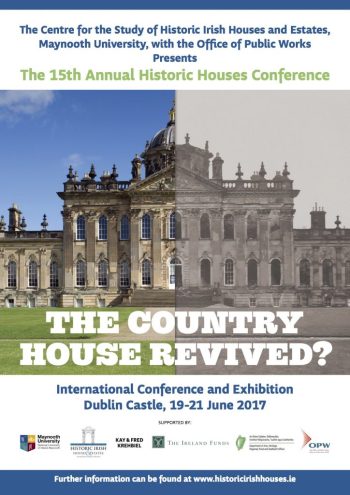 The focus of this conference is the survival and revival of historic houses in Ireland, the UK, and Europe in the course of the last fifty years. Across Europe increasing numbers of houses are opening their doors to the public, presenting and interpreting their histories in imaginative ways, looking to engage with local communities, and to diversify in terms of commercial activities. This holds true for houses in private ownership as well as for those in the guardianship of national heritage organisations, local authorities, or other bodies. Historic houses and their landscapes are uniquely poised to take advantage of international and domestic trends in cultural tourism and heritage learning. The historic house in all its manifestations remains a constant feature in the curriculum, from scholarly study to heritage, conservation, and management training, and the creative arts. The enduring relevance of the historic house is also defined by its role as an important economic driver at local, regional, and national levels.
Growing numbers of houses are engaging in numerous ways with the external world as opposed to feeling beleaguered and retreating behind closed doors. How do we assess this recent history? Every house operates under its own unique circumstances, influenced by governance, ownership, funding, scholarly investigation, national trends, or other factors. There is no single model for historic houses: each one makes different choices for creating a sustainable future. There are many definitions of the concept of ‘revival’. The Country House Revived? is aimed at a wide audience of owners, scholars, students, heritage professionals, policy makers, and the many people with a general interest in the built heritage. Papers will examine a variety of topics and perspectives from across Europe, comparing issues and experiences that have affinities as well as contrasts. The conference will also explore ways in which this sector of the built heritage can foster future collaborative activity.
Accompanying the conference will be a photographic exhibition illustrating a variety of houses from across Ireland, the UK, and Europe, and chronicling their recent past.
More information is available here»
◊ ◊ ◊ ◊ ◊
M O N D A Y , 1 9 J U N E 2 0 1 7
11.00 Registration and Coffee
12.00 Welcome and Introduction
12.30 The Wider View 1
• Ben Cowell, Historic Houses Association
• Loyd Grossman, Heritage Alliance Speaker, Europa Nostra, TBC
13.45 Lunch
14.30 Case Studies 1
• John Munro, Ledreborg, Denmark
• Terezia Bardi, Esterhazy Palace, Hungary
• Elyze Storms-Smeets, Houses of Gelderland, Netherlands
• James Hervey Bathurst, Eastnor Castle, Herefordshire
15.45 Tea
16.15 Case Studies 2
• Stephanos Germenis, Blatna, Czech Republic
• Claudius Wecke, Branitz Castle and Park, Germany
• Hilary McGrady, Clandon Park and the National Trust
• Dorothea Depner, Castletown House, Co Kildare
17.30 Break
17.45 Terence Dooley, Reflections on the Historic Irish House Today
18.45 Tour and Reception, Dublin Castle
T U E S D A Y , 2 0 J U N E 2 0 1 7
9.00 Coffee
9.30 Case Studies 3
• Koen de Vlieger-de Wilde, Kasteel d’Ursel, Belgium
• Balazs Banyai, Nadasdy House, Hungary
• Friederike Drinkuth, Country Houses in Mecklenberg Western-Pomerania
• Petr Svoboda, Uholicky, Czech Republic
10.45 Coffee
11.15 The Wider View 2
• Annie Tindley, Scottish Country Houses
• Kevin Baird, Irish Heritage Trust
• Rodolphe de Looz-Corswarem, European Historic Houses Association Speaker, European Cultural Tourism Network, TBC
12.30 Picnic Lunch Farmleigh
14.00 Depart for Castletown House
14.45 Tour of Castletown House
16.00 Ways and Means, Ireland
• Julian Gaisford St Lawrence, Irish Historic Houses Association
• Charles Colthurst, Blarney Castle, Co Cork
• Martin Colreavy, DAHRRG
17.15 Reception
18.15 Depart for Maynooth University
18.45 Tour of Pugin Buildings, Maynooth University
19.30 Dinner, Pugin Hall
22.00 Return to Dublin
W E D N E S D A Y , 2 1 J U N E 2 0 1 7
9.00 Coffee
9.30 Ruins, Recovery, and Re-Use
• John Goodall, Country Life Magazine
• Julia Korensky, English Ruins
• Matthew Beckett, England’s Lost Heritage
• Merlin Waterson, Wentworth Woodhouse, Yorkshire
10.45 Coffee
11.15 Case Studies 4
• James Birch, Doddington Hall, Lincolnshire
• Britta Andersen, Gammel Estrup, Denmark
• Alexandre de Vogue, Vaux-le-Vicomte
• Frances Bailey, National Trust, Northern Ireland
12.30 Lunch
13.45 Scholarship and the Country House
• Martin Postle, Paul Mellon Centre, London
• David Adshead, Attingham Trust
• Leo Schmidt, BTU Cottbus, Germany
• Myles Campbell, Office of Public Works
15.00 Tea
15.30 Christopher Ridgway, How Stands the Country House Now?
16.15 Closing Remarks
Symposium | The Splendour of the Dining Room
From Haughton International:
The Splendour of the Dining Room
Haughton International Ceramics Seminar
Christie’s, London, 28–29 June 2017
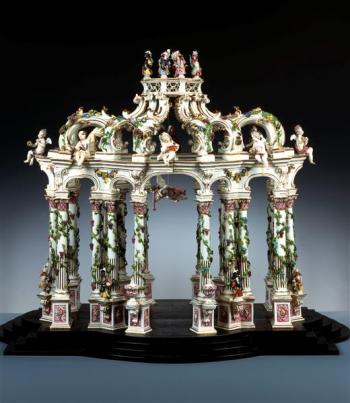
Temple of Honour (Ehrentempel), Meissen, hard-paste porcelain, ca. 1750 (Porzellansammlung, Staatliche Kunstsammlungen Dresden. Photo: Jürgen Karpinski).
Over the past 35 years, Brian & Anna Haughton have organised the International Ceramics Seminar as the nucleus of their annual art and antiques fair held in London each June. Every year the Seminar included the latest ceramic research, often ground-breaking, presented by an international rostrum of the leading scholars. The Haughtons’ contribution to ceramic scholarship has been immeasurable, providing opportunities for collectors, curators, independent researchers and enthusiasts to meet, network, exchange ideas, plan exhibitions and publications. In the absence of their annual fair and in order to keep the focus and continuity on ceramics in London in June, they have partnered with Christie’s to launch a two-day seminar with the support and encouragement from their academic colleagues. The seminar will, as always, cover a wide range of ceramic subjects and their relationships with other art forms such as silver and sculpture. Ceramics have always had a central place in the social background of the 18th century and were also important as diplomatic princely gifts, laid out on tables during state and important social occasions as highly political symbols of power and prestige.
Cost of two-day Seminar, held at Christie’s, 8 King Street, St James’s, London: £45 (inc VAT). Cost of two-day Seminar including dinner at The Athenaeum (Wednesday 28th June): £75 (inc VAT). Student Tickets for two-day Seminar only (on production of ID): £25 (inc VAT). Booking in advance through the website is essential due to limited numbers. The programme is subject to change without warning.
The speakers will include
• Kathryn Jones (Senior Curator of Decorative Arts, Royal Collection Trust, London), Very Massive and Handsome: George IV’s Grand Service and the Royal Table
• Timothy Wilson (Former Keeper of Western Art at the Ashmolean Museum, Oxford), Italian Maiolica Table Services: For Use or for Display?
• Claudia Lehner-Jobst (Art Historian and Curator, Vienna), Fasting and Feasting: Novelties at the Imperial Tables during the Reign of Maria Theresa
• Katharina Hantschmann (Keeper of Ceramics, Bayerisches Nationalmuseum, Munich, and Ernst Schneider Meissen porcelain Collection bequest at Lustheim Castle), Bustelli and the Impact of Meissen on the Nymphenburg Factory
• Ivan Day (Food Historian, Museums and Country House Consultant), Dining and Hospitality in 18th-Century English Provincial Towns and Cities
• Timothy Schroder (Silver Historian, Curator and former Prime Warden of the Goldsmiths Company), Magnificence: State Banquets in the Reign of Henry VIII
• Paul Crane (Ceramic Historian, London), Inspired by Marine Forms: Early English Porcelain Transforms the Dining Table
• Patricia Ferguson (Project Curator, Monument Trust, 18th Century Prints and Ceramics, British Museum, London, and Hon. Adviser on Ceramics, National Trust), Felbrigg’s Folly: Meissen Porcelain Temples for the Dessert Table
• Melitta Kunze-Koellensperger (Curator, independent researcher and Art Historian), The Dutch Village of Meissen Porcelain: Count Brühl’s Dessert de Luxe
• Rosalind Savill (Former Director of the Wallace Collection, London), From Salt Cellars to Sweetmeat Baskets: Dining with Sèvres Porcelain in the 18th Century
• Nicole Coolidge Rousmaniere (IFAC Handa Curator of the Japanese Arts, The British Museum, London, and founding Director of the Sainsbury Institute, Norwich), Celebration of Form and Function: Insights into Japanese Dining Traditions from the Jômon Period to the Present Day
• Rebecca Wallis (Curator, Ceramics & Glass, Victoria and Albert Museum, London), Dining in Style: 19th-Century Services in the Victoria and Albert Museum
• Suzanne Lambooy (Curator of Applied Arts, Gemeentemuseum, The Hague), Dutch Dining Culture in the Second Half of the 18th Century: The Diplomacy of the Table
• David Mitchell (Visiting Research Fellow, Centre for Metropolitan History, Institute of Historical Research, University of London), Linen Damask Napery, Henry VIII and the Northern Renaissance
Symposium | Visualising Learning in France, 1500–1830
From the Centre for French History and Culture at St Andrews:
Visualising Learning in France, 1500–1830
St Andrews, 24–25 May 2017
 Generously supported by the British Society for Eighteenth-Century Studies, the Society for French Studies, The Centre for French History and Culture, School of Art History, and School of History, University of St Andrews
The event is free but places are limited. Please register by emailing ljg21@st-andrews.ac.uk (Linda Goddard) by 15 May, indicating day 1, 2, or both.
New Seminar Room, School of History, South Street, St Andrews
W E D N E S D A Y , 2 4 M A Y 2 0 1 7
9.30 Tea/coffee and welcome
10.00 Susanna Berger (University of Southern California / Villa I Tatti), Siegmund Jacob Apin on Visual Learning in Sixteenth- and Seventeenth-Century Europe
11.00 David Pullins (Massachusetts Institute of Technology / The Frick Collection), Visualizing Drawing: Cochin, the Encyclopédie and the livres à dessiner Tradition
12.00 Lunch
1.00 Katie Scott (The Courtauld Institute of Art) and Hannah Williams (Queen Mary University of London), Objects of Learning: Houdon’s Écorché and Oppenord’s Ripa
2.00 Stephanie O’Rourke (University of St Andrews), Histories of the Self in the Trioson Portrait Series
3.00 Coffee
3.30 Charles Kang (Columbia University), Trees of Blood: Injection and Representation
4.30 General discussion
5.00 Reception
T H U R S D A Y , 2 5 M A Y 20 1 7
9.30 Sarah Easterby-Smith (University of St Andrews), Cultivating Utility: Amateur Botany, Taste, and Floriculture in Late-Eighteenth-Century France
10.30 Richard Taws (University College London), The Echo Chamber of the French Revolution
11.30 Coffee
11.45 Mary Orr (University of St Andrews), Colouring the Science of the Past: The Arts of Learning for the Present?
Poster image: Jean-Baptiste Greuze, A Boy with a Lesson-Book (detail), exhibited 1757 (National Galleries Scotland).
Workshop | Printed Stone: Sculpture and Its Images
From the workshop registration page:
Printed Stone: Sculpture and Its Images
Institute of Advanced Studies, University College London, 12 June 2017
Organized by by Brigid von Preussen and Cora Gilroy-Ware
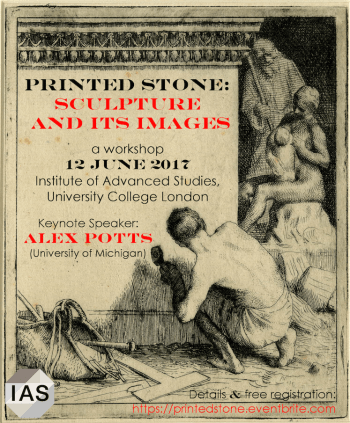 This interdisciplinary workshop will explore the relationship between sculpture and its printed images, whether produced for reasons of commerce or conservation, public edification or private gain. Our participants will interrogate the process of translation and mediation between two and three dimensions, asking how the materiality of different forms of sculpture has been rendered using various technologies of print-making, from the creation of an intaglio plate to advanced digital mapping techniques and 3D printing. We welcome the attendance and contribution of anyone interested in larger questions of representation, reproduction, materiality, media, technology, and process. Monday, 12 June 2017, 9:30–3:30; Common Ground, South Wing, Wilkins Building, Institute of Advanced Studies, University College London.
Keynote Speaker: Alex Potts (University of Michigan).
Participants include: Malcolm Baker (University of California, Riverside), Allison Stielau (University College London), Richard Taws (University College London), Danielle Thom (Museum of London), Emma Payne (University College London), and Cora Gilroy-Ware (Institute of Advanced Studies).
Organised by Cora Gilroy-Ware (Institute of Advanced Studies) and Brigid von Preussen (Columbia University) with the generous support of the Institute of Advanced Studies, University of London.
For further information, please contact Cora or Brigid: c.gilroy-ware@ucl.ac.uk and bev2105@columbia.edu. For free registration, please see printedstone.eventbrite.com.
Symposium | Freemasonry and the Visual Arts
From the symposium programme:
Freemasonry and the Visual Arts
Bibliothèque nationale de France, Paris, 26 May 2017
Co-chaired by Reva Wolf and Alisa Luxenberg
 The Freemasonry and the Visual Arts symposium is a program of the second World Conference on Fraternalism, Freemasonry, and History.
It brings together a series of original case studies to reveal the wide variety, international scope, social complexity, and fundamental historical significance of the intersections of Masonry and the arts from the eighteenth century forward.
Registration is free through this link.
14:00 Part 1: Freemasonry and the Exploration of Architecture
• David Martín López (University of Granada), Freemasonry in Eighteenth-Century Portugal and the Architectural Projects of the Marquis de Pombal
• Alisa Luxenberg (University of Georgia, Athens), Building Codes: New Light on f … baron Taylor and Les Voyages pittoresques et romantiques dans l’ancienne France
• Talinn Grigor (University of California, Davis), Reveil de l’Iran: Freemasonry and Artistic Revivalism from Parsi Bombay to Qajar Tehran
15:15 Coffee break
15:30 Part 2: Art, Freemasonry, and Social and Political Upheaval
• Cordula Bischoff (independent scholar), Meissen Porcelain and the Order of the Pug
• Reva Wolf (State University of New York at New Paltz), Goya’s Art and Freemasonry in Spain
• Katherine Marie Smith (New York University), Masonic Imagery in Haitian Vodou
16:45 Part 3: Transformations in the Art of Freemasonry in the United States
• Nan Wolverton (American Antiquarian Society), ‘Within the Compass of Good Citizens’: The Visual Arts of Freemasonry as Practiced by Paul Revere
• William D. Moore (Boston University), ‘To Consummate the Plan’: Solomon’s Temple in Masonic Art, Architecture, and Popular Culture, 1865–1930
• Cheryl Finley (Cornell University) and Deborah Willis (New York University), ‘A Change Is Gonna Come’: Imaging Black Freemasons from Emancipation to the 1960s
Conference | Heritage and Revolution: First as Tragedy, Then as Farce
From H-ArtHist, with more information available at the conference website:
Heritage and Revolution: First as Tragedy, Then as Farce
McDonald Institute for Archaeological Research, Cambridge, 6 May 2017
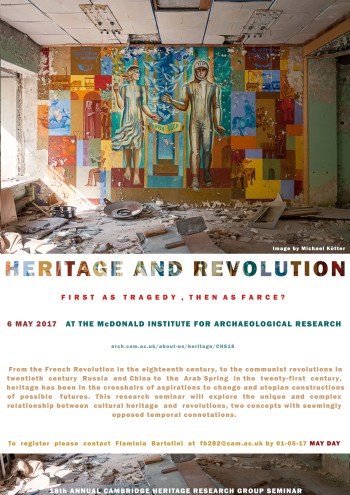 From the French Revolution in the eighteenth century, to the communist revolutions in twentieth-century Russia and China, to the Arab Spring in the twenty-first century, heritage has been in the cross-hairs of aspirations to change and utopian constructions of possible futures. This research seminar will explore the unique and complex relationship between cultural heritage and revolutions, two concepts with seemingly opposed temporal connotations.
9:00 Introduction
Chair: Mathilde LeLoup
Dominique Poulot – The French Revolution and the Democratization of Heritage: Or the Parallel Inventions of Vandalism and Heritage
9:30 Session 1: Revolutionary Vanguards in Retrospect
Chair: Tom Crowley
• Astrid Swenson – Out with the Old? The Role of Revolution in the Rise of Heritage
• Julie Deschepper – Between Past and Future: The ‘Heritage Revolution’ in Russia
• Heonik Kwon – Shrine for Displaced Spirits: A Heritage of the Vietnamese Revolution
• Tom Stammers – The Homeless Heritage of the French Revolution
11:00 Coffee break
11:20 Session 2: Building and Destroying Socialist Pasts
Chair: Margaret Comer
• Francesco Iacono – Counter-Revolution or Why It Is Impossible to Have a Heritage of Communism and What Can We Do about It
• Myroslava Hartmond – Where The Bodies Are Buried: A Comparative Study of Lenin Disposal in Post-Communist States
• Laura Demeter – Regime Change and Cultural Heritage Protection, a Matter of State Security
12:30 Artist Talk
• Martha McGuinn – authentic.obj
1:00 Lunch
2:00 Session 3: Materiality and Immateriality of Revolution
Chair: Marie Louise Stig Sørensen
• Lila Janik – Materiality of Praxis and Substance: A Tangible Witnesses to the Russian Revolution and the Subsequent Oppression
• John Carman – Anarchist Ambiguity: The Past and Creating a Free Society
• Michael Falser – From Maoist Revolution to the Mimicking of UNESCO’s Cold War Diplomacy: The Khmer Rouge and the (Un)Making of Angkor/Cambodia as Cultural Heritage, 1975–90
3:00 Session 4: Exhibition Revolution
Chair: Johanna Zetterstrom-Sharp
• Jennifer E. Altehenger – Industrial Chinoiserie: China’s Pavilion at the Leipzig Trade Fairs in the 1950s
• Flaminia Bartolini – Entertaining Italy with Propaganda: The Exhibition of the Fascist Revolution in Rome
4:15 Session 5: The Arab Spring: Reconciling Competing Visions
Chair: Dacia Viejo Rose
• Shadia Mahmoud – Museums and Cultural Heritage in Post-Revolution Egypt: Transformation and Transmission
• Dena Qaddumi – Confronting the Past for the sake of the Future: Cultural Heritage in Tunis
5:00 Discussion
5:30 Wine reception
7:00 Dinner










leave a comment