Conference | Rococo in Scandinavia
From H-ArtHist (with an updated schedule available here). . .
Rococo in Scandinavia
Palais Thott, Copenhagen, 30 May 2017
Registration due by 29 May 2017
Organized by Corinne Thépaut-Cabasset
 Rococo in Scandinavia will explore the many ways in which the history of style affected the arts and the culture of Scandinavia over the course of the long eighteenth century by exploring the Rococo stream.
The past years in Copenhagen have shown an interest for rococo culture: the fashion exhibition Rokoko Mania was on view at the Designmuseum Denmark in 2012; Danish art historian Charlotte Christensen published the first monograph on Carl Gustaf Pilo, the most eminent eighteenth-century painter in Scandinavia, in 2016; and the Statens Museum for Kunst presented the exhibition William Hogarth: A Harlot’s Progress and Other Stories, also in 2016. These events demonstrate the potential for developing the topic in Denmark.
The study of the dissemination of Rococo in Scandinavia has never been addressed in a public forum. This is why and how the idea of having a conference in Copenhagen emerged and was developed and ought to happen in Scandinavia under the auspices of the French Embassy in Denmark. This conference will convene for the first time eighteenth-century experts from Denmark, Germany, Finland, France, Sweden, and America in a public forum about the Rococo in Scandinavia.
Participation is free, based on the number of available places, but registration is compulsory; please email Corinne Thépaut-Cabasset, ctc16@hum.ku.dk.
T U E S D A Y , 3 0 M A Y 2 0 1 7
13:30 Welcome by H. E. François Zimeray (French Ambassador in Denmark)
13:40 Charlotte Christensen (Former Curator at the Designmuseum, Denmark), Fatal Fires: How Copenhagen Lost Its Rococo
14:00 Jørgen Hein (Senior Curator at Rosenborg Palace, Denmark), Saved from the Fire and Sent to the Garden: Rococo from the First Christiansborg at Rosenborg
14:20 Merit Laine (Associate Professor, Department of Art History, Uppsala University, Sweden), Coexistence or Transition? Rococo and Classicism in Queen Louisa Ulrika’s Museum at Drottningholm
14:40 Pascal Bertrand (Professor of the History of Art, University of Bordeaux-Montaigne, France), The Color of the Rococo: French Tapestries after Oudry and Boucher in Scandinavia
15:00 Corinne Thepaut-Cabasset (Marie Sklodowska-Curie Research Fellow, SAXO Institute, University of Copenhagen), Fashioning the Rococo: Looking for a Rococo Wardrobe
15:20 Viveka Hansen (Independent Textile Historian, The IK Foundation, UK), Rococo and East India Influences at a Swedish Manor House in 1758
15:40 Michael Yonan (Associate Professor of Art History, University of Missouri, USA), Print Culture and the Dissemination of French Rococo Design in Eighteenth-Century Europe
16:00 Barbara Lasic (Professor of Art History, University of Buckingham, UK), ‘Une exquise expression artistique’: Spectacularising the Rococo at the 1935 Exhibition or Eighteenth-Century French Art in Copenhagen
16:20 Discussion
16:45 Piano Concert
17:00 Tour of the Palais Thott
W E D N E S D A Y , 3 1 M A Y 2 0 1 7
The conference will be followed by a tour on Wednesday of additional rococo spaces in Copenhagen (museums and palaces), concluding with a reception at Christian’s VIII palace in Amalienborg, at 4:00pm.
◊ ◊ ◊ ◊ ◊
Note (added 17 May 2017) — The original posting included Krista Vajanto (Researcher, Archaeologist, Aalto University, Finland) on the schedule, presenting a paper entiled, “Shipwrecks Findings: a Rococo Petticoat and Luxury Textiles from Sankt Mikael Shipwreck (1747).” Vivika Hansen’s paper has been added in its place.
Conference | Imitation and Geographies of Art after Winckelmann
From H-ArtHist:
Under the Greek Sky: Imitation and Geographies of Art after Winckelmann
King’s College London, The Warburg Institute, The British Museum, London, 15–16 June 2017
2017 marks the 300th anniversary of the birth of the German classicist and art historian Johann Joachim Winckelmann, commonly regarded as the founding father of both archaeology and art history. Winckelmann’s writings heralded a revolution in approaches to the history of ancient art and culture, as well as contributing to the spread of neoclassical taste throughout Enlightenment Europe. This conference will re-evaluate Winckelmann’s legacy and his influence on art theory since the eighteenth century. The concept of imitation, central to Winckelmann’s theories and writings, proves to be a linchpin for modern ideas about the diffusion, appropriation, and musealization of art.
The first day of the conference will focus on the ‘culture’ of imitation. Winckelmann famously claimed, paradoxically, that one has to imitate Greece in order to become inimitable. From a range of historical and artistic perspectives, papers map the consequences this claim had for art’s theory, practice, and body politics since the eighteenth century.
The second day will discuss the ‘nature’ of imitation, and the consequences of the ecological boundaries set for it by Winckelmann. It will explore the implications of Winckelmann’s climate theory for neoclassical geographies of art and contemporary debates on aesthetic relativism in the age of nationalism.
The conference is free of charge. Pre-registration is required. Places are limited, in particular for The British Museum ‘Walking seminar’, and therefore admission can only be granted to those with booking confirmation.
The conference is organised by Katherine Harloe (Reading University), Hans Christian Hönes (The Warburg Institute / Bilderfahrzeuge Research Group), Daniel Orrells (King’s College London) and Sadie Pickup (Christie’s). Additional support has been provided by The British Museum, the Institute of Classical Studies, and Christie’s Education.
◊ ◊ ◊ ◊ ◊
T H U R S D A Y , 1 5 J U N E 2 0 1 7
King’s College London
13:00 Daniel Orrells (KCL) and Katherine Harloe (Reading), Introduction
13:15 William Fitzgerald (KCL), The Contour of Antiquity: Flaxman’s Iliad
14:00 Daniel Orrells (KCL), Visualising Antiquity in the Eighteenth Century
14:45 Coffee break
15:00 Kate Nichols (Birmingham), A Jewish Ajax in an Australian Gold Mining Town: Reforming the Classical Body in Late Victorian Visual Culture
16:00 Verity Platt (Cornell), Winckelmann’s Pharmacy: Description and the Phantasia of Restoration
16:45 Break
17:00 Whitney Davis (Berkeley), Imitation and Narcissism: Winckelmann under Psychoanalysis
18:00 Reception
F R I D A Y , 1 6 J U N E 20 1 7
The Warburg Institute / The British Museum
10:00 Hans Christian Hönes (BFZ), Introduction
10:15 Aris Sarafianos (Ioannina/Birkbeck), Convenient Misunderstandings: Meteocultural Models in Britain, 1755–1830
11:00 Coffee break
11:30 Natasha Eaton (UCL), The Sublimity of Decline: Winckelmann in India
12:15 Athena Leoussi (Reading), Beauty and the Sun: Aesthetics and Climate in the Making of the Modern European Nations
13:00 Lunch break
14:00 Mechthild Fend (UCL), Beauty in an ‘Unusual Guise’: On Colour and Adaptation
14:45 Richard Wrigley (Nottingham), Winckelmann and Rome: An Aerial Perspective
15:30 Coffee break
16:00 Pascal Griener (Neuchatel), Winckelmann and Jacob Burckhardt: The Life of Antique Statues in the Modern Museum
16:45 Closing remarks / Roundtable
17:45 Ian Jenkins (Senior Curator of Greek and Roman Antiquities), ‘Walking Seminar’ at The British Museum
20:00 Reception
Colloquium | Horace Walpole and His Legacies
Next week at Durham University:
Horace Walpole and His Legacies: A Tercentenary Colloquium
Durham Castle, 5 May 2017
Organized by Fiona Robertson
 An informal gathering with presentations, discussion, and a workshop, as part of Durham’s series of events marking the tercentenary of the birth of Horace Walpole—novelist, playwright, designer, collector, and letter-writer extraordinaire. Friday, 5 May 2017, 10.00–14.00 in the Senate Suite, Durham Castle. This event is free of charge, and a working lunch will be provided. Participants are asked to register their interest in advance by emailing fiona.robertson@durham.ac.uk.
Presentations
• Peter N. Lindfield, Walpole’s Paper House
• Dale Townshend, Walpole, Enchantment, and the Legacy of The Castle of Otranto
• Serena Trowbridge, Teaching Gothic: Walpole’s Shadows
Workshop
• Stephen Regan, Reading Walpole’s Letters
Conference | Allegory after 1789
From the Workshop des Kunstgeschichtlichen Instituts der Goethe-Universität Frankfurt am Main:
Allegorie nach 1789: Kritik und Transformation
Museum Giersch der Goethe-Universität, Frankfurt am Main, 19 May 2017
Workshop des Kunstgeschichtlichen Instituts der Goethe-Universität Frankfurt am Main in Kooperation mit eikones NFS Bildkritik, Universität Basel
Die Allegorie als künstlerische und literarische Form sah sich im Laufe des 18. Jahrhunderts vielfacher Kritik ausgesetzt, wobei die Vorwürfe von ihrer Abwertung als dunkel und unverständlich bis zur Diskreditierung als rein willkürlicher Modus der Bedeutungsproduktion reichen. Mit dem folgenreichsten Ereignis des 18. Jahrhunderts, der Französischen Revolution, gewannen diese kritischen Spannungen an verschärfter Aktualität. Angesichts der umwälzenden Ereignisse und der zunehmenden Schwierigkeit, diese historisch sinnfällig zu deuten, erlebte die Allegorie als Mittel der semantischen Stabilisierung jedoch auch eine Wiederbelebung sowohl in der Malerei wie insbesondere in der Druckgraphik.
Der Workshop beschäftigt sich mit der Wiederaufnahme der Allegorie, ihrer kritischen Debatte während und nach der Revolution und der transformierenden Kraft, die diese Kritik entfaltete. Dabei steht nicht nur die Frage nach der kunsthistorischen Bedeutung der ›Sattelzeit‹ um 1800 zur Diskussion, sondern mehr noch die Relevanz vormoderner Formen der malerischen und literarischen Sinnstiftung unter den Bedingungen moderner Autonomieästhetik. Nicht zuletzt entstehen mit der Transformation der Allegorie im 18. und 19. Jahrhundert auch neue Lektüretechniken der Kunstkritik und schließlich der Kunstgeschichte, die an die Technik der Allegorese anknüpfen. Kontakt: Gabriel Hubmann, hubmann@kunst.uni-frankfurt.de.
P R O G R A M M
10:00 Ralph Ubl/Barbara Wittmann, Begrüßung
10:15 Gabriel Hubmann, Die Problematik der Allegorie in der französischen Bildproduktion um 1800
11:30 Barbara Wittmann, Allegorie und die Launen der Einbildungskraft nach Anne-Louis Girodet
12:45 Mittagessen
14:30 Ralph Ubl, Allegorien einer Allegorie? Delacroix’ Die Freiheit führt das Volk (1830) in den Salons von 1838 und 1845
15:45 Philipp Ekardt, Post-Pygmalionisch, Fast-Allegorisch: Körperfigurationen bei Eichendorff und Goethe
17:00 Pause
17:30 Regine Prange, Respondenz
18:30 Abendvortrag: Philippe Bordes, The Allegorical Imagination in French Painting around 1800: Poetic Invention versus Political Service
Conference | Winckelmann and Switzerland
From H-ArtHist, with the program available as a PDF file here:
Winckelmann und die Schweiz
Schweizerisches Institut für Kunstwissenschaft, Zurich, 18–19 May 2017
Registration due by 12 May 2017
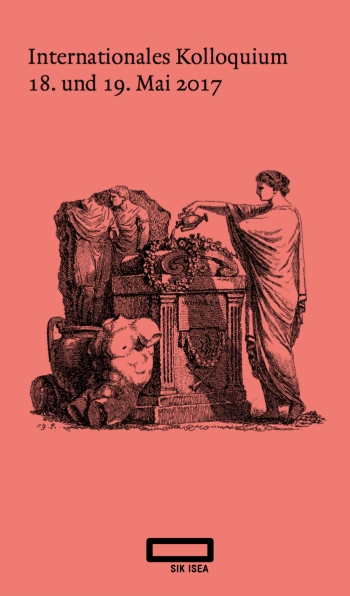 1778 erschien in Zürich bei Orell, Gessner, Füesslin und Compagnie die von Leonhard Usteri herausgegebene Sammlung «Winckelmanns Briefe an seine Freunde in der Schweiz», ein sprechendes Zeugnis der in den 1750er Jahren begründeten und stetig bedeutender werdenden Beziehungen zwischen Johann Joachim Winckelmann und einzelnen Schweizer Persönlichkeiten, namentlich Johann Caspar Füssli, Heinrich Füssli, Salomon Gessner, Christian von Mechel, Leonhard Usteri und Paul Usteri.
Winckelmann, wie viele europäische Intellektuelle des 18. Jahrhunderts ein begeisterter Verehrer der «freien» eidgenössischen Schweiz, plante wiederholt eine Reise in das Alpenland mit römischer Vergangenheit, doch am Ende hat er die Schweiz nie besucht. Dessen ungeachtet waren sein Werk und seine Person nicht nur in Zürich anerkannt. Anlass zu gegenseitiger Wertschätzung gaben jenseits des brieflichen Austausches auch persönliche Begegnungen wie die mit Angelika Kauffmann; weitere Kontakte schufen Winckelmanns Führungen für Schweizer Reisende in Rom, die im Frühjahr 1761 in seinem «Sendschreiben» für Leonhard Usteri ihre Systematisierung fanden und durch Unterweisungen für Heinrich Füssli, Paul Usteri und Christian von Mechel ergänzt werden sollten. Eine Erweiterung des Bekanntenkreises brachten zudem gemeinsam unternommene Reisen—so mit Johann Caspar Füssli nach Neapel—, verlegerische Projekte wie der zunächst erwogene Druck der «Geschichte der Kunst» in der Schweiz und natürlich die wechselseitige Rezeption der Werke.
Das vom Schweizerischen Institut für Kunstwissenschaft (SIK-ISEA) in Zusammenarbeit mit der Winckelmann-Gesellschaft, Stendal, und dem Kunsthistorischen Seminar der Universität Basel organisierte Kolloquium hat zum Ziel, die bislang wenig erforschten Kontakte zwischen Winckelmann und Schweizer Persönlichkeiten fächerübergreifend und auf der Basis aktueller archivalischer Recherchen zu beleuchten sowie die Aufnahme seines Werkes durch Schweizer Intellektuelle und Künstler zu untersuchen. In den Blick rücken auch die Schweiz als Plattform der Kulturvermittlung in ihrer Bedeutung für Winckelmann sowie der Ästhetik-Diskurs in der Schweiz, Deutschland und Italien nebst der Antikenrezeption in der Schweiz im 18. Jahrhundert.
Die Teilnahme am Kolloquium ist kostenlos. Die Platzzahl ist beschränkt. Bitte melden Sie sich an bis am 12. Mai 2017 (sik@sik-isea.ch).
In der Bibliothek Werner Oechslin wird am 20. Mai 2017 eine Ausstellung zu Winckelmann eröffnet, die in rund 100 Exponaten dessen Entwicklung vom Bibliothekar zur Gründerfigur der deutschen Kunstwissenschaft herausstellt. In besonderer Weise thematisiert wird dabei der Kontrast zwischen der Figur des Antiquars, der sich gemäss Caylus der «Physique» der Kunstgegenstände bis in alle Verästelungen hinein widmen soll, und dem nach Höherem strebenden, idealisch denkenden Winckelmann; darauf beziehen sich sowohl die Vorstellung des Klassischen wie ein ethisch begründeter Schönheitsbegriff mit Wirkungen bis in unsere Zeit. Die Ausstellung dauert bis Ende 2017.
D O N N E R S T A G , 1 8 M A I 2 0 1 7
13.30 Begrüssungsworte: Roger Fayet (Direktor, SIK-ISEA), Max Kunze (Präsident der Winckelmann-Gesellschaft, Stendal), Andreas Beyer (Kunsthistorisches Seminar der Universität Basel)
13.45 Die Schweiz als neues Arkadien
Moderation: Roger Fayet (Direktor, SIK-ISEA)
• Andreas Beyer (Kunsthistorisches Seminar der Universität Basel), Arkadische Schweiz
• Volker Riedel (Mitglied des Kuratoriums, Winckelmann-Gesellschaft, Stendal), Winckelmann und Gessner: Zur Problematik der Idylle im 18. Jahrhundert
• Matthias Oberli (Abteilungsleiter Kunstdokumentation, SIK-ISEA), «Merckwürdige Überbleibsel» und «stattliche Antiquitäten»: Zum Antikenverständnis in der Schweiz im Zeitalter Winckelmanns
15.15 Kaffeepause
15.45 Freundschaften und Netzwerke
Moderation: Gérard Seiterle (ehemals Direktor des Museums zu Allerheiligen, Schaffhausen)
• Max Kunze (Präsident der Winckelmann-Gesellschaft, Stendal), Antiken-Empfehlungen: Winckelmanns Schweizer Freunde in Rom
• Elisabeth Décultot (Humboldt-Professur für neuzeitliche Schriftkultur und europäischen Wissenstransfer, Germanistisches Institut, Martin-Luther-Universität Halle-Wittenberg), Christian von Mechel: Zu einer Schlüsselfigur von Winckelmanns schweizerischem Netzwerk
• Christoph Frank (Istituto di storia e teoria dell’arte e dell’architettura (ISA), Università della Svizzera italiana), Winckelmann und Basel: Christian von Mechel und Johann Friedrich Reiffenstein
17.15 Aperitif
18.15 Abendvortrag
• Marcel Baumgartner (em. Ordinarius für Kunstgeschichte, Justus-Liebig-Universität, Giessen), Kunstgeschichten: Winckelmann—Piranesi—Caylus—Herder
F R E I T A G , 1 9 M A I 2 0 1 7
9.30 Die Künste in der Schweiz
Moderation: Matthias Fischer (Kurator Kunst- und Grafiksammlung, Museum zu Allerheiligen, Schaffhausen)
• Gisela Bungarten (Stellvertretende Direktion und Projektmanagement, Museumslandschaft Hessen – Kassel), Füssli und Winckelmann: Wechselvolle Beziehungen in Zürich, Rom und London
• Dieter Ulrich (lic. phil., freischaffender Kunsthistoriker), «Hohe Griechische Einfalt bezeichnete seine Wercke und hauchte Leben in seinen Marmor.»
• Michael Thimann (Kunstgeschichtliches Seminar und Kunstsammlung, Georg-August-Universität Göttingen), Schweizergeschichte statt homerische Helden. Antiklassizistische Bildkonzepte um 1800
11.00 Kaffeepause
11.30 Konzepte und Strategien
Moderation: Adelheid Müller (wissenschaftliche Mitarbeiterin am Projekt «Winckelmann-Ausgabe» der Akademie der Wissen-schaften und der Literatur, Mainz)
• Eva Kocziszky (Institutsdirektorin, Pannonische Universität Veszprém, Institut für Germanistik und Translations-wissenschaft), Die Allegorie bei Winckelmann, Lavater und Füssli
• Johannes Rössler (Institut für Kunstgeschichte der Universität Bern), Kunst und Wissenstransfer im Zeichen Winckelmanns 1795–1830: Das Schweizer Netzwerk von Heinrich Keller (Rom), Heinrich Meyer (Weimar) und Johann Jakob Horner (Zürich)
• Hans Christian Hönes (Forschungsgruppe «Bilderfahrzeuge», The Warburg Institute, London), Die Sümpfe der Schweiz: Klimatheorie und Ursprungssuchen
13.00 Mittagspause
14.00 Formen der Rezeption
Moderation: Andreas Beyer (Kunsthistorisches Seminar der Universität Basel)
• Bettina Baumgärtel (Leiterin der Gemäldegalerie, Museum Kunstpalast Düsseldorf), Die vielen Gesichter des Winckelmann: Die Wandlungen des Winckelmann-Bildes von Angelika Kauffmann
• Adelheid Müller (wissenschaftliche Mitarbeiterin am Projekt «Winckelmann-Ausgabe» der Akademie der Wissenschaften und der Literatur, Mainz), «Flammenworte der Begeisterung» oder: Bündnisse, gefühlt und gelebt. Friederike Brun, Winckelmann und die Schweizer Freunde
• Harald Tausch (Institut für Germanistik / Arbeitsbereich Literatur, Justus-Liebig-Universität Giessen), Kreis ohne Meister: Kleist, Winckelmann und die Schweiz
15.30 Kaffeepause
16.00 Schlussbetrachtungen
• Werner Oechslin (Stiftung Bibliothek Werner Oechslin, Einsiedeln), «…zuerst unter dem griechischen Himmel…»
16.45 Aperitif
Conference | Diplomatic Presents between China and Europe
From the provisional programme:
Les présents diplomatiques entre la Chine et l’Europe aux XVIIe–XVIIIe siècles
Paris, 4–5 May 2017
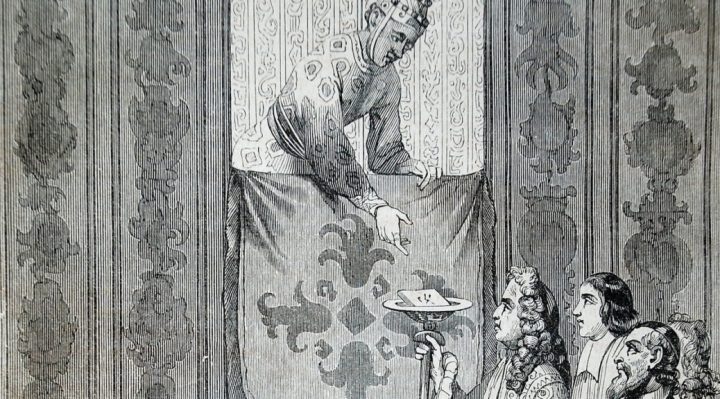
Peut-on employer le terme « cadeaux diplomatiques » pour ce qui concerne les XVIIe- XVIIIe siècles entre la Chine et les pays européens, alors que dans la tradition chinoise, tout pays étranger n’était qu’un vassal devant l’empereur de Chine ? Nous regroupons en fait sous ce terme tous les objets destinés à être offerts par une cour européenne ou un membre de la famille royale ou aristocratique à l’empereur de Chine, aux princes, et aux mandarins, et réciproquement. Dans ce contexte des échanges officiels, les présents soigneusement choisis sont porteurs d’une fonction politique de faire-valoir, en plus des caractéristiques formelles propres aux objets dotés de pouvoirs de séduction. Agissant ainsi comme objets de pouvoir et de courtoisie, leur nature est ambivalente : les caractéristiques intrinsèques (esthétique, économique et technique) doivent refléter aussi bien l’identité de celui qui offre que celle de celui qui reçoit. En plus de la matérialisation du pouvoir suprême, les objets « exotiques » de prestige par excellence, assument également de multiples autres fonctions sociales entre autres, le témoignage de respect et de confiance, le moyen d’introduction et d’obtention de faveurs.
Le colloque sera l’occasion de faire dialoguer entre elles les sources primaires, en particulier les archives (imprimées et surtout manuscrites) issues de traditions textuelles différentes et de contextes sociaux qui s’ignoraient. L’objectif est de construire une histoire des échanges à « plusieurs voix » et à une réalité sociale multiple.
Colloque international organisée par le programme LIA TrEnamelFC avec les soutiens du CRCAO, CCJ, ICT, CAK, CNRS et PSL
Organisateurs : Liliane Hilaire-Pérez (ICT/CAK), Isabelle Landry-Deron (CCJ), Sébastien Pautet (ICT), Fabien Simon (ICT), Bing Zhao (CRCAO)
◊ ◊ ◊ ◊ ◊
4 M A I 2 0 1 7
Salon de la Maison de l’Asie, 22, avenue du Président Wilson, 75016, Paris
8.45 Accueil
9.00 Introduction par Bing Zhao (Centre de recherche sur les civilisations de l’Asie orientale), Le projet LIA TrEnamelFC et la question de l’efficacité des objets diplomatiques
9.15 1ère session | Les premiers échanges sino-français : pratiques et acteurs
Présidence de séance : Catherine Jami (Centre Chine, Corée, Japon)
• Nathalie Monnet (Bibliothèque François Mitterrand), Diplomatie jésuite ou diplomatie d’Etat ?
• Stéphane Castelluccio (Centre André Chastel), Louis XIV et l’Orient : Séduire et être séduit
10.15 Pause
10.30 2e session | Les objets émaillés, cadeaux privilégiés des échanges sino-européens
Présidence de séance : Sébastien Pautet (ICT)
• Emily Byrne Curtis (chercheur indépendant), Aspects of a Multi-Faceted Process : The Circulation of Enamel Wares between the Vatican and Kangxi’s Court, 1700–22
• Isabelle Landry-Deron (Centre Chine, Corée, Japon), La circulation des objets émaillés entre la France et la Chine d’après les sources missionnaires françaises
11.30 Bing Zhao (Centre de recherche sur les civilisations de l’Asie orientale), L’impact des objets européens introduits à la cour des Mandchous aux XVIIe–XVIIIe siècles : Le cas des objets émaillés
12.00 Discussion
12.30 Buffet
14.00 Séance privée et visite du mnaag-Guimet (réservée aux participants et aux membres LIA TrEnamelFC)
5 M A I 2 0 1 7
Salle M019, Bâtiment Olympe de Gouge, université Paris Diderot, Place Paul Ricoeur, 75013 Paris
9.00 Accueil
9.15 3e session | Les échanges étatiques sino-européens de la 2e moitié du XVIIIe siècle
Présidence de séance : Liliane Hilaire-Pérez (ICT/Centre Alexandre Koyré)
• Marie-Laure de Rochebrune (Musée du château de Versailles), Les porcelaines de Sèvres envoyées en guise de cadeaux diplomatiques à l’empereur de Chine par les souverains français dans la seconde moitié du XVIIIe siècle
• John Finlay (Centre Chine Corée Japon), Henri Bertin and the Presents from Louis XV to the Qianlong Emperor
• Guo Fuxiang (Département de la vie curiale, Musée du Palais de Pékin), Tribut ou cadeaux diplomatiques : Le devenir des objets offerts par la mission Marcadet à la cour des Qing
10.45 Pause
11.00 4e session | Les perspectives historiques et comparatives
Présidence de séance : Fabien Simon (ICT)
• Françoise Wang-Toutain (Centre de recherche sur les civilisations de l’Asie orientale), Présents diplomatiques, Présents de longévité : Les cadeaux offerts par les dignitaires tibétains laïcs et religieux à la cour impériale mandchoue
• Indravati Félicité (ICT), Les cadeaux diplomatiques dans les échanges entre les cours européennes et asiatiques à l’époque moderne : Un aperçu des orientations de la recherche
• Kee II Choi (University of Warwick), ‘In All Things Must the Ancients Be Imitated’: Vases and Diplomacy at the Qing Court
12.30 Discussion
13.00 Buffet
15.00 Visite du Musée des Arts décoratifs (réservée aux participants et aux membres LIA TrEnamelFC, à confirmer)
◊ ◊ ◊ ◊ ◊
From the blog of the research project, “The Circulation of Enameled Objects between France and China (late-17th to mid-19th Century): Technological, Cultural, and Diplomatic Interactions” . . .
The objective of this Franco-Chinese program (2015–20) is to propose a ‘symmetrical’ history of the circulation of enameled objects and enamel technology between France and China from the end of the seventeenth to the middle of the nineteenth century. Enamel is the prime example of a technology that was originally European, whether it be cloisonné enamel, champlevé, or painted enamel, the practice of which moved from West to East in the wake of the objects. The present project consists of concurrent and interdisciplinary research conducted by an international, multidisciplinary team focused on all types of enameled objects, produced in France or in China, held in the collections of the Palace Museum, Beijing, and French museums. It will serve as well as an interface among all international researchers who are working on the circulation of technologies across the long distance between China and Europe. Integrated into a multidisciplinary approach (including physics, chemistry, history of technology, archaeology, experimentation, and social history), the work of these researchers prioritizes new textual, physical or chemical, and archaeological data.
Conference | The Sacred at European Courts
From H-ArtHist:
Sakralität an europäischen Höfen: Bau—Bild—Ritual—Musik, 1648–1740
LWL-Museum für Kunst und Kultur, Münster, 4–6 May 2017
Die Tagung widmet sich der Frage, wie und in welchen Kontexten Konzepte von Sakralität des Königs bzw. Kaisers als Legitimationsressource und Repräsentationsstrategie in den künstlerischen Medien zu einem zentralen Thema werden. Im Mittelpunkt stehen zwischen dem Westfälischen Frieden und dem Tod Kaiser Karls VI. der kaiserliche und die königlichen sowie solche Höfe Europas, die sich im Streben nach einer Königskrone an royalen Repräsentationsstandards orientiert haben.
Ein zentraler Fokus liegt auf traditionellen ebenso wie neuen Symbolvorräten und Symbolisierungsprozessen, die dabei zum Tragen kommen, sowie auf dem Beitrag, den sie (oder auch der Verzicht auf sie) im Hinblick auf die Konstitution und Stabilisierung der Institution ‚Kaiser- bzw. Königtum‘ konkret leisten. Davon nicht zu trennen ist die Frage, auf welche medialen Bezugssysteme, gattungsbezogenen Kontexte und repräsentativen Modelle jeweils zurückgegriffen wird und inwiefern diese dabei auch eine Neusemantisierung erfahren. Schließlich sollen in diesem Zusammenhang das Verhältnis der ‚Sakralität‘ zu anderen dem Kaiser bzw. König zugeschriebenen Attributen seiner Macht sowie die Rolle konfessioneller und politischer Verbindungen oder Gräben in den Blick genommen werden.
D O N N E R S T A G , 4 M A I 2 0 1 7
13:30 Begrüßung und Einführung
14:00 Dietrich Erben (München), Das ‚Sakrale‘ als Handlungsalternative zur Antikenrezeption
14:45 Alexandre Maral (Versailles), L’architecture et le décor au service d’une conception du pouvoir : l’exemple de la chapelle royale de Versailles sous Louis XIV
15:30 Kaffeepause
16:00 Jens Niebaum (Münster), Symbolisierungen sakraler Kaiser-und Königsmacht: Kirchenfassaden für Paris, Berlin und Wien
16:45 Cornelia Jöchner (Bochum), Dynastischer Kirchenbau in Piemont-Savoyen: die Superga und ihre Vorgänger
19:30 (Abendvortrag) Ronald G. Asch (Freiburg), Das Trauma des Königsmordes und die Sakralität des englischen Königtums nach 1660
F R E I T A G , 5 M A I 2 0 1 7
9:15 Štepan Vacha (Prag), Aus frommer Pflicht: Das Engagement Kaiser Karls VI. für die Vollendung des Veitsdoms in Prag (1728)
10:00 Sabrina Leps (Münster), Reliquienkult und Königsmacht am sächsischpolnischen Hof unter August III. und Maria Josepha
10:45 Kaffeepause
11:15 Eva-Bettina Krems (Münster), Konzepte der Sakralisierung zwischen Bildnis und Performanz
12:00 Herbert Karner (Wien), Habsburg und die Sakralisierung des öffentlichen Raums: Wien und Preßburg im 17. Jahrhundert
12:45 Mittagspause
14:15 Hendrik Ziegler (Reims), Der Erlanger Hugenottenbrunnen des Markgrafen Christian Ernst. Zu den Sakralisierungsstrategien eines kaisertreuen protestantischen Reichsfürsten
15:00 Peter Schmitz (Münster), Musik und Tod im Augusteischen Zeitalter
15:45 Kaffeepause
16:15 Panja Mücke (Mannheim), Musikalische Imagepflege und sakrale Repräsentation: Die Oratorien für Kaiser Karl VI.
17:00 Josef Johannes Schmid (Mainz), Westminster 1727 – God, the King and Mr Handel
S A M S T A G , 6 M A I 2 0 1 7
9:15 Birgitte Boggild Johannsen (Kopenhagen), Death and the Absolute Monarch: Mediating the Myth of Sacral Kingship at Royal Funerals in Denmark during the Second Half of the 17th Century
10:00 Barbara Arciszewska (Warschau), Constructing ‘here’ and ‘hereafter’: Pompa funebris as a court ritual in the Polish-Lithuanian Commonwealth, c.1650–1750
10:45 Kaffeepause
11:15 Mark Hengerer (München), Herrschertod, Memoria und Sakralität. Europäische Perspektiven um 1700
12:00 Werner Telesko (Wien), Mors et Aeternitas. Der Sarkophag für Kaiser Joseph I. in der Wiener Kapuzinergruft
Konzept und Organisation
Prof. Dr. Eva-Bettina Krems (eva.krems@uni-muenster.de)
Dr. Jens Niebaum (niebaumj@uni-muenster.de)
Institut für Kunstgeschichte der Universität Münster / Exzellenzcluster
“Religion und Politik”
Univ.-Doz. Mag. Dr. Herbert Karner
Univ.-Doz. Mag. Dr. Werner Telesko
Institut für kunst- und musikhistorische Forschungen der
Österreichischen Akademie der Wissenschaften, Wien
Symposium | The Royal Palace in the Europe of Revolutions
From the conference programme:
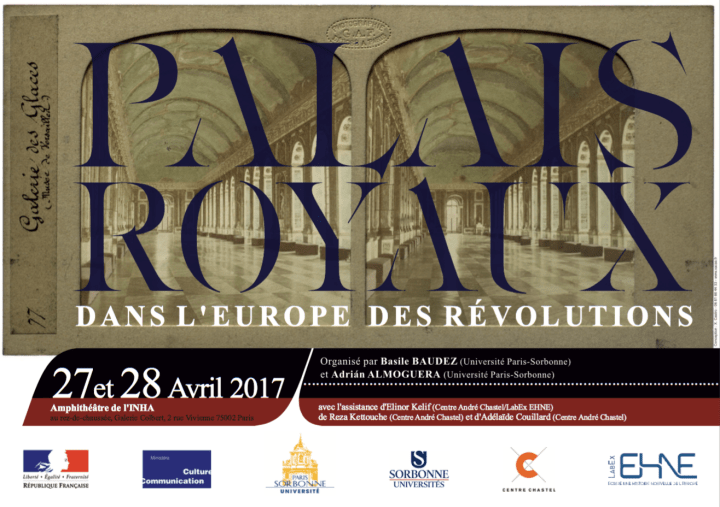
The Royal Palace in the Europe of Revolutions, 1750–1850
Palais Royaux dans l’Europe des Révolutions
Institut national d’histoire de l’art, Paris, 27–28 April 2017
Organized by Basile Baudez and Adrián Almoguera
Since the publication of Nikolaus Pevsner’s History of Building Types in 1976, architectural historians have been alert to the importance of typologies for rethinking their discipline. As analyzed by Werner Szambien or Jacques Lucan, thinking through types allowed for the articulation of concepts of convenance, character and composition in both public and private commissions. Along with metropolitan churches and royal basilicas, in ancien régime Europe princely palaces represented the most prestigious program an architect could expect. For a period in which the divine right of kings was being called into question, however, what happened to the physical structures of royal or princely power, symbol of political authority and dynastic seats? Did the national models of the Escorial, Versailles, Het Loo, or Saint James palaces still hold, even in light of new models made available through the publication of archeological discoveries in Rome or Split? The second half of the eighteenth and first half of the nineteenth century represent a moment of intense construction or reconstruction of the principal European palaces, from Caserta to Buckingham Palace, Saint-Petersburg to Lisbon, Versailles to Coblenz. This trend, addressed by Percier and Fontaine in their Résidences des souverains de France, d’Allemagne, de Russie, etc. (1833), took place in a Europe that was undergoing political developments that altogether changed the nature and symbolic structure of princely power.
This symposium, focused on Europe from roughly 1750 to 1850, aims to interrogate the manner in which architects and their patrons integrated the changing concepts of character in architecture and symbolic place of dynastic palaces, reconciling them with theory and/or practice through rethinking issues of distribution, construction, environmental situation, décor, function, reuse of interpretations of printed or drawn sources.
T H U R S D A Y , 2 7 A P R I L 2 0 1 7
9.30 Introduction
10.00 Basile Baudez (Université Paris-Sorbonne), Reconstruire Versailles, de Louis XV à Louis-Philippe
10.30 Francesco Guidoboni (Université Paris 1 Panthéon-Sorbonne) et Pierre Geoffroy (Université Paris-Sorbonne), Napoléon Ier empereur ou citoyen? Du choix de la résidence privée du souverain
11.15 Fabien Passavy (architecte du patrimoine, Versailles), Au service de la nouvelle élite au tournant du siècle: les cas des hôtels de Bourrienne et de Beauharnais
12.00 Mathieu Caron (Université Paris-Sorbonne), La France en ses meubles: Une symbolique du décor dans les palais du Domaine étranger (Italie, Belgique, Hollande) de l’an X à 1815
14.00 Guillaume Nicoud (Archivio del Moderno, Accademia di Architettura Università della Svizzera italiana), Fastes, étiquette et collection: regard croisé sur la nécessaire transformation des complexes palatiaux des Tuileries et du Louvre, du palais d’Hiver et de l’Ermitage vers 1800
14.30 Elizaveta Renne (Musée de l’Ermitage, Saint-Pétersbourg), The Chesma Palace in St. Petersburg and Catherine II’s Shifting Political Ambitions
15.30 Delfín Rodríguez (Universidad Complutense de Madrid), Théories et typologies de l’idée de palais royal dans la culture espagnole du XVIIIe siècle: histoire d’un conflit artistique et politique
16.15 Adrián Almoguera (Université Paris-Sorbonne), Le Palais du roi au temps de l’empereur: réflexions sur le Palacio Nuevo de Madrid
F R I D A Y , 2 8 A P R I L 2 0 1 7
10.00 Susanna Pasquali (Università di Roma La Sapienza), Nouvelles façades pour un palais trop sévère: projets inédits de Raffaele Stern pour le Palais Impérial de Rome, 1811–14
10.30 Ludovica Cappelletti (Politecnico di Milano), Towards a Modern Imperial Palace: The Ducal Palace of Mantua in the Eighteenth Century
11.15 Paolo Cornaglia (Politecnico di Torino), La forteresse et le palais: Plusieurs projets pour la dynastie de Savoie dans une ville juste annexée et hostile après la tempête napoléonienne 1818–25
12.00 Alba Irollo (chercheur indépendant), Changements de goût et d’étiquette: les souverains français et les palais royaux des Bourbons de Naples
14.00 Pablo Vázquez Gestal (Université Paris-Sorbonne), Pour le roi, pour l’État: Caserte et Charles de Bourbon
14.30 Dirk Van de Vijver (Université d’Utrecht), Le projet de Barnabbé Guimard pour un palais à Bruxelles vers 1768
15.00 Nilay Ozlu (Bogazici University, Istanboul), Showcases of Modernity in the Age of Reforms: Nineteenth-Century Ottoman Palaces of Istanbul
Conference | Printed Fashions: Textiles for Clothing and the Home
From the conference schedule:
Printed Fashions: Textiles for Clothing and the Home
Colonial Williamsburg, 26–28 March 2017
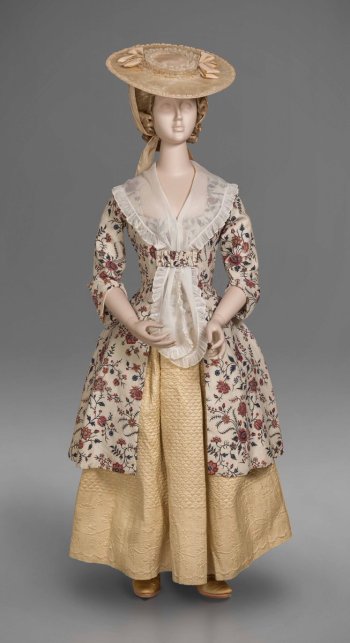 With their brilliant colors and engaging designs, early painted and printed textiles were eagerly sought for fashionable clothing, quilts, and other home furnishings. But textiles also tell human stories that sound modern: traders transporting goods from the other side of the world in ships powered by wind and sails; domestic workers trying their best to respond to foreign competition; people making the effort to dress in up-to-date styles despite their limited means; and the importance of chemistry and mechanical expertise in the production of consumer goods. The Colonial Williamsburg Foundation in Williamsburg, Virginia, hosts this symposium about painted and printed textiles with invited speakers and juried papers. The symposium coincides with the exhibition Printed Fashions: Textiles for Clothing and the Home, 1700–1820 mounted in the Gilliland Textile Gallery.
◊ ◊ ◊ ◊ ◊
S U N D A Y , 2 6 M A R C H 2 0 1 7
1:00 Conference registration
3:30 Welcome, Linda Baumgarten (senior curator of textiles and costumes, Colonial Williamsburg)
3:40 Juried Papers
• Philippe Halbert (Ph.D. candidate, Yale University, Department of the History of Art), ‘You know that my dear Mother loves Indienne’: Printed and Painted Textiles in the French Atlantic World, 1675–1800
• Ned Lazaro (associate curator of textiles and collections manager, Historic Deerfield, Massachusetts), On Risk and Account: The Fashion for Eighteenth-Century Indian Cottons in New England
• John Styles (research professor in History, University of Herfordshire and honorary senior research fellow, Victoria and Albert Museum), How Colonial America’s Taste for Printed Calicoes Drove the British Industrial Revolution
4:50 Break
5:00 Rosemary Crill (honorary research associate, Victoria and Albert Museum), When Print Meets Pen: Block-Printing and Hand-Drawing in Indian Cotton Textiles
6:00 Reception
M O N D A Y , 2 7 M A R C H 2 0 1 7
8:30 Art Museums of Colonial Williamsburg open for conference registrants
9:00 Announcements and introduction to the Printed Fashions exhibition
9:30 Linda Eaton (John L. and Marjorie P. McGraw Director of Collections and Senior Curator of Textiles, Winterthur Museum), Printed Furnitures: The Women’s Side of the Upholstery Trade
10:30 Break
11:00 Susan Greene (author and independent researcher, Alfred Station, New York), From Kalam to Cylinder
12:00 Lunch break with museum exhibitions open
2:00 Juried Papers
• Rebecca Fifield (Head of Collection Management, Special Collections, New York Public Library), Of the Lowest Prices: Printed Textile Use in the Dress of Unfree American Women, 1750–90
• Jennifer Swope (assistant curator, David and Robert Logie, Department of Textiles and Fashion Arts, Museum of Fine Arts, Boston), The Diversity of Printed Textile in Early America: The Robbins Family Collection at the Museum of Fine Arts, Boston
• Mary D. Doering (independent scholar, collector and guest curator), Case Study of a Printed Cotton Gown, Possibly Worn in Massachusetts, ca. 1780–85
• Alexandra Barlow (assistant conservator, Textile Conservation, The Metropolitan Museum of Art, New York) and Sara Reiter (The Penny and Bob Fox Senior Conservator of Costumes and Textiles, Philadelphia Museums of Art), Printed Gown Patterns: The Conservation of an Early Nineteenth-Century Block-Printed Dress: Techniques and Historical Importance
3:30 Break
4:00 Juried Papers
• Edward Heimiller (curator, The Stephen J. Ponzillo, Jr. Memorial Library & Museum of the Grand Lodge of A.F. & A.M. of Maryland), Revealing Fraternal Secrets: Establishing a Masonic Treatise for Fraternal Design
• Matthew Skic (assistant curator, Museum of the American Revolution, Clifton Heights, Pennsylvania), Stand Fast in the Liberty: A Rare Waistcoat Belt
• Angela Burnley (independent scholar, Williamsburg), 1 Gown Flowered All Over with Cards: Fashion’s Fancy through the Eyes of the Eighteenth-Century Textile Consumer
• Christina Westenberger (assistant manager for museum education, Colonial Williamsburg), Hunting, Murder and Bacon: Backstories of Three Printed Handkerchiefs in the Colonial Williamsburg Collection
T U E S D A Y , 2 8 M A R C H 2 0 1 7
8:30 Art Museums of Colonial Williamsburg open for conference registrants
9:00 Kimberly Ivey (senior curator of textiles and historic interiors, Colonial Williamsburg), Annie L. Hayslip’s Printed Textile Album
9:20 Philip Sykas (research associate, Manchester School of Art, Manchester), Pattern Books within ‘a Seasonal and Fancy Trade’: English Calico Printers, 1780–1830
10:10 Break
10:40 Barbara Brackman (independent scholar and researcher, Lawrence, Kansas), Printed Textiles in Quilts, 1775–1830
11:35 Bridget Long (visiting research fellow in history, University of Hertfordshire), ‘Have You Remembered To Collect Pieces for the Patchwork?’ The Impact of Printed Cloth on Eighteenth-Century Patchwork Practice (juried paper)
12:00 Lunch break with museum exhibitions open
2:00 Juried Papers
• Julia Brennan, Kaitlyn Munro, and Lauren Klamm (conservators, Caring for Textiles, Washington, D.C.), Burn Out: Case Studies in Conserving Printed Textiles
• Anita Loscalzo (independent textile historian, Dover, Massachusetts), Prussian Blue Textiles Found in American Quilts and Dress
• Linda Welters (professor, Textiles, Fashion Merchandising and Design, University of Rhode Island), In Small Things Forgotten: Three Eighteenth-Century Rhode Island Prints
3:10 Break
3:30 Juried Papers
• Margaret T. Ordoñez (Professor Emertia and Adjunct, Textiles, Fashion Merchandising and Design, University of Rhode Island), Printed Delaines with a French Label from East Greenwich, Rhode Island, ca. 1843
• Deborah E. Kraak (independent museum professional, Wilmington, Delaware) and Terry Tickhill Terrell (independent quilt history researcher, Masonville, Colorado), What’s in a Name? A New Database of Early Floral Chintz Motifs
• Sheryl DeJong (independent researcher, Reston, Virginia), Printed Fabrics in the Copp Quilt at the Smithsonian
• Lori Lee and Kay Triplett (authors and independent researchers, Overland Park, Kansas), Unexplored Printing Techniques in Textiles
5:00 Closing reception
Conference | Medals and Tokens in Europe
From H-ArtHist:
Art du puissant, objet multiple: Médailles et jetons en
Europe, de la Renaissance à la Première Guerre mondiale
Institut National d’Histoire de l’Art, Paris, 30 March — 1 April 2017
J E U D I , 3 0 M A R S 2 0 1 7
13.00 Accueil
13.30 Portrait du Puissant
Présidence de séance: Victor Hundsbuckler (Monnaie de Paris)
• Ilaria Bernocchi (University of Cambridge), Myth-making of a Renaissance Ruler: Andrea Doria as Neptune in Medals, Plaquettes, and the Allegorical Portrait by Angola Bronzino
• Aurore Chéry (LARHRA/CNRS), Déclin et renouveau protéiforme des médailles sous Louis XV et Louis XVI
• Katia Schaal (Université de Poitiers / Ecole du Louvre / INHA), Vus de profil: genèse des portraits de présidents de la République française, de Thiers à Fallières
15.30 Pause
16.00 Concevoir, Produire
Présidence de séance: Lucia Simonato (Scuola Normale di Pisa)
• James Fishburne (Getty Research Institute), Coins, Medals, and the Convergence of Two Genres: Numismatics in High Renaissance Rome
• Giulia Zaccariotto (Scuola Normale di Pisa), Vittore Gambello called Camelio: Medallist and Die Engraver between Venice and Rome
• Andrea Mayr (Kunsthistorisches Museum Wien), On the role of the k.k. Kammermedailleur under Emperor Ferdinand I and his significance and function for the medal production at the Imperial Mint in Vienna
17h30 Pause
18.00 Collections
Présidence de séance: Chantal Georgel (INHA)
• Ludovic Jouvet (Université de Bourgogne / INHA), Son histoire à portée de main: la cassette personnelle de Louis XIV
• Inès Villela-Petit (BnF), Les médailles de la collection Seymour de Ricci
V E N D R E D I , 3 1 M A R S 2 0 1 7
9.00 Accueil
9.30 Institutions
Présidence de séance: François Ploton-Nicollet (Ecole nationale des Chartes)
• Sabrina Valin (Université Paris Nanterre), L’institutionnalisation progressive des projets de jetons sous les règnes de Louis XIII et de Louis XIV, 1610–61
• Jacques Meissonnier (conservateur honoraire du patrimoine), Les jetons des puissants états de Bourgogne et de Languedoc
• Béatrice Coullaré (Monnaie de Paris), Les médailles de visites de chefs d’Etat. Deux cents ans d’histoire diplomatique et artistique à la Monnaie de Paris
11.00 Pause
11.30 Transferts de modèles
Présidence de séance: Inès Villela-Petit (Bibliothèque nationale de France)
• Thodoris Koutsogiannis (Parlement hellénique), The Ruler of Constantinople on Italian Renaissance Medals: John VII Palaeologus and Mehmed the Conqueror in European Visual Culture
• Emily Pearce Seigerman (National Museum of American History), République dans le vrai style: How French Medalic Artistry Became the Emblem of Trans-Atlantic Change
• Charles Dujour Bosquet (Université de Bordeaux 3-Montaigne), La présence française et la médaillistique au Chili au tournant du XXe siècle
13.00 Déjeuner
14.30 L’histoire en marche
Présidence de séance: Marc Bompaire (Ecole Pratique des Hautes Etudes)
• Paulina Taradaj (Musée National, Cracovie), What do John Sobieski, Augustus II of the House of Wettin and Frederick William II of Prussia Have in Common Concerning Medals?
• Thomas Cocano (SAPRAT/EPHE), La construction d’une image nationale et politique au travers de la
production de médailles durant le règne d’Anne, 1702–14
• Anna Fabiankowitsch (Kunsthistorisches Museum Wien), On Her Majesty’s Service: Protagonists of commissioning and creation as part of the medal production in the Viennese Imperial Mint under Empress Maria Theresa
16.00 Pause
16.30 Présidence de séance: Edouard Papet (Musée d’Orsay)
• Catherine Bregianni (Académie héllénique des Sciences), David d’Angers et la prosopographie du libéralisme: les médailles et médaillons sur la Révolution Grecque
• Nikoleta Tzani (Ville de Volos, Section de l’Education et de la Culture), Quelques médailles de la cour royale grecque des années 1900 à la fin de la Grande Guerre
S A M E D I , 1 A V R I L 2 0 1 7
9.00 Accueil
9.30 Pouvoirs de l’objet
Présidence de séance : Felicity Bodenstein (Musée du Quai Branly-Jacques Chirac)
• Jean-François Dubos (Service historique de la Défense), De la médaille à la récompense. Bélière et « rurbanisation », ou le mérite rendu visible
• Alain Weil (Expert numismate), Quand le puissant c’est le peuple : naissance et évolution de la médaille populaire en France
• Pierre-Christian Guiollard (Université de Mulhouse-Colmar), Les « taillettes » ou « jetons de lampisterie » des mines : fonction utilitaire et symbolique
• Cécilie Champy (Musée du Petit Palais), La médaille française et la Première Guerre mondiale : de la propagande à la douleur universelle
• Holly Crawford (PhD), Anxious Object : Enemy Alien Medals from British WW I Internment Camps










leave a comment