Symposium | Neo-Classical Gilt Bronze

Detail of a Table by Etienne Levasseur, ca.1785–87; gilt-bronze mounts by an unidentified maker
(London: The Wallace Collection, F319).
◊ ◊ ◊ ◊ ◊
From The Furniture History Society:
‘In the True Spirit of Corinth and Athens’: Neo-Classical Gilt Bronze
The 41st Annual Symposium of the Furniture History Society
The Wallace Collection, London, 6 May 2017
To coincide with the international interest in gilt bronze in 2016/17 and the three exhibitions devoted to Pierre Gouthière and his contemporaries in New York (The Frick Collection), Paris (Musée des Arts Décoratifs), and London (The Wallace Collection), this year’s Furniture History Society symposium is devoted to European gilt bronze of the neoclassical period (1770–1830), a time when the passion for the Antique world affected all aspects of artistic production. Speakers from the US, France, Britain, Russia, and Spain will present the latest research on a variety of topics, including aspects of design, production, and patronage. Gilt bronze is a subject that often presents more questions than answers, and recent scholarship has unearthed fascinating insights into this often overlooked art form and the symposium promises to be an important and illuminating day for anyone interested in bronze d’ameublement. It is being hosted at The Wallace Collection, which will stay open for FHS members after the symposium to allow them to see the exhibition Gilded Interiors: French Masterpieces of Gilt Bronze. The day will be chaired by Philip Hewat-Jaboor.
Tickets must be purchased in advance, and early booking is recommended. Fee: £50 for FHS members/£30 for members under 30/ All non-members: £65 with a reduction of £5 if joining the FHS, Ticket price includes morning coffee and afternoon tea. A light lunch will be available for FHS members in the Meeting Room at The Wallace Collection at a cost of £20, to include a glass of wine. Tickets for lunch must be purchased at least 7 days in advance from the Events Secretary or online. The Wallace Collection Restaurant will be open for bookings, and there are plenty of local cafés and restaurants. Tickets can be booked on-line via the FHS website (members only) or via the Events Secretary, e-mail: events@furniturehistorysociety.org.
• Joseph Godla (Chief Conservator, The Frick Collection), ‘Twenty Fingers on Each Hand’: A Study of Pierre Gouthière’s Techniques
• Charlotte Vignon (Curator of Decorative Arts, The Frick Collection), Pierre Gouthière: Bringing a Virtuoso Chaser and Gilder back into the Light
• Anne Forray-Carlier (Curator, 17th & 18th century Decorative Arts, Musée des Arts Décoratifs), In the Context of Neo-Classical Gilt Bronze: The Relationship between Gouthière and Dugourc
• Helen Jacobsen (Senior Curator, Wallace Collection), Gilded Interiors: The Antique as a Design Source for French Gilt Bronze
• Diana Davis (Independent Decorative Arts Researcher), Matt and Burnished Gold: The Regency Taste for Gilt Bronze
• Wolfram Koeppe (Curator, European Sculpture & Decorative Arts, Metropolitan Museum), An Enduring Mystery: Bronze Manufacturing in Vienna, 1775–1825
• Olga Bazhenova (Curator, Metal, Sculpture & Stone, Pavlovsk-Palace Museum, St Petersburg), The Secrets of Russian Bronze
• María Jesús Herrero Sanz (Curator of Sculpture, Patrimonio Nacional, Madrid), Between Neo-Classicism and Antiquity: French Bronzes and Palace Furnishings at the 18th-Century Spanish Court
Salon du Dessin 2017
From the press kit for the fair:
Salon du Dessin 2017
Palais Brongniart, Paris, 22–27 March 2017
 The Salon du Dessin is a made-in-France success that is admired around the world. For an entire week, it brings together art lovers, collectors, novices, and museum curators interested in drawings, whether old masters, modern or contemporary. During that week, the Salon du Dessin is the epicentre of Paris’s cultural scene, attracting an intellectual community delighted to share with the public its passion for knowledge and the excitement of discovery.
Even curators from major museums make discoveries at the Salon du Dessin. The art of drawing requires great connoisseurship, and it has now been rediscovered by a wider public thanks to the Salon du Dessin and its off-site events, which help neophytes acquire greater understanding by providing access to museum reserves.
The fair website is available here»
Poster Image: Anne-Louis Girodet-Trioson, Detail of a Drapery Study, 1806 (Nantes, Musée des Beaux-Arts).
◊ ◊ ◊ ◊ ◊
From H-ArtHist:
Salon du Dessin Symposium: De David à Delacroix, II
Palais Brongniart, Paris, 22–23 March 2017
Under the direction of Pierre Rosenberg and Louis-Antoine Prat
 L’exposition du Grand Palais, De David à Delacroix: La peinture française de 1774 à 1830 (1974–75), et l’exposition de dessins qui la complétait, avaient permis de redécouvrir bon nombre de peintres et d’oeuvres couvrant un pan de l’histoire de l’art, allant du Serment des Horaces de David à La Liberté guidant le peuple de Delacroix.
Depuis 1974, de multiples dessinateurs ont fait l’objet d’études novatrices que ces XIe et XIIe Rencontres du Salon du dessin se proposent d’enrichir. Sous le titre De David à Delacroix: Du tableau au dessin, les communications de cette deuxième session offrent, plus de quarante ans après cette exposition qui a fait date, une relecture de l’oeuvre graphique de plusieurs des principaux artistes français et étrangers de l’époque de Louis XVI à la Révolution de juillet.
W E D N E S D A Y , 2 2 M A R C H 2 0 1 7
• Nicole Willk-Brocard (Docteur ès lettres, Paris), Noël Hallé, F-G Ménageot, J.-A. Renard et J.-B. Restout
• Pierre Rosenberg (Président directeur honoraire du musée du Louvre, Paris), Dessins de David (II)
• Yuriko Jackall (Conservateur, National Gallery of Art, Department of French Paintings, Landover, Maryland), Greuze éclipsé?: Considérations autour de ses dernières années
• Marie Yvonneau-Fournier (Doctorante, Université Paris-Sorbonne, Paris), Jacques-Philippe Caresme (1734–1796), dessinateur licencieux?
• Andreas Stolzenburg (Chief Curator Prints & Drawings, Hamburger Kunsthalle, Hambourg), François-Marius Granet, Franz Ludwig Catel und die Mönchs-Romantik in Rom um 1815
• Jan Gorm Madsen (Historien de l’art, chercheur indépendant, Frederiksberg), Drawings by the Danish Artist C.W. Eckersberg from His Parisian Sojourn, 1810–13
• Florence Viguier-Dutheil (Conservateur en chef du Patrimoine, Directrice du musée Ingres, Montauban), Les dessins d’Ingres, un monde à part
T H U R S D A Y , 2 3 M A R C H 2 0 1 7
• Rosalba Dinoia (Docteur en histoire de l’art, chercheur indépendant, Rome), L’énigmatique Stratonice: Un cadeau inédit de Calamatta à Ingres
• Dominique de Font-Réaulx (Directrice du musée national Eugène-Delacroix, Paris), Taches colorées et notes poétiques, Eugène Delacroix dessinateur et écrivain
• Françoise Heilbrun (Conservateur en chef honoraire au musée d’Orsay, Paris), Paul-Arthur Cheramy (1840–1912) et Etienne Moreau-Nélaton (1859–1927): un collectionneur de Delacroix peut en cacher un autre
• Bénédicte Savoy (Professeure, Technische Universität Berlin) et David Blankenstein (Historien de l’art, Berlin), Paris-Berlin 1800: L’album de Frédéric Christophe d’Houdetot
• Guillaume Kazerouni (Responsable des collections anciennes de peintures et dessins, musée des Beaux-Arts de Rennes), Un carnet de calques inédit de Léon Cogniet au musée des Beaux-Arts de Rennes
Conference | Enchanted Isles, Fatal Shores: Living Versailles

Hall of Mirrors (Galerie des Glaces), 1678–84
(Château de Versailles)
◊ ◊ ◊ ◊ ◊
From the conference programme and website:
Enchanted Isles, Fatal Shores: Living Versailles
NGA, the Australian National University, and the University of Sydney, 17–18 March 2017
Organized by Mark Ledbury, Robert Wellington, and Lucina Ward
On the occasion of the Versailles: Treasures from the Palace exhibition at the NGA, which brings major works of art from the Palace of Versailles to Canberra, this conference explores the history of art, design and architecture, and the enduring influence and resonance of Versailles, its desires and self-perceptions of modernity, from film to fashion to architecture. Gathering a generation of scholars whose work is shifting our perceptions of the art, culture and life of the ancien régime, Versailles and its reception, this is the occasion for fresh and challenging research, and new perspectives on canon-defining works.
The conference will be live streamed from the Australian National University School of Art & Design Facebook page on Friday March 17 (10:00–16:30 AEST) and Saturday March 18 (9:30–16:30 AEST). Please note the following time differences: Los Angeles -18hrs, New York -15hrs, London -11hrs, Paris -10hrs, Perth -3hrs, NZ +2hrs.
◊ ◊ ◊ ◊ ◊
F R I D A Y , 1 7 M A R C H 2 0 1 7
10.00 Director’s Welcome
10.30 Session One: Making the Palace
• Hannah Williams (London), The Other Palace: Versailles and the Louvre
• Wolf Burchard (National Trust, UK), At the Centre of the World: Charles Le Brun’s Ambassadors Staircase at Versailles
• Bénédicte Gady (Louvre), The Grands Décors of Charles Le Brun: Between Plan and Serendipity
1.00 Session Two: The Culture Industry
• Sing d’Arcy (UNSW), Heavenly Voice, Earthly Bodies: The Physical Presence of Music Making in the Architectural Space of Versailles
• Matthew Martin (NGV), Porcelain and Power: The Meaning of Porcelain in Ancien Régime France
• Florian Knothe (HKU), Artisans du Roi: Collaborations at the Gobelins, Louvre and the Academie Royale de Peinture et de Sculpture under the Influence of the Petite Académie
3.00 Session Three: Living at Versailles
• Mimi Hellman (Skidmore), (Re)Imagining the ‘Government’ of a Royal Governess
• Sarah Grant (V&A), Courting Favour: The Apartments and Residence of the Princess of Lamballe at Versailles
• Kimberly Chrisman-Campbell (LA), Bigwigs: Hair, Politics, and Power at the Court of Versailles
S A T U R D A Y , 1 8 M A R C H 2 0 1 7
9.30 Session Four: Outsiders
• David Maskill (Wellington), A Turk in the Hall of Mirrors
• Meredith Martin (NYU/IFA), From Port to Palace: Maritime Art and Mediterranean Servitude at Louis XIV’s Versailles (via video link)
• Daniëlle Kisluk-Grosheide (Met), Outside Insider: Cornelis Hop (1685–1762), Dutch Ambassador to the Court of Louis XV
11.30 Session Five: Representation
• Mark de Vitis (USyd), The Politics of Embellishment in Prints of Louis XIV
• Louis Marchesano (Getty), Strategies of Engraving and Etching in Description de la Grotte de Versailles 1676
• Sophie Matthiesson (NGV), From Fountains of Apollo to Fountains of Liberty: Artificial Landscapes as Political Spectacle in Eighteenth-Century France
2.00 Session Six: Versailles Now
• Allison Holland (Perth), Reverberations of Japanese Art at Versailles
• Jennifer Ferng (USyd), American Versailles: Kitsch Opulence, Capitalism and McMansion Dreams in Florida
• Robert Wellington (ANU), Tanned by the Sun King: Donald Trump and Louis XIV
3.30 Round Table
◊ ◊ ◊ ◊ ◊
Note (added 8 May 2017) — Video recordings of the presentations are available via YouTube.
Conference | The Queen’s House and Court Culture, 1500–1750

Adriaen van Stalbemt, A View of Greenwich, ca 1632; oil on canvas, 83.5 × 107 cm (Royal Collection Trust, 405291). More information is available here
◊ ◊ ◊ ◊ ◊
From Royal Museums Greenwich and the conference programme:
Queen’s House Conference 2017: European Court Culture and Greenwich Palace, 1500–1750
National Maritime Museum and the Queen’s House, Greenwich, 20–22 April 2017
Royal Museums Greenwich and the Society for Court Studies are pleased to announce a major international conference to mark the 400th anniversary year of the Queen’s House, Greenwich. Designed by Inigo Jones in 1616 and completed in 1639, this royal villa is an acknowledged masterpiece of British architecture and the only remaining building of the 16th- and 17th-century palace complex. Today the Queen’s House lies at the centre of the World Heritage Site of Maritime Greenwich.
The site as a whole is often celebrated as quintessentially ‘British’—historically, culturally and artistically. Yet the sequence of queens associated with the Queen’s House and Greenwich more generally reflect a wider orientation towards Europe—from Anne of Denmark, who commissioned the House, to Henrietta Maria of France, Catherine of Braganza and Mary of Modena—in addition to Greenwich’s transformation under the patronage of Tudor and Stuart monarchs. Located on the River Thames at the gateway to London and to England, royal residences at Greenwich served an important function in the early modern period as a cultural link with the continent, and in particular, with England’s nearest neighbours in the Low Countries and France.
Conference themes include: Royal portraiture; ‘Princely magnificence’ and the design of royal spaces (such as the division between a King’s and Queen’s sides); dynastic links between the houses of Stuart, Orange, Bourbon, Wittelsbach (Palatinate), and Portugal; the history of Greenwich Palace as a royal residence and centre of power and culture; other areas patronized by the court, such as maritime exploration, scientific advances, prints, as represented by the Royal Observatory Greenwich.
Conference organisers: Janet Dickinson (University of Oxford), Christine Riding (Royal Museums Greenwich), and Jonathan Spangler (Manchester Metropolitan University). With support from the Society for Court Studies.
For queries about the programme, please e-mail janet.dickinson@conted.ox.ac.uk. For bookings, e-mail research@rmg.co.uk. Booking information is available here.
◊ ◊ ◊ ◊ ◊
T H U R S D A Y , 2 0 A P R I L 2 0 1 7
12.30 Registration
13.00 Introduction
• Jemma Field, Brunel University: Greenwich Palace and Anna of Denmark: Royal Precedence, Royal Rituals, and Political Ambition
• Karen Hearn, University College London: “‘The Queenes Picture therein’: Henrietta Maria amid Architectural Magnificence”
• Anna Whitelock, Royal Holloway, University of London: Title to be confirmed
15.00 Coffee and tea
15.30
• Christine Riding, Royal Museums Greenwich: Private Patronage, Public Display: The Armada Portraits and Tapestries, and Representations of Queenship
• Natalie Mears, Durham University: Tapestries and Paintings of the Spanish Armada: Culture and Horticulture in Elizabethan and Jacobean England
• Charlotte Bolland, National Portrait Gallery: The Armada Portrait of Elizabeth I
17.00 Keynote Lecture
• Simon Thurley, Institute of Historical Research: Defining Tudor Greenwich: Landscape, Religion, and Industry
18.00 Wine reception in the Queen’s House
F R I D A Y , 2 1 A P R I L 2 0 1 7
9.30
• Catriona Murray, University of Edinburgh: Raising Royal Bodies: Stuart Authority and the Monumental Image
• Hannah Woodward, University of Glasgow: An Embroidered Truth? The Painted Brocades in Sixteenth-Century Portraits of Marie Of Guise
• Jessica Malay, University of Huddersfield: Building the Palaces of the North: Anne Clifford’s Antiquarian Impulse
11.00 Coffee and tea
11.30
• Maureen Meikle, Leeds Trinity University: Queen Anna and Her Architects: A Tale of Two Queen’s Houses
• Jane Spooner, Historic Royal Palaces: Framing Rubens: The Architectural Polychromy of the Banqueting House Ceiling in Context
• Anya Matthews, Old Royal Naval College: Queens, Patronesses and Goddesses: Royal Women and the Painted Hall at Greenwich, 1707–26
13.00 Lunch and tours of the site. Scaffold tours of the ceiling at the Painted Hall are available during the conference.
14.30
• Wendy Hitchmough, Historic Royal Palaces: Anna of Denmark, Inigo Jones, and the Performance of Monarchy
• Gilly Lehmann: Henry VIII’s Great Feast at Greenwich in May 1527
15.30 Refreshments
16.00
• Janet Dickinson, University of Oxford: The Tudors and the Tiltyard: Constructing Royal Authority at Greenwich
• Sara Ayres, National Portrait Gallery: Paul van Somer’s Portrait of Anne of Denmark in Hunting Costume (1617)
• 17.30 Keynote Lecture
Susan Foister, National Gallery: Holbein and Greenwich
S A T U R D A Y , 2 2 A P R I L 2 0 1 7
9.30
• Birgitte Dedenroth-Schou: The Danish / German Influence on Anne of Denmark’s Cultural Interests
• Fabian Persson, Linnaeus University: Protestant Prize? Princess Elizabeth, Marriage Negotiations, and Dynastic Networking
• Ineke Huysman, Huygens Institute: Epistolary Power: Anglo-Dutch Affairs in the Correspondence of the Dutch and Frisian Stadtholders’ Wives, 1605–1725
11.00 Coffee and tea
11.30
• Laura-Maria Popoviciu, Government Art Collection: ‘Great Britain’s New Solomon’? A Portrait of William III by Jan van Orley
• David Taylor, National Trust: ‘Her Majesty’s Painter’: Jacob Huysmans and Catherine of Braganza
12.30 Lunch
13.30
• Michele Frederick, University of Delaware: ‘Crossing the Sea’: Gerrit van Honthorst and Portraiture at the Stuart Courts
• Julie Farguson, University of Oxford: ‘Glorious Successes at Sea’: The Artistic Patronage of Prince George of Denmark as Lord High Admiral, 1702–08
• J. D. Davies: Greenwich, the Sovereignty of the Seas, and Naval Ideology in the Restoration
15.00 Coffee and tea
15.30
• José Eloy Hortal Muñoz, Universidad Rey Juan Carlos, Madrid: The Shape of the Courtly Space at the European Royal Sites of the Seventeenth Century: Merging Court, Household, and Territory
• Jacqueline Riding, Birkbeck College, University of London: A Stuart Court at the Palace of Holyroodhouse in 1745
• Barbara Arciszewska, University of Warsaw: Claiming Grunnewitsch: Architecture of Inigo Jones and Dynastic Identity of the Hanoverians, ca. 1700
ASECS 2017, Minneapolis

2017 American Society for Eighteenth-Century Studies Conference
Hyatt Regency Minneapolis, 30 March — 2 April 2017
The 48th annual meeting of the American Society for Eighteenth-Century Studies takes place at the Hyatt Regency in Minneapolis. HECAA will be represented by the Anne Schroder New Scholars’ Session, chaired by Jessica Fripp and scheduled for Thursday afternoon. Right after that panel, members can gather to share memories of Mary Sheriff. Our annual luncheon and business meeting is scheduled for Friday.
A selection of additional panels is included below (of the 192 sessions scheduled, many others will, of course, interest HECAA members). For the full slate of offerings, see the program.
H E C A A E V E N T S
Anne Schroder New Scholars’ Session — Historians of Eighteenth-Century Art and Architecture
Thursday, 30 March, 4:15–5:45, Greenway Ballroom C
Chair: Jessica L. FRIPP, Texas Christian University
1. Olaf RECKTENWALD, McGill University, “Built Decay: Architectural Ruins in Bavarian Rocaille”
2. Kelsey MARTIN, University of North Carolina at Chapel Hill, “‘Sade From the Cave and Rousseau From the Cloud’: An Intertextual Analysis of Female Sexual Consent in the Frontispiece of La Philosophie dans le boudoir and Chapter V of Émile”
3. Andrea BELL, Parsons School of Design, The New School, “The Fainting Maenad in David’s Brutus: Associationism and the Antique”
4. Paris SPIES-GANS, Princeton University, “‘Exercising it as a profession’: The Rise of the Female Artist in London and Paris, 1760–1815”
◊ ◊ ◊ ◊ ◊
Mary Sheriff (1950–2016): A Memorial Session
Thursday, 30 March 2017, 6:00–7:00, Lakeshore A, 1st Floor
Please join us as we remember our colleague, dear friend, and mentor. There will be a cash bar, a short program, and an opportunity for people to share memories and celebrate Mary’s vibrant life.
◊ ◊ ◊ ◊ ◊
HECAA Luncheon and Business Meeting
Friday, 31 March, 1:00–2:30, Mirage Room
◊ ◊ ◊ ◊ ◊
O T H E R S E S S I O N S R E L A T E D T O T H E V I S U A L A R T S
T H U R S D A Y , 3 0 M A R C H 2 0 1 7
Aesthetic Subjects
Thursday, 30 March, 8:00–9:30, Greenway Ballroom C
Chairs: Sarah ERON, University of Rhode Island and David ALVAREZ, DePauw University
1. Elizabeth MANSFIELD, Getty Foundation, “Picture This: Empirical Imagination and the Aesthetics of Realism”
2. Neil SACCAMANO, Cornell University, “Judgment Time”
3. Rebecca TIERNEY-HYNES, University of Waterloo, “Eighteenth-Century Tragedy and the Ethics of Passivity”
4. Amit YAHAV, University of Minnesota, Twin Cities, “Durational Aesthetics and Durational Subjectivity”
◊ ◊ ◊ ◊ ◊
The State, the Household, and Discourses of ‘Economic Development’ (Roundtable)
Thursday, 30 March, 8:00–9:30, Nicollet D-1
Chair: Emily BRUCE, University of Minnesota, Morris
1. Xiaolin DUAN, Elon University, “Fashion, State, Social Changes: Chinese Silk in the Early Modern Global Trade”
2. Mary Jo MAYNES, University of Minnesota, “Technology, Entrepreneurialism, the Household, and the State: The European Textile Labor Force in the Long Eighteenth Century”
3. Ann WALTNER, University of Minnesota, “Picturing the Ideal Peasant: ‘Pictures of Tilling and Weaving’ and the Household Economy in Eighteenth Century China”
Respondent: Sarah CHAMBERS, University of Minnesota
◊ ◊ ◊ ◊ ◊
Women of Power and the Power of Women: Rethinking Female Agency in Honor of Maria Theresa, I
Thursday, 30 March, 9:45–11:15, Nicollet D-2
Chair: Rita KRUEGER, Temple University
1. Kate MULRY, California State University, Bakers eld, “Mary Rich’s ‘Strong Cryes for Mercy’: Signing, Groaning, and Fasting on Behalf of the Nation”
2. Kelsey RUBIN-DETLEV, Queen’s College, University of Oxford, “The Epistolary Strategies of Catherine the Great and Maria Theresa”
3. Mandy PAIGE-LOVINGOOD, University of North Carolina at Chapel Hill, “Marie-Antoinette: Une Identité Melange”
4. Yolopattli HERNÁNDEZ-TORRES, Loyola University Maryland, “Women and Productivity in Late Colonial Mexico”
5. Amanda STRASIK, Eastern Kentucky University, “Revolutionizing Royal Motherhood: Marie Antoinette and Her Children”
◊ ◊ ◊ ◊ ◊
Art and/in the Private House
Thursday, 30 March, 9:45–11:15, Greenway Ballroom G
Chairs: Anne Nellis RICHTER, American University and Melinda MCCURDY, The Huntington Library
1. Kristin O’ROURKE, Dartmouth College, “Domesticity and the Everyday in the New Urban Paris of the Eighteenth Century”
2. Laurel O. PETERSON, Yale University, “Priming the Eye, Producing Splendor: Pellegrini on the Grand Staircase at Kimbolton Castle”
3. Hyejin LEE, University of North Carolina at Chapel Hill, “Scent of Paradise: Visual-Material Culture of Salubrious Air and Medicalizing the Home in Eighteenth-Century Paris”
4. Craig STAMM, Carnegie Mellon University, “Harriet Mathew’s Parlor for the Arts: Producing Taste in the Middle-Class Interior”
◊ ◊ ◊ ◊ ◊
Medium and Magic II: Nature and Imagination — German Society for Eighteenth-Century Studies / Deutsche Gesellschaft für die Erforschung des 18. Jahrhunderts
Thursday, 30 March, 11:30–1:00, Greenway Ballroom A
Chair: Hania SIEBENPFEIFFER, Ludwig-Maximilians University
1. Michael Dominik HAGEL, Humboldt University, “Device and Figuration: Ghosts in Schiller’s Geisterseher”
2. Urte HELDUSER, Leibniz University, “Telescope of Fantasy: Johann Karl Wezel’s and Jean Paul’s ‘natural magic of imagination’”
3. Anita HOSSEINI, Leuphana University, “Magic and Verité: Chardin’s Paintings as Strong Medium”
◊ ◊ ◊ ◊ ◊
Empire and the Antique in Art and Design
Thursday, 30 March, 11:30–1:00, Greenway Ballroom E
Chairs: Jocelyn ANDERSON, Independent Scholar and Holly SHAFFER, Dartmouth College
1. J. Cabelle AHN, Harvard University, “Arcadia ‘sous la latitude des Iroquois:’ Representing Indigenous Canadians in the Salon”
2. Susan DEANS-SMITH, The University of Texas at Austin, “‘This Mexican Marvel:’ Manuel Tolsá’s Bronze Equestrian Statue of Charles IV All’Antica”
3. Amelia RAUSER, Franklin & Marshall College, “Neoclassical Dress and Imperial Cotton”
◊ ◊ ◊ ◊ ◊
1680–1715: A Crisis of the European Mind?
Thursday, 30 March, 2:30–4:00, Greenway Ballroom C
Chair: Aaron WILE, Harvard University
1. Anton MATYTSIN, Kenyon College, “The Crisis of Chronology at the Académie des inscriptions”
2. Katharine J. HAMERTON, Columbia College Chicago, “A Malebranchean Moment at the Turn of the Eighteenth Century?”
3. Izabel GASS, Yale University, “The ‘Uneasiness’ of Spectatorship: Locke and the Burkean Sublime”
◊ ◊ ◊ ◊ ◊
Clothing as Visual Language
Thursday, 30 March, 2:30–4:00, Nicollet A/B
Chair: Kristin O’ROURKE, Dartmouth College
1. David PULLINS, Massachusetts Institute of Technology, ‘“To traverse all the nations of the world without leaving one’s cabinet’: Developing a Model for Rethinking the Global in Early Modern Europe”
2. Olivia SABEE, Swarthmore College, “Ladies in White: From Revolutionary Fête to Iconic White Act”
3. Heather MCPHERSON, University of Alabama at Birmingham, “Style Récamier: The Lady in White”
4. Elise Urbain RUANO, University of Lille, École du Louvre, ‘“I wear, therefore I am’: Female Self-Definition through Clothing in Eighteenth- Century French Portraiture”
◊ ◊ ◊ ◊ ◊
Material Culture, Then and Now
Thursday, 30 March, 4:15–5:45, Nicollet D-2
Chairs: Chloe Wigston SMITH, University of York and Beth Fowkes TOBIN, University of Georgia
1. Laura ENGEL, Duquesne University, “Performing Presence: Eighteenth-Century Silhouettes and the Shadow Archive”
2. Elisabeth FRASER, University of South Florida, “The Color of the Orient and the Materiality of the Ottoman Costume Book”
3. Robbie RICHARDSON, University of Kent, “‘[P]ray what a pox are those damned Strings of Wampum?’: The Illegibility of North American Material Culture”
4. Joseph DRURY, Villanova University, “Objects of Violence in Enlightenment Britain”
◊ ◊ ◊ ◊ ◊
Gendered Materialities —Women’s Caucus
Thursday, 30 March, 4:15–5:45, Nicollet A/B
Chairs: Hannah Wirta KINNEY University of Oxford and Rivka SWENSON, Virginia Commonwealth University
1. Catherine COKER, Texas A&M University, “Materializing Gender in English Printing Houses”
2. Claudia Thomas KAIROFF, Wake Forest University, “What to Wear to the Apocalypse: Politics and Fashion in the Poems of Anne Finch”
3. Tracey HUTCHINGS-GOETZ, Indiana University, “If the Glove Fits: Materializing Gender on the Eighteenth-Century Female Hand”
4. Alicia CATICHA, University of Virginia, “From the Salon to the Salon: Étienne-Maurice Falconet and the Gendering of Sculpture in Eighteenth-Century France”
5. Lindsey ECKERT, Georgia State University, “Lady Caroline Lamb and Recuperative Materiality”
◊ ◊ ◊ ◊ ◊
Contextualizing the Passions: Eighteenth-Century Theories — Cultural Studies Caucus
Thursday, 30 March, 4:15–5:45, Greenway Ballroom F
Chair: Aleksondra HULTQUIST, Stockton University
1. Joel SODANO, University at Albany, State University of New York, “‘Love is not a Voluntary Thing’: Pamela and the History of the Passions”
2. Paul HOLMQUIST, Concordia University and Carleton University, “Moving Useful Passions: Claude-Nicolas Ledoux’s Architectural Language of Virtue”
3. Barrett KALTER, University of Wisconsin-Milwaukee, “Disgusting Swift”
◊ ◊ ◊ ◊ ◊
Members Reception
Thursday, 30 March, 6:00–7:00, Greenway Promenade
◊ ◊ ◊ ◊ ◊
F R I D A Y , 3 1 M A R C H 2 0 1 7
Visualizing Weimar
Friday, 31 March, 8:00–9:30, Nicollet A/B
Chair: Amelia RAUSER, Franklin and Marshall College
1. Karin SCHRADER, Independent Scholar, “Between Dynastic Demands and Idealization: The Portraits of Anna Amalia, Duchess of Saxe-Weimar-Eisenach”
2. Thomas WILLETTE, University of Michigan, “Italy in Weimar: Goethe’s Leben des Benvenuto Cellini”
3. Karin A. WURST, Michigan State University, “Weimar and Beyond: Visual Culture and Bertuch’s Journal des Luxus und der Moden”
Respondent: Christina LINDEMAN, University of South Alabama
◊ ◊ ◊ ◊ ◊
Aesthetics of the Urban, I
Friday, 31 March, 9:45–11:15, Nicollet D-2
Chair: Joanne MYERS, Gettysburg College
1. Catherine LABIO, University of Colorado Boulder, “The Cries of the Mississippi: Paris and New Orleans, ca. 1720”
2. Ellen R. WELCH, University of North Carolina at Chapel Hill, “Towards an Urban Aesthetics of Sound: Listening to Paris in the Eighteenth Century”
3. Alison O’BYRNE, University of York, “London’s Commercial Sublime”
4. Jocelyn ANDERSON, Independent Scholar, “Representing Settlements Abroad: British Artists’ Views of India in the Mid- Eighteenth Century”
◊ ◊ ◊ ◊ ◊
Politics of the Emotions under the Ancien Régime, I – Bodies
Friday, 31 March, 9:45–11:15, Nicollet A/B
Chairs: Kate TUNSTALL, University of Oxford and Logan J. CONNORS, University of Miami
1. Aaron WILE, Harvard University, “The Decline of Expression and the Autonomy of Painting in the Final Years of the Sun King”
2. Chloe Summers EDMONDSON, Stanford University, “Absolutism, Emotion, and the Novel: A Socio-Literary History of Interiority”
3. Katharine JENSEN, Louisiana State University, “Le roi sensible: The Politics of Emotion in Genlis’s La Duchesse de la Vallière”
4. Julie C. HAYES, University of Massachusetts, Amherst, “Verzure’s Politics of Emotion in Ré exions hasardées d’une femme ignorante”
◊ ◊ ◊ ◊ ◊
Textual and Visual Representations of Nature and Landscape Architecture (Roundtable)
Friday, 31 March, 9:45–11:15, Greenway Ballroom C
Chairs: Chunjie ZHANG, University of California, Davis and Alessa JOHNS, University of California, Davis
1. Cynthia WALL, University of Virginia, “The Topography of the Text”
2. Susan Clare SCOTT, McDaniel College, “The Marriage of Word and Image: Poetry on Landscape Painting in China”
3. Rebecca Anne BARR, National University of Ireland Galway, “‘Scenes of Woe in Perspective’: James Thomson’s Winter and Irish Poetry on the Great Frost”
4. Servanne WOODWARD, University of Western Ontario, “The Mazes of Paul et Virginie by Bernardin de Saint-Pierre”
5. Jason H. PEARL, Florida International University, “The Bird’s-Eye View of Nature”
6. Susan EGENOLF, Texas A&M University, “Cultivating the Industrial Sublime in the Western Midlands”
◊ ◊ ◊ ◊ ◊
Amateurism in the Eighteenth Century
Friday, 31 March, 9:45–11:15, Greenway Ballroom D
Chairs: Lindsay DUNN, Texas Christian University and Franny BROCK, University of North Carolina at Chapel Hill
1. Julie PRIOR, The University of Toronto, “‘I cannot be said in the least to wander from my Profession’: Amateurism, Innovation, and Adaptation on the Eighteenth-Century Stage”
2. Marilyn CASTO, Virginia Polytechnic Institute and State University, “Women’s Craft in the Long Eighteenth Century: Materiality, Purpose and Judgment”
3. Andrew CURRAN, Wesleyan University, “Diderot at the Louvre: The Non-Amateur Amateur”
◊ ◊ ◊ ◊ ◊
Made Up in the Eighteenth Century: Cosmetics, Wigs, and Ornamentation — Graduate Student Caucus
Friday, 31 March, 9:45–11:15, Greenway Ballroom F
Chair: Courtney HOFFMAN, University of Georgia
1. Mallory Anne PORCH, Auburn University, “Embroidering Detail: Narrative and Eighteenth-Century Needlework”
2. Jessica L. FRIPP, Texas Christian University, “Fashioning the Friendly Artist”
3. Henna MESSINA, University of Georgia, “Fanny’s Necklaces: Gift Economy in Mansfield Park”
◊ ◊ ◊ ◊ ◊
Aesthetics of the Urban, II
Friday, 31 March, 11:30–1:00, Nicollet D-2
Chair: Alison O’BYRNE, University of York
1. Emerson WRIGHT, State University of New York at Buffalo, “Filthy Beautiful: Hogarth’s Aesthetics of the Urban”
2. Nathan PETERSON, Saginaw Valley State University, “The Aesthetics of Poverty in the Eighteenth-Century Guidebook”
3. Joanne MYERS, Gettysburg College, “Henry Fielding and the Marvellous Uses of Urban Spaces”
4. Jason H. PEARL, Florida International University, “Satire and the View from above London”
◊ ◊ ◊ ◊ ◊
Rococo Queens
Friday, 31 March, 11:30–1:00, Nicollet A/B
Chair: Melissa HYDE, University of Florida
1. Tara ZANARDI, Hunter College, City University of New York, “Surface Play and Rococo Ambition: Isabel de Farnesio’s Lacquered Bedroom”
2. Christina LINDEMAN, University of South Alabama, “Composing the Rococo: Representations of Musical Princesses in Eighteenth-Century Germany”
3. Amy FREUND, Southern Methodist University, “Killer Queens: Royal Women and Hunting Guns in Rococo Europe”
4. Susan WAGER, University of New Hampshire, “Van Loo, Pompadour, Rococo: A Material Media Event”
◊ ◊ ◊ ◊ ◊
What is ‘The Eighteenth Century’ Now? (Roundtable)
Friday, 31 March, 11:30–1:00, Greenway Ballroom I
Chair: Rebecca L. SPANG, Indiana University
1. Al COPPOLA, City University of New York
2. Steven PINCUS, Yale University
3. Jenny DAVIDSON, Columbia University
4. Darrin MCMAHON, Dartmouth University
5. Laura M. STEVENS, Tulsa University
6. James WEBSTER, Cornell University
◊ ◊ ◊ ◊ ◊
Awards Presentation, ASECS Business Meeting, and Presidential Address
Friday, 31 March, 2:30–4:30, Nicollet A/B
Dena GOODMAN, University of Michigan, “A Secret History of Learned Societies”
◊ ◊ ◊ ◊ ◊
S A T U R D A Y , 1 A P R I L 2 0 1 7
Color in Eighteenth-Century Architecture
Saturday, 1 April, 8:00–9:30, Nicollet A/B
Chair: Basile BAUDEZ, Université Paris-Sorbonne, Paris IV
1. Kim DE BEAUMONT, Hunter College, City University of New York, “Gray Areas: Unraveling Fact and Fancy in a Colored Fête Design with Figures by Gabriel de Saint-Aubin (1724–1780)”
2. Samuel OMANS, Institute of Fine Arts, “Color, Vision and Sensationalist Aesthetics”
3. Anika REINEKE, Universität Zurich, “Crimson Damask, Yellow Tapestries: Colored Textiles in Eighteenth-Century French Interior Spaces”
◊ ◊ ◊ ◊ ◊
On the Walls: Painting in Eighteenth-Century Europe
Saturday, 1 April, 9:45–11:15, Greenway Ballroom D
Chair: William W. CLARK, Queens College and City University of New York Graduate Center
1. Vivian P. CAMERON, Independent Scholar, “Upholding Justice: Allegory, Performance, and Brenet’s Paintings for the Parlement de Flandre, Douai”
2. Elden GOLDEN, Union Institute & University, “The Purpose and Placement of Benjamin West’s Paintings for the Audience Chamber of Windsor Castle”
3. Vincent PHAM, University of California, San Diego, “Streatham Park in Action, Space, Sociability, and Conversation”
4. Joanna M. GOHMANN, Walters Art Museum, “Exposing the Animal Within: The Cultural Work of Christophe Huet’s Painted Petite Singerie”
◊ ◊ ◊ ◊ ◊
Illustrating Nature from the Margins
Saturday, 1 April, 9:45–11:15, Greenway Ballroom C
Chair: Craig Ashley HANSON, Calvin College
1. Kristina KLEUTGHEN, Washington University in St. Louis, “Exotic Zoology: Illustrating a Chinese Musk Deer for the Philosophical Transactions”
2. Nicole LABOUFF, Minneapolis Institute of Art, “Garden-Variety Science: How Women Cultivated English Botany”
3. Beth Fowkes TOBIN, University of Georgia, “John Abbot: Early Georgia’s Naturalist Artist”
◊ ◊ ◊ ◊ ◊
Strawberry Hill and Other Queer Spaces
Saturday, 1 April, 9:45–11:15, Greenway Ballroom F
Chair: George E. HAGGERTY, University of California, Riverside
1. Abby COYKENDALL, Eastern Michigan University, “Epistemologies of the Surface: Horace Walpole’s Strawberry Hill”
2. Caroline GONDA, Cambridge University, “Anne Damer and Strawberry Hill”
3. Fiona BRIDEOAKE, American University, “Collaboratively Queer: Strawberry Hill and Collective Spaces”
4. Ann A. HUSE, John Jay College, City University of New York, “Sapphic Wales: The Ladies of Llangollen and ‘Heritage Patronage’ at Plas Newydd”
◊ ◊ ◊ ◊ ◊
Clifford Lecture
Saturday, 1 April, 11:30–12:30, Nicollet A/B
David SHIELDS, University of South Carolina, “What Survives of the Flavors of the Eighteenth Century”
◊ ◊ ◊ ◊ ◊
Art Markets: Agents, Dealers, Auctions, Collectors
Saturday, 1 April, 2:00–3:30, Greenway Ballroom B
Chair: Wendy Wassyng ROWORTH, University of Rhode Island
1. Karin WOLFE, British School at Rome, “John Cecil, 5th Earl of Exeter (1648–1700): Contemporary Art Collector for Burghley House”
2. Kee Il CHOI, Jr., University of Warwick, “‘Copies from European Prints’ : Andreas Everardus van Braam Houckgeest and the Export Art of Canton”
3. Bénédicte MIYAMOTO, Université Sorbonne Nouvelle, “A Public Event with a Private Agenda: London Auctions as Dealers’ Clearance Sales”
4. Anne Nellis RICHTER, American University, “‘A confusion of persons, and of property’: British Collecting after the French Revolution”
◊ ◊ ◊ ◊ ◊
Addressing Structural Racism in Eighteenth-Century Studies (Roundtable) — Women’s Caucus
Saturday, 1 April, 2:00–3:30, Greenway Ballroom E
Chairs: Regulus ALLEN, California Polytechnic State University and Emily MN KUGLER, Howard University
1. Christine CLARK-EVANS, Pennsylvania State University, “Including People of Color in Early Modern History: Why Race? Why Now? What Is Next?”
2. Susan S. LANSER, Brandeis University, “Making Black Lives Matter in Eighteenth-Century Studies”
3. Michael J. LEE, Eastern University, “The Face of Race: Teaching the Historical Constructedness of Race”
4. Kathleen HANKINSON, State University of New York, Stony Brook, “Racism and Relationality in Eighteenth-Century Pro- and Anti-Slavery Texts”
5. Wayne RIPLEY, Winona State University, “Eighteenth-Century Studies, Social Justice, and Campus-Community Engagements”
6. Christy PICHICHERO, George Mason University, “Beyond Liberalism: Real Pathways to Inclusiveness in the Professoriate”
◊ ◊ ◊ ◊ ◊
Trigger Warnings and Safe Spaces: Teaching the Eighteenth Century (Roundtable)
Saturday, 1 April, 2:00–3:30, Greenway Ballroom I
Chair: Linda ZIONKOWSKI, Ohio University
1. Danielle BOBKER, Concordia University, “The Limits of Inclusion”
2. Ann CAMPBELL, Boise State University, “‘Out Rushed My Master, in a Rich Silk and Silver Morning Gown’: Addressing Attempted Rape in Richardson’s Pamela”
3. Melanie D. HOLM, Indiana University of Pennsylvania, “Teaching The Rape of the Lock in a Culture of Campus Rape”
4. Heidi KRAUS, Hope College, “Body Conscious: Trigger Warnings and the Reception of the Nude”
5. Pam LIESKE, Kent State University, “Trigger Warnings and Safe Intellectual Spaces: Differing Perceptions of Students and Faculty”
6. Jacob SIDER JOST, Dickinson College, “Wounded By Literature, From Montaigne to Austen”
◊ ◊ ◊ ◊ ◊
Difficulties in Diplomacy : International Relations between European Nations and the ‘Orient’
Saturday, 1 April, 2:00–3:30, Greenway Ballroom G
Chair: Nathan D. BROWN, Furman University
1. Greg CLINGHAM, Bucknell University, “Cosmology, Commerce, and Diplomacy on Sir George Macartney’s Embassy to China, 1792–94”
2. Christopher, M.S. JOHNS, Vanderbilt University, “Ceremonial Miscommunication or Diplomatic Incompatiability?: The Macartney and Amherst Embassies to Qing China, 1793 and 1816”
3. Mary E. ALLEN, University of Virginia, “Proposing Marriage, Pursuing Peace: Diplomatic Relations and Discord between Mouley Ismaël and Louis XIV”
4. Liza OLIVER, Wellesley College, “Honor and Extortion: The Evolution of the Gift in Eighteenth-Century French India”
◊ ◊ ◊ ◊ ◊
The Delusional Self or the Artful Self
Saturday, 1 April, 3:45–5:15, Greenway Ballroom F
Chair: Enid VALLE, Kalamazoo College
1. Kathleen FUEGER, Independent Scholar, “Staging the Self: Play, Performance, and Delusion in the Comedies of Moratín”
2. Katherine MULLINS, Vanderbilt University, “Sensory Signs: Perception, Passion, and Identity in Eliza Haywood’s Fantomina”
3. Elizabeth Franklin LEWIS, University of Mary Washington, “An Old Woman’s Guide to Love: María Gertrudis Hore’s Amor caduco”
4. Amber LUDWIG, Independent Scholar, “Anne Damer, Identity, and the Practice of Collecting”
5. Susan SPENCER, University of Central Oklahoma, “Saikaku Ihara’s Amorous Woman and the Cash Nexus in Genroku-era Osaka”
◊ ◊ ◊ ◊ ◊
Beautiful Books, Ugly Books — North West Society for Eighteenth-Century Studies
Saturday, 1 April, 3:45–5:15, Nicollet D-1
Chair: Johann REUSCH, University of Washington, Tacoma
1. Pamela PLIMPTON, Warner Pacific College, “Reader Reception and the Ugly Truth(s) of Aphra Behn’s Oroonoko”
2. Roger SCHMIDT, Idaho State University, “John Baskerville’s Beautiful Books”
3. Marvin D. L. LANSVERK, Montana State University, “The Good, the Bad, and the Ugly in William Blake’s Prophetic Books”
Symposium | Empress Maria Theresa
From the conference programme and website:
Kaiserin Maria Theresia (1717–1780): Repräsentation und visuelle Kommunikation
Österreichische Akademie der Wissenschaften / Kunsthistorisches Museum, Vienna, 29–31 March 2017
Registration due by 28 March 2017

School of Martin van Meytens, Portrait of Maria Theresa, after 1745 (Vienna: Kunsthistorisches Museum).
Am 13. Mai 2017 jährt sich die Geburt von Maria Theresia zum 300. Mal. Als “Österreichs starke Frau” prägen ihre Person und ihre Bildnisse das kulturelle und politische Erbe der Habsburgermonarchie bis heute. Die mit ihr in Verbindung stehenden Mythen sind nicht nur historische Nachwehen eines vermeintlichen “österreichischen Heldenzeitalters”, sondern auch Produkte einer erfolgreichen Inszenierung ihrer Herrschaft, deren Mechanismen und Strategien im laufenden FWF-Forschungsprojekt “Herrscherrepräsentation und Geschichtskultur unter Maria Theresia (1740–1780)” an der Österreichischen Akademie der Wissenschaften (ÖAW) entschlüsselt werden. Das Projekt, das gemeinsam vom Institut für kunst- und musikhistorische Forschungen der ÖAW (Abteilung Kunstgeschichte) und dem Münzkabinett des Kunsthistorischen Museums Wien durchgeführt wird, veranstaltet anlässlich dieses Jubiläumsjahres vom 29. bis zum 31. März 2017 eine internationale und interdisziplinäre Tagung, die sich der Selbst- und Fremdinszenierung Maria Theresias aus kunsthistorischer, numismatischer und historischer Perspektive nähert.
Im Fokus steht die Frage nach einer spezifischen Repräsentationspraxis Maria Theresias, die sich aufgrund ihres weiblichen Geschlechts und der dynastischen und politischen Notwendigkeiten sowie unter dem ideengeschichtlichen Einfluss der Aufklärung konstituierte. Dabei wird Herrschafts- und Herrscherrepräsentation als Kommunikationsprozess verstanden, in dem Sender und Empfänger in einem ständigen Dialog stehen. Die Repräsentation der Monarchin und der Dynastie erforderte Medien, Symbole und Narrative, um Herrschaft konstituieren und stabilisieren zu können. Inhaltliche Schwerpunkte werden die unterschiedlichen Kunstgattungen (wie etwa Gemälde, Medaillen und Kupferstiche), Rangfragen, Zeremoniell sowie die Ausprägungen symbolischer Politik bilden. Durch Einbeziehung internationaler Fallbeispiele (Russland, Preußen und Frankreich) soll eine Diskussion zur monarchischen Repräsentation im Europa der Aufklärung intensiviert werden.
Kontakt: Dr. Sandra Hertel, Sandra.Hertel@oeaw.ac.at
M I T T W O C H , 2 9 M Ä R Z 2 0 1 7
14.00 Begrüßung: Michael Alram – Direktor des Münzkabinetts (KHM) und Vizepräsident der Österreichischen Akademie der Wissenschaften Einführung: Werner Telesko – Direktor des Instituts für kunst- und musikhistorische Forschungen der ÖAW
14.30 Panel: Inszenierung von Herrschaft und rituelle Politik
• Thomas Lau (Fribourg), Schwieriges Erbe – der Herrschaftsantritt Maria Theresias
• Barbara Stollberg-Rilinger (Münster, Westfalen), ‘Zugänglich für den Geringsten der Untertanen’. Von der Logik des Mythos
• Katrin Keller (Wien), Kaiserin und Reich. Warum Maria Theresia 1745 nicht gekrönt wurde
• Marina Beck (Passau), Das Hofzeremoniell als Medium der Herrschaftsinszenierung Maria Theresias
18.30 Abendvortrag
• Wolfgang Schmale (Wien), Maria Theresia, das 18. Jahrhundert und Europa
D O N N E R S T A G , 3 0 M Ä R Z 2 0 1 7
9.00 Panel: ‘Die Erbin so vieler Länder und Reiche’ – Das Kaiserpaar und seine Herrschaften
• Sandra Hertel (Wien), Ein einzigartiges Erzhaus. Das Geschichtsbewusstsein Maria Theresias am
• Renate Zedinger (Wien), Kongeniale Partner? Maria Theresia und Franz Stephan von Lothringen im Spiegel zeitgenössischer Quellen
• Klaas Van Gelder (Gent), Die Herrscherin auf der städtischen Bühne. Städtisches Zeremoniell und die Repräsentation Maria Theresias in den Österreichischen Niederlanden
• Szabolcs Serfőző (Budapest), Bilder und Konzepte des ‘Regnum Hungaricum’ zur Regierungszeit Maria Theresias
14.00 Panel: ‘Je öfter Du dich zeigst, je mehr gewinnt dein Ruhm’. – Akteure und Adressaten der maria-theresianischen Repräsentation
• Michaela Völkel (Potsdam), ‘Sehen wollte und sollte man alles’. Kupferstiche als Form medialer repräsentativer Öffentlichkeit im Zeitalter Maria Theresias
• Marian Füssel (Göttingen), ‘Theresia fiel nieder und tanzt seitdem nicht wieder’. Die ‘Königin von Ungarn’ in der preußischen Propaganda während der Schlesischen Kriege
• Stefanie Linsboth (Wien), Herrscherin und Heilige? Religiöse Visualisierungen Maria Theresias im Spannungsfeld der Akteure
• Anna Fabiankowitsch (Wien), ‘zur sache immerwehrenden gedächtnus’. Direktiven zur Produktion von Medaillen unter Maria Theresia
F R E I T A G , 3 1 M Ä R Z 2 0 1 7
9:00 Panel: Herrschaft auf Augenhöhe? Repräsentation im europäischen Vergleich
• Michael Schippan (Wolfenbüttel), Maria Theresia und Katharina die Große. Die Herrscherrepräsentation zweier europäischer Regentinnen im Vergleich
• Michael Yonan (Columbia, Missouri), Picturing Empress Maria Theresa in Eighteenth-Century Denmark, Sweden, and Russia
• Heinz Winter (Wien), Die Medaillen Maria Theresias im europäischen Vergleich
• Christina Kuhli (Hamburg), ‘La gloire de Louis XIV et XV’. Medien und Inszenierungen von Herrschaft zwischen Absolutismus und Ancien Régime
• Werner Telesko (Wien), Die ‘aufgeführte’ Kaiserin. Maria Theresia und die habsburgische Herrscherrepräsentation
13.15 Abschluss und Ergebnissicherung
Exhibition | Good Hope: South Africa and the Netherlands from 1600

Installation view of the exhibition Good Hope: South Africa and The Netherlands from 1600 at the Rijksmuseum in Amsterdam, 14 February 2017; photo by Olivier Middendorp.
◊ ◊ ◊ ◊ ◊
Now on view at the Rijksmuseum:
Good Hope: South Africa and the Netherlands from 1600
Rijksmuseum, Amsterdam, 17 February — 21 May 2017
Curated by Martine Gosselink
The arrival of the Dutch changed South Africa forever. The population’s composition and the introduction of slavery by the VOC (the Dutch East India Company) resulted from ties with the Netherlands. But this also applies to the language, Afrikaans, the legal system, the protestant church, the introduction of Islam, the typical façades, and Dutch names on the map. The relationship with South Africa also changed the Netherlands. The Boer Wars around 1900, countless ‘Transvaal districts’ in Dutch cities, and the violent anti-apartheid struggle of the 1980s symbolise a continuously tempestuous relationship. In this exhibition, around 300 paintings, drawings, documents, photos, items of furniture, souvenirs, tools, and archaeological discoveries give a vivid impression of the culture shared and the influence reciprocated by the two countries.
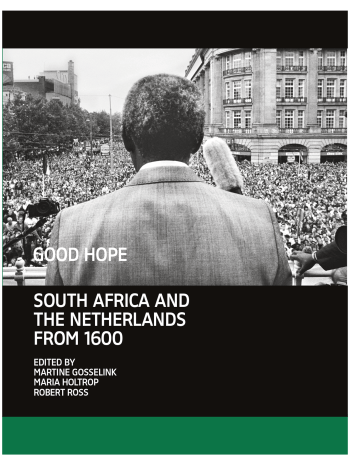 Robert Jacob Gordon’s landscape panoramas, several metres long, occupy a prominent place in the exhibition. This Dutch traveller illustrated 18th-century South Africa, giving the country an identity. The imposing portraits of children born after 1994—when apartheid was abolished—by the South African photographer Pieter Hugo illustrate South Africa’s future. Along with the exhibition, the NTR (Dutch public-service broadcaster) will be broadcasting a seven-part TV series presented by Hans Goedkoop. The exhibition is produced under the directions of Martine Gosselink, Head of the History Department at the Rijksmuseum.
“The Good Hope exhibition illustrates a significant aspect of Dutch colonial history in all its nuances—a tale that is both painful and striking, but more especially disturbing and recognisable.”
–Adriaan van Dis, Dutch writer, Africa specialist, and the exhibition’s narrator
Symposium—Good Hope for a New Generation: Reflections on Diversity and Change in South Africa and the Netherlands, 5 April 2017
The aim of this symposium is for the Dutch and South Africans to learn from each other in building an open and diverse nation where talents can develop. For this symposium, two South African speakers are invited to reflect on the past and especially on the future of the new generation.
Martine Gosselink, Maria Holtrop, and Robert Ross, eds., Good Hope: South Africa and the Netherlands from 1600 (Amsterdam: Rijksmuseum, 2017), 376 pages, ISBN: 978 94600 43130, €35.
A richly illustrated book accompanies the exhibition, containing 56 contributions from 26 authors from the fields of literature, language, art history, archaeology, politics, and journalism.
Conference | Norwich and the Medieval Parish Church, 900–2017
Norwich and the Medieval Parish Church, ca. 900–2017: The Making of a Fine City
Norwich Cathedral Hostry, 17–18 June 2017 (with site visits on 19 June)
 A conference hosted by The Medieval Parish Churches of Norwich Research Project, undertaken at the University of East Anglia and funded by The Leverhulme Trust.
All 58 churches—whether existing, ruined, or lost—are included in the scope of the project, which seeks insight into how the medieval city developed topographically, architecturally, and socially. The project is intended to reveal the interdependent relationship between city, community, and architecture showing how people and places shaped each other during the Middle Ages. The conference—supported by the Paul Mellon Centre for British Art and Purcell—will present the medieval parish churches of Norwich in their immediate local context and in the broader framework of urban churches in Britain and northern Europe. The subject range will include documentary history, the architectural fabric of the buildings themselves and their place in the topography of Norwich, the development of the churches’ architecture and furnishings, the representation of the churches, and their post-Reformation history.
In addition to the medieval lines of inquiry, the conference will include papers addressing the churches of Norwich from a long eighteenth-century perspective. Roey Sweet will discuss the rise of the concept of the historic town, which became established in the nineteenth century. William Jacob will consider the changes that Norwich churches underwent in the Georgian period in relation to the Prayer Book and concepts of politeness. David King will address the evidence for stained glass provided by seventeenth- and eighteenth-century antiquaries, and Clare Haynes will explore the medieval imaginaries that were engaged in the antiquarian, topographical, and archaeological visual record of the churches.
Full details, including timings and costs, to be announced in the coming weeks. Bookings will be taken from early March 2017. Provisional reservations can be made by email to h.lunnon@uea.ac.uk.
ASECS 2017, Minneapolis: Memorial Session for Mary Sheriff
In addition to this year’s regular ASECS offerings, the schedule will include a memorial gathering dedicated to Mary Sheriff (1950–2016).
Please join us Thursday, March 30, from 6:00 to 7:00pm as we remember our colleague, dear friend, and mentor. There will be a cash bar, a short program, and an opportunity for people to share memories and celebrate Mary’s vibrant life.
The room is Lakeshore A, on the first floor of the Hyatt Regency Minneapolis. Please email Joanna Gohmann at jgohmann@thewalters.org or Hyejin Lee at hyejinlee.18e@gmail.com with any questions.
Symposium | Bouchardon and His Contemporaries
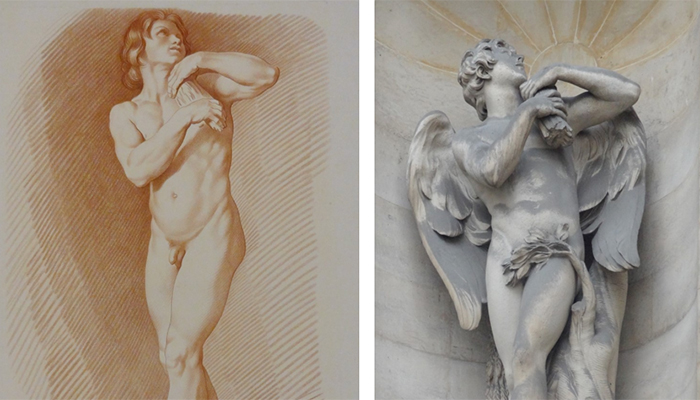
Left: Gilles Demarteau after Edme Bouchardon, Model Posing for ‘The Genius of Summer’, ca. 1740s–50s (Los Angeles: Getty Research Institute, 2015.PR.58). Right: Edme Bouchardon, The Genius of Summer, 1745 (Paris: Grenelle Fountain).
◊ ◊ ◊ ◊ ◊
Bouchardon and His Contemporaries
The Getty Center, Los Angeles, 2 April 2017
In parallel with the exhibition Bouchardon: Royal Artist of the Enlightenment (on view at the Getty Center until 2 April), this symposium explores the relationships Bouchardon had with his contemporaries (artists, patrons, and connoisseurs) and investigates the diffusion and reception of his oeuvre. Admission to this event is free, but a ticket is required to attend. More information is available here.
Participants
Malcolm Baker, University of California, Riverside
Anne-Lise Desmas, J. Paul Getty Museum
Peter Fuhring, Fondation Custodia
Thomas W. Gaehtgens, Getty Research Institute
Edouard Kopp, Harvard Art Museums
Monique Kornell, University of California, Los Angeles
Ewa Lajer-Burcharth, Harvard University
Louis Marchesano, Getty Research Institute
Guilhem Scherf, Musée du Louvre
Katie Scott, The Courtauld Institute of Art
Kristel Smentek, Massachusetts Institute of Technology
Perrin Stein, The Metropolitan Museum of Art
Juliette Trey, Musée du Louvre










leave a comment