Conference | Objects, Families, Homes: British Material Cultures
From The East India Company at Home project:
Objects, Families, Homes: British Material Cultures in Global Contexts
University College London, 11–12 July 2014
Since 2011, The East India Company at Home project has focused on country houses—and the families and objects that inhabited them—to explore how British material culture developed in a global context during the eighteenth and nineteenth century. The project’s goals have been twofold. First, we have sought to illuminate the broad-ranging ways in which the activities of the English East India Company shaped elite material cultures in Britain—and by doing so, shaped British identities in the Georgian and Victorian periods, and beyond. Second, we have sought to develop new ways of connecting diverse communities of historical researchers (archivists, curators, family historians, freelance historians, local historians, stately home volunteers and university-based historians) and in so doing to weave otherwise dispersed studies into a transnational material narrative. At the same time, by disseminating research findings through our website we have made them available on an open-access basis. The conference plans to encourage a range of speakers to present on these themes and discuss their wider significance.
Confirmed keynote speakers include Deborah Cohen, Professor of Modern British and European History at Northwestern University and author of Household Gods: The British and their Possessions (2006) and Family Secrets (2013), in dialogue with Marietta Crichton-Stuart, a descendant of the Marquess of Bute, who has researched how Margaret Bruce designed and furnished Falkland House in Fife in the 1830s and 1840s.
Members of the public are warmly welcomed to attend this event. Registration is accessible (until 30 June 2014) via the UCL online store.
The conference will take place in the Roberts Building on the Bloomsbury Campus of University College London. A map giving directions to the Roberts Building can be found here. The building stands opposite Waterstones, Gower Street. The Roberts Building is a 5- to 10-minute walk from various underground stations including, Goodge Street, Euston, Euston Square, Russell Square and Tottenham Court Road.
◊ ◊ ◊ ◊ ◊
From the conference programme:
F R I D A Y , 1 1 J U L Y 2 0 1 4
9.30 Registration
10.00 Welcome Remarks from Margot Finn, Principal Investigator, The East India Company at Home, 1757–1857
10.30 Session 1
Strand A: China and the ‘Chinese’ Style in British Houses
• Alexandra Loske (University of Sussex), ‘Chinese Landscapes in yellow etched in gold and highly varnished’: The influence of exportware and print culture on colour and ornament in the Royal Pavilion, Brighton
• Emile de Bruijn (National Trust) and Helen Clifford (UCL/University of Warwick), Past, Present and Future: The Chinese Wallpaper Project
• Clare Taylor (The Open University), Trading wallpaper: India paper and prints in the eighteenth-century home
Strand B: Buildings and Networks, Chair: Ellen Filor (UCL)
• Joanna Frew (University of Essex), ‘Inform me how I may become a useful member of the community at large’: Looking beyond the family
• Rosie Dias (University of Warwick), The British Country House in Colonial India
• Sylvia Shorto (American University, Beirut), Robert Smith’s ‘Truly Fair Palaces’ in India and in Europe
12.00 Lunch
13.00 Session 2
Strand A: Wales, Chair: Kate Smith (UCL)
• Diane James (University of Warwick), Welsh gardens
• Lowri Ann Rees (Bangor University), The nabob returned: the infiltration of East India Company men into Welsh landed society, c.1760–1840
• Joanna de Groot (University of York), Movement and materiality: traces of the transnational career of Harford Jones Brydges (1764–1847)
Strand B: Gender and Collecting, Chair: Kate Hill (University of Lincoln)
• Holly Shaffer (Yale), Publishing Indian Art between Suffolk and the Deccan
• Rosemary Raza (Independent scholar), Bringing India home: Early nineteenth-century British women and the understanding of India
• Catherine Eagleton (British Library), Collecting Asia at 32 Soho Square: Sarah Sophia Banks and her coins, tokens and medals
14.30 Coffee and tea
15.00 Session 3
Strand A: London Houses, Chair: Spike Sweeting (University of Warwick)
• David Veevers (University of Kent), The matriarchy of 45 Berkeley Square: gender, identity and imperial expansion in the late eighteenth century
• Harriet Richardson and Peter Guillery (Survey of London, UCL), At home in Cavendish Square and Harley Street: East India Company impact on eighteenth-century Marylebone
• George McGilvary ( Independent scholar), The Sulivans of India House
Strand B: Portraying India, Chair: Natasha Eaton (UCL)
• Viccy Coltman (University of Edinburgh), Portraiture and Empire: George Chinnery’s Gilbert Elliot, 1st Earl of Minto, 1812–13
• Jennifer van Schoor (Birkbeck), The Indian folds at Harewood House
• Bharti Parmar (Independent scholar and artist), Widow’s Weeds: Reflections on Black
16.30 Coffee and tea
17.00 Keynote Lecture
Deborah Cohen, Professor of Modern British and European History at Northwestern University and author of
Household Gods: The British and their Possessions (2006) and Family Secrets (2013) will be speaking in dialogue with Marietta Crichton-Stuart, a descendant of the Marquess of Bute, who has researched how Margaret Bruce designed and furnished Falkland House in Fife in the 1830s and 1840s.
18.30 Drinks reception
S A T U R D A Y , 1 2 J U L Y 2 0 1 4
9.30 Session 1
Strand A: Loss and Looting, Chair: Meike Fellinger (University of Warwick)
• Lindsay Allen (KCL), Curious gifts of ancient substance
• Nigel Erskine (Australian National Maritime Museum), Passages to India: exploring Pacific pathways to Asia during Australia’s colonial period
• Rosie Llewellyn Jones (BACSA), Lost, stolen or strayed?: India artefacts in Britain
• Shaleen Wadhwana (India Photo Archive Foundation), Of Awadh, Oudh and Lucknow
Strand B: And so we go to Daylesford, Chair: Kevin Rogers
• Zirwat Chowdhury (Reed College), ‘Meanwhile’ at Daylesford…
• Elizabeth Lenckos (University of Chicago Graham School), ‘The House is fitted up with a degree of Taste & Magnificence seldom to be met with’: Daylesford, and the ‘nabobina’ Hastings’ ivory furniture collection
• Gillian Forrester (Yale Center for British Art), ‘Such a proof of Love and Duty’: Warren Hastings and the memorialization of India at Daylesford
11.00 Coffee and tea
11.30 Session 2
Strand A: Displaying Identity, Chair: Jane Hamlett (Royal Holloway, University of London)
• Deborah Sugg Ryan (Falmouth University), The elephant on the mantelpiece: the interwar suburban home and the detritus of empire
• Britta Schilling (University of Cambridge), Grand designs: British homes in East Africa, 1850–1960
• Sarah Longair (British Museum), ‘The scene was brilliant and striking’: display and imperial identity in early colonial Zanzibar
Strand B: Daily Lives and Longings, Chair: Lucy Dow (UCL)
• Jean Sutton (Independent scholar), Distance, longing and return in the imperial family
• Laura Humphreys (Queen Mark, University of London), World service: the foreign dimensions of domestic service in late nineteenth-century and early twentieth-century London
• Kate Smith (UCL), Imperial families: Women writing home in Georgian Britain
13.00 Lunch
14.00 Is the East India Company at home?
Presentations from Margot Finn, Helen Clifford, Kate Smith and Ellen Filor; followed by general discussion with panel and audience
16.00 Conference ends
Symposium | From Poussin to Monet
Von Poussin bis Monet. Die Farben Frankreichs
Bucerius Kunst Forum, Hamburg, 1 April 2014
Mit Dr. Susanne Blöcker, Remagen; Dr. Eva Hausdorf, Bremen; Prof. Dr. Christian Michel, Lausanne; Prof. Dr. Beate Söntgen, Lüneburg; Dr. Christoph Vogtherr, London; Prof. Dr. Michael F. Zimmermann, Eichstätt-Ingolstadt
Rund 200 Jahre liegen zwischen dem Werk von Poussin und Monet. In dieser Zeit befreite sich die französische Malerei radikal von künstlerischen Regeln und Traditionen. Die gesellschaftlichen Umbrüche des 18. Jahrhunderts leiteten die Moderne ein. Die Veränderungen der französischen Gesellschaft vor und nach dem Epochenjahr 1789 wurden auch zum Motor der Revolutionierung der künstlerischen Mittel. Die Ausstellung Von Poussin bis Monet. Die Farben Frankreichs widmet sich der künstlerischen Befreiung der französischen Malerei von den Vorgaben des Akademismus und der Entwicklung zur Freilichtmalerei des Impressionismus. Die Ausstellung zeigt Werke aus der Sammlung der National Gallery of Ireland in Dublin. Sie werden durch Gemälde aus der Sammlung Rau (UNICEF) in Remagen ergänzt. Tickets € 10,– (inkl. Kaffee und Empfang), ermäßigt für Bucerius Kunst Club Mitglieder € 8,– Freitickets für Studierende in begrenzter Anzahl (nur im Voraus an der Kasse im Bucerius Kunst Forum).
P R O G R A M M
10.00 Begrüßung, Ortrud Westheider, Bucerius Kunst Forum
10.15 “The collection of French painting in the National Gallery of Ireland,” Adrian LeHarivel, National Gallery of Ireland
11.00 “Vom Gelehrten zum Genie. Das Bild des Malers von Poussin bis Monet,” Eva Hausdorf, Kunsthalle Bremen
11.45 “Les combats de l’Académie royale de Peinture et de Sculpture pour un retour à la nature / Der Kampf der Königlichen Akademie für ein retour à la nature,” Christian Michel, Université de Lausanne
12.30 Mittagspause
14.00 “Die Fête galante im 18. Jahrhundert. Ein Raum für Innovation außerhalb der akademischen Gattungsdefinitionen,” Christoph Vogtherr, The Wallace Collection, London
14.45 “Revolution der Gefühle. Bürgerliche Ideale der Aufklärungszeit,” Susanne Blöcker, Arp Museum Bahnhof Rolandseck, Remagen
15.30 Kaffeepause
16.00 “Übertragungen. Emotion und Kommunikation bei Jean Siméon Chardin,” Beate Söntgen, Leuphana Universität Lüneburg
16.45 “Winkel der Schöpfung. Naturalismus, Impressionismus und der intime Blicke in die Weite,” Michael F. Zimmermann, Katholische Universität Eichstätt-Ingolstadt
17.30 Empfang
Workshop | Italy in China: Beijing’s Old Summer Palace, Yuanmingyuan
From the Bibliotheca Hertziana in Rome:
Italy in China: The Western Buildings in the Old Summer Palace Yuanmingyuan in Beijing
Bibliotheca Hertziana, Max Planck Institute for Art History, Rome, 25 March 2014
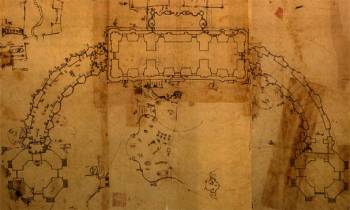 The Beijing Tsinghua Institute for Digitization THID (Tsinghua University Beijing) and the Bibliotheca Hertziana, Max Planck Institute for Art History, Rome are conducting collaborative research devoted to the now ruinous Western Buildings that are part of the Old Summer Palace Yuanmingyuan in Beijing, and which were planned and erected around 1750 by Italian/French Jesuits and Chinese architects and craftsmen. The aim of the project is to comprehensively investigate and understand the Western Buildings and to analytically visualise them in virtual 3D-models. The project examines the Sino-Western experience in the planning and construction processes with the mutual exchange of techniques and methods, concepts and models, and explores the interaction between Chinese and Western conceptions of architecture, gardens, fountains, construction and hydraulic technologies. The workshop aims to present this collaboration project to a wider audience and to give a report on the current state of the work in progress.
P R O G R A M M E
2:30 Welcome and Introduction: Sybille EBERT-SCHIFFERER (Rome), YIN Lina (Beijing), Elisabeth KIEVEN (Rome), and Hermann SCHLIMME (Rome)
3:00 YIN Lina (Beijing), The Yuanmingyuan: Current state of research and analysis of textual and visual sources
3:45 SHANG Jin (Beijing), The Western buildings: Research questions and the role of virtual 3D-models
4:30 Break
5:00 GAO Ming (Beijing) and PIAO Wenzi (Beijing), New findings based on the building survey and re-examination of historic photographs
5:45 Hermann SCHLIMME (Rome), Sino-Western knowledge transfer concerning plays of water and hydraulic technology: Benoist – Bélidor – Morland
6:30 Closing remarks
Scientific Concept: Yin Lina, Alexandra Harrer, Hermann Schlimme
Secretary: Ornella Rodengo, rodengo@biblhertz.it, 0039-06-69993-222
ASECS 2014, Williamsburg
2014 American Society for Eighteenth-Century Studies Conference
Williamsburg, 19–22 March 2014
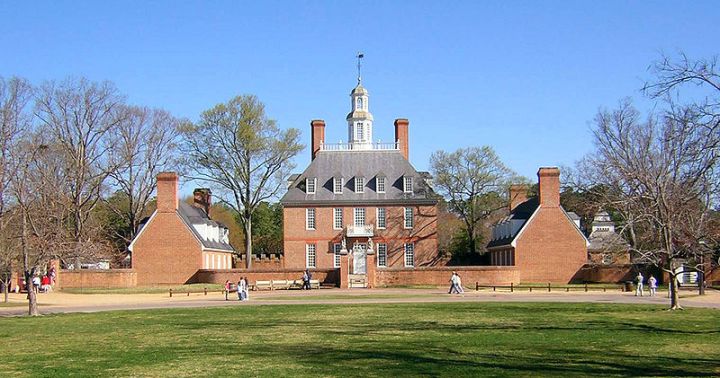
Governor’s Palace in Williamsburg, Virginia. The original structure was built between
1710 and 1722, with further additions made in the 1750s. Fire destroyed the
main house in 1781. The present building was constructed in the early 1930s.
Photo by Larry Pieniazek, 2006, from Wikimedia Commons.
◊ ◊ ◊ ◊ ◊
The 2014 ASECS conference takes place in Colonial Williamsburg, Virginia, March 19–22, at the Williamsburg Lodge. HECAA will be represented by two panels, on Friday, chaired by Denise Amy Baxter and Amy Freund and Jessica Fripp. Our annual luncheon and business meeting is also scheduled for Friday, between the two sessions. A selection of additional panels is included below (of the 221 sessions scheduled, many others will, of course, interest HECAA members). For the full program, see the ASECS website.
H E C A A S E S S I O N S
The Anne Schroder New Scholars’ Session (HECAA)
Friday, 21 March, 11:30–1:00, Colony Room A
Chair: Denise Amy BAXTER, University of North Texas
1. Diane WOODIN, University of North Carolina at Chapel Hill, “Noble Wit and Celestial Wonder in Early Modern France: The Strategic Scholarship of the Duchesse du Maine”
2. Blair DAVIS, University of California, Santa Barbara, “Roman Villas and French Garden Theory”
3. Alison HAFERA, University of North Carolina at Chapel Hill, “Quiet Spaces of Repose: The Garden as Site of Mourning in Eighteenth-Century France”
◊ ◊ ◊ ◊ ◊
Selfhood and Visual Representation in the Eighteenth Century (HECAA)
Friday, 21 March, 4:15–5:45, Allegheny Room A
Chairs: Amy FREUND, Texas Christian University AND Jessica FRIPP, Parsons The New School for Design
1. Emma BARKER, The Open University, “Blindness and Selfhood in Eighteenth-Century French Art”
2. Melina MOE, Yale University, “The Singular Macaroni or Macaroni Singularity”
3. Julia SIENKEWICZ, Duquesne University, “At Sea without a Guiding Star: Uncertain Selfhood in the Atlantic Watercolors of Benjamin Henry Latrobe”
O T H E R S E S S I O N S R E L A T E D T O T H E V I S U A L A R T S
W E D N E S D A Y , 1 9 M A R C H 2 0 1 4
Open House, Swem Library at the College of William and Mary
Wednesday, 19 March, 4:00–6:00
The Swem Library is noted for its strong special collections. Come to the Special Collections Research Center and browse selected rare books, manuscripts, and archives pulled specifically for the enjoyment of ASECS. Some of the treasures on display will be a unique first edition of Isaac Newton’s Principia, a first edition of the Book of Mormon, a list of slaves owned by the College of William and Mary, as well as letters from some of our founding fathers, George Washington, Thomas Jefferson, and James Monroe. All attendees and their guests are welcome and no registration is required.
T H U R S D A Y , 2 0 M A R C H 2 0 1 4
Textiles in the Long Eighteenth Century
Thursday, 20 March, 8:00–9:30, Allegheny Room B
Chair: Heidi A. STROBEL, University of Evansville
1. Courtney BEGGS, Bridgewater State University, “Reading Ribbons: Textile Tokens, The Foundling Hospital, and Stories of Maternity”
2. Emily WEST, McMaster University, “‘Hands without head would do little’: Mechanizing the Spinster”
3. Mei Mei RADO, Bard Graduate Center, “‘Western Tapestries’ Made in the Eighteenth-Century Chinese Court”
4. Ji Eun YOU, University of North Carolina, Chapel Hill, “Printed Fabrics and Textile on Prints: Interior Decoration during the French Revolution”
◊ ◊ ◊ ◊ ◊
Mind and Brain: Representing Cognition in Eighteenth-Century Culture
Thursday, 20 March, 8:00–9:30, Virginia Room C
Chair: Hannah Doherty HUDSON, University of Texas, San Antonio
1. Audrey HUNGERPILLER, University of South Carolina, “Clarissa’s Suffering: Theorizing Sympathy and Physical Pain in the Eighteenth Century”
2. Lucas HARDY, Youngstown State University, “‘Beatific Visions of God’: Jonathan Edwards’s Postures of Mind”
3. Stan BOOTH, University of Winchester, “Subtle Gestures: The Portrayal of the Ill and Less Able in Hogarth’s Work”
Respondent: Natalie PHILLIPS, Michigan State University
◊ ◊ ◊ ◊ ◊
Embodying the Past: The Rewards and Risks of Re-enactment
Thursday, 20 March, 9:45–11:15, Allegheny Room B
Chair: Mimi HELLMAN, Skidmore College
1. Sarah DAY-O’CONNELL, Knox College, “Singing as Translation: A ‘New Fidelity’ Approach to Performance and Meaning in Joseph Haydn’s Canzonettas”
2. Amber LUDWIG, Honolulu Museum of Art, “Re-Acting to the Past: Are Role-Playing Games Changing the Course of History?”
3. Matthew KEAGLE, Bard Graduate Center for the Decorative Arts, Design History, and Material Culture, “Coming Out of the (Costume) Closet: Re-Enactment, the Academy, and Me”
◊ ◊ ◊ ◊ ◊
Hogarth’s Legacy
Thursday, 20 March, 11:30–1:00, Allegheny Room C
Chair: Frédéric OGÉE, Université Paris Diderot
1. Isabelle BAUDINO, Ecole Normale Supérieure Lyon, “William Hogarth, Appropriation and the Construction of British Artistic Identity”
2. Frank FELSENSTEIN, Ball State University, “Hogarth’s Legacy: Does Rowlandson Fit?”
3. David A. BREWER, The Ohio State University, “Hogarth, Fictionality, and Reference”
◊ ◊ ◊ ◊ ◊
National Endowment for the Humanities Grants Projects (Roundtable)
Thursday, 20 March, 11:30–1:00, Colony Room A
Chair: Barbara ASHBROOK, National Endowment for the Humanities
1. Stephen KARIAN, University of Missouri
2. Chloe WIGSTON SMITH, University of Georgia
3. Devoney LOOSER, Arizona State University
◊ ◊ ◊ ◊ ◊
Ear, Nose, and Throat: The Other Senses of the Long British Eighteenth Century, I
Thursday, 20 March, 11:30–1:00, Colony Room C
Chair: Rivka SWENSON, Virginia Commonwealth University
1. Kathryn Strong HANSEN, The Citadel, “‘Smell a rat’: Scent and Authenticity in Burney’s Cecilia”
2. Jacqueline GRAINGER, University of Sydney, “Perfume in Print; or, the Legend of the French perfume Industry”
3. Christine GRIFFITHS, Bard Graduate Center, “‘A most pleasant Odiferous scent’: Aromatics in Early Eighteenth-Century Britain”
4. Emily C. FRIEDMAN, Auburn University, “One Scent Three Ways: Imagining the Eighteenth Century as the Age of Sulfur”
◊ ◊ ◊ ◊ ◊
Six Metaphors for the Mind (Roundtable)
Thursday, 20 March, 11:30–1:00, Piedmont Room C
Chair: Brad PASANEK, University of Virginia
1. Darryl P. DOMINGO, University of Memphis, “Archer’s Bow”
2. Joseph DRURY, Villanova University, “Musical Instrument”
3. Scott ENDERLE, Skidmore College, “Mazes”
4. Jess KEISER, Rice University, “Soldiers”
5. Kathleen LUBEY, St. John’s University, “Acorns”
6. Julie PARK, Vassar College, “Camera Obscura”
◊ ◊ ◊ ◊ ◊
Eighteenth-Century Brewing
Thursday, 20 March, 2:30–4:00, Virginia Room C
Chair: Frank CLARK, Supervisor, Historic Foodways, Colonial Williamsburg Foundation
(Fee for Tasting)
◊ ◊ ◊ ◊ ◊
Material Culture in the Atlantic World
Thursday, 20 March, 2:30–4:00, Allegheny Room A
Chair: Chloe WIGSTON SMITH, University of Georgia
1. Christian J. KOOT, Towson University, “From Manuscript to Print: The Transformation of an Early Modern Atlantic Map”
2. Kalissa HENDRICKSON, Arizona State University, “Imperial Commodities in Civic Pageantry”
3. Elizabeth A. WILLIAMS, Rhode Island School of Design Museum, “Fluid Contents: Navigating Material Culture in the Atlantic World”
◊ ◊ ◊ ◊ ◊
Materials, Artistic Process, and Meaning in the Eighteenth Century
Thursday, 20 March, 4:15–5:45, Allegheny Room C
Chairs: Sarah BETZER, University of Virginia AND Douglas FORDHAM, University of Virginia
1. Jason LAFOUNTAIN, School of the Art Institute of Chicago, “The Art-Experienced Wound and Nailhole Painting of the Moravian Brethren: Irrationality and Medium Specificity in the 1740s”
2. Francesca WHITLUM-COOPER, Courtauld Institute of Art, “La vie errante de Jean-Baptiste Perronneau (1715–1783): Pastel, Peregrinations and Instability in Eighteenth-Century Europe”
3. Melissa HYDE, University of Florida, “Pastel Trouble: The Matter of Rosalba Carriera and Quentin de La Tour”
4. Amelia RAUSER, Franklin and Marshall College, “Muslin, Marble, Ivory”
◊ ◊ ◊ ◊ ◊
Global Cities, I
Thursday, 20 March, 4:15–5:45, Liberty Room
Chair: Robert MARKLEY, University of Illinois
1. Andrew SCHULZ, Pennsylvania State University, “The Royal Botantical Garden and the ‘Recreation’ of Empire in Enlightenment Madrid”
2. Susan SPENCER, University of Central Oklahoma, “Scheming Capitalists and Suicidal Puppets: A Literature for Osaka in the Era of Edo”
3. Inhye HA, University of Illinois, “Autonomy and Gentility in Olaudah Equiano’s Eighteenth-Century American Waterfront Communities”
4. Nina Budabin MCQUOWN, Western University, Ontario, “Urban Farming: ‘Town Manures’ in Eighteenth-Century Soil and City”
◊ ◊ ◊ ◊ ◊
Eighteenth-Century Re-enactments
Thursday, 20 March, 4:15–5:45, Tidewater Room D
Chair: Sarah KAREEM, University of California, Los Angeles
1. Emily Hodgson ANDERSON, University of Southern California, “Ghosting Oroonoko”
2. Stuart SHERMAN, Fordham University, “Do Do Do What You’ve Done Done Done Before: Theatrical Reenactments and the Live Documentary”
3. Jessica LEIMAN, Carleton College, “‘The Enthusiasm of an Ingenuous Mind’: Reenacting La Nouvelle Héloïse”s
4. Chloe WIGSTON SMITH, University of Georgia, “Reenacting the Empire of Material Culture: Yinka Shonibare, Dutch Wax Prints, and Thomas Gainsborough”
◊ ◊ ◊ ◊ ◊
ASECS Members’ Reception
Thursday, 20 March, 6:00–7:00, Colony Room D&E
◊ ◊ ◊ ◊ ◊
F R I D A Y , 2 1 M A R C H 2 0 1 4
Cultures of the Machine
Friday, 21 March, 8:00–9:30, Colony Room A
Chair: Joseph DRURY, Villanova University
1. Amy FREUND, Texas Christian University, “‘The most beautiful of all inventions’: The Hunting Gun in Eighteenth-Century France”
2. Crystal B. LAKE, Wright State University, “Romantic Fictions and Dull Truths: Machines of War in the Long Eighteenth Century”
3. Christopher F. LOAR, Western Washington University, “Erasmus Darwin’s Machinery of Life”
◊ ◊ ◊ ◊ ◊
New Approaches to Eighteenth-Century Gardens
Friday, 21 March, 9:45–11:15, Allegheny Room C
Chairs: Jeffrey L. COLLINS, Bard Graduate Center AND Meredith MARTIN, New York University
1. Nicolle JORDAN, University of Southern Mississippi, “‘Her Fountains which so high their streames extend’: Garden Design and Gender Identity in the Poetry of Anne Finch”
2. Emily MANN, Courtauld Insitute of Art, “Designs on the Land: English Gardens on the Coast of West Africa”
3. Sally GRANT, Independent Scholar, “Caricature in the Garden: Encounters with the Dwarves at Villa Valmarana”
4. Julie Anne PLAX, University of Arizona, “The Hunting Park at Compiègne: Aesthetics, Economics, Environment, and Entertainment”
◊ ◊ ◊ ◊ ◊
Dissent, Protest, and Resistance in the Old and New World
Friday, 21 March, 9:45–11:15, Allegheny Room B
Chair: Gloria EIVE, Saint Mary’s College of California
1. Frieda KOENINGER, Sam Houston State University, “Don Santos Díez González, Civil Censor: Balancing Aesthetics, Politics, and Religion in 1790s Madrid”
2. Maria Soledad BARBÓN, University of Massachusetts, Amherst, “The Politics of Praise: Academic Culture and Viceregal Power in Late Colonial Peru”
3. María de las Nieves PUJALTE, Texas State University, San Marcos, “Poder y resistencia en las fronteras españolas en 1748 y en 1826—Testimonios en las obras de los viajeros Jorge Juan Cantacilia y Antonio de Ulloa”
4. Ramón Bárcena COLINA, Universidad de Oviedo y Universidad Complutense de Madrid, “Imperialism, Censorship, and Control in post-Napoleonic Spain and the European Empire: Francisco Goya y Lucientes’s Dissent”
◊ ◊ ◊ ◊ ◊
Graduate Student Mentoring Coffee
Opportunity for graduate students to meet with their assigned mentors
Friday, 21 March, 9:45–11:15, Heritage Room
◊ ◊ ◊ ◊ ◊
The Anne Schroder New Scholars’ Session (HECAA)
Friday, 21 March, 11:30–1:00, Colony Room A
Chair: Denise Amy BAXTER, University of North Texas
1. Diane WOODIN, University of North Carolina at Chapel Hill, “Noble Wit and Celestial Wonder in Early Modern France: The Strategic Scholarship of the Duchesse du Maine”
2. Blair DAVIS, University of California, Santa Barbara, “Roman Villas and French Garden Theory”
3. Alison HAFERA, University of North Carolina at Chapel Hill, “Quiet Spaces of Repose: The Garden as Site of Mourning in Eighteenth-Century France”
◊ ◊ ◊ ◊ ◊
Regimes of Visuality: Technologies of Vision (Science Studies Caucus)
Friday, 21 March, 11:30–1:00, Colony Room C
Chair: Jess KEISER, Rice University
1. Al COPPOLA, John Jay College, City University of New York, “Seeing Science”
2. Kevin CHUA, Texas Tech University, “Children’s Scientific Literature and the Cybernetic Example”
3. Susan LIBBY, Rollins College, “Rationalizing Colonialism, Mapping Slavery in the Encyclopedie Illustrations of New World Plantation Labor”
4. Alexander WRAGGE-MORLEY, Caltech and Huntington Library, “Writing as Visual Technology in Natural History and Natural Philosophy”
◊ ◊ ◊ ◊ ◊
HECAA Luncheon and Business Meeting
Friday, 21 March, 1:00–2:30, Virginia A
◊ ◊ ◊ ◊ ◊
Presidential Address, Awards Presentation, and ASECS Business Meeting
Friday, 21 March, 2:30–4:00, Virginia Room E&F
Joseph ROACH Yale University, “Invisible Cities and the Archeology of Dreams”
Presiding: Misty ANDERSON University of Tennessee, Knoxville
◊ ◊ ◊ ◊ ◊
Selfhood and Visual Representation in the Eighteenth Century (HECAA)
Friday, 21 March, 4:15–5:45, Allegheny Room A
Chairs: Amy FREUND, Texas Christian University AND Jessica FRIPP, Parsons The New School for Design
1. Emma BARKER, The Open University, “Blindness and Selfhood in Eighteenth-Century French Art”
2. Melina MOE, Yale University, “The Singular Macaroni or Macaroni Singularity”
3. Julia SIENKEWICZ, Duquesne University, “At Sea without a Guiding Star: Uncertain Selfhood in the Atlantic Watercolors of Benjamin Henry Latrobe”
◊ ◊ ◊ ◊ ◊
Exhibition Lecture, Threads of Feeling
Friday, 21 March, 5:00, Hennage Auditorium, Art Museums of Colonial Williamsburg
John STYLES, University of Hertfordshire, “Threads of Feeling: Foundlings, Philanthropy, and Textiles in Eighteenth-Century London”
When mothers left babies at London’s Foundling Hospital in the mid- eighteenth century, the Hospital often retained a small object as a means of identification, usually a piece of fabric. These swatches of fabric now form Britain’s largest collection of everyday textiles from the eighteenth century. They include the whole range of fabrics worn by ordinary women, along with ribbons, embroidery, and even baby clothes. Each scrap of fabric reflects the lives of an infant child and its absent parent. Collectively, they comprise a poignant, elegiac materialization of separation and loss. The lecture explains why the Foundling Hospital amassed these textiles and reflects on the capacity of such objects to perform emotional work. The exhibition Threads of Feeling, curated by John Styles, is at the DeWitt Wallace Decorative Arts Museum, in the Art Museums of Colonial Williamsburg. Limited numbers, pre-registration required. Register at the ASECS Registration Desk by 4:00.
◊ ◊ ◊ ◊ ◊
Women’s Caucus Masquerade Ball
Friday, 21 March, 9:00–12:00, Colony Room
Admission fee includes dessert and coffee; cash bar will be available
S A T U R D A Y , 2 2 M A R C H 2 0 1 4
Napoléon and the Art of Propaganda
Saturday, 22 March, 8:00–9:30, Allegheny Room A
Chair: Heidi KRAUS, Hope College
1. Wayne HANLEY, West Chester University, “General Bonaparte and His Artists: Appiani, Gros, and David”
2. Carole F. MARTIN, Texas State University, “Crossing the Alps: The Advent of the Napoleonic Era”
3. Heather MCPHERSON, University of Alabama at Birmingham, “The Napoleon Effect”
4. Susanne ANDERSON-RIEDEL, University of New Mexico, “Alexandre Tardieu’s Interpretation of Raphael’s Modernity for Napoleonic Art”
◊ ◊ ◊ ◊ ◊
Reproducing the Past in the Eighteenth Century
Saturday, 22 March, 8:00–9:30, Piedmont Room A
Chair: Alicia KERFOOT, The College at Brockport, State University of New York
1. Amy MALLORY-KANI, University at Albany, State University of New York, “‘These Perilous Times’: (Re)Inventing the (Early) Modern Woman in Mary Hays’s Female Biography”
2. Niall ATKINSON AND Susanna CAVIGLIA, University of Chicago, “The Eternal Modernity of Rome: The Poetics of the Past in French Eighteenth-Century Painting”
3. Susan EGENOLF, Texas A&M University, “The Arts of Etruria Reborn in Industrial England: Wedgwood’s Classical Aesthetic”
◊ ◊ ◊ ◊ ◊
Historical Reenactment, Living History, and Public History: Theorizing Generative Intersections between Tourists, Communities and Scholars” (Society of Early Americanists)
Saturday, 22 March, 9:45–11:15, Allegheny Room A
Chair: Joy A. J. HOWARD, Saint Joseph’s University
1. Michael TWITTY, Independent Food Historian and Interpreter, “‘No More Whistling Walk For Me,’ Historian and Food Interpreter”
2. Sara HARWOOD, Georgia State University, “Escaping the ‘Tourist Trap’: Recent Endeavors of the Witch House in Salem, Massachusetts”
3. Russell Taylor STOERMER, Colonial Williamsburg Foundation and the College of William and Mary, “Researching History for Living History Programs”
4. Tyler PUTNAM, University of Delaware, “Historic Trades Skills, Historical Scholarship, and Living History Interpretation”
5. Susan KERN, The College of William and Mary, “Students as Tourists, Critics, and Neighbors: Teaching Public History at William and Mary”
6. Janet S. ZEHR, Salem College, “Embodied and Disembodied Voices: Modes of Interpretation of Black and White Experience at Old Salem, North Carolina”
7. Wayne RANDOLPH, Colonial Williamsburg Foundation, “Where the Rubber Hits the Road: Bridging Academia to ‘The Masses’”
◊ ◊ ◊ ◊ ◊
Rousseau and the Visual
Saturday, 22 March, 9:45–11:15, Colony Room A
Chair: Melissa HYDE, University of Florida
1. John GREENE, University of Louisville, “Optical Allusions: Text and Image in Rousseau”
2. Brigitte WELTMAN-ARON, University of Florida, “Justice Disfigured: Rousseau’s Manuscript of Les Rêveries du promeneur solitaire”
3. Lauren CANNADY, Centre allemand d’histoire de l’art, Paris, “Between Reveries and Seduction: Rousseau in the Garden”
◊ ◊ ◊ ◊ ◊
Celebrating ‘Our King’ in an Age of Enlightenment: Commemorating Monarchs in Music, Print and Every Day Life in the British Atlantic World
Saturday, 22 March, 9:45–11:15, Tidewater Room B
Chair: Amanda E. HERBERT, Christopher Newport University
1. Anne WOHLCKE, California State University, Pomona, “The King at the Head of the Army: Commemorating King George II as a hero of the Austrian War of Succession”
2. Stephanie KOSCAK, University of California, Los Angeles, “Playing with Pictures of the King: Print Consumers, Royal Authority, and Aesthetic Vacuity”
3. Birte PFLEGER, California State University, Los Angeles, “Celebrating George II and Frederick the Great: Creating an Anglo-German Middle Ground in Colonial Pennsylvania”
◊ ◊ ◊ ◊ ◊
Gallery Talk, Threads of Feeling
Saturday, 22 March, 10:00, DeWitt Wallace Decorative Arts Museum
John STYLES, University of Hertfordshire, will discuss the ideas that shaped his exhibition Threads of Feeling in the gallery where it is displayed. Limited numbers, pre-register at ASECS registration desk.
◊ ◊ ◊ ◊ ◊
Beyond Goya: Culture High and Low in Spain and the New World during the Reign of Carlos IV 1789–1808 (Ibero-American Society for Eighteenth-Century Studies)
Saturday, 22 March, 2:00–3:30, Colony Room A
Chair: Janis A. TOMLINSON, University of Delaware
1. Liana EWALD, San Diego University, “Culture, Gender, National Society: Women in the Cartas Marruecase
2. Kelly DONAHUE-WALLACE, University of North Texas, “Jerónimo Antonio Gil, Laocoön’s Son, and the Spanish Enlightenment
3. Catherine JAFFE, Texas State University, “From Cape and Dagger to Didactic Novel: Molding Taste during the Reign of Carlos IV, or Count Belflor Lives to Fight Another Day”
4. Susan DEANS-SMITH, University of Texas at Austin, “Consuming Culture in Late Colonial Mexico City”
◊ ◊ ◊ ◊ ◊
Let’s Get Engaged!: Teaching Tradition in a Non-Traditional Classroom (Women’s Caucus)
Saturday, 22 March, 2:00–3:30, Colony Room C
Chairs: Heather KING, University of Redlands AND Srividhya SWAMINATHAN, Long Island University
1. Heidi A. STROBEL, University of Evansville, “Transforming Exclusion into Inclusion”
2. Laura LINKER, High Point University, “Engaging Bodies: Teaching the Restoration”
3. Kathleen ALVES, City University of New York, “Teaching Swift, Sex, and Race in the Two-Year College”
4. Glen COLBURN, Morehead State University, “Civilization and its Discontents in Early Eighteenth-Century Britain”
◊ ◊ ◊ ◊ ◊
Rhyme or Reason? The Aesthetics of Prayer (German Society for Eighteenth-Century Studies / Deutsche Gesellschaft für die Erforschung des 18. Jahrhunderts, DGEJ)
Saturday, 22 March, 2:00–3:30, Liberty Room
Chairs: Laura M. STEVENS, University of Tulsa AND Sabine VOLK-BIRKE, Martin-Luther-University, Halle
1. James A. WINN, Boston University, “Intimations of Jubilation: Christopher Smart’s Early Religious Poems”
2. Karissa E. BUSHMAN, Augustana College, “From Devotion to Mindless Adoration: Depictions of Prayer and Worship in Goya’s Works”
3. Michael ROTENBERG-SCHWARTZ, New Jersey City University, “Representing Prayer in English Travel Narratives”
4. Malinda SNOW, Georgia State University, “Isaac Watts’s Book of Common Prayer”
◊ ◊ ◊ ◊ ◊
Pop! Goes the Eighteenth Century
Saturday, 22 March, 2:00–3:30, Piedmont Room A
Chair: Guy SPIELMANN, Georgetown University
1. Dorothée POLANZ, University of Virginia, “Merchandizing Queen: Marie Antoinette, 1793–2013”
2. Kimberly CHRISMAN-CAMPBELL, Independent Scholar, “Lost at Sea: Ship Hats in Contemporary Fashion”
3. Alaina PINCUS, University of Illinois, “Austen’s Caché and the Twenty-First-Century Popular Romance”
◊ ◊ ◊ ◊ ◊
Gallery Talk, Threads of Feeling
Saturday, 22 March, 2:00, DeWitt Wallace Decorative Arts Museum
John STYLES, University of Hertfordshire, will discuss the ideas that shaped his exhibition Threads of Feeling in the gallery where it is displayed. Limited numbers, pre-register at ASECS registration desk.
◊ ◊ ◊ ◊ ◊
Migration, Society and the ‘Exceptional’ Gulf Coast
Saturday, 22 March, 3:45–5:15, Allegheny Room A
Chair: Susan GAUNT STEARNS, Northwestern University
1. Gordon SAYRE, University of Oregon, “The Mississippi Bubble and the Settling of Louisiana: Perspectives from the Memoir of Lieutenant Dumont”
2. Frances KOLB, Vanderbilt University, “Migration in Spanish Louisiana during the Years of Partition, 1763–1783”
3. Judith BONNER, The Historic New Orleans Collection, “From Sketches to Portraits: The Rise of Painting along the Gulf of Mexico in the Eighteenth-Century”
4. Kristin CONDOTTA, Tulane University, “A Taste of Home: Irish Foodways in Early New Orleans”
◊ ◊ ◊ ◊ ◊
Artistic Matters of Life and Death in Anatomical Study: Live Models, Cadavers and Ecorche Figures
Saturday, 22 March, 3:45–5:15, Allegheny Room B
Chair: Andrew GRACIANO, University of South Carolina
1. Josh HAINY, University of Iowa, “John Flaxman’s Anatomical Drawings: The Body as Theoretical Model”
2. Meredith GAMER, Yale University, “Tyburn’s Docile Bodies: Criminal Anatomies in Eighteenth-Century London”
3. Corinna WAGNER, University of Exeter, “Artists, Anatomists, and the Transparent Body: Categorical Impulse and Human Identity”
Respondent: Rebecca MESSBARGER, Washington University in St. Louis
◊ ◊ ◊ ◊ ◊
Antiquarianism (in Theory)
Saturday, 22 March, 3:45–5:15, Piedmont Room C
Chairs: Crystal B. LAKE, Wright State University AND Ruth MACK, State University of New York, Buffalo
1. Craig HANSON, Calvin College, “From Ancient Paintings to Illustrious Persons: Antiquarian Patronage and Illustration in the 1740s”
2. Joshua SWIDZINSKI, Columbia University, “Thomas Gray’s Unfinished History of English Poetry: Metrical Antiquarianism and the Problem of Literary History”
3. Jeff STRABONE, Connecticut College, “The Case of Robert of Gloucester’s Chronicle: Towards a Theory of Mediation in the Eighteenth Century”
◊ ◊ ◊ ◊ ◊
Eighteenth-Century Book Illustration, the Engraved Author Portrait, and the Formation of the Literary Canon
Saturday, 22 March, 3:45–5:15, Tidewater Room C
Chair: Kwinten VAN DE WALLE, Ghent University
1. Peter WAGNER, Universität Koblenz-Landau, “Swift’s Parody of Author Portraits”
2. Gerald EGAN, California State University, “Alexander Pope’s Master Hand”
3. Enid VALLE, Kalamazoo College, “Before and after the Inquisition: Author’s Portrait and Text Illustrations of Pablo de Olavide’s El Evangelio en Triunfo”
4. Geoffrey SILL, Rutgers University, “Versions of Defoe: Portraits of the Artist from His Works”
◊ ◊ ◊ ◊ ◊
Williamsburg Walking Tour, 1774
Saturday, 22 March, 3:45–5:15, departing from lobby of Colonial Williamsburg Conference Center
Led by William WARNER, University of California, Santa Barbara
This tour will highlight the events in Williamsburg Virginia between May 25th and June 1st, 1774, in the wake of news of the Boston Port Bill, which closed down Boston harbor as punishment for the destruction of the Tea in Boston Harbor the previous winter. The tour will begin at the Colonial Williamsburg Conference Center. You don’t need Williamsburg tickets because we will be walking by the outsides of key sites and buildings (not taking tours within them). We will use a time-line of key events, a map (provided by the tour guide, Professor Warner), as well as handouts from which participants will be able to read (perhaps even aloud!). The goal is to bring together place and political speech/writing so that we can consider how they work together to mediate the American Crisis during one week of 1774 in Williamsburg.
Conference | Enlightened Monarchs: Art at Court
From the conference programme:
Enlightened Monarchs: Art at Court in the Eighteenth Century
The Wallace Collection, London, 7 May 2014
 To commemorate the 300th anniversary of George I’s accession to the British throne in 1714, Royal Collection Trust, the Wallace Collection and the Society for Court Studies are organising a study day dedicated to the often overlooked art patronage of the first two Georges and their families. In addition to investigating official commissions and personal taste, it will explore differences and similarities between the arts at court in Britain, Prussia, France and Spain in the Age of Enlightenment. The day will conclude with a private view of The First Georgians: Art & Monarchy 1714–1760 and a glass of wine at The Queen’s Gallery, Buckingham Palace. Tickets: £35. Includes refreshments and exhibition entry at The Queen’s Gallery, excludes lunch.
P R O G R A M M E
10:00 Registration, tea and coffee
10:20 Welcome by Christoph Vogtherr, Director of the Wallace Collection
10:25 Morning Session | Britain and Hanover
Chaired with an introduction by Desmond Shawe-Taylor, Surveyor of The Queen’s Pictures
10:35 Where is Hanover? The artistic and dynastic roots of the first Georgian monarchs, Wolf Burchard, Royal Collection Trust
11:05 The setting for a new dynasty: Furnishing St James’s Palace for George I and his Court, 1714–1715, Rufus Bird, Deputy Surveyor of The Queen’s Works of Art
11:30 William Kent’s royal clients: A challenge to exhibition curation, Julius Bryant, Keeper Word and Image Department, Victoria & Albert Museum
12:10 Discussion
12:25 Break for lunch
1:10 Afternoon Session | London, Berlin, Paris and Madrid
Chaired by Clarissa Campbell Orr, President of the Society for Court Studies
1.15 Becoming British: Queen Caroline and Collecting, Joanna Marschner, Historic Royal Palaces
1.55 Sophie Charlotte of Prussia and Frederick the Great as collectors, Christoph Vogtherr, Wallace Collection
2.35 Coffee
2.55 Louis XV and the control of art in France, Helen Jacobson, Wallace Collection
3.35 The king’s own taste of the politics of reform? Bourbon royal patronage in Madrid, Curt Noel, New York University London
4.15 Discussion
4.30 Travel to The Queen’s Gallery, Buckingham Palace
5:00 Private view of The First Georgians: Art & Monarchy 1714–1760
Conference | Prices Beyond Borders: The Art Market at European Courts
Next month at Herzog August Bibliothek:
Preis(e) ohne Grenzen. Kunstmarkt an europäischen Höfen der Vormoderne
Herzog August Bibliothek, Wolfenbüttel, 2–4 April 2014
M I T T W O C H , 2 A P R I L 2 0 1 4
19.00 Edgar Lein (Graz), Öffentlicher Abendvortrag: Vom Preis und Wert der Kunst: Benvenuto Cellinis Skulpturen für Franz I. von Frankreich und Cosimo I. de Medici
D O N N E R S T A G , 3 A P R I L 2 0 1 4
9.00 Michael Wenzel (Wolfenbüttel), Einführung
Künstler und Produzenten
9.15 Nils Büttner (Stuttgart) „His demands ar like ye lawes of Medes an Persians wch may not be altered”: Rubens’ Preise
10.15 Gabriele Marcussen-Gwiazda (Rüsselsheim), Rudolfs Böhmische Krone: Zu internationalen Edelstein-Konsortien und Schmuckkartellen am Beginn des 17. Jahrhunderts
11.15 Kaffeepause
Agenten und Vermittler
11.30 Sarvenaz Ayooghi (Aachen), Die rudolfinischen Kunstagenten: Akteure auf dem europäischen Kunstmarkt um 1600
12.30 Christina M. Anderson (Oxford), Brokering at Court: The Gonzaga Sale of 1627/28
13.30 Mittagspause
15.00 Natalia Gozzano (Rom), The Maestro di casa and the role played in the art market by the professionals of the Roman Court
16.00 Heiner Krellig (Venedig/Berlin), Francesco Algarotti als Kunstagent im Dienste der Höfe in Berlin, Dresden und Kassel (1741–1764)
17.00 Kaffeepause
Fürstliche Akteure
17.15 Carmen Decu Teodorescu (Paris/Genf), Borso d’Este’s Roman de la Rose cortine: The Most Expensive Item of a 15th-Century Italian Collection
F R E I T A G , 4 A P R I L 2 0 1 4
9.00 Susanne König-Lein (Graz) „des Anschaffens und Ausgebens in Graz kein Ende“: Die Erwerbungen der Maria von Bayern, Erzherzogin von Innerösterreich, für die Grazer Kunstkammer (1571–1608)
10.00 Axel Christoph Gampp (Basel), Der Kunstmarkt und Fürst Karl Eusebius von Liechtenstein
11.00 Kaffeepause
Mechanismen der Preisbildung bei Hofe
11.15 Michael North (Greifswald), Preisgestaltung und Wertkriterien auf dem internationalen Kunstmarkt im 18. Jahrhundert (wird gegebenenfalls verlesen)
12.15 Tina Kosak (Ljubljana), Pricing Paintings in Late 17th- and Early 18th-Century Inner Austria
13.15 Mittagspause
14.45 Martina Frank (Venedig), Zur Entwicklung des Kunstmarkts in Venedig im 17. Jahrhundert
15.45 Schlussdiskussion
Anmeldung, Information: forschung@hab.de
Conference | The Global Lowlands
From Brown:
The Global Lowlands in the Early Modern Period, 1300–1800
Dutch and Flemish History and Culture in a Worldwide Perspective
Brown University, 4–5 April 2014
During the early modern period the Lowlands became an entrepôt for global exchanges. They connected outwards to every part of the globe through trade, colonization, expanded knowledge, material culture, and consumption. Antwerp during the sixteenth century, and Amsterdam during the seventeenth century were the first modern cities to dominate world trade and commerce. The Lowlands attracted merchants, immigrants, and visitors while importing and redistributing a vast new array of goods and information, not only effecting the culture, art, and sciences of the Lowlands but touching the lives of many other people, from New Amsterdam and Brazil to Africa, the Indian Ocean, Southeast Asia, Japan, and elsewhere. This conference focuses on the Lowlands as an example of how globalization is affecting Renaissance and Early Modern Studies.
Sponsored by Brown University, the Pembroke Center, the History Department, the program in Renaissance and Early Modern Studies, department of the History of Art & Architecture and the John Carter Brown Library. Pre-registration required: click here.
F R I D A Y , 4 A P R I L 2 0 1 4
5:00 Session 1 | Introduction and Chair: Evelyn Lincoln, Brown University
• Karel Davids, Vrije Universiteit, Amsterdam, “Instrument Makers, Cartographers, and Navigators: The Dutch and Transnational Networks in the Eighteenth-Century Atlantic”
• Mariët Westermann, The Andrew W. Mellon Foundation, “Retrading the Golden Age: Dutch Art and Its Histories”
6:30 Reception
S A T U R D A Y , 5 A P R I L 2 0 1 4
9:00 Session 2 | Chair: Wim Klooster, Clark University
• Claudia Swan, Northwestern University, “Lost in Translation: Exoticism in Early Modern Holland”
• Dániel Margócsy, Hunter College, “Commercial Visions: Global Trade and Scientific Debate, c. 1700”
10:30 Coffee
11:00 Session 3 | Chair: Jeffrey Muller, Brown University
• Mark Meuwese, University of Winnipeg , “Intention to Exterminate: Massacres in the Making of the Dutch Empire, 1600–1750”
• Julie Hochstrasser, University of Iowa, “Whose Baroque? Drawing and Human Experience among the Khoikhoi”
12:30 Lunch
2:00 Session 4 | Chair: Anne McCants, MIT
• Benjamin Schmidt, University of Washington, “Oriental Despots on Ornamental Desks: On Dutch Geography, the ‘Decorative’ Arts, and the Production of the Exotic World”
• Anne Goldgar, King’s College, London, “The Dutch and Natural History in the Seventeenth-Century Arctic”
• Lissa Roberts, University of Twente, “Deshima as a Center of Accumulation and Management”
4:00 General Discussion | Chair: Harold J. Cook, Brown University
Conference | Russian Art: Exhibitions, Collections, and Archives
From the conference programme:
Exhibit A: Russian Art | Exhibitions, Collections, and Archives
The Courtauld Institute of Art, London, 21–22 March 2014
Exhibit A: Russian Art | Exhibitions, Collections and Archives, is the second conference in an on-going collaborative project between Moscow Lomonosov State University and the Cambridge Courtauld Russian Art Centre (CCRAC). Speakers will explore contemporary and historical practices of exhibiting and collecting Russian art and the potential of collections, exhibitions and documentary archives as important material resources and objects of study in their own right. The conference is also intended as a forum through which to showcase important but less familiar collections of Russian art and documentary material located inside and outside of Russia. It is conceived without chronological boundaries, and papers will address topics ranging from the earliest instances of collecting, exhibiting and writing about Russian art to contemporary practice in these three areas.
Organised by Natalia Budanova (The Courtauld Institute of Art) and Jenn Brewin (University of Cambridge) in collaboration with Moscow Lomonosov State University and the Cambridge Courtauld Russian Art Centre (CCRAC), with additional support from the Russian Art World (РХМ).
Ticket/entry details: £25 (£15 students, Courtauld staff/students and concessions) Book online or send a cheque made payable to ‘The Courtauld Institute of Art’ to: Research Forum Events Co-ordinator, Research Forum, The Courtauld Institute of Art, Somerset House, Strand, London WC2R 0RN, stating ‘CCRAC conference’.
◊ ◊ ◊ ◊ ◊
F R I D A Y , 2 1 M A R C H 2 0 1 4
13:45 Registration
14:15 Opening remarks
14:30 Session 1 | Collecting Russian Religious and Folk Art
Chair: Nicola Kozicharow (University of Cambridge)
• Engelina Sergeevna Smirnova (Moscow Lomonosov State University), The collection of antiquities in sixteenth-century Russia: motivations and methods
• Aleksandr Sergeevich Preobrazhenskii (Moscow Lomonosov State University), Icon collections of Moscow Old Believers in the early nineteenth century: evidence of owners’ inscriptions
• Valery Stefanovich Turchin (Moscow Lomonosov State University), Collectors of lubki [Russian popular prints] and the development of the avant-garde in Russia (In Russian)
15:40 Coffee
16:10 Session 2 | Collections and Exhibitions in Eighteenth-Century Russia
Chair: Natalia Budanova (The Courtauld Institute of Art)
• Andrey Aleksandrovich Karev (Moscow Lomonosov State University), The portrait gallery in eighteenth-century Russia as an ensemble: a typological aspect
• Zalina Valerievna Tetermazova (Moscow Lomonosov State University), Collecting Russian portrait engravings from the age of Peter to the twentieth century: an outline of the phenomenon and its main features
• Vera Sergeevna Naumova (Moscow Lomonosov State University), The art collection of Count K. Razumovskii: the history of the collection’s formation and composition
• Rosalind P. Blakesley (University of Cambridge), Exhibiting Russian success?: the 1770 exhibition at the Imperial Academy of Arts
17:45 Drinks reception (more…)
Conference | Maritime Culture in the Age of J. M. W. Turner
Next month at Greenwich:
Maritime Culture and Britain in the Age of J.M.W. Turner
Royal Museums Greenwich, London, 21–22 March 2014
Registration due by 20 March 2014

J.M.W. Turner, The Battle of Trafalgar, 21 October 1805, 1822–24, National Maritime Museum, Greenwich, London
To coincide with a major exhibition of the work of J.M.W. Turner (1775–1851), Royal Museums Greenwich is hosting an interdisciplinary conference exploring the cultural impact of the sea in the late 18th and 19th centuries. Turner and the Sea is the first full-scale examination of the artist’s lifelong preoccupation with the sea, and features many of his most celebrated works, from his transformative Academy paintings of the late 1790s and early 1800s to the unfinished, experimental seascapes he produced towards the end of his life. The exhibition offers the opportunity to discover the myriad ways in which Turner responded to the maritime art—past and contemporary—while challenging his audiences with new ways of representing the sea. The conference aims to locate Turner’s seascapes within a broader maritime context, and explore the cultural and political significance of the sea during his lifetime.
Conference fee: £100 (concessionary rate £90). Including Friday evening reception and private view of the Turner and the Sea exhibition. To book tickets contact Lizelle de Jager on 020 8312 6716, research@rmg.co.uk.
◊ ◊ ◊ ◊ ◊
F R I D A Y , 2 1 M A R C H 2 0 1 4
10.30 Registration and refreshments
11.00 Session 1
• ‘Now for the painter’: Turner and the Sea at Greenwich: Richard Johns (University of York)
• ‘Commercial care and busy toil’: Turner’s Image of Downriver Thames: Geoff Snell (National Maritime Museum and University of Sussex)
• Turner, the Mouth of the Thames and Commerce: Leo Costello (Rice University, Texas)
12.30 Lunch
14.00 Session 2
• Craft and Labour in John Ruskin’s Romantic Tradition: ‘The Harbours of England’: Carmen Casaliggi (Cardiff Metropolitan University)
• Nautical Zombies: Death and the Undead in Romantic Maritime Literature: James Robertson (University of Leeds)
15.00 Coffee and tea
15.30 Session 3
• Sperm, Blood, Blubber, Bone, Oil and Water: the 19th-Century Visual and Literary (Sub)Cultures of Whaling: Jason Edwards (University of York)
• Turner’s Abstraction and the Culture of Steam Power in the Ships of the Peninsular and Oriental Steam Navigation Company: Jonathan Stafford (Kingston University)
16.45 Keynote
• Stephen Deuchar (The Art Fund)
17.45 Reception and private view of Turner and the Sea
S A T U R D A Y , 2 2 M A R C H 2 0 1 4
8.45 Pre-conference discussion in Turner and the Sea exhibition
9.45 Coffee and tea
10.00 Session 4
• ‘Baptism of the Waves’: Vernet, Turner and the Near-Death Experience: Melanie Vandenbrouck (Royal Museums Greenwich)
• Literal or Littoral? Constable’s Representations of the Sea: Annie Lyles (independent scholar)
• Perceptions, Practice, Association: Turner and Stanfield: Pieter van der Merwe (Royal Museums Greenwich)
11.30 Coffee and tea
12.00 Session 5
• Carthage, Venice and Holland: Turner, British Identity and the Sea Powers of the Past: Andrew Lambert (King’s College, London)
• ‘One haunting conception’? Turner’s ‘Trafalgar’ Paintings: Christine Riding (Royal Museums Greenwich)
13.00 Lunch (from 13.45 to 14.30 a curatorial talk will take place in the Nelson, Navy, Nation gallery by James Davey, Royal Museums Greenwich)
14.45 Session 6
• Glorious Firsts! Turner, War and British Marine Painting: Eleanor Hughes (Yale Center for British Art)
• Relegation or Patriotic Promotion: a Reconsideration of George IV’s Donation of Turner’s Battle of Trafalgar to the National Gallery of Naval Art: Cicely Robinson (National Maritime Museum and University of York)
• The Sailor in the Gallery: Representing the Reception of Maritime Art: Catherine Roach (Virginia Commonwealth University)
View: A Festival of Art History
London’s View: A Festival of Art History (7–9 February 2014) is the latest example of events that slip by me. For anyone interested, the good news is that events were filmed and could be available online in the near future. Plans are also underway for 2015. Here’s the coverage from Apollo Magazine’s blog, The Muse Room. -CH
◊ ◊ ◊ ◊ ◊
Digby Warde-Aldam, “Great View: The UK’s First Art History Festival,” The Muse Room from Apollo Magazine (19 February 2014).
 The venue is a large room in London’s Institut français, its windows looking out over the crazed Victorian skyline of South Kensington. French academic Frédéric Ogée looks slightly taken aback by the crowd, a mix of all ages that has just filled up every available seat—indeed, staff are starting to turn away latecomers to the lecture he is about to give, a fascinating half-hour examination of ‘Englishness’ in English art. At the end of the talk, Ogée is forced to cut short the barrage of questions from the audience in order to clear the room for the next speaker on the bill of the Institut’s View Festival.
The public interest in the talk shouldn’t really be surprising. The View, which had its first edition this month, is Britain’s first art history festival—which, taking into account the fact that the UK has festivals dedicated to everything from Heavy Metal to knitting comes as something of a surprise. Given London’s position as a global art capital, it seems bizarre that nothing like this has ever taken place in the city before. . .
The full review is available here»










leave a comment