Colloque | The Artist and the Antiquary
From the programme:
L’artiste et l’antiquaire: L’étude savante de l’antique
et son imaginaire à l’époque moderne, XVIe–XVIIIe siècles
Institut national d’histoire de l’art, Paris, 6–7 March 2014
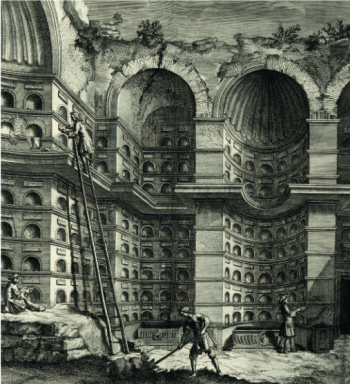
Francesco Bianchini, Camera Ed Inscrizioni Sepulcrali (1727)
L’ambition de ce colloque, dont le sujet se situe à la croisée de l’archéologie et de l’histoire de l’art, est d’analyser les formes de collaborations savantes entre les « antiquaires » et les artistes à l’époque moderne. De la Renaissance à la fin du XVIIIe siècle, la recherche savante sur les civilisations antiques à partir de leurs différents vestiges, écrits et matériels, fut aussi bien le fait de grands lettrés que celui de nombreux artistes et praticiens. Si les hommes de lettres eurent souvent besoin de dessinateurs pour les seconder dans leur travail de documentation des objets et des sites, ceux-ci se sont révélés à l’occasion d’excellents collaborateurs, voire même de fins connaisseurs de l’Antiquité classique qui ont contribué directement à la construction de la discipline.
Le colloque réunira des spécialistes de tous horizons – archéologues, historiens de l’art antique et moderne, historiens de l’archéologie – en vue d’une réflexion commune sur la recherche antiquaire, ses méthodes et ses enjeux, ainsi que sur la fécondité de ces études sur les plans artistique et culturel. Les travaux mettront l’accent sur les réseaux socio-professionnels, sur les pratiques de documentation et l’illustration des traités, ainsi que sur les relations entre savoir et invention, érudition antiquaire et création artistique.
J E U D I , 6 M A R S 2 0 1 4
9.15 Ouverture, Delphine Burlot (INHA) et Emmanuel Lurin (université Paris-Sorbonne)
Artistes et lettrés étudiant l’Antique : commandes, collaborations, rivalités scientifiques
Présidente de séance : Martine Denoyelle (INHA)
9.45 Alain Schnapp (université Paris 1 Panthéon-Sorbonne), Le scribe, l’artisan et le poète : aux origines du savoir antiquaire
10.30 Peter N. Miller (New York, Bard Graduate Center), Peiresc and Marseille: A ‘Knowledge Community’ in the Seventeenth-Century Mediterranean
11.15 Pause
11.45 Colin Debuiche (université Toulouse-Le Mirail), Les artifices du passé : Antiquité et mythes urbains de la Palladia Tolosa au XVIe siècle
12.30 Delphine Burlot, « La querelle des antiquaires et des graveurs n’est pas prête de finir ». Concurrence entre artistes et antiquaires dans la documentation et la restauration de l’Antique
13.15 Pause déjeuner
Les pratiques de documentation : reproductions, relevés, corpus documentaires et collections
Président de séance : Jean-Louis Ferrary (EPHE, IV e section)
14.45 Jean Guillemain (université Paris Descartes, bibliothèque H. Piéron), Les débuts de la numismatique grecque en France (Lyon, 1552)
15.30 Florian Stilp (université Paris Ouest Nanterre La Défense, labex « Les passés dans le présent »), À chacun son arc d’Orange. La vision variable d’un monument romain à l’époque moderne
16.15 Pause
16.45 Helen Whitehouse (University of Oxford, Oriental Institute), Records of Egyptian Antiquities in the ‘Paper Museum’ of Cassiano dal Pozzo
17.30 Pierre Gros (université de Provence, Académie des Inscriptions et Belles-Lettres), Le coeur antique du futur. Lectures palladiennes des vestiges des temples romains dans le dernier des Quattro Libri
18.15 Discussion générale
V E N D R E D I , 7 M A R S 2 0 1 4
Une démonstration par l’image : le discours antiquaire et son illustration scientifique
Président de séance : Philippe Sénéchal (INHA)
10.00 Emmanuel Lurin, L’antiquaire, l’artiste et le graveur (Rome, XVIe siècle) : autour des relevés « archéologiques » du Codex Orsini et des gravures d’antiquités de Jacob Bos
10.45 Frédérique Lemerle-Pauwels (CNRS, université François Rabelais, Tours), Représenter l’antique : architectes et antiquaires en France (XVIe–XVIIe siècles)
11.30 Pause
12.00 Carmelo Occhipinti (Università di Roma Tor Vergata), Mariette e Bouchardon. Ricerca antiquaria e storia artistica
12.45 Adriano Aymonino (University of Birmingham), Giovanni Pietro Bellori and Pietro Santi Bartoli’s Publications: Their Reception during the Eighteenth Century
13.30 Pause
Un laboratoire pour la création ? Érudition antiquaire et invention artistique
Président de séance : Claude Mignot (université Paris-Sorbonne)
15.00 Flaminia Bardati (Università di Roma La Sapienza), Bâtir à l’antique, sur l’antique, pour l’antique
15.45 Daniela Gallo (université Pierre Mendès-France Grenoble 2), Entre érudition et création artistique. Les objets antiques en marbre au xviiie siècle
16.30 Pause
17.00 Ingo Herklotz (Philipps-Universität Marburg), Visualizing the Catacombs: Between Legend and Scholarship in Early Modern Painting
17.45 Discussion générale
Renseignements: Elsa Nadjm (elsa.nadjm@inha.fr), Marine Acker (marine.acker@inha.fr)
Conference | Objects, Images, and Texts: Pope and Roubiliac
Objects, Images, and Texts: Pope, Roubiliac, and Representations of Authorship
Yale Center for British Art, 21–22 February 2014

Photographer unknown, William Kurtz Wimsatt, ca 1961,
© National Portrait Gallery, London
◊ ◊ ◊ ◊ ◊
This two-day international conference explores the relationship between authorship and the visual arts in the eighteenth century, focusing on the poet Alexander Pope. Building on the work of Yale scholar W. K. Wimsatt, an interdisciplinary panel of speakers will situate Pope’s portraits, both sculpted and painted, within the framework
of debates about his often ambiguous modes of authorial self-presentation involving the design of his printed texts as well as the complexities of the verse itself. The conference coincides with the Center’s exhibition Fame and Friendship: Pope, Roubiliac, and the Portrait Bust in Eighteenth-Century Britain, which focuses on a series of busts of Pope made by the French émigré sculptor Louis François Roubiliac. The conference is free and open to the public. Advance registration is recommended. Register online through February 20. On-site registration will be available at the event.
F R I D A Y , 2 1 F E B R U A R Y 2 0 1 4
10:00 Amy Meyers (YCBA), Welcome
10:15 Panel 1
Malcolm Baker (University of California, Riverside), Introduction to the Exhibition and Conference
Joseph Roach (Yale), Pope at Yale: The Intentional Fallacy and the Life of the Poet
12:00 Lunch Break
2:45 Panel 2
Session Chair: Gordon Turnbull (Yale)
Jill Campbell (Yale), ‘Give Me Back My Tears’: Monuments and Feeling in the Poetry of Pope
Greg Sullivan (Tate Britain), Roubiliac’s Biographers and his Place in Histories of British Sculpture
2:45 Break
3:15 Panel 3
Session Chair: Matthew Hargraves (YCBA)
Nigel Wood (Loughborough University), Pope and the Reading Public
Matthew Craske (Oxford Brookes), Roubiliac and the Business of Making Sculpture
5:00 Break
5:30 Keynote Lecture
Helen Deutsch (University of California, Los Angeles), ‘Ev’ry Coxcomb knows me by my Style’: Alexander Pope and the Art of Authorship
S A T U R D A Y , 2 2 F E B R U A R Y 2 0 1 4
10:00 Martina Droth (YCBA), Welcome
10:15 Panel 4
Session Chair: David Bromwich (Yale)
Janine Barchas (University of Texas at Austin), Counterfeit Authority: Frontispiece Portraits of Fictional Authors and Authors of Fiction
James Raven (University of Essex), Images of Authors Within Eighteenth-Century Libraries
12:00 Lunch Break
1:15 Breakout Sessions
Malcolm Baker (UCR), Martina Droth (YCBA), and Anne Gunnison (Yale University Art Gallery), Looking at Busts of Pope
Kathryn James (Beinecke Library) and Margaret Powell (Lewis Walpole Library), Reading Pope: Rare Books and Documents in the Yale Collections
2:30 Break
2:45 Panel 5
Session Chair: Langdon Hammer (Yale)
David Brewer (Ohio State University), Hanging Pope in Effigy
Richard Wendorf (American Museum in Britain), Classicizing Alexander Pope
Malcolm Baker (UCR), Confronting Pope’s Portraits
5:00 Closing Reception
Symposium | Millinery through Time
This in Williamsburg, just before ASECS. From the conference website:
Millinery through Time
Colonial Williamsburg, 16–19 March 2014
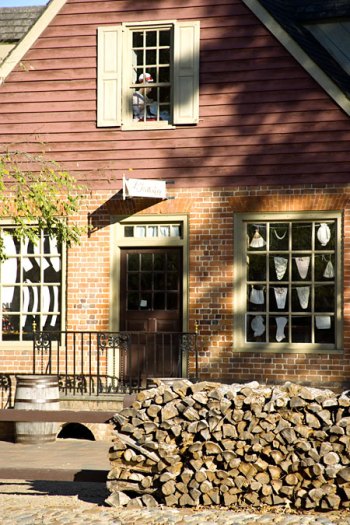 Colonial Williamsburg is pleased to celebrate the 60th anniversary of the opening of the Margaret Hunter Millinery Shop. For 60 years, the shop has interpreted the 18th-century business and craft of millinery with its ever-changing fashions. As fashion has evolved and changed with time, so has the trade. Millinery Through Time will explore the development of the trade from the 18th century, dealing with thousands of fashionable accessories, to the 21st century, specializing in a single fashionable item: hats.
This conference will present an understanding of the trade from a scholarly and a technical perspective through the collaboration of lectures, hands on workshops, and demonstrations. Join us as we step into the world of millinery, one of change, creativity, commerce, and fashion.
S U N D A Y , 1 6 M A R C H 2 0 1 4
5:00 Welcome, Jay Gaynor, director, Historic Trades, Colonial Williamsburg
• 60 Years at the Margaret Hunter, Janea Whitacre, mistress milliner and mantuamaker, Colonial Williamsburg
• The Margaret Hunter Shop in Media, Leslie Doiron Clark, associate producer, Productions, Publications, and Learning Ventures, Colonial Williamsburg
• Virtual Tour of the Margaret Hunter Shop: The 3D Virtual Reconstruction of the 18th-Century Interior, Peter Inker, Digital History Center, Colonial Williamsburg
• Collections for the Margaret Hunter Shop, Linda Baumgarten, curator, textiles and costumes, Colonial Williamsburg
6:00 Birthday Reception. Central Court. Guests are encouraged to wear their favorite costume. Prizes will be awarded.
M O N D A Y , 1 7 M A R C H 2 0 1 4
9:30 Welcome and announcement of prizes from the birthday reception.
9:45 The Milliner and Her Trade, Janea Whitacre, mistress milliner and mantuamaker, Colonial Williamsburg
10:30 Coffee
11:00 Monsieur Beaulard: The Man Who Dressed Marie-Antoinette, Kimberly Chrisman-Campbell, independent scholar, Glendale, California
11:25 ‘To set off every Female Perfection to the highest Advantage’: Milliners, Mantua-Makers, and Dressmakers in Popular Fiction, 1750–2012, Susan Holloway Scott, novelist and history blogger, Philadelphia
11:50 Cry Thief! 18th-Century Milliners and the World of Stolen Goods, Emma Cross, interpreter, Colonial Williamsburg
12:15 Lunch
12:45 Study drawers open in Textile Gallery, Linda Baumgarten, curator, textiles and costumes, and Kimberly Smith Ivey, curator, textiles and historic interiors, Colonial Williamsburg
1:45 ‘Just Imported…and to be Sold on Reasonable Terms by the Subscriber’: Visualizing 18th-Century Textiles through Primary Research, Angela Burnley, independent researcher and owner, Burnley & Trowbridge Co., Williamsburg
2:35 The Morning Ramble or the Milliner’s Shop, Sarah Woodyard, apprentice milliner and mantuamaker, Colonial Williamsburg
3:30 Afternoon refreshments
4:00 Inspired Globally But Created in Upstate New York: An Early 18th-Century Apron with Exotic Motifs, Mary D. Doering, independent scholar, collector, and guest curator, Falls Church, Virginia
4:25 A Mysterious Bit of Millinery: The Mask, Mark Hutter, journeyman tailor supervisor, Colonial Williamsburg, and Phillippe L. B. Halbert, Lois F. McNeil Fellow, Winterthur Program in American Material Culture, Winterthur Museum and the University of Delaware.
7:00 Play, The Milliners, with a question and answer session to follow the performance.
T U E S D A Y , 1 8 M A R C H 2 0 1 4
9:30 An American Identity: The Shoemaker’s Label in Revolutionary and Federal America, Meaghan Reddick, candidate for M.A. History of Decorative Arts, George Mason University, Fairfax, Virginia.
9:55 ‘Any thing elegant, in the form of a Turban’: Women’s Turbans in Fashion at the Turn of the 19th Century, Ann Buermann Wass, history/museum specialist, Maryland-National Capital Park and Planning Commission, Riverdale Park, Maryland
10:20 Coffee
10:50 Velvet and Silk Flowers for Millinery and Dressmaking, Mela Hoyt-Heydon, chairman, Theatre Arts Department, Fullerton College, Fullerton, California
11:40 ‘…what vulgar people calls a milliner’: How the Milliner Survived the Westward Expansion, Hat-Making, and French Lessons, Abby Cox, apprentice milliner and mantuamaker, Colonial Williamsburg
12:35 Lunch
1:05 Study drawers open in Textile Gallery, Linda Baumgarten, curator, textiles and costumes, and Kimberly Smith Ivey, curator, textiles and historic interiors, Colonial Williamsburg
2:00 Traffic Lights of Chic: American Millinery and American Style, 1937–1947, Nadine Stewart, adjunct professor, Montclair State University, Montclair, New Jersey
2:55 Shades of Grief: The Role of Millinery and Accessories as Indicators of Mourning in the 1860s, Samantha McCarty, Williamsburg
3:20 Ellen Carbery: Enterprising Milliner of Newfoundland, Cynthia Boyd, Ph.D. candidate, Department of Folklore, Memorial University of Newfoundland, St. John’s, Newfoundland and Labrador.
3:45 Afternoon refreshments
4:15 ‘Creative Abilities and Business Sense’: The Millinery Trade in Ontario, 1870–1930, Christina Bates
4:40 Millinery as a 21st-Century Occupation: A Current Example of a Career in Hat Making, Ignatius Creegan, Ignatius Hats, Petersburg, Virginia
W E D N E S D A Y , 1 9 M A R C H 2 0 1 4
An assortment of optional workshops are offered on Wednesday.
Symposium | In Circulation: John Singleton Copley and Benjamin West
In addition to the topic, the format of this symposium looks interesting on several counts: the webinar format, the time (Friday afternoon and evening with a light supper and drinks between presentations), and the trans-Atlantic component (which presumably explains the timing). In the digital age, it seems fair to ask what a symposium should look like. I’m glad to see experiments like this one. -CH
From The Paul Mellon Centre:
In Circulation: John Singleton Copley and Benjamin West in England, France, and America
The Paul Mellon Centre, London, 28 March 2014
 This symposium and webinar follows on from the international loan exhibition American Adversaries: West and Copley in a Transatlantic World, held at the Museum of Fine Arts Houston between 5 October 2013 and 20 January 2014.
It explores aspects of the work and careers of the American-born artists Benjamin West and John Singleton Copley, focussing in particular on the ways in which they engaged with the exhibition and print cultures of their day, particularly in Britain, but also in France and America. The paintings of both artists moved between and across very different spaces of display, and were increasingly geared to satisfying the demands of a growing exhibition-going public. Just as importantly, Copley and West’s paintings were regularly translated into graphic form. Engravings as well as exhibitions promoted their work to audiences in Britain, France and America, and helped give both artists an international reputation.
The symposium and webinar will investigate the ways in which these forms of display and dissemination shaped both artists’ practice and reputations across transnational visual cultures. This event will be filmed and live-streamed to a group of scholars, students and curators at the MFA in Houston, who will be invited to ask questions of the speakers. It will also be live-streamed online, enabling an international audience to watch and respond to proceedings as they take place in London and submit questions to the speakers via an interactive website. A full symposium programme, with details of papers and ticketing, is available at The Paul Mellon Centre’s website.
P R O G R A M M E
15.15 Mark Hallett (The Paul Mellon Centre), Introduction
15.30 Emily Neff and Kaylin Weber (The Museum of Fine Arts, Houston), Introduce video of American Adversaries
16.00 Tea
16.15 Jane Kamensky (Brandeis University), Copley’s Revolutions
17.00 Stephane Roy (Carleton University), West’s General Wolfe in Eighteenth-Century France
17.45 Drinks and Light Supper
18.45 Rosie Dias (University of Warwick), Copley, West, and John Boydell: New Mechanisms of Patronage in
Late Eighteenth-Century London
19.30 Kaylin Weber (The Museum of Fine Arts, Houston), Displaying History: West’s Gallery and the Great Room
20.15 Drinks
20.30 Sarah Monks (University of East Anglia), Out of Time, Out of Place: Copley’s Last Pictures
21.15 Wendy Bellion (University of Delaware), West and Shakespeare in Early Nineteenth-Century Philadelphia
22.00 Mark Hallett and Emily Neff, Concluding Remarks
At CAA 2014 | British Country Houses and Gardens
Historians of British Art
British Country Houses: Architecture, Collections, and Gardens
Thursday, 13 February, 12:30–2:00, Hilton Chicago, 3rd Floor, Williford A&B
As late as last December, I announced a Call for Papers for a session at this week’s conference of the College Art Association. As one of Thursday’s lunch panels, the session had already been reserved for the Historians of British Art, and in my announcement I referenced “a spirit of nimble experimentation.” Well I’m thrilled to have three promising papers, the abstracts of which are available below (they obviously won’t be available through CAA). For anyone in Chicago this week, please turn up. The session is intended to be a productive opportunity for feedback and discussion. And as a midday session, it is open to the public without the usual CAA membership or conference registration fees (it’s entirely free). For easier printing, a PDF file of the abstracts is also available here.
Many thanks,
Craig Hanson
◊ ◊ ◊ ◊ ◊
William L. Coleman (University of California, Berkeley), ‘Both instructive and pleasant’: The Country House Garden in Vitruvius Britannicus
The Scottish architect Colen Campbell is best known not for any of his buildings nor for the influential offices he held during his lifetime but for his collection of engraved views of British country houses: Vitruvius Britannicus, or the British Architect. This project, issued in three volumes from 1715 to 1725 with nearly 300 folio plates has been called “the most ambitious publication of engraved material yet attempted in Britain.”1
While the mission of Vitruvius Britannicus is clear enough—the advancement of Palladian architecture in Great Britain as an alternative to Roman ecclesiastical influence through a direct appeal to those in a position to commission new country houses—there are major differences between the contents of the volumes of the book. In contrast to the first two entries in the series, which consist exclusively of plans, elevations, and occasional sections of noteworthy buildings, the 1725 third volume of also includes birds-eye views and elaborate perspectives of country-house gardens. Here, for the first time in the book, Campbell shows detailed information about the form of the grounds of the country houses he celebrates, often to the detriment of the architectural representation that has been central until this point. The garden images have rarely been commented upon in the literature on Vitruvius Britannicus despite the fact that Campbell alerted his audience to the significance of this material in an advertisement for Volume III, in which he wrote “the Author has made a great Progress in a Third Volume containing the Geometrical Plans of the most considerable Gardens and Plantations with large Perspectives of the most Regular Buildings, in a Method intirely new, and both instructive and pleasant.”2 If these plates are not merely “pleasant” but “instructive,” in what do they instruct?
This paper will argue that Campbell’s garden views should be understood as integral to his overarching goal of reforming British taste, rather than as decorative adjuncts to it, and that these plates suggest a new way of understanding a period in garden history that has proven problematic in the past. Christopher Hussey and John Harris, among others, have recognized that many English gardens built from about 1715 to 1730 differ from the Anglo-Dutch style that came before in their gradual departure from bi-lateral symmetry and their embrace of elaborate, classicizing outbuildings to create interesting perspectives, but do not yet reject geometric construction in the way the better known work of Capability Brown would later in the century.3 Rather than treating the gardens Campbell describes and represents in his book as aberrant or merely transitional, it will be productive to consider how they relate to his architectural project. Just as Volumes I and II of Vitruvius Britannicus argue for a British Palladianism to counter perceived Catholic decadence, so does Volume III make a case for what can be called the Neopalladian garden. While damning others with faint praise, Campbell held up as exemplary gardens that, by means of their citations of Palladio in buildings and their allusions to laborless Arcadian bounty, constituted an alternate horticultural modernity.
1. E. Harris, “Vitruvius Britannicus before Colen Campbell,” The Burlington Magazine 128 (May 1986), p. 340..
2. Campbell, Vitruvius Britannicus II, p. 8.
3. C. Hussey, English Gardens and Landscapes: 1700–1750 (New York, 1967), p. 132; J. Harris, “The Artinatural Garden” in C. Hind ed. The Rococo in England: A Symposium (London, 1986), pp. 8–9.
◊ ◊ ◊ ◊ ◊
Jocelyn Anderson (Courtauld Institute of Art), From Stowe to Mount Edgcumbe: Touring Collections in Gardens
In the eighteenth and early nineteenth centuries, as country-house tourism became increasingly popular, guidebooks for specific houses and gardens were published. Indicative of houses having thoroughly established themselves as destinations for polite tourists, these guidebooks provide critical evidence as to how these sites were presented to and remade for visitors. Many guidebooks focus on the art collections of houses, cataloguing pictures and sculptures and explaining them for readers. Several guidebooks, however, describe gardens, and close examination of these texts sheds new light on the public significance of these places. While garden historians have usefully analysed these cultivated landscapes from the perspective of designers and owners, guidebooks demonstrate that tourists’ experiences of these places would often have been quite different. This paper explores the guidebooks for three gardens and considers the significance of how these texts describe and comment on these sites.
By the middle of the eighteenth century, Viscount Cobham’s gardens at Stowe (Buckinghamshire) spread over 200 acres and contained over forty temples. They were among the most famous in Britain, and they had become a popular tourist attraction, complete with an inn for tourists’ convenience. Stowe’s first guidebook was published in 1744, and over the following sixty years, over twenty editions appeared. The gardens at Hawkstone (Shropshire) were not as famous, but the estate also had an inn for visitors, and ten guidebooks to its grounds were published between 1766 and 1811. It was known for its rugged natural landscape, which included a sharp ridge of sandstone hills and a deep ravine, along with an exceptionally eccentric collection of ornamental features. In the former aspect it was similar to Mount Edgcumbe (Devon), whose coastal site had inspired a garden which incorporated panoramic views of the ocean and walks along cliffs. Mount Edgcumbe was celebrated in the later eighteenth century, but it wasn’t until the early nineteenth century that its first guidebooks were published.
What these three gardens have in common is the approach guidebook authors took when they described them for visitors. The first, and most prominent, device adopted was the circuit, which organized both the guidebook and the garden itself. The circuit was the itinerary tourists were meant to follow while visiting the garden, leading them through both locations in space and descriptions on the page (depending on the garden, it was not necessarily circular). The circuit in all three of these guidebooks is constructed by a progression of entries about specific temples and locations; these are, in effect, descriptions of gardens written as chains of descriptions about destinations within them. Within this structure, the guidebooks provide detailed entries about each place where visitors were expected to pause during their tour. Many of these entries are extraordinarily attentive to detail, supplying information about everything from the architect who designed a temple to what might be visible on the distant horizon. Through these guidebooks’ approach, visits to these gardens are constructed as collections of close examinations and responses, similar to those which might be had touring the art collection inside a country house.
◊ ◊ ◊ ◊ ◊
Laurel O. Peterson (Yale University), Art, War, and Politics in William Kent’s North Hall at Stowe
In the late 1720s, Richard Temple, viscount Cobham, commissioned William Kent to design and decorate the interior of his north entrance hall at Stowe House. Kent had established himself as a leading artist in Britain, and he created a room for Cobham in the latest fashion. While only the grisaille and gold ceiling remains of Kent’s scheme, it is the oldest surviving interior at Stowe. This paper considers Kent’s and Cobham’s intertwining artistic, social, and political aims in the decoration of the North Hall, and argues for an interpretation of this space as representative of a vital artistic culture found in the early eighteenth-century country house.
The North Hall celebrates Cobham’s military career. The central allegorical ceiling panel portrays the young Cobham receiving a sword from Mars, and commemorates the date in 1702 when he received his own army regiment from William III. Cobham rose through the ranks, eventually serving as a lieutenant general under John Churchill, first duke of Marlborough, in the War of Spanish Succession. Cobham’s military career enabled his political and social rise; he served in the ministries of George I and ultimately was elevated to a viscountcy in 1718. While the expression of Cobham’s Whig ideologies through garden architecture is well known, this paper draws attention to the interior as a central part of his project. By representing a moment that celebrates his connection to William III, Cobham chose to emphasize his commitment to the Glorious Revolution of 1688, a political statement that aligned with his Opposition Whig politics. Other parts of Kent’s original decorative scheme, such as Christophe Veyrier’s marble relief of the Family of Darius before Alexander (c. 1680), reinforced the military theme.
The North Hall—the point of entry for any guest to Stowe House—formed one part of a larger temporal and spatial viewing experience. This paper suggests ways in which Kent’s decoration worked in dialogue with other spaces and works of art in various media in the building, such as the set of the Art of War tapestries (ca. 1706–12), woven by Judocos de Vos after designs by Lambert de Hondt.
This paper not only explores how the North Hall was invested with political meaning, but also examines the stakes in play with this aesthetic project. Contextualizing this space within a larger continuum of other interiors highlights the specific aims of both Cobham and Kent. Blenheim, the preeminent contemporary military palace, built for and decorated in honor of the Duke of Marlborough, Cobham’s former commander, is a particularly salient comparison. In addition, examining Kent’s ceiling in relation to his work at Kensington Palace and at Houghton Hall, as well as in relation to continental models, situates the artist’s work both within ambitious and distinguished artistic traditions and on the forefront of innovative design. Artistic production and ambition within the country house must be understood as concomitant with developing political roles of the landed elite. This paper suggests how a space such as Stowe’s North Hall must be considered a key site of artistic production, part of a dynamic artistic culture thriving in early eighteenth-century country houses.
Spring 2014 at the Bard Graduate Center
Details for upcoming events are available at the BGC Calendar:
As part of the Bard Graduate Center’s commitment to making our innovative programming more widely available and so shaping the global discourse about the cultural history of the material world, we will be live-streaming our seminar series and symposia on the BGC’s channel. We look forward to seeing you on West 86th Street in New York City for these events; however, for those of you who can’t attend in person, we look forward to your watching us live online.
February 11, 6:00–7:30
Conservation Conversations
Francesca Brewer, “Material Matters: Early Scientific Inquiry in Archaeology and Art”
Laurent Olivier, “Henri Hubert Between Durkheim and Mauss: The Visual Reconstruction of Archaeological Time”
February 12, 6:00–7:30
William Stenhouse, “Conserving Relics of the Classical Past: Civic Bodies and the Preservation of Antiquities in the Renaissance”
February 19, 6:00–7:30
Lara Penin, “Design Futures: Service Design for Social Innovation”
February 25, 6:00–7:30
Birgitt Borkopp-Restle, “How To Do Things with Textiles: Marie Antoinette at the Courts of Vienna and Versailles”
March 5, 10:00–5:45
Symposium | “The Material Text in Pre-Modern and Early Modern Europe”
March 25, 6:00–7:30
Alexander Marr, “Early Modern Instrument Aesthetics”
April 1, 6:00–7:30
Max Tillmann, “Les derniers goûts de France: Elector Max Emanuel and French Decorative Arts about 1715″
April 3, 9:00–5:30
Symposium | “Material Reformations: Towards a Material Culture of Protestantism”
April 9, 6:00–7:30
Glenn Wharton, “The Painted King: Art, Activism, and Authenticity in Hawai’i”
April 11, 9:00–5:00
“Objects and Power: An Interdisciplinary Approach to Medieval Islamic Material Culture”
April 14, 1:30–5:00
Symposium | “Woven Worlds: The Social Lives of Andean Textiles”
April 23, 6:00–7:30
Nathan Schlanger, “Material Culture: The Concept and its Use in Historical Perspective”
April 24, 6:00–7:30
Conservation Conversations | Judith Olszowy-Schlanger & Michelle Chesner, “Case Study in Collaboration: Conserving Thousands of Lost Medieval Hebrew Manuscripts”
April 25, 9:00–5:00
Symposium | “Mapping New York”
April 29, 6:00–7:30
Ines Rotermund-Reynard, “Beads and Buttons from Briare: A Global Industrial Success Story from 19th-Century France”
May 9, 9:00–6:00
Symposium | Day 1: “History and Material Culture: World Perspectives
May 10, 9:00–6:00
Symposium | Day 2: “History and Material Culture: World Perspectives”
May 15, 6:00–7:30
Symposium Keynote: “Majolica: A World View”
May 16, 9:00–6:00
Symposium | “Majolica: A World View”
CAA 2014, Chicago
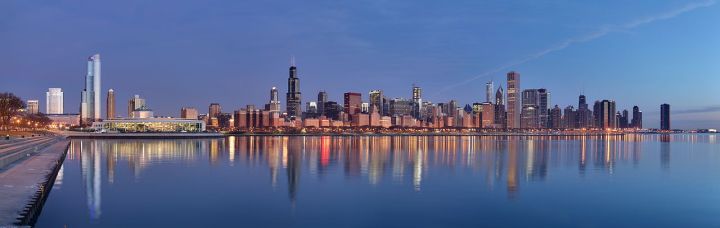
Photo by Daniel Schwen, 18 April 2009
(Wikimedia Commons)
◊ ◊ ◊ ◊ ◊
The 2014 College Art Association conference takes place at the Hilton, Chicago (720 S. Michigan Ave), February 12–15. HECAA will be represented by two panels on Saturday, chaired by Kristel Smentek and Kevin Chua. Other sessions that may be of interest for dixhuitièmistes are also listed. A full schedule of panels is available here»
H E C A A S E S S I O N S
Historians of Eighteenth-Century Art and Architecture
New Scholars Open Session: The Eighteenth Century, Global and Local
Saturday, 15 February, 12:30–2:00, Hilton Chicago, 2nd Floor, International South
Chair: Kristel Smentek, Massachusetts Institute of Technology
- The Threads that Bind: Luxury, Slavery, and the Circulation of South Asian Textiles between France and India, Liza L. Oliver, Northwestern University
- Objects of Terror: The Image and Spectacle of Punishment in Hogarth’s London, Meredith J. Gamer, Yale University
- Facing Age and Aging Faces: Marie-Thérèse Geoffrin and Her Pendule, Jessica Fripp, Parsons The New School for Design
◊ ◊ ◊ ◊ ◊
Historians of Eighteenth-Century Art and Architecture
After the Secular: Art and Religion in the Eighteenth Century
Saturday, 15 February, 2:30–5:00, Hilton Chicago, 3rd Floor, Williford A&B
Chair: Kevin M. Chua, Texas Tech University
- The Dôme des Invalides: Sublimity, Religious Rhetoric, and Aesthetic Experience in Early Eighteenth-Century France, Aaron Wile, Harvard University
- Theism and Secularization in James Barry’s Society of Arts Murals, Daniel R. Guernsey, Florida International University
- The Saving Heart-Knowledge, and the Soaring Airy Head-Knowledge: Quaker Aesthetics as an Agent of Cure in Lunatic Asylum Design, Ann-Marie Akehurst, University of York
- The Mother of Light in New Spain, Bernard J. Cesarone, University of Illinois at Urbana-Champaign
- Miracles in the Age of Reason, Hannah Williams, University of Oxford
◊ ◊ ◊ ◊ ◊
O T H E R S E S S I O N S R E L A T E D T O T H E 1 8 T H C E N T U R Y
Historians of British Art
Queer Gothic
Wednesday, 12 February, 9:30–12:00, Hilton Chicago, Lobby Level, Continental A
Chairs: Ayla Lepine, University of Nottingham; Matthew Mark Reeve, Queen’s University
- The Perverse Visibility of William Beckford, Dominic Janes, Birkbeck, University of London
- Neither Sorrow Nor Crying: Twentieth-Century Gothic Bodies and Heavenly Visions, Ayla Lepine, University of Nottingham
- Soi-disant Gothicisms: The Rejection of Gothic Hybridity in the Nineteenth Century, Sarah E. Thompson, Rochester Institute of Technology
- Medieval Monstrosity: Francis Bacon’s Flesh, Jongwoo Jeremy Kim, University of Louisville

◊ ◊ ◊ ◊ ◊
American Council for Southern Asian Art
Artistic Practices in the Long Eighteenth Century
Wednesday, 12 February, 12:30–2:00, Hilton Chicago, Lobby Level, Continental B
Chair: Yuthika Sharma, Goethe-Universität
- Copying Contexts: Picturing Places and Histories in Udaipur Court Painting and Picart’s Atlas Historique, Dipti Khera, New York University
- Forging New Identities: The Role of the Artist in Eighteenth-Century Northern India, Malini Roy, The British Library, London
- The Divine Surface: Thanjavur Painting, Seventeeth-Nineteenth Centuries, Caroline Duke, University of California, Berkeley
- Maratha Art and Moor’s Hindu Pantheon (1810), Holly Shaffer, Yale University
◊ ◊ ◊ ◊ ◊
The Erotic Gaze in Early Modern Europe
Thursday, 13 February, 9:30–12:00, Hilton Chicago, Lobby Level, Continental B
Chairs: Joe A. Thomas, Kennesaw State University; Elizabeth Pilliod, Rutgers University-Camden, The State University of New Jersey
- Devotion, Desire, and Difference: Images of Christ and of Susanna,Patricia L. Simons, University of Michigan
- Alchemy: The Erotic Science, M. E. Warlick, University of Denver
- Pleasure on Paper: Agostino Carracci’s Lascivie Prints and the Gaze that Met Them, Natalie Lussey, University of Edinburgh
- Disgust and Desire: Responses to Rembrandt’s Nudes, Stephanie S. Dickey, Queen’s University
- Doggie Style: Rococo Representations of Interspecies Sensuality and the Pursuit of Volupté, Jennifer D. Milam, University of Sydney
◊ ◊ ◊ ◊ ◊
Historians of British Art
British Country Houses: Architecture, Collections, and Gardens
Thursday, 13 February, 12:30–2:00, Hilton Chicago, 3rd Floor, Williford A&B
Chair: Craig Ashley Hanson, Calvin College
- ‘Both Instructive and Pleasant’: The Country House Garden in Vitruvius Britannicus, William Coleman, University of California, Berkeley
- From Stowe to Mount Edgcumbe: Touring Collections in Gardens, Jocelyn Anderson, Courtauld Institute of Art
- William Kent’s Decorative Scheme in Stowe’s North Hall (ca. 1728), Laurel Peterson, Yale University
◊ ◊ ◊ ◊ ◊
Historians of British Art
Business Meeting / Young Scholars Session
Thursday, February 13, 5:30–7:00, Hilton Chicago, 3rd Floor, Marquette Room
Moderated by Colette Crossman and then chaired by Jongwoo Jeremy Kim
- Modern Banditti: Colonial Masculine Artistic Identity and Topographical Photography in India, Nathaniel M. Stein, Brown University
- ‘Science is Measurement’: The Uneasy Evolutionism of Henry Stacy Marks, Caitlin Silberman, University of Wisconsin-Madison
- Placing Trust: Collaborators, Competitors, and the Business of Print Publishing in the 1770s, Amy Torbert, University of Delaware
◊ ◊ ◊ ◊ ◊
Publications Committee
The Art Bulletin’s Digital Future?
Thursday, 13 February, 5:30–7:00, Hilton Chicago, 2nd Floor, Grand Ballroom
Chair: David J. Getsy, School of the Art Institute of Chicago
- Thelma K. Thomas, Institute of Fine Arts, New York University
- Alexi Taylor, Scalar and New York University
- Tara McPherson, Scalar and University of Southern California
- Katherine Behar, Baruch College, City University of New York
- Kirk T. Ambrose, University of Colorado at Boulder
◊ ◊ ◊ ◊ ◊
National Endowment for the Arts
Friday, 14 February 2014, 7:30–9:00am, Hilton Chicago, Lobby Level, Continental A
Chair: Wendy Clark, Acting Director of Museums, Visual Arts, and Indemnity
Early risers’ (and Valentine’s Day) session to learn about funding of exhibitions, public art, conservation, artist residencies, commissions, and collection care available to non-profit organizations, universities, and units of local and state governments.
◊ ◊ ◊ ◊ ◊
The Early Modern Child in Art and History
Friday, 14 February, 9:30–12:00, Hilton Chicago, 3rd Floor, Astoria Room
Chair: Matthew Knox Averett, Creighton University
- The (Holy) Innocents: Visualizing the Foundling in Fifteenth-Century Florence, Diana Bullen Presciutti, College of Wooster
- Princely Portraits of Adolescence in the Court of Philip II in the Mid-Sixteenth Century, Lisa W. Tom, Brown University
- Little Idols and the Infant Jesus: The Sacred Rituals of a Royal Spanish Nun, Tanya J. Tiffany, University of Wisconsin-Milwaukee
- Dressing the Part: Picturing and Promoting the Early Modern Child, Parme P. Giuntini, Otis College of Art and Design
- New Parents of the New Child in Eighteenth-Century French Art, Suzanne Conway, Chestnut Hill College
◊ ◊ ◊ ◊ ◊
Digital Publishing in Art History: The Online Scholarly Catalogue Initiative
Friday, 14 February, 9:30–12:00, Hilton Chicago, Lobby Level, Continental C
Chair: Anne Collins Goodyear, Bowdoin College Museum of Art
- Overview of the Online Scholarly Catalogue Initiative, Anne L. Helmreich, Getty Foundation
- Dutch Paintings of the Seventeenth Century, Judith Metro and Jennifer Henel, National Gallery of Art
- Monet and Renoir at the Art Institute: Paintings and Drawings, Gloria L. Groom, The Art Institute of Chicago
- The Robert Rauschenberg Research Project, Sarah Roberts, San Francisco Museum of Modern Art
Discussant: Paul B. Jaskot, DePaul University
◊ ◊ ◊ ◊ ◊
Aspects of Vitruvius’s Reception: New Research in Architectural Practice and Theory in the Early Modern World
Friday, 14 February 2014, 2:30–5:00, Hilton Chicago, 3rd Floor, Astoria Room
Chairs: Victor Luis Deupi, New York Institute of Technology; Richard John, University of Miami
- Translating Vitruvius in the Quattrocento: Ancient Theory or Contemporary Practice?, Angeliki Pollali, DEREE-The American College of Greece
- Sundials and Water Organs: The Vitruvian Tradition in Italian Gardens, Natsumi Nonaka, University of Texas at Austin
- Vitruvius and Pious Learning, Susan Klaiber, Winterthur, Switzerland
- Vitruvius in Early Modern England: The Case of the Royal Society, 1660–1695, Matthew Walker, University of Oxford
- James Gibbs’s Rules for Drawing (1732) and Vitruvius’s Method for the Ionic Order, Richard John, University of Miami
◊ ◊ ◊ ◊ ◊
The Art of Display: Context and Meaning, 1700–1850
Friday, 14 February, 2:30–5:00, Hilton Chicago, 8th Floor, Lake Huron
Chair: Christina R. Ferando, Harvard University
- A Roman Venus in the Tsar’s Baroque Garden: Orthodox Blasphemy, Soviet Scandal, Margaret Samu, Yeshiva University Stern College
- Duobaoge: Artful Displays in Eighteenth-Century Qing China, Eleanor Hyun, University of Chicago
- Unconventional Displays and Unacquainted Spectators: The Impact of John Martin’s Eccentric Exhibitionary Tactics, Chris Coltrin, Shepherd University
- The Empire at Home: Displaying the Locker Collection at Greenwich Hospital, 1830–1843, Catherine Roach, Viriginia Commonwealth University
- Corot in Situ: The Studio as Exhibition Space, Heather A. McPherson, University of Alabama at Birmingham
Conference | Culture Clash? Contemporary Arts in Historic Contexts
From the Royal Museums Greenwich:
Culture Clash? Contemporary Arts in Historic Contexts
Royal Museums Greenwich, London, 14 February 2014

Yinka Shonibare MBE, Cheeky Little Astronomer (2013) in Flamsteed House. Commissioned by National Maritime Museum, Greenwich, London.
◊ ◊ ◊ ◊ ◊
In recent years it has become increasingly popular for museums and historic buildings to invite living artists to respond to their buildings or collections by curating, creating or performing on site. What has been the impact of this popular collaborative trend for artists, museums and their audiences? To coincide with the latest in a series of contemporary interventions, Yinka Shonibare MBE at Greenwich, Royal Museums Greenwich is organising a one-day conference to explore the role of contemporary art outside the white cube. Conference fee: £50 (concessionary rate £40). Booking form is available here or call 020 8312 6716.
◊ ◊ ◊ ◊ ◊
P R O G R A M M E

Yinka Shonibare MBE, Nelson’s Jacket, 2011.
9.00 Registration and refreshments
9.50 Melanie Vandenbrouck (Royal Museums Greenwich), Welcome and introduction
10.00 Session 1: Approaches and challenges
• Helen Hillyard (National Gallery), New Visions of the Sea: Assessing the legacy of contemporary art at the National Maritime Museum, 1999–2009
• Julien Parsons and Martin Thomas (Royal Albert Memorial Museum, Exeter), The challenges faced by local authority-managed museums and settings
• Antoinette Maget Dominicé (University of Lucerne), Contemporary arts, historic contexts and the law
11.30 Coffee and tea
12.00 Session 2: Interpreting and animating sites and collections
• Bergit Arends (independent curator), Talking Back: Artists working with natural history collections from Australia, China and India
• Nick Cass (University of Leeds), The Haunting of a Shrine: Contemporary art at the Brontë Parsonage Museum
13.00 Lunch, with an opportunity to visit Flamsteed House at the Royal Observatory to see the Cheeky Little Astronomer by Yinka Shonibare MBE
14.30 Curator-led tour of Yinka Shonibare MBE at Greenwich in the Queen’s House
15.30 Coffee and tea
16.00 Session 3: Collaboration, dialogue and (mis)understanding
• Melissa Hamnett (V&A), Disturbing the comfortable
• Helen Shaw (University of York), How do we see each other? Dialogue and exchange in Native American curatorial methodologies
• Jonathan Carson (Carson & Miller) and Rosie Miller (University of Salford), Playing with the past
17.30 Drinks reception
Conference | Hanover and England: German and British Garden Culture
From the symposium programme:
Hanover and England: A Garden and Personal Union?
German and British Garden Culture between 1714 and Today
Leibniz Universität Hannover, 26–27 February 2014
Registration due by 14 February 2014
When George I, Elector of Hanover, was enthroned in England in 1714 he established a personal union that existed until 1837 leaving many cultural and political marks. Its 300th anniversary will be celebrated in the conference Hanover and England: a garden and personal union? German and British garden culture between 1714 and today. The symposium will not only focus on questions of garden history but also consider furthermore the contemporary background on which ideas on art, agriculture, commerce, technology, literature and politics were
exchanged.
In view of the encyclopaedic interest of the late 18th century, it is self-evident to invite several academic disciplines to describe and to discuss the cultural transfer between Great Britain and Hanover. The transfer of horticultural and artistic ideas very often flourished in the 19th century at different places. This gives reason to focus the conference on two key parts: the Hanoverian-British exchange between 1714 and 1837 (the period of the actual personal union) and the Anglo-German relations that open perspectives even into the present age.
In cooperation with the Technische Universität Dresden and funded by Niedersächsisches Ministerium für Wissenschaft und Kultur. The symposium will be conducted in English. Registration information is available online.
◊ ◊ ◊ ◊ ◊
W E D N E S D A Y , 2 6 F E B R U A R Y 2 0 1 4
Hanover and England: The Period of the Personal Union, 1714–1837
Welcome and Introduction
10.00 Klaus Hulek (Vice-President for Research, Leibniz Universität Hannover)
Simon McDonald (British Ambassador to Germany)
Stefan Schostok (Lord Mayor of Hannover)
Annette Schwandner (Ministry of Science and Culture, Lower Saxony)
10.30 Marcus Köhler (Hochschule Neubrandenburg, TU Dresden) and Joachim Wolschke-Bulmahn (Leibniz Universität Hannover)
I. Historical Introduction
11.00 Arndt Reitemeier (Universität Göttingen, Institut für Historische Landesforschung), “The personal union”
II. Arts, Architecture and Environment
11.30 Wolf Burchard (Royal Collection), “Art in Britain during the reign of George I and George II”
12.00 David Jacques (Stoke-on-Trent), “The Early Georgians and the controversy of garden styles”
III. Agricultural Economy and Landscape Design
12.30 Hansjörg Küster (Leibniz Universität Hannover), “Reform in the time of the personal union”
13.00 Discussion
13.15 Lunch break
IV. Botany
14.15 Sophie von Schwerin (Hochschule für Technik Rapperswil), “For pleasure and science: On the connection between the Royal Botanic Gardens, Kew and the Berggarten in Herrenhausen”
14.45 Clarissa Campbell Orr (Anglia Ruskin University), “Mary Delany and Queen Charlotte: The botanizing court”
15.15 John R. Edmondson (Hon. Research Associate, Royal Botanic Gardens, Kew), “Foreign herbs surpriz’d in English ground: The life and work of Georg D. Ehret (1708–1770)”
V. Water Art / Technology
15.45 Bernd Adam (Hannover), “The Great Fountain and English innovations in Hanover”
16.15 Discussion
16.30 Coffee Break
VI. Iconography and Garden Art
17.00 Michael Niedermeier (Berlin-Brandenburgische Akademie der Wissenschaften), “The German Kinship: Politics and Dynasty in the early ‘English’ garden”
17.30 Carsten Neumann (Ernst-Moritz-Arndt-Universität Greifswald), “The house Bothmer in Klütz: An English-Dutch manor in Mecklenburg”
18.00 Discussion
18.15 Break
19.00 Evening Lecture, in cooperation with the German Association for Garden Art and Landscape Culture (Deutsche Gesellschaft für Gartenkunst und Landschaftskultur, DGGL)
James Hitchmough (University of Sheffield), “Landscape Architecture in early C21st Britain: Issues and challenges”
◊ ◊ ◊ ◊ ◊
T H U R S D A Y , 2 7 F E B R U A R Y 2 0 1 4
Germany and England: Reflexion and Reception from 1837 until Today
I. Herrenhausen, Kensington and Hampton Court: History and Maintenance
9.00 Guided tour through the Herrenhausen Gardens by Ronald Clark and staff members
11.15 Coffee Break
II. Garden Preservation
11.45 Todd Longstaffe-Gowan (tlg-Landscape London), “The unaffected Englishness of Queen Caroline’s gardens at Kensington Palace”
12.15 Jonathan Finch (University of York), “Hunting and the Georgian Landscape: Exercising privilege”
III. Reception of Gardens
12.45 Gert Gröning (Universität der Künste Berlin), “Bio-aesthetic planning: A conjecture about an imperialistic garden cultural relation between the German Empire and independant India via the English Empire”
13.15 Discussion
13.30 Lunch Break
IV. Literature and Garden Travel
14.30 Sigrid Thielking (Leibniz Universität Hannover), “On the construct ‘English Gardens’: Perception and myth within garden literature”
15.00 Joachim Wolschke-Bulmahn (Leibniz Universität Hannover), “Travels and knowledge: German apprenticeship in English gardens and the example of Hans Jancke”
V. Agricultural Economy und Landscape Design
15.30 Hubertus Fischer (Leibniz Universität Hannover), “House Söder as ornamental farm”
16.00 Discussion
VI. Closing Remarks
Joachim Wolschke-Bulmahn (Leibniz Universität Hannover)
Marcus Köhler (Hochschule Neubrandenburg, TU Dresden)
Conference | The Production of Ornament
From the conference website:
The Production of Ornament: Reassessing the Decorative in History and Practice
University of Leeds, 21-22 March 2014
Registration due by 28 February 2014
The descriptive terms ‘decorative’ and ‘ornamental’ are in many ways synonymous with superfluity and excess; they refer to things or modalities that are ‘supplementary’ or ‘marginal’ by their very nature. In the West, such qualitative associations in made objects intersect with long-standing and inter-related philosophical oppositions between ‘form’ and ‘matter’, ‘body’ and ‘surface’, the ‘proper’ and the ‘cosmetic’. Accordingly, this has weighed both on determinations of value in artistic media, and on the inflexions of related histories – particularly histories of ‘non-Western’ art, design and culture, where a wide range of decorative traditions are deemed unworthy of critical attention.
Yet such frameworks are no more historically stable than they are culturally universal. To take one very clear and ‘central’ counter-example, decoration in some strands of Renaissance architectural theory (Filarete, Alberti) emerged as a rigorous codification of meaning, as an essentially functional (political) language. In many ways the history of ornament may itself be seen as a process of marginalisation of such ways of thinking, and the separation of ornament from any form of social practice.
This two-day conference seeks to explore the various ways in which ornament might be regarded as itself productive of its objects and sites. How might the technologies, techniques, and materials of ornament be related to the conception and transformation of modes of object-making? How might ornament be understood to inform its objects, disrupting the spatial categories of ‘surface’ and ‘structure’, and the temporal models in which ornament ‘follows’ making? What are the relations between ornament and representation, and what is at stake in the conventional oppositions between these categories? What are the roles of ornament in larger dynamics of copying, hybridisation and appropriation between things? In what ways have practices and thinking on ornament staged cultural encounters, and engendered larger epistemological and social models?
Tickets cost £15/£8, and include lunches and refreshments. To book a place email Dr Richard Checketts and Dr Lara Eggleton at production.of.ornament@gmail.com by Friday the 28th of February.
F R I D A Y , 2 1 M A R C H 2 0 1 4
10:00 Coffee/tea and registration
10:45 Richard Checketts and Lara Eggleton (University of Leeds), Welcome and Introduction
11:00 Emma Sidgwick (University of Leuven), ‘Late Antique Strigillation: The Abstract Iconography and Embodied Mediation of a Holy Productive Power’
11:40 Catherine E. Karkov (University of Leeds), ‘Entanglement, Enchantment, Stone: The Materiality of Ornament in Tenth-Century Leeds’
12:20 Carol Bier (Graduate Theological Union, Berkeley / The Textile Museum, Washington D.C.), ‘Is Ornament Ornamental? Geometry Made Manifest in Islamic Architecture’
13:00 Lunch
14:30 Soersha Dyon (Independent Scholar), ‘Unravelling the Arabesque’
15:10 Jason Nguyen (Harvard University/ Institut national d’histoire de l’art, Paris), ‘Communauté ornament: Law and Labour in Late Seventeenth-Century Paris’
15:50 Coffee and tea
16:30 Keynote 1, Alina Payne (Harvard University)
S A T U R D A Y , 2 2 M A R C H 2 0 1 4
10:00 Keynote 2, Susanne Kuechler (UCL), ‘The Quest for Affinity: The Ornament in Perspective’
11:15 Coffee and tea
11:30 Todd P. Olson (University of California, Berkeley), ‘Sticky Figures: Reconciling Pattern and Mimesis in Early Modern Prints’
12:10 Elizabeth Athens (Yale University), ‘Monstrosity, Ornament, Ecology: William Hogarth’s Natural Knowledge’
12:50 Frances S. Connelly (University of Missouri-Kansas City), ‘Rogue Ornament or Poetic Monster: Giambattista Vico and the Ornamental Grotesque’
1:30 Lunch
2:30 Sabrina Rahman (Northumbria University), ‘The Politics of Ornament: Historiographical and Ethnological Practices of the Austrian Werkbund’
3:10 Mark Crinson (University of Manchester), ‘The Ornamented Ceiling in New Brutalism’
3:50 Closing remarks and discussion
5:00 Drinks reception










leave a comment