Symposium | Piranesi and Antiquarian Knowledge
From ArtHist:
Piranesi und die Vermittlung antiquarischen Wissens im 18. Jahrhundert
Universität zu Köln, 23–24 January 2014

Giovanni Battista Piranesi, Temple of Coughing
(Entrance Hall of an Antique Villa), ca. 1763, etching
(Universität zu Köln, Universitätsarchiv, Inv. 700/14)
Wissen und Vorstellungen über die Antike sind in der Frühen Neuzeit in vielen Medien und Formaten vermittelt worden. Dazu zählen nicht nur die gelehrten antiquarischen Werke, sondern ebenso Gemälde und Opern mit antiken Themen, künstlich angelegte Ruinen und Landschaften oder systematisch angelegte Sammlungen von Kopien oder Originalen der bildenden Kunst.
Anlässlich der Ausstellung Piranesis Antike – Befund und Polemik im Wallraf-Richartz-Museum wird sich der Workshop mit der Frage beschäftigen, wie antiquarisches Wissen in der zweiten Hälfte des 18. Jhs. in den verschiedenen Gattungen und Medien über den Kreis der Gelehrten hinaus aufgenommen und vermittelt worden ist, z.B. durch die Aufnahme mythologischer oder historischer Themen. Dabei soll ein möglichst breites Spektrum an Gattungen vorgestellt werden. Zu untersuchen ist etwa, woher das Wissen über die Antike gewonnen wurde, für welches Publikum es gedacht war und wie es nach den Erfordernissen der jeweiligen Gattung umgeformt wurde.
◊ ◊ ◊ ◊ ◊
D O N N E R S T A G , 2 3 J A N U A R
Abendvortrag
18.00 Valentin Kockel (Augsburg), Ansicht – Plan – Modell. Die Visualisierung antiker Ruinen im 18. Jahrhundert
F R E I T A G , 2 4 J A N U A R
9.00 Dietrich Boschung (Köln) Begrüßung
9.15 Anne-Marie Leander Touati (Stockholm/Lund), Between vision and business. Choice pieces from the Piranesi collection in Stockholm
10.00 Dagmar Grassinger (Köln), Roms Größe wiederherstellen – Piranesis »Vasi antichi«
10.45 Kaffeepause
11.15 Alain Schnapp (Paris), Piranesi in der Zeit der lebenden Ruinen: Historische und künstlerische Ruinen
12.00 Mittagspause
13.30 Daniel Graepler (Göttingen), Zwischen antiquarischer Gelehrsamkeit und künstlerischer Praxis: Philipp Daniel Lipperts Daktyliothek
14.15 Jörn Lang (Leipzig), Wie Wissen Schönes schafft: Rezeption und Umformung antiquarischer Gelehrsamkeit in klassizistischem Wanddekor
15.00 Kaffeepause
15.30 Xenia Ressos (Innsbruck), Die Antike in Scherben – Antikenrezeption im Medium Porzellan
16.15 Abschlussdiskussion
Ort: Internationales Kolleg Morphomata, Universität zu Köln, Weyertal 59 (Rückgebäude: 3. Stock), 50937 Köln
Konzept: Dietrich Boschung
Kontakt: Semra Mägele, smaegele@uni-koeln.de
Conference | Aesthetic Enlightenments: Cultures of Natural Knowledge
From Birkbeck:
Aesthetic Enlightenments: Cultures of Natural Knowledge
Huntington Library, San Marino, 10–11 January 2014
Registration due by 10 January 2014
This two-day conference will examine the relationship between the aesthetic production and social circulation of knowledge about the natural world in the eighteenth century. It aims to connect literary, visual and discursive forms of analysis with approaches current within social history, in order to interrogate the relationship between social participation in science and the aesthetic and cultural forms of its making.
F R I D A Y , 1 0 J A N U A R Y 2 0 1 4
8:30 Registration and coffee
9:30 Welcome: Steve Hindle (The Huntington)
Remarks: Sarah Easterby-Smith (University of St. Andrews) and Emily Senior (Birkbeck, University of London)
10:00 Session 1: Knowledge Work and Circulation
Moderator: Margaret Jacob (University of California, Los Angeles)
• Londa Schiebinger (Stanford University), “The Atlantic World Medical Complex”
• Noah Heringman (University of Missouri), “Knowledge Work, or, Sciences from the Middle”
12:00 Lunch
1:00 Session 2: Hybrid Forms of Knowledge
Moderator: Lyle Massey (University of California, Irvine)
• Daniela Bleichmar (University of Southern California), “Chronicles without Words: The Study of Mexican Codices and Amerindian Knowledge in the Eighteenth Century”
• Jill H. Casid (University of Wisconsin, Madison), “Satyrosity”
3:00 Break
3:15 Session 3: Inscription, Translation, and Erasure
Moderator: Sarah Kareem (University of California, Los Angeles)
• Alan Bewell (University of Toronto), “Natures Lost in Translation”
• Matthew Daniel Eddy (Durham University), “How to Keep a Notebook: Inscription as a Visual Knowledge-Making Process for Early Modern Students”
S A T U R D A Y , 1 1 J A N U A R Y 2 0 1 4
9:00 Registration and coffee
9:30 Session 4: The Epistemology of Feeling
Moderator: Anne Mellor (University of California, Los Angeles)
• Jonathan Lamb (Vanderbilt University), “Blushing and Tattooing”
• Alan Richardson (Boston College), “Empathy for the Devil: From Mirror Neurons to Sympathy Theory to Shelley’s The Cenci”
11:30 Lunch
12:30 Session 5: Scholars and Communities
Moderator: Alexander Wragge-Morley (University of Oxford)
• Deirdre Coleman (University of Melbourne), “Henry Smeathman and the Cultures of Natural Knowledge”
• Dena Goodman (University of Michigan), “Collective Identity, Natural History, and Public Responsibility: Augustin-François Silvestre’s Eulogies for the French Society of Agriculture, 1801–1841”
2:30 Break
2:45 Session 6: Public Science, Education, and Professionalization
Moderator: Devin Griffiths (University of Southern California)
• Dahlia Porter (University of North Texas), “Anatomical Inventories, Medical Aesthetics: Body Parts and the Life of Things”
• Jan Golinski (University of New Hampshire), “Sublime Astronomy at the End of the Enlightenment: Adam Walker and the Eidouranion”
For registration, please email: researchconference@huntington.org
Study Day | Jean-Baptiste Oudry
From the programme:
Revoir Oudry: Pratiques, Discours et Ornement
Institut national d’histoire de l’art, Paris, 18 January 2014
 Cette journée d’études propose de jeter un regard oblique sur Jean-Baptiste Oudry (1686–1755) à travers ses conférences, ses rapports à l’ornement et la circulation de ses motifs, touchant ainsi aux questions de répétition et d’autorité. De ses conférences à l’Académie à son rôle de directeur de la manufacture de Beauvais et d’inspecteur de celle des Gobelins, des cours de dessins qu’il donne au prince Frédéric à sa réapparition dans l’art contemporain, l’œuvre et la fortune critique d’Oudry permettent de réfléchir aux rapports entre peinture et ornement dans l’art français du xviiie siècle. Plus largement, c’est la présence lacunaire d’Oudry dans les discours de l’histoire de l’art qui sera interrogée en ce qu’elle peut révéler des méthodes et de l’état de la discipline. En effet, en dépit d’un œuvre foisonnant et d’une carrière académique prestigieuse, Oudry n’a pas reçu l’attention muséographique et critique continue dont bénéficient Watteau, Boucher, Chardin ou Fragonard, et n’a pas bénéficié du renouveau des études sur l’art rococo dans le monde anglo-saxon. Les chercheurs européens et nord-américains invités proposent donc, au-delà des canons de sa peinture animalière, de revoir Oudry dans les marges de la discipline.
Journée d’études organisée : Michaël Decrossas (INHA), Catherine Girard (Harvard University/INHA) et David Pullins (Harvard University/CASVA)
Contacts : michael.decrossas@inha.fr | catherine.girard@yahoo.com | pullins@fas.harvard.edu
Jean-Baptiste Oudry, Quizzical Bird, xviiie siècle, Harvard Art Museums/Fogg Museum
◊ ◊ ◊ ◊ ◊
S A M E D I , 1 8 J A N V I E R 2 0 1 4
8.30 Accueil
9.00 Ouverture : Michaël Decrossas (INHA), Catherine Girard (Harvard University/INHA) et David Pullins (Harvard University/CASVA)
9.20 Introduction : Hal Opperman (University of Washington School of Art)
Session I – Discours
9.50 Présidence de séance et intervention liminaire : Christian Michel (Université de Lausanne)
10.10 René Démoris (Université Sorbonne Nouvelle – Paris 3), Situer Oudry dans la réflexion sur la peinture
10.40 Aaron Wile (Harvard University/Centre allemand d’histoire de l’art, Paris), Oudry, ou la couleur à l’œuvre
11.10 Discussion
11.20 Pause
Session II – Ornement
11.30 Présidence de séance et intervention liminaire : Katie Scott (Courtauld Institute of Art, Londres)
11.50 Michaël Decrossas, Pourquoi classer les planches d’Oudry dans les gravures d’ornements?
12.20 Valentine Toutain-Quittelier (Université Paris Sorbonne/Centre allemand d’histoire de l’art, Paris), Oudry et l’imaginaire vénitien : étude sur un succès de l’ornement sous la Régence
12.50 Discussion
13.00 Déjeuner
Session III – Arts décoratifs
14.40 Présidence de séance et intervention liminaire : Vincent Droguet (Château de Fontainebleau)
15.00 Christophe Huchet de Quénetain (Université Paris Sorbonne), L’influence de Jean-Baptiste Oudry, « peintre de chasses », sur les Arts décoratifs français du xviiie siècle
15.30 David Pullins, Drawing into and out of media in Jean-Baptiste Oudry’s oeuvre
16.00 Discussion
16.10 Pause
Session IV – Répétition et circulation
16.20 Présidence de séance et intervention liminaire : Ewa Lajer-Burcharth (Harvard University)
16.40 Claudia Schönfeld (St Georgen, Bade-Wurtemberg, collection Grässlin), Pratiques d’enseignement et réception d’Oudry à la cour de Mecklembourg
17.10 Catherine Girard, Atrophies masculines. Répétitions de la commande royale des « bois bizarres », de Louis XV à nos jours
17.40 Discussion et conclusion
Study Day | Joseph Wright of Derby: Bath and Beyond
From the study day programme:
Joseph Wright of Derby: Bath and Beyond
The Holburne Museum, Bath, 24 February 2014
This event will bring together a variety of stimulating speakers from different disciplines to examine in greater
depth Wright’s little-known Bath period and its contexts. The morning session will explore the cultural life of Bath
in the 1770s through recent historical research and ask whether Wright’s place in this complex and creative
society has been misunderstood. In the afternoon the focus will turn to other places: Derbyshire, Liverpool, the
London exhibition galleries and the places of Wright’s literary imagination, and their influence on the artist’s
life and work.
The study day accompanies the major new exhibition Joseph Wright of Derby: Bath and Beyond (25 January 5
May 2014). It has been made possible by a generous grant from the Paul Mellon Centre for Studies in British
Art. The exhibition is sponsored by Lowell Libson Ltd. Price: £45 (Concessions £40, Students £15), to include morning coffee, afternoon tea and a ticket for the exhibition.
Credit card bookings may be made by calling Spencer Hancock at the Holburne on 01225 388560, email
s.hancock@holburne.org, or in person at the Museum’s information desk. Or send a cheque made payable to “The Holburne Museum” to Spencer Hancock, Visitor Services Manager, the Holburne Museum, Great Pulteney Street, Bath BA2 4DB. We can also offer a packed lunch for £6.15. Please purchase when you book. When booking, please supply your name and address so that your tickets can be posted to you.
M O N D A Y , 2 4 F E B R U A R Y 2 0 1 4
9.00 Registration
9.30 Welcome, Alexander Sturgis, Director, Holburne Museum; and introduction, Adrian Tinniswood OBE, Trustee, the Holburne Museum
9.45 Georgian Bath: Images and Realities, Peter Borsay
Session I: Joseph Wright’s Bath
10.30 Toyshops and Tradesmen in Bath, Vanessa Brett
11.00 Coffee
11.30 Anna Miller, Catharine Macaulay and Agnes Witts: Bath hostesses, diarists and travellers, Elaine Chalus
12.00 Henry Sandford’s commonplace books, Susan Blundell
12.25 Wright’s working practices in Bath, Rica Jones
12.50 Questions
1.00 Lunch
2.30 Joseph Wright ‘of Bath’?, Amina Wright
Session II: Joseph Wright beyond Bath
3.15 Joseph Wright and Derby, Stephen Daniels and Alice Insley
3.45 Joseph Wright and Liverpool, Alex Kidson
4.10 Tea
4.50 Wright’s Exhibitions, John Bonehill
5.15 Questions
Conference | Persistent Spaces: 18th- and 19th-Century Cities
From the conference website:
Persistent Spaces: Politics, Aesthetics and Topography
in the Eighteenth- and Nineteenth-Century City
Université Paris Diderot, 12–13 December 2013
Keynote speakers: Lynda Nead (Birkbeck College) and Stéphane Van Damme (Sciences Po Paris)
The aim of this two-day postgraduate conference is to bring together young researchers to explore the city and its ideologies from a fully interdisciplinary perspective. We would like to combine approaches from the fields of literature and the arts, sociology, philosophy, law, science and engineering in order to create a dialogue between disciplines and methodologies. This conference would also establish a dialogue between the eighteenth and the nineteenth centuries. We will seek to highlight the individual specificities of these two periods, but also to understand the echoes, continuities and breaks between them. From the Enlightenment to the late nineteenth century and before urbanism was fully established as a discipline, the city was constantly being configured and reconfigured by the joint influences of architects, civil engineers, political organizations, associations and the informal “practices” of inhabitants. Writers and artists also played a major part in this process, both picking up on these developments and changing them through the aesthetics they deployed. We would like to study this topography of struggle. The conference will shed light on the city as a site of conflicting and interpenetrating layers, changing yet also persisting through time and space, and continually shaped by tensions between authority and resistance.
T H U R S D A Y , 1 2 D E C E M B E R
9.00 Registration, welcome, plenary address by Sara Thornton, Professor of Nineteenth-Century English Literature and Cultural Studies, Université Paris Diderot
9.30 Panel 1: Urbanism and urban planning
Chair: Allan Potofsky, Professor of Eighteenth-Century History, Université Paris Diderot
• Simona Gîrleanu (Université de Marne-la-Vallée), ‘Capitals of the Enlightenment: London and Paris Improved’
• Yvonne Rickert (Philipps University of Marburg), ‘The Parisian “Place Louis XV”: The Effect of a Literary Clash on the Architectural Design’
10.30 Tea
11.00 Panel 2: Urban Experiences of poverty and pauperism
Chair: Ariane Fennetaux, Assistant Professor of Eighteenth-Century Cultural Studies, Université Paris Diderot
• Oliver Betts (University of York), ‘Disorderly Spaces: Homes in the Slums of London and Paris’
• George Currie (Queen Mary University of London), ‘Alexis de Tocqueville, Thomas Carlyle and Urban Pauperism’
12.00 Lunch
14.00 Panel 3: Instability of space, instability of self
Chair: Estelle Murail, Lecturer in Nineteenth-Century British Literature and Cultural Studies, Université Paris-Diderot
• Alexandra Logvinova (European Humanities University), ‘The Structure of Urban Daily Life in the Nineteenth Century as the Basis of Subject’s Anxiety’
• Adrian Versteegh (New York University), ‘“Cycle in Epicycle, Orb in Orb”: Navigating the Thresholds, Passages and Nested Interiors of Nineteenth-Century Urban Literature’
15.00 Tea
15.30 Panel 4: Fragmented spaces and writing
Chair: Lynda Nead, Pevsner Professor of History of Art at Birkbeck, University of London
• Alison Annunziata (University of Southern California), ‘Urban De-Enlightenment: A Russian’s Dark Journey through Paris and London at the Start of the French Revolution’
• Ushashi Dasgupta (St John’s College, University of Oxford), ‘“Is this an Hotel? Are There Thieves in the House?”: Dickens, Collins, and the Spatial Contexts of Crime’
• Robert Yeates (University of Exeter), ‘The Destruction of the City in Early Science Fiction’
17.00 Keynote address
Stéphane Van Damme, Professor of History of Science, European University Institute in Florence, ‘Archaeology of Modernity: Making Metropolitan Past Tangible and Persistent: Paris, London, New York’
F R I D A Y , 1 3 D E C E M B E R
9.30 Ariane Fennetaux (Université Paris Diderot), ‘Materializing History: Plebeian Women’s Pockets in Eighteenth- and Nineteenth-Century London’
10.30 Tea
11.00 Panel 5: Disorientating the Orient
Chair: Colin Jones, Professor of Eighteenth-Century French History, Queen Mary College, London, Fellow of the British Academy
• Michael Talbot (University of St Andrews), ‘Shifting Centres: The Political and Topographical Transformations of Ottoman Haifa, 1700–1900’
• Natalia Starostina (Emory University), ‘Paris Oriental, Carnal Pleasures and the Spaces of Desires in Defining the Mental Topography of Paris from Montesquieu to Maupassant and to Paul Morand’
12.00 Lunch
14.00 Panel 6: The city in science
Chair: Stéphane Van Damme, Professor of History of Science, European University Institute in Florence
• Lavinia Maddluno (University of Cambridge), ‘Spaces of Nature and Realms of Civilisation: Pavia between Politics, Scientific Practices and Natural Order in the Late Eighteenth Century’
• Mathieu Fernandez (Conservatoire National des Arts et Métiers), ‘Mapping the Third Dimension: Observing, Representing and Transforming Paris, 1750–1850’
15.00 Tea
15.30 Keynote address
Lynda Nead, Pevsner Professor of History of Art at Birkbeck, University of London, ‘The Tiger in the Smoke: The Fog of Modernity in Post-war London’
Conference | Roma 1771–1819: I Giornali di Vincenzo Pacetti
From the conference programme:
Roma 1771–1819: I Giornali di Vincenzo Pacetti
Accademia Nazionale di San Luca – Università Sapienza, Rome, 28–30 November 2013
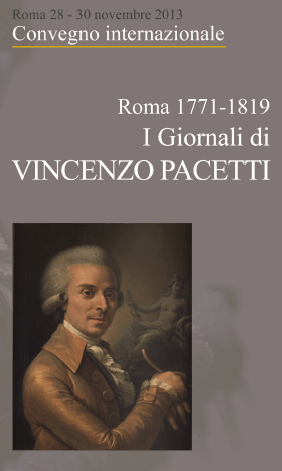 Il Convegno intende costituire un momento di riflessione critica a seguito della pubblicazione, avvenuta nel 2011, del volume Roma 1771–1819: I Giornali di Vincenzo Vincenzo Pacetti (1746–1820), che contiene la prima trascrizione integrale dei due diari dello scultore romano. A partire dalla testimonianza oggettiva contenuta negli appunti dell’artista, influente membro dell’Accademia di San Luca, restauratore, esperto e commerciante di antichità e dipinti nella Roma cosmopolita della seconda metà del XVIII secolo, l’incontro intende mettere a confronto specialisti di diverse discipline per indagare gli aspetti storico-culturali sollecitati dalla lettura dei Giornali.
G I O V E D Ì , 2 8 N O V E M B R E
I. Pacetti e l’Ambiente Artistico Contemporaneo
9.00 Saluti di apertura
9.30 Alvar Gonzales Palacios, Introduzione
10.00 Francesco Leone, Vincenzo Pacetti scultore d’invenzione
10.20 Angela Cipriani, Vincenzo Pacetti e l’Accademia di San Luca
10.40 Chiara Piva, “Una comunicazione di interessi e benefici
reciproci”. L’atelier di Vincenzo Pacetti e i suoi collaboratori
11.00 Nancy Hirschland Ramage, Pacetti at the Getty
11.20 Coffee break (more…)
Symposium | Allan Ramsay: A Reputation Re-Defined
From the symposium programme (a full list of related events is available here) . . .
Allan Ramsay: A Reputation Re-Defined
University of Glasgow, The Hunterian Art Gallery, 5–6 December 2013
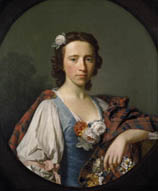 This symposium accompanies the exhibition Allan Ramsay: Portraits of the Enlightenment, which marks 300 years since the birth of Allan Ramsay (1713–1784). It centres on a selection of portraits from across Ramsay’s 30 years as a painter and also features drawings, watercolours, books, pamphlets, and other materials which demonstrate Ramsay’s fascinating place in the intellectual and cultural life of Edinburgh, London, Paris and Rome in the mid 18th century.
Registration fee: £40 Concession: £20. Booking requested by the 1st of December. Fees cover exhibition admission, the evening reception on the 5th of December, tea/coffee, lunch, and performance with a glass of wine on the 6th of December. Payment to be made by cheque (to ‘University of Glasgow’) or by cash on the day. For booking and further information please contact Mila Athayde (mila_athayde@yahoo.com.br); alternatively please visit The Hunterian website or contact the main reception on 00 44 (0)141 330 5431.
◊ ◊ ◊ ◊ ◊
T H U R S D A Y , 5 D E C E M B E R
17.45 Duncan Macmillan, Allan Ramsay and Portraiture in Enlightenment Scotland
F R I D A Y , 6 D E C E M B E R
9.30 Registration / Tea and coffee
10.00 Murray Pittock, ‘Jacobite Artists’ Connections in Scotland and Italy
10.40 Morning Session
Chair: Nigel Leask / Panel with Rhonda Brown and Melanie Buntin
• Chris Whatley (University of Dundee), A Hotbed for Genius: Allan Ramsay’s Scotland
• Elizabeth Eger (King’s College London), ‘A Harmony of Minds’: Allan Ramsay, Elizabeth Montagu and the Scottish Enlightenment
• Cristina Martinez (University of Carleton), Allan Ramsay: ‘A Dilettante in Law and Politics’
12.40 Lunch
14.15 Afternoon Session
Chair: John Bonehill / Panel with Anne Dulau, Rica Jones
• Rica Jones (conservator and historian of paintings), The Significance of Ramsay’s Technique in Context and Perspective
• Guillaume Farroult (Musée du Louvre), Ramsay’s Response to Mid Eighteenth-Century French Portraiture and Aesthetic Values
15.30 Tea and coffee
16.00 Panel discussion
17.00 Performance | Kirsten McCue, ‘Allan Ramsay’s Scots Songs’: The First Musick Book
Journées d’étude | La cuisine, une artification par les arts?
On at the Centre d’archives de BAnQ:
La Cuisine: Une artification par les arts ?
Montréal, Centre d’archives de BAnQ, 13–14 November 2013

◊ ◊ ◊ ◊ ◊
Journées d’études internationales organisées dans le cadre du programme L’Art de la cuisine : artification et patrimonialisation du culinaire dirigé par Julia Csergo (Université du Québec à Montréal / Université de Lyon 2) et Frédérique Desbuissons (Institut national d’histoire de l’art / HiCSA), avec le soutien du Laboratoire d’excellence Création, arts et patrimoine du Pôle de recherche et d’enseignement supérieur Hautes Études-Sorbonne-Arts et Métiers)
L’Art de la cuisine : artification et patrimonialisation du culinaire étudie le statut de la cuisine, entre savoir, science, tekhnè et art. Il aborde la dimension esthétique du culinaire à travers le statut du cuisinier et de sa création, l’art du service (art de découper, de présenter, de servir), par l’étude des objets de la table et des menus imprimés, de la médiatisation du spectacle culinaire, par l’iconographie et les représentations artistiques, par celle du jugement de goût – en particulier le rôle de la critique culinaire. D’un point de vue théorique, il s’interroge sur la manière dont la cuisine se situe par rapport aux autres arts, le statut et le rôle des sens, la spécificité des saveurs par rapport aux autres sens. D’un point de vue institutionnel et sociologique, il questionne le statut des cuisiniers, leur formation, leur starification contemporaine en tant qu’ “artiste”. Dans la perspective de l’anthropologie historique, il envisage la tekhnè du culinaire (lieux, gestes, recettes, outils, savoir-faire).
Poursuivant la réflexion engagée lors des journées d’études Le Cuisinier et l’art (Paris, Institut national d’histoire de l’art, 2 et 3 octobre 2012), qui interrogeaient le statut artistique de la cuisine, celle du cuisinier comme artiste et du plat comme création, ce second volet explore le rôle et la fonction des arts visuels et décoratifs, de la musique et des arts de la scène dans la construction des représentations de la cuisine comme art, et s’interroge sur les caractéristiques de cet éventuel « autre » art. Considérant que la cuisine a été jusqu’à présent peu étudiée dans ses relations avec les pratiques artistiques instituées, si ce n’est par métaphore, ces deux journées entendent continuer à élargir sa compréhension en l’inscrivant d’emblée au sein de l’histoire des arts et des pratiques
culturelles, et poursuivre ainsi cette ouverture d’un champ de recherche innovant fondé sur l’interdisciplinarité.
Ces deux journées sont présentées par l’Université du Québec à Montréal – ESG/DEUT, l’Institut national d’histoire de l’art, Paris et l’Université Paris I Panthéon-Sorbonne, en partenariat avec Bibliothèque et Archives nationales du Québec et avec le soutien du Labex CAP, de la Chaire de recherche du Canada en patrimoine urbain de l’ESG-UQAM et de l’Institut de tourisme et d’hôtellerie du Québec.
Symposium | Revolutionary Ideas: The Building of an American Nation
In connection with the exhibition America: Painting a Nation, the Art Gallery of New South Wales is hosting a symposium on the visual arts and American ideas of nationhood:
Revolutionary Ideas: Perspectives on the Building of an American Nation
Art Gallery of New South Wales, Sydney, 16 November 2013
Presented in conjunction with the Sydney Intellectual History Network at the University of Sydney
This symposium considers the role of the visual arts and other forms of cultural expression in building an idea of nationhood in America from its foundation as a colony through the beginning of the 20th century. It addresses the aims of portraiture, the meanings of landscape, the rise of genre subjects and the significance of garden projects in the contexts of relationships with Britain, claims of independence, pivotal wars, and moments of dramatic social change.
P R O G R A M
10.30 Registration and morning tea, Domain Theatre foyer
11:00 Welcome, Michael Brand, director, Art Gallery of NSW and Jennifer Milam, Sydney Intellectual History Network, University of Sydney
11:15 Laura Auricchio, What Makes ‘American art’ American?
‘American art’ has always been created in a context of international exchange. In the 18th and 19th centuries, much of the art that we now consider American was made by artists who spent many years living and studying in Europe, and whose work was steeped in European traditions. Yet other US-born artists working in the same period set out to develop a distinctly national idiom, forging styles and focusing on subjects that, in their view, expressed the unique character of their native land. Is one of these groups more American than the other? Or do they represent two different but related understandings of what it means to be American? Looking closely at a selection of paintings by artists ranging from the European-inspired John Singleton Copley, Mary Cassatt and F Childe Hassam to the self-consciously American Edward Hicks and Frederic Remington, this presentation proposes a variety of answers to the central question: what makes ‘American art’ American.
12:00 Kate Fullagar, Native Americans before and after the Revolution: Resistance, Representation, Removal
This paper traces both the broad history and the European representation of Native Americans through the 18th and 19th centuries. Specifically it looks at the rise and fall of two key ‘revolutionary ideas’ in this period. The first is that, far from a tale of destruction or neglect, Europeans in 18th-century North America in fact accommodated indigenous people more often than not. This engagement, however, narrowed after the American War of Independence when several key circumstantial factors changed for indigenous people. The second is that European representations of Native Americans during the early 18th century can be seen to stand for a critique of European activity just as often as they could for a confirmation, whereas into the 19th century their ‘savage’ attributes began to signify less and less with a European viewing public. Even while Native Americans began to shake off some initial stereotypes, their graphic representation became increasingly elegiac.
12:45 Exhibition viewing and lunch
2:00 Jennifer Milam, American Landscapes: Painting and Planting Democratic Ideals
In a 4th of July letter written in 1805 to his granddaughter, Thomas Jefferson defined gardening as a fine art, ‘not horticulture, but the art of embellishing grounds by fancy…it is nearly allied to landscape painting’. This talk looks at the relationship between landscape painting and garden design in 19th-century America. It considers how nature was perceived as an expression of democratic ideals in the formation of American identity following the Revolution of 1789. Although drawing on pastoral conventions established in Europe, American artists and garden designers were nevertheless keenly aware that the landscape presented elements for the creation of a novel visual language, full of promise for the future. The American landscape – extending further westward and the object of exploration – became a source of inspiration for forging a new nation.
2:45 Shane White, African Americans and American Art
Nearly 70 years ago now the great novelist Ralph Ellison asked: ‘Can a people live and develop for over 300 years simply by reacting?’ He went on: ‘Are American Negroes simply the creation of white men, or have they at least helped to create themselves out of what they found around them?’ Bearing this admonition in mind, White will talk about slavery, and the way white painters have depicted the so-called ‘Peculiar Institution’. Slavery was central to American development in both the 18th and 19th centuries and its legacy still helps shape the United States to this day. Then the talk jumps to the 20th century to look at the Great Migration and examine those who, in search of what Richard Wright called ‘the warmth of other suns’, moved to Harlem. In the 1920s, Harlem became the Negro Mecca, the Black Metropolis, the black capital of the world. It was a place of wonder that inspired the Harlem Renaissance. As the then recently coined Negro adage put it: ‘I’d rather be a lamppost in Harlem than Governor of Georgia’.
3:30 Drinks
S P E A K E R S
Laura Auricchio is Associate Professor of Art History and Dean of the School of Undergraduate Studies at The New School in New York. She has published widely on French and American visual culture in the Age of Revolution and on topics in 20th-century American art. Her next book, The Marquis, a visually informed biography of the Marquis de Lafayette, French hero of the American Revolution, will be published by Alfred A. Knopf in 2014.
Kate Fullagar is a senior lecturer in modern history at Macquarie University. Her most recent books include The savage visit: New World Peoples and Popular Imperial Culture in Britain, 1710–1795 (2012) and, as editor, The Atlantic World in the Antipodes: Effects and Transformations since the 18th Century (2012). She has also published articles on New World travellers, Joshua Reynolds, and Pacific historiography. She was assistant editor of The Oxford Companion to the Romantic Age: British Culture, 1776–1832 (1999).
Jennifer Milam is Professor of Art History and 18th-century Studies at the University of Sydney. Her books include The Historical Dictionary of Rococo Art (2011), Fragonard’s Playful Paintings: Visual Games in Rococo Art (2006), and Women, Art and the Politics of Identity in 18th-Century Europe (2003). She has taught American art at Princeton University, published on the 19th-century still-life artist William Michael Harnett, and written articles on American and European drawings, painting, and gardens.
Shane White is the Challis Professor of History and an Australian Professorial Fellow in the History Department at the University of Sydney. He has written, or co-written, five books including Stylin’: African American Expressive Culture from Its Beginnings to the Zoot Suit (1999), The Sounds of Slavery (which won the Queensland Premier’s History Prize in 2006) and, most recently, Playing the Numbers (which won the NSW Premier’s General History Prize in 2011). As well, he and his collaborators have created a prizewinning website called Digital Harlem. Currently, White is completing a book about Jeremiah G Hamilton, Wall Street’s first black millionaire.
Conference | The Enlightenment and Philosophical Anthropology
From the Sydney Intellectual History Network at the University of Sydney:
The Enlightenment and the Development of Philosophical Anthropology
University of Sydney, 4–6 November 2013
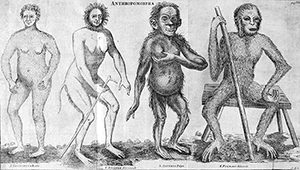 The conference focuses on the development of various forms of anthropology in the second half of the eighteenth century, with a special focus on philosophical anthropology, as a distinct discipline that competed with metaphysics, both in scope and aim.
The birth of philosophical anthropology in the mid-eighteenth century and its development well into the nineteenth signaled a fundamental shift – not only did it emphasise the historical character of thought, but it also sought to understand the human being in context, whether biological, cultural-historical, literary or psychological. For this reason, Odo Marquard has termed it one of the “three great epochal shifts” (alongside aesthetics and the philosophy of history) in the history of modern Europe.
The main focus will be on the way in which various forms of anthropology, philosophical (Germany) but also medical (France) both contributed to and challenged the notion of “Enlightenment” in Europe. That the European Enlightenment was a contested ground is well known; however, the fact that anthropology played a fundamental role in its orientation remains an understudied topic.
Many of the papers will focus on the role that Johann Gottfried Herder played in the development of philosophical anthropology, and in examining the debate between him and his former teacher, Immanuel Kant, this conference will be one of the first to address the ways in which philosophical anthropology developed in relation to the larger project of Enlightenment in Europe.
◊ ◊ ◊ ◊ ◊
P R O G R A M
Monday, 4 November
Peter Anstey (Sydney), The Enlightenment natural history of man
Charles Wolfe (Ghent), ‘Whoever takes man as an object of study must expect to have man as an enemy’: The tension between naturalism and anthropocentrism in La Mettrie and Diderot
Jennifer Milam (Sydney), Doggie Style: Rococo Representations of Interspecies Sensuality and the Pursuit of Volupté
Stephen Gaukroger (Sydney), The demise of anthropological medicine: the challenges of experimental medicine and Mesmerism
Ofer Gal (Sydney), Anthropology vs. metaphysics: Hobbes and Spinoza on the passions
Tuesday, 5 November
Daniela Helbig (Sydney), Self-positing: experimental subjects in Kant’s thought and in scientific practice
Nigel DeSouza (Ottawa), Between Leibniz and Kant: the philosophical foundations of Herder’s anthropology
Anik Waldow (Sydney), Natural history and the formation of the human being: Kant and Herder on active forces
Dalia Nassar (Sydney), Kant and Herder on analogy
Stefanie Buchenau (Paris), Herder: From comparative anatomy to philosophical anthropology
Wednesday, 6 November
John Zammito (Rice), The Animal-Human Boundary and Anthropology: Herder between Reimarus and Tetens
Kristin Gjesdal (Temple), Hermeneutics and Anthropology in Herder’s Early Thought
Gabriel Watts (Sydney), Herder’s theological anthropology
Marion Heinz (Siegen), Cultural theory in Kant and Herder
Michael Forster (Bonn), Herder’s anthropology and human rights










leave a comment