Conference | Color between Science, Art, & Technology
Colour in the 17th and 18th Centuries: Connexions between Science, Art, and Technology
Technische Universität, Berlin, 28-30 June 2012
Organized by Magdalena Bushart, Reinhold Reith, and Friedrich Steinle
Knowledge of how to use, combine, analyse, and understand colour has always been widely distributed, if not dispersed. Painters and architects, dyers and printers, pigment producers and merchants, physicists and chemists, natural historians and physiologist, among others, have been dealing with colour, its properties, mixtures, harmonies, meanings and uses. For long periods, different communities that were concerned with colour and the knowledge about it did not interact? at least so it appears.
One of the first to come up with fundamental claims concerning colour in full generality was Newton whose 1704 Opticks indeed quickly became a common reference point for most of those who reflected on colour. Throughout the 18th century, however, the reactions to Newton remained wildly controversial, from unrestricted appraisal via indifference to open and fierce opposition. Several attempts to reconcile Newton’s account with practitioner’s knowledge remained unsuccessful, and this was still the case in early 19th century, when the physiology of colour perception opened yet another field of colour research. The central aim of the conference is to bring together scholars who are interested in how the various strands of colour use and knowledge were interwoven and connected.
Technische Universität Berlin, Architekturgebäude, Room A 053, Straße des 17. Juni 150/152, 10623 Berlin,
◊ ◊ ◊ ◊ ◊
P R O G R A M M E
Thursday, 28 June
12:00 Registration
13:00 Welcome
13:30 Sarah Lowengard (New York), Analogies, Adaptations and Disorientations in the Mechanization of Color-Printing
14:30 Coffee Break
15:00 PRACTICES Chair: Reinhold Reith (Salzburg)
• Ad Stijnman (Amsterdam) and Elizabeth Upper (Cambridge), Early Modern Colour Printing 1600-1700
• Susan Wager (New York), Coloring the Rococo: Intermedial Reproduction and the Invention of Color in Eighteenth-Century France
• Carole Blumenfeld (Rome), Colors for Paintings Sold at Market in Rome and Paris
17:00 Coffee Break
17:30 COLOURS IN NATURE Chair: Magdalena Bushart (Berlin)
• Karin Leonhard (Berlin), Painting the Rainbow: Colour in Nature versus Colour in Art
• Ulrike Kern (Los Angeles), Broken Colours: A Key Concept in Seventeenth-Century Colour Theory
18:50: Snacks
20:00 PUBLIC LECTURE — Jenny Balfour-Paul (Exeter), Indigo: Not Just a Colour
Friday, 29 June
9:15 Alan Shapiro (Minneapolis), Newton’s Theory of Color and Painters’ Primaries
10:15 Coffee Break
10:30 COLOUR AND NEWTONIANISM Chair: Friedrich Steinle (Berlin)
• Fokko Jan Dijksterhuis (Twente), Perception of Colours by Different Eyes
• Gerhard Wiesenfeldt (Melbourne), Practitioners’ Materials and Optical Theories: Colour in Dutch Eighteenth-Century Natural Philosophy
• Heiner Krellig (Berlin/ Venice), Algarotti, Newton, and the Advantage of Their Theory of Light for Painterly Practice
12:30 Lunch Break
14:00 NATURAL PHILOSOPHY BEFORE NEWTON Chair: Sven Dupré (Berlin)
• Tawrin Baker (Bloomington), Colour in Seventeenth-Century Natural Philosophy Textbooks
• David Brafman (Los Angeles), Broken Colours: A Key Concept in Seventeenth-Century Colour Theory
15:20 Coffee Break
15:40 PRACTICE AND SYSTEM Chair: Lissa Roberts (Twente)
• Sachiko Kusukawa (Cambridge), The Colour Chart of Richard Waller, FRS, 1686
• Bruno Belhoste (Paris), Dyeing at the Gobelins in the Eighteenth Century: The Challenge of Quémizet
17:00 Coffee Break
17:20 COLOURS AFTER NEWTON Chair: Sven Dupré (Berlin)
• Robin Rehm (Basel), ‘Beauty and Perfection of the Pure Colours’: Anton Raphael Mengs and the Singularity of Yellow, Red, Blue
• Olaf L. Müller (Berlin), Border Spectra in the Atmospheric Colours of Hokusai and Hiroshige?
Saturday, 30 June
9:15 Ulrike Boskamp (Berlin), Primary Colours in the Eighteenth Century: Concepts and Uses
10:15 Coffee Break
10:30 MEANINGS Chair: Regina Lee Blaszczyk (Philadelphia)
• Corinne Thépaut-Cabasset (London), Words of Fashion: Words of Colours in Parisian Textile Trade in the Seventeenth and Eighteenth Centuries
• Theresa M. Kelley (Madison, WI), Fugitive and Variable: Color, Material Practice, and Aesthetic Contingency
• Romana Filzmoser (Florence), Color Knowledge and Color Practice in English Cosmetic Treatises of the Seventeenth Century
12:30 Lunch Break
14:00 ARTISTS’ ACCOUNTS I Chair: Ulrich Heinen (Wuppertal)
• Audrey Adamczak (Paris), A Dry Coloured Powdery Medium: The Art of Making Pastel and the Artistic and Technical Literature in France Ancien Régime
• Matthias Vollmer (Berlin), Disegno versus Colorito: Science versus Illusion?
15:20 Coffee Break
15:40 ARTISTS’ ACCOUNTS II Chair: Ulrich Heinen (Wuppertal)
• Ioana Magureanu (Bucharest), Colour: From Damnation in the Scientific Discourse to Its Recovery in Art Theory
• Petra Schuster (Berlin), How Knowledge of Color Affected Value Judgments in Siglo de Oro Painting Technique Innovation: Carducho’s Diálogos de la Pintura (1633) in Comparison to Pacheco’s Arte de la Pintura (1649)
17:00 Coffee Break
17:20 BLUE! Chair: Lissa Roberts (Twente)
• Aida Yuen Wong (Boston), Kingfisher Blue in Ming China
• Francois Delamare (Paris) and Bernard Monasse (Paris), Dyeing with Berliner Blue: A Jointed French Venture
18:40 Closing Remarks
Conference | ‘Contested Views’ at Tate Britain
From Tate Britain (as noted at BARS) . . .
Contested Views: Visual Culture and the Revolutionary and Napoleonic Wars
Tate Britain, London, 19-20 July 2012

Joseph Mallord William Turner, “The Field of Waterloo,” exhibited 1818
In July 2012, in advance of commemoration of the bicentenary of the Battle of Waterloo, Tate Britain will be hosting a two-day conference exploring the impact of the Revolutionary and Napoleonic Wars on worldwide visual culture, from the outbreak of the pan-European conflict with France in 1792 to the present day. Centred on themed panels, plenary lectures and workshops, this cross-disciplinary conference will promote knowledge and understanding of the range of ways in which the ‘first total war’ has been mediated in visual cultures, not only in Britain and continental Europe but throughout the world. Confirmed plenary speakers: Mary Favret, Gillian
Russell, Susan Siegfried, Paul White.
Conference | Activating Stilled Lives, Specimens on Display
From UCL (as noted at BARS) . . .
Activating Stilled Lives: The Aesthetics and Politics of Specimens on Display
UCL History of Art Department, London, 17-18 May 2012
Conference of the AHRC Research Network, ‘The Culture of Preservation’
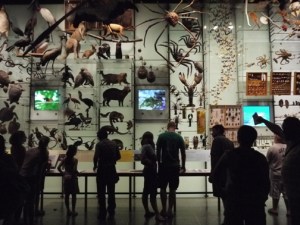 The past twenty years saw an explosion of exhibitions fathoming the relations between art and science as well as numerous refurbishments of natural history or former colonial museums. Many of these displays and gallery transformations mobilised specimens, be it taxidermied animals or preserved human body parts. Objects were put into new contexts opening up their meanings, others disappeared in storage or travelled back to the countries where they were once collected. The conference will address the challenges institutions face when dealing with formerly living entities and consider the aesthetics and politics of their display. The idea is to discuss the use of specimens in temporary exhibitions, museums or university collections and the role curators, art and artists have been playing in the transformation of these spaces. We would also like to consider how preserved specimens have changed through the altering contexts in which they have been displayed: One could name the initial transformation of organisms into objects, the more recent re-definition of pathological specimens as human remains, or the dramatic rearrangements that took place when natural history, anthropology or anatomy collections (many dating from the nineteenth century) were updated – coinciding with a shift in audiences, from specialists to a broader public. Historical displays were often significantly altered, or even destroyed and replaced by „techy“ but at times also by sentimental, „post-modern“ installations still awaiting a critical assessment.
Beyond that, the question of preservation shall be considered in a more expanded sense, as this subject area offers a unique opportunity to reflect more broadly on issues of conservation and their ethics and to raise a variety of questions such as: How and why do various cultures preserve elements of what is considered as nature? How does this relate to environmental notions of conservation and extinction? Should flawed specimens be disposed of? Can museums as a whole be considered cultural preserves? Should we preserve the preserves? And last but not least: Do we really need to embalm everything?
◊ ◊ ◊ ◊ ◊
T H U R S D A Y , 1 7 M A Y 2 0 1 2
UCL, JZ Young Lecture Theatre, Anatomy Building, Gower Street
2.30 Mechthild Fend & Petra Lange-Berndt: Exhibiting Preserves
Session One: Reassembling
Chair: Sam Alberti (Director of Museums and Archives, The Royal College of Surgeons of England)
3.00 Hans-Jörg Rheinberger (Historian of Science, Berlin): Preparations Revisited
3.45 Rose Marie San Juan (Art Historian, London): Bones in Transit: the Re-Animation of Human Bone in Early Modern Cabinets of Display
4.30 John MacKenzie (Professor Emeritus of Imperial History, Lancaster): The Natural World and Imperial Legitimation: Hunting, Trophies, Taxidermy and Museums
5.15 Tea break
5.45 Robert Marbury (Artist / Minnesota Association of Rogue Taxidermy, Baltimore): Personal Computers as the New Wunderkammer and the Rise of Rogue Taxidermy
6.30 Reception at the Grant Museum of Zoology, University College of London (Rockefeller Building, University College London, 21 University Street, London WC1E 6DE)
F R I D A Y , 1 8 M A Y 2 0 1 2
UCL, Gustave Tuck Lecture Theatre, Wilkins Building, South Wing, Gower Street (access via Gower Street / Main Quadrangle or Gordon Street)
Session Two: Handling
Chair: Mechthild Fend (Art Historian, London)
10.00 Petra Lange-Berndt (Art Historian, London): Subsculpture: Assembling a Museum of Attractions
10.45 Steve Baker (Artist and Art Historian, Norfolk): Dead, dead, dead, dead, dead
11.30 Tea Break
12.00 Angela Matyssek (Art Historian, Marburg / Maastricht): “Museumlives”: Mould, Decay and the History of the Object
12.45 Lunch break
Session Three: Displaying
Chair: Bergit Arends (Curator Contemporary Art, The Natural History Museum, London)
14.30 Panel discussion on “Curating Specimens” with Claude d’Anthenaise (Director, Musée de la chasse et de la nature, Paris), Christine Borland (Artist, Glasgow), Lisa O’Sullivan (Director, Center for the History of Medicine, New York Academy of Medicine), Johannes Vogel (Director, Museum für Naturkunde, Berlin)
16.00 Tea break
16.30 Anke te Heesen (Historian of Science, Berlin): Displaying the Infinite Amount
17.15 Nélia Dias (Anthropologist, Lisbon): The Fate of Human Remains from the Musée de l’homme to the Musée du Quai Branly
18.00 Final discussion
Film Shows
A series of related films will be shown during the breaks. Details and links are available at Preserves on Film
The event is open and free for all, but please register with pandora.syperek.09@ucl.ac.uk
Exhibition Programming | The ‘Westmorland’
A posting here at Enfilade noted the exhibition last November. Here we include details on the programming at The Ashmolean.
◊ ◊ ◊ ◊ ◊
The English Prize: The Capture of the Westmorland, an Episode of the Grand Tour
The Ashmolean Museum, Oxford, 17 May — 27 August 2012
The Yale Center for British Art, New Haven, 20 September 2012 — 6 January 2013
Curated by Scott Wilcox, Elisabeth Fairman, and María Dolores Sánchez-Jáuregui Alpañés
 The story of the Westmorland, an armed merchant ship sailing from Livorno to London in January 1779, is one of colourful 18th-century personalities and modern detective work. Consigned to the ship, by a cast of characters that included artists, aristocrats and dealers, was a precious cargo of art and antiquities, books, and luxury goods such as 32 wheels of Parmesan cheese. Captured by two French warships on 7 January 1779 and declared a ‘prize of war’, the Westmorland and the goods on board were acquired by King Carlos III of Spain who presented many of the works of art to the Real Academia de Bellas Artes de San Fernando, Madrid. Other items were eventually scattered across Spanish museums; one painting ended up as far away as St Petersburg. Reconstructed with archival discoveries and research in Spanish collections, The English Prize presents 120 objects including paintings, drawings, sculptures, books and maps from the fateful voyage, in a vivid recreation of the Grand Tour and the high seas.
The exhibition is the result of an extraordinary research project begun in the late 1990s, with gaps in the story filled by discoveries made in recent years. It was found, for instance, that the mysterious marking ‘P. Y’ on books and drawings in the Academia indicated ‘Presa Ynglesa’ (‘The English Prize’). The original inventories of the ship’s crates which survive in the archives in Madrid are remarkably thorough and have allowed the identification of many items which were on the Westmorland when it was captured. Using these records and studying the notes and marginalia scribbled on books and maps by their owners, it is now possible to link the objects and works of art to the individuals who were sending them home to Britain.
Amongst the highlights of the exhibition are portraits of Grand Tourists Francis Bassett and George Legge (Viscount Lewisham), by Pompeo Batoni; a group of amazingly fresh watercolours by John Robert Cozens made on his first trip to Italy; and portrait busts by Irish sculptor Christopher Hewetson who was working in Rome. Of the tourists, collectors and dealers who had consigned works of art and souvenirs to the Westmorland, we find the Scottish painter Allan Ramsay; the diplomat and dealer John Udny; a Scottish landowner and lawyer, Sir John Henderson of Fordell; and such a high ranking aristocrat as the Duke of Gloucester, brother of George III.
The exhibition website is available here»
◊ ◊ ◊ ◊ ◊
From The Ashmolean:
P U B L I C S T U D Y D A Y
The Experience of Italy: Travel, Collecting and the Grand Tour
Headly Lecture Theatre, Friday, 8 June 2012, 10am–5pm
This special one-day event looks at the cultural context of the Westmorland and its story. As a rare time-capsule, the ship can help us uncover the concerns and interests of British tourists, collectors and artists, from their musical education to their fascination with volcanoes and excavations. Over the day, six distinguished speakers deliver lectures with the opportunity to ask questions and discuss the varied topics.
The Westmorland and the Mechanics of the Grand Tour in the 1770s
Jonathan Yarker, University of Cambridge
Vases and Volcanoes: Sir William Hamilton and Collecting for Posterity
Kim Sloan, British Museum
Enjoying the Souvenirs of Travel: Art and Antiquities at Home
Clare Hornsby, author of Digging and Dealing in 18th-Century Rome
Music and the Musical Outcomes of the Grand Tour
Roderick Swanston, former Professor, Royal College of Music
Women at Grips with the Grand Tour: Adventure, Authority and Anomaly
Chloe Chard, independent scholar
British Artists in Rome
Martin Postle, Paul Mellon Center for Studies in British Art
Free, spaces limited, to book contact: education.service@ashmus.ox.ac.uk T 01865 278 015
◊ ◊ ◊ ◊ ◊
L E C T U R E S
Uncovering the Westmorland, Step by Step
José María Luzón Nogué, Real Academia de Bellas Artes, Madrid
Thursday, 31 May, 2–3pm
We can reconstruct the extraordinary story of the Westmorland and its cargo thanks to fascinating detective work that began in the 1990s. In this lecture, Prof Luzón, who led the original research project, will take you on the journey which led to the rediscovery of the ship. Free, spaces limited, to book contact E education.service@ashmus.ox.ac.uk T 01865 278015
Marble Mania: Why Was Antique Sculpture So Desirable?
Ruth Guilding, art historian and curator
Wednesday, 20 June, 2–3pm
The Westmorland’s cargo included 23 crates of marble statues, and the ship was one of many which brought the souvenirs of British travellers back to London in the 1770s. Dr Guilding explores the way that antique sculpture was imagined, understood and used by collectors in England at the time. Free, spaces limited, to book contact E education.service@ashmus.ox.ac.uk T 01865 278015
The First English Prize: The Story of the Arundel Marbles
Susan Walker, Keeper of Antiquities, Ashmolean Museum
Wednesday, 27th June, 2–3pm
Dr Susan Walker, Keeper of Antiquities, explores the history of the earliest collection of classical sculptures and inscriptions in Britain, a treasure of the Ashmolean Museum. Free, spaces limited, to book contact E education.service@ashmus.ox.ac.uk T 01865 278015
‘Magick Land’: British Landscape Painters in Italy in the 1770s
Scott Wilcox, Chief Curator of Art Collections and Senior Curator of Prints and Drawings, Yale Center for British Art
Wednesday, 4th July, 2–3pm
Oil paintings and watercolors on the Westmorland by John Robert Cozens, Jacob More, and Solomon Delane point to a community of British landscape painters active in Italy. This lecture examines that community and the impact of Italy, particularly the Roman Campagna, on the development of British landscape art. Free, spaces limited, to book contact E education.service@ashmus.ox.ac.uk T 01865 278015
Carrying off the Colosseum: The Westmorland and Architecture
Frank Salmon, Head of the Department of History of Art, University of Cambridge
Wednesday, 18 July, 2–3pm
The personal treasures that were being shipped by Grand Tourists on the Westmorland included both real and fictitious drawings of Roman antiquities, as well as design drawings intended for building work back in Britain. This lecture will examine those drawings in the light of the wider culture of Neoclassical architecture and interior design in the second half of the eighteenth century. Free, spaces limited, to book contact E education.service@ashmus.ox.ac.uk T 01865 278015
In Conversation — New Discoveries: The Secret Cargo of Relics
Catherine Whistler, curator of the exhibition, and Barry Williamson
Thursday, 19 July, 11.30am –12.30pm
Just before the exhibition catalogue went to press, the Ashmolean was contacted by Barry Williamson who is an authority on the Arundell family of Wardour Castle. The Westmorland had a secret cargo, a box of saint’s relics carefully concealed in a plinth of coloured marbles. This was a gift from the Pope to Henry Arundell, eighth Baron Arundell of Wardour. The international research project had tracked these relics in Madrid in early 1789, but the trail had gone cold. Barry Williamson will talk about his discoveries in the family archives and his quest to find the relics. Free, spaces limited, to book contact E education.service@ashmus.ox.ac.uk T 01865 278015
Colloquium | Mark Catesby’s Third Centennial in America
From the Catesby Commemorative Trust:
Mark Catesby’s Third Centennial in America: Celebrating His Impact
Richmond, Washington, D.C., and Charleston, 4-9 November 2012
 Attendees may purchase tickets for the Virginia, Washington, D.C. and Charleston days individually or as a package (ticket prices include tax-deductible contributions to the Catesby Commemorative Trust and hopefully other non-profits involved in the program). The following covers the program as it now stands and may be modified as appropriate. With the few exceptions noted, all locations and speakers are confirmed.
◊ ◊ ◊ ◊ ◊
Sunday, 4 November 2012 — Richmond
Accommodations at the four-star Omni Hotel
5:30 pm Wilton House Museum
- Welcome by Laura Towers, President of NSCDA – VA
- Moderator: Robert Strohm, Executive Director, Wilton House Museum
- Introduction by Cynthia Neal, Producer/Director and showing of The Curious Mister Catesby (2008)
- The museum will display a concurrent exhibition of Catesby’s etchings (25 October 2012 — 3 February 2013)
- Cocktail reception
◊ ◊ ◊ ◊ ◊
Monday, 5 November 2012 — Richmond / Washington, D.C.
Wilton House Museum
9:00 am Catesby’s Influences and Sources
- “Mark Catesby and His Botanical Forerunners,” Dr. Karen Reeds, Independent Scholar (scheduled)
- “William Dampier,” Diana and Michael Preston, authors of A Pirate of Exquisite Mind: Explorer, Naturalist and Buccaneer: The Life of William Dampier
- “Maria Sibylla Merian: Pioneering Naturalist, Artist, and Inspiration for Catesby,” Florence F. J. M. Pieters, Faculty of Biology, University of Amsterdam, and Dr. Kay Etheridge, Professor of Biology, Gettysburg College
10:30 Break
10:45 Catesby’s World
- “England,” Dr. Janet Browne, Chair, Aramont Professor of the History of Science, Harvard University
- “Virginia,” Dr. Sarah Meacham, Associate Professor of History, Virginia Commonwealth University
- “Carolina,” Dr. Suzanne Linder Hurley, Independent Scholar, Davidson, NC
- “Bahamas,” Dr. Robert Robertson, Curator of Malacology, Philadelphia Academy of Natural Sciences
1:00 Lunch at the Commonwealth Club
2:30 Tour of the Kent-Valentine House, which has a large collection of Catesby’s etchings
Richmond locations will include floral arrangements of plants illustrated by Catesby
3:00 Chartered coach transfer to four-star Hotel Monaco in Washington, D.C.
◊ ◊ ◊ ◊ ◊
Tuesday, 6 November 2012 — Washington, D.C.
9:30 am Smithsonian Institution Libraries, Baird Auditorium, Museum of Natural History. Baird sessions open for free to the public
Welcome: Senior Smithsonian and GCA officials
Moderator: Dr. Nancy Gwinn, Director, Smithsonian Institution Libraries
Catesby’s Art
- “Catesby’s Drawings,” Henrietta McBurney Ryan, Keeper of Fine and Decorative Arts, Eton College, formerly Deputy Keeper, Royal Library, Windsor Castle, and author of a forthcoming book on Catesby’s original paintings
- “The Natural History: Its Printing and Publication,” Leslie Overstreet, Curator, Natural History Rare Books, Smithsonian Institution Libraries
- “Catesby’s Etchings: His Compositional Interests and the Birth of Environmental Science,” Dr. Amy Meyers, Director, Yale Center for British Art
12:00 Ticket holders’ viewing of the Smithsonian’s first edition of The Natural History and other rare natural history books; lunch at the Metropolitan Club
1:30 Catesby’s Science
- “Ornithology (including bird migration),” Shepard Krech III, Professor Emeritus, Brown University
- “Botany,” Dr. Steven A. Harris, Druce Curator of the Oxford University Herbaria (scheduled – possibly given by his delegate)
- “Zoology (other than ornithology),” Dr. Aaron Bauer, Professor & Gerald M. Lemole Chair in Integrative Biology, Villanova University
- “Catesby’s Economic and Ethnobotany,” Dr. W. Hardy Eshbaugh, Professor of Botany Emeritus, Miami University, Oxford, OH
6:00 United States Botanic Garden, Washington, D.C.
◊ ◊ ◊ ◊ ◊
Wednesday, 7 November 2012 – Washington, D.C. / Charleston
Personal transportation to Charleston, SC to be arranged by attendees
Accommodation at the five-star Sanctuary Hotel, on Kiawah Island
Customized Kiawah Island Nature Tours
Banquet dinner at Kiawah Island with keynote speaker, Sir Ghillean Prance, FRS, Director (retired) of the Royal (Kew) Botanic Gardens, previously Research Director and Vice-President of the New York Botanical Garden as well as President of the UK Linnean Society, and currently Scientific Director of the Eden Project
◊ ◊ ◊ ◊ ◊
Thursday, 8 November 2012 — Charleston
Coach transfers from Kiawah to Charleston, within town, and return to Kiawah
9:30 am Addlestone Library Rare Book Collection, College of Charleston
- Welcome to Charleston: The Honorable Joseph P. Riley, Jr., Mayor of Charleston
- Introduction of speakers: John Cay III, Chairman of Friends of the Addlestone Library
- “Catesby The Explorer,” Dr. James L. Reveal, Professor Emeritus, University of Maryland and Adjunct Professor of Plant Biology, Cornell University
10:30 Break
Catesby’s Impact on Natural History
- “Linnaeus and the Relevance of His Use of Catesby’s Botanical Work,” Dr. Charlie Jarvis, Botany Department, Natural History Museum, London
- “Linnaeus and His Use of Catesby’s Zoological Work,” Dr. Kraig Adler, Professor & Department Chair, Department of Neurology & Behavior, Cornell University
- “The Naturalists Who Came after Catesby,” Judith Magee, Special Collections Curator, Library & Archives, Natural History Museum, London and author of Art and Nature: Three Centuries of Natural History Art from around the World
Opportunity to view a second edition Natural History, Alexander Wilson and Audubon double elephant folio (Leslie Overstreet will be available for all viewings of copies of the Natural History to point out their salient features; no two are exactly the same)
1:00 Gibbes Museum of Art
This section of the program honors the memory of Chris Hammond, long-term Director of the Trust to whom it owes much; truly a gentleman and a good friend.
Lunch in the museum garden; viewing the museum collections
3:00 The Charleston Library Society (founded in 1748)
- “The Bartram-Catesby Connection,” Joel T. Fry, Curator, Bartram’s Garden, Philadelphia
- “Catesby and Eighteenth-Century Gardening,” Mark Laird, Senior Lecturer, Department of Landscape Architecture, Harvard University
- Viewing of second and third editions of The Natural History
Visit to the Preservation Society of Charleston
6:00 Cocktail receptions at the historic Miles Brewton House and William Gibbes House
◊ ◊ ◊ ◊ ◊
Friday, 9 November 2012 – Charleston
Optional (currently being developed)
- Catesby-Country Immersion Tour at Middleton Place, including fresh-water swamp, salt marsh, rice fields, ruins of Catesby-era house, free flying demonstration by Charleston Center for Birds of Prey of raptors painted by Catesby plus viewing another first edition of Mark Catesby’s Natural History
- Boat tour of the ACE Basin (arrangements by KIGR)
- Tour of Colonial-Era Charleston Gardens (Preservation Society of Charleston) with an opportunity to see the Charleston Museum’s first edition Catesby’s and related materials
- Golf on Kiawah Island’s Ocean Course (site of the 2012 PGA)
- Kiawah Island Nature Tours
Colloquium | Médiatisation du Littéraire
Notwithstanding the focus on literature, there are art historical offerings, including a talk by Pierre-Henri Biger on hand fans, “L’éventail, moyen de propagation des oeuvres littéraires ou théâtrales.” -CH
Colloquium: La Médiatisation du Littéraire
Bordeaux 3 University, 24-25 May 2012
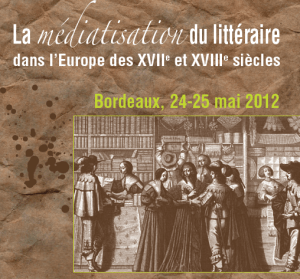 “Médiatisation” is a term of recent onset, which refers to a reality very contemporary to societies where mass dissemination of information is based on various and often sophisticated technical supports. Literature today, with his “rentrée littéraire,” its prizes schedule, its hypersensitive writers or its institutional celebrations, has become one of the media phenomena. This seems obvious in a world so marked by immediacy of information, constant renewal of astonishment and escalation of surprises, albeit artificial. Applying this term to the seventeenth and eighteenth centuries is therefore primarily a voluntary anachronism, intended to destabilize our vision of our literary past and to provoke a reassessment of the emphasis on literature in the public and social life of classical Europe.
This colloquium is organized by the centre Europe classique (CLARE-Cultures Littératures Arts Représentations Esthétiques)
The programme is available here»
Conference | Desiring Statues
From the University of Exeter:
Desiring Statues: Statuary, Sexuality, History
University of Exeter, 26–27 April 2012
 A Wellcome Trust funded conference, hosted by the Centre for Medical History at the University of Exeter
This interdisciplinary conference seeks to investigate how statuary intersects with questions of sexuality, and temporality, specifically history. It explores the numerous different ways in which statues – as historical and/or imagined artefacts – allow us to think about the past and its relation to sex, gender and sexuality. The conference brings together contributors from a variety of disciplines, including history, gender and sexuality studies, literary and cultural studies, art history, classics, archaeology and philosophy.
◊ ◊ ◊ ◊ ◊
P R O G R A M M E
Thursday, 26th April 2012
9.00 Registration
9.45 Welcome
10.00 Session 1
Panel 1: Gender and the Erotics of the Living Statue
•Beth Brunton (Queen Mary University of London), From Motherhood to Mannequin: Bodily Perfection in Good Morning Midnight
• Lynsey McCulloch (Anglia Ruskin University), ‘Why, did you think you had married a statue?’ The Erotics of Sculptural Motion in English Renaissance Drama
• Will McMorran (Queen Mary University of London), Made of Stone: Reading And Watching Sade’s ‘Eugénie de Franval’
Panel 2: Statues, Censorship and Nudity
• Julie Anne Godin Laverdière (Université du Québec à Montréal), The Arrest of The Family (1949) and the Destruction of The Peace (1951): The Reception of Two Indecent Sculptures in Montréal
• Linda Ann Nolan (John Cabot University and American University of Rome), Deadly Nudity and Xenophobia in St. Peter’s Basilica in Early Modern Rome: the reception of the figure of Justice on the Tomb of Pope Paul III
• Sophie Schoess (University College London), The Naked Truth: Ancient Greek Sculpture in the Face of Christian Censorship
11.30 B R E A K
12.00 Session 2
Panel 1: Statuary, Sexuality and Modernity
• Andrew Eschelbacher (University of Maryland), Gendering Modernity/Modernizing Masculinity
• Charles Miller (University of Manchester), The Sex of an Origin: Picasso, Freud, Glozel
• Bernard Vere (Sotheby’s Institute of Art), ‘A Token of Triumph Cut Down to Size: Jacob Epstein’s Rock Drill as Fetish Object’
Panel 2: The Erotics of the Gaze: Interacting with Statuary Objects
• Sarah Jones (University of Exeter), ‘The Art of Love’: Religion, Sex, and the Tourist Gaze at the Temples of Khajuraho
• Amy Mechowski (Victoria and Albert Museum), ‘Britain’s Most Romantic Museum’ or a ‘Temple of Lust’?: Statuary, Lesbian Spectatorship and the V&A
• Lisa Trentin (Wilfrid Laurier University), The Sleeping Hermaphrodite: Desirous Viewing in Ancient and Eighteenth-Century Rome
13.30 L U N C H
14.30 Session 3
Panel 1: Desiring the Past: Eighteenth-Century Uses of Statuary
• Sarah Betzer (University of Virginia), Dangerous Admiration: Sculpture and Desire on the Grand Tour
• Katharina Boehm (University of Regensburg), Desiring Antiques: Sir William Hamilton, Commercial Antiquarianism and the Cult of Priapus
• Elsje van Kessel (DFK, Paris and Leiden University), Longing for the Past: Eichendorff’s Marmorbild and the Lives and Deaths of Statues
• Katie McAfee (University of Cambridge), The Sexy Statue: Venus’ Body through Eighteenth-Century Eyes
Panel 2: Sculpting Gender and Sexual Norms in Antiquity and Beyond
• Linnea Åshede (University of Gothenburg), Hermaphroditos: Desired Object and Desiring Subject
• Glenys Davies (University of Edinburgh), The Gendered Body Language of Roman Portrait Statues
• Jane Draycott (British School at Rome), Determining Desirability: Aphrodite of Cnidus vs. Baubo of Eleusis
• Fabio Guidetti (Scuola Normale Superiore di Pisa), “I am black, but comely” desire, sensuality and colour in Roman ideal statuary
16:30 B R E A K
17.00 Keynote Lecture by Dr. Ian Jenkins (Senior Curator, Ancient Greece at the British Museum), The Body Beautiful: The Human Body in Greek Art and Society
19.00 C O N F E R E N C E D I N N E R
Friday 27th April 2012
9.00 Registration
9.30 Session 4
Panel 1: Statuary (Im)Possibilities of Desire
• June Dunn (Eastern Connecticut State University), Statuesque Landscape: The Cailleach and the Topolatry of Desire in Colm Tóibín’s “A Long Winter”
• Sarah Parker (University of Birmingham), ‘Which is the god, / which is the stone / the god takes for his use?’: H.D. and Bryher’s Sculptural Exchanges
• Ery Shin (University of Oxford) “She was gracious and yet fading, like an old statue in a garden”: Nightwood’s Robin Vote, Impossible Object Desire, and the Culture/Nature Binary
Panel 2: Sculptural (In)Decency
• Catriona MacLeod (University of Pennsylvania), Flirting with Sculptural Indecency: The Realist Psyche
• Melissa Percival (University of Exeter), Angelina Jolie as a Breastfeeding Muse: The Nude Female Portrait in Context
• Linda Walsh (The Open University), Houdon’s Winter and the Problematic Sexuality of Youth
11.00 B R E A K
11.30 Session 5
Panel 1: Agalmatophilia
• Jane Fae (Independent Scholar) “Agalmatophilia” as Paraphilia
• Caterina Y. Pierre, (Kingsborough Community College, CUNY), The Pleasure and Piety of Touch in Aimé-Jules Dalou’s Tomb of Victor Noir
• Shawn O’Bryhim (Franklin & Marshall College), In the Footsteps of the Greek Agalmatophiliacs
• Lise Wajeman (Aix‐Marseille Université), The Erotic Power of Sculpture and the Question of Artistic Superiority: Agalmatophilia and the Paragone during the Sixteenth Century
Panel 2: Statuary and Science
• Richard Brown (University of Leeds), “Silent veining…drinking electricity”: The Bodies of Statues in Joyce
• Melissa Haynes (University of Wisconsin, Madison), A Unique Anthropometry: Measuring the Venus de Milo and a Rationality of Desire
• Alice McEwan (University of Hertfordshire), Mythological Sculpture at the Service of Eugenicist Desire in the early
Twentieth Century: the Case of George Bernard Shaw’s ‘Living Statues’
• Guillermo de Eugenio Pérez (Carlos III University of Madrid), Wax Dolls and the Dream of Asepsis
13.30 L U N C H
14.30 Session 6
Panel 1: Statuary, Colonialism and Nation
• Cora Gilroy‐Ware (University of Bristol), “The Fragment of the Negro’s Chest”: Benjamin Robert Haydon and the Black Body
• James Hargrove (Roanoke College), Paris 1900: Bodies of National Identity
• Gráinne O’Connell (University of Sussex), Embodying the Nation; Emancipated Ex-Slave Statues in Jamaica’s Emancipation Park and the Jamaican Afro-Creole Nationalist Project
Panel 2: Metamorphosis, Materiality and Desire
• Vito Adriaensens (School of Arts, University College, Ghent) and Steven Jacobs (University of Ghent), Mysteries of the Wax Museum: Eros, Thanatos and Sculpture in American Cinema
• Katie Faulkner (Courtauld Institute of Art), Metamorphosis in Sexuality and Sculpture in the Nineteenth century: G.F. Watt’s Clytie, 1868-78
• Ashley Hannebrink (University College London), Stone and Flesh in Antoine Watteau’s Fêtes Galantes
16.00 B R E A K
16.30 Keynote Lecture by Dr Stefano Evangelista (Fellow and Tutor in English, Trinity College, University of Oxford), Title TBC
17.30 Closing remarks
Please note that the programme might be subject to minor changes due to unforeseeable circumstances.
Conference | Two Centuries of Mapping Washington, D.C.
From the Library of Congress:
PHILIP LEE PHILLIPS ANNUAL CONFERENCE
Visualizing the Nation’s Capital: Two Centuries of Mapping Washington, D.C.
Library of Congress, Washington, D.C., 18-19 May 2012

“Plan of the City of Washington,” engraving, March 1792 (Wikimedia Commons)
Visualizing the Nation’s Capital: Two Centuries of Mapping Washington, D.C. is the first conference devoted to mapping the nation’s capital, covering the period from Pierre-Charles L’Enfant’s 1791 Plan of the City of Washington to the present. Participants include historians, archaeologists, building and landscape architects, urban planners, cartographers, geographers, land surveyors, Library of Congress specialists and Anthony Williams, the former mayor of Washington, D.C. The conference is presented by the Library and the Philip Lee Phillips Society, which was established in 1995 as an association of collectors, geographers, historians and map enthusiasts, with a shared interest in supporting and promoting the programs and activities of the Library’s Geography and Map Division. The conference is free and open
to the public. Reservations are needed; contact
SpecialEvents@loc.gov or call 202-707-1616.
◊ ◊ ◊ ◊ ◊
Friday, 18 May 2012 (Coolidge Auditorium, Thomas Jefferson Building) (more…)
Conference | Carrara Marble and the Low Countries
I’ve included only a selection of the sessions, generally as directly related to the eighteenth century, but the entire conference looks fascinating. For more information, consult the listing at H-ArtHist. -CH
◊ ◊ ◊ ◊ ◊
Carrara Marble and the Low Countries from the Late Middle Ages to Today
Rome and Carrara, 4-8 June 2012
Registration due by 15 May 2012
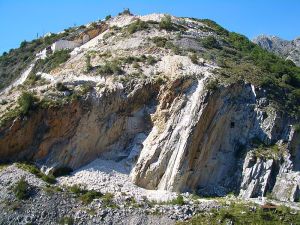
Marble quarries above Carrara (Photo: Wikimedia Commons)
Organized by Academia Belgica, Roma; Royal Netherlands Institute in Rome; Université Libre de Bruxelles; Universiteit Gent; Katholieke Universiteit Leuven; Université de Liège; Royal Museums of Art and History, Brussels; Royal Museums of Fine-Arts of Belgium, Brussels; Nederlands Interuniversitair Kunsthistorisch Instituut, Firenze; The Low Countries Sculpture Society, Brussels
4-5 June 2012 (Monday and Tuesday morning)
Pre-Conference Study Days in Rome: The sculpted and painted decoration of galleries in Roman palaces and villas c.1500-1830
Please note that during the one-and-a-half days of Pre-Conference Excursions we will be visiting embassies and other official residences that are rarely or never open to the public, but which may be closed at short notice for official functions. If this were the case, we might have to change the order of the individual visits or even attempt to substitute the cancelled visit with another. The provisional programme includes the galleries of : Raphael’s Villa Madama, Palazzo Farnese, Borromini’s Palazzo Pamphilj (Piazza Navona), Algardi’s Villa Doria-Pamphilj (Via Aurelia Antica), Museo Pio Clementino and Casino di Pio IV in the Vatican Gardens and the stone conservation workshops of the Vatican Museums.
Tuesday, 5 June 2012
Academia Belgica, Roma via Omero 8
14.30-15.00 Registration
15.00 Welcome by Ambassadors Vincent Mertens de Wilmars and Alphonsus Stoelinga (tbc), Prof Dr Walter Geerts, director of the Academia Belgica and Prof Dr Bernard Stolte, director of the Royal Netherlands Institute in Rome . . .
Wednesday, 6 June 2012
Academia Belgica, Roma via Omero 8
9.00 Registration
Session Three — The trade in Carrara marble to the Low Countries: local and international actors and strategies, and their impact on the design and production of luxury goods
9.30 Dr Cristiano Giometti, Università di Pisa, Marble merchants from the Low Countries in the early 18th century from the documents of the State Archives of Massa
10.00 Muriel Barbier, Institut National du Patrimoine, Paris, Carrara marble for French fireplaces delivered by Flemish marble masons in the 18th century
10.30 Prof Dr Krista De Jonge, Catholic University of Leuven, Luxury Artefacts: The Early Modern Low Countries and the Genoese Trading Network in Carrara Marble
11.00 Dr Francis Tourneur, Association Pierres et Marbres de Wallonie, Namur, Marble gleanings: commerce, design, production and techniques from Boussu to Corroy-le-Château
11.25 Discussion
11.40 Coffee
Session Four — The social prestige of Carrara marble vs. alabaster
12.00 Dr Aleksandra Lipi?ska, University of Wroclaw (PL), « Marbre blanc qu’on dit albastre. » Italian marble vs. Transalpine alabaster in 16th-century Low Countries sculpture
12.30 Géraldine Patigny, Université Libre de Bruxelles/Royal Institute of Cultural Heritage, Brussels, La place du marbre dans la sculpture à Bruxelles à l’époque de Jérôme Du Quesnoy père et fils
12.55 Discussion
13.10 Lunch
Session Five — Carrara marble as a vehicle for classical ideals
14.00 Dr Léon Lock, Catholic University of Leuven, The techniques of Carrara marble carving in Antwerp in the 17th century between tradition and innovation
14.30 Inger Groeneveld, Royal Academy of Arts, Den Haag, Carrara marble for the Dutch Interior 1600-1800
15.00 Dr Sophie Mouquin, Université de Lille III / Ecole du Louvre, Paris, Poetics, symbolism and science: The perception of Carrara marble in Paris and in the Low Countries in the 18th century
15.25 Discussion
15.40 Coffee
16.00 Dr Emile van Binnebeke, Royal Museums of Art and History, Brussels, The theory and practice of Carrara marble sculpture by Gabriel and Godecharle
16.30 Wim Oers, WENK Sint-Lucas Brussels-Gent / University of Oxford, The use and meaning of Carrara marble sculptures and decorations at Schönenberg (the current royal palace at Laken), near Brussels, 1781-87 . . .
French Porcelain Society Conference Honors Rosalind Savill
From The French Porcelain Society’s website:
A Two-Day Symposium in Honour of Dame Rosalind Savill
The Wallace Collection, London, 13-14 April 2012
Symposium Organisers: John Whitehead, Susan Newell, Patricia Ferguson and Mia Jackson
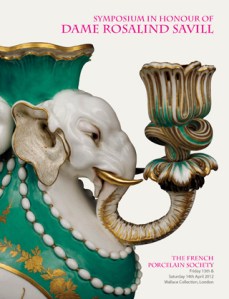 The French Porcelain Society is delighted to announce a two-day symposium to be held in honour of our President, Dame Rosalind Savill. Ros became a star of French decorative arts with the publication of her ground-breaking 3 volume Catalogue of Sèvres Porcelain in the Wallace Collection in 1988. Her career as a museum curator started at the Victoria & Albert Museum and continued at the Wallace where she served for 37 years, the last 19 as Director. The symposium is a tribute to her dedication to Sèvres porcelain research and her enjoyment and enthusiasm for the French decorative arts in general. New research on a wide range of subjects relating to French porcelain and the decorative arts will be presented by around 30 speakers – a veritable ‘Who’s Who’ of those currently involved in these fields including:
Andreina d’Agliano, Antoine d’Albis, Vincent Bastien, Sir Geoffrey de Bellaigue, Anthony du Boulay, Juliet Carey, Yves Carlier, Maureen Cassidy-Geiger, Aileen Dawson, Virginie Desrante, Claire Dumortier, Oliver Fairclough, Alden Gordon, Michael Hall, Ulla Houjkaer, Catrin Jones, Bet McLeod, Errol Manners, Jeffrey Munger, Tamara Préaud, Christophe de Quénétain, Marie-Laure de Rochebrune, Pamela Roditi, Linda Roth, Adrian Sassoon, Dame Rosalind Savill, Timothy Schroder, Christoph Vogtherr and Samuel Witwer.
The first day’s proceedings will be followed by an evening Reception in the upstairs galleries, and on Saturday 14th there is a celebratory Dinner in the Wallace Collection restaurant. For members only, on Sunday 15th, there is an Outing to Boughton. The symposium is open to members and non-members of The French Porcelain Society. Bursaries are available for scholars who wish to attend.
◊ ◊ ◊ ◊ ◊
P R O G R A M M E (more…)










leave a comment