CAA in New York
The 2011 College Art Association conference takes place in New York, February 9-12, at the Hilton New York. HECAA will be represented by two panels and a reception, as listed here. The following sessions may also be of interest for dix-huitièmistes. A full list of panels is available here»
HECAA EVENTS
New Scholars Session
Thursday, February 10, 12:30–2:00; Beekman Parlor, 2nd Floor, Hilton New York
Chair: Heidi Anne Strobel (University of Evansville)
- Susan M. Wager (Columbia University), “Madame de Pompadour’s Indiscreet Jewels: Boucher, Reproduction, and Luxury in Eighteenth-Century France”
- Heidi E. Kraus (University of Iowa), “Reflections on Civilization: Architecture and Memory in David’s Sabine Women“
- Kristina Kleutghen (Harvard University), “Staging Europe: Theatricality and Painting at the Chinese Imperial Court”
- Sally Grant (University of Sydney), “Garden Chambers and Global Spaces: Giandomenico Tiepolo’s Chinoiserie Room at the Villa Valmarana”
HECAA Reception
Thursday, February 10, 5:30-–8:30; Lincoln Suite, 4th Floor, Hilton New York (note revised time to accommodate the ASECS affiliate session)
◊ ◊ ◊ ◊ ◊
The Global Eighteenth Century
Saturday, February 12, 9:30–12:00; Regent Parlor, 2nd Floor, Hilton New York
Chairs: Kristel Smentek (Massachusetts Institute of Technology) and Meredith Martin (Wellesley College)
- Elisabeth Fraser (University of South Florida), “Miniatures in Black and White: Melling’s Eighteenth-Century Istanbul”
- Daniel McReynolds (Center for Advanced Studies in the Visual Arts), “A Venetian Abroad: Andrea Memmo and the Architecture of Diplomacy in Eighteenth-Century Istanbul”
- Chanchal Dadlani (Columbia University), “Between History, Ethnography, and Autobiography: The Gentil Album (1774) and Artistic Production in Eighteenth-Century India”
- Michele Matteini (Reed College), “The Market for Exotica in Eighteenth-Century Beijing: A View from Liulichang”
- Kevin Chua (Texas Tech University), “Macartney’s Globe, or Cartographic Refusal in 1793”
◊ ◊ ◊ ◊ ◊
OTHER SESSIONS RELATED TO THE 18TH CENTURY
Architecture, Space, and Power in the Early Modern Ibero-American World
Wednesday, February 9, 2:30–5:00; Gramercy B, 2nd Floor, Hilton New York
Chairs: Jesús Escobar (Northwestern University) and Michael Schreffler (Virginia Commonwealth University)
- Barbara Mundy (Fordham University), “Centers and Peripheries in Sixteenth-Century Mexico City”
- Stella Nair (University of California, Riverside), “From Inca Pampa to Spanish Plaza: Theatrical Politics and the Transformation of Imperial Public Space, 1480-1780”
- Catherine Wilkinson Zerner (Brown University), “The Visionary Spatial World of the Ibero-American Retable Altarpiece”
- Sabina de Cavi (Vlaams Academisch Centrum, Brussels), “Natione Italiana: Architecture of the Italian Minorities in Philippine Iberia (1580-1640)”
- Victor Deupi (Fairfield University), “Santissima Trinità degli Spagnoli and Ibero-American Patronage in Eighteenth-Century Rome”
◊ ◊ ◊ ◊ ◊
American Society for Hispanic Art Historical Studies: Rereading Spanish Early Modern Art Theory
Thursday, February 10, 9:30–12:00; Gramercy B, 2nd Floor, Hilton New York
Chairs: Giles Knox (Indiana University) and Carmen Ripolles (Metropolitan State College of Denver)
- Alejandra Giménez-Berger, “Aesthetics of Ideology in Felipe de Guevara’s Comentarios de la Pintura“
- Rebecca J. Long, “Italian Artists within the Spanish System”
- Melody Maxted-Wittry, “Knowing Nature: Artistic Production, Scientific Inquiry, and Catholic Devotion in Seventeenth-Century Spain”
- Ellen Prokop, “The Body of the Artist: An Anatomy of Faith in Early Modern Spain”
- Ray Hernández-Durán (University of New Mexico), “Francisco Pacheco in Sor Juana’s Library: Miguel Cabrera and the Academy in Eighteenth-Century New Spain”
◊ ◊ ◊ ◊ ◊
Representing Gothic
Thursday, February 10, 9:30–12:00; East Ballroom, 3rd Floor, Hilton New York
Chairs: Stephen Murray, Columbia University; Andrew J. Tallon, Vassar College
- Robert Bork (University of Iowa), “Speaking the Un-Speakable: Drawings, Texts, and the Explication of Gothic Design”
- Sarah Guérin (Columbia University), “Micro-Architectural Representation on Gothic Ivories”
- Michèle Hannoosh (University of Michigan), “Michelet and the Gothic: Architecture and the Writing of History in Nineteenth-Century France”
- Matilde Mateo (Syracuse University), “Re-Inventing the Gothic Grove: Recent Metamorphoses in Landscape Art, Science Fiction, and Animated Film”
- Matthew Reeve (Queen’s University), “Queer Gothic: Representing the Gothic at Walpole’s Strawberry Hill”
◊ ◊ ◊ ◊ ◊
Historians of British Art: Seeing through the Medium
Thursday, February 10, 12:30–2:00; Sutton Parlor South, 2nd Floor, Hilton New York
Chairs: Imogen Hart (Yale Center for British Art) and Catherine Roach (Cornell University)
- Holly Shaffer (Yale University), “Ta’ziyeh: Reference and Resemblance in North Indian Ephemeral Shrines, 1770-1830”
- Andrew Stephenson (University of East London), “Ciné-Texts: The Permeability of Modern Art, Film, and Snapshot Cultures in 1920s-1930s London”
- Elyse Speaks (University of Notre Dame), “Dissolution, Disillusion, and Deflation: Damien Hirst’s Double Act”
◊ ◊ ◊ ◊ ◊
Rococo, Late-Rococo, Post-Rococo: Art, Theory, and Historiography
Thursday, February 10, 2:30–5:00; Sutton Parlor Center, 2nd Floor, Hilton New York
Chairs: Melissa Hyde (University of Florida) and Katie Scott (Courtauld Institute of Art)
- Colin Bailey (The Frick Collection), “A Casualty of Style? Reconsidering Fragonard’s Progress of Love from the Frick Collection”
- Satish Padiyar (Courtauld Institute of Art), “Between Early and Late: Fragonard as a Late Rococo Artist”
- Elizabeth Mansfield (New York University), “Rococo Republicanism”
- Marika Knowles (Yale University), “Pierrot’s Periodicity: Watteau, Nadar, and the Circulation of the Rococo”
- Allison Unruh (independent scholar, New York), “Warhol’s Rococo”
◊ ◊ ◊ ◊ ◊
American Society for Eighteenth-Century Studies: Cosmopolitanism and Art in the Eighteenth Century
Thursday, February 10, 5:30–7:00; Petit Trianon, 3rd Floor, Hilton New York
Chair: Jennifer Milam (University of Sydney) — This session is dedicated to Angela Rosenthal
- Jeffrey Collins (Bard Graduate Center)
- Alicia Weisberg-Roberts (The Walters Art Gallery)
- Michael Yonan (University of Missouri)
- Jill Cassid (University of Wisconsin, Madison)
- Mark Cheetham (University of Toronto)
Historians of British Art: Young Scholars Session
Friday, February 11, 7:30-9:00am; Bryant Suite, 2nd Floor, Hilton New York
Chair: Colette Crossman (Blanton Museum of Art, University of Texas at Austin)
- Amanda Lahikainen (Brown University), “‘British Asignats’: Satirical Representation and the Politicization of Paper Currency in 1797”
- Keren Hammerschlag (King’s College London), “Artistic Scientists and Scientific Artists at the British Royal Academy 1860-1900”
- Emily V. Davis (Virginia Commonwealth University), “British Literary Periodicals Transform the Female Form in Turn-of-the-Century Glasgow”
◊ ◊ ◊ ◊ ◊
New Approaches to the Study of Fashion and Costume in Western Art, 1650–1900
Friday, February 11, 2:30–5:00; Clinton Suite, 2nd Floor, Hilton New York
Chairs: Helen Burnham (Museum of Fine Arts, Boston) and Justine De Young (Harvard University)
- Kathleen Nicholson (University of Oregon), “When Isn’t Fashion Fashion? Late Seventeenth-Century French Fashion Prints and Dress in Portraiture”
- Amelia Rauser (Franklin and Marshall College), “Neoclassical Fashion in Art and Life in the 1790s”
- Heather Belnap Jensen (Brigham Young University), “Materializing the Maternal Body in Post-Revolutionary Fashion”
- Jennifer W. Olmsted (Wayne State University), “Fashioning Masculinity: Portraiture, Costume, and the Juste Milieu”
- Alison McQueen (McMaster University), “Empress Eugénie and Representations of Fashion in Second Empire France”
◊ ◊ ◊ ◊ ◊
American Society for Hispanic Art Historical Studies: New Perspectives on Spanish Drawings 1500-1900
Friday, February 11, 5:30–7:00; Gibson Room, 2nd Floor, Hilton New York
Chair: Lisa A. Banner (independent scholar)
- José Manuel Matilla (Museo Nacional del Prado), “Recently Acquired Albums and Sketchbooks at the Prado”
- Zahira Véliz (independent scholar and curator), “Designing the Ensemble: An Altarpiece Drawing by Alonso Cano”
- José Manuel de la Mano (independent scholar, Madrid), “Mariano Salvador Maella: Problems of a Catalogue Raisonné and Exhibition”
◊ ◊ ◊ ◊ ◊
Imitation, Copy, Reproduction, Replication, Repetition, and Appropriation, Part I
Saturday, February 12, 9:30–12:00; Madison Suite, 2nd Floor, Hilton New York
Chairs: Malcolm Baker (University of California, Riverside) and Paul Duro (University of Rochester)
- Maria Loh (University College London), “Time Is Out of Joint: Resetting the Laocoön”
- Lisa Pon (Southern Methodist University), “The Printed Image in the Age of Miraculous Reproduction”
- Ronit Milano (Ben-Gurion University, “Self vs. Collective Identity: The Reproduction of Portrait Busts in Eighteenth-Century France”
- Douglas Fordham (University of Virginia), “The ‘Real Spaces’ of Eighteenth-Century Prints”
- Tom Huhn (School of Visual Arts), “Reflections on the Imitation of Winckelmann”
◊ ◊ ◊ ◊ ◊
Cultural Appropriation, Part II
Saturday, February 12, 9:30–12:00; Concourse G, Concourse Level, Hilton New York
Chairs: Elizabeth K. Mix (Butler University) and Gabriel P. Weisberg (University of Minnesota)
- Annika Johnson (University of Minnesota), “Cahier d’Oiseaux Chinois: The French and Fantastic Appropriation in the Chinoiseries of Jean-Baptiste Pillement”
- Colette Apelian (Berkeley City College), “Bhabha’s Cultural Hybridity and Early Twentieth-Century Modifications of Fez, Morocco”
- Susanne Slavick (Carnegie Mellon University), “Erasure, Eternal Return, and Empathic Restitution”
- Chisato O. Dubreuil (St. Bonaventure University), “A New Look at the Costs of the Cultural Appropriation of Canada’s Traditional Totem Poles”
- A. Joan Saab (University of Rochester), “America Tropical and the Multi-Sited Mural”
◊ ◊ ◊ ◊ ◊
Historians of British Art: Radical Neo: The Past in the Present in British Art and Design
Saturday, February 12, 9:30–12:00; Bryant Suite, 2nd Floor, Hilton New York
Chairs: Jason Rosenfeld (Marymount Manhattan College) and Tim Barringer (Yale University)
- Zirwat Chowdhury (Northwestern University), “The Elephanta in the Room: Indian Antiquity and British Antiquarianism in the Late Eighteenth Century
- Ayla Lepine (Courtauld Institute of Art), “Manifesting the Rule: Designing for Monasticism in Victorian Oxford”
- Katherine Faulkner (Courtauld Institute of Art), “Domestic Dreams and Utopian Idylls: Medieval Dress in the Work of William Reynolds-Stephens”
- Lee Hallman (The Graduate Center, City University of New York), “Unseen Landscapes: Paul Nash and the Geography of History”
- Mark A. Cheetham (University of Toronto), “Yinka Shonibare’s Enlightenment: Revising British Art for the Twenty-First Century”
Conference on Cofinement
Rethinking the Foucauldian emphasis on discipline and punishment. From the Early Modern History blog (which, unfortunately, is soon coming to an end) . . .
The Disease Within: Confinement in Europe, 1400-1800
Oxford Brookes University, Oxford, 4-5 May 2011
 This two-day conference will bring together leading scholars from medical history, early modern social history and architectural history to exchange and debate ideas regarding the relationship between health and architecture in institutions of confinement. Two central themes will be explored: the effect of confinement on the health of those within the institutions and debates about the potential effects of unhealthy bodies of the poor, sick, criminal and dangerous inmates on wider towns and cities. Despite the best attempts by authorities, inhabitants and their diseases continued to pose a risk to communities’ health and morality from behind closed doors and beyond high walls.
The study of early modern Europe’s institution building has been overshadowed by debates regarding discipline and punishment. Only recently has a revisionist history of these sites been undertaken. The speakers at the conference have been
at the forefront of this important work. As yet, there has been little or no attempt
to consider confinement as a broad public health policy, encompassing a wide
variety of institutions, across a broad time period.
Plenary Speaker: Dr Kevin Siena (Trent University and Oxford Brookes
International Research Fellow 2010-11)
Other speakers include:
•Dr Patricia Allerston (National Galleries of Scotland)
•Dr Jonathan Andrews (University of Newcastle)
•Prof Anne Digby (Oxford Brookes University)
•Prof Guy Geltner (University of Amsterdam)
•Prof Vanessa Harding (Birkbeck College, University of London)
•Prof John Henderson (Birkbeck College, University of London)
•Prof Tim Hitchcock (University of Hertfordshire)
•Dr Peter Jones (Oxford Brookes University)
•Dr Peter Kirby (University of Manchester)
•Dr Laura McGough (University of Ghana)
•Dr Tim McHugh (Oxford Brookes University)
•Dr Alysa Levene (Oxford Brookes University)
•Dr Fabrizio Nevola (University of Bath)
•Prof Carole Rawcliffe (University of East Anglia)
•Dr Jane Stevens Crawshaw (Oxford Brookes University)
•Dr Sethina Watson (University of York)
Organiser: Dr. Jane Stevens-Crawshaw, jane.stevens-crawshaw@brookes.ac.uk
Please register via the conference website.
CAA Registration — Last Week for Best Rates
Early Registration for CAA ends December 10.
The upcoming conference, taking place February 9–12, 2011, at the Hilton New York in midtown Manhattan, begins the celebration of CAA’s one-hundredth anniversary. Online registration is now open, and hotel reservations can be made. Register before the early deadline, December 10, to get the lowest rate and to ensure your place in the Directory of Attendees. You may also purchase tickets for special events, such as the reception at the Metropolitan Museum of Art following the presentation of the annual Awards for Distinction, as well as for professional-development workshops on a variety of topics for artists and scholars.
The CAA Annual Conference is the world’s largest international forum for professionals in the visual arts, offering more than two hundred stimulating sessions, panel discussions, roundtables, and meetings. CAA anticipates more than five thousand artists, art historians, students, curators, critics, educators, art administrators, and museum professionals to attend the Centennial event.
Symposium: Gold Boxes at The Wallace and V&A
From The Wallace Collection:
Going for Gold: Craftsmanship and Collecting of Gold Boxes
The Wallace Collection and the V&A, London, 26-28 November 2010
 A year after the opening of the Rosalinde and Arthur Gilbert Galleries at the V&A and the Boudoir Cabinet at the Wallace Collection, both museums are celebrating the art of the gold box in 18th- and 19th-century Europe. Leading international experts will speak on different centres of production including Paris, Geneva, Hanau, Berlin, Dresden, St Petersburg and London. Papers will illustrate design sources for boxes, diplomatic gifts, the challenge of recognizing fakes and the leading collections assembled by monarchs and bankers.
£112 for two days / £94 concessions / £30 students
£56 for one day / £47 concessions / £15 students
(Includes a wine reception at the Wallace Collection on Friday 26 and lunch at the V&A on Saturday 27)
Book online or call +44 (0)20 7942 2211
◊ ◊ ◊ ◊ ◊
F R I D A Y, 2 6 N O V E M B E R
The Goodison Lecture Theatre, The Wallace Collection (more…)
Images of London: Workshop at York
London Scenes: An Interdisciplinary Workshop
Centre for Eighteenth Century Studies, University of York, 4 December 2010
Organizers: Alison O’Byrne, John Barrell, and Mark Hallett
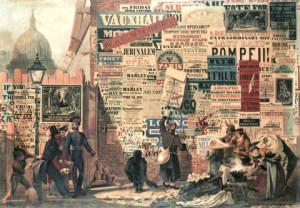 London Scenes will bring together academics from a range of disciplines – including English, History of Art, Cultural Geography, and Urban Studies – in order to examine sequences of images of the metropolis in the long eighteenth century. The workshop format will allow for maximum discussion, with speakers giving brief, 10-minute papers on a particular sequence, followed by 20 minutes for general discussion. Over the course of the day, we will be considering the representation of London in works by artists including Francis Place, William Hogarth, Samuel Scott, Paul and Thomas Sandby, Edward Pugh, JMW Turner, Thomas Rowlandson and Augustus Pugin, George Scharf, George Cruikshank, and John Tallis. In bringing together speakers and participants with a diverse range of interests from different disciplines, we hope to shed new light on how the city was represented in this period, and what broader implications this might have for our understanding of eighteenth-century culture. We are especially interested in considering whether or not we can begin to describe the development of a tradition of representing the city in visual sequences in this period.
Programme
9:45 Registration
10:00 Amy Todman ( Glasgow): “Vivarium Grenovicanum: Francis Place’s Views in and around the Royal Observatory”
10:30 Mark Hallett ( York): “Hogarth’s Vision of London”
11:00 Markman Ellis (Queen Mary): “Samuel Scott’s Thameside River Views, 1746-1764”
11:30 John Bonehill ( Glasgow): “‘The centre of pleasure and magnificence’: Paul and Thomas Sandby’s London”
12:00 coffee
12:15 John Barrell ( York): “Edward Pugh in Modern London”
12:45 Stephen Daniels (Nottingham): “The New Meridian: Turner and Greenwich”
1:15 Lunch
2:15 Jon Mee ( Warwick): “‘Mutual intercourse’ and ‘licentious discussion’ in The Microcosm of London, 1808-1811”
2:45 Alison O’Byrne ( York): “George Scharf’s London”
3:15 John Bowen ( York): “Cruickshank and Boz”
3:45 Elizabeth Grant (RIBA): “John Tallis’s London Street Views”
4:15 Closing comments and discussion
4:30 End of conference.
Registration is £12.00 including an informal sandwich lunch. A registration form is available on our website.
British Art from 1660 to 1735
From The University of York’s Centre for Eighteenth-Century Studies:
Court, Country, City: British Art 1660-1735
 The 3-year research project Court, Country, City: British Art 1660-1735 is funded by the AHRC and represents a major collaboration between the University of York and Tate Britain. Members of the core team are the principal investigator, Professor Mark Hallett (Head of Department of the History of Art, York); co-investigators Professor Nigel Llewellyn (Head of Research, Tate) and Dr Martin Myrone (Curator, Tate); post-doctoral research assistants Dr Lydia Hamlett and Dr Richard Stephens, and PhD students Caroline Good and Peter Moore.
The research project, which was launched in October 2009, is intended to stimulate new approaches to British visual culture from 1660-1735. The period in question saw profound changes in the nation’s character and these included a similarly important period of transformation in the visual arts, beginning with the appointment of Peter Lely as court painter to Charles II and ending with the emergence of the St Martin’s Lane Academy in the mid-1730s. In terms of British art history, the later decades of the eighteenth century – the ‘age of Hogarth and Reynolds’ – have been relatively well explored; however, the art of the preceding period has not been recovered or interpreted in the same depth. It is in order to redress this art-historical imbalance, and to provide a set of fresh perspectives on the art of late-Stuart and early Georgian Britain, that this project has been conceived and developed.
Researchers on the team have a wide range of interests and expertise, which are being focused on three major arenas of the visual arts in this period: the later Stuart and early Hanoverian courts, the country seats of the landed aristocracy and the urban spaces occupied by a mix of social classes. Important cross-cutting themes include the development of art theory and the impact of imperial expansion on the visual arts. As well as generating a wide range of publications – including books, journal articles, conference papers and PhDs – the project also aims to communicate the period to a wider audience through gallery displays of art and online resources.
Research Staff
Principal Investigator: Professor Mark Hallett, Professor of History of Art, the University of York
Co-Investigator: Professor Nigel Llewellyn, Head of Research, Tate Britain
Co-Investigator: Dr Martin Myrone, Curator, Tate Britain
Post-doctoral Research Assistant: Dr Lydia Hamlett
Post-doctoral Research Assistant: Dr Richard Stephens
Research Students
Caroline Good, PhD student: ‘The Making of a National Art History: British Writers on Art and the Narratives of Nation, 1660-1735’
Peter Moore, PhD student: ‘British Art in an Atlantic Economy, 1660-1735’
Forthcoming Events
A six-month display – with the aim of introducing major questions from the research project and relating them to objects in the Tate Collection – will be installed at Tate Britain in autumn 2010.
A one-day conference on new approaches to the period is to be held at Tate Britain in May 2011.
A two-day conference to mark the end of the project and to present its major research findings is to be held in York in 2012.
Past Events
A one-day conference on current art-historical scholarship in the field was held at York on May 7th 2010. For further details, click here.
Symposium on William Birch in Philadelphia
From the conference brochure:
The Landscapes of William Birch: Providing a Context
The Athenaeum of Philadelphia, 3 December 2010
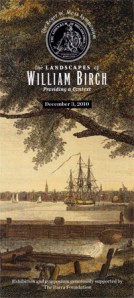 Coming to Philadelphia in 1794, William Russell Birch (1755-1834) would become the first artist successfully to publish engraved view books in the United States. He arrived with a letter from Benjamin West and with a successful 1791 publication, Delices de la Grande Bretagne, a series of 36 engraved views of picturesque settings after such artists as West, Joshua Reynolds, and Thomas Gainsborough. Although Birch immediately found some success as a copyist of portraits, he never lost his desire to create picturesque views based upon the American experience, and in 1800 he published The City of Philadelphia, a series of 28 views which would become the touchstone for future artists, engravers, and architects desiring to present images of the city. The success of this set of large-format prints encouraged Birch to undertake The Country Seats of the United States of North America, published in 1808. Birch’s reputation has chiefly rested on these two publications, but there is much more to learn about his life and career.
Symposium Presentations
- John Dixon Hunt, “Picturesque: ‘The Singular Excellence of Britain for Picture Scenes.’”
- Wendy Bellion, “Expanding the Scope of Painting in the 1790s”
- Michael J. Lewis, “Birch’s Philadelphia: An Architectural Perspective”
- Emily T. Cooperman, “‘Another Fifty Years May Lay a Foundation’: The Legacy of Birch’s Landscape Art”
- Lea Carson Sherk, “The Birch ‘Lives’ and the Carson Collection.”
To register for the conference, please visit The Athenaeum’s website»
The Image of the Black in Western Art
At the appearance of the first four volumes of a ten-volume series on the theme of The Image of the Black in Western Art, Harvard is hosting a symposium next week (largely focused on the sixteenth and seventeenth centuries). Volume III, Part 3: From the “Age of Discovery” to the Age of Abolition / The Eighteenth Century: Court, Enlightenment, Slavery, and Abolition is scheduled to be published next fall.
From the Harvard Art Museums website:
M. Victor Leventritt Symposium: The Image of the Black in Western Art
Harvard University, Cambridge, MA, 15 November 2010

"Portrait of a Black Boy," formerly attributed to Christopher Wren, 1680s (British Museum)
David Bindman, University College London and Harvard University; Paul Kaplan, State University of New York at Purchase; Joseph Koerner, Harvard University; Elmer Kolfin, University of Amsterdam; and Jeremy Tanner, University College London. Henry Louis Gates Jr., Harvard University, will moderate. Held in conjunction with the exhibition Africans in Black and White: Images of Blacks in 16th- and 17th-Century Prints, this symposium will feature five presentations followed by a panel discussion concerning the perception and representation of people of African descent in Western art.
Organized by the W. E. B. Du Bois Institute for African and African American Research and David Bindman, Emeritus Professor of the History of Art, University College London, and a 2010 Sheila Biddle Ford Foundation Fellow, W. E. B. Du Bois Institute, with Anna Knaap, former Theodore Rousseau Postdoctoral Fellow, Division of European and American Art, Harvard Art Museums, and current Visiting Fellow, Jesuit Institute, Boston College. . . .
CAA Registration Now Open
 The upcoming conference, taking place February 9–12, 2011, at the Hilton New York in midtown Manhattan, begins the celebration of CAA’s one-hundredth anniversary. Online registration is now open, and hotel reservations can be made. Register before the early deadline, December 10, to get the lowest rate and to ensure your place in the Directory of Attendees. You may also purchase tickets for special events, such as the reception at the Metropolitan Museum of Art following the presentation of the annual Awards for Distinction, as well as for professional-development workshops on a variety of topics for artists and scholars. CAA will regularly update the conference website over the next few months, with additional details on the program, awards, tours, and more. Session titles and chairs’ names are available now, and all presenters’ names and papers will follow in the coming weeks.
The CAA Annual Conference is the world’s largest international forum for professionals in the visual arts, offering more than two hundred stimulating sessions, panel discussions, roundtables, and meetings. CAA anticipates more than five thousand artists, art historians, students, curators, critics, educators, art administrators, and museum professionals to attend the Centennial event.
Symposium: New Research on Giuseppe Vasi
Program for the upcoming Vasi symposium, held in conjunction with the Vasi exhibition:
Una Roma Visuale: New Research on Giuseppe Vasi and the Art, Architecture and Urbanism of Eighteenth-Century Rome
Jordan Schnitzer Museum of Art, University of Oregon, Eugene, 12-13 November 2010
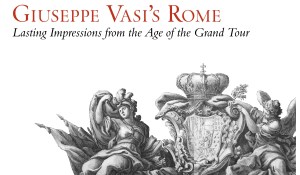 A symposium planned in conjunction with the special exhibition Giuseppe Vasi’s Rome: Lasting Impressions from the Age of the Grand Tour, this two-day event will gather together scholars of national and international reputation, each of whom will present new research on Vasi and eighteenth-century Rome. Sponsored by the Oregon Humanities Center and the Departments of Architecture and Art History, School of Architecture and Allied Arts Organized by the exhibition curators James Harper and James Tice, the symposium will encompass such topics as prints, painting, sculpture, architecture, urbanism and cartography in Vasi’s Rome. A guided tour of the exhibition, with the curators, is included in the program.
F R I D A Y, N O V E M B E R 1 2
Pre-Symposium Presentation (4 p.m.)
Sarah Murray and Molly Taylor-Poleskey (Stanford University), ‘Travelers to Vasi’s Rome: Mapping Eighteenth-Century Mobility’
An introduction to Stanford University’s “Mapping the Republic of Letters” Project’.
Symposium Keynote Lecture (5:30 p.m.)
John Pinto (Princeton University), ‘”The Most Glorious Place in the Universal World”: Architecture and Urbanism in the Rome of Giuseppe Vasi’
This overview of Rome, as defined by architecture, urban design, and city representations in the eighteenth century, addresses the appearance of the papal capital, systematically recorded by Giuseppe Vasi in the Age of the Grand Tour.
S A T U R D A Y, N O V E M B E R 1 3
Morning Sessions (9:45 a.m.–12:00 p.m.)
Mario Bevilacqua (Università degli Studi di Firenze), ‘Etched Towns and Architecture: Vasi and Piranesi in the Italian Eighteenth-Century Print World’
Operating within a tradition of architectural illustration, Vasi and Piranesi were both influenced by scholars and intellectuals who promoted print production as visual documents of a decaying cultural heritage. This paper compares and contextualizes their methods of compiling city views, including their use of texts, indexes and maps to summarize and give order and scope to the individual monuments illustrated in their sheets.
Allan Ceen (Director, Studium Urbis, Rome), ‘Vasi and Urban Space’
This paper examines Vasi’s attitude toward public spaces—the streets and piazzas that appear throughout his Magnificenze—to reveal the artist’s concept of the living city as an urban whole and not merely a collection of discrete monuments.
Katherine Rinne (California College of the Arts, Oakland), ‘The Tiber’s Flow in Mid-Eighteenth Century Rome’
In mid-eighteenth century Rome the Tiber was still the lifeblood of the city, as it had been in antiquity. It was also a site of experimentation, scientific investigation, and the display of wealth, as revealed in the maps and vedute of Vasi and other artists and engineers of his time.
Afternoon Sessions (1:20-4:20 p.m.)
Heather Hyde Minor (University of Illinois, Urbana-Champaign), ‘Piranesi’s Lost City’
This talk will illuminate the precise nature of the scholarly and artistic practices that were used to create Piranesi’s great map of Rome, the “Ichnographiam Campi Martii antiquae urbis,” which appeared in his 1762 book Il Campo Marzio dell’Antica Roma (The Campus Martius of Ancient Rome), accompanied by a sixty-seven page essay and forty-eight figural prints.
Jessica Maier (University of Oregon), ‘Giuseppe Vasi as Cartographer: Influence and Innovation in Early Modern Maps of Rome’
Vasi’s 1778 map of Rome tends to be regarded as derivative by scholars of early modern cartography, overshadowed as it is by the radical innovation of Nolli’s Grande Pianta (1748). This talk proposes a reevaluation of Vasi’s map in light of the practice of cartography in the eighteenth century, when “borrowing” was commonplace and originality a relative term.
Susan Dixon (University of Tulsa), ‘Vasi and Arcadia’
In the 1740s through the 1760s, the Accademia degli Arcadi flourished in Rome, serving as a neutral landscape in which those interested in restoring Italian culture to a position of supremacy gathered to listen to poetic recitations. Those with intense political, theological and social differences flocked pacifically enough to the Bosco Parrasio, the Arcadians’ garden. Vasi found patrons and supporters in Arcadia to help him create the Magnificenze di Roma, among other works.
John Moore (Smith College), ‘Giuseppe Vasi’s “Prospetto dell’Alma Città di Roma”’
First published in December 1765, Vasi’s enormous etched panorama of Rome went together with a guidebook in which one expression unexpectedly provoked complaints from the papal authorities. The resolution of this matter casts light on the diplomatic relationships among the courts of Rome, Naples, and Madrid.
A guided tour of the exhibition with its curators follows at 4:20 p.m.










leave a comment