Conference on the Pamphilj in October
The Pamphilj and the Arts: Patronage and Consumption in Baroque Rome
Boston College, 15-16 October 2010
In September 1644, the election of Pope Innocent X Pamphilj catapulted his family to the height of Roman society. From that moment on, the Pamphilj became active patrons of the arts, which were harnessed as the visual expression of the family’s new identity. Set within the social, religious and cultural context of Rome, the papers will examine the contributions of three generations of patrons: Innocent X; Prince Camillo Pamphilj (the pope’s nephew) and his wife, Princess Olimpia Aldobrandini; and their son, Cardinal Benedetto Pamphilj. In particular, this interdisciplinary conference will consider the influential role of the heretofore obscure patron, Benedetto Pamphilj, in shaping the visual arts, music and literature of late Baroque Rome, from his elevation as cardinal in 1681 until his death in 1730.
The conference is free and open to the public but registration is required. In addition the schedule provided below, full details are available here»
◊ ◊ ◊ ◊ ◊
Conference Schedule (more…)
Conference on Salvator Rosa in Eighteenth-Century Britain
From The Paul Mellon Centre:
Salvator Rosa in Britain
A Conference at Dulwich Picture Gallery, London, 18 October 2010
 This conference, organized by Dr Helen Langdon, accompanies the exhibition at Dulwich Picture Gallery, Salvator Rosa (1615-1673): Bandits, Wilderness and Magic (15 September–28 November 2010) which concentrates on the quality and variety of Rosa’s works – savage landscapes, fanciful portraits of romantic figures, intriguing philosopher-paintings, witches and dragons. The conference explores the impact of this many-sided art on British painting, literature and art theory.
9:30 Registration
Morning Session introduced and chaired by Claire Pace (Honorary Research Fellow, University of Glasgow); Wendy Wassyng Roworth (Professor of Art History, University of Rhode Island), ‘The Legacy of Genius: Salvator Rosa, Joshua Reynolds and Painting in Britain’; Elinor Shaffer (Senior Research Fellow, Institute of Germanic & Romance Studies, University of London), ‘The Lives of Artists: William Beckford and Salvator Rosa’.
Visit to the exhibition, Salvator Rosa (1615-1673): Bandits, Wilderness and Magic, led by Helen Langdon and Xavier F. Salomon, Arturo and Holly Melosi Chief Curator at Dulwich Picture Gallery.
Afternoon Session I introduced and chaired by Susan Jenkins (Senior Curator, English Heritage); Cinzia Maria Sicca (Associate Professor of the History of European Art, University of Pisa), ‘“One of the most excellent Masters that Italy has produced in this century”: The circulation of Salvator Rosa’s works through the English community in Leghorn’; Alexis Ashot, Associate Specialist, Old Master and British Pictures, Christie’s, ‘“Unbounded capacity”: a 1778 vita of Salvator Rosa by the London connoisseur, Charles Rogers’.
Afternoon Session II introduced and chaired by Christoph Vogtherr (Curator of Pictures, pre-1800, The Wallace Collection); Jonathan Yarker (PhD candidate, University of Cambridge), ‘Joseph Goupy and the imitation of Rosa in early eighteenth-century England’; Helen Langdon (curator of the exhibition), ‘Belisarius in Norfolk’.
17.00 Panel and audience discussion chaired by Claire Pace, followed by wine reception.
Full conference fee, including coffee, lunch, tea, private view of the exhibition, and wine reception: £40. Student and Senior concessions £20. To register for the conference please check availability with Ella Fleming at The Paul Mellon Centre: Email: events@paul-mellon-centre.ac.uk, Tel: 020 7580 0311, Fax: 020 7636 6730.
Politics in the Garden
Political Gardening: Jacobites and Tories, Whigs and True Whigs, ca. 1700-1760
Wentworth Castle, Barnsley, South Yorkshire, 6-8 August 2010
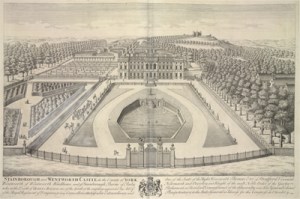 The conference will explore political gardening in Britain, ca. 1700–1760, in order to identify the symbolism and meanings embedded within the country estates of Tory and Jacobite landowners. The papers will discuss whether these landscapes can be distinguished from those of Whig politicians, and whether Tories and Jacobites created an iconography of dissent from the Whig governments that managed Britain on behalf of the Hanoverian Kings George I and George II. The conference will be held at Wentworth Castle in the Palladian wing of the mansion (built 1760–65), and delegates will enjoy meals within the Baroque wing (built 1709–14). Wentworth Castle is also the home of the Northern College for Residential Adult Education which will provide delegates with catering and modern student accommodation.
The Wentworth Castle estate was created by Thomas Wentworth, first Earl of Strafford (second creation) between 1708 and 1739, and further developed by his son William, the second Earl. Although a Tory minister in Queen Anne’s government, Thomas Wentworth became a Jacobite conspirator after the accession of George I in 1714 and employed the Jacobite architect, James Gibbs, to design the interior of his new mansion. It is also likely that Gibbs designed garden buildings for Wentworth Castle. Booking information is available here» (more…)
Thomas Lawrence Exhibition and Conference
Thomas Lawrence: Regency, Power and Brilliance
A Conference at the National Portrait Gallery and The Paul Mellon Centre, London, 18-19 November 2010
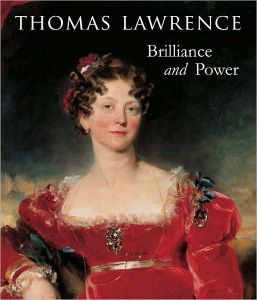
Ed. by Cassandra Albinson, Peter Funnell, Lucy Peltz ISBN: 9780300167184 (YCBA, 2010), $70
This conference accompanies the exhibition Thomas Lawrence: Regency, Power and Brilliance at the National Portrait Gallery, London (20 October 2010–23 January 2011) which will be shown at the Yale Center for British Art, New Haven, (24 February–5 June 2011). This will be the first exhibition in the United Kingdom since 1979 to examine Lawrence’s work and the first substantial presentation of this artist in the United States. It will present Lawrence as the most important British portrait painter of his generation and will explore his development as one of the most celebrated and influential European artists of the late eighteenth and early nineteenth centuries. By his untimely death in 1830 Lawrence had achieved the greatest international reach and reputation of any British artist. Based on new research and fresh perspectives, this exhibition will introduce Lawrence to a new generation of museum visitors and students. It will also contextualise his work in the light of recent scholarship on the art, politics and culture of the period. The exhibition will include the artist’s greatest paintings and drawings alongside lesser known works in order to provide a fresh understanding of Lawrence and his career. It will contrast his approach to sitters according to age and gender, juxtapose the power and impact of his public works with the intimacy and intensity of those portraits of his friends and family, trace his innovations as a draughtsman and painter, and place him within the broader contexts of the aesthetic debates, networks of patronage and international politics of his day.
Thursday, 18 November 2010, National Portrait Gallery (2:00pm–8:30pm)
Session One will address issues relating to Lawrence, gender and representation, and will include papers by Marcia Pointon (Professor Emerita, University of Manchester), Shearer West (Arts and Humanities Research Council and the University of Birmingham) and Sarah Monks (School of World Art Studies and Museology, University of East Anglia).
Evening: At 6pm, delegates are invited to attend a guest lecture by Richard Holmes, the biographer and author of The Age of Wonder: How the Romantic Generation Discovered the Beauty and Terror of Science (2008) and formerly Professor of Biographical Studies at the University of East Anglia. The lecture will be followed by a wine reception hosted by the curators, and free admission to the exhibition.
Friday, 19 November 2010, Paul Mellon Centre (9:15am–7:15pm)
Session Two, devoted to Lawrence and his contemporaries, will include papers by Viccy Coltman (University of Edinburgh) and Martin Myrone (Tate).
Session Three will explore technical aspects of Lawrence’s career, particularly his studio practice and relationship with engravers, and will include papers by Jacob Simon (National Portrait Gallery) and Sally Doust (Independent Scholar).
Session Four will address Lawrence’s reputation and historiography into the later nineteenth century, and will include papers by Philippa Simpson (Tate) and Pat Hardy (Walker Art Gallery, National Museums Liverpool).
The conference will conclude with a roundtable discussion, including Mark Hallett (University of York), Ludmilla Jordanova (King’s College, London), David Solkin (Courtauld Institute of Art), and the curators of the exhibition, which will consider themes arising from this exhibition and conference. The discussion will be followed by a wine reception at 5:45pm.
Full conference fee for both days, including coffee, lunch and tea on 19 November, and receptions: £40. Student and Senior concessions £20. To register for the conference please check availability with Ella Fleming at The Paul Mellon Centre: Email: events@paul-mellon-centre.ac.uk, Tel: 020 7580 0311, Fax: 020 7636 6730.
Skin this Summer (exhibition and conference at the Wellcome)
The Wellcome Collection in London currently hosts an exhibition on Skin that includes various anatomical images from the eighteenth century (and a fine online component). Next week, there will be a symposium on the topic of Skin Exposed. While the latter is far-ranging in period and approach, it does raise the question of what a conference focused entirely on skin in the eighteenth-century might look like.
Skin
Wellcome Collection, London, 10 June — 26 September 2010

A suspended lower arm from which the skin and fatty layer has been removed to reveal the muscles. Next to it is a knife and a surgical instrument case with its lid. Gérard de Lairesse after Govard Bidloo and William Cowper, 1739 (Wellcome Library)
The Skin exhibition invites you to re-evaluate the largest and probably most overlooked human organ. We consider the changing importance of skin, from anatomical thought in the 16th century through to contemporary artistic exploration. Covering four themes (Objects, Marks, Impressions and Afterlives), Skin takes a philosophical approach. It begins by looking at the skin as a frontier between the inside and the outside of the body. Early anatomists saw it as having little value and sought to flay it to reveal the workings of the body beneath.
The exhibition then moves to look at the skin as a living document: with tattoos, scars, wrinkles or various pathologies, our skin tells a story of our life so far. Finally, the skin is considered as a sensory organ of touch and as a delicate threshold between life and death.
Skin Lab, which features artistic responses to cutting-edge research and technological developments in skin science from the mid-20th century onwards, will complement the exhibition.
◊ ◊ ◊ ◊ ◊
Symposium — Skin: Exposed
Wellcome Collection, London, 16-17 July 2010
 Nudity is an intimate state, perceived differently across times and cultures. For some it is a taboo, for others something to be celebrated. Join us for this special two-part ‘skin-posium’ to explore nakedness in all its guises.
Friday: Literary reading, 19.00-21.00
Bask in words of literary masterminds Milton, Keats, Tennyson and others. The evening includes a drinks reception so you can get to know your fellow guests.
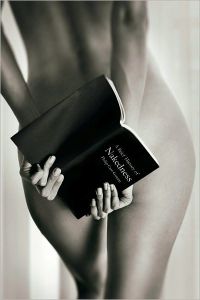
Philip Carr-Gomm, "A Brief History of Nakedness" (May 2010), $30
Saturday: Talks and discussions, 10.30-17.00
Experts from the worlds of history of art, evolutionary science and more will explore how bare skin is understood in different cultures, how nudity makes us feel and how our ancestors evolved to reveal their bare skin in the first place.
Our multidisciplinary speakers include ‘Skin’ curator Javier Moscoso; fashion historian Rebecca Arnold; geneticist Walter Bodmer; historian of art Jill Burke; author of A Brief History of Nakedness, Philip Carr-Gomm; human geographer Glenn Smith; and anthropologist and film-maker Michael Yorke. Friday evening is curated by Steven Connor, author of The Book of Skin.
Tickets must be booked in advance. £30 full price/£20 concession for both days, including drinks on Friday evening and lunch, tea and coffee on Saturday. Please call 020 7611 2222 to book.
Lecture: Edward Collier and Questions of Media
As noted at Early Modern History, Dror Wahrman gives the Royal Historical Society’s Prothero Lecture Wednesday evening:
Dror Wahrman, “The Media Revolution in Early Modern England: An Artist’s Perspective”
Cruciform Lecture Theatre 2, University College London, 30 June 2010, 5:30 pm (reception, 6:30 – 8:30pm)
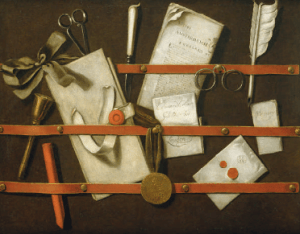
Painting by Edward Collier
Dror Wahrman is the Ruth N. Halls Professor of history and director of the Center for Eighteenth-Century Studies at Indiana University Bloomington. He is also professor of history at the Hebrew University in Jerusalem. He has written and edited numerous articles and books including The Making of the Modern Self (Yale University Press, 2004), which received the Ben Snow Prize from the North American Conference on British Studies and the Louis Gottschalk Prize from the American Society for Eighteenth-Century Studies. Wahrman’s main research topics centre on the advent of modernity in Europe, and on what the term ‘modernity’ might mean. His work has explored key narratives that the modern West tells about itself—the emergence of class society, the rise of the middle class, and the emergence of the modern individual or self. His current projects include a book-length exploration of the little known painter Edward Collier and a co-authored book (with Jonathan Sheehan of the University of California-Berkeley) about chance, order, and providence in the transition from the early modern period to the eighteenth and nineteenth centuries.
Enquiries to Sue Carr, Executive Secretary, s.carr@ucl.ac.uk or tel. 020 7387 7532. A PDF file of the event flyer is available here.
Conference on Philippe de La Hire
From the INHA website:
Colloque: Philippe de La Hire entre Architecture et Sciences
Paris, 24 — 26 June 2010
 Philippe de La Hire (1640-1718), destiné à la peinture par son père Laurent de La Hyre (1606-1656), se tourna, à partir de 1664, vers le domaine scientifique en manifestant des intérêts très diversifiés puisque, cartographe du royaume avec Picard (1678-82), il pratiqua aussi la géométrie, l’hydraulique, la gnomonique, la mécanique et l’astronomie.
Entré à l’Académie royale des sciences en 1678, il fut nommé professeur à l’Académie royale d’architecture en 1687, sans jamais avoir fait oeuvre d’architecture, et fut très actif dans les deux institutions. Ce savant universel figure dans toutes les biographies d’hommes de sciences et son activité de peintre a été récemment remise à jour par Madeleine Pinault-Sorensen. Mais son rôle de professeur à l’Académie d’architecture a été encore peu étudié.
Ce colloque réunissant historiens des sciences, historiens de l’architecture et historiens de l’art permettra de mieux mesurer la place de cet homme dans les champs variés dans lesquels il se distingua et de le confronter à ses contemporains Picard, Cassini et Mariotte. Il mettra aussi en exergue les liens profonds qui unissent l’architecture et les sciences à la fin du XVIIe siècle et dans les premières années du XVIIIe siècle.
Cette manifestation est organisée avec le soutien du laboratoire Géométrie-Structure- Architecture de l’Ecole nationale supérieure d’architecture Paris-Malaquais, de l’Institut national d’histoire de l’art, de l’Académie d’architecture, du département d’histoire de l’art et d’archéologie de l’université de Nantes, du Max Planck Institute for the History of Science et de l’Association Edoardo Benvenuto.
PDF file of the conference program
Upcoming Conference in Paris: Used Things
Recycling, Waste and Luxury: The Afterlife of Used Things in the Long 18th Century
Université Paris Diderot, UFR Charles V – 10, rue Charles V 75004 Paris, 22-23 June 2010
Organized by Ariane Fennetaux, Amélie Junqua, and Sophie Vasset
Tuesday, 22 June
9:00 Registration and coffee
9:15 Ariane Fennetaux and Amélie Junqua, Introduction
9:45-11:15 Knowledge, Science and Recycling – Claire Gallien
- Simon Werrett (University of Washington), Remaking natural knowledge: recycling in the history of science and medicine
- Sophie Vasset (Université Paris-Diderot), Recycling cases in 18th-century medical treatises
11:30-13:00 Recycling 18th-Century Parisian Walls – Charlotte Guichard
- Allan Potofsky (Université Paris-Diderot), Revolutionary recycling and civic architecture: the conseil des bâtiments civils and the Use and Abuse of the Past in France, 1795-1815
- Noémie Etienne (Université de Genève), Du mur au musée: transformations matérielles et symboliques des peintures à Paris autour de 1775
14:30-16:00 Material Recycling (I) – Amélie Junqua
- Geoffrey Day (Winchester College), Recycling in the library
- David Humphrey (Royal College of Art, London), A portal to change and innovation: recycling and the 18th-century English jewelry trade
16:30-18:00 Material Recycling (II) – Ariane Fennetaux
- Sara Pennell (Roehampton University), ‘…for a crack or flaw despis’d’ : understanding ceramic ‘semi-durability’ in the first half of the long 18th century
- Fiona McDonald (University College London), Weaving and wool: materiality through woollen blankets in 18th-century Aotearoa/New Zealand
Wednesday, 23 June
9:15-10:45 Waste – Robert Mankin
- Tim Cooper (University of Exeter), Critical perspectives from Marxism on the uses of waste and recycling in the long 18th century
- Sabine Barles (Université St Denis Paris 8), La valorisation des excréta urbains en France à la fin du 18ème siècle
11:15-12:45 Royal Recyclings – Natacha Coquery
- Corinne Thépaut-Cabasset (Château de Versailles), Le grand livre des pierreries du roi: gestion, entretien et recyclage des bijoux pendant le règne de Louis XIV
- Olivia Fryman (Historic Royal Palaces and Kingston University), ‘Cleaning and new beautifying’: strategies of repair and reuse in the English Royal Wardrobe, 1689-1760
14:15-15:45 Commerce and Recycling (I) – Jon Stobart
- Arlene Leis (University of York), Repetition, recycling and imitation: images of high art in Sarah Sophia Banks’s collection of trade cards
- Natacha Coquery (Université de Nantes), La diffusion sociale des biens à Paris au 18ème siècle: la boutique, carrefour entre le luxe, le demi-luxe et l’occasion
16:15-18:30 Commerce and Recycling (II) – Sara Pennell
- Barbara Lasic (Victoria and Albert Museum), Recycling and re-fashioning the grand-siècle in Paris and London, 1789-1814
- Ilja Van Damme (University of Antwerp), The decline and the fall of the second hand guild in the Southern Netherlands: material culture, institutional change and the labour market, 1650-1850
- Jon Stobart (Northampton University), Luxury and country house sales in England, c.1750-1830
Exhibition and Conference on Louise Élisabeth of France
Fuochi di gioia e lacrime d’argento: An Exhibition Commemorating Louise Élisabeth of France
on the 250th Anniversary of Her Death
Palazzo Bossi Bocchi, Parma, 11 April — 16 May 2010

Louis-Michel Van Loo, "Louise Élisabeth, Duchess of Parma"
The oldest daughter of King Louis XV, Louise Élisabeth of France (1727-1759) was married in 1739 to Prince Philip of Spain (son of Philip V) at the age of 12 (she gave birth to her first child at 14). Following the War of the Austrian Succession, Philip and Élisabeth became Duke and Duchess of Parma. The exhibition includes a posthumous portrait of Élisabeth painted by Jean-Marc Nattier (now in a private collection), along with the more familiar portrait by Louis-Michel van Loo and a selection of prints and drawings from the Cariparma Foundation.
In addition to the exhibition, in September Parma will host an international conference dedicated to Louise Élisabeth and the first decade of Bourbon rule in Parma from 1749 to 1759. Organized by Professors Charles Mambriani (University of Parma) and Gianfranco Fiaccadori (University of Milan), the conference will explore the deep historical, artistic, and cultural ties between Parma and France.
Happy (Belated) Birthday, Dr. Sloane!
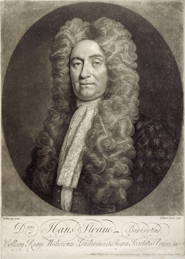 In the midst of the disruptions from the volcanic ash cloud, I failed to note the birthday of Sir Hans Sloane (1660-1753), who would have turned 350 years this past Friday (April 16). The physician was an important naturalist, bibliophile, and collector. As outlined in his will, the bequest of his vast collections to the nation provided the foundation of the British Museum. To mark the anniversary, a series of events have been organized at the British Museum, London’s Natural History Museum, and the Old Operating Theatre Museum, as well as in the Northern Ireland village of Killyleagh, where Sloane was born. Although most events took place last week, in June a major conference will be held at the British Library (see below for the schedule). For whatever it’s worth, I have a hunch that Sloane would have been thrilled to have his birthday marked by the eruption of Iceland’s Eyjafjallajokull -C.H.
◊ ◊ ◊ ◊ ◊
In addition, the Sloane Printed Books Catalogue, is an outstanding new online resource. As noted on the BL’s website:
Sloane’s library of approximately 40,000 volumes, now dispersed within the collections of the British Library and other research libraries, is being identified. Bibliographical descriptions are enhanced with information about pre-Sloane provenance, annotations and other copy-specific information. The information accumulated is being made available through a web-accessible database, the Sloane Printed Books Catalogue, maintained by the British Library. The work of this project will form a significant research resource for medical, scientific and intellectual historians of the period.
◊ ◊ ◊ ◊ ◊
From Books to Bezoars: An International Conference Celebrating the 350th Anniversary of the Birth of Sir Hans Sloane, Physician, Naturalist and Collector
British Library, London, 7-8 June 2010
MONDAY, JUNE 7
9:30 Registration
10:00 Plenary Session
- James Delbourgo (Rutgers University), Collecting Sir Hans Sloane
10:45 Coffee
11:05 Sloane’s Origins, Life and Work
- Mark Purcell (National Trust), “Settled in the north of Ireland”, or Where did Sloane come from?
- Pratik Chakrabarti (University of Kent), The Voyages of Hans Sloane: A colonial history of gentlemanly science
- Lisa Smith (University of Saskatchewan), Sir Hans Sloane: Physician of the family
12:15 Lunch
1:10 Specimens and Classification
- Charlie Jarvis, Mark Spencer, and Rob Huxley (Natural History Museum), Sloane’s plant specimens at the Natural History Museum
- Savithri Preetha Nair (Independent Scholar), Botanising on the Coromandel coast in the seventeenth century
- Jill Cook (British Museum), Sloane, elephants and climate change
3:00 Tea
3:20 Sloane and the West Indies
- James Robertson (University of the West Indies), Knowledgeable readers- Jamaican critiques of Hans Sloane’s botany
- Julie Chun Kim (Fordham University), The African and Amerindian sources of Atlantic medicine
- Wendy Churchill (University of New Brunswick), Hans Sloane’s perspectives on the medical knowledge and health practices of non-Europeans
- Tracy-Ann Smith and Katherine Hann (Natural History Museum), Sloane, slavery and the natural world: New perspectives from community programming
6:30 Reception in the Enlightenment Gallery of the British Museum
TUESDAY, JUNE 8
10:00 Plenary Session
- Kim Sloan (British Museum), Sir Hans Sloane’s ‘Paper Museum’
10:45 Coffee
11:05 The Culture of Collecting
- Kathryn James (Beinecke Library, Yale), Hans Sloane and the public performance of natural history
- Barbara Benedict (Trinity College, Hartford), Sloane’s Ranges: Shifts in Sir Hans Sloane’s literary representation in the eighteenth century
- Eric Jorink (Huygens Instituut), Sloane and the Dutch connection
12:15 Lunch
1:15 Catalogues, Books, and Manuscripts
- Alison Walker, The Sloane Printed Books Project
- Marjorie Caygill (British Museum), Sloane’s catalogues in the British Museum
- Arnold Hunt, Sloane as a manuscript collector
2:20 Tea
2:50 Sloane’s Book Collections
- John Goldfinch (British Library), A rediscovered volume of printed and mss fragments from Sloane’s library
- Julianne Simpson (Wellcome Library), The dispersal of Sir Hans Sloane’s library: A case study from the Medical Society of London collection
- Stephen Parkin (British Library), Sloane’s Italian books
- Will Poole (New College, Oxford), Sloane’s books at the Bodleian Library
4:20 Concluding Remarks










leave a comment