Conference on the Eighteenth-Century Illustrated Book
‘Adorn’d with Cuts’: The Illustrated Book in the Long Eighteenth Century
Chawton House Library, Chawton, Hampshire, 14 May 2010
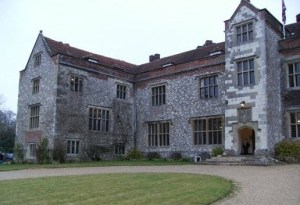
Over 400 years old, Chawton House once belonged to the brother of Jane Austen. The novelist herself lived nearby from 1807 until 1817, just before her death. The Chawtwon House Library sponsors a series of academic events and fellowships.
Growing interest among scholars from a range of disciplines has opened up debate about the partnership of image and text in the eighteenth century and its place in the flourishing print culture of the period. This one-day conference at Chawton House Library draws together different approaches to book illustration in order to consider the production, purpose and interpretation of images in books of this date. A number of the library’s most intriguing illustrated texts will be on display for the duration of the event. Speakers will include:
- John Feather, who will consider text and image in the eighteenth century from the perspective of the historian of the book
- Brian Alderson, who will examine continuity and change in Aesopic imagery prior to Thomas Bewick’s engravings to The Select Fables of Aesop in 1818
- Ann Lewis, who will discuss text and image in illustrated editions of Rousseau’s Julie ou La Nouvelle Héloïse
To register for the conference, please contact Chawton House Library, info@chawton.net.
What Will Art Historical Research Look Like in the Future?
The Future of Art Bibliography in the 21st Century
Metropolitan Museum of Art, New York, 20 April 2010
The Getty Research Institute has received a grant from the Kress Foundation to convene an international task force of art librarians, scholars, and information specialists from Europe and the United States to discuss the question of the future of art bibliography. Recent events, including discussions of art library closures, scant funding resources for ongoing support of art libraries and projects internationally, and the cessation of the Getty’s support for the continuation of BHA provide the catalyst to review current practices, take stock of changes, and seriously consider developing more sustainable and collaborative ways of supporting the bibliography of art history in the future.
The organizers of the task force (Kathleen Salomon, Getty Research Institute; Rüdiger Hoyer, Zentralinstitut für Kunstgeschichte, Munich, and Jan Simane, Kunsthistorisches Institut in Florenz and Chair of the Art Libraries Section of IFLA) wish to extend an invitation to the art historical community to participate in a discussion on this topic to be held on Tuesday, April 20th in New York. The meeting will be from 1:00-5:30 p.m. at the Metropolitan Museum of Art (courtesy of Kenneth Soehner). Two panels presenting “thoughts from the field” will be followed by open discussion. The issues that come forward in the open meeting will help to lay the groundwork for the subsequent meeting of the smaller task force that will address what is and is not feasible for art bibliography in the future. The outcomes of the meeting and next steps will be posted and shared with the wider art historical community. If you would like to attend the open meeting, please note that seating is limited and must be reserved ahead of time. Please RSVP to Diane Lazar at dlazar@getty.edu by April 12th.
If you are unable to attend this meeting, note that there will be a recap and discussion session at ARLIS in Boston on Sunday April 25th, from 2:30-3:30, as well as at the IFLA Art Libraries Section meeting in Gothenburg, Sweden, in August.
SAH Conference in Chicago
 The 2010 Society of Architectural Historians conference takes place in Chicago, 21-25 April. Registration is open online. The following sessions suggest something of what’s available for the long eighteenth century:
◊ ◊ ◊ ◊ ◊
Architectural Drawing from Antiquity through Early Modernity: The Ideas of Architecture
Friday, 2:00-4:30, Wolf Point
Chair: John Senseney (University of Illinois, Urbana-Champaign)
- Robert Bork (University of Iowa), “Drawing, Geometry, and the Procedural Logic to Gothic Design”
- Ann C. Huppert (University of Washington, Seattle), “The Centrality of Drawing in Baldassarre Peruzzi’s Design Process”
- Raffaella Fabiani Giannetto (University of Maryland, College Park), “The Role of Drawing in the Evolution of Garden Design”
- Anthony Gerbino (Worcester College, University of Oxford), “The Estate Survey and the Formal Garden: Cartography and Landscape in 17th-century France”
- Heather Hyde Minor (University of Illinois, Urbana-Champaign), “G.B. Piranesi’s Notebooks and the Ideas of Architecture”
◊ ◊ ◊ ◊ ◊
Taking the Measure of New Colonial Architectural History
Friday, 2:00-4:30, Sauganash West
Chair: Barbara Burlison Mooney (University of Iowa)
- Pierre-Édouard Latouche (Canadian Centre for Architecture), “The Many Great and Small Rebuildings of Montreal between 1650 and 1750”
- Jeroen van den Hurk (University of Kentucky), “New Netherlandic Architecture: Evidence from Building Contracts”
- Daphne Degazon Hobson (Charlestown, Nevis), “Subsistence and Luxury: A Report from the British Caribbean in 1706”
- Mark Reinberger (University of Georgia), “Englishness and Gentility: A View from the Mid-Atlantic”
- Carl Lounsbury (Colonial Williamsburg Foundation), “Regionalism in Early American Ecclesiastical Architecture”
◊ ◊ ◊ ◊ ◊
Alpenreisen und Wüstenwanderungen: Envisioning Landscapes of Early Modernity
Saturday, 9:00-11:30, Western Stage
Chairs: Nicole Huber and Ralph Stern (University of Washington, Seattle)
- Jennifer Ferng (Massachusetts Institute of Technology), “Unearthing Prosperity: the Art of Mining, Governance, and Perceptions of Landscape in Early Modern France”
- Kristoffer Neville (University of California Riverside), “Landscape versus Architecture in Early-Modern Scandinavia”
- Jeremy Kargon (Morgan State University), “From Building Toward Landscape: Erich Mendelsohn and a Reconstitution of Geographical Forms”
- Mari Hvattum (Oslo School of Architecture and Design), “‘Goats, Englishmen, and Art Lovers’: A.O. Vinje and the Making of the Modern Mountainscape”
Conference for Walpole and Delany Exhibitions in London
From the Paul Mellon Centre:
Curious Specimens: Enlightenment Objects, Collections, Narratives
Victoria & Albert Museum, London, 15-17 April 2010
A conference organized by Birkbeck, University of London; the Victoria & Albert Museum; the Yale Center for British Art; the Lewis Walpole Library. Supported by the Paul Mellon Centre.

Miniature cabinet from Strawberry Hill, rosewood 1743 (London: V&A)
This conference brings together academic and museum scholars to present and discuss new perspectives on eighteenth-century practices of collecting, using as its focus two exhibitions, Horace Walpole and Strawberry Hill (V&A, 6 March-4 July 2010) and Mrs Delany and her Circle (Sir John Soane’s Museum, 19 February-1 May 2010). Horace Walpole (1717-1797) was a central figure in eighteenth-century social and cultural life and the most important collector of English historical artifacts and objects, including manuscripts, rare books, ceramics, portrait miniatures, prints, paintings, antiquities, armour and other curiosities, which he arranged in his Gothic villa at Strawberry Hill. Mary Delany (1700-1788) is best known for her cut-paper collages of botanically accurate flowers and floral embroidery designs, which connect the world of natural history with court culture and in particular the collections of the Duchess of Portland. This conference will address eighteenth-century pre occupations with the ordering of both the natural world and material culture, which required new ways of thinking about the classification of objects. Papers will examine issues of collecting, collectors and their circles; the creation of artisanal productions as forms of collecting; and intersections and tensions between antiquarian, aesthetic, and scientific cultures of collecting.
Thursday, 15 April — Lincoln Inns Fields
5:00 Keynote Lecture (at the Royal College of Surgeons)
- Pamela Smith (Columbia): ‘Curious Modes of Production: Making Objects in the Early Modern World’
6:30 Reception at Sir John Soane’s Museum and viewing of Mrs Delany exhibition
Friday 16 April — Victoria & Albert Museum
10:00 Registration
10:30 Welcome from Directors/Organizers
10:45 Panel 1: Walpole and Delaney
- Michael Snodin (V&A)
- Alicia Weisberg Roberts (The Walters Art Museum)
12:00 Panel 2: Collectors, Predisciplinarity, Divisions of Knowledge I
- Elizabeth Eger (KCL): ‘Quills and Other Feathers: Elizabeth Montagu and the Matter of Friendship’
- Janice Neri (Boise State University, Idaho): ‘Paper Kingdoms: Mary Delany, the Duchess of Portland, and the Consequences of Collage’
1:30 Lunch
2:30 Panel 3: Collectors, Predisciplinarity, Divisions of Knowledge II
- Stacey Sloboda (Southern Illinois University, Carbondale): ‘Material Displays: Porcelain and Natural History in the Duchess of Portland’s Museum’
- Adriano Aymonino (Independent Scholar, London): ‘A Mirror of the Enlightenment: The Collections of Elizabeth Seymour Percy, first Duchess of Northumberland’’
- Craig Hanson (Calvin College, Michigan): ‘Collecting Virtue: The Patronage and Acquisitions of Dr Richard Mead in Early Georgian London’
4:15 Tea
4:45 Plenary Lecture
- Stephen Bann (University of Bristol), ‘Curiosity Future and Past: Siting Horace Walpole’
6:00 Reception and viewing of Strawberry Hill exhibition
Saturday 17 April — Strawberry Hill
10:00 Welcome: Michael Snodin
10:30 Keynote Lecture
- Malcolm Baker (U. California Riverside): ‘Walpole and Sculpture’
12:00 Panel 4: Aesthetic and/or Antiquarian Collecting
- Cynthia Roman (Lewis Walpole Library, Yale): ‘Collecting Copies, Surrogates, and Misattributions’
- Rosemary Sweet (Leicester): ‘Contrary to my System and my Humour: Horace Walpole and Antiquarian Collecting in the 18th Century’
- George Haggerty (U. California, Riverside): ‘Eccentric Collectors: Walpole, Beckford, and the Erotics of Things’
1:30 Lunch
2:30 Visits to Strawberry Hill (every 15 minutes, 1 hour per visit)
4:00 Tea
4:30 Roundtable Discussion: Museums, Collecting, Predisciplinarity
- Malcolm Baker, Tim Knox, Kim Sloan, Michael Snodin
Conference on Classics in the Eighteenth Century
Classics and the Classical in the Eighteenth Century
King’s College , The Strand, London,
15-16 July 2010
Conference Presentations:
- Michael Silk (King’s College London) “Classical, Neo-classical, and Romantic: The Point of No Return”
- Paul Davis (University College London), “Volcanic Classicism”
- Jonathan Sacks (Concordia, Canada), “The Time of Decline ”
- Joshua Billings (Oxford), “Sophocles and the German Spirit”
- Katherine Harloe (Reading), “Winckelmann’s Early Reception and the Invention of Altertumswissenschaft ”
- Matthew Bell (KCL), “Goethe and the Classics”
- Sebastian Matzner (KCL), “The Collapse of a Classical Tradition? An Archaeological Investigation into ‘The End of Rhetoric’ around 1800: Gottsched, Kant, Schlegel”
- Crystal Bennes (KCL), “Lucan and Problems of Genre in 18th-Century France”
- Michael Hardy (KCL) and Katherine East (Royal Holloway), “Ciceronian Rhetoric in Georgian England”
- Matthew Hiscock (UCL), “Classics for the Radical Fringe: Republicans and Dissenters at the end of the 18th Century”
- Suzanne Aspden (Oxford), “Making Musical Classics in 18th-Century London”
- Ismene Lada-Richards (KCL), “Thinking with Ancient Pantomime in 18th-Century England and France”
To register, please contact William Fitzgerald (william.fitzgerald@kcl.ac.uk)
Indian Portraiture in London
The Indian Portrait, 1560-1860
National Potrait Gallery, London, 11 March – 20 June 2010
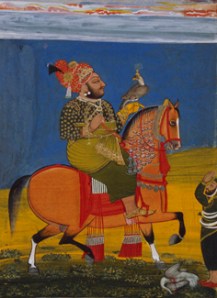
"Kunwar Anop Singh of Devgarh Riding with a Falcon" Devgarh, Mewar, Rajasthan attributed to Bakhta, ca. 1776 © Museum Rietberg Zurich.
This exhibition, the first of its kind in the UK, tells the story of the Indian portrait over three centuries, exploring the fascinating ways in which Indian artists have approached the depiction of the human form and the changing role of portraiture in Indian history. Bringing together 60 stunning works from international collections, the exhibition will celebrate the beauty, power and humanity of these works of art. The exhibition begins with works from the Mughal Court, including some of the earliest realistic portraits made for the Emperors Humayun (r.1530–56) and Akbar (r.1556–1605) and the magnificent court portraits made for their successors Jahangir (r.1605–27) and Shah Jahan (r.1628–58), as well as studies of Mughal courtiers, holy men and servants. The distinctive regional styles from Rajasthan and the Punjab Hills are also shown alongside the European–influenced works produced by Indian artists under British rule. These paintings are a record of a rich and complex history, embracing influences from Iran and Europe as well as local Hindu and Muslim traditions, showing that the Indian portrait can stand shoulder to shoulder with outstanding examples of portraiture from around the world.
◊ ◊ ◊ ◊ ◊
Two-Day Conference: Portraiture in South Asia
National Portrait Gallery and the School of Oriental and African Studies, London, 21-22 May 2010
This conference will assess the character of portraiture, visual and literary representations of the individual in South Asia from 1500 to 1900. Though widespread in Europe, studies of portraiture in Asia are more unusual because of the common perception that it is largely a Western phenomenon. Speakers include Ebba Koch, Chris Pinney, J.P. Losty and Crispin Branfoot. First day at the National Portrait Gallery, second day at SOAS. Tickets: £50/£40 concessions and £20 students.
◊ ◊ ◊ ◊ ◊
Press coverage of the exhibition can be found at the London Times and the BBC. Kathryn Hadley provides a useful summary at History Today.
ASECS in Albuquerque — What a Schedule!
The 2010 ASECS conference takes place in Albuquerque, March 18-21, at the Hotel Albuquerque. Along with our annual luncheon and business meeting, HECAA will be represented by two panels, chaired by Wendy Wassying Roworth and Adrienne Childs:
Historians of Eighteenth-Century Art and Architecture (HECAA) New Scholars Session
Thursday, 18 March 2010, 11:30-1:00, Turquoise
Chair: Wendy Wassyng ROWORTH, University of Rhode Island
- Rose LOGIE, University of Toronto, “The Artful Voyeur: Watteau, Drawing, and Spectatorship”
- Anne-Louise G. FONESCA, University of Montréal, “Mythological Painting in Eighteenth-Century Portugal: Models, Nudity and Patronage”
- Hilary Coe SMITH, Duke University, “A New Approach to Measuring Taste in the Parisian Art Market, 1760-1784”
- Diana CHENG, McGill University, “The Boudoir of the Marquise Du Châtelet: A Chapel for Oneself and the Illusion of Happiness”
◊ ◊ ◊ ◊ ◊
Theorizing the Decorative in Eighteenth-Century Art (HECAA)
Friday, 19 March 2010, 4:15-5:45, Alvarado A
Chair: Adrienne CHILDS, University of Maryland
- B.A. HARRINGTON, University of Wisconsin, “Virtue Embodied: A Polite and Dutiful Worktable”
- Ethan LASSER, The Chipstone Foundation, “The Phenomenology of Decoration”
◊ ◊ ◊ ◊ ◊
HECAA Luncheon and Business Meeting
Friday, 19 March 2010, 1:00-2:30, Franciscan Ballroom
OTHER SESSIONS RELATED TO THE VISUAL ARTS
THURSDAY, 18 March 2010
Gender and Homosociality in the Long Eighteenth Century
Thursday, 18 March 2010, 8:00-9:30, Alvarado G
Chair: Heidi STROBEL, University of Evansville
- Jennifer GERMANN, Ithaca College, “Women’s Networks and Artistic Survival: The Case of Marie-Éléonore Godefroid”
- Amber LUDWIG, Boston University, “Re-Evaluating Vigée-Lebrun’s Portrait of Lady Hamilton as a Sibyl”
◊ ◊ ◊ ◊ ◊
Theories of Visual Experience and Artists’ Writings about Art in the Eighteenth Century
Thursday, 18 March 2010, 8:00-9:30, Alvarado C
Chair: Maureen HARKIN, Reed College
- Hector REYES, Northwestern University, “Drawing History: Dialectics of Visual Experience in the Comte de Caylus’ Recueil”
- Lyrica TAYLOR, University of Maryland, “Portrait of the Artist: John Francis Rigaud’s Vision of the Role of the Artist in Eighteenth-Century England”
- Abigail ZITIN, University of Chicago, “Hogarth’s Drawing Lesson: Technique and Gender in The Analysis of Beauty”
◊ ◊ ◊ ◊ ◊
Portraits and Money
Thursday, 18 March 2010, 8:00-9:30, Alvarado H
Chair: Bradford MUDGE, University of Colorado, Denver
- Susan EGENOLF, Texas A&M University, “Narrative as Commodity in the Marketing of Wedgwood’s Fine Heads”
- Megan PEISER, Texas Tech University, “A Picture of Commodity: The Culture of Miniatures in Ann Radcliffe’s The Mysteries of Udolpho”
- Tatiana SENKEVITCH, University of Toronto, “The Flip Side of the Ancient Coin: Du Bos on the Portraiture of the King”
◊ ◊ ◊ ◊ ◊
The Eighteenth Century in Motion
Thursday, 18 March 2010, 8:00-9:30, Suite 418
Chair: Alistaire TALLENT, Colorado College
- Lila Miranda GRAVES, University of Alabama, Birmingham, “Walking the Western Circuit: Paradise Hall, Glastonbury Tor and the Arthurian Context of Tom Jones”
- Meredith DAVIS, Ramapo College of New Jersey, “Hogarth In Flight”
- Michael YONAN, University of Missouri, “Movement, Perception, and Salvation in the Bavarian Rococo Church”
◊ ◊ ◊ ◊ ◊
‘Venice’ in the Imagination of the Creative Artist and the Discursive Citizen
Thursday, 18 March 2010, 9:45-11:15, Alvarado G
Chair: Todd L. LARKIN, Montana State University
- Sally GRANT, University of Sydney, “The World in the Venetian Countryside: The Tiepolos at the Villa Valmarana ai Nani”
- Sabrina FERRI, University of Notre Dame, “Venice on Stage: Gozzi’s Theater Between Conservatism and Innovation”
- Irene ZANINI-CORDI, Florida State University, “Lagoon Waters: Double Vision of Venetian Festivities”
- Lisa BERGLUND, Buffalo State College, State University of New York, “Sweet Seducements and Wandering Misery: Hester Lynch Piozzi Reflects on Venice”
◊ ◊ ◊ ◊ ◊
Moving Vegetation: Collecting, Transplanting, and Acclimatizing Plants in the Long Eighteenth Century
Thursday, 18 March 2010, 9:45-11:15, Suite 518
Chair: Giulia PACINI, The College of William & Mary
- Glynis RIDLEY, University of Louisville, “Eating Locally, Eating Globally: The Naturalization of Exotics and the Eighteenth-Century Imperial Enterprise”
- Stephanie VOLMER, Managing Editor, Raritan Quarterly, Rutgers University, “Escaping Plants and Other Examples of Botanical Mobility”
- Mira RADANOVIC, McMaster University, “‘Lily flowers steeped in alcohol, an excellent vulnerary’: The Interests, Surfeits, Debts, and Fetishes of Florilegium Culture”
◊ ◊ ◊ ◊ ◊
Tradition and Innovation in Northern New Spain: Revisiting Eighteenth-Century New Mexico
Thursday, 18 March 2010, 9:45-11:15, Weaver
Chair: Cristina Cruz GONZÁLEZ, Oklahoma State University
- Robin Farwell GAVIN, Museum of Spanish Colonial Art, Santa Fe, “Eighteenth-Century Altarscreens of New Mexico”
- William WROTH, Independent Curator and Scholar, “Ethnic Complexity in Eighteenth-Century Ranchos de Taos”
- Jacqueline Orsini DUNNINGTON, Independent Scholar, “Tracking the Virgin of Guadalupe in New Mexico”
◊ ◊ ◊ ◊ ◊
Artists’ Lives and Afterlives: Fact, Fiction, and Fabrication
Thursday, 18 March 2010, 11:30-1:00, Alvarado B
Chair: Heather MCPHERSON, University of Alabama at Birmingham
- Sarah MONKS, University of East Anglia, Norwich, “Life/Studies: Living as an Artist in Late Eighteenth-Century London”
- Robert MODE, Vanderbilt University, “Staging the Life of Hogarth or The Artist’s Progress”
- Paulo M. KÜHL, State University of Campinas (Brazil), “Making Heroes in the Institut de France: Joachim Le Breton’s Notices Historiques”
◊ ◊ ◊ ◊ ◊
Pastiche in the Eighteenth Century
Thursday, 18 March 2010, 2:30-4:00, Alvarado G
Chair: Julie-Anne PLAX, University of Arizona
- Julia ABRAMSON, University of Oklahoma, “What We Read into a Novel: Pastiche, Postiche, and the Two Authors of Marivaux’s Paysan parvenu”
- Paula RADISICH, Whittier College, “Pastiche & Chardin’s Genre Subjects”
- Wendy Wassyng ROWORTH, University of Rhode Island, “The ‘Characteristical’ Style and Salvator Rosa and in England”
- Susan M. DIXON, University of Tulsa, “Stone Soup, or Leftovers from the Farnese Collection in Rome”
◊ ◊ ◊ ◊ ◊
Mapmaker, Make me a Map: Eighteenth-Century Cartographies
Thursday, 18 March 2010, 4:15-5:45, Alvarado A
Chair: Karen STOLLEY, Emory University
- Brittany ANDERSON, Emory University, “Geography of Latin American Cities in the Encyclopedia metódica: Imagining the New World in the Eighteenth-Century”
- Neal Anthony MESSER, Murray State University, “Imagined Order: Mapping What ‘Should Be’ in Eighteenth-Century Mexico”
- Magali M. CARRERA, University of Massachusetts Dartmouth, “Localist Cartographies: Indigenous Mapping of Late Eighteenth-Century New Spain”
- Trevor SPELLER, State University of New York, Buffalo, “Cartographic Humor and Cartographic Power in Gulliver’s Travels”
◊ ◊ ◊ ◊ ◊
FRIDAY, 19 March 2010
Cultures of Flowers
Friday, 19 March 2010, 8:00-9:30, Suite 318A
Chair: Melissa HYDE, University of Florida
- Mira MORGENSTERN, City College of New York, “The ‘Blooming’ Truth: Rousseau and the Paradox of Flowers”
- John KOSTER, University of Toronto, “The Political Aesthetics of Goethe’s Metamorphosis of Plants (1790)”
- Ann SHTEIR, York University, “Flora in the Vernacular: ‘Artificial Flower Gardens’ in 1780s London”
- Julia SHAPCHENKO, All-Russian Academy of Arts, St. Petersburg, “Count Razumovsky’s Botanical Garden, Gorenky, Russia, 1805-1822”
◊ ◊ ◊ ◊ ◊
Visualizing Interiority in the Eighteenth Century
Friday, 19 March 2010, 8:00-9:30, Alvarado C
Chairs: Catherine CLINGER AND Richard TAWS, McGill University
- Jennifer FERNG, Massachusetts Institute of Technology, “Mining, Modernism, and the Visual Culture of the Geological Landscape in Late Eighteenth Century France”
- David EHRENPREIS, James Madison University, “Inside the Mind’s Eye: Mesmer’s Imagination and Lavoisier’s Reason”
- Suzie PARK, Eastern Illinois University, “Adam Smith, William Gilpin, and Interiority in Ruins: Visualizing ‘what has befallen you’”
◊ ◊ ◊ ◊ ◊
Satire et censure de l’Ancien Régime au Consulat (French Society for Eighteenth-Century Studies)
Friday, 19 March 2010, 9:45-11:15, Alvarado A
Chair: Bernadette FORT, Northwestern University
- Melissa HYDE, University of Florida, “Needling: The Arts of Embroidery and Satire in the Hands of the Saint-Aubins”
- Brigitte WELTMAN-ARON, University of Florida, “Voltaire et Rousseau: courte satire, longue défense”
- Nanette LE COAT, Trinity University, “Les Censeurs censurés: Chamfort, Marat et l’Académie française”
- Julia DOUTHWAITE, University of Notre Dame, “Le Cimetière de la Madeleine et la censure sous le Consulat”
◊ ◊ ◊ ◊ ◊
Presidential Address, Awards, and Business Meeting
Friday, 19 March 2010, 2:30-4:00
Peter H. REILL, University of California, Los Angeles, “Vitalism and the Construction of the Human Sciences in the Enlightenment: Johann Gottfried Herder and Adam Smith”
◊ ◊ ◊ ◊ ◊
SATURDAY, 20 March 2010
Arboreal Values
Saturday, 20 March 2010, 8:00-9:30, Alvarado A
Chair: Elizabeth Heckendorn COOK, University of California, Santa Barbara
- Paula R. BACKSCHEIDER, Auburn University, “Disputed Value: Women and the Trees They Loved”
- Nicolle JORDAN, University of Southern Mississippi, “Writing on Trees in Jonson, Barker, and Defoe”
- Irene FIZER, Hofstra University, “The Residues She Leaves: Arboreal Constructs and the Woman ‘Out of Place’ in Sense and Sensibility”
- Giulia PACINI, The College of William and Mary, “How to Think Trees: Arboreal Values in the Eighteenth Century”
◊ ◊ ◊ ◊ ◊
Representations of the Fairies in Europe and its Colonies in the Long Eighteenth Century
Saturday, 20 March 2010, 8:00-9:30, Alvarado E
Chair: Charlotte TRINQUET, University of Central Florida
- Kevin PASK, Concordia University, “Fairy Painting, Fairy Theater”
- Sophie RAYNARD-LEROY, State University of New York, Stony Brook, “The Conteuse as a Fairy: The Example of Madame d’Aulnoy”
- Aurélie ZYGEL-BASSO, Université du Québec à Trois-Rivières, “‘Ceci n’est pas une fée’: the Representation of Fairies and Magicians in French and English Anthologies Illustration at the End of the Eighteenth Century (Clément-Pierre Marillier, Thomas Stothard)”
- Anne DUGGAN, Wayne University, “Ancient and Modern ‘Fairies’ in Donkey Skin and Lady Oscar”
◊ ◊ ◊ ◊ ◊
The House of Habsburg and Its Influence, Part I
Saturday, 20 March 2010, 9:45-11:15, Alvarado H
Chair: Michael YONAN, University of Missouri
- Katherine ARENS, University of Texas at Austin, “The Holy Roman Empire as a Missing Early Modern Culture”
- Rita KRUEGER, Temple University, “The Challenges of Imperial Mothering: Empress Maria Theresa and her People”
- Todd L. LARKIN, Montana State University, Bozeman, “The Lily and the Eagle: The Bourbon-Habsburg Alliance Emblematized by Elisabeth Vigée-Lebrun’s Marie-Antoinette in Ceremonial Dress (1778)”
- Madeline SUTHERLAND-MEIER, University of Texas at Austin, “The Spanish Habsburgs Viewed from the Eighteenth Century”
◊ ◊ ◊ ◊ ◊
The House of Habsburg and Its Influence, Part II
Saturday, 20 March 2010, 3:45-5:15, Alvarado E
Chair: Michael YONAN, University of Missouri
- Bruno FORMENT, Ghent University, Belgium, “Habsburg Opera under the ‘Belgian Climate’: Three Italian Seasons at the Théâtre de la Monnaie, 1727–1730″
- Erick ARENAS, Stanford University, “The Missa solemnis of Eighteenth-Century Vienna: A Study of Music, Liturgy, and the Habsburg Inheritance”
- Edmund J. GOEHRING, University of Western Ontario, “Mozart Among Austria’s Neoplatonists”
- Karen HILES, Muhlenberg College, “Collecting Music at the Hofburg: Haydn and the ‘Emperor’ Quartet amidst the Emperor’s Quartets”
◊ ◊ ◊ ◊ ◊
Forms of Attention, Forms of Distraction
Saturday, 20 March 2010, 3:45-5:15, Suite 318
Chair: Andrew BROUGHTON, University of Chicago
- Sarah KAREEM, University of California, Los Angeles, “Wonder, Attention, and Absorption”
- Matthew LANDERS, University of Puerto Rico at Mayaguez, “Narration and Memory Theory in the Structure of Tristram Shandy: The Medical Aesthetics of Digression”
- Barbara BENEDICT, Trinity College, “Collecting Impressions: Antiquarianism and Attention to Detail in the Literature of the Long Eighteenth Century”
- Respondent: Natalie PHILLIPS, Stanford University
Sandby Conference in London
Paul Sandby and the Geographies of Eighteenth-Century Art
Paul Mellon Centre, London, 18-19 March 2010
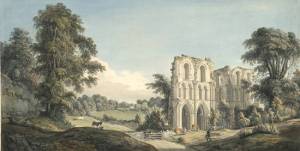
Paul Sandby, "Roche Abbey, Yorkshire," c.1770s. Watercolour over graphite, 300 x 588 mm. Royal Academy of Arts, London. Photo © Royal Academy of Arts/Slingsby
This conference, to be held at the Paul Mellon Centre for Studies in British Art, will address issues arising from the exhibition Paul Sandby: Picturing Britain (Nottingham Castle Museum and Art Gallery, 25 July-18 October 2009; National Gallery of Scotland, Edinburgh, 7 November 2009-7 February 2010; Royal Academy of Arts, London, 13 March-13 June 2010). Organised by Nottingham Castle Museum and Art Gallery, this is the first exhibition to bring together drawings, paintings and prints by this important, if neglected, artist, spanning his long career, and from all the major public collections of his works. In addressing Sandby’s vast and versatile body of work, in its figurative as well as topographical aspects, the exhibition explores how the artist portrayed the character of landscape throughout Britain, and indeed contributed to envisioning the country as a nation state from the cementing of the Act of Union with Scotland, after the failure of the 1745 Jacobite Rebellion, to the wars with revolutionary and Napoleonic France at the century’s end. Through extensive tours, initially as a military draughtsman and then as a professional artist, Sandby pioneered the artistic depiction of landscape in Scotland and Wales, and searched out new sites throughout England. His art is arguably unrivalled among that of his contemporaries in its portrayal of the appearance and meaning of a range of subjects, rural and urban, modern and historical, in a country experiencing rapid social and commercial development.
Thursday 18 March, Royal Academy of Arts
6:30 Private view of the exhibition, Paul Sandby: Picturing Britain, led by John Bonehill (Curator of Paul Sandby: Picturing Britain and Lecturer in Art History, University of Glasgow), followed by a wine reception.
Friday 19 March, The Paul Mellon Centre
9:40 Welcome by Brian Allen (Director of Studies, The Paul Mellon Centre)
9:45 Morning Session introduced and chaired by Kim Sloan (Curator, Department of Prints and Drawings, British Museum)
9:50 Keynote address by Bruce Robertson (Professor of Art History, University of California-Santa Barbara), “Paul Sandby: Father of English Watercolour?”
10:30 Timothy Wilcox (Independent Scholar), “‘Burying the Hatchet’: Paul Sandby at Luton Park”
11:40 Finola O’Kane (Lecturer in Architecture, University College Dublin), “’A Genuine Idea of the Face of the Kingdom’? Jonathan Fisher and Paul Sandby’s portrait of Ireland within the frame of Great Britain”
12:20 John Barrell (Professor of English, Centre for Eighteenth Century Studies, University of York), “A Common in Wales: Edward Pugh, the Pastoral, and Progress”
2:15 Afternoon session introduced and chaired by Shearer West (Director of Research, Arts and Humanities Research Council)
2:20 Gillian Forrester (Curator of Prints and Drawings, Yale Center for British Art), “‘No Joke Like a True Joke’? ‘Twelve London Cries done from the Life’”
3:00 Nick Grindle (Teaching Fellow, Department of Art History, University College London), “Living in London and Windsor: The Sandby Brothers’ Residences, c.1752-1809”
4:10 Carolyn Anderson (Ph.D. candidate, School of Geography, University of Edinburgh), “’The Art of Depicting with a Soldier’s Eye’: The Military Mapping of Eighteenth-Century Scotland”
4:50 Stephen Daniels (Professor of Cultural Geography, University of Nottingham), “‘Great Balls of Fire’: Representing the Remarkable Meteor of 18th August 1783”
5:30 Panel and audience discussion chaired by Sam Smiles (Emeritus Professor of Art History, University of Plymouth)
6:15 Wine reception
Conference on the French Academy in Rome
Palazzo Mancini: L’Accademia di Francia a Roma nel Settecento
Académie de France à Rome, Villa Medici, 4-6 March 2010
Convegno internazionale a cura di Émilie Beck Saiello, Aude Henry-Gobet, Marc Bayard

Piranesi, "View of the Palazzo Mancini," etching, 1752 (Image from Wikimedia Commons)
Palazzo Mancini, palazzo e istituzione, luogo in cui si materializzano al tempo stesso dottrina e pratiche, fu la sede dell’Accademia di Francia a Roma dal 1725 al 1803. Fu anche un ambiente estremamente permeabile: luogo di passaggio, di scambi, di socializzazione, aperto su Roma, su Parigi e sull’Europa. L’Accademia s’interessava all’Antico, ma anche alle nuove creazioni, alla natura come alle produzioni artistiche. Istituzione ricca dunque, complessa e ricettiva, fu uno dei laboratori del XVIII secolo.
Questo convegno internazionale ha per oggetto lo studio del Palazzo e dell’istituzione che vi era ospitata all’epoca, il suo funzionamento, i suoi attori, le sue pratiche. Saranno presi in esame non soltanto l’attività degli artisti – pensionnaires e indipendenti – all’interno dell’Accademia (lavoro e visite d’atelier, viaggi di studio, …), ma anche la loro relazione con Roma (istituzioni, circoli, manifatture, atelier d’artisti, …) e con gli ambienti stranieri presenti in città (istituzioni e comunità straniere). Inoltre, sarà considerata la questione del mercato e del divenire delle opere, analizzando in particolare la collaborazione tra gli artisti francesi e l’ambiente romano, le relazioni tra essi e i viaggiatori del Grand Tour e i loro agenti. Sarà infine esaminata la diffusione delle loro opere in Francia e all’estero (esposizioni pubbliche, acquisizioni dello Stato e costituzione di collezioni private).
The conference brochure, complete with a list of speakers, is available here»
Print Culture and the American South
2010 Summer Seminar in the History of the Book:
The Global American South
& Early American Print Culture
American Antiquarian Society, Worcester, MA, 14- 18 June 2010
Applications due by 12 March 2010
 What happens when we view the imagined community of U.S. print culture from the vantage point of the South? How might such a reoriented book history challenge emerging transatlantic, transnational, and cosmopolitan histories of the U.S.? At a moment when industrial print culture was consolidating itself in the Northeast, “the South” appeared in print on several spatial scales. While asserting an “American” identity, Southerners represented themselves as a sectional alternative to the nation. Boasting a distinctive regional culture, they simultaneously celebrated local diversity. The seminar will investigate how these complementary practices of national, regional, and local self-definition circuited through print cultural conditions on the ground. How, we will ask, did distribution, copyright, authorship, and reading inflect the South’s sectional self-fashioning, its attempt to lay claim to the nation, and its engagements with the wider world?
We can hear echoes of Southern print culture’s sectional and local accents in the American Antiquarian Society’s unsurpassed periodical holdings, which also allow us to track the printed South’s circulation, reception, and representation throughout the nation. The seminar will benefit from the AAS’ wealth of ephemeral print propaganda on the South’s major political crises: Indian removal, the slavery controversy, and nullification/secession. Finally, the seminar will provide an introduction to the Tinker Collection’s rich holdings in Francophone Louisiana materials-from legal ordinance digests to an original copy of Les Cenelles. (more…)










leave a comment