Exhibition | Young James Boswell in London, 1762–63
From The Lewis Walpole Library:
‘In the Midst of the Jovial Crowd’: Young James Boswell in London, 1762–1763
The Lewis Walpole Library, April — mid-October 2013
Curated by James Caudle, The Associate Editor, Boswell Editions
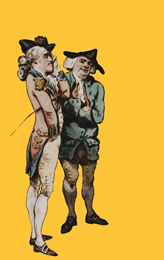 In autumn 1762, the ambitious, clever, jovial, and bumptious twenty-two-year-old Scotsman James Boswell traveled south from Edinburgh to London to seek his fortune in the capital. In his lively journal, he recorded his extraordinarily action-packed eight months there, and his efforts to become a permanent Londoner.
London in the Sixties (the 1760s) was a thrilling place, full of pleasures and dangers, wisdom and folly, high life and low life. This exhibition aspires to place visitors ‘in the midst of the jovial crowd’ in which young James Boswell felt so alive and happy. Prints by Hogarth and Rowlandson and others, and rare books and ballads, will bring to life the current events, everyday social life, and personalities celebrated in Boswell’s London Journal, unpublished until 1950, but now one of the best-loved works of eighteenth-century life-writing.
Exhibition | Time and Navigation
Press release (10 April 2013) for a new permanent exhibition at the National Air and Space Museum:
Time and Navigation: The Untold Story of Getting from Here to There
Smithsonian National Air and Space Museum, Washington, D.C., opening 12 April 2013
Curated by Paul Ceruzzi, Roger Connor, Andrew Johnston, and Carlene Stephens

Bond Chronometer, 1812. This was the first American-made marine timekeeper taken to sea. William Cranch Bond, a 23-year-old Boston clockmaker, crafted it during the War of 1812 (Smithsonian, National Museum of American History)
If people want to know where they are, they need a reliable clock. It might seem surprising, but knowing the accurate time is essential for determining position. A major exhibition opening April 12, Time and Navigation: The Untold Story of Getting from Here to There, explores how revolutions in timekeeping over three centuries have influenced how people find their way. This project is a unique collaboration between two of the Smithsonian’s largest and most popular museums: the National Air and Space Museum and the National Museum of American History.
“Time and Navigation is an ambitious exhibit because it traces the development of very complicated technologies and makes us think about a subject we now take for granted,” said Gen. J.R. “Jack” Dailey, director of the museum. “Today, the technology needed to accurately navigate is integrated into mobile computers and phones: hundreds of years of technological heritage tell your handheld device where you are in a seamless manner. This opens up new possibilities and challenging questions for the next generation of scientists and explorers who visit this exhibit to start thinking about.”
The gallery is organized into five sections and spans three centuries of efforts to travel on Earth and through the solar system. In each section the visitor will learn about pioneer navigators facing myriad issues, but one challenge always stands out: the need to know accurate time.
Navigating at Sea is an immersive environment that suggests a walk through a 19th-century sailing vessel. Visitors will learn how centuries ago navigators at sea relied on chronometers and measurements of celestial objects to determine location. This section includes a mariner’s astrolabe, dating from 1602; a Ramsden sextant and dividing engine; several chronometers; a model of Galileo’s pendulum clock, as well as the earliest sea-going marine chronometer made in the United States, produced by Bostonian William Cranch Bond during the War of 1812. It also features an interactive display that allows visitors to use a sextant to navigate with the stars. (more…)
Exhibition | Close to the Heart: British Miniatures
Press release from the The Barber Institute:
Close to the Heart: 17th- 19th-Century British Miniatures from UK Private Collections
The Barber Institute of Fine Arts, University of Birmingham, 1 February — 5 May 2013
Curated by Robert Wenley
 A tiny, exquisite portrait of 18th-century British actor, playwright and impresario David Garrick – set in one of the actor’s favourite rings – has gone on display at the Barber Institute of Fine Arts, University of Birmingham, this weekend, as part of a new exhibition of portrait miniatures. Believed never to have been displayed in public before, the oval portrait – barely 1cm tall and painted in the traditional sepia favoured for posthumous portraits – was commissioned following Garrick’s death in 1779 by his wife, the German singer Eva Marie Viegel, and then set in one of his rings, fashioned in a pink alloy. The item remained in Garrick’s family, passing from Mrs Garrick to the actor’s grandniece initially – until it was given, in 1897, to the unnamed private family collection in which it remains today.

Peter Cross, The Actress Anne Oldfield as Fame, ca. 1710
(Daphne Foskett Collection)
The miniature is one of 50 masterpieces of British portraiture from two outstanding private art collections on display at the Barber Institute of Fine Arts in the exhibition Close to the Heart: 17th- to 19th–century British Portraits from UK Private Collections. The long-term loan of the two collections – the Daphne Foskett collection and an unnamed private cache well known to experts – to the Barber Institute forms one of the finest, and largest, displays of miniatures in the UK outside of London.
Close to the Heart features miniatures ranging in date from around 1600 to 1850, include exquisite examples by leading names in the field such as Peter Oliver, George Engleheart, Richard Cosway, Sir William Ross and Richard Crosse. The exhibition, supported by auction house Bonhams, forms part of the year-long celebratory programme marking the 80th anniversary of the foundation of the Barber, the art gallery and original concert hall for the University of Birmingham.

Richard Crosse, Two Unknown Boys, possibly a self-portrait of the artist and one of his brothers (Daphne Foskett Collection)
Another gem is Richard Crosse’s tender and unusual watercolour on ivory, Portrait of Two Boys – thought to be a self-portrait with a brother – of 1759. Crosse was born a deaf-mute, and for many years relied on his older brother, James, to communicate with clients. It is believed that either James or a younger brother, Edward, is depicted here with Crosse.
Portrait miniatures were given as presents to close friends and family, exchanged during courtship and used to commemorate important events, such as an engagement, marriage or a long separation. They were often set in a gold pendant locket or frame, and worn on a chain or as a brooch pinned to the chest – symbolically close to the heart – or hanging from the waist. The reverse might feature the sitter’s initials in seed pearls or a lock of their hair arranged in a fancy design. If not worn, miniatures were kept in leather cases and stored in drawers. Larger ‘cabinet’ miniatures, sometimes with biblical or other ‘history’ subjects, were hung on walls like small-scale paintings.
Close to the Heart includes works ranging from the first few decades of the 17th century, by which time the form was well established, through its golden age from around 1760, when exhibiting societies were established, to later examples from t he 1840s – just before the emergence of photography, which all but killed off the form. The display also includes a handful of beautiful and fascinating foreign examples.
Exhibition curator Robert Wenley, the Barber’s Head of Collections and Learning, said: ‘The lenders have most generously placed their collections on long-term loan here, so, in future, we shall also be able to have differently themed annual displays of this fascinating form of painting, combining them with examples from the Barber’s own small collection of miniatures and other related paintings. We are also hoping to show these historical miniatures alongside a contemporary artist’s response to this traditional format, which should make for a very exciting intervention.’
Exhibition | Mexican Art at the Louvre
From The Louvre:
Le Mexique au Louvre: Chefs-d’oeuvre de la Nouvelle Espagne, XVIIe et XVIIIe siècles
Musée du Louvre, Paris, 7 March — 3 June 2013
Curated by Guillaume Kientz and Jonathan Brown
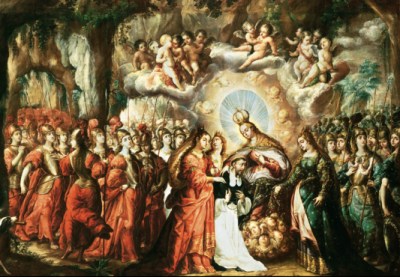
Cristobal de Villalpando, La Lactacion de Santo Domingo, © Rafael Doniz / Conaculta-INAHSinafo-Mex.
Mexican art, an area in which the Louvre’s Hispanic collection is intended to expand, will be showcased at the museum this spring. A selection of some ten of the finest works from this ‘sister’ school will be exhibited among the Spanish paintings. Among others, the monumental ‘Zurbaranesque’ work of José Juárez, the Baroque dynamism of Cristóbal Villalpando and the softness and delicacy of Rodríguez Juárez will introduce visitors to the many facets of New World art during this period and give them an understanding of its close yet independent relationship with Spanish art.
Although represented in national museums, Latin American art remains little known in France. The book that accompanies this exhibition, based on inventory work conducted by the Louvre and the French National Institute of Art History (the BAILA project), provides an overview of the major Latin American works in French museums, and explores the origins and evolution of this artistic school.
The Louvre’s press release (14 February 2013) is available here»
Exhibition | Napoleon and Europe
As noted at Art Daily:
Napoléon et l’Europe
Musée de l’Armée, Hôtel National des Invalides, Paris, 27 March — 14 July 2013
Curated by Émilie Robbe
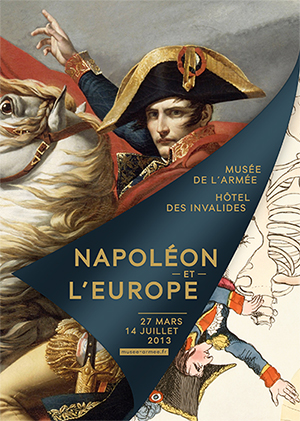 Napoleon Bonaparte (1769-1821) had a deep and lasting effect on the history of Europe, despite remaining in power for a mere fifteen years. The exhibition Napoléon et l’Europe [Napoleon and Europe], at the Musée de l’Armée from 27 March to the 14 July 2013, bears witness to Napoleon Bonaparte’s European ambitions between 1793 and 1815. The visit reveals his ambitious policies for expansion in Europe and the subsequent reactions by the various European countries, whether in support of, or against, such policies. The exhibition also highlights the consequences and the deep scars that such a conquest left on Europe.
Far removed from stereotype and biased opinion, this exhibition aims to present an influential episode in French and European history in a different manner; by combining the diverse, often-times opposing viewpoints of Napoleon’s contemporaries, on themes such as war, politics, diplomacy, the government, currency, propaganda and the arts… In order to recount or retrace this chapter of history, 250 artworks, objects and documents have been gathered together, on loan from fifty or so European museums and institutions, with more than half of these coming from outside France. Since the retrospective exhibition Napoléon held in 1969 at the Grand Palais, Paris, no other exhibition of this scope and ambition has been organized in France.
Conquest and Resistance
The entire exhibition is punctuated by or structured around two viewpoints that both question and mirror the other: the progressive and concrete creation of Napoleon’s Empire on the one hand, and the reactions of certain peoples and the main European powers to this direct quest for domination, on the other hand. From alliances to battles, from treaties to reform, this incredibly rapid succession of events is recounted in chronological fashion and explained in context. (more…)
Exhibition | Marquis de Marigny
I’m afraid this is another exhibition that slipped past me, but I include it here nonetheless. The catalogue is, at least, still available from Artbooks.com. -CH
◊ ◊ ◊ ◊ ◊
From the press release:
Le Naturel Exalté: Marigny, Ministre des Arts au Château de Menars
Expo 41, Loir-et-Cher, Blois, 30 June — 16 September 2012
 Ambitieux, fier, ombrageux : les qualificatifs ne manquent pas pour définir Abel-François Poisson de Vandières, marquis de Marigny et seigneur de Menars (1727-1781). Son destin, tracé à la plume de l’exception, en fait foi. Il eut la chance d’être le frère cadet de la maîtresse de Louis XV, titrée marquise de Pompadour, qui l’introduisit dès son adolescence à la cour du roi. À vingt-quatre ans, il est nommé directeur général des Bâtiments du roi, arts et manufactures. Un voyage en Italie en compagnie d’artistes et d’architectes engagés dans les débats esthétiques contemporains fut le déclic vers l’émancipation : Marigny commença alors à se constituer une collection d’exception. Sa galerie de statues était la 1ère de France après celle de Louis XV. Il dirigea surtout la politique des arts du royaume pendant 30 ans, laissant à l’humanité des chefs-d’oeuvre tels que la place de la Concorde, l’École Militaire, les jardins des ChampsÉlysées ou le Panthéon de Paris.
L’exposition Le naturel exalté. Marigny, ministre des arts au château de Menars, qui sera présentée à Expo 41, du 30 juin au 16 septembre 2012, est la 1ère rétrospective mondiale consacrée au frère de la Pompadour et ministre de Louis XV. Le visiteur découvrira le fonds exceptionnel des archives départementales de Loir-et-Cher, encore jamais dévoilé au public, constitué de centaines de dessins représentant l’aménagement des jardins du château de Menars en Loir-et-Cher, plusieurs tableaux majeurs en provenance du musée du Louvre ou du château de Versailles, ainsi que des oeuvres issues de la collection personnelle de Marigny. . .
◊ ◊ ◊ ◊ ◊
Christophe Morin, ed., Le Naturel Exalté: Marigny, Ministre des Arts au Château de Menars (Milan: Silvana, 2012), 192 pages, ISBN: 978-8836622658, €28 / $55.
 Abel-François Poisson (1727-1784), marquis de Vandières puis de Marigny est plus que le frère de la marquise de Pompadour. Directeur général des Bâtiments du roi à compter de 1751, il a rang de ministre et participe à la vie de cour autour de Louis XV. Courtisan zélé, il conserve ses fonctions au-delà même de la disparition de sa soeur, jusqu’en 1773. Il a toute la reconnaissance du roi qui lui offre un somptueux ” meuble ” pour décorer son hôtel de la rue Saint-Thomas-du-Louvre, ainsi que de nombreuses sculptures qui viendront embellir son château de Menars.
Le présent ouvrage rappelle, grâce aux contributions des meilleurs spécialistes de la question, la brillante carrière d’un grand commis de l’Etat au service de Louis XV. Pour la première fois, une exposition monographique sur le marquis de Marigny rassemble des oeuvres qui évoquent la carrière de l’homme public dont le rôle fut éminent dans la transformation radicale du goût au milieu du XVIIIe siècle.
L’autre versant de cette entreprise, tout aussi inédit, regarde le seigneur de Menars, ses collections et sa vie en Val de Loire. Ce ne sont pas moins de 90 dessins d’architecture qui sont présentés ici. Des oeuvres parfois majeures, parfois émouvantes, commandées par Marigny aux plus grands artistes du temps pour décorer le parc de sa maison de campagne. Grand seigneur sur ses terres, il aménage en effet le château de Menars, à sa mesure, réglant les moindres détails de son nouveau jardin anglo-chinois.
Exhibition | Colors of Seduction: Tiepolo and Veronese
This is, unfortunately, the last weekend for the exhibition, though it is slated to be reviewed by The Burlington.
I Colori della Seduzione: Giambattista Tiepolo & Paolo Veronese
Castello di Udine, 17 November 2012 — 1 April 2013
Curated by William Barcham, Linda Borean, and Caterina Furlan

◊ ◊ ◊ ◊ ◊
Un’occasione unica per vedere riunite, dopo quasi duecento anni, le due tele che compongono il Mosè salvato dalle acque di Giambattista Tiepolo. L’opera, tagliata negli anni ’20 dell’800, viene proposta nella sua composizione originaria, riaccostando il Mosè della Scottish National Gallery di Edimburgo con l’Alabardiere della collezione Agnelli di Torino, così come documentato da una copia coeva attribuita a Giandomenico Tiepolo della Staatsgalerie di Stoccarda. Le due parti della tela, che hanno avuto destini conservativi diversi, presentano oggi colori leggermente diversi.
Un sistema di illuminotecnica all’avanguardia renderà possibile vedere l’opera sia come è realmente, che secondo una colorazione uniforme. Ideale risulta l’accostamento al Mosè salvato dalle acque di Paolo Veronese del Musée des Beaux Arts di Digione, per rilevare le assonanze e la personale soluzione adottata da Tiepolo. Il confronto diretto tra le due opere vuole riportare l’attenzione sullo speciale rapporto intessuto da Tiepolo con uno dei più importanti esponenti della tradizione pittorica veneziana del Cinquecento. Tiepolo trovò infatti nell’arte di Veronese lo stimolo al superamento della “maniera scura” e il punto di partenza per la maturazione di un linguaggio che lo avrebbe trasformato in uno dei grandi protagonisti della pittura europea del Settecento.
A partire dagli affreschi del Palazzo arcivescovile di Udine, una sorta di prologo e punto di partenza della mostra, Tiepolo intraprende un percorso di ‘emulazione’ di Veronese. Il critico Francesco Algarotti definì l’amico Tiepolo ‘l’emulo di Paolo’. Guardare a Veronese significò per Tiepolo rivisitarne l’interpretazione di temi religiosi o di storia antica, mediante scenografiche impostazioni di natura teatrale, prospettive architettoniche e opulenza decorativa, ed appropriarsi di una tavolozza squillante di colori puri e ombre colorate.
La mostra è articolata in quattro sezioni nelle quali Tiepolo e Veronese vengono messi a confronto nella trattazione di alcuni temi religiosi, mitologici e della storia antica: il Mosè salvato dalle acque, il Ratto d’Europa, le Cene e i Banchetti e l’Adorazione dei Magi.
Il complesso terreno di confronto tra i due artisti è messo in luce anche dai bozzetti e dai disegni, che illustrano le varie modalità con cui Tiepolo ha riletto l’eredità figurativa di Veronese nei vari momenti del processo creativo. Oltre alle tele, la mostra vanta infatti un gruppo straordinario di fogli di Tiepolo e Veronese, prestati da musei nazionali e internazionali di primo piano (Galleria degli Uffizi, Victoria and Albert Museum di Londra, Ashmolean Museum di Oxford, Département des Arts Graphiques del Louvre, Schlossmuseum di Weimar e Städel Museum di Francoforte). Un dialogo visivo che vede, ad esempio, il disegno d’insieme approntato da Tiepolo per il Banchetto di Antonio e Cleopatra esposto insieme ai pensieri di Veronese sul tema dei banchetti, rappresentati dallo studio preparatorio per le Nozze di Cana e al modello a olio della National Gallery di Londra.
Exhibition | Fans of History: Daily Life and Major Events
From Visit Paris Culture Guide (with thanks to Pierre-Henri Biger for noting it so early!) . . .
Feuilles d’histoires: Vie quotidienne et grands évènements
à travers l’éventail en France au XVIIIe siècle
Musée Cognacq-Jay, Paris, 14 November 2013 — 9 April 2014
Curated by José de Los Llanos and Georgina Letourmy-Bordier
 L’éventail est à la fois familier et méconnu. Accessoire de mode et objet d’art, il allie le savoir-faire d’artisans à la création artistique. Soumis à la fugacité des modes, il se renouvelle sans cesse. Importé d’Asie à la Renaissance, au milieu des cargaisons d’épices et de soies, l’éventail est adopté en France sous le règne de Louis XIV. Une corporation spécifique, celle des éventaillistes, assure la domination des artisans français.
Au cours du XVIIIe siècle, Paris devient la capitale de l’éventail. Le choix des décors suit alors la production des peintres à la mode et participe à la diffusion de l’art français en Europe, tout en montrant une singulière diversité. Avec soixante-dix œuvres empruntées à des collections publiques et privées, cette exposition, hommage à l’excellence du savoir-faire des éventaillistes français, essentiellement parisiens, montrera aussi l’extraordinaire inventivité dont témoignent ces objets fragiles et discrets.
Exhibition | French Paintings from the Wadsworth Atheneum
It’s interesting to see how this exhibition has been retitled in various venues: from Old Masters to Impressionists, to Old Masters to Monet, to Court to Café. The exhibition appeared in a fuller version at the Wadsworth Atheneum itself as Medieval to Monet: French Paintings, where it was accompanied by a full catalogue. -CH
◊ ◊ ◊ ◊ ◊
Press release (4 December 2012) from the Mississippi Museum of Art:
Old Masters to to Monet: Three Centuries of French Painting from the Wadsworth Atheneum
The Michele and Donald D’Amour Museum of Fine Arts, Springfield, MA, 13 December 2011 — 29 April 2012
Taft Museum of Art, Cincinnati, 18 May — 16 September 20122
Wadsworth Atheneum, Hartford, CT, 19 October 2012 — 27 January 2013 [expanded version of the exhibition]
Mississippi Museum of Art, Jackson, 23 March — 8 September 2013
Denver Art Museum, 27 October 2013 — 9 February 2014
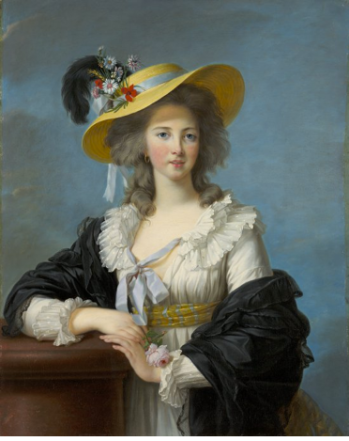
Elisabeth-Louise Vigée Le Brun, The Duchesse de Polignac Wearing a Straw Hat, 1782 (Hartford, CT: Wadsworth Atheneum Museum of Art)
The Mississippi Museum of Art is pleased to present Old Masters to Monet: Three Centuries of French Painting from the Wadsworth Atheneum, on view from March 23 through September 8, 2013. It is the thirteenth presentation in The Annie Laurie Swaim Hearin Memorial Exhibition Series. Established in 1989 to honor the memory of Annie Laurie Swaim Hearin, one of the Museum’s most dedicated patrons and volunteers, the Hearin series showcases exhibitions of world-class art, attracting visitors to Jackson from across Mississippi, the Southeast, and beyond.
Old Masters to Monet features fifty masterpieces from the collection of the Wadsworth Atheneum in Hartford, Connecticut. The outstanding artworks provide a history of French painting, ranging from the seventeenth through the nineteenth centuries and into the beginning of the twentieth century and include religious and mythological subjects, portraits, landscapes, still lifes, and genre scenes.
The Wadsworth Atheneum is America’s oldest public art museum, founded in 1843, and has never presented a full-scale survey of its distinguished collection of French paintings. To honor the recent publication of its
collection catalogue, the Atheneum has launched a tour of fifty of these outstanding masterpieces. “The Mississippi Museum of Art is honored to be one of the select venues to host this important exhibition,” said Betsy Bradley, director of the Mississippi Museum of Art. “In keeping with our mission of engaging Mississippians in the visual arts, this exhibition provides a rare opportunity for our visitors to come face to face with some of the most historically valued French paintings held in any museum collection.”
The exhibition begins with the great seventeenth-century masters, Nicolas Poussin, Claude Lorrain, Simon Vouet, and Jacques Stella, all of whom spent time in Rome and whose work embodies Italianate ideas of beauty, classical sculpture, and ideal landscape. Poussin’s enormous Crucifixion, painted in 1646 for President Jacques-Auguste de Thou, and Lorrain’s Landscape with St. George and the Dragon, commissioned by Cardinal Fausto Poli in 1641, are among the most important French paintings residing in the United States.
The eighteenth-century works present a remarkably rich tapestry of life in France during the rococo age. There are several scenes and portraits of aristocrats, including the Portrait of the Duchesse de Polignac by the era’s leading painter of women, Madame Vigée-Lebrun. Genre scenes rendered during this period exhibit a decidedly risqué bent as well as humorous aspects of life, both of which are evident in paintings on view by Jean Baptiste Greuze, François Boucher, and Louis Leopold Boilly. A more serious approach is evidenced in Still Life by Jean Baptiste Simeon Chardin and in the charming family pictures by Nicolas-Bernard Lépicié and Nöel Hallé. The change in style brought about by the French Revolution is evident in the impressive composition designed by Jacques Louis David, and the creation of a new aristocracy is presented by the two brilliant paintings by Jean Auguste Dominique Ingres. (more…)
Exhibition | Drawing Room: An Intimate Look at French Drawings
This fall, the Denver Art Museum will present Passport to Paris, a trio of exhibitions addressing France. Along with works from the Wadsworth Atheneum, the museum will show Nature as Muse: French Impressionist Landscapes and the following drawing exhibition:
◊ ◊ ◊ ◊ ◊
Drawing Room: An Intimate Look at French Drawings from the Esmond Bradley Martin Collection
Denver Art Museum, 27 October 2013 — 9 February 2014

Antoine Watteau, Standing Woman Holding a Fan, ca. 1719. Red and black chalk with graphite, on paper.
Collection of Dr. Esmond Bradley Martin.
Inspired by the drawings cabinets of gentlemen and connoisseurs, this exhibition will offer a space where visitors can get close to artworks whose intimate nature invites contemplation and close-up viewing. Comprised of approximately 39 works-on-paper, the exhibition includes a range of techniques from rapid sketches to finished pastels. The artworks represent exquisite examples of draughtsmanship by some of the most celebrated French masters and allow an in-depth look into the creative process of artists.
The entire exhibition is drawn from the private collection of Dr. Esmond Bradley Martin. Artists featured include François Boucher, Jacques-Louis David, Théodore Géricault, Jean-Auguste-Dominique Ingres, Henri de Toulouse-Lautrec, Claude Monet, and Alfred Sisley.










leave a comment