Exhibition | The Patina of Time
From the Musée Cognacq-Jay:
La Patine du Temps: Conservation et restauration des oeuvres d’art
Musée Cognacq-Jay, Paris, 11 September — 30 December 2012
 Le musée Cognacq-Jay conserve essentiellement des œuvres du XVIIIe siècle et certaines sont plus anciennes encore : elles ont donc plusieurs siècles d’âge et toutes n’ont pas traversé le temps sans dommage. Sous le titre La Patine du temps, un parcours est proposé au visiteur, dans les salles-mêmes du musée, pour lui permettre de comprendre la fragilité des œuvres d’art, la manière dont elles vieillissent, ce que l’on peut faire pour freiner ce vieillissement ou ce que l’on doit attendre d’une restauration. Quatorze panneaux pédagogiques scandent la visite : À quoi ressemble un tableau en bon état ? Que faire d’une sculpture cassée ? figurent ainsi parmi les questions qui sont abordées.
Des restaurations récemment effectuées sur L’Ânesse de Balaam de Rembrandt et Le Retour de chasse de Diane de François Boucher, deux peintures majeures du musée Cognacq-Jay, font l’objet d’une étude plus minutieuse. Mais la conservation et la restauration des pastels, des sculptures ou du mobilier sont aussi évoquées en prenant des exemples éclairants parmi les œuvres du musée. De fait, ce sont aussi aux techniques de fabrication des
œuvres que le visiteur est initié.
Ce parcours fait suite à l’ouvrage publié sous le même titre en 2011, La Patine du temps, rédigé par Georges Brunel, directeur honoraire, et José de Los Llanos, actuel directeur du musée Cognacq-Jay.
◊ ◊ ◊ ◊ ◊
Catalogue: Georges Brunel and José de Los Llanos, La Patine du Temps (Paris: Paris-Musées, 2011), 71 pages, ISBN: 978-2759601547, 12€.
Techniques « Tous les êtres ont leur histoire : toi et moi en avons une, les oeuvres d’art aussi. L’histoire, c’est toute l’épaisseur du temps écoulé depuis que l’on est venu au monde. Il s’est pour ainsi dire condensé dans des craquelures, des accidents de surface, un changement des teintes… » Avec ce douzième titre de la collection « Petites Capitales », le lecteur est confronté aux questions délicates soulevées par la restauration des oeuvres d’art. Le temps ne se remonte pas… Comment présenter son passage sous le jour le plus favorable ? Beau sujet de débat entre Fiordiligi et Dorabella, deux jeunes Italiennes en visite au musée Cognacq-Jay. La vivacité de leur dialogue nous entraîne dans une méditation sur l’oeuvre et le temps, sur l’évolution du goût, à partir des restaurations exemplaires du Retour de chasse de Diane de Boucher et de L’Ânesse du prophète Balaam de Rembrandt, deux chefs d’oeuvre du musée Cognacq Jay. Rendre compte de la richesse du patrimoine parisien, de ses deux mille ans d’histoire et de la diversité des collections de la Ville de Paris, voilà l’ambition de la collection « Petites Capitales ». Le principe de chaque ouvrage est de rassembler une trentaine d’oeuvres emblématiques – peintures, dessins, sculptures, photographies, archives – autour d’un thème, en privilégiant le détail révélateur ; en regard de chaque illustration, des textes et de brefs commentaires créent un jeu de correspondances toujours éclairantes, sur le mode d’une érudition sensible et accessible à tous.
◊ ◊ ◊ ◊ ◊
Bénédicte Bonnet Saint-Georges reviewed the exhibition for The Art Tribune (available in English and French) . . .
The Musée Cognac-Jay is inviting visitors to rediscover their collections by taking a close look at the patina of time. Painting on canvas or wood, marquetry or upholstered furniture, terracotta sculpture…each object presents specific conservation, renovation and restoration problems. Though restorations must be reversible, legible and not alter the nature of the work since the signing of the Venice Charter in 1964, this has not always been the case.
Fourteen explanatory panels dealing with these various problems are scattered throughout the museum using examples of objects on view in the respective rooms. The didactic theme addresses the general public as does the publication behind this hang : written by Georges Brunel and José de Los Llanos, it is in the form of a dialogue between two women visiting the Musée Cognac-Jay. . . .
The full review is available here»
Exhibition | Between Orient and Occident: Kremlin Treasures
Press release from the Staatliche Kunstsammlungen Dresden:
Between Orient and Occident: Treasures of the Kremlin from Ivan the Terrible to Peter the Great
Royal Palace, Dresden, 1 December 2012 — 4 March 2013
Curated by Ulrike Weinhold

Lidded dish Kremlin workshops, 1694
© Moscow Kremlin Museums
The Residenzschloss (Royal Palace) in Dresden is home to two world-class museums, the Grünes Gewölbe (Green Vault) and the Kupferstich-Kabinett (Collection of Prints, Drawings and Photographs), while the Rüstkammer (Armoury), one of the most important collections of its kind, also has a significant presence here, with its Türckische Cammer (Turkish Chamber). Before the Rüstkammer opens the outstanding new presentation of another part of its collection here in the Riesensaal (Giants Hall) on 18 February 2013, the Residenzschloss hosts a museum organisation of international stature, the Moscow Kremlin Museums. From 1 December 2012 to 4 March 2013, the exhibition Between Orient and Occident: Treasures of the Kremlin from Ivan the Terrible to Peter the Great is being shown in the State Apartments, in surroundings where reconstruction work is as yet unfinished. There could hardly be a more appropriate place to hold an exhibition with this theme: like the Kremlin, the Residenzschloss, the very heart of the Staatliche Kunstsammlungen Dresden, is a place of encounter between Orient and Occident. In this unique special exhibition, the first ever to highlight the significance of the Kremlin as a crossroads of eastern and western cultures, around 140 outstanding exhibits are displayed in an area of some 700 sq. m. in all. Masterpieces by European goldsmiths, superb ceremonial weapons crafted by Persian and Turkish armourers, precious objects, splendid vessels and opulent garments are displayed alongside exquisite pieces produced in the Kremlin workshops, but clearly showing influences from beyond Russia.
The exhibition focuses on a clearly defined period, from 1547, when Ivan the Terrible (1530–1584) was crowned as tsar, to 1712, when Peter the Great (1672–1725) designated St Petersburg as the new capital of the Russian Empire. Magnificent objects acquired by the tsars, and sumptuous gifts presented by foreign emissaries from both west and east impressively demonstrate to today’s visitors the great power and wealth of Russia, and the significant role it played in the political and economic structures of that time. Inspired by works of art from abroad, the Kremlin workshops created treasures which are a synthesis of European and oriental taste and ancient Russian traditions.
The current exhibition is to some extent a reciprocal visit: in 2006, before the Grünes Gewölbe moved back to its original home on the ground floor of the Residenzschloss, it presented an exhibition in Moscow, entitled The Jewel Cabinet of August the Strong, hosted by the Kremlin Museums. The SKD already have close scholarly and scientific working relationships of long standing with these Russian museums, as well as with the State Hermitage in St Petersburg and the Pushkin Museum in Moscow. This special exhibition, Between Orient and Occident: Treasures of the Kremlin from Ivan the Terrible to Peter the Great, is a major contribution to the continuing exchange between the respective museums. Finally, but not least, it is also a contribution to the Year of Russia in Germany and Germany in Russia 2012/13.
Exhibition | Canova: The Sign of the Glory
I’ve long admired Lucy Vivante’s blog Vivante Drawings. I rarely reference the site here simply because entries tend to address the sixteenth and seventeenth centuries. But Enfilade readers may be interested in Vivante’s coverage of the Canova exhibition now on display in Rome (another description in English is available here). I include the exhibition press release (4 December 2012) below.
◊ ◊ ◊ ◊ ◊
Canova, Il Segno della Gloria: Disegni, Dipinti e Sculture
Museo di Roma Palazzo Braschi, 5 December 2012 — 7 April 2013
Curated by Giuliana Ericani
 Sarà il Museo di Roma Palazzo Braschi ad ospitare dal 5 dicembre 2012 al 7 aprile 2013 la mostra Canova. Il segno della gloria. Disegni, dipinti e sculture. I 79 disegni sono stati selezionati dai 1800 circa che costituiscono la più grande raccolta al mondo di disegni di un artista, donata a metà Ottocento all’appena inaugurato Museo Civico di Bassano da Giambattista Sartori Canova, fratellastro dell’artista ed erede universale. I disegni sono accompagnati da 15 acqueforti delle opere realizzate, 6 modelli originali in gesso, da 4 tempere, un dipinto ad olio, due terrecotte e due marmi che consentono di visualizzare il passaggio dalla fase ideativa alla realizzazione dell’opera. Una scelta che offre un quadro storico ineguagliabile dell’Europa tra Settecento ed Ottocento, chiarendo il ruolo di Canova come primo artista della modernità.
 Una mostra – promossa da Roma Capitale, Assessorato alle Politiche Culturali e Centro Storico – Sovraintendenza ai Beni Culturali e dal Comune di Bassano del Grappa con la cura di Giuliana Ericani, Direttrice del Museo Biblioteca Archivio di Bassano del Grappa e organizzata da Metamorfosi e Zètema Progetto Cultura – che affronta per la prima volta lo studio del disegno di Canova da due punti di vista: quello stilistico, affrontando le sue caratteristiche e il rapporto con gli artisti contemporanei e quello di prima idea per l’opera realizzata. Metamorfosi, nel suo lavoro di qualità di affiancamento di prestigiose istituzioni culturali, con questa mostra inizia una collaborazione con Museo Civico di Bassano del Grappa, volto a valorizzare lo straordinario patrimonio culturale lì conservato.
Una prima sezione della mostra seleziona dall’intera produzione grafica di Antonio Canova fogli che raccontano perfettamente la varietà del suo segno e dei metodi di progettazione. Partendo poi dal disegno, l’esposizione individua due principali percorsi di lettura dell’opera canoviana: il rapporto con la scultura antica delle collezioni romane e con i personaggi storici e della cultura del suo tempo. Qui sarà possibile ammirare i disegni per i monumenti e le sculture di Clemente XIV, Napoleone Bonaparte, Maria Luisa d’Asburgo, Maria Cristina d’Austria, Carlo III e Ferdinando I di Borbone, George Washington, Vittorio Alfieri, Orazio Nelson, e Paolina Borghese Bonaparte e opere commissionate da Giorgio IV re d’Inghilterra e Joséphine de Beauharnais Bonaparte. In questa sezione sono accostate le incisioni fatte eseguire da Canova per offrire l’immagine dell’opera realizzata ed alcune opere, cinque bozzetti in gesso e in terracotta e due dipinti, parte integrante dell’iter della realizzazione. Completano e arricchiscono la mostra i disegni per tre importanti opere realizzate, la Venere Italica, il Creugante e Damosseno per Pio VII e l’Ercole e Lica per il banchiere Torlonia.
 Canova “solea gittare in carta il suo pensiero con pochi e semplicissimi tratti, che più volte ritoccava e modificava”: nelle parole dello storico dell’arte Leopoldo Cicognara si misura l’urgenza della trasposizione del pensiero e dell’immagine sulla carta e la funzione personale e segreta di questi segni, indice di una modernità esistenziale e di prassi esecutiva che crea continuamente sorpresa e meraviglia in chi vi si accosta. Nel 1858 il bassanese Gian Jacopo Ferrazzi, nel commemorare il donatore sottolineava la grande eredità canoviana del Museo di Bassano e il ruolo che il disegno aveva avuto nell’iter realizzativo delle sue sculture: “Noi siamo gli avventurati possessori della storia del suo pensiero.” Ed è proprio l’identificazione del disegno con il pensiero che viene ripetutamente riproposta dalle fonti contemporanee. “Pensieri delineati a lapis,” la sintetica ma efficace descrizione dei disegni dell’illustre fratello da parte di Giambattista Sartori, interpreta i tratti canoviani come la prima fase dell’ ”invenzione” e consente di seguire attraverso la loro lettura tutte le fasi della nascita delle opere. Il ruolo del disegno nella sua opera è segnalato dal suo biografo, Melchior Missirini (1824) come pari allo scalpello, quali “istrumenti che guidano all’immortalità.”
Un fondo, quello bassanese, costituito da 10 grandi album e 8 taccuini non omogenei nella struttura, comprendenti fogli di differenti dimensioni, da più di 500 ad una decina di millimetri, disegni finiti di accademia e schizzi di getto, progetti interi e parziali per bassorilievi in gesso e grandi sculture a tutto tondo.
Il disegno come “pensiero” dell’opera realizzata ma anche come “ricordo” di esperienze di vita, di studio e di lavoro, si trasforma nella mostra in strumento percomprendere la complessità della personalità e dell’opera di questo grande scultore veneto, che si formò nelle terre della sua nascita per affermarsi poi nella culla della scultura classica e barocca, a Roma, in un periodo storico di grandi cambiamenti che introduce all’Età moderna.
◊ ◊ ◊ ◊ ◊
From Palombi Editori:
Catalogue: Giuliana Ericani and Francesco Leone, Canova, Il Segno della Gloria: Disegni, Dipinti e Sculture (Rome: Palombi Editori, 2012), 288 pages, ISBN: 978-8860604897, €29.
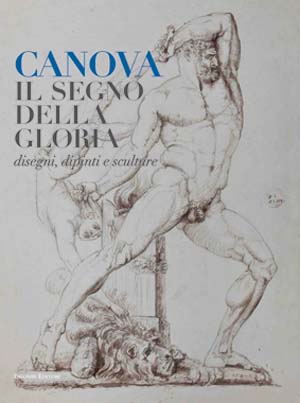 Dall’ispirazione all’opera. é un percorso sulle tracce dell’idea quello della mostra dedicata ad Antonio Canova. Viaggio nell’intuizione estetica del genio e nella sua realizzazione, ma anche nella percezione che di quelle stesse concretizzazioni ha poi il genio stesso, a lavoro finito. Questione di studio prima, di documentazione poi. Nel mezzo, l’emozione dell’opera. L’esposizione capitolina dunque punta l’attenzione sulla “costruzione” delle opere da parte di Canova, attraverso disegni, modelletti in terracotta, calchi e modelli originali in gesso, dipinti, marmi e acqueforti, selezione d’eccellenza nella ricchissima raccolta di disegni – circa 1800 – che tra il 1849 e il 1857 fu oggetto di una donazione da parte del fratellastro dell’artista, Giovan Battista Sartori Canova.
Exhibition | Constable, Gainsborough, Turner
Press release from the Royal Academy:
Constable, Gainsborough, Turner and the Making of Landscape
Royal Academy of Arts, London, 8 December 2012 — 17 February 2013
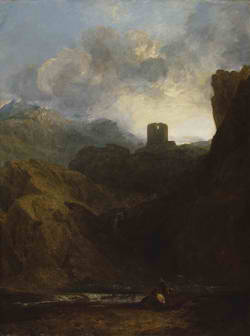
J.M.W. Turner, Dolbadern Castle, 1800, 1194 x 902 mm. Photo: Prudence Cuming Associates Limited. © Royal Academy of Arts, London
This December an exhibition of works by the three towering figures of English landscape painting, John Constable RA, Thomas Gainsborough RA and J.M.W. Turner RA and their contemporaries, will open in the John Madejski Fine Rooms and the Weston Rooms. Constable, Gainsborough, Turner and the Making of Landscape will explore the development of the British School of Landscape Painting through the display of 120 works of art, comprising paintings, prints, books and archival material.
Since the foundation of the Royal Academy of Arts in 1768, its Members included artists who were committed to landscape painting. The exhibition draws on the Royal Academy’s Collection to underpin the shift in landscape painting during the 18th and 19th centuries. From Founder Member Thomas Gainsborough and his contemporaries Richard Wilson and Paul Sandby, to J.M.W. Turner and John Constable, these landscape painters addressed the changing meaning of ‘truth to nature’ and the discourses surrounding the Beautiful, the Sublime and the Picturesque.
The changing style is represented by the generalised view of Gainsborough’s works and the emotionally charged and sublime landscapes by J.M.W. Turner to Constable’s romantic scenes infused with sentiment. Highlights include Gainsborough’s Romantic Landscape (c.1783), and a recently acquired drawing that was last seen in public in 1950. Constable’s two great landscapes of the 1820s, The Leaping Horse (1825) and Boat Passing a Lock (1826) will be hung alongside Turner’s brooding diploma work, Dolbadern Castle (1800).
To contextualise the landscape paintings of Constable, Gainsborough and Turner, a number of paintings by their 18th-century contemporaries Richard Wilson, Michael Angelo Rooker and Paul Sandby will be exhibited with prints made after the 17th-century masters whose work served as models: Claude, Poussin, Gaspard Dughet and Salvator Rosa. Letters by Gainsborough, Turner’s watercolour box and Constable’s palette will also be on display, bringing their artistic practice to life.
Constable, Gainsborough, Turner and the Making of Landscape has been organised by the Royal Academy of Arts. The exhibition is curated by MaryAnne Stevens, Director of Academic Affairs, Nick Savage, Head of Collections & Library, Helen Valentine, Curator of Paintings & Sculpture and Andrew Wilton, with Annette Wickham and Helena Bonett.
The exhibition will be accompanied by an illustrated booklet that will include an essay by Andrew Wilton and introductions to each of the sections of the exhibition.
Exhibition | Lyon in the Eighteenth Century
Now on at the Musées Gadagne de Lyon, as noted by Hélène Bremer:
Lyon au 18e, Un Siècle Surprenant
Musées Gadagne de Lyon, 22 November 2012 — 5 May 2013
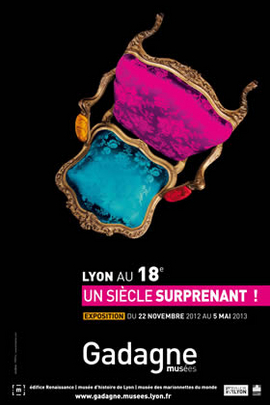 Au 18e siècle, Lyon pense, Lyon imagine, Lyon construit, Lyon s’enrichit…
Au 18e siècle, Lyon est une ville innovante et avant-gardiste au cœur des réseaux commerciaux, financiers et intellectuels. Sensible aux idées des Lumières, riche et commerçante, Lyon connaît une croissance économique exceptionnelle avec le développement de la faïence, des armes et de la soierie, annonçant, notamment, les révolutions industrielles du siècle suivant. La ville est au centre des débats littéraires et philosophiques qui animent la seconde moitié du siècle et un lieu de développement de la franc-maçonnerie. C’est une cité qui imagine la ville de demain avec les ingénieurs et architectes fabuleux que sont Morand, Perrache ou Soufflot. Ces grands projets urbanistiques ont une résonance surprenante avec les grands chantiers de 2012, tels les aménagements du nouveau quartier de Confluence ou la réhabilitation de l’Hôtel-Dieu.
◊ ◊ ◊ ◊ ◊
From Somogy éditions:
Catalogue: Maria-Anne Privat-Savigny, ed., Lyon au 18e: Un Siècle Surprenant (Paris: Somogy éditions d’art, 2012), 312 pages, ISBN: 978-2757205808, 35€.
Ouvrage collectif sous la direction de Maria-Anne Privat-Savigny, le catalogue suit le parcours de l’exposition tout en lui apportant l’analyse de 40 auteurs, chacun spécialiste de son domaine. De l’architecture à l’urbanisme, de la vie religieuse à la vie politique, des enjeux économiques, commerciaux, financiers et bancaires aux préoccupations et débats intellectuels, Lyon apparaît, au 18ème siècle, comme une ville innovante, enthousiaste, pétillante de nouveautés, cultivée, riche, essentielle à l’économie du royaume et au commerce européen, définitivement ouverte sur le monde. Perrache et Morand ont inventé l’urbanisme du siècle suivant, les jésuites ont mis en place le ballet moderne, tandis que la Saône a vu naviguer le premier bateau à vapeur et que des discussions vives et d’une remarquable modernité animent le monde de l’éducation. Lyon est, au siècle des Lumières, définitivement moderne et tournée vers l’avenir.
 ◊ ◊ ◊ ◊ ◊
The programming is extensive, including talks on the following themes:
• Autour de l’exposition
• Rencontres métiers d’art
• La science au siècle des Lumières
• Rousseau à Lyon
Exhibition | Bouke De Vries: War & Pieces
My apologies for posting this one so late. I’m afraid this is the last weekend. -CH
From The Holburne Museum:
Bouke De Vries: War & Pieces
The Holburne Museum, Bath, 1 September — 2 December 2012
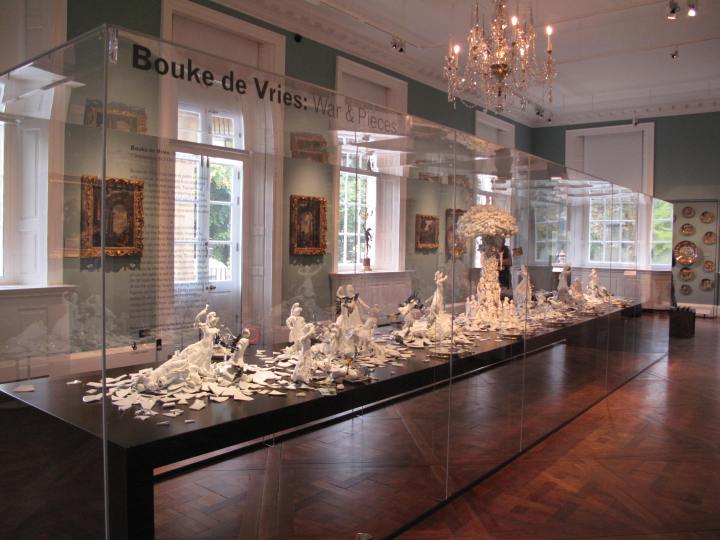
Bouke de Vries, War & Pieces, installation at
The Holburne Museum, Bath, 2012
◊ ◊ ◊ ◊ ◊
 Ceramic artist Bouke de Vries has created a unique contemporary installation on the Holburne’s Ballroom table. His work is inspired by the eighteenth-century fashion for decorating banqueting tables with extravagant porcelain and sugar sculptures, War & Pieces draws on the tradition of grand banquets and balls held on the eve of battle.
The centre-piece is a dramatic atomic-bomb mushroom cloud made using shards of white ceramics, old and new, around which the table is set with an intervention incorporating Sir William Holburne’s Chinese tobacco-leaf pattern dinner service. A battle will be fought out along the table with figures derived from 1770s Derby porcelain, some of which have mutated into cyborgs using elements from plastic toys – a new and contemporary material fighting to defeat the forces of sugar and ceramic.
Exhibition | Houghton Revisited: The Walpole Masterpieces
More than sixty paintings from the Hermitage will spend the summer of 2013 back at Houghton Hall. The exhibition curator Thierry Morel will be in New York providing a preview at The Metropolitan Museum of Art on Friday, 7 December 2012, at 6pm.
◊ ◊ ◊ ◊ ◊
From the exhibition website:
Houghton Revisited: The Walpole Masterpieces from Catherine the Great’s Hermitage
Houghton Hall, Norfolk, 17 May — 29 September 2013 [extended to 24 November]
Curated by Thierry Morel

Colen Campbell, James Gibbs, and William Kent, Houghton Hall,
Norfolk, 1722-35 (Photo: 2008, Wikimedia Commons)
◊ ◊ ◊ ◊ ◊
The magnificent art collection of Great Britain’s first Prime Minister, Sir Robert Walpole, sold to Catherine the Great to adorn the Hermitage in St. Petersburg, is reassembled in its spectacular original setting, Houghton Hall, Norfolk, for the first time in over 200 years.
◊ ◊ ◊ ◊ ◊
From the Mail Online (6 October 2012) . . .
Lord Cholmondeley is about to announce plans to stage a very special exhibition next year that will see the triumphant, if temporary, return to the house of about 60 old master paintings from Sir Robert Walpole’s once celebrated collection, the bulk of which was sold to Catherine the Great of Russia in 1779 and which to this day remains one of the greatest treasures of the Hermitage Museum in St Petersburg. To provide an authentic and breathtaking backdrop for the pictures, the principal rooms of the house will be restored to their exact appearance of the early 1740s, a time when Walpole was at the height of his powers. . .
The full article is available here»
Exhibition | Laurent Pécheux: A French Painter in Italy
Exhibition press release from the Musée des Beaux-Arts de Dole:
Laurent Pécheux: A French Painter in the Italian Enlightenment
Musée des Beaux-Arts de Dole, 27 June — 30 September 2012
Musée des Beaux-Arts de Chambéry, 24 October 2012 — 20 January 2013
Curated by Sylvain Laveissière with Sylvie de Vesvrotte and Anne Dary
 Rome au XVIIIe siècle : foyer artistique fécond où l’Europe entière vient s’instruire, admirer, mais aussi créer. L’Antique, exhumé, restauré, collectionné, est l’objet d’approches nouvelles avec Piranèse, défenseur de la création étrusque et romaine, et Winckelmann, théoricien du « beau idéal » dans l’art grec. Les deux peintres les plus en vue sont l’allemand Anton Raphaël Mengs (1728-1779), et Pompeo Batoni (1708-1787), le portraitiste obligé des jeunes lords accomplissant leur « Grand Tour » d’Europe. Arrivé de Lyon à Rome en 1753, Laurent Pécheux est d’emblée en contact étroit avec ces deux maîtres éminents : Mengs qui le conseille, et Batoni avec lequel il sera associé pour certaines commandes. Il s’affirme comme l’un des représentants les plus accomplis de la peinture d’histoire romaine, au moment
où s’élabore ce qu’on devait plus tard nommer le Néoclassicisme.
Carrière exceptionnellement riche que la sienne. Après avoir travaillé vers 1757 pour un lord écossais, puis pour des couvents et des particuliers de Lyon, sa ville natale, il est reçu à la prestigieuse Académie romaine de Saint-Luc en 1762. Il est bientôt appelé à Parme en 1765 pour y portraiturer avec succès la future reine d’Espagne, et les plus grandes familles romaines lui confient les plafonds de leurs palais urbains (Borghèse, Barberini). Il travaille pour des amateurs français, pour le grand-maître de l’ordre de Malte, le pape Pie VI, ainsi que la Grande Catherine. En 1777, il quitte Rome pour Turin, où le roi de Piémont-Sardaigne, Victor Amédée III, l’a choisi comme premier peintre et directeur d’une Académie tombée en léthargie. Son activité de peintre de cour, qui lui vaut de décorer le palais royal de Turin, ne l’empêche pas d’assurer de prestigieuses commandes privées, tel le plafond de la salle du Gladiateur à la Villa Borghèse à Rome, dont la décoration est la plus fameuse entreprise picturale de l’époque.
Il n’a suscité jusqu’à présent aucune exposition monographique. Les villes de Dole et Chambéry possèdent un ensemble remarquable de ses oeuvres. A Dole se trouve un cycle de douze tableaux sur la vie du Christ commandé pour la collégiale et récemment restauré, dont huit esquisses sont conservées au musée des Beaux-Arts. L’exposition présente 115 oeuvres, prêtées par des collections publiques et privées françaises ainsi qu’italiennes, et sera accompagnée d’une importante monographie. Celle-ci étudie, au-delà des oeuvres exposées, l’ensemble de la production de cet artiste aux dons multiples, l’un des derniers de sa stature qui restaient à découvrir.
◊ ◊ ◊ ◊ ◊
From Dessin Original books:
Catalogue: Sylvain Laveissière, Sylvie de Vesvrotte, Vittorio Natale, Bénédicte Gaulard, Laurent Pécheux (1729-1821): Un peintre français dans l’Italie des Lumières (Silvana, 2012), 192 pages, ISBN: 978-8836623174, 28€.
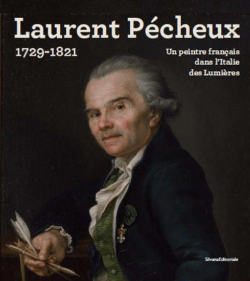 Publié à l’occasion de l’exposition des musées des Beaux-Arts de Dole et de Chambéry, cet ouvrage est le premier, depuis l’étude de Luigi Bollea parue en 1942, à être consacré à ce peintre, dont l’importance commence seulement à être reconnue.
D’origine Lyonnaise, Laurent Pécheux effectue l’ensemble de sa carrière en Italie, à Rome, puis à Turin, où il devient peintre officiel du roi de Piémont-Sardaigne. Sa carrière fut exceptionnellement riche : après avoir travaillé vers 1755 pour des clients lyonnais ou écossais, il est reçu à l’Académie romaine de Saint-Luc en 1762. Il est bientôt appelé à Parme en 1765 pour y portraiturer avec succès la future reine d’Espagne et les plus grandes familles romaines lui confient les plafonds de leurs palais. Il travaille également pour des amateurs français. En 1777, il quitte Rome pour Turin, où le roi de Piémont-Sardaigne l’a choisi comme premier peintre. Son activité de peintre de cour, qui lui vaut de décorer le palais royal de Turin, ne l’empêche pas d’assurer de prestigieuses commandes privées (par exemple : plafond de la salle du Gladiateur à la villa Borghèse, le plus fameux ensemble décoratif de Rome à l’époque ; suite de douze grands tableaux de la Vie du Christ pour la collégiale de Dole, auxquels une restauration exemplaire vient de rendre leur éclat et plusieurs chefsd’oeuvre conservés à Chambéry : Mort d’Epaminondas, Vénus, Narcisse, etc.). Cet ouvrage étudie, au-delà des oeuvres exposées, l’ensemble de la production de cet artiste aux dons multiples, l’un des derniers de sa stature qui restaient à découvrir.
◊ ◊ ◊ ◊ ◊
Didier Rykner reviewed the exhibition for The Art Tribune (21 August 2012) . . .
An artist from Lyon who spent most of his career in Italy, first Rome then Turin where he became official painter to the King of Piemonte-Sardegna, Laurent Pécheux is however not very well known outside of the restricted circle of art historians. The first retrospective highlighting his oeuvre, organized by the Musée des Beaux-Arts in Dole, which will then travel to Chambéry, now reveals a first rate artist, a pioneer of European Neo-Classicism though he maintained, in certain works, a Baroque spirit or even, if we adopt the term now used for some paintings corresponding to the second half of the 19th century, “Neo-Baroque” . . .
The full review (in English or French) is available here»
The Burlington Magazine, November 2012
The eighteenth century in The Burlington:
The Burlington Magazine 154 (November 2012)
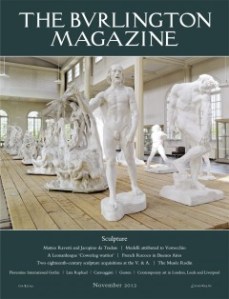 A R T I C L E S
• Marjorie Trusted, “Two Eighteenth-Century Sculpture Acquisitions for the Victoria and Albert Museum, London,” pp. 773-79. Two marble sculptures, a Crouching Venus by John Nost (1702) and a relief of Julius Caesar Invading Britain by John Deare (1796), have been acquired by the Victoria and Albert Museum, London.
• Gauvin Alexander Bailey, “French Rococo Prints and Eighteenth-Century Altarpieces in Buenos Aires,” pp. 780-85. French Rococo designs used in altarpiece decorations in eighteenth-century Buenos Aires.
R E V I E W S
• Philip Ward-Jackson, Review of Stefano Grandesso and Laila Skjøthaug, Bertel Thorvaldsen, 1770–1844 (Milan: Silvana, 2010), pp. 798-99.
• Mark Stocker, Review of Mary Ann Steggles and Richard Barnes, British Sculpture in India: New Views and Old Memories (Kirstead, Norfolk: Frontier Publishing, 2011), pp. 800-01.
• Christopher Baker, Review of the exhibition and catalogue The English Prize: The Capture of the Westmorland, an Episode of the Grand Tour (2012), pp. 817-18.
Display | 700th Anniversary of Edward III
While hardly an obvious inclusion for Enfilade, this small exhibition at Windsor includes several eighteenth-century sources. The coat of arms of Edward on display, for instance, comes from the sketchbook of Henry Emlyn (1729-1815), the architect and supervisor of George III’s restoration of the chapel (SGC M.172). John Anstis’s 1724 Black Book, or Register of the Order (SGC RBK DL.13 volume I) is also on view. These and similar items serve as reminders of the historiographical and antiquarian importance of the period. -CH
◊ ◊ ◊ ◊ ◊
From the College of St George:
King Edward III Anniversary
St George’s Chapel, Windsor, 19 June 2012 — 3 January 2013

St George’s Chapel, Windsor Castle
◊ ◊ ◊ ◊ ◊
2012 marks the 700th anniversary of the birth of Edward III at Windsor Castle. Born on 13 November 1312, the first son of Edward II and Isabella of France, Edward III became King of England at the age of fourteen, in January 1327, on the abdication of his father.
 His reign, lasting fifty years, was dominated by war with Scotland and France, which has led to him being chiefly remembered as a warrior. However, it also saw great building projects, the evolution of the English parliament, the establishment of English as the official language and the longest period of domestic peace in Medieval England. Edward III had a long and close relationship with Windsor. Having been born in the Castle, he was baptised here on 16 November 1312, in St Edward’s Chapel, built by his ancestor Henry III in around 1240 and subsequently rededicated by Edward III to St Mary the Virgin, St George the Martyr and St Edward the Confessor. Several of his children were born at Windsor, and it was here that his Queen Consort, Philippa, died in 1369.
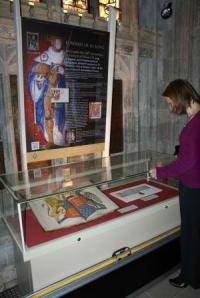
In commemoration of the 70oth anniversary of Edward III’s birth at Windsor, an exhibition of documents, rare books and artefacts from the St George’s Chapel Archives and Chapter Library will be on display in the South Quire Aisle of the
Chapel from 19 June 2012 to 3 January 2013.
The four exhibition cases and explanatory panels cover the following themes:
• Edward III as King
• Edward III and Windsor
• Edward III and St George’s Chapel
• Edward III and the Order of the Garter
Together they illustrate key aspects of the life of this great English king and explore his relationship with Windsor, which he was to make the spiritual home of his new chivalric order, the Order of the Garter, founded here in or shortly before 1348.










leave a comment