Exhibition | Kehinde Wiley: The Prelude

Now on view at the National Gallery:
Kehinde Wiley: The Prelude
National Gallery, London, 10 December 2021 — 18 April 2022
Kehinde Wiley is an American artist best known for his portraits that render people of colour in the traditional settings of Old Master paintings. Most famously, in 2017, he was commissioned to paint Barack Obama, becoming the first Black artist to paint an official portrait of a president of the United States. Wiley’s work makes reference to the canon of European portraiture by positioning contemporary Black sitters, from a range of ethnic and social backgrounds, in the poses of the original historical, religious, or mythological figures. His images—as part quotation, part intervention—raise questions about power, privilege, identity, and above all highlight the absence or relegation of Black figures within European art.
In this exhibition, Wiley shifts his focus from one European tradition, Grand Manner portraiture, to another, landscape painting. Through new artworks—five paintings and a six-channel digital film—Wiley looks at European Romanticism and its focus on epic scenes of oceans and mountains, building relationships with the National Gallery’s collection of historical landscapes and seascapes by Turner, Claude, Vernet, and Friedrich. Like Wiley’s earlier paintings, this new work will look back at Old Masters as a way to create new connections and raise fresh questions.
Exhibition | Gainsborough’s Blue Boy
Opening this month at the National Gallery:
Gainsborough’s Blue Boy
National Gallery, London, 25 January — 15 May 2022
In the winter of 1922, Gainsborough’s The Blue Boy hung at the National Gallery in London for three weeks before it sailed across the Atlantic to its new home in California. It was a public farewell to a beloved painting. 100 years later (to the day), Gainsborough’s masterpiece returns to the Gallery to go on display in Trafalgar Square once again.
On a child-sized canvas, the young subject is dressed in a striking blue costume; he is bright-eyed yet serious, shy yet direct. The identity of the boy in blue is uncertain; more importantly, he is a stand-in for all boys and the idea of childhood. Through a series of high-profile exhibitions, widely published reproduction prints, and countless copies by artists down the ages, he has become one of Britain’s most beloved sons.
The Blue Boy represents the best of 18th-century British art. It is Gainsborough’s eloquent response to the legacy of Van Dyck and grand manner portraiture. It is a proud demonstration by Gainsborough of what painting can achieve. The popularity and influence of the painting have made it an icon, which has been quoted by contemporary artists and referenced in Hollywood films. After exactly 100 years, this exhibition reunites The Blue Boy with the British public and with the paintings that inspired it. This is the first time the painting has been loaned by The Huntington—it is a once-in-a-century opportunity to see this iconic work in the UK.
S E L E C T E D P R O G R A M M I N G
Paterson Joseph in Conversation
Friday, 18 February 2022, 6.30pm
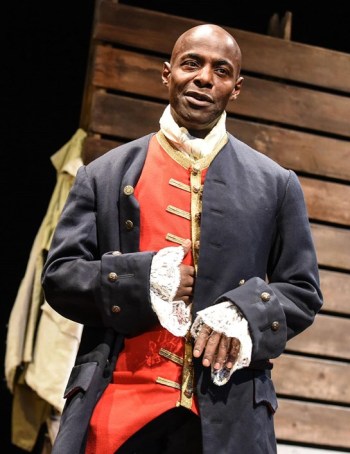
Paterson Joseph in the title role of his play Sancho: An Act of Remembrance, 2018 (Photograph by Robert Day).
Acclaimed actor and writer Paterson Joseph considers the legacies created by Gainsborough’s portraits of Ignatius Sancho and The Blue Boy. Joseph has extensively researched the 18th-century Black writer and composer Ignatius Sancho, whose portrait by Gainsborough is found in the National Gallery of Canada, Ottawa. In conversation with Christine Riding, the Jacob Rothschild Head of the Curatorial Department, Joseph will explore the narratives created through Gainsborough’s work, revealing a portrait of 18th-century Britain and how it is remembered today.
Paterson Joseph is an actor and writer. His work includes stints at the National Theatre and the Royal Shakespeare Company as well as roles in Peep Show, Timeless, Noughts and Crosses, and Vigil. Films include The Beach, Aeon Flux, and In The Name of the Father. He is the author of the monodrama Sancho: An Act of Remembrance and Julius Caesar and Me: Exploring Shakespeare’s African Play. His debut novel The Secret Diaries of Charles Ignatius Sancho will be published in October 2022 by Dialogue Books.
Curator’s Introduction: Gainsborough’s Blue Boy
Monday, 28 February 2022, 1.00pm
Join Christine Riding, the Jacob Rothschild Head of the Curatorial Department, for this lunchtime talk to learn more about this iconic image of childhood, which has been a source of inspiration for contemporary artists and referenced in Hollywood films. A recording will be available on Youtube.
Exhibition | Gainsborough’s Pink Boy Conserved
Opening this spring at Waddesdon:
Thomas Gainsborough: The Pink Boy Conserved
Waddesdon Manor, Buckinghamshire, opening spring 2022

The Morning Room at Waddesdon Manor, with Thomas Gainsborough’s 1782 Portrait of Francis Nicholls (‘Pink Boy’), before cleaning.
Thomas Gainsborough’s Pink Boy, one of the most popular paintings at Waddesdon, is being cleaned this winter. A special display will reveal it anew, freed from a discoloured varnish, alongside three other Waddesdon Gainsboroughs that depict boys in so-called ‘Vandyke’ dress.
The Pink Boy is a more youthful counterpart of the famous Blue Boy (on exceptional loan to the National Gallery on London, 25 January – 15 May 2022 from the Huntington Library, Art Museum, and Botanical Gardens in San Marino, California). Like him, Pink Boy wears an 18th-century fancy-dress version of 17th-century clothes. The Pink Boy is as much a showpiece of Gainsborough’s skill, demonstrating its relationship to the art of the past and to modernity, as it is a portrait of the particular sitter, Master Francis Nicholls.
Portraits of Lord Alexander Douglas-Hamilton and Lord Archibald Hamilton demonstrate how Gainsborough used different types of ‘Vandyke’ costume and contrasting painting techniques to differentiate the relative rank and age of two aristocratic brothers. The portrait of the artist’s nephew and pupil Gainsborough Dupont is among his most intimate and scintillating works, conjuring the teenager’s individuality and inner consciousness as much as the shimmer of light on silk.
Exhibition | 100 Great British Drawings

William Blake, Hecate or The Night of Enitharmon’s Joy, 1795, planographic color print with pen and ink and watercolor on wove paper, 16 3/8 × 22 inches (San Marino: The Huntington Library, Art Museum, and Botanical Gardens).
◊ ◊ ◊ ◊ ◊
The exhibition opens this summer; the catalogue is scheduled to appear this month from Lund Humphries. From the press release (13 December 2021) . . .
100 Great British Drawings
The Huntington Library, Art Museum, and Botanical Gardens, San Marino, 18 June — 5 September 2022
Curated by Melinda McCurdy
Rarely seen highlights from The Huntington’s premier collection of British drawings and watercolors spotlight top artists working in the medium from the 17th to the mid-20th century.
100 Great British Drawings, a major exhibition at The Huntington Library, Art Museum, and Botanical Gardens, will trace the practice of drawing in Britain from the 17th through the mid-20th century, spotlighting The Huntington’s important collection of more than 12,000 works that represent the great masters of the medium. On view from June 18 until September 5, 2022, in the MaryLou and George Boone Gallery, the exhibition will feature rarely seen treasures, including works by William Blake, John Constable, Thomas Gainsborough, and J. M. W. Turner, as well as examples by artists associated with the Pre-Raphaelite Brotherhood and early 20th-century modernism. A fully illustrated catalog accompanies the exhibition, examining for the first time the strength and diversity of The Huntington’s British drawings collection, a significant portion of which has never been published before. The Huntington is the sole venue for the exhibition.
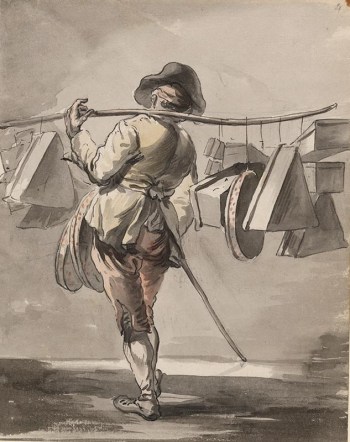
Paul Sandby, Band Box Seller, ca. 1760, brush and black ink and wash with red and yellow watercolor over traces of graphite on laid paper, 8 × 6 1/4 inches (San Marino: The Huntington Library, Art Museum, and Botanical Gardens).
“The Huntington is renowned for its incomparable collection of British art, ranging from 15th-century silver to the graphic art of Henry Moore, with the most famous works being, of course, our grand manner paintings,” said Christina Nielsen, Hannah and Russel Kully Director of the Art Museum at The Huntington. “Thomas Gainsborough’s Blue Boy and Thomas Lawrence’s Pinkie often serve as the poster boy and poster girl for the whole institution. But what most visitors do not realize is that The Huntington is also home to an extensive and remarkable collection of British drawings. This exhibition and catalog, the first to show the range of our British works on paper on such a scale, seek to fill that knowledge gap.”
Most of The Huntington’s British drawings collection, with a few notable exceptions, was established after the time of the institution’s founders, Henry and Arabella Huntington. Henry was an avid collector of rare books and manuscripts, and his wife, Arabella, was the force behind their collection of paintings and decorative art, but drawings did not factor largely into their art purchases. It was Robert R. Wark, curator of the art collections from 1956 to 1990, whose vision and tenacity established The Huntington as an outstanding repository of drawings made in Britain, where the art form was especially well developed, particularly in the late 18th to mid-19th century.
“Drawing is the most spontaneous and intimate of art forms, revealing the thoughts and mood of the artist through the stroke of a pen or touch of a brush dipped in watercolor,” said Melinda McCurdy, curator of British art, curator of the exhibition, and author of the catalog. “It is a practice especially associated with British artists, whose serious engagement with the medium is on vibrant display in the works we highlight in this exhibition.”

Matilda Conyers, Wallflower and Tulip, 1767, watercolor and opaque watercolor over traces of graphite with brown ink (est. iron gall) inscriptions on vellum, 9 × 6 1/4 inches (San Marino: The Huntington Library, Art Museum, and Botanical Gardens).
Organized chronologically, 100 Great British Drawings will explore portraiture, historical subjects, landscape, still life, botanical illustration, and caricature. The works on view will represent a full range of styles, including quick pencil sketches that candidly reveal artists’ creative processes, fluid pen-and-ink studies that approach the quality of finished works, and highly refined watercolor paintings.
The art of drawing first flourished in Britain in the late 17th century with an influx of artists coming from continental Europe, where the practice was commonly a part of artistic training. British artists also traveled abroad to view and copy the works of Europe’s old masters and contemporary artists. While portraiture was the most popular British art form at the time (as polished works by John Greenhill and Edmund Ashfield demonstrate in the exhibition), British artists eventually embraced a wide range of subjects, from landscape painting to history painting, a genre that appealed to such 18th-century titans as Thomas Gainsborough and George Romney.
Romney was unique among his peers in that he saw drawing as an end in and of itself, rather than merely a tool in preparation for oil painting. His Cimon and Iphigenia (early 1780s) was inspired by a tale from Boccaccio’s Decameron, and it captures the moment at which shepherd Cimon first spies his love, Iphigenia, asleep with two other women. Romney chose to depict Iphigenia in a sensual embrace with one of the women, using sweeping strokes of ink to imbue the scene with energy and passion. Cimon is barely present—cut off on the left of the frame—adding a suggestion of erotic voyeurism to Romney’s interpretation.
Even William Blake, famous for his unique imagination, betrays his European influences in Hecate or The Night of Enitharmon’s Joy (1795). Made by using a complex mix of printing techniques, drawing, and watercolor, Hecate depicts the witchlike mythological figure with musculature that recalls Michelangelo’s female forms, which were sketched from male nudes. By applying Michelangelo’s approach, Blake gives Hecate a powerful physique that suggests an unnatural, occult strength. The large-scale work is drawn from The Huntington’s William Blake collection, which was established by Henry Huntington himself and easily ranks among the most important Blake collections in the world.
 Most of the works in The Huntington’s British drawings collection are from the 18th and 19th centuries, when drawings and watercolors became popular commodities. Watercolors, though less forgiving than oil, allow artists to create luminous effects and are well suited to capturing the misty English climate. J. M. W. Turner was a master of these atmospheric effects. His Beaumaris Castle, Anglesey (ca. 1825–36) uses layered washes of color to create a soft fog that obscures people, horses, buildings, and ships, blending the line between sea and land. In its exploration of artistic techniques, the exhibition will look at the pigments and paper that artists used. Turner, for example, required a strong paper that could withstand his method, described by an eyewitness as first saturating the paper with wet paint. Then, “he tore … scratched … scrabbled at it in a kind of frenzy” until the image emerged as if by “magic … with all its exquisite minutia.”
By the mid-19th century, transparent watercolor technique gave way to an interest in opaque pigments or gouache, in keeping with a Victorian-era taste for sharp-focus realism. Many of the Victorian works in the exhibition were created as illustrations to poems or stories, including Samuel Palmer’s watercolor and gouache Lonely Tower (ca. 1881), which was inspired by John Milton’s Il Penseroso, and popular children’s book illustrator Kate Greenaway’s watercolor and graphite Now All of You Come Listen (ca. 1879). Some works from this period—such as those by artist Edward Burne-Jones, who was associated with the Pre-Raphaelites and collaborated with designer William Morris—demonstrate a turn away from realism toward pure “art for art’s sake,” a notion affiliated with the Aesthetic movement.
Drawings from the first half of the 20th century reveal the extraordinarily wide array of artistic styles that were emerging at the time. Many of The Huntington’s works from the period are by artists from the Slade School of Fine Art in London, where students studied abstraction, French Impressionism, Fauvism, Expressionism, Cubism, and Surrealism. A highlight of this group is Gwen John’s Two Hatted Women in Church (1920s), a work in water-based transparent paint that she made when living in France. John attended church there regularly, where she would draw the congregation, focusing less on the individuals and more on the shapes she saw in their clothing, their varying postures, and the chairs they sat on. John asserts her modernism in the painting, said McCurdy, as she “wittily juxtaposes two differently shaped hats, abbreviating such descriptive details as facial features and composing the image with bold black outlines and broad washes of muted tones.” The exhibition includes several other arresting 20th-century works on paper in various styles by such artists as David Bomberg, Paul Nash, and John Piper.
The 20th-century works combine with the others in 100 Great British Drawings to create a display that reveals the infinitely diverse aspects of “mark making,” said Ann Bermingham, professor emeritus of the history of art and architecture at the University of California, Santa Barbara, in her essay for the exhibition catalog. She concludes, “If The Huntington drawings speak to us over the distances of time and space, it is because they still hold in their linear grasp the thrill and promise of endless creativity.”
Originally part of The Huntington’s Centennial Celebration, this exhibition has been made possible by the generous support of Avery and Andrew Barth, Terri and Jerry Kohl, and Lisa and Tim Sloan. Support for this exhibition is provided by the Gladys Krieble Delmas Foundation. Support for the catalog is provided by Furthermore: a program of the J. M. Kaplan Fund.
Melinda McCurdy, Ann Bermingham, and Christina Nielson, Excursions of Imagination: 100 Great British Drawings from The Huntington’s Collection (London: Lund Humphries, 2022), 256 pages, ISBN: 978-1848224483, $45.
Exhibition | Golden Age of Kabuki Prints
Opening this week at the AIC:
The Golden Age of Kabuki Prints
Art Institute of Chicago, 15 January — 10 April 2022 / 16 April — 26 June 2022

Katsukawa Shunshō 勝川 春章, The Actor Nakamura Nakazo I as Osada no Taro in the Play ‘Ima o Sakari Suehiro Genji’ (‘The Genji Clan Now at Its Zenith’), 1763–73, color woodblock print (hosoban), 31 × 14 (Chicago: AIC, Clarence Buckingham Collection, 1938.479).
The Kabuki theater district of 18th-century Edo (modern-day Tokyo) was one of the centers of urban life.
At the theater, people could escape the rigid confines of a society controlled by the shogunal government and watch their favorite actors perform in dramas that were often based on ancient historical events and myths. These were tales of murder, revenge, infamy, jealousy, and, sometimes even, redemption.
Along with the dramatic subject matter, Kabuki theater is characterized by its highly stylized postures, movements, hand gestures, facial expressions, even makeup. All these elements are exaggerated to heighten narrative impact. Perhaps the most renowned aspect of Kabuki is the mie, an emphatic pose struck by an actor at a crucial point in the action. Mie often comprise amplified scowls or dramatic twists of the face with crossed eyes and are accompanied by specific body posturing and particular hand and limb positions. Such intense expressions and poses made striking and popular subjects for prints.
The drama of Kabuki theater was most successfully conveyed in the prints of the Katsukawa School of artists because they captured the individual characteristics of each actor. Kabuki actors were the celebrities of their time, and prints depicting them found an eager audience in their fans. Founded by Katsukawa Shunshō (1726–1792), the Katsukawa school included several prominent artists, all of whom created portraits of actors performing in popular Kabuki plays in Edo, though almost all of these prints show the actors in a realistic setting—on the street or under a flowering tree—rather than on a stage. The best-known artists of the school, in addition to Shunsho, were Katsukawa Shunkō (1743–1812) and Shun’ei (1762–1819). This exhibition includes examples by all three of these artists and is drawn from the more than 700 Katsukawa School prints in the Art Institute’s collection.
This exhibition will consist of two rotations, the first running 15 January – 10 April 2022, and the second covering 16 April – 26 June 2022; the gallery will be closed April 11–15.
Online Study Day | Joshua Johnson: Conversations and New Discoveries
This online study day is held in conjunction with the the exhibition, which closes January 23:
Joshua Johnson: Conversations and New Discoveries
Online, Washington County Museum of Fine Arts, Hagerstown, Maryland, 14 January 2022.

Joshua Johnson, Portrait of Benjamin Franklin Yoe and Son Benjamin Franklin You Jr., 1809, oil on canvas mounted onto hardboard, 37 × 26 inches (Hagerstown: WCMFA, Gift of F. Sydney Cushwa).
The exhibition Joshua Johnson: Portraitist of Early American Baltimore presents a rare opportunity for Johnson scholars and art historians to study a significant group of Johnson’s works in one place.
Join WCMFA staff and colleagues Friday, January 14, for a day of intriguing, in-depth conversations about portraitist Joshua Johnson (ca. 1763–1824/25), one of the first professional African American artists. Joshua Johnson: Conversations and New Discoveries will be held from 9am to 4pm (EST) via Zoom. Organized in conjunction with the final days of the exhibition, this study day will address a variety of topics, including Johnson’s life and historical context in antebellum Maryland, his patrons, artistic style and technique, and connoisseurship. A broad range of speakers and special guests will offer unique perspectives and expertise about this fascinating artist in an informal, conversational format.
The first monographic presentation of the artist’s work since 1988, Joshua Johnson: Portraitist of Early American Baltimore contextualizes Johnson both historically and culturally and explores the key forms of natural symbolism represented in his paintings. Johnson was a freed slave who achieved a remarkable degree of success as a portraitist in his lifetime by painting affluent patrons in his native Baltimore such as politicians, doctors, clergymen, merchants, and sea captains. The exhibition is accompanied by a scholarly catalogue available for purchase from the museum.
To register for the study day, please email Donna Rastelli at drastelli@wcmfa.org or call 301.739.5727.
S C H E D U L E
9.00 Introduction by Sarah Hall (Director Washington County Museum of Fine Arts) with Opening Remarks by Kellie Mele (Director of Education for WCMFA)
9.30 Who Was Joshua Johnson? — David Terry (Associate Professor of History and Geography at Morgan State University) and Daniel Fulco (Agnita M. Stine Schreiber Curator at Washington County Museum of Fine Arts)
10.30 The Artist’s Patrons — Mark Letzer (President & CEO, Maryland Center for History and Culture), Stiles Colwill (Stiles T. Colwill Interiors), and Linda Crocker Simmons (Curator Emerita, Corcoran Gallery of Art)
11.15 Roundtable Discussion — This hour-long conversation features our panelists discussing Johnson’s influence and style, addressing his predecessors and contemporaries, some of whom are on view in a companion exhibition at the WCMFA.
12.15 Lunch Break
1.15 Johnson’s Cultural and Historical Context and Relationship to Baltimore Society — David Terry, Daniel Fulco, and Philippe Halbert (PhD candidate, Department of the History of Art, Yale University)
2.15 Connoisseurship: Technique, Materials, and Conservation. See the Yoe family portraits up close with Heather Smith (Conservator, Maryland Art Conservation), Sian Jones (Art Conservator), and Stiles Colwill.
3.15 Future Directions — In this concluding segment, panelists will discuss Johnson in public and private collections. Other topics include the art market as well as new research and directions in the field.
P A N E L I S T S
David Terry is Associate Professor of History and Geography at Morgan State University in Baltimore. He previously was the executive director of the Reginald F. Lewis Museum and was a research specialist in African American history for the Maryland State Archives. He holds a doctorate in history from Howard University, a Master of Arts in African American history from Morgan State University and a Bachelor of Arts in American studies from the University of Maryland-College Park.
Mark Letzer is the President and CEO of Maryland Center for History and Culture in Baltimore. Letzer is an expert in Maryland silver and decorative and fine arts. He became connected with MCHC when he was researching for his book, The Diary of William Faris: The Daily Life of an Annapolis Silversmith, which was published in 2003. In addition, he has written numerous articles on Maryland silver and decorative arts and lectured on the topic. Previously, he served as the Chief Development Officer for the Maryland Historical Society.
Anne Verplanck is Associated Professor of American Studies for Penn State-Harrisburg. She teaches courses in American art and visual culture, social and cultural history, American decorative arts and material culture, museum studies and heritage studies. Prior to becoming part of the Penn State-Harrisburg faculty she worked in the museum field for 30 years. She is the former Curator of Prints and Paintings at Winterthur Museum where she also served as Interim Director of Museum Collections and Interim Director of the Research Fellowship Program.
Linda Crocker Simmons has spent over 40 years in the museum field. Since 1998 she has held the title of Curator Emerita for the Corcoran Gallery of the Art. She has also worked with private and institutional clients including the Alice Ferguson Foundation at Hard Bargain Farm in Accokeek, Maryland. She holds a Bachelor of Arts in studio art and art history from American University; a Master of Arts in art history from the University of Delaware; a certificate in arts administration from Harvard University and remains a.b.d. for her PhD from the University of Virginia. She is an expert in the field of American painting from the end of the 18th century into the early 20th century.
Stiles Colwill has been the President and Chief Designer of Stiles Tuttle Colwill Interiors in Lutherville, Maryland, for nearly 30 years. Colwill also operates Halcyon House Antiques with New York City antiques firm John Rosselli & Associates. He previously served as a Board of Trustees for Baltimore Museum of Art where he served as chairman for five years. He also spent 16 years with the Maryland Historical Society.
Heather Smith is the Owner and Chief Conservator of Maryland Art Conservation LLC (formerly Art Conservation Services) in Baltimore. In 2005, she began her career with ACS after receiving her Master of Art Conservation at Queen’s University in Ontario, Canada, the previous year. She is a professional associate of the American Institute for Conservation.
Sian Jones is the previous owner of Art Conservation Services before retiring in 2018 after more than 30 years. She studied art conservation at the State University of New York at Oneonta, and studied art at Goucher College in Baltimore.
Phillipe Halbert is a doctoral candidate with the Department of History of Art at Yale University. He studies the intersection of art and identity in Colonial America and early modern Europe. For more than a decade he has been an independent museum consultant and has served as a guest curator at a variety of historic sites and museums. He has a Master of Philosophy in art history, criticism and conservation from Yale University and a Master of Arts in American material culture from the University of Delaware. He was a dual major in French and Francophone studies and history at The College of William and Mary where he received his undergraduate degree.
This exhibition is generously supported by grants from the following: National Endowment for the Arts (NEA), the Art Dealers Association of America (ADAA) Foundation, an anonymous donor, Mr. & Mrs. James N. Holzapfel, Dr. & Mrs. George E. Manger, the Heart of the Civil War Heritage Area (part of the Maryland Heritage Areas Authority), Maryland Marketing Partnership, Community Foundation of Washington County MD, Inc., Dr. & Mrs. Robert S. Strauch, and Mr. & Mrs. Thomas B. Riford.
Exhibition | Turner in January
From the National Galleries of Scotland:
Turner in January
Scottish National Gallery, Edinburgh, 2–31 January 2022
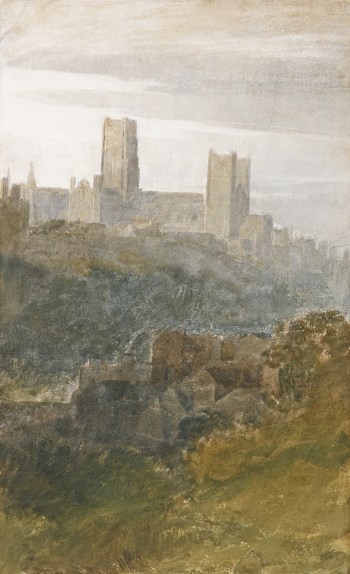
Joseph Mallord William Turner, Durham, 1801, watercolour over pencil on paper, 41 × 25 cm (Edinburgh: Scottish National Gallery).
The National Galleries of Scotland has presented an exhibition of the work of J.M.W. Turner every January for more than a century. This year’s exhibition will showcase all of the 38 watercolours by Turner that were given to the National Galleries of Scotland in 1900 by the art collector Henry Vaughan.
The exquisite works in the Vaughan bequest range from early wash drawings of the 1790s, to the colourful, atmospheric, and wonderfully expressive late works executed on visits to the Swiss Alps during the 1830s and 1840s.
Highlights of the bequest include a series of spectacular views of Venice such as The Piazzetta, Venice and Venice from the Laguna, which capture the drama and explosive skies of late summer Adriatic storms and demonstrate the artist’s consummate mastery of atmospheric lighting effects.
A booking for the Scottish National Gallery must be made in order to enjoy this exhibition.
More information on Henry Vaughan and the bequest is available here»
Exhibition | Alison Watt: A Portrait without Likeness

Alison Watt, Centifolia, detail, 2019, oil on canvas, 76 × 62cm
(Collection of the Artist, © Alison Watt)
◊ ◊ ◊ ◊ ◊
Closing this month at the Scottish National Portrait Gallery:
Alison Watt: A Portrait without Likeness
Scottish National Portrait Gallery, Edinburgh, 17 July 2021 — 9 January 2022
Curated by Julie Lawson
Alison Watt (born 1965) is widely regarded as one of the leading painters working in the UK today. This significant body of new work consists of sixteen paintings made in response to the practice of the celebrated eighteenth-century portrait artist Allan Ramsay (1713–1784) and are on show for the first time.
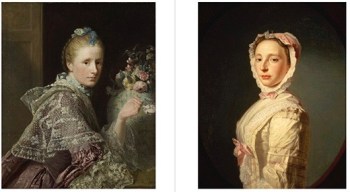
Left: Allan Ramsay, Portrait of the Artist’s Wife, Margaret Lindsay of Evelick, 1758–60, 74 × 62 cm (National Galleries of Scotland). Right: Allan Ramsay, Portrait of the Artist’s Wife, Anne Bayne, ca.1739, 68 × 55 cm (National Galleries of Scotland).
Alison Watt | A Portrait Without Likeness explores the artist’s continuing fascination with Ramsay’s portraits. Watt, most known for her beautiful and intricate large-scale paintings of drapery and folds, has long been an admirer of Ramsay’s portraits of women, in particular the intensely personal images of his first and second wives, Anne Bayne (died 1743) and Margaret Lindsay of Evelick (1726–1782). Both portraits reside in the Gallery’s collection and will be shown alongside Watt’s new work.
The exhibition is the fruit of a long period of study of Ramsay paintings, in addition to the drawings and sketchbooks from his extensive archive held by National Galleries of Scotland. Watt has said, “Looking into an artist’s archive is to view the struggle that takes place to make a work of art. A painting is a visual record of the inside of the artist’s mind. A painting is something that takes place over time; it is not static. To look at a work of art is to engage with an idea, and that is not a one sided activity. It’s more of a conversation.”
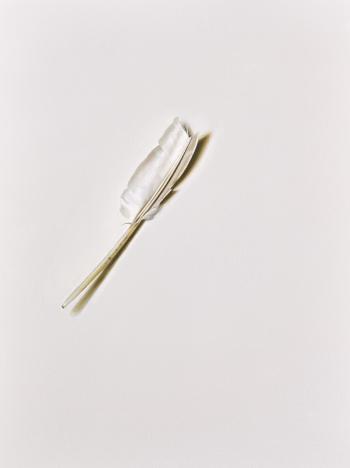
Alison Watt, Fortrose, 2019, oil on canvas, 61 × 46 cm (Collection of the Artist © Alison Watt).
A Portrait Without Likeness is accompanied by a publication featuring conversations between the artist and Julie Lawson, the Chief Curator of European, Scottish Art, and Portraiture at National Galleries of Scotland, who has curated the exhibition, as well as an essay from art historian Dr Tom Normand and a new work of short fiction by Booker Prize-nominated novelist Andrew O’Hagan.
Normand writes: “The fascination with flowers is uncommon within Watt’s oeuvre, but she has recently been engaged with the works of Allan Ramsay held in the Scottish National Portrait Gallery. Most particularly she has reflected upon his painting The Artist’s Wife, Margaret Lindsay of Evelick, painted between 1758 and 1760. This is an exquisite and mysterious portrait. At one level a tender study of his second wife, some thirteen years younger than the artist, at another a poignant essay on the enigma of human passion.”
Alison Watt, Julie Lawson, Tom Normand, and Andrew O’Hagan, Alison Watt: A Portrait without Likeness (Edinburgh: National Galleries of Scotland, 2021), 96 pages, ISBN: 978-1911054450, £20.
Exhibition | Traveling in Style: A Coach Restored

Beekman Family Coach, ca. 1770, made in England; wood (ash and spruce by analysis), iron, and leather. 8 feet × 13 feet × 52 inches
(New-Historical Society, Gift of Gerard Beekman 1911.25)
◊ ◊ ◊ ◊ ◊
Now on view at the New-York Historical Society:
Traveling in Style: A Coach Restored
New-York Historical Society Museum & Library, 2 July 2021 — 20 February 2022
The Beekman Family Coach returns to the New-York Historical Society on 2 July 2021. Over the past year, this rare coach—one of only three horse-drawn vehicles used in 18th-century America to survive in original condition—was painstakingly restored to its 1790s appearance through a generous grant from the Institute of Museum and Library Services.
New York merchant James Beekman purchased the coach in 1771 for £138. An expensive luxury that became the crown jewel in his fleet of carriages, the coach was repainted at least five times between 1771 and the 1790s.
Conservator Brian Howard and his team meticulously restored the coach, beginning with the removal of a thick layer of old varnish applied during the mid 20th century. Underneath lay five layers of historic paint, including a light celadon green color from the 1790s that is again visible today. Among other surprises, conservators discovered that the interior of the cab retained most of its original fixtures and materials—wood benches and storage lockers, wool wall coverings, carpeting, and coach lace, enameled Russian leather trim, and flax insulation.
Conservation and display of the Beekman Family Coach is being supported in part by a Federal Save America’s Treasures grant administered by the Institute of Museum and Library Services.
Exhibition | France and Russia: Ten Centuries Together

Pierre-François Drais, snuffbox, made in Paris between 1776 and 1789, with portraits added sometime between 1814 and 1830; gold, enamel, and lapis lazuli, mounted with miniatures in watercolour on ivory (London: V&A, 905-1882). The portraits depict Marie Antoinette and her children Marie-Thérèse-Charlotte (1778–1851), the Dauphin Louis (1781–1789), and Louis-Charles the future Louis XVII (1785–1795), along with a sculptured bust of Louis XVI.
◊ ◊ ◊ ◊ ◊
From the press release for the exhibition:
France and Russia: Ten Centuries Together / Франция и Россия: 10 веков вместе
Exhibition Halls of the Patriarch’s Palace and the Assumption Belfry, Moscow, 7 September 2021 — 9 January 2022
The Moscow Kremlin Museums present the exhibition France and Russia: Ten Centuries Together as part of the cross-cultural year between Russia and France, highlighting their interregional cooperation. The project, dedicated to the centuries-long history of cultural and diplomatic relations between the two countries, showcases over two hundred artifacts: memorial objects, archival documents, and artworks from national Russian and European museums. The exhibition explores the history of Russian-French relations through intertwining fates of outstanding personalities including prominent statesmen, scientists, writers, artists, and craftsmen. The chosen approach aims at reconstructing the character of the relationship between the two countries as an immediate, multifaceted, somewhat contradictory, but an ultimately fruitful process for both parties.
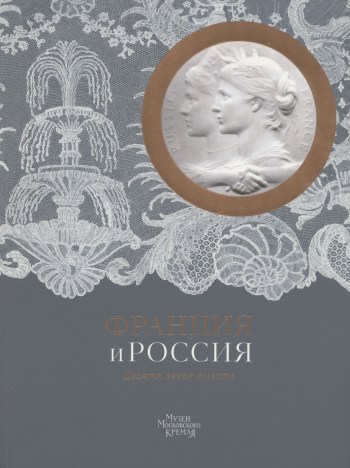 The show opens with a unique charter, dating back to 1063 and recalling the important political event of the 11th century: the dynastic marriage of Princess Anna Yaroslavna, daughter of the Great Prince Yaroslav the Wise, to King Henry I of France. The charter, provided by the National Library of France, is believed to be the only surviving document that bears the handwritten sign of the cross and monogram of King Philip I with his mother’s authentic signature ‘ANA RHNA’ (Queen Anne) placed underneath in Cyrillic letters. Visitors are also afforded the rare opportunity of seeing the Reims Gospel—a unique illuminated manuscript of great cultural and historical significance. Generously offered for the exhibition by the Municipal Library of Reims, it will take centre stage among the key objects on display.
Among the later period pieces featured in the exhibition is a drawing by artist J. Desmarets capturing Peter I and Louis XV in Paris on 11 May 1717 and presented to the Soviet leaders as a diplomatic gift in 1944 to commemorate the visit of Charles de Gaulle, the Chairman of the Provisional Government of the French Republic, to Moscow. The development of the 18th-century political dialogue between Russia and France is chronicled through paintings and sculptures, weapons, textiles, and jewellery commissioned for the Russian Imperial Court from famous French masters or created by prominent French artists invited to Russia. The passion for French art is evidenced by luxurious tapestries, the ceremonial dress of the young Emperor Peter II, the exquisite lacework adorning the gowns of Russian monarchesses, the pieces from the silver Paris set owned by Empress Elizaveta Petrovna, and magnificent weapons, including a pair of pistols belonging to Emperor Peter II and made by the Arquebusier du Roi (royal gunmaker) Jean-Baptiste Laroche.
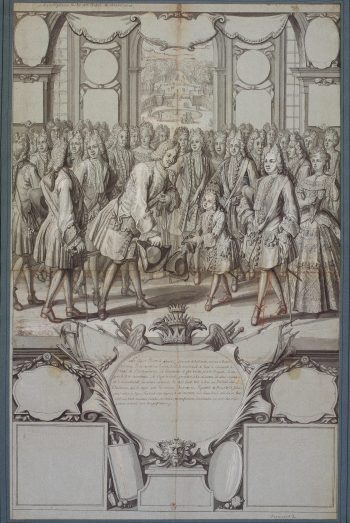
J. Desmarets, Peter I and Louis XV in Paris on 11 May 1717, 1717, ink, watercolour, red chalk, and gouache on tinted paper (Moscow Kremlin Museums)
Portraits from the collection of the Pushkin State Museum of Fine Arts recreate a gallery of outstanding political and cultural figures from the reigns of Empresses Elizaveta Petrovna and Catherine the Great. The section on Catherine the Great’s reign showcases pieces from the legendary Orlov porcelain service executed by the Parisian silversmiths Jacques and Jacques-Nicolas Roettiers along with the precious desk clock with inkstand—the work of a Parisian master—that belonged to the Empress. Unique pieces from the collection of the Pavlovsk Museum and Heritage Site will hark back to Grand Duke Pavel Petrovich and Grand Duchess Maria Feodorovna’s tours of Europe. The years preceding the Great French Revolution are epitomised by the rare memorial objects and are captured in the portraits painted by Élisabeth Vigée-Le Brun, Queen Marie-Antoinette’s favourite artist.
A special section of the exhibition is devoted to relations between Russia and France during the reign of Emperor Alexander I. Here, visitors will see a magnificent cased set of weapons made by the famous French gunsmith and bladesmith Nicolas-Noël Boutet—the gift presented to the Russian governor-general of Paris, Baron Fabian Gottlieb Fürst von der Osten-Sacken from the grateful Parisians. Another highlight is the Olympic porcelain service produced at the Sèvres porcelain factory and presented in 1807 by Napoleon to the Emperor Alexander I in commemoration of the Treaty of Tilsit. The star of the Order of the Holy Spirit, awarded to Alexander I by King Louis XVIII after the former’s victory over Napoleon and the restoration of the monarchy in France, is another showpiece not to miss! The exhibition introduces visitors to the history of ‘Russian Nice’ and feature stories of the World Exhibition that took place in Paris in 1867. It also offers insights into the process of strengthening of Franco-Russian friendship and formation of the Franco-Russian Alliance at the turn of the 19th century.
Participating Institutions
The Moscow Kremlin Museums, the Palaces of Versailles and Trianon, Victoria and Albert Museum, the National Museums of Castles Malmaison and Bois-Préau, National Library of France, the Reims Municipal Library, the State Tretyakov Gallery, the Pushkin State Museum of Fine Arts, the Shchusev State Museum of Architecture, the State Hermitage, Museum and Heritage Site ‘Pavlovsk’, the Russian State Library, the Archive of the Russian Academy of Sciences, the Russian State Archive of Ancient Documents
Svetlana Amelekhina et al. Frantsiia i Rossiia: Desiat’ vekov vmeste / Франция и Россия: 10 веков вместе (Moscow: Muzei Moskovskogo Kremlia, 2021), 383 pages, ISBN: 978-5886783872. Available here»











leave a comment