Exhibition | Les Adam: La Sculpture en Héritage
Now on view at the Musée des Beaux-Arts de Nancy:
Les Adam: La Sculpture en Héritage
Musée des Beaux-Arts de Nancy, 18 September 2021 — 9 January 2022
Curated by Pierre-Hippolyte Pénet and Guilhem Scherf
 Originally from Nancy, the Adam family is the largest dynasty of French sculptors of the 18th century. Over three generations, its members worked in Rome, Paris, Versailles, and Berlin in the service of the Pope and European monarchs such as Louis XV, Louis XVI, Frederick II of Prussia, and Catherine II of Russia. This the first retrospective devoted to them brings together one hundred masterpieces from national and international institutions as well as from private collections, bearing witness to the Adam family’s virtuosity at the heart of Europe during the Enlightenment.
Originaire de Nancy, la famille Adam est la plus grande dynastie de sculpteurs français du XVIIIe siècle. Sur trois générations, ses membres déploient leurs talents auprès des plus grands mécènes et participent à plusieurs chantiers majeurs. Formés en Lorraine dans le contexte d’essor artistique des règnes des ducs Léopold et Stanislas, Jacob Sigisbert Adam, ses trois fils Lambert Sigisbert, Nicolas Sébastien et François Gaspard ainsi que leurs neveux Sigisbert François, Pierre Joseph et Claude Michel dit Clodion, œuvrent à Rome, Paris, Versailles ou Berlin au service du pape et des monarques européens comme Louis XV, Louis XVI, Frédéric II de Prusse ou Catherine II de Russie. Première rétrospective à leur être consacrée, l’exposition réunit cent chefs-d’œuvre issus d’institutions nationales, internationales mais aussi de collections particulières. Permettant de dévoiler plusieurs sculptures prestigieuses inédites qui témoignent de la virtuosité de la famille Adam au cœur de l’Europe des Lumières, elle est accompagnée d’un catalogue de référence sur le sujet.
Commissariat: Pierre-Hippolyte Pénet, conservateur du patrimoine chargé des collections du XVe au XVIIIe siècle, palais des ducs de Lorraine – Musée lorrain, et Guilhem Scherf, conservateur général du patrimoine, adjoint au directeur du département des Sculptures, musée du Louvre.
The full press packet is available here»
Pierre-Hippolyte Pénet and Guilhem Scherf, eds., Les Adam: La Sculpture en Héritage (Paris: Snoeck Édition, 2021), 343 pages, ISBN: 978-9461616234 35€.
British Art Studies, November 2021
The latest issue of BAS:
British Art Studies 21 (November 2021)
Redefining the British Decorative Arts, Guest Edited by Iris Moon

Michelle Erickson, Cauldron, from the series Ply-MYTH, 2019, wheel thrown with lifecast shell and industrial artifacts, made from indigenous North Carolina woodfired stoneware with copper wash, 16 × 19.5 inches (Collection of the artist). Additional information is available here»
“Decorative arts place pressure upon the hierarchies inherent in British aesthetics, and by extension British culture, from the enlightenment to the present day. The specters of history and the possibilities of the future haunt in equal measure this special issue of British Art Studies, which challenges readers to rethink the British decorative arts. Through a series of thought-provoking articles by artists, curators, scholars, and a scientist, the issue asks readers to question their assumptions about the decorative arts, and by extension, the notions of belonging, possession, and home that such arts have helped to shape in British culture. Issues of race and identity, empire and nation, and collective and subjective desires, far from being alien aspects of the decorative arts, have long gestated within the discourses of taste and aesthetics that emerged in tandem with Britain’s rise as a center of capitalism. Many of the articles have as their touchstone the eighteenth century, when London became the finance capital of the world . . . ” (from Iris Moon’s introductory article).
A R T I C L E S
• Unhomely: Redefining the British Decorative Arts, by Iris Moon
• England Am I? Elizabethan Clothing, Gender, and Crisis in Virginia Woolf’s Between the Acts, by Sarah Bochicchio
• Microorganisms, Microscopes, and Victorian Design Theories, by Ariane Varela Braga
• Tarnished Silver: Interpreting the Material Culture of the Atlantic Slave Trade Negotiations of 1715, by Max Bryant
• Cherokee Unaker, British Ceramics, and Productions of Whiteness in Eighteenth-Century Atlantic Worlds, by R. Ruthie Dibble and Joseph Zordan
• Defining a New Femininity? Josiah Wedgwood’s Portrait Medallions of Sarah Siddons and his Femmes Célèbres by Patricia F. Ferguson
• Classical Histories, Colonial Objects: The Specimen Table Across Time and Space, by Freya Gowrley
• Serving as Ornament: The Representation of African People in Early Modern British Interiors and Gardens, by Hannah Lee
• Ruth Ellis’s Suit, by Lynda Nead
• Colonial Trash to Island Treasure: The Chaney of St. Croix, by Jessica Priebe
• In the Flesh at the Heart of Empire: Life-Likeness in Wax Representations of the 1762 Cherokee Delegation in London, by Ianna Recco
F E A T U R E S
• The Chelsea Porcelain Case, British Galleries, The Metropolitan Museum of Art, convened by Iris Moon
• Unpacking Wedgwood: An Interview with Roberto Visani, by Caitlin Meehye Beach
• Wild Porcelain, cover collaboration with Michelle Erickson
• What’s in a Label? Revising Narratives of the Decorative Arts in Museum Displays, convened by Iris Moon
• Another Crossing: Artists Revisit the Mayflower Voyage, by Glenn Adamson
• In Sparkling Company: Presenting Eighteenth-Century Britain in Western New York State, by Christopher Maxwell
Iris Moon is an assistant curator of European ceramics and glass in the European Sculpture and Decorative Arts Department at the Metropolitan Museum of Art, where she recently participated in the reinstallation of the British Galleries. She has taught at Pratt Institute and The Cooper Union and her research on European decorative arts and architecture has been supported by fellowships from the Metropolitan Museum of Art, the Clark Art Institute, and the Getty Research Institute. Her new book, Luxury after the Terror, will be published in spring 2022 by Penn State Press.
Online Roundtable | The Animation of Decorative Arts in 18th-C France
From The Met:
The Animation of Decorative Arts in Eighteenth-Century France
Online, 14 December 2021, 6.00pm (Eastern Time)
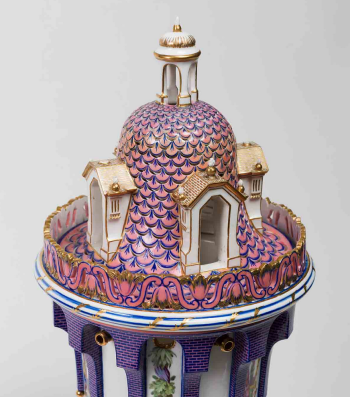 Presented in conjunction with the exhibition Inspiring Walt Disney: The Animation of French Decorative Arts, on view at The Metropolitan Museum of Art from 10 December 2021 until 6 March 2022, this live event takes place online. Watch on YouTube or Facebook (no login required).
Discover how furniture and decorative arts came to life in the literature, dance, and theater of eighteenth-century France, a theme later explored and elaborated by Disney in the classic animated film Beauty and the Beast.
• Wolf Burchard, Associate Curator, European Sculpture and Decorative Arts, The Met
• Alicia Caticha, Assistant Professor, Department of Art History, Weinberg College of Arts and Sciences, Northwestern University
• Sarah Lawrence, Iris and B. Gerald Cantor Curator in Charge, European Sculpture and Decorative Arts, The Met
• Meredith Martin, Associate Professor of Art History, Department of Art History, and Institute of Fine Arts, New York University
• David Pullins, Associate Curator, European Paintings, The Met
Reimagining the Ballet des Porcelaines
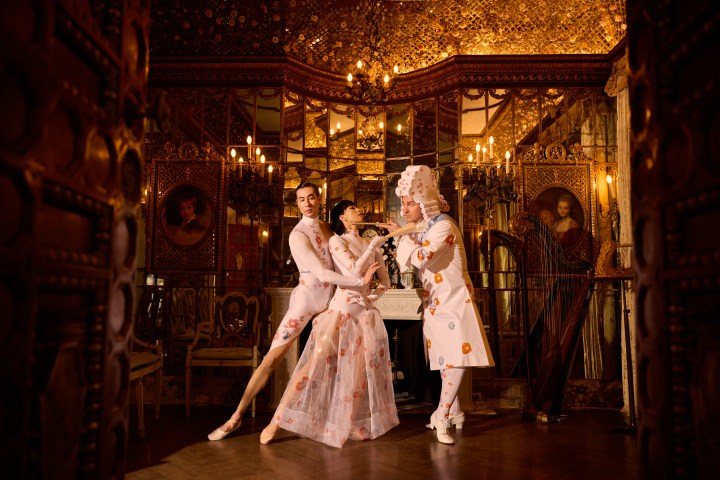
The Ballet des Porcelaines cast in the Venetian Room, Albertine Headquarters, Cultural Services of the French Embassy, NYC. From left to right: Daniel Applebaum (Prince); Georgina Pazcoguin (Princess); Tyler Hanes (Sorcerer). Photo by Joe Carrotta.
◊ ◊ ◊ ◊ ◊
As part of the media preview of the exhibition Inspiring Walt Disney: The Animation of French Decorative Arts at The Metropolitan Museum of Art, guests were given a special chance to see the first performance in centuries of the Ballet des Porcelaine. A publication, noted below, is forthcoming. Additional information about the performance, including credits, is available here.
The original Ballet des Porcelaines, written by the comte de Caylus and staged around 1740 at a château outside of Paris, was based on an Orientalist fairy tale in the same literary milieu as Beauty and the Beast (1740). The story tells of an Asian sorcerer who lives on a ‘Blue Island’ and transforms anyone who dares to trespass into porcelain cups, vases, and other wares. When the sorcerer turns a captive prince into a teapot, a princess comes to rescue her lover by stealing the sorcerer’s wand and turning him into a pagod, an eighteenth-century version of a porcelain bobblehead. Displayed today in museums like The Met, pagods were collectible trinkets that inspired Oriental caricatures in the performing arts. European choreographers mimicked the features and gestures of these porcelain figures, which persist in such iconic, problematic productions as The Nutcracker’s “Chinese Tea” dance.
Scheduled Performances
6 December 2021, The Metropolitan Museum of Art, New York
2–3 March 2022, The University of Chicago
18–19 March 2022, Princeton University
16–17 June 2022, Waddesdon Manor
19–21 June 2022, Royal Pavilion, Brighton
25–26 June 2022, Capodimonte, Naples
28–29 June 2022, Palazzo Grassi, Venice
2–3 July 2022, Sèvres Museum, Paris
Meredith Martin, with contributions by Phil Chan and Charlotte Vignon, Reimagining the Ballet des Porcelaines (Turnhout: Harvey Miller/Brepols, 2022).
In addition to the performance and the book, many readers will find this recorded conversation fascinating as well:
Phil Chan and Meredith Martin, hosted by the Center for Ballet and the Arts at NYU, “Reimagining the Ballet des Porcelaines: A Story of Magic, Desire, and Exotic Entanglement,” YouTube, posted 9 November 2021, 63 minutes.
Phil Chan and Meredith Martin have reimagined this lost Baroque work with an all-Asian American creative team, aiming to make it meaningful and relevant for a multiracial and contemporary audience. This talk explores their process and performance plans and features performances by Martha Graham Principal Dancer Xin Ying and actor, singer, dancer, choreographer Tyler Hanes.
◊ ◊ ◊ ◊ ◊
Note (added 15 December 2021) — The posting has been updated to include the cast photo by Joe Carrotta.
Exhibition | Bordeaux-les-Bains: Les bienfaits de l’eau
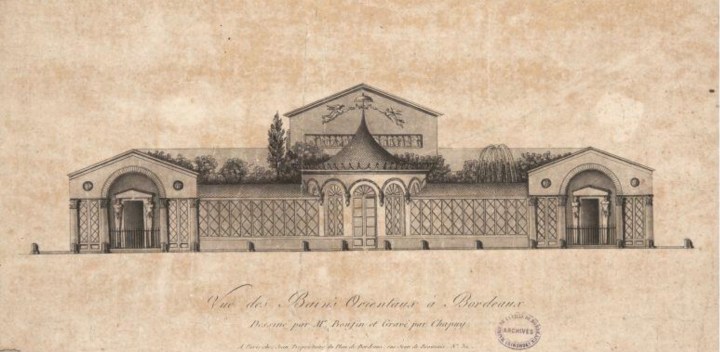
Chapuy after Bonfin, Vue des Bains Orientaux à Bordeaux, ca. 1798, engraving
(Archives Bordeaux Métropole)
◊ ◊ ◊ ◊ ◊
Now on view at the Bordeax Archives, along with this online component:
Bordeaux-les-Bains: Les bienfaits de l’eau, 18e–20e siècle
Archives Bordeaux Métropole, 19 May 2021 — 25 February 2022
Tour à tour convoitée, redoutée, maltraitée, domestiquée, l’eau—un des quatre éléments naturels de la culture occidentale—redevient au XVIIIe siècle un élément fondamental de l’hygiène. Ce bien naturel précieux multiplie les usages au fil du temps : l’eau qui lave, l’eau qui soigne, l’eau qui fortifie, l’eau qui délasse. Et si l’histoire de Bordeaux est intimement liée à celle de son fleuve, c’est bien l’eau qui en constitue l’essence même.
Depuis l’Antiquité, les Bordelais se baignent dans la Garonne. Au XVIIIe siècle, les pratiques évoluent et les techniques se développent : des bains flottants sur le fleuve aux bains-douches dans les quartiers, des établissements d’hydrothérapie à la natation en piscine. C’est à la découverte de cette histoire méconnue que vous invitent les Archives Bordeaux Métropole autour d’une sélection de documents de toutes natures, témoignages d’une incroyable aventure humaine et collective. L’artiste Laurent Valera propose un contrepoint contemporain avec une nouvelle série d’œuvres en dialogue avec les documents d’archives.
Frédéric Laux and Jean-Cyril Lopez, Bordeaux-les-Bains: Les bienfaits de l’eau, XVIIIe–XXe siècle (Archives Bordeaux Métropole, 2021), 96 pages, ISBN: 978-2360622870, 12€.
Print Quarterly, December 2021
The eighteenth century in the latest issue of Print Quarterly:
Print Quarterly 38.4 (December 2021) . . .
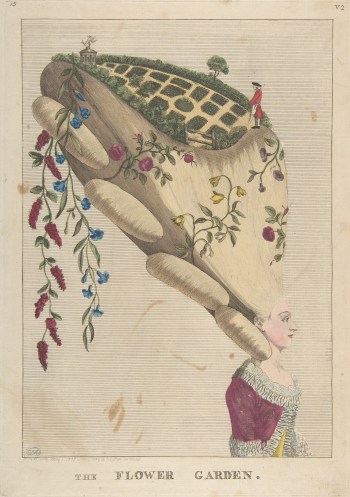
Matthew Darly, The Flower Garden, 1777, etching and engraving with watercolour, 35 × 25 cm (New York: The Metropolitan Museum of Art).
Elizabeth L. Block, Review of Luigi Amara, The Wig: A Hairbrained History, translated by Christina MacSweeney (Reaktion Books, 2020), p. 436.
Elizabeth Block gives an overview of the 33 brief chapters of Luigi Amara’s The Wig: A Hairbrained History. The chapter “Towering Hairdos” looks at the expensive and impractical styles of wigs in the years before the French Revolution, whilst “Dressing Up Justice” focuses on William Hogarth’s The Bench, 1758–64, an engraving depicting bewigged magistrates. Block praises this work for its entertaining and enjoyable qualities, but highlights its lack of academic rigour, suggesting at the end works to turn to for a more scholarly treatment of the subject.
Richard Taws, Review of the exhibition catalogue William Blake, edited by Martin Myrone and Amy Concannon (Tate, 2019), p. 438.
Reviewing the catalogue for the exhibition William Blake, held at Tate Britain in 2019–20, Richard Taws discusses the book’s five chapters covering the artist’s early artistic milieu, his career as printmaker, his relationship with patronage and display, and his reclamation by a younger generation of artists. It is noted that in the authors’ attempt to demythologise Blake, they are successful in creating a “Blake for all,” who satisfies both a specialist and popular audience.
Exhibition | Dressing with Purpose in Scandinavia

From left to right: Eva Aira and Inga Lajla Aira Balto in gávttit from Jåhkåmåhkke and Kárášjohka; Sven Roos in Gagnefsdräkt and Lars-Erik Backman in Leksandsdräkt; Fatima Aakhus and Randi Myrum in Setesdalsbunader. (Photos by Carrie Hertz).
◊ ◊ ◊ ◊ ◊
From the Museum of International Folk Art:
Dressing with Purpose: Belonging and Resistance in Scandinavia
Museum of International Folk Art, Santa Fe, 12 December 2021 — 19 February 2023
Dress helps us fashion identity, history, community, and place. Dress has been harnessed as a metaphor for both progress and stability, the exotic and the utopian, oppression and freedom, belonging and resistance. Dressing with Purpose examines three Scandinavian dress traditions—Swedish folkdräkt, Norwegian bunad, and Sámi gákti—and traces their development during two centuries of social and political change across northern Europe.
 By the 20th century, many in Sweden worried about the ravages of industrialization, urbanization, and emigration on traditional ways of life. Norway was gripped in a struggle for national independence. Indigenous Sami communities—artificially divided by national borders and long resisting colonial control—rose up in protests that demanded political recognition and sparked cultural renewal. Within this context of European nation-building, colonial expansion, and Indigenous activism, traditional dress took on special meaning as folk, national, or ethnic minority costumes—complex categories that deserve reexamination today. In this exhibition, visitors will be introduced to individuals who adapt and revitalize dress traditions to articulate who they are, proclaim personal values and group allegiances, strive for sartorial excellence, reflect critically on the past, and ultimately, reshape the societies they live in.
This project is supported in part by the National Endowment for the Arts. Additional support comes from Barbro Osher Pro Suecia Foundation and Swedish Council of America.
Carrie Hertz, ed., Dressing with Purpose: Belonging and Resistance in Scandinavia (Bloomington: Indiana University Press, 2021), 258 pages, ISBN: 978-0253058577, $30.
Dedication
Acknowledgements
Map of Scandinavia
A Note on Terms and Place Names
Foreword, Khristaan Villela
Introduction: Can We Talk about Traditional Dress?, Carrie Hertz
Part I. Folkdräkt in Sweden
1 Swedish Folkdräkt, Carrie Hertz
2 They Are at Peace Here, Like Old Friends in Their Caskets: Traditional Dress Collections as Heritage-making, Lizette Gradén
Part II. Bunad in Norway
3 Norwegian Bunad, by Carrie Hertz
4 Headdress and Hijab: Bunad in Multicultural Norway, Camilla Rossing
5 The Transnational and Personalized Bunad of the Twenty-First Century, Laurann Gilbertson
Part III. Gákti in Sápmi
6 Sámi Gákti, Carrie Hertz
7 The Legacy of Ládjogahpir: Rematriating Sápmi with Foremother’s Hat of Pride, Eeva-Kristiina Harlin and Outi Pieski
Conclusion: The Future of Traditional Dress, Carrie Hertz
Bibliography
List of Contributors
Index
Exhibition | Anna Dorothea Therbusch
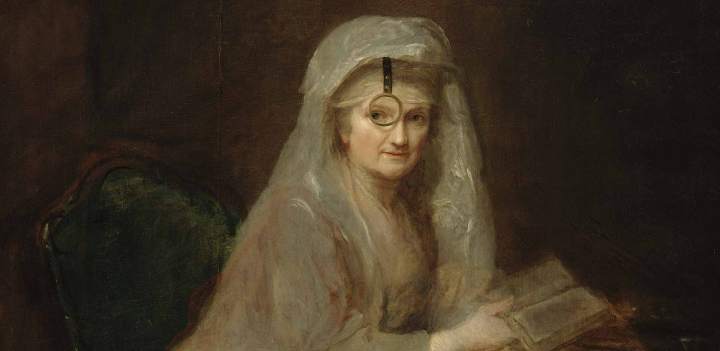
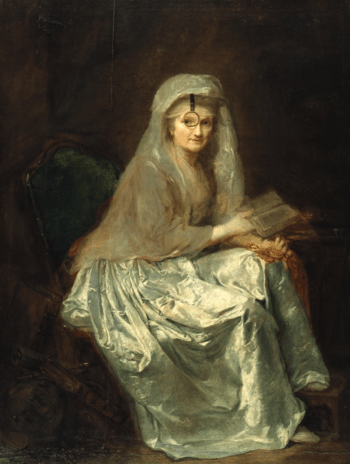
Anna Dorothea Therbusch, Self-Portrait, detail, ca. 1782, 154 × 118 cm
(Berlin: Gemäldegalerie)
◊ ◊ ◊ ◊ ◊
Now on view at the Gemäldegalerie:
Anna Dorothea Therbusch: A Berlin Woman Artist of the Age of Enlightenment / Eine Berliner Künstlerin der Aufklärungszeit
Gemäldegalerie, Berlin, 3 December 2021 — 10 April 2022
Born in Berlin three hundred years ago, Anna Dorothea Therbusch (1721–1782) went on to become one of the most important women artists of the eighteenth century. To mark the tercentenary of her birth (23 July), the Gemäldegalerie is honouring this extraordinary artist and forerunner of women’s emancipation with a special exhibition featuring key works from the Staatliche Museen zu Berlin’s own collections.
 The daughter of the Prussian court painter Georg Lisiewsky, Anna Doroethea received her initial artistic instruction from her father, alongside her siblings. As the wife of an innkeeper and mother of five children, however, her artistic abilities lay idle for decades. In her forties, though, she dedicated herself to painting with great vigour, and in 1767 she was one of the few women to be accepted into Europe’s most important art school of the time, the Académie Royale de Peinture et de Sculpture in Paris. After returning to her hometown, she became a highly sought-after portrait painter, producing likenesses of figures such as Henriette Herz, Frederick the Great, and the doctor Christian Andreas Cothenius, one of the most important chroniclers of the Age of Enlightenment.
Two branches of the Staatliche Museen zu Berlin—the Gemäldegalerie and the Alte Nationalgalerie—boast works by this great local artist, and each has provided museums across the city with permanent loans, with Therbusch’s work on display at the Bode-Museum, the Kunstgewerbemuseum, and at the Jewish Museum Berlin.
One of the painter’s best-known works is a large-format self-portrait from around 1782 in which Therbusch presents herself as a scholar and elegant figure of note. She appears as an approachable and intelligent interlocutor, interested in both objects and her conversation partner, as indicated by the book in her hand and her frontal gaze. Centred around this important painting, the exhibition presents nearly all of Therbusch’s works from the Staatliche Museen zu Berlin. Complemented by key works from her contemporaries, the show provides a comprehensive overview of her oeuvre, her professional milieu, and more broadly the age in which she lived.
Exhibition | Thomas Gray

The exhibition closes soon, but I note it here particularly to draw your attention to the online component, mounted by Daniel McKay: it’s the most compelling virtual book exhibition I’ve ever seen.
Thomas Gray: An Anniversary Exhibition
Ward Library, Peterhouse, Cambridge, 8 November — 13 December 2021
Curated by Scott Mandelbrote
To mark the 250th anniversary of Thomas Gray’s death, the 270th anniversary of the publication of “Elegy Written in a Country Churchyard,” and the 305th anniversary of his birth.
Thomas Gray was born on 26 December 1716 and died on 30 July 1771. On 15 February 1751, one of the leading contemporary publishers of literary works, Robert Dodsley, hurried into print an edition of an Elegy wrote in a Country Church Yard, which subsequently became one of the most reprinted, anthologised, translated, and imitated poems in any language. It was one of barely more than a dozen poems that Gray allowed to be printed in his lifetime.
This exhibition considers Gray’s life and work from the perspective of the holdings of the two Cambridge Colleges with which he was associated from 1734, when he entered Peterhouse, until his death, which occurred shortly after he was taken ill at dinner in Pembroke. The exhibition focusses on three defining themes in Gray’s life and reputation: his relationship with Cambridge and the effect on him and on his work of the friends and enemies he made at the University; his activity as a reader, in particular as a user of the libraries of his two Colleges; and the publishing phenomenon of the “Elegy,” his most significant poem and one steeped in his appreciation and emulation of classical tradition, as well as his sense of place and of English history and the history of English poetry.
Exhibition | Afro-Atlantic Histories
From the press release (21 October 2021) for the exhibition:
Afro-Atlantic Histories
Museu de Arte de São Paulo, 28 June — 21 October 2018
Museum of Fine Arts, Houston, 24 October 2021 — 17 January 2022
National Gallery of Art, Washington, DC, 10 April — 17 July 2022
Los Angeles County Museum of Art, TBD
U.S. Tour Curated by Kanitra Fletcher
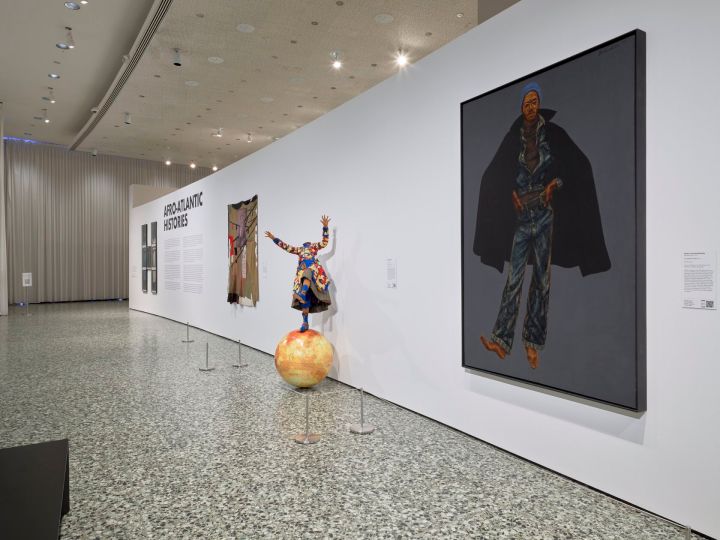
This fall the Museum of Fine Arts, Houston, will debut the U.S. tour of Afro-Atlantic Histories, an unprecedented exhibition that visually explores the history and legacy of the transatlantic slave trade. Initially organized and presented in 2018 by the Museu de Arte de São Paulo (Histórias Afro-Atlânticas), the exhibition comprises more than 130 artworks and documents made in Africa, the Americas, the Caribbean, and Europe from the 17th to the 21st centuries.
 In collaboration with MASP and the National Gallery of Art in Washington, DC, the MFAH will present Afro-Atlantic Histories at its Caroline Wiess Law Building from Sunday, 24 October 2021, through Monday, 17 January 2022. The exhibition will then travel to the National Gallery of Art to be on view in its West Building from Sunday, 10 April, through Sunday, 17 July 2022, with the Los Angeles County Museum of Art and additional venues confirmed to follow.
“Afro-Atlantic Histories recasts the traditional telling of the colonial history of the Western hemisphere within the vast web of the transatlantic slave trade over three centuries,” commented Gary Tinterow, Director, Margaret Alkek Williams Chair, MFAH. “It is an essential reexamination, one that the MFAH and the National Gallery have distilled from its expansive, original presentation in Sao Paulo in 2018 to focus on forgotten perspectives under the theme of histórias.”
“The National Gallery is honored to partner with the Museu de Arte de São Paulo and the Museum of Fine Arts, Houston, to bring Afro-Atlantic Histories to the United States. In the nation’s capital, this exhibition will shed light on the many histories that are crucial to our understanding of the legacy of slavery across the Americas,” said Kaywin Feldman, Director of the National Gallery of Art. “Through works made by artists across five centuries, Afro-Atlantic Histories will also celebrate the ongoing influence of the African diaspora on both sides of the Atlantic.”
Afro-Atlantic Histories dynamically juxtaposes works by artists from 24 countries, representing evolving perspectives across time and geography through major paintings, drawings and prints, sculptures, photographs, time-based media art, and ephemera. The range extends from historical paintings by Frans Post, Jean-Baptiste Debret, and Dirk Valkenburg to contemporary works by Ibrahim Mahama, Kara Walker, and Melvin Edwards.
The U.S. tour further builds on the exhibition’s overarching theme of histórias—a Portuguese term that can encompass both fictional and non-fictional narratives of cultural, economic, personal, or political character. The term is plural, diverse, and inclusive, presenting viewpoints that have been marginalized or forgotten.
The exhibition unfolds through six thematic sections that explore the varied histories of the diaspora:
• Maps and Margins illustrates the beginnings of the slave trade as it unfolded across the Atlantic between Africa, the Americas, and Europe. Highlights include artworks that reference the widely reproduced British Abolitionist document Description of a Slave Ship (1789), an illustration that clinically detailed a slave ship’s cargo hold; Aaron Douglas’s painting Into Bondage (1936), a powerful portrayal of the moment when a group of Africans are taken to a slave ship bound for the Americas.
• Enslavements and Emancipations examines how the abuses of commercial slavery triggered rebellion, escape, and Abolitionist movements. Theodor Kaufmann’s On to Liberty (1867) portrays women and children fleeing through the woods—a scene that Kaufmann, who served as a Union Solider during the American Civil War, witnessed firsthand. Torturous practices are addressed in works that range from The Scourged Back, the widely published 1863 photograph by McPherson & Oliver, to the 2009 etching Restraint, a powerful image of a silhouetted figure in an iron brindle, by American artist Kara Walker. Samuel Raven’s Celebrating the Emancipation of Slaves in British Dominions, August 1834 (c. 1834) presents a romanticized tribute to emancipation; Ernest Crichlow’s portrait of Harriet Tubman honors the fearless liberator and ‘conductor’ of the Underground Railroad.
• Everyday Lives features images of daily life in Black communities during and after slavery, in realistic and romanticized views. Among 20th-century artists, American Clementine Hunter and Brazilian Heitor dos Prazeres depict field work and friendships. American Romare Bearden draws inspiration from the rhythmic and improvised staccato of jazz and the blues, using shifts in scale, breaks in color, and disarranged perspectives for his depiction of a sharecropper in the monumental collage Tomorrow I May Be Far Away (1967). The pastoral painting Landscape with Anteater (c. 1660), by the Dutch artist Frans Post, places enslaved laborers and indigenous peoples in an idyllic Brazilian landscape.
• Rites and Rhythms features works about celebrations and ceremonies in the Americas and the Caribbean. Often re-creating African traditions, these rites became channels for worship and communication. Twentieth-century Uruguayan artist Pedro Figari frequently portrayed his country’s Candombe dances, which originated with descendants of enslaved Africans. Dominican artist Jaime Colson’s lively Merengue (1938) pays homage to his country’s national dance and music, a blend of Afro-Caribbean rhythms and African movements. Other works in this section of the exhibition explore Carnival, African-based religions, and the historical Black presence in Christianity.

Dalton Paula, Zeferina, 2018.
• Portraits spotlights Black leaders of the 18th and 19th centuries who have not traditionally been memorialized in historical American and European portraiture. Dalton Paula’s Zeferina (2018), commissioned for the original presentation at MASP, provides a face to an influential slave rebellion leader who was arrested and sentenced to death before she could be commemorated. Other historical and more contemporary works feature ordinary people, invented figures, and the artists themselves, including Self-Portrait (as Liberated American Woman of the ’70s) (1997) by Cameroonian photographer Samuel Fosso, an unconventional work that challenges our understanding of self-portraiture.
• Resistances and Activism examines the continuing fight for freedoms. Banners, flags, and textiles referring to histories of resistance across the Afro-Atlantic invoke cultural, political, religious, and artistic identities. Me gritaron negra (They shouted black at me) (1978), a video by Venezuelan artist Victoria Santa Cruz, is a powerful renunciation of colorism and racism through poetry and dance inspired by the artist’s own history. Other works in this section draw attention to Black activism, including Glenn Ligon’s painting Untitled (I Am a Man) (1988), inspired by signs carried in the 1968 Memphis Sanitation Workers’ Strike, which protested unsafe working conditions and low wages; and March on Washington (1964), a rare figurative painting by Alma Thomas that recalls her experience attending the storied demonstration.
The U.S. tour is curated by Kanitra Fletcher, Associate Curator of African American and Afro-Diasporic Art at the National Gallery of Art. Adriano Pedrosa, Artistic Director; Ayrson Heráclito, Curator; Hélio Menezes, Curator; Lilia Moritz Schwarcz, Adjunct-Curator of Histories; and Tomás Toledo curated the exhibition at the Museu de Arte de São Paulo. At the National Gallery, the curatorial team also includes Molly Donovan, Curator of Contemporary Art, and Steven Nelson, Dean of the Center for the Advanced Study in the Visual Arts.
In Washington, DC, the curators are working closely with an external advisory group of local leading historians and art historians: Ana Lucia Araujo, Professor of History, Howard University; Nicole Ivy, Assistant Professor of American Studies, George Washington University; Kevin Tervala, Associate Curator of African Art, Baltimore Museum of Art; Kristine Juncker, Special Assistant to the Director, National Museum of African Art; and Michelle Joan Wilkinson, Curator, Smithsonian National Museum of African American History and Culture.
Adriano Pedrosa and Tomás Toledo, eds., with additional contributions by Ayrson Heráclito, Deborah Willis, Hélio Menezes, Kanitra Fletcher, Lilia Moritz Schwarcz, and Vivian Crockett, Afro-Atlantic Histories (New York: DelMonico Books / Museu de Arte de São Paulo, 2021), 400 pages, ISBN: 978-1636810027, $70.










leave a comment